8 Best Customer Support AI Tools for Education Platforms in 2026
Education platforms face uniquely unpredictable support demands — from midnight student login issues to semester-start ticket floods — that traditional tools can't handle. This guide evaluates 8 Customer Support AI For Education Platforms solutions on automation depth, integration flexibility, and EdTech-specific performance so teams can scale support without scaling headcount.
 Grant CooperFounder13 min read
Education platforms live in a support environment unlike most SaaS products. Students troubleshoot login issues at midnight. Instructors need LMS help mid-lecture. Admins brace for enrollment spikes at semester start that can flood a helpdesk overnight. Traditional support tools weren't designed for this rhythm, and static staffing can't absorb the surges.
AI-powered customer support tools are changing the equation: automating repetitive tickets, guiding users through complex workflows, and escalating only what genuinely needs a human. The tools below have been evaluated on automation depth, integration flexibility, ease of deployment, and their ability to handle the specific ticket categories EdTech teams deal with daily.
Whether you're running a K-12 SaaS product, a higher-ed LMS, or a professional learning platform, there's a fit here. Halo AI appears first because it's the product behind this article, but every tool on this list earns its place on merit.
1. Halo AI
Best for: SaaS EdTech teams wanting AI-first support that scales without growing headcount
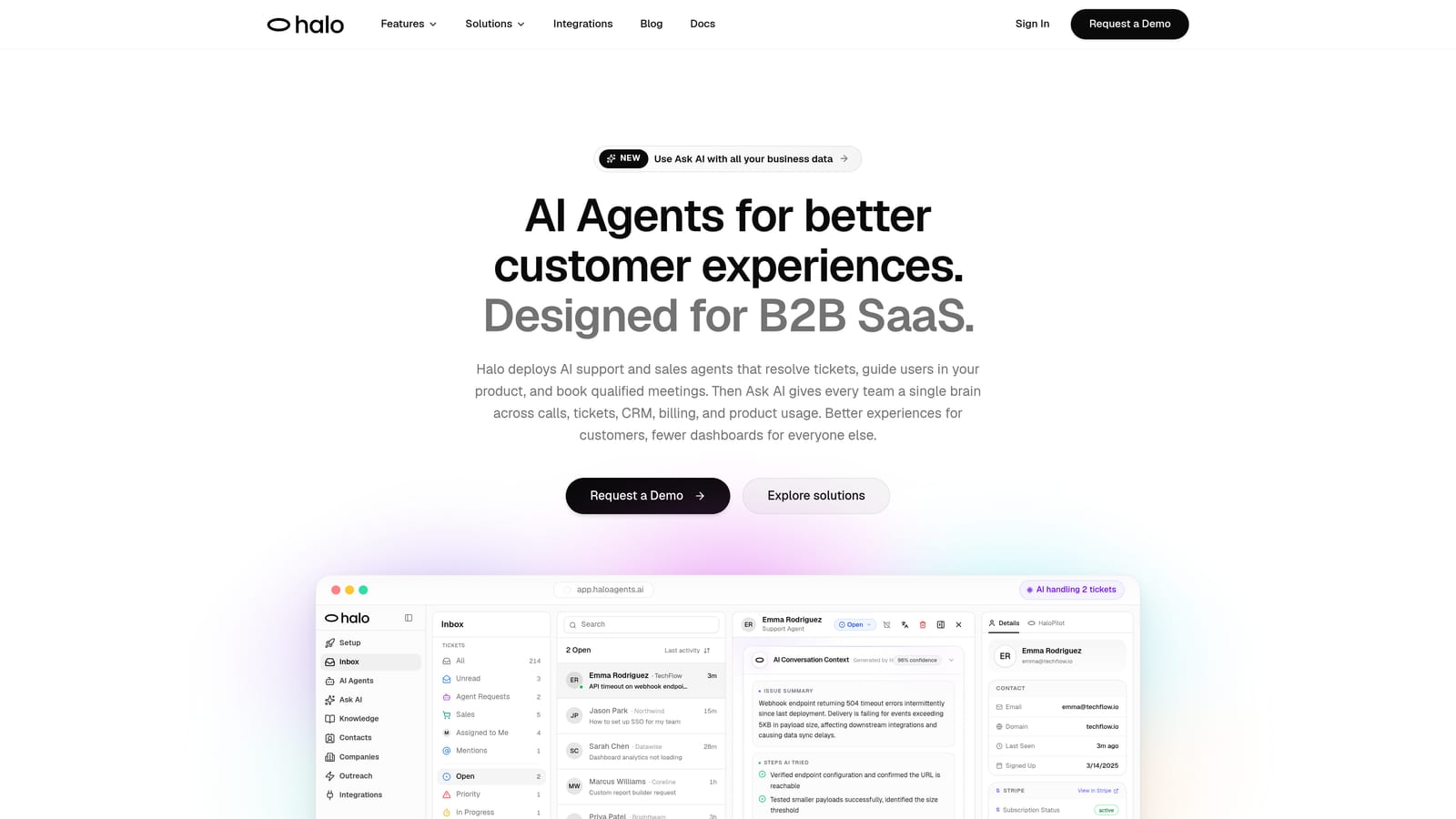
Halo AI is an AI-first customer support platform that deploys intelligent agents to resolve tickets, guide users through your product with page-aware context, and surface business intelligence from every support interaction.
Where This Tool Shines
Most AI support tools are bolt-ons: they sit on top of an existing helpdesk and add a layer of automation. Halo AI is built AI-first, which means the intelligence is architectural rather than cosmetic. For education platforms, this matters because the support scenarios are genuinely complex: a student asking why they can't access a course module needs context about where they are in the product, not just a generic FAQ answer.
The page-aware capability is particularly relevant here. Halo's AI agents understand which part of the platform the user is on when they reach out, so responses are contextually accurate rather than generic. For LMS platforms with multi-layered navigation, this significantly improves first-contact resolution. The system also detects recurring patterns in support tickets and automatically creates bug reports, which means your product team catches technical issues faster without waiting for a human to spot the trend.
Key Features
Page-Aware AI Agents: The AI understands which product page or workflow the user is on, enabling contextually precise responses rather than generic deflection.
Automatic Bug Ticket Creation: Recurring support patterns trigger automatic bug reports to your development pipeline, reducing the lag between user-reported issues and product fixes.
Smart Inbox with Business Intelligence: Goes beyond standard support metrics to surface customer health signals, revenue intelligence, and anomaly detection from support data.
Live Agent Handoff: Complex issues escalate seamlessly to human agents with full conversation context preserved, so users never have to repeat themselves.
Broad Integration Ecosystem: Connects natively with Linear, Slack, HubSpot, Intercom, Stripe, Zoom, PandaDoc, Fathom, and more, fitting into most EdTech stacks without custom development.
Continuous Learning: Every resolved interaction improves the model's accuracy, so resolution rates increase over time rather than plateauing.
Best For
EdTech SaaS companies and product-led teams that want support automation deeply integrated into the product experience, not layered on top. Particularly strong for platforms with complex navigation, recurring technical issues, or teams that want support data to inform product decisions, not just answer tickets.
Pricing
Contact for pricing. Halo AI is built for SaaS teams and pricing is customized to your use case and volume. Reach out via the website for a demo and quote.
2. Intercom
Best for: SaaS education platforms wanting a mature, widely-integrated chat and AI support platform
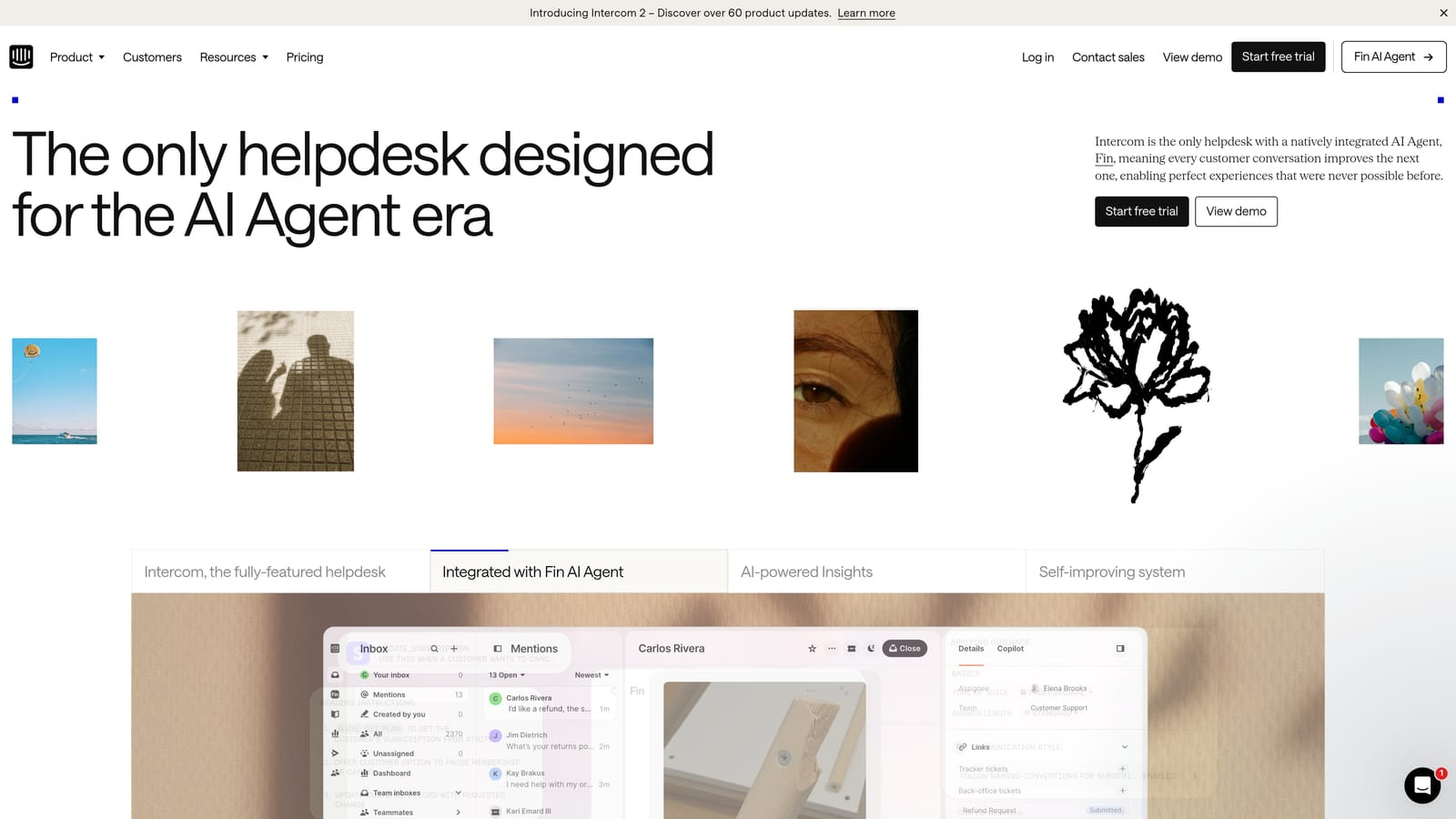
Intercom is one of the most widely deployed customer communications platforms in SaaS, featuring Fin, an AI agent built on large language models that handles inbound support questions across chat and email.
Where This Tool Shines
Intercom's strength is breadth. The platform covers the full support lifecycle, from proactive messaging to AI resolution to human escalation, within a single interface. Fin, their AI agent, is capable of handling a meaningful portion of inbound questions autonomously, drawing from your help center content and conversation history to generate accurate responses.
For education platforms, Intercom's multi-channel approach is valuable: students reach out via chat, instructors often prefer email, and admins may need in-app messaging. The conversation design tools let teams build custom support flows that reflect the actual pathways users take through an LMS or course platform.
Key Features
Fin AI Agent: Handles autonomous ticket resolution across chat and email using large language model reasoning, reducing inbound volume without requiring manual flow-building for every scenario.
Conversation Design Tools: Build custom support flows tailored to specific user journeys, such as enrollment troubleshooting or course access issues.
Multi-Channel Support: Covers chat, email, and in-app messaging in a unified inbox, useful for education platforms serving diverse user types.
Help Center Management: Built-in self-service article management with AI-powered content suggestions to keep documentation current.
Large Integration Ecosystem: Connects with most EdTech and SaaS tools, reducing friction when adding Intercom to an existing stack.
Best For
Mid-to-large SaaS education platforms with existing help center content and teams that want a proven, well-documented platform with strong community support. Pricing scales with usage, so high-volume platforms should model costs carefully before committing.
Pricing
Plans start at approximately $39 per seat per month. Fin AI usage is billed separately per resolution. Verify current pricing directly with Intercom, as it can vary by plan tier and usage volume.
3. Freshdesk
Best for: Mid-market education platforms wanting multi-channel support with accessible pricing
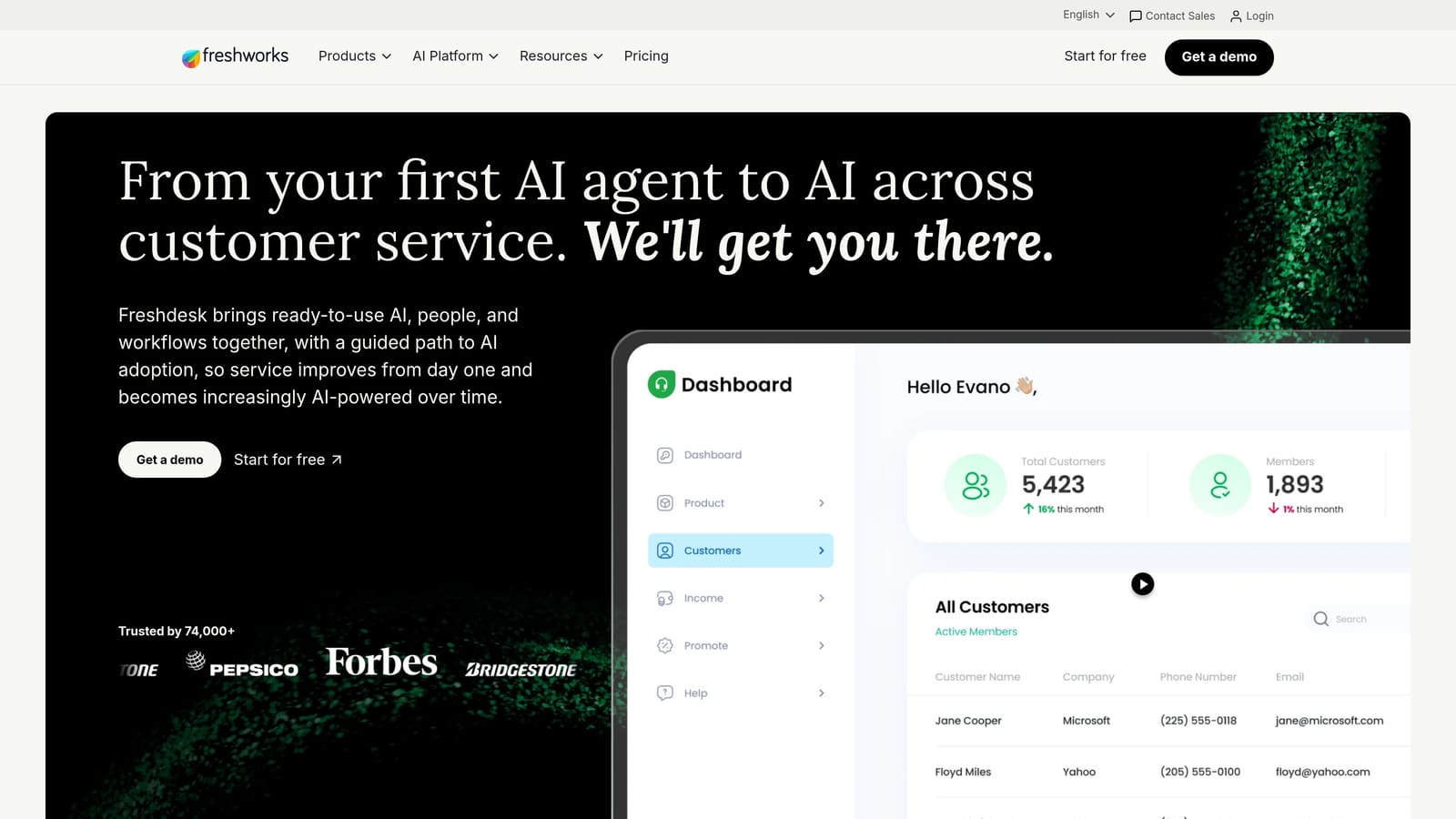
Freshdesk is a full-featured helpdesk platform from Freshworks with Freddy AI layered across ticketing, self-service, and analytics, making it a practical option for education platforms that need capability without enterprise-level investment.
Where This Tool Shines
Freddy AI handles the day-to-day friction points that slow support teams down: summarizing long ticket threads, suggesting responses based on similar past issues, and detecting sentiment so agents can prioritize frustrated users. For education platforms managing high volumes of repetitive tickets, such as password resets, enrollment questions, and content access issues, these features reduce the cognitive load on agents significantly.
Freshdesk's self-service portal with AI-powered FAQ deflection is another practical asset. Students and instructors who search for help before submitting a ticket often find their answer, which reduces inbound volume during predictable surge periods like semester starts.
Key Features
Freddy AI: Covers ticket summarization, suggested responses, and sentiment detection across the support workflow without requiring separate AI tooling.
Multi-Channel Support: Handles email, chat, phone, and social channels in one platform, useful for education institutions with diverse communication preferences.
AI-Powered Self-Service Portal: FAQ deflection reduces inbound ticket volume by surfacing relevant help content before users submit a ticket.
Automation Rules: Routing, SLA management, and escalation triggers can be configured without developer involvement, keeping setup accessible for smaller teams.
Free Tier: Functional free plan available for smaller teams or platforms in early growth stages, with a clear upgrade path as volume increases.
Best For
Mid-market EdTech companies and educational institutions that need a reliable, multi-channel helpdesk with AI features at a price point that doesn't require enterprise budget approval. Also a strong starting point for smaller platforms that expect to grow into more advanced features over time.
Pricing
Free tier available for small teams. Paid plans start at approximately $15 per agent per month. Verify current tiers directly with Freshworks.
4. Zendesk
Best for: Enterprise education platforms needing a proven, deeply configurable helpdesk foundation
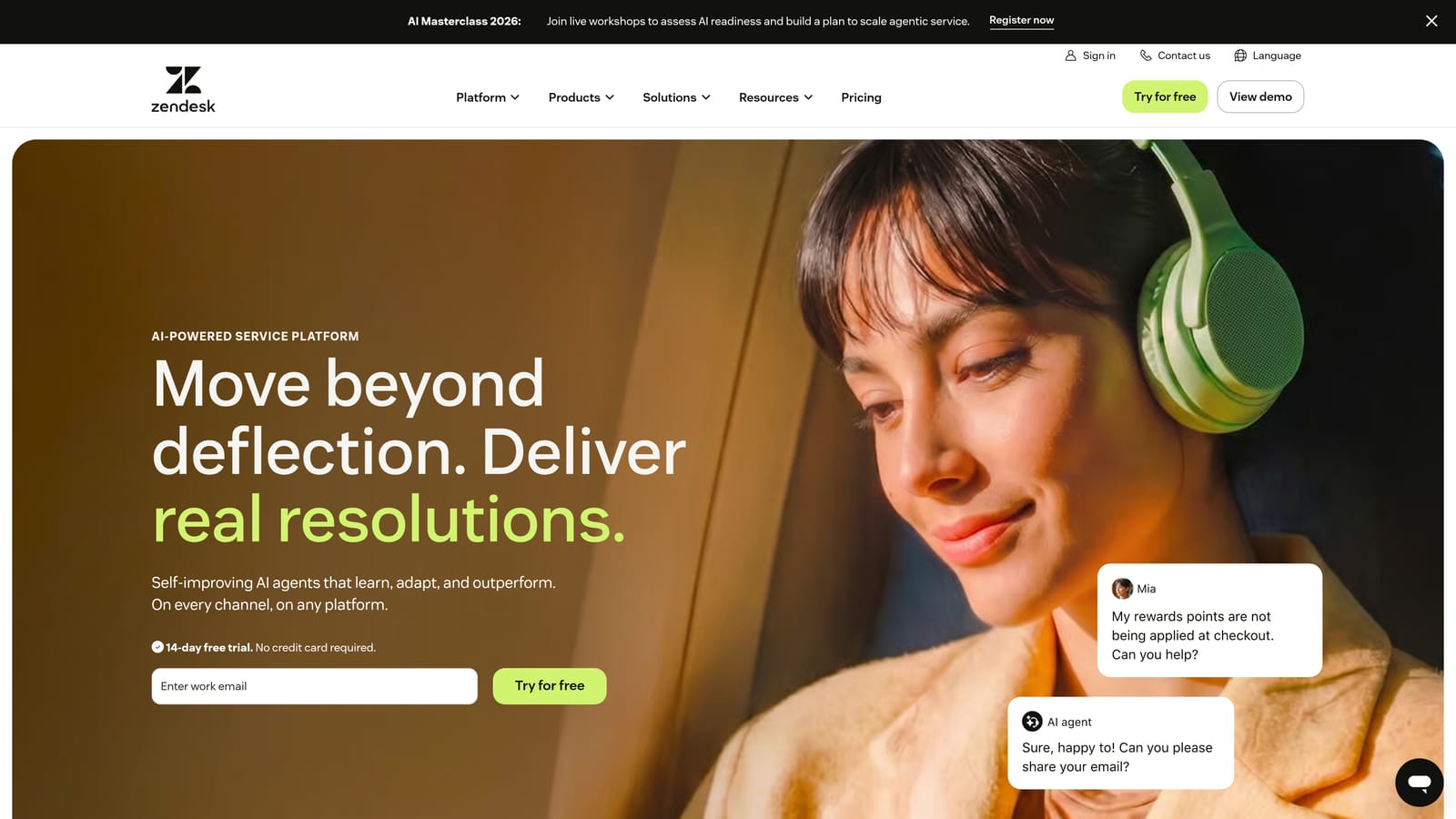
Zendesk is the dominant enterprise helpdesk platform, with AI-powered triage, macro suggestions, and Answer Bot for self-service, backed by one of the largest support app marketplaces in the industry.
Where This Tool Shines
Zendesk's scale is its primary advantage. For large education institutions or EdTech platforms managing thousands of tickets across multiple user types, students, instructors, and administrators, the platform's routing intelligence and reporting depth are difficult to match. AI-powered triage ensures tickets land with the right team or agent from the start, reducing the back-and-forth that frustrates users during high-stakes periods like exam weeks.
The app marketplace is a practical asset for EdTech stacks. Most LMS platforms, CRMs, and communication tools have Zendesk integrations available, which reduces the custom development typically required to connect support data with the rest of your product ecosystem.
Key Features
AI-Powered Ticket Triage: Automatically categorizes and routes incoming tickets based on content and intent, reducing manual sorting for large support teams.
Answer Bot: Deflects common questions by surfacing relevant help center articles before a ticket is submitted, reducing inbound volume during predictable surge periods.
Macro Suggestions: AI recommends response templates based on ticket content, helping agents respond faster and more consistently.
Extensive App Marketplace: Thousands of integrations available, covering most EdTech stack components without custom development.
Advanced Reporting and CSAT Tracking: Detailed analytics across ticket volume, resolution time, and customer satisfaction, with customizable dashboards for different stakeholder needs.
Best For
Enterprise-scale education platforms and higher-ed institutions with complex support operations, dedicated IT or support teams, and the budget to invest in a configurable, deeply integrated helpdesk. Smaller platforms may find the setup complexity and cost disproportionate to their needs.
Pricing
Suite plans start at approximately $55 per agent per month. Costs can scale significantly at enterprise volume. Confirm current pricing with Zendesk directly.
5. Tidio
Best for: Smaller education platforms and course creators needing AI chat without enterprise complexity
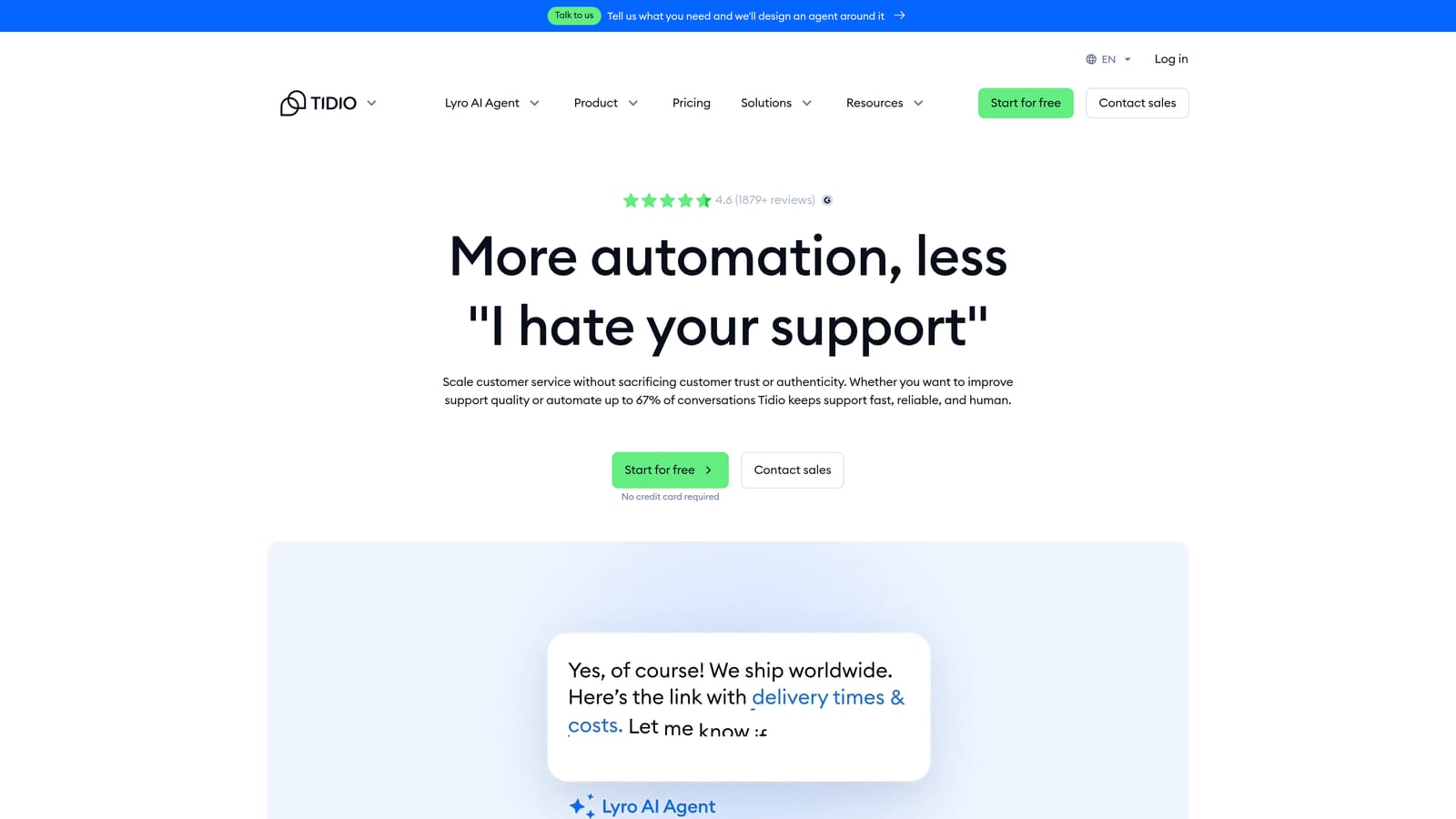
Tidio is a lightweight AI chat platform featuring Lyro, a conversational AI bot designed to handle FAQ-style questions with minimal setup, making it an accessible entry point for smaller EdTech teams.
Where This Tool Shines
Tidio's value proposition is simplicity. Lyro AI can be deployed quickly, draws from your existing FAQ or help content, and handles a solid range of common questions without requiring a dedicated implementation project. For course creators or small education platforms that need AI chat but can't justify enterprise pricing or setup time, this is a meaningful advantage.
The no-code automation flow builder lets non-technical team members build support sequences, such as a troubleshooting flow for login issues or a course access guide, without developer involvement. Human takeover is built into the live chat interface, so escalation is straightforward when Lyro reaches its limits.
Key Features
Lyro AI Chatbot: Handles FAQ-style questions autonomously, drawing from your help content to answer common queries without agent involvement.
No-Code Flow Builder: Build custom automation sequences visually, without technical expertise, useful for teams without dedicated developer resources.
Live Chat with Human Takeover: Agents can step into any conversation instantly, with full chat history visible for seamless handoff.
E-Commerce Integrations: Native Shopify integration and other e-commerce connections are useful for course creators selling directly to learners.
Free Tier: Meaningful functionality available without payment, allowing smaller teams to start and scale as volume grows.
Best For
Independent course creators, small EdTech startups, and education platforms with lower ticket volumes that need AI chat without the complexity or cost of enterprise platforms. Less suited for large institutions with complex routing needs or deep LMS integration requirements.
Pricing
Free tier available. Paid plans start at approximately $29 per month. Confirm current plan details directly with Tidio.
6. Drift (Salesloft)
Best for: Higher-ed and professional certification platforms where support and enrollment conversations overlap
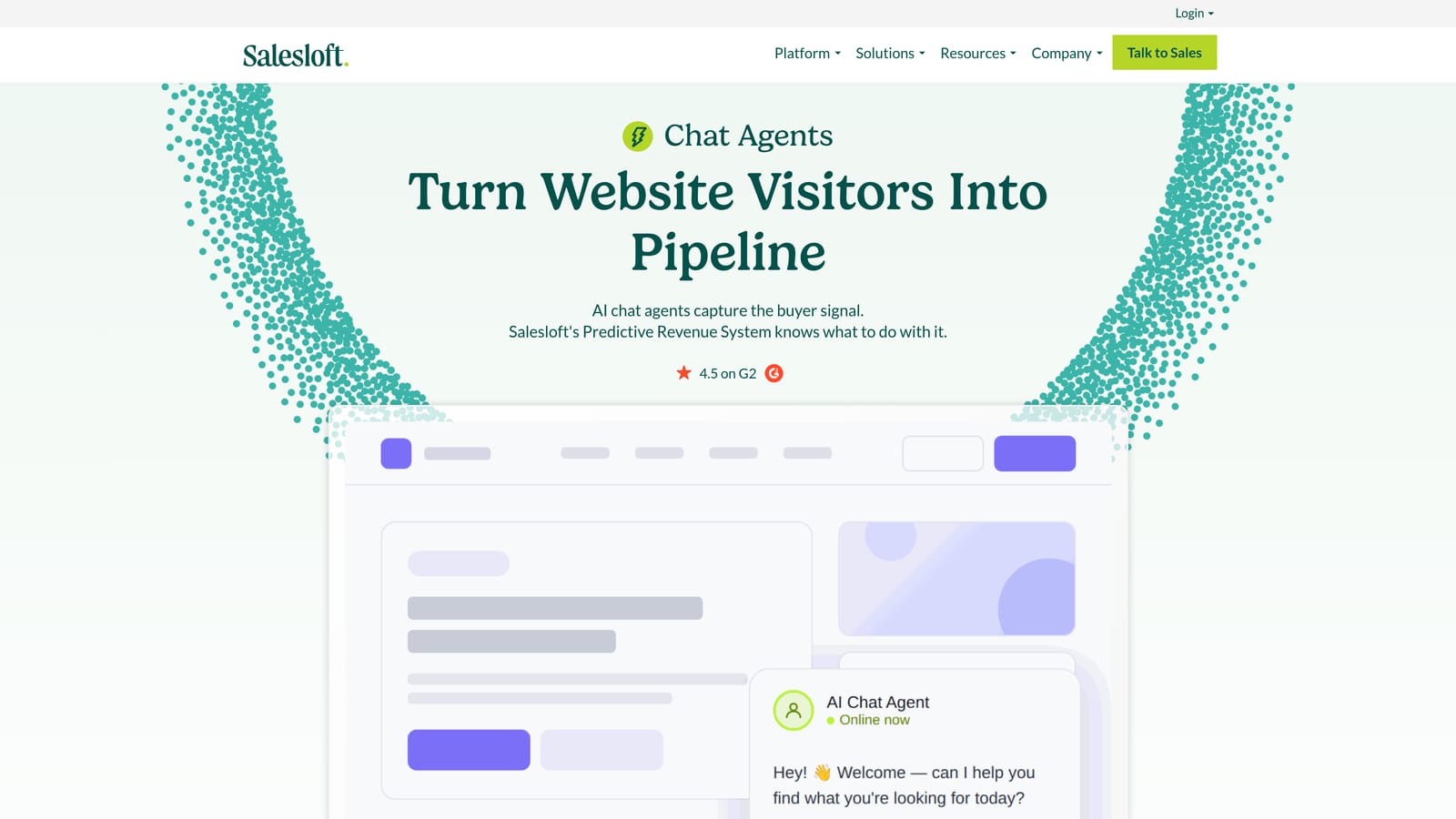
Drift, now part of Salesloft, is a conversational AI platform used by education platforms where the line between support and enrollment is blurry, particularly in higher-ed admissions and professional certification contexts.
Where This Tool Shines
Drift's AI playbooks are built around intent routing: the system identifies whether a visitor is asking a support question or exploring enrollment options and routes accordingly. For professional learning platforms or universities where a prospective student's first interaction might be a support-adjacent question about program requirements, this dual-purpose capability is genuinely useful.
Meeting scheduling built into chat flows is another differentiator. Admissions teams or enrollment advisors can move from a chat conversation to a booked call without leaving the interface, which reduces friction in high-touch enrollment processes that many education platforms still rely on.
Key Features
AI Playbooks with Intent Routing: Identifies whether a user's intent is support or enrollment-related and routes them appropriately, without requiring manual rules for every scenario.
Conversational Landing Pages: Enables course or program inquiries to happen directly in the chat interface, reducing drop-off from static forms.
Integrated Meeting Scheduling: Advisors or support leads can book calls directly from chat, useful for complex enrollment or onboarding conversations.
CRM Integration: Connects with major CRM platforms to provide full prospect and student context during conversations.
Conversation Analytics: Tracks conversation outcomes and pipeline influence, giving education teams visibility into how chat interactions affect enrollment and retention.
Best For
Higher-ed institutions, professional certification platforms, and EdTech companies where support and sales or enrollment conversations frequently overlap. Less suited for pure support use cases where enrollment context isn't relevant.
Pricing
Enterprise pricing. Contact Drift or Salesloft directly for a quote tailored to your organization's needs.
7. Capacity
Best for: Education institutions managing complex documentation and both student-facing and internal IT support
Capacity is a knowledge automation and helpdesk AI platform designed for organizations with deep, structured documentation needs, with a track record in education institutions managing layered support operations.
Where This Tool Shines
Capacity's core approach centers on building a structured knowledge base that the AI actively learns from and draws on to answer questions. For education institutions with extensive policy documentation, IT knowledge bases, and multi-department support needs, this architecture suits the complexity well. The platform handles both student-facing support and internal IT helpdesk functions, which is useful for universities or larger EdTech companies running parallel support operations.
Workflow automation for multi-step support processes is another strength. Complex issues that require multiple handoffs, such as a student disputing a grade that involves the instructor, registrar, and IT team, can be automated into structured workflows rather than managed manually through email chains.
Key Features
AI-Powered Knowledge Base: Learns from support interactions over time, continuously improving the accuracy and relevance of automated answers.
Multi-Channel FAQ Deflection: Handles common questions across chat, email, and SMS before they reach a human agent.
Helpdesk Ticketing with AI Triage: Routes incoming tickets based on content and urgency, with AI handling classification automatically.
Workflow Automation: Builds multi-step support processes for complex issues that span multiple teams or departments.
Deep Documentation Support: Designed for organizations with extensive, structured content that needs to be surfaced accurately in AI responses.
Best For
Universities, large educational institutions, and EdTech platforms with complex internal documentation, multi-department support operations, or a need to serve both students and internal staff from the same platform.
Pricing
Contact Capacity directly for pricing. Typically structured for enterprise and mid-market organizations with more complex support environments.
8. Kustomer
Best for: EdTech companies wanting support data and full user history in a single, CRM-native view
Kustomer is a CRM-native customer support platform that combines AI-powered automation with a complete customer timeline, making it a strong fit for EdTech companies that want support conversations connected to enrollment history, payment data, and course progress.
Where This Tool Shines
The unified customer timeline is Kustomer's defining feature. When a student contacts support about a billing issue, the agent sees their full history: courses enrolled, payment records, previous support interactions, and behavioral signals, all in one view. For EdTech companies where support context is often scattered across a CRM, LMS, and billing system, this consolidation meaningfully improves both agent efficiency and response quality.
Proactive outreach based on customer behavior signals is another capability worth noting. Education platforms can configure triggers around course inactivity, failed payments, or access issues to reach out before a student submits a support ticket, reducing reactive volume and improving retention outcomes.
Key Features
Unified Customer Timeline: Combines enrollment, payment, and support history in a single view, giving agents full context without switching between systems.
AI-Powered Routing and Tagging: Automatically categorizes and routes tickets based on content, intent, and customer data, reducing manual triage.
Omnichannel Support: Handles email, chat, voice, and social channels within a unified interface, useful for education platforms serving students across multiple touchpoints.
Proactive Outreach: Triggers outbound messages based on behavioral signals such as course inactivity or failed payments, enabling support teams to get ahead of issues.
Lifecycle Reporting: Analytics span the full customer journey, not just support interactions, giving EdTech teams visibility into how support quality affects retention and revenue.
Best For
EdTech companies and online learning platforms where support data needs to connect with enrollment, billing, and course activity data. Particularly valuable for teams that want support to inform retention strategy, not just resolve tickets.
Pricing
Enterprise pricing. Contact Kustomer directly for a quote based on your team size and support volume.
Choosing the Right Tool for Your Education Platform
The right choice here depends heavily on your platform's size, complexity, and where your biggest support pain points live. Here's a quick way to think through it.
If you want AI built into the support experience from the ground up, with page-aware context, automatic bug detection, and business intelligence surfaced from every ticket, Halo AI is the strongest fit, particularly for SaaS EdTech teams that want support to scale without scaling headcount.
If you're on an enterprise helpdesk already, Zendesk remains the most configurable foundation, and Intercom is the strongest choice for SaaS teams that want a mature, well-documented AI chat platform with a large ecosystem.
For mid-market teams watching budget, Freshdesk offers the best balance of capability and accessible pricing. Tidio is the practical pick for smaller platforms and course creators who need AI chat without enterprise overhead.
If your support and enrollment conversations overlap, particularly in higher-ed or professional certification, Drift's intent-routing playbooks address that specific dynamic well. Capacity suits institutions with complex internal documentation and multi-department support needs. Kustomer is the right call when you need support data connected to a full customer timeline including enrollment and payment history.
Your support team shouldn't scale linearly with your customer base. Let AI agents handle routine tickets, guide users through your product, and surface business intelligence while your team focuses on complex issues that need a human touch. See Halo in action and discover how continuous learning transforms every interaction into smarter, faster support.