9 Best Customer Support AI Tools for Mobile Apps in 2026
Mobile app teams can no longer afford slow, ticket-based support — and the best Customer Support AI For Mobile Apps tools in 2026 make that a non-issue. This guide ranks 9 leading solutions on AI capability, mobile integration depth, and automation quality, so you can find the right fit for your product stage and stack.
 Grant CooperFounder14 min read
Mobile app users have zero patience for slow support. When someone hits a bug at 11pm or gets stuck mid-onboarding, they don't want to submit a ticket and wait 48 hours. They want an answer now, inside the app, without being redirected somewhere else. A delayed response isn't just frustrating — it's a direct path to churn.
AI-powered customer support has changed what's possible for mobile product teams. The best tools today resolve tickets autonomously, route complex cases to humans seamlessly, and surface product intelligence from every interaction. But "AI support tool" covers a wide spectrum: from legacy helpdesks with a chatbot bolted on, to genuinely intelligent agents that understand context, learn continuously, and integrate deeply with your product stack.
This list focuses on tools that actually serve mobile app teams well. We evaluated each on AI capability, mobile integration depth, automation quality, and fit for product-led teams at different stages. Here are the top options worth considering in 2026.
1. Halo AI
Best for: Mobile and SaaS product teams wanting AI-first support with deep stack integrations and business intelligence.
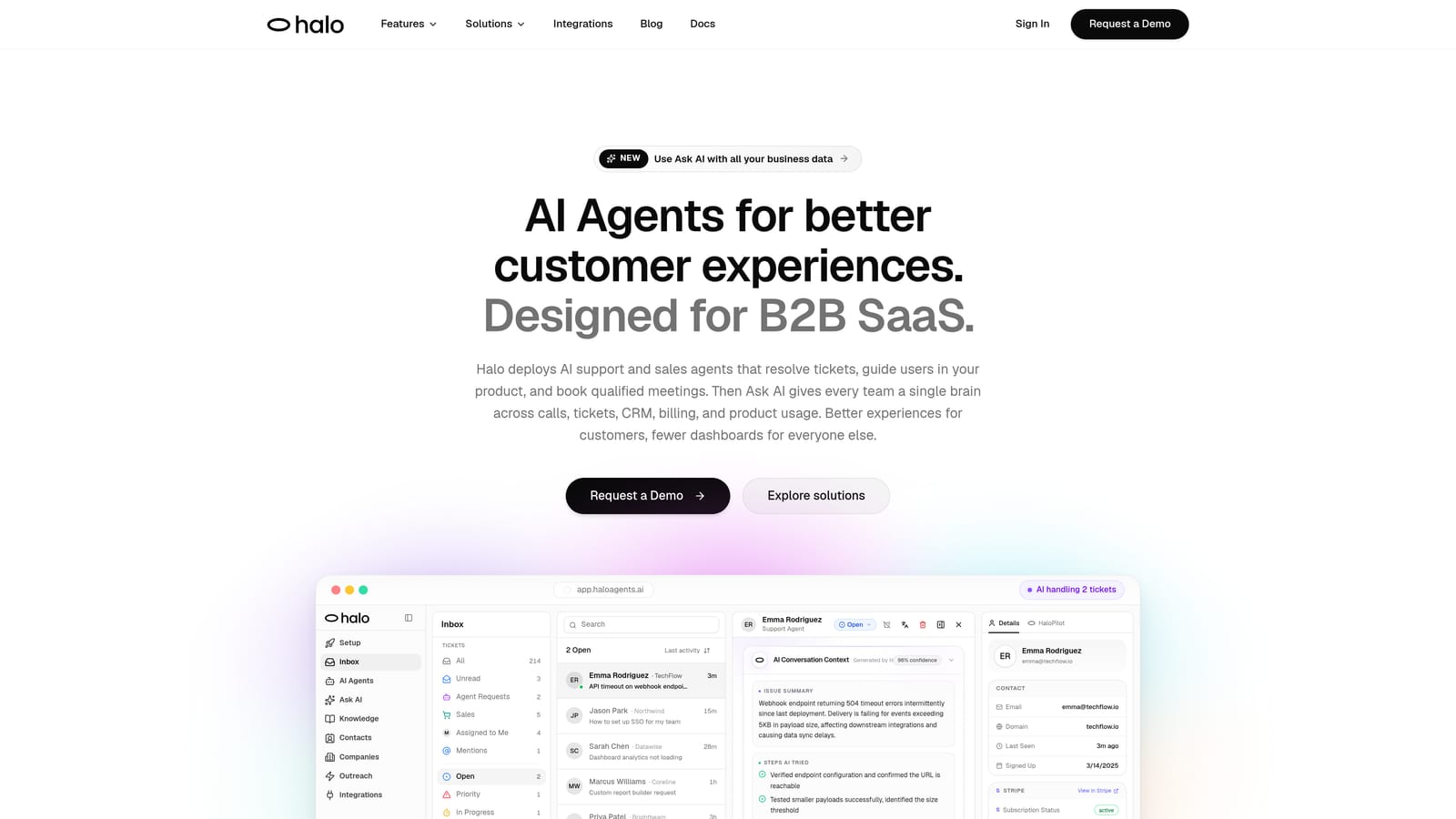
Halo AI is an AI-first customer support platform built from the ground up around intelligent agents, not a traditional helpdesk with AI features added later.
Where This Tool Shines
What separates Halo from most tools on this list is its page-aware architecture. The chat widget understands what screen or context the user is currently on, which means the AI agent can provide guidance that's actually relevant to where the user is stuck. For mobile web experiences and web-based product UIs, this translates to support that feels contextual rather than generic.
Beyond resolving tickets, Halo's smart inbox surfaces business intelligence signals: customer health indicators, revenue anomalies, and product usage patterns extracted from support interactions. This turns your support function into a source of strategic insight, not just a cost center.
Key Features
Page-Aware Chat Widget: Understands the user's current screen and context to deliver relevant, situation-specific guidance automatically.
Intelligent AI Agents: Resolve tickets autonomously and continuously learn from every interaction, improving accuracy over time without manual retraining.
Auto Bug Ticket Creation: Detects bug reports mid-conversation and routes them directly to Linear or connected engineering tools, cutting manual triage entirely.
Smart Inbox with Business Intelligence: Surfaces customer health signals, revenue anomalies, and product insights beyond standard support metrics.
Live Agent Handoff: Escalates complex issues to human agents with full conversation context preserved, so users never have to repeat themselves.
Deep Integrations: Connects natively with Linear, Slack, HubSpot, Intercom, Stripe, Zoom, PandaDoc, and Fathom for a fully connected support operation.
Best For
Halo is a strong fit for B2B SaaS and mobile product teams that want AI agents handling routine tickets autonomously while generating product and revenue intelligence as a byproduct. It's particularly well-suited for teams that are tired of managing a disconnected stack of support, engineering, and CRM tools.
Pricing
Contact for pricing. A demo is available at haloagents.ai to explore fit for your team's specific needs.
2. Intercom
Best for: Growth-stage mobile apps already embedded in the Intercom ecosystem seeking AI-augmented messaging.
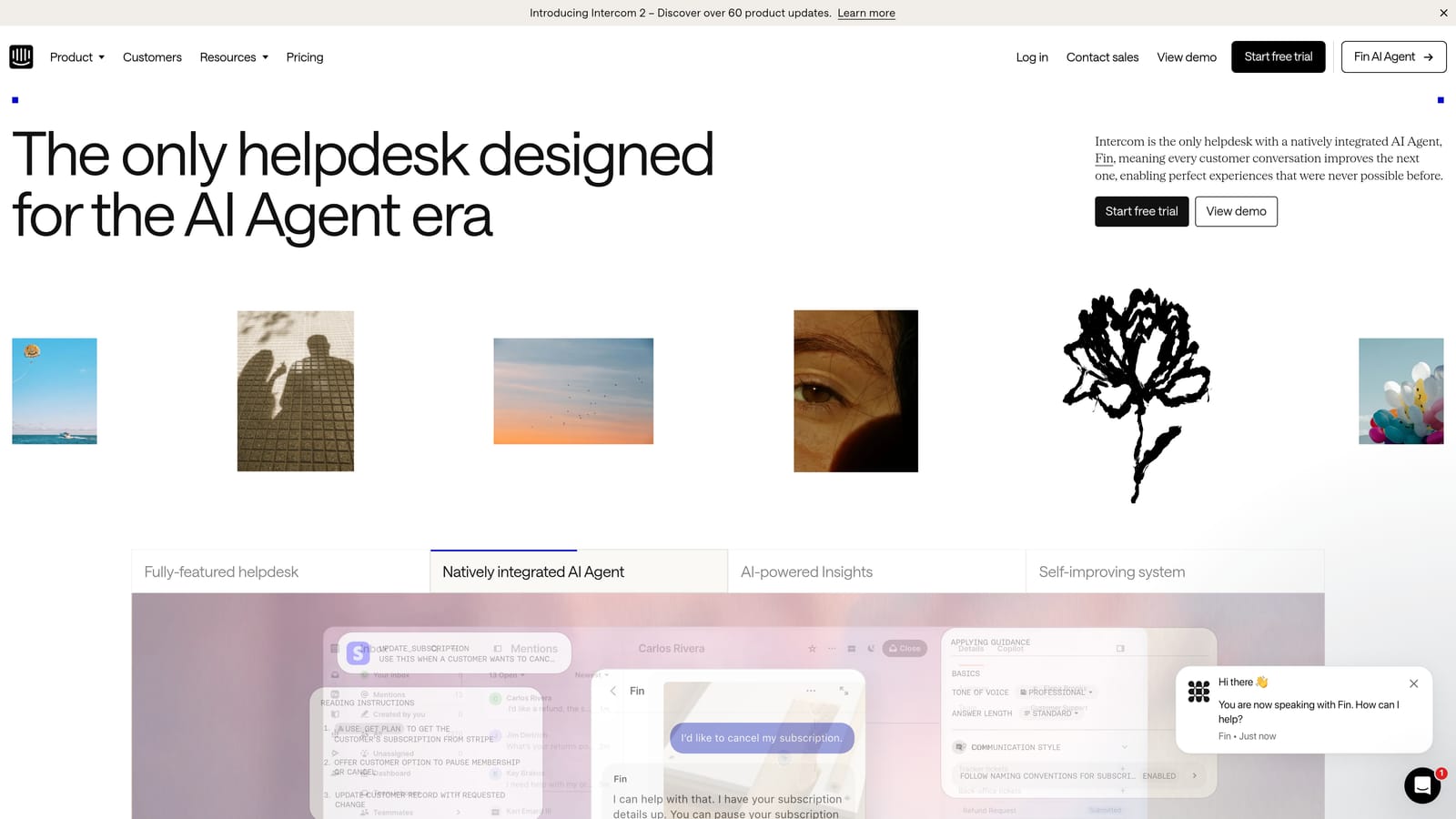
Intercom is a mature customer messaging platform with a well-established mobile SDK and a capable AI agent layer called Fin.
Where This Tool Shines
Intercom's native iOS and Android SDKs are among the most polished in the industry, making in-app messaging feel like a natural part of the product rather than a third-party overlay. Fin, the AI agent, uses your existing help content to resolve common queries without human involvement, and it handles a meaningful share of routine volume for teams that have invested in a solid knowledge base.
The platform consolidates inbox, tickets, and product tours in one place, which reduces context-switching for support teams managing multiple channels. For teams already using Intercom for product communication, adding AI support is a natural extension rather than a new tool entirely.
Key Features
Fin AI Agent: Resolves common queries autonomously using your existing help content with minimal setup required.
Native Mobile SDKs: Polished iOS and Android SDKs for seamless in-app messaging experiences.
Unified Platform: Combines inbox, tickets, and product tours in a single interface for support and product teams.
Customer Data in Agent View: Conversation history and user data surface automatically for agents handling escalations.
Large Integration Marketplace: Connects with hundreds of tools across CRM, billing, and product analytics categories.
Best For
Teams already using Intercom for in-app messaging and product tours who want to layer AI resolution on top of an existing setup. Less ideal for teams starting fresh who want an AI-native architecture from the beginning.
Pricing
Plans start at approximately $39/month. AI resolution pricing varies by volume, so costs can scale significantly for high-traffic mobile apps.
3. Zendesk AI
Best for: Enterprise mobile companies with large support operations, compliance requirements, or multiple product lines.
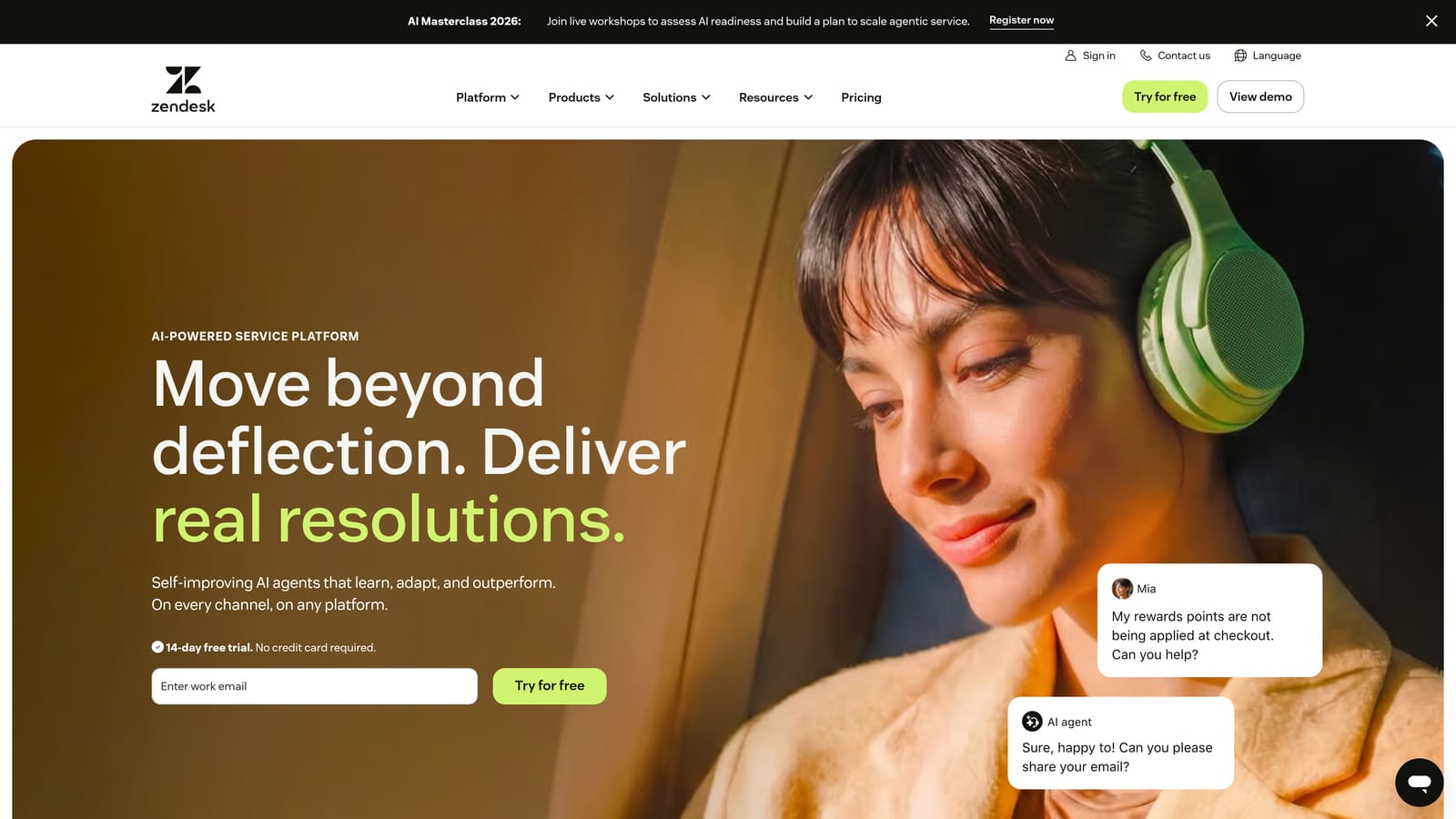
Zendesk AI is an enterprise-grade helpdesk platform with AI triage, intelligent routing, agent assist, and a proven mobile SDK.
Where This Tool Shines
Zendesk's AI layer adds intent detection, sentiment analysis, and automated macros on top of a helpdesk infrastructure that many large organizations already rely on. For mobile teams embedded in larger enterprises, this means AI capability without ripping out existing workflows. The agent assist features surface relevant knowledge articles and suggest replies in real time, reducing handle time for agents managing escalations.
The platform's reporting and SLA management capabilities are among the most mature in the market. If your mobile app operates in a regulated industry or needs granular compliance controls, Zendesk's enterprise tier covers those requirements in ways that newer AI-native tools often don't yet match.
Key Features
AI Triage: Intent detection and sentiment analysis automatically categorize and prioritize incoming tickets.
Intelligent Routing: Routes tickets to the right agent or team based on content, customer tier, and configured rules.
Agent Assist: Surfaces suggested replies and relevant knowledge articles in real time during live conversations.
Mobile SDK: Available for both iOS and Android with solid documentation and community support.
Advanced Reporting and SLA Management: Detailed analytics and configurable SLA policies for enterprise support operations.
Best For
Large mobile app companies or enterprise product teams with complex support operations, multiple agents, and compliance requirements. Can feel heavyweight and expensive for smaller teams or early-stage startups.
Pricing
Suite plans start at approximately $55/agent/month. AI add-ons are priced separately, so total cost can increase meaningfully depending on features selected.
4. Freshdesk (Freddy AI)
Best for: Mid-market mobile teams wanting solid AI automation at a more accessible price point than enterprise alternatives.
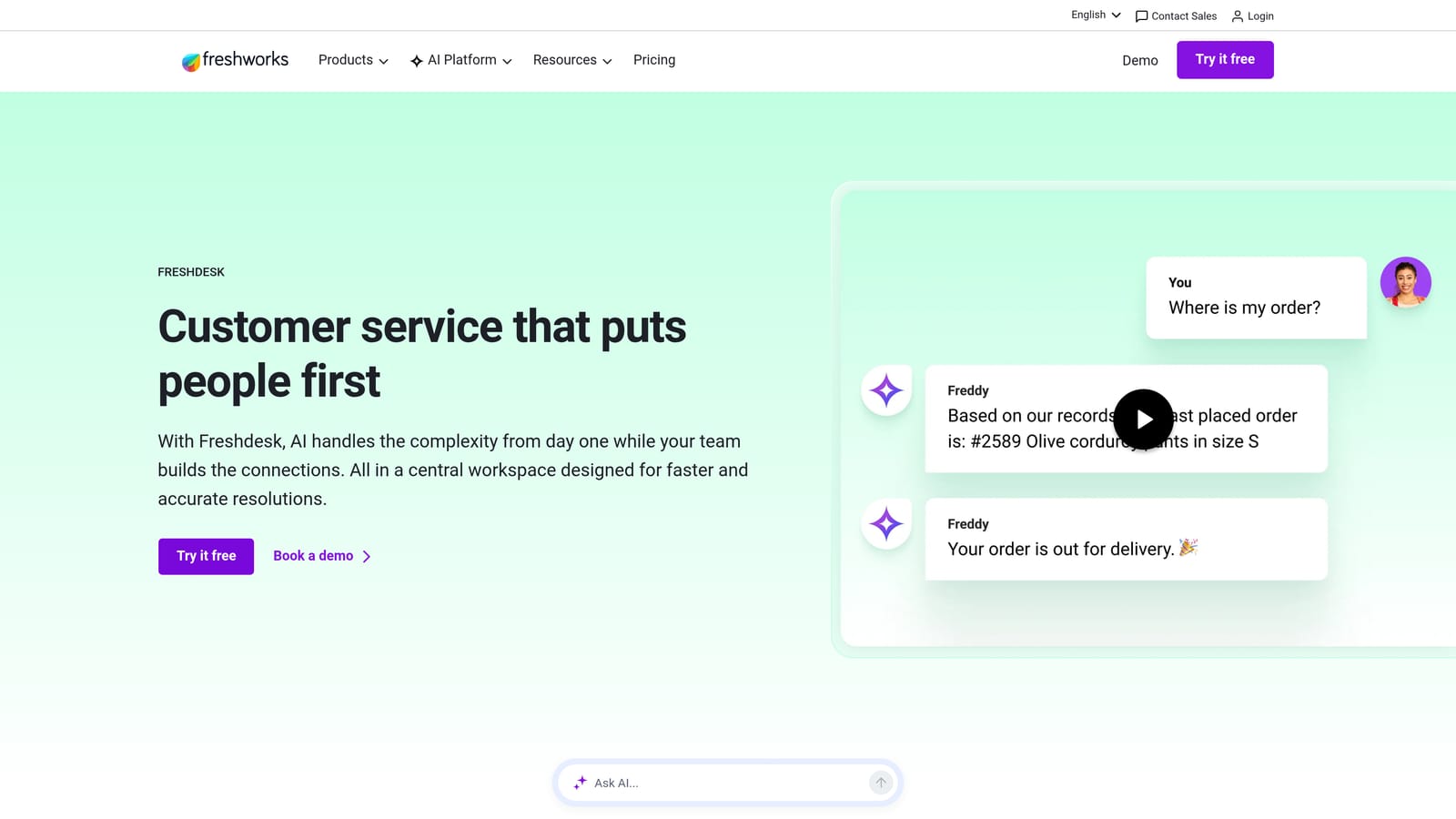
Freshdesk is a mid-market helpdesk platform with Freddy AI handling ticket classification, auto-suggested responses, and self-service deflection.
Where This Tool Shines
Freddy AI covers the core automation needs most mid-market teams actually care about: classifying incoming tickets, suggesting responses to agents, and deflecting common queries through a self-service bot before they become tickets at all. The mobile SDK is available for both iOS and Android, and the omnichannel support spans email, chat, phone, and social without requiring separate tool purchases.
Freshdesk's pricing structure makes it genuinely accessible for teams that need AI-augmented support but aren't ready to commit to enterprise contracts. The free tier lets small teams get started, and the paid plans scale reasonably as headcount and ticket volume grow.
Key Features
Freddy AI Ticket Classification: Automatically categorizes and tags incoming tickets to reduce manual triage work.
Auto-Suggested Responses: Freddy surfaces relevant response suggestions to agents based on ticket content and knowledge base.
Freddy Self Service Bot: Handles common queries through in-app and web chat before they reach the support queue.
Mobile SDK: iOS and Android SDKs for in-app support integration.
Omnichannel Support: Unified inbox across email, chat, phone, and social channels.
Best For
Mid-market mobile app teams that need reliable AI automation across channels without the cost or complexity of enterprise platforms. Also a strong option for teams already using other Freshworks products.
Pricing
Free tier available. Paid plans start at approximately $15/agent/month, making it one of the more accessible options on this list.
5. Tidio
Best for: Early-stage teams and consumer mobile apps needing fast AI chat deployment with minimal configuration.
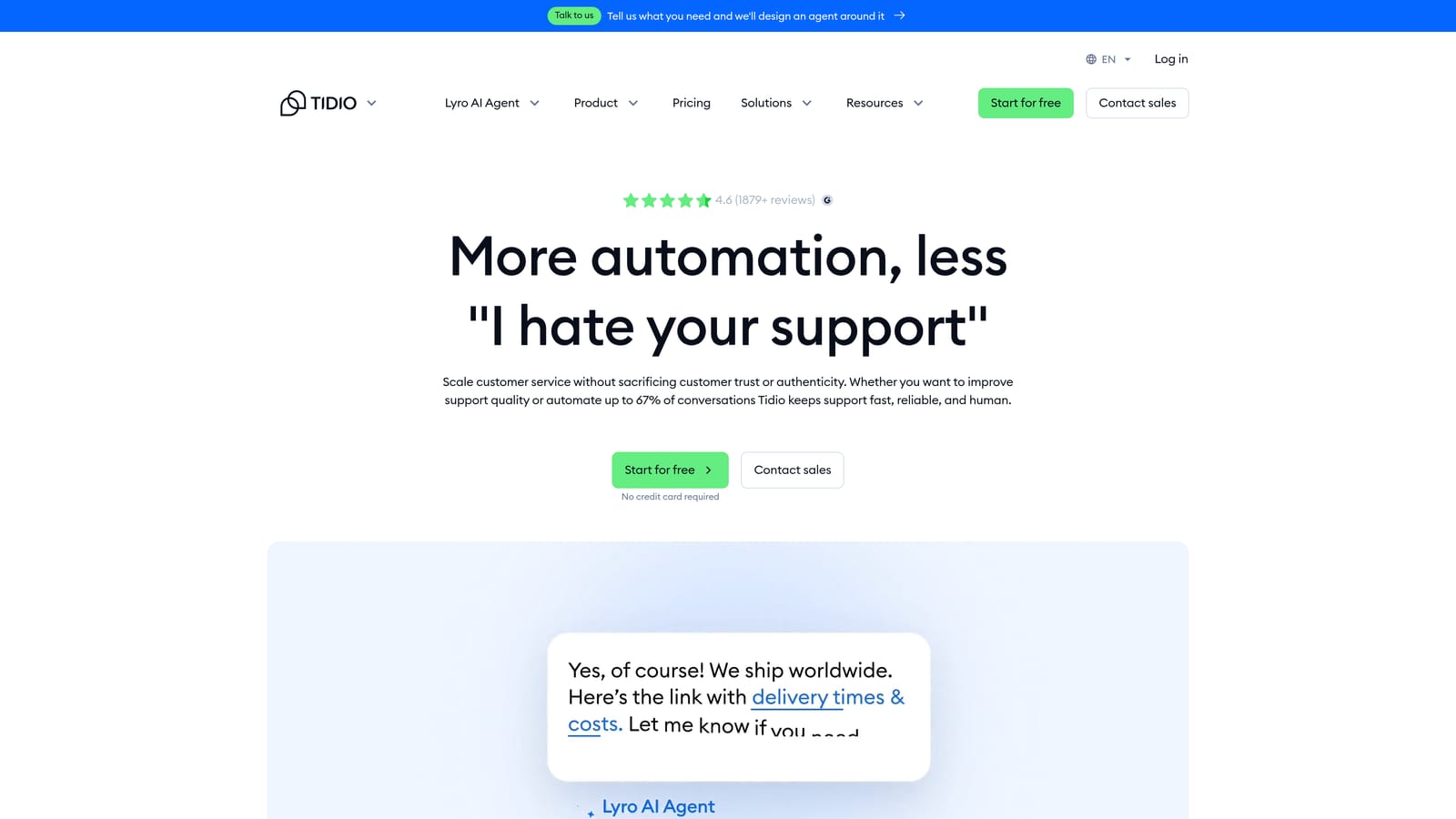
Tidio is an accessible AI chat platform with a Lyro AI chatbot designed for rapid setup and straightforward automation flows.
Where This Tool Shines
Tidio's main advantage is speed to value. Lyro AI can handle common queries with minimal configuration overhead, which matters when you're a small team trying to reduce support load quickly without a dedicated implementation project. The visual automation builder makes it possible to create support flows without engineering involvement, and the live chat widget is mobile-responsive out of the box.
For consumer apps or early-stage B2C mobile products, Tidio hits a sweet spot of affordability and ease of use. The free tier is genuinely functional for small teams, and the Lyro AI plans are priced accessibly relative to enterprise alternatives.
Key Features
Lyro AI Chatbot: Handles common support queries autonomously with low configuration requirements and fast initial setup.
Visual Automation Builder: Drag-and-drop flow builder for creating support automations without writing code.
Live Chat Widget: Mobile-responsive widget that works across web and mobile browser contexts.
Ecommerce and CRM Integrations: Connects with popular ecommerce platforms and CRM tools for consumer-facing teams.
Free Tier: Functional free plan for small teams testing AI chat before committing to paid plans.
Best For
Early-stage consumer apps, small teams, or mobile products with straightforward support needs. Less suited for complex B2B workflows, deep engineering integrations, or teams needing advanced business intelligence from support data.
Pricing
Free tier available. Lyro AI plans start at approximately $29/month, making it one of the most accessible entry points on this list.
6. Drift (Salesloft)
Best for: B2B mobile apps where support interactions frequently lead to expansion or upsell conversations.
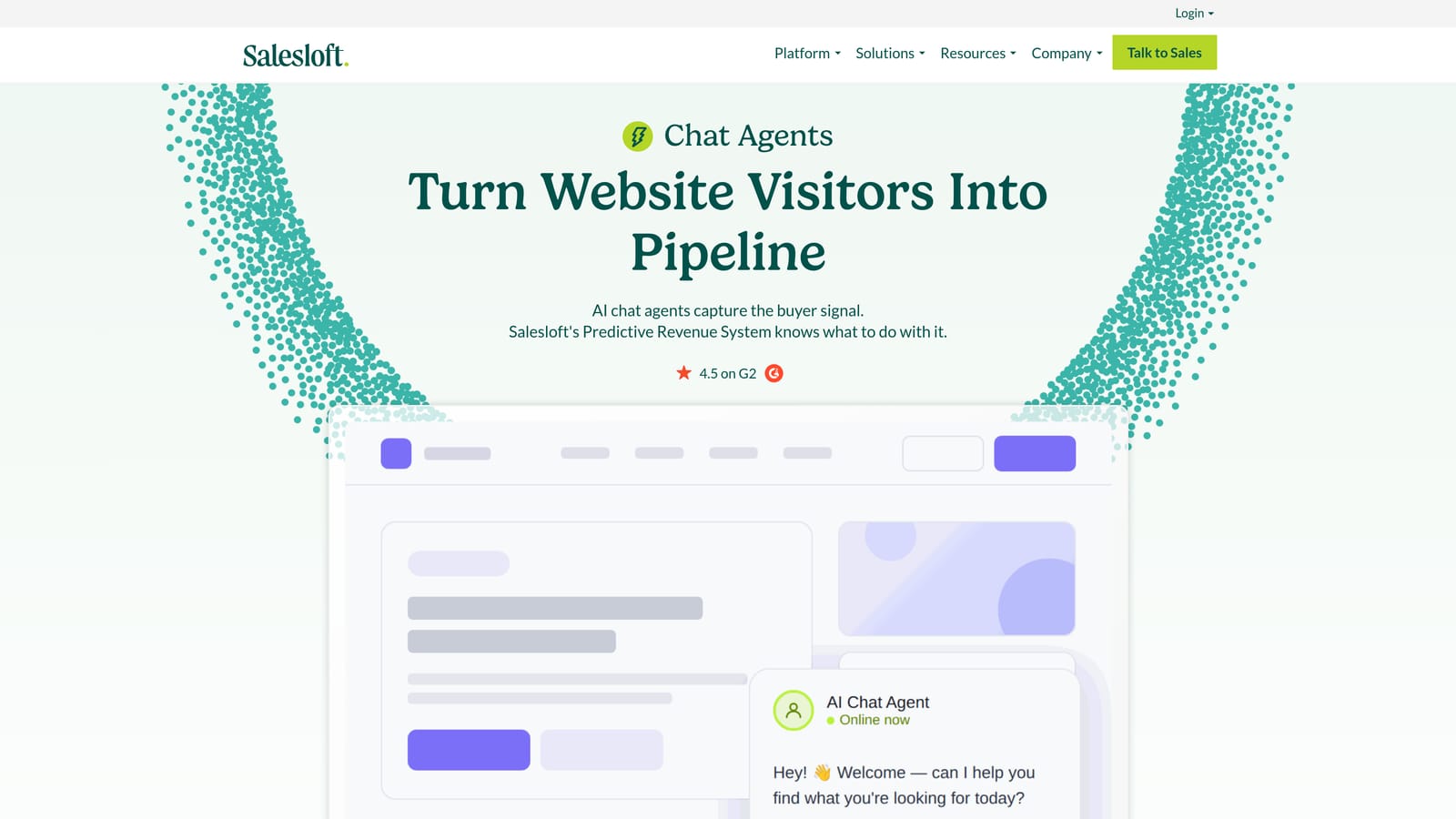
Drift is a revenue-focused conversational AI platform, now part of Salesloft, that blends support qualification with sales engagement.
Where This Tool Shines
Drift occupies a unique position on this list: it's less focused on pure support automation and more focused on using conversations as a revenue signal. For B2B mobile apps where a support interaction often surfaces a renewal risk, an expansion opportunity, or a product feedback signal, Drift's playbook-based routing and CRM integration can bridge the gap between support and revenue teams.
The conversational AI handles both support queries and sales qualification within the same interaction, which can reduce handoff friction for teams where support and sales share responsibility for account health. Real-time notifications alert sales reps when high-value accounts are active in a conversation.
Key Features
Conversational AI: Handles support queries and sales qualification simultaneously within a single conversation flow.
Playbooks: Route conversations based on detected intent, account tier, or user behavior patterns.
Account-Based Targeting: Identify and prioritize known users or high-value accounts in real time.
CRM and Revenue Tool Integration: Connects with Salesforce, HubSpot, and other revenue stack tools.
Real-Time Sales Notifications: Alerts sales reps when relevant accounts are active in a conversation for immediate handoff.
Best For
B2B mobile product teams with a strong expansion motion, where support and sales overlap significantly. Less ideal for teams focused purely on support efficiency or consumer apps where revenue conversations aren't part of the support workflow.
Pricing
Premium pricing. Contact Salesloft directly for current Drift pricing, as it has evolved since the acquisition.
7. Kustomer
Best for: High-volume consumer mobile apps that need a unified customer timeline across every support channel.
Kustomer is a CRM-native support platform with AI automation and a unified customer view, built for teams managing large interaction volumes.
Where This Tool Shines
Kustomer's defining feature is the unified customer timeline: every interaction across email, chat, SMS, in-app, and social channels appears in a single chronological view. For consumer mobile apps where users might contact support through multiple channels about the same issue, this eliminates the fragmented view that frustrates both agents and customers.
The CRM data embedded in every support conversation means agents always have purchase history, product usage, and prior interaction context at hand. AI-powered routing and suggested responses reduce handle time, while workflow automation handles the repetitive tasks that otherwise consume agent capacity.
Key Features
Unified Customer Timeline: All interactions across every channel displayed in a single chronological view per customer.
AI-Powered Routing and Suggested Responses: Automatically routes tickets and surfaces response suggestions based on conversation content.
Omnichannel Support: Covers in-app chat, email, SMS, and social channels from a single platform.
Embedded CRM Data: Purchase history, product usage, and customer attributes visible in every support conversation.
Workflow Automation: Automates repetitive support tasks and processes to reduce manual agent workload.
Best For
Consumer mobile apps with high interaction volume across multiple channels. Less common in pure B2B SaaS contexts, and the per-agent pricing may be a consideration for smaller teams.
Pricing
Starts at approximately $89/agent/month. Best evaluated for teams where the unified CRM-support architecture justifies the investment.
8. Ada
Best for: Global mobile apps needing enterprise-grade AI automation with multilingual support and strong compliance controls.
Ada is a no-code AI agent builder with enterprise guardrails, multilingual capability, and integrations with major helpdesk platforms.
Where This Tool Shines
Ada's focus is narrow and deliberate: it builds AI agents that automate support interactions at scale, without requiring engineering resources to configure or maintain them. The no-code visual flow editor makes it possible for support and product teams to build and iterate on AI agents independently. For global mobile apps, Ada's multilingual support covers a wide range of languages, which is a meaningful differentiator when your user base spans multiple regions.
The enterprise guardrails and content controls give compliance and legal teams confidence that the AI agent won't go off-script. Ada integrates with Zendesk, Salesforce, and other major helpdesks rather than replacing them, which makes it a strong addition for teams already invested in an existing support infrastructure.
Key Features
No-Code AI Agent Builder: Visual flow editor for building and iterating on AI agents without engineering involvement.
Multilingual Support: Handles conversations in multiple languages, suited for global mobile app audiences.
Enterprise Guardrails: Content controls and compliance safeguards to keep AI responses within defined boundaries.
Helpdesk Integrations: Connects with Zendesk, Salesforce, and other major platforms rather than replacing existing infrastructure.
Resolution Analytics: Detailed reporting on AI resolution rates, deflection, and conversation outcomes.
Best For
Global mobile apps with enterprise compliance requirements and multilingual user bases. Teams that want AI automation layered on top of an existing helpdesk rather than a full platform replacement.
Pricing
Enterprise pricing. Contact Ada directly for a quote tailored to your volume and requirements.
9. Zoho Desk (Zia AI)
Best for: Teams already using Zoho CRM or the broader Zoho suite who want integrated support AI without additional vendor complexity.
Zoho Desk is a helpdesk platform within the Zoho ecosystem, with Zia AI providing sentiment analysis, anomaly detection, and automated ticket tagging.
Where This Tool Shines
Zia AI's anomaly detection is a standout feature: it monitors ticket volume patterns and flags unusual spikes that might indicate a product incident, a deployment issue, or a sudden surge in a specific problem category. For mobile app teams, this kind of early warning can mean the difference between catching a bug quickly and discovering it through a wave of negative reviews.
The deep integration with Zoho CRM means customer context flows naturally between sales and support without custom integrations. For teams already operating in the Zoho ecosystem, this cohesion is a genuine advantage. For teams outside that ecosystem, the value proposition is less compelling compared to more specialized alternatives.
Key Features
Zia Sentiment Analysis: Automatically detects sentiment in incoming tickets to prioritize urgent or at-risk interactions.
Anomaly Detection: Flags unusual spikes in ticket volume that may indicate product incidents or emerging issues.
Auto-Suggested Responses: Zia surfaces response suggestions based on ticket content and historical resolution patterns.
Zoho CRM Integration: Deep native integration with Zoho CRM and the broader Zoho product suite.
Mobile SDK and Agent App: SDK for iOS and Android, plus a dedicated mobile app for agents managing tickets on the go.
Best For
Mobile app teams already using Zoho CRM or other Zoho products who want a cohesive, integrated support experience without adding a new vendor. Less compelling as a standalone choice for teams outside the Zoho ecosystem.
Pricing
Free tier available. Paid plans start at approximately $14/agent/month, making it one of the most affordable options with AI features on this list.
Which Tool Is Right for Your Mobile Team?
The right tool depends heavily on your team's stage, stack, and what you actually need AI to do. Here's a quick orientation to help narrow it down.
Early-stage and lean teams: Tidio offers the fastest path to AI chat with minimal setup. Halo AI is worth exploring if you want AI-first architecture and business intelligence from day one, without the overhead of a traditional helpdesk.
Growth-stage mobile products: Halo AI, Intercom, and Freshdesk all serve this stage well. Intercom is the natural choice if you're already in that ecosystem. Freshdesk offers a strong balance of features and price. Halo AI stands out if contextual awareness, deep integrations, and continuous learning are priorities.
Enterprise mobile companies: Zendesk AI and Ada are built for scale, compliance, and complex support operations. Kustomer is worth considering for high-volume consumer apps that need a unified customer view across every channel.
Revenue-focused B2B mobile teams: Drift fits teams where support and sales overlap significantly. Halo AI is worth evaluating here too, given its smart inbox surfaces revenue signals and customer health indicators directly from support interactions.
Before committing to any platform, assess two things carefully: how deeply it integrates with your existing product stack, and whether the AI actually learns from interactions over time or simply applies static rules. Those two factors separate tools that get better with use from tools that plateau.
Your support team shouldn't scale linearly with your customer base. Let AI agents handle routine tickets, guide users through your product, and surface business intelligence while your team focuses on complex issues that need a human touch. See Halo in action and discover how continuous learning transforms every interaction into smarter, faster support.