9 Best Customer Support AI Platforms for Scaling Teams in 2026
Customer support AI platforms help scaling teams automate routine inquiries and reduce ticket backlogs while maintaining personalized service. This comprehensive guide evaluates nine leading customer support AI platforms for 2026, comparing their automation capabilities, ideal use cases, pricing, and technical requirements to help startups and enterprises find the right solution for their support volume and complexity needs.
 Grant CooperFounder12 min read
Support teams are drowning in tickets while customers expect instant, personalized responses around the clock. The gap between customer expectations and team capacity keeps widening—and throwing more headcount at the problem isn't sustainable.
Customer support AI platforms have emerged as the solution, automating routine inquiries while freeing human agents for complex issues that require empathy and judgment. But with dozens of platforms claiming AI capabilities, choosing the right one matters.
This guide breaks down nine leading customer support AI platforms, examining what each does best, who they're built for, and what you'll actually pay. Whether you're a startup handling your first thousand tickets or an enterprise managing millions, you'll find options that match your scale and technical requirements.
1. Halo AI
Best for: B2B SaaS teams seeking autonomous ticket resolution with continuous learning capabilities
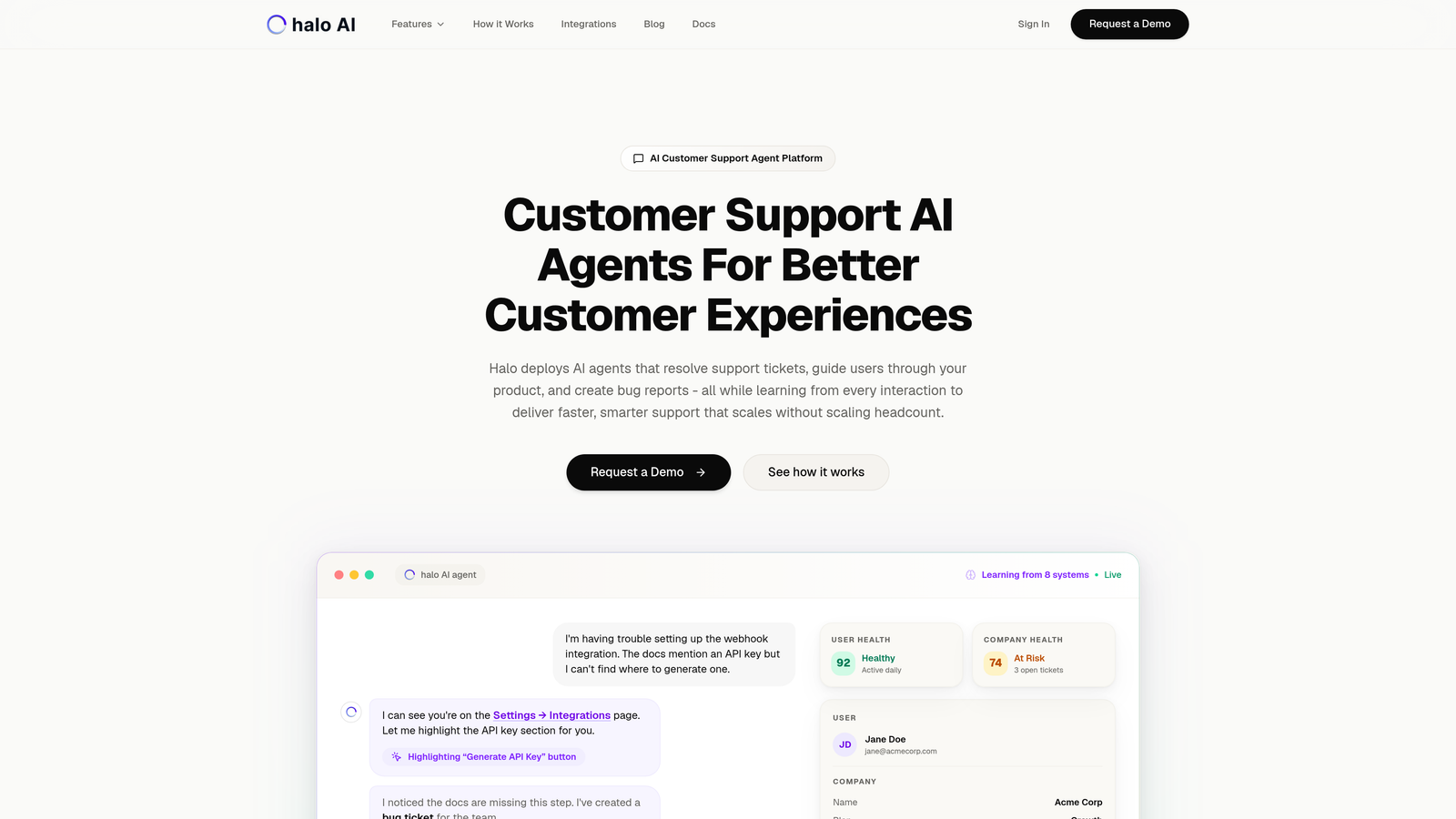
Halo AI is an AI-first customer support platform built around autonomous agents that resolve tickets, guide users through products, and learn from every interaction without requiring constant retraining.
Where This Tool Shines
Unlike traditional helpdesk systems with AI bolted on, Halo's architecture starts with intelligence. The platform doesn't just suggest responses to human agents—it handles complete ticket resolution independently, escalating only when genuine human judgment is needed.
The page-aware context sets Halo apart from conversational AI that operates in a vacuum. When a user struggles with a feature, Halo sees exactly what they're seeing, providing visual UI guidance that traditional chatbots can't match. This contextual awareness dramatically improves first-contact resolution rates.
Key Features
Autonomous AI Agents: Resolve support tickets end-to-end without human intervention, handling routine inquiries that typically consume 60-70% of support capacity.
Page-Aware Context: See what users see in real-time, enabling precise visual guidance through your product's interface rather than generic instructions.
Smart Inbox with Business Intelligence: Surface customer health signals, revenue intelligence, and anomaly detection beyond basic support metrics.
Auto Bug Ticket Creation: Automatically generate detailed bug reports in Linear when support interactions reveal product issues, closing the feedback loop.
Live Agent Handoff: Seamlessly escalate complex issues to human agents with full conversation context and customer history.
Best For
B2B SaaS companies using helpdesk systems like Zendesk, Freshdesk, or Intercom who need their support to scale without proportionally scaling headcount. Particularly valuable for product teams that want support interactions to inform product development through automated bug reporting and customer intelligence.
Pricing
Contact for custom pricing based on ticket volume and integration requirements. Designed for teams serious about autonomous support rather than basic chatbot functionality.
2. Intercom Fin
Best for: Existing Intercom users seeking GPT-4 powered automation within their current messaging platform
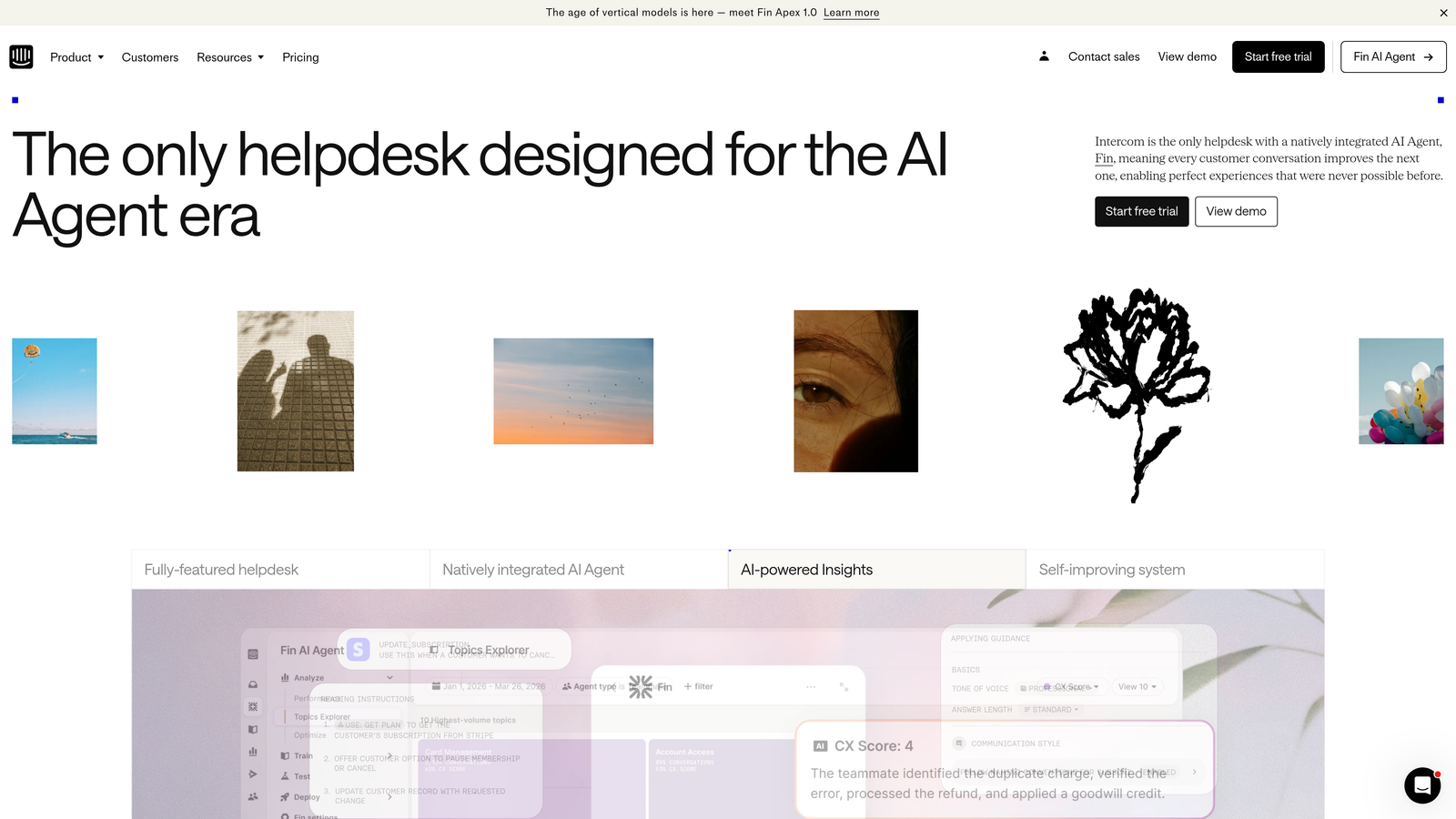
Intercom Fin is a GPT-4 powered AI assistant built natively into Intercom's customer messaging ecosystem, offering instant answers from your knowledge base.
Where This Tool Shines
If you're already invested in Intercom's platform, Fin integrates seamlessly without requiring new tools or workflows. The AI pulls directly from your existing help center content, custom articles, and conversation history to provide contextually relevant responses.
The handoff mechanism works particularly well—when Fin encounters a question beyond its scope, it transitions smoothly to human teammates with full conversation context. This prevents the frustrating experience of customers repeating themselves when escalated.
Key Features
GPT-4 Foundation with Custom Fine-Tuning: Leverages OpenAI's most advanced model while incorporating Intercom's proprietary training for customer support contexts.
Knowledge Base Integration: Automatically answers from your help center, custom sources, and conversation archives without manual training.
Seamless Human Handoff: Transitions complex conversations to support agents with complete context and conversation history preserved.
Multi-Language Support: Handles customer inquiries in dozens of languages without separate configuration for each.
Conversation Analytics: Track resolution rates, common questions, and knowledge gaps to improve both AI performance and documentation.
Best For
Companies already using Intercom for customer messaging who want to add AI capabilities without switching platforms. Works well for teams with comprehensive help center documentation that can serve as the AI's knowledge foundation.
Pricing
Charges $0.99 per resolution on top of your existing Intercom subscription. Costs scale with usage, making it predictable but potentially expensive for high-volume support operations.
3. Zendesk AI
Best for: Enterprise organizations with complex support operations requiring deep customization and extensive integrations
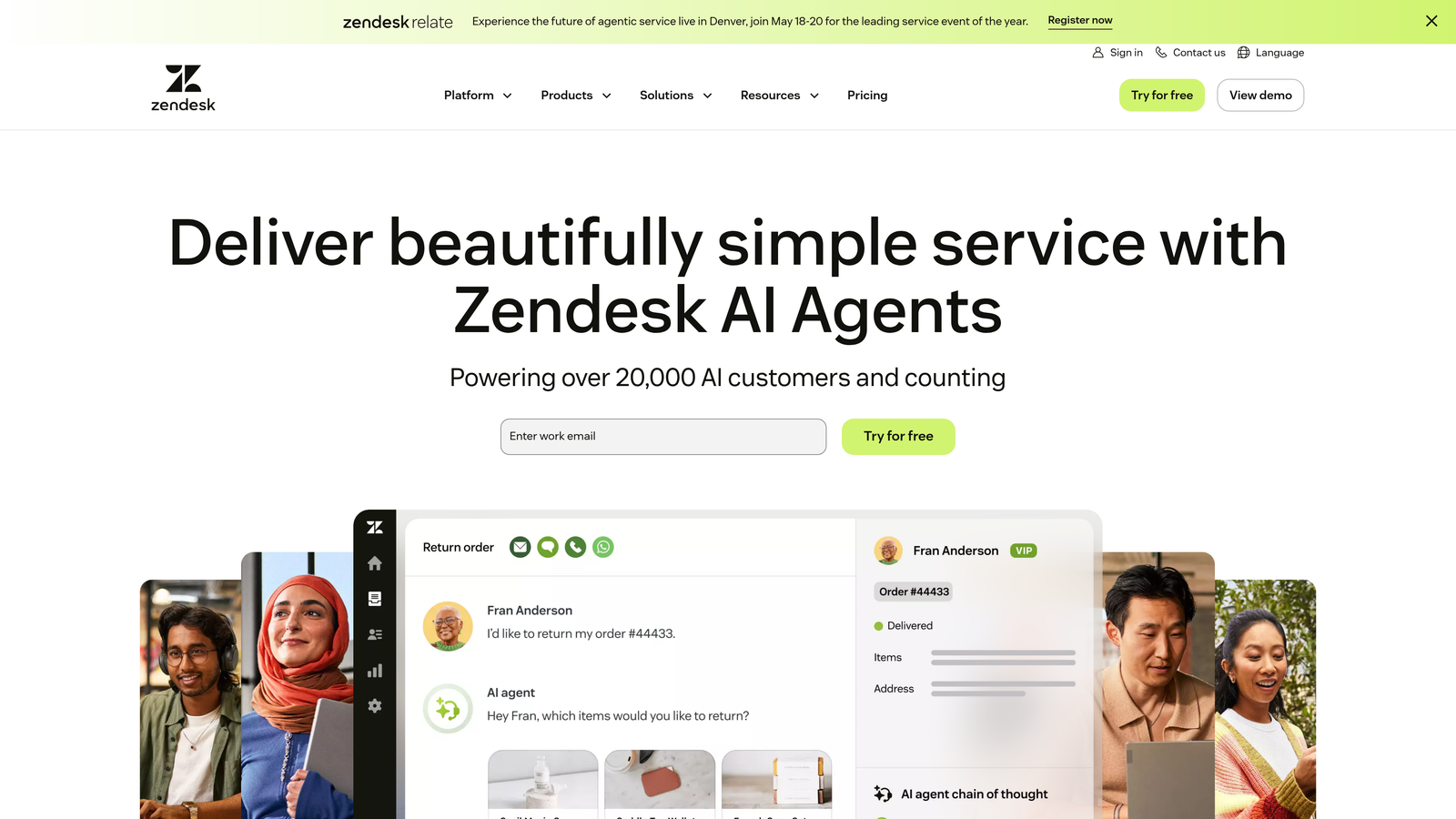
Zendesk AI is an enterprise-grade AI layer built onto Zendesk's established ticketing system, offering intelligent routing, agent assistance, and generative content creation.
Where This Tool Shines
Zendesk's decades of support data inform their AI models, providing intent detection and routing that genuinely understands ticket complexity. The system doesn't just look at keywords—it analyzes context, sentiment, and historical patterns to determine which team should handle each inquiry.
The marketplace ecosystem gives Zendesk an edge for companies with complex tech stacks. With thousands of pre-built integrations, you can connect Zendesk AI to virtually any business system without custom development work.
Key Features
Intent Detection and Intelligent Routing: Automatically classify incoming tickets and route them to the appropriate team based on content analysis and historical patterns.
Agent Assist with Suggested Responses: Provide real-time response suggestions to human agents, reducing handle time while maintaining quality.
Generative AI for Knowledge Articles: Create and update help center content automatically based on resolved ticket conversations.
Sentiment Analysis and Priority Scoring: Identify frustrated customers and urgent issues before they escalate into bigger problems.
Extensive Marketplace Integrations: Connect to thousands of business tools through pre-built integrations without custom API work.
Best For
Large enterprises with established Zendesk deployments, complex routing requirements, and multiple specialized support teams. The platform handles massive ticket volumes while maintaining sophisticated workflows and compliance requirements.
Pricing
Advanced AI features start at $50 per agent per month as an add-on to existing Zendesk subscriptions. Full AI capabilities require Enterprise plans, making this a significant investment for smaller teams.
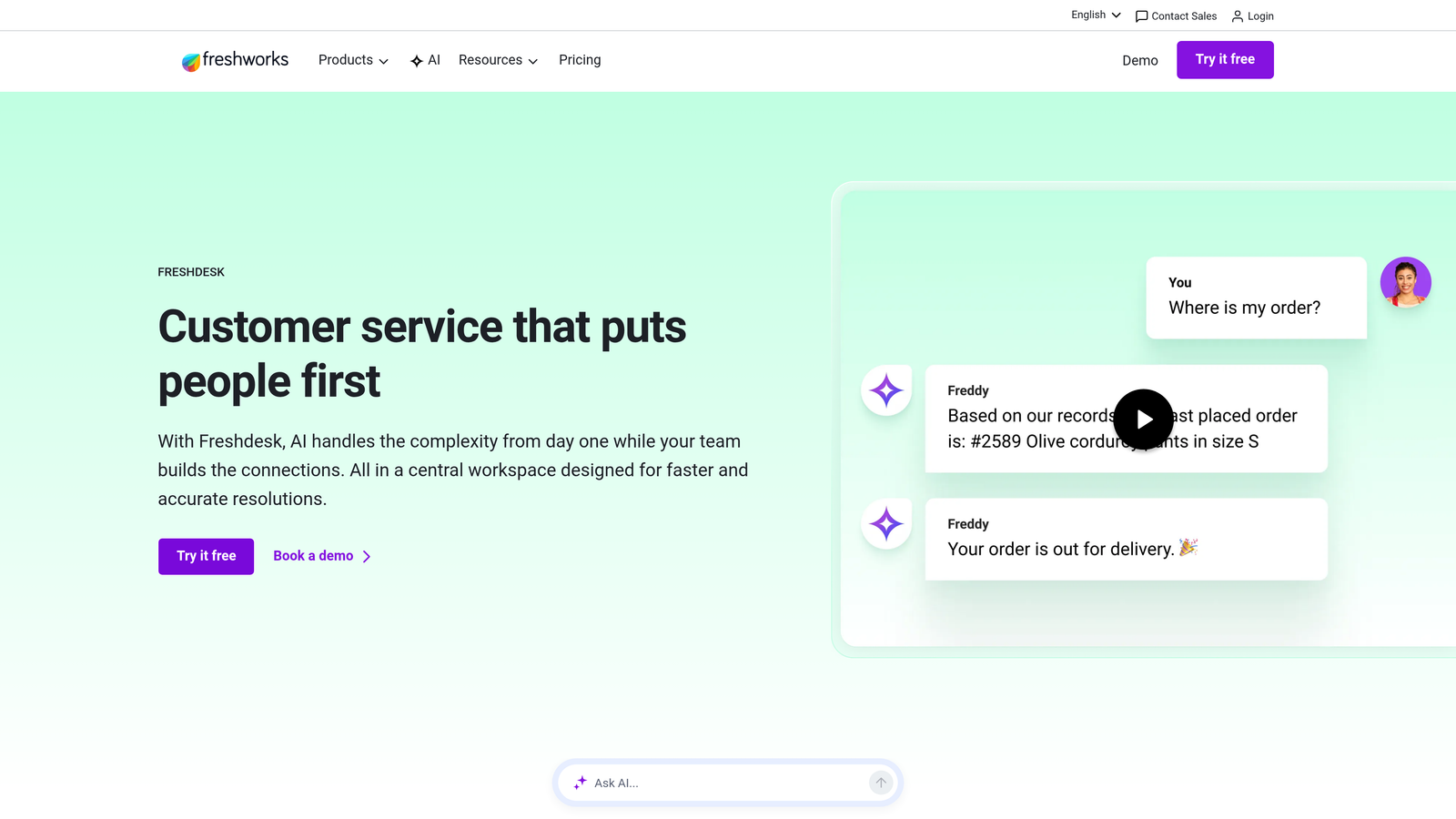
4. Freshdesk Freddy AI
Best for: Mid-market companies seeking comprehensive omnichannel automation at competitive pricing
Freshdesk Freddy AI is Freshworks' AI assistant offering both customer-facing automation and agent assistance across email, chat, phone, and social channels.
Where This Tool Shines
Freddy AI delivers enterprise-level features at mid-market pricing, making sophisticated automation accessible to growing companies. The omnichannel approach means customers get consistent AI assistance whether they reach out via email, chat, phone, or social media.
The predictive analytics capabilities help support leaders get ahead of problems. Freddy identifies trending issues before they become ticket floods, giving you time to update documentation or fix underlying product issues proactively.
Key Features
Freddy Self-Service: Customer-facing automation that handles common inquiries across all channels without human intervention.
Freddy Copilot: Real-time agent assistance providing response suggestions, relevant knowledge articles, and next-best-action recommendations.
Omnichannel Support: Unified AI assistance across email, live chat, phone, and social media platforms with consistent experience.
Predictive Analytics: Identify emerging ticket trends and potential issues before they impact large customer segments.
Thank You Detector: Automatically close tickets when customers send confirmation or gratitude messages, preventing unnecessary reopening.
Best For
Growing companies that need enterprise features without enterprise pricing. Particularly valuable for teams supporting customers across multiple channels who want unified AI capabilities rather than channel-specific solutions.
Pricing
Pro plan starts at $49 per agent per month, with AI features available in higher tiers. Significantly more affordable than Zendesk or Intercom for comparable functionality, making it accessible to mid-sized teams.
5. Ada
Best for: Global enterprises requiring multilingual automation at massive scale with strict compliance requirements
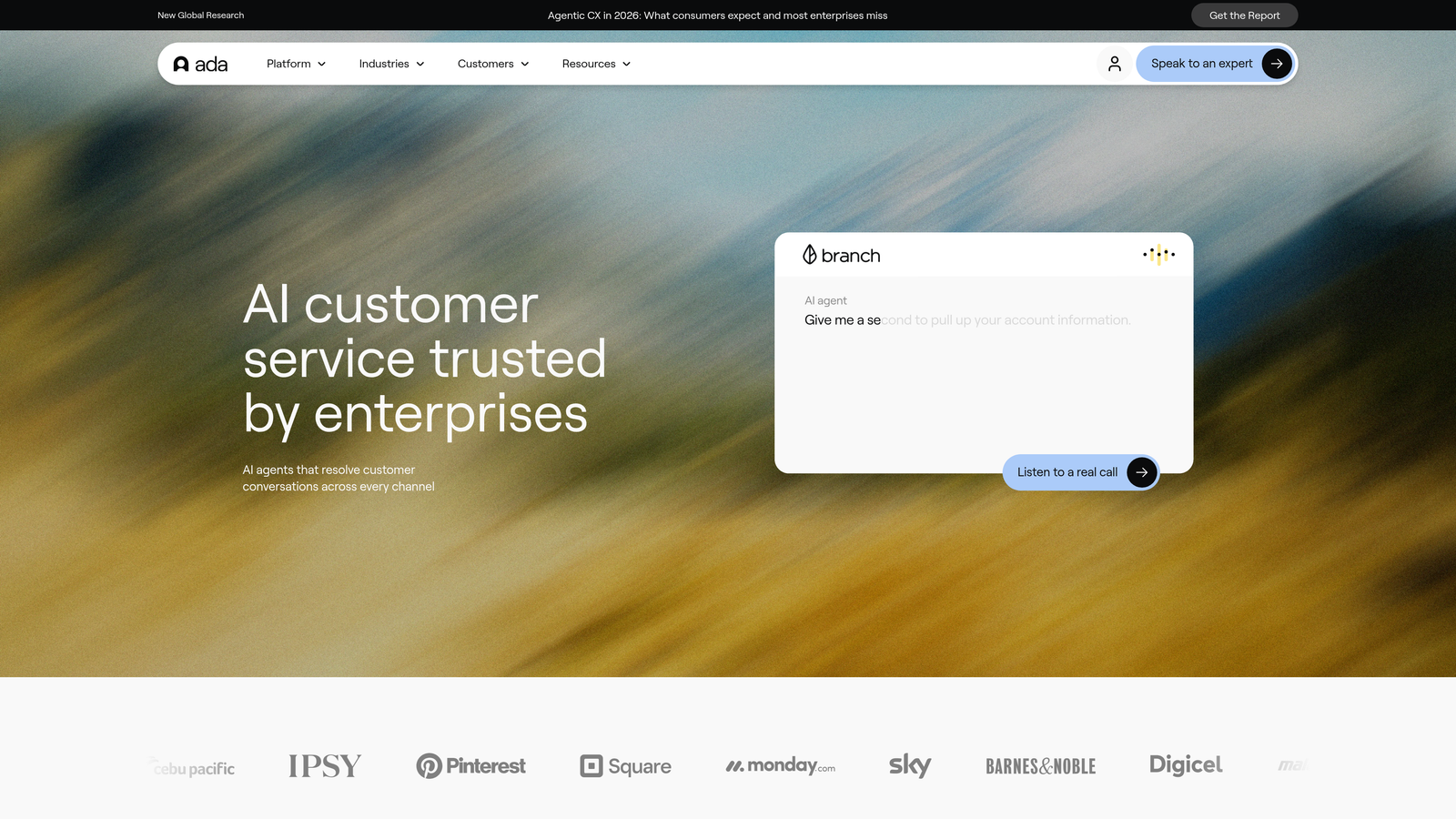
Ada is an enterprise automation platform designed for high-volume, multilingual customer interactions with no-code conversation building and API-first architecture.
Where This Tool Shines
Ada's language capabilities stand out—supporting 50+ languages out of the box without separate training for each. For global companies, this eliminates the typical challenge of building and maintaining separate automation for different regions.
The no-code conversation builder empowers non-technical teams to create and modify automation workflows without developer involvement. This dramatically reduces time-to-value and allows support teams to iterate based on real customer interactions rather than waiting for engineering resources.
Key Features
No-Code Conversation Builder: Create sophisticated automation workflows through visual interface without writing code or requiring developer resources.
50+ Language Support: Handle customer inquiries in dozens of languages simultaneously without separate configuration or training for each.
Proactive Messaging: Trigger automated outreach based on user behavior, preventing issues before customers need to contact support.
SOC 2 Type II and GDPR Compliance: Enterprise-grade security and privacy certifications meeting strict regulatory requirements for sensitive industries.
API-First Architecture: Deep integration capabilities for connecting Ada to proprietary systems and custom business logic.
Best For
Enterprise organizations with global customer bases, particularly those in regulated industries requiring strict compliance. Companies handling millions of annual interactions who need automation that scales without proportional cost increases.
Pricing
Custom enterprise pricing based on conversation volume and feature requirements. Annual contracts typically start in the mid-five figures, positioning Ada as an enterprise investment rather than a tactical tool.
6. Tidio
Best for: Small businesses and e-commerce stores needing accessible AI chat without complex setup
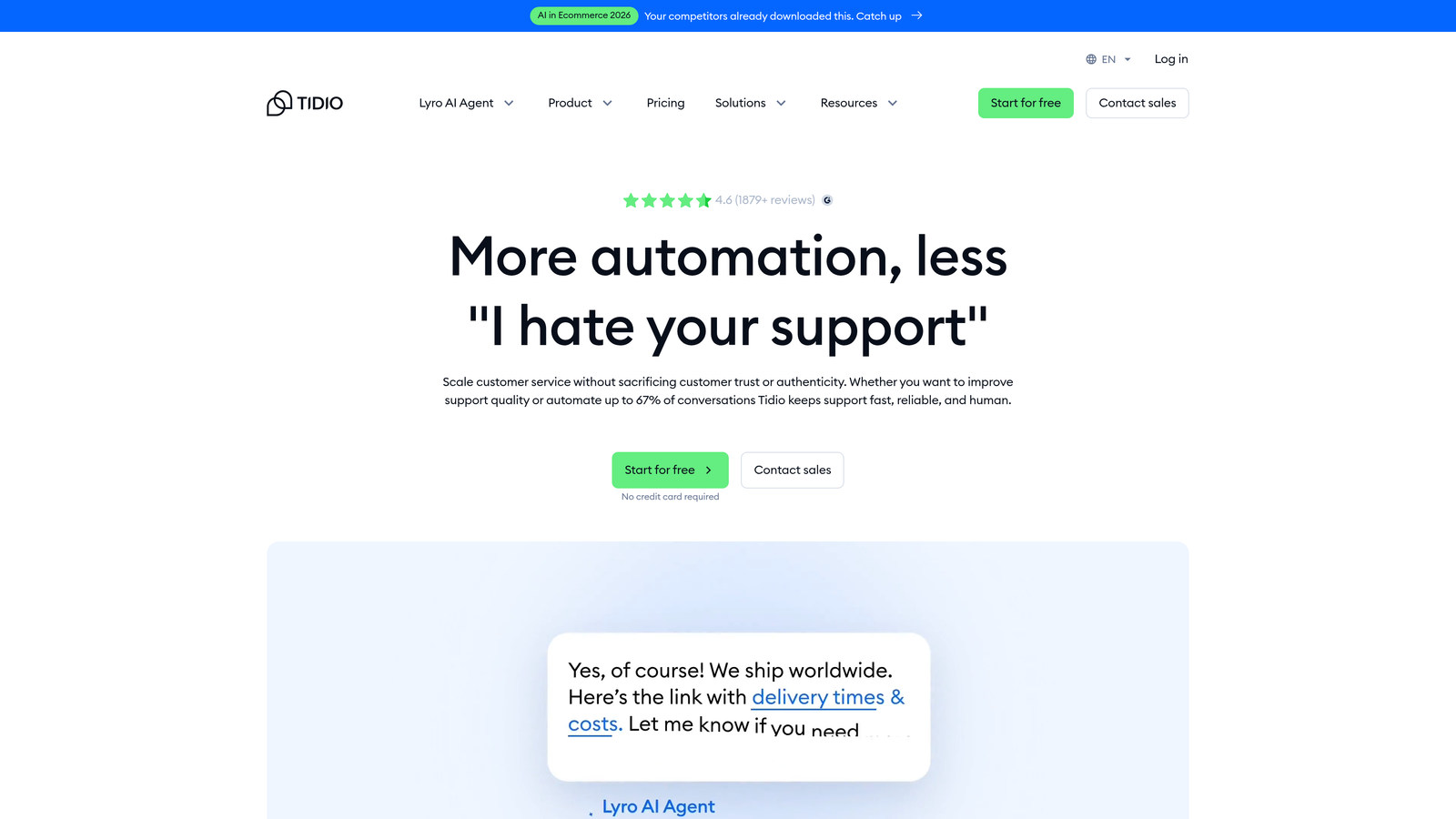
Tidio is an accessible AI chat solution combining live chat, chatbots, and email marketing automation designed specifically for smaller teams and online retailers.
Where This Tool Shines
Tidio removes the barriers that make enterprise AI platforms inaccessible to small businesses. The visual drag-and-drop builder lets you create chatbot flows in minutes, not weeks. There's no lengthy implementation process or consultant fees—you can be up and running the same day.
The e-commerce integrations work particularly well for online stores. Tidio connects natively to Shopify, WooCommerce, and other platforms, understanding order status, inventory, and customer purchase history to provide contextually relevant support.
Key Features
Visual Drag-and-Drop Chatbot Builder: Create automation workflows through intuitive interface without technical knowledge or coding skills.
Lyro AI for Conversational Responses: Natural language AI that handles customer questions using your knowledge base and website content.
Live Chat with Visitor Tracking: See what pages visitors browse and engage proactively when they show signs of needing help.
E-Commerce Platform Integrations: Native connections to Shopify, WooCommerce, and other platforms for order tracking and product support.
Email Marketing Automation: Included email campaigns and automation without requiring separate marketing tools.
Best For
Small businesses, online retailers, and solopreneurs who need AI chat capabilities without enterprise complexity or pricing. Perfect for teams with limited technical resources who want to get started quickly.
Pricing
Free tier available for basic live chat. Lyro AI features start at $39 per month, making it one of the most affordable AI support options. Scales reasonably as conversation volume grows.
7. Kustomer IQ
Best for: Companies requiring unified customer context across all channels with intelligent conversation management
Kustomer IQ is an AI-powered CRM platform that unifies customer interaction history with intelligent automation, treating customers as people rather than ticket numbers.
Where This Tool Shines
Kustomer's timeline view fundamentally changes how agents interact with customers. Instead of seeing isolated tickets, agents see complete customer journeys—every conversation, purchase, support interaction, and product usage event in chronological order. This context dramatically improves resolution quality.
The custom object data modeling gives Kustomer unusual flexibility. You can structure customer data to match your specific business model rather than forcing your processes into rigid ticket categories. This matters especially for companies with complex products or non-standard support workflows.
Key Features
Unified Customer Timeline: Complete interaction history across all channels displayed chronologically, giving agents full context for every conversation.
AI-Powered Sentiment Detection: Automatically identify frustrated or at-risk customers based on conversation tone and interaction patterns.
Intelligent Conversation Classification: Categorize and route conversations automatically based on content analysis rather than manual tagging.
Proactive Outreach Automation: Trigger automated customer engagement based on behavior patterns, preventing issues before they require support tickets.
Custom Object Data Modeling: Structure customer data to match your business model rather than conforming to predefined ticket categories.
Best For
Companies with complex customer relationships requiring deep context for effective support. Particularly valuable for subscription businesses, B2B companies, and brands where customer lifetime value depends on relationship quality rather than transaction efficiency.
Pricing
Enterprise plan starts at $89 per user per month, with IQ AI features requiring additional investment. Positioned as a comprehensive customer platform rather than a basic ticketing system.
8. Drift
Best for: B2B companies bridging marketing, sales, and support with revenue-focused conversational AI
Drift is a conversational platform that connects marketing, sales, and support teams with AI-powered engagement designed to accelerate revenue rather than just deflect tickets.
Where This Tool Shines
Drift thinks about conversations differently than pure support platforms. The AI identifies high-value prospects and routes them to sales while handling support inquiries separately. This revenue-focused approach prevents valuable sales conversations from getting lost in support queues.
The account-based targeting capabilities set Drift apart for enterprise B2B. When someone from a target account visits your site, Drift can trigger personalized experiences, route them to dedicated account managers, and surface relevant case studies—all automatically based on firmographic data.
Key Features
Revenue-Focused Conversational AI: Distinguish between sales opportunities and support inquiries, routing each appropriately to maximize conversion and satisfaction.
Account-Based Targeting: Deliver personalized experiences to visitors from target accounts based on firmographic data and account status.
Real-Time Visitor Intelligence: See company information, previous interactions, and behavioral signals for every website visitor engaging with chat.
Meeting Scheduling Automation: Book sales meetings directly from chat conversations without back-and-forth email coordination.
Native CRM Integrations: Deep connections to Salesforce and HubSpot ensuring conversation data flows into existing sales and marketing workflows.
Best For
B2B companies where website chat serves both sales and support functions. Particularly valuable for organizations with account-based marketing strategies requiring personalized engagement at scale.
Pricing
Premium tier starts at $2,500 per month with custom enterprise pricing for larger organizations. Positioned as a revenue tool rather than a cost center, reflecting its dual sales and support focus.
9. Forethought
Best for: High-volume support operations seeking intelligent automation for triage, routing, and agent augmentation
Forethought is an AI platform specializing in intelligent ticket classification, automated resolution, and agent assistance through modular products that address specific support workflow challenges.
Where This Tool Shines
Forethought's modular approach lets you deploy AI where it delivers the most value rather than implementing a monolithic platform. You might start with Triage for better ticket routing, add Solve for customer-facing automation, then layer in Assist for agent support—each module solving a specific problem.
The Discover feature identifies knowledge gaps by analyzing which questions AI can't answer confidently. This closes the loop between support operations and content creation, ensuring your knowledge base evolves based on actual customer needs rather than assumptions.
Key Features
SupportGPT for Generative Responses: Leverage large language models to generate contextually appropriate responses rather than relying solely on pre-written templates.
Triage for Automatic Classification: Categorize and route tickets intelligently based on content analysis, reducing manual sorting and improving response times.
Solve for Customer-Facing Automation: Handle common inquiries automatically through self-service interfaces before they become agent-handled tickets.
Assist for Agent Suggestions: Provide real-time response recommendations and relevant knowledge articles to human agents during conversations.
Discover for Knowledge Gap Identification: Analyze which questions AI struggles to answer, revealing documentation gaps and content improvement opportunities.
Best For
Organizations processing high ticket volumes who want to optimize specific workflow bottlenecks rather than replacing their entire support infrastructure. Works well for teams with established processes seeking incremental AI enhancement.
Pricing
Custom pricing based on ticket volume and modules deployed. Enterprise-focused with implementation support included, making it suitable for organizations committed to support transformation rather than experimental pilots.
Making the Right Choice
The right customer support AI platform depends on where you are and where you're going. If you need autonomous resolution that learns continuously without manual retraining, Halo AI's intelligence-first architecture delivers support that gets smarter with every interaction. Already invested in Intercom or Zendesk? Their native AI offerings integrate seamlessly without platform migration.
Budget-conscious teams should look at Tidio for accessible AI chat or Freshdesk for mid-market pricing with enterprise features. Global operations requiring multilingual support at scale will find Ada's language capabilities and compliance certifications worth the investment.
Consider your integration requirements carefully. Platforms like Zendesk and Kustomer offer extensive marketplace ecosystems, while API-first solutions like Ada and Halo provide flexibility for custom connections. The best platform integrates with your existing stack rather than forcing you to rebuild workflows around new tools.
Think beyond resolution rates to total cost of ownership. A platform charging per resolution might seem affordable until you're processing thousands of tickets monthly. Conversely, high per-agent pricing makes sense only if the AI genuinely reduces the agents you need.
Your support team shouldn't scale linearly with your customer base. Let AI agents handle routine tickets, guide users through your product, and surface business intelligence while your team focuses on complex issues that need a human touch. See Halo in action and discover how continuous learning transforms every interaction into smarter, faster support.