9 Best Customer Support AI Platforms Compared by Pricing in 2026
This guide compares nine leading customer support AI platforms by pricing model, breaking down what each tier actually includes and where hidden costs like overage fees, AI add-ons, and per-resolution charges tend to surface. It's an essential resource for B2B teams navigating complex customer support AI platform pricing structures to find genuine value beyond the sticker price.
 Grant CooperFounder13 min read
Comparing customer support AI platforms on price alone is harder than it sounds. One vendor charges per seat, another per resolution, a third bundles everything into a flat tier, and a fourth won't even show you a number until you've sat through a demo. The pricing structures are genuinely different enough that a platform looking "cheaper" on paper can end up costing more in practice once you factor in AI add-ons, overage fees, and per-resolution charges at scale.
This guide cuts through that complexity. Below, you'll find nine leading platforms compared by pricing model, what you actually get at each tier, and where hidden costs tend to surface. Selection criteria included transparent or well-documented pricing, AI-native capabilities (not just a bolt-on chatbot), integration depth, and overall value for B2B teams. If you want to go deeper on budgeting, our guides on chatbot pricing models and affordable chatbot software are worth a read alongside this one.
Let's get into it.
1. Halo AI
Best for: B2B SaaS teams wanting AI-native support with business intelligence built in, not bolted on.
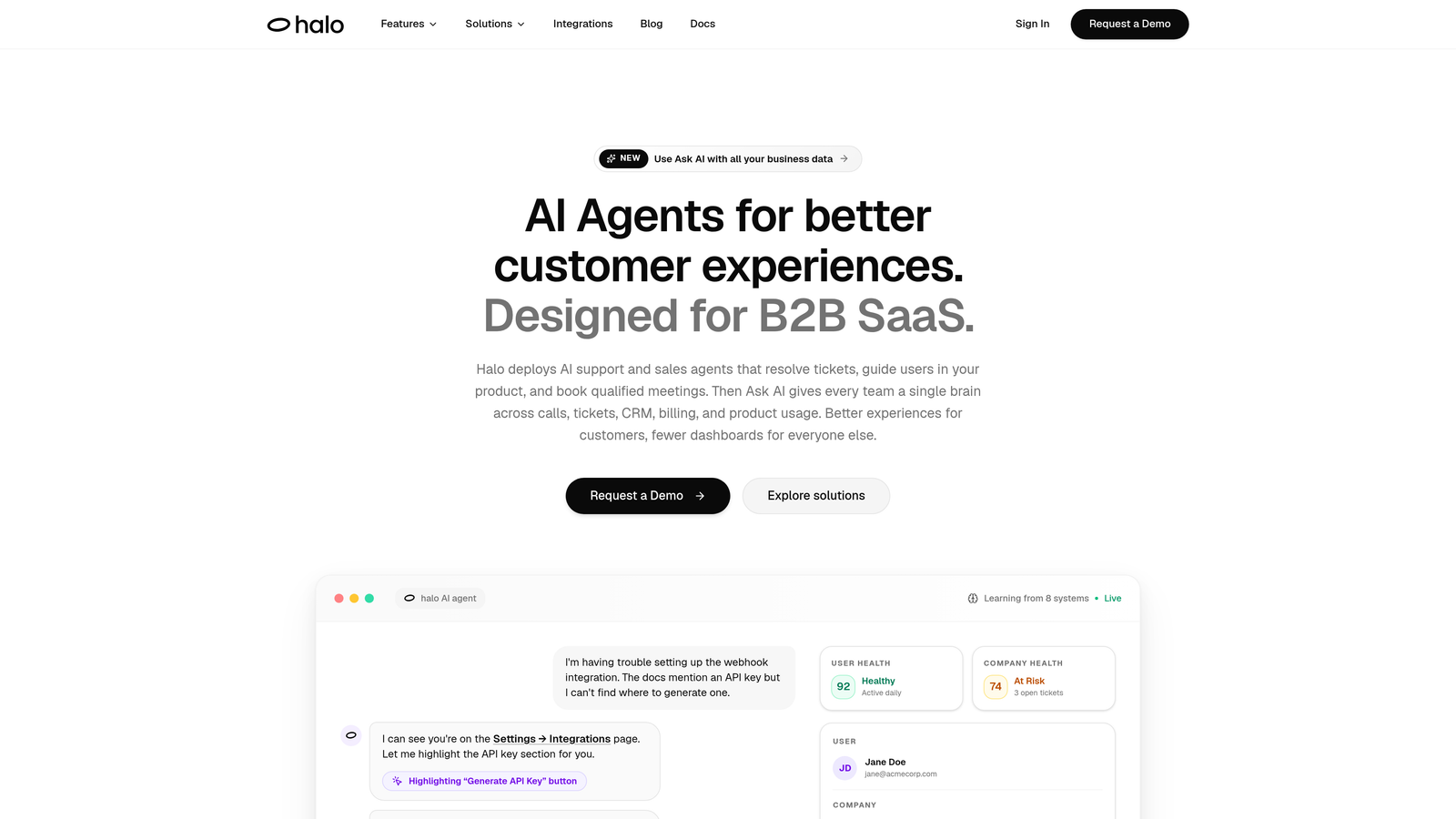
Halo AI is an AI-first customer support platform that bundles intelligent agents, page-aware chat, smart inbox analytics, and autonomous bug ticket creation into its core offering.
Where This Tool Shines
Most platforms treat AI as a premium add-on sitting on top of a traditional helpdesk. Halo was built the other way around: AI is the foundation, not the feature. That architectural difference shows up in how the platform handles context. Its page-aware agents actually see what a user is looking at in your product, which means guidance is specific rather than generic.
The smart inbox goes beyond ticket management. It surfaces business intelligence signals like customer health indicators, anomaly detection, and revenue context pulled from connected systems. For product and support teams that want more than a resolved ticket count, that layer of insight is genuinely useful and doesn't require a separate analytics subscription.
Key Features
Page-Aware AI Agents: Agents understand the user's current page and product context, enabling step-by-step visual guidance rather than generic responses.
Smart Inbox with Business Intelligence: Built-in analytics surface customer health signals, anomaly detection, and revenue intelligence directly within the support workflow.
Auto Bug Ticket Creation: Automatically generates structured bug reports and routes them to the right engineering queue without manual intervention.
Live Agent Handoff: Seamless escalation to human agents when complexity exceeds what the AI should handle autonomously.
Deep Integration Stack: Connects natively with Linear, Slack, HubSpot, Intercom, Stripe, Zoom, PandaDoc, and Fathom, so support context flows across the full business stack.
Best For
B2B SaaS companies and product teams that want AI support agents capable of doing more than deflecting tickets. Particularly strong for teams that need support data to feed into product development, customer success, and revenue workflows without stitching together separate tools.
Pricing
Contact for pricing. AI capabilities, business intelligence analytics, and core features are bundled into plans without per-seat AI charges or separate add-on fees for key functionality.
2. Intercom
Best for: Teams that want AI costs tied directly to automated resolution performance.
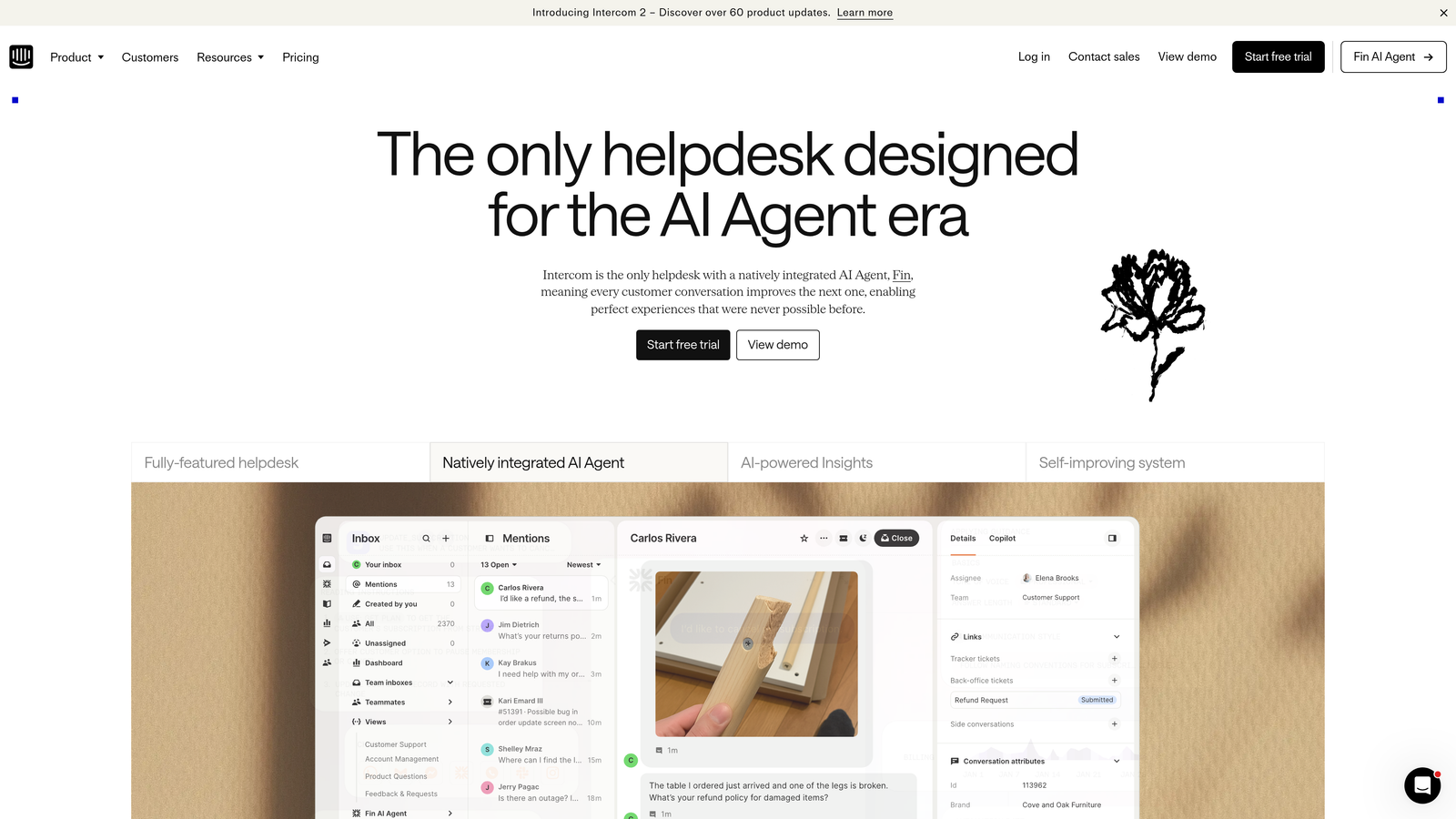
Intercom is a customer messaging platform whose Fin AI agent operates on a per-resolution pricing model, linking spend directly to AI outcomes.
Where This Tool Shines
Intercom's Fin AI agent is one of the more capable AI agents on the market, and the per-resolution model is genuinely appealing in theory: you only pay when the AI successfully resolves a conversation without human intervention. For teams with lower support volumes or highly specific query types that Fin handles well, this can be cost-effective.
The unified inbox experience is polished, and the combination of AI handling routine queries alongside human agents managing complex ones works smoothly. Intercom also has strong documentation and a mature ecosystem of integrations.
Key Features
Fin AI Agent: Conversational AI agent that resolves queries autonomously and charges only per successful resolution.
Unified Inbox: Single workspace for AI-handled and human-handled conversations across channels.
Custom Answer Workflows: Build resolution paths for specific query types and integrate with your knowledge base.
Multi-Channel Support: Covers chat, email, and social channels from one platform.
Best For
Mid-market SaaS and tech companies that want a mature, well-integrated platform and are comfortable with variable AI costs tied to resolution volume. Less ideal for high-volume operations where per-resolution fees can accumulate quickly.
Pricing
Base plans start at $39/seat/month. Fin AI is charged separately at approximately $0.99 per successful resolution. Costs can scale significantly at high resolution volumes, so model your expected usage before committing.
3. Zendesk
Best for: Large enterprises needing a comprehensive helpdesk with extensive marketplace integrations.
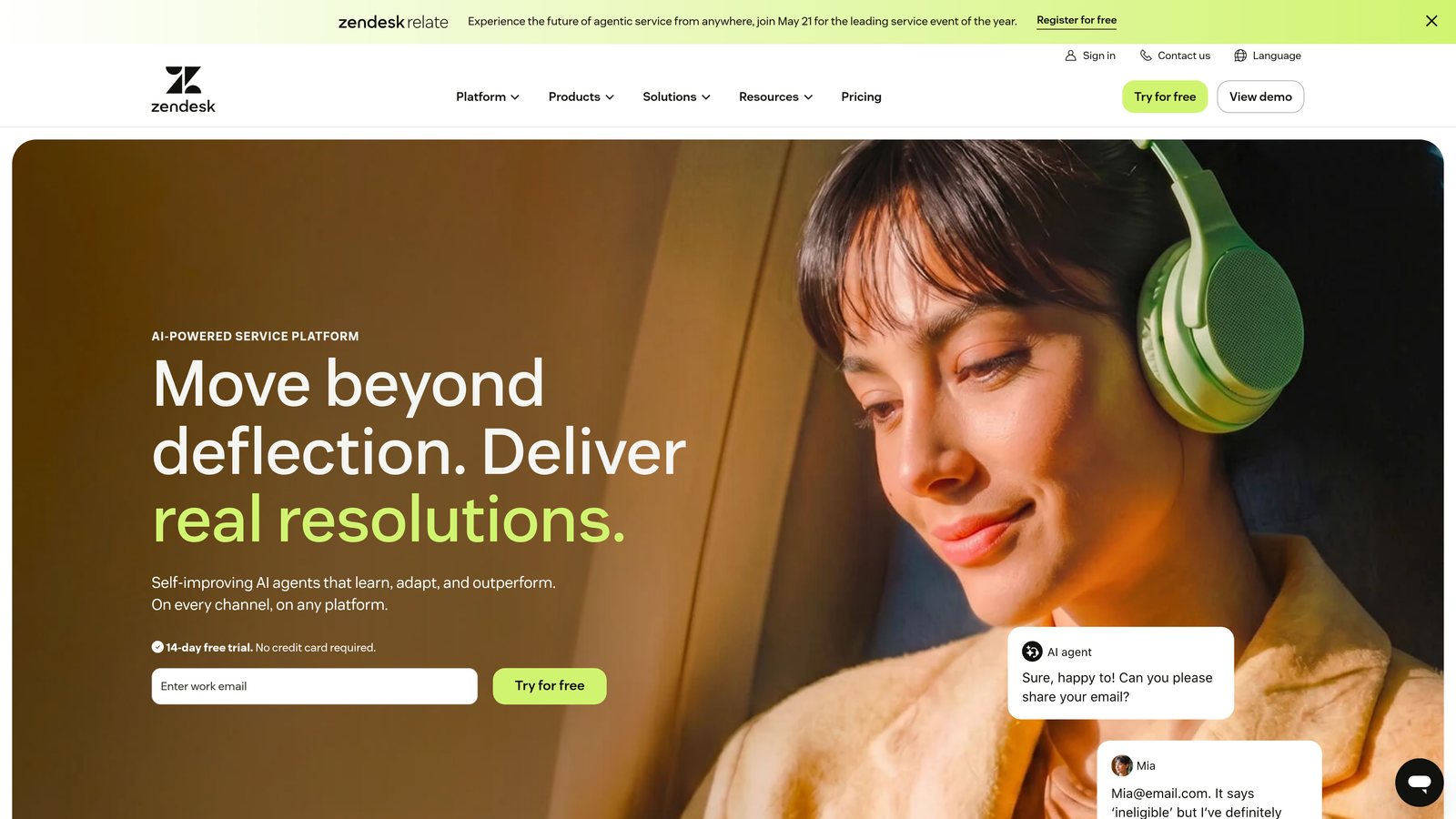
Zendesk is a full-suite helpdesk platform that layers AI capabilities on top of its traditional per-agent seat pricing model.
Where This Tool Shines
Zendesk's strength is its breadth. Ticketing, chat, phone, email, and social support all live under one roof, and its marketplace of over 1,500 integrations means it connects to almost anything. For enterprises with complex, multi-channel support operations, that comprehensiveness is hard to match.
The challenge is that Zendesk's AI story involves multiple pricing layers. The base platform handles ticketing well, but meaningful AI capabilities like intelligent triage, agent assist, and automated resolutions require the Advanced AI add-on, which is priced separately from seat costs. Budget planning requires accounting for both.
Key Features
Comprehensive Helpdesk: Full ticketing, live chat, phone, and email support in one platform with robust reporting.
AI Agents: Automated resolution capabilities available as an add-on, charged per automated resolution.
Advanced AI Package: Intelligent triage, intent detection, and real-time agent assist tools available at additional cost.
Marketplace Integrations: Over 1,500 pre-built integrations covering CRMs, e-commerce, analytics, and more.
Best For
Enterprise support teams with high agent counts, complex workflows, and existing Zendesk investments. Teams starting fresh may find the layered pricing model adds up faster than expected compared to AI-native alternatives.
Pricing
Suite plans start at $55/agent/month. The Advanced AI add-on is priced separately. AI agent resolutions are charged per automated resolution on top of base seat costs, so total cost of ownership requires careful modeling.
4. Freshdesk (Freddy AI)
Best for: Budget-conscious teams needing a capable helpdesk with AI features accessible at mid-tier pricing.
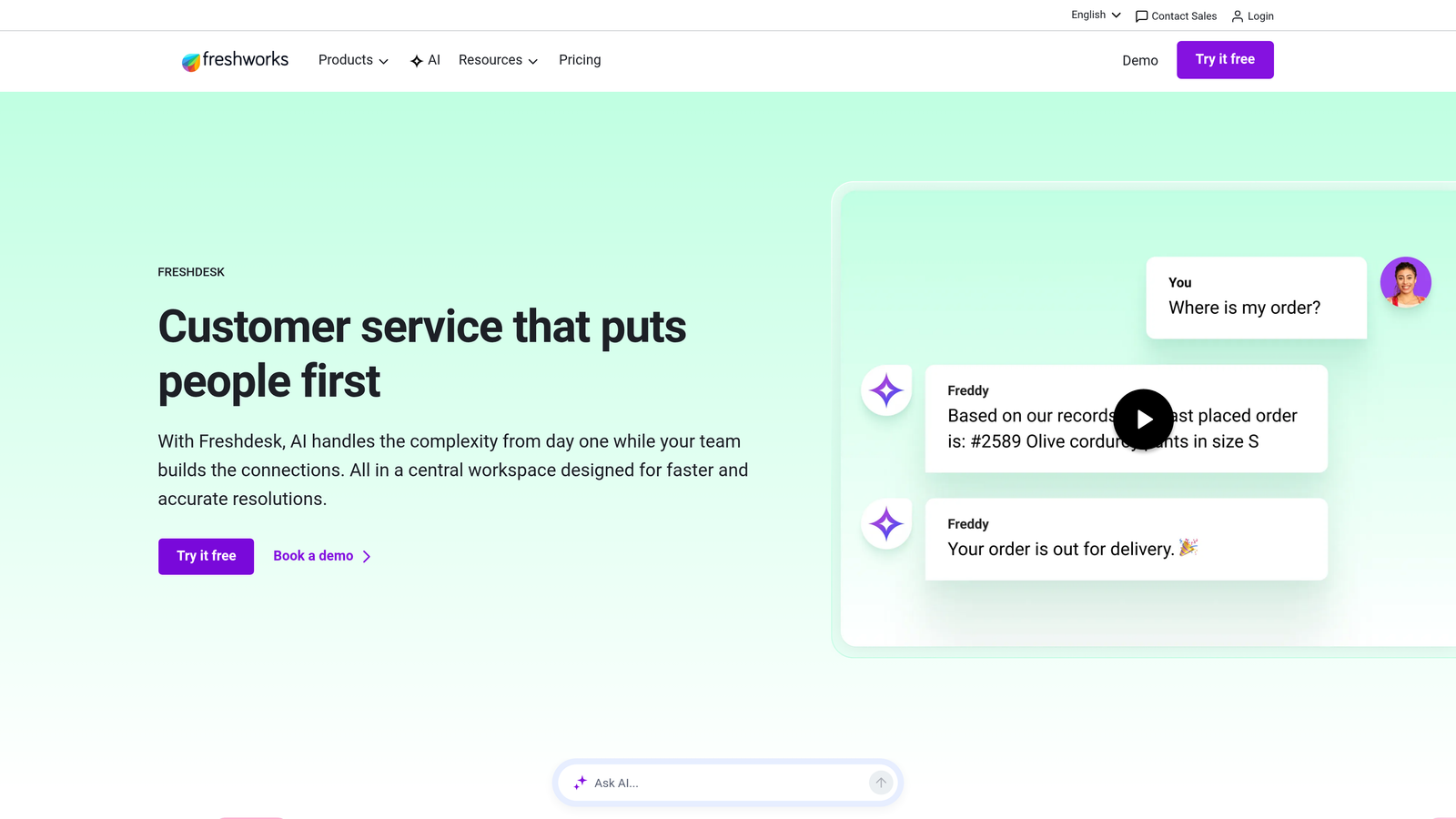
Freshdesk is a helpdesk platform with Freddy AI capabilities built into its higher tiers, offering one of the more accessible entry points in the market including a free plan.
Where This Tool Shines
Freshdesk consistently punches above its price point for teams that need solid omnichannel helpdesk functionality without enterprise-level spend. The free tier is genuinely functional for small teams, and the paid tiers scale reasonably. Freddy AI adds auto-triage, suggested responses, and chatbot capabilities at the Pro tier without requiring a separate AI add-on purchase.
The platform covers email, chat, phone, and social from a single interface, and the marketplace has solid pre-built integrations for common business tools. It's not the most AI-forward platform on this list, but it delivers reliable value at its price points.
Key Features
Free Tier: Basic ticketing and email support available at no cost, useful for very small teams or evaluation purposes.
Freddy AI: Auto-triage, suggested responses, and chatbot capabilities included at Pro tier and above without separate AI add-on fees.
Omnichannel Support: Email, live chat, phone, and social media channels managed from one workspace.
Pre-Built Integrations: Marketplace covers CRMs, e-commerce platforms, and productivity tools.
Best For
Small to mid-sized teams looking for solid helpdesk functionality with AI features included at mid-tier pricing. A strong option for teams migrating from basic email-based support who want AI without a significant jump in spend.
Pricing
Free plan available. Paid plans start at $15/agent/month. Freddy AI features are included at the Pro tier ($49/agent/month) and Enterprise tier, making the Pro tier the practical entry point for AI capabilities.
5. Ada
Best for: Enterprise teams needing a standalone, high-volume AI agent platform with deep customization.
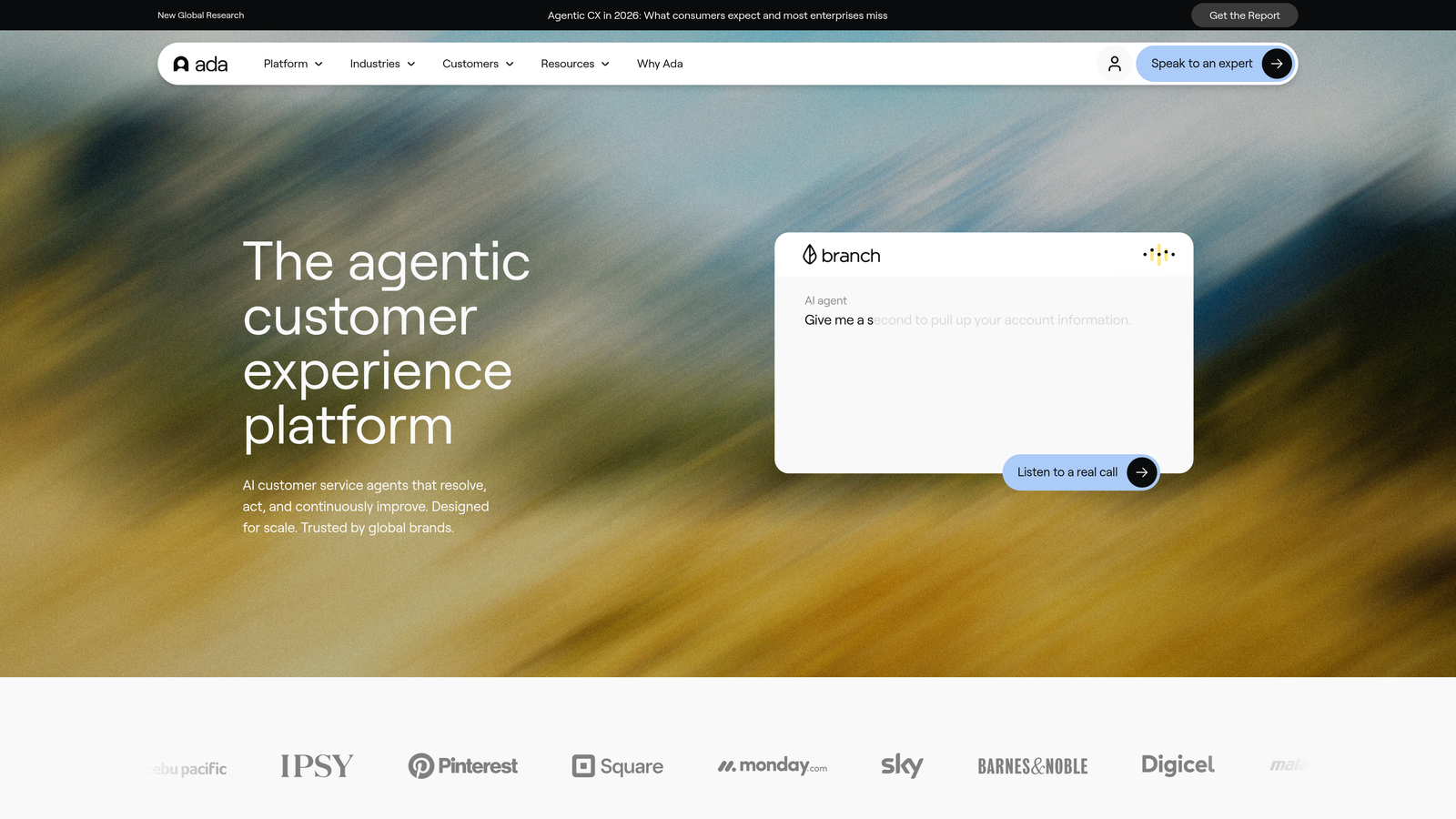
Ada is a purpose-built AI agent platform designed for enterprise-scale automated support across multiple channels, with fully custom pricing.
Where This Tool Shines
Ada is built specifically as an AI agent platform, not as a helpdesk that added AI later. That focus shows in its multi-channel deployment capabilities and its no-code workflow builder, which lets support teams build custom resolution paths without engineering involvement. For enterprises with high query volumes and complex support scenarios, Ada's purpose-built architecture handles scale well.
The platform integrates with Zendesk, Salesforce, and other major CRMs, positioning it as a front-line AI layer that sits in front of existing helpdesk infrastructure rather than replacing it.
Key Features
Purpose-Built AI Agent Platform: Designed from the ground up for automated support, not adapted from a traditional helpdesk.
Multi-Channel Deployment: Supports web, mobile app, social media, and SMS from a single platform.
No-Code Workflow Builder: Build and modify custom resolution paths without engineering resources.
CRM and Helpdesk Integrations: Connects with Zendesk, Salesforce, and other enterprise systems as a front-line AI layer.
Best For
Enterprise organizations with high support volumes that want a dedicated AI agent layer rather than AI features bundled into a helpdesk. Requires a sales conversation to get pricing, so budget timelines should account for a longer evaluation process.
Pricing
No public pricing. Custom enterprise contracts only, typically structured around conversation or resolution volume. Requires a sales consultation to get a quote, which makes budget comparison difficult without engaging their team directly.
6. Tidio
Best for: Small businesses and e-commerce teams wanting transparent, affordable AI chat pricing.
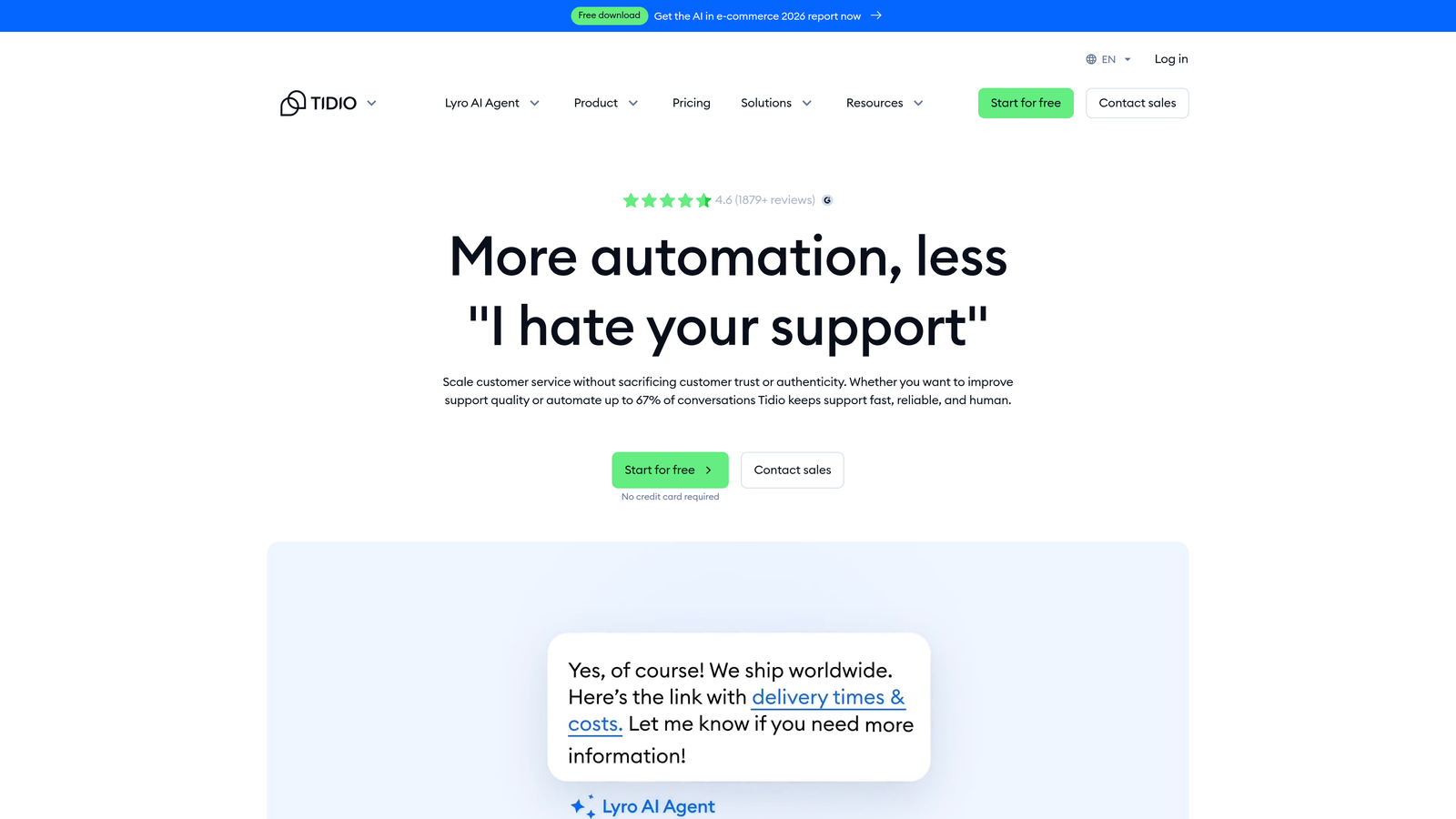
Tidio is an accessible AI chat platform with its Lyro AI chatbot offering clear tiered pricing with defined conversation limits at each level.
Where This Tool Shines
Tidio's biggest advantage is pricing clarity. Where many competitors require a sales call to understand costs, Tidio publishes straightforward tier-based pricing with defined conversation limits. For small business owners and e-commerce teams who need to know exactly what they'll pay before committing, that transparency is genuinely valuable.
The platform combines live chat, AI chatbot, and email in one interface, and its e-commerce integrations with Shopify and WooCommerce make it a natural fit for online retail. The visual chatbot flow builder is accessible enough for non-technical users to configure without developer support.
Key Features
Lyro AI Chatbot: AI-powered chatbot with conversation limits defined per pricing tier, giving predictable cost control.
Unified Platform: Live chat, AI chatbot, and email support in a single interface without separate tool subscriptions.
E-Commerce Integrations: Native integrations with Shopify and WooCommerce for order status, product queries, and customer data.
Visual Flow Builder: No-code chatbot workflow builder accessible to non-technical team members.
Best For
Small businesses, e-commerce stores, and early-stage startups that need AI chat capabilities with predictable monthly costs and no sales process required to get started. Less suited for complex B2B support operations with high ticket volumes.
Pricing
Free plan available. Lyro AI starts at $39/month for 50 conversations. Higher tiers scale conversation limits upward. Pricing is published transparently on their website, which is a genuine differentiator in this market.
7. Drift (Salesloft)
Best for: Revenue-focused teams that want AI blending support and sales engagement in one platform.
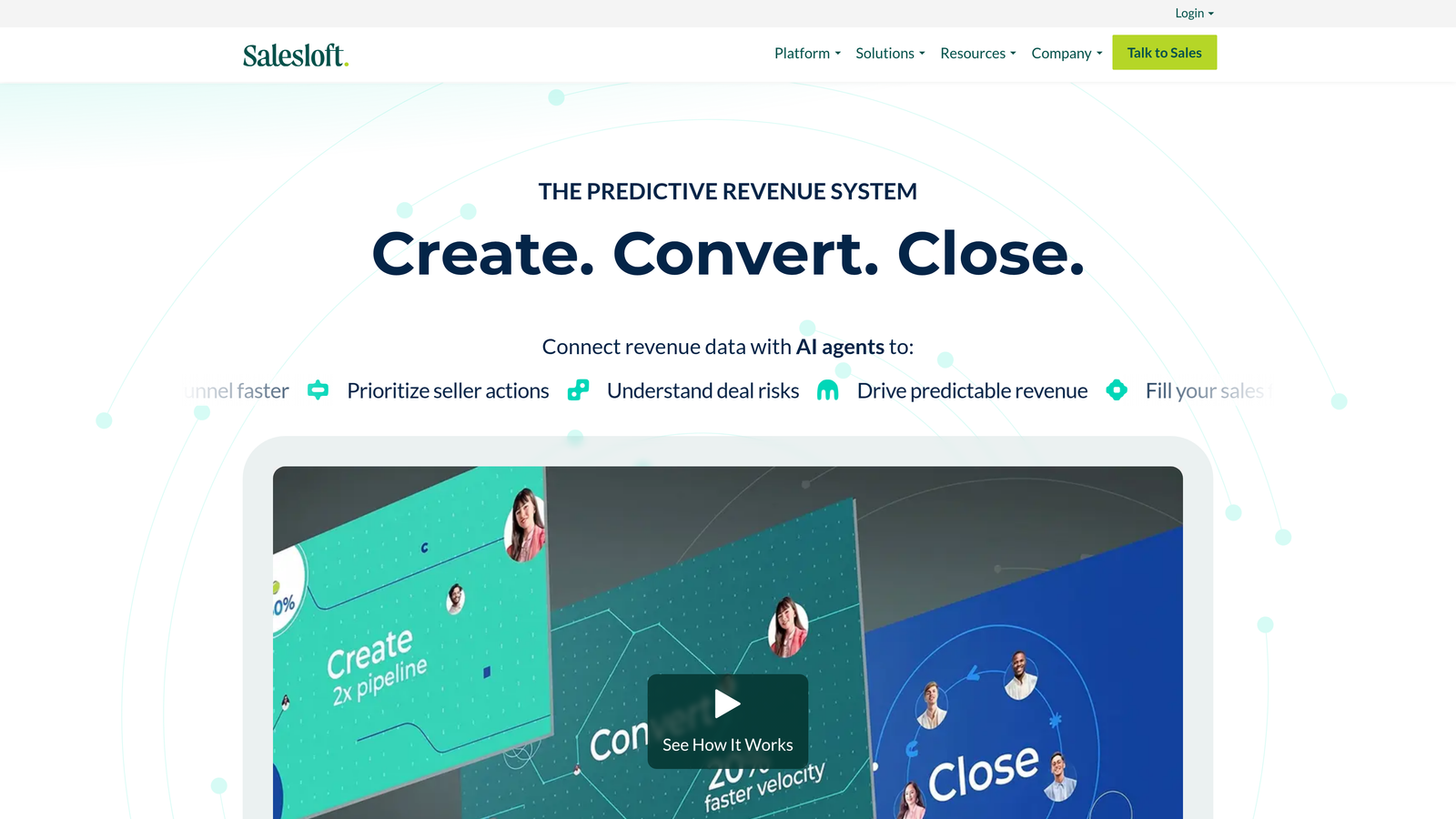
Drift, now part of the Salesloft platform, is a conversational AI tool that combines customer support automation with sales engagement and pipeline intelligence.
Where This Tool Shines
Drift's original positioning was at the intersection of support and sales, and that remains its most distinctive characteristic post-acquisition. If your support conversations frequently touch on upsell opportunities, renewal discussions, or lead qualification, having those workflows connected to revenue intelligence tools in the same platform has real appeal.
The integration with Salesforce and HubSpot is mature, and the conversational marketing capabilities go beyond what pure support platforms offer. That said, the Salesloft acquisition has moved pricing firmly into custom territory, and the platform is increasingly positioned toward revenue teams rather than support-first buyers.
Key Features
AI Chatbot for Support and Sales: Handles support queries and lead qualification within the same conversational interface.
Conversational Marketing Tools: Pipeline and revenue engagement features bundled alongside support capabilities.
Revenue Intelligence: Pipeline analytics and deal intelligence integrated with support conversation data.
CRM Integrations: Deep integrations with Salesforce and HubSpot connecting support and sales data.
Best For
Teams where support and sales overlap significantly, particularly B2B companies with account-based motions where support conversations have direct revenue implications. Pure support teams looking for a cost-effective solution may find the platform over-engineered for their needs.
Pricing
Custom pricing only following the Salesloft acquisition. No public pricing is available. Historically positioned at the premium end of the market. Requires a sales consultation, and pricing reflects the combined platform's revenue intelligence capabilities.
8. Forethought
Best for: Support teams focused on intelligent ticket triage and measurable deflection outcomes.
Forethought is an AI-powered support platform specializing in ticket triage, agent assist, and automated resolution with outcome-based pricing tied to support ROI.
Where This Tool Shines
Forethought's approach is built around measurable outcomes rather than feature lists. Its AI triage automatically categorizes and routes incoming tickets based on intent and urgency, which reduces manual sorting time for support teams handling high volumes. The agent assist layer surfaces relevant knowledge base articles and suggested responses in real time, helping human agents resolve tickets faster even when full automation isn't appropriate.
The platform integrates with Zendesk, Salesforce Service Cloud, and Freshdesk, positioning it as an AI intelligence layer that enhances existing helpdesk investments rather than replacing them.
Key Features
AI Triage: Automatic ticket categorization, priority assignment, and routing based on detected intent and content.
Agent Assist: Real-time knowledge suggestions and response recommendations surfaced to human agents during live conversations.
Solve AI: Full automated resolution capability for tickets that fall within defined scope and confidence thresholds.
Helpdesk Integrations: Native integrations with Zendesk, Salesforce Service Cloud, and Freshdesk.
Best For
Mid-market and enterprise support teams with existing helpdesk infrastructure who want to add AI intelligence without replacing their current platform. Strong fit for teams whose primary goal is measurable deflection rate improvement and faster agent resolution times.
Pricing
Custom pricing only. No public pricing page. Typically structured around per-ticket or outcome-based models, with pricing conversations framed around deflection savings and ROI. Requires a sales engagement to get specifics.
9. HubSpot Service Hub
Best for: Teams already in the HubSpot ecosystem wanting unified CRM, marketing, sales, and support data.
HubSpot Service Hub is a CRM-integrated service platform with AI features bundled into existing tiers, offering strong value for HubSpot-native teams.
Where This Tool Shines
If your team already uses HubSpot for marketing and sales, Service Hub's integration with that shared CRM data is genuinely powerful. Support agents see the full customer history, deal status, and marketing touchpoints alongside their support tickets without switching tools. That unified context improves both response quality and personalization.
The AI chatbot and knowledge base are included in Service Hub tiers rather than priced separately, and the free tools offer a functional starting point for teams with basic needs. The tiered pricing is transparent and published, which makes budgeting straightforward compared to custom-only competitors.
Key Features
Unified CRM Data: Full customer history from marketing, sales, and support visible in one place without separate integrations.
AI Chatbot and Knowledge Base: Included in Service Hub tiers at Professional and above without separate AI add-on fees.
Ticket Automation: AI-powered conversation routing and ticket automation based on CRM data and conversation content.
Free Tier: Basic chatbot and ticketing functionality available at no cost for teams evaluating the platform.
Best For
Companies already using HubSpot for CRM, marketing, or sales that want to consolidate support into the same ecosystem. Less compelling for teams not already in the HubSpot stack, where the value of unified CRM data doesn't apply.
Pricing
Free tools available. Starter from $20/month. Professional from $100/seat/month. Enterprise from $150/seat/month. AI features are included at Professional tier and above, making the pricing model more predictable than per-resolution alternatives.
Picking the Right Platform for Your Budget
The nine platforms above cover essentially every pricing model in the market right now: per-resolution, per-seat, flat-rate tiered, and custom enterprise. Choosing between them isn't just about the number on a pricing page; it's about which model aligns with how your support operation actually runs.
If you want transparent, predictable pricing with AI built in from the start, Tidio is the clearest option at the small business end, and HubSpot Service Hub offers the most predictable structure for mid-market teams already in that ecosystem. Freshdesk sits in between as a solid budget-conscious choice with AI included at mid-tier pricing.
For per-resolution models, Intercom's Fin is compelling at moderate volumes but requires careful cost modeling before committing at scale. Zendesk remains the enterprise default for comprehensive helpdesk coverage, though the layered AI add-on pricing means total costs deserve scrutiny.
If your team needs AI that goes beyond ticket deflection, including business intelligence, product-aware guidance, and deep integration across your entire business stack, that's where platforms like Halo AI differentiate themselves. The architecture matters: a platform built AI-first handles context, learning, and cross-system intelligence differently than a traditional helpdesk with AI layered on afterward.
Your support team shouldn't scale linearly with your customer base. AI agents can handle routine tickets, guide users through your product in real time, and surface business intelligence while your human team focuses on complex issues that genuinely need a person. See Halo in action and discover how continuous learning transforms every interaction into smarter, faster support.