9 Best Customer Support AI Solutions for Startups in 2026
This guide evaluates nine Customer Support AI Solutions For Startups, ranking each on autonomous ticket resolution, integration depth, ease of setup, and value for early-stage teams. Whether you're managing your first 100 or first 10,000 support tickets, it cuts through enterprise-heavy and underpowered options to surface the tools that actually fit where a startup is right now.
 Grant CooperFounder13 min read
Startups face a unique support paradox: customers expect fast, high-quality responses, but early-stage teams rarely have the headcount to deliver them consistently. AI-powered customer support solutions have made it genuinely feasible to punch above your weight, resolving tickets automatically, surfacing product insights, and scaling without proportionally scaling your team.
But not all tools are built with startups in mind. Some are enterprise-first platforms that feel like overkill. Others are lightweight chatbots that hit a ceiling fast. This list focuses on solutions that strike the right balance: capable enough to grow with you, practical enough to deploy without a dedicated ops team.
We've evaluated each tool on autonomous resolution capability, integration depth, ease of setup, and value for early-stage teams. Whether you're handling your first 100 support tickets or your first 10,000, one of these platforms will fit where you are right now.
1. Halo AI
Best for: B2B SaaS startups that want AI-first support with deep product and business intelligence.
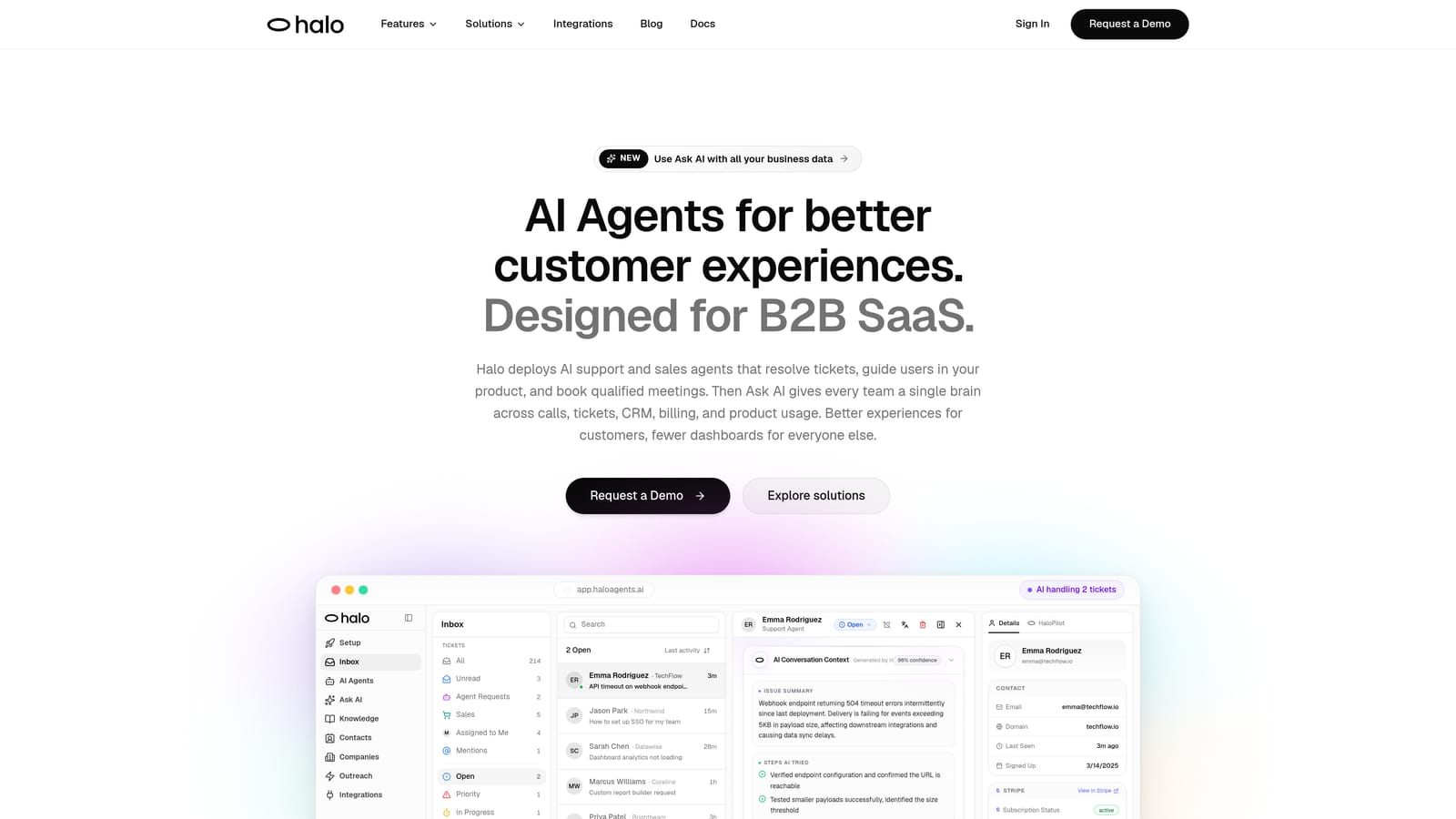
Halo AI is an AI-first customer support platform built ground-up for autonomous resolution, continuous learning, and business intelligence — not a legacy helpdesk with AI features bolted on.
Where This Tool Shines
What sets Halo apart from most tools on this list is its page-aware architecture. The AI agent actually sees what the user sees on screen, which means it can provide contextually accurate guidance rather than generic answers. For SaaS products with complex UIs or multi-step workflows, this is a meaningful differentiator.
The continuous learning model is equally notable. Every resolved ticket makes the system smarter, so your support quality compounds over time rather than staying static. For startups that are iterating their product quickly, this adaptability matters more than it might for a mature enterprise with stable workflows.
Key Features
Page-Aware Chat Widget: The AI sees the user's current screen context and delivers visual, step-by-step guidance that's relevant to exactly where they are in your product.
Autonomous Ticket Resolution: AI agents handle routine tickets end-to-end, with continuous learning from every interaction to improve resolution quality over time.
Smart Inbox with Business Intelligence: Beyond support metrics, the inbox surfaces customer health signals, revenue anomalies, and bug pattern detection — turning your support queue into a product intelligence feed.
Auto Bug Ticket Creation: Detected issues are automatically routed to Linear or your issue tracker, closing the loop between support and engineering without manual handoffs.
Native Integrations: Connects directly with Slack, HubSpot, Intercom, Stripe, Zoom, PandaDoc, and Fathom — covering the modern SaaS stack without custom middleware.
Human Escalation with Full Context: When a conversation needs a human, the handoff includes complete context so agents don't start from scratch.
Best For
Halo is best suited for B2B SaaS startups at Series A and beyond, particularly those with product-led growth motions where support quality directly affects activation and retention. Teams that want support to generate business intelligence — not just close tickets — will get the most out of its smart inbox capabilities.
Pricing
Contact for pricing. A demo is available at haloagents.ai. Given the AI-first architecture and integration depth, it's positioned as a premium solution relative to entry-level helpdesks.
2. Intercom
Best for: Startups already using Intercom for product messaging who want AI resolution built into the same platform.
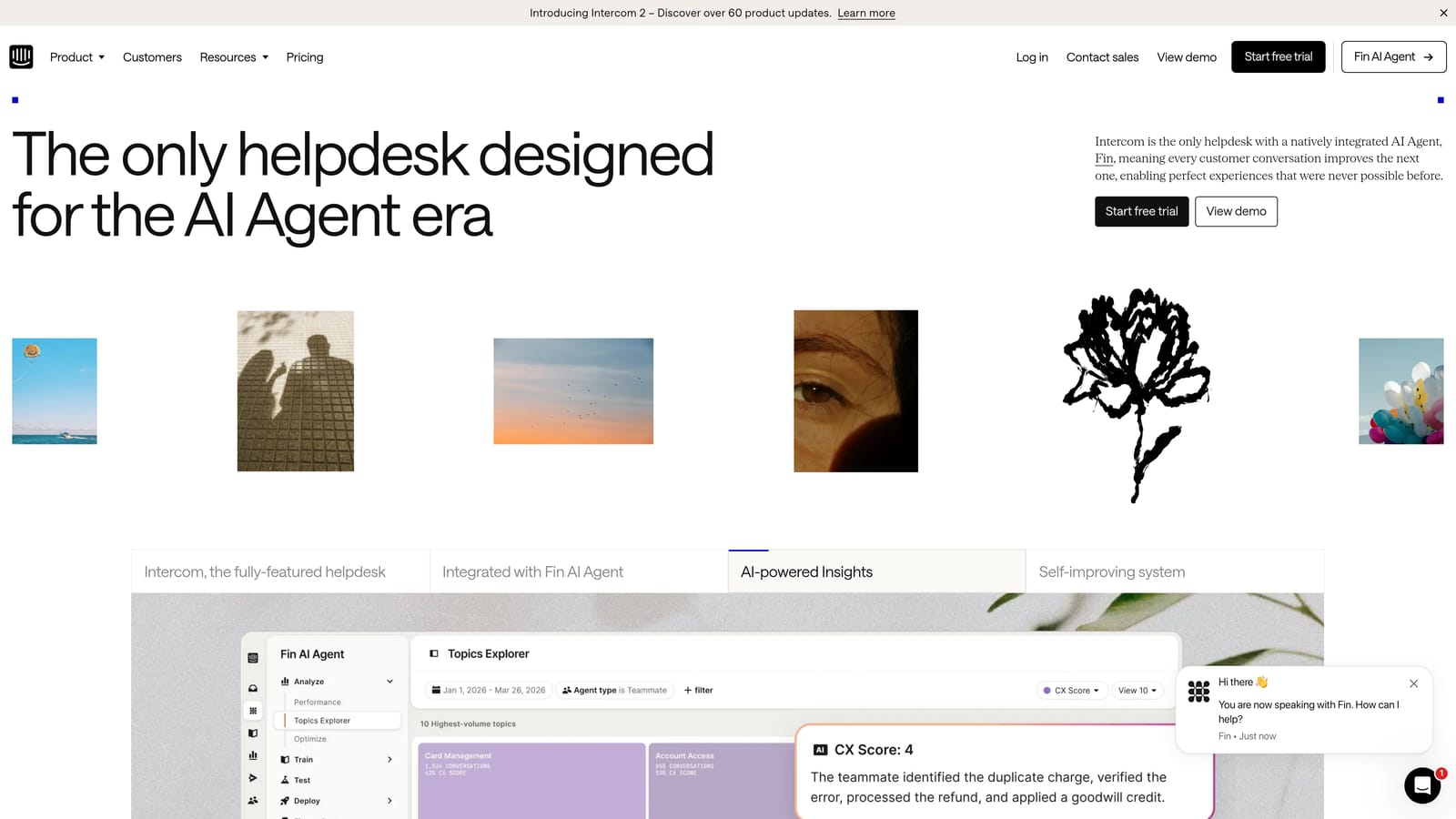
Intercom is a mature customer messaging platform with its Fin AI agent handling automated support resolution on top of a well-established inbox and knowledge base infrastructure.
Where This Tool Shines
Intercom's biggest advantage is consolidation. If you're already using it for in-app messaging, onboarding flows, and user communication, adding Fin AI for support resolution keeps everything in one place. The platform has years of refinement behind its inbox experience, and Fin has been iterated significantly since its launch.
The knowledge base builder is genuinely good, and Fin draws from it to answer questions autonomously. For startups with well-documented help content, the out-of-the-box resolution rate can be solid without heavy configuration.
Key Features
Fin AI Agent: Handles autonomous conversation resolution by drawing on your knowledge base and help content.
Unified Inbox: Combines chat, email, and in-app messaging into a single workspace for support agents.
Knowledge Base Builder: Create and maintain a self-service help center that feeds directly into Fin's responses.
Product Tours and Onboarding Flows: Goes beyond support to assist with user activation and feature adoption.
Extensive App Marketplace: Hundreds of integrations covering CRM, analytics, and engineering tools.
Best For
Startups that have already adopted Intercom as their core user communication layer and want to layer AI resolution on top without switching platforms. Less ideal for teams starting fresh who want a purpose-built AI support tool from day one.
Pricing
Starts around $39/month for base plans; AI resolution features are priced per resolved conversation at higher tiers, which can escalate costs at volume. Verify current pricing on Intercom's website before committing.
3. Freshdesk
Best for: Early-stage teams that need a full-featured helpdesk with a free starting point and accessible AI features.
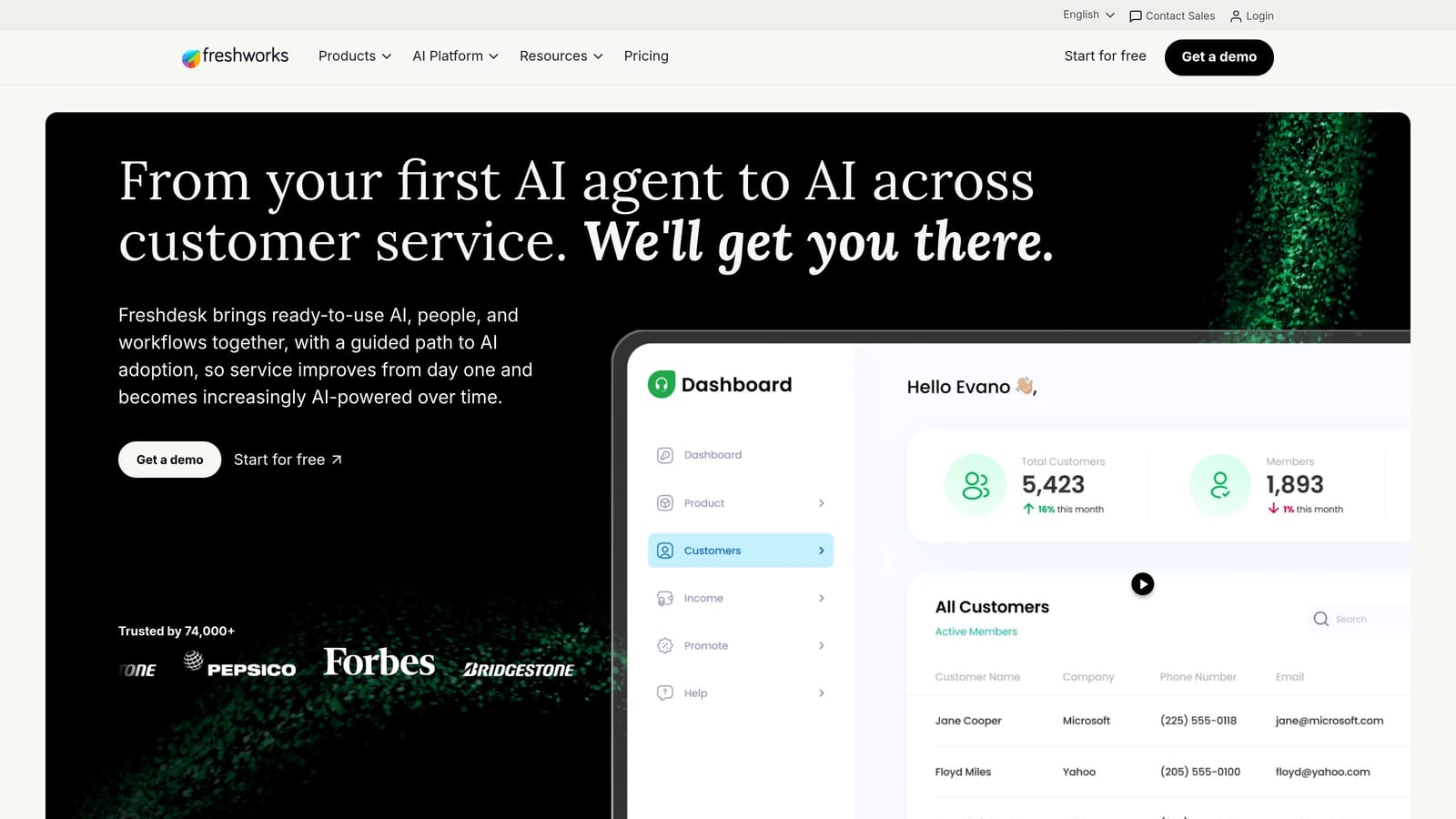
Freshdesk is a full-featured helpdesk platform with Freddy AI covering answer bots, agent assist, and predictive triage — with a free tier that makes it genuinely accessible to pre-revenue or early-stage teams.
Where This Tool Shines
Freshdesk's free plan is one of the most generous in the category, giving very small teams structured ticket management, SLA tracking, and a knowledge base without any upfront cost. The setup process is relatively low-friction compared to enterprise alternatives, which matters when you don't have a dedicated ops team to configure everything.
Freddy AI adds meaningful automation on top of the core helpdesk: answer bots that deflect common questions, agent suggestions that speed up responses, and predictive triage that routes tickets intelligently. It's not the most sophisticated AI in this list, but it's well-integrated and doesn't require a separate tool.
Key Features
Freddy AI: Covers automated responses, agent assist suggestions, and predictive ticket triage in one AI layer.
Ticket Management: Full SLA management, routing rules, and priority queues out of the box.
Knowledge Base and Self-Service Portal: Build help content that both agents and customers can access.
Multi-Channel Support: Handles email, chat, phone, and social from a unified interface.
Free Plan: Available for up to 2 agents with core helpdesk functionality included.
Best For
Pre-seed and seed-stage startups that need structured ticket management immediately but aren't ready to commit to paid plans. Also works well for teams within the broader Freshworks ecosystem (Freshsales, Freshchat) who want native data sharing.
Pricing
Free plan available for up to 2 agents. Paid plans start around $15/agent/month. AI features like Freddy are available on higher tiers. Check Freshdesk's current pricing page for the latest tier structure.
4. Zendesk
Best for: Well-funded startups anticipating rapid scale who need enterprise-grade infrastructure from the start.
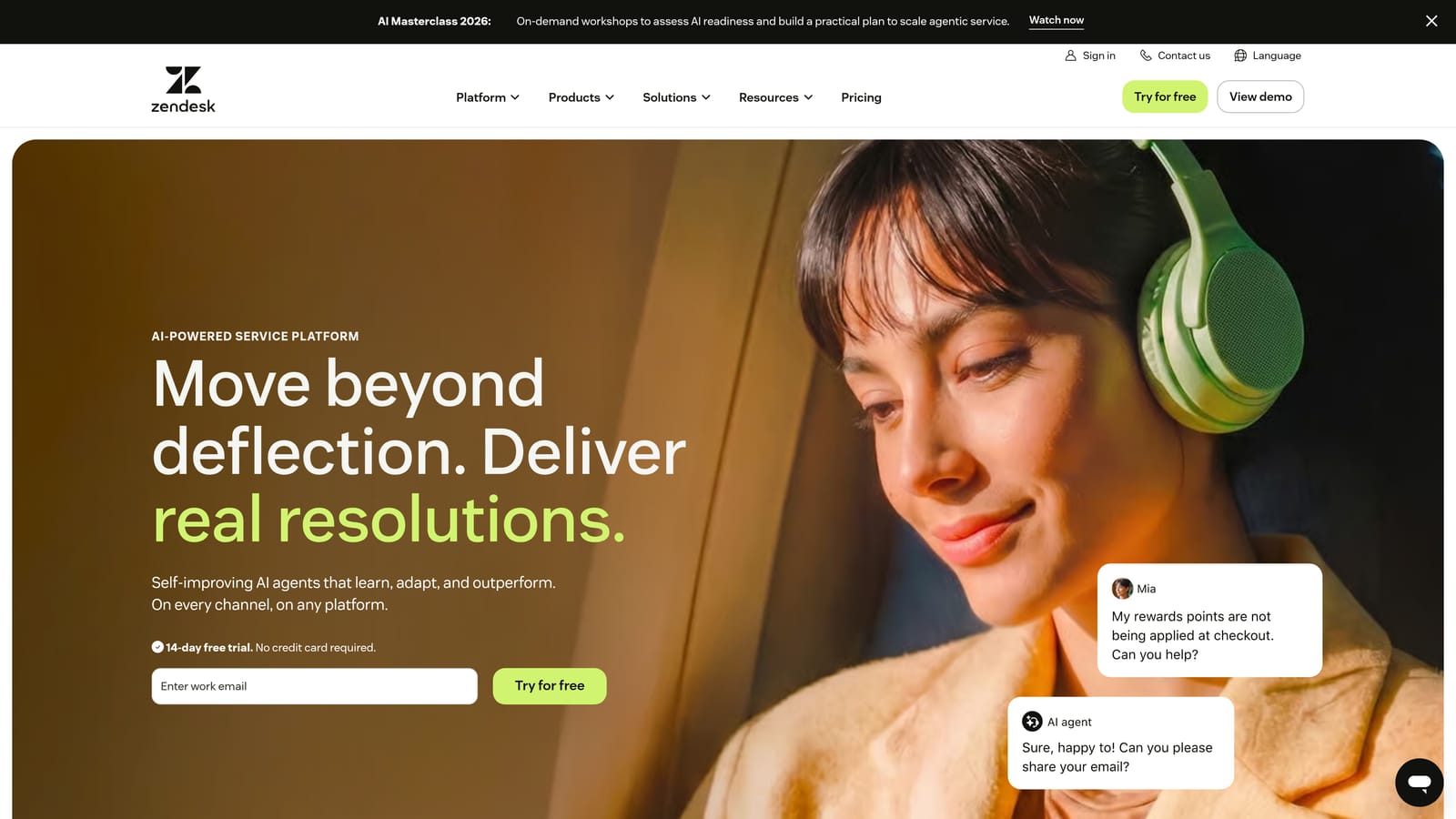
Zendesk is an enterprise-grade support platform with AI Agents, intelligent triage, and one of the largest integration ecosystems in the industry.
Where This Tool Shines
Zendesk's depth is unmatched in this list. If you anticipate complex support operations, multiple channels, and a large agent team within the next 12 to 18 months, building on Zendesk from the start avoids a painful migration later. Its AI Agents handle autonomous ticket resolution, and its triage capabilities are genuinely sophisticated.
The integration marketplace is a real asset. Hundreds of pre-built connectors mean you can plug Zendesk into almost any tech stack without custom development. For startups with complex data flows between support, CRM, and engineering, this matters.
Key Features
AI Agents: Autonomous ticket resolution for common support scenarios, with escalation paths built in.
Intelligent Triage and Routing: AI-powered classification and assignment of incoming tickets.
Omnichannel Support: Email, chat, voice, and social managed from a unified workspace.
Extensive Marketplace: Hundreds of integrations covering every major business tool category.
Advanced Analytics and Reporting: Deep visibility into team performance, resolution times, and customer satisfaction.
Best For
Series A and beyond startups with meaningful support volume and a budget to match. Zendesk can feel like overkill for very early-stage teams, and the setup complexity requires investment. But for teams building toward enterprise customers, the credibility and capability are there.
Pricing
Starts around $55/agent/month; AI features are available on higher tiers. One of the more expensive options on this list at scale. Confirm current pricing on Zendesk's website.
5. Tidio
Best for: Very early-stage founders handling support themselves who need an accessible, low-cost starting point.
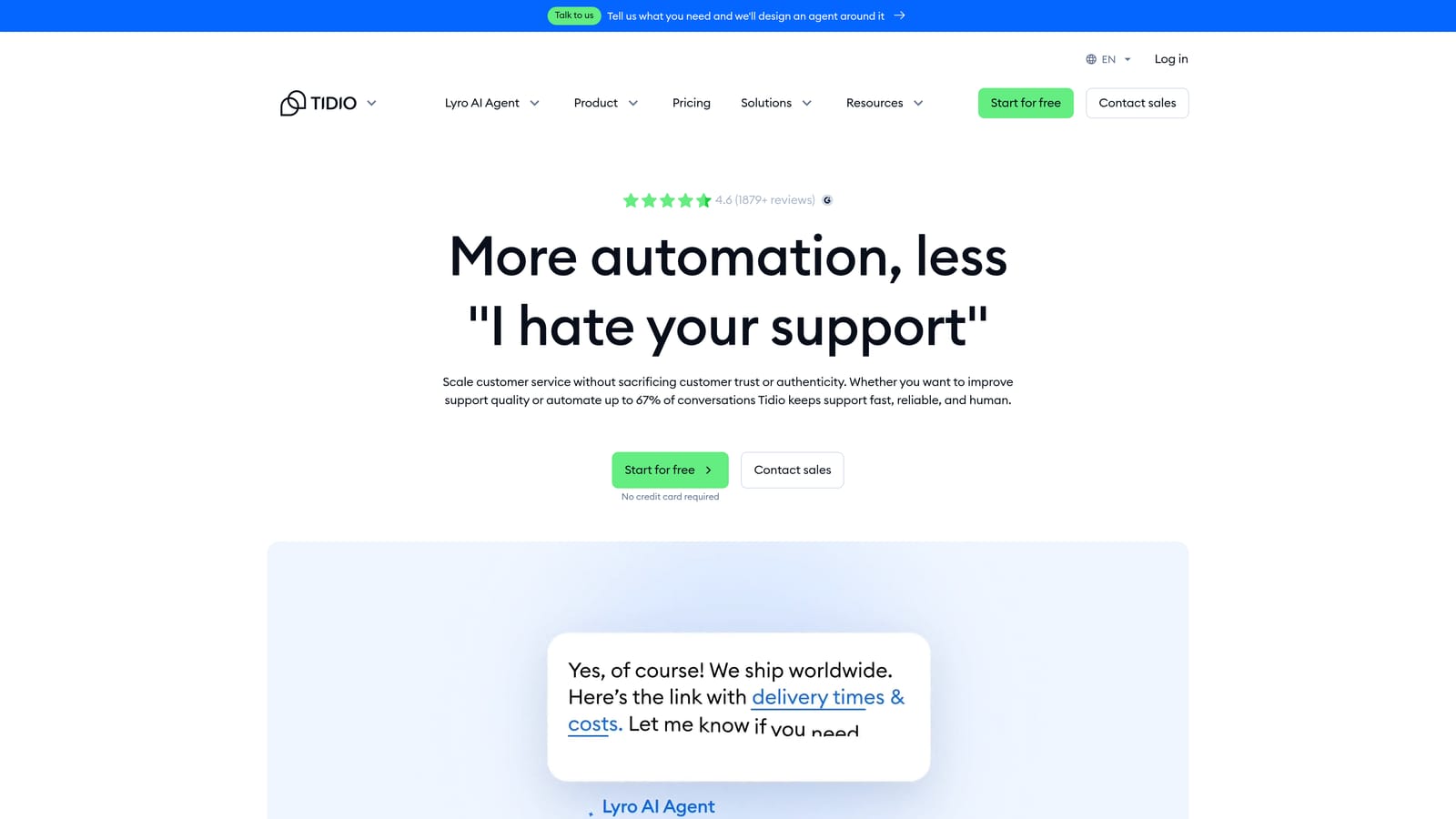
Tidio is an accessible live chat and AI chatbot platform with Lyro AI, designed for small teams and early-stage startups with a generous free tier.
Where This Tool Shines
Tidio is genuinely one of the easiest tools on this list to get running. There's no developer required to set up the live chat widget, and Lyro AI (built on Claude) can handle common questions autonomously from day one. For founders wearing multiple hats, this low setup friction is meaningful.
Its e-commerce integrations (Shopify, WooCommerce) make it particularly relevant for consumer-facing startups in the early stages. The free plan covers core functionality well enough to defer paid commitment until you're seeing real volume.
Key Features
Lyro AI Chatbot: Automated conversation handling powered by Claude, trained on your help content.
Live Chat Setup: No developer required — deploy a chat widget in minutes.
E-Commerce Integrations: Native connections to Shopify and WooCommerce for order-related support.
Visitor Tracking and Proactive Messaging: Trigger conversations based on user behavior on your site.
Free Plan: Core features available without a paid commitment.
Best For
Pre-seed startups, solo founders, and e-commerce teams in the early stages. Tidio may hit its ceiling as your support complexity grows, but it's an excellent starting point that doesn't require significant investment to prove value.
Pricing
Free plan available. Lyro AI starts around $29/month. Paid plans scale with conversation volume and feature depth. Check Tidio's current pricing for the latest structure.
6. Drift (Salesloft)
Best for: B2B startups where inbound chat serves both sales qualification and customer support simultaneously.
Drift is a conversational AI platform that bridges support and sales, routing inbound conversations intelligently for B2B teams with revenue-driven support workflows.
Where This Tool Shines
Drift's core strength is at the intersection of support and sales. If your inbound chat is as likely to be a prospective customer as an existing one, Drift's AI handles the qualification and routing logic that most pure support tools don't address. For B2B startups where every conversation has pipeline implications, this dual-purpose capability is genuinely useful.
Meeting scheduling directly from chat is a standout feature for sales-assisted support motions. Rather than bouncing a prospect through multiple steps, the AI can book time with the right person in the same conversation.
Key Features
AI-Powered Chatbot: Qualifies and routes conversations based on visitor identity and intent signals.
Real-Time Notifications: Alerts sales reps when high-value conversations are happening live.
Meeting Scheduling: Book calls directly from chat without leaving the conversation.
CRM Integrations: Native connections to Salesforce and HubSpot for seamless data flow.
Account-Based Targeting: Personalize chat experiences based on company-level data.
Best For
B2B startups with an outbound or account-based sales motion where support and sales share the same inbound channel. Worth noting that the Salesloft acquisition has shifted Drift's product roadmap, so evaluate its current direction carefully before committing.
Pricing
Contact for pricing. Drift is positioned as a premium B2B platform, so expect pricing to reflect that. Not typically the most cost-efficient option for pure support use cases.
7. Help Scout
Best for: Startups where tone, empathy, and relationship quality are core parts of the brand experience.
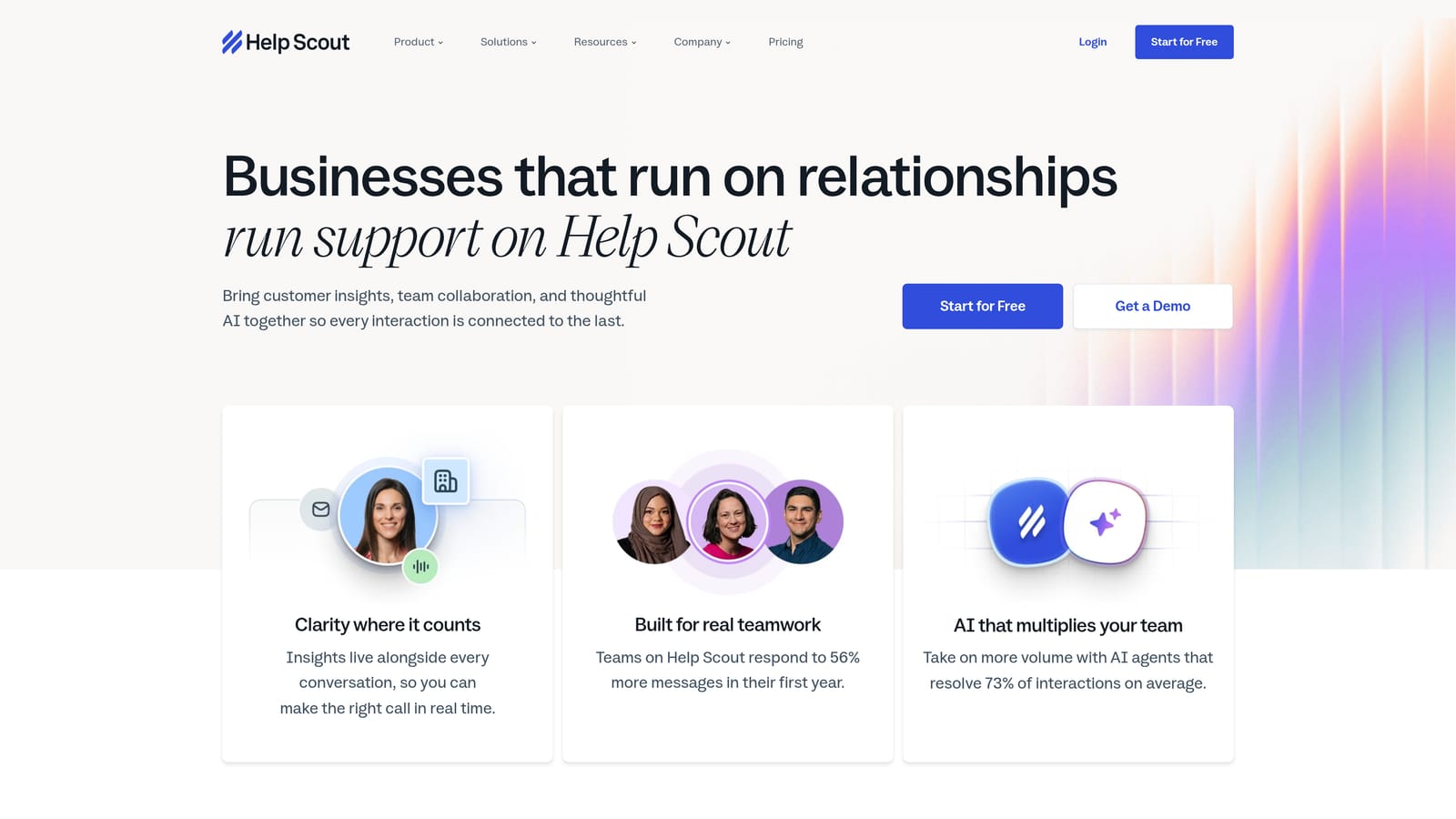
Help Scout is a human-centered support platform with AI Assist, AI Summarize, and AI Drafts to help small teams respond faster without losing the personal touch.
Where This Tool Shines
Help Scout's philosophy is different from most tools on this list. Rather than maximizing autonomous resolution, it's designed to make human agents faster and more effective. AI Drafts suggests responses based on conversation context, AI Summarize condenses long threads for quick catch-up, and AI Assist helps agents craft better replies. The AI augments the human rather than replacing them.
The shared inbox model is intuitive for small, collaborative teams. There's no steep learning curve, and the interface feels more like a well-designed email client than enterprise software. For startups where support is a relationship-building function, not just a cost center, this approach resonates.
Key Features
AI Drafts: Suggests full response drafts based on the conversation context and your historical replies.
AI Summarize: Condenses long conversation threads so agents can catch up instantly.
Shared Inbox: Designed for small, collaborative teams with simple assignment and collision detection.
Knowledge Base (Docs): Self-service help center that integrates directly with the support workflow.
Customer Profiles: Full conversation history and customer data embedded in every interaction.
Best For
Consumer-facing or community-driven startups where brand voice and personal connection are differentiators. Also a strong fit for small teams (two to ten people) who find enterprise helpdesks unnecessarily complex for their current scale.
Pricing
Starts around $22/user/month. Reasonably priced for small teams. Review Help Scout's current pricing page for the latest plan structure.
8. Kustomer
Best for: Consumer-facing startups with high message volume across multiple channels needing a unified customer view.
Kustomer is a CRM-native omnichannel support platform with AI automation, designed for high-volume consumer-facing teams managing conversations across email, chat, social, and SMS.
Where This Tool Shines
Kustomer's defining feature is its unified customer timeline. Every interaction across every channel is consolidated into a single view, giving agents full context regardless of where the conversation started. For consumer startups dealing with customers who switch between Instagram DMs, email, and live chat, this eliminates the fragmentation that frustrates both agents and customers.
The CRM data embedded in every support conversation is genuinely powerful. Agents can see order history, subscription status, and previous interactions without switching tools, which speeds up resolution and reduces the need for customers to repeat themselves.
Key Features
Unified Customer Timeline: All channels consolidated into a single chronological view per customer.
AI-Powered Automated Responses: Handles common questions autonomously with intelligent routing for escalations.
CRM Data in Every Conversation: Full customer history and attributes visible to agents in real time.
Workflow Automation: Automate repetitive processes like tagging, routing, and status updates.
Omnichannel Reporting: Analytics across all channels in a unified dashboard.
Best For
Consumer-facing startups with genuine omnichannel support needs and the volume to justify the price point. Less suited to B2B SaaS teams with lower ticket volume or primarily email-based support.
Pricing
Starts around $89/user/month, making it one of the higher-priced options on this list. AI features are available on higher tiers. Best evaluated when your support volume clearly justifies the investment.
9. Forethought
Best for: Startups already committed to Zendesk or Salesforce Service Cloud that want AI augmentation without platform migration.
Forethought is an AI augmentation layer for existing helpdesks, adding intelligent triage, automated resolution, and agent assist on top of Zendesk, Salesforce, and others.
Where This Tool Shines
Forethought's value proposition is clear: if you've already invested in a helpdesk and don't want to migrate, it adds AI capabilities on top of what you have. Its three core products (Triage, Solve, and Assist) address the full support workflow, from routing incoming tickets to resolving them automatically to helping agents during live conversations.
The deflection analytics are particularly useful for startups trying to understand where their knowledge base has gaps. Knowing which questions Solve couldn't answer points directly to content that needs to be created, turning the AI's limitations into a product improvement signal.
Key Features
Triage AI: Intelligently routes and prioritizes incoming tickets based on content and context.
Solve AI: Automated resolution for common questions, drawing on your existing knowledge base.
Assist AI: Real-time suggestions for agents during live conversations to speed up response time.
Helpdesk Compatibility: Works on top of Zendesk, Salesforce Service Cloud, and other established platforms.
Deflection Analytics: Tracks resolution rates and surfaces gaps in automated coverage.
Best For
Mid-stage startups that have already standardized on a major helpdesk and want to add AI without disrupting existing workflows. Less relevant for teams starting fresh — in that case, an AI-first platform is a cleaner starting point.
Pricing
Contact for pricing. Forethought is typically positioned for mid-market and above, so expect pricing to reflect that segment. Confirm current packaging directly with their team.
Which Tool Is Right for Your Stage?
The honest answer is that the best customer support AI for your startup depends less on feature lists and more on where you are right now. Here's a quick-reference breakdown to help you cut through the options.
Pre-seed and seed-stage teams: Start with Tidio or Freshdesk. Both offer free tiers that give you real functionality without a financial commitment. Tidio is faster to set up; Freshdesk gives you more structured helpdesk infrastructure if ticket management is already becoming complex.
Series A and beyond (B2B SaaS): Halo AI is the strongest fit here. Its AI-first architecture, page-aware context, and business intelligence outputs are designed for exactly this stage: enough product complexity to need smart support, enough growth velocity to need continuous learning, and enough integration surface area to benefit from deep connectivity across your stack. See Halo in action and discover how continuous learning transforms every interaction into smarter, faster support.