9 Best Customer Support AI Tools with CRM Integration in 2026
Discover the 9 best customer support AI with CRM integration tools in 2026, covering AI-native platforms, enhanced helpdesks, and CRM-first solutions that enable true bi-directional data sync. These tools transform your support layer into a business intelligence engine by connecting customer history, support interactions, and insights across sales, success, and product teams.
 Matt PattoliFounder14 min read
Tickets get resolved, customers get answers, and yet your sales team is still flying blind on which accounts are struggling. Your success team has no idea a key customer hit three support walls this week. Your product team never heard about the bug pattern that's quietly churning users. This is what happens when AI support runs in isolation from your CRM and business stack.
CRM integration has become the real differentiator in ai customer service tooling. Not a one-way ticket log, but genuine bi-directional sync: pulling customer history into AI conversations for personalization, and pushing support intelligence back to inform sales, success, and product decisions. The tools that get this right turn your support layer into a business intelligence engine.
This list covers tools across three categories: AI-native platforms built with integrations at their core, established helpdesks that have added serious AI layers, and CRM platforms extending into support. Selection criteria focused on depth of CRM integration (not just a sync checkbox), AI resolution quality, breadth of platforms supported, and value specifically for B2B teams. Whether you're evaluating chatbot integration options or replacing a legacy helpdesk entirely, there's a fit here for your stack.
1. Halo AI
Best for: B2B SaaS teams wanting AI-native support with deep business stack integration and customer intelligence.
Halo AI is an AI-first customer support platform that deploys intelligent agents to resolve tickets, guide users visually through your product, and feed customer intelligence back into your CRM and entire business stack.
Where This Tool Shines
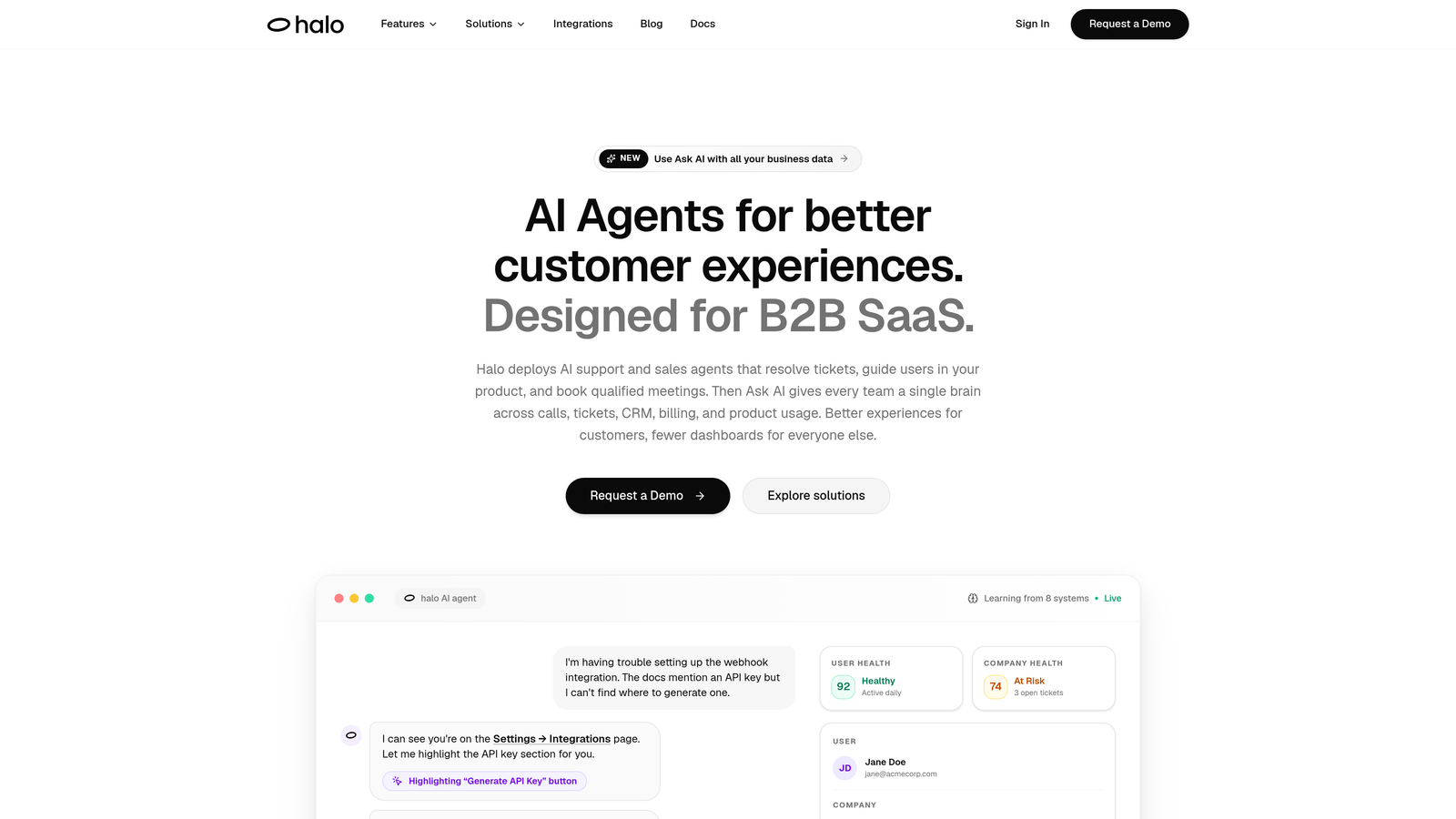
Most support tools were built as ticketing systems first and bolted AI on later. Halo was designed the other way around: AI agents are the foundation, not a feature. That architecture matters because the integrations aren't afterthoughts either. When a customer hits a wall in your product, Halo's page-aware widget sees exactly what they see, guides them through it visually, and logs everything back to HubSpot, Intercom, or wherever that customer relationship lives.
The smart inbox goes beyond ticket management. It surfaces customer health signals, revenue intelligence, and anomaly detection, so your support data starts informing decisions across sales and success. For product-led SaaS companies, the auto bug ticket creation in Linear means engineering hears about real user friction without anyone manually filing a report.
Key Features
Autonomous AI Agents: Resolves support tickets independently with continuous learning from every interaction, getting smarter over time without manual retraining.
Page-Aware Chat Widget: Sees what the user sees in your product, enabling visual UI guidance rather than generic text instructions.
Bi-Directional Integrations: Connects with HubSpot, Intercom, Stripe, Slack, Linear, PandaDoc, Zoom, and Fathom for genuine two-way data flow across your business stack.
Smart Inbox with Business Intelligence: Surfaces customer health signals, revenue intelligence, and anomaly detection directly from support interactions.
Auto Bug Ticket Creation and Live Handoff: Automatically creates Linear tickets from user-reported issues and escalates complex cases to human agents with full context preserved.
Best For
Product-led SaaS companies and B2B teams that want support to do more than resolve tickets. Particularly strong for teams already using HubSpot, Intercom, Linear, or Slack who want those tools to work together rather than in parallel silos.
Pricing
Contact for pricing; a free demo is available at haloagents.ai. Custom plans based on team size and integration requirements.
2. Zendesk AI
Best for: Enterprise teams already invested in the Zendesk ecosystem needing scalable AI across multiple support channels.
Zendesk AI is an enterprise-grade AI layer built into the Zendesk platform, offering automated ticket resolution, intelligent routing, and agent assistance with native CRM capabilities through Zendesk Sell and the Sunshine data platform.
Where This Tool Shines
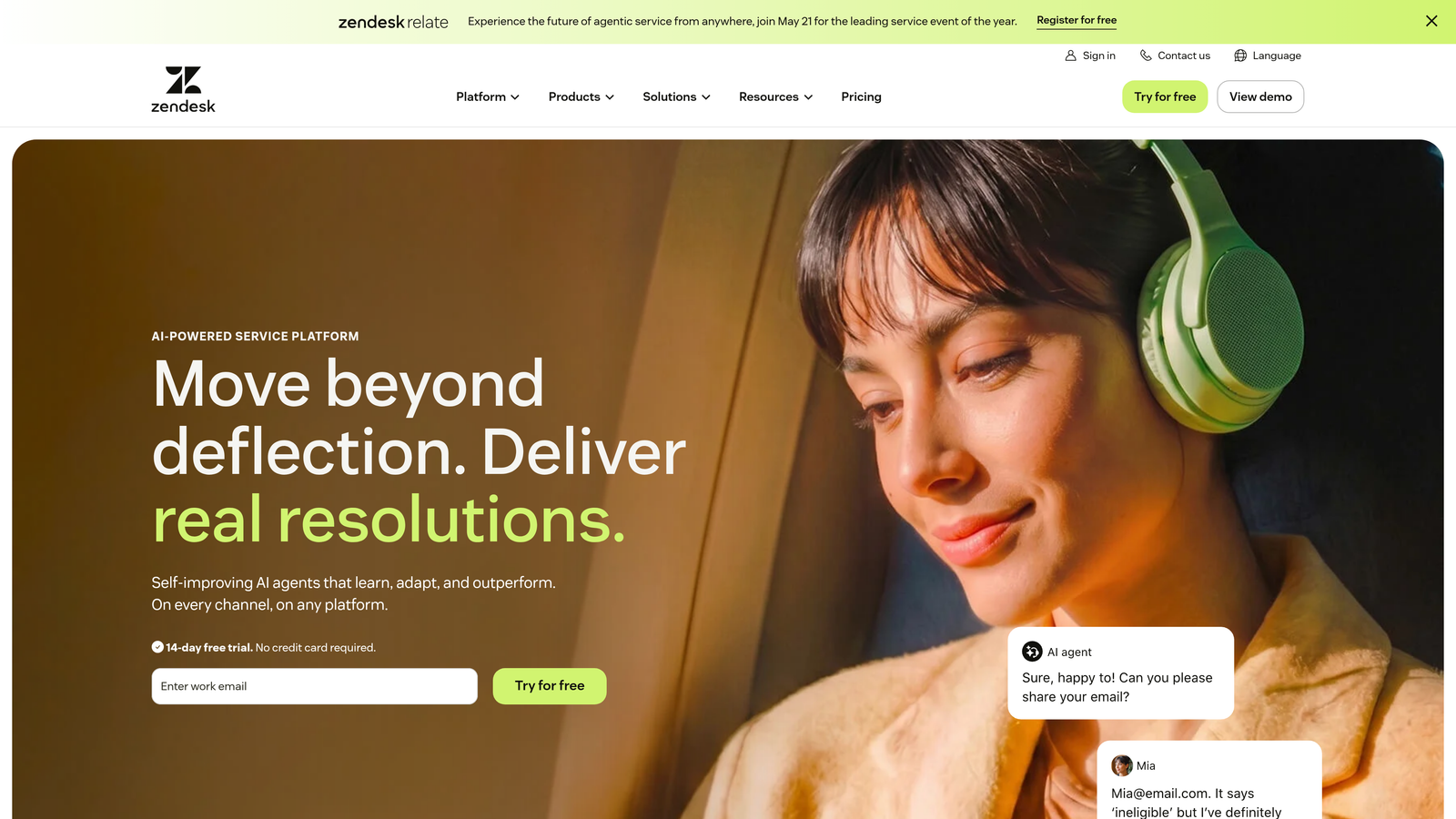
Zendesk's advantage is the breadth of its ecosystem. If your team already lives in Zendesk, the AI features activate within a familiar environment without a migration project. Intent detection routes tickets before a human ever touches them, and the Agent Copilot assists live agents with suggested responses based on full ticket context.
For CRM connectivity, Zendesk Sell provides native sales CRM features, while Sunshine opens the platform to custom data models. Pre-built connectors for Salesforce and HubSpot cover most enterprise stacks, though the integration depth tends to be stronger within the Zendesk ecosystem than across external CRMs.
Key Features
AI Agents: Automated ticket resolution across email, chat, and messaging channels without human intervention for routine queries.
Zendesk Sell and Sunshine: Native CRM and data platform integration for unified customer views within the Zendesk environment.
Intent Detection and Routing: Classifies and routes incoming tickets intelligently based on topic, sentiment, and urgency.
Pre-Built CRM Connectors: Ready-to-use integrations with Salesforce, HubSpot, and other major CRM platforms.
Agent Copilot: AI-assisted response suggestions and next-best-action recommendations for human agents handling escalated cases.
Best For
Mid-market and enterprise companies with existing Zendesk deployments, high ticket volumes across multiple channels, and teams that need AI to work within a well-established support workflow rather than replace it.
Pricing
Suite plans start at $55 per agent per month; AI add-on pricing varies by plan tier and usage volume.
3. Intercom Fin
Best for: Product and SaaS teams using Intercom's messaging platform who want an AI agent that handles resolution end-to-end.
Intercom Fin is a conversational AI agent built into Intercom's customer messaging platform, resolving support queries from your knowledge base while syncing customer data with Salesforce, HubSpot, and Intercom's native CRM.
Where This Tool Shines
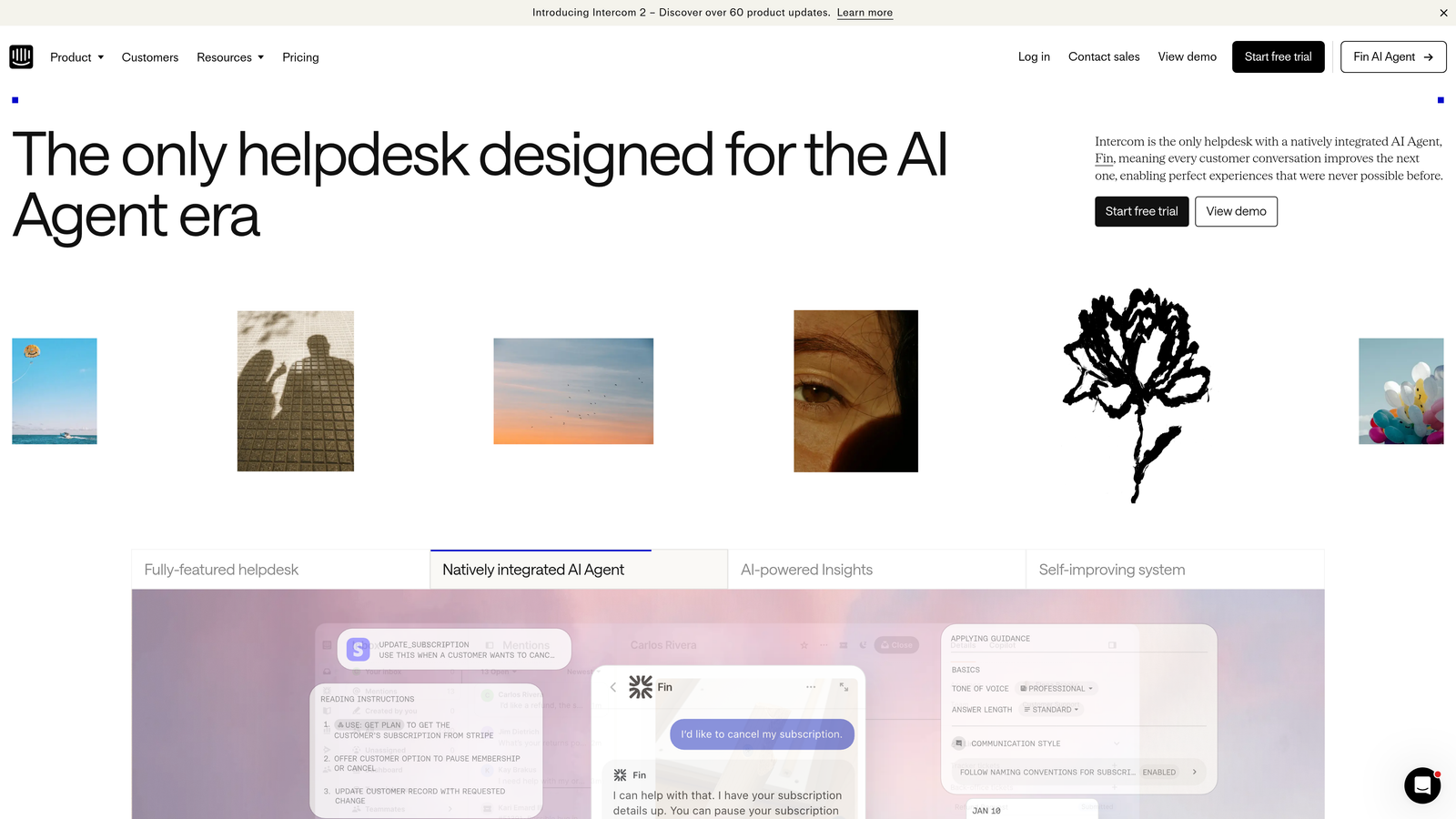
Fin's standout quality is resolution accuracy. It answers from your knowledge base with cited sources, reducing hallucination risk and building customer trust. The native customer data platform in Intercom means Fin already knows who the customer is, what plan they're on, and what they've done in your product before the conversation starts.
Custom actions extend Fin beyond answering questions into actually doing things: looking up order status, triggering workflows in external systems, or updating records. For teams already on Intercom, this is a very short path to meaningful AI automation.
Key Features
Fin AI Agent: Resolves customer queries using knowledge base content with source citations for transparency and accuracy.
Native Customer Data Platform: Built-in company and user profiles give Fin full context before conversations begin.
CRM Integrations: Salesforce, HubSpot, and Pipedrive connectors for syncing support interactions with sales records.
Custom Actions: Fin can execute steps in external systems, moving beyond information retrieval to actual task completion.
Conversation Analytics: AI performance reporting that tracks resolution rates, escalation patterns, and topic trends.
Best For
SaaS companies already using Intercom for customer messaging who want to extend their existing investment with AI resolution rather than introduce a separate support tool.
Pricing
Intercom seats start at $29 per month; Fin AI usage is billed per resolution, making costs scale with actual AI workload rather than seat count.
4. Freshdesk Freddy AI
Best for: Teams within the Freshworks ecosystem wanting zero-configuration CRM and support unification.
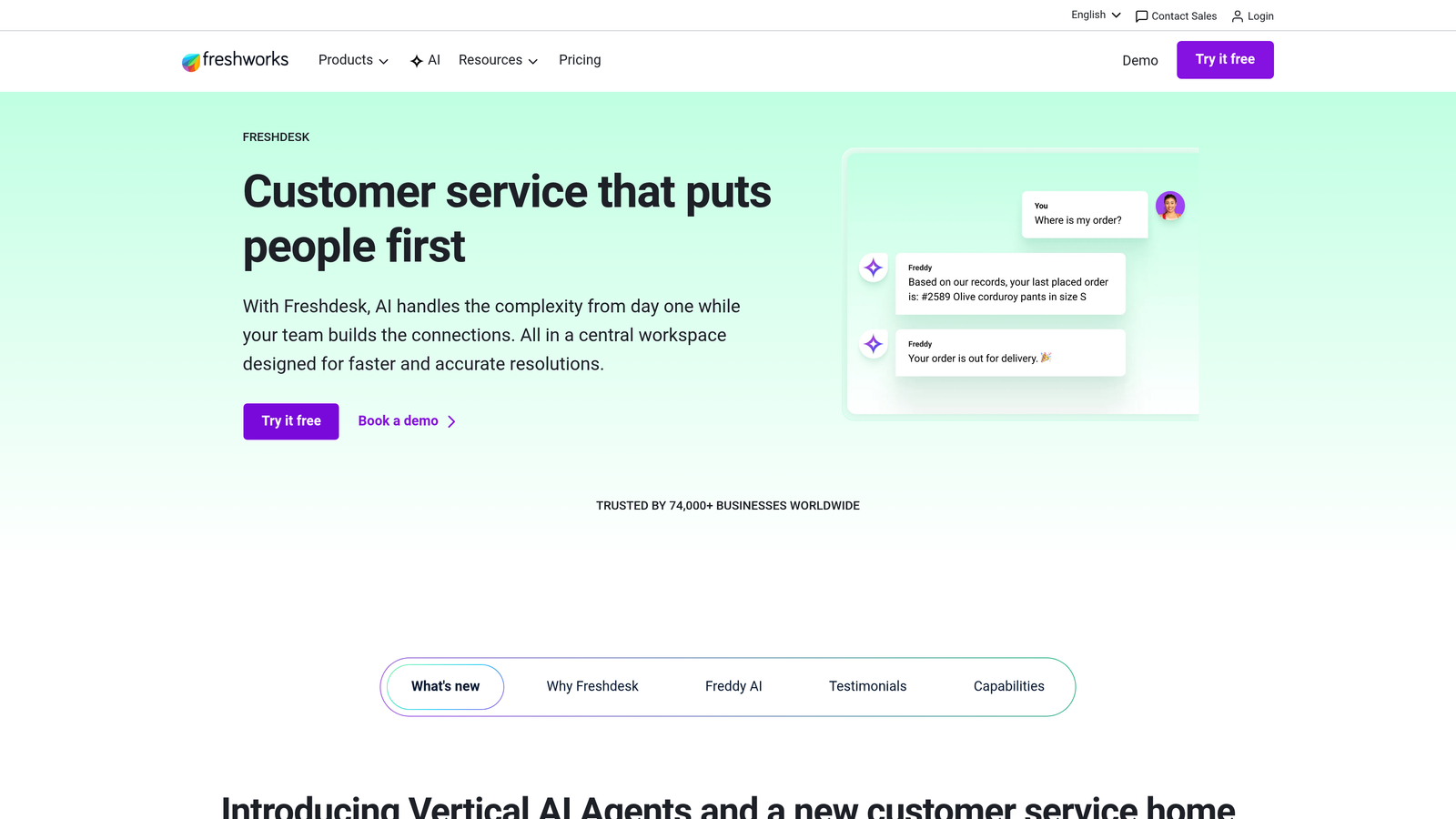
Freshdesk Freddy AI is an AI-powered support automation platform within the Freshworks suite, offering native integration with Freshsales CRM and connections to third-party systems for unified customer views.
Where This Tool Shines
If you're using Freshsales alongside Freshdesk, the CRM integration is genuinely seamless. There's no middleware, no API mapping, and no sync delays. Support agents see a unified customer timeline that includes sales activity, and Freddy AI uses that complete context to prioritize and route tickets more intelligently.
For teams outside the Freshworks ecosystem, the Marketplace offers third-party CRM connectors, though the integration depth naturally doesn't match the native experience. Freddy's AI has matured considerably, with ticket field suggestions and automated routing reducing manual triage work meaningfully.
Key Features
Freddy AI Agent: Automated ticket resolution and self-service capabilities that handle common queries without agent involvement.
Native Freshsales CRM Integration: Zero-configuration connection between support and sales data within the Freshworks suite.
AI Ticket Prioritization: Intelligent field suggestion and priority scoring based on ticket content and customer attributes.
Unified Customer Timeline: Combined view of support and sales interactions on a single customer record.
Third-Party CRM Connectors: Marketplace integrations for teams using Salesforce, HubSpot, or other external CRMs.
Best For
Growing businesses already using or considering the Freshworks suite, and teams that want strong native CRM-support integration without complex setup or middleware dependencies.
Pricing
Free tier available for small teams; Pro plan starts at $49 per agent per month with full Freddy AI capabilities included.
5. Salesforce Einstein Service Cloud
Best for: Enterprise organizations with Salesforce as their system of record needing support embedded directly in the CRM.
Salesforce Einstein Service Cloud is an AI-powered service platform embedded within the Salesforce ecosystem, giving support teams complete access to CRM records, sales data, and cross-department workflows without leaving a single platform.
Where This Tool Shines
For enterprises where Salesforce is already the source of truth, Einstein Service Cloud eliminates the CRM integration problem entirely by making support a native part of the CRM. Agents see every sales interaction, marketing touchpoint, and service history on a single customer record. AI-generated case summaries and recommended next actions surface at the right moment without agents digging through data.
Agentforce, Salesforce's autonomous AI agent layer, extends this further by handling routine cases end-to-end within the same environment where deals are managed and campaigns run. The cross-cloud workflow automation is genuinely powerful for enterprises with complex, multi-department customer journeys.
Key Features
Einstein AI Bots and Case Classification: Automated case handling and intelligent classification built natively into Salesforce CRM.
Customer 360 View: Complete visibility into every sales, marketing, and service interaction on a unified customer record.
AI Case Summaries and Next Actions: Auto-generated summaries and recommended responses to speed up agent handling time.
Cross-Cloud Workflow Automation: Automations that span Service, Sales, and Marketing Clouds for complex multi-team processes.
Agentforce: Autonomous AI agent deployment for end-to-end case resolution within the Salesforce environment.
Best For
Large enterprises with Salesforce as their primary CRM and business platform, where the value of native integration outweighs the platform's complexity and cost.
Pricing
Service Cloud starts at $25 per user per month for basic features; Einstein AI capabilities are available in Professional tier and above, with enterprise pricing for full Agentforce deployment.
6. Ada
Best for: Companies needing an AI agent that takes actions in CRM systems rather than simply reading data.
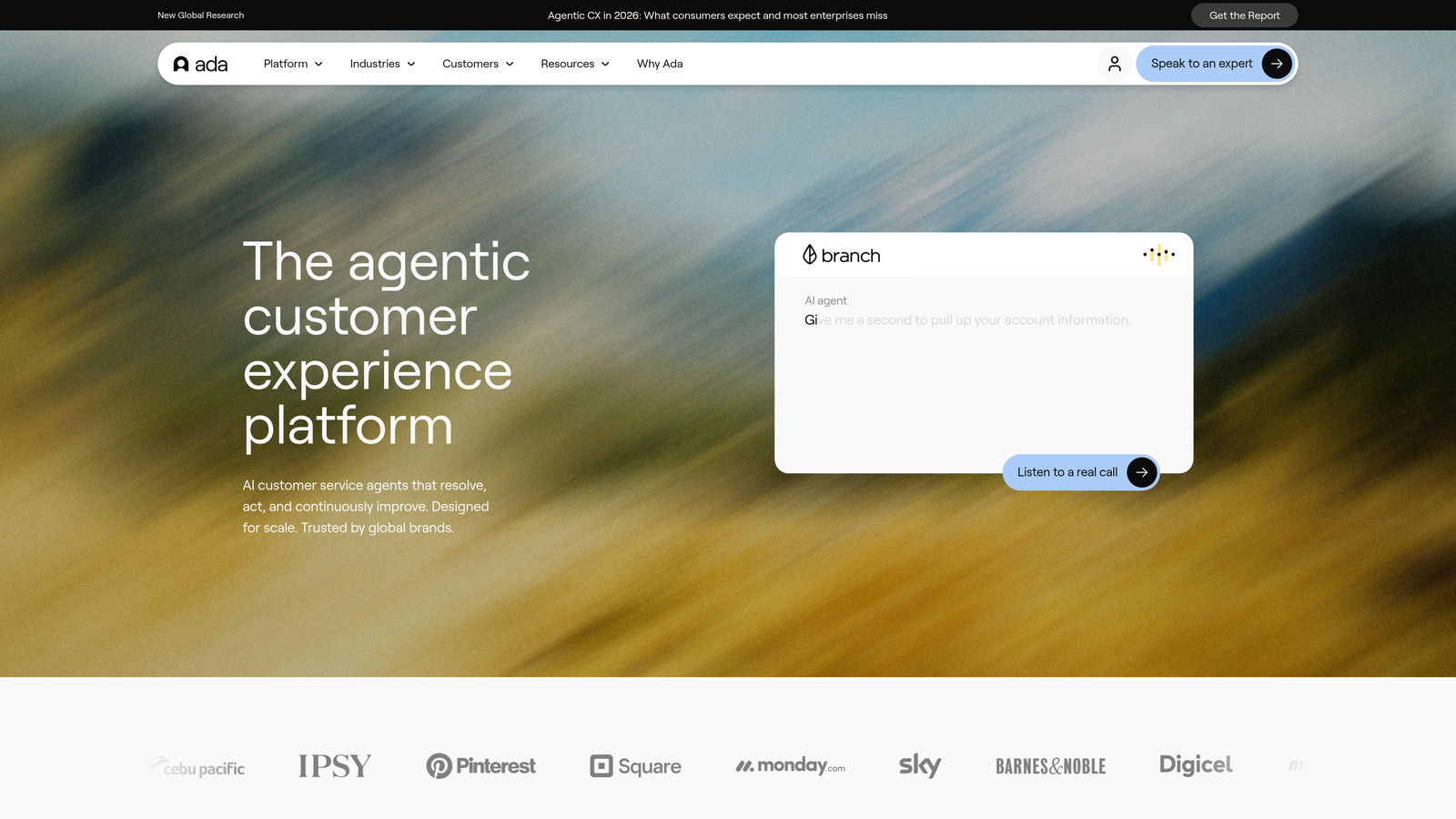
Ada is an AI-powered customer service automation platform that goes beyond deflection to execute real tasks: pulling CRM data to personalize conversations, updating records, and processing transactions in connected systems.
Where This Tool Shines
Ada's differentiation is action-orientation. Many AI support tools retrieve information from a CRM to personalize a response. Ada can write back: updating fields, triggering workflows, processing refunds, and creating records without a human in the loop. For support teams whose most common escalations involve transactional tasks, this changes the deflection math significantly.
The no-code platform makes it accessible to support operations teams who want to build and iterate on AI workflows without engineering involvement. Multilingual support across more than 50 languages makes Ada particularly relevant for global support operations.
Key Features
Action-Oriented AI Agent: Resolves queries and executes tasks in connected systems, not just answering questions but completing transactions.
Real-Time CRM Data Retrieval: Pulls live customer data from connected CRMs to personalize every conversation dynamically.
CRM and Helpdesk Integrations: Connects with Salesforce, Zendesk, and other major platforms for both reading and writing data.
No-Code Workflow Builder: Visual platform for building and managing AI workflows without engineering resources.
Multilingual Support: Handles customer conversations in 50+ languages for global support operations.
Best For
Mid-market and enterprise companies with high volumes of transactional support requests where the AI needs to do more than answer questions, and global teams that need consistent multilingual resolution quality.
Pricing
Custom pricing based on usage and deployment scope; contact Ada directly for a quote tailored to your support volume and integration requirements.
7. HubSpot Service Hub with AI
Best for: HubSpot-native teams wanting support that automatically enriches contact and deal records without any integration work.
HubSpot Service Hub is a customer service platform with AI features natively embedded in HubSpot's CRM, connecting every support interaction automatically to contact records, deals, and lifecycle stages.
Where This Tool Shines
The CRM integration story here is the simplest on this list: it's the same database. Every ticket, conversation, and AI interaction is already on the contact record because Service Hub and HubSpot CRM are the same platform. There's no sync to configure, no field mapping to maintain, and no delay between a support interaction and a sales rep seeing it.
AI-generated conversation summaries and knowledge base suggestions reduce agent handling time, while the shared inbox gives every team member the same CRM context. For companies scaling from startup to mid-market on HubSpot, Service Hub grows naturally alongside the rest of the stack.
Key Features
AI Chatbot Builder: Personalized chatbot flows that pull live HubSpot CRM data to tailor conversations to each contact.
Native CRM Integration: Every ticket and conversation automatically enriches the contact record, deal, and lifecycle stage in HubSpot.
Conversation Intelligence: AI-generated summaries and coaching insights from support interactions.
Shared Inbox with CRM Context: Agents see full contact history, deal status, and lifecycle stage alongside every incoming conversation.
AI-Suggested Knowledge Base Articles: Recommends relevant help content to agents and customers based on conversation context.
Best For
Companies already using HubSpot for marketing and sales who want their support data to live in the same CRM without integration overhead, particularly startups and growing mid-market B2B teams.
Pricing
Free tools available for basic ticketing; Service Hub Starter at $20 per seat per month; Professional and Enterprise tiers unlock full AI capabilities and advanced automation.
8. Tidio AI (Lyro)
Best for: Small businesses and e-commerce brands needing affordable AI chat with straightforward CRM and platform connections.
Tidio is an accessible AI chatbot platform featuring Lyro, its conversational AI, designed for smaller teams that need quick deployment and integrations with HubSpot, Shopify, and other popular platforms without enterprise complexity.
Where This Tool Shines
Tidio's strength is getting teams live quickly without a lengthy implementation project. Lyro handles common customer questions automatically, and the visual chatbot builder lets non-technical users create custom conversation flows. For e-commerce teams, the Shopify and WooCommerce integrations surface order data directly in conversations without custom development.
The live chat layer with AI-suggested responses gives human agents a productivity boost on conversations that Lyro escalates. Visitor tracking provides basic customer data context, though the CRM integration depth is lighter compared to enterprise-focused tools on this list.
Key Features
Lyro AI Chatbot: Conversational AI that handles routine customer queries automatically using your content and FAQs.
HubSpot and E-Commerce Integrations: Connects with HubSpot, Shopify, and WooCommerce for customer data context in conversations.
Visual Chatbot Builder: No-code flow builder for creating custom conversation paths without developer involvement.
Live Chat with AI Suggestions: Agent-facing AI recommendations for faster, more consistent human responses on escalated chats.
Visitor Tracking: Basic customer data syncing and visitor identification for conversation personalization.
Best For
Small businesses, e-commerce brands, and early-stage startups that need affordable AI chat with quick setup and don't require deep bi-directional CRM sync or enterprise-grade automation.
Pricing
Free plan available with limited Lyro conversations; paid plans start at $29 per month, making it one of the most accessible entry points on this list.
9. Kustomer
Best for: High-volume support teams that want the CRM and support platform unified from the ground up, not integrated after the fact.
Kustomer is a CRM-first customer service platform where every channel and interaction lives on a single customer timeline, with AI automations that operate on complete customer history rather than isolated tickets.
Where This Tool Shines
Kustomer's premise is different from most tools on this list: rather than integrating your support tool with your CRM, it combines them into one platform. Every email, chat, call, and social message appears on a unified customer timeline alongside purchase history, previous issues, and lifetime value data. AI automations trigger based on that complete picture rather than the content of a single ticket.
This approach is particularly powerful for high-volume consumer brands where context from previous interactions is critical to resolution quality. Agent assist features surface relevant history and suggested responses without agents having to search across systems.
Key Features
Built-In CRM with Unified Timeline: All channels and interactions on a single customer record, eliminating the need for a separate CRM integration.
AI Chatbots and Agent Assist: Automated resolution and human agent support, both informed by complete customer history.
Attribute-Based Workflow Automation: Triggers automated actions based on customer attributes, lifetime value, and interaction history.
Omnichannel Coverage: Email, chat, voice, and social all managed from the same customer timeline.
E-Commerce and CRM Integrations: Connects with Shopify, Salesforce, and other platforms for teams that need data from external systems alongside Kustomer's native records.
Best For
High-volume consumer brands and enterprises that want to eliminate the support-CRM integration problem by using a single platform for both, particularly those in retail, e-commerce, and subscription businesses.
Pricing
Enterprise pricing starts at $89 per user per month, reflecting its positioning as a full CRM replacement rather than a support add-on.
Choosing the Right Tool for Your Stack
The right choice depends less on feature lists and more on where your CRM already lives and how deep you need the integration to go.
Enterprise Salesforce shops: Einstein Service Cloud is the natural fit. The integration isn't a feature, it's the architecture. If your team's source of truth is Salesforce, keeping support inside that environment eliminates data silos entirely.
HubSpot-native teams: HubSpot Service Hub wins on simplicity. Every support interaction already enriches the contact record with no configuration required. For growing B2B companies on HubSpot, it's the lowest-friction path to connected support and CRM data.
Product-led SaaS companies: Halo AI is built for this context. Page-aware guidance, bi-directional integrations across the modern SaaS stack, auto bug ticket creation in Linear, and business intelligence signals from support data make it purpose-built for teams where product experience and customer success are tightly linked.
Budget-conscious startups and small businesses: Tidio gives you AI chat and basic CRM connectivity at a price point that makes sense before you've scaled. HubSpot's free tier is also worth considering if you're already in that ecosystem.
High-volume transactional support: Ada's action-oriented AI and Kustomer's unified CRM-support platform are both strong here, depending on whether you want to keep your existing CRM or replace it with something built for support volume.
Your support team shouldn't scale linearly with your customer base. AI agents can handle routine tickets, guide users through your product, and surface business intelligence while your team focuses on complex issues that need a human touch. For B2B teams that want all of that connected to the tools they already use, See Halo in action and discover how continuous learning transforms every interaction into smarter, faster support.
If you're still evaluating your broader approach, our guides on automated customer support and chatbot software comparison cover the strategic context behind these decisions in more depth.