9 Best Customer Support Automation Tools for Enterprises in 2026
Enterprise support teams struggling with high ticket volumes and complex workflows need purpose-built solutions that go beyond basic chatbots. This guide evaluates the 9 best customer support automation for enterprises platforms in 2026, comparing AI resolution capabilities, integration depth, scalability, and advanced analytics to help large organizations deliver instant, accurate customer responses without proportionally scaling headcount.
 Matt PattoliFounder13 min read
Enterprise support teams face a unique challenge: ticket volumes that outpace headcount, complex multi-system workflows, and customers who expect instant, accurate answers at any hour. Generic chatbots and basic helpdesk automation no longer cut it at scale.
The tools that actually move the needle for enterprise teams combine AI-driven resolution, deep integrations, and business intelligence that goes beyond deflection rates. This list covers the best customer support automation platforms built for enterprise complexity, evaluated on AI capability, integration depth, scalability, analytics, and the ability to handle real-world edge cases without constant human intervention.
Whether you're running a 50-person support org or a global operation across time zones, these platforms represent the current state of the art in 2026.
1. Halo AI
Best for: B2B SaaS teams that need AI-first support automation with business intelligence built in
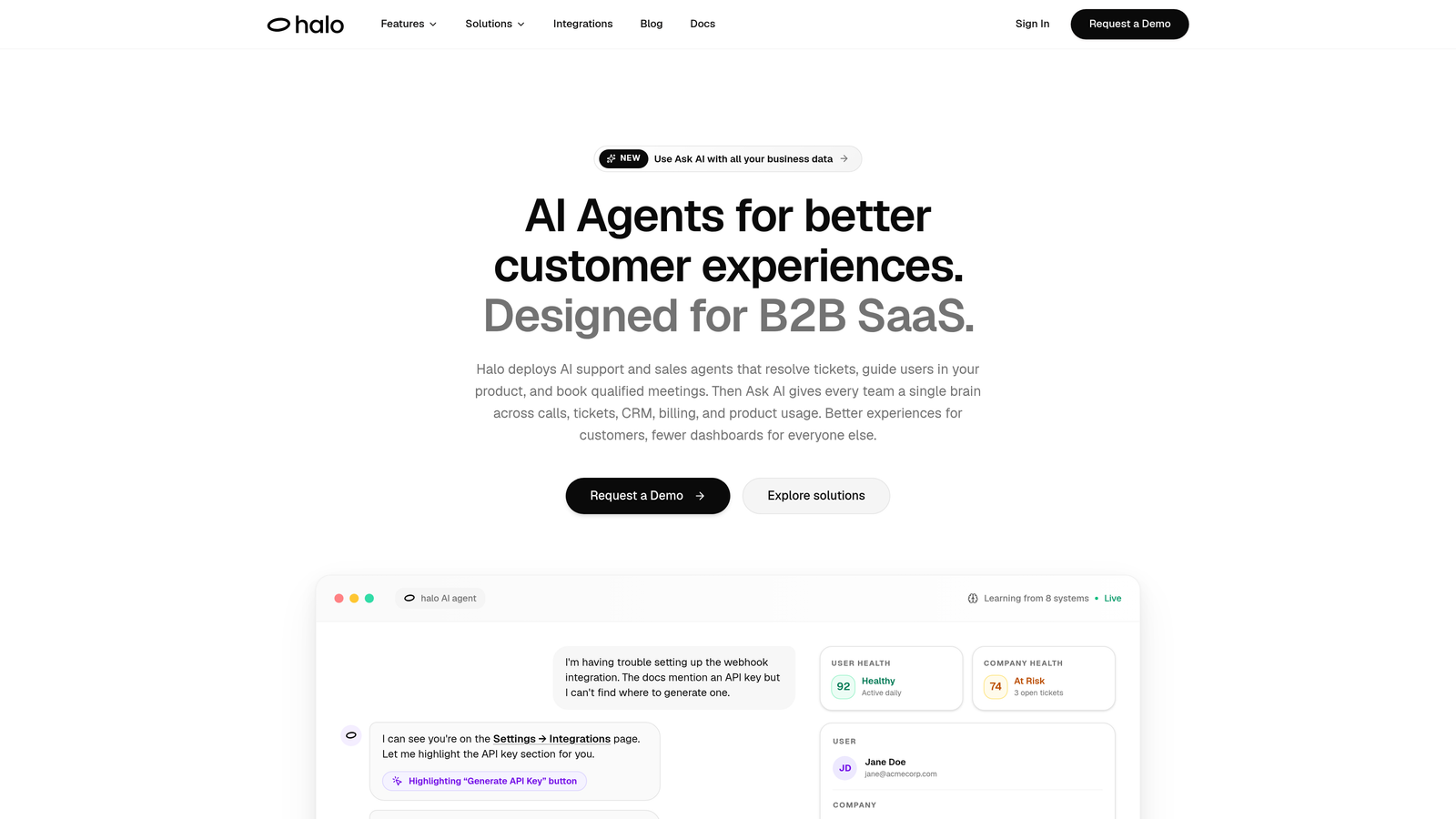
Halo AI is an AI-native customer support platform that deploys intelligent agents to resolve tickets, guide users through your product with page-aware context, and surface business intelligence across your entire customer base.
Where This Tool Shines
Most support automation tools start with the ticket. Halo starts with the customer's context. Its page-aware AI agents understand what the user is currently viewing, which means guidance is specific and visual rather than generic and frustrating. That distinction matters enormously for SaaS products where "I'm stuck on the billing settings page" requires a very different answer than "I'm stuck in onboarding."
What sets Halo apart from AI layers bolted onto legacy helpdesks is its continuous learning engine. Every resolved interaction feeds back into the system, improving resolution accuracy over time without manual retraining. The smart inbox goes further still, surfacing customer health signals, revenue intelligence, and anomaly detection alongside standard support metrics.
Key Features
Page-Aware AI Agents: Agents see exactly what the user sees and deliver contextual, visual guidance rather than generic help center links.
Continuous Learning Engine: Resolution accuracy improves automatically with every interaction, compounding over time without manual tuning.
Auto Bug Ticket Creation: Support conversations that surface product issues automatically generate structured bug reports, eliminating a manual handoff step.
Smart Inbox with Business Intelligence: Customer health scoring, revenue signals, and anomaly detection give support teams visibility that extends well beyond CSAT.
Live Agent Handoff: Full conversation context is preserved during escalation, so agents never start from scratch.
Deep Integrations: Native connections to Linear, Slack, HubSpot, Intercom, Stripe, Zoom, PandaDoc, and Fathom make Halo a genuine hub rather than a silo.
Best For
B2B SaaS companies and product-led growth teams that want an AI-first support platform rather than AI features added to an existing helpdesk. Particularly strong for teams where support insights need to flow into product, sales, and engineering workflows.
Pricing
Enterprise pricing available on request at haloagents.ai. Given the breadth of integrations and business intelligence capabilities, it's worth a direct conversation to scope the right plan.
2. Zendesk AI
Best for: Large enterprises already running Zendesk who want to deepen automation without a platform change
Zendesk AI is the AI layer built into one of the most widely deployed enterprise helpdesks in the world, offering intelligent triage, automated resolution, and real-time agent assistance within a familiar ecosystem.
Where This Tool Shines
If your organization has years of Zendesk data, workflows, and integrations, the path of least resistance for adding AI automation runs directly through Zendesk's native AI features. The platform's Agent Copilot surfaces suggested responses and next-best-action guidance in real time, while AI agents handle autonomous resolution across email, chat, and messaging channels.
Zendesk's marketplace depth is genuinely hard to match. Hundreds of pre-built integrations, combined with the Sunshine platform for custom workflows, give enterprise teams significant flexibility without requiring custom development for most use cases.
Key Features
AI Agents: Autonomous ticket resolution across email, chat, and messaging channels without agent involvement for common queries.
Intelligent Triage: Automatic routing based on intent, sentiment, and priority signals extracted from incoming conversations.
Agent Copilot: Real-time suggested responses and next-best-action guidance surfaced directly in the agent workspace.
Zendesk Explore: Advanced analytics and reporting for tracking support performance, team efficiency, and customer satisfaction trends.
Integration Marketplace: One of the broadest third-party integration ecosystems in the enterprise support space.
Best For
Enterprises already invested in the Zendesk ecosystem who want to add AI automation incrementally. Less ideal for teams evaluating platforms from scratch, where AI-native alternatives may offer a better starting architecture.
Pricing
Enterprise plans start at $115 per agent per month. AI add-ons are priced separately, so total cost of ownership should be modeled carefully at scale.
3. Intercom Fin AI Agent
Best for: SaaS companies with well-maintained help centers that want LLM-powered autonomous resolution
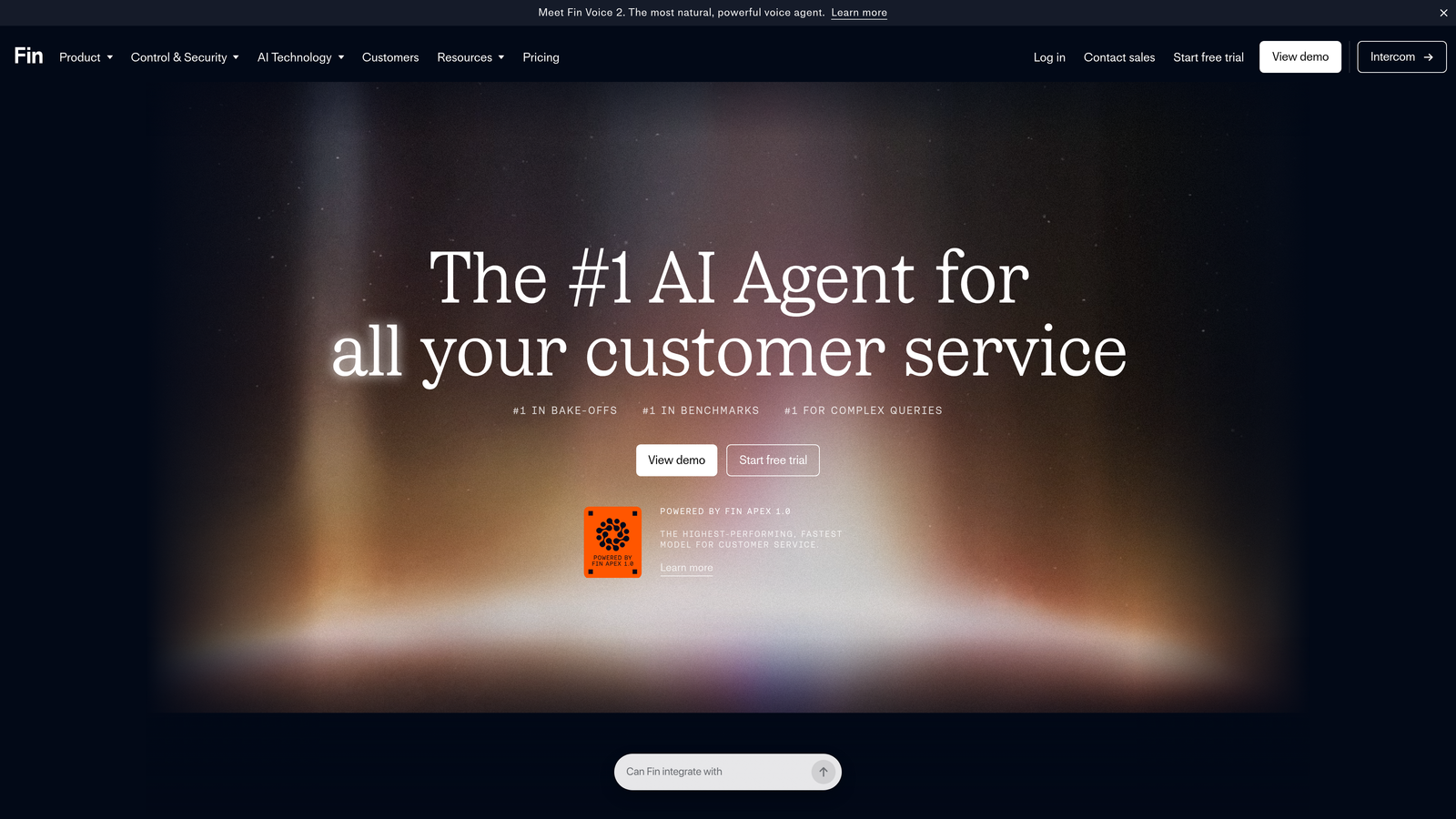
Intercom Fin is an LLM-powered AI agent that resolves customer conversations autonomously by drawing on connected knowledge sources, with seamless handoff to human agents when resolution isn't possible.
Where This Tool Shines
Fin's strength is in the quality of its resolution engine. Rather than pattern-matching against predefined flows, it uses large language models to understand questions and generate accurate answers from your help center, PDFs, and custom knowledge sources. For SaaS teams with thorough documentation, this translates to meaningfully higher autonomous resolution rates than rule-based bots.
Intercom's broader platform also adds proactive messaging and in-product support capabilities that extend automation beyond reactive ticket handling. If you're already using Intercom Messenger, Fin integrates into that surface natively without additional setup complexity.
Key Features
LLM-Based Resolution Engine: Answers questions from help centers, PDFs, and custom knowledge sources with natural language understanding rather than keyword matching.
Resolution-Based Pricing: Pay per resolved conversation rather than per seat, which can align costs directly with value delivered.
Multilingual Support: Handles customer conversations across dozens of languages without separate configuration.
Proactive Messaging: Intercom's broader platform enables in-product support and outbound messaging alongside reactive AI resolution.
Smooth Human Handoff: Full conversation context transfers to human agents when escalation is needed.
Best For
SaaS companies with mature, well-organized knowledge bases and existing Intercom deployments. The resolution-based pricing model works well at moderate volumes but should be modeled carefully for very high-volume operations.
Pricing
Fin AI Agent is priced per resolved conversation. Intercom base plans start at $74 per seat per month. Total cost depends heavily on resolution volume.
4. Freshdesk Freddy AI
Best for: Enterprises using multiple Freshworks products who want unified AI across support, CRM, and ITSM
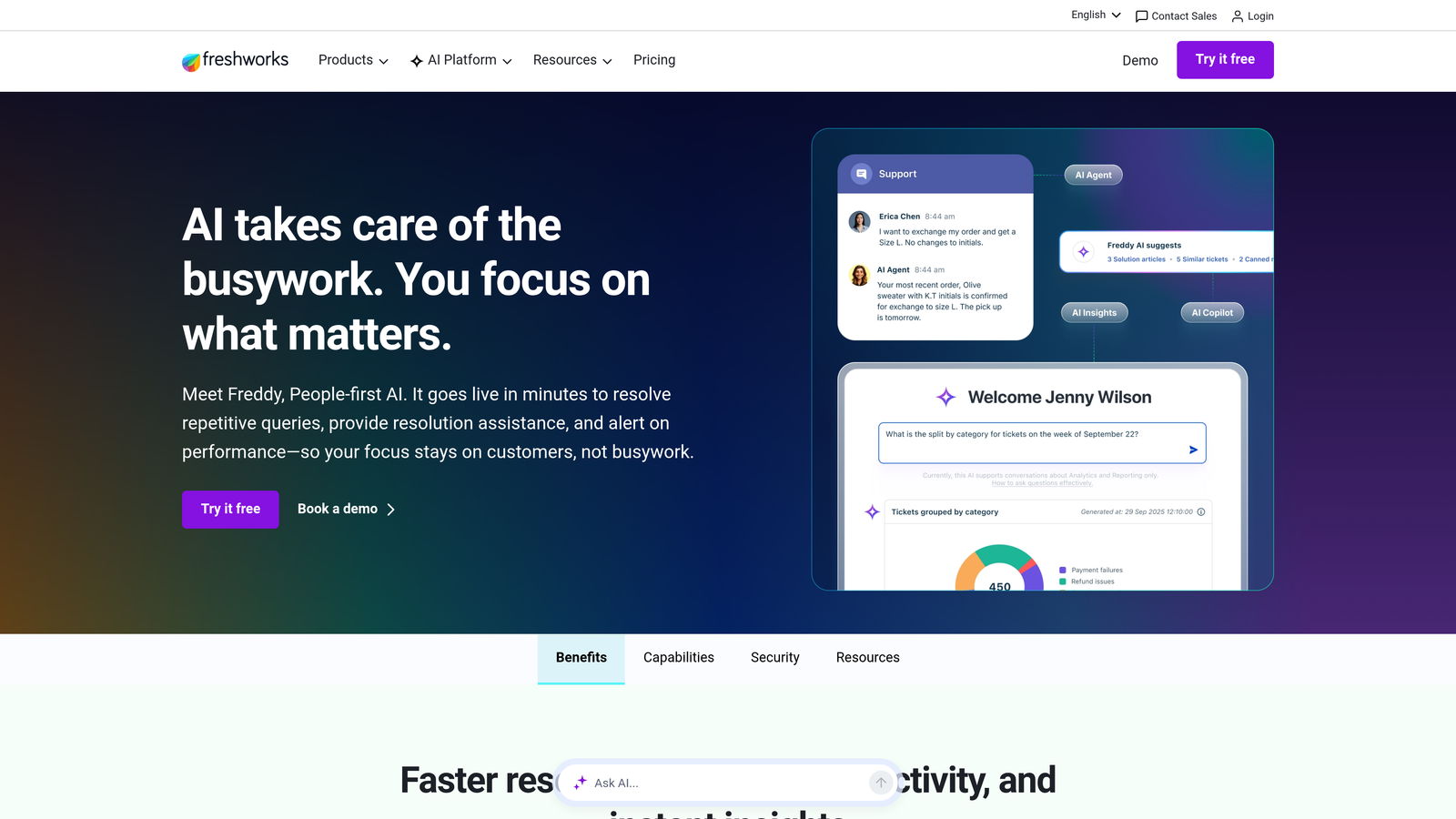
Freshdesk Freddy AI is Freshworks' enterprise AI layer spanning customer support, CRM, and IT service management, offering self-service bots, agent copilot capabilities, and AI-driven analytics within a unified product ecosystem.
Where This Tool Shines
Freddy AI's differentiator is breadth across the Freshworks suite. If your organization runs Freshdesk for support, Freshsales for CRM, and Freshservice for ITSM, Freddy connects all three with a consistent AI layer rather than requiring separate point solutions. That cross-product coherence is genuinely valuable for enterprises managing IT-adjacent support workflows alongside customer-facing operations.
Pricing is also a meaningful advantage at enterprise scale. Freshworks generally comes in below Salesforce and Zendesk on a per-seat basis, which matters when you're licensing across hundreds of agents.
Key Features
Freddy Self Service: AI-powered bot for autonomous customer resolution without agent involvement.
Freddy Copilot: Real-time agent assistance with suggested replies, ticket summaries, and next-step recommendations.
Freddy Insights: AI-generated analytics with trend detection and performance recommendations surfaced automatically.
Cross-Product Automation: Spans Freshdesk, Freshsales, and Freshservice for unified workflows across departments.
Competitive Pricing: Accessible at enterprise scale relative to Salesforce and Zendesk counterparts.
Best For
Organizations already using multiple Freshworks products, or those evaluating a full Freshworks deployment as a cost-competitive alternative to Salesforce or Zendesk. Strong for enterprises with IT service management needs alongside customer support.
Pricing
Freddy AI add-ons are available on Growth plans at $15 per agent per month and above. Enterprise pricing is available on request.
5. Salesforce Einstein for Service Cloud
Best for: Enterprises where Salesforce is already the system of record for customer data
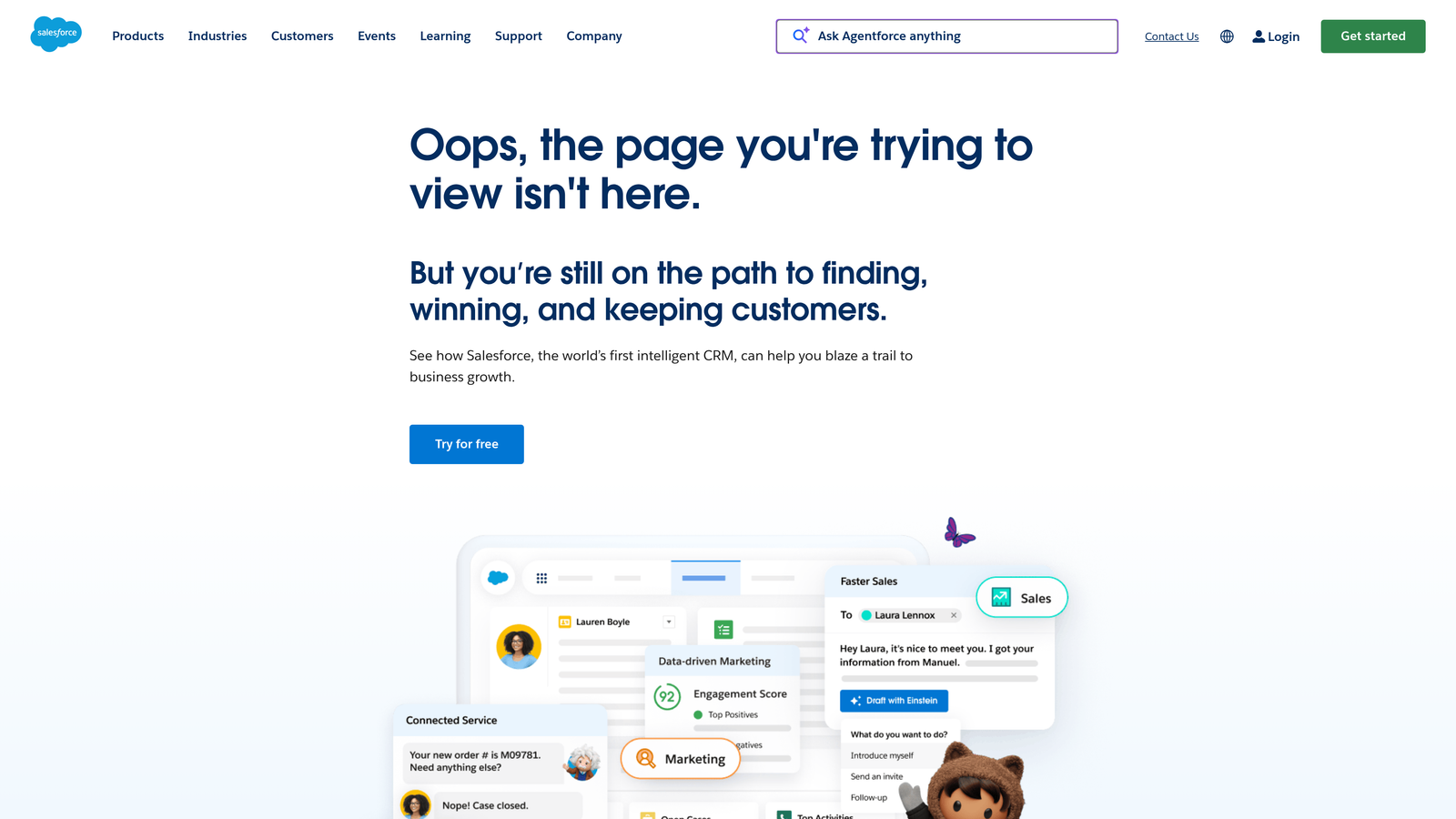
Salesforce Einstein for Service Cloud brings generative AI and autonomous agent capabilities natively into Salesforce, giving support teams AI that has direct access to CRM data without complex integration work.
Where This Tool Shines
The core advantage here is data proximity. Einstein doesn't need to pull customer data from an external CRM via API because it already lives in Salesforce. That means AI-generated case summaries, resolution suggestions, and agent guidance are informed by the full customer record: purchase history, open opportunities, past cases, and account health. For Salesforce-native organizations, this eliminates an entire category of integration complexity.
Agentforce extends this further with autonomous, customer-facing resolution capabilities that operate across channels while drawing on the same CRM context. The customization depth via Salesforce Flow is extensive, though it does require Salesforce expertise to configure effectively.
Key Features
Einstein Copilot for Service: Real-time agent guidance, case summarization, and knowledge suggestions grounded in CRM data.
Agentforce: Autonomous customer-facing resolution across channels, powered by the full Salesforce data model.
Native CRM Access: No separate integration required to bring customer context into AI-assisted interactions.
Einstein Analytics: Deep service performance reporting with AI-generated insights and trend identification.
Salesforce Flow: Highly customizable workflow automation for complex, multi-step resolution processes.
Best For
Organizations where Salesforce is the primary system of record and support teams need AI that's deeply integrated with CRM data. Implementation complexity and licensing costs are significant; this is best suited for teams with dedicated Salesforce expertise.
Pricing
Service Cloud Enterprise starts at $165 per user per month. Einstein and Agentforce capabilities are priced as additional add-ons.
6. ServiceNow Customer Service Management
Best for: Enterprises where customer issues require cross-departmental workflows connecting support to operations and IT
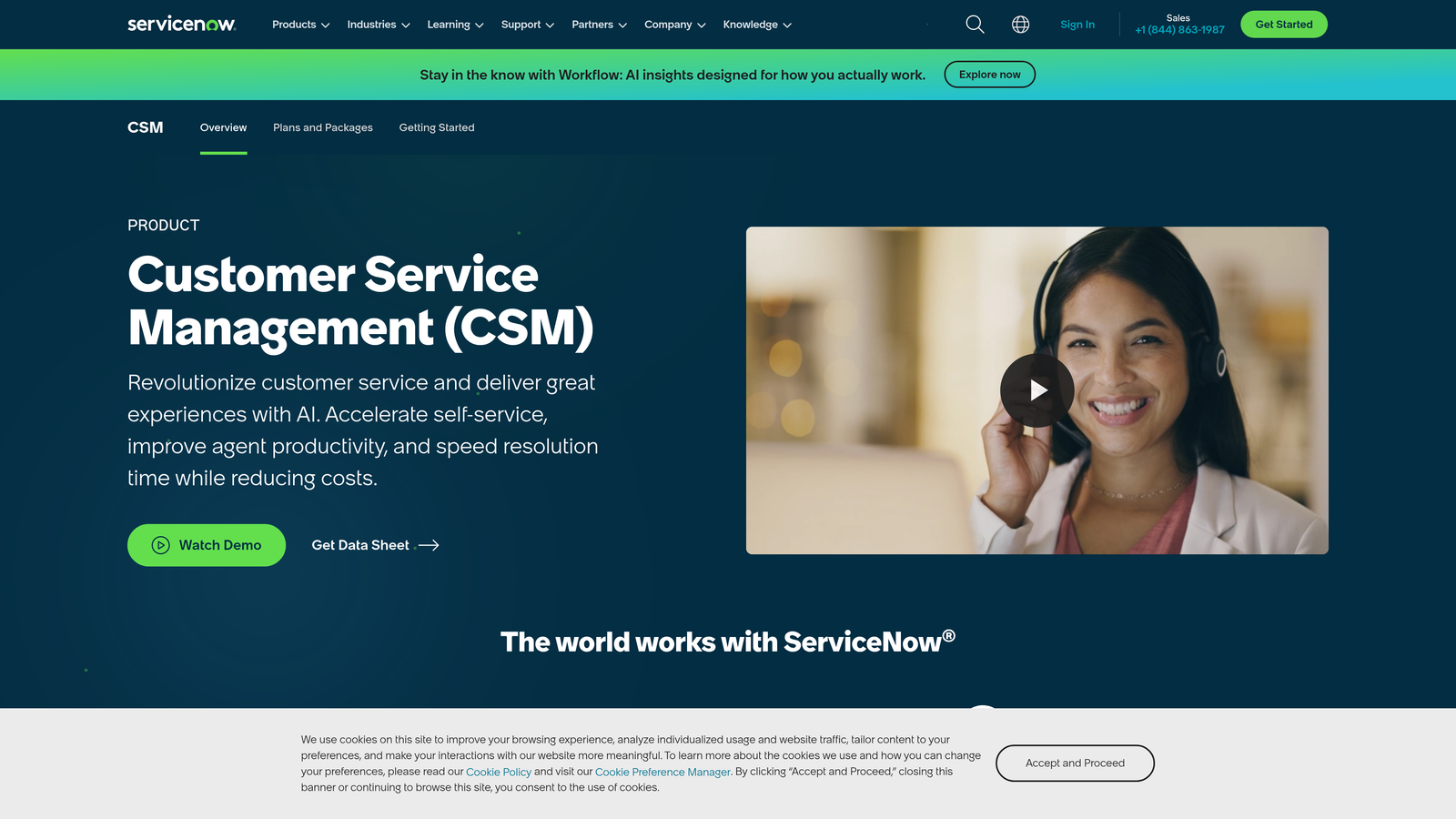
ServiceNow CSM extends the company's enterprise ITSM platform into customer-facing service, connecting support workflows to internal operations, field service, and cross-departmental resolution processes.
Where This Tool Shines
ServiceNow's differentiator is workflow depth across departments. When a customer issue can't be resolved by the support team alone and requires coordination with operations, IT, or field service, ServiceNow's cross-departmental automation becomes genuinely valuable. It's built for enterprise complexity where resolution paths span multiple internal teams and systems.
Now Assist brings generative AI into this environment with case summarization, resolution suggestions, and agent guidance. The proactive service management capabilities also allow teams to identify and address issues before customers report them, which is a meaningful operational advantage for enterprises managing complex service environments.
Key Features
Now Assist: Generative AI for case summarization, resolution suggestions, and agent guidance across the support workflow.
Cross-Departmental Automation: Connects customer support to IT, operations, and field service for multi-team resolution workflows.
Proactive Service Management: Identifies and surfaces potential issues before customers encounter and report them.
Omnichannel Routing: Intelligent routing and escalation across channels with SLA management built in.
Compliance Reporting: Robust SLA tracking and compliance documentation for regulated industries.
Best For
Large enterprises in B2B, manufacturing, telecommunications, or regulated industries where customer service requires coordination across internal departments. Less suited for consumer-facing, high-volume transactional support environments.
Pricing
Enterprise pricing only; contact ServiceNow directly for custom quotes. Implementation typically requires a dedicated partner and should be factored into total cost of ownership.
7. Kustomer
Best for: High-volume B2C operations that need a unified customer timeline across every channel
Kustomer is a CRM-native customer service platform that gives agents and AI a unified view of the full customer history across every channel and interaction, organized around the customer rather than individual tickets.
Where This Tool Shines
Kustomer's CRM-native architecture means that when a customer contacts support, the agent immediately sees their full history: orders, past conversations, behavioral data, and interaction patterns across every channel. This context is available to both human agents and the AI layer simultaneously, which meaningfully improves the quality of automated responses and routing decisions.
For high-volume B2C operations in retail, e-commerce, and subscription services, the unified omnichannel interface reduces context-switching and makes it easier to maintain consistent service quality at scale. The business intelligence dashboards extend this visibility to customer-level reporting rather than aggregate metrics alone.
Key Features
CRM-Native Architecture: Full customer timeline including orders, behavior, and past interactions visible in a single interface for agents and AI.
AI-Powered Automation: Intent detection, auto-routing, and suggested responses informed by complete customer history.
True Omnichannel: Chat, email, SMS, social, and voice all managed within a single unified interface.
Behavioral Triggers: Automated workflows triggered by customer data and behavior patterns rather than just inbound messages.
Customer-Level Reporting: Business intelligence dashboards that report at the individual customer level, not just aggregate team metrics.
Best For
High-volume B2C companies in retail, e-commerce, and subscription services where customer history and omnichannel continuity are critical to service quality. Less optimized for B2B enterprise or ITSM-adjacent use cases.
Pricing
Enterprise plan starts at $89 per user per month. AI features are included at higher pricing tiers.
8. Forethought AI
Best for: Enterprises that want AI-driven improvements without migrating away from their existing helpdesk
Forethought AI is an AI layer that enhances existing helpdesks, including Zendesk, Salesforce, and Freshdesk, with intelligent triage, agent assistance, and autonomous resolution without requiring a platform migration.
Where This Tool Shines
The core value proposition here is additive rather than replacement. If your organization has significant investment in an existing helpdesk and migration isn't feasible in the near term, Forethought delivers meaningful AI improvements on top of what you already have. Triage accuracy and intelligent routing are frequently cited strengths, reducing the manual effort required to assign and prioritize incoming tickets.
The continuous learning model means Forethought improves from agent feedback and resolution outcomes over time, which compounds the value of deployment without requiring ongoing manual configuration from your team.
Key Features
Triage: AI-powered ticket classification and routing that improves assignment speed and accuracy across queues.
Assist: Real-time agent copilot that surfaces relevant knowledge and suggested responses during live interactions.
Solve: Autonomous resolution capabilities for common, repetitive customer questions without agent involvement.
Helpdesk-Agnostic: Works on top of existing platforms, eliminating the need for a full migration to gain AI capabilities.
Continuous Learning: Improves from agent feedback and resolution outcomes over time without manual retraining.
Best For
Enterprises with established helpdesk investments that want to add AI automation quickly without platform disruption. A strong interim solution for teams planning longer-term migrations, and a viable long-term option for those committed to their current platform.
Pricing
Contact Forethought directly for enterprise pricing. Costs vary based on helpdesk platform, ticket volume, and feature tier.
9. Gladly
Best for: Premium consumer brands where relationship continuity and agent context matter more than pure deflection volume
Gladly replaces the traditional ticket-based model with a people-centric architecture where every customer interaction across every channel lives in a single, continuous conversation thread, giving agents and AI full relationship context from the first message.
Where This Tool Shines
Gladly's fundamental architecture is different from every other tool on this list. Rather than organizing support around ticket IDs, it organizes everything around the customer. That means a customer who emailed last month, called last week, and is chatting right now is represented as one continuous relationship, not three separate tickets. For premium brands where that continuity defines the service experience, this model is genuinely differentiated.
The Hero and Sidekick model reflects this philosophy: human agents (Heroes) and AI (Sidekick) collaborate within the same customer timeline, with AI handling automated responses and routing while humans engage where relationship depth matters. It's less about maximum deflection and more about consistent, high-quality service across every touchpoint.
Key Features
People-Centric Data Model: Support organized around customers and their full relationship history, not individual ticket IDs.
Unified Conversation Timeline: Every interaction across chat, email, phone, SMS, and social appears in one continuous thread per customer.
Hero and Sidekick Model: Structured human-AI collaboration where AI handles automation and routing while agents manage relationship-critical interactions.
AI-Powered Routing: Intelligent assignment based on customer history, agent expertise, and conversation context.
Channel Breadth: Full omnichannel coverage including voice, which is less common among newer AI-first platforms.
Best For
Premium consumer brands in fashion, retail, hospitality, and subscription services where relationship continuity and service quality are brand-defining. Less suited for high-volume transactional support environments where deflection rate is the primary success metric.
Pricing
Hero (agent) plan starts at $150 per agent per month. Sidekick (AI) is priced per resolution, similar to Intercom Fin's model.
Which Platform Fits Your Enterprise?
The right choice depends heavily on your existing stack, your primary use case, and how you define success in support. Here's a quick-reference guide to cut through the noise.
If you want AI-first architecture with business intelligence built in: Halo AI is purpose-built for this. The combination of page-aware agents, continuous learning, and smart inbox analytics makes it the strongest option for B2B SaaS teams that want support to feed intelligence back into the business.
If you're already deep in Zendesk or Salesforce: Zendesk AI and Einstein for Service Cloud are the natural paths, respectively. Migration costs and workflow disruption often outweigh the benefits of switching platforms when you have significant existing investment.
If cross-departmental workflows are your core challenge: ServiceNow CSM is built for exactly this scenario, particularly for B2B enterprises where customer issues require IT, operations, or field service coordination.
If you want AI improvements without a migration: Forethought AI adds meaningful automation on top of your current helpdesk without disruption. It's the fastest path to AI-driven triage and resolution for teams not ready to change platforms.
If relationship continuity defines your brand: Gladly's people-centric model stands alone for premium consumer brands where the service experience is a competitive differentiator.
Across all of these platforms, the enterprises that see the strongest results are those that start with clear success metrics, run structured pilots before full deployment, and invest in keeping knowledge bases current so AI resolution quality compounds over time.
Your support team shouldn't scale linearly with your customer base. Let AI agents handle routine tickets, guide users through your product, and surface business intelligence while your team focuses on complex issues that need a human touch. See Halo in action and discover how continuous learning transforms every interaction into smarter, faster support.