9 Best Customer Support Automation Platforms and What They Actually Cost in 2026
This guide analyzes customer support automation platform cost across nine leading solutions, exposing the hidden fees, per-seat charges, and add-on expenses that cause advertised prices to balloon into five-figure annual contracts. Whether you're a SaaS startup or enterprise team, the breakdown covers true cost of ownership, pricing transparency, and which billing model best fits your business size and support volume.
 Matt PattoliFounder15 min read
When evaluating customer support automation platforms, pricing is rarely what it appears on the surface. Most vendors bury their real costs behind per-seat fees, resolution-based charges, add-on modules, and annual commitment requirements. What looks like a $50/month tool can quietly balloon into a five-figure annual contract once you factor in integrations, overage fees, and onboarding costs.
This guide breaks down nine leading customer support automation platforms with transparent pricing analysis: what's included, what's not, and which pricing model fits which type of business. Whether you're a lean SaaS startup trying to scale support without scaling headcount, or an enterprise team replacing a legacy helpdesk, understanding the true cost of ownership matters as much as the feature set.
Each platform was evaluated on automation depth, pricing transparency, scalability, integration ecosystem, and value relative to cost. We've also flagged where hidden costs tend to appear.
1. Halo AI
Best for: B2B SaaS teams that want autonomous AI support without building on top of a traditional helpdesk
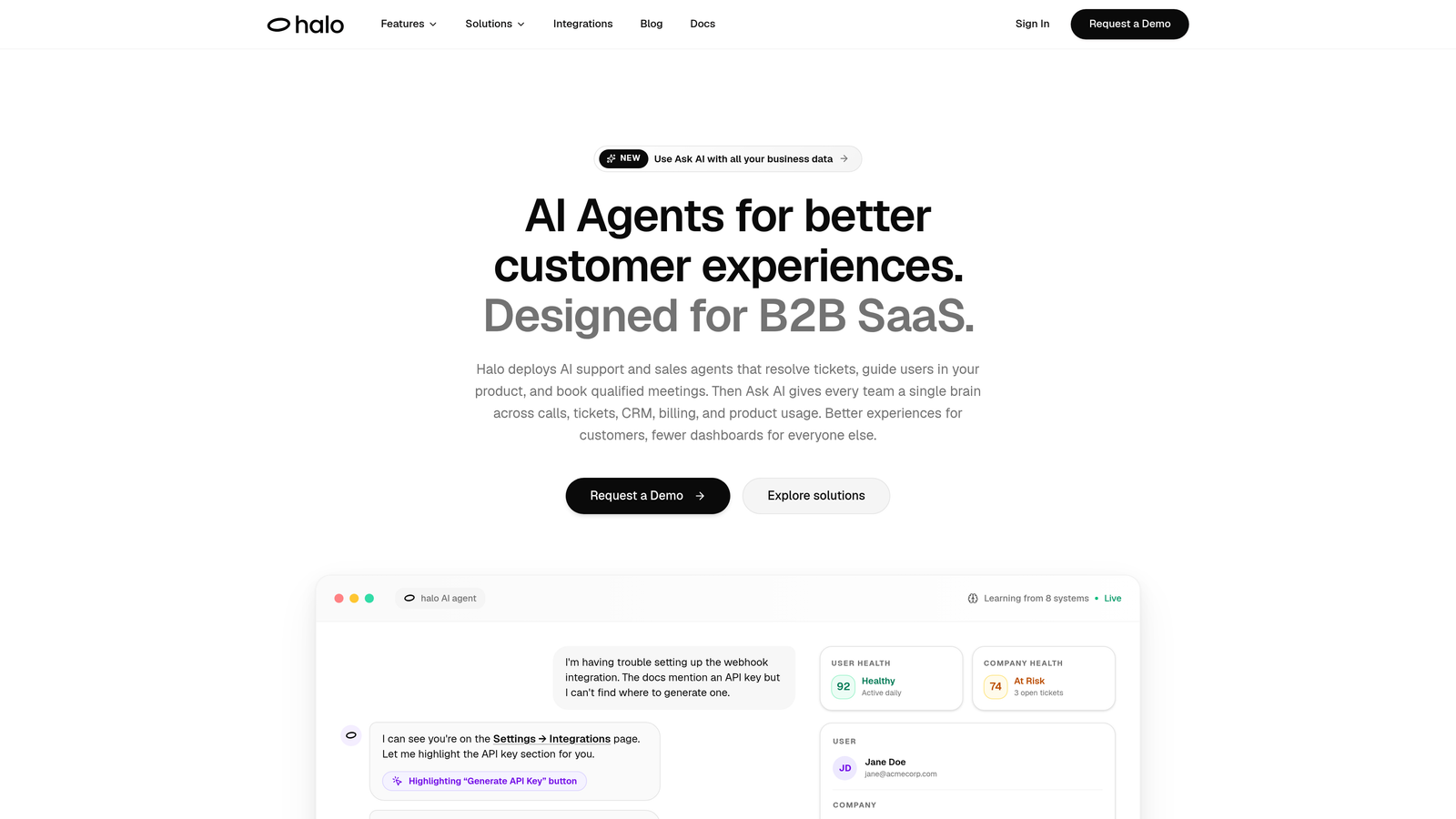
Halo AI is an AI-first customer support platform that deploys autonomous agents to resolve tickets, guide users through your product with page-aware context, and surface business intelligence — all without requiring a legacy helpdesk as the foundation.
Where This Tool Shines
Most platforms treat AI as a layer on top of existing helpdesk infrastructure. Halo takes a different architectural approach: AI is the core, not the add-on. Its agents learn from every interaction, which means resolution quality improves over time rather than staying static.
The page-aware chat widget is a genuinely differentiated feature. It understands what screen the user is on and can provide visual UI guidance in context, not just generic FAQ responses. Combined with the smart inbox's business intelligence layer — surfacing churn signals, revenue anomalies, and customer health indicators — Halo positions support as a strategic function, not just a cost center.
Key Features
Autonomous AI Agents: Resolve tickets independently and continuously improve through every interaction, reducing repetitive volume without human intervention.
Page-Aware Chat Widget: Understands the user's current screen context and delivers targeted, visual UI guidance rather than generic responses.
Smart Inbox with Business Intelligence: Surfaces customer health signals, churn indicators, and revenue anomalies directly within the support workflow.
Auto Bug Ticket Creation: Detects and routes bug reports automatically to Linear or your existing engineering workflow, closing the loop between support and product.
Live Agent Handoff: Escalates complex issues to human agents with full conversation context preserved, so nothing gets repeated.
Native Integrations: Connects with Slack, HubSpot, Intercom, Stripe, Zoom, PandaDoc, Fathom, and Linear out of the box.
Best For
Halo is best suited for B2B SaaS companies and product teams that want AI-native support without the complexity of retrofitting automation onto a traditional helpdesk. It's particularly well-suited for teams that need support to inform product and revenue decisions, not just close tickets.
Pricing
Halo uses an AI-native platform pricing model rather than the traditional per-seat helpdesk structure. Verify current plans and pricing directly at haloagents.ai, as pricing reflects the platform's autonomous resolution capabilities rather than agent seat counts.
Hidden cost watch: Because Halo is AI-first rather than helpdesk-first, teams migrating from legacy platforms should factor in workflow transition time rather than traditional implementation fees.
2. Intercom
Best for: Product-led growth companies that need both proactive messaging and AI-powered support in one platform
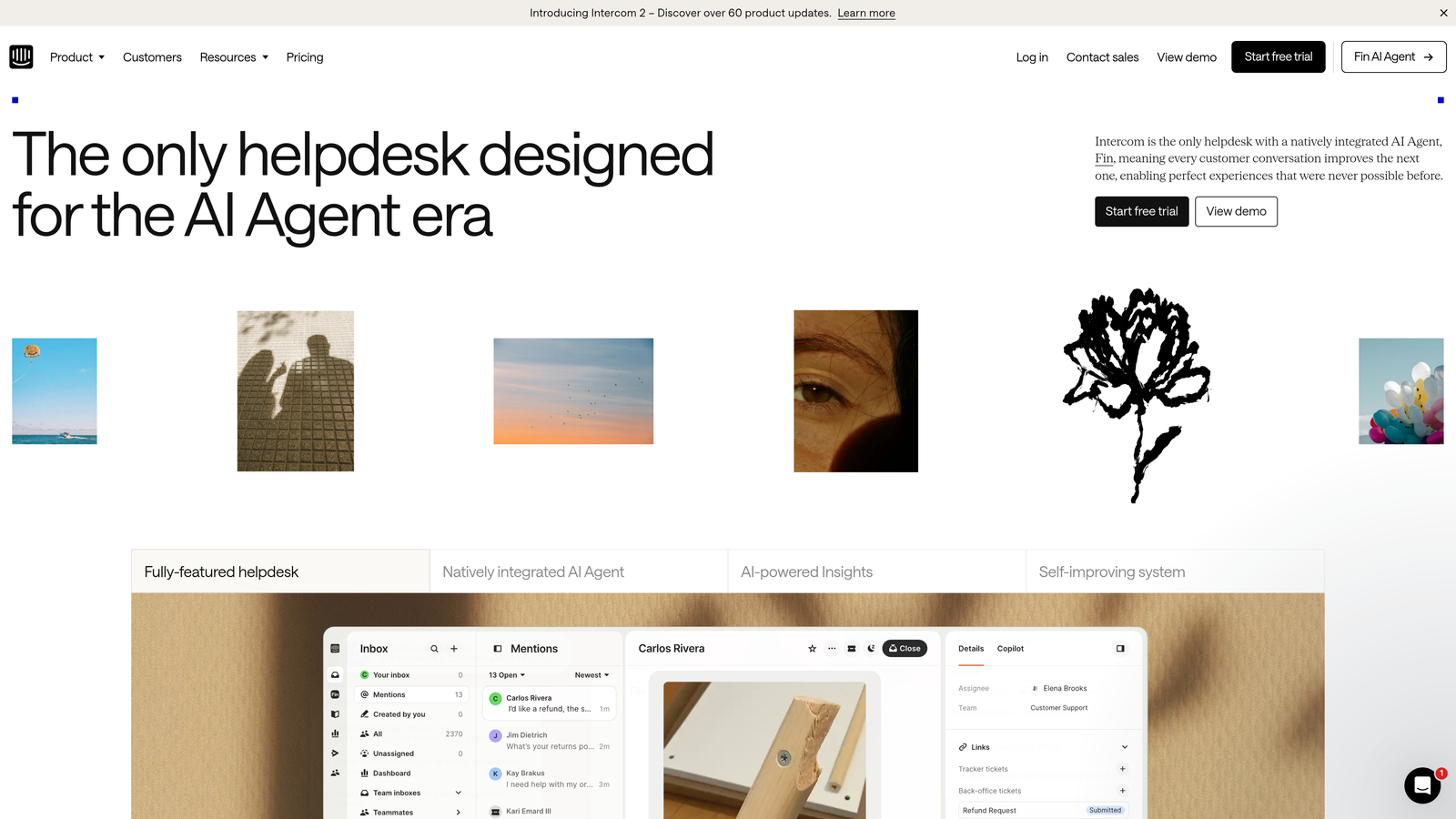
Intercom is a mature customer messaging platform featuring Fin, its AI agent, available as a per-resolution add-on layered on top of its core messenger and inbox tools.
Where This Tool Shines
Intercom's strength is breadth. It combines in-app messaging, proactive onboarding flows, and AI-powered support resolution in a single platform, which reduces the need for multiple point solutions. For product teams managing both user onboarding and ongoing support, that consolidation has real value.
Fin AI Agent handles common queries autonomously and has matured considerably. The per-resolution pricing model is worth understanding carefully: it can be cost-effective when automation rates are high, but costs can become unpredictable if your query mix skews toward complex issues that require escalation.
Key Features
Fin AI Agent: Handles common support queries autonomously with per-resolution pricing, decoupling AI cost from seat count.
Unified Inbox: Combines chat, email, and in-app messaging into a single agent workspace.
Proactive Messaging and Product Tours: Enables onboarding flows and targeted outreach based on user behavior.
AI Copilot for Agents: Assists human agents with suggested responses and context during live conversations.
App Marketplace: Over 300 integrations covering CRM, analytics, and engineering tools.
Best For
Intercom suits mid-market SaaS companies that want a single platform for both user engagement and support automation. Teams with high query volumes and strong knowledge bases will get the most value from Fin's per-resolution model.
Pricing
Base plans start around $39/seat/month; Fin AI Agent is charged at approximately $0.99/resolution. Verify current pricing at intercom.com/pricing.
Hidden cost watch: Per-resolution fees can compound quickly at scale. Teams with lower automation rates or complex query mixes should model out expected monthly resolution volumes before committing.
3. Zendesk
Best for: Enterprise teams that need deep customization, robust SLA management, and a large integration ecosystem
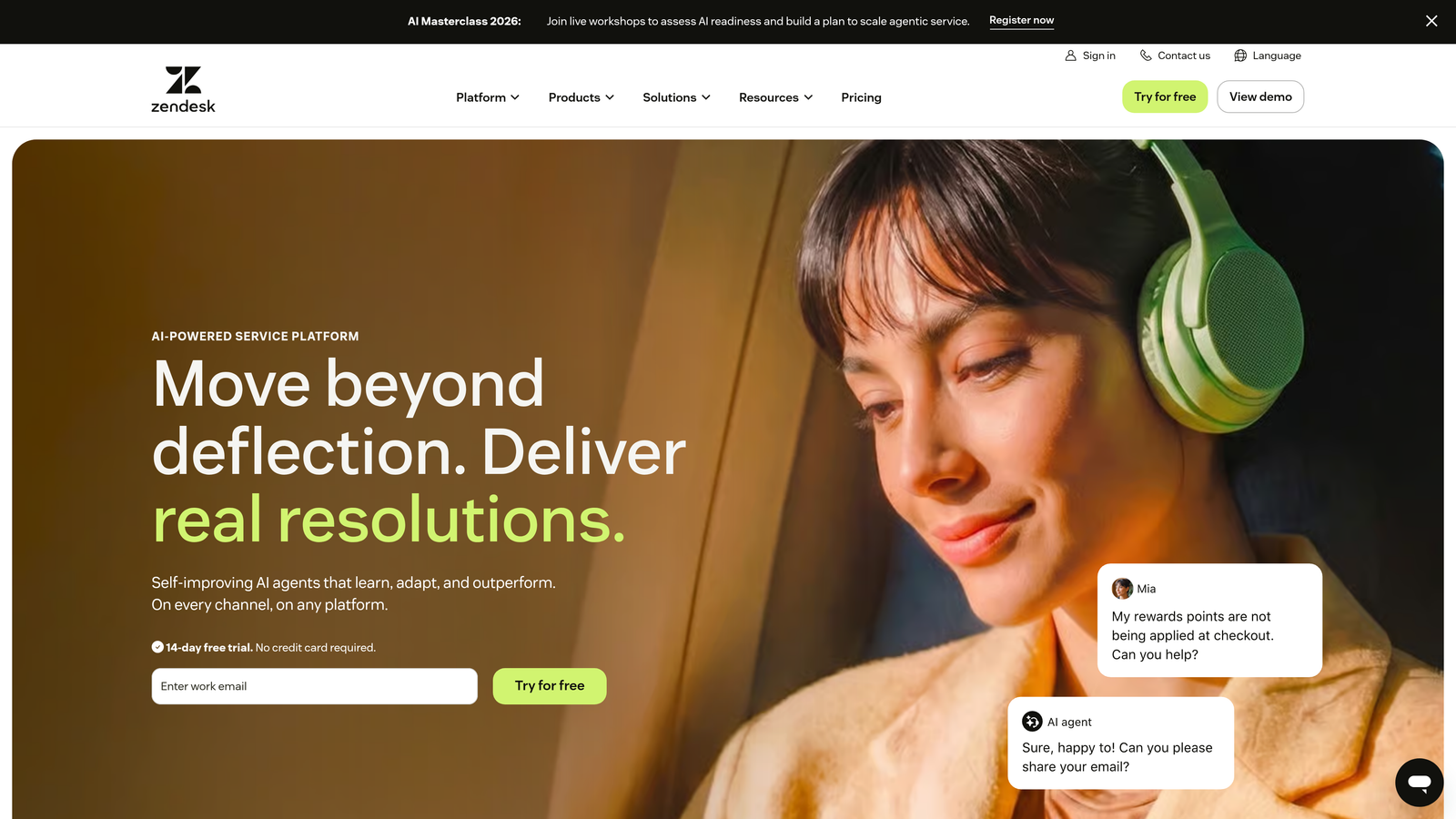
Zendesk is the enterprise-grade helpdesk standard with a vast ecosystem, extensive customization options, and AI capabilities available as a paid add-on across its Suite plans.
Where This Tool Shines
Zendesk's depth is its primary advantage. The ticketing system is highly configurable, SLA management is enterprise-grade, and the marketplace of over 1,000 integrations means it connects to virtually any stack. For large support organizations with complex routing logic and compliance requirements, Zendesk remains a strong choice.
The trade-off is that AI capabilities feel bolted on rather than foundational. Zendesk AI (powered by OpenAI) handles triage, summaries, and suggested replies, but it's an additional cost on top of already tiered Suite pricing. Teams expecting deep autonomous resolution may find the AI layer underwhelming relative to AI-native platforms.
Key Features
Full-Featured Ticketing System: Robust SLA management, custom views, and granular routing rules built for enterprise-scale operations.
Zendesk AI: Intelligent triage, conversation summaries, and suggested replies powered by OpenAI, available as an add-on.
Extensive Marketplace: Over 1,000 integrations covering virtually every business tool category.
Advanced Reporting: Detailed analytics and dashboards available on higher-tier plans.
Workforce Management and QA: Available as separate add-ons for larger support operations.
Best For
Zendesk is built for enterprise support teams with complex workflows, large agent headcounts, and strict compliance or SLA requirements. It's less suited for lean teams looking for autonomous AI resolution out of the box.
Pricing
Suite plans range from approximately $55 to $115/agent/month billed annually; AI features are an additional add-on cost. Enterprise pricing is custom. Verify at zendesk.com/pricing.
Hidden cost watch: AI features, advanced analytics, workforce management, and QA tools are each separate add-ons. The all-in cost for a fully-featured Zendesk deployment can be significantly higher than base plan pricing suggests.
4. Freshdesk
Best for: Growing teams that want a modular helpdesk with a free entry point and the ability to add AI incrementally
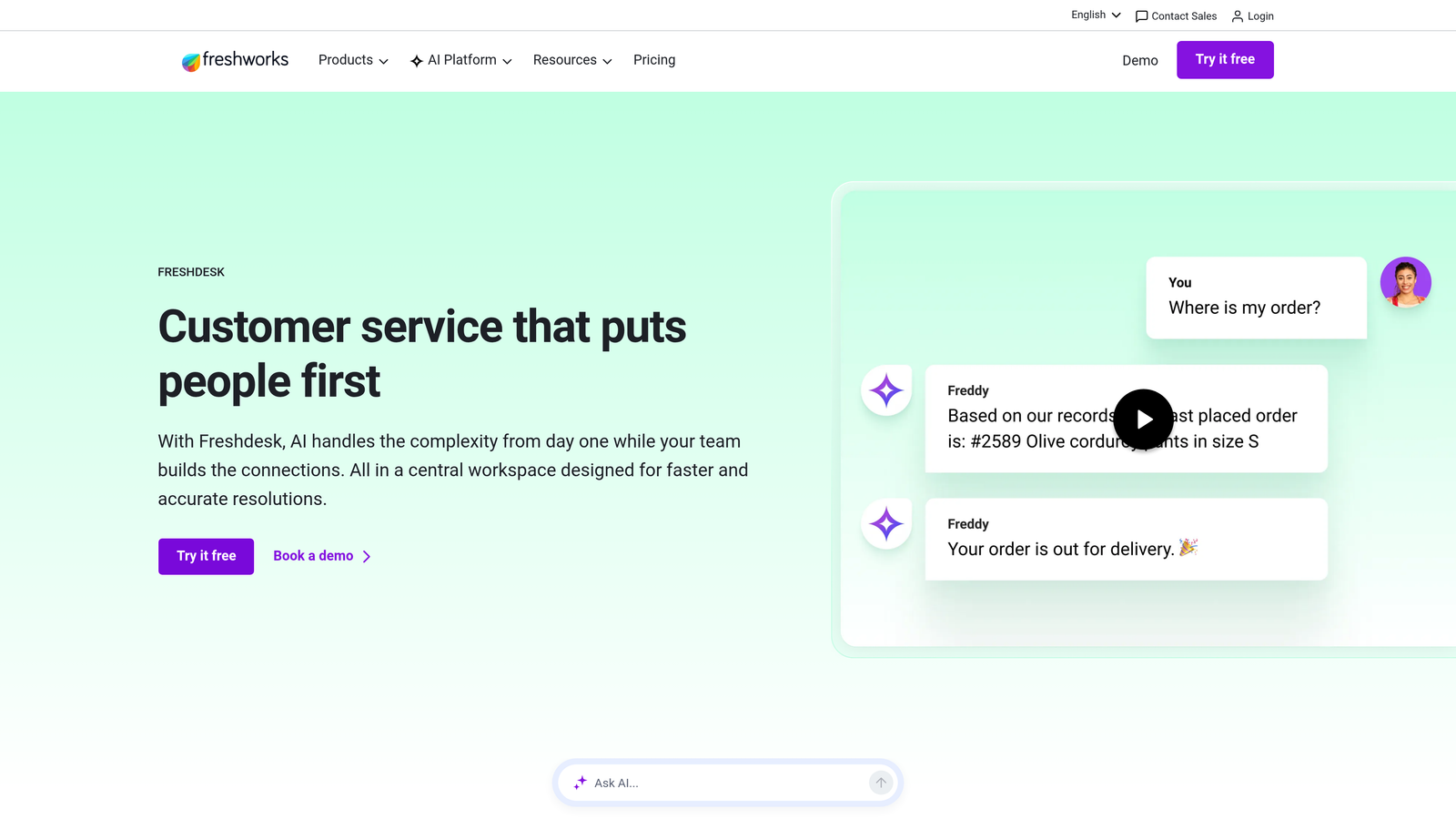
Freshdesk is a modular helpdesk platform from Freshworks with a free tier for small teams and Freddy AI automation available via a separate credit-based system.
Where This Tool Shines
Freshdesk's free tier is genuinely useful for very small teams, not just a stripped-down trial. The platform's modular structure lets teams start simple and layer in capabilities as they grow, which lowers the barrier to entry considerably.
Freddy AI handles automated responses, ticket categorization, and agent assist functions. The credit-based pricing for AI features is worth understanding carefully: it separates AI cost from seat cost, which gives flexibility but also makes total cost harder to predict month-to-month.
Key Features
Free Plan: Supports up to 10 agents with basic ticketing functionality, making it accessible for early-stage teams.
Freddy AI: Automates responses, categorizes tickets, and assists agents, with usage billed via a separate credit system.
Omnichannel Support: Covers email, chat, phone, and social channels within a unified interface.
Collision Detection: Prevents multiple agents from responding to the same ticket simultaneously.
Modular Add-Ons: Teams can expand capabilities incrementally without committing to an enterprise plan upfront.
Best For
Freshdesk works well for SMBs and growing teams that want a structured helpdesk with a low starting cost. Teams that need deep AI automation as a core capability may find the credit-based Freddy AI model adds complexity to budget planning.
Pricing
Free tier available; Growth approximately $15/agent/month; Pro approximately $49/agent/month; Freddy AI credits are additional. Verify current pricing at freshdesk.com/pricing.
Hidden cost watch: Freddy AI credits are separate from plan pricing. Teams with high automation ambitions should model Freddy credit consumption alongside base plan costs to understand total monthly spend.
5. Tidio
Best for: Small e-commerce businesses and service providers that need live chat with basic AI chatbot capabilities
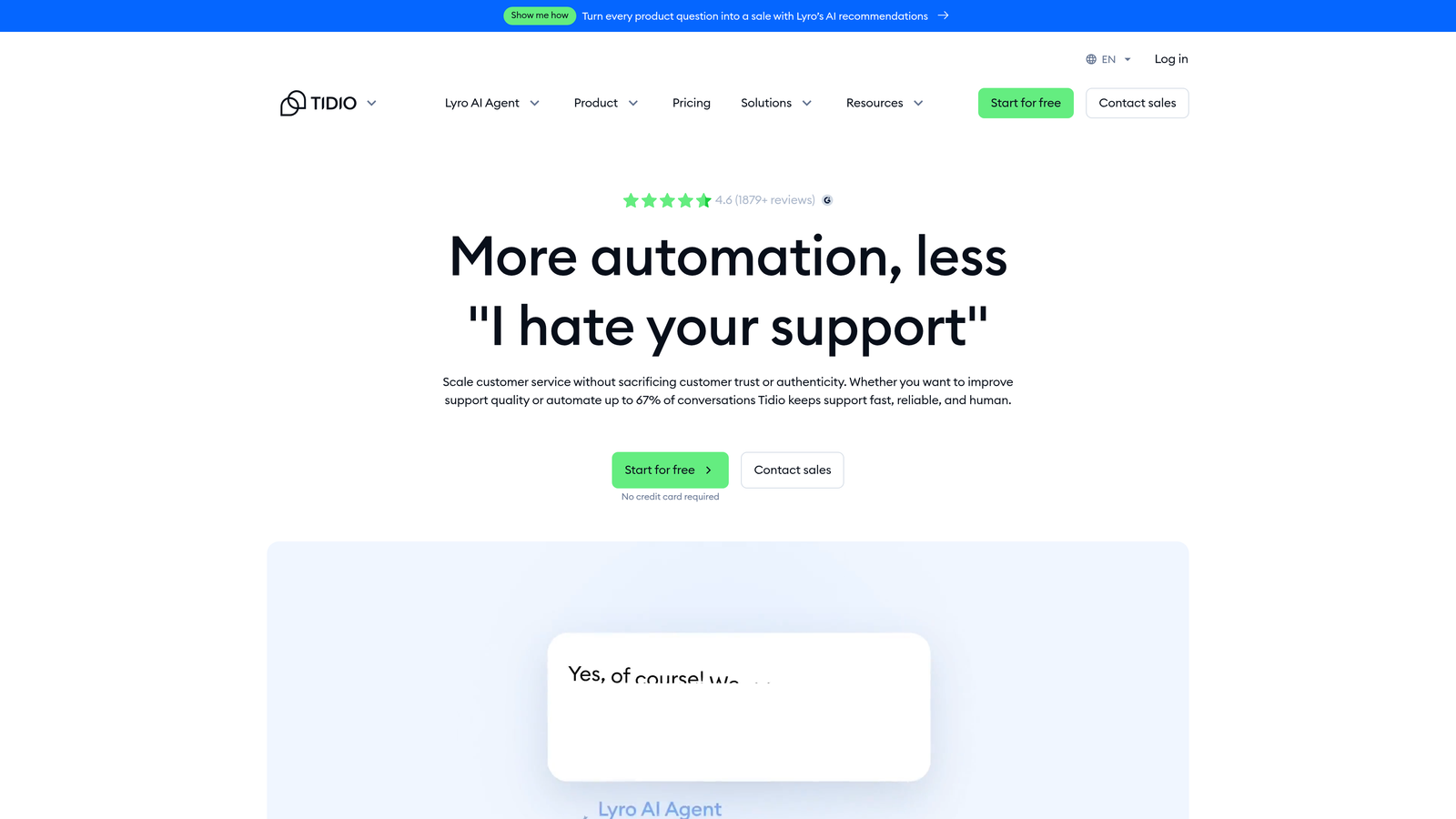
Tidio is a live chat and chatbot platform with Lyro, its AI chatbot, sold as a separate add-on and popular with small online businesses and service providers.
Where This Tool Shines
Tidio's strength is simplicity. The live chat widget is easy to deploy and visually customizable, and the pre-built automation flows cover the most common scenarios without requiring technical configuration. For small teams that need something running quickly, it delivers.
Lyro, the AI chatbot add-on, handles FAQ-style queries and basic conversation automation. It's conversation-based pricing, which is predictable at low volumes but worth monitoring as traffic grows. The Shopify and WooCommerce integrations make it a natural fit for e-commerce operators.
Key Features
Live Chat Widget: Visually customizable chat widget that deploys quickly across most website platforms.
Lyro AI Chatbot: Handles automated FAQ responses and conversation flows, priced separately per conversation volume.
Pre-Built Automation Flows: Ready-to-use templates for common support and sales scenarios.
E-Commerce Integrations: Native connections to Shopify, WooCommerce, and WordPress.
Conversation-Based Pricing for Lyro: Pay based on conversation volume rather than seat count.
Best For
Tidio is best suited for small e-commerce businesses, freelancers, and service providers that need a lightweight chat and chatbot solution. B2B SaaS teams with complex support workflows will likely outgrow its automation depth quickly.
Pricing
Free tier available; Starter approximately $29/month; Lyro AI add-on from approximately $39/month for 50 conversations. Verify current pricing at tidio.com/pricing.
Hidden cost watch: Lyro's conversation-based pricing can scale quickly during high-traffic periods. Teams with seasonal spikes should model peak-month conversation volumes before committing.
6. Gorgias
Best for: E-commerce brands, particularly those running on Shopify, that want ticket-based pricing without per-agent fees
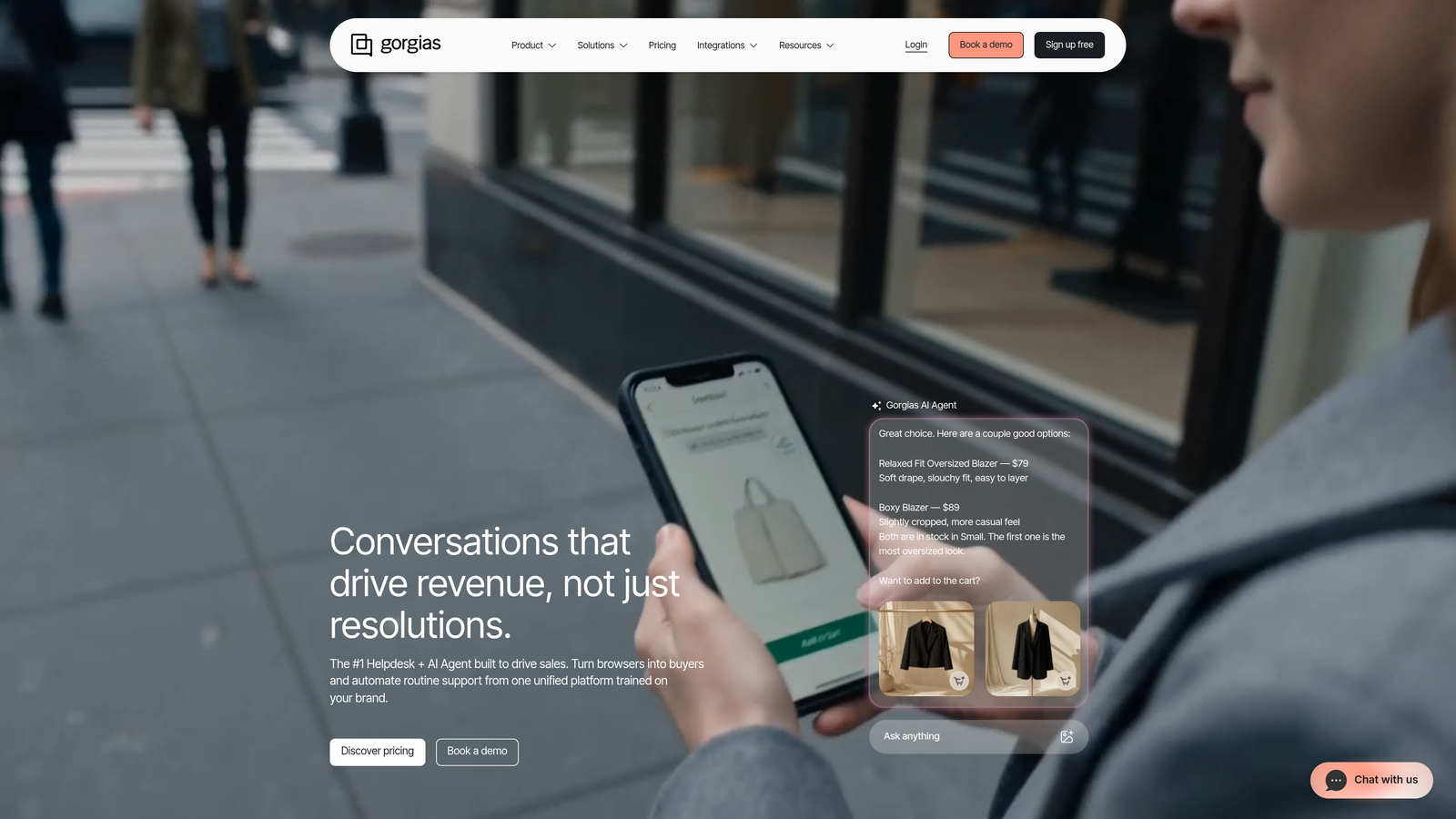
Gorgias is a helpdesk built specifically for e-commerce brands with a unique ticket-based pricing model rather than per-seat fees, making it well-suited for Shopify-heavy operations with variable agent headcounts.
Where This Tool Shines
Gorgias's pricing model is genuinely differentiated. Paying per resolved ticket rather than per agent seat means growing your team doesn't automatically increase your support tool cost. For e-commerce brands with seasonal staffing fluctuations, that flexibility has real financial value.
The deep Shopify, BigCommerce, and WooCommerce integrations enable automated responses for order status, returns, and tracking queries, which represent a large share of e-commerce support volume. The revenue statistics feature, which links support interactions to sales outcomes, helps justify support investment in business terms.
Key Features
Ticket-Based Pricing: Pay per resolved ticket rather than per agent seat, enabling flexible team sizing without proportional cost increases.
E-Commerce Platform Integrations: Deep native connections to Shopify, BigCommerce, and WooCommerce for order and customer data access.
Automated Order Responses: Handles order status, return requests, and tracking queries automatically.
Revenue Statistics: Links support interactions to sales outcomes to measure support's business impact.
Automation Add-On: Advanced rule-based deflection available as a separate add-on for higher-volume teams.
Best For
Gorgias is purpose-built for e-commerce. It's an excellent fit for Shopify-based brands with high order inquiry volume. B2B SaaS teams or businesses without a significant e-commerce component will find limited value in its vertical-specific features.
Pricing
Starter approximately $10/month for 50 tickets; Basic approximately $60/month for 300 tickets; Pro approximately $360/month for 2,000 tickets. Verify current pricing at gorgias.com/pricing.
Hidden cost watch: The automation add-on is separate from base plan pricing. Teams with high deflection ambitions should factor automation add-on costs into their total platform budget.
7. Drift (by Salesloft)
Best for: Revenue-focused teams that want conversational AI to serve both support deflection and sales pipeline generation simultaneously
Drift is a conversational AI platform oriented toward pipeline generation and revenue conversations, blending support automation with sales engagement as part of the Salesloft ecosystem.
Where This Tool Shines
Drift's positioning is distinct from every other platform on this list. It treats website conversations as revenue opportunities first and support interactions second. The AI-powered chatbot qualifies leads, routes them to sales reps, and books meetings, all within the same conversation flow that might also handle a support query.
For teams where the line between support and sales is intentionally blurred, that dual-purpose capability is valuable. The account-based targeting feature personalizes conversations based on visitor company and segment, which is a capability you won't find in traditional helpdesks.
Key Features
Revenue-Oriented AI Chatbot: Handles both support deflection and sales qualification within a unified conversation experience.
Account-Based Targeting: Personalizes chat experiences based on visitor company, segment, or account status.
Meeting Scheduling and Routing: Books meetings and routes conversations to the right sales rep directly within chat flows.
CRM Integrations: Native connections to Salesforce, HubSpot, and major CRM platforms.
Revenue Reporting: Links conversation activity to pipeline and revenue outcomes.
Best For
Drift is best suited for B2B companies with a strong inbound sales motion where support and sales conversations overlap. Pure support teams or companies without a significant pipeline focus will likely find better value elsewhere.
Pricing
Drift does not publish pricing publicly. It uses custom, enterprise-focused pricing that requires a sales consultation. Verify at drift.com.
Hidden cost watch: The absence of public pricing means total cost is difficult to assess without engaging sales. Teams with limited budget flexibility should get detailed pricing early in the evaluation process to avoid investing time in a platform that exceeds budget.
8. Help Scout
Best for: Small to mid-sized teams that prioritize simplicity, transparent pricing, and a low learning curve over deep automation
Help Scout is a straightforward, human-first support platform with simple per-user pricing and AI features included in paid plans, designed for teams that value ease of use over automation depth.
Where This Tool Shines
Help Scout's defining quality is its transparency. The pricing is clean, AI features are included in paid plans rather than sold as add-ons, and the interface is deliberately simple. For teams that have struggled with the complexity of enterprise helpdesks, that simplicity is a genuine selling point.
The email-like shared inbox interface means minimal onboarding time. AI Summarize and AI Assist are useful productivity tools for agents, even if they don't reach the autonomous resolution depth of AI-native platforms. The included Docs knowledge base builder adds value without additional cost.
Key Features
Shared Inbox: Email-like interface that minimizes the learning curve for new agents and reduces onboarding time.
AI Summarize and AI Assist: Included in paid plans at no additional cost, helping agents draft responses and review conversation context quickly.
Docs Knowledge Base: Built-in knowledge base builder included with paid plans, no separate subscription required.
Customer Profiles: Conversation history and customer data visible alongside each support interaction.
Transparent Per-User Pricing: No hidden tiers or add-on surprises for core functionality.
Best For
Help Scout is ideal for small to mid-sized teams that want a clean, reliable support tool without the overhead of enterprise platforms. Teams that need deep AI automation or complex workflow logic will likely outgrow it.
Pricing
Standard approximately $20/user/month; Plus approximately $40/user/month; Pro is custom pricing. AI features included in paid plans. Verify at helpscout.com/pricing.
Hidden cost watch: Help Scout is one of the more transparent platforms on this list. The main consideration is that its automation ceiling is lower than AI-native alternatives, which may lead to switching costs as teams scale.
9. Kustomer
Best for: High-volume support teams in retail, fintech, and subscription businesses that need CRM-native automation built around full customer timelines
Kustomer is a CRM-native customer service platform that builds automation around complete customer timelines rather than individual tickets, suited for high-volume teams where customer history drives support decisions.
Where This Tool Shines
Kustomer's timeline-first model is its core differentiator. Rather than treating each ticket as an isolated event, it surfaces the full customer relationship: every interaction, purchase, subscription event, and prior support contact in a unified view. For businesses where support decisions depend heavily on customer history, that context changes how agents work.
Kustomer IQ, the platform's AI and automation layer, triggers workflows based on customer attributes and history rather than just keyword matching. This enables more sophisticated automation logic than most traditional helpdesks support. AI features are included in plan pricing rather than sold separately, which simplifies cost modeling.
Key Features
Unified Customer Timeline: Combines all interactions across channels into a single chronological view, replacing ticket-centric navigation.
Kustomer IQ: AI-powered workflows triggered by customer history, attributes, and behavioral signals rather than simple keyword rules.
Omnichannel Support: Covers email, chat, SMS, voice, and social within a unified platform.
Business Process Automation: Advanced workflow automation for complex support scenarios and routing logic.
Customer Lifetime Value Reporting: Analytics linking support activity to customer value and retention metrics.
Best For
Kustomer suits enterprise and high-growth teams in retail, fintech, and subscription businesses where customer lifetime value and history are central to support decisions. The per-user pricing reflects an enterprise positioning that may not suit smaller teams.
Pricing
Enterprise approximately $89/user/month; Ultimate approximately $139/user/month; AI features included in plan pricing. Verify current pricing at kustomer.com/pricing.
Hidden cost watch: Kustomer's per-user pricing is among the higher on this list. Teams should evaluate whether the CRM-native model justifies the premium relative to pairing a lower-cost helpdesk with a separate CRM.
Which Platform Is Right for Your Team
The right customer support automation platform depends less on feature checklists and more on your pricing model tolerance, automation ambitions, and where support sits in your broader business strategy.
Here's a practical breakdown by use case:
AI-first SaaS teams that want autonomous resolution: Halo AI is built for this. Its AI-native architecture, page-aware context, and business intelligence layer make it the strongest fit for B2B SaaS companies that want support to do more than close tickets.
Product-led growth companies with high messaging volume: Intercom's combination of proactive messaging and Fin AI covers both onboarding and support in one platform. Model your expected resolution volume carefully before committing to per-resolution pricing.
Enterprise teams with complex routing and compliance needs: Zendesk's ecosystem depth and configurability remain hard to match at scale. Budget for AI add-ons and analytics separately.
SMBs and growing teams on a budget: Freshdesk's free entry point and modular structure let you start lean and expand. Help Scout is the better choice if simplicity and pricing transparency matter more than automation depth.
E-commerce brands on Shopify: Gorgias's ticket-based pricing and deep e-commerce integrations make it the natural fit. Tidio works for smaller operations that need basic chat and chatbot functionality without a full helpdesk.
Revenue-focused teams blending sales and support: Drift's conversational AI serves dual-purpose pipeline and support goals, though custom pricing requires early sales engagement to assess fit.
High-volume teams where customer history drives decisions: Kustomer's CRM-native timeline model and included AI features justify the premium for retail, fintech, and subscription businesses at scale.
One theme runs across every platform on this list: the advertised price is rarely the total cost. Factor in AI add-ons, integration fees, annual vs. monthly billing differences, onboarding costs, and minimum seat requirements before finalizing any decision.
Your support team shouldn't scale linearly with your customer base. Let AI agents handle routine tickets, guide users through your product, and surface business intelligence while your team focuses on complex issues that need a human touch. See Halo in action and discover how continuous learning transforms every interaction into smarter, faster support.