9 Best Customer Support Automation Platforms: Pricing Compared for 2026
Finding the right customer support automation platform pricing model is crucial for scaling your support operations effectively. This comprehensive comparison examines 9 leading platforms in 2026, breaking down their pricing tiers, included features at each level, and which business sizes benefit most from each cost structure—focusing specifically on platforms with genuine AI-powered automation capabilities rather than basic chatbot solutions.
 Grant CooperFounder12 min read
Choosing a customer support automation platform isn't just about features—it's about finding the right pricing model that scales with your business. Whether you're a startup handling your first thousand tickets or an enterprise processing millions, the cost structure matters as much as the capabilities.
This guide breaks down 9 leading platforms, comparing their pricing tiers, what you actually get at each level, and which businesses benefit most from each model. We've focused on platforms that offer genuine AI-powered automation, not just basic chatbots with fancy marketing.
1. Halo AI
Best for: Teams wanting AI-first support that learns continuously without per-resolution billing surprises
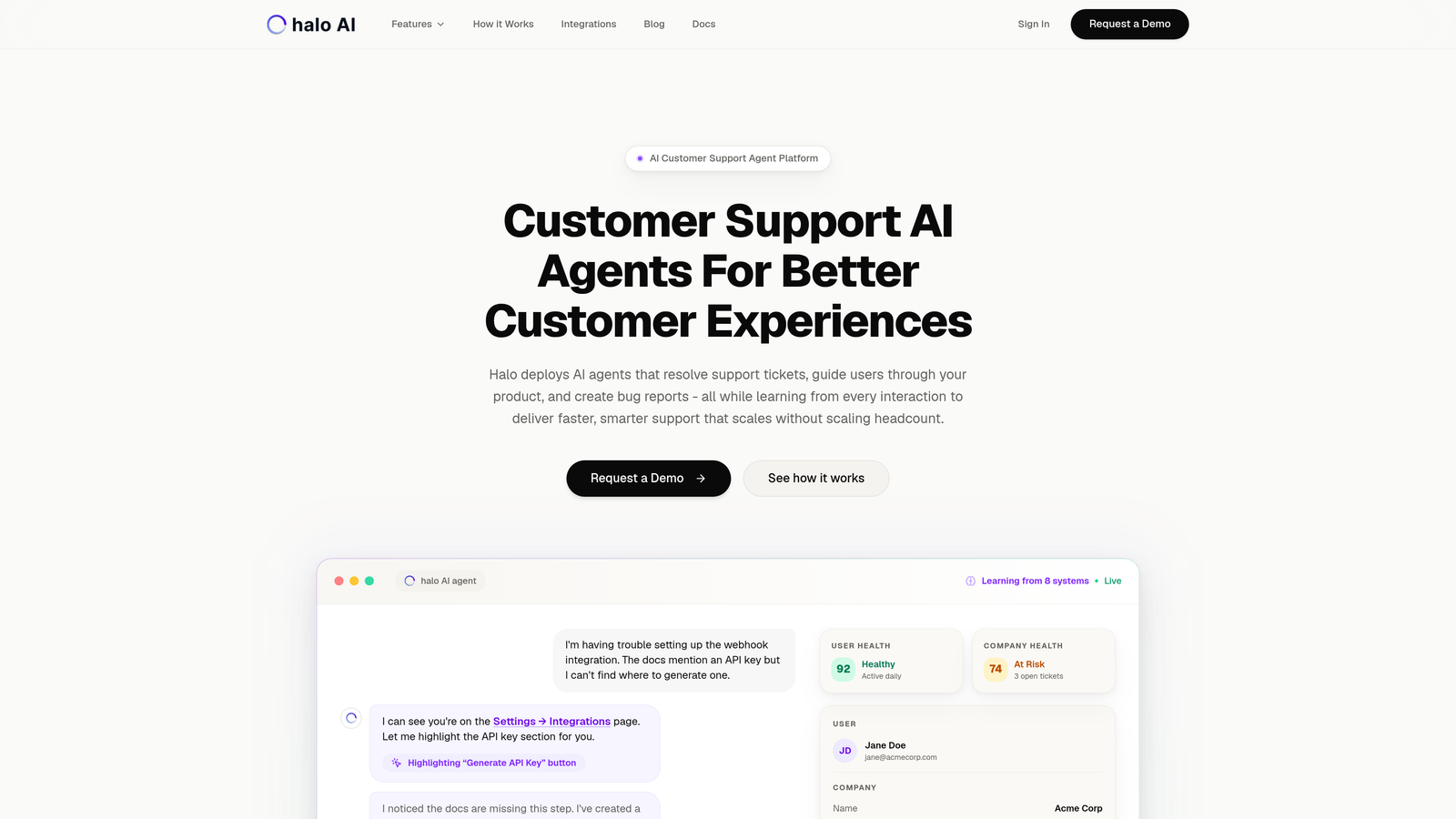
Halo AI takes a fundamentally different approach by building AI into the architecture from day one, rather than bolting it onto an existing helpdesk system.
Where This Tool Shines
The platform's biggest differentiator is its page-aware context—the AI actually sees what your users see in your product, enabling it to provide visual guidance that goes beyond text-based responses. This eliminates the common frustration of chatbots that can't understand what users are looking at.
The continuous learning model means every interaction makes the system smarter. Unlike platforms where AI capabilities stagnate without manual updates, Halo's agents evolve based on real support patterns, product changes, and user behavior across your entire business stack.
Key Features
Autonomous Ticket Resolution: AI agents handle routine support tickets end-to-end without human intervention, escalating only when complexity requires it.
Page-Aware Visual Guidance: The chat widget understands exactly what users see on-screen, providing contextual help with visual UI elements.
Business Intelligence Analytics: Goes beyond support metrics to surface customer health signals, revenue intelligence, and anomaly detection across your operations.
Automatic Bug Reporting: Creates properly formatted bug tickets in Linear or your project management system when issues are identified.
Full Stack Integration: Connects to Linear, Slack, HubSpot, Intercom, Stripe, Zoom, PandaDoc, and Fathom for comprehensive business context.
Best For
B2B SaaS companies and product teams who need support automation that understands their product deeply and integrates with their existing workflow tools. Particularly valuable for teams currently using Zendesk, Freshdesk, or Intercom who want more intelligent automation without the per-resolution billing model.
Pricing
Custom pricing based on your team size and support volume. The model is designed to scale without forcing you to scale headcount linearly with customer growth. Contact for specific pricing details.
2. Intercom
Best for: Companies wanting unified messaging with AI automation billed per resolution
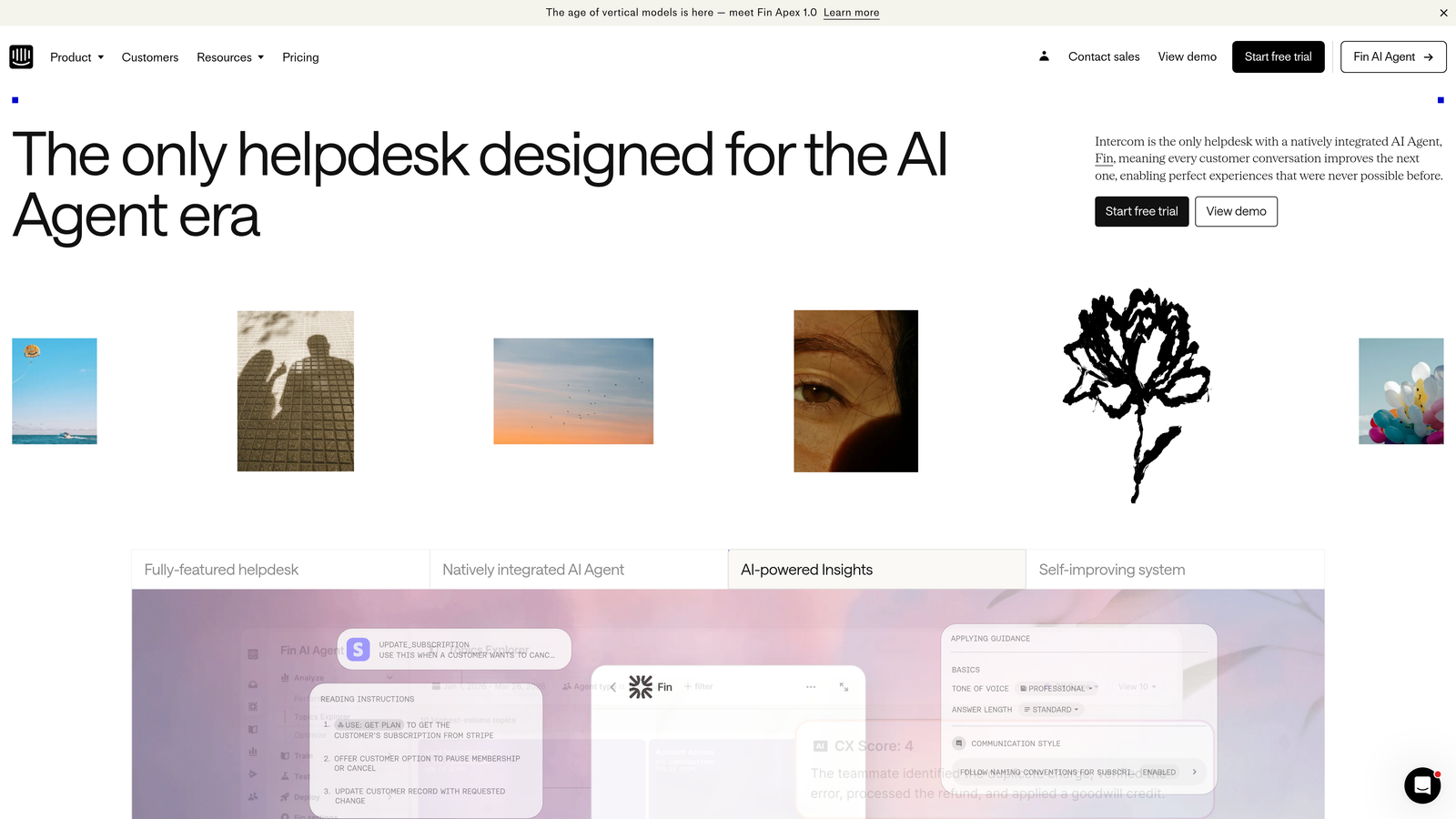
Intercom combines customer messaging, support, and engagement tools with its Fin AI agent for automated resolutions.
Where This Tool Shines
Intercom's unified approach means you're not juggling separate tools for chat, email, in-app messages, and support tickets. Everything flows through one interface, making it easier for teams to maintain context across different customer touchpoints.
Fin AI represents their push into genuine automation, though it operates as a separate add-on with resolution-based pricing. This can work well for teams with predictable support volumes but creates cost uncertainty for businesses experiencing rapid growth or seasonal spikes.
Key Features
Fin AI Agent: Answers customer questions by pulling from your knowledge base and previous conversations, charged at $0.99 per resolution.
Unified Inbox: Consolidates messages from email, chat, social media, and SMS into a single team workspace.
Product Tours: Create guided onboarding experiences and feature announcements directly in your product.
Custom Bots: Build automated workflows for common scenarios without coding.
Integration Marketplace: Extensive third-party connections including Salesforce, Stripe, and major CRMs.
Best For
Growing SaaS companies that want to unify their customer communication channels and are comfortable with usage-based AI pricing. Works particularly well for teams already using Intercom for marketing who want to extend into support automation.
Pricing
Essential plan starts at $39 per seat per month. Fin AI is billed separately at $0.99 per resolution. Advanced plans with more automation features start at $99 per seat monthly. Annual contracts typically required for larger teams.
3. Zendesk
Best for: Enterprise teams needing extensive customization and enterprise-grade security compliance
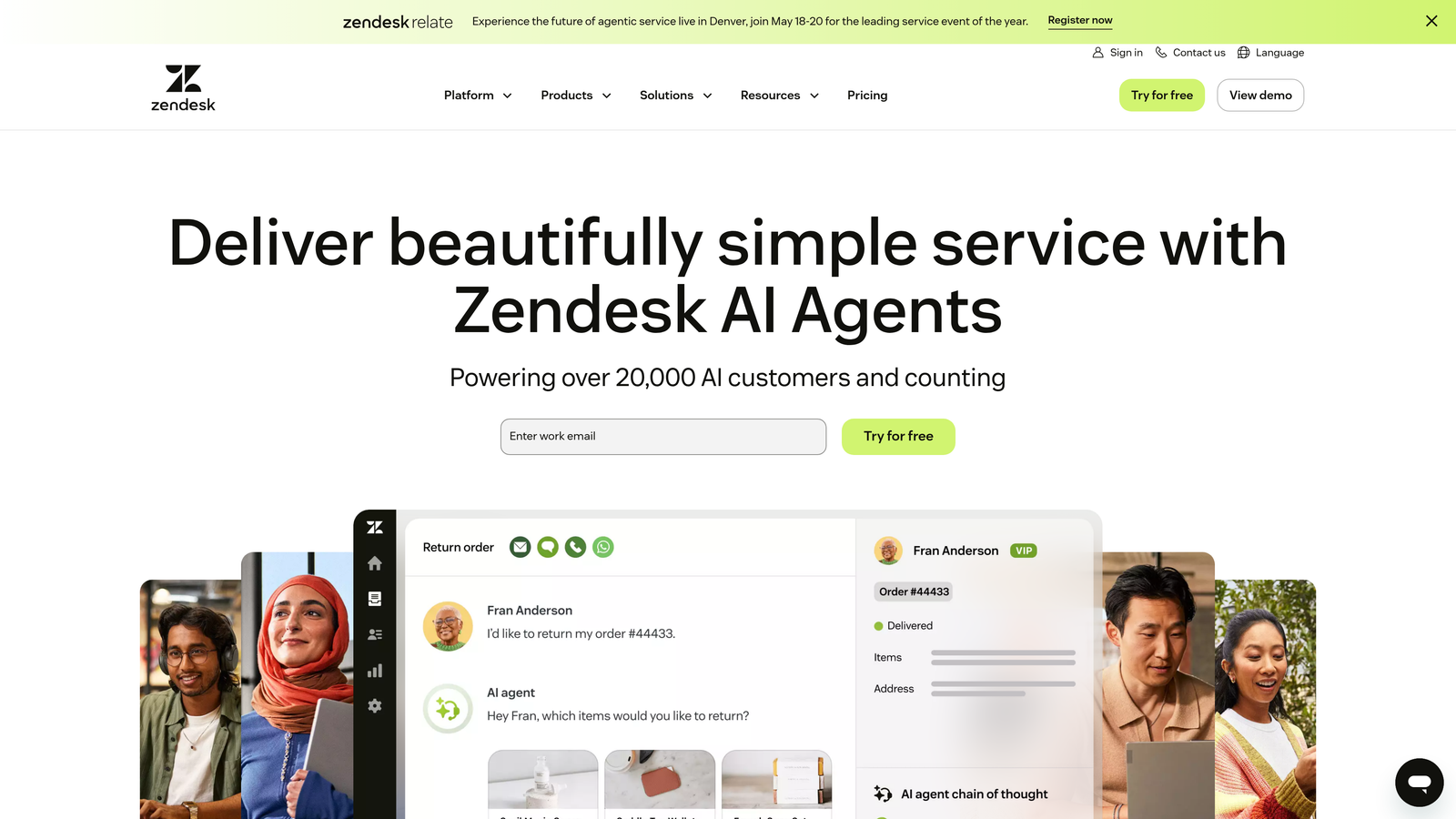
Zendesk remains the heavyweight in traditional customer service platforms, offering comprehensive ticketing with AI capabilities available as add-ons.
Where This Tool Shines
The platform's depth is unmatched for complex enterprise requirements. Multi-brand support, extensive routing rules, workforce management, and granular permissions make it the go-to choice for large organizations with sophisticated support operations.
The marketplace ecosystem includes over 1,500 integrations, meaning you can connect virtually any business system. However, this flexibility comes with complexity—expect significant setup time and potentially consulting costs to configure everything properly.
Key Features
Advanced Ticketing System: Sophisticated routing, SLA management, and escalation workflows for complex support operations.
AI-Powered Automation: Available through Advanced AI add-on, includes intent detection and suggested responses.
Multi-Brand Support: Manage support for multiple products or brands from a single platform.
Workforce Management: Forecasting, scheduling, and quality assurance tools for large support teams.
Extensive Reporting: Deep analytics and custom dashboard creation for enterprise reporting needs.
Best For
Enterprise organizations with large support teams, complex routing requirements, and the resources to properly configure and maintain the platform. Also suitable for companies managing support across multiple brands or product lines.
Pricing
Suite Team starts at $55 per agent monthly. Suite Professional at $115 per agent includes more advanced features. Advanced AI capabilities require an additional add-on purchase. Implementation and consulting fees often add significantly to total cost for enterprise deployments.
4. Freshdesk
Best for: Growing teams wanting solid automation features with a generous free tier
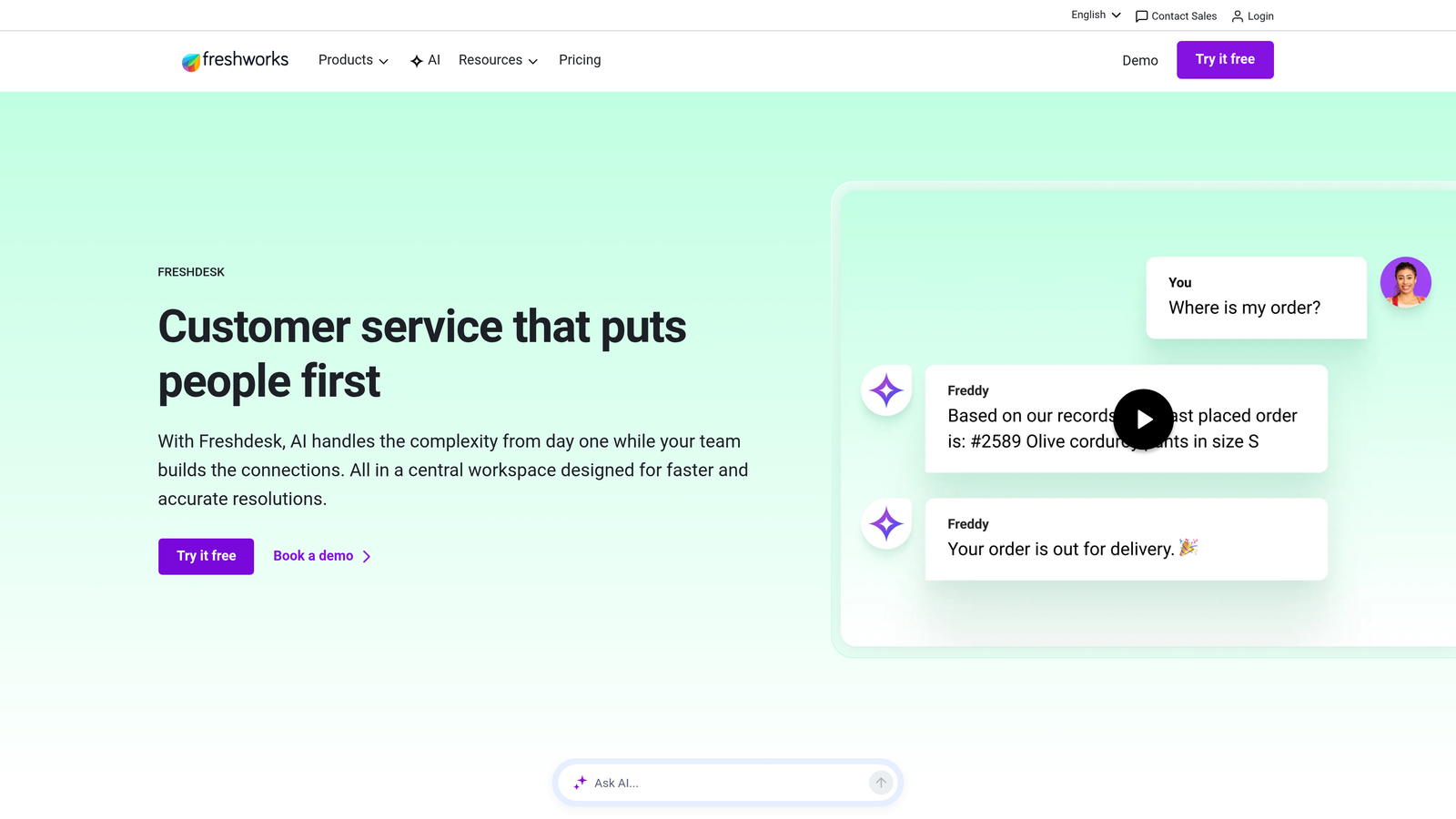
Freshdesk offers a compelling entry point with its free tier while providing scalable paid plans as teams grow.
Where This Tool Shines
The free tier genuinely works for small teams—up to 10 agents with basic ticketing, knowledge base, and email support. This makes it an excellent choice for startups testing customer support automation without immediate budget allocation.
Freddy AI, their automation layer, becomes available on paid plans and handles ticket categorization, canned responses, and basic chatbot functionality. It's not as sophisticated as dedicated AI-first platforms, but it covers the fundamentals well for the price point.
Key Features
Free Tier Access: Up to 10 agents with core ticketing functionality, making it viable for early-stage companies.
Freddy AI: Automated ticket assignment, response suggestions, and chatbot capabilities on paid plans.
Omnichannel Support: Email, phone, chat, social media, and messaging apps in one platform.
Team Collaboration: Parent-child ticketing, shared ownership, and internal notes for team coordination.
Self-Service Portal: Customizable knowledge base and community forums to deflect common questions.
Best For
Startups and small businesses that need functional support software immediately without upfront costs. Also works well for growing companies that want to start free and scale into paid features as support volume increases.
Pricing
Free plan for up to 10 agents with basic features. Growth plan at $15 per agent monthly adds automation and time tracking. Pro plan at $49 per agent monthly includes Freddy AI and advanced reporting. Enterprise at $79 per agent monthly adds custom roles and audit logs.
5. HubSpot Service Hub
Best for: Companies already using HubSpot CRM wanting native support integration
HubSpot Service Hub integrates customer service directly into HubSpot's ecosystem, creating seamless data flow between marketing, sales, and support.
Where This Tool Shines
The native CRM integration is the killer feature here. Every support interaction automatically updates customer records, feeding data to sales and marketing teams without manual exports or third-party sync tools. This unified customer view eliminates the data silos that plague most organizations.
For teams already invested in HubSpot's ecosystem, adding Service Hub makes more sense than introducing a separate support platform. The learning curve is minimal, and the data consistency across departments is invaluable for customer-centric operations.
Key Features
Native CRM Integration: Every ticket, conversation, and survey response automatically enriches customer records in HubSpot.
Conversational Bots: Build automated chat flows that qualify issues and route to appropriate team members.
Customer Feedback Tools: Net Promoter Score, customer satisfaction, and custom survey tools built in.
Knowledge Base Builder: Create searchable help documentation with SEO optimization and analytics.
Shared Inbox: Team collaboration on customer emails with assignment, routing, and collision detection.
Best For
Companies already using HubSpot for marketing or sales who want to unify their customer data across all touchpoints. Particularly valuable for businesses where support insights should inform sales and marketing strategies.
Pricing
Free tools include basic ticketing and live chat. Starter plan at $20 monthly for 2 users adds automation and simple reporting. Professional at $100 per seat monthly includes advanced automation, custom surveys, and playbooks. Enterprise at $150 per seat adds predictive lead scoring and custom objects.
6. Tidio
Best for: Small businesses and e-commerce stores wanting quick live chat deployment
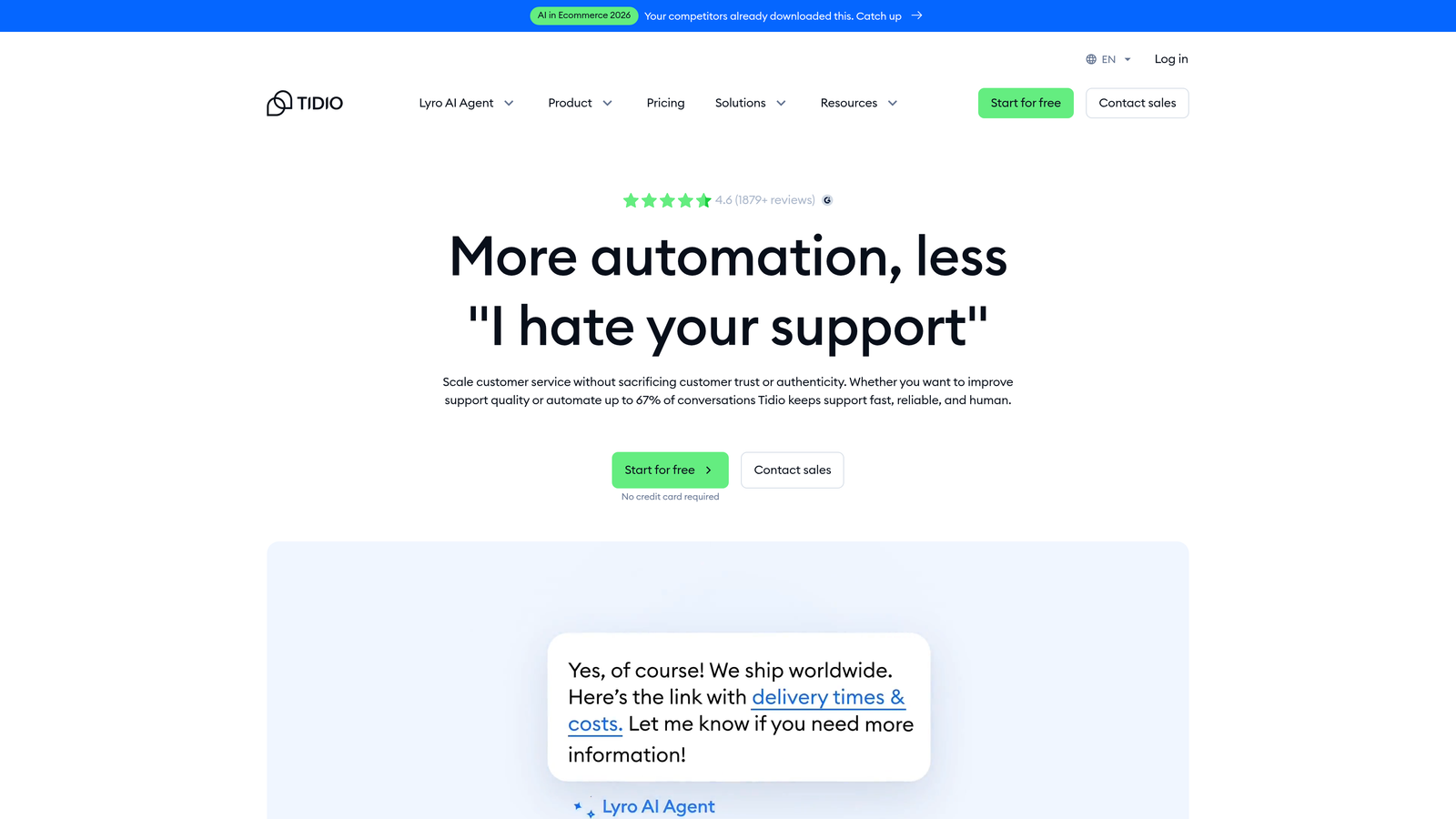
Tidio focuses on live chat and AI chatbots designed for rapid deployment on e-commerce platforms and small business websites.
Where This Tool Shines
Setup takes minutes rather than days. The visual chatbot builder lets non-technical users create automated conversation flows quickly, making it accessible for small teams without dedicated IT resources.
Lyro AI, their conversational AI bot, handles common customer questions by learning from your website content and previous conversations. It's not enterprise-grade intelligence, but for small businesses fielding repetitive questions about shipping, returns, and product details, it handles the basics effectively.
Key Features
Lyro AI Chatbot: Automated responses to common questions, trained on your website content and conversation history.
Visual Bot Builder: Drag-and-drop interface for creating custom conversation flows without coding.
Live Chat Widget: Customizable chat interface with visitor tracking and browsing history.
E-commerce Integrations: Direct connections to Shopify, WordPress, Wix, and major e-commerce platforms.
Email Marketing: Basic email campaign tools included, creating a mini customer engagement suite.
Best For
E-commerce stores, small service businesses, and solo entrepreneurs who need live chat quickly without technical complexity. Works well for teams handling under 1,000 conversations monthly with straightforward support needs.
Pricing
Free plan includes basic live chat with 50 conversations monthly. Starter at $29 monthly adds 100 live chat conversations and removes Tidio branding. Lyro AI starts at $39 monthly for 50 AI-powered conversations, scaling up based on volume needs.
7. Gorgias
Best for: E-commerce businesses needing deep Shopify integration with ticket-based pricing
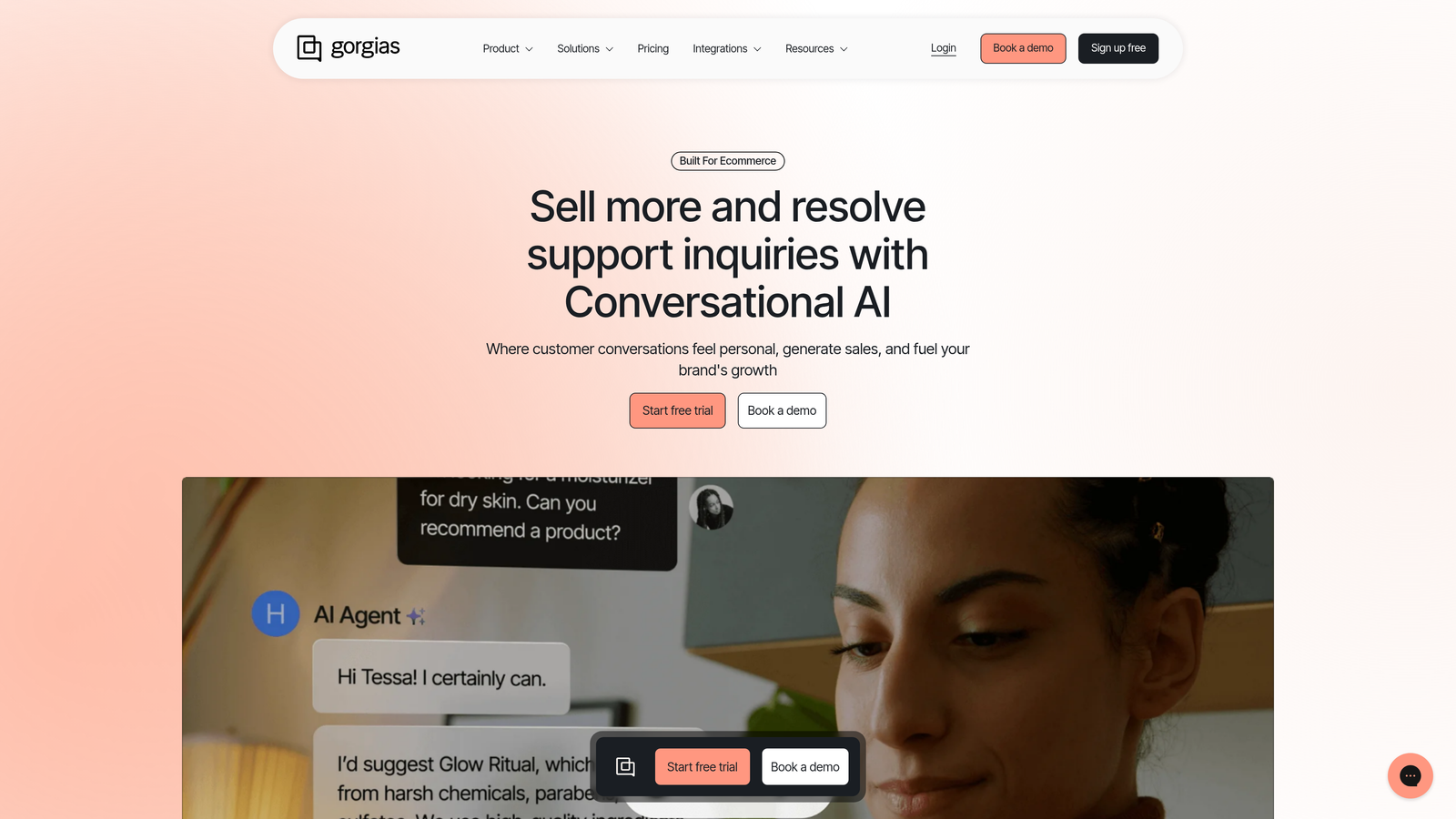
Gorgias built its platform specifically for e-commerce, with particularly deep integration into Shopify and other major commerce platforms.
Where This Tool Shines
The order management integration is exceptional. Support agents see complete order details, shipping status, and customer purchase history directly in the ticket interface. They can process refunds, modify orders, and update shipping addresses without switching to the Shopify admin panel.
The ticket-based pricing model can be advantageous for smaller stores with predictable support volumes. You're not paying per agent seat, so a small team can handle tickets efficiently without worrying about adding users when someone needs occasional access.
Key Features
Deep E-commerce Integration: Native connections to Shopify, BigCommerce, and Magento with order management in tickets.
Order Actions: Process refunds, cancellations, and modifications directly from support tickets.
Automated Macros: Pre-built responses for common e-commerce scenarios like shipping delays and return requests.
Revenue Attribution: Track which support interactions lead to purchases and calculate support ROI.
Multi-Channel Support: Handle inquiries from email, chat, social media, and SMS in one interface.
Best For
Shopify and e-commerce businesses that need support agents to have full order management capabilities. Particularly valuable for stores with high order volumes where support frequently needs to modify orders or process returns.
Pricing
Starter at $10 monthly for 50 tickets. Basic at $60 monthly for 300 tickets. Pro at $360 monthly for 2,000 tickets. Advanced at $900 monthly for 5,000 tickets. Pricing scales based on ticket volume rather than agent seats, which can benefit small teams handling high volumes.
8. Ada
Best for: Enterprise companies needing high-volume automated self-service in multiple languages
Ada focuses exclusively on conversational AI for enterprise self-service, targeting companies that need to automate thousands of support interactions daily.
Where This Tool Shines
The multi-language capabilities are genuinely impressive—supporting over 50 languages with the same underlying AI model. For global companies, this eliminates the need to build separate automation for each market, significantly reducing implementation complexity.
Ada's no-code approach means business teams can build and modify conversation flows without engineering resources. This speeds up iteration and allows support teams to optimize automation based on real customer feedback without waiting for developer availability.
Key Features
Generative AI Engine: Uses large language models to understand intent and generate contextual responses beyond scripted flows.
No-Code Bot Builder: Business users can create and modify conversation flows without programming knowledge.
Multi-Language Support: Operates in 50+ languages with a single bot configuration.
Enterprise Security: SOC 2, GDPR, and HIPAA compliance with enterprise-grade security controls.
Resolution Analytics: Detailed reporting on automation rates, containment, and customer satisfaction by conversation type.
Best For
Large enterprises with high support volumes who need to deflect routine inquiries at scale. Particularly valuable for global companies needing consistent automation across multiple languages and regions.
Pricing
Custom enterprise pricing based on conversation volume and features required. Typically involves annual contracts with implementation services included. Contact Ada directly for specific pricing based on your projected conversation volumes and integration requirements.
9. Help Scout
Best for: Teams wanting clean, human-centered support software without enterprise complexity
Help Scout takes a deliberately simple approach, focusing on core support functionality with a clean interface and straightforward per-user pricing.
Where This Tool Shines
The interface feels refreshingly uncluttered compared to enterprise platforms. New team members get up to speed quickly because there aren't dozens of features to learn. This simplicity doesn't mean lack of capability—it means thoughtful feature selection focused on what support teams actually use daily.
The collision detection prevents multiple agents from responding to the same customer simultaneously, a surprisingly rare feature that eliminates duplicate responses and customer confusion. Combined with unlimited customer contacts at no extra charge, the pricing model is predictable and scales cleanly.
Key Features
Shared Inbox: Team collaboration on customer emails with collision detection and assignment workflows.
Docs Knowledge Base: Create searchable help documentation with analytics on article effectiveness.
Beacon Chat Widget: Embeddable help widget that surfaces relevant articles before customers contact support.
Automated Workflows: Create rules for ticket routing, tagging, and follow-ups based on conditions.
Customer Satisfaction: Built-in ratings and feedback collection on every conversation.
Best For
Small to mid-sized teams that value simplicity and user experience over feature breadth. Works well for companies that want support software their team will actually enjoy using rather than tolerate.
Pricing
Standard plan at $25 per user monthly includes core features and unlimited customers. Plus plan at $50 per user monthly adds custom fields, advanced reporting, and multiple mailboxes. All plans include unlimited customers with no hidden per-contact fees.
Making the Right Choice
The pricing model matters as much as the features. Per-seat pricing (Zendesk, Help Scout) creates predictable costs but can become expensive as teams grow. Per-resolution models (Intercom's Fin AI) align costs with outcomes but can spike unpredictably during high-volume periods. Ticket-based pricing (Gorgias) works well for small teams handling high volumes but may not scale cost-effectively for larger operations.
For e-commerce businesses, Gorgias and Tidio offer specialized features that justify their focus. Enterprise teams needing multi-brand support and complex workflows will find Zendesk's depth valuable despite higher costs. Companies already in the HubSpot ecosystem gain significant data unification benefits from Service Hub.
The emerging AI-first platforms like Halo AI represent a different approach entirely—building intelligence into the foundation rather than adding it as an afterthought. This architectural difference means the AI can access deeper context about your product, users, and business operations, enabling more sophisticated automation without the per-resolution billing surprises.
When evaluating total cost of ownership, factor in implementation time, training requirements, and whether AI capabilities require separate add-on purchases. Many platforms advertise low starting prices but charge significantly more once you add the automation features you actually need.
Your support team shouldn't scale linearly with your customer base. Let AI agents handle routine tickets, guide users through your product, and surface business intelligence while your team focuses on complex issues that need a human touch. See Halo in action and discover how continuous learning transforms every interaction into smarter, faster support.