9 Best Customer Support Automation Software Pricing Options in 2026
This comprehensive guide examines the real costs behind customer support automation software pricing in 2026, revealing hidden fees, AI feature charges, and scaling costs that vendors often obscure. You'll discover transparent breakdowns of nine leading platforms' pricing structures—from per-agent models to AI-resolution pricing—helping you choose automation software that fits your budget whether you're handling a thousand tickets or millions, without unexpected expenses derailing your ROI.
 Matt PattoliFounder13 min read
Choosing customer support automation software isn't just about features—it's about finding pricing that scales with your business without surprise costs eating into your budget. Whether you're a startup handling your first thousand tickets or an enterprise processing millions, the right pricing model can mean the difference between automation that pays for itself and a tool that drains resources.
The challenge? Most platforms advertise one price but charge for AI features separately, add implementation fees, or hit you with overage charges as your ticket volume grows. Some lock essential automation behind enterprise tiers, while others use deceptively low per-agent pricing that becomes expensive at scale.
This guide breaks down the actual pricing structures of leading support automation platforms, from transparent per-agent models to AI-based resolution pricing, helping you understand what you'll really pay as your support needs grow.
1. Halo AI
Best for: Companies seeking resolution-based pricing that scales with value delivered, not headcount
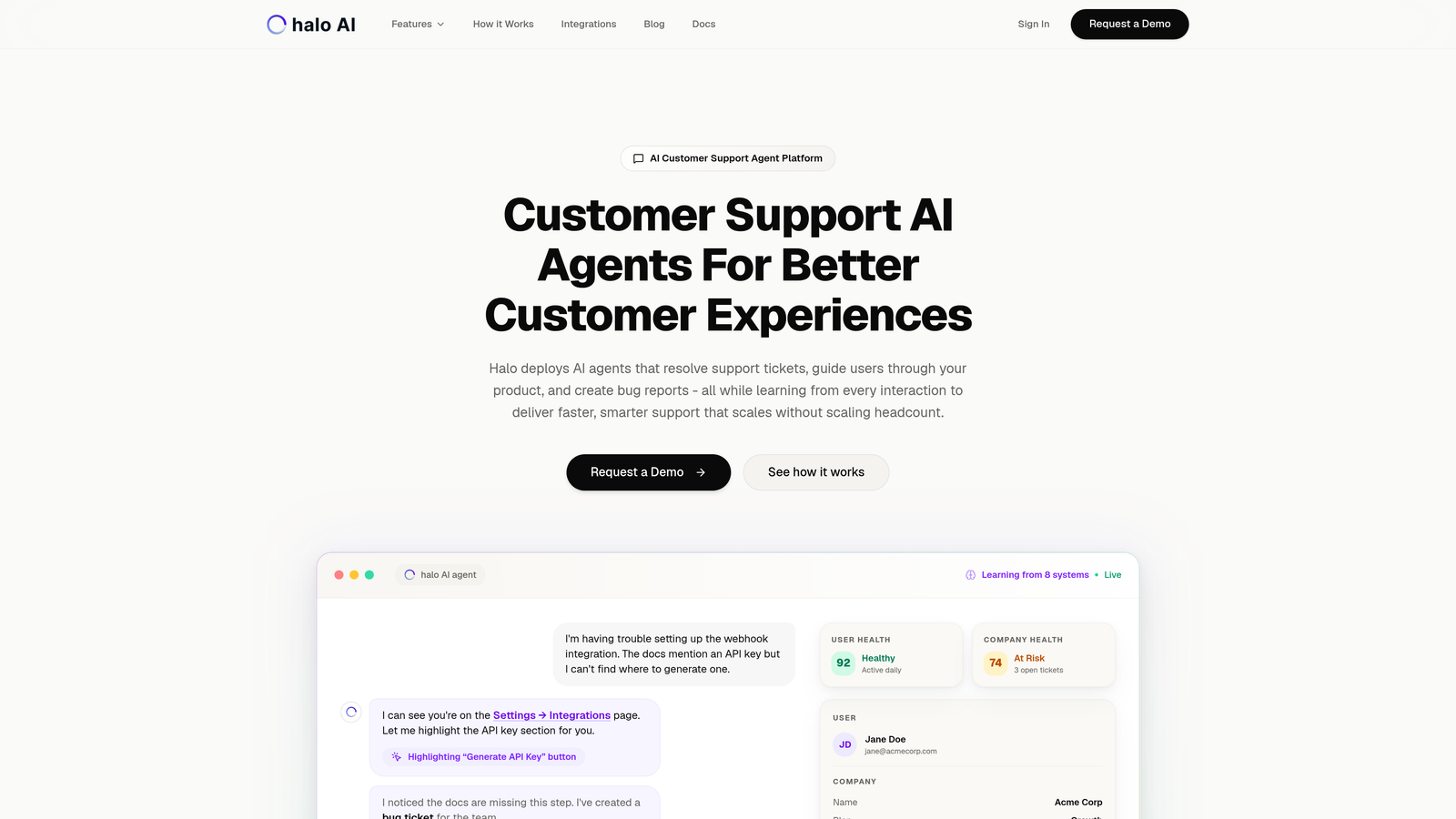
Halo AI is an AI-first customer support platform where intelligent agents resolve tickets autonomously while learning from every interaction.
Where This Tool Shines
Halo's pricing model fundamentally differs from traditional per-agent licensing. Instead of paying for seats whether they're productive or not, you pay based on resolutions—aligning costs directly with the value delivered to your customers.
The platform's page-aware AI sees what your users see, providing contextual guidance that reduces ticket volume at the source. Every interaction trains the system, meaning your support gets smarter over time without additional investment. The platform connects to your entire business stack—Linear for bug tracking, Slack for team communication, HubSpot for customer data, Stripe for billing context—creating a unified intelligence layer across your operations.
Key Features
Resolution-Based Pricing: Pay for outcomes rather than seats, making costs predictable as you scale.
Page-Aware Chat Widget: AI agents see user interfaces in real-time, providing visual guidance and contextual help.
Auto Bug Ticket Creation: Automatically generates detailed bug reports in Linear when issues are detected, complete with reproduction steps.
Business Intelligence Analytics: Surfaces customer health signals, revenue intelligence, and anomaly detection beyond basic support metrics.
Multi-System Integrations: Native connections to Slack, Linear, HubSpot, Intercom, Stripe, Zoom, PandaDoc, and Fathom.
Best For
B2B SaaS companies and product teams that want support automation to scale without scaling headcount. Particularly valuable for businesses using helpdesk systems like Zendesk, Freshdesk, or Intercom who want AI-first architecture rather than bolt-on automation. Ideal for teams that need business intelligence beyond support metrics.
Pricing
Custom pricing based on resolution volume rather than agent seats. Contact Halo directly for a quote tailored to your ticket volume and integration requirements.
2. Zendesk
Best for: Enterprises needing comprehensive customer service infrastructure with extensive marketplace integrations
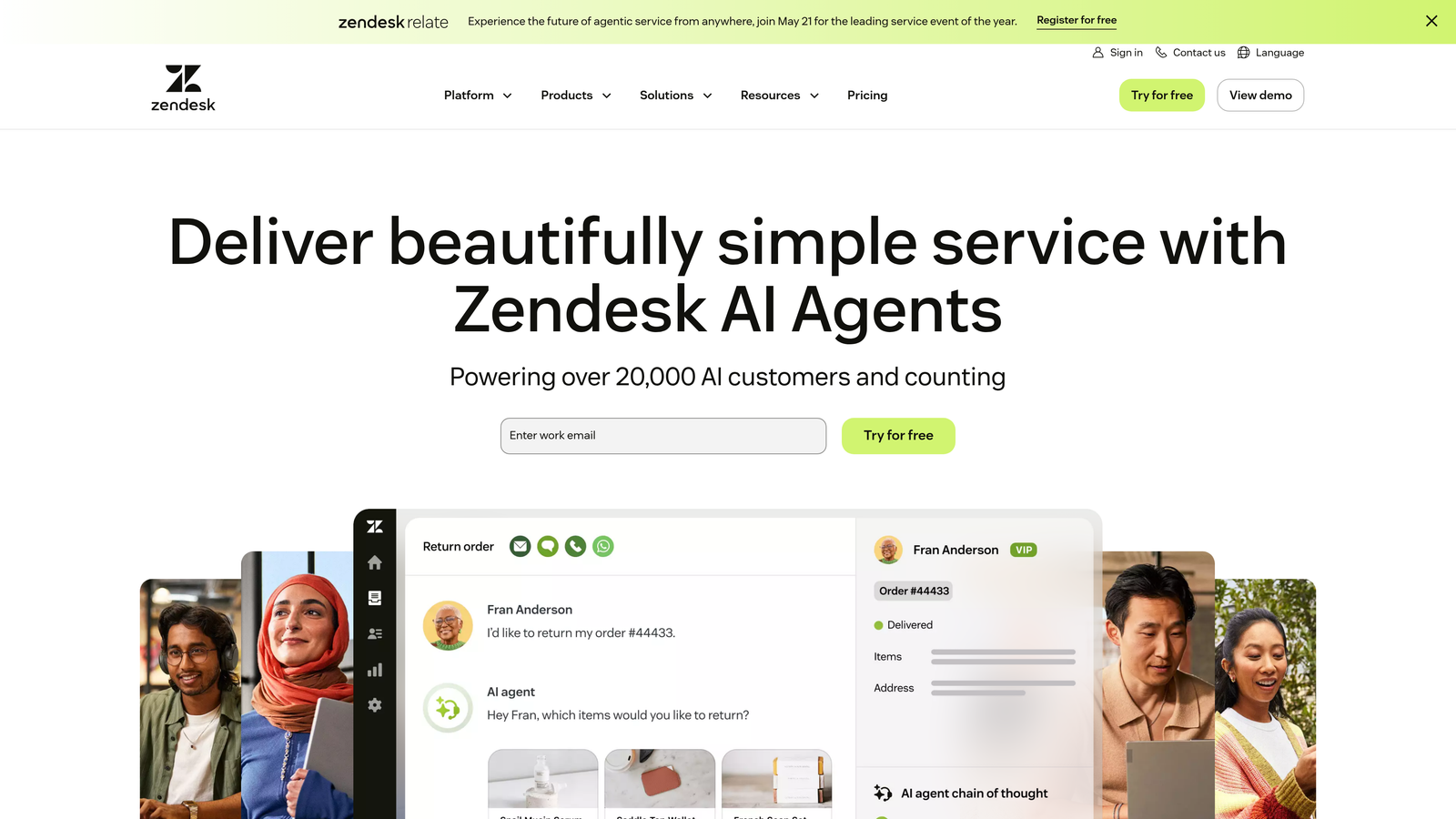
Zendesk is a comprehensive customer service platform offering ticketing, messaging, and AI-powered automation capabilities across multiple channels.
Where This Tool Shines
Zendesk's market dominance comes from its extensive feature set and mature ecosystem. The platform handles everything from basic ticketing to complex omnichannel routing, making it a one-stop solution for enterprise support operations.
The marketplace offers thousands of integrations, and the platform's reporting capabilities provide deep visibility into support operations. However, this comprehensiveness comes with complexity—both in setup and pricing structure. Advanced automation features require higher-tier plans, and AI capabilities are often priced as separate add-ons.
Key Features
Suite Tiering Structure: Graduated plans from Team through Enterprise with increasing automation capabilities at each level.
Separate AI Pricing: Advanced AI features like intent detection and auto-resolution require additional licensing beyond base plans.
Extensive Marketplace: Over 1,200 pre-built integrations and apps available through the Zendesk marketplace.
Omnichannel Support: Unified interface for email, chat, phone, social media, and messaging channels.
Advanced Reporting: Customizable dashboards and analytics available on Professional tier and above.
Best For
Large enterprises with complex support operations spanning multiple channels and departments. Companies with dedicated support operations teams who can manage the platform's complexity. Organizations that need extensive third-party integrations and customization options.
Pricing
Suite Team starts at $55 per agent per month. Suite Growth costs $89 per agent per month. Suite Professional runs $115 per agent per month. Enterprise pricing requires custom quotes. AI add-ons priced separately and can significantly increase total cost.
3. Intercom
Best for: Product-led companies wanting conversational support combined with proactive customer engagement
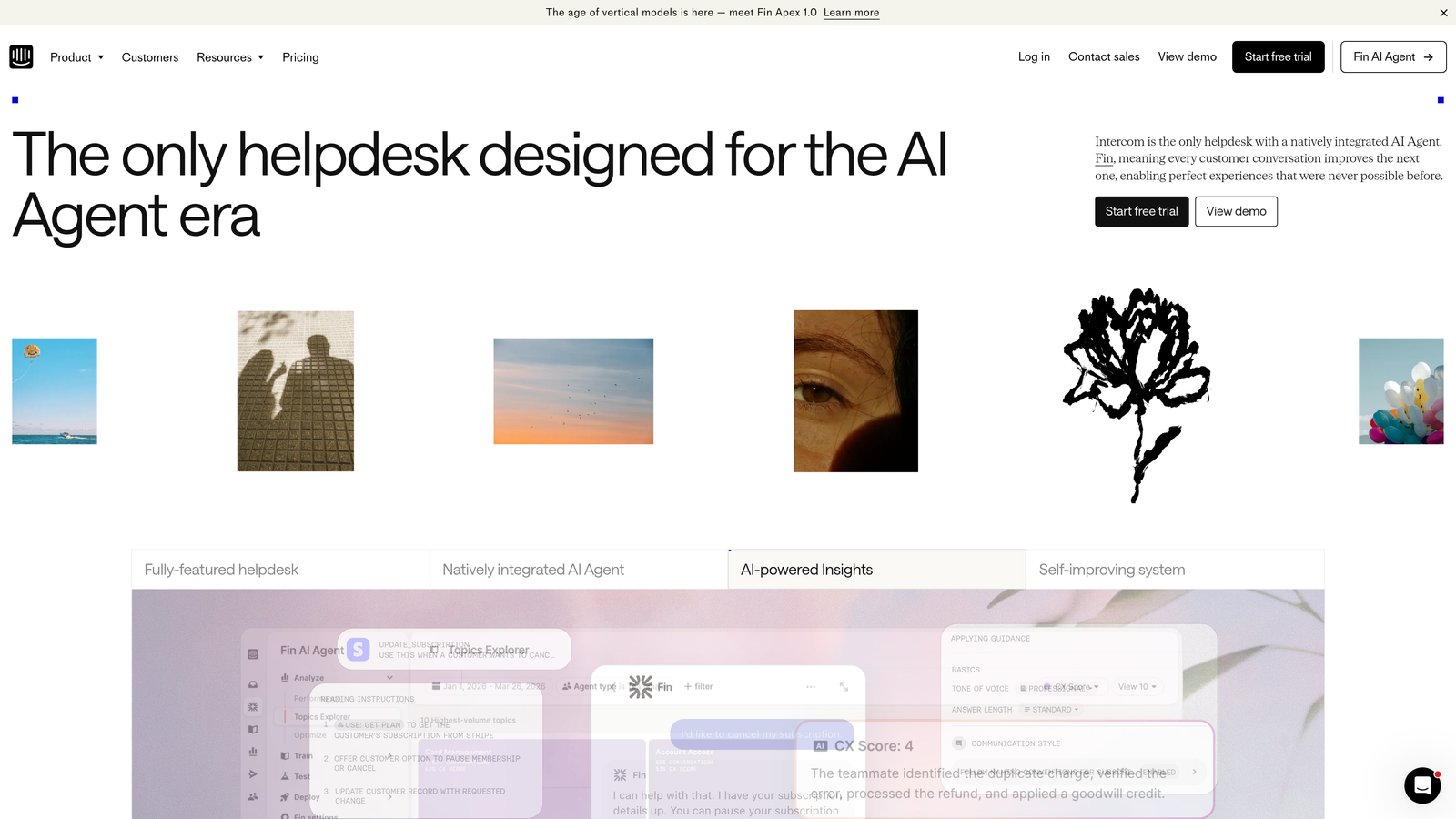
Intercom is a conversational customer platform that combines messaging, automation, and AI-powered support with product onboarding tools.
Where This Tool Shines
Intercom pioneered the shift from traditional ticketing to conversational support. The platform excels at blending reactive support with proactive messaging—you can answer questions while also guiding users through product tours and triggering targeted messages based on behavior.
The Fin AI agent represents a hybrid pricing model: you pay per-seat for the core platform, then separately for AI resolutions. This creates predictable base costs while allowing AI spend to scale with usage. The platform's strength lies in its ability to serve both marketing and support teams from a single interface.
Key Features
Fin AI Agent: Charged at $0.99 per resolution, separate from seat-based core pricing.
Seat-Based Core Platform: Essential, Advanced, and Expert tiers priced per seat with increasing feature access.
Product Tours: Built-in onboarding tools that guide users through features without leaving your product.
Proactive Messaging: Trigger targeted messages based on user behavior, lifecycle stage, or custom events.
Unified Inbox: Single interface for managing conversations across live chat, email, and in-app messages.
Best For
SaaS companies that want to combine support with product-led growth initiatives. Teams that need both reactive customer service and proactive user engagement. Businesses comfortable with hybrid pricing models that separate platform access from AI usage.
Pricing
Essential plan costs $39 per seat per month. Advanced plan runs $99 per seat per month. Expert plan costs $139 per seat per month. Fin AI agent charges $0.99 per resolution on top of base plan costs.
4. Freshdesk
Best for: Small to mid-size businesses seeking affordable helpdesk software with a generous free tier
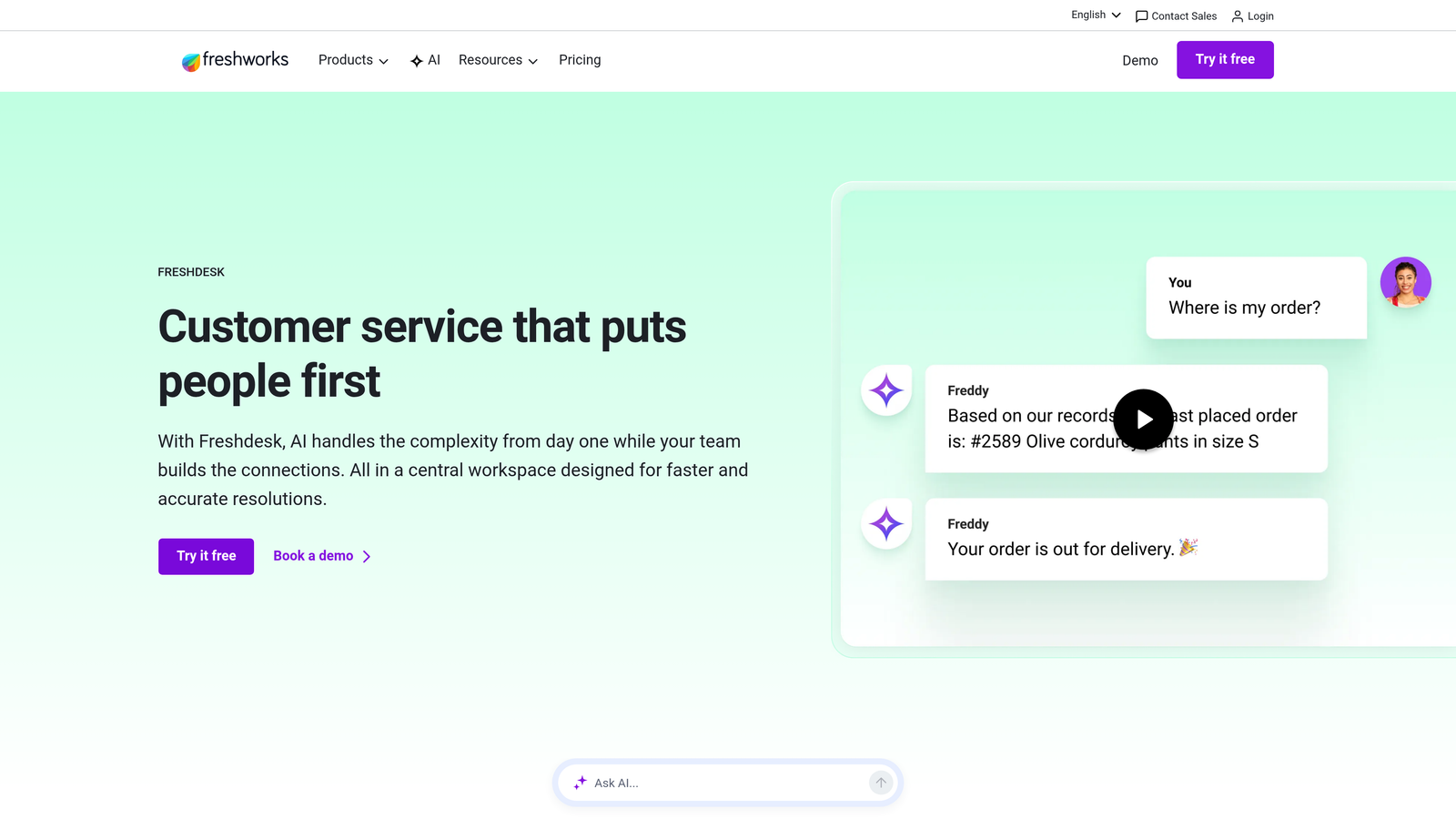
Freshdesk is cloud-based helpdesk software offering ticketing, automation, and self-service capabilities with straightforward per-agent pricing.
Where This Tool Shines
Freshdesk's free tier supports up to 10 agents with core ticketing features, making it an attractive entry point for growing teams. The pricing structure remains simple and predictable as you scale, without hidden costs for essential features.
The platform provides solid fundamentals—ticket management, knowledge base, basic automation—without overwhelming complexity. Freddy AI becomes available on higher plans, adding intelligent routing and response suggestions. For teams that don't need enterprise-grade sophistication, Freshdesk delivers reliable support infrastructure at accessible price points.
Key Features
Free Tier: Supports up to 10 agents with email ticketing, knowledge base, and basic automation rules.
Freddy AI: Available on Pro and Enterprise plans, providing intelligent ticket routing and suggested responses.
Omnichannel Support: Handle tickets from email, phone, chat, social media, and messaging apps in one interface.
Built-in Analytics: Standard reports and dashboards included on all paid plans without additional cost.
Marketplace Integrations: Pre-built connectors for popular business tools and CRM platforms.
Best For
Small businesses and startups that need functional helpdesk software without enterprise pricing. Teams of 10 or fewer agents who can benefit from the free tier. Growing companies that want predictable per-agent costs without feature gating on essential automation.
Pricing
Free tier available for up to 10 agents. Growth plan costs $15 per agent per month. Pro plan runs $49 per agent per month. Enterprise plan costs $79 per agent per month. Annual billing required for all paid plans.
5. Help Scout
Best for: Teams prioritizing email-based support with shared inbox collaboration and simple pricing
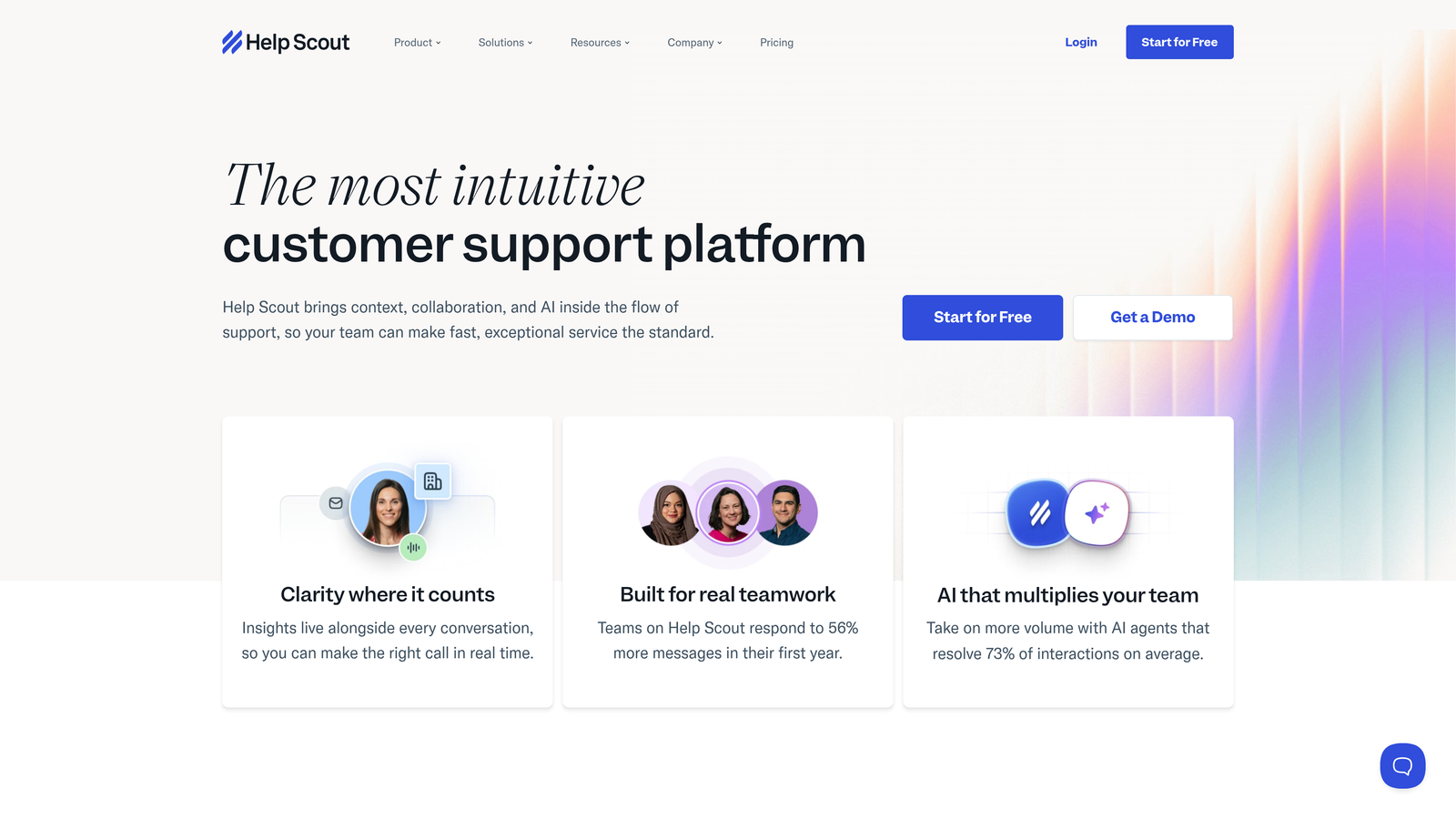
Help Scout is a customer service platform focused on email support with shared inbox functionality and integrated knowledge base.
Where This Tool Shines
Help Scout strips away complexity to focus on what many support teams actually need: excellent email management with team collaboration. The platform feels more like a shared Gmail than a traditional helpdesk, making adoption nearly frictionless.
Pricing remains straightforward with no hidden tiers or feature restrictions. All plans include unlimited mailboxes, the Beacon chat widget, and core automation features. AI drafts and summaries help agents respond faster without the complexity of full conversational AI. For teams whose support primarily happens via email, Help Scout delivers exactly what's needed without paying for unused channel infrastructure.
Key Features
Simple Per-User Pricing: Three tiers with clear feature distinctions and no surprise add-ons for core functionality.
Unlimited Mailboxes: Create separate inboxes for different teams or departments on all plans without additional cost.
Beacon Chat Widget: Embedded help widget included on all plans, combining chat, knowledge base search, and contact forms.
AI Drafts and Summaries: AI-powered tools help agents write responses faster and understand ticket context quickly.
Collision Detection: Prevents multiple agents from responding to the same conversation simultaneously.
Best For
Companies whose support happens primarily through email rather than live chat or phone. Teams that value simplicity and collaboration over channel complexity. Businesses that want transparent pricing without separate charges for AI features or additional mailboxes.
Pricing
Standard plan costs $22 per user per month with core features and 2 mailboxes. Plus plan runs $44 per user per month with advanced automation and unlimited mailboxes. Pro plan costs $65 per user per month adding custom fields, advanced permissions, and priority support.
6. Tidio
Best for: E-commerce stores and small businesses needing affordable live chat with visual chatbot building
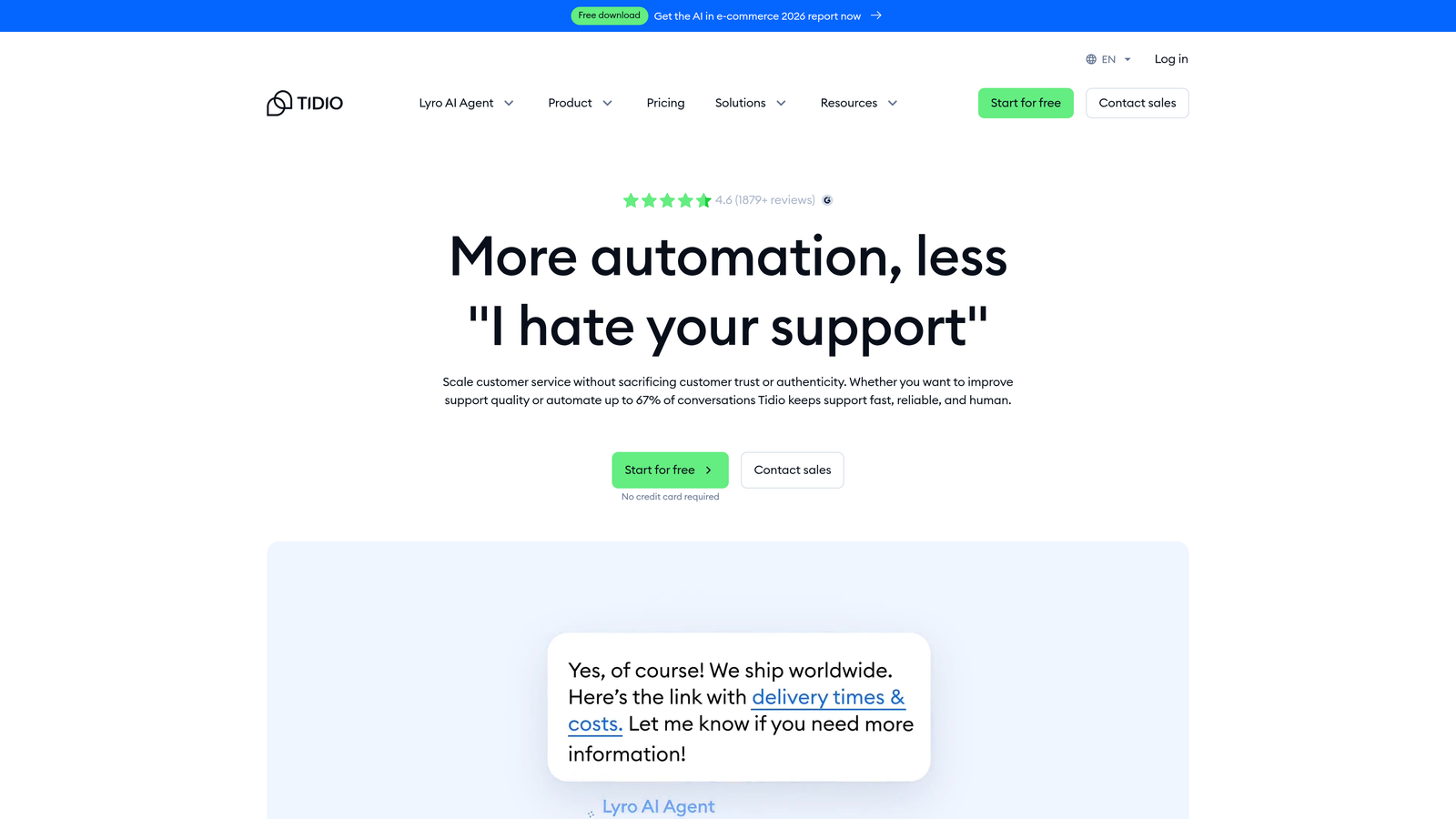
Tidio is a live chat and chatbot platform designed specifically for e-commerce automation and small business customer engagement.
Where This Tool Shines
Tidio targets the sweet spot between free chat widgets and enterprise automation platforms. The visual chatbot builder lets non-technical users create automated conversation flows without coding, while deep e-commerce integrations pull order data directly into chat conversations.
The Lyro AI chatbot operates as an add-on, giving you control over AI costs. The platform's e-commerce focus shows in features like abandoned cart recovery, order tracking automation, and product recommendations within chat. For Shopify or WooCommerce stores, Tidio provides automation specifically designed for online retail rather than generic support features.
Key Features
Free Plan Available: Basic live chat and limited chatbot functionality at no cost for small businesses testing automation.
Lyro AI Chatbot: Conversational AI add-on priced at $39 per month, separate from base platform costs.
E-commerce Integrations: Native connections to Shopify, WooCommerce, and other platforms with order data access in conversations.
Visual Chatbot Builder: Drag-and-drop interface for creating automated conversation flows without technical knowledge.
Visitor Tracking: See who's browsing your site in real-time and proactively engage high-value visitors.
Best For
E-commerce stores on Shopify, WooCommerce, or similar platforms needing chat automation. Small businesses that want to test live chat without upfront investment. Teams that need visual chatbot building without hiring developers. Companies that want to control AI costs through optional add-ons.
Pricing
Free tier available with basic features and Tidio branding. Starter plan costs $29 per month for up to 100 conversations. Growth plans start at $59 per month with higher conversation limits. Lyro AI chatbot adds $39 per month to any plan.
7. Gorgias
Best for: High-volume Shopify stores needing deep e-commerce integration with ticket-based pricing
Gorgias is an e-commerce-focused helpdesk built specifically for Shopify, BigCommerce, and Magento stores with ticket-volume pricing.
Where This Tool Shines
Gorgias abandons per-agent pricing entirely, instead charging based on monthly ticket volume. This model works brilliantly for e-commerce brands where support needs fluctuate seasonally—you're not paying for unused agent seats during slow months or scrambling to add licenses during holiday rushes.
The Shopify integration goes far beyond basic order lookup. Agents can process refunds, modify orders, and update customer information without leaving the helpdesk. Revenue attribution tracking shows exactly how much revenue your support team generates through upsells and retention. For e-commerce operations, this specialized focus delivers more value than generic helpdesk platforms adapted for retail.
Key Features
Ticket-Volume Pricing: Pay based on monthly tickets rather than agent seats, providing flexibility during seasonal fluctuations.
Deep Shopify Integration: Process refunds, modify orders, and access customer data directly from the helpdesk interface.
Automation Rules and Macros: Pre-built automation for common e-commerce scenarios like order status inquiries and return requests.
Revenue Attribution: Track how much revenue your support team generates through upsells, cross-sells, and retention efforts.
Unified Customer View: See complete purchase history, lifetime value, and interaction timeline in every conversation.
Best For
Shopify, BigCommerce, and Magento stores processing hundreds to thousands of support tickets monthly. E-commerce brands with seasonal volume fluctuations who don't want to pay for unused agent seats year-round. Teams that need revenue attribution to justify support investment.
Pricing
Starter plan costs $10 per month for up to 50 tickets. Basic plan runs $60 per month for 300 tickets. Pro plan costs $360 per month for 2,000 tickets. Advanced plan runs $900 per month for 5,000 tickets. Overage charges apply when ticket volume exceeds plan limits.
8. Kustomer
Best for: High-volume consumer brands needing CRM-powered support with unified customer timelines
Kustomer is a CRM-powered customer service platform designed for consumer brands handling high conversation volumes across multiple channels.
Where This Tool Shines
Kustomer reimagines helpdesk software as a CRM first, support tool second. Instead of organizing around tickets, the platform centers on customer timelines—every interaction, purchase, and touchpoint appears in chronological context. This approach prevents the fragmented experience where customers repeat information across multiple tickets.
The platform targets enterprise consumer brands with sophisticated routing needs and high agent counts. AI-powered routing directs conversations based on customer value, issue complexity, and agent expertise. For brands where customer lifetime value varies dramatically, this intelligence ensures VIP customers receive appropriate attention without manual triage.
Key Features
Unified Customer Timeline: All interactions, purchases, and data points displayed chronologically rather than as separate tickets.
AI-Powered Routing: Intelligent conversation distribution based on customer value, issue type, and agent skills.
Omnichannel Management: Handle conversations from email, chat, social media, SMS, and phone in a single interface.
Enterprise Security: SOC 2 Type II compliance, GDPR readiness, and advanced security controls for regulated industries.
Custom Workflows: Build complex automation and routing logic specific to your business processes.
Best For
Consumer brands with high support volumes and complex customer journeys spanning multiple touchpoints. Enterprises that need customer context beyond basic ticket history. Companies where customer lifetime value varies significantly and requires differentiated service levels.
Pricing
Enterprise plan costs $89 per user per month with core CRM and support features. Ultimate plan runs $139 per user per month adding advanced AI and customization. Custom enterprise pricing available for large deployments with specific requirements. Annual contracts required for all plans.
9. Zoho Desk
Best for: Companies already using Zoho ecosystem seeking integrated helpdesk with competitive pricing
Zoho Desk is context-aware helpdesk software that integrates seamlessly with Zoho CRM and the broader Zoho business suite.
Where This Tool Shines
Zoho Desk delivers exceptional value for businesses already invested in the Zoho ecosystem. Native integration with Zoho CRM means customer data, sales history, and support interactions live in connected systems without complex middleware or API work.
The pricing undercuts most competitors while still offering solid automation capabilities. Zia AI assistant becomes available on Professional tier and above, providing intelligent suggestions and automation without the premium pricing other platforms charge for AI features. The free tier supports three agents with full ticketing functionality, making it viable for micro-businesses testing customer support software.
Key Features
Free Tier: Supports up to three agents with complete ticketing, knowledge base, and basic automation features.
Zia AI Assistant: Included on Professional and Enterprise plans, providing response suggestions and sentiment analysis.
Native Zoho CRM Integration: Bidirectional sync with Zoho CRM eliminates data silos between sales and support teams.
Customizable Workflows: Build automated processes using visual workflow builder without coding requirements.
Multi-Department Support: Separate departments with distinct workflows, SLAs, and agent assignments on all plans.
Best For
Companies using Zoho CRM or other Zoho products who want unified business software. Small businesses with three or fewer support agents who can use the free tier. Teams seeking competitive pricing without sacrificing essential automation features. Organizations that prioritize ecosystem integration over best-of-breed point solutions.
Pricing
Free plan available for up to three agents. Standard plan costs $14 per agent per month with expanded automation. Professional plan runs $23 per agent per month adding Zia AI and advanced features. Enterprise plan costs $40 per agent per month with custom roles and advanced analytics.
Making the Right Choice
The customer support automation landscape has evolved beyond simple per-agent pricing. Today's options range from traditional seat-based models to ticket-volume pricing and resolution-based approaches, each with distinct advantages depending on your business model.
For e-commerce operations with seasonal fluctuations, ticket-based pricing like Gorgias offers makes more sense than paying for unused agent seats year-round. Enterprise teams needing comprehensive infrastructure might accept Zendesk's higher costs for its extensive marketplace and mature feature set. Small businesses can leverage free tiers from Freshdesk or Zoho Desk to establish support operations without upfront investment.
The critical question isn't which platform costs least—it's which pricing model aligns with how your support scales. Per-agent models work when your team size grows predictably with customer base. Ticket-volume pricing suits businesses with fluctuating support demand. Resolution-based pricing aligns costs with value delivered rather than inputs consumed.
Consider your total cost of ownership beyond base pricing. Many platforms charge separately for AI features, implementation services, premium integrations, or overage fees. A $50 per agent plan that includes AI might cost less than a $30 plan where AI adds another $40 per agent. Calculate what you'll actually pay at your projected ticket volume in six months, not just today's costs.
Your support team shouldn't scale linearly with your customer base. Let AI agents handle routine tickets, guide users through your product, and surface business intelligence while your team focuses on complex issues that need a human touch. See Halo in action and discover how continuous learning transforms every interaction into smarter, faster support.