9 Best Customer Support Automation Solutions in 2026
This guide evaluates nine of the best customer support automation solution options available in 2026, comparing each on automation depth, integration flexibility, ease of deployment, and real business impact — helping B2B SaaS teams choose the right tool to resolve tickets faster and scale support without scaling headcount.
 Matt PattoliFounder13 min read
Customer support teams are under more pressure than ever: faster response times, higher ticket volumes, and customers who expect answers immediately. The right customer support automation solution can resolve tickets without human intervention, surface business intelligence, and scale support without scaling headcount.
But not all automation tools are built the same. Some bolt AI onto legacy helpdesk infrastructure. Others are built AI-first from the ground up. The difference matters more than most buyers realize until they're six months into a deployment.
This list covers nine of the best customer support automation solutions available in 2026, evaluated on automation depth, integration flexibility, ease of deployment, and real business impact. We've included Halo AI as our top pick — it's our product, and we believe it's the strongest option for B2B SaaS teams, but we've been straightforward about what each tool does well and where it fits best.
1. Halo AI
Best for: B2B SaaS teams that need end-to-end autonomous ticket resolution with product context
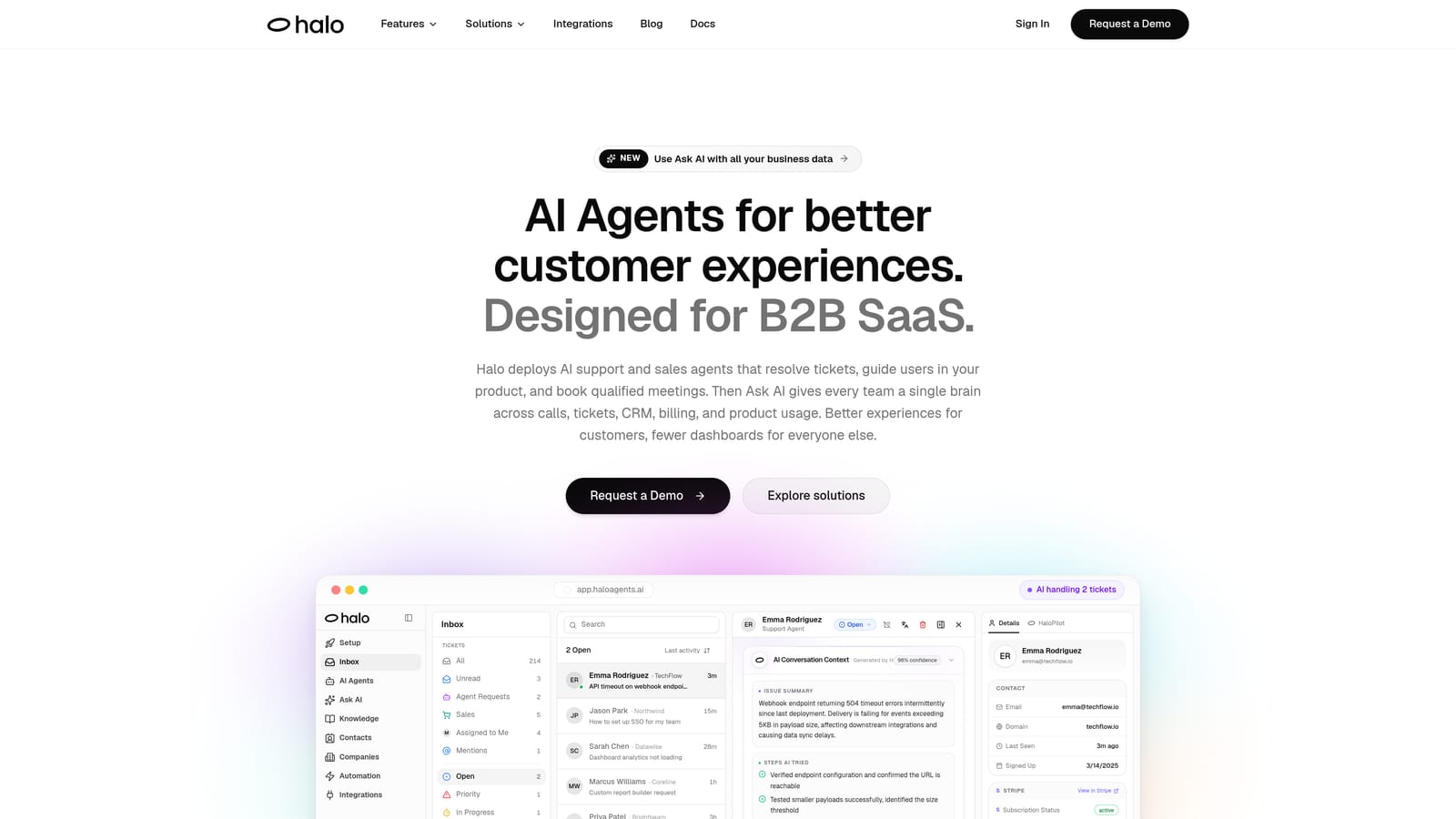
Halo AI is an AI-first customer support platform built specifically for B2B SaaS teams that need more than basic deflection.
Where This Tool Shines
Most support tools treat automation as a layer on top of a ticketing system. Halo was designed the other way around: AI is the foundation, and everything else is built to support it. The most distinctive capability is the page-aware chat widget, which understands where a user is inside your product and can provide contextual guidance — not just generic knowledge base links.
Beyond resolution, Halo's smart inbox surfaces business intelligence that most support tools don't touch: customer health signals, revenue anomalies, and patterns that indicate churn risk or expansion opportunity. It's the difference between a support tool and a support tool that makes your whole business smarter.
Key Features
Page-Aware Chat Widget: Sees what the user sees in your product, enabling contextual guidance rather than generic responses.
Autonomous Ticket Resolution: AI agents handle tickets end-to-end, with smart escalation to human agents when complexity warrants it.
Auto Bug Ticket Creation: Automatically identifies and routes bug reports to Linear or your issue tracker, eliminating manual triage.
Smart Inbox with Business Intelligence: Surfaces customer health signals, revenue anomalies, and actionable insights beyond standard ticket metrics.
Continuous Learning: Every resolved interaction improves the system's accuracy and resolution capability over time.
Deep Integration Stack: Connects to Linear, Slack, HubSpot, Intercom, Stripe, Zoom, PandaDoc, and Fathom out of the box.
Best For
Product-led SaaS companies and B2B teams that want genuine autonomous resolution, not just agent assist. Particularly strong for teams where support conversations frequently surface product feedback, bugs, or revenue signals that need to reach other parts of the business.
Pricing
Contact for pricing. Visit haloagents.ai for current plans and to request a demo.
2. Intercom
Best for: Teams already in the Intercom ecosystem looking to automate query resolution
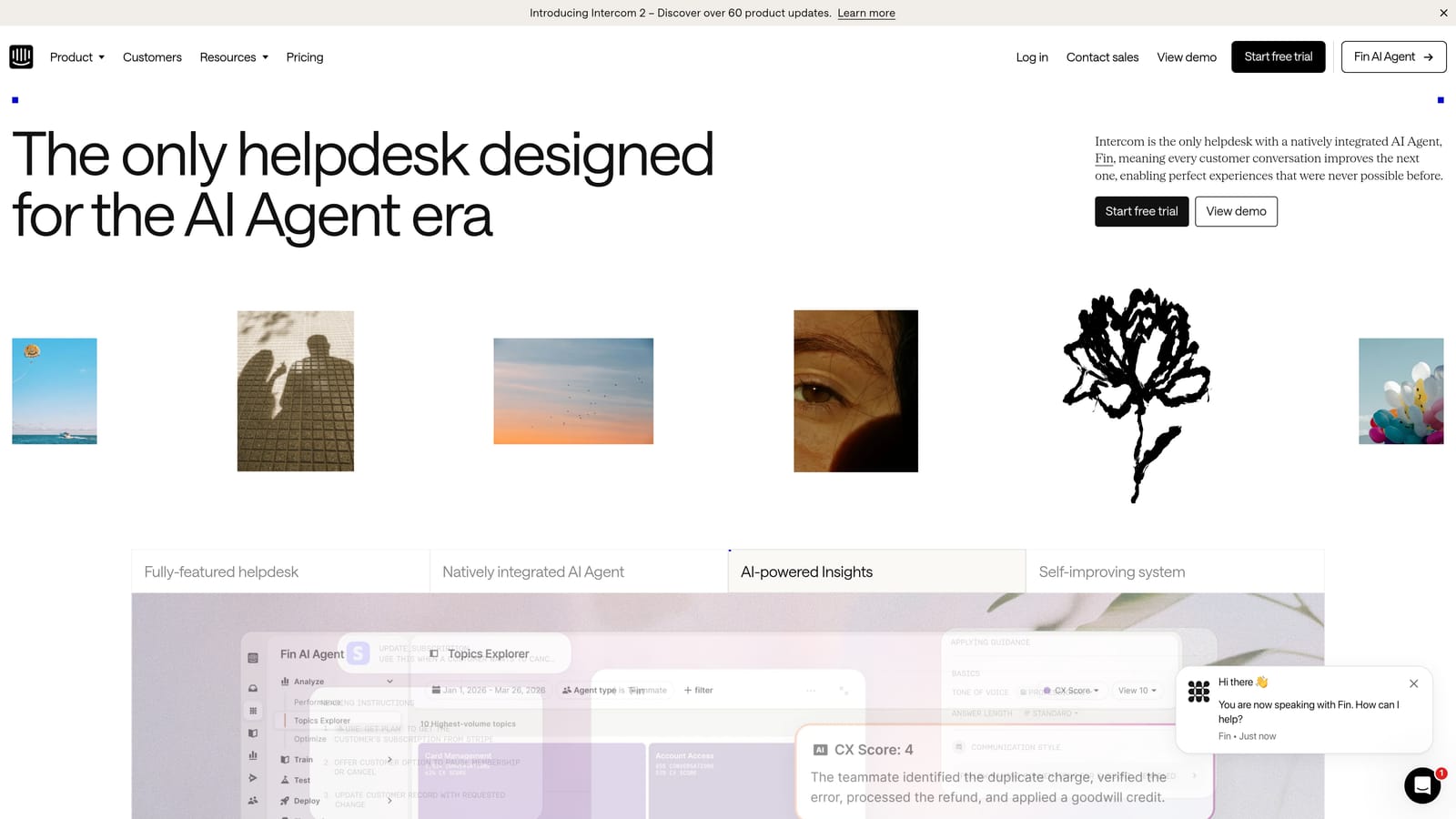
Intercom is a well-established customer messaging platform with Fin, its AI agent, built to resolve support queries using your help center content and conversation history.
Where This Tool Shines
Fin has matured considerably and can now handle a wide range of support queries without human intervention. If your team already uses Intercom for customer messaging, adding Fin to your workflow is relatively seamless — the context is already there, and the transition from chat to AI resolution is smooth for end users.
Intercom's omnichannel reach (chat, email, SMS) and its robust workflow automation builder make it a capable platform for teams that need flexibility across channels. The tradeoff is cost: Fin is billed per resolution, which can add up quickly at volume.
Key Features
Fin AI Agent: Resolves common support queries autonomously using help center content and prior conversation history.
Omnichannel Messaging: Supports chat, email, and SMS within a unified inbox.
Workflow Automation Builder: Visual builder for creating automated conversation flows and routing logic.
Help Center Integration: Knowledge base content feeds directly into Fin's resolution capabilities.
Reporting and CSAT Tracking: Built-in analytics for resolution rates, response times, and customer satisfaction.
Best For
Companies already invested in the Intercom ecosystem who want to add AI resolution without switching platforms. Less suited to teams needing deep integrations outside Intercom's native stack or those with complex B2B product environments.
Pricing
Starts at approximately $39/month for the base platform; Fin AI usage is billed per resolution, so costs scale with volume. Verify current rates at intercom.com.
3. Zendesk
Best for: Large enterprise teams with complex workflows already invested in Zendesk infrastructure
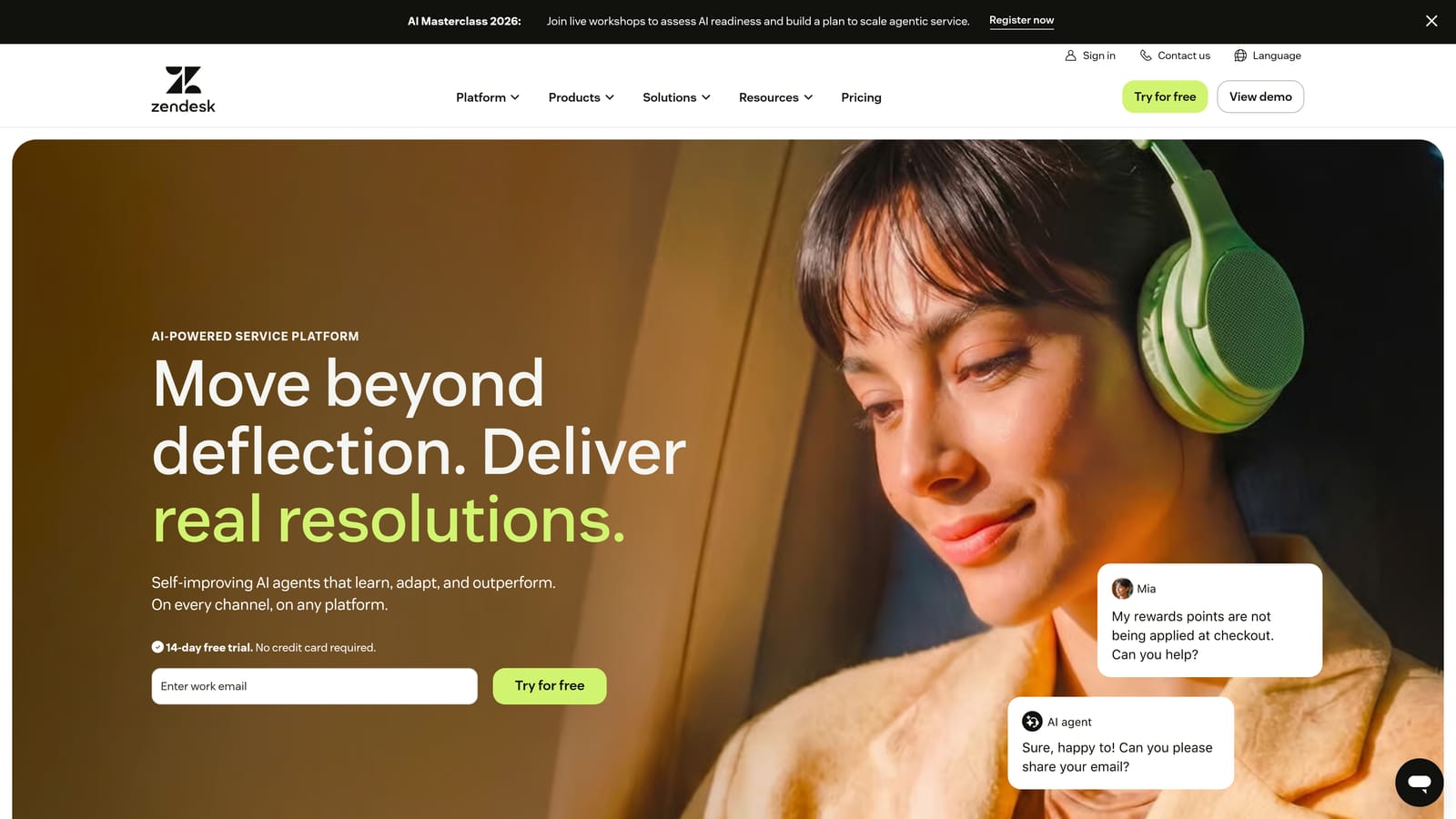
Zendesk is the incumbent enterprise helpdesk platform, with AI triage, agent assist, and intelligent routing layered onto mature ticketing infrastructure.
Where This Tool Shines
Zendesk's strength is its maturity. The platform has years of enterprise-grade ticketing infrastructure, strong SLA management, and one of the largest app marketplaces in the support category. For large teams with complex routing requirements and strict compliance needs, that foundation is hard to replicate.
The AI capabilities — including intelligent triage, suggested macros, and Agent Copilot — are genuinely useful, though they feel additive rather than native. Zendesk's roots are in ticketing, and the AI layer reflects that: it's designed to make agents faster, not to replace them entirely.
Key Features
AI-Powered Ticket Triage and Routing: Automatically categorizes and routes incoming tickets based on content and intent.
Agent Copilot: Provides suggested replies and next-best-action recommendations to speed up agent responses.
Robust SLA Management: Comprehensive tools for setting, tracking, and reporting on service level agreements.
Extensive App Marketplace: Hundreds of integrations available through the Zendesk marketplace.
Enterprise Security and Compliance: Strong data residency, access controls, and compliance certifications for regulated industries.
Best For
Large enterprise support organizations with established Zendesk workflows, complex routing logic, and compliance requirements. Teams evaluating Zendesk primarily for AI-first automation may find the experience more agent-assist than autonomous.
Pricing
Suite plans start at approximately $55/agent/month; AI add-ons are priced separately. Confirm current pricing at zendesk.com.
4. Freshdesk
Best for: SMB teams moving off manual email queues who need affordable AI-assisted support
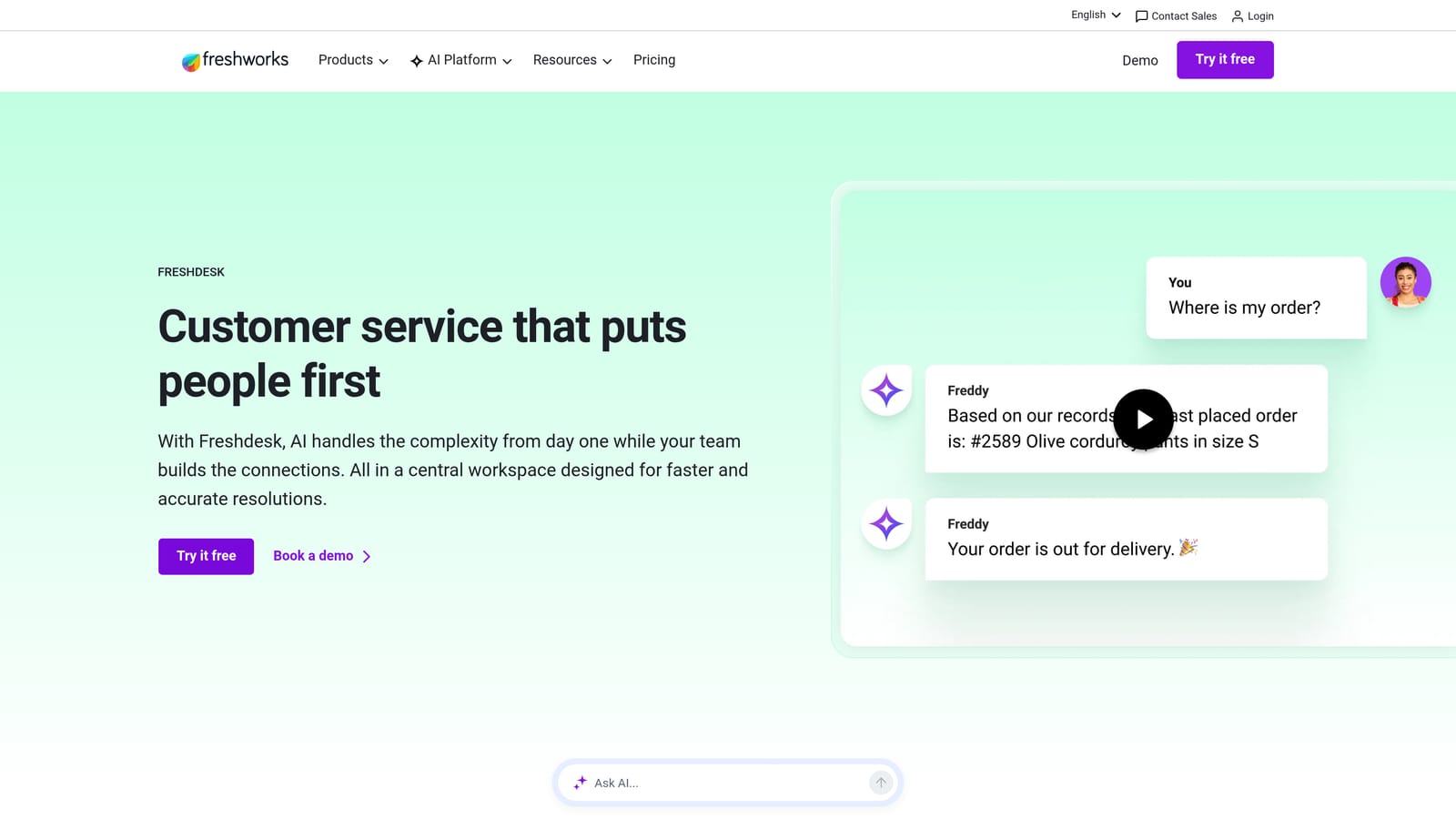
Freshdesk is a helpdesk platform with Freddy AI providing ticket summarization, suggested replies, and chatbot flows at pricing accessible to smaller teams.
Where This Tool Shines
Freshdesk's biggest advantage is its pricing model. With a free tier and paid plans starting well below most enterprise alternatives, it's a practical entry point for teams that are just beginning to automate support. Freddy AI handles the basics well: summarizing long ticket threads, suggesting replies, and running self-service bot flows that deflect common questions.
The platform covers omnichannel ticketing across email, chat, phone, and social, which gives growing teams room to expand their support channels without switching tools. Automation depth is more limited compared to AI-first platforms, but for teams moving off a shared Gmail inbox, it's a meaningful upgrade.
Key Features
Freddy AI Summarization and Suggested Replies: Reduces agent reading time and speeds up response drafting.
Freddy Self Service Bot: Handles deflection for common queries before they reach a human agent.
Omnichannel Ticketing: Unified inbox across email, chat, phone, and social media channels.
Automation Rules: Configurable routing and escalation rules based on ticket properties.
Free Tier: Available for small teams, making it accessible without upfront commitment.
Best For
SMBs and growing teams that need structured support tooling with AI assistance at a competitive price point. Not the right fit for teams that need deep autonomous resolution or complex multi-system integrations.
Pricing
Free plan available; paid plans start at approximately $15/agent/month. Check freshdesk.com for current plan details.
5. Tidio
Best for: E-commerce and small business teams that want fast AI chatbot deployment
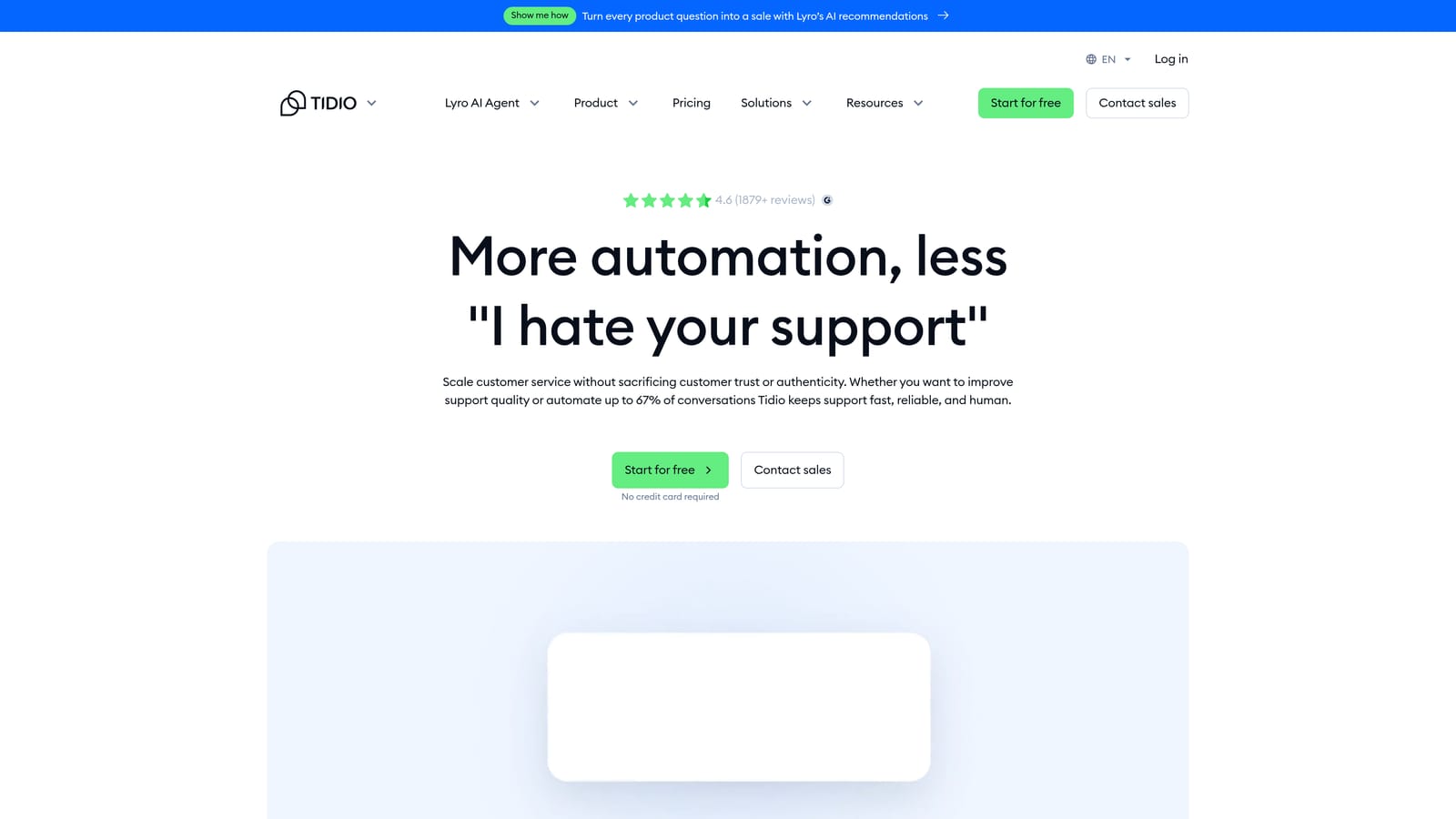
Tidio is a live chat and AI chatbot platform popular with e-commerce businesses, featuring the Lyro AI agent for automated query resolution.
Where This Tool Shines
Tidio's visual flow builder makes it one of the easiest platforms to set up without technical resources. Lyro, its AI chatbot, is trained on your knowledge base content and can handle a solid range of common questions autonomously. For Shopify and WooCommerce merchants, the native integrations are a genuine time-saver.
The platform is designed for speed of deployment, and it shows. Teams can go from signup to a live chatbot in hours rather than days. The tradeoff is depth: Tidio is well-suited to straightforward e-commerce support scenarios but less equipped for complex B2B SaaS environments with multi-system integration needs.
Key Features
Lyro AI Chatbot: Trained on your knowledge base to resolve common queries without human intervention.
Visual Flow Builder: No-code automation builder for creating conversation flows and routing logic.
Shopify and WooCommerce Integrations: Native e-commerce platform connections for order and product context.
Live Chat with Agent Handoff: Smooth transition from bot to human agent when needed.
Email and Messenger Support: Extends automation beyond chat to additional channels.
Best For
Small e-commerce businesses and DTC brands that want quick chatbot deployment with minimal technical setup. Less suited to B2B SaaS teams with complex product environments or multi-system integration requirements.
Pricing
Free plan available; Lyro AI from approximately $29/month. Verify current pricing at tidio.com.
6. Gorgias
Best for: E-commerce brands with high order-related support volume, particularly on Shopify
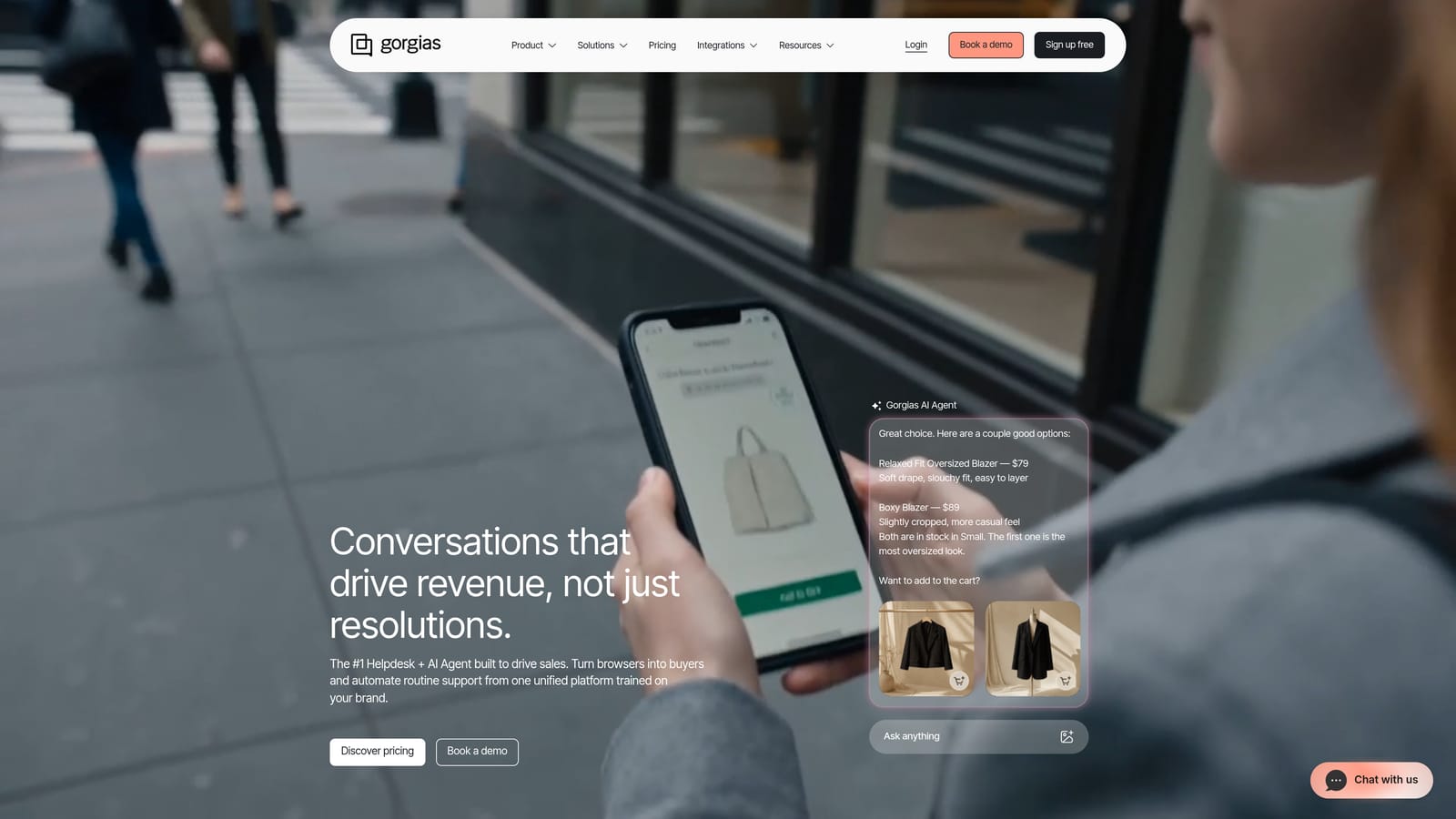
Gorgias is a support automation platform purpose-built for e-commerce brands, with deep Shopify integration enabling order-aware automated responses.
Where This Tool Shines
Gorgias does something most support tools can't: it pulls live order data directly into automated responses. When a customer asks "Where is my order?", Gorgias can respond with their actual order status, shipping carrier, and estimated delivery — without a human agent touching the ticket. For high-volume DTC brands, this capability alone can deflect a significant portion of incoming tickets.
The macro and rule-based automation system is flexible enough to handle a wide range of e-commerce scenarios, and the platform ties revenue statistics to support interactions, giving teams visibility into how support activity correlates with sales outcomes.
Key Features
Live Order Data in Automated Responses: Pulls real-time order information from Shopify to resolve WISMO queries automatically.
E-Commerce Platform Integrations: Native connections to Shopify, BigCommerce, and WooCommerce.
Macro and Rule-Based Automation: Configurable automation for routing, tagging, and responding based on ticket content.
Revenue Statistics: Links support interactions to revenue data for business impact visibility.
Omnichannel Inbox: Unified inbox across email, chat, social media, and SMS.
Best For
DTC and e-commerce brands with high WISMO ticket volume and Shopify as their primary commerce platform. Not designed for B2B SaaS use cases or teams that need product-aware support automation.
Pricing
Starts at approximately $10/month for small volumes, scaling with ticket count. Check gorgias.com for current plan details.
7. Drift (Salesloft)
Best for: B2B companies where support conversations frequently surface sales opportunities
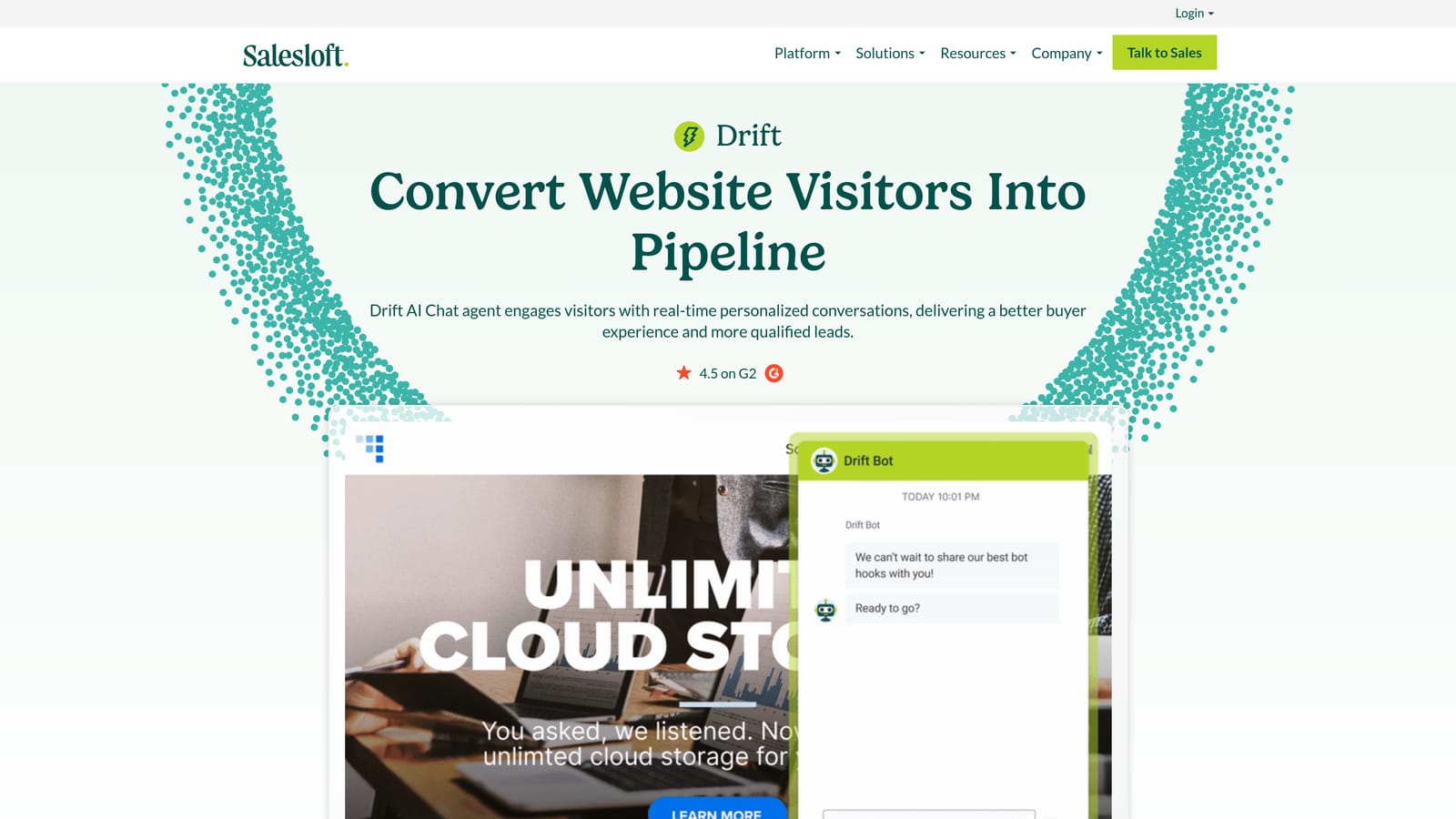
Drift is a conversational AI platform that bridges customer support and sales qualification, routing high-intent conversations to revenue teams.
Where This Tool Shines
After its acquisition by Salesloft, Drift has leaned further into the revenue side of conversational AI. The platform is genuinely useful for B2B companies where the line between support and sales is blurry — a prospect asking a product question might be one good conversation away from a demo request, and Drift is built to recognize and act on that signal.
The intent detection and meeting scheduling automation are standout features for teams that want to convert support conversations into pipeline. If pure support automation depth is the priority, though, other tools on this list go further.
Key Features
AI-Powered Chatbot: Handles both support queries and lead qualification within a single conversation flow.
Intent Detection: Identifies high-intent signals and routes conversations to sales teams automatically.
Meeting Scheduling Automation: Books demos and sales calls directly from chat conversations.
CRM Integrations: Native connections to Salesforce and HubSpot for seamless revenue team handoff.
Playbook Builder: Configurable conversation flows for different visitor segments and intent signals.
Best For
B2B companies that want a single platform for support and sales qualification, particularly those where support conversations frequently surface revenue opportunities. Less suited to teams focused primarily on high-volume autonomous ticket resolution.
Pricing
Enterprise pricing — contact Drift or Salesloft directly for current rates at drift.com.
8. Help Scout
Best for: Teams that want to preserve a personal support culture while gaining efficiency through AI
Help Scout is a shared inbox and knowledge base platform with AI features designed to augment human agents rather than replace them.
Where This Tool Shines
Help Scout has always prioritized the human side of customer support, and its AI additions follow that philosophy. AI Summarize, AI Assist, and AI Drafts are all designed to make agents faster and more consistent — not to remove them from the equation. The result is a platform that feels genuinely collaborative rather than a system trying to automate agents out of a job.
The Docs knowledge base with AI-powered search is well-executed, and the shared inbox with collision detection keeps teams from accidentally sending duplicate replies. For teams where support quality and tone matter as much as speed, Help Scout is a thoughtful choice.
Key Features
AI Summarize: Condenses long ticket threads so agents can get up to speed quickly.
AI Assist and AI Drafts: Helps agents write better, faster replies without fully automating the response.
Docs Knowledge Base: Structured knowledge base with AI-powered search for self-service deflection.
Shared Inbox with Collision Detection: Prevents duplicate replies when multiple agents are working the same queue.
CSAT Reporting: Built-in customer satisfaction tracking tied to individual conversations.
Best For
Teams that value a personal, human-feeling support experience and want AI to make their agents more effective rather than replace them. Not the right choice if high-volume autonomous resolution is the primary goal.
Pricing
Starts at approximately $20/user/month. Confirm current pricing at helpscout.com.
9. Kustomer
Best for: High-volume enterprise operations in retail, fintech, or logistics needing CRM-native support
Kustomer is a CRM-native customer support platform with AI workflows built around a full customer timeline, suited to high-volume enterprise operations.
Where This Tool Shines
Kustomer's core differentiator is its data model. Rather than organizing support around individual tickets, it builds a complete customer timeline — every interaction, order, and touchpoint in one view. That context makes AI workflows significantly more accurate, because the system has rich history to draw on when routing or resolving queries.
For enterprise teams handling high volumes across multiple channels, the combination of omnichannel support, AI routing, and deep CRM integration is compelling. The platform's complexity and enterprise pricing structure mean it's not a fit for smaller teams, but for the right organization it's a powerful foundation.
Key Features
Full Customer Timeline: Unified view of every customer interaction, order, and event as the core data model.
AI-Powered Routing and Deflection: Routes tickets and deflects common queries using customer context and history.
Workflow Automation with Business Logic: Configurable automation that can incorporate complex business rules.
Omnichannel Support: Unified inbox across email, chat, voice, and social media.
Deep CRM Integrations and Custom Objects: Extensible data model for connecting Kustomer to existing enterprise systems.
Best For
Enterprise teams in retail, fintech, or logistics with high support volumes and a need for CRM-native context in every interaction. Enterprise pricing and implementation complexity make it less accessible for smaller or earlier-stage teams.
Pricing
Enterprise pricing — contact Kustomer directly for current rates at kustomer.com.
Which Tool Is Right for Your Team?
The right customer support automation solution depends on where you are, what you're building, and how deeply you want AI embedded in your support operations.
If you're a B2B SaaS team that needs genuine autonomous resolution with product context, business intelligence, and a learning system that improves over time, Halo AI is the strongest option on this list. The page-aware widget and auto bug ticket creation are capabilities you won't find bundled together anywhere else.
If you're an enterprise team with years of Zendesk infrastructure and complex compliance requirements, staying in that ecosystem and layering on AI features makes practical sense. If you're an e-commerce brand drowning in WISMO tickets, Gorgias is purpose-built for exactly that problem. And if you want to preserve a personal support culture while giving your agents better tools, Help Scout is thoughtfully designed for that philosophy.
Quick recommendations by team profile:
B2B SaaS, product-led growth: Halo AI — AI-first architecture, page-aware context, business intelligence built in.
Teams already on Intercom: Intercom with Fin — smooth addition to an existing workflow without a platform switch.
Enterprise with complex compliance needs: Zendesk — mature infrastructure, strong SLA tooling, extensive marketplace.
SMBs on a budget: Freshdesk — accessible pricing, solid AI assist features, room to grow.
E-commerce and DTC brands: Gorgias or Tidio — purpose-built for order-aware automation and fast deployment.
B2B teams blending support and sales: Drift — intent detection and meeting scheduling in a single conversation flow.
Your support team shouldn't scale linearly with your customer base. Let AI agents handle routine tickets, guide users through your product, and surface business intelligence while your team focuses on complex issues that need a human touch. See Halo in action and discover how continuous learning transforms every interaction into smarter, faster support.