9 Best Customer Support Automation Tools Compared for 2026
This customer support automation tools comparison evaluates nine platforms that go beyond basic chatbots to actually resolve support tickets, not just deflect them. We assessed solutions based on AI capabilities, integration depth, deployment ease, and transparent pricing to help you find automation that handles repetitive questions while freeing your team for complex issues.
 Grant CooperFounder11 min read
Support tickets are piling up faster than your team can respond. Your agents are drowning in repetitive questions while complex issues wait in the queue. You need automation that actually resolves problems—not just deflects them to help docs your customers won't read.
The challenge? Most support automation tools are glorified chatbots bolted onto legacy helpdesks. They redirect rather than resolve. They can't see what your users see. They don't get smarter over time.
We evaluated customer support automation platforms based on four criteria: AI capabilities that go beyond canned responses, integration depth with your business stack, ease of deployment without months of training, and transparent pricing without hidden per-resolution fees. Here are the top tools that actually deliver intelligent automation in 2026.
1. Halo AI
Best for: B2B SaaS teams needing page-aware AI agents that resolve tickets and learn continuously
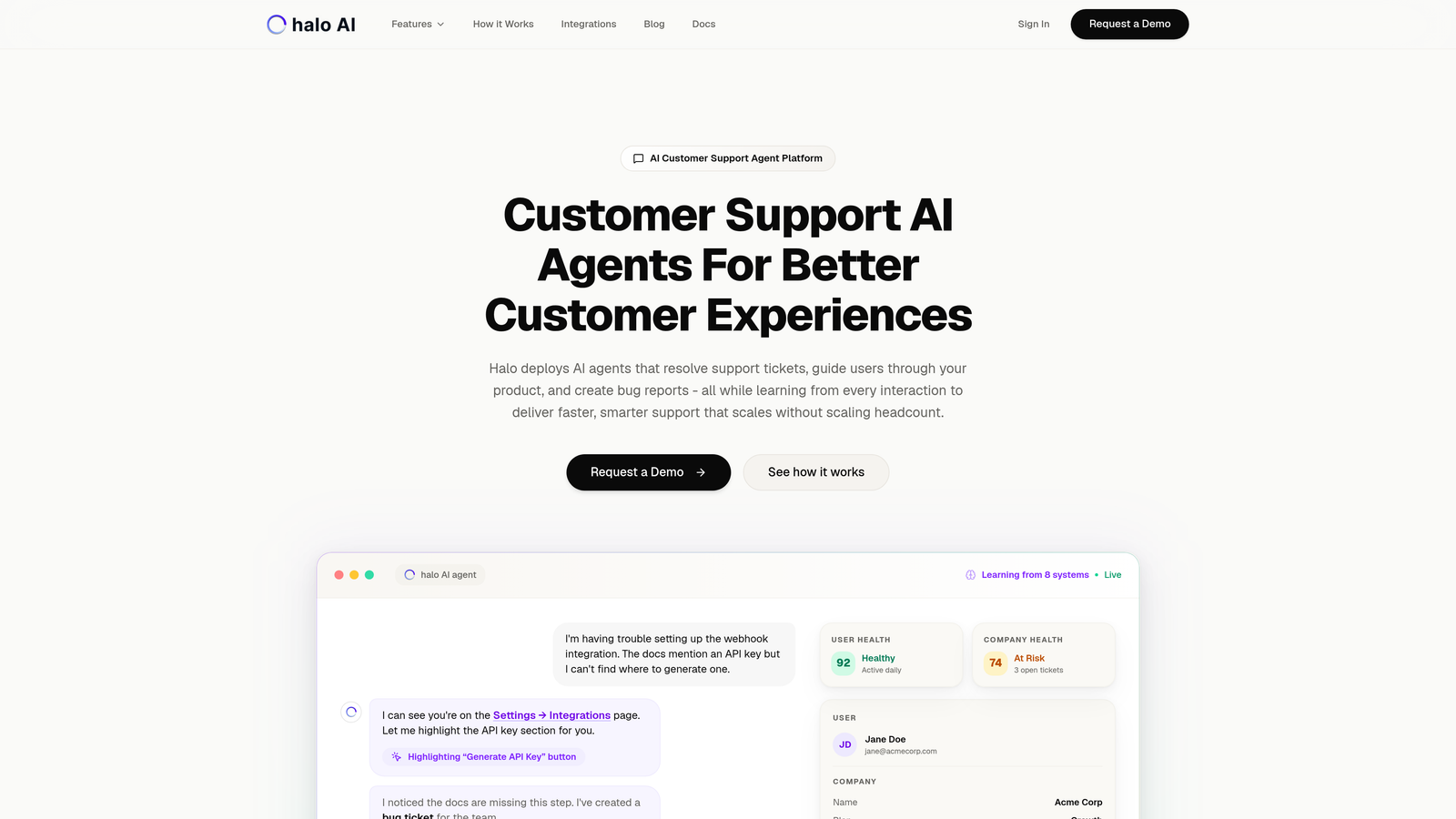
Halo AI represents a fundamental shift from traditional helpdesks with AI features to AI-first support architecture.
Where This Tool Shines
Unlike tools that bolt AI onto existing helpdesk platforms, Halo was built from the ground up as an intelligent agent system. The platform's page-aware chat widget sees exactly what users see on screen—it understands UI context, not just text queries.
Every interaction trains the system. When an agent resolves a ticket, Halo learns that pattern. When a bug gets created in Linear, Halo connects that issue to similar support conversations. This continuous learning means your support gets smarter every day without manual training.
Key Features
Page-Aware Visual Guidance: The chat widget understands screen context and can guide users through your product interface with specific UI instructions.
Continuous Learning Architecture: Every resolved ticket, bug report, and customer interaction feeds the AI's knowledge base automatically.
Auto Bug Ticket Creation: When issues surface in support, Halo automatically creates detailed bug reports in Linear with conversation context.
Business Intelligence Dashboard: Goes beyond support metrics to surface customer health signals, revenue intelligence, and anomaly detection across your entire stack.
Deep Integration Network: Connects to Linear, Slack, HubSpot, Intercom, Stripe, Zoom, PandaDoc, and Fathom—treating your business systems as a unified intelligence layer.
Best For
B2B SaaS companies and product teams that need support automation capable of understanding product context. Particularly valuable for teams using helpdesks like Zendesk, Freshdesk, or Intercom who want AI that actually resolves issues rather than just deflecting to documentation.
Pricing
Contact for pricing. Halo's model focuses on value delivered rather than per-seat or per-resolution fees that penalize success.
2. Intercom Fin
Best for: Teams already using Intercom who want GPT-powered resolution without platform switching
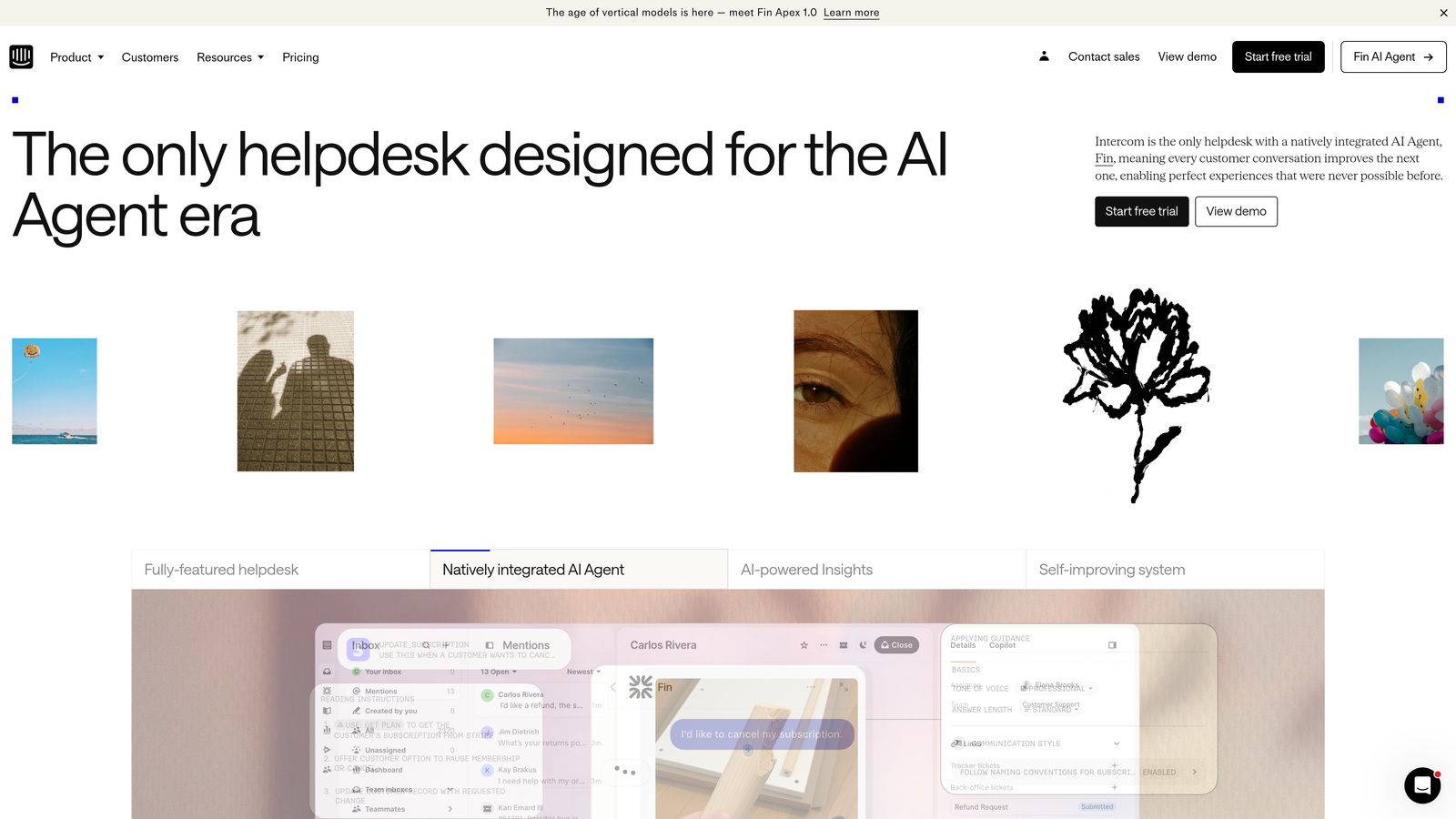
Intercom Fin brings GPT capabilities directly into Intercom's conversation platform for autonomous customer query resolution.
Where This Tool Shines
Fin leverages the conversational foundation Intercom built over years. If you're already managing customer conversations in Intercom, Fin integrates seamlessly without requiring platform migration or workflow disruption.
The system learns from your help center content and past conversation patterns. When Fin can't resolve something confidently, handoff to human agents happens smoothly within the same interface your team already uses daily.
Key Features
GPT-Powered Responses: Uses large language models to understand complex queries and generate natural, contextual answers.
Help Center Learning: Automatically trains on your knowledge base articles and documentation to provide accurate answers.
Seamless Human Handoff: Transitions conversations to agents when complexity exceeds AI capabilities, with full context preserved.
Custom Answer Controls: Lets you define answer boundaries and approval workflows for sensitive topics.
Usage-Based Pricing: Pay per resolution rather than per seat, aligning costs with value delivered.
Best For
Companies already invested in Intercom's ecosystem who want to add AI resolution capabilities. Works particularly well for teams with comprehensive help centers that can serve as training data.
Pricing
Starting at $0.99 per resolution. Pricing scales with usage, which can become expensive at high volumes but keeps initial investment low.
3. Zendesk AI
Best for: Enterprise teams needing AI capabilities within an established, compliance-ready helpdesk infrastructure
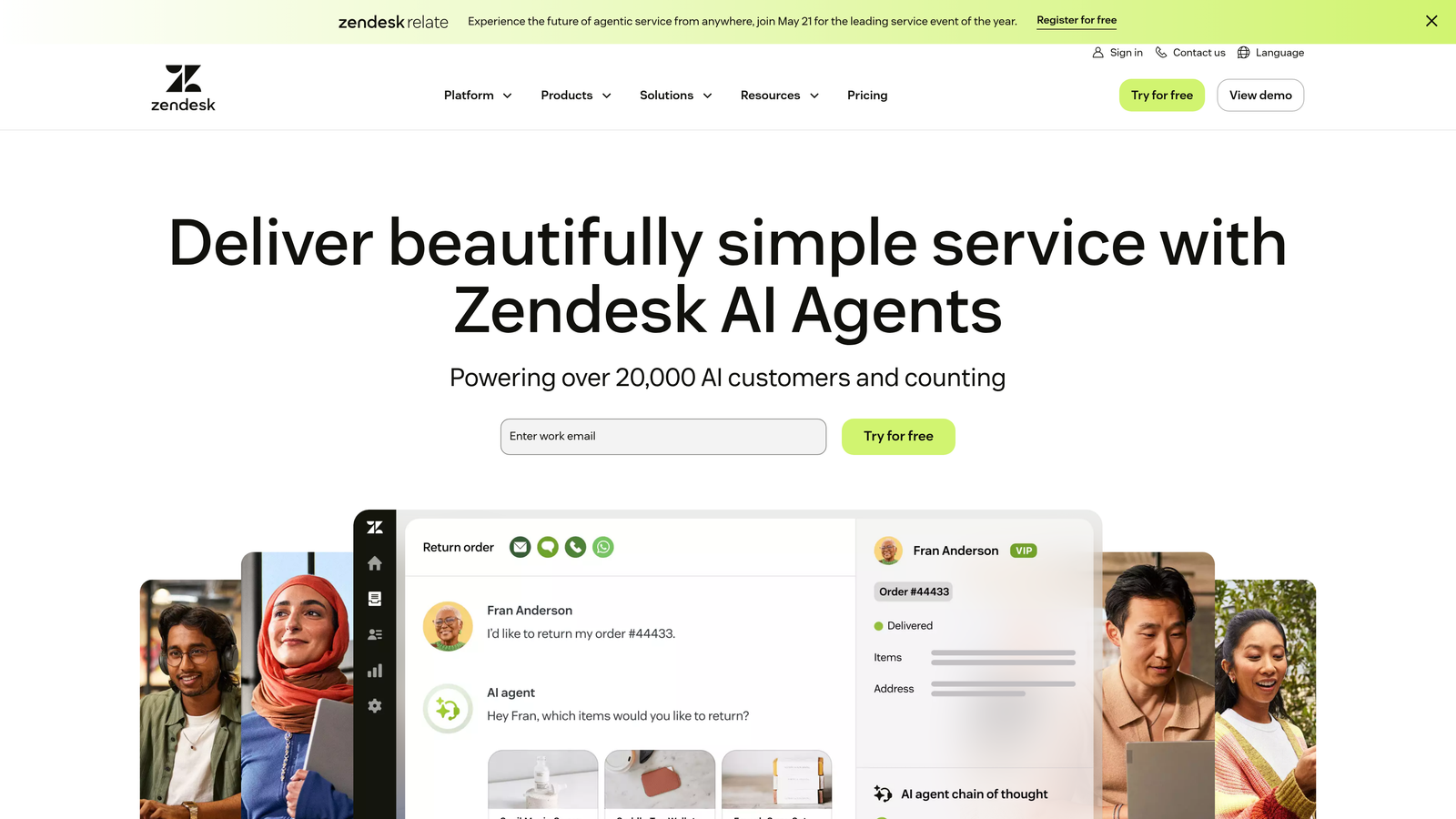
Zendesk AI layers intelligent automation onto the platform thousands of enterprise support teams already use.
Where This Tool Shines
Zendesk's AI capabilities benefit from years of support conversation data and enterprise-grade infrastructure. If your organization requires strict compliance certifications, detailed audit trails, and proven uptime guarantees, Zendesk delivers that foundation.
The platform excels at agent productivity features. Intent detection routes tickets before agents even see them. Suggested responses speed up reply times. Sentiment analysis flags frustrated customers automatically.
Key Features
Intent Detection and Routing: Analyzes incoming tickets to automatically categorize and route to appropriate teams or agents.
Agent Assist: Surfaces suggested responses based on similar past tickets, accelerating agent productivity.
Sentiment Analysis: Identifies customer emotion in conversations to prioritize urgent or frustrated interactions.
Advanced Analytics: Provides detailed reporting on AI performance, resolution rates, and agent efficiency metrics.
Workforce Management Integration: Connects AI insights to scheduling and capacity planning tools.
Best For
Large enterprises with existing Zendesk deployments who need to add AI without platform migration. Ideal for organizations where compliance and security certifications are non-negotiable.
Pricing
AI add-on starts at $50 per agent per month, on top of base Zendesk subscription costs. Enterprise pricing varies based on features and volume.
4. Freshdesk Freddy AI
Best for: Growing teams wanting affordable AI automation without enterprise complexity or pricing
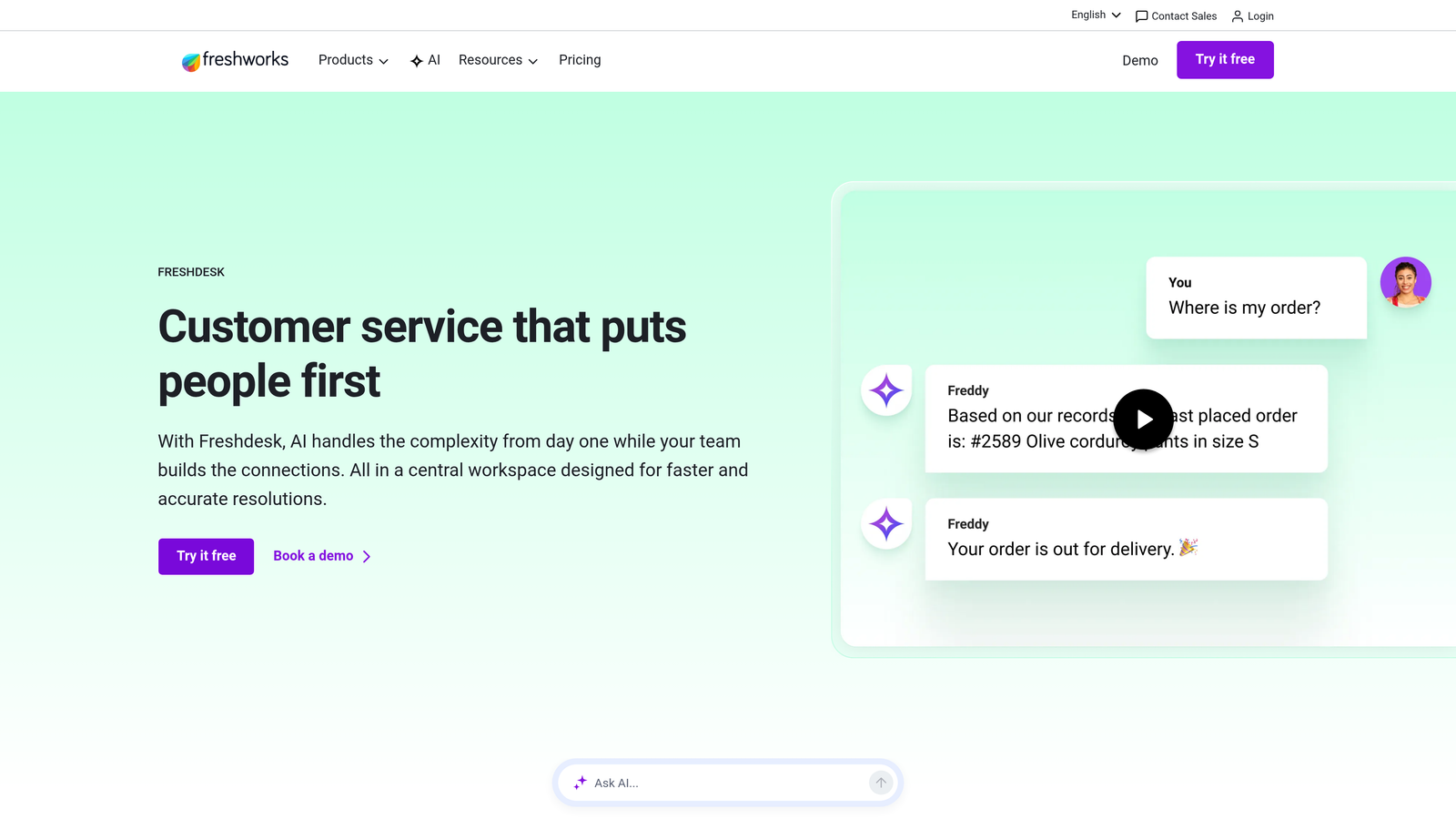
Freshdesk Freddy AI integrates intelligent automation into Freshworks' support platform at accessible price points.
Where This Tool Shines
Freddy AI makes automation approachable for teams that find enterprise platforms overwhelming. The interface focuses on practical productivity gains rather than complex configuration.
Auto-triage handles the tedious work of categorizing and tagging tickets. Suggested responses help agents reply faster without sacrificing personalization. The free tier lets small teams experiment with automation before committing budget.
Key Features
Auto-Triage and Categorization: Automatically tags and categorizes incoming tickets based on content analysis.
Suggested Responses: Recommends reply templates to agents based on ticket content and past resolutions.
Knowledge Base Recommendations: Surfaces relevant help articles to both agents and customers during conversations.
Canned Response Automation: Triggers pre-written responses for common queries without agent intervention.
Affordable Entry Pricing: Includes AI features in lower-tier plans, making automation accessible to smaller teams.
Best For
Small to mid-sized teams that need practical automation without enterprise overhead. Companies wanting to test AI capabilities before significant investment.
Pricing
Free tier available with basic features. Pro plan at $49 per agent per month includes full AI capabilities.
5. Ada
Best for: Global enterprises needing high-volume, multilingual support automation with voice capabilities
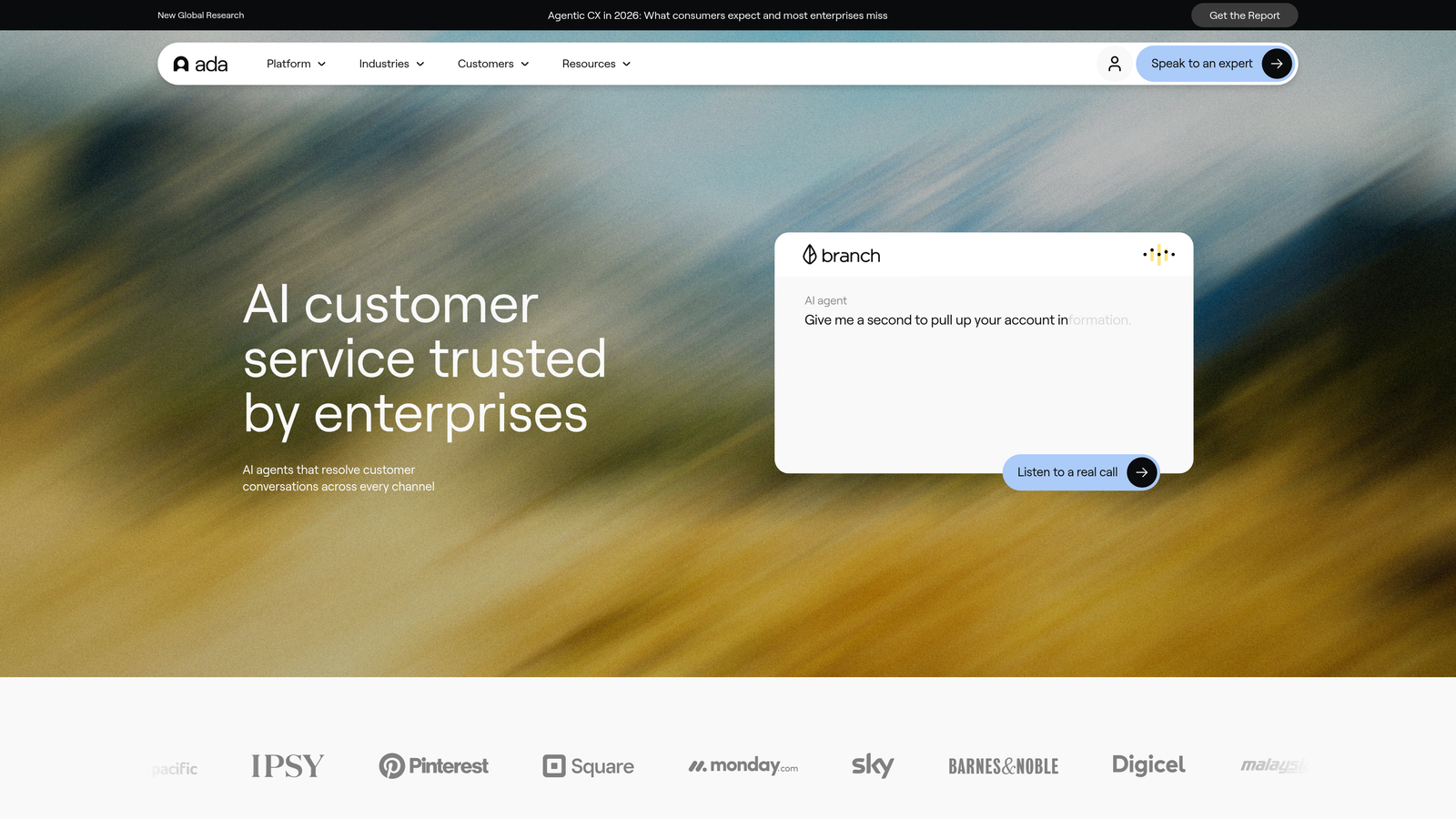
Ada focuses on customer service automation for large-scale, international operations requiring multilingual support.
Where This Tool Shines
Ada's no-code automation builder lets non-technical teams create sophisticated conversation flows. The platform handles over 50 languages natively, making it viable for truly global operations.
Voice AI capabilities extend automation beyond chat. Proactive messaging lets you reach customers before they contact support. Enterprise security compliance makes Ada suitable for regulated industries handling sensitive customer data.
Key Features
No-Code Automation Builder: Visual interface for creating conversation flows without developer resources.
50+ Language Support: Native multilingual capabilities for global customer bases.
Proactive Messaging: Initiates conversations based on customer behavior or triggers rather than waiting for inbound queries.
Voice AI Capabilities: Extends automation to phone support channels with natural language understanding.
Enterprise Security Compliance: Meets requirements for healthcare, finance, and other regulated industries.
Best For
Large enterprises with international customer bases requiring multilingual support. Organizations in regulated industries needing strict security compliance.
Pricing
Custom enterprise pricing based on conversation volume and features. Ada typically targets mid-market to enterprise accounts.
6. Tidio
Best for: Small businesses wanting quick-deploy chatbots with visual builders and e-commerce integrations
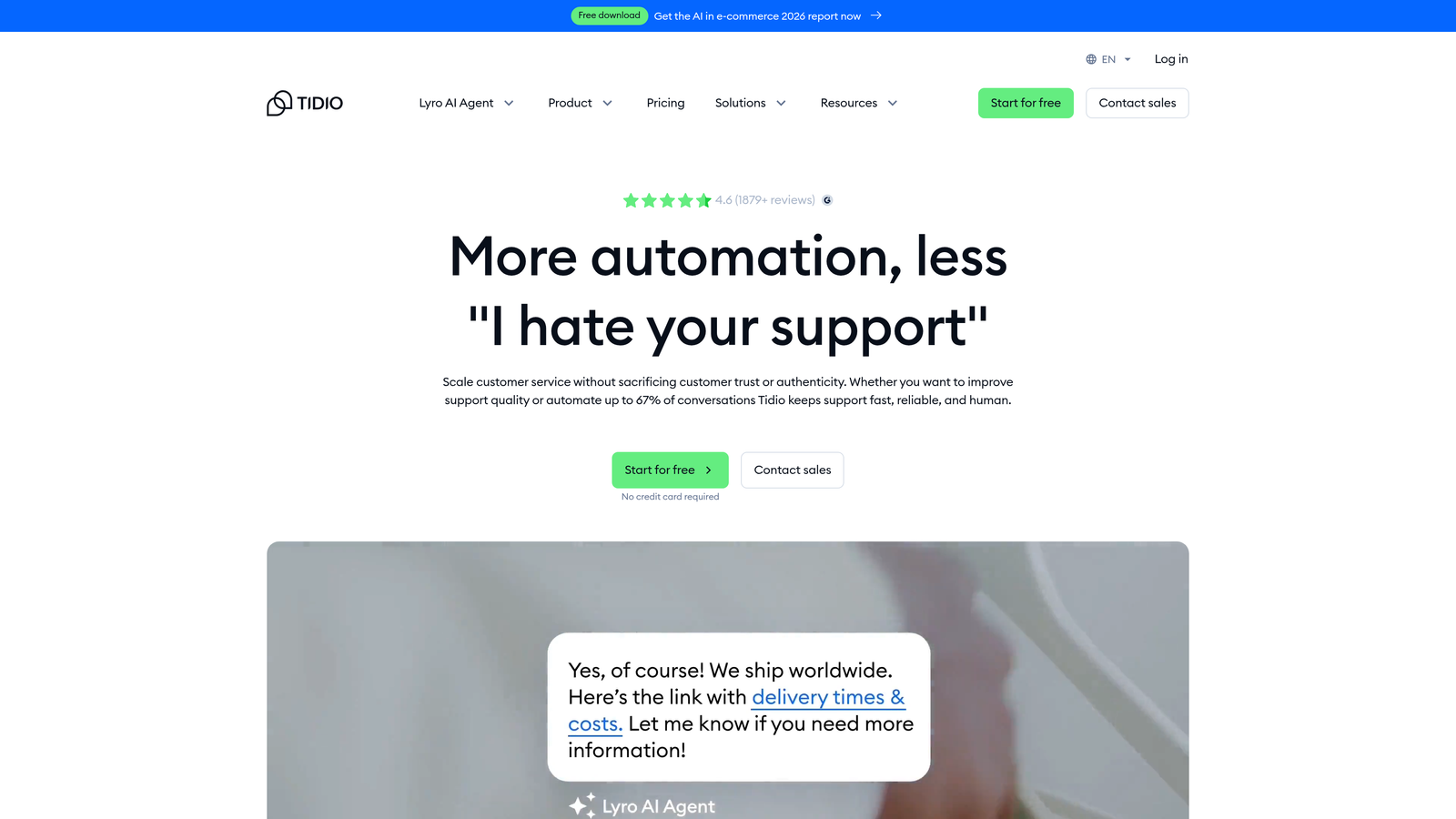
Tidio combines live chat, chatbots, and email marketing in an accessible platform designed for small business owners.
Where This Tool Shines
Tidio's drag-and-drop bot builder lets non-technical users create automation in minutes. Pre-built templates for common scenarios—order tracking, FAQ responses, lead qualification—mean you're not starting from scratch.
The platform integrates tightly with Shopify and WordPress through dedicated plugins. Visitor tracking shows who's browsing your site in real-time, letting you proactively start conversations with potential customers.
Key Features
Visual Drag-and-Drop Builder: Create chatbot flows without coding using an intuitive interface.
Pre-Built Chatbot Templates: Start with proven templates for common use cases like FAQ handling and lead capture.
Live Chat with Bot Handoff: Seamlessly transition from automated responses to human agents when needed.
Shopify and WordPress Plugins: Native integrations for popular e-commerce and content platforms.
Visitor Tracking: See who's on your site and their browsing behavior to inform proactive outreach.
Best For
Small e-commerce businesses and content sites wanting to add chat and basic automation quickly. Teams without technical resources who need visual configuration tools.
Pricing
Free tier includes basic live chat. Chatbots start at $29 per month, making it accessible for small business budgets.
7. Kustomer
Best for: Teams needing unified customer timelines across channels with CRM-powered context
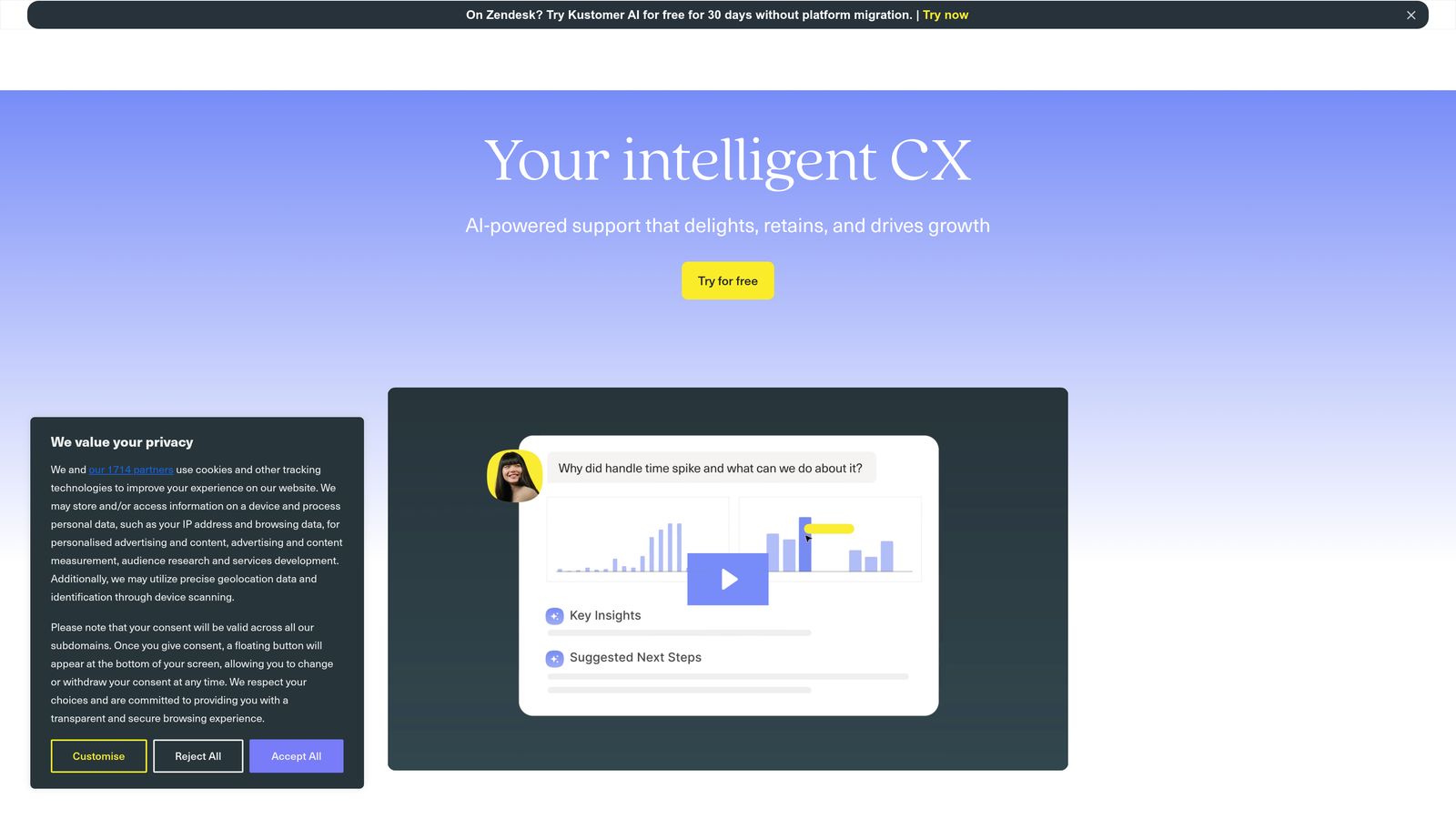
Kustomer approaches support as a CRM problem, organizing conversations around customer timelines rather than ticket queues.
Where This Tool Shines
Kustomer's unified timeline view shows every customer interaction—chat, email, social, phone—in chronological order. Agents see the complete customer story rather than isolated tickets.
AI-powered classification automatically tags and routes conversations based on content and customer data. Custom workflow automation connects support actions to CRM updates, creating a closed loop between customer service and sales operations.
Key Features
Unified Customer Timeline: Chronological view of all customer interactions across every channel in one interface.
Omnichannel Conversation Management: Handle chat, email, social media, SMS, and phone from a single platform.
AI-Powered Classification: Automatically categorize and route conversations based on content analysis and customer attributes.
Custom Workflow Automation: Build sophisticated automation that connects support actions to CRM operations.
Deep CRM Integration: Treats customer service as part of the broader customer relationship, not an isolated function.
Best For
Companies treating support as a strategic CRM function rather than a cost center. Teams that need complete customer context across channels before responding.
Pricing
Starting at $89 per user per month. Higher tiers unlock advanced automation and analytics capabilities.
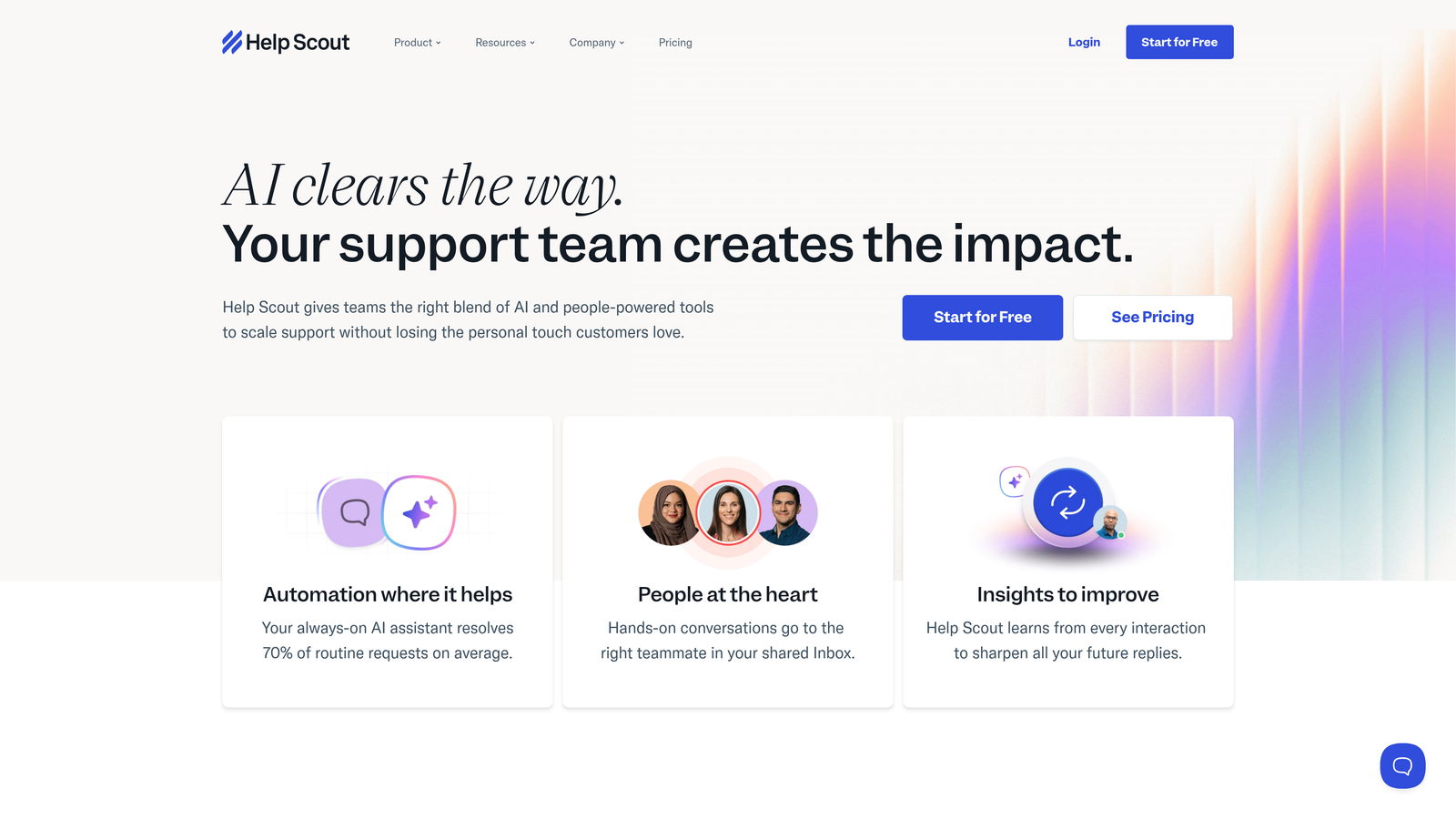
8. Help Scout
Best for: Teams prioritizing personal customer relationships with AI assist rather than full automation
Help Scout emphasizes human-centered support with AI features designed to assist agents rather than replace them.
Where This Tool Shines
Help Scout's AI drafts responses that agents review and personalize before sending. This human-in-the-loop approach maintains relationship quality while accelerating response times.
The Docs knowledge base and Beacon widget provide self-service options that feel integrated into your product rather than bolted on. Collision detection prevents multiple agents from responding to the same conversation—a small feature that prevents big embarrassments.
Key Features
AI Draft Responses: Generates suggested replies that agents review and customize before sending.
Docs Knowledge Base: Self-service documentation that integrates cleanly with your product and brand.
Beacon Widget: In-app support widget that surfaces relevant help articles before escalating to chat or email.
Collision Detection: Alerts agents when someone else is already responding to prevent duplicate replies.
Customer Satisfaction Ratings: Built-in CSAT surveys to measure support quality after every conversation.
Best For
Companies where personal customer relationships drive retention and growth. Teams that want AI to enhance agent productivity without removing the human element.
Pricing
Starting at $20 per user per month, making it accessible for small to mid-sized teams focused on quality over automation volume.
9. Gorgias
Best for: E-commerce brands needing deep Shopify integration with revenue-focused automation
Gorgias specializes in e-commerce support, treating customer service as a revenue channel rather than just a cost.
Where This Tool Shines
Gorgias integrates directly with Shopify and BigCommerce order systems. Agents see order details, shipping status, and purchase history without switching tabs. Macros can include order-specific variables—refund amounts, tracking numbers, product names—making responses feel personalized at scale.
Revenue statistics per ticket show which conversations drive sales. Self-service order tracking reduces "where is my order" volume automatically. Social media integration handles Instagram and Facebook messages alongside email and chat.
Key Features
Shopify/BigCommerce Order Management: Complete order visibility and actions directly within support conversations.
Macros with Order Variables: Automated responses that include customer-specific order details for personalization at scale.
Revenue Statistics: Track which support conversations lead to purchases and calculate support ROI.
Social Media Integration: Manage Instagram, Facebook, and other social channels alongside traditional support channels.
Self-Service Order Tracking: Automated responses to common order status queries reduce ticket volume.
Best For
E-commerce brands on Shopify or BigCommerce that view support as a sales and retention driver. Companies wanting to reduce order-related ticket volume through automation.
Pricing
Starting at $10 per month for 50 tickets. Pricing scales with ticket volume, making it accessible for small stores while accommodating growth.
Making the Right Choice
The best customer support automation tool depends on your specific context. Enterprise teams with existing Zendesk or Freshdesk deployments might find AI add-ons the path of least resistance. Small e-commerce brands should look at Gorgias or Tidio for quick wins with platform-specific integrations.
But here's what separates truly intelligent automation from glorified chatbots: Does it understand product context? Does it learn from every interaction? Does it actually resolve issues rather than deflecting to documentation?
For B2B SaaS teams, tools that see what users see—like Halo AI's page-aware agents—deliver fundamentally different value than conversation platforms retrofitted with GPT. Intercom Fin and Ada excel at conversation management, but they don't understand your product interface. Help Scout and Kustomer emphasize human relationships, which matters for high-touch support but limits autonomous resolution.
Budget considerations matter too. Usage-based pricing from Intercom Fin keeps initial costs low but can spike with volume. Per-seat models from Zendesk and Freshdesk scale linearly with team size. Gorgias and Tidio offer accessible entry points for smaller operations.
The critical question: Are you optimizing for deflection rate or resolution rate? Deflection—sending customers to help docs—looks good on dashboards but frustrates users who wanted actual answers. Resolution—solving the problem autonomously or with minimal agent effort—delivers the experience customers expect in 2026.
Your support team shouldn't scale linearly with your customer base. Let AI agents handle routine tickets, guide users through your product, and surface business intelligence while your team focuses on complex issues that need a human touch. See Halo in action and discover how continuous learning transforms every interaction into smarter, faster support.