9 Best Customer Support Automation Tools for Startups in 2026
Discover the 9 best customer support automation tools for startups in 2026, evaluated specifically for lean teams on startup-friendly criteria including pricing transparency, AI capability, and scalability. This guide helps you find the right solution whether you're handling 10 tickets a day or 10,000, without enterprise budgets or lengthy implementation timelines.
 Matt PattoliFounder14 min read
Startups face a unique support paradox: customers expect fast, high-quality responses, but lean teams can't staff a full support operation from day one. Customer support automation tools bridge that gap, handling repetitive tickets, guiding users through your product, and escalating only what truly needs a human.
But not every tool is built for startup realities. Some require enterprise budgets or months of implementation. Others bolt AI onto legacy helpdesk infrastructure that wasn't designed for it.
This list cuts through the noise. We evaluated nine tools specifically for startup-relevant criteria: speed to value, pricing transparency, AI capability, integration depth, and how well they scale from 10 tickets a day to 10,000. Whether you're a two-person team or a Series B company building out your support function, there's a right tool here for you. For a deeper look at the benefits before diving in, see our guide to customer support automation benefits.
1. Halo AI
Best for: Startups that want AI-native support with business intelligence baked in from day one.
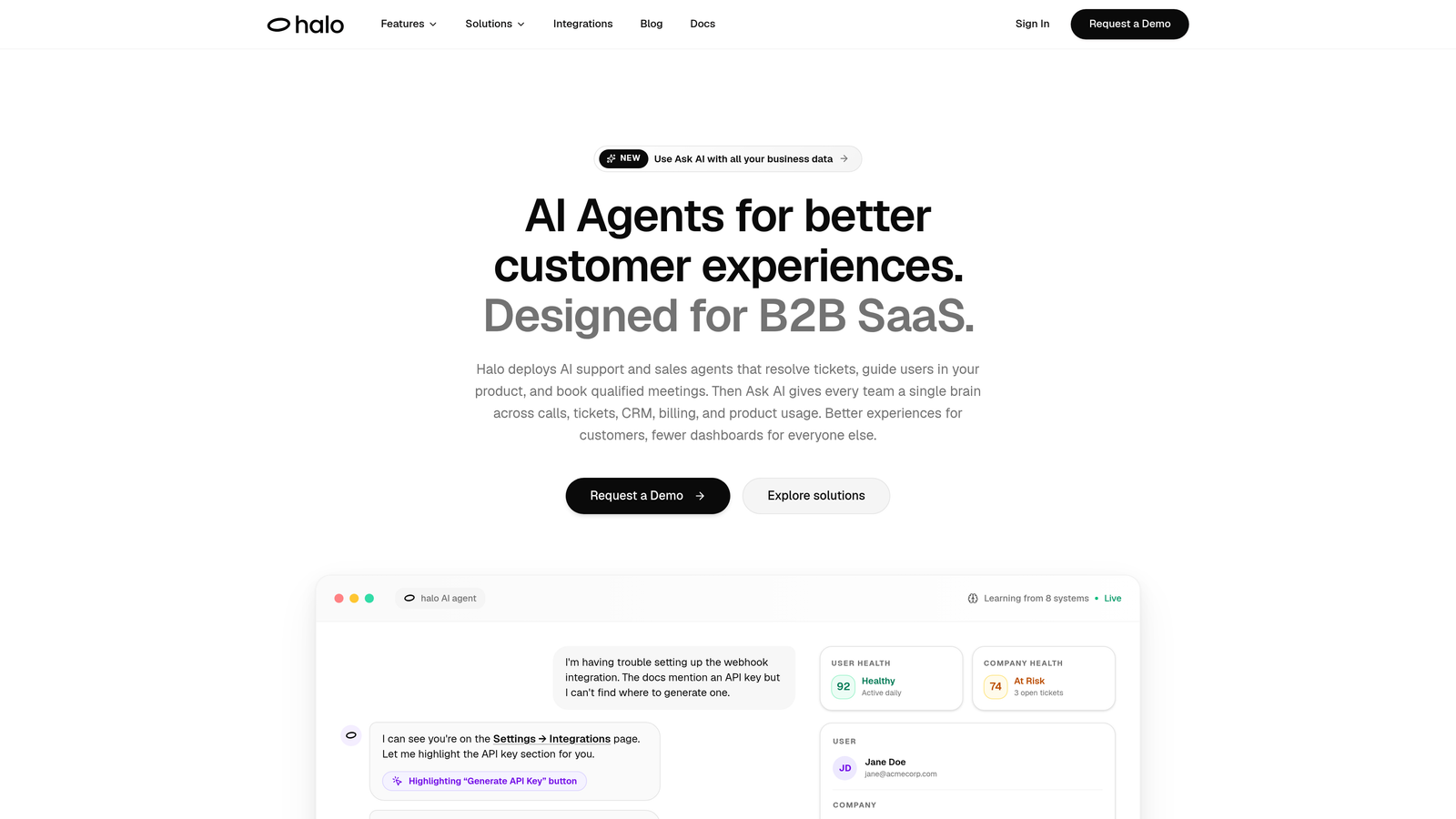
Halo AI is an AI-first customer support platform that deploys intelligent agents to resolve tickets, guide users visually through your product, and surface actionable business intelligence.
Where This Tool Shines
What separates Halo from most tools on this list is its architecture. Rather than layering AI onto an existing helpdesk, Halo was built AI-first, which means every feature is designed around intelligent automation rather than retrofitted onto it. The most distinctive capability is the page-aware chat widget: Halo's agents can see what page a user is on and deliver in-context visual UI guidance, not just generic text answers. That's the difference between telling someone to "click the settings icon" and actually showing them where it is.
The continuous learning engine is equally important for startups. Every resolved ticket makes the system smarter without requiring manual retraining. As your product evolves and your ticket volume grows, Halo adapts with you. The smart inbox goes further than standard analytics, surfacing customer health signals, revenue anomalies, and product usage insights that feed directly into product and growth decisions.
Key Features
Page-Aware Visual Guidance: AI agents detect the user's current page and provide in-context UI guidance, reducing back-and-forth on navigation and workflow questions.
Continuous Learning: The system improves from every support interaction automatically, without manual retraining or knowledge base updates after each product change.
Auto Bug Ticket Creation: When users report issues, Halo can automatically generate and route bug tickets to Linear or your existing engineering workflow.
Smart Inbox with Business Intelligence: Beyond standard analytics, the inbox surfaces customer health signals, revenue anomalies, and product usage patterns that matter to your whole team.
Live Agent Handoff: Complex issues escalate to human agents with full conversation context preserved, so nothing gets repeated.
Deep Cross-Stack Integrations: Connects with Linear, Slack, HubSpot, Intercom, Stripe, Zoom, PandaDoc, and Fathom, making support data useful across your entire business stack.
Best For
Startups that want support automation to do more than close tickets. Halo is particularly well-suited for SaaS teams where support data should inform product decisions, and for companies that want a single platform that scales from early-stage to growth without a platform migration.
Pricing
Visit haloagents.ai for current plans. Pricing is designed to be accessible for startups at various stages.
2. Intercom
Best for: Growth-stage startups that need a mature all-in-one communications platform with a capable AI agent.
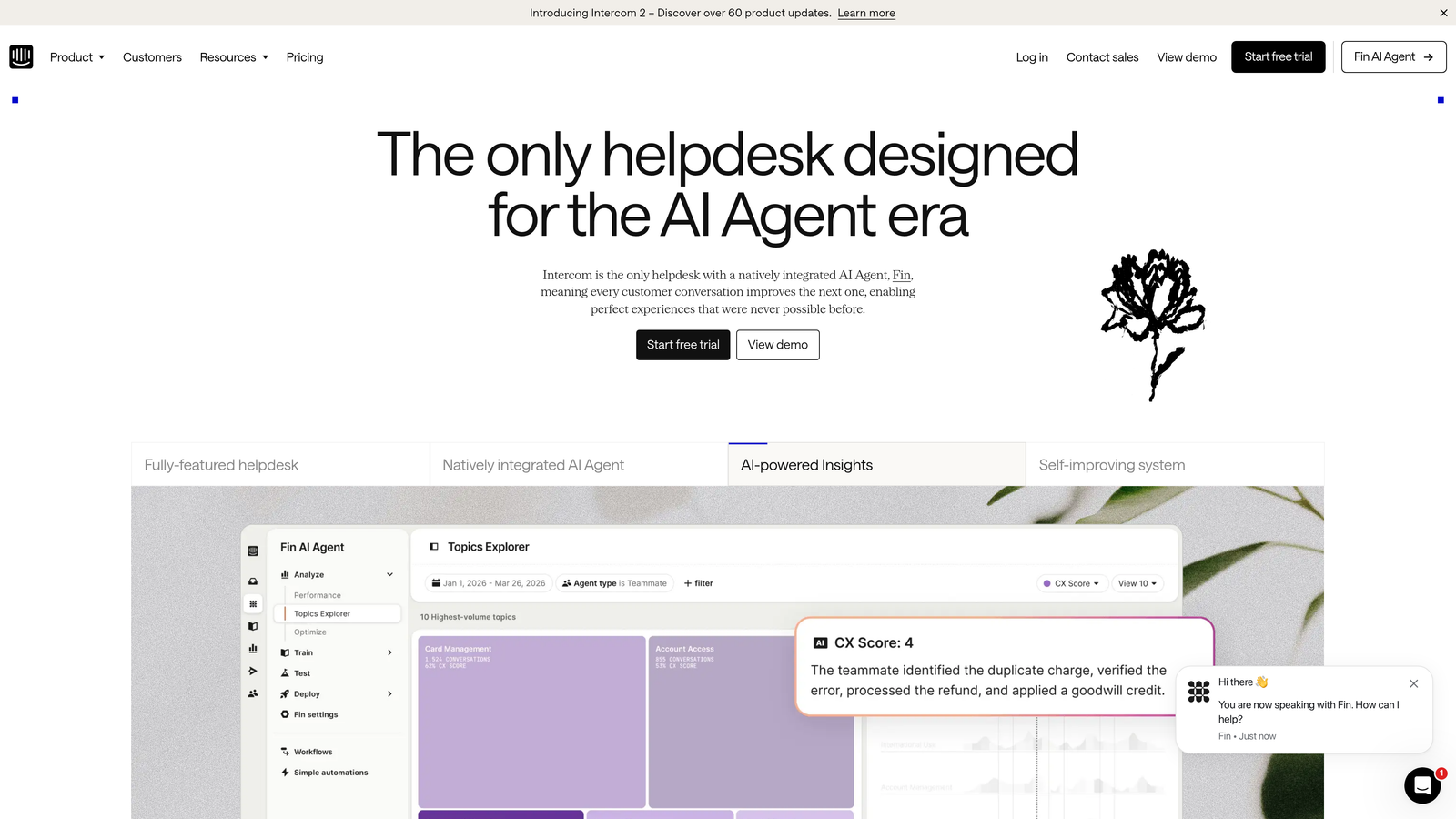
Intercom is a mature customer communications platform featuring Fin, its GPT-4-powered AI agent, alongside live chat, in-app messaging, and a shared inbox.
Where This Tool Shines
Intercom's Fin AI agent is one of the more capable autonomous resolution engines available, particularly effective when backed by a well-maintained knowledge base. It handles a meaningful share of inbound queries without human involvement, and the accuracy on knowledge-base-backed questions is genuinely strong. For startups that have invested in documentation, Fin can put that content to work immediately.
The broader Intercom platform is equally compelling. Proactive messaging, product tours, and in-app onboarding flows make it useful well beyond reactive support. If you want one platform handling acquisition, activation, and retention conversations, Intercom covers a lot of ground. The tradeoff is cost: pricing can scale steeply with seat count and per-resolution Fin pricing, which is worth modeling before committing.
Key Features
Fin AI Agent: GPT-4-powered autonomous agent that resolves tickets using your knowledge base with high accuracy on well-documented queries.
Unified Inbox: Combines email, live chat, and in-app messages into a single shared workspace for your support team.
Proactive Messaging and Product Tours: Enables in-app onboarding flows and targeted outreach beyond reactive support.
300+ App Integrations: A large integration ecosystem covering CRMs, analytics tools, and developer workflows.
Conversation Analytics and CSAT: Detailed reporting on resolution rates, response times, and customer satisfaction scores.
Best For
Growth-stage startups with budget to invest in a comprehensive communications platform. Particularly strong for product-led growth companies where support, onboarding, and engagement all need to work together.
Pricing
Starter plans begin around $39/seat/month; Fin AI resolutions are priced separately per resolution. Verify current pricing at intercom.com.
3. Freshdesk
Best for: Early-stage startups moving off shared inboxes who need omnichannel support without a large upfront investment.
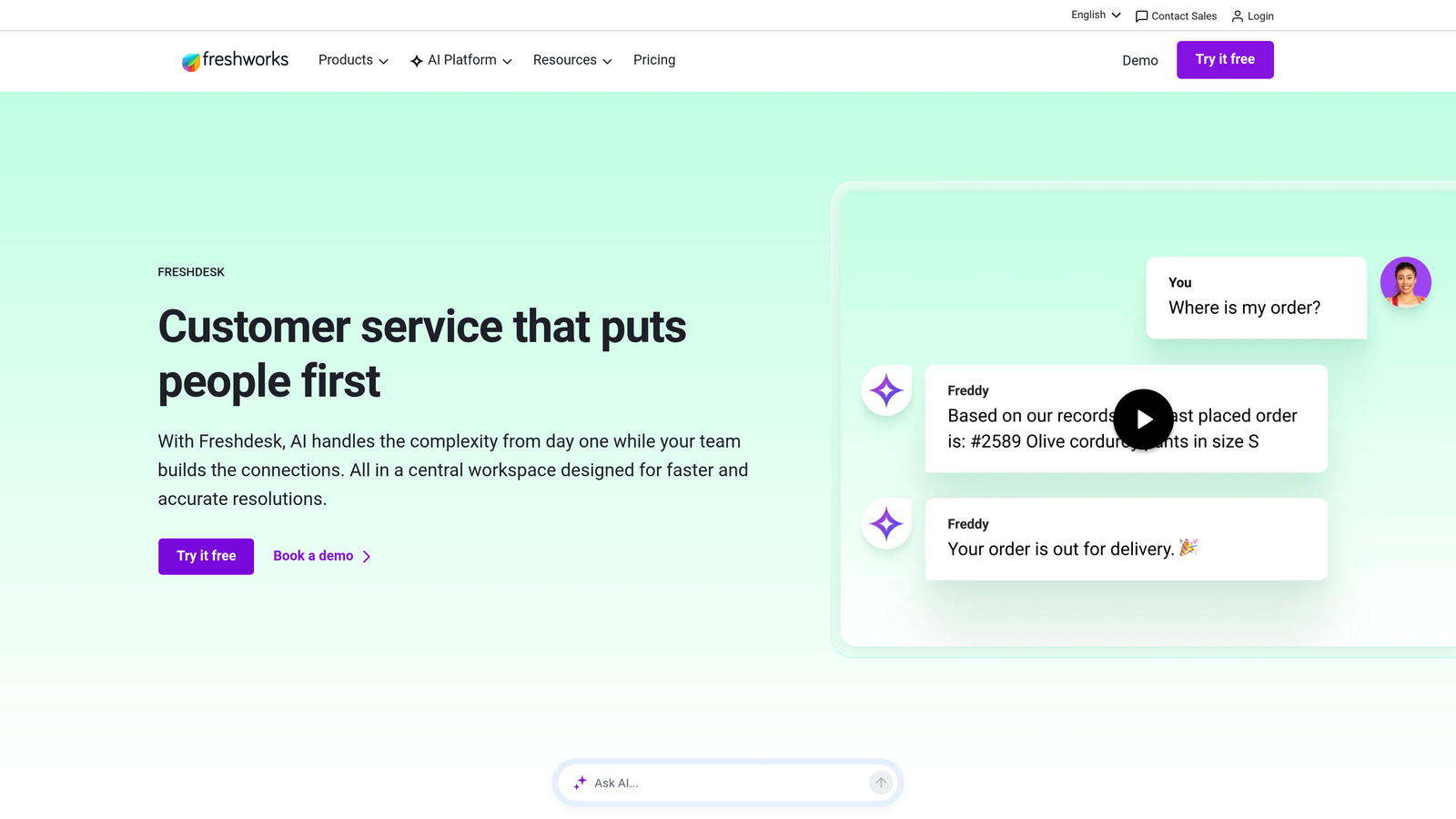
Freshdesk is a widely-used helpdesk platform with Freddy AI for ticket automation, response suggestions, and omnichannel support across email, chat, phone, and social.
Where This Tool Shines
Freshdesk's free tier is genuinely useful, not just a stripped-down trial. For very early-stage teams handling a modest ticket volume, it provides real helpdesk functionality without a monthly commitment. The Freddy AI layer handles ticket summarization, suggested replies, and auto-triage, which meaningfully reduces the manual work of routing and responding even at lower volumes.
The omnichannel coverage is a practical advantage for startups receiving support requests across multiple channels before they've standardized on one. Email, live chat, phone, and social can all feed into a single queue, which reduces the chaos of managing separate inboxes.
Key Features
Freddy AI: Handles ticket summarization, suggested replies, and automated triage to reduce manual workload for agents.
Omnichannel Support: Consolidates email, live chat, phone, and social media into one unified support queue.
Automation Rules: Configurable routing rules and SLA management without requiring developer resources.
Free Tier: A functional free plan available for small teams, not just a time-limited trial.
Agent Collision Detection: Prevents two agents from responding to the same ticket simultaneously.
Best For
Early-stage startups graduating from shared inboxes, and teams that need omnichannel coverage from the start. The free tier makes it a low-risk starting point.
Pricing
Free tier available; Growth plan starts around $15/agent/month. Verify current pricing at freshworks.com.
4. Zendesk
Best for: Startups with dedicated support operations resources planning to scale to enterprise-level ticket volumes.
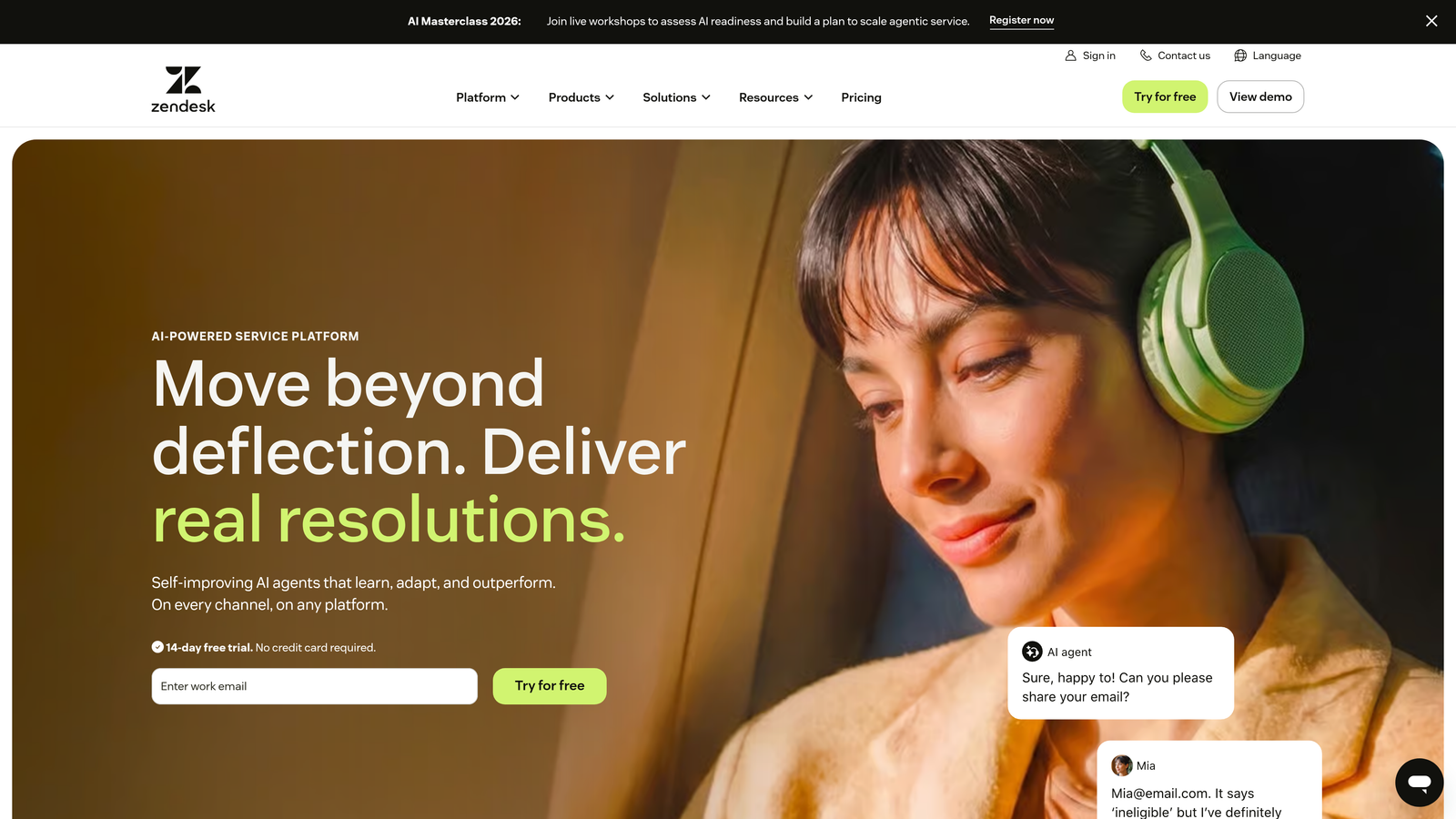
Zendesk is the industry-standard helpdesk with AI-powered triage, a massive app marketplace, and enterprise-grade reporting built for teams planning to scale significantly.
Where This Tool Shines
Zendesk's depth is unmatched in this category. The reporting infrastructure, SLA management, and workflow customization are built for organizations handling thousands of tickets a day, which makes it a strong long-term investment if you're confident in your growth trajectory. The 1,500+ app marketplace means you can connect virtually any tool in your stack.
The honest caveat for early-stage startups: Zendesk rewards investment. Getting the most from it typically requires a dedicated support ops person or engineering resources to configure workflows, build integrations, and maintain the system. If you have that capacity, it's excellent. If you're a two-person team looking for fast time-to-value, the configuration overhead can feel disproportionate.
Key Features
AI-Powered Triage: Automatic ticket routing, intent detection, and prioritization to reduce manual sorting.
1,500+ App Integrations: One of the largest integration marketplaces in the support category.
Advanced Reporting: Custom dashboards and deep analytics for teams that need granular performance visibility.
Robust SLA Management: Configurable SLA policies and escalation workflows for teams with formal support commitments.
AI Agents for Self-Service: Automated deflection for common queries before they reach a human agent.
Best For
Startups at Series A and beyond with a dedicated support function, or any team that expects to need enterprise-grade reporting and workflow customization as they scale.
Pricing
Suite Team starts around $55/agent/month. Verify current pricing at zendesk.com.
5. Tidio
Best for: Early-stage and e-commerce startups that need a fast, affordable chatbot with minimal configuration.
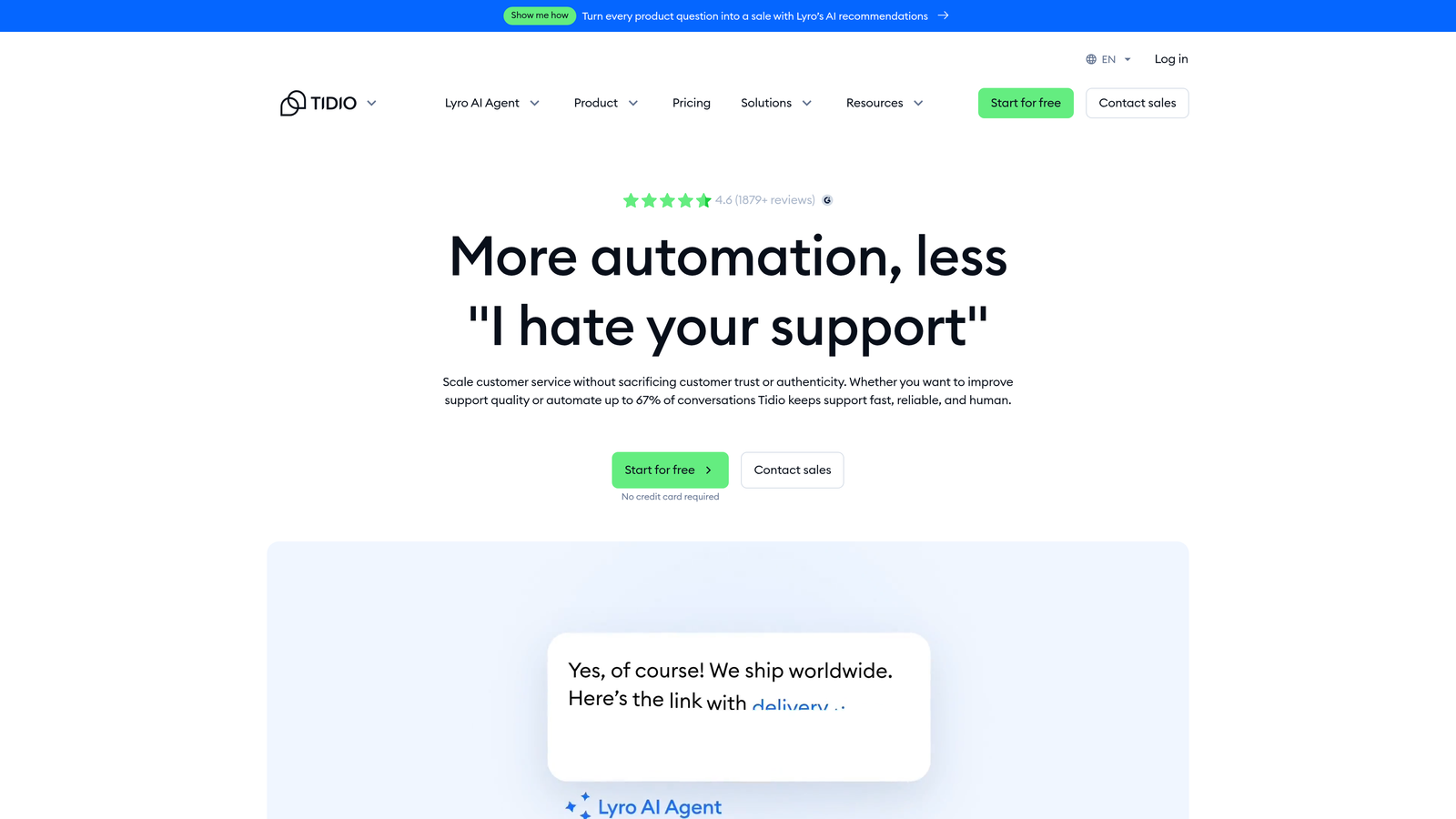
Tidio is an accessible live chat and AI chatbot platform featuring Lyro, a conversational AI that handles common customer queries autonomously with minimal setup.
Where This Tool Shines
Tidio's core strength is speed to value. The live chat widget can be live in under five minutes, and Lyro's conversational AI starts handling queries without requiring extensive knowledge base work upfront. For a startup that needs something running today, Tidio removes almost all friction from the setup process.
The visual chatbot flow builder lets non-technical team members create custom automation paths without writing code. This is particularly useful for startups where the founder or a generalist is managing support alongside other responsibilities. The generous free tier means you can validate whether chatbot automation is working for your use case before committing to a paid plan.
Key Features
Lyro AI Chatbot: Conversational AI that handles common queries autonomously with minimal configuration required.
Fast Setup: Live chat widget deployable in under five minutes, with no technical resources needed.
Visual Flow Builder: Drag-and-drop chatbot automation builder accessible to non-technical users.
Email and Messenger Integration: Connects support channels beyond live chat into a single interface.
Generous Free Tier: Functional free plan suitable for early-stage startups testing automation for the first time.
Best For
Early-stage startups, e-commerce businesses, and SMBs that need chatbot automation running quickly without dedicated support ops resources. Also a strong fit for founders managing support themselves.
Pricing
Free tier available; paid plans start around $29/month. Verify current pricing at tidio.com.
6. Drift (Salesloft)
Best for: B2B startups where support conversations frequently transition into sales pipeline opportunities.
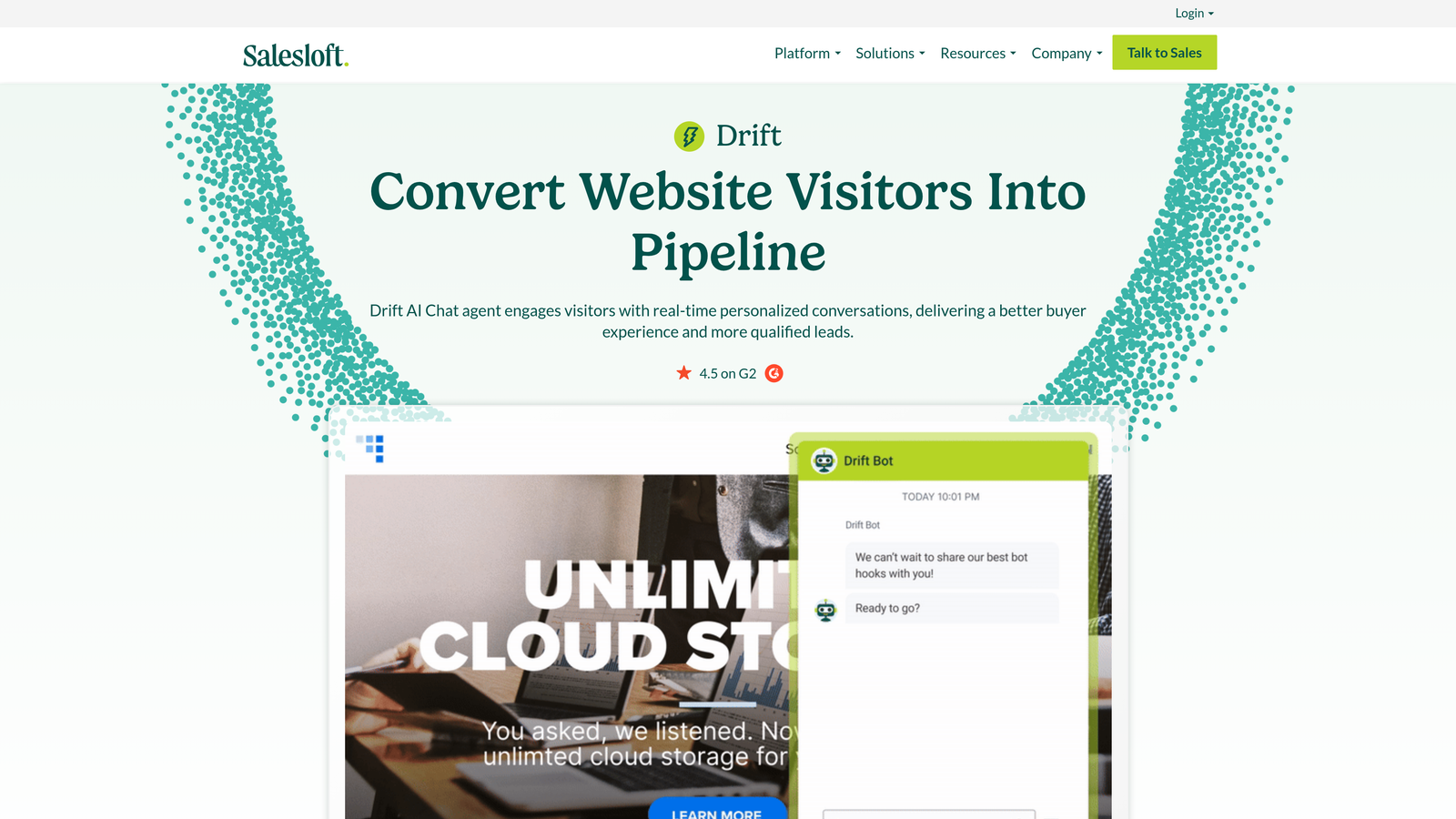
Drift, now part of Salesloft, is a conversational platform that connects support and sales interactions, making it particularly useful where the line between helping a customer and closing a deal is blurry.
Where This Tool Shines
Drift occupies a distinct position on this list: it's less focused on pure ticket resolution and more on revenue-connected conversations. For B2B startups where a support question from a prospect can quickly become a sales conversation, Drift's ability to qualify visitors, route them intelligently, and connect those interactions to pipeline data is genuinely valuable. The conversation intelligence layer links support interactions to revenue outcomes in a way most helpdesks don't attempt.
The playbook system lets you automate conversation flows across the buyer journey, from first-touch website visitors to existing customers with renewal questions. Meeting scheduling directly within chat removes a common friction point in B2B sales-support workflows. Worth noting: since the Salesloft acquisition, Drift has moved further upmarket, so startups should verify current pricing and packaging before committing.
Key Features
AI-Powered Chat Routing: Qualifies and routes website visitors based on intent signals and account data.
Conversation Intelligence: Links support and sales conversations to revenue data for pipeline visibility.
Playbooks: Automated conversation flows covering the full buyer journey from awareness to renewal.
CRM Sync: Native integration with Salesforce and HubSpot for seamless data flow.
In-Chat Meeting Scheduling: Lets prospects and customers book meetings without leaving the conversation.
Best For
B2B SaaS startups where support and sales overlap significantly, particularly those with account-based sales motions or high-value customer conversations that benefit from revenue context.
Pricing
Contact Drift/Salesloft for current pricing. Verify at drift.com.
7. Help Scout
Best for: Startups that want AI-assisted support without losing the personal, human feel of their customer interactions.
Help Scout is a support platform built around human-feeling interactions, with AI assistance features that help agents respond faster without replacing the personal touch.
Where This Tool Shines
Help Scout's philosophy is different from most tools on this list. Rather than maximizing autonomous AI resolution, it focuses on making human agents faster and more effective. The AI Drafts feature generates response suggestions that agents can edit and send, while AI Summarize condenses long conversation threads so agents get up to speed quickly. The result is a tool that feels like it's on your team's side, not replacing it.
The Beacon in-app widget combines proactive messaging, knowledge base search, and chat in a clean package that integrates naturally into web apps. Every Help Scout plan includes Docs, a full knowledge base builder, which removes the need to pay for a separate documentation tool. For startups that value customer relationships and want support to feel personal even as it scales, Help Scout strikes a thoughtful balance.
Key Features
AI Drafts and AI Summarize: AI-assisted response drafting and conversation summarization to speed up agent workflows without full automation.
Beacon Widget: In-app help widget combining proactive messaging, knowledge base search, and chat in one component.
Docs Knowledge Base: Full knowledge base builder included in all plans, no separate tool required.
Clean Shared Inbox: Simple, well-designed shared inbox UX that small teams consistently find easy to adopt.
Customer Profiles: Conversation history and activity data surfaced alongside each support interaction.
Best For
Startups with a strong brand voice and relationship-driven support culture, particularly those in B2B where customers expect a personal experience. Also a good fit for small teams that want a tool they'll actually enjoy using.
Pricing
Standard plan starts around $22/user/month. Verify current pricing at helpscout.com.
8. Gorgias
Best for: E-commerce startups on Shopify, WooCommerce, or BigCommerce that need support and order management in one place.
Gorgias is a helpdesk purpose-built for e-commerce, with deep platform integrations that let agents and automations act on order data without ever leaving the support interface.
Where This Tool Shines
If you're running an e-commerce startup on Shopify, Gorgias is in a category of its own. The native integration pulls order data, shipping status, and customer history directly into the ticket view, and agents can issue refunds, update orders, and cancel subscriptions without switching tabs. For the most common e-commerce support queries, this eliminates the biggest source of handle time.
The ticket-based pricing model is also worth highlighting. Most helpdesks charge per agent seat, which penalizes startups as they hire. Gorgias charges based on ticket volume instead, which can be significantly more favorable for small teams handling a high volume of simple queries. Revenue attribution tracking, which connects support interactions to purchase data, gives e-commerce founders a clearer picture of how support affects conversion and retention.
Key Features
Native E-Commerce Integration: Direct Shopify, WooCommerce, and BigCommerce integration with order actions available inside every ticket.
Revenue Attribution: Tracks the revenue impact of support interactions to connect support performance to business outcomes.
E-Commerce Automation Rules: Pre-built automation for common queries including order status, returns, and refund requests.
Ticket-Based Pricing: Charges by ticket volume rather than agent seat count, often more cost-effective for small teams.
Macros and Templates: Fast, consistent response templates for high-frequency e-commerce queries.
Best For
E-commerce startups exclusively. If you're a B2B SaaS company, Gorgias is not the right fit. But for DTC and e-commerce brands on major platforms, it's the most purpose-built option available.
Pricing
Starter plans from around $10/month based on ticket volume. Verify current pricing at gorgias.com.
9. Zoho Desk
Best for: Budget-conscious startups, especially those already invested in the Zoho ecosystem.
Zoho Desk is a full-featured helpdesk with Zia AI for sentiment analysis and smart suggestions, at pricing that makes it one of the most accessible options on this list.
Where This Tool Shines
Zoho Desk's value proposition is straightforward: you get a comprehensive, AI-assisted helpdesk at a price point that's hard to match. The Zia AI layer handles sentiment analysis on incoming tickets, anomaly detection for unusual support patterns, and response suggestions that help agents reply faster. These aren't cutting-edge capabilities, but they're genuinely useful and included at a price where competitors often charge significantly more.
The real multiplier is the Zoho ecosystem. If you're already using Zoho CRM, Zoho Analytics, or other Zoho products, the integration is seamless and the combined value is substantial. For startups that have standardized on Zoho as their business stack, Desk is the obvious support layer. Even without that context, the free tier for up to three agents gives very early-stage teams a capable starting point with no financial commitment.
Key Features
Zia AI: Sentiment analysis, anomaly detection, and response suggestions to assist agents and flag unusual patterns.
Multi-Channel Support: Email, live chat, social media, phone, and web forms consolidated into one platform.
Zoho Ecosystem Integration: Deep native integration with Zoho CRM and the broader Zoho product suite.
Free Tier: Functional free plan for up to three agents, suitable for very early-stage teams.
Customizable Workflows: Configurable ticket routing, SLA management, and escalation rules without developer resources.
Best For
Budget-conscious startups, teams already using Zoho products, and very early-stage companies that want a capable free tier. Less compelling if you're not in the Zoho ecosystem and have budget for a more AI-native option.
Pricing
Free tier for up to three agents; paid plans start around $14/agent/month. Verify current pricing at zoho.com.
Which Tool Is Right for Your Startup?
The right choice depends heavily on where you are and what you're building. Here's a quick orientation by stage and use case.
If you're at the earliest stage with minimal budget, Freshdesk's free tier, Tidio's free plan, or Zoho Desk's three-agent free tier all give you real functionality without a monthly commitment. They're solid starting points before you've validated your support volume.
For e-commerce startups on Shopify or WooCommerce, Gorgias is the clear category winner. Nothing else on this list comes close for order-centric support workflows.
For B2B SaaS startups that want support automation to do more than close tickets, Halo AI stands apart. The page-aware visual guidance, continuous learning engine, and business intelligence signals make it genuinely useful across product, growth, and support functions simultaneously. It's built AI-first rather than AI-added, which matters more as your ticket volume and product complexity grow.
Growth-stage startups with budget for a comprehensive communications platform will find Intercom's breadth compelling, while teams that prioritize human-feeling support with AI assistance will appreciate Help Scout's thoughtful approach.
Your support team shouldn't scale linearly with your customer base. Let AI agents handle routine tickets, guide users through your product, and surface business intelligence while your team focuses on complex issues that need a human touch. See Halo in action and discover how continuous learning transforms every interaction into smarter, faster support.
For more context on building your support function, explore our guides on automated customer support and AI support agents.