9 Best Customer Support Automation Vendors in 2026
This guide evaluates the 9 best customer support automation vendors in 2026, helping B2B and SaaS teams identify the right AI-powered solution to reduce ticket volume, improve routing, and free agents for complex work. Each vendor is assessed on AI capability, integration depth, and scalability across major platforms including Zendesk, Freshdesk, and Intercom.
 Matt PattoliFounder13 min read
Customer support teams are under more pressure than ever. Ticket volumes climb, customer expectations rise, and headcount budgets stay flat. For most B2B and SaaS teams, the answer isn't hiring more agents — it's choosing the right automation vendor to handle repetitive, high-volume work while freeing humans for complex, high-stakes conversations.
But not all customer support automation vendors are built the same. Some bolt AI onto legacy helpdesk workflows. Others are built AI-first from the ground up. Some specialize in chat deflection; others go deeper into ticket intelligence, bug routing, and business analytics.
This guide covers the best customer support automation vendors available in 2026, evaluated on AI capability, integration depth, scalability, and fit for B2B and SaaS teams. Whether you're running on Zendesk, Freshdesk, Intercom, or looking to replace your stack entirely, there's an option here worth your attention.
1. Halo AI
Best for: B2B SaaS teams that want AI-first support automation with deep product and business integrations.
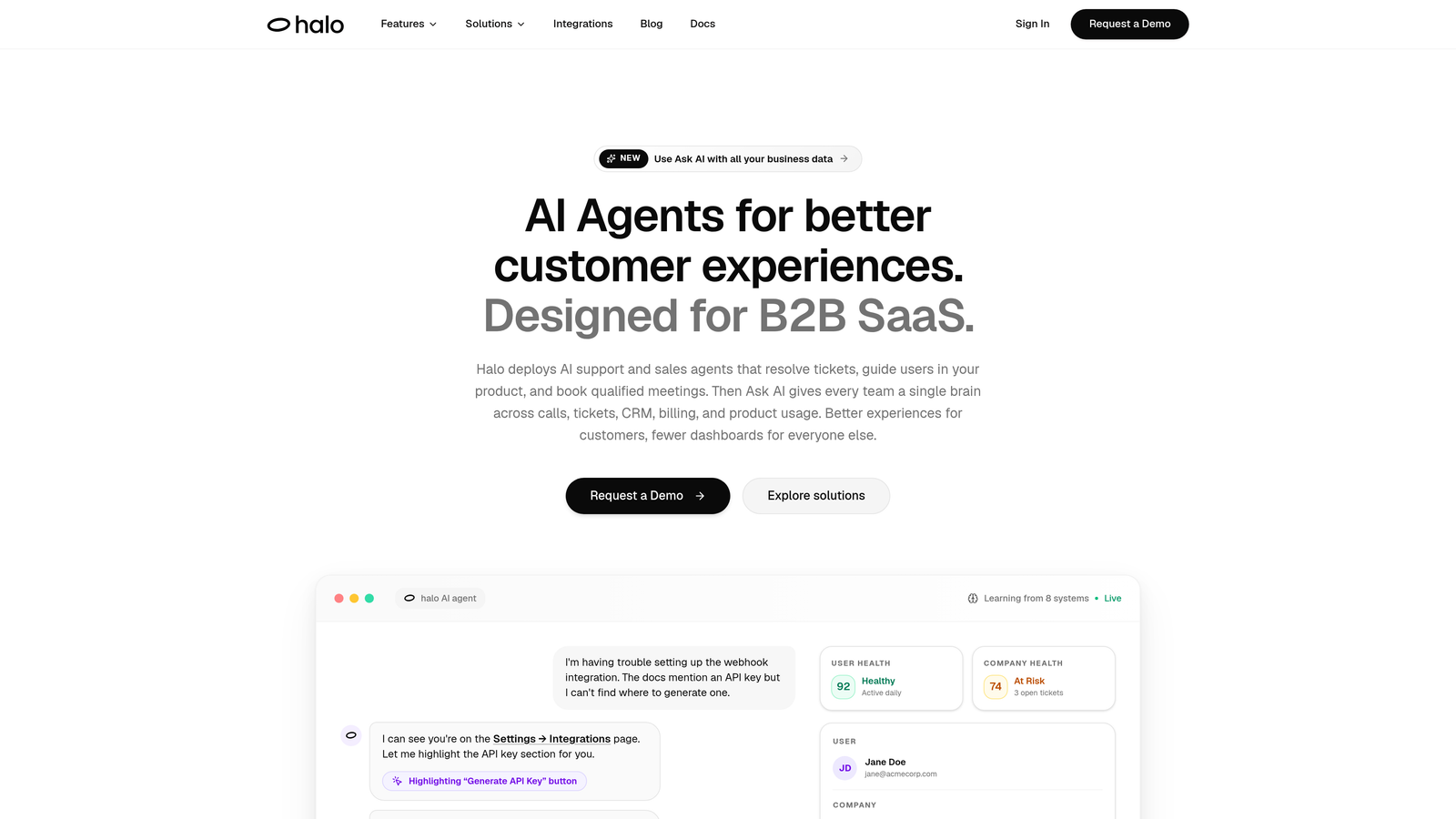
Halo AI is an AI-native customer support platform built specifically for B2B SaaS teams who need more than deflection.
Where This Tool Shines
Most automation vendors treat support as an isolated function. Halo takes a different approach: its AI agents don't just resolve tickets, they understand the context of where a user is in your product, learn from every interaction, and surface intelligence that reaches across your entire business stack.
The page-aware chat widget is a genuine differentiator. Rather than relying on a user to describe their problem, Halo's AI sees which page they're on and delivers contextual guidance — including visual UI walkthroughs. Combined with a continuous learning loop and auto bug ticket creation routed directly to Linear or Jira, this is a platform built for product-led SaaS environments where support, product, and engineering need to stay tightly connected.
Key Features
Page-Aware AI Agents: The AI understands which page a user is on and provides contextual, visual guidance — no more generic help center redirects.
Continuous Learning Loop: Every ticket interaction feeds back into the model, so resolution quality improves over time without manual retraining.
Auto Bug Ticket Creation: Automatically generates bug reports with full context and routes them to Linear or Jira, closing the loop between support and engineering.
Smart Inbox with Business Intelligence: Surfaces customer health signals, anomaly detection, and revenue intelligence from support data — not just ticket metrics.
Live Agent Handoff: Escalates to human agents with full conversation context preserved, so customers never have to repeat themselves.
Full-Stack Integrations: Connects natively with HubSpot, Slack, Intercom, Stripe, Zoom, PandaDoc, and Fathom — not just your helpdesk.
Best For
Halo is purpose-built for B2B SaaS product teams that want AI agents deeply integrated with their product experience, engineering workflow, and revenue stack. It's especially well-suited for teams that have outgrown bolt-on AI features and want a platform that treats support intelligence as a business asset.
Pricing
Subscription-based AI agent model. Contact Halo directly for pricing details tailored to your team size and use case.
2. Zendesk AI
Best for: Enterprises already running on the Zendesk Suite who want native AI without switching platforms.
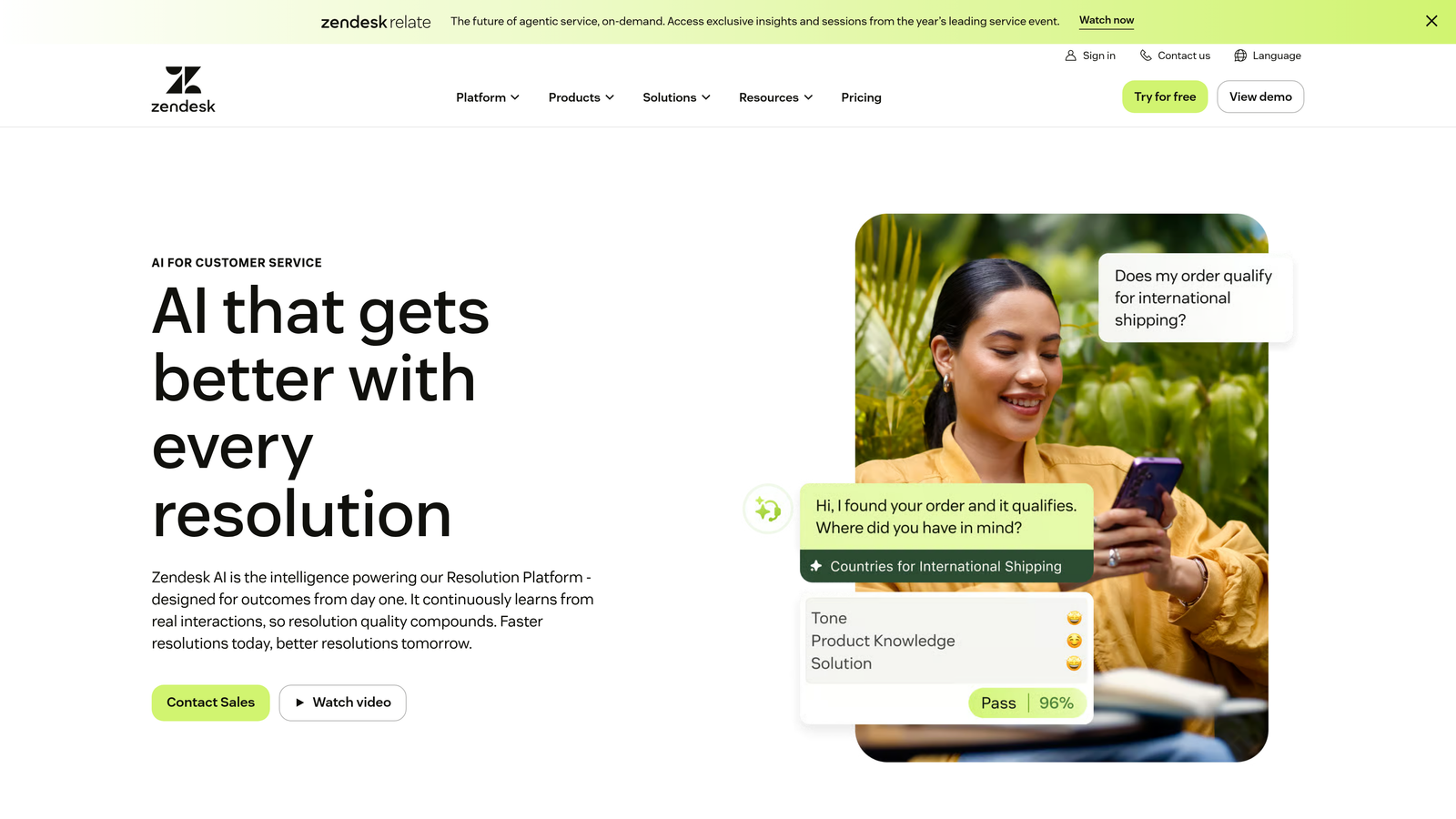
Zendesk AI is the AI layer built directly into the Zendesk Suite, covering intelligent triage, AI agents, and agent assist tools.
Where This Tool Shines
If your team is already deeply invested in Zendesk's ticketing, routing, and reporting infrastructure, the AI add-on is a natural extension. There's no separate integration to manage, no data migration headache, and the AI capabilities slot directly into existing workflows your agents already know.
The triage and intent classification engine is particularly strong, helping route tickets accurately before a human ever touches them. Agent assist features — including macro suggestions and AI-generated summaries — reduce handle time without requiring agents to change how they work.
Key Features
AI-Powered Triage: Automatically classifies incoming tickets by intent, sentiment, and priority to accelerate routing.
AI Agents: Customer-facing automation that resolves common queries without human intervention.
Macro and Response Suggestions: Recommends relevant responses and macros to speed up agent reply time.
AI Summaries and Sentiment Analysis: Generates ticket summaries and flags sentiment trends across the queue.
Native Zendesk Integration: All capabilities are embedded directly into Zendesk's existing ticketing and reporting infrastructure.
Best For
Teams already committed to the Zendesk ecosystem who want to layer AI onto their existing workflows without a platform migration. Less compelling if you're not a Zendesk customer, since the value is heavily tied to that ecosystem.
Pricing
Available as an add-on to Zendesk Suite plans. Pricing varies by tier — check the Zendesk website for current plan details.
3. Intercom Fin
Best for: SaaS products with high chat volume that need a conversational AI agent with strong multi-turn dialogue.
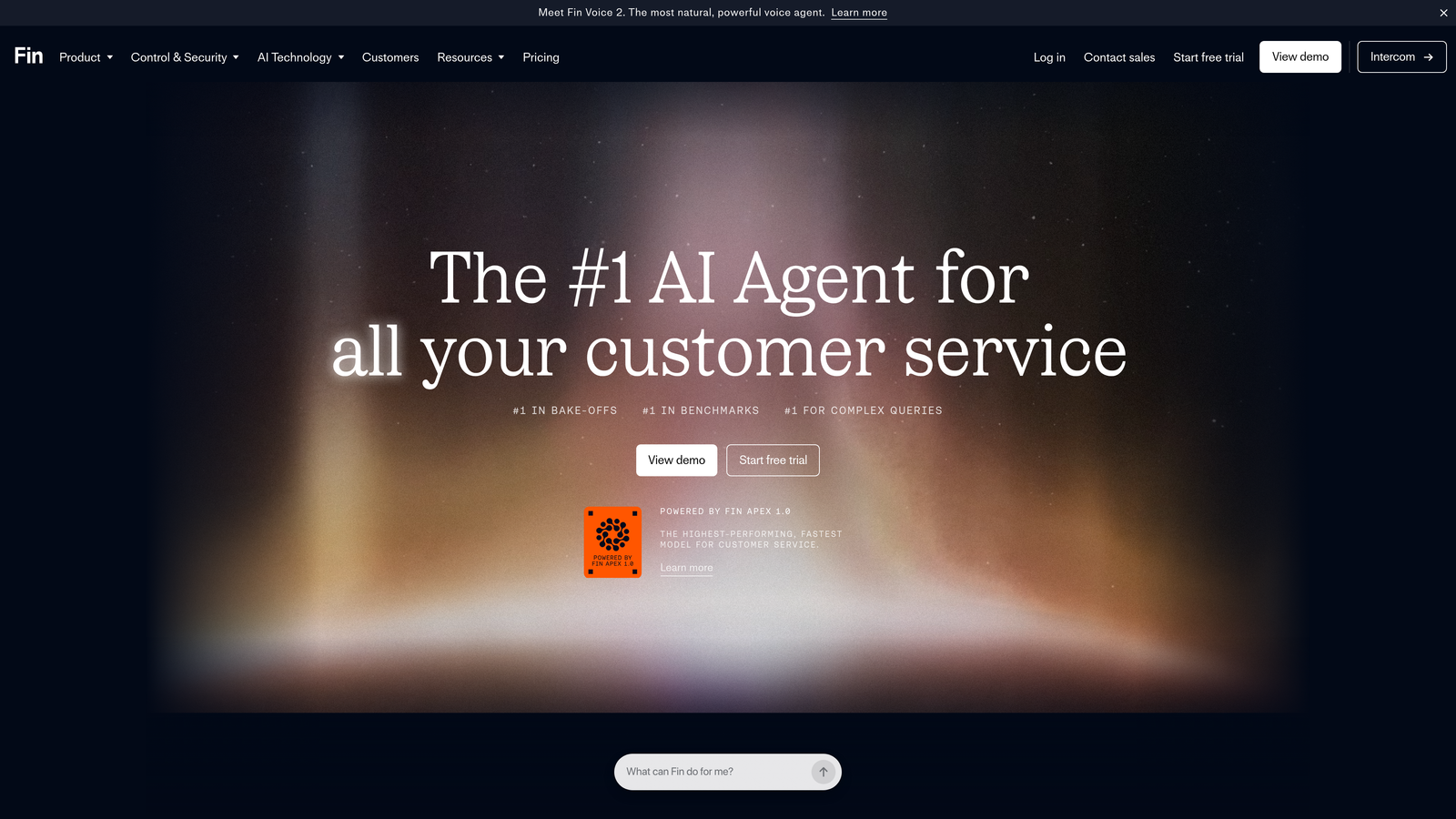
Intercom Fin is Intercom's GPT-powered AI agent, designed to handle complex support conversations end-to-end without human intervention.
Where This Tool Shines
Fin is one of the most capable conversational AI agents on the market for chat-based support. Its strength lies in multi-turn dialogue — it doesn't just match a question to an article, it navigates back-and-forth conversations the way a skilled human agent would. For SaaS products with self-serve customers asking nuanced questions, that matters.
Training Fin on your help center content and custom knowledge sources is relatively straightforward, and the handoff to human agents is smooth when the AI reaches its limits. The per-resolution pricing model also gives teams clearer cost visibility than seat-based alternatives.
Key Features
GPT-Powered Conversational AI: Handles complex, multi-turn conversations rather than single-query lookups.
Custom Knowledge Training: Trains on your help center articles and any additional knowledge sources you provide.
Seamless Human Handoff: Escalates to live agents when resolution isn't possible, preserving conversation context.
Multichannel Coverage: Works across chat, email, and messaging channels within the Intercom platform.
Per-Resolution Pricing: Charges based on resolved conversations rather than seats, making costs easier to project.
Best For
SaaS teams already on Intercom with high chat volume and a strong help center. Less suited to teams that rely heavily on ticket-based workflows or need deep integrations outside the Intercom ecosystem.
Pricing
Per-resolution pricing model in addition to the base Intercom subscription. Review current Intercom pricing pages for the latest rates.
4. Freshdesk Freddy AI
Best for: SMB and mid-market teams on the Freshworks platform looking for an accessible AI layer across self-service and agent assist.
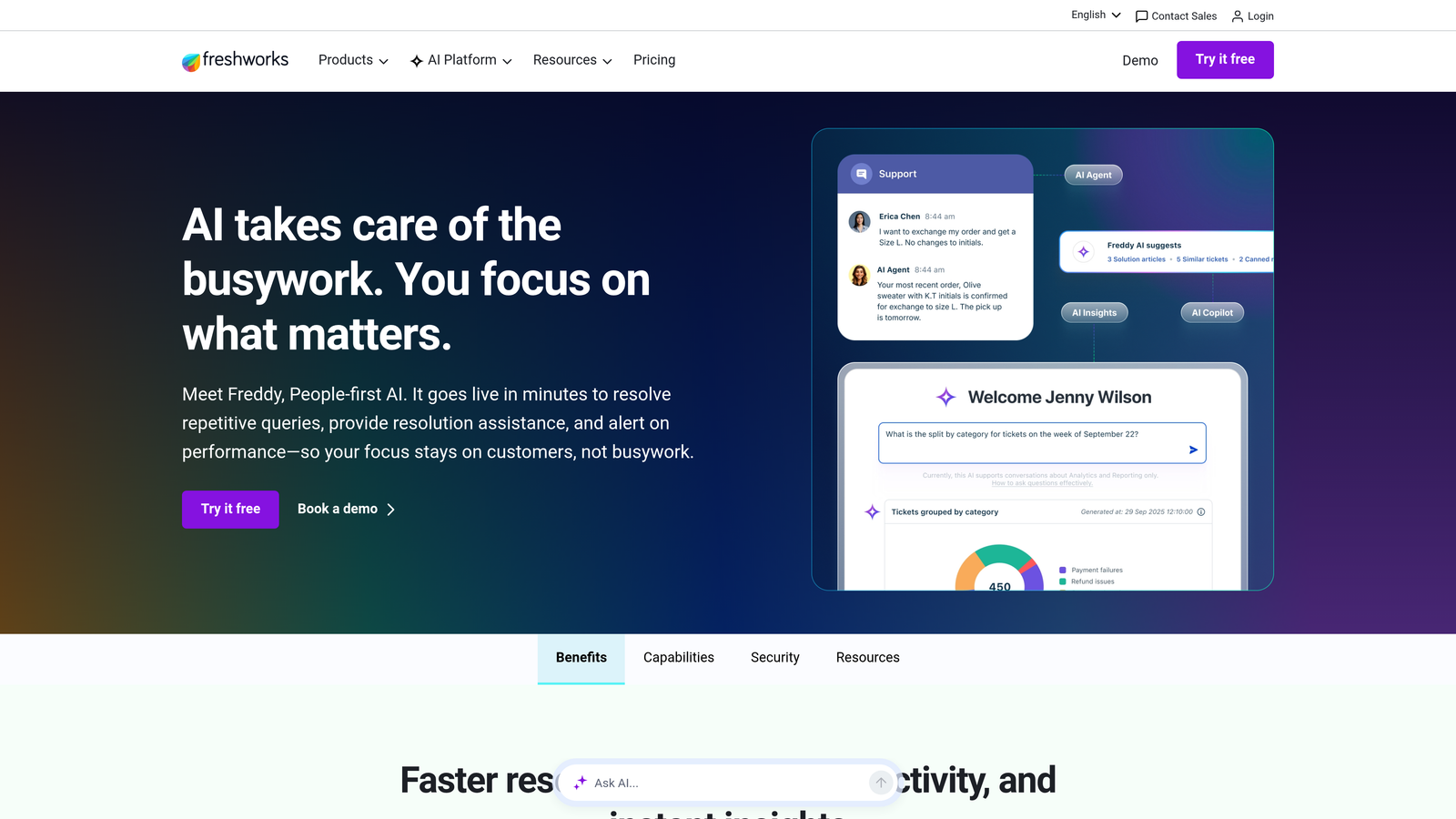
Freshdesk Freddy AI is Freshworks' AI layer spanning customer-facing deflection, agent productivity, and analytics — all native to Freshdesk.
Where This Tool Shines
Freddy AI covers three distinct use cases under one umbrella: self-service automation for customers, AI assistance for agents, and analytics-driven insights for managers. For teams already on Freshdesk, this breadth means you can address multiple support challenges without adding new vendors to your stack.
The entry point is accessible compared to enterprise-grade alternatives, making Freddy a reasonable starting point for teams that are early in their automation journey and want to build confidence before committing to a more specialized platform.
Key Features
Freddy Self Service: AI chatbot that handles customer-facing deflection before tickets reach the queue.
Freddy Copilot: Agent assist tool that suggests responses, generates summaries, and surfaces relevant knowledge during live interactions.
Freddy Insights: AI-driven analytics that surfaces trends, anomalies, and performance patterns across the support operation.
Native Freshdesk Integration: No separate setup or integration required — Freddy is built directly into the Freshdesk platform.
SMB-Accessible Pricing: Available on higher Freshdesk tiers, keeping costs manageable for growing teams.
Best For
Teams already running on Freshworks who want to add AI capabilities without switching platforms. Also a good fit for SMBs that want broad AI coverage at an accessible price point rather than deep specialization.
Pricing
Included in higher Freshdesk tiers. Plans are structured for SMB through mid-market — check Freshworks for current tier details.
5. Salesforce Einstein for Service
Best for: Enterprise teams on Salesforce Service Cloud that need AI deeply integrated with CRM data.
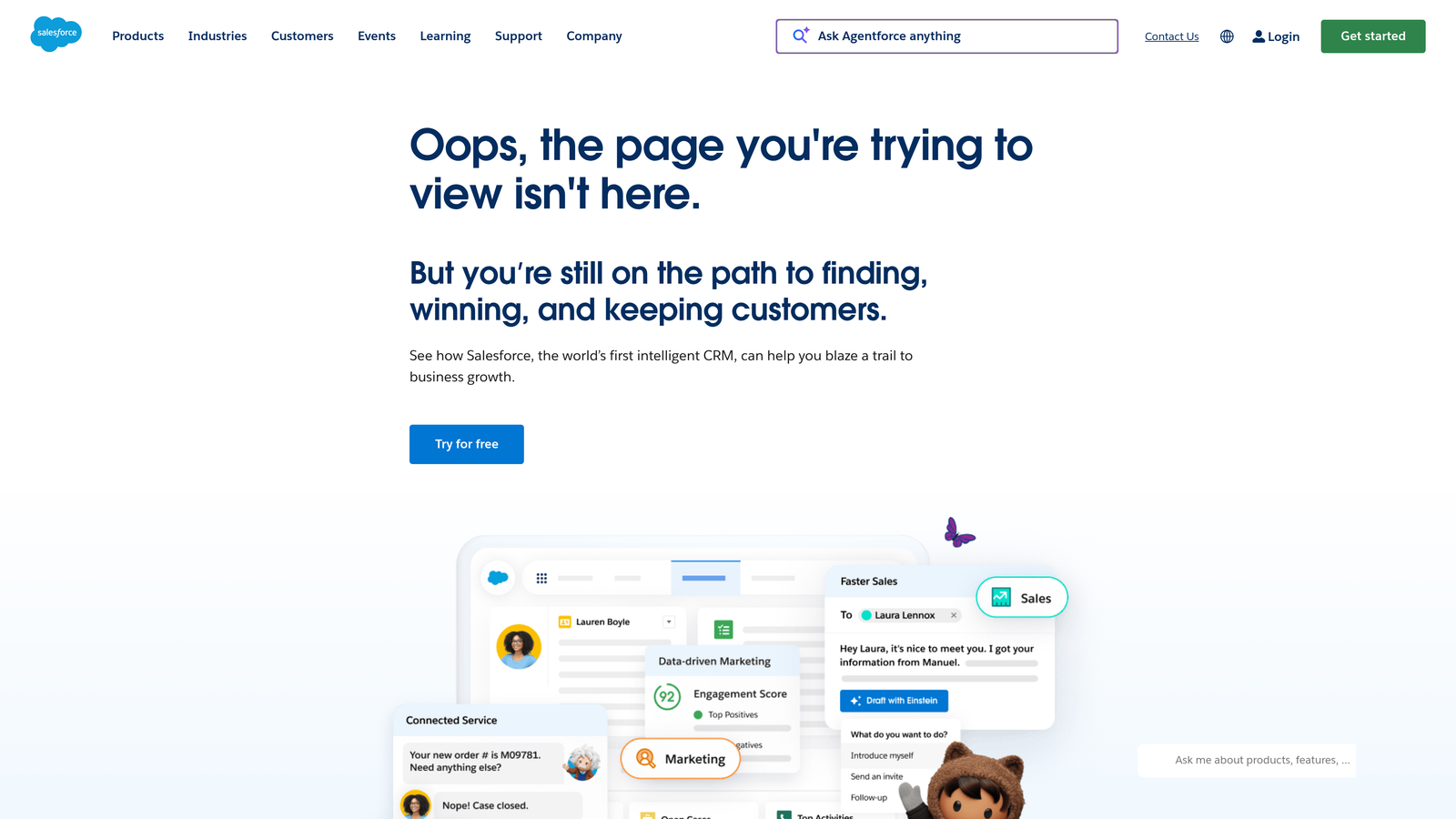
Salesforce Einstein for Service is the AI capability layer embedded within Service Cloud, using CRM data to power case classification, agent recommendations, and automated summaries.
Where This Tool Shines
Einstein's core advantage is data depth. Because it lives inside Salesforce, it can draw on the full CRM record — purchase history, account status, previous cases, sales activity — when making routing and recommendation decisions. That level of context is difficult to replicate with standalone AI tools that don't have access to the same data.
For enterprises where support, sales, and account management operate from a shared Salesforce instance, Einstein for Service creates a genuinely unified customer experience. The tradeoff is cost and complexity — this is not a lightweight implementation.
Key Features
CRM-Powered Case Classification: Routes and prioritizes cases using live CRM data, not just ticket content.
Next-Best-Action Recommendations: Surfaces contextual guidance for agents based on account history and case patterns.
AI-Generated Case Summaries: Automatically summarizes cases and close notes to reduce agent documentation time.
Einstein Bots: Customer-facing automation for self-service resolution before cases reach agents.
Cross-Cloud Integration: Deep connections with Sales Cloud, Marketing Cloud, and the broader Salesforce ecosystem.
Best For
Large enterprises running Salesforce as their primary business platform. Overkill for teams not already on Salesforce, but a natural choice for organizations where support and CRM data are tightly intertwined.
Pricing
Enterprise pricing as an add-on to Salesforce Service Cloud. Contact Salesforce directly for current pricing based on your existing contract and usage.
6. Tidio Lyro AI
Best for: SMBs and e-commerce teams that need fast, affordable conversational AI with minimal technical overhead.
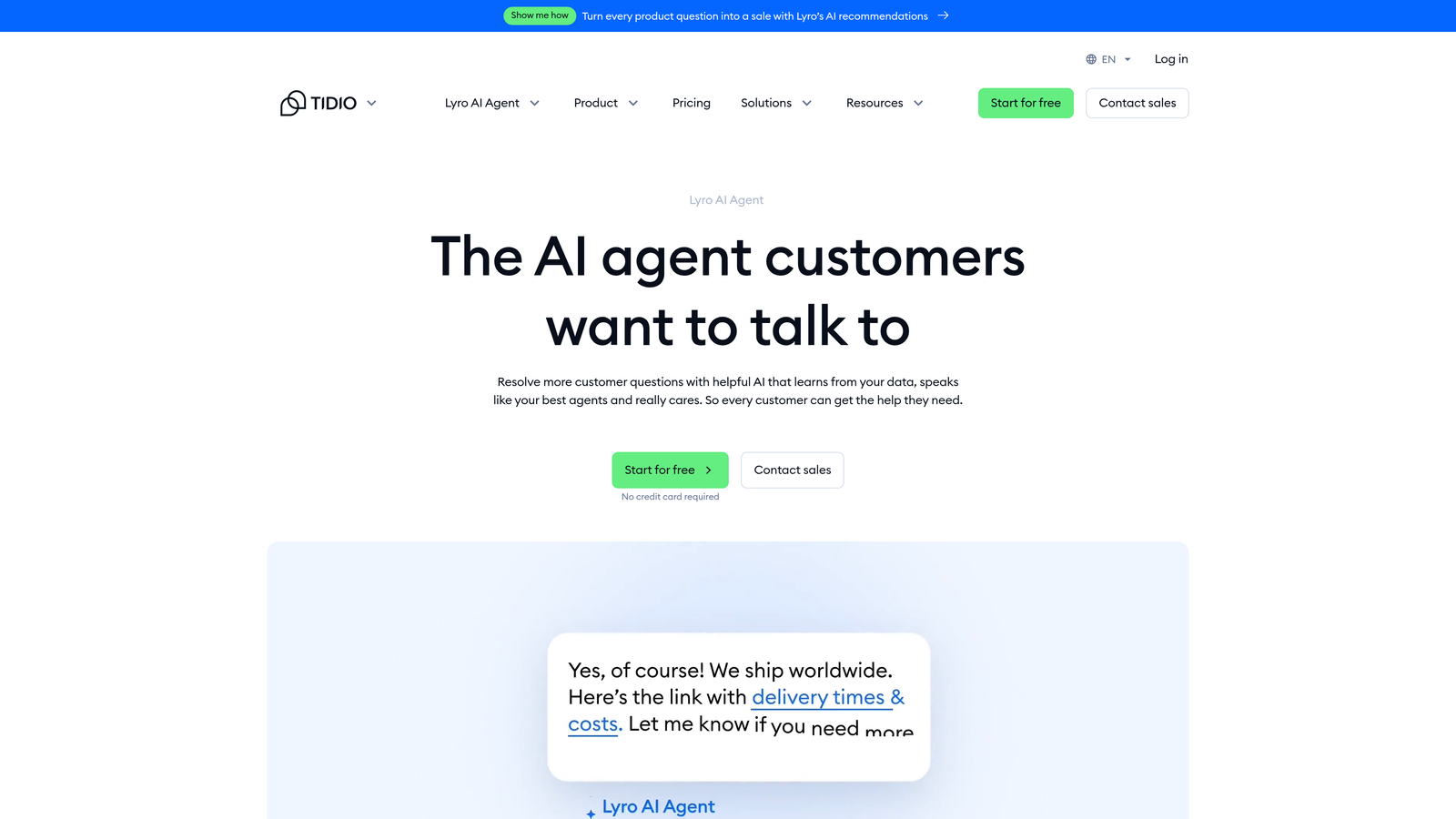
Tidio Lyro AI is a conversational AI platform built for smaller teams that need to get automation running quickly without a lengthy implementation process.
Where This Tool Shines
Speed of setup is Lyro's headline differentiator. Many teams report being operational within hours rather than weeks, which matters significantly for small support teams that don't have dedicated implementation resources. The multilingual capability also makes it practical for teams serving international customer bases without building separate workflows per language.
Lyro is honest about its positioning: it's built for volume deflection and common query resolution at an accessible price point, not for complex enterprise workflows or deep system integrations.
Key Features
Lyro Conversational AI: AI agent trained on your support content to handle common customer queries automatically.
Fast Implementation: Designed to be operational within hours, not weeks — minimal technical setup required.
Multilingual Support: Handles customer conversations across major languages without separate configuration.
Multi-Channel Coverage: Works across live chat, email, and Messenger integrations.
Free Tier Available: Entry-level access for early-stage teams testing AI automation before committing to paid plans.
Best For
SMBs, e-commerce teams, and early-stage companies that want to reduce repetitive support volume quickly without a large implementation investment. Less suited to B2B SaaS teams with complex workflows, deep integration needs, or enterprise compliance requirements.
Pricing
Free tier available for early-stage teams. Paid plans start at SMB-accessible price points — check Tidio's website for current plan details.
7. Ada
Best for: Enterprise teams that need AI agents capable of executing transactions and completing actions, not just answering questions.
Ada is an enterprise AI agent platform built around action-execution, enabling AI to process refunds, look up orders, update records, and complete transactions autonomously.
Where This Tool Shines
The distinction Ada makes is between AI that answers questions and AI that takes action. Many platforms can surface a refund policy — Ada can actually process the refund. That shift from informational to transactional AI is what makes Ada particularly valuable for teams handling high volumes of operational support requests where resolution requires system interaction, not just a helpful response.
The no-code agent builder means non-technical teams can configure and update workflows without engineering involvement, which reduces time-to-deployment for new use cases significantly.
Key Features
Action-Execution AI: Goes beyond Q&A to complete transactions, update records, process requests, and interact with backend systems.
No-Code Agent Builder: Non-technical teams can build and modify AI workflows without engineering resources.
Enterprise System Integrations: Deep connections with CRM, order management systems, and billing platforms.
Enterprise Security and Compliance: Built to meet the security and data requirements of large organizations.
Omnichannel and Multilingual: Operates across multiple channels and languages at enterprise scale.
Best For
Larger enterprises with complex, transactional support workflows where resolution requires system actions rather than just information. The implementation investment is higher than lighter-weight tools, making Ada better suited to teams with dedicated implementation resources.
Pricing
Custom enterprise pricing. Contact Ada directly for a quote based on your volume and use case requirements.
8. Forethought AI
Best for: Teams that want to add AI triage, routing, and agent assist on top of an existing helpdesk without replacing it.
Forethought AI is an AI triage and agent assist platform designed to layer intelligently on top of Zendesk, Salesforce, and Freshdesk rather than compete with them.
Where This Tool Shines
Forethought's value proposition is additive rather than disruptive. If your team has invested heavily in a helpdesk platform and isn't ready to migrate, Forethought enhances what you already have. Its routing intelligence is particularly strong — the system learns from resolved ticket outcomes to continuously improve how incoming work gets classified and assigned.
The three-product structure (Solve for auto-resolution, Triage for routing, Assist for agent copilot) allows teams to start with one capability and expand over time, which reduces implementation risk for teams cautious about AI adoption.
Key Features
Solve: AI agent that handles automated ticket resolution for common query types without human involvement.
Triage: Intelligent ticket classification and routing that improves with every resolved interaction.
Assist: AI copilot that surfaces relevant knowledge articles and suggested responses for human agents in real time.
Helpdesk-Native Integration: Works natively with Zendesk, Salesforce Service Cloud, and Freshdesk without requiring platform migration.
Outcome-Based Learning: Continuously refines routing and resolution models based on actual ticket outcomes.
Best For
Teams committed to an existing helpdesk that want to significantly improve AI capability without switching platforms. Note that Forethought requires an existing helpdesk — it's not a standalone support platform.
Pricing
Custom enterprise pricing. Reach out to Forethought directly for current rates based on your helpdesk environment and volume.
9. Kustomer
Best for: High-volume consumer support teams that need omnichannel coverage with a unified customer timeline.
Kustomer is a CRM-native customer service platform that combines omnichannel support, AI automation, and a unified customer history in a single interface.
Where This Tool Shines
Kustomer's core strength is context. Rather than treating each ticket as an isolated event, the platform builds a unified timeline of every customer interaction across every channel — chat, email, voice, SMS, social — so agents always have the full picture. For high-volume consumer businesses where customers contact support across multiple channels over time, that context dramatically reduces handle time and repeat contacts.
The built-in CRM removes the need for a separate customer data platform, which simplifies the stack for teams that don't already have a CRM investment. AI-powered routing and automated responses layer on top of this unified data foundation.
Key Features
Unified Customer Timeline: Full interaction history across every channel consolidated into a single agent view.
AI-Powered Routing: Automatically routes incoming contacts based on customer history, intent, and agent availability.
Omnichannel Support: Handles chat, email, voice, SMS, and social channels from a single platform.
Built-In CRM: Eliminates the need for a separate customer data platform by combining support and customer data natively.
Workflow Automation: Configurable automation for complex, multi-step support processes that span channels and teams.
Best For
High-volume consumer support operations that need omnichannel coverage and rich customer context. B2B SaaS teams may find the platform heavier than their use case requires — Kustomer is optimized for breadth and volume rather than deep product integration.
Pricing
Per-agent monthly pricing with business and enterprise tiers available. Check Kustomer's website for current plan structures.
Which Vendor Is Right for Your Team?
The right customer support automation vendor depends less on feature lists and more on where your team is today and where you need to go. Here's a quick framework for thinking through the decision.
AI-first B2B SaaS teams: Halo AI is the strongest fit. The page-aware context, continuous learning loop, bug ticket routing, and business intelligence capabilities are purpose-built for product-led SaaS environments where support and product are tightly connected.
Zendesk-heavy enterprises: Zendesk AI is the path of least resistance. If your team's workflows are built around Zendesk, the native AI layer extends what you already have without migration risk.
Conversational-first products: Intercom Fin leads for chat-centric support with multi-turn dialogue requirements. The per-resolution pricing also makes cost projection straightforward.
Freshworks users: Freddy AI covers self-service, agent assist, and analytics in one accessible package without leaving the Freshworks ecosystem.
Salesforce shops: Einstein for Service is the natural choice for enterprises where support and CRM data need to work from a single source of truth.
SMBs on a budget: Tidio Lyro gets you operational quickly at an accessible price point, with a free tier to validate before committing.
Complex transactional workflows: Ada handles action-execution at enterprise scale — processing refunds, updating records, completing transactions autonomously.
Triage and routing focus: Forethought layers intelligently on top of your existing helpdesk without requiring a platform switch.
Omnichannel consumer support: Kustomer's unified timeline and omnichannel coverage make it the strongest option for high-volume consumer operations spanning many channels.
Your support team shouldn't scale linearly with your customer base. Let AI agents handle routine tickets, guide users through your product, and surface business intelligence while your team focuses on complex issues that need a human touch. See Halo in action and discover how continuous learning transforms every interaction into smarter, faster support.