9 Best Customer Support Efficiency Software Tools in 2026
Discover the 9 best customer support efficiency software tools for 2026, evaluated on automation depth, analytics quality, and scalability for B2B SaaS teams. From AI-native platforms to full-featured helpdesks, this guide helps support leaders identify the right solution to reduce ticket volume, improve response times, and prevent agent burnout.
 Grant CooperFounder12 min read
When your support team is drowning in tickets, response times slip, customers churn, and agents burn out. The right customer support efficiency software changes that equation: automating repetitive work, surfacing insights, and letting your team focus on issues that actually require human judgment.
But the market is crowded. You'll find AI-native platforms, legacy helpdesks with bolt-on AI, and everything in between. This list cuts through the noise with tools that genuinely move the needle on support efficiency, evaluated on automation depth, integration breadth, analytics quality, and scalability for B2B SaaS teams.
Whether you're running a lean team handling hundreds of tickets a week or scaling toward thousands, there's a fit here. Halo AI leads the list because it's purpose-built for this problem, but every tool earns its spot.
1. Halo AI
Best for: B2B SaaS teams that want AI-first support automation with deep product context.
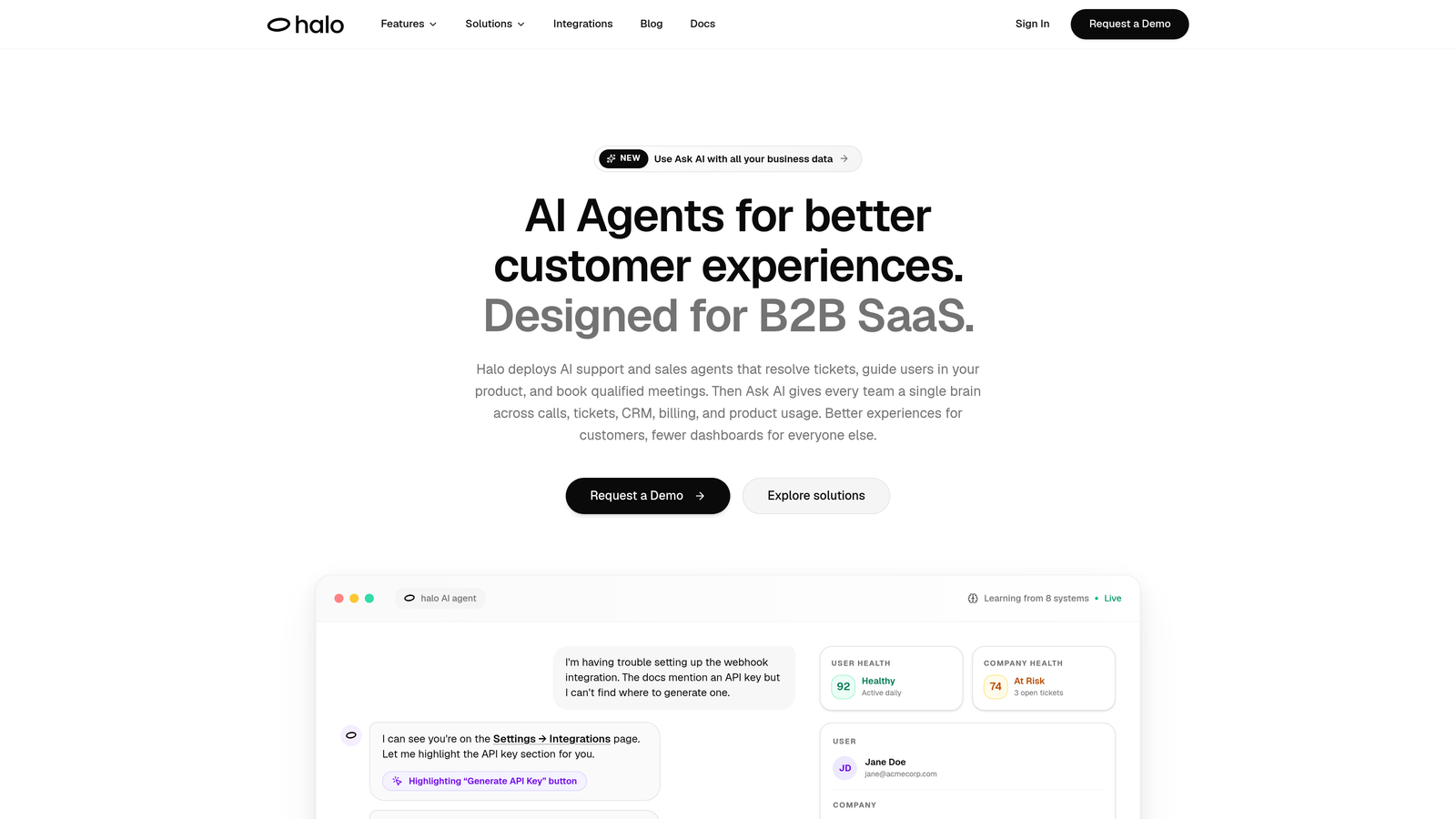
Halo AI is an AI-native customer support platform that deploys intelligent agents to resolve tickets, guide users through your product, and surface business intelligence — all while learning from every interaction.
Where This Tool Shines
Most support platforms treat AI as a layer on top of existing workflows. Halo is built differently: AI isn't bolted on, it's the foundation. The result is a platform that doesn't just route tickets faster, it resolves them autonomously and gets smarter with every interaction.
What genuinely sets Halo apart is page-aware context. The chat widget understands what a user is currently looking at inside your product, which means responses are grounded in real, immediate context rather than generic help content. For product-led growth companies where support and product experience are deeply intertwined, this is a meaningful differentiator.
Key Features
Page-Aware Chat Widget: Understands what the user is currently viewing in your product, enabling contextually relevant guidance without the user having to explain their situation.
Autonomous AI Agents: Resolve support tickets end-to-end without human intervention, escalating only when complexity warrants it.
Auto Bug Ticket Creation: Identifies and logs bugs automatically with Linear integration, removing manual steps from your engineering workflow.
Smart Inbox with Business Intelligence: Surfaces customer health signals, revenue anomalies, and trend detection beyond standard ticket metrics.
Live Agent Handoff: Seamlessly transfers complex conversations to human agents with full context preserved.
Broad Integration Stack: Connects with Slack, HubSpot, Intercom, Stripe, Zoom, PandaDoc, and Fathom for a unified view across your business stack.
Best For
B2B SaaS and product-led growth companies that want support to function as a business intelligence layer, not just a cost center. Particularly strong for teams using Linear for engineering and needing tight product-support integration.
Pricing
Contact for pricing. Visit haloagents.ai for current plans and to explore what fits your team's scale.
2. Zendesk
Best for: Large enterprises with complex compliance requirements and existing Zendesk investments.
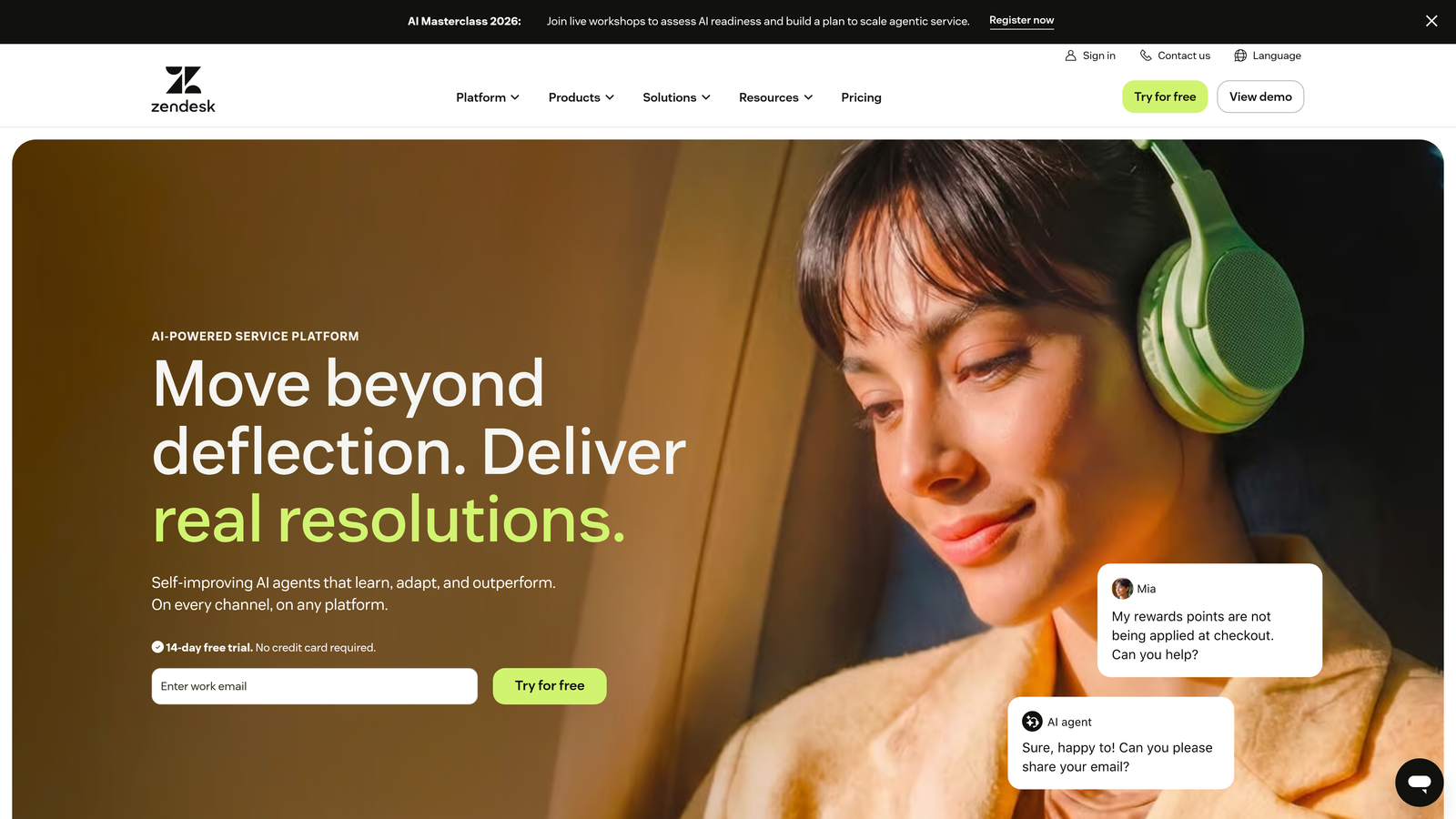
Zendesk is one of the most established helpdesk platforms on the market, offering a comprehensive suite of support tools with AI capabilities layered across ticket management, self-service, and agent workflows.
Where This Tool Shines
Zendesk's strength is breadth. Its app marketplace includes hundreds of integrations, its reporting dashboards are mature, and its enterprise-grade security and compliance controls are among the best in the category. For large organizations with complex support operations, that ecosystem depth is genuinely valuable.
The tradeoff is that AI feels like an addition to the platform rather than its core architecture. Teams looking for deep, autonomous AI resolution may find Zendesk's AI features more useful for triage and suggestion than full-ticket resolution.
Key Features
AI-Powered Triage: Automatically categorizes tickets, detects intent, and suggests responses to speed up agent workflows.
App Marketplace: Hundreds of integrations covering CRM, analytics, e-commerce, and developer tools.
Advanced Reporting: Customizable dashboards covering SLAs, team performance, and customer satisfaction trends.
Enterprise Security: Role-based access controls, SSO, data residency options, and compliance certifications.
Omnichannel Support: Unified inbox across email, chat, voice, and social channels.
Best For
Large support organizations with existing Zendesk infrastructure, strong compliance requirements, or teams that need a broad ecosystem of third-party integrations rather than deep AI autonomy.
Pricing
Starts at approximately $55/agent/month (Suite Team). Enterprise pricing available. Verify current tiers at zendesk.com, as pricing structures change regularly.
3. Intercom
Best for: Teams blending customer support with onboarding, proactive messaging, and product engagement.
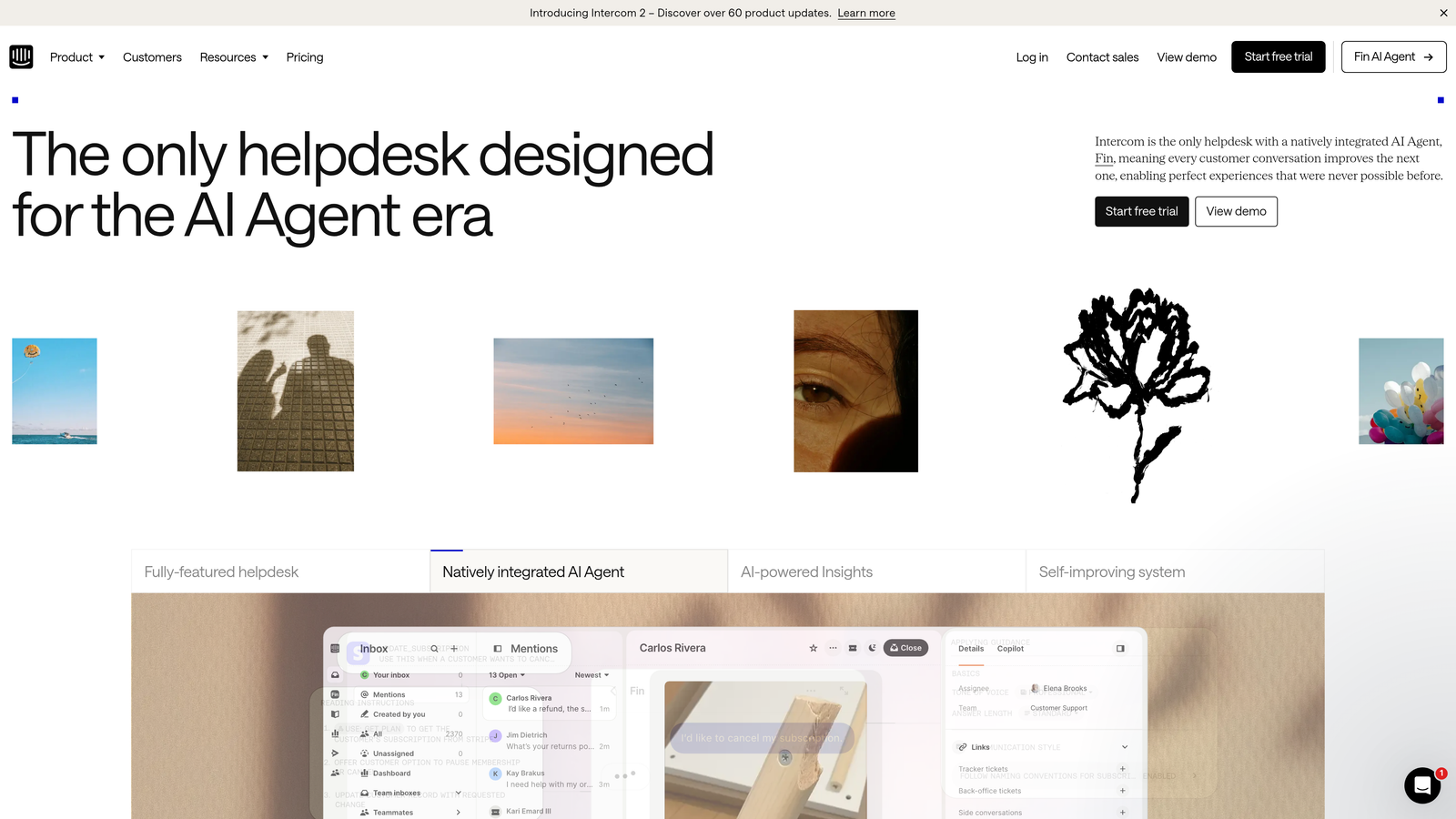
Intercom is a conversational customer service platform combining its Fin AI agent for automated resolution with in-app messaging, product tours, and outbound engagement tools in a single workspace.
Where This Tool Shines
Intercom's Fin AI agent is a capable automation layer, handling common queries using your existing help content. But the real value proposition is the platform's breadth: if your team is responsible for support, onboarding, and proactive customer engagement, Intercom lets you manage all of it from one place.
For teams that blur the line between support and customer success, that consolidation has real operational appeal. The caveat is cost: Fin is priced per resolution, which can become significant at higher conversation volumes.
Key Features
Fin AI Agent: Autonomously resolves common queries using your help center content, powered by GPT-class models.
In-App Messaging and Product Tours: Proactive engagement tools that reduce inbound support by guiding users before they get stuck.
AI-Assisted Response Drafting: Helps agents compose replies faster from a shared inbox.
Customer Data Platform: Segmentation and targeting based on user behavior and account attributes.
Broad Integrations: Connects with CRMs, analytics platforms, and developer tools.
Best For
SaaS companies that want a single platform spanning support, onboarding, and outbound engagement. Strong fit for teams where customer success and support responsibilities overlap significantly.
Pricing
Starts at approximately $39/month; Fin AI agent is charged per resolution. Check intercom.com for current pricing, as structure varies by plan and usage.
4. Freshdesk
Best for: Growth-stage teams transitioning from shared inboxes to their first structured helpdesk with AI capability.
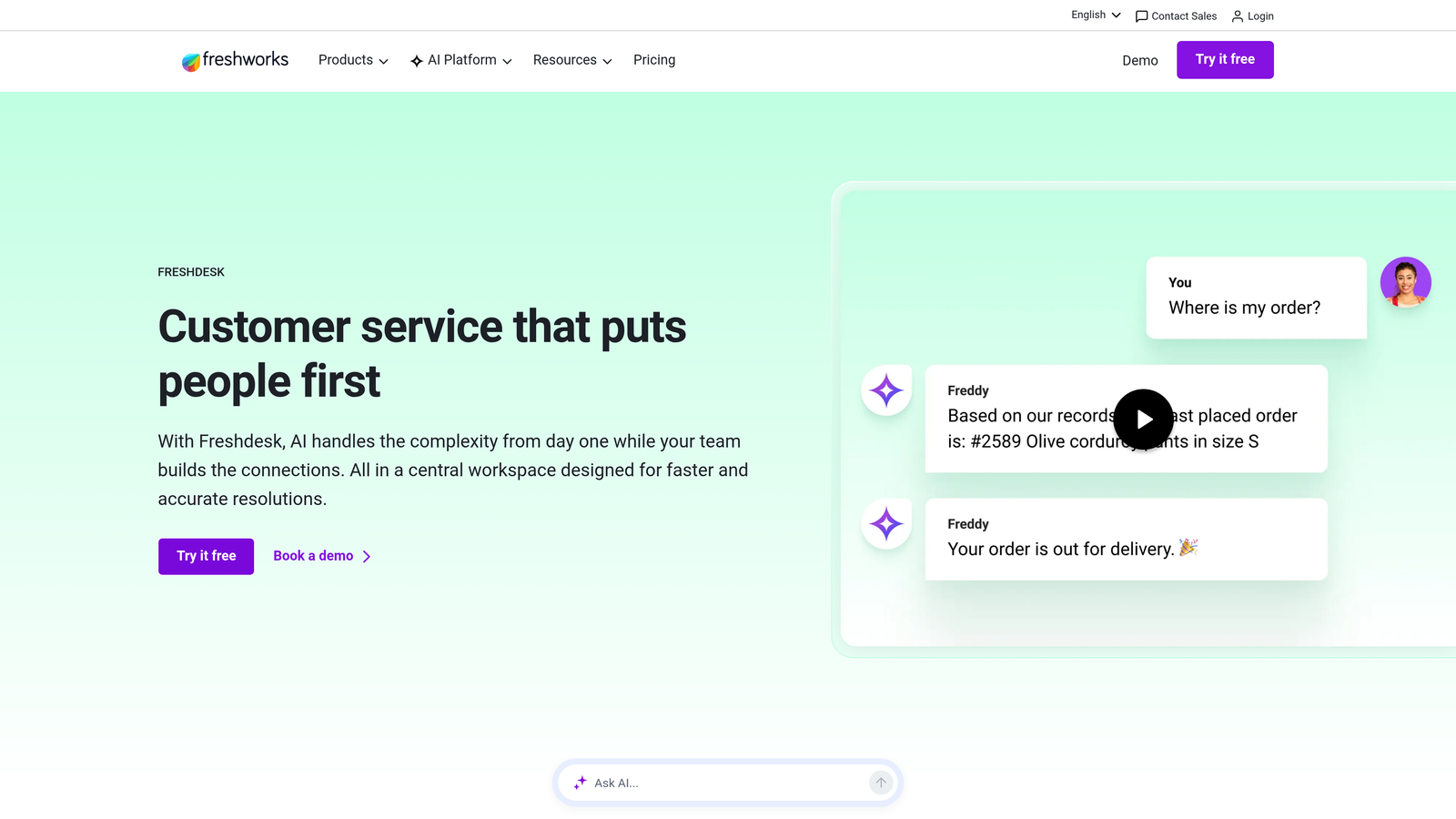
Freshdesk is a capable, accessible helpdesk platform with Freddy AI built in for ticket automation, response suggestions, and deflection, positioned as a more affordable alternative to enterprise helpdesks.
Where This Tool Shines
Freshdesk's appeal is the combination of accessibility and functionality. The interface is intuitive enough that teams can get up and running quickly, and Freddy AI handles the foundational automation tasks: categorizing tickets, suggesting responses, and deflecting common queries through self-service.
Analytics are solid for teams at this stage, covering SLAs, team performance, and ticket trends without overwhelming complexity. It won't match enterprise platforms in depth, but for teams graduating from a shared Gmail inbox, it's a meaningful step forward.
Key Features
Freddy AI: Handles ticket categorization, suggested responses, and basic deflection through self-service.
Shared Inbox with Collision Detection: Prevents two agents from working the same ticket simultaneously.
Self-Service Portal: Knowledge base builder with search, allowing customers to find answers without contacting support.
Workflow Automation: Routing, escalation, and assignment rules that reduce manual triage work.
Performance Reporting: SLA tracking, CSAT scores, and team productivity dashboards.
Best For
Budget-conscious growth teams that need a structured helpdesk with basic AI capability. Particularly well-suited to teams that previously managed support through shared email and need an organized, scalable upgrade.
Pricing
Free tier available. Paid plans start at approximately $15/agent/month. Verify current pricing at freshdesk.com before committing.
5. Help Scout
Best for: Small teams that prioritize agent experience, simplicity, and human-first support.
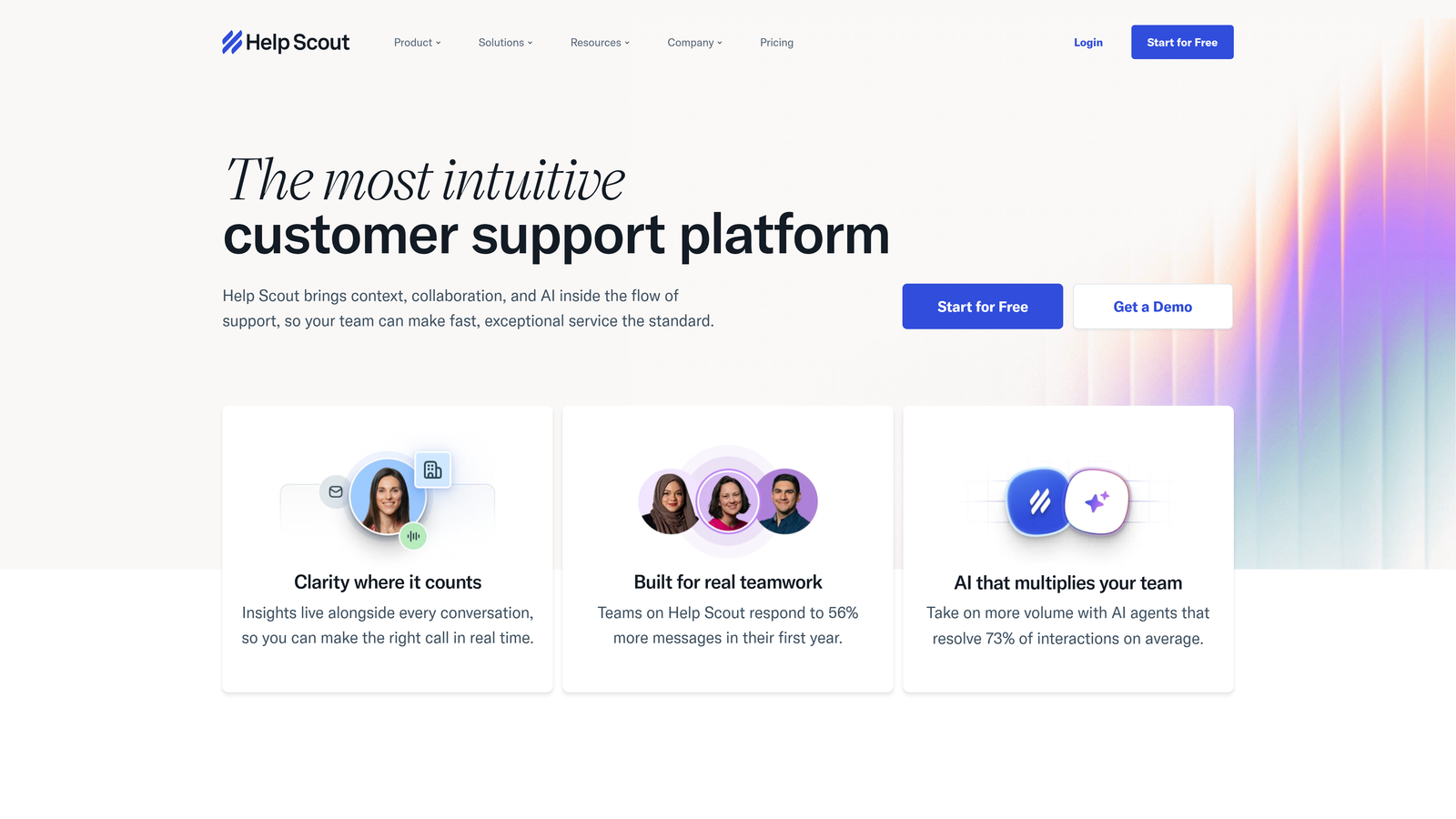
Help Scout is an email-first shared inbox platform with a clean, minimal interface and AI features designed to augment human agents rather than replace them.
Where This Tool Shines
Help Scout is deliberately not trying to be everything. It's built for teams that value simplicity, fast onboarding, and an interface agents actually enjoy using. The AI features, AI Summarize and AI Assist, are practical additions that reduce cognitive load without trying to fully automate resolution.
For small teams where the human relationship with customers matters most, Help Scout's restraint is a feature. You won't find deep automation workflows or complex analytics here, but you will find a tool your team can adopt in a day and use without friction.
Key Features
AI Summarize: Condenses long email threads into a quick summary so agents can get up to speed instantly.
AI Assist: Drafts and improves agent responses, reducing time spent on writing.
Beacon Widget: In-app help widget that surfaces knowledge base content contextually.
Shared Inbox: Collision detection and internal notes keep team communication organized.
Knowledge Base Builder: Self-service search that deflects common questions before they become tickets.
Best For
Small, human-first support teams that want a clean tool without steep learning curves. Excellent for companies where agent experience and customer relationship quality matter more than automation depth.
Pricing
Starts at approximately $22/user/month. Check helpscout.com for current plan details.
6. Gorgias
Best for: E-commerce brands that need agents to take order actions directly from the support interface.
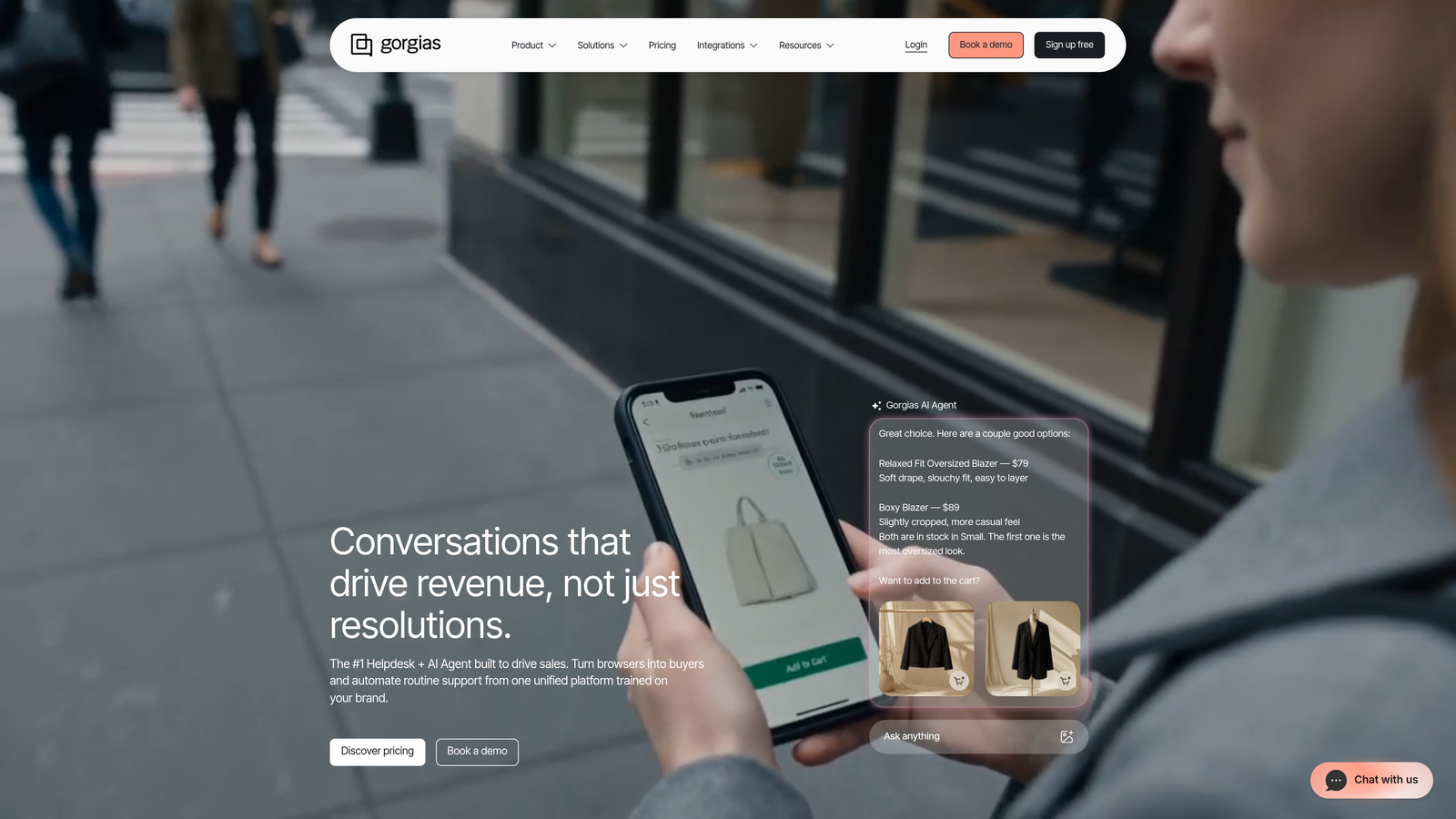
Gorgias is a helpdesk built specifically for e-commerce brands, with deep integrations into Shopify and other commerce platforms that allow agents to take order actions directly from the support interface.
Where This Tool Shines
Gorgias solves a specific and painful problem for e-commerce support teams: agents shouldn't need to jump between five tabs to process a refund. With Shopify, Magento, and BigCommerce deeply integrated, agents can handle order modifications, cancellations, and refunds without leaving the conversation.
The platform also tracks revenue influenced by support interactions, which reframes support as a revenue-generating function rather than a cost center. For product teams serving e-commerce customers, that attribution data changes how support is resourced and prioritized.
Key Features
Deep Commerce Integrations: Direct Shopify, Magento, and BigCommerce connectivity with order action capabilities from within the support interface.
Automated Order-Based Responses: Triggers automated replies based on order status, reducing repetitive agent work.
Revenue Attribution: Tracks which support interactions influence purchases and retention.
AI Ticket Routing: Intent detection and smart routing to get tickets to the right agent faster.
Macros and Rules: High-volume repetitive query handling through templated responses and automation rules.
Best For
E-commerce brands running high volumes of order-related support queries. Less relevant for pure B2B SaaS, but valuable for product teams whose customers operate in commerce environments.
Pricing
Starts at approximately $10/month for small volumes, scaling with ticket count. Verify current pricing at gorgias.com.
7. Tidio
Best for: Startups and small teams that need basic AI deflection with minimal setup time.
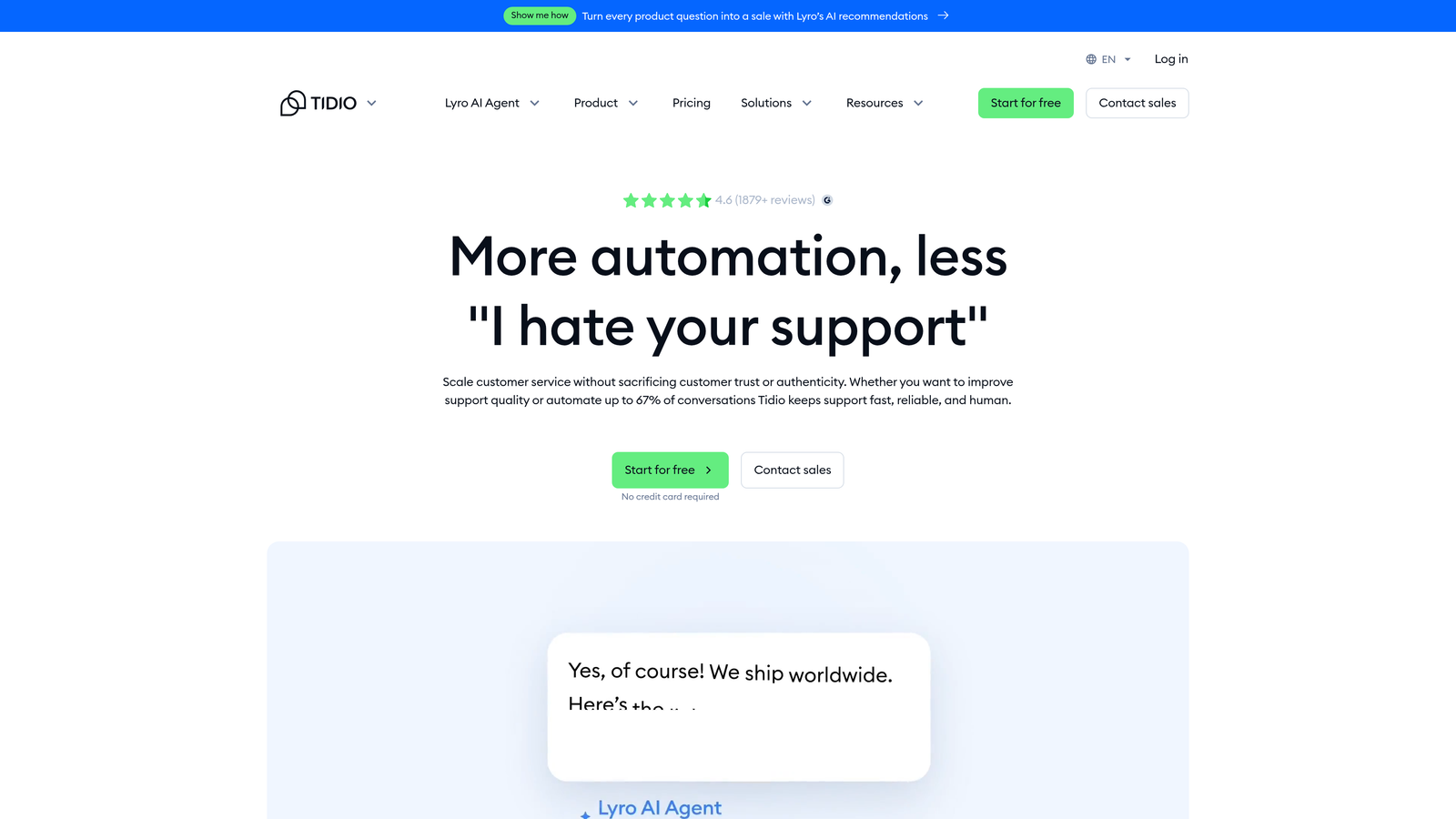
Tidio is an accessible live chat and AI chatbot platform with a fast setup process, making it a practical entry point for teams that need basic AI deflection without significant investment.
Where This Tool Shines
Speed of deployment is Tidio's headline advantage. Teams can be live with a chat widget and basic AI automation in under an hour, which matters enormously for early-stage companies that need coverage now, not after a two-month implementation.
Lyro, Tidio's AI chatbot, handles common conversational queries reasonably well for the price point. It won't match the resolution depth of more sophisticated AI agents, but for teams with straightforward, repetitive query patterns, it covers a meaningful percentage of inbound volume.
Key Features
Lyro AI Chatbot: Handles conversational queries using your help content, reducing agent workload on common questions.
Fast Setup: Low-code chat widget that can be deployed in under an hour.
Multichannel Coverage: Email and Messenger integration alongside live chat for broader reach.
Pre-Built Automation Flows: Ready-made templates for common support scenarios to accelerate setup.
Basic Analytics: Chat volume and bot performance reporting for early-stage visibility.
Best For
Early-stage startups and small teams that need immediate live chat and basic AI deflection without the complexity or cost of enterprise platforms. A practical starting point before graduating to more sophisticated tooling.
Pricing
Free tier available. Lyro AI plans start at approximately $29/month. Check tidio.com for current pricing and usage limits.
8. Kustomer
Best for: High-volume support operations where full customer history is critical context for every conversation.
Kustomer is a CRM-native helpdesk that displays full customer timelines alongside every support conversation, giving agents immediate access to purchase history, previous tickets, and account data without switching tools.
Where This Tool Shines
The unified timeline is Kustomer's defining feature. Rather than treating each ticket as an isolated event, Kustomer shows agents the full relationship history: every previous interaction, purchase, subscription change, and account note in a single view. For high-volume operations where context is everything, this eliminates the frustrating back-and-forth that slows resolution.
Workflow automation is also strong, handling routing, escalation, and SLA management with enough flexibility for complex support operations. AI features for response suggestions and conversation summaries are practical additions rather than headline capabilities.
Key Features
Unified Customer Timeline: Combines support history, purchases, and account data in a single conversation view.
AI Suggested Responses: Drafts contextually relevant replies based on conversation history and customer data.
Workflow Automation: Flexible routing, escalation, and SLA management rules for complex operations.
Omnichannel Inbox: Handles email, chat, SMS, voice, and social from a single workspace.
CRM-Integrated Reporting: Custom dashboards that blend support metrics with customer account data.
Best For
High-volume B2C or subscription businesses where customer history is critical context for every interaction. Strong fit for teams that currently switch between a helpdesk and a CRM and want to consolidate.
Pricing
Starts at approximately $89/user/month. Verify current pricing at kustomer.com before evaluating.
9. Dixa
Best for: Teams managing agents across multiple channels who need intelligent conversation routing and distribution.
Dixa is an omnichannel customer service platform focused on intelligent conversation routing, matching incoming tickets to the right agent based on skills, availability, and customer priority across all channels.
Where This Tool Shines
Dixa's core strength is routing intelligence. Rather than relying on simple round-robin assignment, Dixa matches conversations to agents based on skills, current availability, and customer priority — which means complex issues reach experienced agents faster and simple queries don't tie up your senior team.
Customer recognition is another practical feature: before an agent picks up a conversation, Dixa surfaces relevant context so they're not starting cold. For teams running omnichannel operations across email, chat, phone, and social, the unified workspace prevents the fragmentation that typically degrades both agent experience and response quality.
Key Features
Dynamic Conversation Routing: Matches incoming conversations to agents based on skills, availability, and customer priority rather than simple queue order.
Unified Omnichannel Workspace: Email, chat, phone, and social channels managed from a single interface.
Customer Recognition: Surfaces customer context before the agent responds, reducing time spent on discovery.
Team Performance Analytics: Conversation flow reporting and agent productivity dashboards.
CRM and E-Commerce Integrations: Enriches support context with data from connected platforms.
Best For
Teams with agents operating across multiple channels who need intelligent distribution rather than heavy AI deflection. Particularly useful for operations where matching the right agent to the right conversation has a measurable impact on resolution quality.
Pricing
Starts at approximately $39/agent/month. Check dixa.com for current plan details and enterprise options.
Which Tool Fits Your Team?
The right choice depends less on feature checklists and more on where your team is today and where you're headed. Here's a quick way to orient your decision.
AI-first automation for scaling SaaS: Halo AI. Purpose-built architecture, page-aware context, and business intelligence that goes well beyond ticket counts.
Enterprise compliance and ecosystem breadth: Zendesk. Mature platform with the integrations and security controls large organizations require.
Conversational support plus proactive engagement: Intercom. Strong if your team owns both support and onboarding in a single workflow.
Budget-conscious growth teams: Freshdesk. Solid AI capability at a price point that doesn't require executive sign-off.
Simplicity-first small teams: Help Scout. Clean, fast to adopt, and built for human-first support without unnecessary complexity.
E-commerce revenue support: Gorgias. Unmatched if your agents spend their day handling order-related queries in Shopify.
Lean startups needing immediate coverage: Tidio. Fastest path from zero to live chat with basic AI deflection.
CRM-native high-volume operations: Kustomer. Best when full customer history is essential context for every conversation.
Omnichannel routing and distribution: Dixa. Strong fit for multi-channel teams where smart assignment drives resolution quality.
Before committing to any platform, ask three questions: Does this tool automate resolution or just routing? Will it surface insights beyond ticket counts? Can it grow with my team without requiring a full platform migration down the line?
If you're a B2B SaaS team that wants support to function as a growth lever rather than a cost center, the architecture you choose matters more than any individual feature. Your support team shouldn't scale linearly with your customer base. See Halo in action and discover how continuous learning transforms every interaction into smarter, faster support, with AI agents handling routine tickets, guiding users through your product, and surfacing the business intelligence your team needs to make better decisions.