9 Best Customer Support Efficiency Solutions in 2026
This guide evaluates the 9 best customer support efficiency solutions of 2026, covering AI-first platforms and enterprise tools ranked by automation depth, integration flexibility, and measurable business impact. Whether you run a lean startup team or a large-scale operation, it identifies the right solution to reduce resolution times and help human agents focus on work that truly requires human judgment.
 Grant CooperFounder15 min read
Customer support teams are under more pressure than ever. Ticket volumes climb, headcount budgets tighten, and customers expect instant, accurate answers at any hour. The gap between a team that's constantly firefighting and one that scales intelligently often comes down to the tools they're running.
This guide covers the best customer support efficiency solutions available in 2026, evaluated across automation depth, integration flexibility, ease of deployment, and real business impact. Whether you're running a lean startup support team or managing enterprise-scale operations, there's a solution here that fits your stack and your goals. We've prioritized tools that go beyond basic ticketing — platforms that actively reduce resolution time, surface actionable insights, and free your human agents to focus on work that actually requires human judgment.
1. Halo AI
Best for: B2B SaaS teams that want AI-first autonomous support with deep product and business stack integration
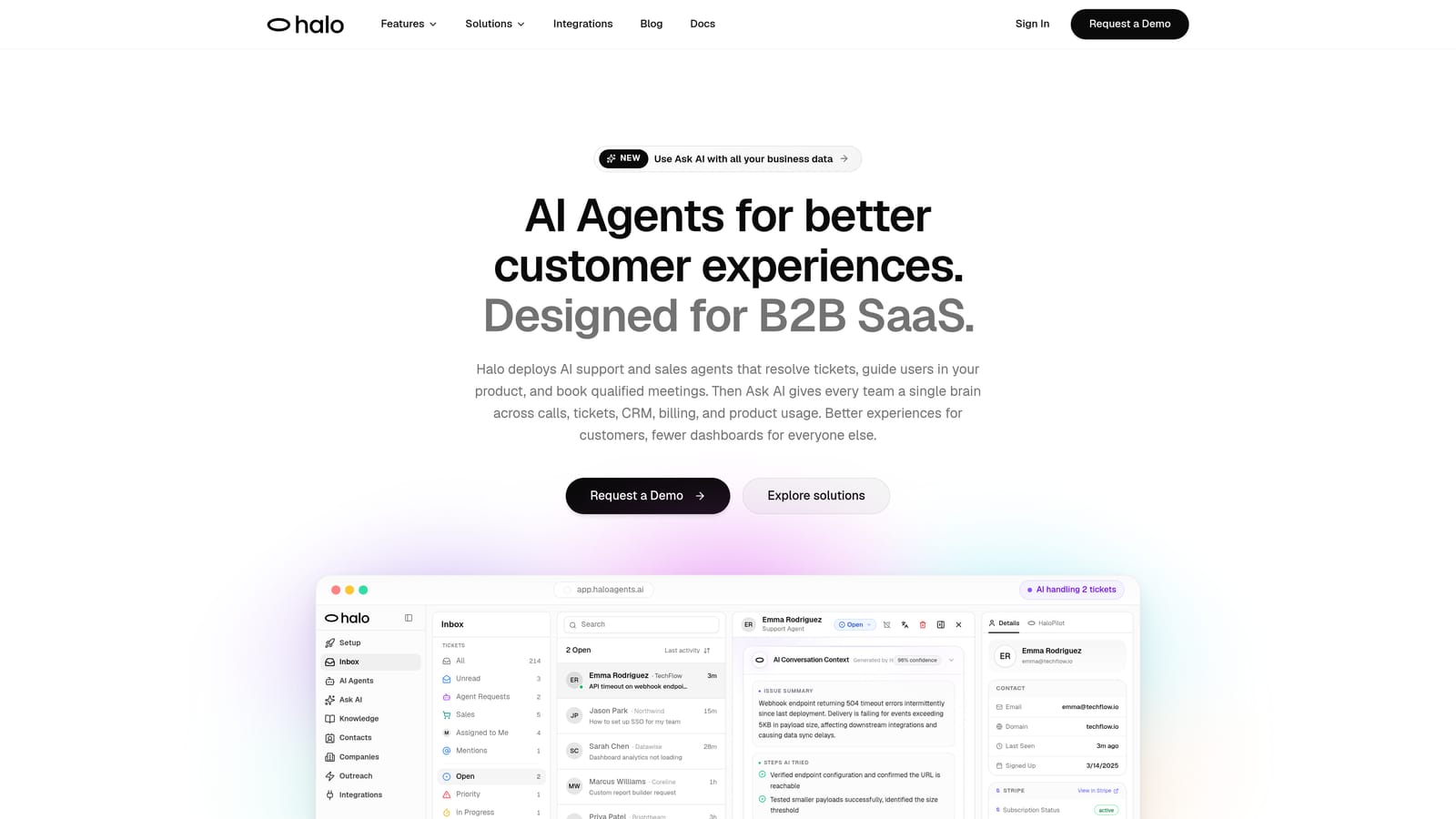
Halo AI is an AI-first customer support platform that deploys autonomous agents to resolve tickets, guide users through your product with page-aware context, and surface business intelligence signals — all while learning from every interaction.
Where This Tool Shines
Most helpdesks bolt AI onto an existing ticketing structure. Halo is built the other way around: AI is the foundation, and human escalation is the exception rather than the rule. This distinction matters enormously in practice. Rather than suggesting responses for agents to approve, Halo's AI agents handle resolution end-to-end, only routing to a human when the complexity genuinely warrants it.
The page-aware chat widget is a standout capability. It understands what the user is actually looking at inside your product, which means guidance is contextually relevant rather than generic. Pair that with auto bug ticket creation routed directly to Linear or your issue tracker, and you have a support layer that doesn't just answer questions — it feeds actionable signals back into your product development workflow.
Key Features
Autonomous AI Agents: Resolve support tickets without human intervention, learning and improving from every interaction over time.
Page-Aware Chat Widget: Sees what the user sees inside your product and delivers visual UI guidance in context, not generic help articles.
Smart Inbox with Business Intelligence: Goes beyond support metrics to surface customer health signals, revenue intelligence, and anomaly detection across your customer base.
Auto Bug Ticket Creation: Automatically identifies and routes bug reports to Linear or connected issue trackers, closing the loop between support and engineering.
Live Agent Handoff: Smoothly escalates complex issues to human agents when judgment, nuance, or relationship context is required.
Broad Integration Suite: Connects natively with Linear, Slack, HubSpot, Intercom, Stripe, Zoom, PandaDoc, and Fathom.
Best For
B2B SaaS companies and product teams that want support infrastructure to do more than manage tickets. Halo is particularly well-suited to teams that need their support layer to feed business intelligence back into the broader organization — and to companies ready to move from AI-assisted to genuinely AI-first support operations.
Pricing
Contact for pricing, tailored to team size and usage volume. Visit haloagents.ai for details.
2. Zendesk
Best for: Enterprise support teams that need omnichannel coverage, deep reporting, and a mature integration ecosystem
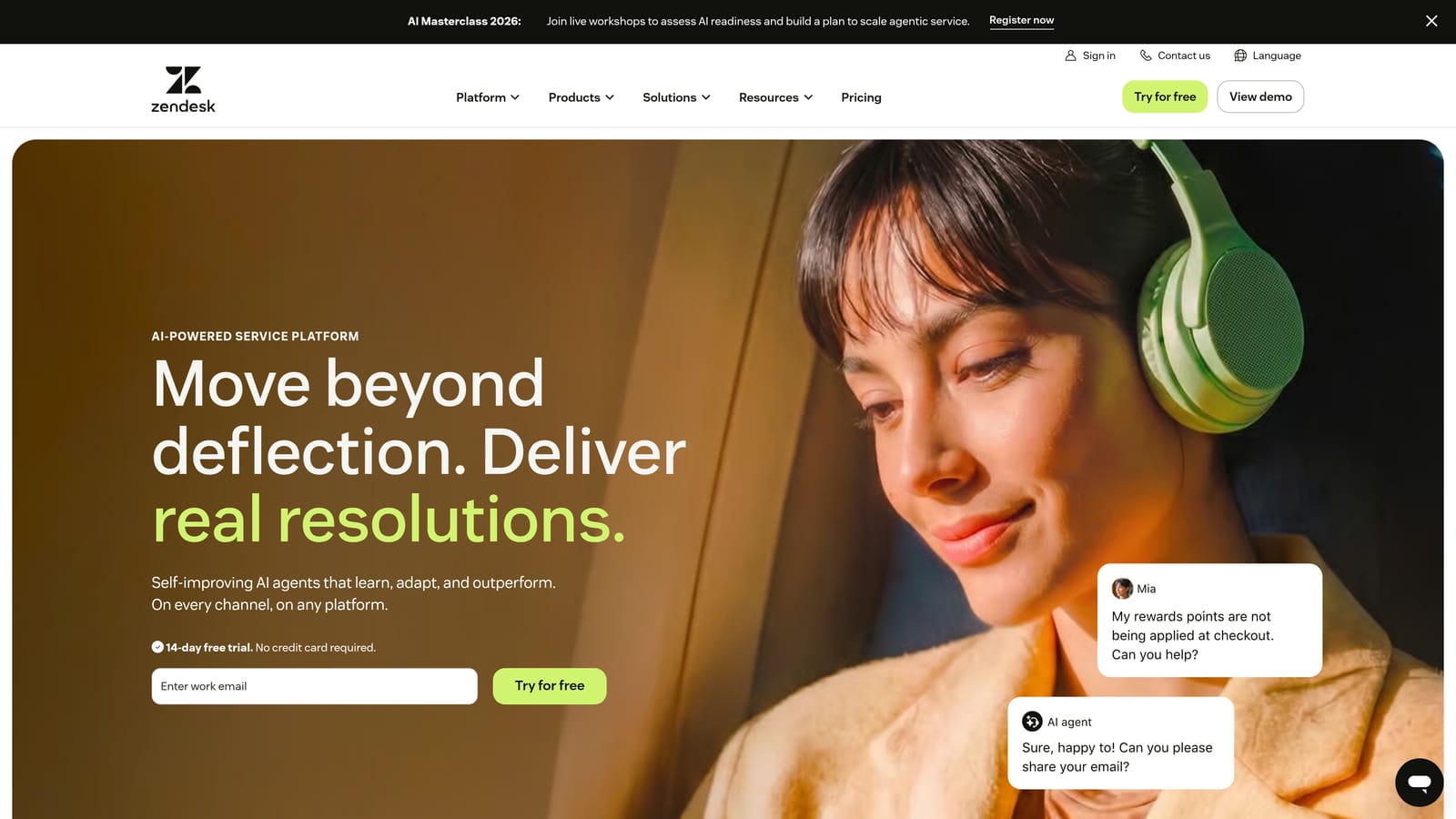
Zendesk is the market-leading enterprise helpdesk platform with omnichannel support, an extensive app marketplace, and AI features built on their acquisition of Ultimate.
Where This Tool Shines
Zendesk's greatest strength is breadth. It handles email, chat, voice, social, and messaging channels through a single interface, and its marketplace of over 1,000 integrations means it can connect to virtually any tool in your stack. For enterprise teams with complex routing requirements, multi-brand support, or strict SLA structures, Zendesk provides the scaffolding to manage it all.
The Zendesk AI layer — built through their acquisition of Ultimate — adds agent copilot functionality and automated responses. It's a meaningful upgrade over the platform's earlier automation capabilities, though teams evaluating it should understand that this is AI layered onto a traditional helpdesk architecture rather than an AI-native design.
Key Features
Omnichannel Ticket Routing: Manages support across email, chat, social, and voice from a unified agent workspace.
Zendesk AI: Provides agent copilot suggestions, automated responses, and some autonomous resolution capabilities.
Extensive App Marketplace: Over 1,000 integrations spanning CRMs, analytics tools, communication platforms, and more.
Advanced Reporting Suite: Granular analytics on team performance, ticket trends, SLA compliance, and customer satisfaction.
Enterprise Permissions and SLAs: Role-based access, multi-brand support, and enterprise-grade SLA management built in.
Best For
Enterprise support organizations with high ticket volumes, complex routing needs, and teams that require robust reporting and compliance controls. Less ideal for lean teams looking for fast deployment without significant admin overhead.
Pricing
Suite Team starts at approximately $55 per agent per month; enterprise plans are available at higher tiers. Pricing is at the higher end of the market relative to competitors.
3. Intercom
Best for: SaaS and PLG companies that want conversational support, in-app messaging, and AI chat resolution in one platform
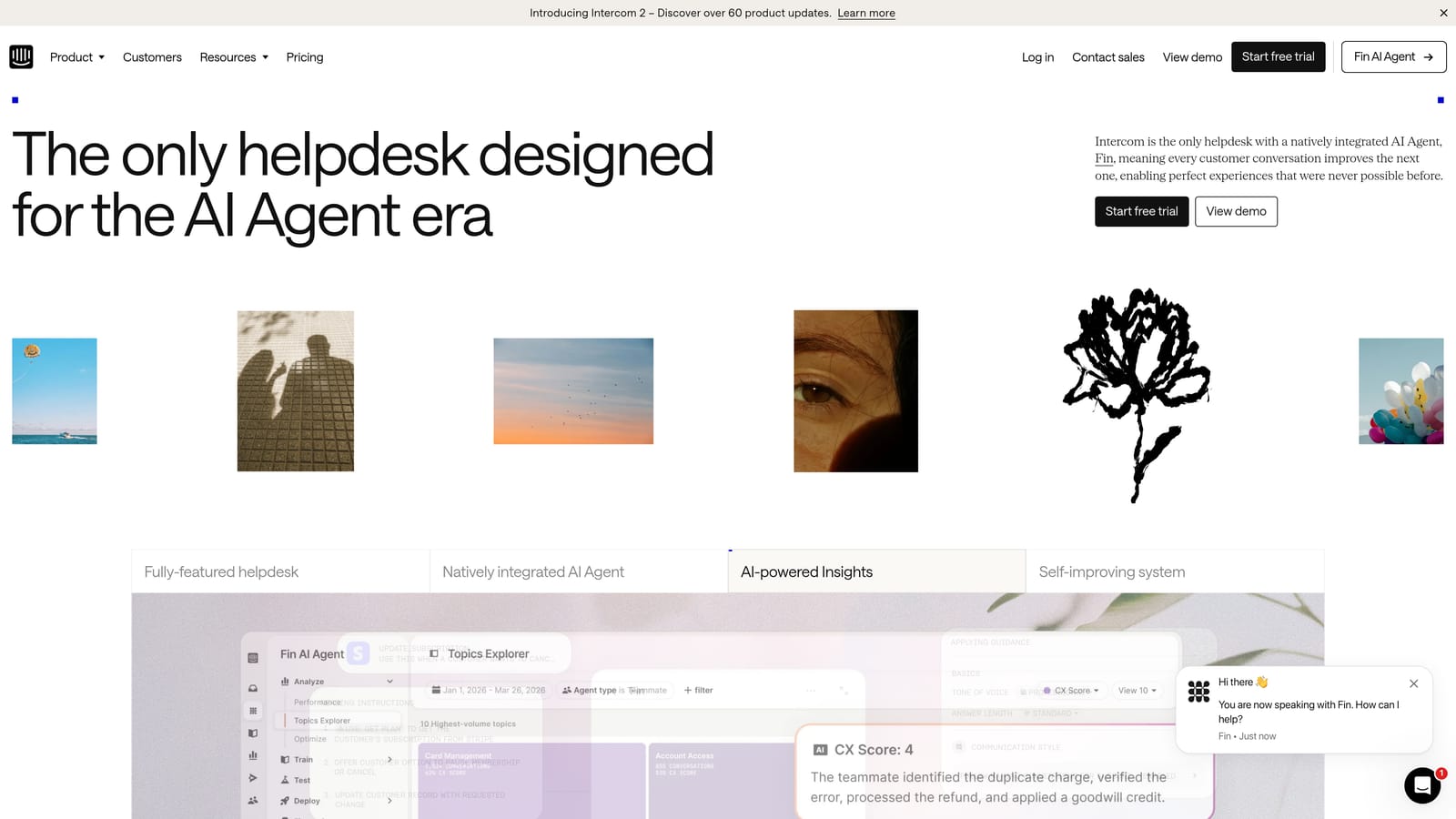
Intercom is a conversational support platform that combines AI-powered chat, customer messaging, and product tours in a unified messenger experience.
Where This Tool Shines
Intercom's strength is the tight integration between support, onboarding, and proactive messaging. For product-led growth companies, this is genuinely valuable: the same platform that handles inbound support tickets can also deliver in-app product tours, trigger onboarding sequences, and send proactive messages based on user behavior. It creates a unified experience rather than a stitched-together one.
Fin, Intercom's AI agent, is their flagship automation product. It handles chat-based resolution autonomously and has matured considerably as a product. Teams with chat-heavy support workflows will find Fin's capabilities compelling. That said, Intercom is better suited to chat-first workflows than to teams managing high volumes of asynchronous email tickets.
Key Features
Fin AI Agent: Autonomous chat resolution that handles common queries without human intervention, billed per resolution.
Unified Messenger: Combines support, onboarding, and proactive outbound messaging in a single in-app interface.
Customer Segmentation: Behavioral targeting to reach the right customers with the right message at the right moment.
Product Tours and In-App Guidance: Native tooling for user onboarding and feature adoption without a separate platform.
CRM and Helpdesk Integrations: Connects with Salesforce, HubSpot, Zendesk, and other core tools in the support and sales stack.
Best For
SaaS companies with chat-heavy support and a product-led growth motion. Particularly strong for teams that want support, onboarding, and proactive messaging managed from one platform. Costs can escalate with high conversation volumes.
Pricing
Starts at approximately $39 per seat per month; Fin AI usage is billed separately per resolution, so total cost scales with automation volume.
4. Freshdesk
Best for: SMBs and growing teams that want a capable, affordable helpdesk with solid AI assistance and collaboration features
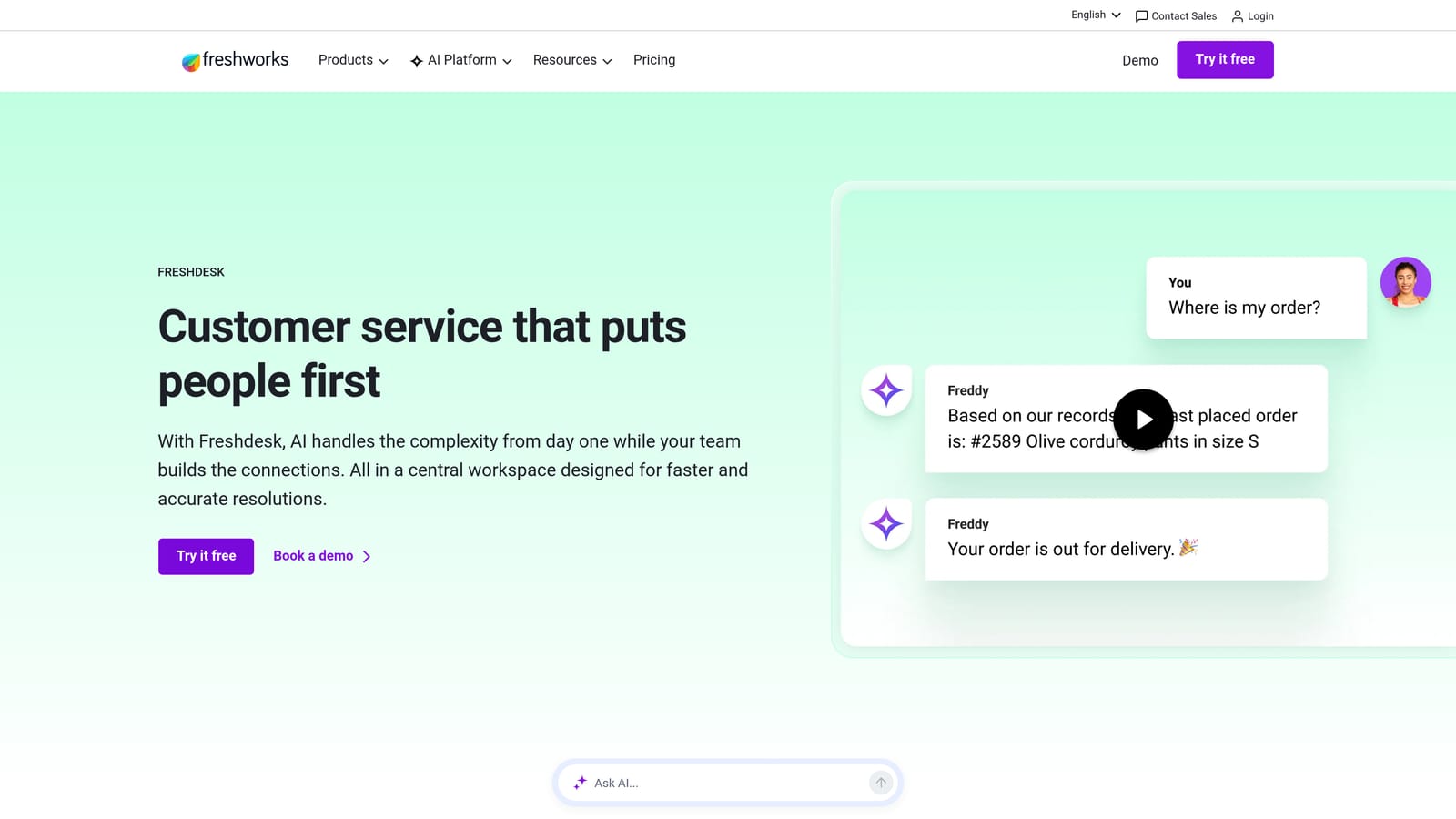
Freshdesk is Freshworks' helpdesk solution offering a competitive feature set at accessible pricing, with Freddy AI providing automation and agent assistance.
Where This Tool Shines
Freshdesk punches above its price point. The platform covers omnichannel support, solid automation rules, and collaboration features like linked tickets and parent-child ticket structures that help teams manage complex, multi-step issues without losing context. For teams that don't need enterprise-grade complexity but have outgrown a basic shared inbox, Freshdesk hits a practical sweet spot.
Freddy AI adds ticket summarization, suggested responses, and some degree of autonomous resolution. It's a meaningful productivity layer, though teams looking for deep autonomous AI resolution should calibrate expectations accordingly. The broader Freshworks ecosystem — including Freshchat and Freshsales — is worth considering for teams that want a single vendor across support, chat, and CRM.
Key Features
Freddy AI: Handles ticket summarization, suggested responses, and some autonomous resolution to reduce agent workload.
Collaboration Tools: Linked tickets and parent-child structures help teams manage complex, multi-step support scenarios cleanly.
Omnichannel Support: Manages email, chat, phone, and social channels from a unified agent view.
Automation Rules: Configurable routing, tagging, and SLA management without requiring developer involvement.
Freshworks Ecosystem: Native integration with Freshchat and Freshsales for teams building on a unified Freshworks stack.
Best For
SMBs, growing startups, and mid-market teams that need a reliable, full-featured helpdesk at a price point that doesn't require enterprise budget approval. Also a strong choice for teams already invested in the Freshworks ecosystem.
Pricing
Free plan available for small teams; paid plans start at approximately $15 per agent per month, making it one of the more accessible options in this category.
5. Gorgias
Best for: E-commerce brands, particularly Shopify merchants managing high-volume order-related support
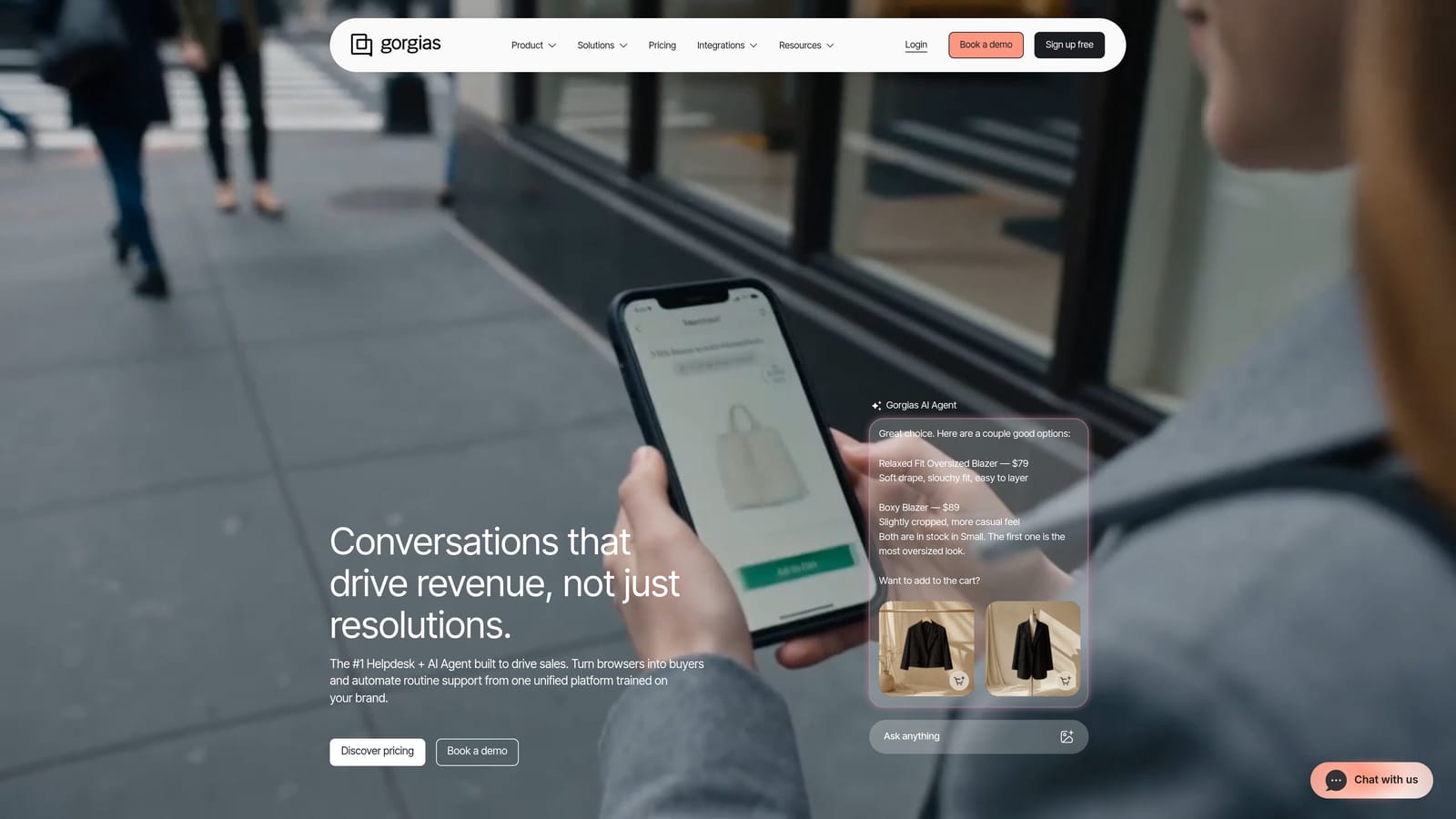
Gorgias is a helpdesk built specifically for e-commerce brands, with native Shopify integration that pulls order data directly into support conversations.
Where This Tool Shines
Gorgias does one thing exceptionally well: it makes e-commerce support fast. When an agent opens a ticket, they see the customer's order history, shipping status, and return eligibility without switching tabs or querying another system. For Shopify merchants handling large volumes of "where's my order" and return requests, this alone dramatically reduces handle time.
The revenue attribution feature is a genuine differentiator. Gorgias tracks when support interactions influence a purchase, giving support teams data to demonstrate their impact on revenue rather than just cost. For DTC brands trying to reframe support as a growth function, that's a compelling narrative to bring to leadership.
Key Features
Native E-Commerce Integrations: Shopify, BigCommerce, and Magento data surfaces directly inside ticket conversations.
Automated Order Responses: Handles common queries around order status, returns, and cancellations without agent involvement.
Revenue Attribution: Tracks and reports on support's measurable influence on sales and conversions.
Macros and Rules: High-volume automation for tagging, routing, and responding to common inquiry types.
Omnichannel Inbox: Consolidates email, chat, social, and SMS into a single support queue.
Best For
DTC and e-commerce brands — especially Shopify merchants — with high volumes of order-related support. Less relevant for B2B SaaS teams whose support needs don't center around transactional e-commerce workflows.
Pricing
Starts at approximately $10 per month for low ticket volumes; pricing scales with ticket count rather than seat count, which suits seasonal or variable-volume businesses.
6. Help Scout
Best for: Teams that want a clean, human-friendly support experience without the complexity of a full enterprise helpdesk
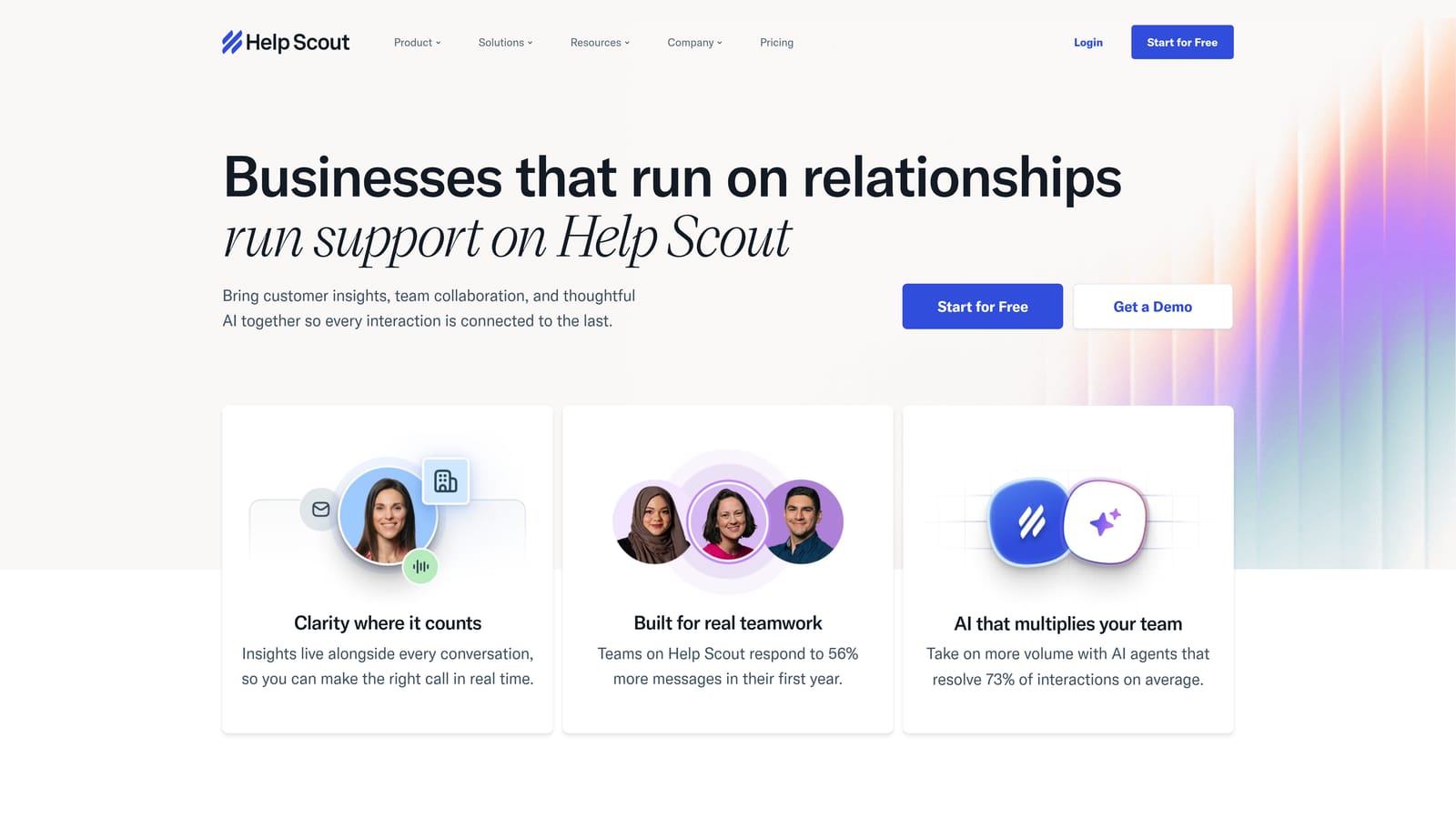
Help Scout is a clean, email-native shared inbox platform designed to keep support feeling human, with a Beacon widget for in-product help and a built-in knowledge base.
Where This Tool Shines
Help Scout's design philosophy is deliberately different from most helpdesks. There are no ticket numbers visible to customers — conversations feel like email exchanges, which keeps the interaction warm and reduces the friction that comes with formal support systems. For teams where relationship quality matters as much as resolution speed, that's a meaningful distinction.
The Beacon widget extends this philosophy into the product itself, offering in-app self-service, knowledge base search, and proactive messaging without requiring a separate tool. AI Summarize and AI Assist add productivity features for agents, though Help Scout is transparent that its AI layer is assistive rather than fully autonomous.
Key Features
Shared Inbox Without Ticket Numbers: Conversations feel like genuine email exchanges, preserving a human quality in customer interactions.
Beacon Widget: Delivers in-product self-service, knowledge base search, and proactive messaging from a lightweight widget.
Docs Knowledge Base: Built-in self-service documentation with search and contextual article suggestions.
AI Summarize and AI Assist: Agent productivity tools for summarizing long threads and drafting responses faster.
Customer Profiles: Conversation history and connected app data visible alongside every support interaction.
Best For
Small to mid-sized teams that prioritize relationship-driven support and want a tool their agents will actually enjoy using. Also a strong fit for companies where support is a brand differentiator, not just a cost center.
Pricing
Starts at approximately $22 per user per month on the Standard plan, with higher tiers available for larger teams or advanced features.
7. Guru
Best for: Support teams whose efficiency bottleneck is finding the right answer, not routing or ticket management
Guru is an AI-powered knowledge management platform that surfaces verified answers inside any tool your team already uses, reducing the time agents spend searching for information.
Where This Tool Shines
Guru addresses a specific but pervasive problem: agents spending too much time hunting for accurate information across wikis, Slack threads, and outdated documentation. The browser extension delivers relevant, verified answers in-context inside whatever tool the agent is already working in — whether that's Zendesk, Intercom, or a custom internal system.
The knowledge verification system is what separates Guru from a standard wiki. Content owners are prompted to review and confirm their knowledge cards on a schedule, which means agents can trust that the answer they're seeing is current. The analytics layer surfaces knowledge gaps and trending search queries, giving support managers visibility into where documentation is failing their team.
Key Features
Browser Extension: Delivers verified answers in-context inside any workflow, without requiring agents to switch tools.
AI Answers: Lets agents query the knowledge base conversationally and receive synthesized responses rather than raw search results.
Knowledge Verification System: Prompts content owners to regularly review and confirm accuracy, keeping the knowledge base trustworthy.
Knowledge Gap Analytics: Surfaces what agents are searching for but not finding, identifying documentation priorities.
Integrations: Connects with Slack, Zendesk, Intercom, Salesforce, and other core tools in the support stack.
Best For
Support teams at companies with complex products, frequent policy changes, or large distributed teams where information consistency is a real challenge. Guru complements a helpdesk rather than replacing it — it's a layer that makes every other tool more effective.
Pricing
Free plan available for small teams; paid plans start at approximately $10 per user per month, making it accessible alongside an existing helpdesk investment.
8. Aircall
Best for: Support teams with meaningful voice volume that need call analytics, intelligent routing, and helpdesk integration
Aircall is a cloud-based phone system built for support and sales teams, with call analytics, intelligent routing, and integrations with major CRMs and helpdesks.
Where This Tool Shines
For teams where voice is a significant support channel, Aircall brings structure and intelligence to what is often the least optimized part of the support stack. IVR routing, business-hours logic, and queue monitoring give managers real-time visibility into call operations — something that's harder to achieve with basic phone systems or consumer VoIP tools.
The coaching and recording features are particularly valuable for support managers. Call transcription, live listening, and whisper coaching create a feedback loop that helps agents improve over time. Combined with deep integrations into Zendesk, HubSpot, and Intercom, Aircall ensures that voice interactions are logged and connected to the broader customer record rather than living in isolation.
Key Features
Cloud IVR and Call Routing: Intelligent routing with business-hours logic, skill-based routing, and queue management.
Call Recording and Transcription: Automatic recording and transcription for compliance, coaching, and quality assurance.
Real-Time Analytics: Live queue monitoring and performance dashboards for support managers.
CRM and Helpdesk Integrations: Deep connections with HubSpot, Salesforce, Zendesk, and Intercom to keep voice interactions in context.
Power Dialer: Outbound follow-up workflows for teams that need to proactively reach customers by phone.
Best For
Support teams handling meaningful inbound call volume who need more structure, analytics, and integration than a basic phone system provides. Less relevant for teams that are primarily chat or email-based.
Pricing
Starts at approximately $30 per license per month on the Essentials plan, with a minimum of three licenses required.
9. Klaviyo
Best for: E-commerce and consumer brands that want to reduce inbound support volume through proactive, behavior-triggered communication
Klaviyo is a behavioral marketing automation platform that reduces inbound support volume by proactively reaching customers with the right message before they need to submit a ticket.
Where This Tool Shines
Klaviyo's inclusion in a support efficiency list might raise an eyebrow, but the logic is straightforward: the most efficient support interaction is the one that never happens. By sending targeted, behavior-triggered messages — shipping confirmations, onboarding nudges, usage drop-off alerts — teams can resolve confusion or anxiety before it turns into a ticket. This upstream approach to support deflection is genuinely underutilized.
The segmentation engine is what makes this practical rather than theoretical. Teams can identify customers who are likely to be confused, at risk of churning, or approaching a decision point, and reach them with precisely the right message at the right moment. The result is fewer reactive tickets and more customers who feel informed and supported without ever needing to contact your team.
Key Features
Behavioral Triggers: Automated messages based on product usage, purchase history, lifecycle stage, or inactivity signals.
Email and SMS Automation: Multi-channel proactive communication to reach customers on their preferred channel.
Advanced Segmentation: Target at-risk or confused customers before they escalate or churn.
A/B Testing: Test message variants to optimize for engagement and deflection effectiveness over time.
E-Commerce Integrations: Native connections with Shopify, Salesforce, and major e-commerce platforms.
Best For
E-commerce brands and consumer SaaS companies that want to reduce ticket volume at the source. Klaviyo works best as a complement to a helpdesk stack — it deflects the tickets that don't need to exist, freeing your support team to focus on interactions that genuinely require human attention.
Pricing
Free plan available for up to 250 contacts; paid plans scale with contact list size, making it accessible for businesses at various stages of growth.
Which Tool Is Right for Your Team?
The honest answer is that no single tool wins for every team. The right choice depends on where your efficiency bottleneck actually lives — whether that's ticket volume, information retrieval, voice channel chaos, or inbound requests that shouldn't exist in the first place.
Here's a quick orientation by use case:
For B2B SaaS teams ready to go AI-first: Halo AI is the strongest choice for teams that want autonomous resolution, page-aware product guidance, and business intelligence signals beyond standard support metrics. It's built for this from the ground up rather than retrofitting AI onto a legacy helpdesk.
For enterprise teams with complex omnichannel needs: Zendesk remains the most mature option, with the integration ecosystem and reporting depth that large organizations require — though it comes with meaningful admin overhead and pricing to match.
For PLG and chat-first SaaS companies: Intercom's combination of Fin AI, product tours, and behavioral messaging makes it a natural fit, particularly if support, onboarding, and proactive outreach all need to live in one platform.
For SMBs watching budget carefully: Freshdesk delivers a capable, full-featured experience at a price point that doesn't require enterprise sign-off, especially for teams already considering the broader Freshworks ecosystem.
For e-commerce brands: Gorgias is the clear category leader for Shopify merchants and DTC brands, while Klaviyo adds a powerful upstream deflection layer that keeps ticket volume manageable in the first place.
For teams whose bottleneck is knowledge, not routing: Guru is worth evaluating as a complement to whatever helpdesk you're already running. It makes every other tool more effective by ensuring agents can find accurate answers quickly.
The broader shift happening across this market is the move from AI-assisted to genuinely AI-first support. Tools that simply suggest responses for agents to approve are becoming table stakes. The platforms gaining ground are those that resolve tickets autonomously, surface intelligence beyond support metrics, and feed signals back into the broader organization.
Your support team shouldn't scale linearly with your customer base. Let AI agents handle routine tickets, guide users through your product, and surface business intelligence while your team focuses on complex issues that need a human touch. See Halo in action and discover how continuous learning transforms every interaction into smarter, faster support.