9 Best Customer Support Tools for Enterprise Software in 2026
Enterprise software teams require specialized customer support tools that can handle complex technical issues, strict SLAs, and high-value accounts at scale. This guide evaluates the nine best platforms for customer support for enterprise software, comparing AI capabilities, integration depth, and escalation management to help teams replace legacy systems or enhance existing workflows.
 Grant CooperFounder14 min read
Enterprise software companies face a support challenge that's fundamentally different from everyone else. Your users are technically sophisticated, your products are complex, and your SLA commitments don't bend. A ticket about a misconfigured API integration or a billing discrepancy affecting a $200K account isn't something a basic chatbot handles gracefully.
The tools that work for a scrappy startup collapse under the weight of global support queues, multi-department escalation paths, and the integration demands of a mature software operation. You need platforms built for this environment, not adapted to it.
This guide covers the best customer support platforms for enterprise software teams, evaluated on AI capability depth, integration breadth, SLA management, and the ability to handle genuinely complex technical support scenarios. Whether you're replacing a legacy ticketing system or layering AI automation onto an existing stack, here's what's worth your attention.
1. Halo AI
Best for: Enterprise software teams that want autonomous AI ticket resolution without scaling headcount
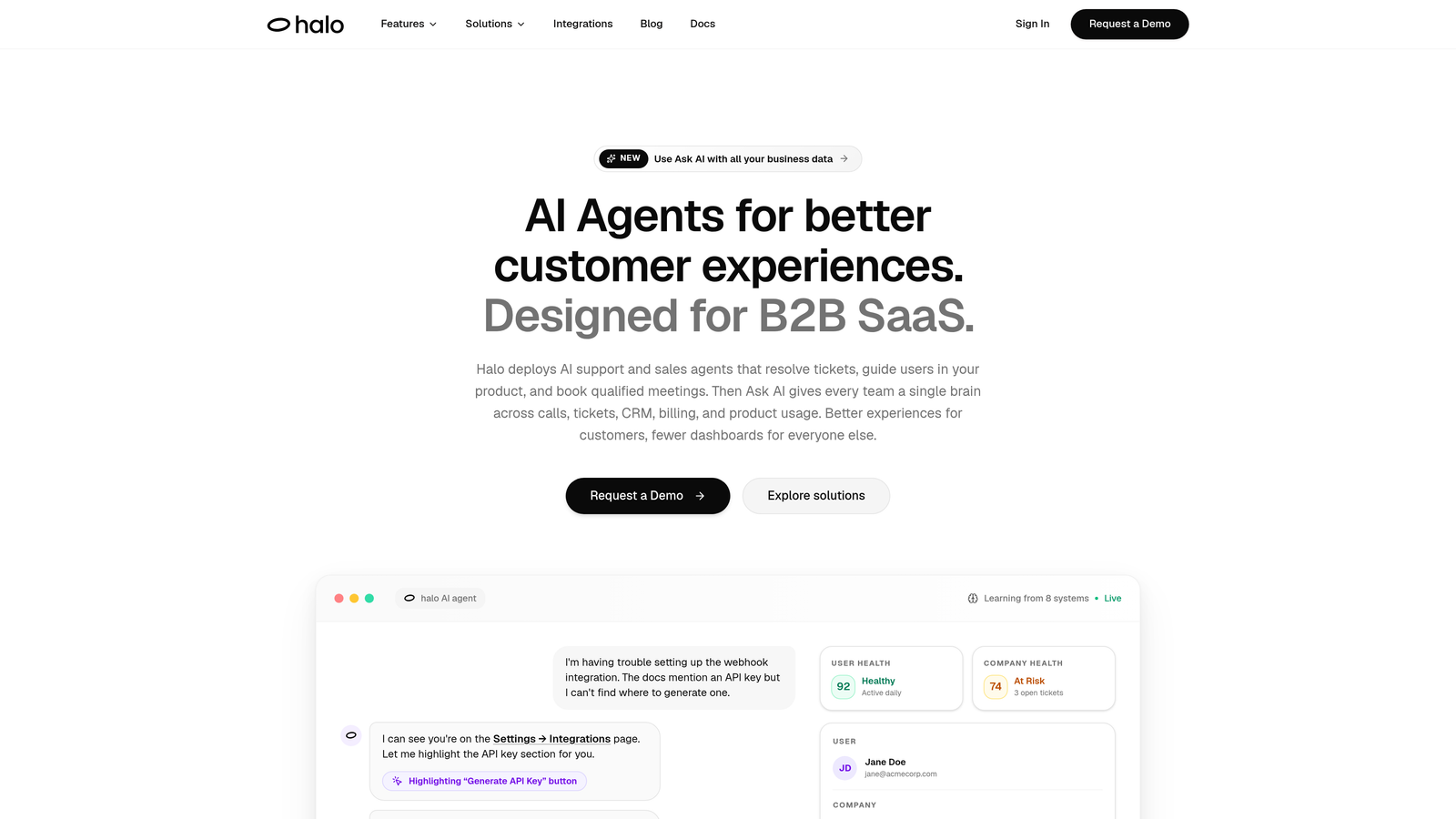
Halo AI is an AI-native customer support platform that deploys autonomous agents to resolve tickets, guide users through your product with page-aware context, and surface business intelligence signals from every support interaction.
Where This Tool Shines
Most support tools add AI as a layer on top of existing workflows. Halo is built AI-first, which changes what's actually possible. Its agents don't just suggest responses for a human to approve; they resolve tickets end-to-end, handling the full interaction autonomously and escalating to a live agent only when the situation genuinely requires it.
The page-aware chat widget is a standout capability. It understands what users are looking at in real time, allowing it to provide contextual UI guidance rather than generic knowledge base links. Pair that with auto bug ticket creation routed directly to Linear or Jira with full context preserved, and you have a support layer that doesn't just close tickets: it feeds intelligence back into your product and engineering teams.
Key Features
Autonomous AI Agents: Resolve tickets end-to-end without requiring human approval on each response, with live agent handoff when complexity warrants it.
Page-Aware Chat Widget: Sees what the user sees in your product and delivers visual UI guidance rather than static documentation links.
Auto Bug Ticket Creation: Automatically generates and routes bug reports to Linear or Jira with full conversation context, closing the loop between support and engineering.
Smart Inbox with Business Intelligence: Surfaces customer health signals, revenue anomalies, and churn indicators from support data, turning your inbox into a revenue intelligence layer.
Native Integration Stack: Connects out of the box to Linear, Slack, HubSpot, Intercom, Stripe, Zoom, PandaDoc, and Fathom, covering the full enterprise software toolchain.
Best For
B2B software companies that want to move beyond reactive ticketing and into proactive, intelligent support. Particularly well-suited for product-led growth companies, SaaS teams with complex products, and operations where support data should be feeding back into customer success and revenue workflows.
Pricing
Contact for enterprise pricing. Full details are available at haloagents.ai.
2. Zendesk
Best for: Large enterprises that need a battle-tested helpdesk with deep customization and SLA control
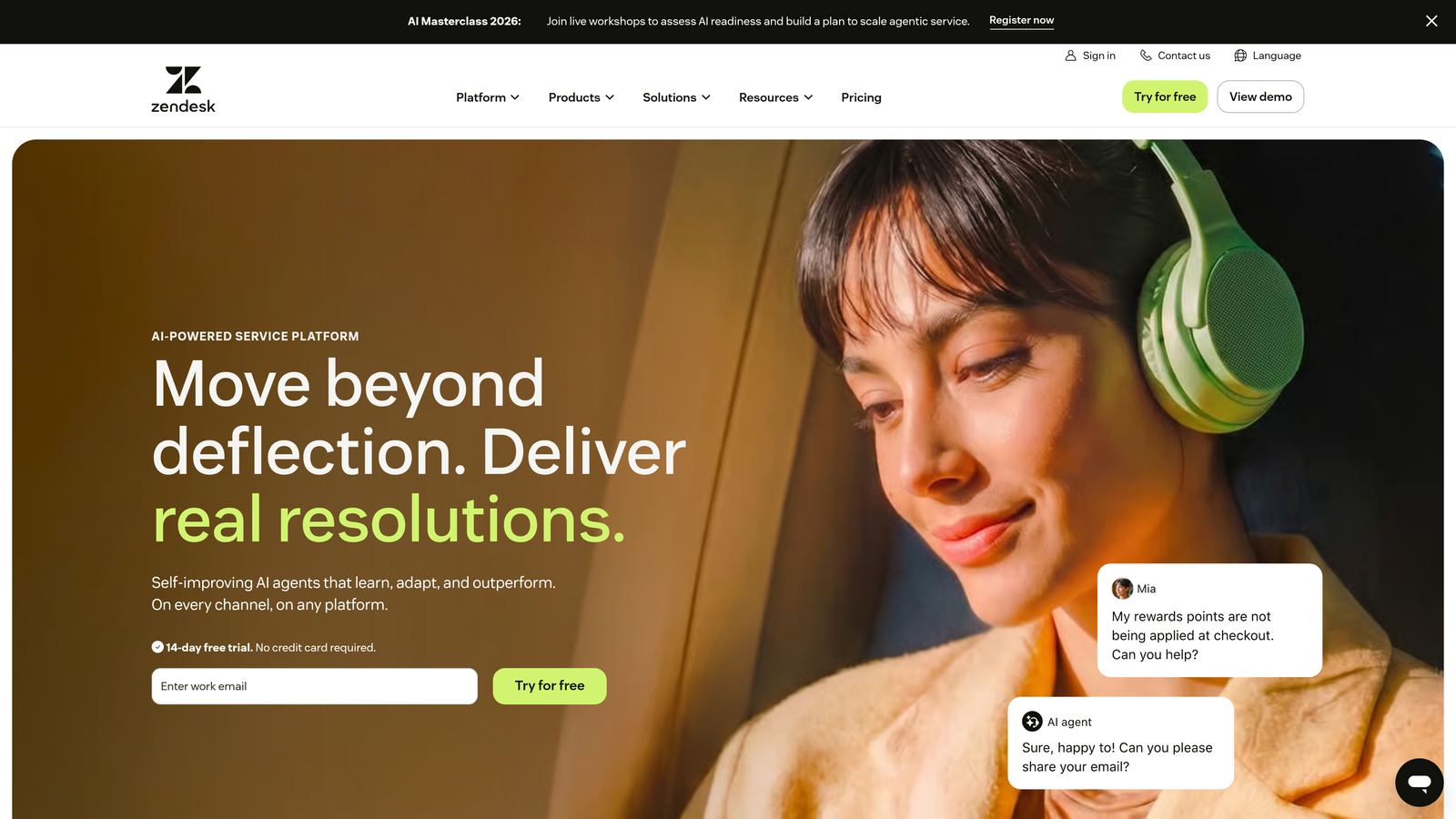
Zendesk is the most widely deployed enterprise helpdesk platform, offering mature ticketing infrastructure, robust SLA management, and one of the largest integration marketplaces in the category.
Where This Tool Shines
Zendesk's strength is configurability. You can model almost any support workflow, build custom views and routing logic, and enforce SLA policies with time-based escalation rules that have been refined over years of enterprise deployments. It's the platform that enterprise procurement teams recognize and that enterprise IT teams know how to implement.
Zendesk AI, built on their acquisition of Ultimate, adds ticket classification, agent response suggestions, and automated resolution capabilities. It's a meaningful improvement over the legacy rule-based automation, though it operates as an added layer rather than a foundational architecture decision.
Key Features
Mature SLA Management: Time-based escalation rules, breach alerts, and SLA reporting built for multi-tier enterprise commitments.
Zendesk AI: Ticket classification, agent suggestions, and automated resolution workflows layered onto the core helpdesk.
1,000+ Integrations: The Zendesk Marketplace covers CRMs, billing, project management, and communication tools across virtually every enterprise stack.
Advanced Reporting: Custom dashboards and operational analytics for enterprise support leaders tracking volume, resolution time, and team performance.
Omnichannel Support: Email, chat, voice, and social channels managed from a unified agent workspace.
Best For
Enterprise software organizations that need a proven, highly configurable helpdesk with strong SLA controls and a large ecosystem of pre-built integrations. Works well for teams with dedicated Zendesk admins who can manage the configuration complexity.
Pricing
Suite Team starts around $55 per agent per month. Enterprise plans are custom and usage-based at scale.
3. Intercom
Best for: SaaS companies that want conversational support woven into the product experience across the full customer lifecycle
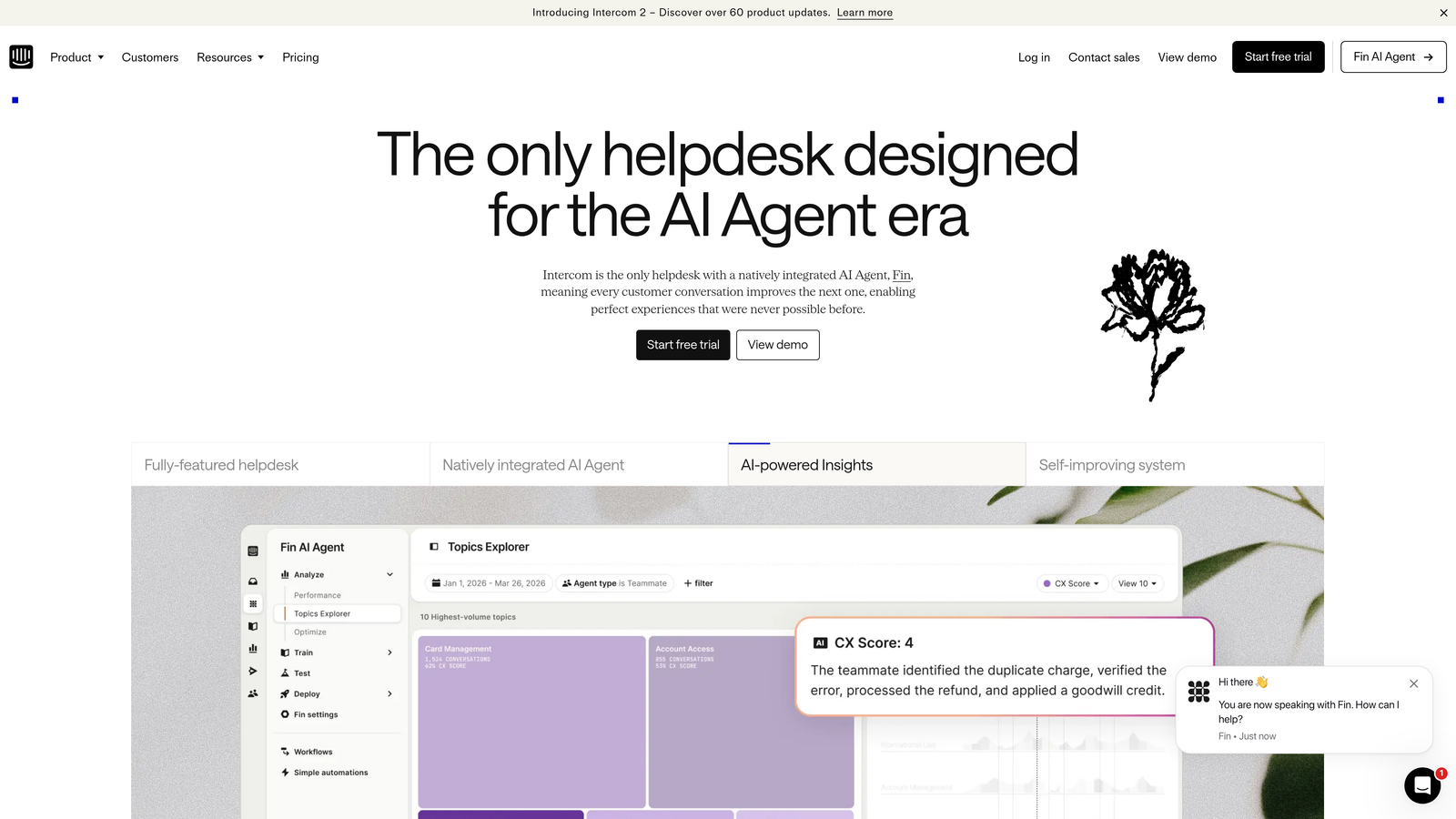
Intercom is a conversational support platform that unifies in-app messaging, AI-powered resolution, and customer onboarding in a single product.
Where This Tool Shines
Intercom occupies a unique position: it's not just a support tool, it's a customer communication platform that spans sales, onboarding, and support. For product-led growth SaaS companies, this matters. The same messenger that captures a trial user's question can deliver an onboarding tour, send a proactive message about a new feature, or escalate to a support agent without any context loss.
Fin, Intercom's AI agent, handles autonomous conversation resolution across the support channel. It's one of the more capable AI resolution products in the market, particularly for software companies with well-structured knowledge bases for it to draw from.
Key Features
Fin AI Agent: Autonomous conversation resolution that handles support queries end-to-end before routing to a human agent.
Unified Messenger: A single in-app surface spanning support, sales outreach, and onboarding touchpoints.
Proactive Messaging: In-app product tours and triggered messages that reduce inbound support volume by addressing friction before it becomes a ticket.
Shared Inbox: Assignment rules, collision detection, and team routing for managing support queues across agents.
Customer Data Platform: Behavioral segmentation based on product usage data, enabling targeted messaging and support prioritization.
Best For
SaaS companies with a strong product-led growth motion, particularly where support, onboarding, and sales touchpoints benefit from a unified communication layer. Less suited for pure ticketing workflows without an in-app component.
Pricing
Essential starts around $39 per seat per month. Advanced and Expert tiers are available, with custom pricing for enterprise.
4. Freshdesk
Best for: Growing enterprise teams that want multi-channel automation and AI at a competitive price point
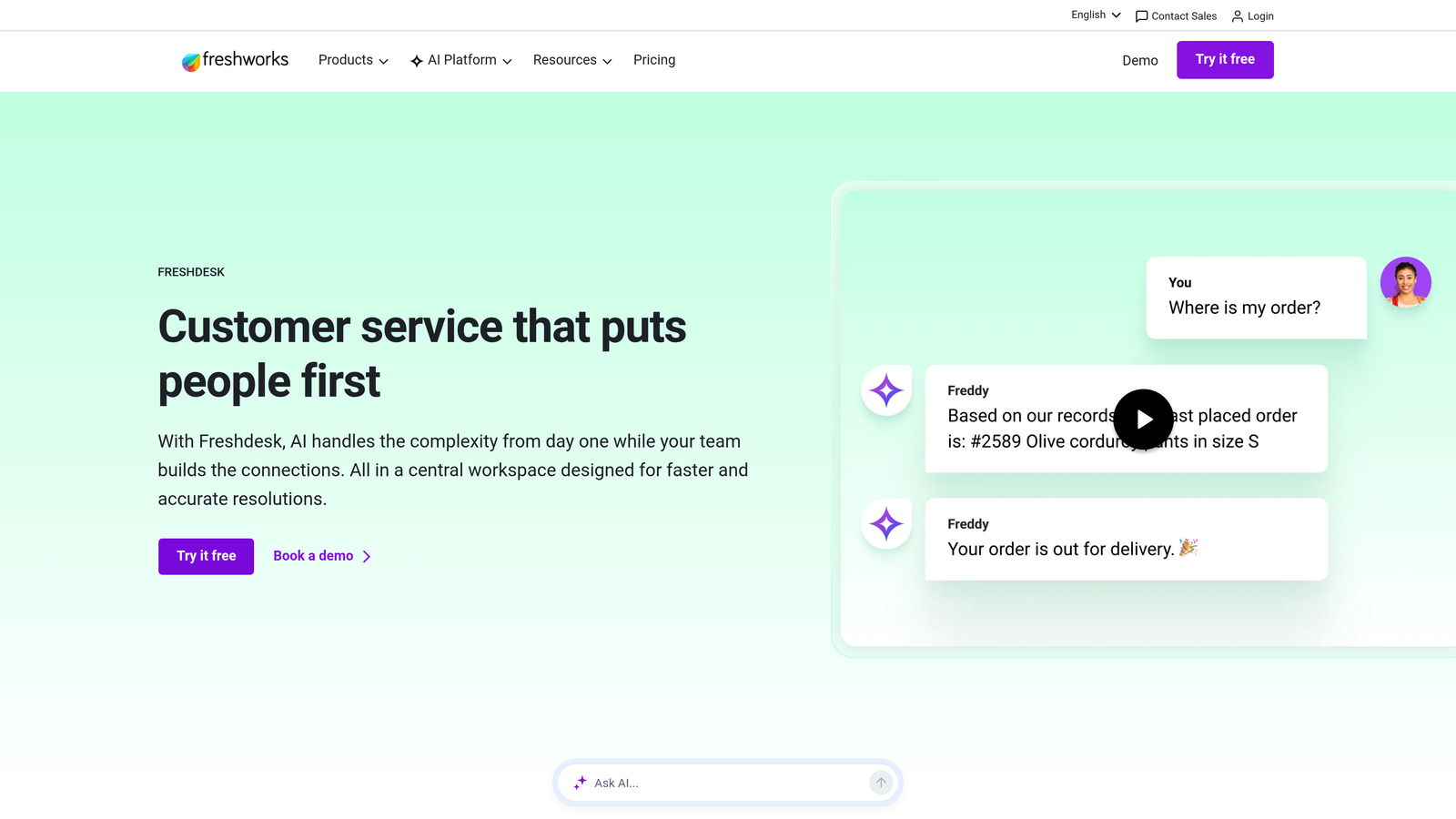
Freshdesk is a scalable multi-channel helpdesk with Freddy AI built natively into the workflow, positioned as a feature-rich alternative to Zendesk without the enterprise price tag.
Where This Tool Shines
Freshdesk covers a lot of ground for its price. Freddy AI handles ticket classification, suggests responses to agents, and can automate resolution for common query types. The multi-channel coverage is genuinely broad, including email, chat, phone, social, and WhatsApp, which matters for enterprise software companies supporting customers across different communication preferences.
One underrated capability is the parent-child ticketing system, which allows complex, multi-step issues to be broken into sub-tickets managed by different teams while keeping the parent case visible to the customer. For enterprise software support where a single issue might involve billing, engineering, and customer success simultaneously, this is a practical workflow advantage.
Key Features
Freddy AI: Native AI for ticket classification, suggested agent responses, and resolution automation built into the core workflow.
Multi-Channel Coverage: Email, chat, phone, social, and WhatsApp managed from a single helpdesk interface.
Parent-Child Ticketing: Complex multi-step issues decomposed into linked sub-tickets handled across teams without losing the parent case context.
Collision Detection: Prevents duplicate agent responses when multiple team members access the same ticket simultaneously.
Freshservice Integration: Native connection to Freshworks' ITSM product for companies managing both customer support and internal IT operations.
Best For
Mid-market and enterprise software teams looking for strong multi-channel coverage and AI automation at a more accessible price point than Zendesk's enterprise tiers. Particularly useful for organizations already in the Freshworks ecosystem.
Pricing
Growth starts around $15 per agent per month. Pro and Enterprise tiers are available. A free plan exists for small teams.
5. Salesforce Service Cloud
Best for: Enterprise organizations already on Salesforce CRM that need support and account data unified in one place
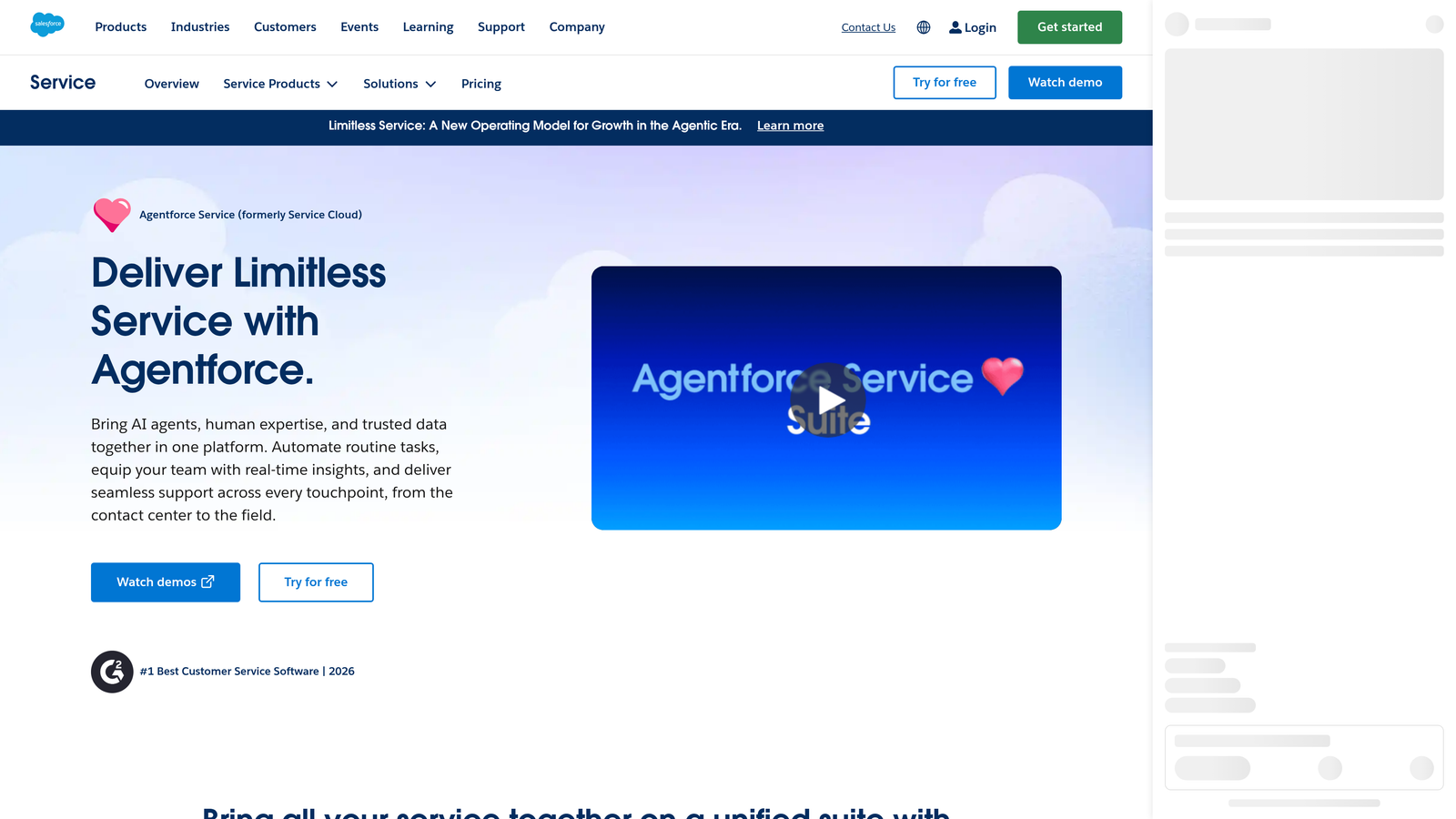
Salesforce Service Cloud is enterprise support built on the Salesforce platform, giving support agents full visibility into customer revenue history, open deals, and account health alongside every ticket they handle.
Where This Tool Shines
The core value proposition of Service Cloud is context. When a support agent opens a case, they see the full Salesforce account record: deal history, open opportunities, renewal dates, account health scores. For enterprise software companies where a support interaction can directly influence a renewal or expansion, this visibility changes how agents prioritize and respond.
Einstein AI adds case classification, knowledge article suggestions, and next-best-action recommendations within that same context. The workflow automation via Flow builder is also enterprise-grade, capable of modeling complex escalation paths and cross-team routing without custom code.
Key Features
Native Salesforce CRM Integration: Support agents see the full account picture, including deal history, account health, and open opportunities, on every case.
Einstein AI: Case classification, knowledge article suggestions, and next-best-action recommendations powered by Salesforce's AI layer.
Omni-Channel Routing: Intelligent case assignment across teams based on skills, availability, and case attributes.
Flow Builder Automation: Enterprise-grade workflow automation for complex escalation paths and cross-department routing without requiring custom development.
Self-Service Portal: Customer-facing knowledge base and case submission portal for organizations that want to reduce inbound volume.
Best For
Enterprise software companies already invested in the Salesforce ecosystem where unified CRM and support data is a strategic priority. Requires meaningful implementation investment and typically benefits from dedicated Salesforce admin resources.
Pricing
Starter Suite from around $25 per user per month. Enterprise and Unlimited tiers are custom and typically require a formal sales engagement.
6. ServiceNow Customer Service Management
Best for: Large enterprises where customer support intersects with IT operations, field service, and complex back-office workflows
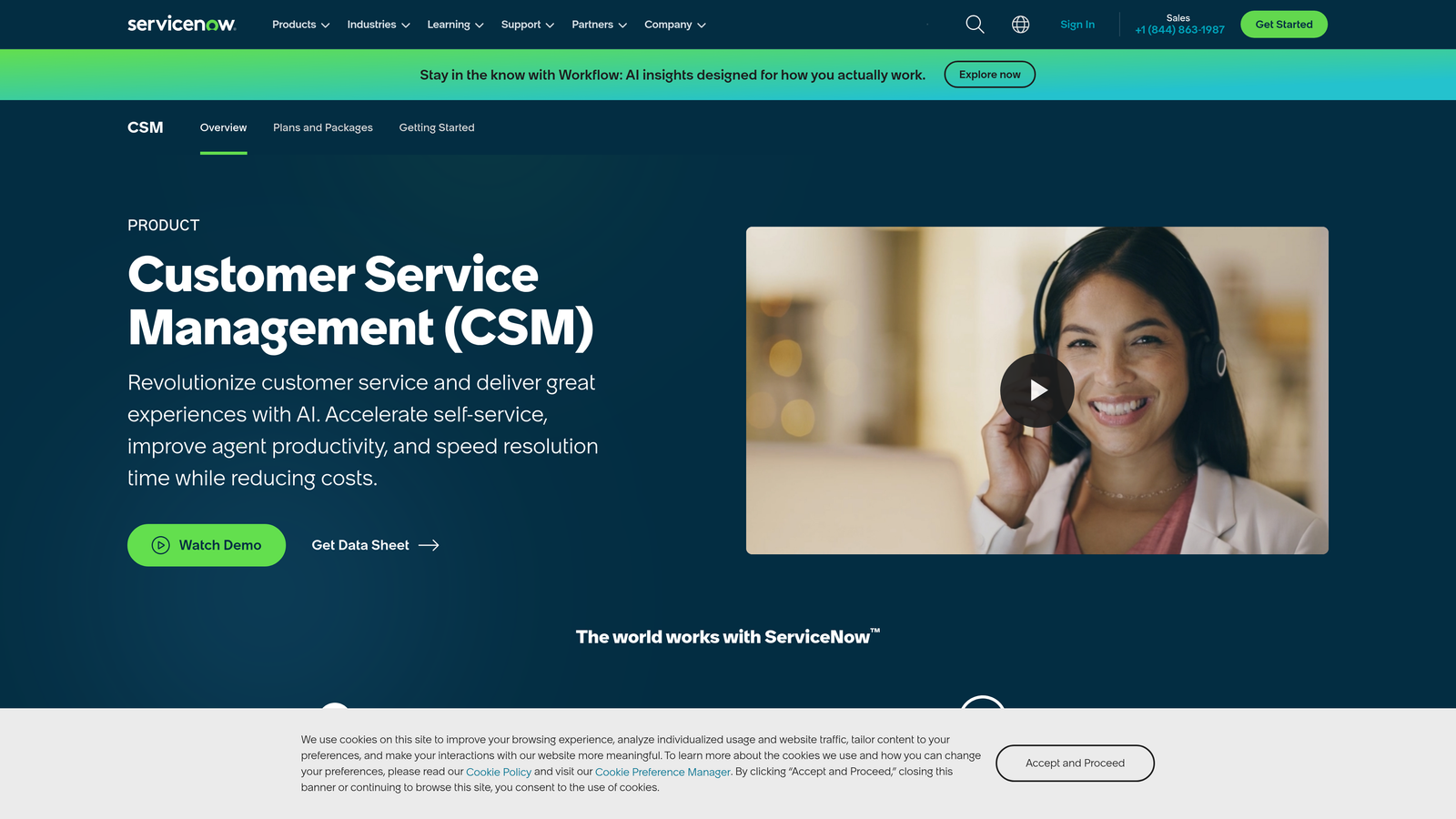
ServiceNow Customer Service Management is an ITSM-heritage enterprise platform that connects customer support to back-office operations, IT, and field service through powerful cross-department workflow automation.
Where This Tool Shines
ServiceNow's differentiation is depth of workflow automation across organizational boundaries. A customer support case can trigger an IT incident, escalate to a field service team, or initiate a procurement workflow, all within the same platform. For enterprise software companies where customer issues frequently require engineering or infrastructure involvement, this cross-department orchestration is genuinely powerful.
The proactive service capability is also notable: ServiceNow can use monitoring data to detect potential issues and create cases before customers submit tickets. At the enterprise scale where ServiceNow typically operates, preventing a ticket is often worth more than resolving one quickly.
Key Features
Cross-Department Case Routing: Connects support, IT, operations, and engineering in a single workflow, eliminating handoff gaps between teams.
Now Assist AI: Case summarization, resolution suggestions, and agent productivity features powered by ServiceNow's generative AI layer.
Proactive Customer Service: Uses monitoring data to detect and resolve issues before customers submit tickets.
Self-Service Portal: Knowledge management, community forums, and case submission for customer-facing deflection at scale.
Enterprise Compliance Controls: Audit trails, role-based access, and compliance reporting for regulated industries and large enterprise governance requirements.
Best For
Large enterprises where customer support is one component of a broader service management operation. Requires dedicated admin and developer resources to implement and maintain. Best suited for organizations already in the ServiceNow ecosystem.
Pricing
Custom enterprise pricing. Typically requires a formal sales engagement and implementation partnership.
7. Kustomer
Best for: High-volume omnichannel operations where the customer relationship matters more than individual ticket metrics
Kustomer is a CRM-first support platform where the core object is the customer, not the ticket, giving agents a full omnichannel timeline of every interaction across all channels and touchpoints.
Where This Tool Shines
The fundamental architectural difference in Kustomer is that tickets don't exist as the primary unit. Instead, agents see a chronological customer timeline that merges email, chat, SMS, social, and voice into a single record. This eliminates the fragmentation that happens when the same customer contacts you across multiple channels and ends up as three separate tickets assigned to three different agents.
Kustomer's flexible data model is also worth noting for enterprise software companies with complex customer attributes. You can create custom objects that represent anything in your business, subscriptions, product configurations, account tiers, and surface them directly in the agent view.
Key Features
Customer Timeline View: Merges email, chat, SMS, social, and voice into a single chronological record per customer rather than per ticket.
AI-Powered Intent Detection: Identifies customer intent and triggers automated resolution workflows before routing to a human agent.
Flexible Data Model: Custom objects and business-specific attributes that surface relevant context directly in the agent workspace.
Skill-Based Omnichannel Routing: Routes conversations based on agent skills, availability, and customer attributes across all channels simultaneously.
Retention-Focused Reporting: Analytics connecting support interactions to customer lifetime value and retention outcomes.
Best For
Enterprise operations managing high volumes of omnichannel interactions where relationship continuity and customer context are critical. Note that Kustomer is Meta-owned, which some enterprise buyers factor into their data governance evaluations.
Pricing
Enterprise and Ultimate plans with custom pricing. Contact Kustomer directly for details.
8. Gladly
Best for: Enterprises where agent-customer relationship continuity and full interaction history define the support experience
Gladly is a people-centric support platform that threads all conversations by customer identity rather than ticket number, preserving relationship context across every agent interaction.
Where This Tool Shines
Gladly's core design decision, replacing ticket numbers with person-based conversation threading, has real operational implications. When a customer contacts support, the agent sees every previous conversation that customer has ever had, regardless of which channel they used or which agent handled it. There's no "can you give me your ticket number?" friction, and no context is lost between interactions.
Sidekick, Gladly's AI agent, handles self-service resolution before conversations reach a live agent, with the full customer history available to inform its responses. When escalation happens, the live agent inherits that complete context seamlessly.
Key Features
Person-Based Conversation Threading: Full relationship history across all channels tied to customer identity, with no ticket numbers fragmenting the record.
Sidekick AI: Self-service resolution layer that handles common queries with full customer context before routing to a live agent.
Unified Omnichannel Inbox: Voice, email, chat, SMS, and social managed in a single agent view without channel-switching.
Customer Lifetime Value Display: Agents see the customer's revenue value during every interaction, enabling appropriate prioritization and tone.
Task Management: Follow-up actions tied directly to customer records rather than floating in a separate task system.
Best For
Enterprise software companies with high-touch customer relationships where agent continuity and relationship history are a competitive differentiator. Less common in pure transactional software support but well-suited for enterprise accounts with complex, ongoing relationships.
Pricing
Hero and Super Hero agent plans with custom enterprise pricing. Contact Gladly for details.
9. Gorgias
Best for: Enterprise software companies with a commerce component or high-volume transactional support needs
Gorgias is a support platform built for high-volume transactional support, with deep e-commerce integrations and macro automation that handles repetitive queries at scale.
Where This Tool Shines
Gorgias earns its place on this list for enterprise software companies that have a meaningful commerce or subscription management dimension to their support operations. Its deep Shopify, Magento, and BigCommerce integrations mean that order-related queries, refund requests, and subscription changes can be handled with full transaction context pulled directly into the agent view.
The macro and rule automation is particularly strong for deflecting high-volume repetitive queries before they consume agent time. Automate AI adds intent detection and autonomous resolution on top of that, handling common query patterns without human involvement.
Key Features
Deep Commerce Integrations: Native Shopify, Magento, and BigCommerce connections that surface order and transaction data directly in support conversations.
Macro and Rule Automation: High-volume repetitive ticket deflection through pre-built response macros and conditional routing rules.
Automate AI: Intent detection and autonomous resolution for common query patterns before they reach a live agent.
Revenue Statistics: Links support interactions to conversion and retention outcomes, surfacing the business impact of support operations.
Multi-Store Support: Manages support across multiple stores, brands, or product lines from a single workspace.
Best For
Enterprise software companies with an e-commerce or high-volume transactional support component. Also relevant for software businesses managing subscription billing support at scale where order-level context accelerates resolution.
Pricing
Starter from around $10 per month. Pro and Advanced tiers scale by ticket volume. Enterprise pricing is custom.
Choosing the Right Platform for Your Operation
The right tool depends entirely on where your biggest constraint lives. Here's a quick decision guide based on primary need.
If your goal is autonomous AI resolution without scaling headcount, Halo AI is the only platform on this list built AI-first from the ground up, with the added advantage of surfacing business intelligence signals from support data that most tools simply don't capture.
If you need a proven enterprise ticketing backbone with deep SLA controls and a large integration ecosystem, Zendesk remains the market standard. The configuration complexity is real, but so is the maturity of the platform.
For conversational, product-led support woven into the in-app experience, Intercom's unified messenger and Fin AI agent make it the strongest choice for SaaS companies where support and onboarding share the same surface.
Teams looking for multi-channel automation at a competitive price will find Freshdesk delivers a strong feature set, particularly with parent-child ticketing for complex enterprise issues. For organizations already deep in the Salesforce ecosystem, Service Cloud's unified CRM and support data model is hard to replicate elsewhere. And for enterprises where support intersects with IT and back-office operations, ServiceNow's cross-department workflow orchestration stands alone.
Kustomer suits high-volume omnichannel operations where the customer relationship is the primary unit of work. Gladly fits enterprises where relationship continuity across every agent interaction is a strategic differentiator. And Gorgias is the clear choice for operations with a significant commerce or transactional support dimension.
Your support team shouldn't scale linearly with your customer base. Let AI agents handle routine tickets, guide users through your product, and surface business intelligence while your team focuses on complex issues that need a human touch. See Halo in action and discover how continuous learning transforms every interaction into smarter, faster support.