10 Best Customer Support Platforms for Enterprises in 2026
Enterprise customer support requires platforms that handle thousands of daily tickets across channels, languages, and time zones without breaking down. This comprehensive guide evaluates ten customer support platforms for enterprises based on scalability, AI capabilities, integration depth, and total cost of ownership—from AI-native solutions like Halo AI that continuously learn from interactions to established helpdesks with extensive customization options, helping you select the right system for your organization's complex support operations.
 Grant CooperFounder13 min read
Enterprise customer support operates at a scale where small inefficiencies compound into major costs. When you're handling thousands of tickets daily across multiple channels, time zones, and languages, the right platform becomes the difference between customers who stay and customers who leave. This guide examines ten platforms built specifically for enterprise complexity—from AI-native solutions that learn from every interaction to established helpdesks with deep customization capabilities. We evaluated each based on scalability, integration depth, AI capabilities, and total cost of ownership to help you find the right fit for your organization's support operations.
1. Halo AI
Best for: Enterprises seeking AI-native support that learns continuously from every customer interaction
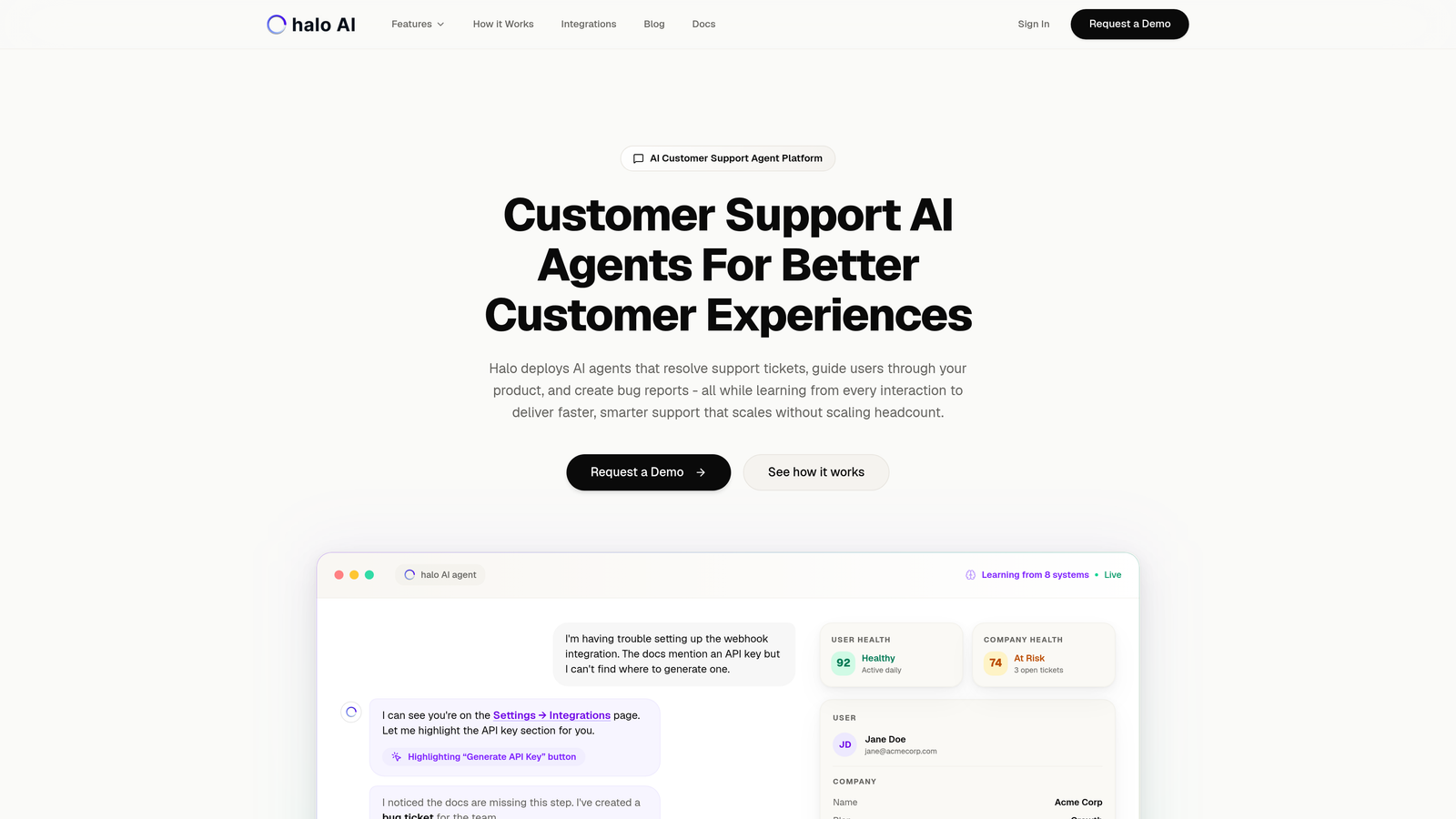
Halo AI represents a fundamentally different approach to enterprise customer support—built from the ground up as an AI-first platform rather than retrofitting automation onto traditional helpdesk architecture.
Where This Tool Shines
The platform's autonomous AI agents don't just categorize tickets—they resolve them. What sets Halo apart is its continuous learning architecture: every interaction trains the system to handle similar issues more effectively in the future. This creates a support operation that genuinely gets smarter over time rather than requiring constant manual rule updates.
The page-aware chat widget sees exactly what users see in your product, enabling visual guidance that traditional text-based support can't match. When combined with automatic bug ticket creation in Linear and business intelligence that surfaces customer health signals, Halo connects support operations to the broader business context in ways most platforms don't attempt.
Key Features
Autonomous AI Agents: Resolve tickets independently while learning patterns that improve future resolution accuracy and speed.
Page-Aware Visual Guidance: Context-aware chat widget that sees your product UI and guides users through specific workflows visually.
Business Intelligence Analytics: Smart inbox that surfaces customer health signals, revenue intelligence, and anomaly detection beyond basic support metrics.
Auto Bug Ticket Creation: Automatically creates engineering tickets in Linear when customer issues indicate product problems requiring development attention.
Multi-System Integration: Connects across your business stack including HubSpot, Intercom, Stripe, Zoom, Slack, and PandaDoc for complete context.
Best For
B2B companies and product teams ready to move beyond traditional helpdesk thinking. Particularly valuable for organizations using modern tech stacks where deep integration creates compound value, and for teams who want their support operation to contribute business intelligence rather than just resolve tickets.
Pricing
Contact for enterprise pricing. The platform's continuous learning model means ROI typically improves over time as AI agents handle increasing resolution percentages autonomously.
2. Zendesk Suite Enterprise
Best for: Large organizations needing mature omnichannel capabilities with extensive third-party integrations
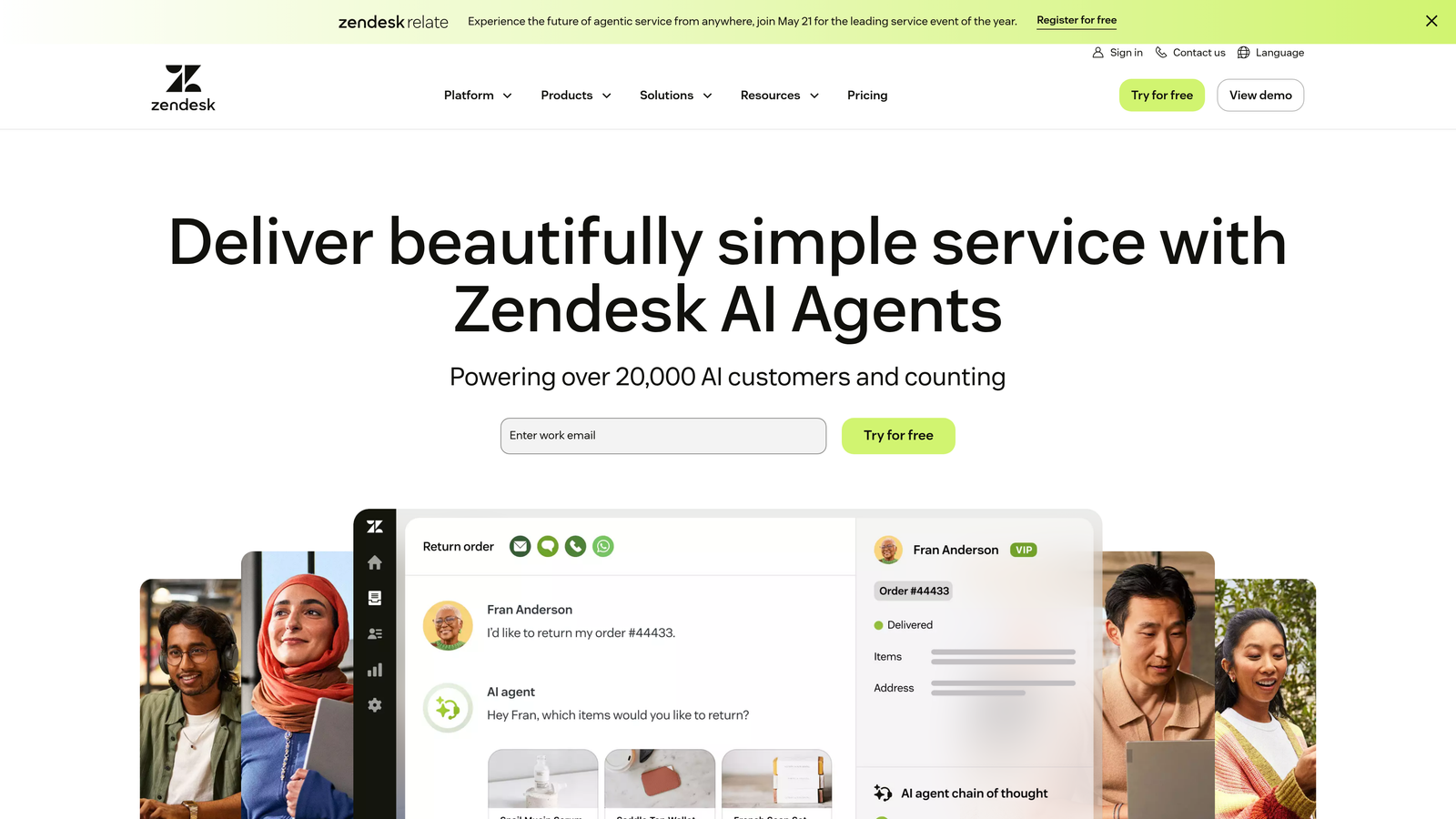
Zendesk Suite Enterprise is the established player that many enterprises know—comprehensive omnichannel support with deep marketplace ecosystem and proven scalability.
Where This Tool Shines
Zendesk's greatest strength is breadth. The platform handles email, chat, voice, social media, and messaging channels through unified routing that actually works at scale. When you're managing support across dozens of teams and time zones, this operational maturity matters.
The marketplace offers over 1,500 integrations, meaning whatever niche business system you use probably connects. Sandbox environments let you test configuration changes safely before deploying to production—a critical capability when downtime affects thousands of agents.
Key Features
Omnichannel Routing: Unified queue management across email, chat, voice, social media, and messaging with intelligent assignment rules.
Advanced Workflow Automation: Triggers, macros, and business rules that handle complex routing logic and automated responses at enterprise scale.
Extensive App Marketplace: Over 1,500 pre-built integrations plus API access for custom connections to proprietary systems.
Custom Analytics Dashboards: Explore for advanced reporting with custom metrics, scheduled reports, and executive dashboards.
Sandbox Testing Environments: Safe configuration testing before production deployment, critical for enterprises where changes affect large teams.
Best For
Enterprises prioritizing omnichannel maturity and integration breadth over cutting-edge AI. Strong fit for organizations with complex routing requirements and teams that need extensive customization capabilities backed by mature documentation and large implementation partner networks.
Pricing
Starting at $150/agent/month for Enterprise tier. Total cost of ownership typically includes significant implementation and customization expenses, particularly for large deployments requiring extensive workflow configuration.
3. Salesforce Service Cloud
Best for: Salesforce-centric enterprises wanting unified customer view across sales and service operations
Salesforce Service Cloud brings enterprise service management deeply integrated into the Salesforce CRM ecosystem with Einstein AI capabilities.
Where This Tool Shines
If your organization runs on Salesforce, Service Cloud creates genuine 360-degree customer visibility. Support agents see purchase history, sales opportunities, marketing engagement, and service history in unified views that inform every interaction. This context depth is hard to replicate with separate systems.
Einstein AI handles case classification, routing recommendations, and knowledge article suggestions based on case content. Field service management capabilities extend support beyond digital channels for enterprises managing physical service operations alongside virtual support.
Key Features
360-Degree Customer View: Complete integration with Salesforce CRM showing sales, marketing, and service history in unified agent workspace.
Einstein AI Capabilities: Automated case classification, intelligent routing recommendations, and predictive analytics for proactive service.
Field Service Management: Scheduling, dispatch, and mobile workforce management for enterprises with physical service operations.
Knowledge Base with AI Search: Einstein-powered article recommendations and search that improves with usage patterns.
Omni-Channel Routing: Presence-based routing across channels with skills-based assignment and capacity management.
Best For
Organizations already invested in Salesforce ecosystem where unified data across sales and service creates strategic value. Particularly strong for B2B enterprises where understanding customer relationship history significantly impacts support quality and upsell opportunities.
Pricing
Starting at $165/user/month for Enterprise edition. Salesforce implementations typically require significant consulting investment, and total cost scales with data storage, API usage, and additional Einstein AI features.
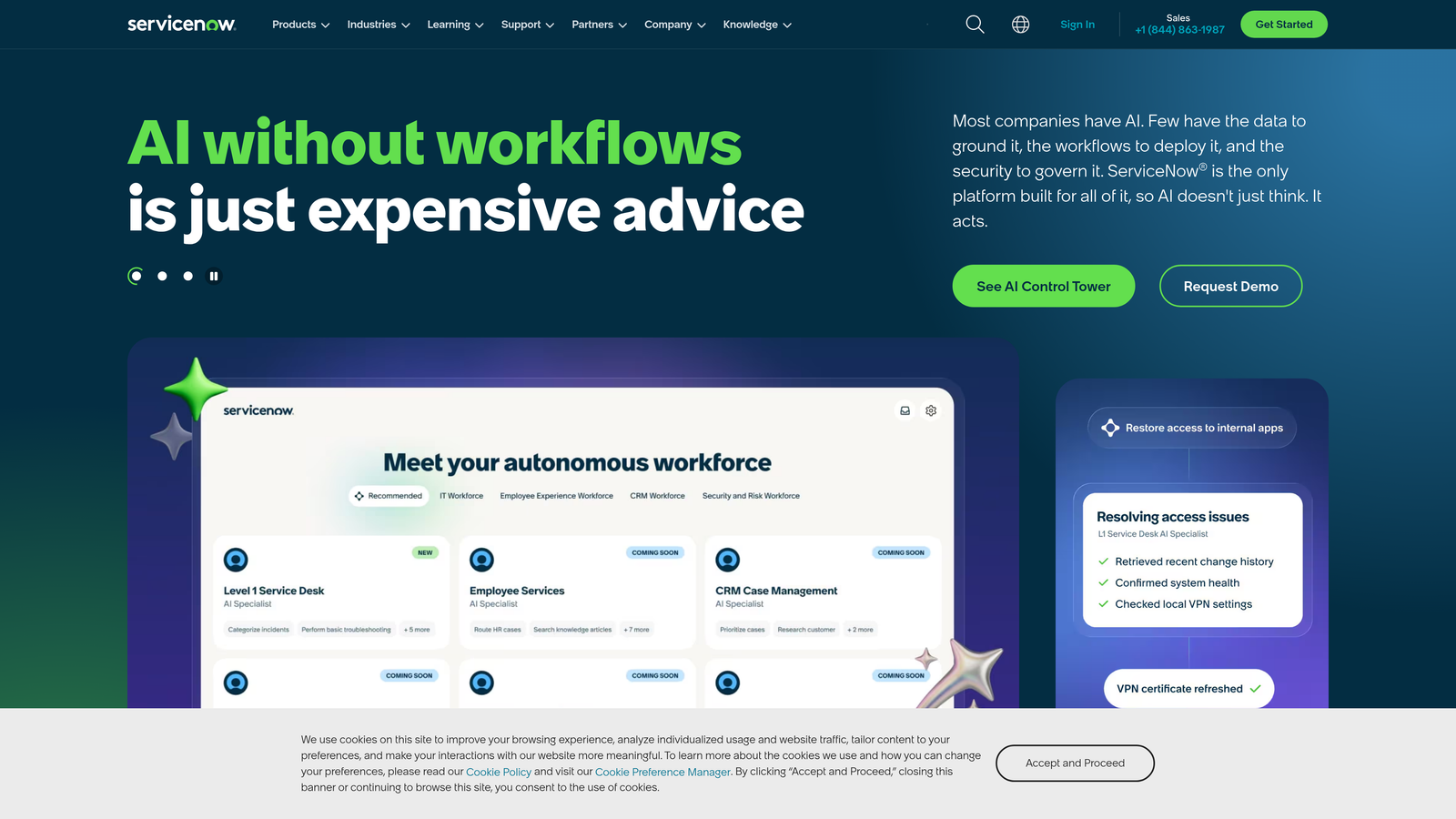
4. ServiceNow Customer Service Management
Best for: Enterprises needing cross-department workflow orchestration between customer service and internal IT operations
ServiceNow Customer Service Management extends the IT service management leader's workflow capabilities into customer-facing support operations.
Where This Tool Shines
ServiceNow excels at complex workflow orchestration across departments. When customer issues require coordination between support, IT, engineering, and operations teams, ServiceNow's workflow engine handles handoffs and escalations that would require custom development in other platforms.
The platform's proactive service capabilities identify potential issues before customers report them—monitoring system health, usage patterns, and known issues to trigger outreach. For enterprises managing technical products where proactive intervention prevents escalations, this capability delivers measurable value.
Key Features
Cross-Department Workflow Orchestration: Unified workflow engine connecting customer service, IT operations, and engineering with automated handoffs.
Proactive Customer Service: Monitoring and alerting that identifies potential issues before customer reports, enabling preventive outreach.
Virtual Agent with NLU: Natural language understanding chatbot that handles common requests and routes complex issues appropriately.
Enterprise Security and Compliance: SOC 2 Type II, HIPAA, and extensive compliance certifications with granular access controls.
ITSM Integration: Native connection to ServiceNow IT Service Management for technical escalations requiring engineering intervention.
Best For
Technology companies and enterprises where customer support frequently requires internal IT or engineering coordination. Particularly valuable for organizations already using ServiceNow for ITSM who want unified workflow visibility across customer-facing and internal operations.
Pricing
Custom enterprise pricing based on deployment scope and user count. ServiceNow implementations are typically significant undertakings with substantial consulting requirements, making this a platform for large enterprises with complex needs.
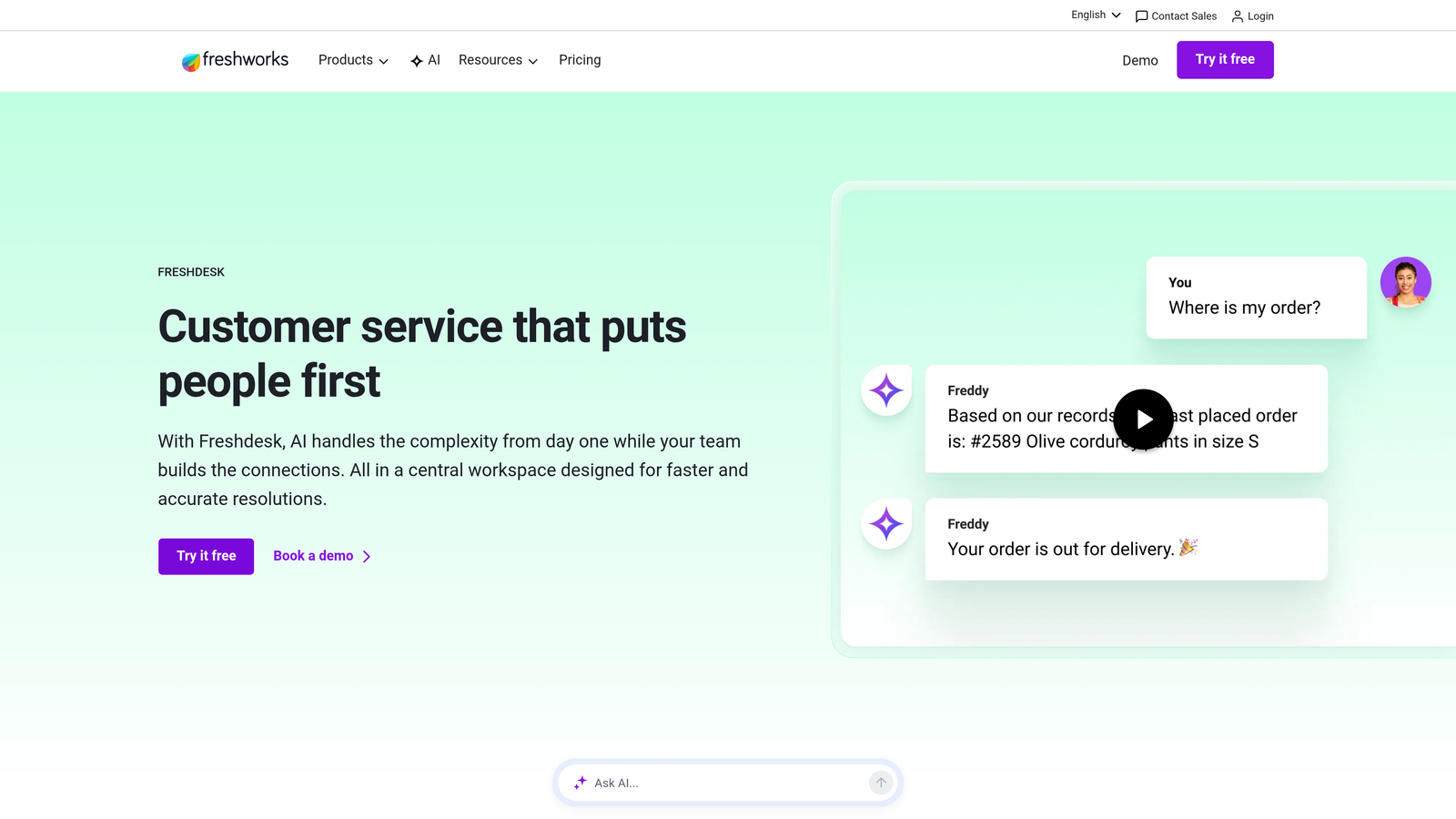
5. Freshdesk Enterprise
Best for: Mid-to-large enterprises wanting modern helpdesk capabilities with faster deployment than legacy platforms
Freshdesk Enterprise offers enterprise features with the implementation speed and user experience of modern SaaS platforms.
Where This Tool Shines
Freshdesk delivers enterprise capabilities without enterprise deployment timelines. Organizations can typically go live in weeks rather than months, making this attractive for companies needing to scale support operations quickly. The interface feels modern compared to legacy platforms—agents adapt faster with less training investment.
Freddy AI provides ticket automation, agent suggestions, and predictive support capabilities that improve over time. Custom objects let you model business data specific to your operations, while sandbox environments provide safe testing before production changes.
Key Features
Freddy AI Automation: Intelligent ticket routing, agent response suggestions, and automated resolution for common issues with machine learning improvement.
Skill-Based Routing: Automatic ticket assignment based on agent expertise, language capabilities, and current workload for optimal distribution.
Custom Objects: Model business-specific data structures beyond standard ticket fields for industry-specific requirements.
Audit Logs and Compliance: Comprehensive activity logging with HIPAA compliance options for healthcare and regulated industries.
Sandbox Environment: Safe configuration testing before production deployment, minimizing risk of changes affecting live operations.
Best For
Growing enterprises that need enterprise capabilities without six-month implementations. Strong fit for organizations prioritizing user experience and deployment speed while still requiring features like custom objects, audit logs, and compliance certifications.
Pricing
Starting at $79/agent/month for Enterprise tier. Freshdesk typically delivers lower total cost of ownership than legacy platforms due to faster implementation and reduced consulting requirements.
6. Intercom
Best for: Product-led B2B companies prioritizing conversational support and in-app messaging over traditional ticketing
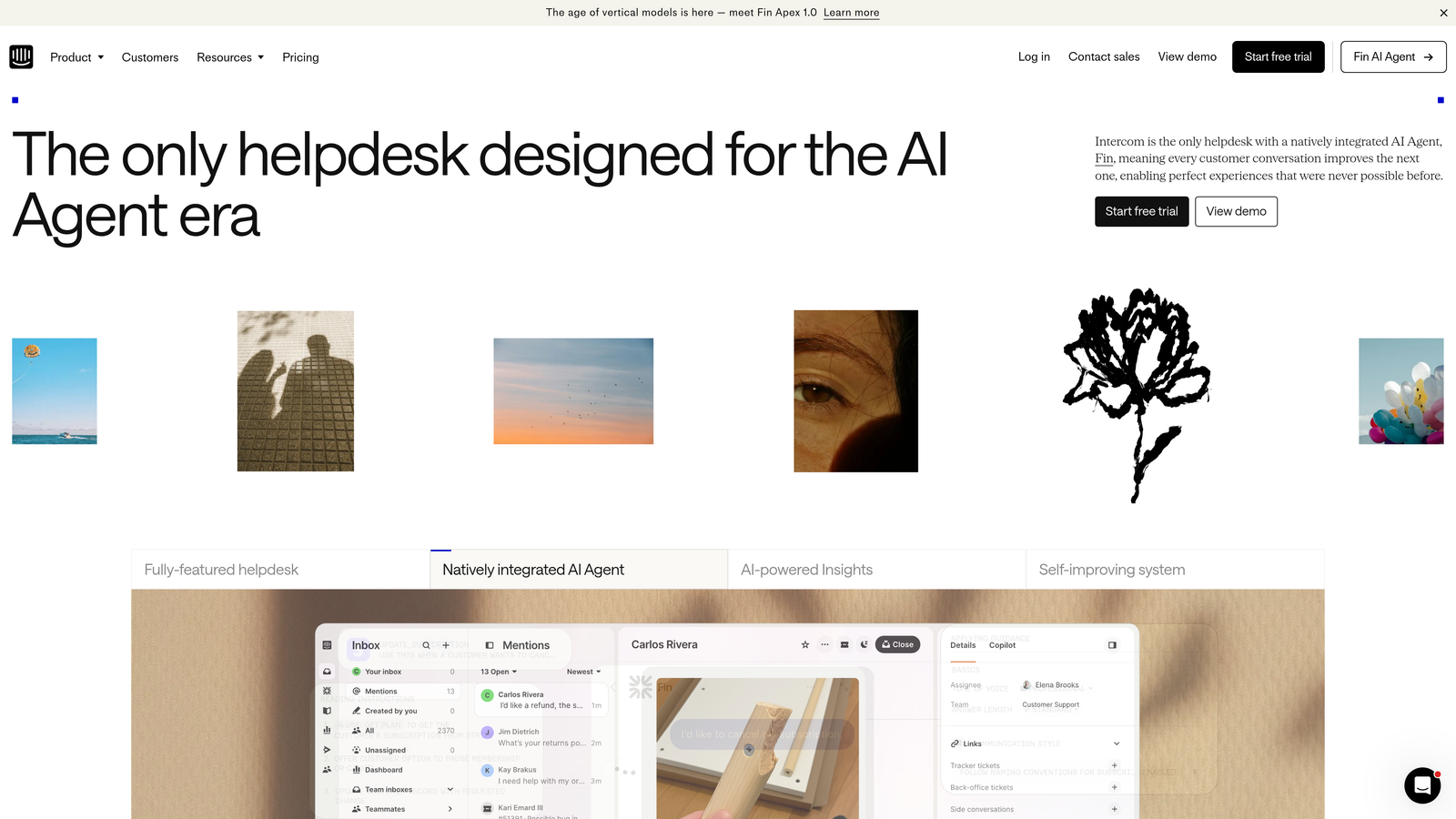
Intercom built its reputation on conversational support through its messenger platform, now enhanced with Fin AI agent capabilities for autonomous resolution.
Where This Tool Shines
Intercom excels when support happens inside your product rather than through separate email channels. The customizable messenger widget creates contextual conversations where users already are, while product tours and in-app messaging enable proactive guidance that prevents support needs before they arise.
Fin AI agent handles autonomous resolution for common questions, learning from your knowledge base and past conversations. The resolution bot with custom workflows automates repetitive processes while maintaining the conversational feel that makes Intercom distinctive.
Key Features
Fin AI Agent: Autonomous resolution capability that handles common questions using knowledge base content and learned patterns from past conversations.
Product Tours and Messaging: In-app guidance and targeted messaging that proactively educates users and prevents support requests.
Customizable Messenger Widget: Branded chat interface embedded in your product with custom launcher, colors, and conversation flows.
Resolution Bot Workflows: Custom automation sequences that handle multi-step processes while maintaining conversational interaction patterns.
Customer Data Platform: Unified customer profiles integrating product usage, conversation history, and business data for personalized interactions.
Best For
B2B SaaS companies and product-led organizations where in-app support creates better user experience than email ticketing. Particularly valuable for companies prioritizing proactive guidance and conversational engagement over traditional case management workflows.
Pricing
Custom pricing for enterprise deployments. Fin AI charged per resolution, making cost directly tied to automation value. Organizations should model expected resolution volumes when evaluating total cost compared to per-seat pricing models.
7. Microsoft Dynamics 365 Customer Service
Best for: Microsoft-centric enterprises leveraging Office 365 and Teams for collaboration-intensive support operations
Microsoft Dynamics 365 Customer Service brings enterprise service capabilities deeply integrated with Microsoft ecosystem and Copilot AI assistance.
Where This Tool Shines
For organizations standardized on Microsoft technologies, Dynamics 365 creates seamless workflows across Teams, Office 365, and Azure. Support agents collaborate in Teams channels while managing cases, and Copilot AI drafts responses and provides agent assistance using organizational knowledge.
Power Platform extensibility lets you build custom applications and workflows without extensive development resources. The unified routing engine with AI-based assignment considers agent skills, capacity, and customer priority for optimal case distribution at enterprise scale.
Key Features
Copilot AI Assistance: AI-powered response drafting, case summarization, and agent guidance using Microsoft's language models and organizational knowledge.
Power Platform Extensibility: Build custom apps, workflows, and integrations using low-code tools without extensive development resources.
Teams Integration: Native collaboration within Microsoft Teams for internal case discussion and customer-facing interactions.
Unified Routing with AI: Intelligent case assignment considering agent skills, capacity, sentiment analysis, and customer priority.
Customer Voice Feedback: Integrated survey and feedback collection with sentiment analysis and trend identification.
Best For
Enterprises deeply invested in Microsoft ecosystem where unified authentication, collaboration in Teams, and Power Platform extensibility create operational advantages. Strong fit for organizations prioritizing internal collaboration and agent productivity through familiar Microsoft tools.
Pricing
Starting at $95/user/month for Enterprise tier. Microsoft licensing can become complex with add-on requirements, so organizations should carefully model total cost including Power Platform usage and additional Copilot AI capabilities.
8. Kustomer
Best for: Enterprises prioritizing complete customer timeline visibility and CRM-first approach to service operations
Kustomer takes a CRM-first approach to customer service, treating support as relationship management rather than ticket processing.
Where This Tool Shines
Kustomer's unified customer timeline shows every interaction, purchase, and engagement in chronological context—not just support tickets. This approach works particularly well for businesses where understanding customer relationship history significantly impacts service quality and resolution effectiveness.
The business process automation engine handles complex workflows beyond simple ticket routing. AI-powered sentiment analysis identifies frustrated customers requiring priority attention, while proactive outreach capabilities enable preventive service based on usage patterns or known issues.
Key Features
Unified Customer Timeline: Chronological view of all interactions, purchases, and engagements across channels for complete relationship context.
Business Process Automation: Workflow engine handling complex multi-step processes beyond standard ticket routing and macros.
AI Sentiment Analysis: Real-time emotion detection identifying frustrated customers requiring priority handling or escalation.
Proactive Outreach: Automated customer contact based on usage patterns, known issues, or lifecycle triggers for preventive service.
Custom Object Modeling: Define business-specific data structures and relationships for industry-specific requirements.
Best For
E-commerce and subscription businesses where customer lifetime value and relationship history significantly impact service approach. Organizations wanting to move beyond transactional ticket processing toward relationship-based customer service will find Kustomer's approach aligned with that vision.
Pricing
Starting at $89/user/month for Enterprise tier. Implementation complexity varies based on custom object requirements and integration depth with existing business systems.
9. Gladly
Best for: Customer-obsessed brands treating support as continuous relationships rather than isolated ticket transactions
Gladly radically reimagines customer service by organizing around people rather than tickets—every conversation becomes part of a lifelong customer relationship.
Where This Tool Shines
Gladly's fundamental architecture difference creates genuinely personal support experiences. Instead of ticket numbers, customers get continuous conversation threads that span channels and time. When someone calls after chatting yesterday, agents see the complete context without asking customers to repeat themselves.
Native voice with screen pop provides instant customer recognition when calls arrive. Sidekick AI assists agents with response suggestions and next-best-action recommendations while maintaining the personal, relationship-focused approach that defines Gladly's philosophy.
Key Features
Radically Personal Matching: Customer recognition across all channels with lifelong conversation history replacing traditional ticket-based systems.
Native Voice with Screen Pop: Built-in telephony with automatic customer identification and full context display when calls arrive.
Lifelong Conversation History: Complete customer interaction timeline spanning all channels and unlimited time periods for true relationship continuity.
Sidekick AI Agent Assistance: Real-time suggestions and next-best-action recommendations helping agents deliver more personalized service.
Payments and Order Management: Integrated transaction capabilities letting agents process payments and manage orders without system switching.
Best For
Consumer brands and retail organizations where customer experience differentiation justifies premium positioning. Companies prioritizing relationship-based service over efficiency metrics will find Gladly's approach philosophically aligned with customer-first values.
Pricing
Custom enterprise pricing based on conversation volume and feature requirements. Gladly positions as premium solution for brands where exceptional customer experience creates competitive advantage worth investment.
10. Dixa
Best for: Enterprises wanting unified agent workspace with intelligent routing and built-in quality assurance capabilities
Dixa delivers conversational customer service through unified agent workspace with intelligent routing and native quality management tools.
Where This Tool Shines
Dixa's unified workspace handles phone, email, chat, and messaging in single interface without context switching. Agents manage all channels from one screen with conversation history following customers across touchpoints. This operational simplicity reduces training time and improves agent productivity compared to platforms requiring multiple interfaces.
Intelligent conversation routing considers customer value, agent expertise, and real-time availability for optimal assignment. Built-in quality assurance tools let supervisors review conversations, provide coaching, and track quality metrics without separate QA platforms.
Key Features
Unified Agent Workspace: Single interface handling all channels with conversation history and customer context in one screen.
Intelligent Conversation Routing: AI-powered assignment considering customer value, agent skills, language, and real-time availability.
Real-Time Analytics: Live dashboards showing queue status, agent performance, and customer satisfaction metrics for immediate operational visibility.
Built-In Quality Assurance: Native conversation review, coaching tools, and quality scoring without separate QA platform requirements.
Mim AI Chatbot: Automation for common questions with seamless handoff to human agents when complexity requires personal attention.
Best For
Mid-size to large enterprises prioritizing agent experience and operational simplicity. Organizations wanting quality assurance capabilities without separate platforms will appreciate Dixa's integrated approach to conversation review and coaching.
Pricing
Starting at $99/agent/month for Growth tier with enterprise pricing available for larger deployments. Dixa typically delivers faster time-to-value than platforms requiring extensive configuration before agents can start using the system.
Making the Right Choice
Selecting the right enterprise support platform depends on your existing tech stack, AI readiness, and operational priorities. For organizations seeking AI-native architecture with continuous learning, Halo AI offers a forward-looking approach where every interaction makes your support operation smarter. Salesforce and Microsoft shops will find natural fits in their respective ecosystems where unified data creates strategic advantages.
Companies prioritizing omnichannel maturity should consider Zendesk or ServiceNow—both deliver proven scalability with extensive integration ecosystems. Freshdesk provides enterprise capabilities with modern deployment speed for organizations needing to scale quickly. Intercom excels for product-led companies where in-app support creates better experiences than traditional ticketing.
The key is matching platform strengths to your specific scale challenges. Evaluate based on integration depth with your current systems—enterprises typically connect 15-25 business tools to their support platform, so API capabilities and pre-built connectors matter significantly. Consider the AI capabilities that will define support excellence in the years ahead: autonomous resolution, predictive analytics, and business intelligence beyond basic ticket metrics.
Total cost of ownership extends beyond per-seat pricing. Implementation timelines, customization requirements, and ongoing training investments vary dramatically between platforms. Legacy systems often require six-month implementations with substantial consulting expenses, while modern platforms can go live in weeks with lower ongoing maintenance burden.
Your support team shouldn't scale linearly with your customer base. Let AI agents handle routine tickets, guide users through your product, and surface business intelligence while your team focuses on complex issues that need a human touch. See Halo in action and discover how continuous learning transforms every interaction into smarter, faster support.