9 Best Customer Support Tools for SaaS Companies in 2026
Scaling customer support for SaaS companies requires tools that handle instant, multi-channel assistance without proportionally growing your team. This comprehensive guide evaluates nine specialized platforms—from AI-powered solutions that autonomously resolve tickets to established helpdesks with advanced automation—based on their resolution capabilities, SaaS stack integrations, scalability, and value for growing teams.
 Grant CooperFounder12 min read
SaaS companies face a unique support challenge: customers expect instant, knowledgeable help across multiple channels, but scaling a human support team proportionally with your user base quickly becomes unsustainable. The right customer support tool can resolve common tickets autonomously, route complex issues to the right specialists, and surface insights that help product teams fix recurring problems at the source.
This guide covers nine platforms built specifically for SaaS support needs—from AI-first solutions that learn from every interaction to established helpdesks with robust automation. We evaluated each tool on ticket resolution capabilities, integration depth with common SaaS stacks, scalability, and value for growing teams.
1. Halo AI
Best for: SaaS teams seeking autonomous ticket resolution with continuous learning and deep product integration.
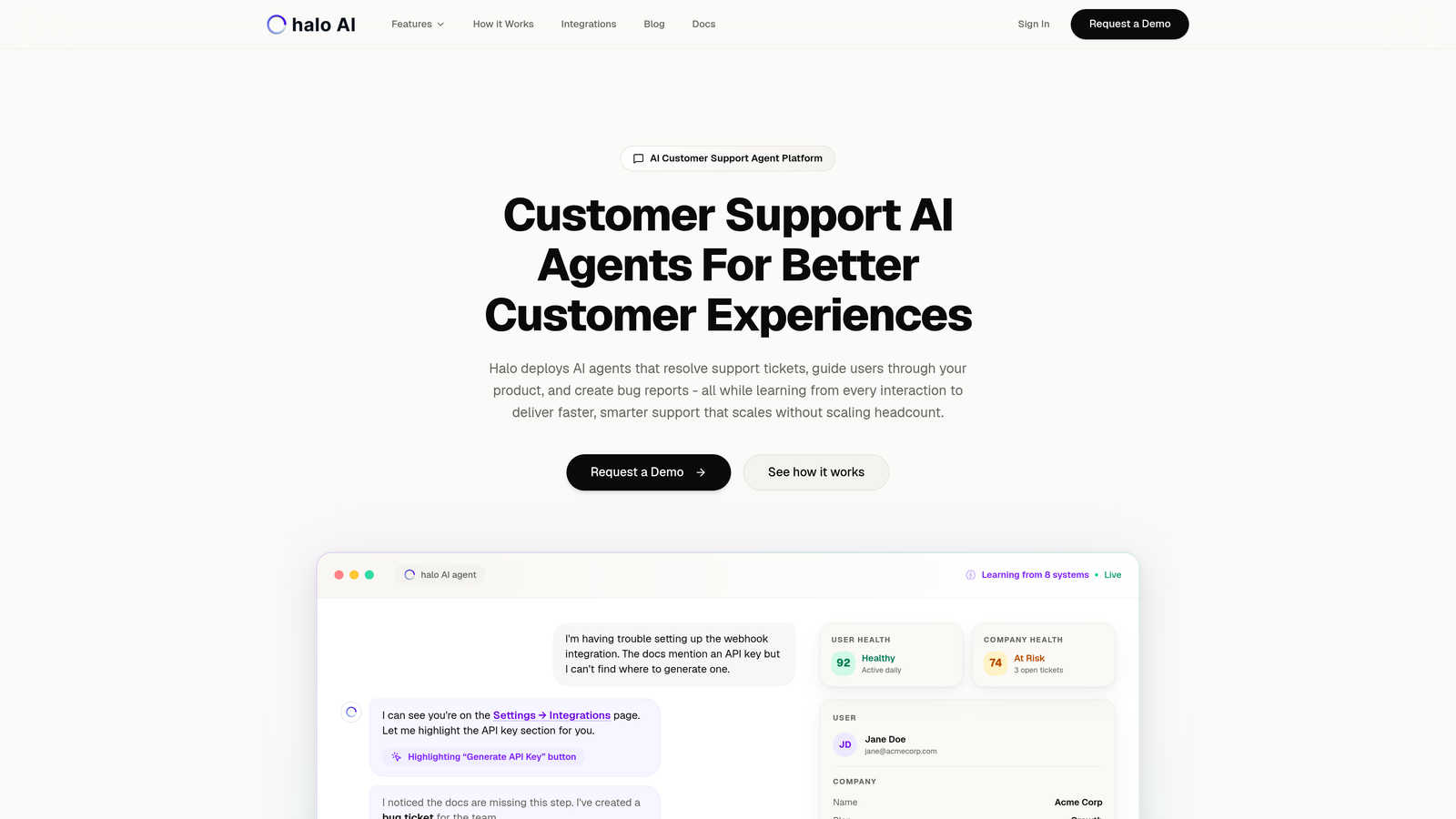
Halo AI is an AI-first customer support platform built specifically for SaaS companies that need intelligent automation without sacrificing customer experience.
Where This Tool Shines
Unlike traditional helpdesks that bolt AI onto existing ticketing systems, Halo was architected from the ground up for autonomous operation. Its AI agents don't just suggest responses—they resolve tickets independently while learning from every interaction to improve future performance.
The page-aware chat widget sees exactly what users see in your product, enabling contextual guidance that goes beyond generic knowledge base articles. When users struggle with a specific feature, Halo can walk them through the exact steps based on their current screen state.
Key Features
Autonomous AI Agents: Resolve support tickets independently while continuously learning from every customer interaction to improve accuracy and speed over time.
Page-Aware Context: Chat widget understands what users are viewing in your product, providing visual UI guidance and contextual help based on their exact location.
Business Intelligence Integration: Smart inbox surfaces customer health signals, revenue intelligence, and anomaly detection beyond basic support metrics.
Automatic Bug Reporting: Creates detailed bug tickets in Linear with full context when issues are identified, connecting support directly to your development workflow.
Seamless Escalation: Hands off complex issues to human agents with complete conversation context and relevant customer data from your entire business stack.
Best For
B2B SaaS companies looking to scale support without proportionally scaling headcount. Particularly valuable for product teams using Linear, Slack, and modern SaaS stacks who want support intelligence integrated across their entire operation.
Pricing
Contact for pricing. Designed for scaling SaaS teams with pricing that aligns with resolution volume rather than seat-based models.
2. Intercom
Best for: Product-led growth SaaS companies prioritizing in-app messaging and behavioral customer data.
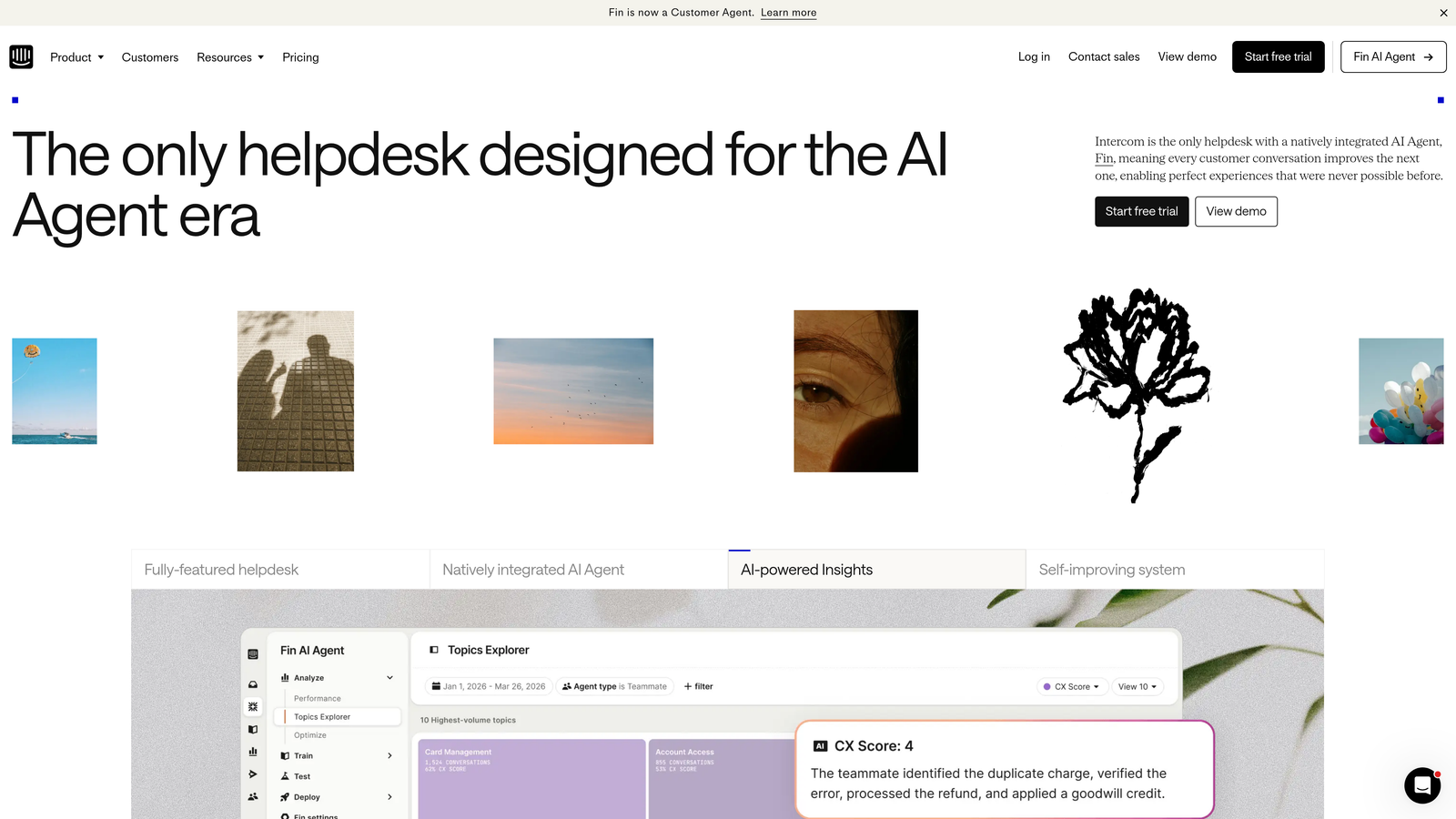
Intercom is a customer messaging platform that combines live chat, automated bots, and a customer data platform popular among product-focused teams.
Where This Tool Shines
Intercom excels at proactive engagement. Instead of waiting for customers to reach out, you can trigger targeted messages based on user behavior, subscription tier, or feature usage. This makes it particularly powerful for onboarding, feature adoption, and reducing churn.
The Fin AI agent handles routine customer questions with natural language understanding, while the customer data platform tracks behavioral patterns that help you understand not just what customers ask, but why they're asking.
Key Features
Fin AI Agent: Automated conversational AI that handles common customer questions using your knowledge base content with natural language processing.
Product Tours: Build in-app onboarding flows and feature announcements that guide users through your product without leaving the interface.
Behavioral Messaging: Trigger targeted messages based on user actions, properties, or events tracked in your product analytics.
Customer Data Platform: Unified customer profiles combining conversation history, behavioral data, and custom attributes for personalized support.
Custom Bots: Visual bot builder for creating automated conversation flows without coding, with branching logic and qualification paths.
Best For
SaaS companies with product-led growth strategies who want to combine support with proactive user engagement and onboarding. Works best when you have clear behavioral data to trigger contextual messages.
Pricing
Starts at $39 per seat per month for the core platform. Fin AI is charged separately based on resolution volume, which can add significant costs at scale.
3. Zendesk
Best for: Enterprise SaaS companies needing comprehensive ticketing workflows and extensive third-party integrations.
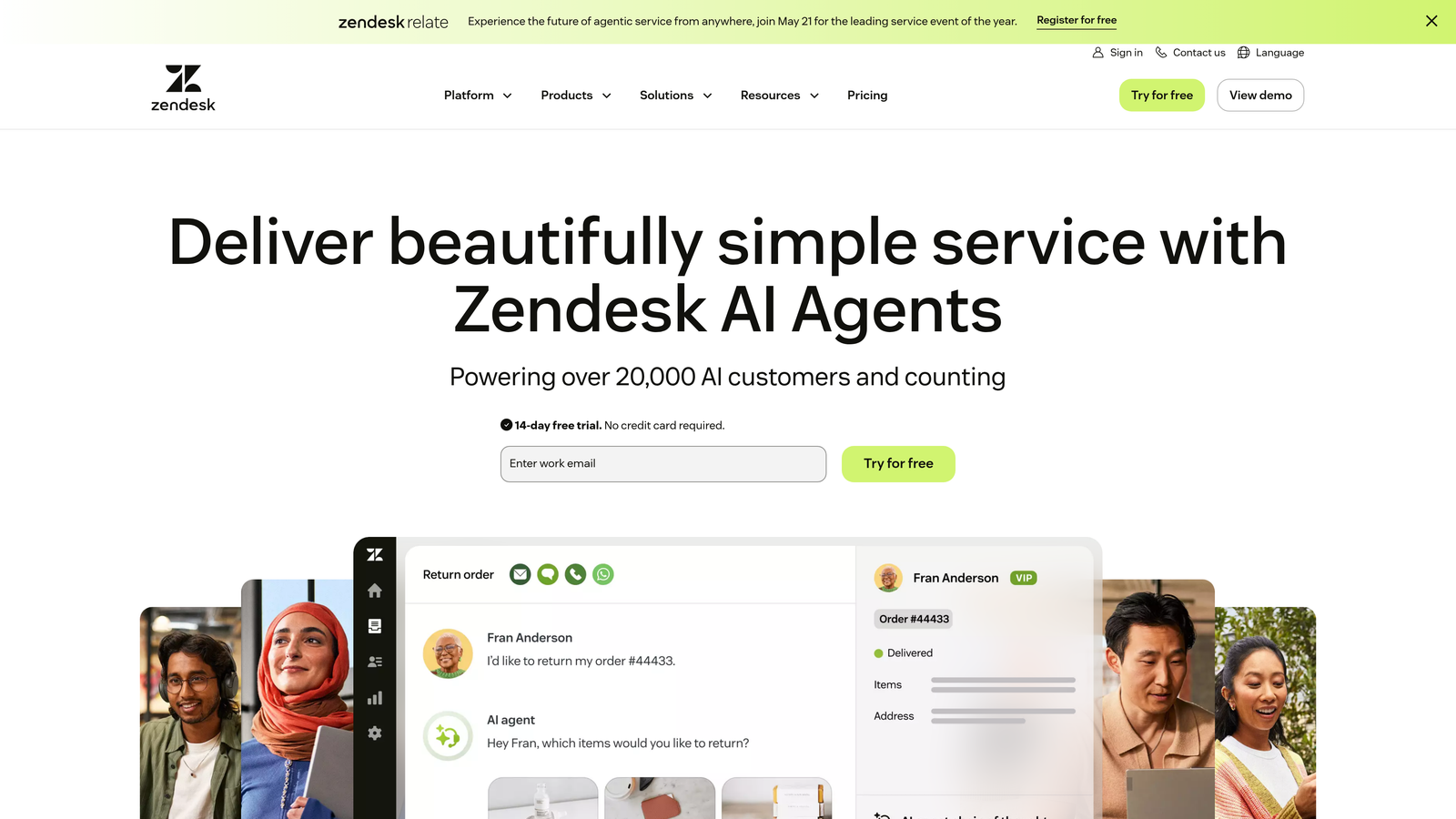
Zendesk is an enterprise-grade helpdesk platform with deep customization capabilities for complex support operations across multiple teams and channels.
Where This Tool Shines
Zendesk's strength lies in its maturity and breadth. With over 1,500 integrations in its marketplace, you can connect virtually any tool in your stack. The platform handles intricate routing rules, SLA management, and multi-brand support that larger SaaS companies require.
The reporting suite provides granular analytics across every dimension of your support operation. You can track agent performance, ticket resolution patterns, customer satisfaction by product tier, and identify bottlenecks in your workflow with precision.
Key Features
Advanced Ticketing System: Highly customizable workflows with conditional routing, SLA policies, and multi-level escalation paths for complex support hierarchies.
AI-Powered Automation: Answer bot suggests relevant knowledge base articles to customers, while agent assist recommends responses to support staff during conversations.
Extensive Marketplace: Over 1,500 pre-built integrations covering CRM, billing, development tools, and communication platforms.
Omnichannel Support: Unified ticketing across email, chat, phone, social media, and messaging apps with consistent customer history.
Analytics Suite: Comprehensive reporting dashboard with custom metrics, scheduled reports, and drill-down capabilities for performance analysis.
Best For
Mid-market to enterprise SaaS companies with complex support structures, multiple product lines, or international operations requiring sophisticated routing and reporting capabilities.
Pricing
Suite Team starts at $55 per agent per month. Enterprise pricing varies based on features and volume, often requiring annual contracts for larger deployments.
4. Freshdesk
Best for: Growing SaaS startups seeking cost-effective helpdesk functionality with AI automation and a generous free tier.
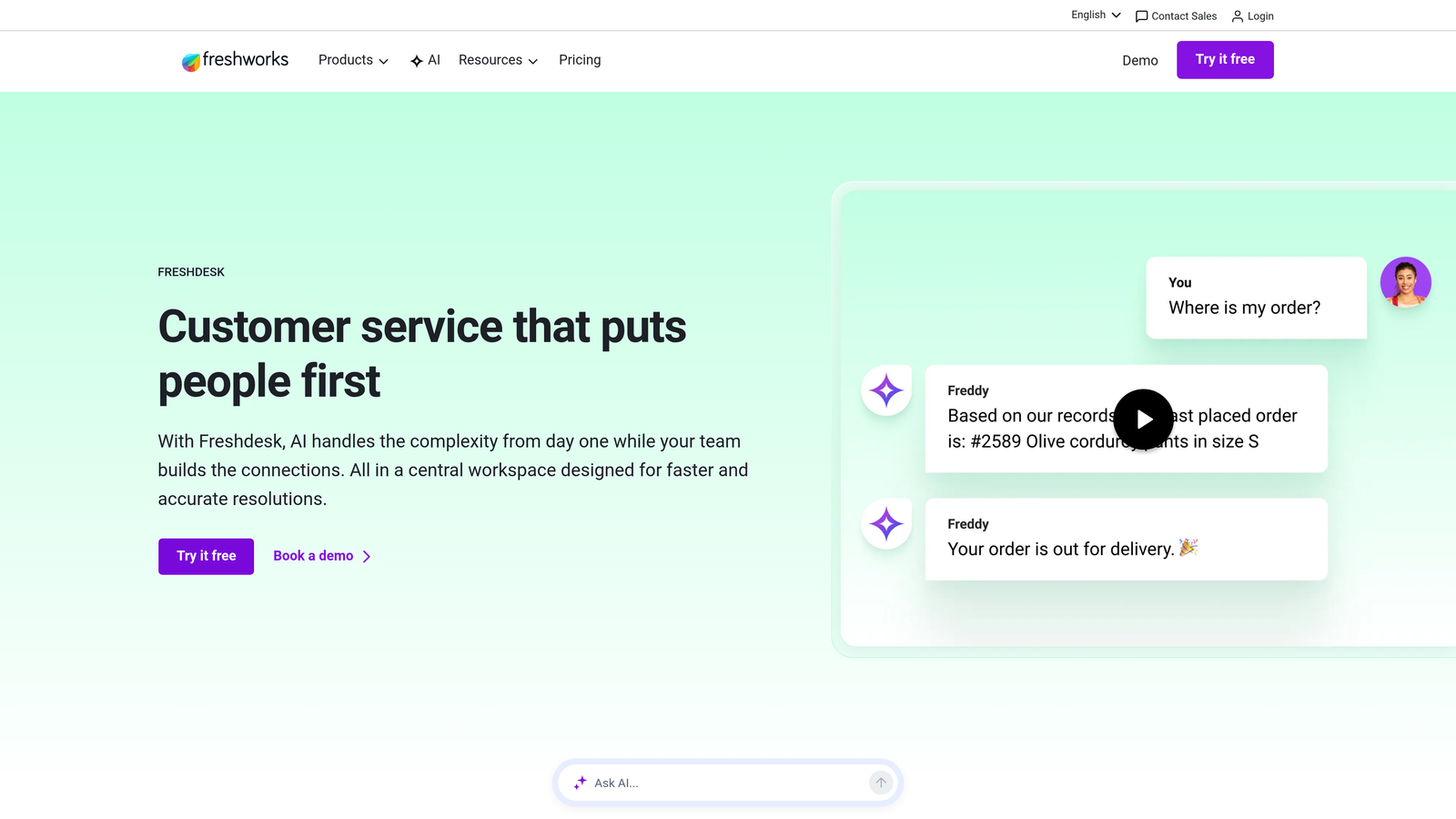
Freshdesk is a feature-rich helpdesk solution that balances affordability with capability, making it accessible for teams at various growth stages.
Where This Tool Shines
Freshdesk delivers enterprise-level features at startup-friendly pricing. The free tier supports up to 10 agents with core ticketing, making it viable for early-stage teams. As you grow, the pricing remains competitive while adding automation and AI capabilities.
Freddy AI categorizes incoming tickets, suggests responses based on historical patterns, and identifies sentiment to prioritize urgent issues. This intelligence layer helps smaller teams operate more efficiently without requiring dedicated support operations specialists.
Key Features
Freddy AI: Automated ticket categorization, response suggestions based on similar past tickets, and sentiment analysis for prioritizing critical issues.
Multi-Channel Ticketing: Unified inbox for email, chat, phone, social media, and messaging apps with automatic ticket creation from all sources.
Team Collaboration: Shared ticket ownership, internal notes, and collision detection to prevent duplicate responses from multiple agents.
Workflow Automation: Visual automation builder for routing tickets, sending notifications, and triggering actions based on ticket properties or time-based rules.
Knowledge Base: Self-service portal with article management, categories, and search functionality to deflect common questions before they become tickets.
Best For
SaaS startups and small teams that need professional helpdesk capabilities without enterprise pricing. The free tier makes it ideal for companies validating product-market fit before committing to paid support tools.
Pricing
Free tier available for up to 10 agents with basic features. Growth plan starts at $15 per agent per month, with Pro at $49 and Enterprise at $79.
5. Help Scout
Best for: SaaS teams prioritizing personal customer relationships with a clean, email-like support interface.
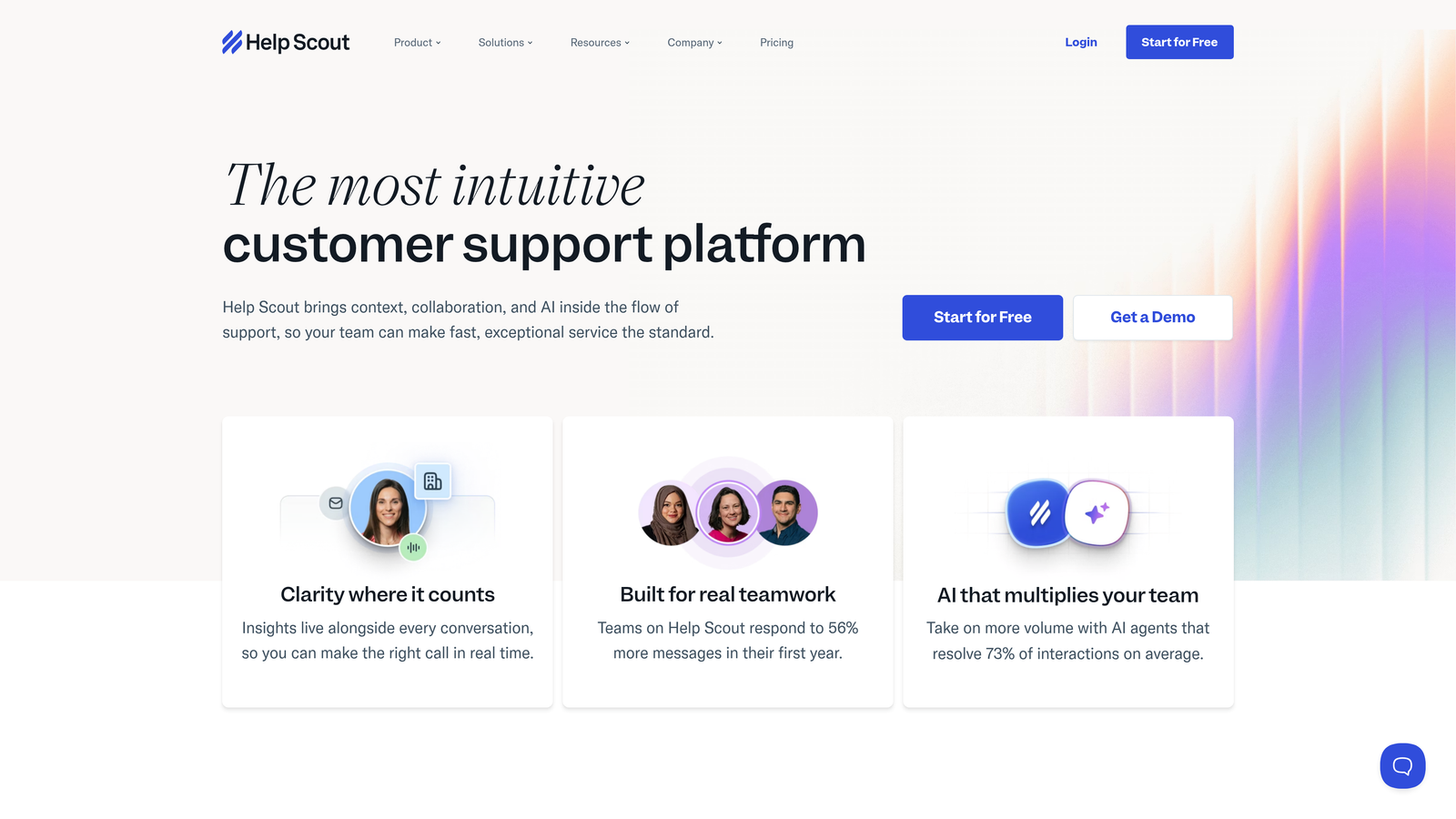
Help Scout is a human-centered help desk designed for teams that want support to feel like personal email rather than corporate ticketing.
Where This Tool Shines
Help Scout removes the complexity and corporate feel of traditional helpdesks. The interface resembles a shared email inbox, making onboarding intuitive for new team members. This simplicity doesn't sacrifice functionality—collision detection prevents duplicate responses, and customer profiles provide conversation context.
The Beacon widget embeds help center articles, contact forms, and live chat into your product with minimal code. It searches your knowledge base as users type questions, often resolving issues before they submit a ticket.
Key Features
Shared Inbox: Email-like interface with conversation threading, collision detection, and assignment workflows that feel natural rather than bureaucratic.
Beacon Widget: Embedded help center and contact form that searches knowledge base articles as users type, with optional live chat for real-time assistance.
Docs Knowledge Base: Self-service documentation with SEO optimization, article suggestions, and analytics showing which content reduces ticket volume.
Customer Profiles: Unified view of conversation history, custom properties, and notes that persist across all interactions with each customer.
Saved Replies: Template library for common responses with variable insertion for personalization without sacrificing efficiency.
Best For
SaaS companies with relationship-focused support philosophies who want tools that enhance rather than replace human connection. Particularly suited for B2B teams where customers expect personalized attention.
Pricing
Standard plan starts at $20 per user per month with core features. Plus plan at $40 adds advanced automation and reporting.
6. Front
Best for: SaaS teams managing support across multiple channels who need collaborative inbox features with individual accountability.
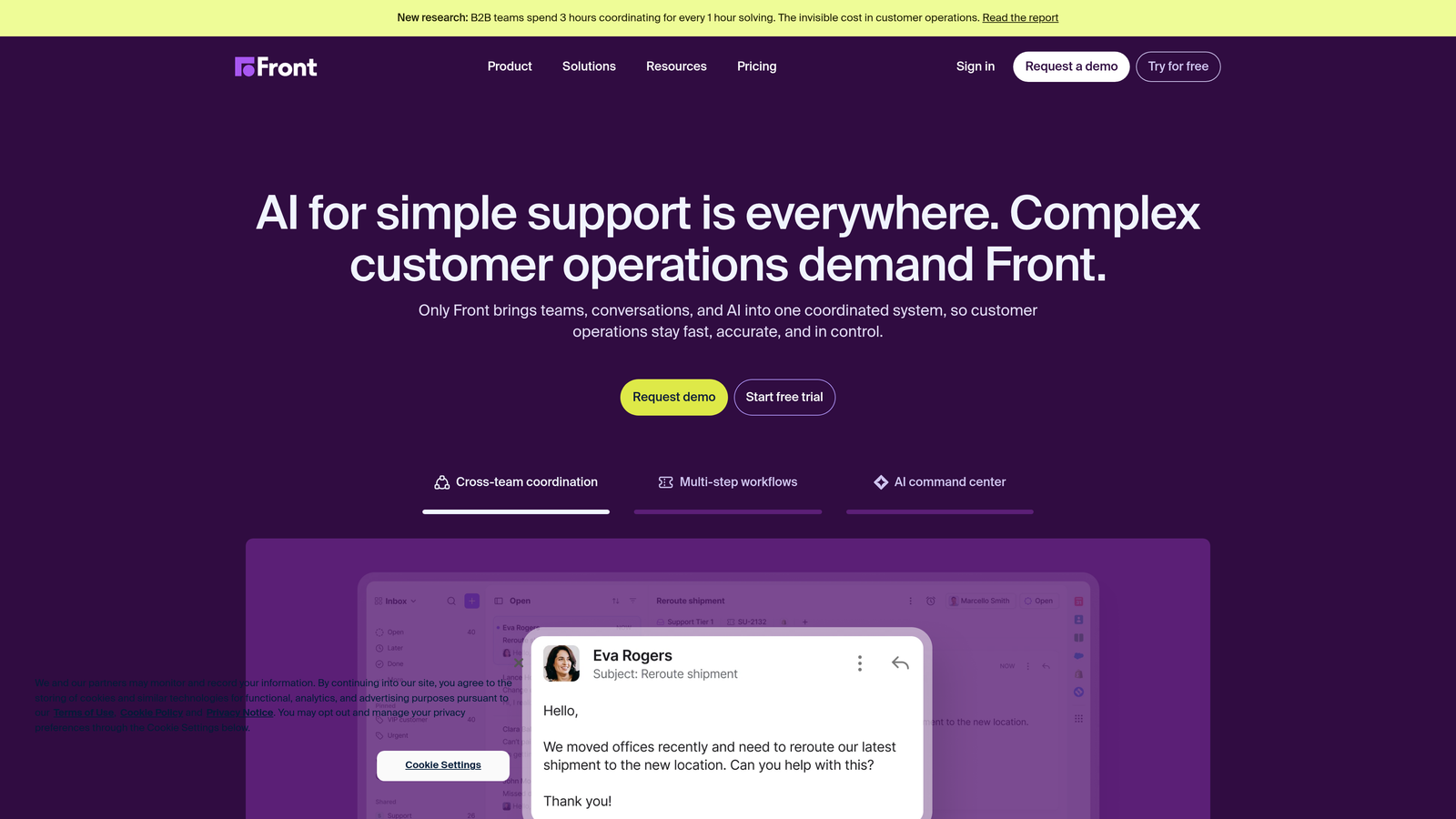
Front is a collaborative inbox platform that combines email, chat, SMS, and social media into shared team inboxes while maintaining personal accountability.
Where This Tool Shines
Front bridges the gap between shared team inboxes and personal email workflows. Team members can comment internally on customer conversations, @mention colleagues for input, and assign ownership—all without cluttering the customer-facing thread.
The rules engine automates routing based on keywords, sender properties, or message content. A billing question automatically routes to your finance team, while technical issues go to engineering, creating specialized workflows without manual triage.
Key Features
Shared Inboxes: Team email addresses that multiple people can access while maintaining individual reply accountability and personal email feel.
Internal Collaboration: Comment threads and @mentions for team discussion within customer conversations, visible only to internal staff.
Automated Routing: Rules-based assignment and tagging using message content, sender properties, or custom conditions to distribute work intelligently.
CRM Integration: Native connections to Salesforce, HubSpot, and other CRMs to display customer context alongside conversations.
Analytics Dashboard: Response time tracking, conversation volume metrics, and individual performance data across all connected channels.
Best For
SaaS companies where support conversations involve multiple internal stakeholders or require input from sales, product, or engineering teams before responding to customers.
Pricing
Starter plan at $19 per seat per month for basic shared inbox functionality. Growth plan at $59 adds advanced automation and integrations.
7. Crisp
Best for: Budget-conscious SaaS startups needing live chat, chatbot, and co-browsing capabilities at affordable pricing.
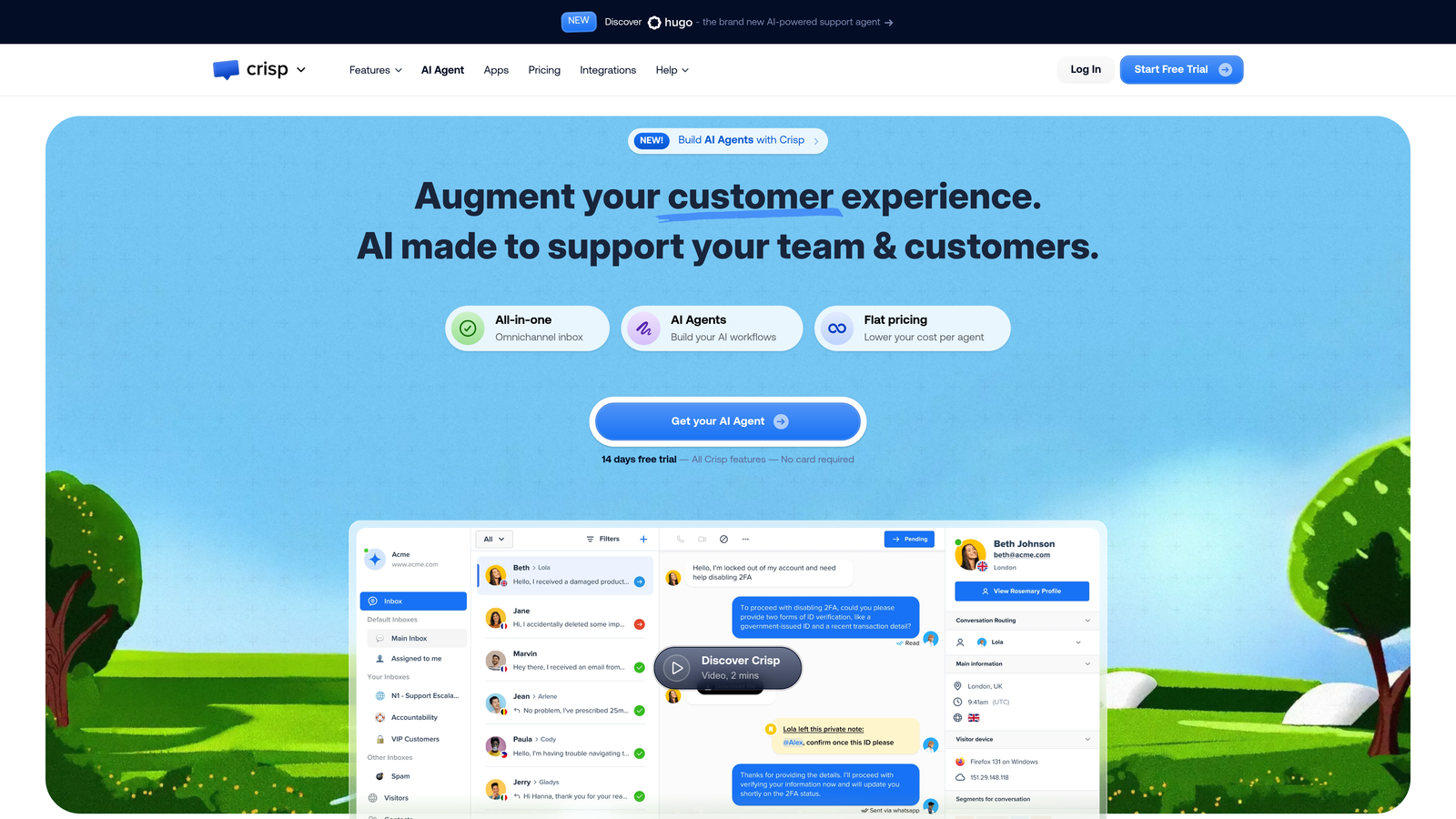
Crisp is an all-in-one messaging platform offering live chat, chatbot automation, and collaborative support tools with startup-friendly pricing.
Where This Tool Shines
Crisp packs enterprise features into an accessible package. The MagicBrowse co-browsing capability lets support agents see exactly what customers see in your product, similar to screen sharing but without requiring customers to install anything or leave your application.
The visual chatbot builder enables non-technical team members to create automated conversation flows. You can qualify leads, answer common questions, or route complex issues to human agents based on user responses and behavior patterns.
Key Features
MagicBrowse Co-Browsing: Real-time view of customer screens during chat sessions, enabling visual guidance through complex product workflows without screen sharing software.
Visual Chatbot Builder: Drag-and-drop interface for creating automated conversation flows with branching logic, qualification questions, and handoff to human agents.
Shared Inbox: Team collaboration features including conversation assignment, internal notes, and real-time typing indicators across all channels.
Knowledge Base: Self-service help center with article management, search functionality, and integration into the chat widget for proactive suggestions.
Visitor Tracking: Real-time view of who's browsing your site, their location, and browsing history to provide context before conversations begin.
Best For
Early-stage SaaS companies that need professional live chat and automation capabilities without significant budget allocation. The free tier makes it viable for pre-revenue startups.
Pricing
Free tier available with basic live chat. Pro plan at $25 per month per workspace (unlimited agents) includes chatbots, co-browsing, and advanced features.
8. Gorgias
Best for: SaaS companies with transactional components or ecommerce elements needing deep commerce platform integrations.
Gorgias is a customer support platform built for ecommerce with capabilities that extend to SaaS companies handling transactions, subscriptions, or physical product components.
Where This Tool Shines
While Gorgias targets ecommerce, its deep integrations with Shopify, Stripe, and subscription management platforms make it valuable for SaaS companies with transactional support needs. Support agents can view order history, subscription status, and payment details directly in the ticket interface.
The platform tracks revenue attributed to support interactions, showing which conversations led to upgrades, renewals, or expansion. This connects support metrics to business outcomes in ways traditional helpdesks don't capture.
Key Features
Commerce Integrations: Deep connections to Shopify, BigCommerce, Stripe, and subscription platforms with order data displayed in ticket context.
Automated Responses: Pre-built automations for common transactional inquiries like order status, billing questions, and account modifications.
Revenue Attribution: Tracking of support interactions that lead to purchases, upgrades, or renewals with revenue impact reporting.
Dynamic Macros: Template responses that pull customer-specific data like order numbers, subscription tiers, or billing dates automatically.
Multi-Channel Support: Unified inbox for email, chat, social media, and SMS with consistent customer history across all channels.
Best For
SaaS companies with ecommerce components, physical product offerings alongside software, or complex subscription billing that requires support agents to access transactional data frequently.
Pricing
Starter plan at $10 per month for 50 tickets, then scales based on ticket volume. Pro plan at $300 per month for 2,000 tickets with additional volume-based pricing.
9. Dixa
Best for: SaaS companies prioritizing agent experience and quality assurance with true omnichannel routing capabilities.
Dixa is an omnichannel customer service platform focused on agent productivity and conversation quality with intelligent routing across all communication channels.
Where This Tool Shines
Dixa treats all channels equally in its routing engine. Whether a customer starts on chat, switches to phone, then follows up via email, the conversation remains unified with full context. Agents see one continuous thread regardless of how the customer chose to communicate.
The built-in quality assurance tools let managers review conversations, score agent performance, and provide coaching directly within the platform. This creates feedback loops that improve support quality over time without requiring separate QA software.
Key Features
True Omnichannel Routing: Intelligent distribution of conversations across phone, email, chat, messaging apps, and social media based on agent skills and availability.
Unified Customer View: Single conversation thread that persists across all channels with complete history regardless of how customers choose to communicate.
Quality Assurance: Built-in conversation review, scoring rubrics, and coaching workflows for maintaining and improving support quality standards.
Conversation Intelligence: Analytics on conversation patterns, customer sentiment, and topic trends to identify training needs and product issues.
Agent-Focused Interface: Clean workspace designed to minimize context switching and cognitive load during high-volume support shifts.
Best For
SaaS companies with phone support requirements or multi-channel strategies who want to maintain conversation continuity regardless of how customers switch between communication methods.
Pricing
Essential plan starts at $39 per agent per month with core omnichannel features. Advanced and Enterprise tiers add AI capabilities and custom integrations.
Matching Your Support Stack to Your Growth Stage
The right customer support tool depends on where you are in your SaaS journey and what you're optimizing for.
If you're in the early stages with limited budget, Freshdesk or Crisp provide professional capabilities without significant investment. Both offer free tiers that support small teams while you validate product-market fit. As ticket volume grows, their pricing scales gradually rather than jumping to enterprise-level costs.
For product-led growth companies where in-app engagement drives adoption, Intercom's behavioral messaging and product tours create proactive support experiences. You can guide users through features, trigger contextual help based on their actions, and reduce support burden by solving problems before customers ask.
Teams managing complex workflows across multiple departments benefit from Front's collaborative inbox or Zendesk's advanced routing. When support conversations require input from sales, product, or engineering, these platforms maintain context while involving the right stakeholders.
If you're scaling rapidly and ticket volume is growing faster than your ability to hire, AI-first platforms like Halo AI shift the economics entirely. Instead of adding support staff proportionally with customers, autonomous agents resolve routine tickets while your team focuses on complex issues that genuinely require human judgment.
The SaaS support landscape has evolved beyond simple ticketing systems. The most effective platforms now connect support data to business intelligence, surface patterns that inform product decisions, and resolve common issues autonomously while maintaining the human touch where it matters.
Your support team shouldn't scale linearly with your customer base. Let AI agents handle routine tickets, guide users through your product, and surface business intelligence while your team focuses on complex issues that need a human touch. See Halo in action and discover how continuous learning transforms every interaction into smarter, faster support.