9 Best Customer Support Scalability Solutions in 2026
Scaling customer support in 2026 means deploying intelligent customer support scalability solutions that automate routine work while your team focuses on complex issues requiring human expertise. The best platforms combine autonomous AI capabilities, seamless integrations, value-based pricing, and rapid implementation to help companies handle growth without proportionally increasing headcount or burning out support teams.
 Grant CooperFounder11 min read
Your support team is drowning in tickets. Your customer base doubled, but you can't justify doubling headcount. Sound familiar? In 2026, scaling customer support isn't about hiring proportionally—it's about deploying intelligent systems that handle routine work autonomously while your team tackles complex issues that actually need human expertise.
The right scalability solution combines autonomous AI capabilities, deep integration with your existing stack, pricing that scales with value (not just volume), and implementation speed that doesn't require six months of professional services. Here are the top customer support scalability solutions transforming how companies handle growth without burning out their teams.
1. Halo AI
Best for: B2B SaaS teams ready to automate ticket resolution with AI that learns continuously
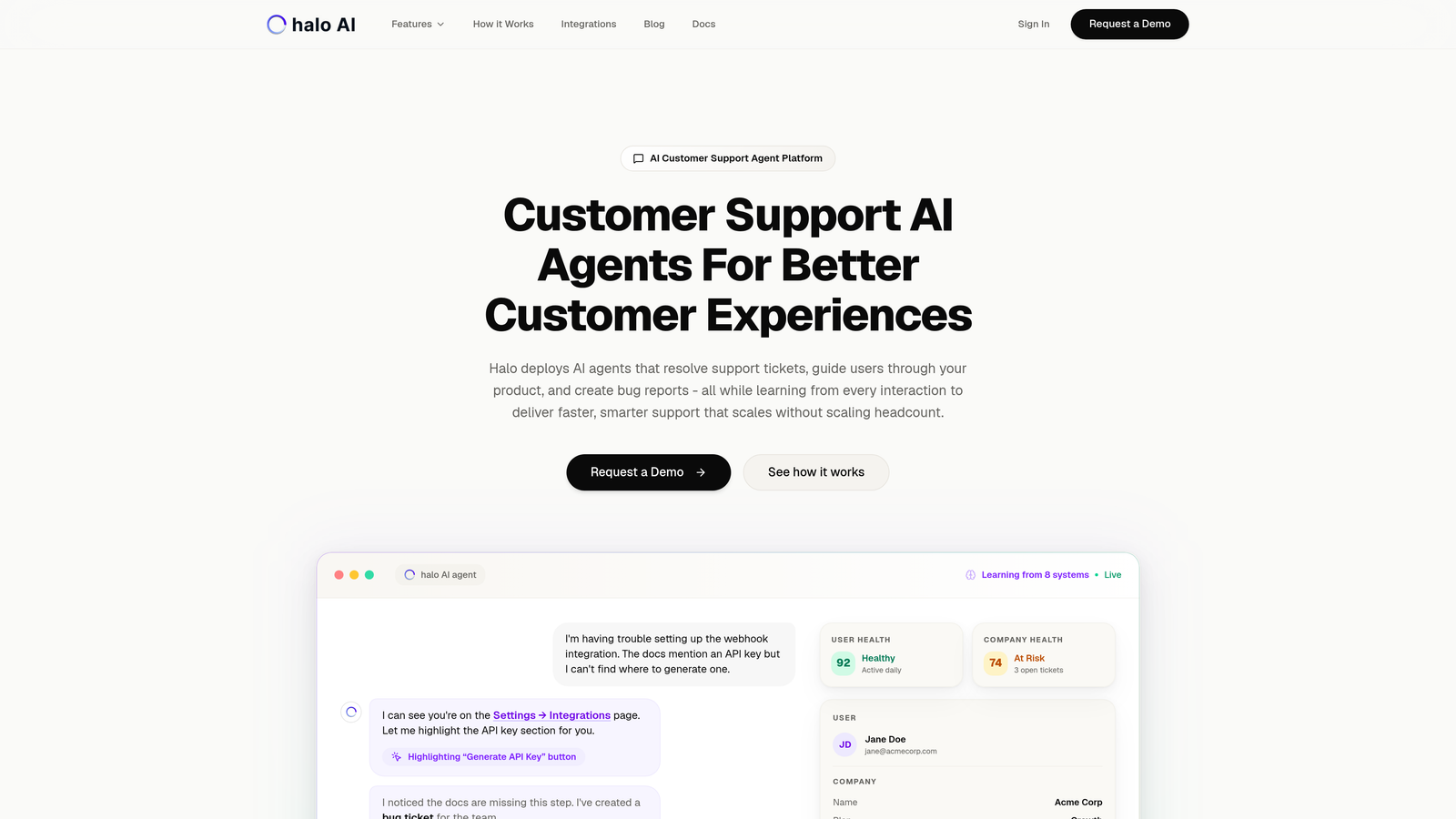
Halo AI is an AI-first customer support platform built specifically for autonomous ticket resolution and intelligent product guidance.
Where This Tool Shines
Unlike traditional helpdesks with AI bolted on, Halo was designed from the ground up for autonomous operation. Its AI agents don't just suggest responses—they resolve tickets completely, create bug reports in Linear, and surface business intelligence your team actually uses.
The page-aware chat widget sees exactly what users see, enabling visual guidance that goes beyond generic instructions. Every interaction feeds the learning system, meaning your support gets smarter over time instead of requiring constant manual training.
Key Features
Autonomous AI Agents: Resolve tickets end-to-end without human intervention, handling routine requests that traditionally consume 60-70% of support time.
Page-Aware Context: Chat widget understands visual UI state, providing guidance based on what users actually see on their screen.
Continuous Learning: System improves with every interaction, building institutional knowledge automatically rather than requiring manual knowledge base updates.
Business Intelligence Integration: Smart inbox surfaces customer health signals, revenue intelligence, and anomaly detection beyond basic support metrics.
Deep Stack Integration: Connects with Linear, Slack, HubSpot, Intercom, Stripe, Zoom, and PandaDoc for true workflow automation across your entire business.
Best For
B2B SaaS companies and product teams using helpdesk systems like Zendesk, Freshdesk, or Intercom who want to transition to truly autonomous support. Particularly valuable for teams tired of manually updating knowledge bases and those seeking business intelligence beyond basic support metrics.
Pricing
Contact for pricing based on ticket volume and integration requirements.
2. Intercom
Best for: Product-led companies wanting unified customer communication with AI conversation handling
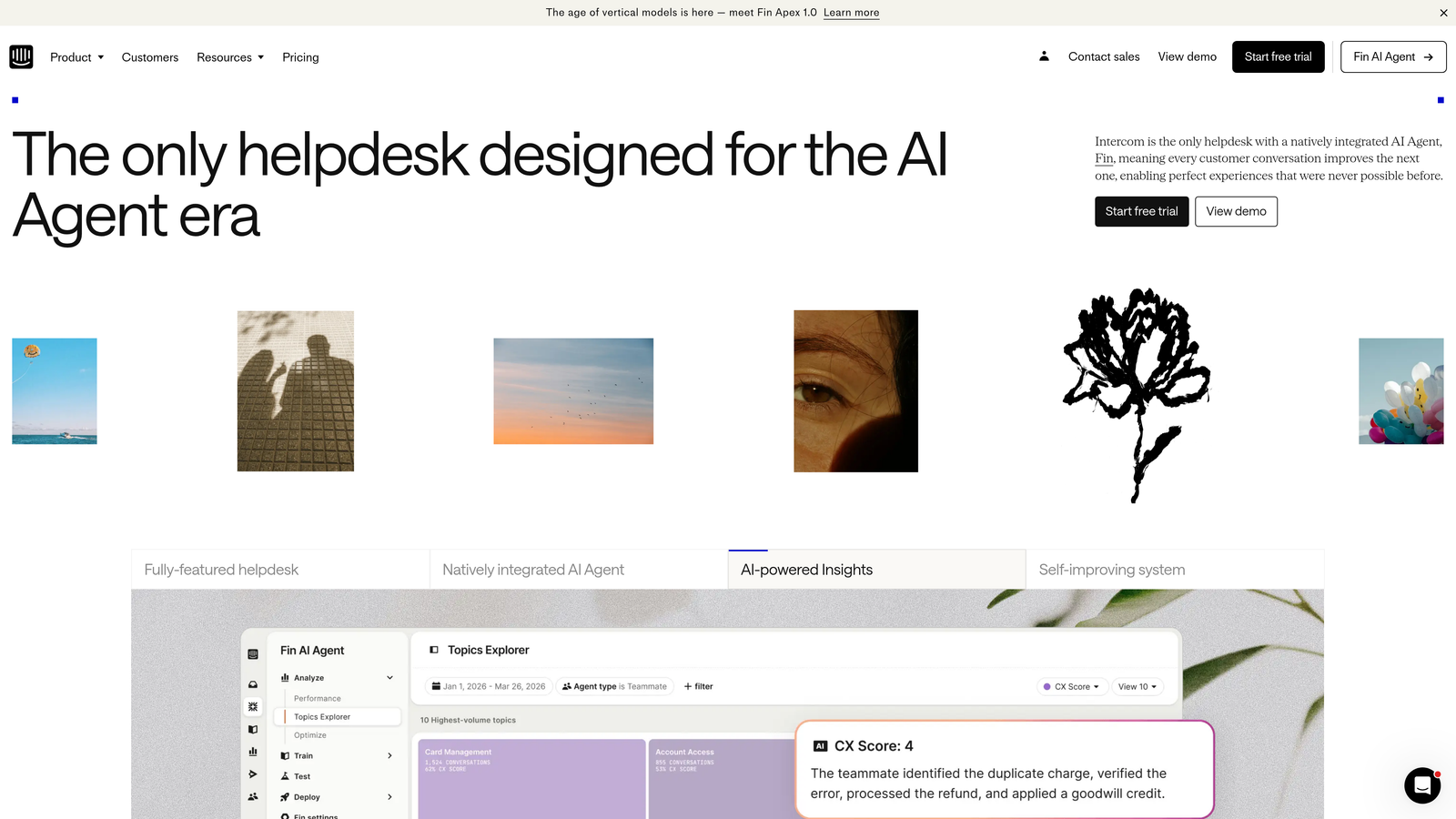
Intercom is a unified customer communication platform with Fin AI agent for automated conversations and intelligent routing.
Where This Tool Shines
Intercom excels at blending marketing, sales, and support into one platform. The Fin AI agent handles common questions conversationally, while product tours help users discover features before they need to ask for help.
The unified inbox approach means your team isn't context-switching between tools. Everything from in-app messages to email lives in one place, with workflow automation that routes conversations intelligently based on content and customer data.
Key Features
Fin AI Agent: Automated conversation handling that resolves questions instantly using your knowledge base and product documentation.
Unified Inbox: Single interface for chat, email, social, and SMS conversations with intelligent assignment and prioritization.
Product Tours: Onboarding automation that reduces support volume by helping users discover features proactively.
Custom Bot Builder: Visual workflow automation for common support scenarios without coding requirements.
API Ecosystem: Robust integration capabilities with extensive developer documentation and pre-built connectors.
Best For
Product-led SaaS companies that want to combine support, onboarding, and customer engagement in one platform. Teams that value design aesthetics and user experience alongside functionality.
Pricing
Starts at $39 per seat per month for core features. Fin AI operates on usage-based pricing tied to conversation volume.
3. Zendesk
Best for: Enterprise teams needing extensive customization, compliance features, and mature workflow capabilities
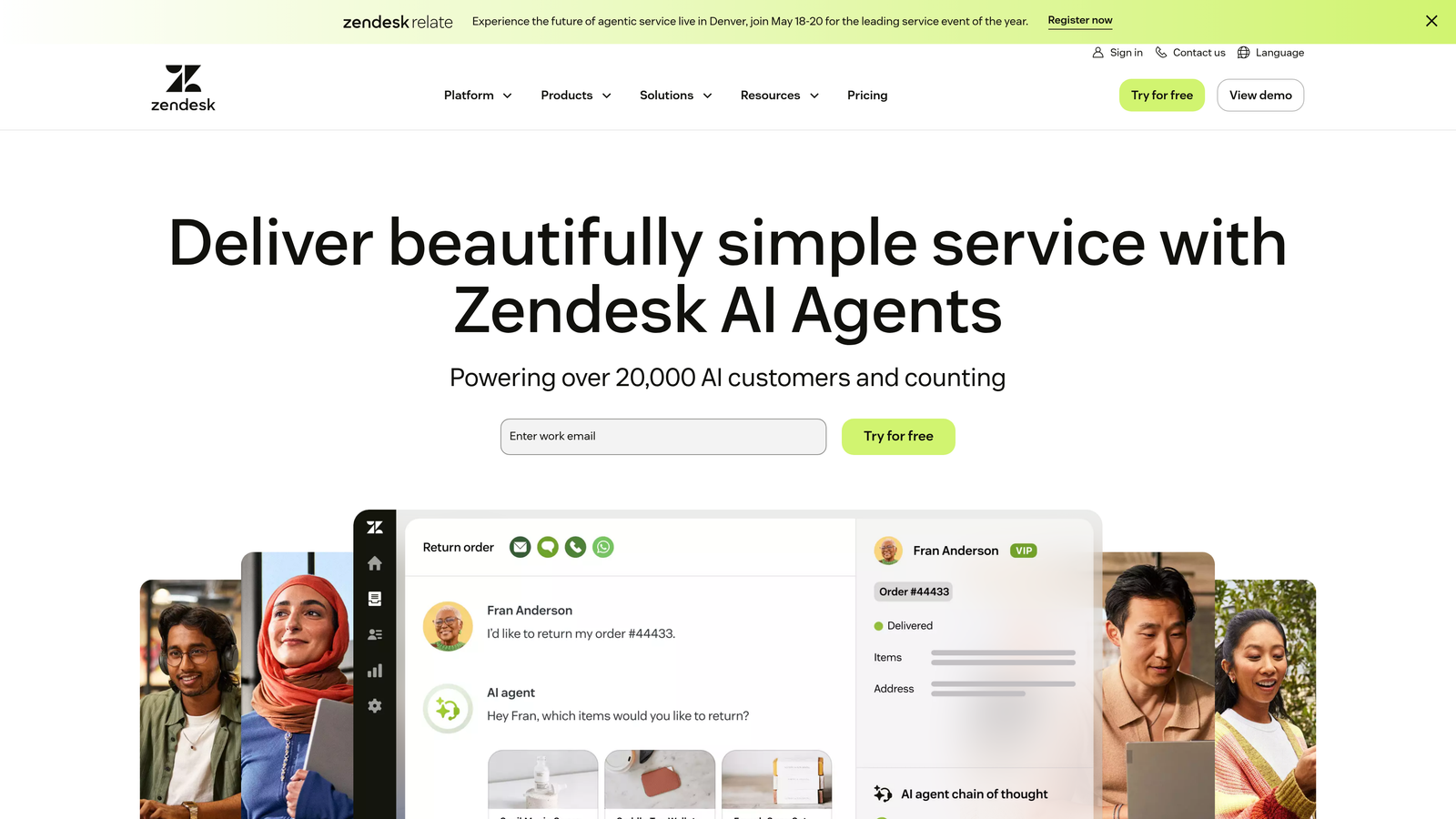
Zendesk is an enterprise-grade support platform with extensive customization options, AI add-ons, and sophisticated workflow management.
Where This Tool Shines
Zendesk's strength lies in its maturity and customization depth. The marketplace offers over 1,500 apps, meaning virtually any workflow or integration need has a solution. Multi-brand support lets enterprises manage different product lines or subsidiaries from one instance.
Advanced routing, SLA management, and reporting capabilities handle complex enterprise requirements that lighter tools struggle with. The platform scales from small teams to thousands of agents without fundamental architecture changes.
Key Features
Advanced AI Add-Ons: Intelligent triage, intent detection, and automated responses through Zendesk AI (separate licensing).
Marketplace Ecosystem: Over 1,500 apps and integrations covering everything from workforce management to advanced analytics.
Sophisticated Routing: Skills-based assignment, round-robin distribution, and complex conditional logic for ticket management.
Comprehensive Analytics: Deep reporting capabilities with custom dashboards, scheduled reports, and data export options.
Multi-Brand Support: Manage multiple brands, products, or subsidiaries from one instance with separated branding and workflows.
Best For
Enterprise organizations with complex support requirements, compliance needs, or multi-brand operations. Teams with dedicated Zendesk administrators who can leverage the platform's extensive customization options.
Pricing
Starts at $55 per agent per month for core helpdesk. Suite plans begin at $89 per agent per month with additional features. AI capabilities require separate add-on licensing.
4. Freshdesk
Best for: Growing teams seeking enterprise capabilities at mid-market pricing with AI assistance
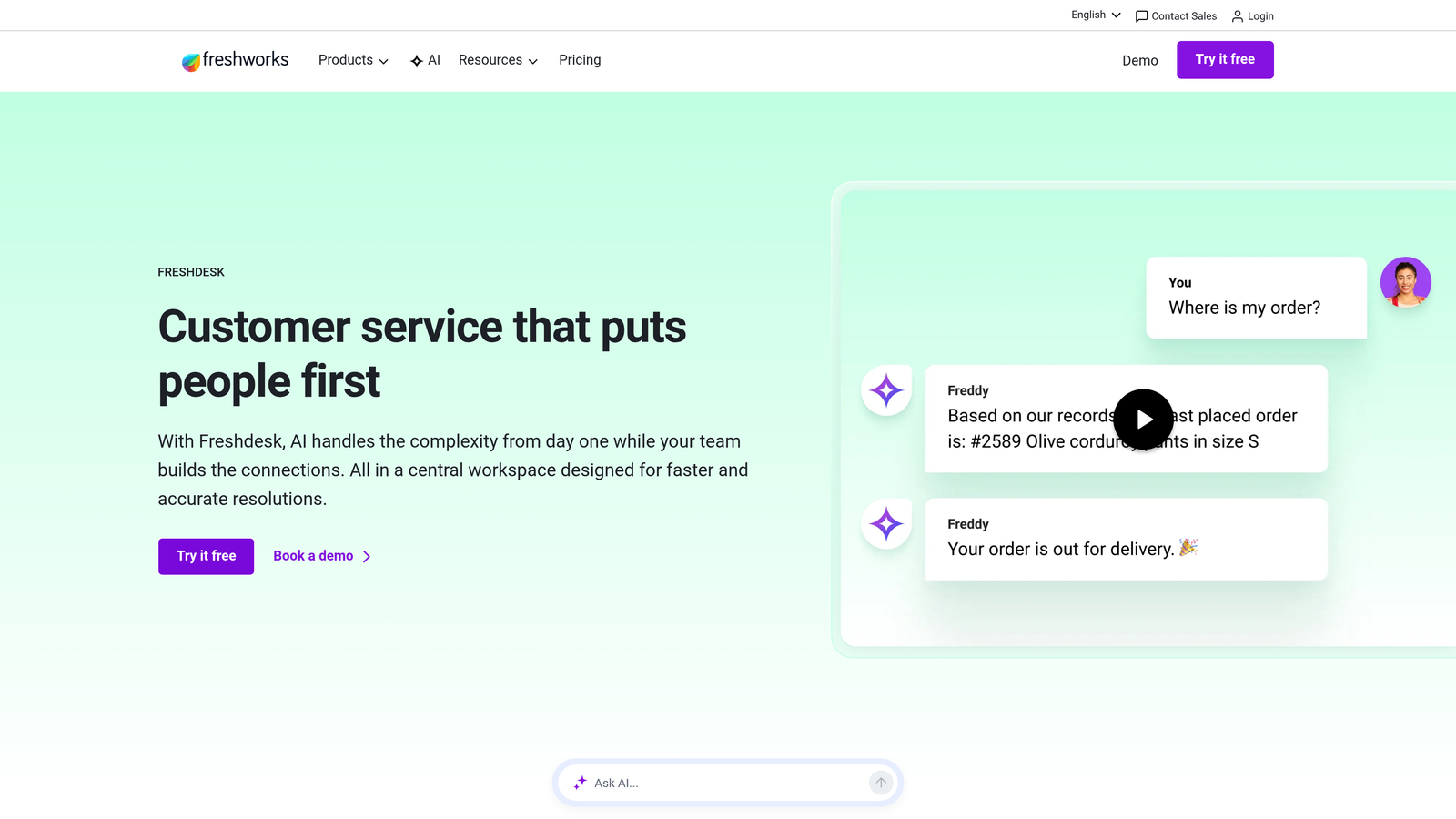
Freshdesk is a scalable helpdesk solution with Freddy AI for ticket categorization and automated suggestions.
Where This Tool Shines
Freshdesk hits the sweet spot between capability and cost. Freddy AI provides intelligent ticket categorization and agent suggestions without the enterprise price tag of competitors. Scenario automations let you build complex workflows visually.
The collision detection feature prevents multiple agents from working the same ticket simultaneously—a small detail that significantly improves team efficiency. Field service management options extend support beyond digital channels for companies with on-site service needs.
Key Features
Freddy AI: Intelligent ticket categorization, priority assignment, and response suggestions that improve agent efficiency.
Omnichannel Support: Unified handling of email, phone, chat, social media, and messaging app conversations.
Scenario Automations: Visual workflow builder for complex conditional logic without requiring coding skills.
Collision Detection: Prevents duplicate work by alerting agents when someone else is viewing or responding to a ticket.
Field Service Management: Dispatch and scheduling capabilities for companies with on-site service requirements.
Best For
Mid-market companies scaling from basic helpdesk to more sophisticated operations. Teams that want AI assistance and automation without enterprise complexity or pricing.
Pricing
Free tier available for basic needs. Paid plans start at $15 per agent per month, with Growth and Pro tiers adding advanced features.
5. Gorgias
Best for: E-commerce companies needing support that directly integrates with order management and revenue tracking
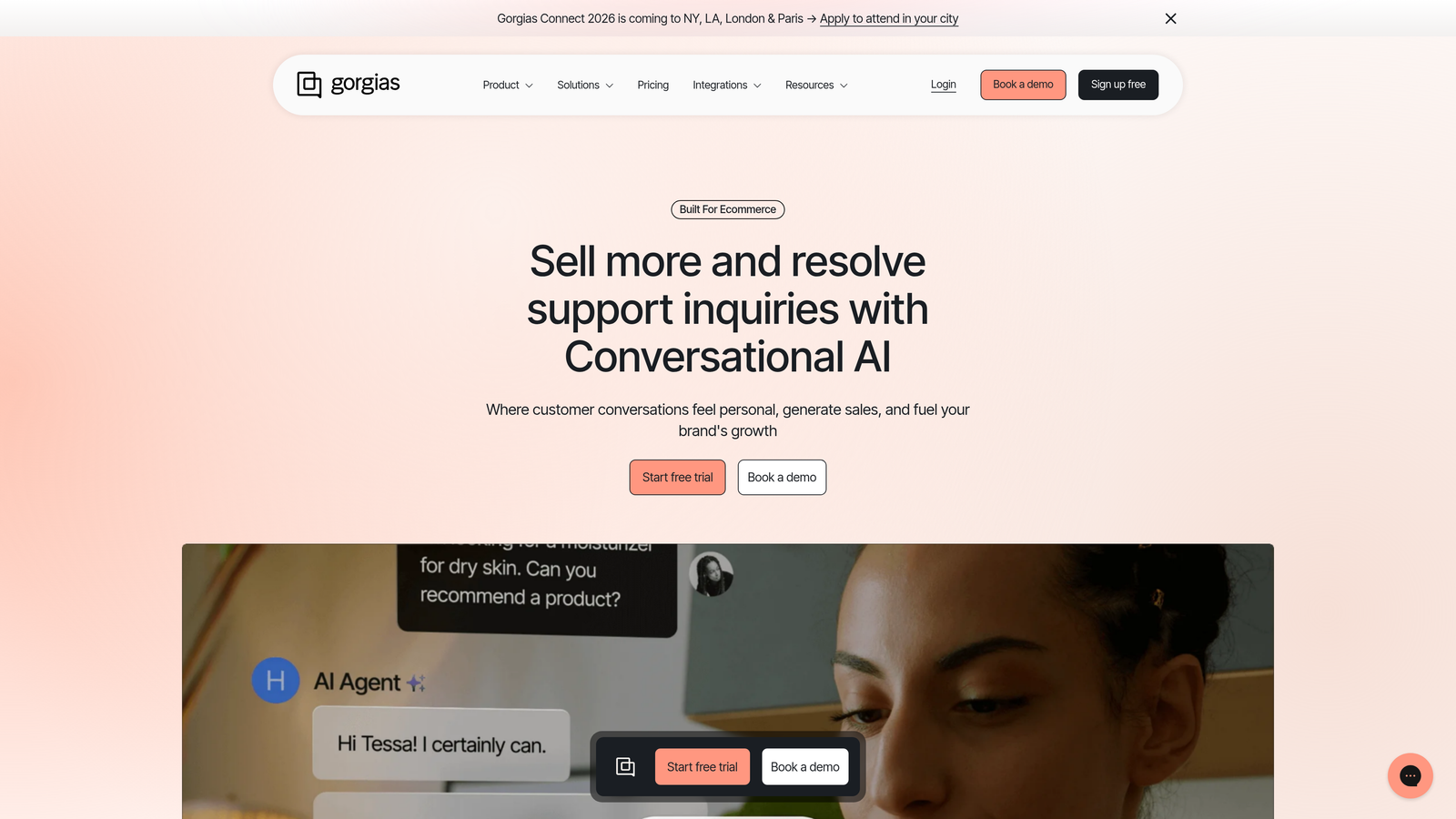
Gorgias is an e-commerce-focused support platform with deep Shopify integration and revenue-driving automation capabilities.
Where This Tool Shines
Gorgias was built specifically for e-commerce, and it shows. Agents can view order details, process refunds, and modify subscriptions directly within tickets—no switching between platforms. Revenue statistics show which support interactions actually drive sales.
Macros with dynamic variables pull customer and order data automatically, turning complex responses into one-click actions. Social media and SMS support handle customers wherever they reach out, with all conversations in one unified view.
Key Features
Deep E-Commerce Integration: Native connections to Shopify, BigCommerce, and Magento with order management embedded in tickets.
Order Management: Process refunds, cancellations, and modifications without leaving the support interface.
Revenue Intelligence: Track support ROI by measuring which interactions lead to completed purchases or retained customers.
Dynamic Macros: One-click responses that automatically populate with customer-specific order and account information.
Social Commerce Support: Handle Instagram, Facebook, and SMS conversations alongside traditional support channels.
Best For
E-commerce brands running on Shopify, BigCommerce, or Magento who want support tightly integrated with their commerce platform. Teams that need to prove support's revenue impact to stakeholders.
Pricing
Starts at $10 per month for 50 tickets. Pricing scales with monthly ticket volume, making it predictable as you grow.
6. Kustomer
Best for: Customer-centric organizations wanting unified timeline views and proactive support capabilities
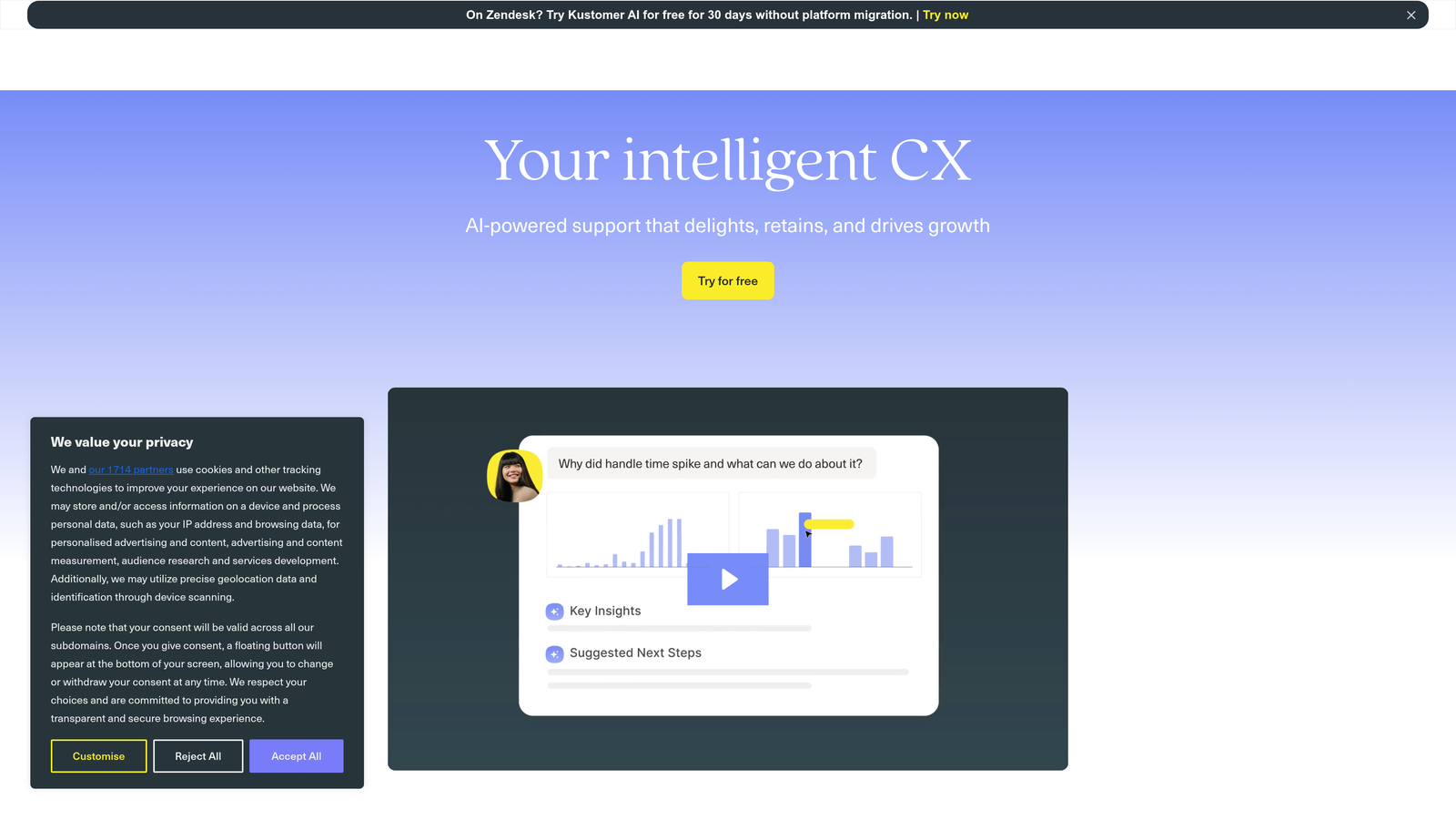
Kustomer is a customer-centric CRM platform with unified timeline view and AI-powered automation for personalized support.
Where This Tool Shines
Kustomer's unified customer timeline shows every interaction across all touchpoints in chronological order. Agents see the complete customer journey—purchases, support history, product usage—without toggling between systems.
KIQ AI powers intelligent automation that goes beyond simple chatbots. Proactive support capabilities let you reach out before customers experience issues, turning support from reactive to preventative. Custom objects provide data modeling flexibility that rigid systems can't match.
Key Features
Unified Customer Timeline: Chronological view of all customer interactions, purchases, and product usage in one interface.
KIQ AI: Intelligent automation for routing, response suggestions, and workflow orchestration based on customer context.
Proactive Support: Trigger outreach based on customer behavior, product usage patterns, or potential issues.
Business Process Automation: Build complex workflows that span support, sales, and operations without custom development.
Custom Objects: Flexible data modeling that adapts to your business rather than forcing you into predefined structures.
Best For
Companies with complex customer relationships requiring deep context. Organizations that want to shift from reactive ticket resolution to proactive customer success.
Pricing
Starts at $89 per user per month with enterprise plans available for larger deployments.
7. Help Scout
Best for: Teams prioritizing human connection who want AI assistance without losing personal touch
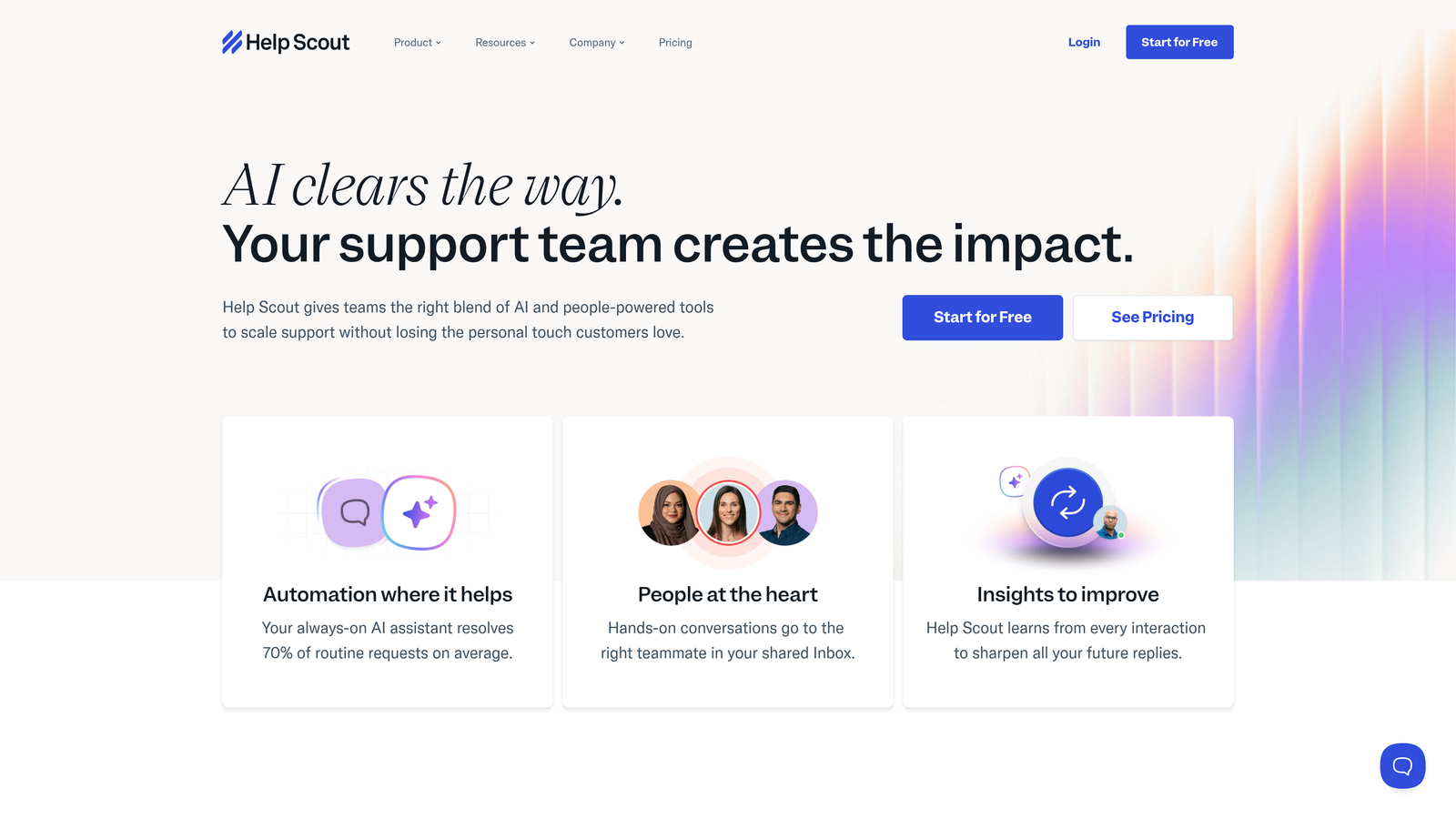
Help Scout is a human-focused helpdesk with AI assistance for teams that want to scale without sacrificing personalization.
Where This Tool Shines
Help Scout's philosophy centers on human connection augmented by technology. AI drafts and conversation summaries help agents work faster while maintaining authentic, personal responses. The interface feels like email, reducing training time for new team members.
Beacon embedded help widgets surface relevant knowledge base articles as users type, deflecting simple questions before they become tickets. Docs provides elegant knowledge base creation with search optimization and multilingual support built in.
Key Features
AI Drafts: Suggested responses based on conversation context that agents can edit and personalize before sending.
Conversation Summaries: AI-generated summaries of long threads help agents quickly understand complex issues.
Beacon Widget: Embedded help that surfaces relevant articles and enables messaging without leaving your product.
Docs Knowledge Base: Clean, searchable documentation with SEO optimization and multilingual capabilities.
Customer Satisfaction Ratings: Built-in CSAT surveys with reporting to track support quality over time.
Best For
Small to mid-sized teams that value brand voice and personal customer relationships. Companies transitioning from shared inboxes who want structure without corporate complexity.
Pricing
Starts at $20 per user per month with Standard and Plus tiers adding features like advanced reporting and custom fields.
8. Tidio
Best for: Small businesses wanting quick automation wins without technical complexity or large budgets
Tidio is an SMB-friendly platform with Lyro AI chatbot for quick automation setup without coding requirements.
Where This Tool Shines
Tidio gets you from zero to automated support faster than any competitor. Lyro AI chatbot sets up in minutes, handling common questions immediately. The visual chatbot builder lets non-technical users create conversation flows without writing code.
E-commerce integrations with Shopify, WooCommerce, and others provide order tracking and product recommendations directly in chat. Visitor tracking shows who's on your site right now, enabling proactive engagement when you spot high-value prospects.
Key Features
Lyro AI Chatbot: Quick-setup AI that answers common questions using your website content and documentation.
Visual Bot Builder: Drag-and-drop conversation flow creation without coding or technical skills required.
Live Chat and Email: Unified inbox for real-time chat and email conversations with mobile app support.
Visitor Tracking: See who's browsing your site in real-time with ability to initiate proactive conversations.
E-Commerce Integrations: Connect with Shopify, WooCommerce, and other platforms for order tracking in chat.
Best For
Small businesses and startups needing immediate automation without budget for enterprise tools. E-commerce stores wanting to add live chat and basic bot capabilities quickly.
Pricing
Free tier available with basic features. Paid plans start at $29 per month with pricing based on features rather than agent count.
9. Ada
Best for: Enterprise teams automating high-volume support across multiple languages and channels
Ada is an enterprise conversational AI platform with no-code bot building for high-volume automated support at scale.
Where This Tool Shines
Ada's Reasoning Engine handles complex queries that simple chatbots fail on. The no-code conversation builder empowers support teams to create and modify bot flows without engineering resources. Multi-language support across 50+ languages enables global deployment from one platform.
Voice and messaging channel support means customers get consistent automated assistance whether they call, text, or use messaging apps. Enterprise security and compliance features meet requirements for regulated industries like healthcare and financial services.
Key Features
No-Code Builder: Visual conversation design that support teams can manage without developer involvement.
Reasoning Engine: Advanced AI that handles multi-turn conversations and complex conditional logic beyond simple FAQ matching.
Multi-Language Support: Automated conversations in 50+ languages from one bot configuration.
Voice and Messaging: Consistent automation across phone, SMS, WhatsApp, Facebook Messenger, and other channels.
Enterprise Security: SOC 2, HIPAA, and GDPR compliance with advanced security controls for regulated industries.
Best For
Large enterprises with high support volume across multiple regions and languages. Organizations in regulated industries requiring compliance certifications and advanced security controls.
Pricing
Enterprise pricing model with custom quotes based on conversation volume and feature requirements. Contact for specific pricing.
Making the Right Choice
Your ideal scalability solution depends on where you are and where you're headed. Small e-commerce teams get immediate value from Gorgias or Tidio with their quick setup and commerce-specific features. Mid-market B2B companies often find the sweet spot with Freshdesk or Help Scout—enough sophistication without enterprise overhead.
Enterprise teams typically choose between Zendesk's extensive customization, Ada's conversational AI power, or Kustomer's unified customer view based on their specific workflow complexity. Intercom works brilliantly for product-led companies blending support with onboarding and engagement.
The real question is whether you want AI bolted onto a traditional helpdesk or a platform built AI-first from the ground up. Traditional helpdesks with AI add-ons still require significant manual work—updating knowledge bases, training models, managing escalations. AI-first platforms like Halo learn continuously, resolve tickets autonomously, and surface business intelligence beyond basic support metrics.
Start by evaluating your current resolution rate versus response time. If you're measuring success by how fast you respond rather than how often you fully resolve issues, you're optimizing the wrong metric. The goal isn't faster ticket shuffling—it's autonomous resolution that scales without adding headcount.
Your support team shouldn't scale linearly with your customer base. Let AI agents handle routine tickets, guide users through your product, and surface business intelligence while your team focuses on complex issues that need a human touch. See Halo in action and discover how continuous learning transforms every interaction into smarter, faster support.