9 Best Customer Support Software for SaaS in 2026
SaaS companies need customer support software for SaaS that scales efficiently without proportionally increasing headcount as ticket volumes surge. The best platforms in 2026 combine AI automation for routine issues, deep product integrations, context-aware support that understands user behavior, and scalable pricing models—allowing support teams to focus on complex problems while AI handles repetitive questions autonomously.
 Matt PattoliFounder14 min read
SaaS companies face a unique support challenge: as your customer base grows, ticket volumes surge, technical questions become more complex, and users expect instant answers—24/7. The traditional approach of scaling your support team proportionally with revenue creates an unsustainable cost structure. The answer? Customer support software built specifically for SaaS businesses, with AI capabilities that handle routine issues autonomously while your team focuses on complex problems that truly need human expertise.
The best customer support software for SaaS in 2026 shares several characteristics: intelligent automation that learns from every interaction, deep integration with your product and development tools, context-aware support that understands what users are doing in your application, and pricing models that scale efficiently. We've evaluated platforms across these criteria to bring you tools that represent different approaches—from AI-first architectures to traditional helpdesks with modern features.
Here are the top customer support software solutions for SaaS companies looking to deliver exceptional support without exponential headcount growth.
1. Halo AI
Best for: SaaS companies seeking autonomous AI agents that resolve tickets and continuously learn from interactions
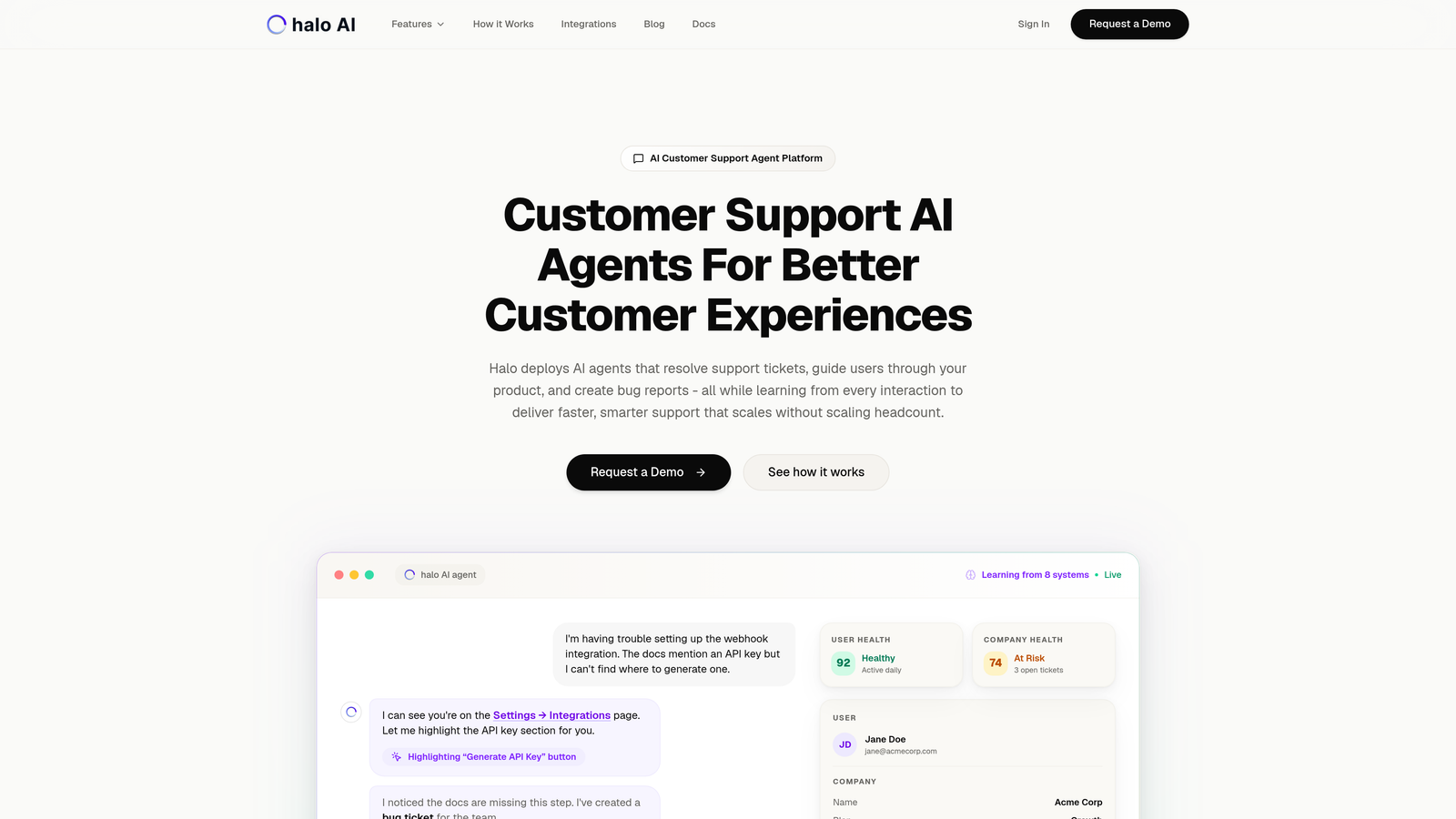
Halo AI represents a fundamentally different approach to customer support—it's built AI-first rather than bolting AI features onto a traditional helpdesk. The platform deploys autonomous AI agents that don't just suggest responses but actually resolve support tickets, guide users through your product with page-aware context, and create bug reports automatically.
Where This Tool Shines
What sets Halo apart is its continuous learning architecture. Every resolved ticket, every user interaction, and every piece of feedback trains the AI to become smarter. The agents don't just answer questions—they understand what users see on their screen through page-aware technology, providing guidance that references specific UI elements and workflows.
The platform connects to your entire business stack, pulling context from Linear for engineering issues, Slack for team communication, HubSpot for customer data, and Stripe for billing questions. This creates a unified intelligence layer that goes beyond support into business intelligence—surfacing customer health signals, revenue insights, and anomaly detection that help you understand not just what users are asking, but why.
Key Features
Autonomous AI Agents: Resolve tickets independently without human intervention, escalating only when complexity requires it.
Page-Aware Chat Widget: Sees exactly what users see in your product, providing contextual guidance that references specific UI elements.
Smart Inbox with Business Intelligence: Goes beyond ticket management to surface customer health signals and revenue intelligence.
Auto Bug Ticket Creation: Automatically creates detailed bug reports in Linear when issues are identified, complete with context and user impact.
Live Agent Handoff: Seamlessly transfers complex issues to human agents with full conversation context and customer history.
Best For
SaaS companies with complex products that generate high support volumes and technical questions. Ideal for product teams that want support insights to flow directly into development workflows, and for scaling businesses that need to maintain fast response times without proportionally scaling headcount.
Pricing
Contact for pricing. The model typically aligns with usage and company size rather than per-seat pricing.
2. Intercom
Best for: Product-led SaaS companies prioritizing in-app messaging and conversational support experiences
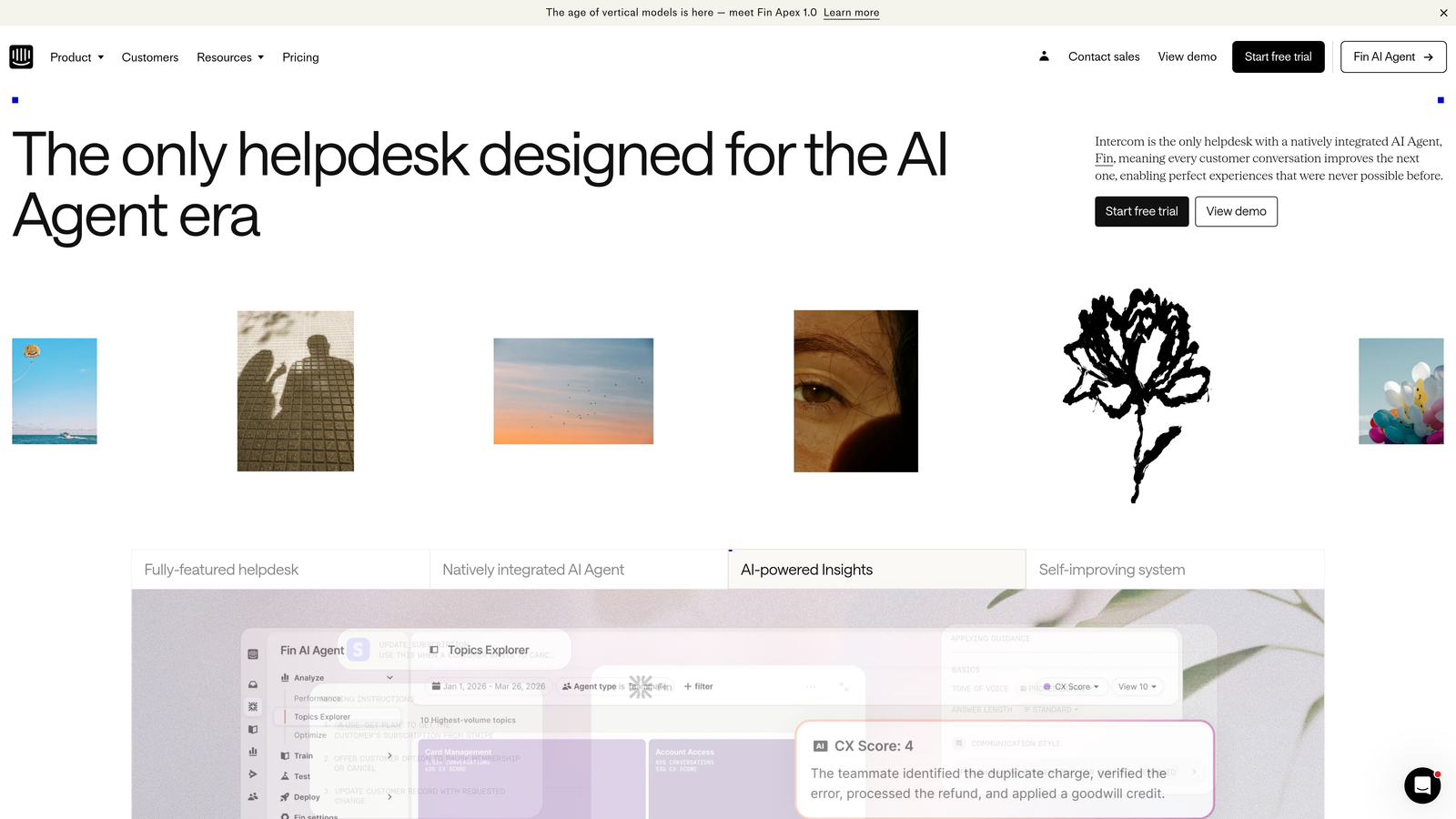
Intercom pioneered the conversational support approach that many SaaS companies now consider essential. Its Fin AI agent, powered by GPT technology, handles common questions while the platform's strength in in-app messaging and product tours makes it particularly valuable for product-led growth strategies.
Where This Tool Shines
Intercom excels at proactive support—reaching users at the right moment in their product journey with targeted messages, tours, and guidance. The platform feels native to modern SaaS products, with a messenger interface that users expect and trust.
The Fin AI agent has become increasingly capable, resolving straightforward questions by pulling from your knowledge base and past conversations. The resolution reporting provides clear visibility into what AI handles versus what requires human attention, helping you optimize your support strategy over time.
Key Features
Fin AI Agent: GPT-powered AI that answers customer questions by referencing your knowledge base and support content.
In-App Messaging and Product Tours: Engage users contextually within your product with targeted messages and onboarding flows.
Custom Bots and Workflows: Build automated conversation paths that qualify leads, gather information, and route to appropriate teams.
Resolution Reports: Detailed analytics on AI resolution rates, team performance, and conversation outcomes.
Extensive App Marketplace: Integrates with hundreds of tools to pull customer context and trigger workflows.
Best For
SaaS companies with product-led growth models that want to blend support, sales, and product engagement in a unified conversational experience. Particularly strong for teams that prioritize proactive support and in-app user education.
Pricing
Starts at $39 per seat per month for the Essential plan. Fin AI is priced separately based on resolutions, typically adding significant cost for high-volume support teams.
3. Zendesk
Best for: Enterprise SaaS companies requiring extensive customization, multi-brand support, and mature workflows
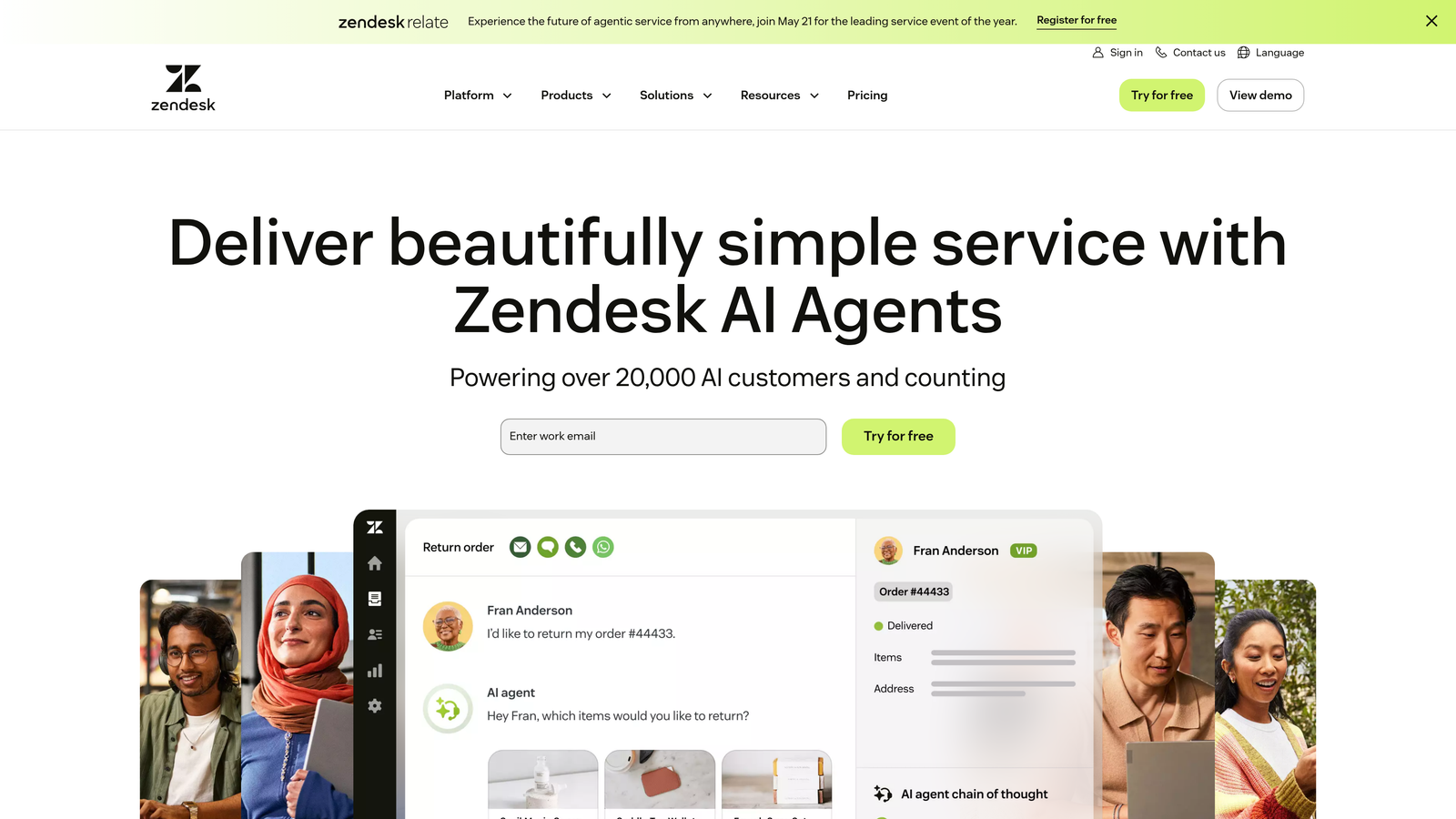
Zendesk remains the enterprise standard for customer support software, offering deep customization capabilities and a massive ecosystem of integrations. For SaaS companies with complex support requirements across multiple products or brands, Zendesk provides the flexibility to build exactly the workflows you need.
Where This Tool Shines
Zendesk's strength lies in its maturity and extensibility. The platform handles intricate ticket routing rules, custom field configurations, and multi-level SLA policies that enterprise SaaS companies require. The marketplace offers over 1,000 apps, meaning virtually any integration you need already exists.
The recent AI additions—answer bots and agent assist features—help automate responses and suggest solutions to agents. While not as autonomous as AI-first platforms, these features reduce resolution time for teams already invested in the Zendesk ecosystem.
Key Features
Advanced Ticketing System: Highly customizable with custom fields, forms, and complex workflow automation.
AI-Powered Answer Bot: Suggests knowledge base articles and automated responses to common questions.
Comprehensive Reporting: Deep analytics on team performance, customer satisfaction, and ticket trends with custom dashboards.
Large Marketplace: Over 1,000 integrations covering every major business tool and many niche applications.
Multi-Brand Support: Manage multiple product brands with separate help centers, workflows, and branding from one platform.
Best For
Enterprise SaaS companies with complex support operations, multiple product lines, or specific compliance requirements. Best suited for teams with dedicated support operations resources who can leverage the platform's extensive customization options.
Pricing
Suite Team starts at $55 per agent per month, with Professional and Enterprise tiers adding advanced features. Total cost can escalate quickly with add-ons and higher tiers.
4. Freshdesk
Best for: Growing SaaS teams seeking comprehensive features at budget-friendly pricing with AI capabilities
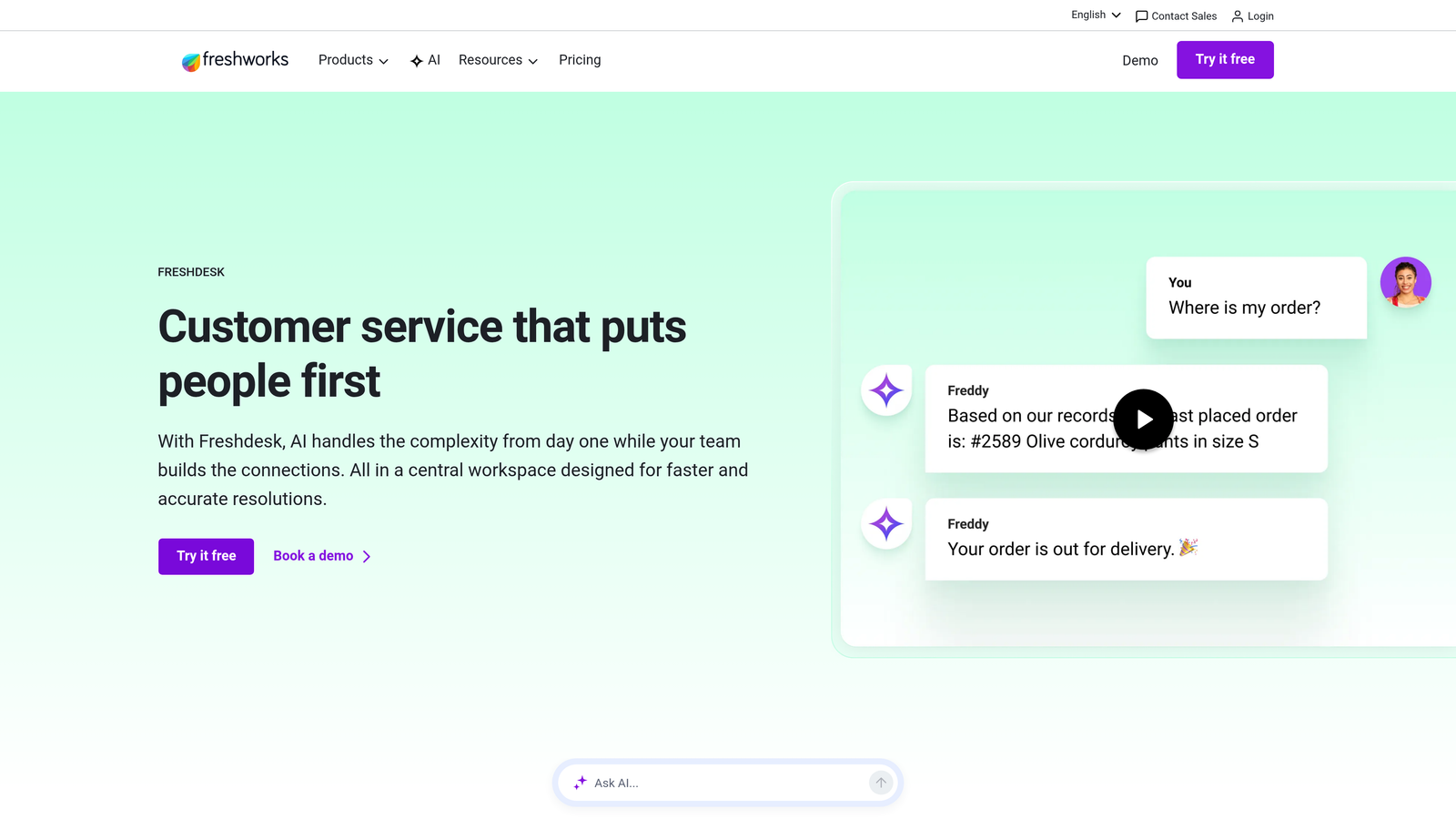
Freshdesk delivers enterprise-grade features at prices that make sense for growing SaaS companies. The platform's Freddy AI handles intelligent ticket routing and provides agents with suggested responses, while the generous free tier lets early-stage startups begin with professional support infrastructure.
Where This Tool Shines
Freshdesk strikes an impressive balance between capability and cost. The platform doesn't feel like a budget option—it includes multi-channel support, automation rules, and team collaboration features that compete with more expensive alternatives.
Freddy AI continuously improves its suggestions based on your team's responses and ticket resolutions. The system learns which articles solve which problems, making knowledge base recommendations increasingly accurate over time. For teams conscious of per-seat costs but unwilling to compromise on features, Freshdesk represents excellent value.
Key Features
Freddy AI: Intelligent ticket routing, agent suggestions, and automated responses that learn from your team's patterns.
Multi-Channel Ticketing: Unified inbox for email, chat, phone, social media, and web form inquiries.
Canned Responses and Automation: Pre-written responses and workflow automation to handle repetitive tasks efficiently.
Team Collaboration: Shared ticket ownership, internal notes, and @mentions for seamless team coordination.
SLA Management: Define and track service level agreements with escalation rules for at-risk tickets.
Best For
Growing SaaS companies that need robust support features without enterprise pricing. Ideal for teams scaling from 5-50 agents who want room to grow without platform limitations or cost explosions.
Pricing
Free tier available for up to 10 agents with basic features. Growth plan starts at $15 per agent per month, making it one of the most affordable options with AI capabilities.
5. Help Scout
Best for: SaaS teams prioritizing human connection with clean shared inbox and integrated knowledge base
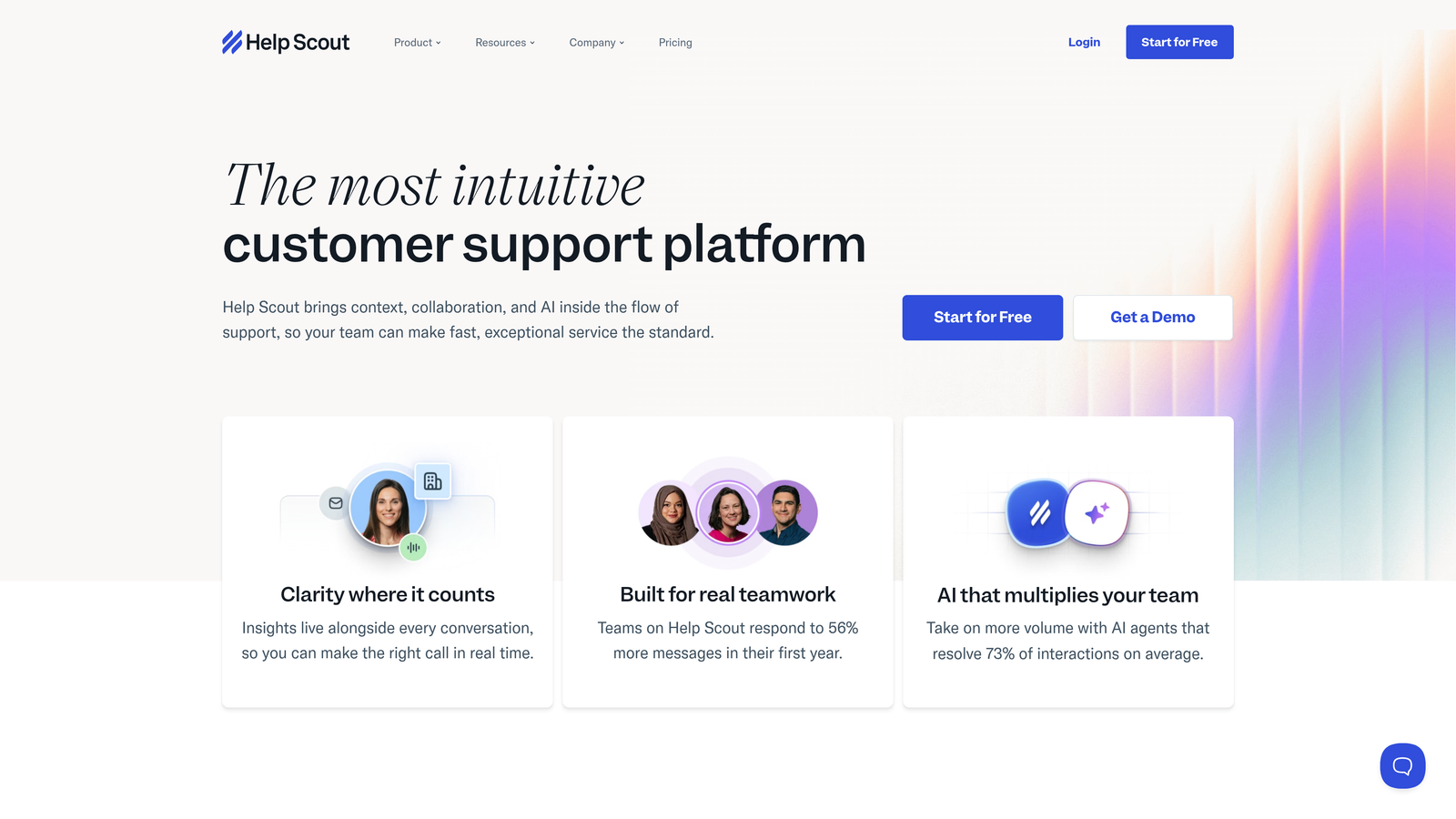
Help Scout takes a deliberately human-centered approach to customer support. The platform eschews ticket numbers for personal conversations, making every interaction feel like direct communication rather than corporate support. The Beacon widget seamlessly integrates docs search with live chat, helping users find answers before asking questions.
Where This Tool Shines
Help Scout's interface feels refreshingly simple compared to enterprise helpdesks. The shared inbox works like email but with collaboration features—collision detection prevents duplicate responses, and customer profiles provide conversation history without overwhelming complexity.
The integrated Docs knowledge base isn't an afterthought—it's central to the Help Scout philosophy. Articles are easy to create and update, and the Beacon widget surfaces relevant docs based on what page users are viewing in your product. This proactive approach reduces ticket volume while maintaining the personal touch when conversations do occur.
Key Features
Shared Inbox with Collision Detection: Email-like interface where multiple agents can collaborate without stepping on each other's responses.
Beacon Widget: Embeddable widget that searches your docs and enables chat, matching help content to user context.
Docs Knowledge Base: Clean, easy-to-maintain documentation with search analytics showing what users look for.
Customer Profiles: Complete conversation history and custom properties without database complexity.
Workflows for Automation: Automate tagging, assignments, and responses based on conversation properties.
Best For
SaaS companies that view support as a key differentiator and want to maintain personal relationships with customers. Particularly strong for B2B SaaS where support quality impacts retention and expansion revenue.
Pricing
Standard plan starts at $20 per user per month, with Plus and Pro tiers adding advanced features. Clean, predictable pricing without surprise add-ons.
6. HubSpot Service Hub
Best for: SaaS companies using HubSpot CRM seeking unified customer view across marketing, sales, and support
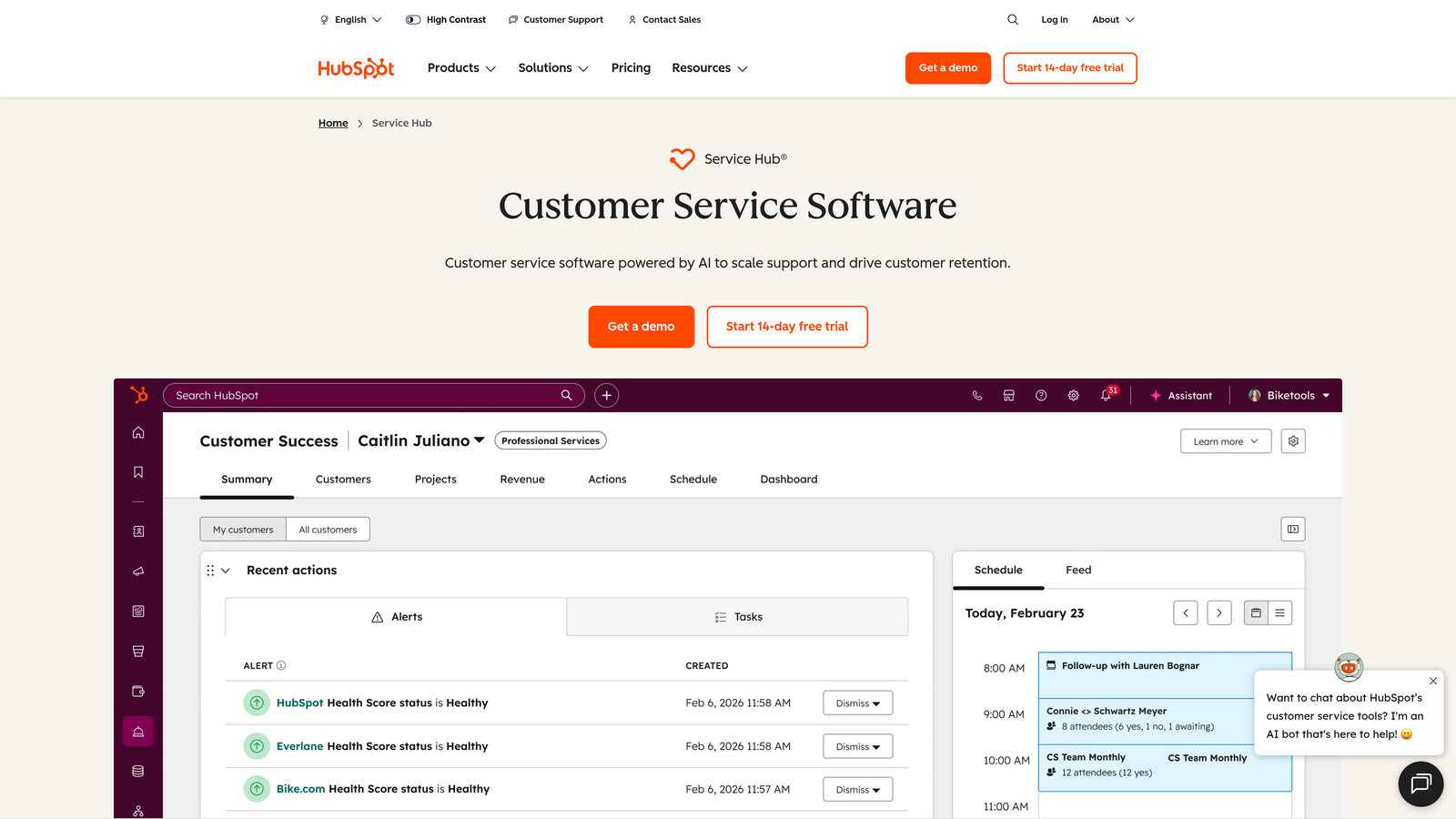
HubSpot Service Hub shines when your support team needs complete context from every customer interaction across your business. The unified customer timeline shows marketing emails, sales calls, support tickets, and product usage in one view—eliminating the context-switching that slows down resolution.
Where This Tool Shines
The power of Service Hub comes from its integration with the broader HubSpot ecosystem. Support agents see which marketing campaigns a customer engaged with, what sales promised during the deal, and how they're using your product—all without leaving the conversation view.
Conversation intelligence records and transcribes support calls, surfacing insights about customer sentiment and common issues. For SaaS companies where support, sales, and success teams need to work in lockstep, this unified platform eliminates data silos that fragment customer understanding.
Key Features
Unified Customer Timeline: Complete history of marketing, sales, and support interactions in the CRM for full context.
Conversation Intelligence: Call recording, transcription, and analysis that surfaces sentiment and coaching opportunities.
Customer Portal and Knowledge Base: Self-service options where customers can track tickets and find answers.
Feedback Surveys and NPS: Built-in tools to measure satisfaction and track customer health scores.
Playbooks for Consistency: Guided scripts and best practices that ensure consistent, high-quality responses.
Best For
SaaS companies already using HubSpot for marketing or sales who want to extend that unified customer view into support. Particularly valuable when support teams need to understand the full customer journey to resolve issues effectively.
Pricing
Free tools available with basic ticketing and live chat. Starter plan begins at $45 per month for two users, with Professional and Enterprise tiers adding advanced features.
7. Front
Best for: SaaS support teams wanting email familiarity with collaboration features and SLA tracking
Front bridges the gap between email and helpdesk software by making shared inbox management feel natural. The interface looks and works like email, reducing training time while adding the collaboration and analytics features that email lacks. For teams transitioning from email-based support, Front provides the smoothest path forward.
Where This Tool Shines
Front's collaborative features feel intuitive—internal comments keep context within conversations, @mentions pull in the right people, and rules automate routing without complex configuration. The platform doesn't force you to change how you work; it enhances your existing email-based workflows with team features.
SLA management in Front provides visibility into response and resolution times without the heavyweight ticketing system overhead. You get the accountability and metrics you need while maintaining the conversational, personal feel of email communication.
Key Features
Shared Inbox with Email Interface: Familiar email-like experience with team collaboration built in.
Internal Comments and @Mentions: Discuss tickets privately within the conversation thread and loop in teammates.
SLA Management: Track response and resolution times with breach alerts and performance reporting.
Analytics and Team Performance: Insights into response times, resolution rates, and individual agent metrics.
Rules Engine: Automate assignments, tagging, and workflows based on message content and properties.
Best For
SaaS support teams currently managing support through shared email addresses who need collaboration and analytics without abandoning the email paradigm. Works well for teams that value simplicity and fast adoption.
Pricing
Starter plan at $19 per seat per month provides core features. Growth and Scale tiers add advanced automation and analytics for larger teams.
8. Crisp
Best for: Early-stage SaaS startups seeking all-in-one messaging with chatbot builder at affordable pricing
Crisp delivers surprisingly comprehensive features for its price point. The platform combines live chat, chatbot building, shared inbox, and knowledge base in one affordable package—ideal for startups that need to punch above their weight without enterprise budgets.
Where This Tool Shines
Crisp's no-code chatbot builder lets non-technical teams create automated conversation flows that qualify leads, answer common questions, and route to appropriate team members. The co-browsing feature helps support agents see exactly what users see, making technical troubleshooting more efficient.
The platform's campaign messaging allows proactive outreach to user segments, blurring the line between support and engagement. For early-stage SaaS companies wearing multiple hats, this flexibility to use one tool for support, sales, and user engagement provides significant value.
Key Features
Live Chat with Co-Browsing: Real-time chat with the ability to see user screens for effective troubleshooting.
No-Code Chatbot Builder: Create automated conversation flows without technical expertise.
Shared Inbox: Team collaboration on conversations with assignment and status management.
Knowledge Base with Search: Self-service documentation that reduces repetitive questions.
Campaign Messaging: Proactive outreach to user segments based on behavior and properties.
Best For
Early-stage SaaS startups with limited budgets that need professional support infrastructure from day one. Particularly valuable for teams that need flexibility to use the same platform for support, sales conversations, and user engagement.
Pricing
Free tier available with basic features for small teams. Pro plan at $25 per month per workspace (not per user) makes it extremely affordable for growing startups.
9. Gorgias
Best for: SaaS companies with e-commerce components requiring deep Shopify integration and revenue tracking
Gorgias was built specifically for e-commerce but has become valuable for SaaS companies that sell physical products alongside software or have commerce elements in their business model. The platform's deep integration with Shopify and other e-commerce platforms provides support context that generic helpdesks can't match.
Where This Tool Shines
Gorgias understands e-commerce operations at a fundamental level. Support agents can view order details, process refunds, and update shipping information without leaving the conversation. The revenue attribution feature shows which support interactions lead to purchases, helping you understand support's impact on the bottom line.
Macros in Gorgias can include dynamic order data—agents can send personalized responses that reference specific products, order numbers, and shipping details automatically. For SaaS companies with commerce components, this level of integration eliminates constant tab-switching and manual data lookup.
Key Features
Deep E-Commerce Integrations: Native connections to Shopify, Magento, BigCommerce with order management capabilities.
Revenue Attribution: Track which support conversations influence purchases and calculate support's revenue impact.
Macros with Order Variables: Automated responses that dynamically include order-specific information.
Intent and Sentiment Detection: AI that identifies what customers want and how they feel to prioritize urgent issues.
Self-Service Order Management: Let customers track orders, modify shipping, and handle simple requests without agent involvement.
Best For
SaaS companies that also sell physical products, hardware alongside software, or have significant e-commerce components in their business model. Also valuable for SaaS companies considering adding commerce elements and wanting infrastructure that supports both.
Pricing
Starts at $10 per month for 50 tickets, scaling based on ticket volume rather than agent seats. This usage-based model can be economical for lower-volume support teams.
Finding Your Ideal Support Solution
The right customer support software for your SaaS company depends on where you are and where you're heading. If you're seeking autonomous AI that resolves tickets without human intervention and continuously learns from every interaction, Halo AI represents the future of intelligent support that scales efficiently. For product-led growth strategies with heavy emphasis on in-app engagement, Intercom's conversational approach and product tours create seamless user experiences.
Enterprise SaaS companies with complex multi-brand requirements will find Zendesk's extensive customization and mature ecosystem hard to beat, while growing teams watching budgets should explore Freshdesk's impressive feature set at accessible pricing. Companies prioritizing human connection and personal support experiences will appreciate Help Scout's deliberately simple, relationship-focused approach.
The integration question matters more than many teams initially realize. Support tools that connect deeply with your development workflow (Linear, Jira), CRM (HubSpot, Salesforce), and communication platforms (Slack) provide exponentially more value than standalone solutions. Consider not just what the platform does today, but how it will connect with the tools you'll adopt as you scale.
Your support team shouldn't scale linearly with your customer base. Let AI agents handle routine tickets, guide users through your product, and surface business intelligence while your team focuses on complex issues that need a human touch. See Halo in action and discover how continuous learning transforms every interaction into smarter, faster support.
The landscape of customer support software continues evolving rapidly, with AI capabilities becoming table stakes rather than differentiators. The platforms that will win in 2026 and beyond aren't just adding AI features—they're reimagining support from the ground up with intelligence at the core. Choose a platform that matches both your current needs and your vision for what support should become as your SaaS company grows.