9 Best Customer Support Software with AI in 2026
This guide evaluates the 9 best customer support software with AI options in 2026, comparing platforms on automation depth, integrations, and scalability—helping teams identify tools built natively around AI versus those with AI bolted onto legacy infrastructure.
 Matt PattoliFounder13 min read
AI has fundamentally changed what customer support software can do. Not just routing tickets faster, but resolving them autonomously, learning from every interaction, and surfacing business intelligence that goes well beyond the support queue.
The challenge is that not all "AI-powered" tools are built the same. Some bolt AI onto legacy helpdesk infrastructure; others are architected around AI from the ground up. That distinction matters enormously when you're evaluating what a platform can actually do at scale.
This list covers nine of the best customer support platforms with genuine AI capabilities in 2026, evaluated on depth of automation, integration ecosystem, ease of deployment, and how well they scale without requiring you to scale headcount. We've included our own product, Halo AI, as the first entry and explain exactly why. Every tool on this list earns its place.
1. Halo AI
Best for: B2B SaaS teams wanting AI-first support that resolves tickets, guides users, and surfaces business intelligence.
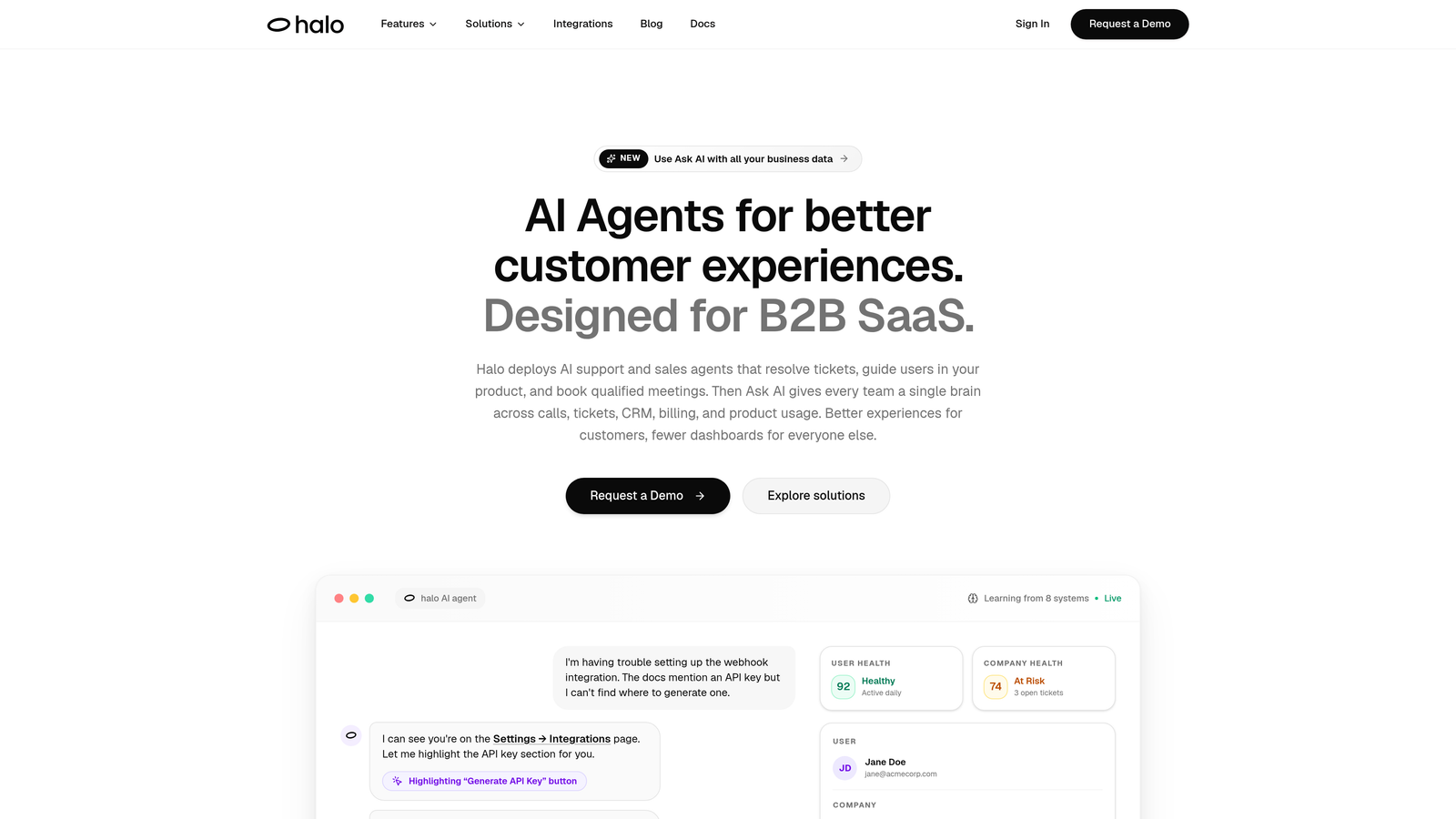
Halo AI is an AI-native customer support platform purpose-built for B2B SaaS teams that need more than a smarter helpdesk.
Where This Tool Shines
Most support platforms treat AI as a layer on top of existing ticket management. Halo is built the other way around: AI is the primary resolution engine, with human escalation as the exception rather than the rule. The platform's page-aware context is a genuine differentiator. The AI agent understands exactly which part of your product a user is looking at, enabling guidance that's specific to their situation rather than generic knowledge base responses.
Beyond ticket resolution, Halo's smart inbox surfaces customer health signals, anomaly detection, and revenue intelligence that would otherwise stay buried in your support queue. It's less "support tool with AI features" and more "business intelligence layer that also handles support."
Key Features
Page-Aware AI Agents: The agent understands which product screen a user is on, enabling contextually accurate guidance rather than generic answers.
Autonomous Ticket Resolution with Smart Handoff: Resolves routine tickets independently and escalates complex issues to live agents with full conversation context transferred.
Auto Bug Ticket Creation: Detects and logs product issues automatically, routing bug tickets directly to Linear or Jira without manual triage.
Smart Inbox with Business Intelligence: Customer health scoring, anomaly detection, and support trend signals visible directly in the inbox view.
Deep Integration Ecosystem: Connects with Slack, HubSpot, Intercom, Stripe, Zoom, PandaDoc, and Fathom for a unified view across your entire business stack.
Best For
B2B SaaS product teams and customer success organizations that want to eliminate repetitive ticket volume, automate bug reporting, and gain business intelligence from support interactions. Particularly strong for teams already using the integrations in Halo's ecosystem.
Pricing
Contact for pricing via haloagents.ai. Pricing is tailored to team size and usage requirements.
2. Intercom
Best for: Mid-market SaaS teams wanting conversational AI that blends seamlessly with human agent workflows.
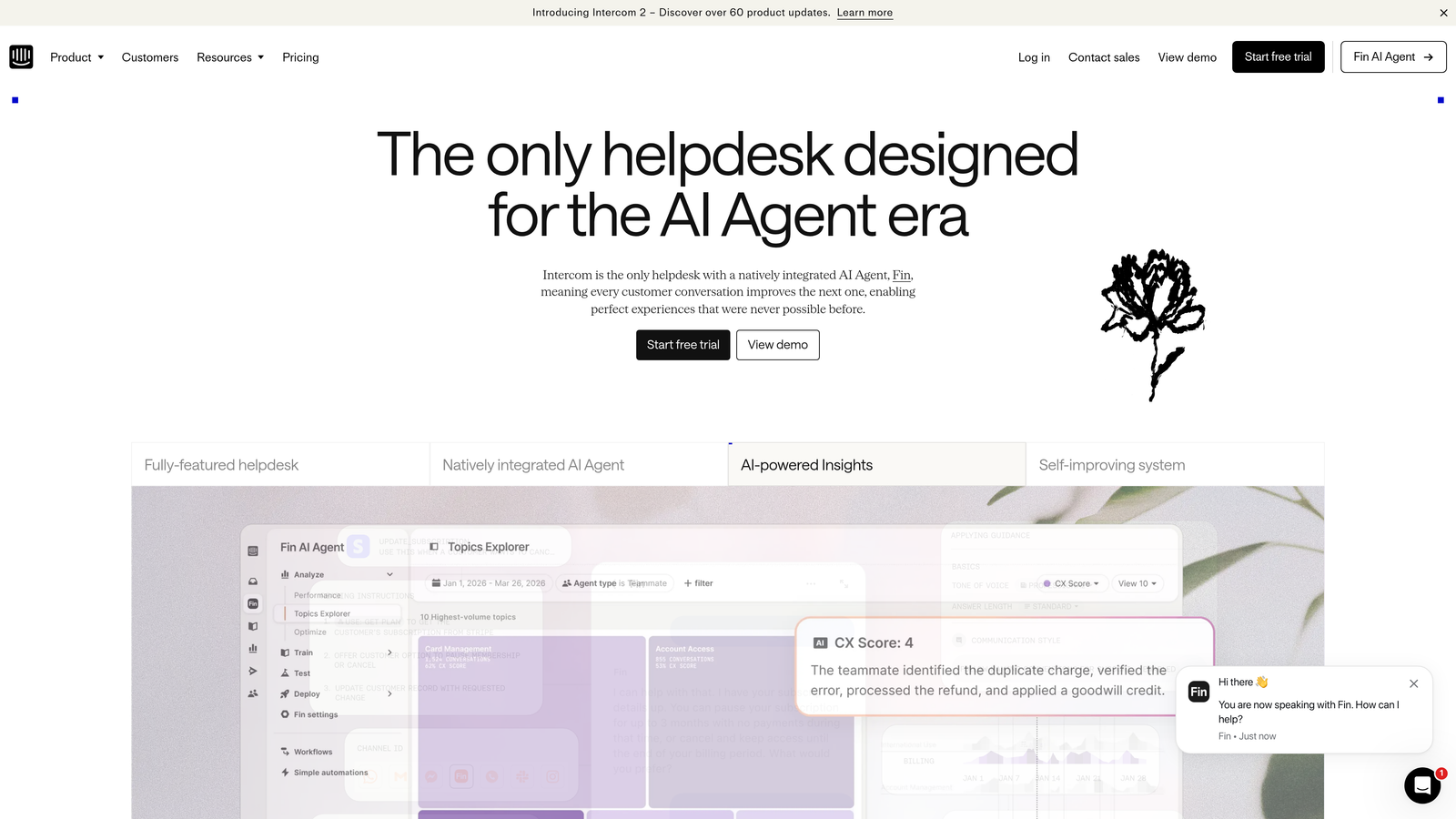
Intercom is a widely adopted conversational support platform with Fin, their AI agent built to resolve queries autonomously using your existing knowledge base and support content.
Where This Tool Shines
Intercom's strength is in the blend. Fin handles a meaningful share of inbound queries without human involvement, and when it can't, the handoff to a live agent inside the same messenger interface feels natural rather than disruptive. The experience is cohesive for both the customer and the agent.
The AI-assisted inbox, which surfaces suggested replies and conversation summaries for agents, adds speed without removing the human touch. For teams where support quality and conversational tone matter, this balance is hard to find elsewhere.
Key Features
Fin AI Agent: Resolves common queries autonomously using your knowledge base, with configurable confidence thresholds for handoff.
AI-Assisted Agent Inbox: Suggested replies, ticket summaries, and conversation context available to agents in real time.
Messenger Interface: In-app and web chat experience that works across web, mobile, and product surfaces.
Help Center Builder: Knowledge base creation with AI-assisted search to surface relevant articles proactively.
Integration Ecosystem: Connects with Salesforce, HubSpot, Slack, Stripe, and many others via a well-maintained app marketplace.
Best For
Mid-market SaaS companies with an existing knowledge base looking to automate a significant portion of inbound volume while keeping a polished, branded chat experience. Less suited for teams that need deep CRM integration or complex enterprise workflows.
Pricing
Starts at approximately $39/seat/month. Fin AI usage is billed separately based on resolution volume. Costs can scale quickly at higher interaction volumes.
3. Zendesk
Best for: Enterprise teams managing high-volume, multi-channel support operations with complex routing needs.
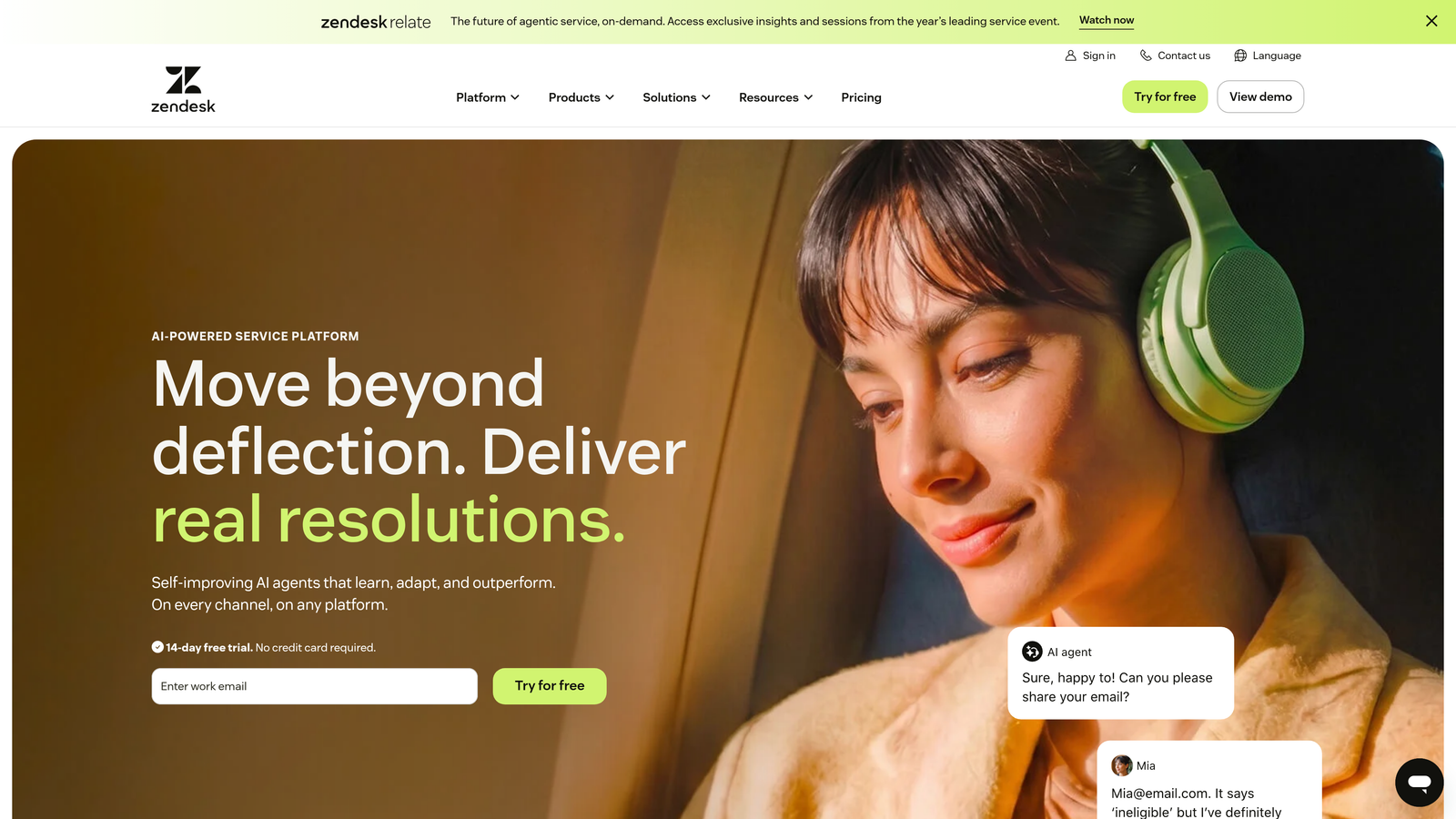
Zendesk is the incumbent enterprise helpdesk, now with a broad suite of AI features covering intelligent triage, agent copilot, and automated workflows built for scale.
Where This Tool Shines
Zendesk's AI capabilities are most impressive in the context of its broader infrastructure. Intelligent triage, AI-generated ticket summaries, and agent copilot suggestions layer onto a platform that already handles complex multi-channel routing, macros, and SLA management. For large teams, that combination is powerful.
The integration marketplace, with over 1,000 apps, means Zendesk can connect to almost anything in your stack. The trade-off is complexity: configuring Zendesk's AI features to their full potential requires meaningful setup time and often dedicated admin resources.
Key Features
AI-Powered Triage and Routing: Automatically classifies and routes incoming tickets based on intent, sentiment, and priority signals.
Agent Copilot: Suggested replies, ticket summaries, and next-best-action prompts available to agents during live interactions.
Workflow Automation: Advanced trigger and macro system for automating repetitive processes across channels.
App Marketplace: Over 1,000 integrations covering CRM, billing, engineering, and analytics tools.
Enterprise Reporting: Custom dashboards, SLA tracking, and compliance-ready audit logs for regulated industries.
Best For
Large enterprise support teams with dedicated admin resources, complex routing requirements, and multi-channel operations at scale. Overkill for smaller teams and expensive to configure well without technical support.
Pricing
Suite plans start at approximately $55/agent/month. Advanced AI features are available at higher tiers. Enterprise pricing is significantly higher and typically negotiated directly.
4. Freshdesk
Best for: Growing SMBs and mid-market teams wanting AI-assisted support without enterprise-level pricing commitments.
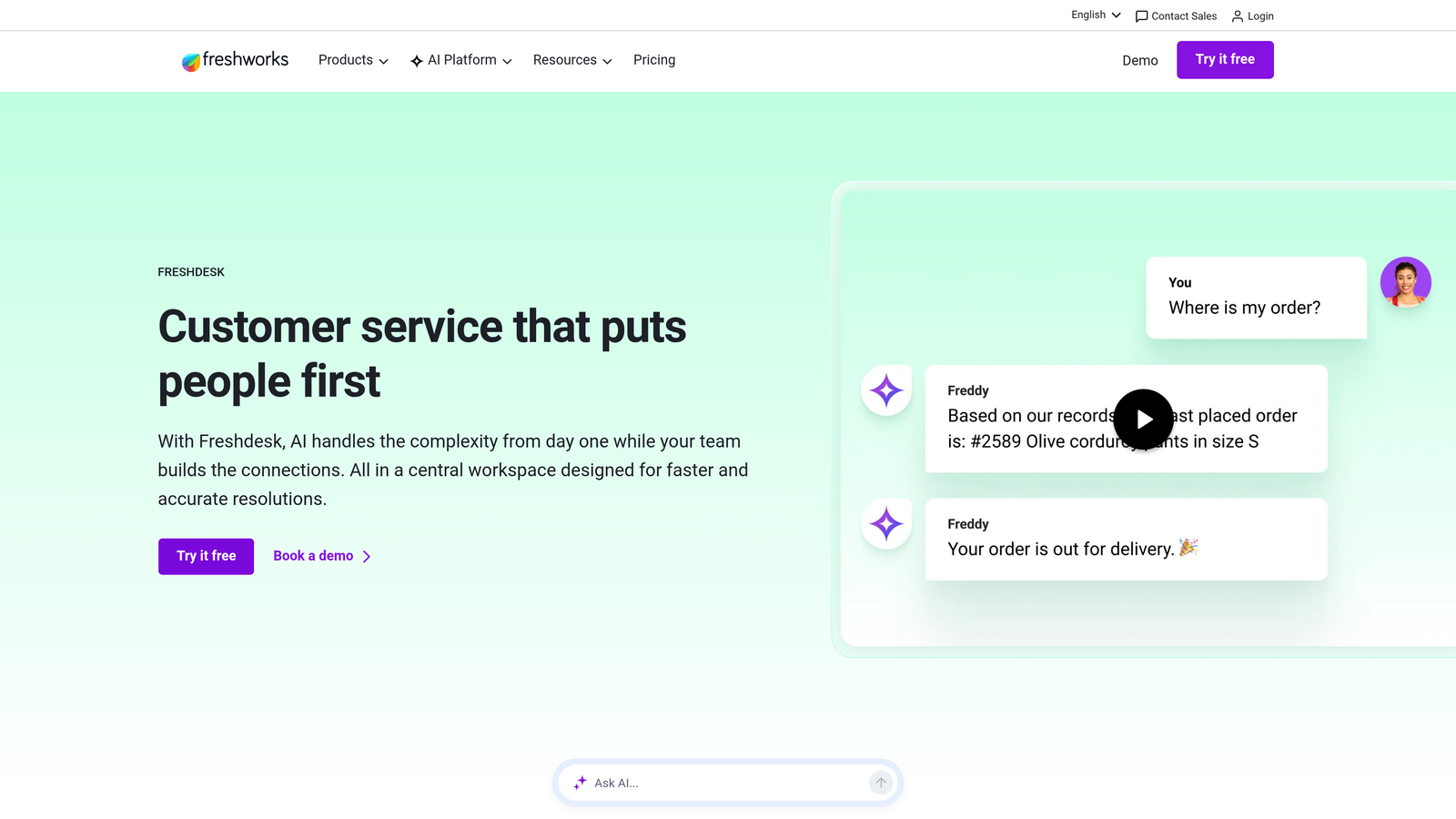
Freshdesk is a competitive helpdesk platform from Freshworks featuring the Freddy AI suite, covering ticket summarization, suggested replies, sentiment detection, and auto-triage at more accessible price points.
Where This Tool Shines
Freshdesk's value proposition is strong AI capability at a price point that doesn't require an enterprise budget. Freddy Copilot assists agents with reply suggestions and ticket context, while Freddy Insights surfaces support trends that help managers identify systemic issues before they compound.
The omnichannel coverage is genuinely broad: email, chat, phone, and social all feed into the same inbox. For teams consolidating multiple support channels onto a single platform, that breadth matters.
Key Features
Freddy AI Copilot: Agent-assist tool providing reply suggestions, ticket summaries, and contextual guidance during live interactions.
Freddy Insights: Analyzes support trends and surfaces anomalies to help managers make data-driven decisions.
Sentiment Analysis and Auto-Triage: Automatically detects ticket sentiment and routes based on urgency and topic classification.
Omnichannel Inbox: Unified view across email, live chat, phone, and social media channels.
Free Tier for Small Teams: A functional free plan makes Freshdesk accessible for early-stage companies before committing to paid tiers.
Best For
SMBs and mid-market companies looking for a capable, affordable alternative to Zendesk. Teams that need omnichannel coverage with AI assistance but aren't ready for enterprise-level complexity or cost.
Pricing
Free plan available. Paid plans start at approximately $15/agent/month. Freddy AI features are available as an add-on at higher tiers.
5. Tidio
Best for: SMBs and e-commerce teams wanting a fast, low-friction AI chatbot deployment with minimal technical setup.
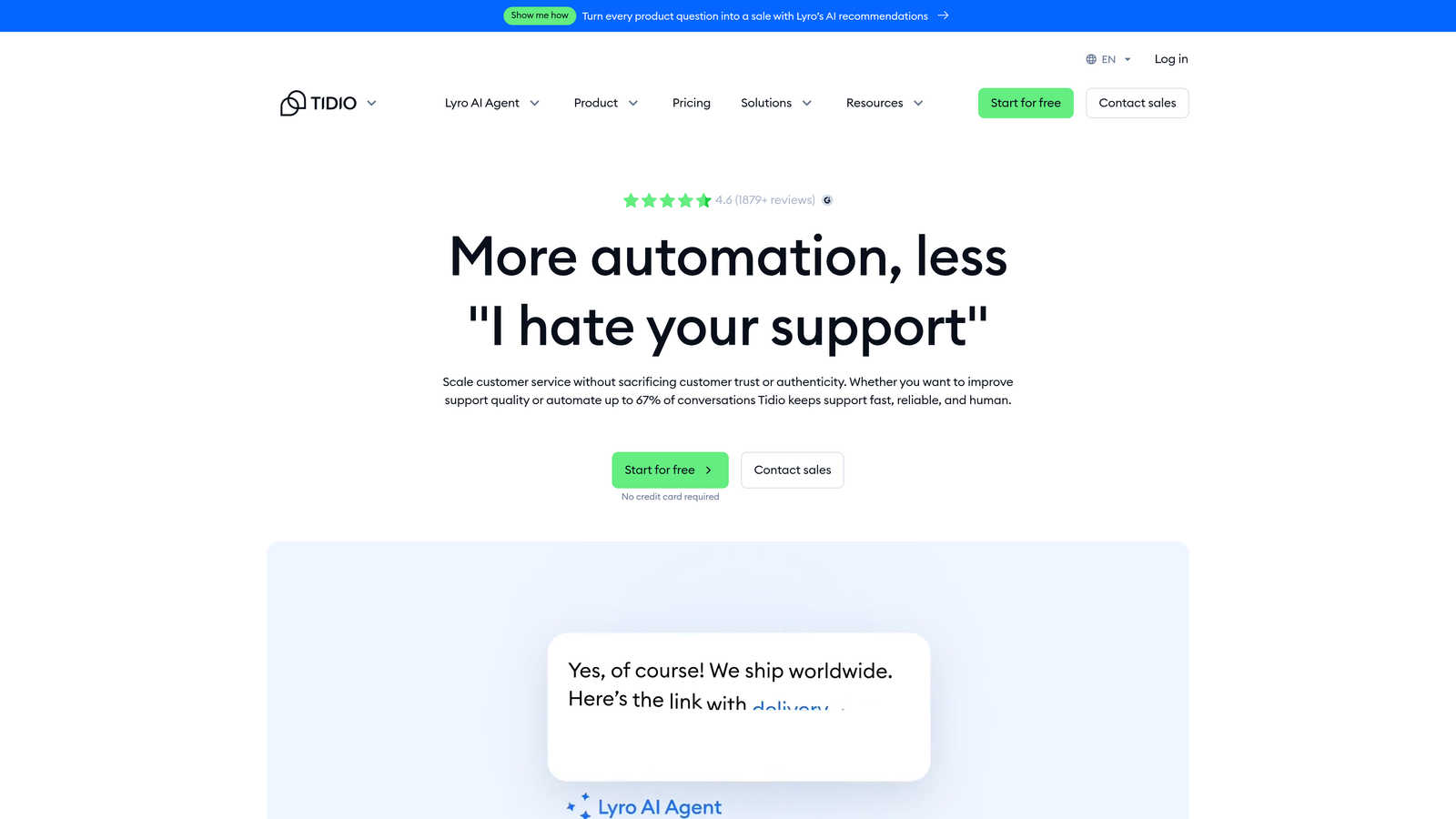
Tidio is an SMB-focused live chat and AI chatbot platform featuring Lyro, their conversational AI agent designed for quick deployment without engineering resources.
Where This Tool Shines
Tidio's defining quality is speed to value. Lyro can be deployed in a matter of hours, not weeks, making it accessible for teams without dedicated technical resources. For e-commerce businesses handling a high volume of straightforward queries (order status, return policies, shipping questions), Lyro handles the repetitive load effectively.
The live chat handoff is clean, and proactive chat triggers allow the platform to engage visitors based on behavior rather than waiting for them to initiate. It's not the most powerful AI on this list, but for the right use case, it doesn't need to be.
Key Features
Lyro AI Chatbot: Conversational AI agent that resolves common queries autonomously using your support content.
No-Code Setup: Deployable without developer involvement, making it accessible for small teams.
Live Chat with Agent Handoff: Smooth escalation from Lyro to a human agent when queries exceed the AI's confidence level.
E-Commerce Integrations: Native connections with Shopify and WooCommerce for order-aware support conversations.
Proactive Chat Triggers: Visitor behavior-based triggers to initiate conversations at high-intent moments.
Best For
E-commerce businesses and SMBs with straightforward, high-volume query patterns. Less suited for B2B SaaS teams with complex product questions, multi-step troubleshooting, or enterprise integration requirements.
Pricing
Free plan available. Lyro AI starts at approximately $29/month. Pricing scales with conversation volume.
6. Help Scout
Best for: Teams where support quality and relationship tone are brand differentiators and AI should assist agents, not replace them.
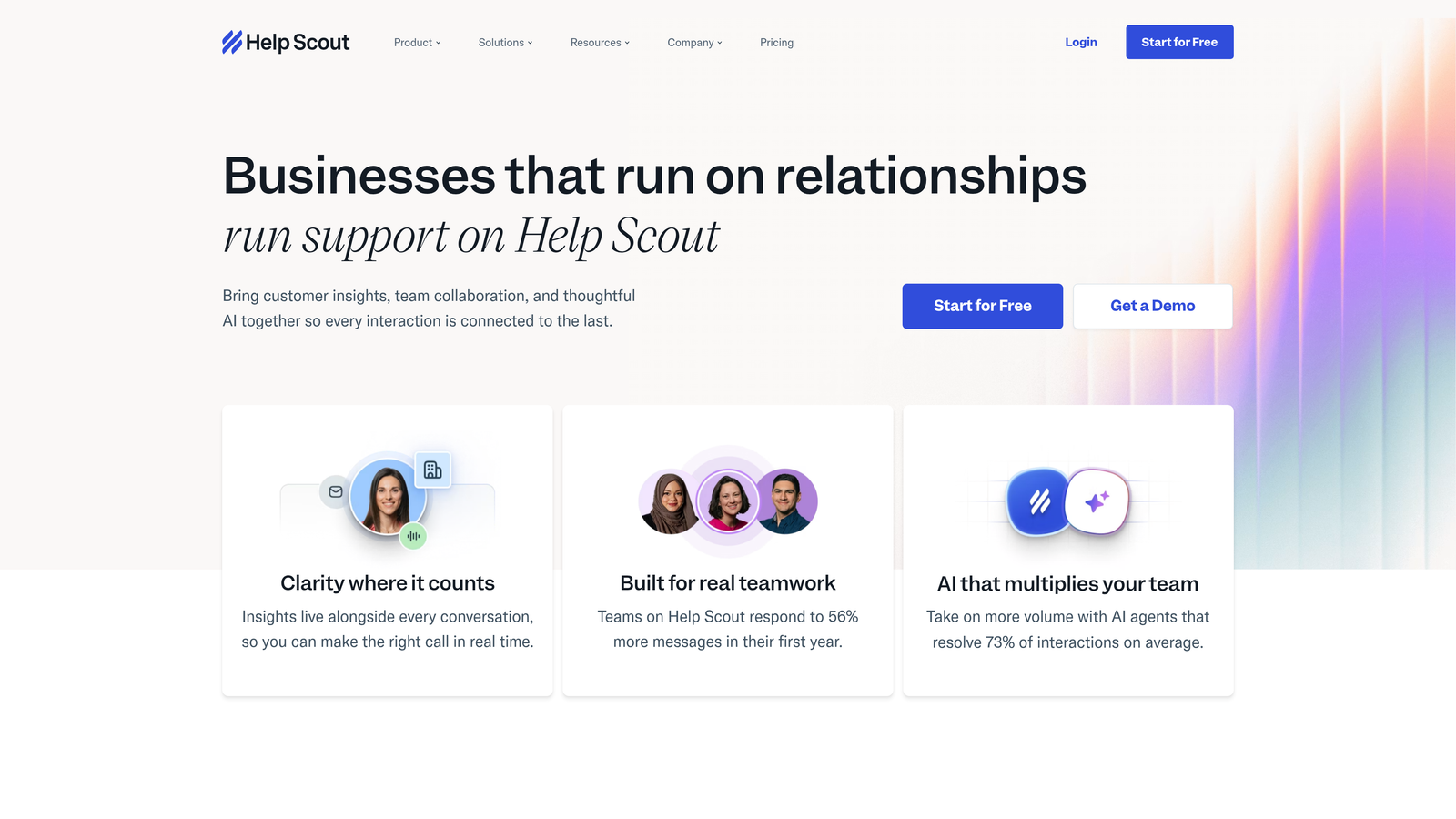
Help Scout is a human-first support platform that uses AI to make agents faster and more effective, with clean AI drafts, summarization, and reply suggestions built into a shared inbox interface.
Where This Tool Shines
Help Scout's philosophy is deliberately different from most platforms on this list. The AI features are designed to reduce the time agents spend on composition and context-gathering, not to remove agents from the equation. If your brand voice is a competitive advantage and you want every response to feel genuinely human, this approach resonates.
The shared inbox is exceptionally clean, with collision detection preventing duplicate replies and a Docs knowledge base that integrates directly with the support workflow. For teams that have tried heavier platforms and found them cumbersome, Help Scout's simplicity is a real selling point.
Key Features
AI Drafts: Generates reply drafts for agents to review, edit, and send, reducing composition time significantly.
AI Summarize: Condenses long conversation threads into a quick context summary for agents picking up mid-conversation.
Shared Inbox with Collision Detection: Prevents two agents from responding to the same conversation simultaneously.
Docs Knowledge Base: Built-in help center with AI-assisted search to surface relevant articles for both customers and agents.
Email-Style Support Experience: Familiar, low-friction interface that customers engage with naturally.
Best For
Companies where support tone and relationship quality matter as much as resolution speed. Not the right fit for teams prioritizing heavy automation, autonomous resolution, or complex enterprise workflows.
Pricing
Starts at approximately $22/user/month. Pricing is straightforward with no usage-based AI add-ons at entry tiers.
7. Salesforce Service Cloud
Best for: Enterprise organizations already running on Salesforce that want support AI with full CRM context baked in.
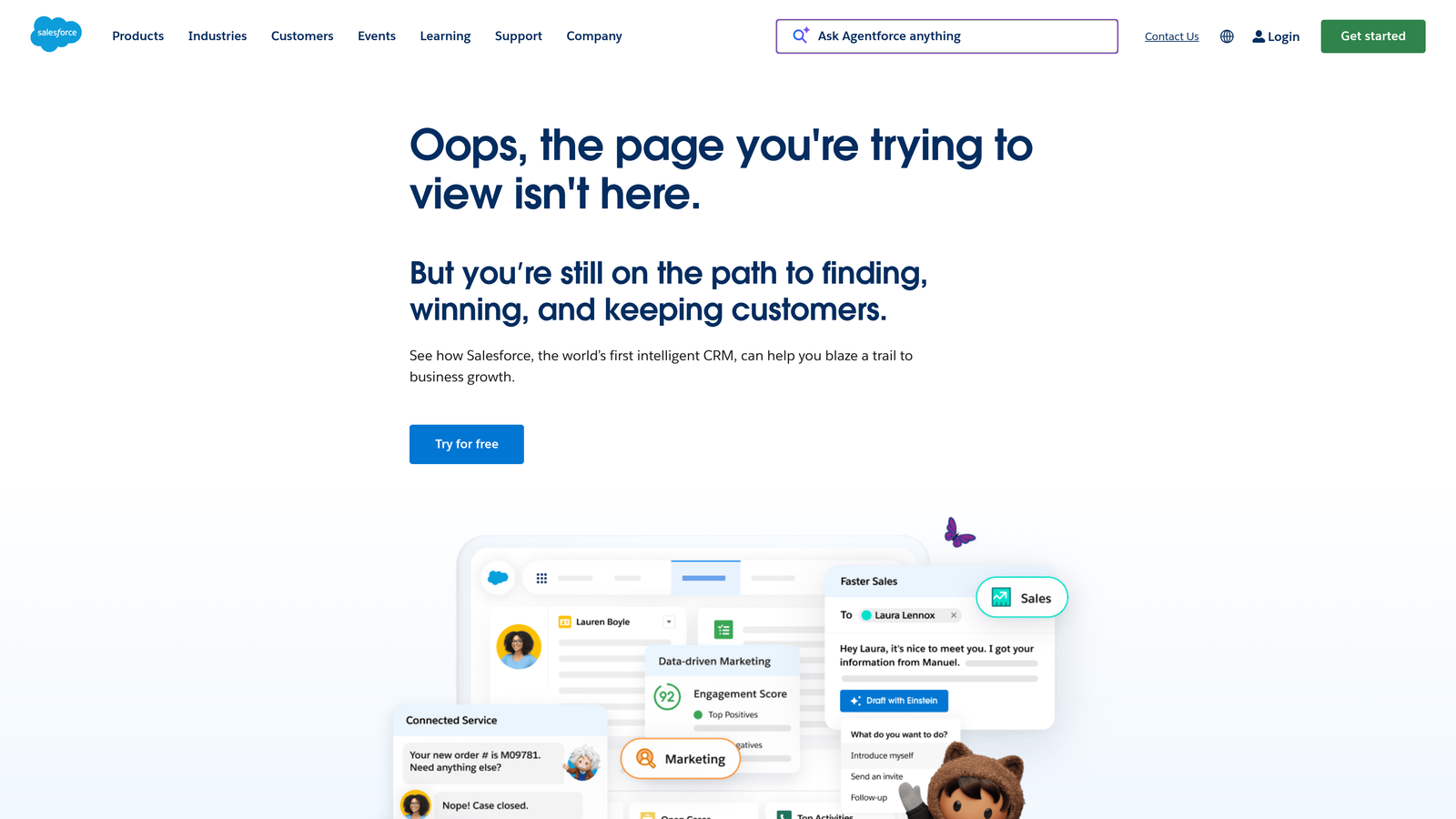
Salesforce Service Cloud is enterprise support software with Einstein AI deeply integrated into CRM-connected workflows, giving agents full customer context from sales, billing, and product data in a single view.
Where This Tool Shines
The core advantage of Service Cloud is context. When a support agent opens a case, they can see the customer's purchase history, open opportunities, contract status, and prior interactions across sales and support in one place. Einstein AI uses that full context to power case classification, routing, and next-best-action recommendations that are genuinely more informed than what a standalone helpdesk can offer.
For organizations where support, sales, and customer success are tightly connected, this integration depth is hard to replicate outside the Salesforce ecosystem. The trade-off is implementation overhead: Service Cloud is not a quick deployment, and the cost reflects that.
Key Features
Einstein AI Case Classification and Routing: Automatically classifies incoming cases and routes them based on content, priority, and customer context.
Full CRM Integration: Support agents see complete customer records including sales, billing, and product usage data alongside each case.
Omni-Channel Routing with AI Prioritization: Routes work across channels based on agent capacity, skills, and AI-determined case priority.
Einstein Bots: Configurable self-service bots for common query deflection before cases reach agents.
Advanced Analytics and Custom Dashboards: Salesforce-native reporting with deep customization for enterprise operations.
Best For
Enterprise organizations with Salesforce already embedded across their business. The AI and integration benefits compound significantly when the broader Salesforce stack is in use. Not cost-effective or practical as a standalone support tool.
Pricing
Starts at approximately $25/user/month at entry level. Enterprise tiers are significantly higher and typically involve custom contracts. Implementation costs are additional.
8. Kustomer
Best for: High-contact-frequency brands that need full customer timeline context alongside AI-powered routing and summarization.
Kustomer is a CRM-style support platform with a unified customer timeline view and AI-powered routing, summarization, and suggested replies built for brands managing complex, multi-touchpoint customer journeys.
Where This Tool Shines
Kustomer's defining feature is the customer timeline: a single view of every interaction a customer has had across every channel, stitched together chronologically. For support agents handling complex situations where history matters, this context dramatically reduces the time spent reconstructing what happened before the current conversation.
The AI features work well in this context, with conversation summaries and routing recommendations informed by the full customer record rather than just the current ticket. It's particularly well-suited to brands with high interaction frequency where customers return repeatedly.
Key Features
Unified Customer Timeline: All interactions across channels consolidated into a single chronological view per customer.
AI-Powered Routing and Prioritization: Routes conversations based on customer history, intent signals, and agent availability.
AI Conversation Summaries: Automatically generates context summaries to bring agents up to speed quickly on complex histories.
Omnichannel Support in a Single View: Email, chat, phone, and social all visible in the same interface alongside the customer timeline.
Workflow Automation with Business Rules: Configurable automation engine for routing, escalation, and task assignment based on custom logic.
Best For
E-commerce, consumer apps, and subscription businesses with high interaction frequency where full customer history is essential to effective support. The price point makes it a considered purchase for smaller teams.
Pricing
Starts at approximately $89/user/month. Positioned at the premium end of the market; best justified when the full CRM-style functionality is actively used.
9. Drift (Salesloft)
Best for: B2B teams where inbound support conversations frequently transition into sales or expansion opportunities.
Drift is a conversational AI platform positioned at the intersection of support and revenue, enabling B2B teams to handle inbound queries while identifying and routing sales opportunities. It is now part of the Salesloft platform.
Where This Tool Shines
Drift's differentiation is revenue awareness. The AI doesn't just resolve queries: it identifies signals that indicate a customer might be ready for an upsell, expansion conversation, or sales engagement, and routes accordingly. For B2B companies where support and revenue teams share accountability for customer outcomes, this blending of functions is genuinely useful.
The meeting scheduling and routing capabilities built directly into chat reduce friction for high-intent conversations. When integrated with Salesforce or HubSpot, the account-based context adds another layer of intelligence to how conversations are handled and prioritized.
Key Features
AI-Powered Inbound Query Handling: Chatbot resolves common support queries while simultaneously identifying revenue signals in the conversation.
Revenue Intelligence: Surfaces upsell and expansion opportunities from support interactions and routes them to the appropriate sales or success team member.
Meeting Scheduling Built into Chat: Allows customers to book calls directly from a conversation without leaving the chat interface.
Account-Based Engagement: Uses CRM data to personalize conversations based on account size, stage, and history.
Salesforce, HubSpot, and Salesloft Integration: Deep connections to the most common B2B revenue stack tools.
Best For
B2B companies where the line between support and sales is intentionally blurred, and where identifying revenue opportunities in support conversations is a strategic priority. Less focused on traditional ticket-based support operations.
Pricing
Contact for pricing. Drift is now part of the Salesloft platform, and pricing is typically discussed as part of a broader Salesloft engagement.
Which Tool Is Right for Your Team?
The right choice depends heavily on where you sit today and what you need AI to actually do for you.
If you're a B2B SaaS team that wants AI-first support with page-aware context, autonomous resolution, and business intelligence built in, Halo AI is purpose-built for that. If you're already deep in the Salesforce ecosystem and need CRM-connected support AI, Service Cloud is the logical choice. For mid-market SaaS teams that want polished conversational AI without heavy configuration, Intercom's Fin is a strong option.
Teams on a tighter budget with omnichannel needs will find Freshdesk's Freddy AI suite punches above its price point. E-commerce and SMB teams wanting fast deployment with minimal setup will appreciate Tidio's Lyro. And if your brand depends on support feeling genuinely human, Help Scout's agent-assist approach is worth a close look.
For high-contact-frequency brands with complex customer histories, Kustomer's timeline view adds context that generic helpdesks miss. B2B teams blurring the line between support and revenue conversations will find Drift's positioning uniquely relevant. And for enterprise operations with high ticket volume and compliance requirements, Zendesk's infrastructure depth remains hard to match.
The broader shift in 2026 is clear: the best support platforms aren't just managing tickets faster. They're resolving them autonomously, learning from every interaction, and returning intelligence back to the business. Your support team shouldn't scale linearly with your customer base. See Halo in action and discover how continuous learning transforms every interaction into smarter, faster support.