9 Best Customer Support Tools for Product Teams in 2026
Product teams need customer support tools that transform user feedback into product intelligence, not just resolve tickets. This guide reviews the top 9 platforms in 2026 that bridge support and development workflows through smart integrations, automation, and features that surface bugs, extract insights, and connect customer conversations directly to your product roadmap—helping teams ship better products based on real user data.
 Matt PattoliFounder11 min read
Product teams face a unique challenge: they need customer support tools that do more than just close tickets. They need systems that surface product insights, flag bugs before they spiral, and connect support data directly to the product development workflow. The right tool turns customer conversations into actionable intelligence—helping you ship better products faster.
We evaluated dozens of platforms to find the ones that genuinely serve product-focused teams, prioritizing tools with strong integrations, intelligent automation, and the ability to bridge the gap between support and development. Here are the top customer support tools built for product teams.
1. Halo AI
Best for: Product teams wanting AI that autonomously resolves tickets and creates bug reports with full context
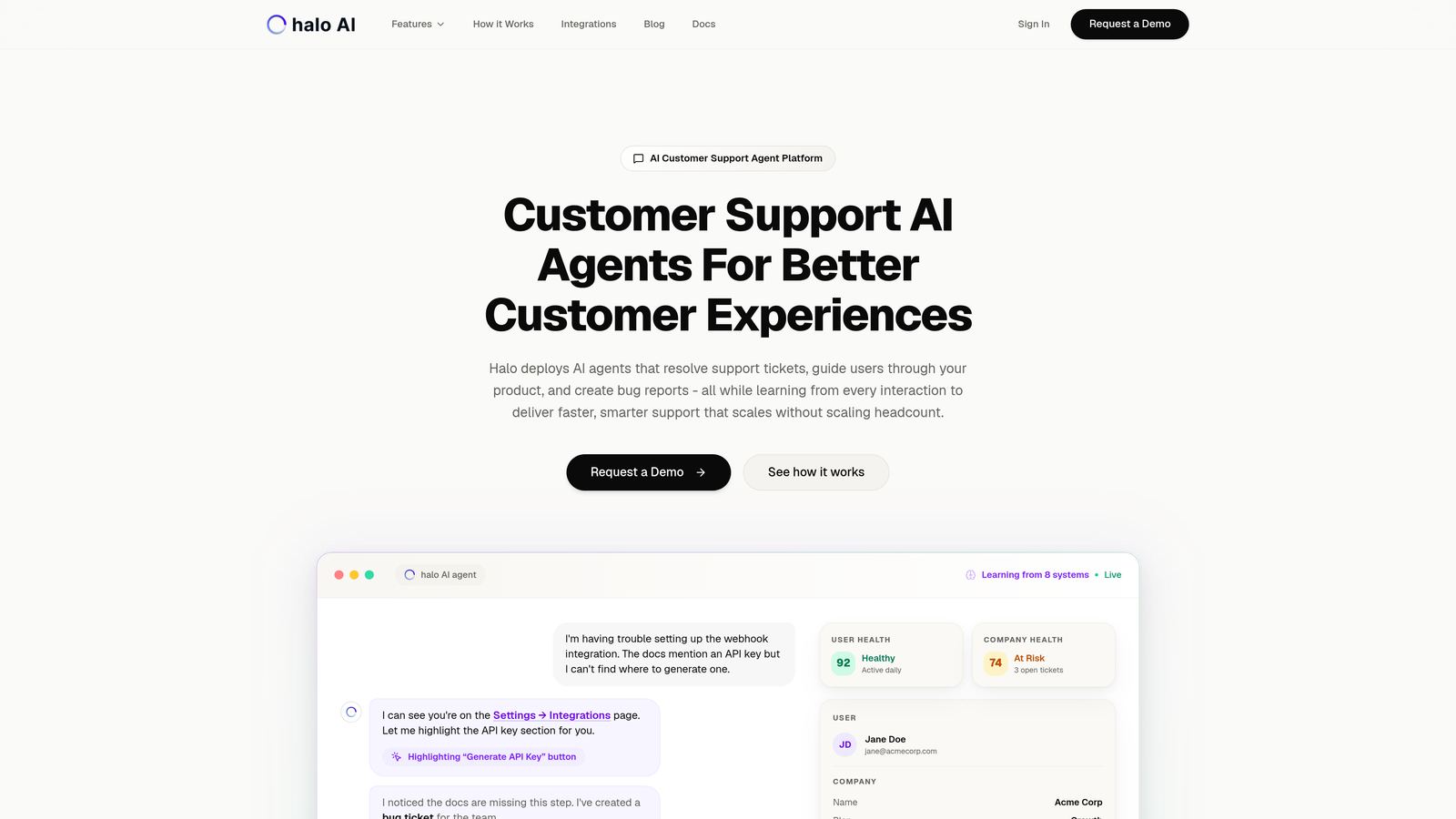
Halo AI is an AI-native customer support platform that goes beyond traditional helpdesks by treating every customer interaction as product intelligence.
Where This Tool Shines
Halo's AI agents don't just suggest responses—they autonomously resolve support tickets while learning from every interaction. The platform's page-aware context means it sees exactly what users see, enabling it to provide visual guidance and accurate troubleshooting without endless back-and-forth.
What sets Halo apart for product teams is its automatic bug ticket creation. When users report issues, Halo doesn't just log them—it creates detailed bug reports directly in Linear with full context, reproduction steps, and relevant screenshots. This closes the loop between customer problems and product fixes.
Key Features
Autonomous AI Agents: Resolve tickets independently without human intervention, learning continuously to improve accuracy.
Page-Aware Chat Widget: Sees the user's screen context to provide visual UI guidance and precise troubleshooting.
Automatic Bug Ticket Creation: Creates detailed bug reports in Linear with reproduction steps and context automatically.
Smart Inbox with Business Intelligence: Surfaces customer health signals, revenue intelligence, and anomaly detection beyond basic support metrics.
Live Agent Handoff: Escalates complex issues to human agents seamlessly when needed, maintaining full conversation context.
Best For
B2B SaaS product teams who want to scale support without scaling headcount, particularly those already using Linear for issue tracking. Ideal for teams prioritizing product intelligence extraction from customer conversations and wanting AI that gets smarter with every interaction.
Pricing
Contact for pricing. The platform connects to your entire business stack including Linear, Slack, HubSpot, Intercom, Stripe, and other product tools.
2. Intercom
Best for: Product-led growth teams needing strong in-app engagement and automated product tours
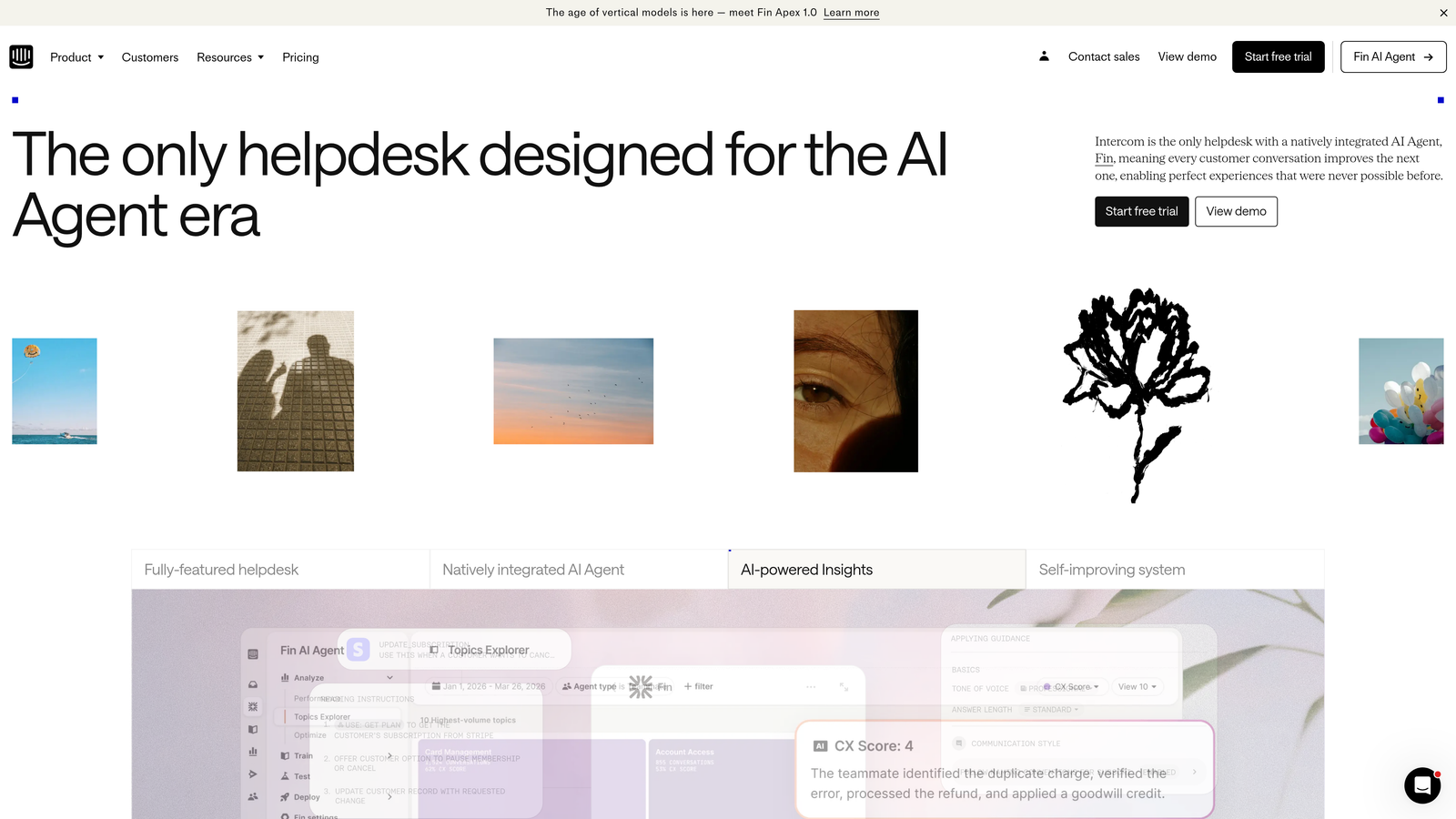
Intercom is a customer messaging platform that excels at blending support with product engagement and user onboarding.
Where This Tool Shines
Intercom's strength lies in its ability to meet users where they are—inside your product. The platform's in-app messaging and product tours help reduce support volume by proactively guiding users through features before they get stuck.
The Fin AI agent handles routine questions with surprising accuracy, while custom bots can automate complex workflows specific to your product. For product teams, this means fewer "how do I" tickets and more time focusing on genuine product issues.
Key Features
In-App Messaging and Product Tours: Deliver contextual help and feature announcements directly within your product interface.
Fin AI Agent: Provides automated responses using your knowledge base, handling common questions without human intervention.
Custom Bots and Workflow Automation: Build automated workflows for qualification, routing, and common support scenarios.
Product Usage Tracking Integration: Trigger messages based on user behavior and product usage patterns.
Robust API: Build custom integrations with your product stack and internal tools.
Best For
Product-led growth teams who want to blend support, marketing, and product engagement in one platform. Particularly valuable for SaaS companies focused on user onboarding and feature adoption.
Pricing
Starts at $39 per seat per month for the Essential plan. Advanced features and AI capabilities require higher-tier plans.
3. Zendesk
Best for: Enterprise product teams needing extensive customization and a massive app marketplace
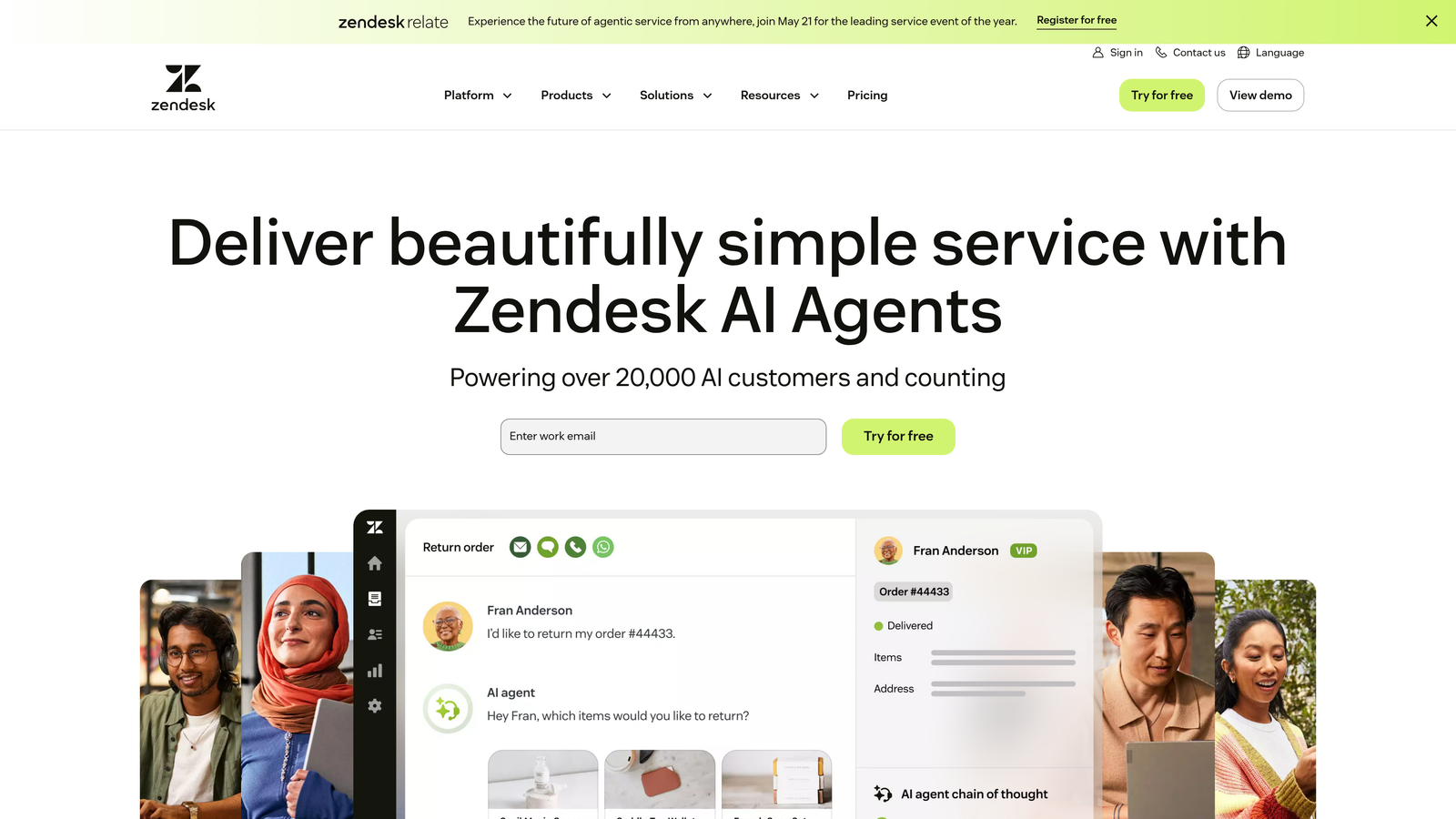
Zendesk is an enterprise-grade customer service platform offering deep customization capabilities and extensive third-party integrations.
Where This Tool Shines
Zendesk's app marketplace is unmatched—over 1,000 integrations mean you can connect virtually any product tool to your support workflow. For product teams with complex tech stacks, this flexibility is invaluable.
The platform's advanced reporting and analytics give product managers the data they need to identify trends, measure feature impact on support volume, and justify product decisions with real customer pain points.
Key Features
Extensive App Marketplace: Connect to product management tools, development platforms, and analytics systems through pre-built integrations.
Advanced Reporting and Analytics: Build custom dashboards tracking product-specific metrics and support trends.
Customizable Ticket Workflows: Create complex routing rules and automation tailored to your product team's processes.
Multi-Channel Support Management: Unify email, chat, phone, and social media in one platform.
Enterprise-Grade Security: Meets compliance requirements for regulated industries with robust security features.
Best For
Large product teams and enterprises requiring extensive customization, complex workflows, and enterprise-level security. Best when you have dedicated support operations staff to manage the platform.
Pricing
Starts at $55 per agent per month for Suite Team. Enterprise features require custom pricing.
4. Freshdesk
Best for: Mid-market product teams wanting powerful features without enterprise complexity
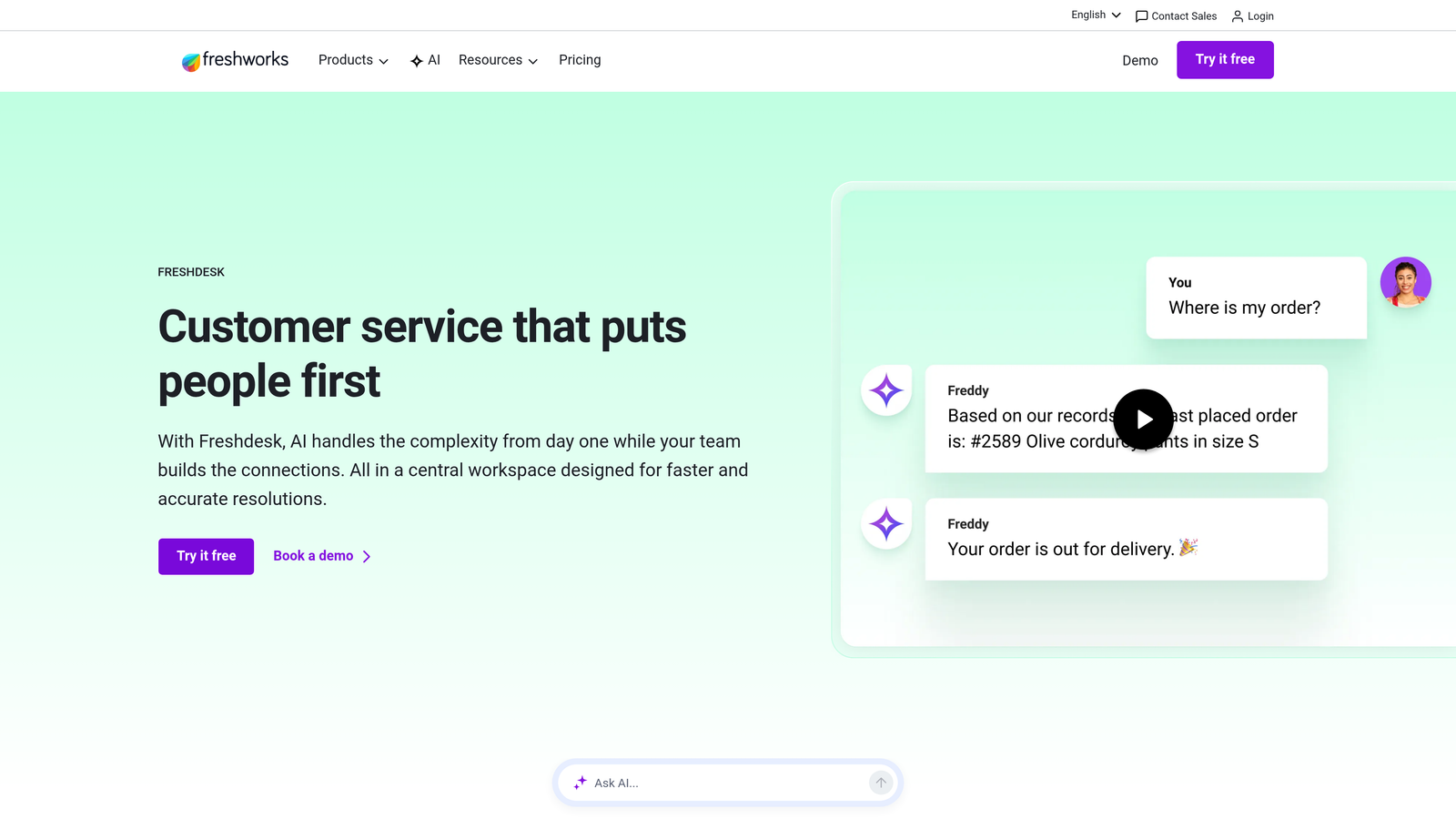
Freshdesk balances robust functionality with user-friendly design, making it accessible for growing product teams.
Where This Tool Shines
Freshdesk hits the sweet spot between simplicity and power. The interface is intuitive enough that product managers can jump in without extensive training, yet the platform includes sophisticated automation through Freddy AI.
The team collaboration features—shared ticket ownership, internal notes, and collision detection—make it easy for product and support teams to work together on complex customer issues without stepping on each other's toes.
Key Features
Team Collaboration with Shared Ownership: Multiple team members can work on tickets together with clear visibility and role assignment.
Freddy AI for Ticket Automation: Automatically categorize, prioritize, and route tickets based on content and context.
Built-In Time Tracking and SLA Management: Monitor response times and ensure product issues get appropriate priority.
Custom Ticket Fields: Tag and categorize tickets by product area, feature, or customer segment.
Jira and Development Tool Integrations: Connect support tickets directly to your engineering workflow.
Best For
Growing product teams that need more than basic helpdesk functionality but aren't ready for enterprise complexity. Ideal for teams of 10-50 people balancing support and product development.
Pricing
Free tier available for small teams. Growth plan starts at $15 per agent per month with advanced features.
5. Help Scout
Best for: Product teams prioritizing personal customer relationships over automation
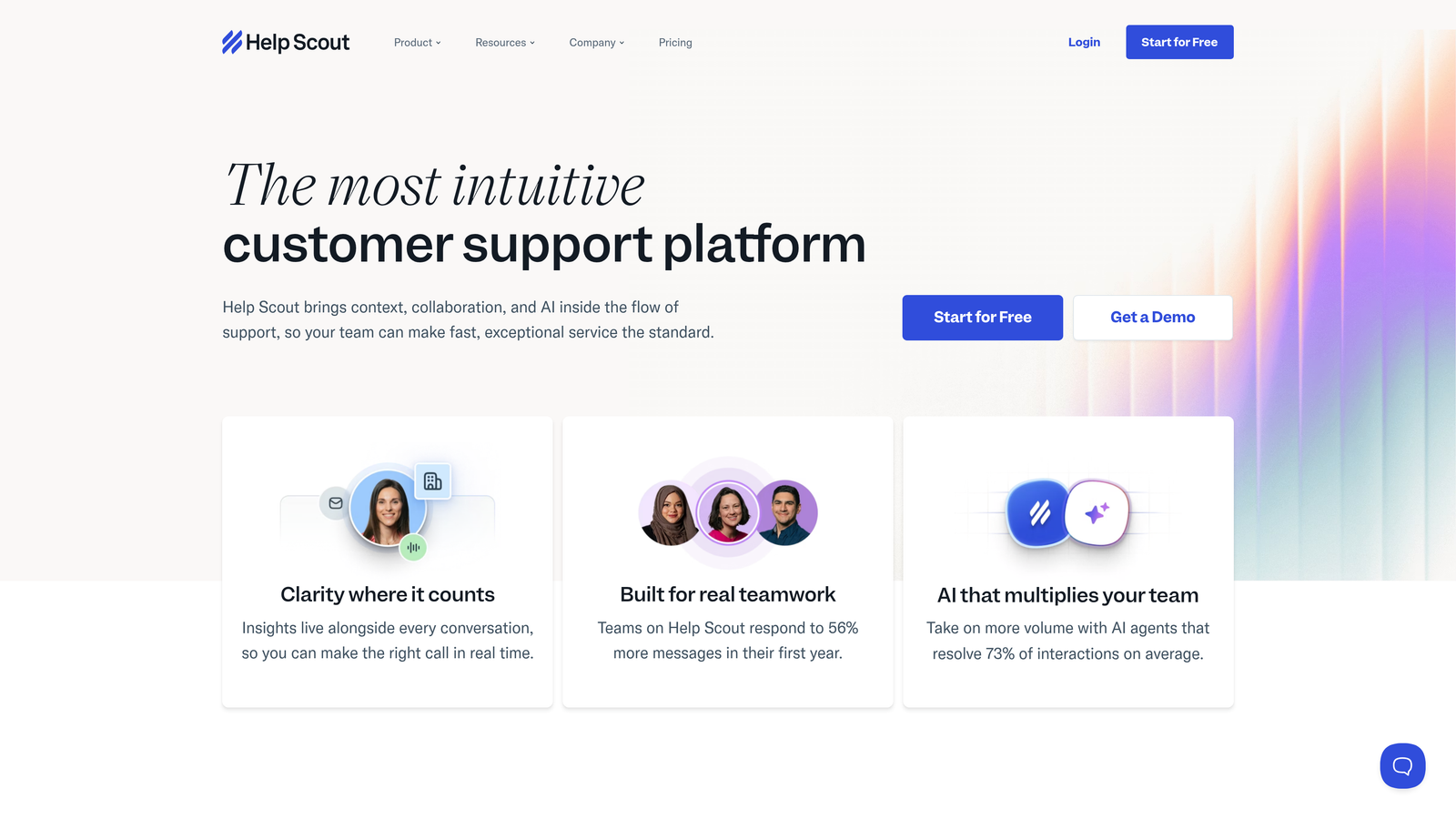
Help Scout focuses on human-centered support with a clean, distraction-free interface that encourages thoughtful customer interactions.
Where This Tool Shines
Help Scout's philosophy is refreshingly simple: make it easy to have real conversations with customers. The Beacon widget provides contextual help without feeling intrusive, and the integrated knowledge base reduces repetitive questions.
For product teams, the customer profiles feature is particularly valuable. Every conversation is stored with full context, making it easy to spot power users, identify feature requests from key accounts, and understand customer journeys over time.
Key Features
Beacon Widget with Contextual Help: Embedded help widget that adapts to the page users are on, surfacing relevant articles.
Docs Knowledge Base Integration: Build and maintain help documentation that integrates seamlessly with support conversations.
Customer Profiles with Conversation History: See every interaction with a customer in one place, including product usage context.
Collision Detection: Prevents multiple team members from responding to the same ticket simultaneously.
Simple Reporting: Focus on key metrics without overwhelming dashboards—response time, resolution time, customer satisfaction.
Best For
Product teams that view support as a relationship-building opportunity rather than a cost center. Best for B2B companies with smaller customer bases where personalized support is a competitive advantage.
Pricing
Starts at $20 per user per month for the Standard plan. Plus plan with additional features at $40 per user per month.
6. Linear
Best for: Engineering-heavy product teams needing seamless bug-to-fix workflows
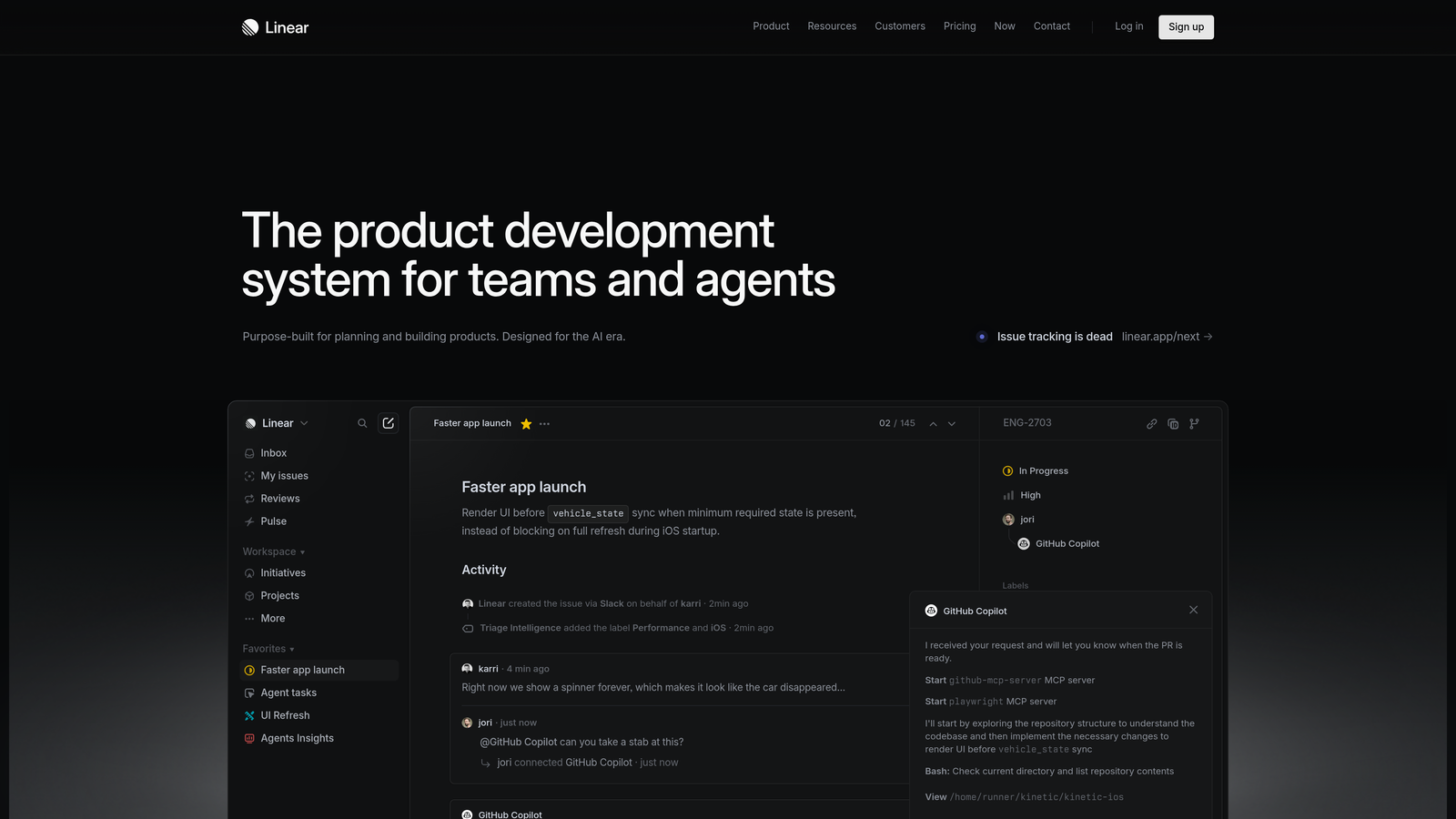
Linear is an issue tracking tool that integrates with support platforms to create streamlined workflows from customer report to shipped fix.
Where This Tool Shines
Linear isn't a support tool—it's a product development tool that becomes essential when integrated with your support stack. The platform's speed and keyboard-driven interface make it incredibly fast for engineers to triage incoming issues from support.
When integrated with tools like Halo AI, Zendesk, or Intercom, Linear becomes the bridge between customer problems and product improvements. Support tickets automatically become tracked issues, complete with priority, affected customers, and engineering assignments.
Key Features
Fast, Keyboard-Driven Issue Tracking: Engineers can process support-generated issues in seconds, not minutes.
Cycles and Roadmap Planning: Connect customer-reported issues directly to sprint planning and product roadmaps.
Support Tool Integrations via API: Build custom integrations to automatically create issues from support tickets.
Triage Workflows: Quickly categorize and prioritize incoming issues from multiple sources including support.
GitHub and GitLab Sync: Link issues to pull requests and commits for full traceability from bug report to deployment.
Best For
Engineering-led product teams that want tight integration between customer feedback and development workflows. Essential for teams that treat customer-reported bugs with the same rigor as internal engineering tasks.
Pricing
Free for small teams up to 10 users. Standard plan at $8 per user per month with unlimited projects and integrations.
7. Productboard
Best for: Product managers turning customer feedback into data-driven roadmap decisions
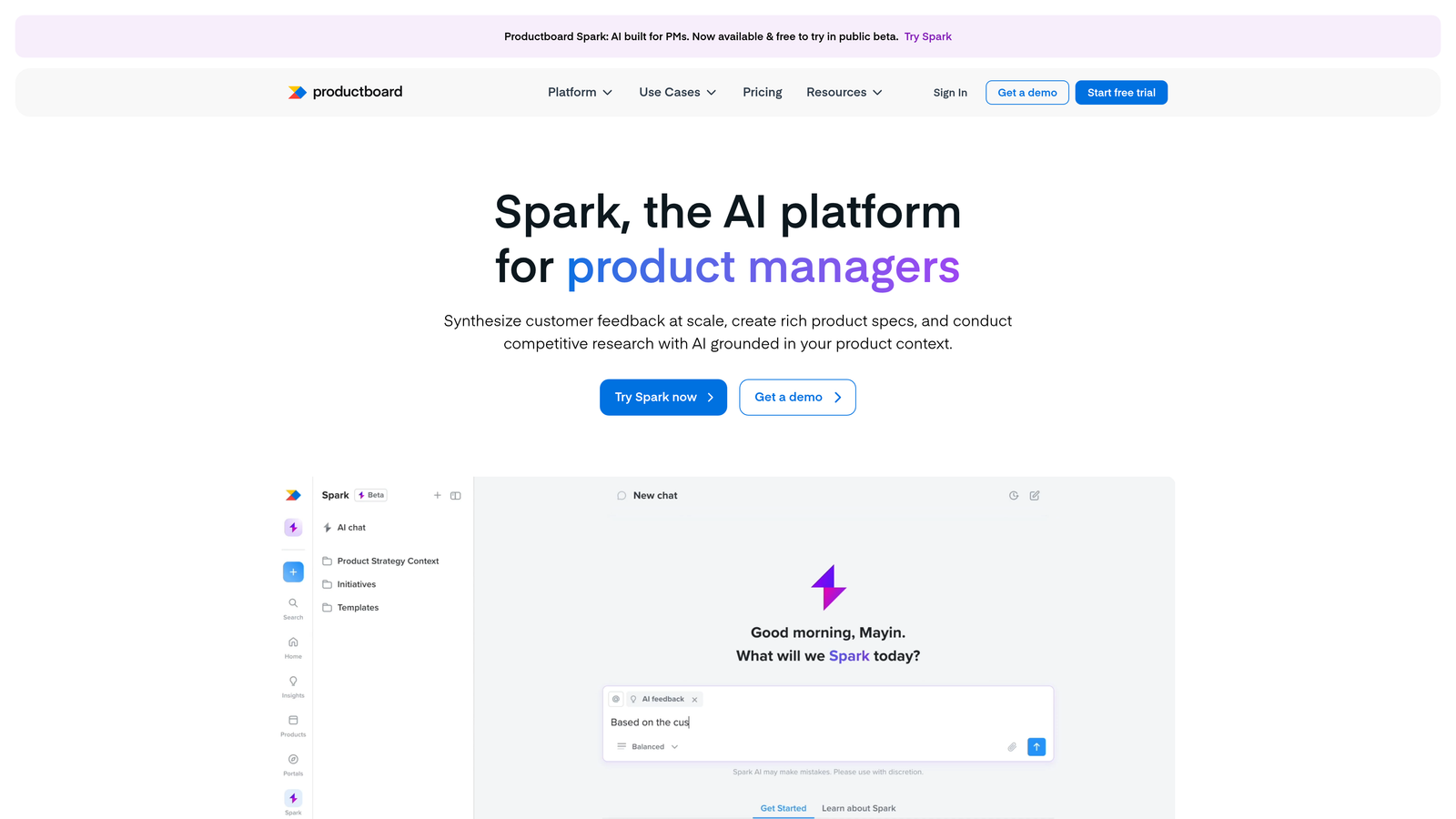
Productboard is a product management platform that captures customer feedback from support channels and transforms it into actionable product insights.
Where This Tool Shines
Productboard excels at aggregating feedback from multiple sources—support tickets, sales calls, user interviews—and connecting those insights to specific features on your roadmap. This creates a direct line from customer pain points to product decisions.
The platform's prioritization scoring helps product managers justify decisions with data. When customers ask "when will you build X?", you can point to actual demand metrics rather than gut feeling.
Key Features
Insights Portal for Feedback Collection: Centralize customer feedback from support tickets, sales, and user research in one place.
Integrations with Zendesk, Intercom, and More: Automatically pull support conversations into your product feedback repository.
Feature Prioritization Scoring: Quantify customer demand and business impact to make data-driven roadmap decisions.
Customer Segment Analysis: See which customer types are requesting specific features to inform targeting decisions.
Roadmap Visualization and Sharing: Communicate product plans to customers and internal stakeholders with context on why features were prioritized.
Best For
Product managers who need to synthesize feedback from multiple channels and justify roadmap decisions with customer data. Particularly valuable for B2B teams managing feature requests from enterprise customers.
Pricing
Starts at $20 per maker per month for Essentials. Scale and Enterprise plans with advanced features available on request.
8. Front
Best for: Product teams centered around collaborative email workflows
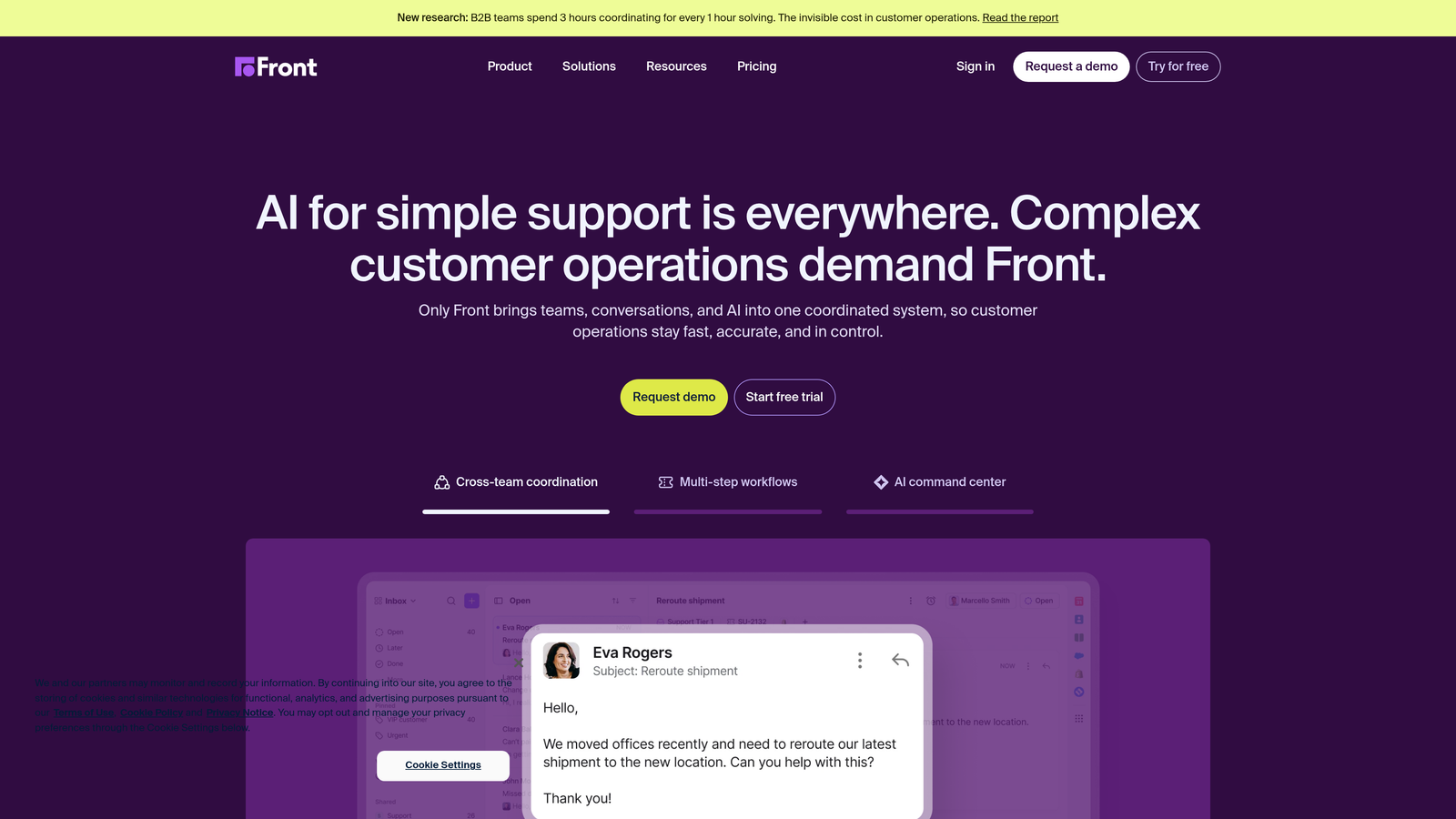
Front is a collaborative inbox platform that combines email, chat, and other channels with strong team collaboration features.
Where This Tool Shines
Front transforms email from a solo activity into a team sport. Product managers can @mention engineers on customer emails about bugs, support can loop in product for feature questions, and everyone sees the full conversation history.
The platform's rules and automation capabilities mean you can route product-related emails to the right people automatically, ensuring customer feedback reaches product teams without manual forwarding.
Key Features
Shared Inboxes with Assignment and Ownership: Multiple team members can manage support@, product@, and other shared addresses collaboratively.
Internal Comments and @Mentions: Discuss customer issues privately within the email thread before responding.
Rules and Automation for Routing: Automatically assign emails about specific products or features to the right team members.
Analytics on Team Performance: Track response times, resolution rates, and workload distribution across product and support teams.
Integrations with CRM and Product Tools: Connect to Salesforce, HubSpot, and product management platforms for full customer context.
Best For
Product teams that rely heavily on email for customer communication and want better collaboration without abandoning their inbox. Ideal for B2B companies where email remains the primary support channel.
Pricing
Starts at $19 per seat per month for Starter. Growth and Scale plans offer advanced automation and analytics.
9. Pylon
Best for: B2B product teams managing customer support through Slack and Teams channels
Pylon is a customer support platform designed specifically for managing Slack and Microsoft Teams channels at scale.
Where This Tool Shines
Many B2B SaaS companies run customer support through shared Slack channels—one per customer or customer segment. Pylon brings structure to this chaos by providing a unified inbox across all those channels with proper SLA tracking and assignment.
For product teams, this means customer conversations happening in Slack can be tracked, escalated, and connected to Linear or Jira issues without forcing customers to switch to a traditional ticketing system they'll never use.
Key Features
Slack and Teams Channel Management: Manage dozens or hundreds of customer channels from one unified interface.
Unified Inbox for All Customer Channels: See all customer conversations across Slack, Teams, email, and other channels in one place.
SLA Tracking Across Channels: Apply response time targets to Slack conversations just like traditional support tickets.
Integrations with Linear, Jira, and CRMs: Create issues and update customer records directly from Slack conversations.
Built for B2B SaaS Workflows: Designed around how modern B2B teams actually communicate with customers, not legacy ticketing assumptions.
Best For
B2B SaaS product teams that have adopted Slack or Teams as their primary customer communication channel and need to bring structure and accountability to those conversations.
Pricing
Contact for pricing. The platform is designed for teams managing multiple customer channels at scale.
Making the Right Choice
The best customer support tool for your product team depends on where you are today and where you're heading. Halo AI stands out if you want AI that autonomously resolves tickets and creates bug reports with full product context—turning every support interaction into product intelligence. Intercom excels for product-led growth teams needing strong in-app engagement and user onboarding capabilities.
Zendesk remains the choice for enterprise teams requiring extensive customization and a massive app marketplace. Freshdesk hits the sweet spot for mid-market teams wanting powerful features without enterprise complexity. Help Scout suits teams that view support as relationship-building rather than ticket-closing. Linear integrations are essential for engineering-heavy teams that need seamless bug-to-fix workflows.
Productboard transforms support conversations into roadmap decisions through systematic feedback collection and prioritization. Front fits teams centered around collaborative email workflows who want to maintain their inbox while adding team collaboration. Pylon is purpose-built for B2B teams running support through Slack channels at scale.
The common thread among the best tools? They close the loop between customer feedback and product development. Your support team shouldn't scale linearly with your customer base. Let AI agents handle routine tickets, guide users through your product, and surface business intelligence while your team focuses on complex issues that need a human touch.
See Halo in action and discover how continuous learning transforms every interaction into smarter, faster support that scales without scaling headcount.