9 Best Tools for Disconnected Support Tools Integration in 2026
Disconnected support tools integration is a costly challenge for B2B SaaS teams, causing lost tickets, agent inefficiency, and poor customer experiences. This guide reviews nine platforms—from AI-native support agents to unified helpdesks and middleware solutions—that eliminate fragmented workflows by creating a single intelligent layer across your entire support stack, including Zendesk, Slack, CRMs, and bug trackers.
 Grant CooperFounder13 min read
When your support stack looks like a patchwork quilt — Zendesk here, Slack there, a CRM over here, and a bug tracker somewhere else — every handoff becomes a liability. Agents waste time context-switching, tickets fall through the cracks, and customers feel the friction of a team that doesn't have the full picture.
Disconnected support tools integration is one of the most common and costly problems for B2B SaaS teams. The good news: a new generation of platforms is designed specifically to unify these fragmented workflows, not just by passing data between apps, but by creating a single intelligent layer that understands context across your entire stack.
This list covers nine tools that tackle integration differently, from AI-native support agents that connect your full business stack, to purpose-built middleware and unified helpdesk platforms. Whether you're trying to eliminate manual handoffs, surface customer health signals across tools, or simply stop losing tickets between systems, there's a solution here for your team. We've also included our own platform, Halo AI, at the top — we believe it's worth your consideration, but we'll let the features speak for themselves.
1. Halo AI
Best for: B2B SaaS teams that want an AI-native layer connecting their entire support and business stack
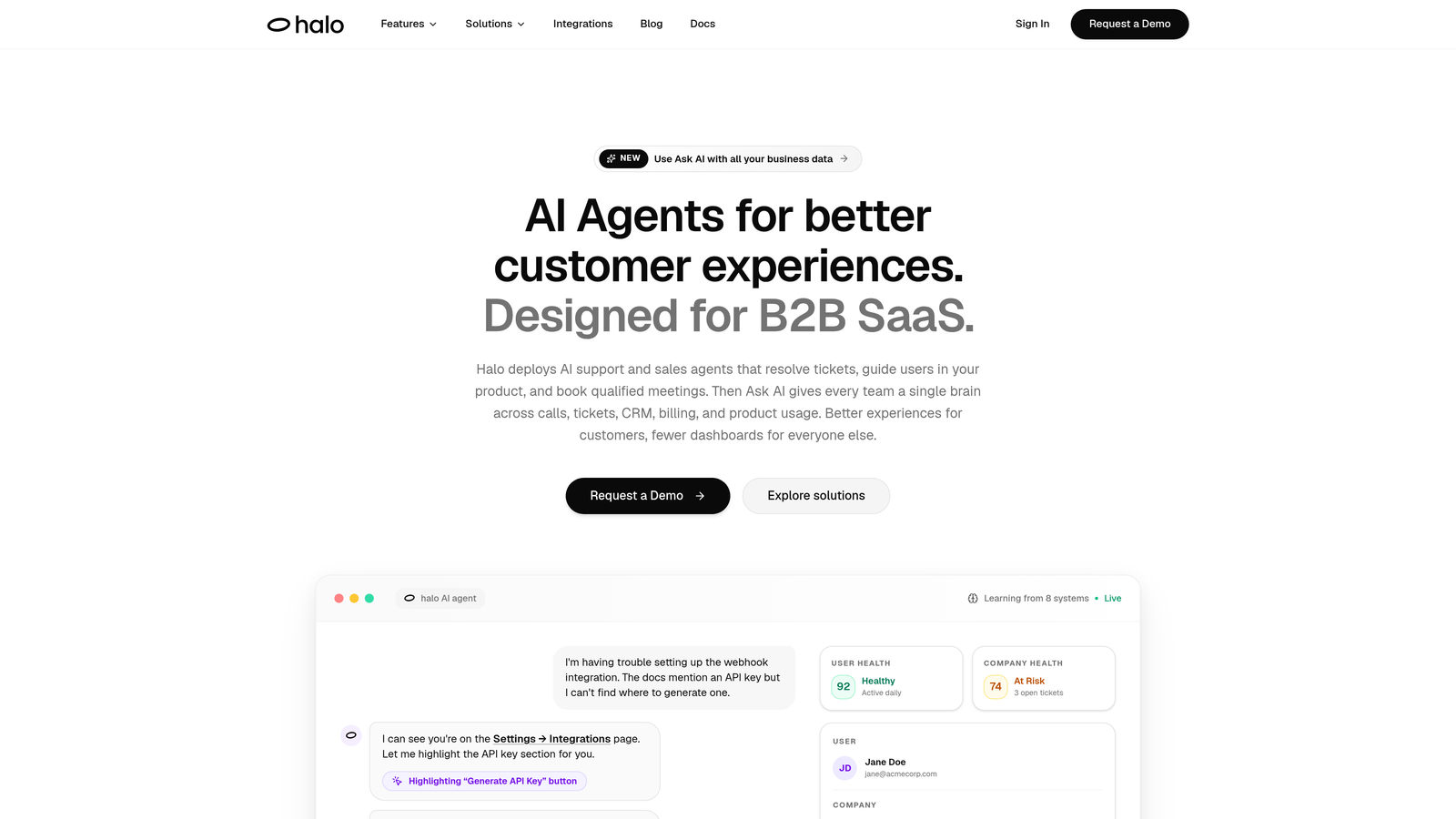
Halo AI is an AI-native customer support platform that deploys intelligent agents to resolve tickets, guide users through your product, and connect your entire business stack without manual integration stitching.
Where This Tool Shines
Most integration tools move data between apps. Halo AI does something fundamentally different: its AI agents use cross-system context to actually make decisions. When a ticket comes in, the agent isn't just routing a record — it's drawing on signals from Slack, HubSpot, Stripe, and Linear simultaneously to understand who the customer is, what they've experienced, and what resolution makes sense.
The page-aware chat widget is a standout capability. It sees what the user sees in your product, enabling contextual guidance rather than generic responses. Pair that with a smart inbox that surfaces customer health signals, revenue anomalies, and churn indicators, and you have a support platform that doubles as a business intelligence layer.
Key Features
Autonomous AI Agents: Resolve tickets end-to-end and continuously learn from every interaction to improve over time.
Page-Aware Chat Widget: Understands the user's current product context to deliver relevant, in-the-moment guidance.
Smart Inbox with Business Intelligence: Surfaces customer health signals, revenue anomalies, and churn indicators directly in your support workflow.
Auto Bug Ticket Creation: Automatically routes identified bugs to Linear or your issue tracker without manual intervention.
Native Stack Integrations: Connects to Slack, HubSpot, Intercom, Stripe, Zoom, PandaDoc, and Fathom out of the box.
Live Agent Handoff: Transfers complex issues to human agents with full context preserved — no recap required.
Best For
Teams that are tired of stitching together point solutions and want an AI-first foundation that grows with them. Particularly well-suited for product-led SaaS companies where support context and product usage data need to inform each other.
Pricing
Contact for pricing. Visit haloagents.ai for details and to request a demo.
2. Zapier
Best for: Teams that need quick, no-code automation between popular support and business apps
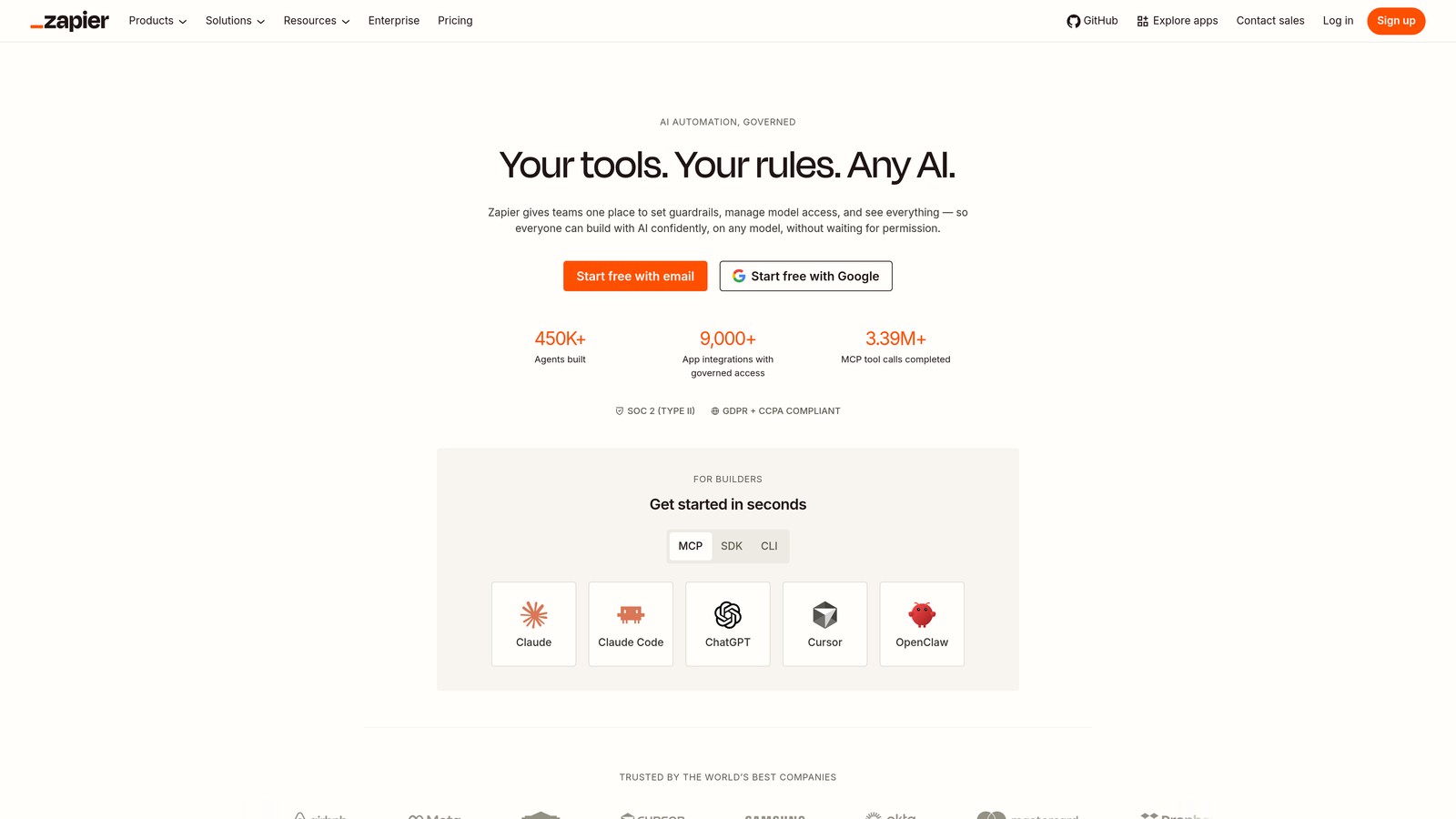
Zapier is a no-code automation platform that connects thousands of apps through trigger-action workflows, making it accessible for non-technical teams to route data between support tools.
Where This Tool Shines
Zapier's strength is its sheer breadth of app coverage and its low barrier to entry. If you need to push a Zendesk ticket into a Slack channel, create a HubSpot contact from a new Freshdesk user, or log support interactions into a spreadsheet, you can typically find a pre-built template and be running in minutes.
The Paths feature adds conditional logic, so you can route data differently based on ticket properties like priority, plan tier, or tag. This makes Zapier viable for moderately complex workflows, though it's worth noting that Zapier executes rules rather than making intelligent decisions — it's automation, not reasoning.
Key Features
6,000+ App Connections: Covers Zendesk, Freshdesk, HubSpot, Slack, Jira, and thousands more tools in a single platform.
Conditional Paths: Route data based on ticket properties, enabling branching logic without writing code.
Multi-Step Zaps: Chain multiple actions across tools in a single automated workflow.
Pre-Built Templates: A large library of ready-made workflows for common support automation scenarios.
Best For
Small to mid-size teams with straightforward integration needs who want to move fast without engineering resources. Less suited for complex, high-volume workflows where reliability and data transformation depth become critical.
Pricing
Free plan available. Paid plans start at approximately $19.99/month — verify current pricing at zapier.com.
3. Zendesk
Best for: Enterprise teams centralizing multi-channel support with a mature, widely adopted helpdesk platform
Zendesk is an enterprise-grade helpdesk platform with a large native integration marketplace and robust API for teams managing high-volume, omnichannel support operations.

Where This Tool Shines
Zendesk's marketplace is one of the most comprehensive in the helpdesk category, covering CRM, ecommerce, ITSM, and virtually every adjacent tool your team might use. If you're already running Zendesk as your core support hub, the integration story is largely about extending what you have rather than rebuilding from scratch.
Zendesk AI adds intelligent triage and suggested responses to the mix, which reduces manual sorting work for agents. The REST API and webhooks give technical teams the flexibility to build custom integrations when marketplace options fall short.
Key Features
1,000+ Marketplace Integrations: Pre-built connections spanning CRM, ecommerce, ITSM, and more categories.
REST API and Webhooks: Full programmatic access for custom integrations and event-driven automation.
Zendesk AI: Intelligent triage, suggested responses, and automated routing to reduce agent workload.
Omnichannel Support: Unified inbox for email, chat, voice, social, and messaging channels.
Best For
Mid-market and enterprise teams with established Zendesk investments who need to extend and connect their existing setup. Teams starting fresh may find the setup complexity and per-agent cost harder to justify at smaller scales.
Pricing
Plans start at approximately $55/agent/month — verify current pricing at zendesk.com.
4. Intercom
Best for: Product-led growth companies combining AI chat, CRM context, and proactive messaging in one platform
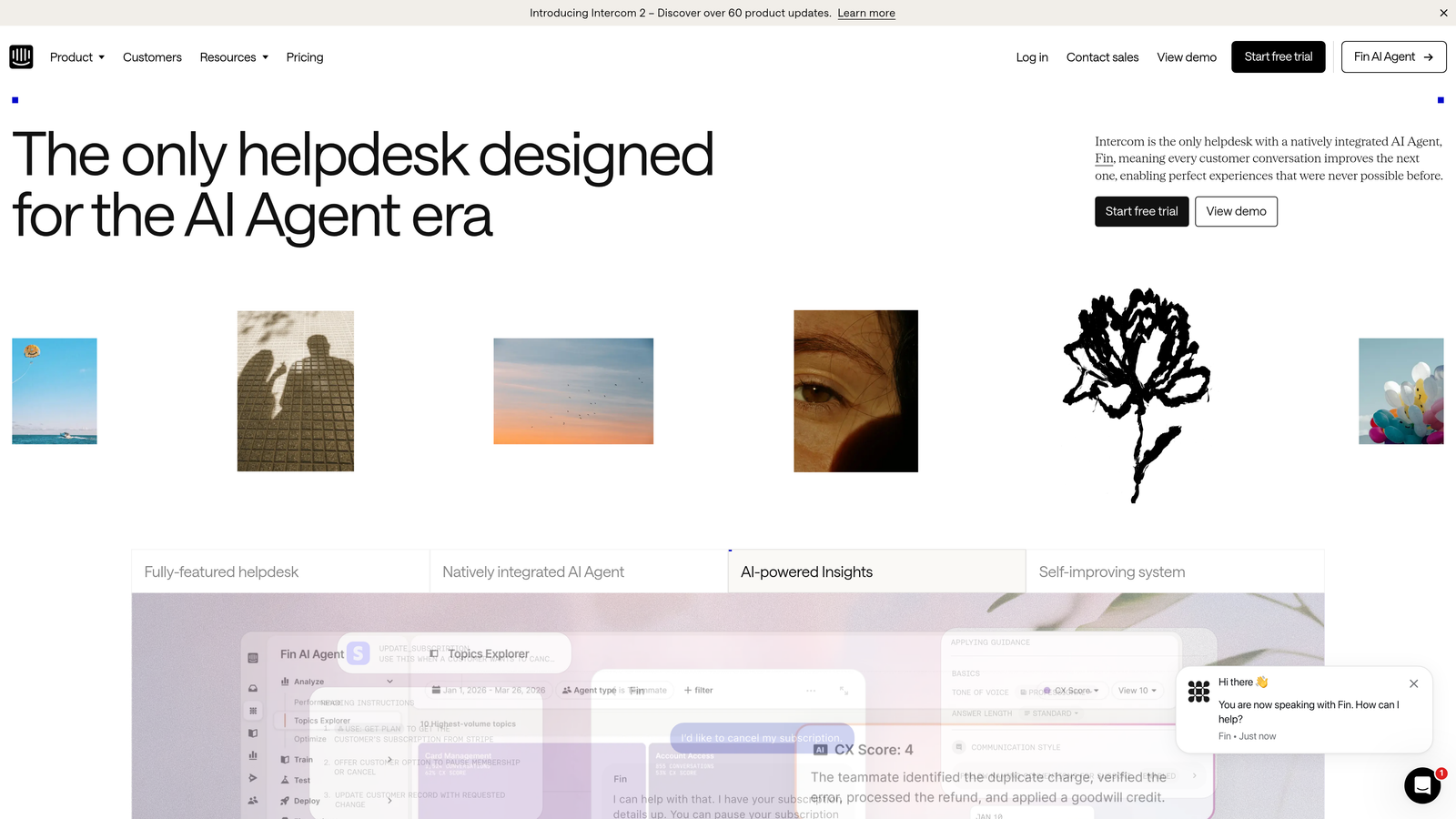
Intercom is a customer communications platform that combines AI-powered chat, a lightweight CRM layer, and integrations with product and sales tools into a single interface.
Where This Tool Shines
Intercom's Fin AI agent handles autonomous query resolution by drawing on connected knowledge sources, which reduces the volume of tickets that reach human agents. What sets Intercom apart from pure helpdesk tools is the behavioral layer: it ties support interactions to product usage data, so you can trigger proactive messages based on what users are actually doing in your app.
The shared inbox consolidates email, chat, and in-app messaging, which goes a long way toward reducing context-switching. Integrations with Salesforce, HubSpot, Stripe, GitHub, and Jira mean that agents can see relevant CRM and billing context without leaving the Intercom interface.
Key Features
Fin AI Agent: Autonomous query resolution across connected knowledge bases, reducing ticket volume to human agents.
CRM and Dev Tool Integrations: Native connections to Salesforce, HubSpot, Stripe, GitHub, and Jira.
Shared Omnichannel Inbox: Combines email, chat, and in-app messaging into a single agent workspace.
Proactive Messaging: Trigger outreach based on user behavior data tied directly to product usage.
Best For
SaaS companies with a product-led growth motion where support, onboarding, and sales conversations overlap. Teams looking for a pure enterprise helpdesk replacement may find the CRM layer lightweight compared to dedicated solutions.
Pricing
Plans start at approximately $39/seat/month — verify current pricing at intercom.com.
5. Freshdesk
Best for: Teams wanting to consolidate support, CRM, and ITSM under a single vendor ecosystem
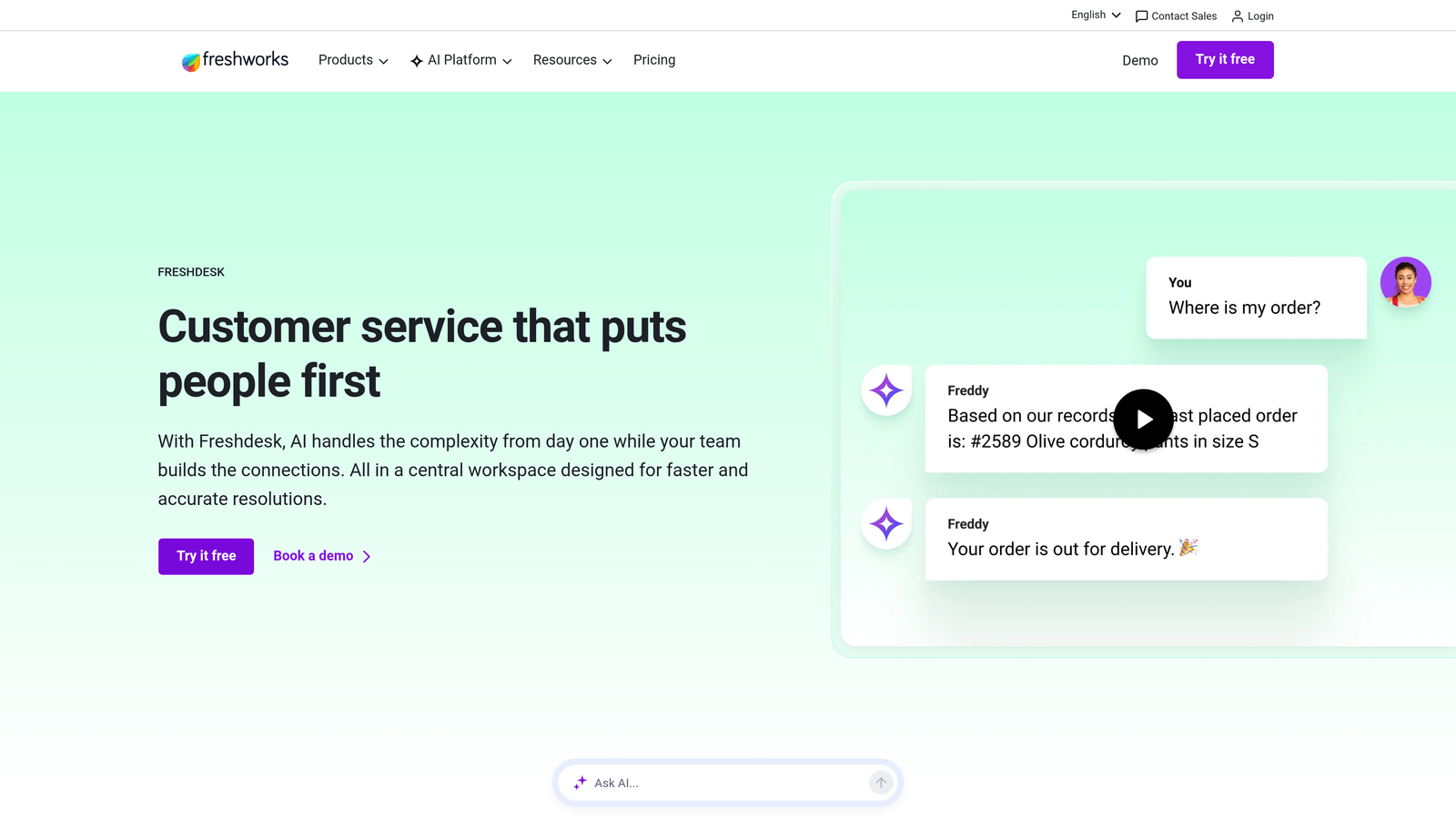
Freshdesk is a helpdesk platform within the Freshworks ecosystem that offers native integration with CRM, ITSM, and chat tools under a single vendor umbrella.
Where This Tool Shines
The core appeal of Freshdesk is vendor consolidation. If your team is willing to adopt Freshsales for CRM and Freshservice for ITSM, the native integrations between these products eliminate a significant portion of the fragmentation problem without requiring third-party middleware. That's a meaningful operational simplification for growing teams.
Freddy AI handles ticket classification, suggested responses, and agent assist — covering the basics of AI-powered triage without requiring a separate tool. For teams that want a straightforward, all-in-one-vendor approach, Freshdesk is worth a close look.
Key Features
Native Freshworks Ecosystem Integration: Built-in connections to Freshsales (CRM), Freshservice (ITSM), and Freshchat without third-party middleware.
Freddy AI: Handles ticket classification, suggested responses, and agent assist across the platform.
Third-Party Marketplace: Integrations with Slack, Jira, HubSpot, and other common tools.
Omnichannel Inbox: Unified workspace for email, phone, chat, and social support channels.
Best For
Growing SaaS teams that want to reduce vendor complexity by consolidating under one ecosystem. Teams deeply invested in non-Freshworks tools like Salesforce or Zendesk may find the native integrations less compelling.
Pricing
Free plan available. Paid plans start at approximately $15/agent/month — verify current pricing at freshdesk.com.
6. Make (formerly Integromat)
Best for: Ops teams building complex, multi-step automation workflows with advanced data transformation needs
Make is a visual automation platform that handles complex, multi-step workflows between support and business tools with advanced branching logic and data transformation capabilities.

Where This Tool Shines
Where Zapier prioritizes simplicity, Make prioritizes power. Its visual scenario builder lets you design intricate workflows with branching paths, iterators, aggregators, and custom data transformation — all without writing code. This makes it well-suited for ops teams who need more than basic trigger-action automation but don't have dedicated engineering resources.
The error handling capabilities are particularly useful in support contexts, where a failed data sync between your helpdesk and CRM can cause real downstream problems. Make gives you granular control over what happens when something breaks, which is often overlooked in simpler automation tools.
Key Features
Visual Scenario Builder: Drag-and-drop workflow design with support for complex branching, iterators, and aggregators.
Advanced Data Transformation: Filter, map, and reshape data between tools without custom code.
Error Handling Controls: Granular options for managing failures and retries in automated workflows.
Broad App Coverage: Connects to Zendesk, Freshdesk, Intercom, HubSpot, Slack, Jira, and hundreds of other tools.
Best For
Technical ops teams and RevOps practitioners who need more workflow complexity than Zapier can offer but aren't ready to invest in enterprise integration platforms. The learning curve is steeper than Zapier, so it rewards teams willing to invest setup time.
Pricing
Free plan available. Paid plans start at approximately $9/month — verify current pricing at make.com.
7. Unito
Best for: Teams that need live, bidirectional sync between support tickets and project management or engineering tools
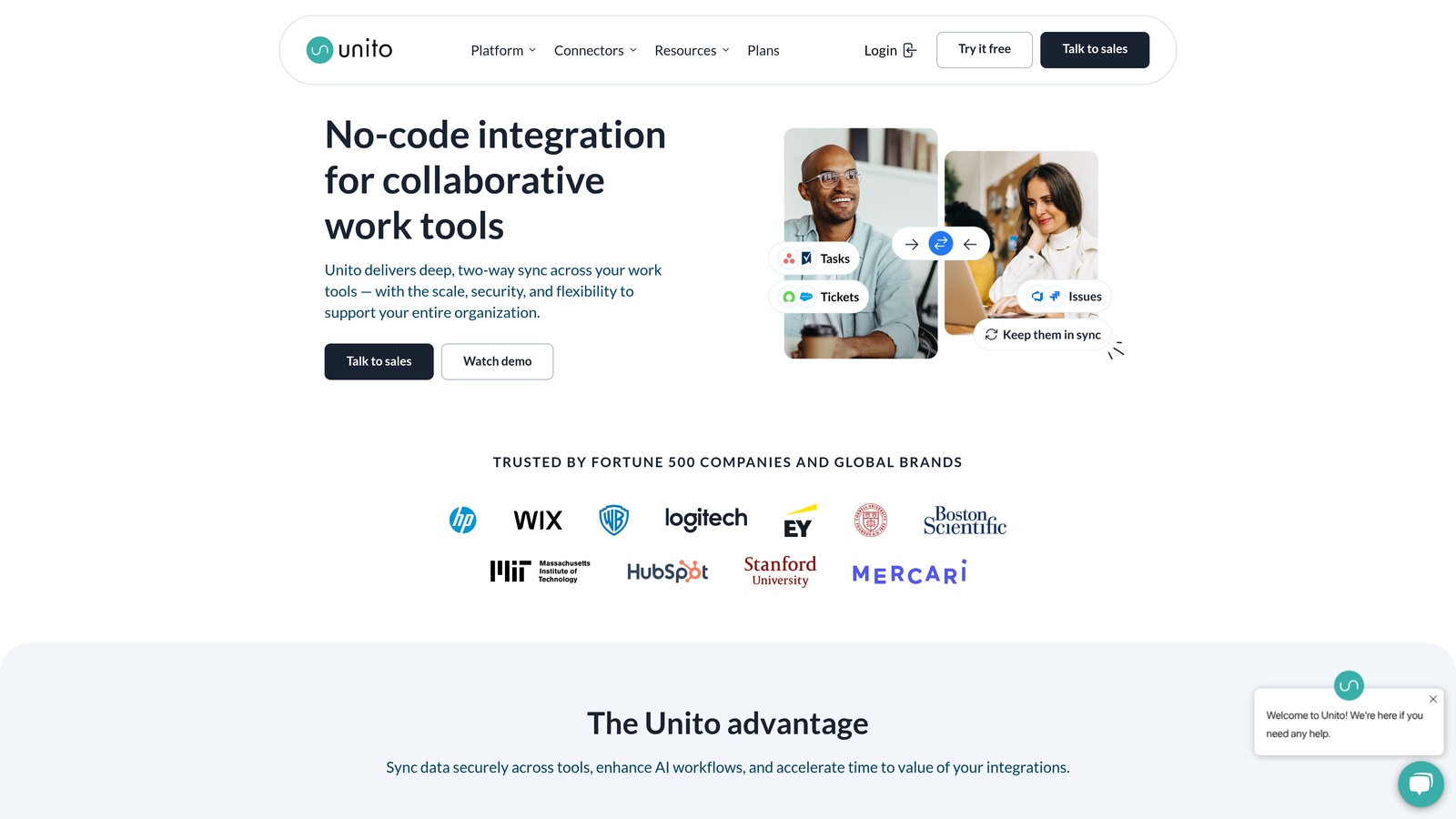
Unito is a two-way sync platform that keeps records in live, bidirectional sync between support tools and project management systems — so tickets and issues stay aligned without manual updates.
Where This Tool Shines
Most integration tools move data one way: a ticket is created, a record is pushed somewhere else, and that's the end of the relationship. Unito's core value is that the sync is ongoing and bidirectional. When an engineer updates a Jira issue, that update reflects back in the corresponding Zendesk ticket. When a support agent adds a comment, it appears in Linear. This eliminates the constant manual status-chasing that eats up support team time.
Field mapping lets you align data structures across tools that use different terminology and schemas — a meaningful detail when you're trying to keep a "Priority: High" ticket in Zendesk in sync with a "Severity: P1" issue in Jira.
Key Features
Bidirectional Real-Time Sync: Changes in either connected tool are reflected in the other automatically and immediately.
Field Mapping: Align data structures and terminology across tools with different schemas.
Filtering Rules: Control exactly which records sync and under what conditions.
Broad Tool Support: Syncs between Zendesk, Jira, Linear, Asana, GitHub, and more.
Best For
Support and engineering teams that collaborate closely and need shared visibility across tools without requiring everyone to work in the same system. Less relevant for teams whose primary need is AI-driven resolution rather than cross-team record alignment.
Pricing
Plans start at approximately $10/month — verify current pricing at unito.io.
8. Tray.io
Best for: Enterprise organizations with complex support stacks requiring governance, security, and high-volume automation
Tray.io is an enterprise-grade integration and automation platform with a low-code builder, strong governance controls, and API-first architecture for organizations managing complex, high-volume workflows.
Where This Tool Shines
Tray.io operates at a different level of scale and governance than consumer-oriented automation tools. Its Universal Connector means you can integrate virtually any API-based tool, even ones without pre-built connectors — a critical capability for enterprises with legacy systems or custom-built internal tools that need to participate in support workflows.
The platform's enterprise security features, access controls, and audit logging address the compliance and governance requirements that larger organizations can't compromise on. For teams that have outgrown Zapier or Make and need something built for enterprise-grade reliability, Tray.io is the logical next step.
Key Features
Universal Connector: Integrate any API-based tool, including custom and legacy systems without pre-built connectors.
Low-Code Builder with Custom Code Support: Visual workflow design with the option to drop into code when needed.
Enterprise Governance: Role-based access controls, audit logging, and security features for compliance requirements.
Scalable Infrastructure: Built for high-volume, enterprise-level workflow execution without performance degradation.
Best For
Larger organizations with complex, multi-system support stacks and IT governance requirements. The investment in setup and pricing reflects enterprise needs — it's not the right fit for lean startups or teams with straightforward integration requirements.
Pricing
Custom enterprise pricing. Contact Tray.io directly for a quote at tray.io.
9. Merge.dev
Best for: SaaS product teams building customer-facing integrations into their own product at scale
Merge.dev is a unified API platform that allows SaaS product teams to build customer-facing integrations at scale, connecting ticketing, CRM, HRIS, and other categories through a single normalized API.
Where This Tool Shines
Merge.dev solves a different problem than the other tools on this list. Rather than helping your ops team integrate internal tools, it helps your engineering team build integrations into your product for your customers. Instead of building and maintaining separate integrations with Zendesk, Freshdesk, and Jira, you build once against Merge's unified ticketing API and get coverage across the entire category.
The normalized data models are the key technical differentiator. Merge abstracts away the schema differences between tools so your team isn't writing custom transformation logic for every integration. For SaaS companies whose customers expect native integrations with their existing helpdesks and CRMs, this is a significant engineering time saver.
Key Features
Unified API by Category: One integration covers an entire category — ticketing, CRM, HRIS — rather than requiring individual tool integrations.
Normalized Data Models: Abstracts schema differences between tools so your team doesn't write custom transformation logic.
Webhooks and Real-Time Sync: Event-driven updates keep connected systems current without polling.
Built for Product Teams: Designed specifically for SaaS companies embedding integrations into their own product, not internal ops automation.
Best For
Engineering and product teams at SaaS companies whose customers need to connect their existing helpdesks, CRMs, or HRIS tools to your product. Not designed for internal support ops teams trying to unify their own fragmented stack.
Pricing
Free tier available. Paid plans scale with usage — verify current pricing at merge.dev.
Which Tool Is Right for Your Team?
The right answer depends on one fundamental question: do you want to integrate your existing tools, or replace fragmentation with an AI-native layer that makes integration decisions intelligently?
If you want to unify an existing stack without replacing it, the answer depends on your team size and technical capacity. Zapier and Make are strong choices for teams that need to connect apps quickly — Zapier for simplicity, Make for complexity. Unito is the clear pick when bidirectional sync between support and engineering tools is the primary pain point. Tray.io serves enterprises that have outgrown lighter automation tools and need governance-grade infrastructure.
If you're evaluating helpdesk platforms as your central hub, the choice often comes down to ecosystem fit. Zendesk wins on marketplace breadth and enterprise maturity. Intercom is compelling for product-led growth companies where support and product usage data need to inform each other. Freshdesk makes sense when consolidating under the Freshworks vendor umbrella is a strategic goal. And if your engineering team is building customer-facing integrations into your own SaaS product, Merge.dev stands alone in this list as purpose-built for that use case.
For teams that want to move beyond stitching tools together entirely, Halo AI represents a different architectural choice. Rather than connecting your stack after the fact, it acts as the intelligent layer on top of it — using cross-system context to resolve tickets autonomously, surface business intelligence, and learn from every interaction. It's the right fit for B2B SaaS teams that want support to scale without scaling headcount.
Your support team shouldn't grow linearly with your customer base. Let AI agents handle routine tickets, guide users through your product, and surface business intelligence while your team focuses on complex issues that need a human touch. See Halo in action and discover how continuous learning transforms every interaction into smarter, faster support.