9 Best Embedded Support Chat Platforms for B2B Teams in 2026
Discover the 9 best embedded support chat platforms for B2B teams in 2026, evaluated on AI capability, contextual awareness, and integration depth. This guide helps SaaS teams find the right in-product chat solution—whether replacing existing tools or building from scratch—to reduce support queues and deliver smarter, context-driven user assistance.
 Grant CooperFounder12 min read
If your users are hitting walls inside your product and your support queue is growing faster than your team, an embedded support chat platform is the fix. Unlike standalone live chat or basic chatbots, embedded support chat lives inside your product — aware of where users are, what they're doing, and what help they actually need.
But not all embedded chat tools are built the same. Some are glorified contact forms. Others are full AI-powered support agents that resolve tickets, guide users visually, and feed insights back into your business stack.
This list covers the best embedded support chat platforms in 2026, evaluated on AI capability, contextual awareness, integration depth, and scalability for B2B SaaS teams. Whether you're replacing Intercom, augmenting Zendesk, or starting from scratch, there's a right fit here for your team.
1. Halo AI
Best for: B2B SaaS teams wanting AI-first embedded support with contextual product awareness
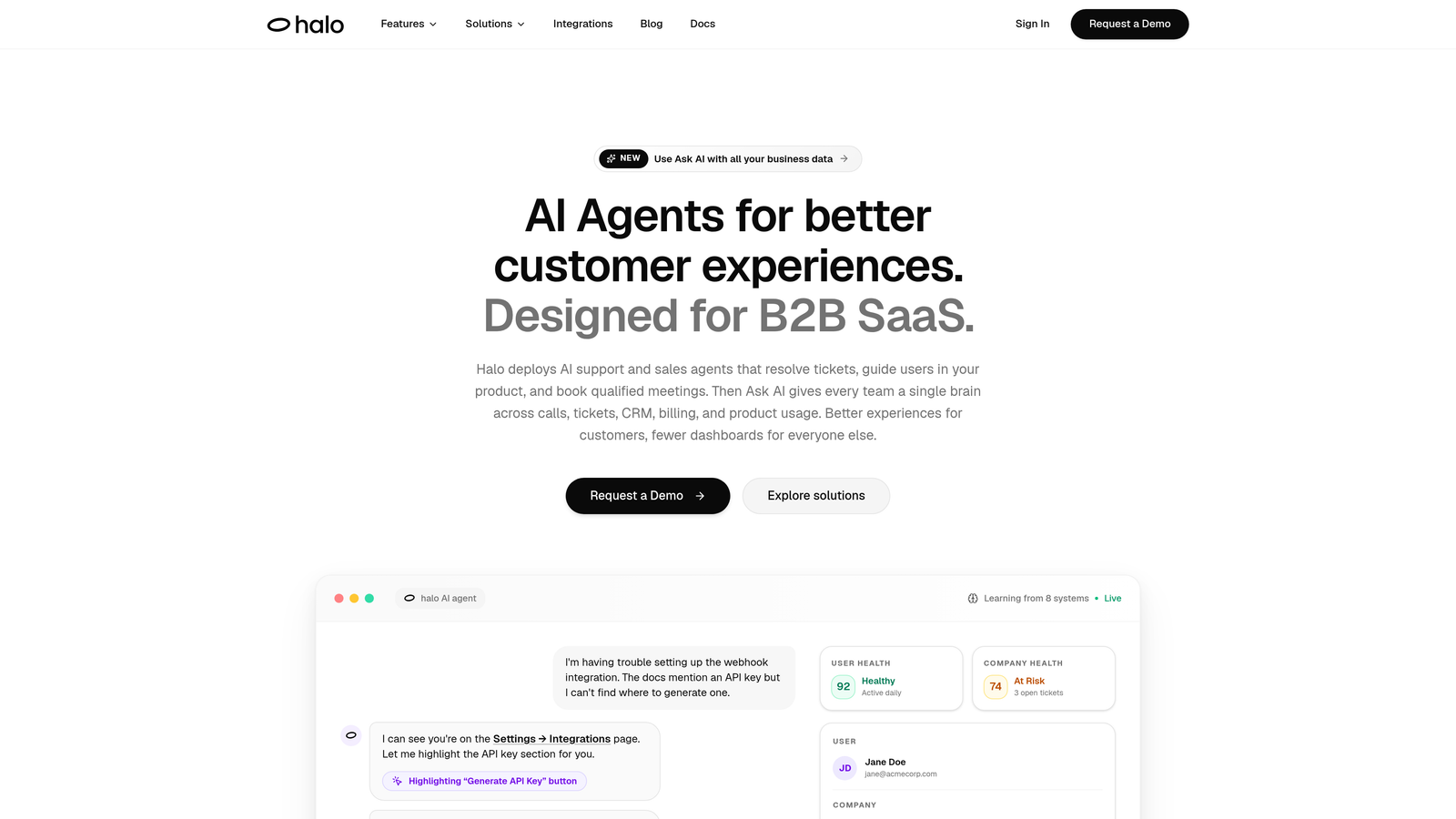
Halo AI is an AI-first embedded support platform that deploys intelligent agents to resolve tickets autonomously, guide users visually through your product UI, and surface business intelligence signals — all from a single embedded widget.
Where This Tool Shines
What separates Halo from most tools on this list is its page-aware architecture. The AI agent doesn't just know what a user typed — it knows which page they're on, what UI elements are visible, and can provide visual step-by-step guidance rather than generic text responses. That context changes the quality of support dramatically.
Beyond resolving tickets, Halo functions as a support intelligence layer. The smart inbox surfaces customer health signals, revenue anomalies, and product usage patterns — turning your support channel into a source of business insight, not just a cost center.
Key Features
Page-Aware Chat Widget: The agent sees the user's current UI context and delivers visual guidance tailored to exactly where they are in your product.
Autonomous AI Agents: Intelligent agents resolve support tickets end-to-end and continuously learn from every interaction to improve over time.
Auto Bug Ticket Creation: Product issues are automatically logged to Linear or connected project management tools without manual triage.
Smart Inbox with Business Intelligence: Surfaces customer health signals, revenue anomalies, and product usage insights alongside standard support metrics.
Live Agent Handoff: Complex issues escalate to human agents with full conversation context intact — no awkward handoff gaps.
Deep Integration Stack: Connects to Linear, Slack, HubSpot, Intercom, Stripe, Zoom, PandaDoc, and Fathom out of the box.
Best For
B2B SaaS product teams that want AI handling routine support autonomously while generating business intelligence as a byproduct. Particularly strong for teams scaling support without scaling headcount, and for those who need their support tool connected to their entire business stack.
Pricing
Contact for pricing at haloagents.ai. Given the platform's AI-first architecture and business intelligence capabilities, pricing is tailored to team size and usage.
2. Intercom
Best for: Growth-stage SaaS teams wanting a mature, full-featured messaging platform with AI deflection
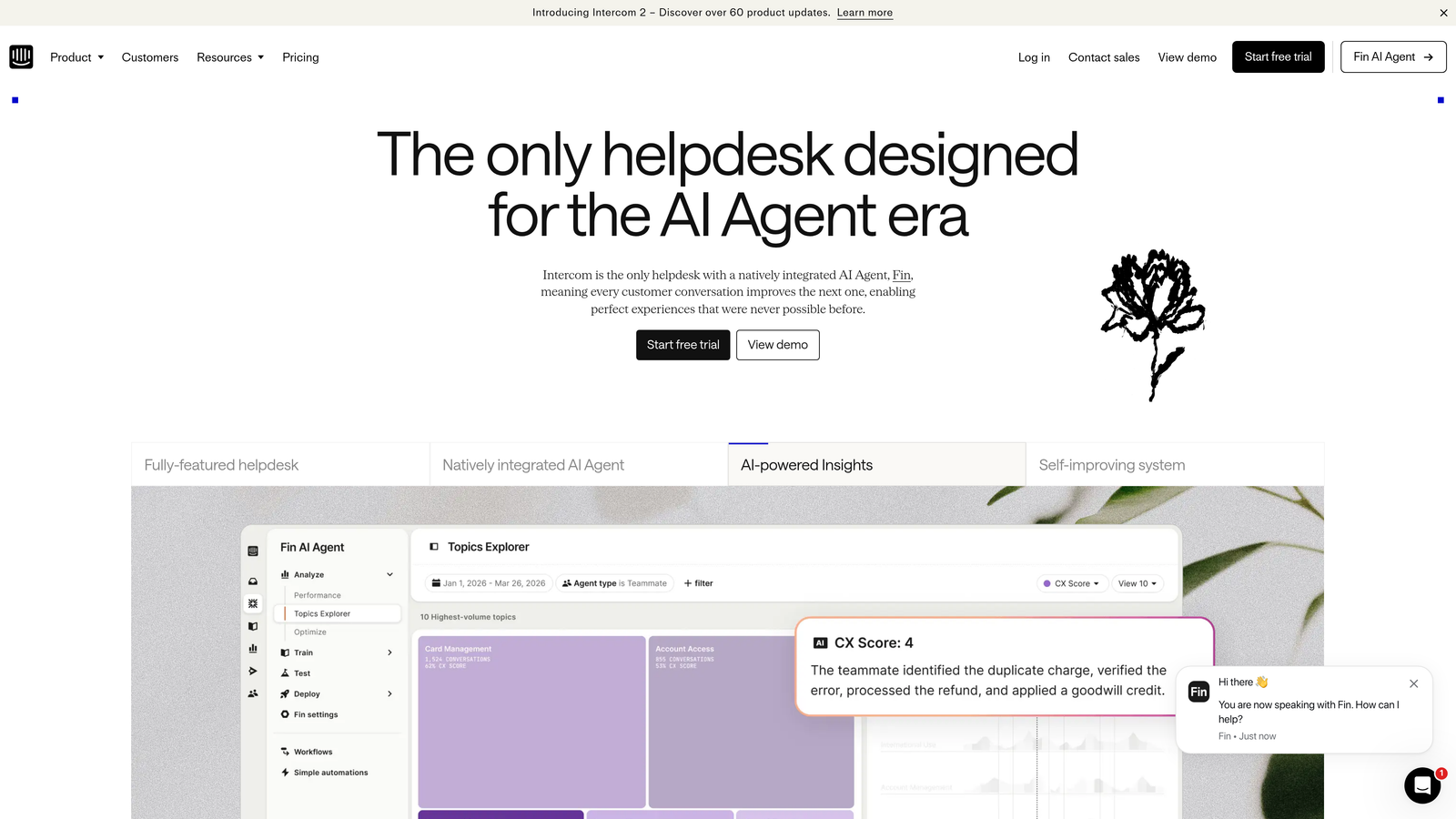
Intercom is one of the most established customer messaging platforms, offering embedded chat with its Fin AI agent, deep workflow automation, and a large integration marketplace.
Where This Tool Shines
Intercom's Fin AI agent, built on large language models, handles FAQ-style query resolution well and has been widely adopted by SaaS support teams for deflecting repetitive tickets. The platform's maturity shows in its workflow builder, which covers everything from routing and escalation to proactive outbound messaging.
The app marketplace is genuinely extensive, making Intercom a solid choice for teams that need to connect their support channel to a wide variety of tools without custom engineering work.
Key Features
Fin AI Agent: LLM-powered automated resolution for customer queries, with configurable confidence thresholds for when to escalate.
Messenger Widget: Embeds in web and mobile apps with customizable targeting rules based on user behavior and attributes.
Workflow Automation Builder: Visual builder for routing, escalation, and proactive messaging without writing code.
App Marketplace: 300+ integrations covering CRM, billing, analytics, and productivity tools.
Reporting Suite: Analytics across conversation volume, resolution rates, CSAT, and team performance.
Best For
Teams where support and product-led growth overlap — Intercom serves both use cases reasonably well. Less ideal if pure support automation is the goal and cost efficiency at scale is a concern, as Fin AI usage is billed per resolution.
Pricing
Essential plan starts at approximately $39/month; Fin AI usage billed per resolution on top of seat costs. Check intercom.com for current pricing.
3. Zendesk
Best for: Enterprise teams where structured ticketing workflow and compliance are the primary requirements
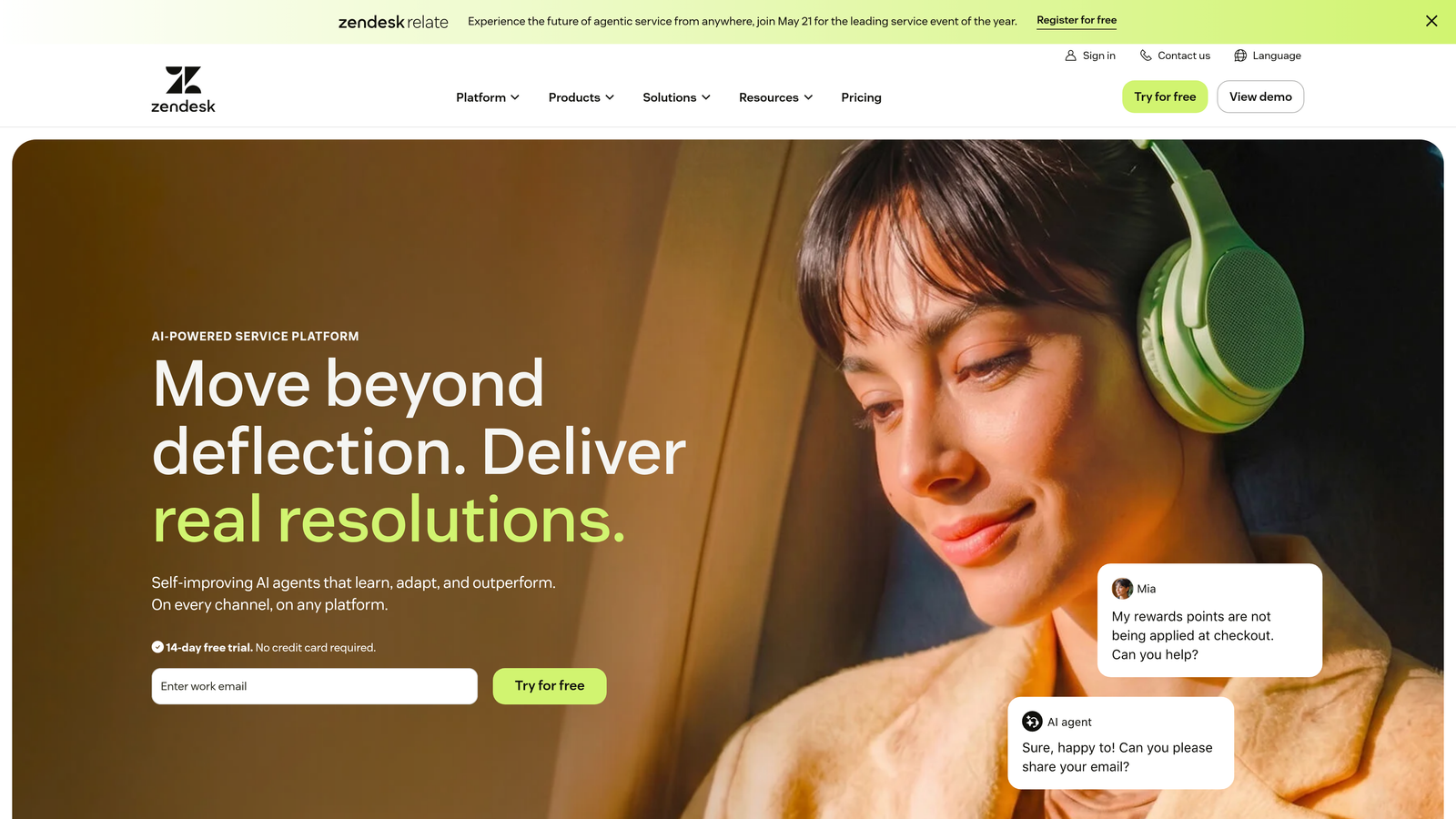
Zendesk is the enterprise standard for customer support, offering embedded chat through its messaging product alongside its core ticketing system, with AI features including intelligent triage and an agent copilot.
Where This Tool Shines
Zendesk's strength has always been its ticketing infrastructure. The embedded messaging product connects directly into that workflow, meaning every chat conversation flows naturally into the same queues, SLAs, and reporting your team already uses. For large support organizations, that operational continuity is valuable.
The AI features have matured considerably. Intelligent Triage classifies and routes tickets automatically, while Agent Copilot provides real-time response suggestions to help agents resolve issues faster — reducing handle time without removing the human from the loop.
Key Features
Embedded Messaging: Chat widget integrated directly with Zendesk's ticketing workflow for seamless conversation-to-ticket conversion.
Intelligent Triage: AI-powered automatic classification and routing based on intent, sentiment, and language.
Agent Copilot: Real-time suggestions and response drafting assistance for human agents during live conversations.
Analytics Suite: Industry-leading reporting across ticket volume, resolution times, agent performance, and customer satisfaction.
Enterprise Security: Robust compliance controls, role-based access, and data residency options for regulated industries.
Best For
Enterprise support teams with complex workflows, large agent headcounts, and strict compliance requirements. Less ideal for teams looking for AI-first autonomous resolution or lightweight deployment — Zendesk carries significant operational overhead.
Pricing
Suite plans start at approximately $55/agent/month. Check zendesk.com for current pricing.
4. Freshdesk (Freshchat)
Best for: Teams already using Freshworks products who want native chat-to-ticket integration at competitive pricing
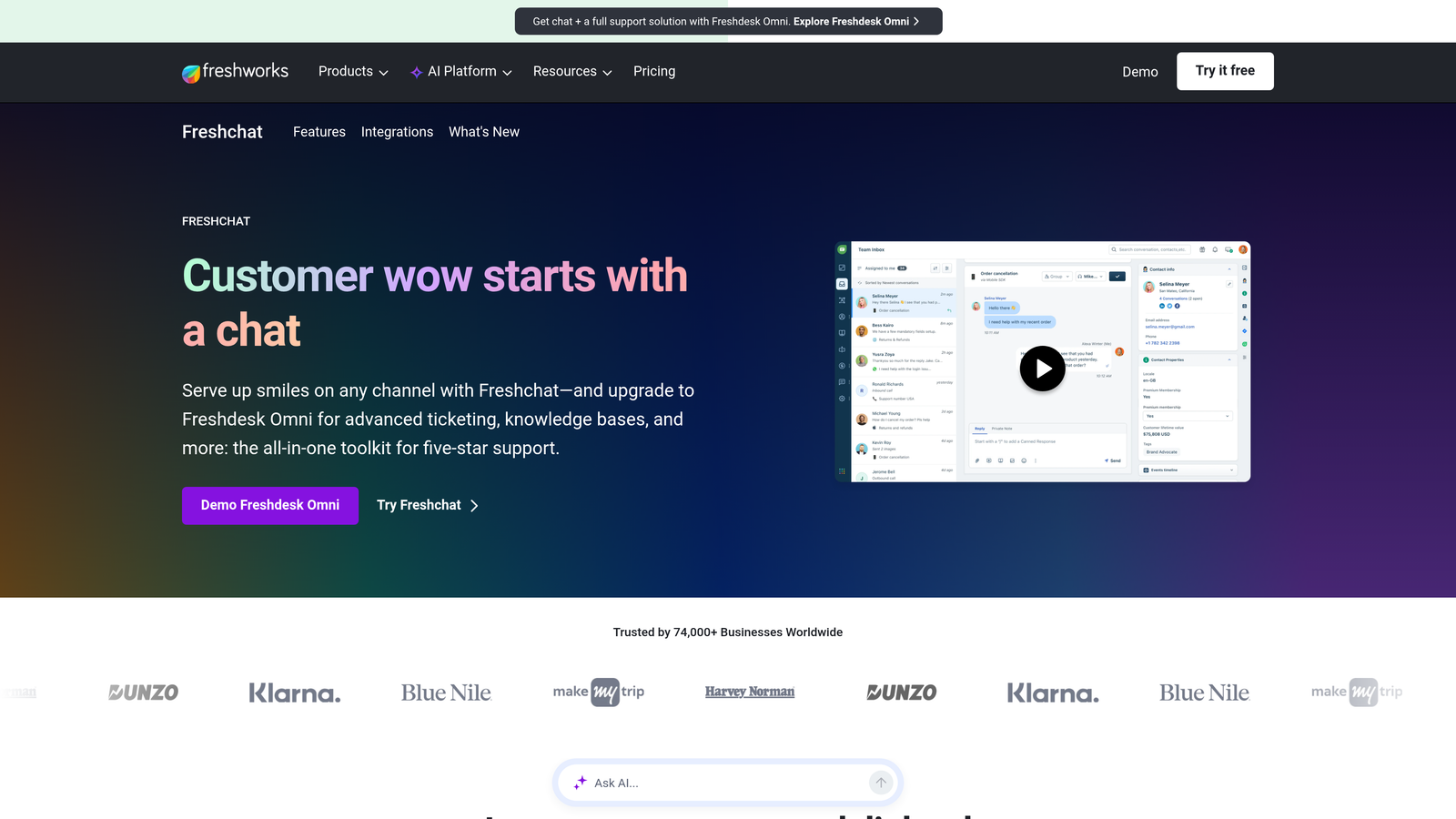
Freshchat is Freshworks' dedicated embedded messaging product, tightly integrated with Freshdesk ticketing and powered by Freddy AI for automated responses and agent assistance.
Where This Tool Shines
The native Freshdesk integration is Freshchat's clearest advantage. Conversations convert to tickets seamlessly, agents work in a unified workspace, and reporting spans both channels without stitching together separate data sources. For teams already in the Freshworks ecosystem, this cohesion saves real operational friction.
Freddy AI handles automated responses competently and assists agents with reply suggestions, making it a practical option for teams that want AI assistance without the complexity or cost of more specialized platforms.
Key Features
Freddy AI: Automated customer responses and agent reply suggestions powered by Freshworks' proprietary AI layer.
Native Freshdesk Integration: Chat conversations convert to support tickets with full context, keeping workflows unified.
Proactive Messaging: Behavior-triggered outbound messages and campaign targeting based on user activity.
Multilingual Support: The embedded widget supports multiple languages for global customer bases.
Unified Agent Workspace: Combines chat, email, and phone in a single interface for agents.
Best For
Mid-market SaaS teams looking for a cost-effective alternative to Intercom or Zendesk, especially those already using Freshdesk for ticketing. Less compelling as a standalone choice if you're not in the Freshworks ecosystem.
Pricing
Free plan available; paid plans start at approximately $15/agent/month. Check freshworks.com for current pricing.
5. Drift
Best for: Sales-led B2B organizations blending pipeline generation with product support in one chat experience
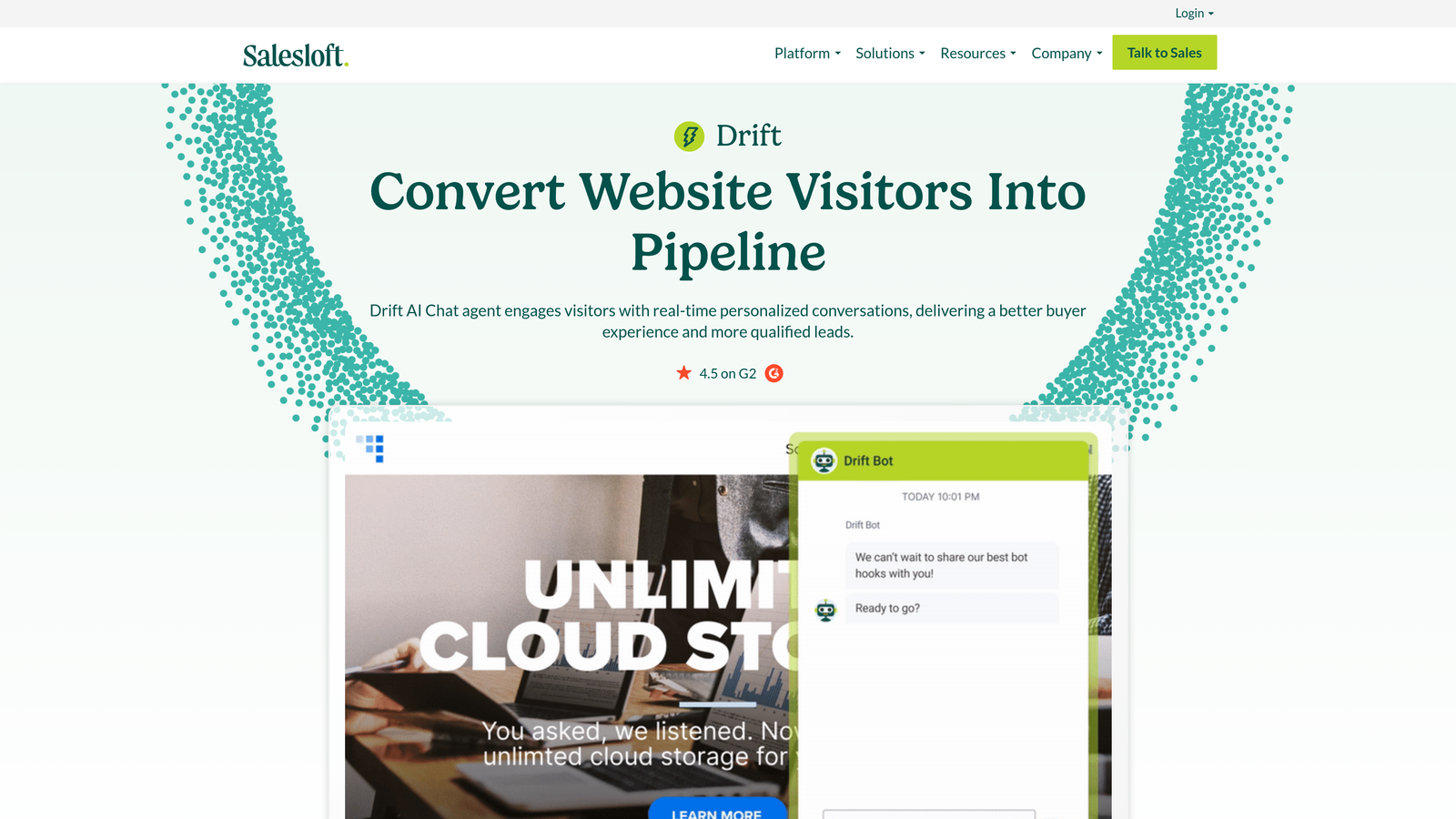
Drift, now part of Salesloft, is a conversational platform that blends sales and support in one embedded chat experience, with strong account-based targeting and meeting scheduling capabilities.
Where This Tool Shines
Drift's account-based targeting is genuinely differentiated. The platform can personalize chat experiences based on company, industry, deal stage, or CRM data — making it possible to greet a high-value prospect differently than a new free-tier user. For revenue teams, that contextual awareness translates directly into pipeline.
The integration with Salesloft and tools like Salesforce and HubSpot means chat conversations can be attributed to revenue, which matters to organizations that need to justify support investment in sales terms.
Key Features
Account-Based Targeting: Personalize chat experiences based on company, industry, deal stage, or firmographic data from your CRM.
AI Chatbot: Qualifies leads and answers support queries simultaneously within the same conversation flow.
In-Chat Meeting Scheduling: Connects directly to sales rep calendars for frictionless booking without leaving the chat.
Revenue Attribution Reporting: Links chat conversations to pipeline and closed revenue.
CRM Integrations: Native connections to Salesforce, HubSpot, Marketo, and Salesloft.
Best For
Sales-led SaaS organizations where the support chat widget also needs to serve pipeline goals. Less suitable for product teams where pure support resolution and ticket deflection are the primary objectives.
Pricing
Quote-based pricing through Salesloft. Contact drift.com for current pricing.
6. Crisp
Best for: Early-stage startups and European SaaS teams wanting clean, affordable embedded chat without enterprise complexity
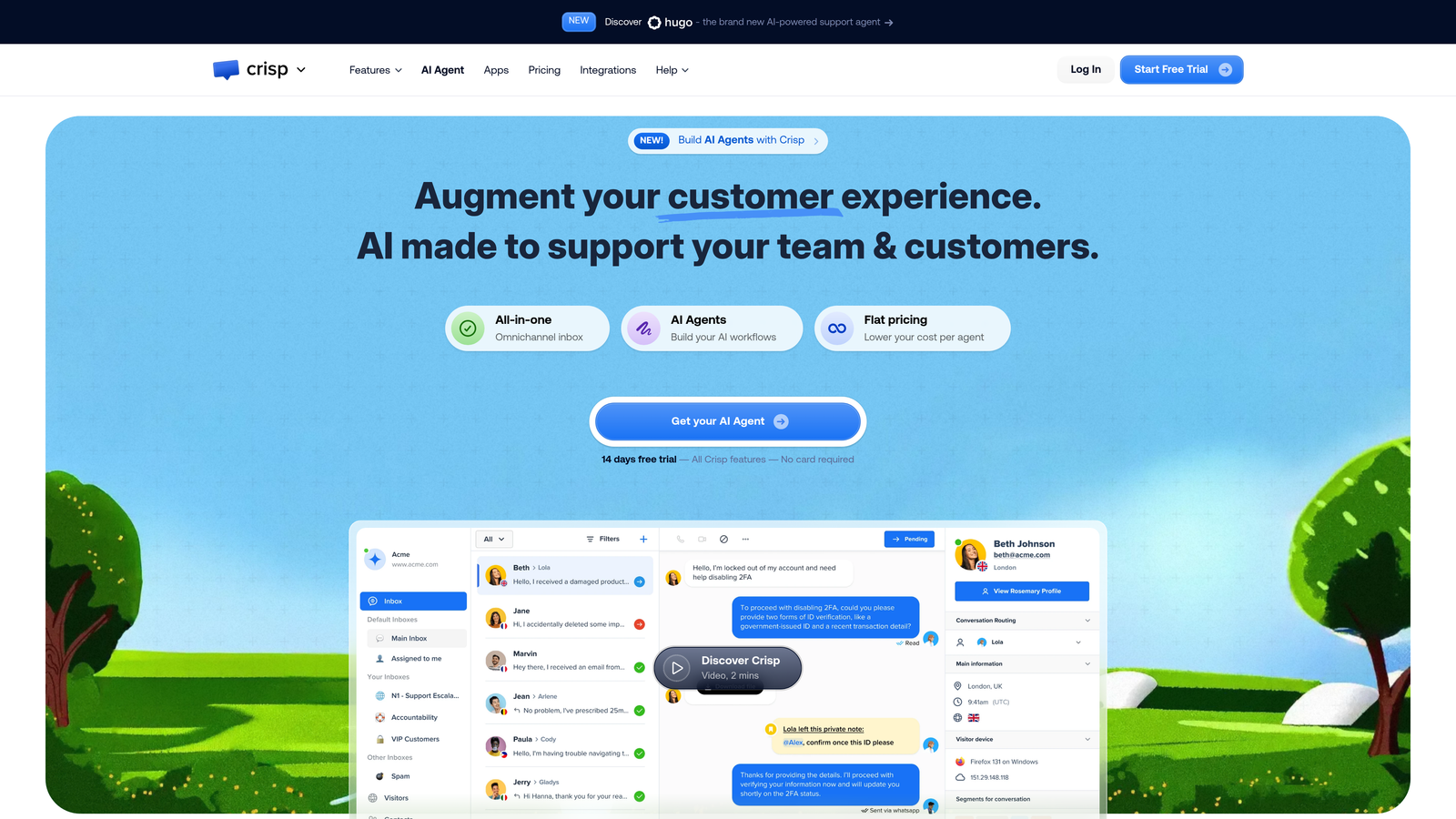
Crisp is a clean, affordable customer messaging platform popular with European startups, offering embedded chat, a shared inbox, and a straightforward chatbot builder without enterprise-level complexity or pricing.
Where This Tool Shines
Crisp's appeal is its simplicity. The shared inbox unifies conversations from chat, email, Messenger, Twitter/X, and WhatsApp in one clean interface — without the setup overhead that comes with larger platforms. For small teams managing support across multiple channels, that consolidation is genuinely useful.
The visual chatbot builder requires no coding knowledge, making it accessible for founders or support managers who need basic automation without engineering involvement.
Key Features
Shared Inbox: Unifies chat, email, Messenger, Twitter/X, and WhatsApp conversations in a single workspace.
Crisp Chatbot: Visual no-code builder for creating automated conversation flows without technical resources.
Live Visitor Tracking: See who's active on your site or app in real time with behavioral context.
Knowledge Base Integration: Suggests relevant help articles within chat conversations automatically.
Team Collaboration: Internal notes, agent mentions, and conversation assignments for small team coordination.
Best For
Early-stage SaaS teams and startups that need a functional embedded chat solution without committing to enterprise pricing. Not the right fit for teams that need advanced AI resolution or deep CRM integrations.
Pricing
Free plan available; Pro starts at approximately $25/month for 4 agents. Check crisp.chat for current pricing.
7. HubSpot Live Chat
Best for: Teams where HubSpot CRM is already the system of record and seamless data sync is the priority
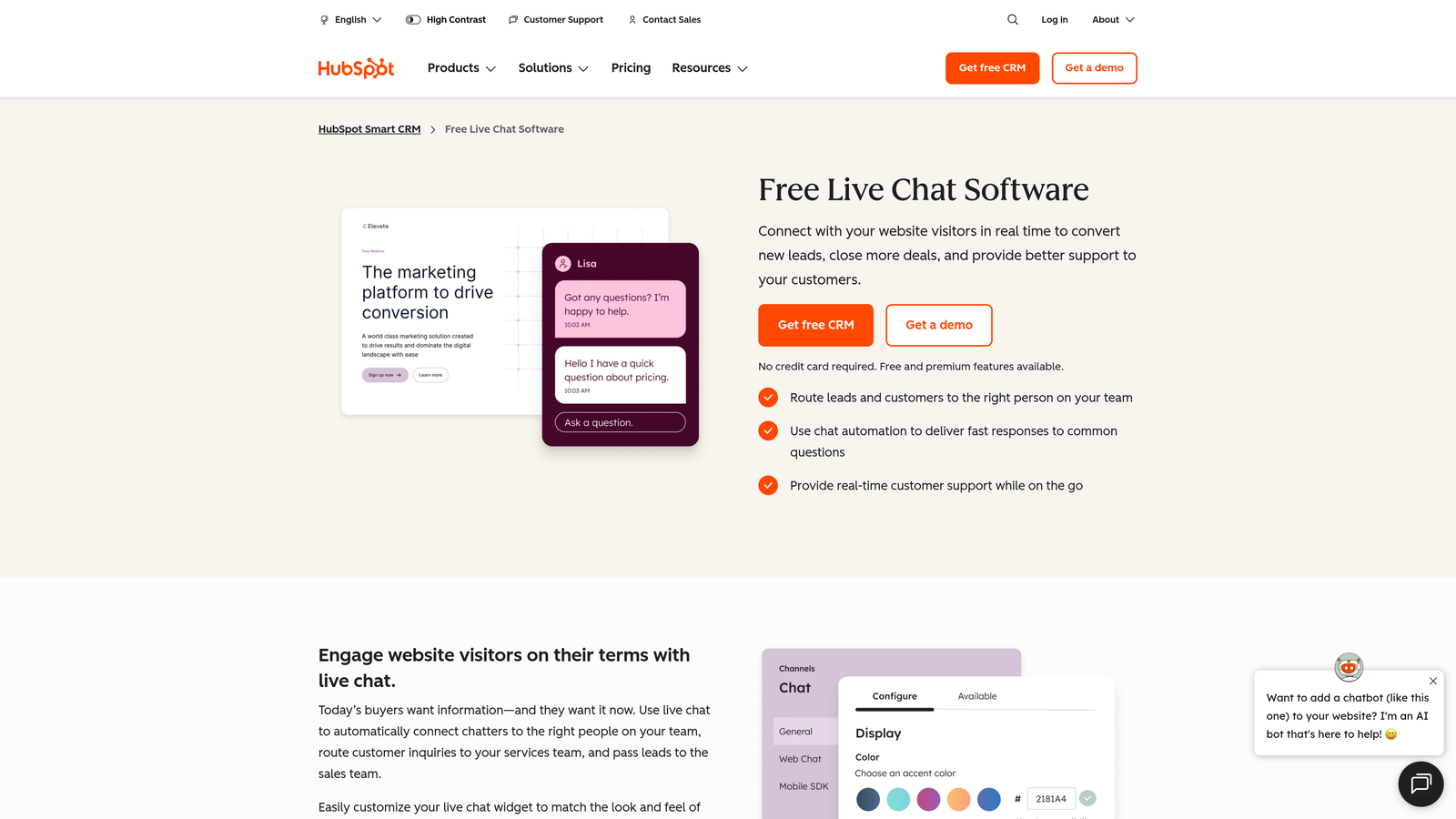
HubSpot Live Chat is part of HubSpot's Service Hub and connects every conversation directly to HubSpot CRM — ideal for teams where HubSpot is already central to their operations.
Where This Tool Shines
The CRM sync is the standout capability here. Every chat conversation is automatically logged to the correct contact and deal record in HubSpot, with no manual data entry or integration maintenance required. For revenue teams that rely on HubSpot as their source of truth, that automatic attribution is genuinely valuable.
The Chatflows builder handles conditional logic without code, and meeting booking links embedded directly in conversations reduce friction for customers who need to speak with a human.
Key Features
Automatic CRM Sync: Every conversation logged to the correct HubSpot contact and deal record in real time.
HubSpot Chatflows: No-code chatbot builder with conditional logic for routing and automated responses.
Meeting Booking Integration: Embed calendar links directly in chat for frictionless scheduling.
Unified Inbox: Combines chat, email, and form submissions in one agent workspace.
Native HubSpot Ecosystem: Deep connections to HubSpot's marketing, sales, and service tools without third-party middleware.
Best For
Teams where HubSpot is already the operational hub. If you're not a HubSpot shop, the AI capabilities are more limited compared to dedicated support platforms, making it harder to justify as a standalone choice.
Pricing
Live chat included in HubSpot's free CRM; advanced Service Hub features start at approximately $15/seat/month. Check hubspot.com for current pricing.
8. Tidio
Best for: SMB SaaS and e-commerce teams wanting accessible AI automation without technical setup complexity
Tidio is an accessible embedded chat platform with its Lyro AI chatbot, designed for teams that need automation without technical complexity.
Where This Tool Shines
Tidio's Lyro AI chatbot requires minimal configuration to get running — it learns from your existing help content and handles conversational query resolution without extensive training workflows. For teams that don't have a dedicated support engineer, that low barrier to entry matters.
The visual drag-and-drop bot builder makes it easy for non-technical users to create automated chat flows, and the mobile app lets agents manage conversations without being desk-bound.
Key Features
Lyro AI Chatbot: Conversational AI that resolves customer queries using your help content with minimal configuration required.
Visual Bot Builder: Drag-and-drop flow creator for automated conversations without writing code.
Visitor Tracking: Behavior-triggered proactive messages based on user actions and page activity.
Platform Integrations: Native connections to Shopify, WordPress, Wix, and major e-commerce platforms.
Mobile Agent App: Manage and respond to conversations from iOS and Android devices.
Best For
SMB SaaS teams and e-commerce businesses that want AI-assisted chat without a complex implementation. Less suitable for B2B teams with sophisticated support workflows, deep CRM requirements, or enterprise-scale ticket volumes.
Pricing
Free plan available; Lyro AI starts at approximately $29/month. Check tidio.com for current pricing.
9. Chatwoot
Best for: Engineering-led teams needing full infrastructure control, data sovereignty, or cost efficiency at scale
Chatwoot is an open-source, self-hostable customer support platform with an API-first architecture — the go-to choice for teams that need complete control over their embedded chat infrastructure.
Where This Tool Shines
Chatwoot's open-source model eliminates per-seat pricing surprises at scale. For engineering-led teams with the resources to self-host, the total cost of ownership can be significantly lower than commercial alternatives, particularly as headcount and conversation volume grow.
The API-first architecture means custom integrations are genuinely accessible — not dependent on a vendor's marketplace or integration roadmap. Teams with specific workflow requirements or data residency obligations will find that flexibility valuable.
Key Features
Open-Source Self-Hosting: Full source code access with no vendor lock-in or per-seat fees at scale.
API-First Architecture: Deep custom integrations and workflow automation without marketplace constraints.
Multi-Channel Inbox: Web chat, email, WhatsApp, Twitter/X, Facebook, and more in a unified workspace.
Team Management Tools: Canned responses, conversation labels, agent assignments, and routing rules.
Cloud Option Available: Managed cloud hosting for teams that want the flexibility without self-hosting overhead.
Best For
Engineering-led teams with data sovereignty requirements, compliance constraints, or tight budgets at scale. Requires real engineering resources to deploy and maintain — not the right fit for teams without technical ownership of their infrastructure.
Pricing
Self-hosted: free (open source). Cloud plans start at approximately $19/month. Check chatwoot.com for current pricing.
Which Platform Is Right for Your Team?
The best embedded support chat platform depends entirely on what your team needs most. Here's a quick way to cut through the options.
If AI-first autonomous resolution is the priority: Halo AI is built specifically for this. Page-aware context, continuous learning, and business intelligence signals make it the strongest choice for B2B SaaS teams that want support to scale without headcount scaling with it.
If you're a large enterprise with complex ticketing workflows: Zendesk remains the operational standard. Its reporting depth and compliance controls are hard to match, even if the AI layer is more of an enhancement than a core architecture.
If HubSpot is your system of record: HubSpot Live Chat's automatic CRM sync makes it the natural fit. No other tool on this list matches that native data continuity for HubSpot-centric teams.
If you need sales and support in one motion: Drift's account-based targeting and revenue attribution reporting serve sales-led organizations well, particularly those already using Salesloft.
If infrastructure control matters most: Chatwoot's open-source, self-hosted model is the clear answer for engineering teams with data sovereignty or budget constraints at scale.
For B2B SaaS teams specifically, the gap between a basic chat widget and a genuine support intelligence layer is widening. Tools that only handle conversations are becoming table stakes. What separates the best platforms now is whether they can resolve tickets autonomously, learn from every interaction, and surface signals that improve your product and your business.
Your support team shouldn't scale linearly with your customer base. Let AI agents handle routine tickets, guide users through your product, and surface business intelligence while your team focuses on complex issues that need a human touch. See Halo in action and discover how continuous learning transforms every interaction into smarter, faster support.