9 Best Enterprise AI Customer Support Solutions in 2026
Enterprise AI customer support solutions have evolved to handle the complex demands of large-scale operations, from managing thousands of daily tickets to integrating with existing CRMs and billing systems. This guide evaluates the 9 best platforms of 2026 based on AI reasoning capabilities, integration depth, scalability, and real-world enterprise performance — helping teams find the right fit whether augmenting agents or building fully autonomous support workflows.
 Matt PattoliFounder12 min read
Enterprise support teams face a different class of problem than SMBs. We're talking thousands of tickets daily, complex integrations with billing systems and CRMs, strict SLA requirements, and the constant pressure to scale without proportionally scaling headcount. Generic chatbots don't cut it at this level. You need AI that can reason, route, escalate, and learn — all while connecting to the systems your business already runs on.
This list covers the top enterprise AI customer support solutions available in 2026. Each was evaluated on depth of AI capability, integration ecosystem, scalability, analytics, and how well it handles the messy, high-stakes realities of enterprise support. Whether you're replacing a legacy helpdesk, augmenting an existing team, or building a fully autonomous support operation, there's a fit here for your use case.
1. Halo AI
Best for: B2B SaaS teams wanting AI-first autonomous support with deep product context
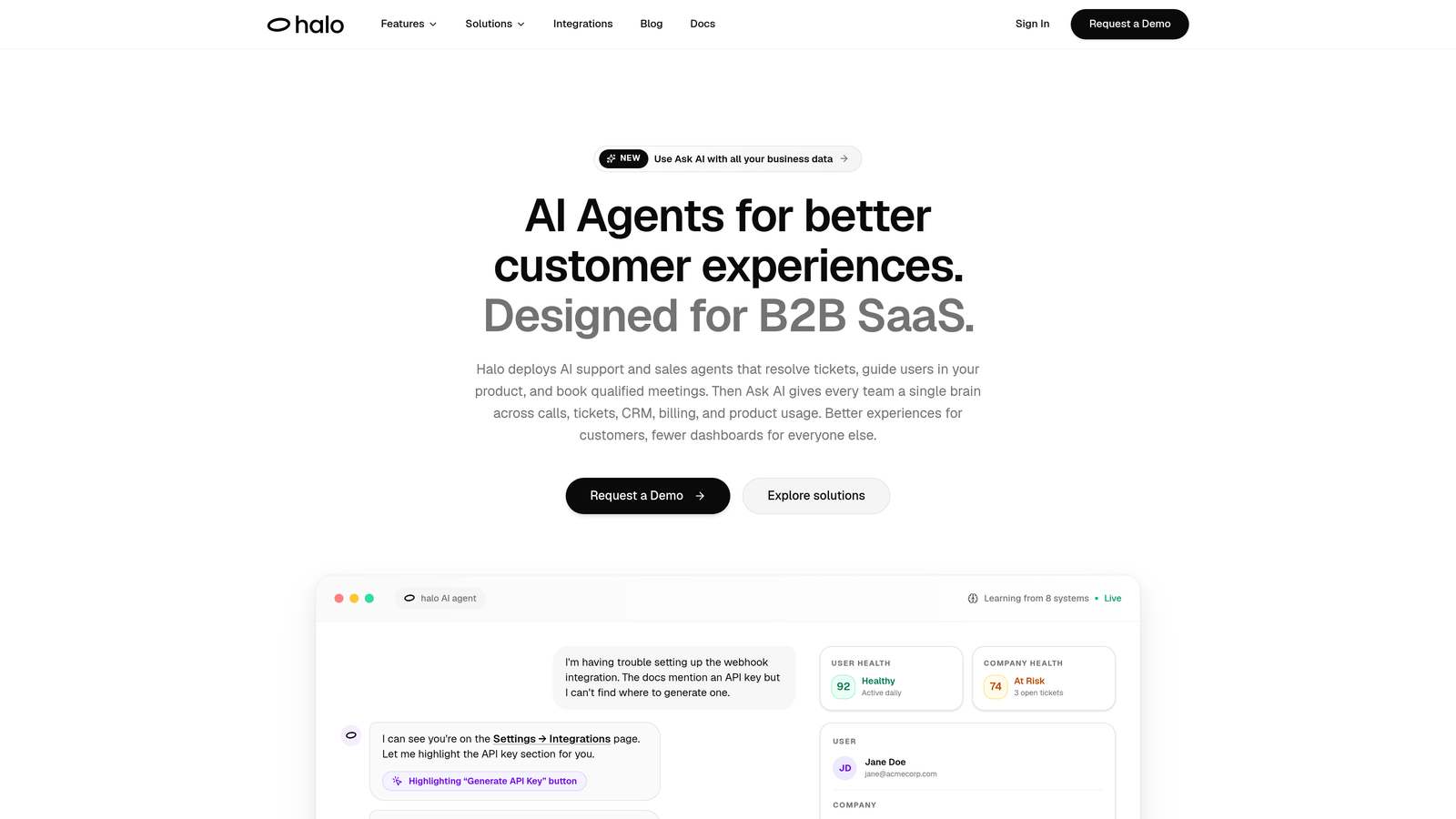
Halo AI is an AI-first customer support platform built specifically for B2B SaaS companies that need autonomous ticket resolution, not just AI-assisted responses.
Where This Tool Shines
What separates Halo from most platforms on this list is its architecture. Rather than bolting AI onto an existing helpdesk, Halo is built AI-first from the ground up. That means the AI isn't an add-on layer fighting against legacy infrastructure; it's the core engine that everything else runs through.
The standout capability is page-aware context. Halo's chat widget actually sees what the user sees inside your product, giving the AI agent meaningful situational awareness rather than forcing users to describe their problem from scratch. Pair that with continuous learning from every resolved ticket, and the system gets measurably smarter over time without manual retraining.
Key Features
Page-Aware Chat Widget: The AI sees the user's current product context, enabling precise, relevant guidance without users needing to explain their screen state.
Autonomous Ticket Resolution: AI agents resolve support tickets end-to-end, escalating to live agents only when genuinely necessary.
Auto Bug Ticket Creation: Automatically identifies and routes bug reports directly to Linear, removing manual triage steps from your engineering workflow.
Smart Inbox with Business Intelligence: Surfaces customer health signals, revenue intelligence, and anomaly detection — turning support data into actionable business insight.
Deep Integration Ecosystem: Connects natively with Slack, HubSpot, Intercom, Stripe, Zoom, PandaDoc, and Fathom for a unified operational picture.
Best For
B2B SaaS companies that want an AI-first support operation rather than patching AI onto an existing helpdesk. Particularly strong for product-led growth teams where understanding in-product user behavior is critical to support quality. Also a good fit for teams that want support data to feed into broader business intelligence, not just ticket metrics.
Pricing
Custom pricing available for enterprise plans. Contact Halo directly at haloagents.ai to discuss your team's scale and requirements.
2. Salesforce Agentforce
Best for: Enterprises deeply invested in the Salesforce ecosystem wanting native AI agents
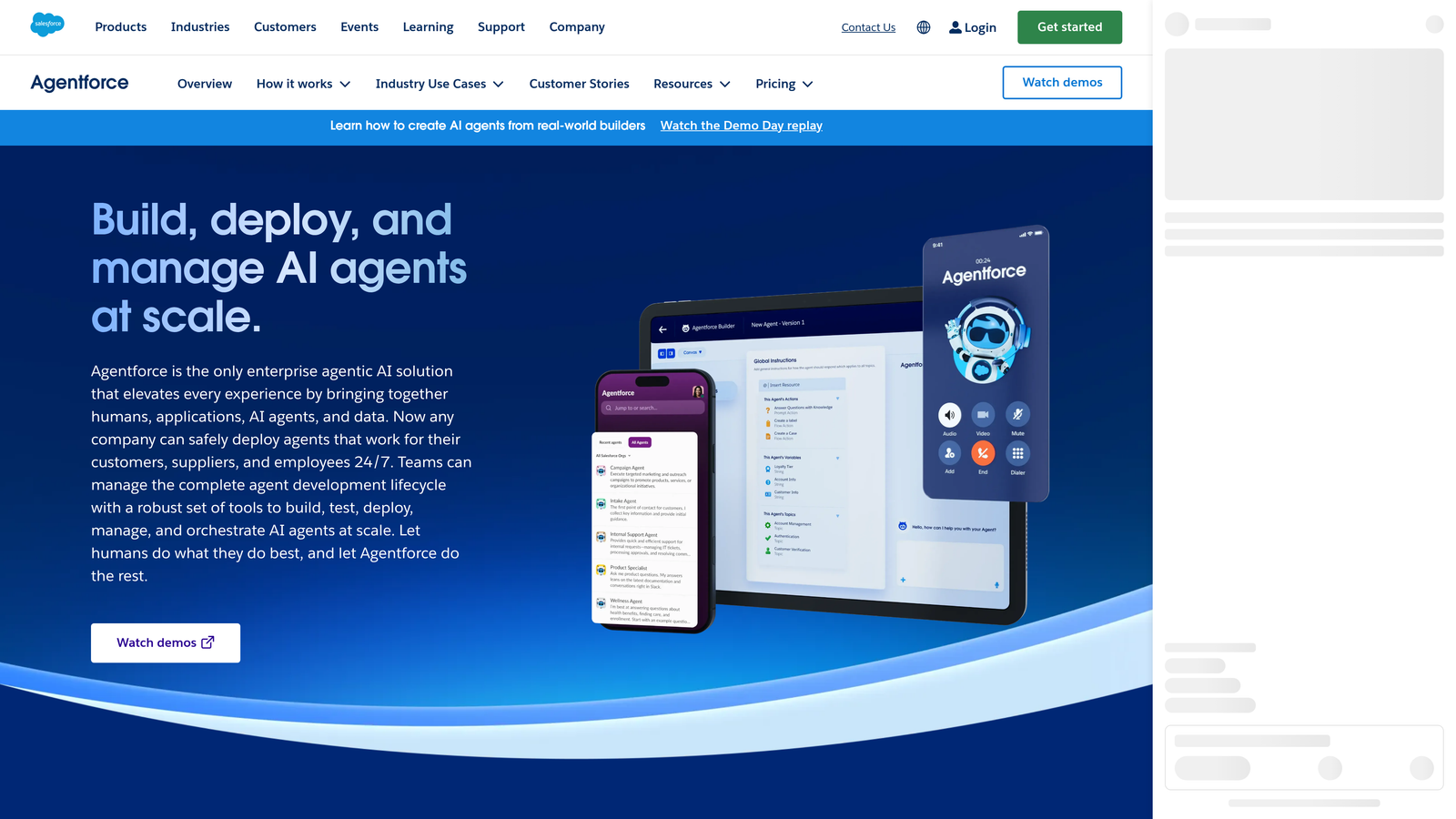
Salesforce Agentforce is Salesforce's autonomous AI agent platform, natively embedded across Sales Cloud, Service Cloud, and Marketing Cloud.
Where This Tool Shines
If your enterprise already lives in Salesforce, Agentforce is a compelling option because the AI draws directly on your CRM data without requiring any external data pipelines. Customer history, case records, account details — it's all natively accessible to the agent, which means richer context from day one.
The platform also brings enterprise-grade governance to AI actions. Audit trails, compliance controls, and role-based permissions are built in, which matters significantly for regulated industries or large organizations with strict IT governance requirements.
Key Features
Native CRM Data Access: AI agents draw directly on Sales Cloud, Service Cloud, and Marketing Cloud data without external integration overhead.
Autonomous Workflow Actions: Agents can take actions across Salesforce workflows, not just generate responses.
Einstein AI Models: Trained on enterprise CRM data patterns for more contextually relevant outputs.
Pre-Built Agent Templates: Ready-to-deploy templates for common service scenarios accelerate initial setup.
Enterprise Governance Controls: Audit trails and compliance features built in for regulated enterprise environments.
Best For
Enterprises already running significant Salesforce infrastructure who want AI capabilities without introducing a new platform. Less compelling for teams outside the Salesforce ecosystem, where the setup cost and licensing complexity may outweigh the benefits.
Pricing
Included in select Salesforce enterprise plans; Agentforce add-on pricing varies by edition and seat count. Contact Salesforce for enterprise quotes.
3. Zendesk AI
Best for: Teams already on Zendesk Suite wanting AI without a platform migration
Zendesk AI is Zendesk's native AI layer built directly into its industry-leading ticketing and support suite, covering triage, generative replies, agent copilot, and knowledge base optimization.
Where This Tool Shines
Zendesk's AI strength is in its breadth of coverage across the support workflow. From the moment a ticket arrives (intent detection, sentiment analysis, smart routing) to resolution (generative reply suggestions, automated summarization), AI touches every stage. For teams already running on Zendesk Suite, enabling these features is relatively low friction.
The knowledge base AI is particularly useful for enterprise teams managing large content libraries. Gap detection identifies where your documentation is failing customers before those gaps become ticket volume spikes.
Key Features
AI-Powered Triage: Intent detection, sentiment analysis, and smart routing applied to every incoming ticket automatically.
Generative Reply Suggestions: AI drafts responses for agents to review, edit, and send, reducing handle time on common queries.
Agent Copilot: Real-time AI assistance surfaced to agents during live conversations.
Knowledge Base Gap Detection: AI identifies content gaps driving ticket volume, enabling proactive documentation improvements.
Automated Ticket Summarization: Condenses conversation history so agents can get up to speed instantly on complex tickets.
Best For
Enterprises already invested in Zendesk Suite Professional or above who want AI capabilities layered onto their existing workflow without switching platforms. Teams starting fresh may find more AI-native alternatives offer a stronger foundation.
Pricing
AI features available on Suite Professional and above. Custom enterprise pricing available on request from Zendesk.
4. Intercom Fin AI
Best for: SaaS companies prioritizing autonomous deflection on knowledge-based support queries
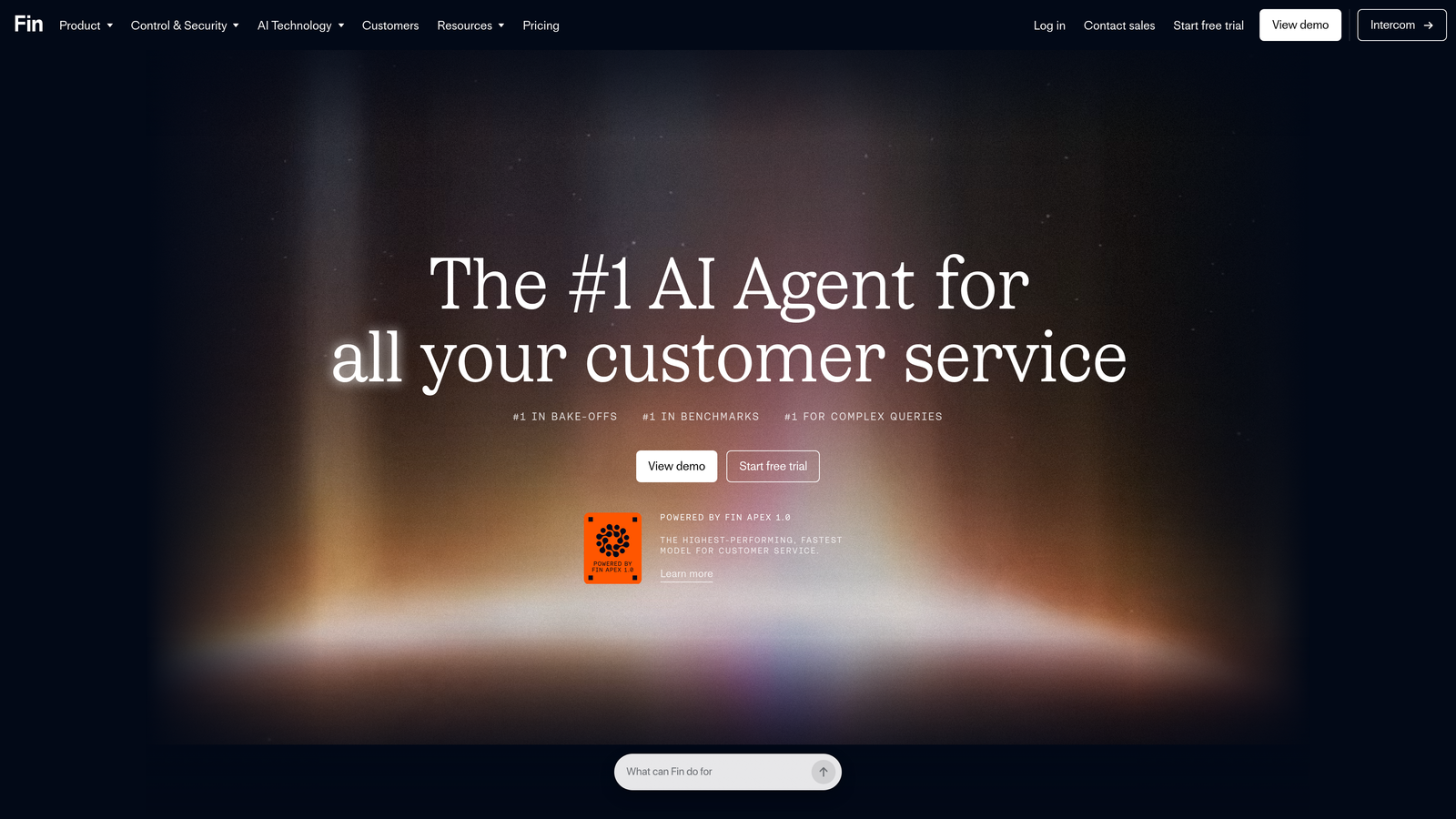
Intercom Fin is Intercom's LLM-powered AI agent designed to autonomously resolve support questions by drawing on your help center, knowledge base, and conversation history.
Where This Tool Shines
Fin has built a strong reputation for resolution quality on knowledge-based queries. It cites its sources when answering, which builds user trust in a way that generic AI responses often don't. For SaaS companies with well-maintained help centers, Fin can handle a meaningful portion of incoming volume without human involvement.
The handoff experience is also notably smooth. When Fin determines it can't resolve a query, the transition to a human agent is clean, with full conversation context passed along so customers don't have to repeat themselves.
Key Features
LLM-Powered Resolution Engine: Draws on your existing help center and knowledge base to generate accurate, source-cited answers.
Source-Cited Answers: Responses include references to the specific help articles used, increasing user confidence in AI-generated answers.
Seamless Human Handoff: Escalates to live agents with full context when resolution fails.
Customizable Tone and Persona: Fin's communication style can be adjusted to match your brand voice.
Multi-Language Support: Handles queries across multiple languages, useful for globally distributed enterprise customer bases.
Best For
SaaS companies with strong existing knowledge bases looking to maximize deflection rates. Also fits teams already using Intercom for messaging who want AI without introducing another platform.
Pricing
Available on Intercom plans; some tiers offer usage-based pricing per resolution. Contact Intercom for enterprise volume pricing.
5. Freshdesk Freddy AI
Best for: Teams wanting broad AI coverage across support, CRM, and chat at competitive enterprise pricing
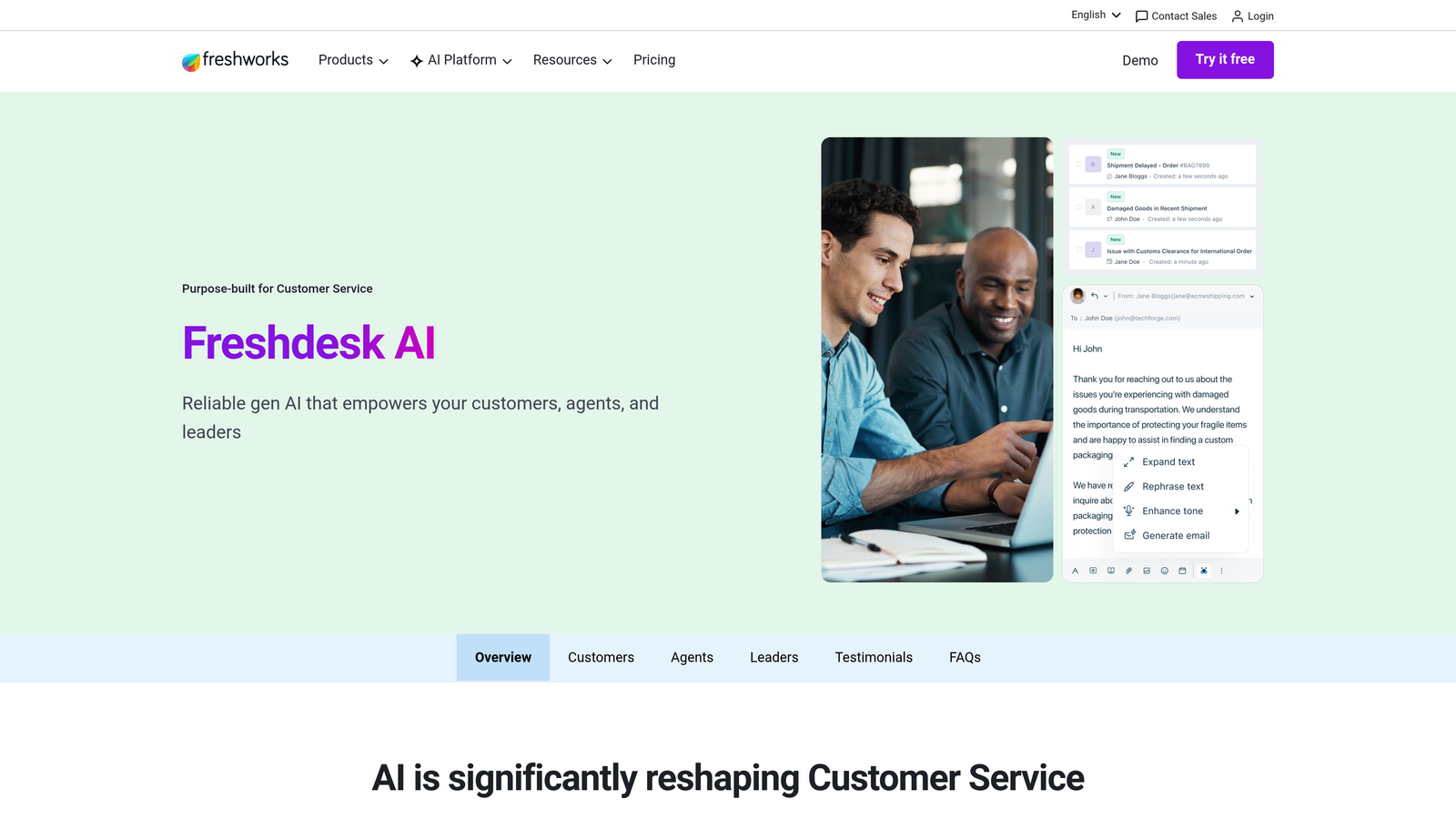
Freshdesk Freddy AI is Freshworks' AI layer spanning self-service, agent assist, and analytics across the Freshdesk support platform and broader Freshworks suite.
Where This Tool Shines
Freddy's appeal at the enterprise level is its breadth across the Freshworks ecosystem. If your team uses Freshdesk for support, Freshchat for messaging, and Freshsales for CRM, Freddy AI spans all three — giving you a unified AI layer without stitching together multiple vendors.
The no-code bot builder is also worth noting for enterprise teams that want to iterate on AI workflows without waiting on engineering resources. Non-technical support operations leaders can build and adjust bot flows directly.
Key Features
Freddy Self Service: AI bot handles common query deflection across web and chat channels.
Freddy Copilot: Real-time suggestions, response drafts, and conversation summaries for live agents.
Freddy Insights: Proactive analytics with anomaly detection and performance alerts.
Cross-Suite AI: Unified AI capabilities spanning Freshdesk, Freshchat, and Freshsales.
No-Code Bot Builder: Visual workflow builder enables non-technical teams to configure and iterate on AI bots independently.
Best For
Enterprises already using or considering the Freshworks suite who want AI across multiple business functions without premium Salesforce or Zendesk pricing. Also a good fit for teams where non-technical staff need to manage bot configuration.
Pricing
Freddy AI available as an add-on on Growth plans and above. Enterprise pricing available on request from Freshworks.
6. ServiceNow Customer Service Management
Best for: Enterprises where customer support connects deeply to IT operations, field service, or back-office workflows
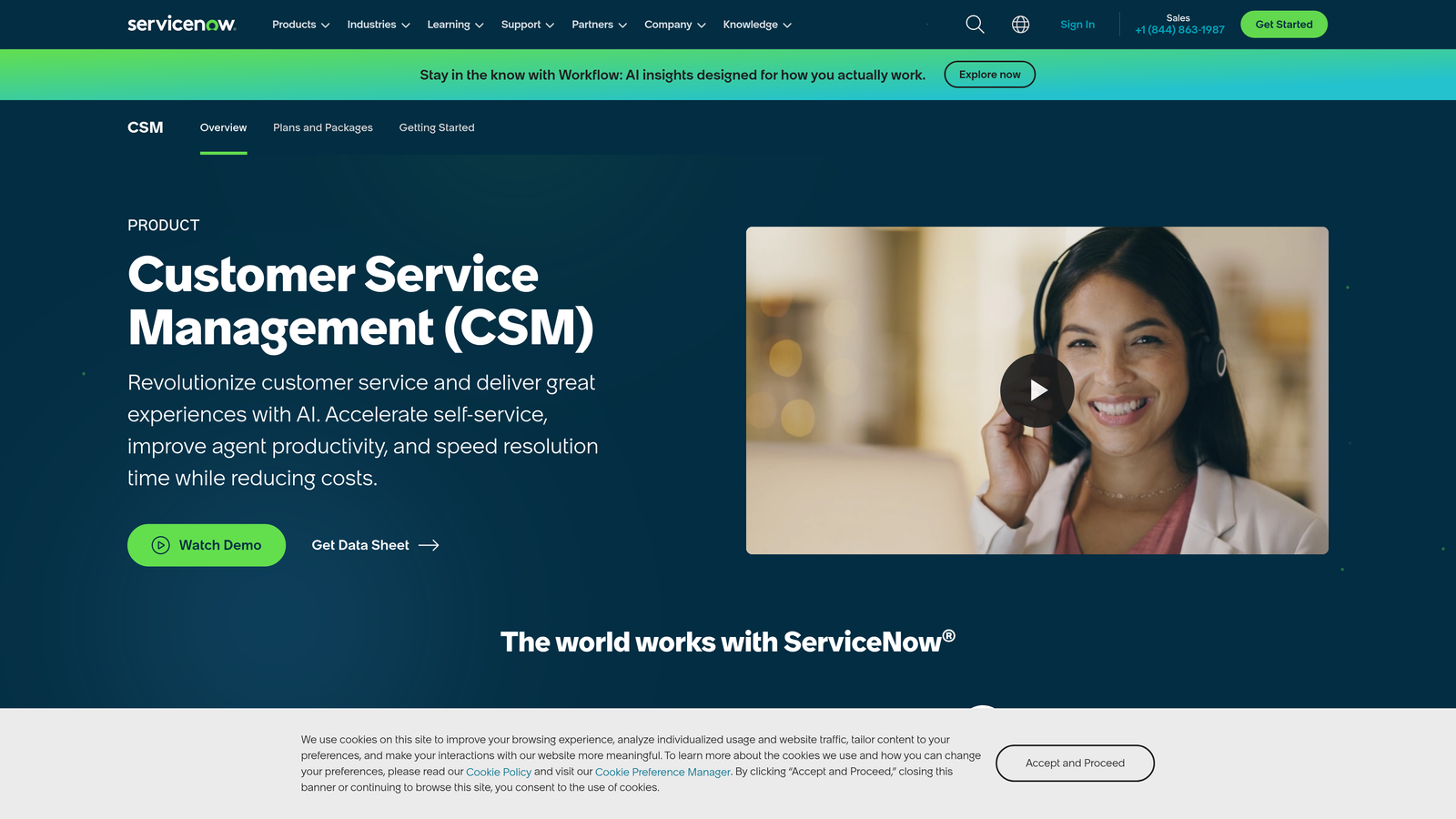
ServiceNow Customer Service Management is ServiceNow's enterprise CSM platform with AI capabilities (Now Intelligence) designed for organizations where support workflows are tightly integrated with IT and operational systems.
Where This Tool Shines
ServiceNow is in a category of its own when customer support is genuinely entangled with IT service management, field operations, or back-office fulfillment. Telecom companies managing network outages, healthcare organizations coordinating care workflows, and financial services firms handling compliance-sensitive cases find ServiceNow's integrated approach difficult to replicate elsewhere.
The predictive intelligence capabilities are particularly strong for proactive support: identifying patterns that indicate an impending issue before it generates a wave of inbound tickets.
Key Features
Now Intelligence Routing: AI-powered case classification and routing based on content, history, and workflow context.
Virtual Agent: Automated self-service across web and mobile, connected to back-end systems for action-based resolution.
ITSM Integration: Deep connection to IT Service Management workflows for organizations where support and IT operations overlap.
Predictive Intelligence: Proactive issue identification based on pattern analysis across cases and operational data.
Enterprise Compliance Controls: Audit trails, governance frameworks, and role-based access controls built for regulated industries.
Best For
Large enterprises in telecom, healthcare, financial services, and enterprise IT where customer support workflows connect to operational systems. Less suited for pure SaaS product support teams where the ITSM overhead adds complexity without proportional value.
Pricing
Enterprise licensing model with custom pricing. Contact ServiceNow directly for a quote based on your organization's scope and modules required.
7. Kustomer
Best for: High-volume consumer brands needing rich customer history to power AI responses
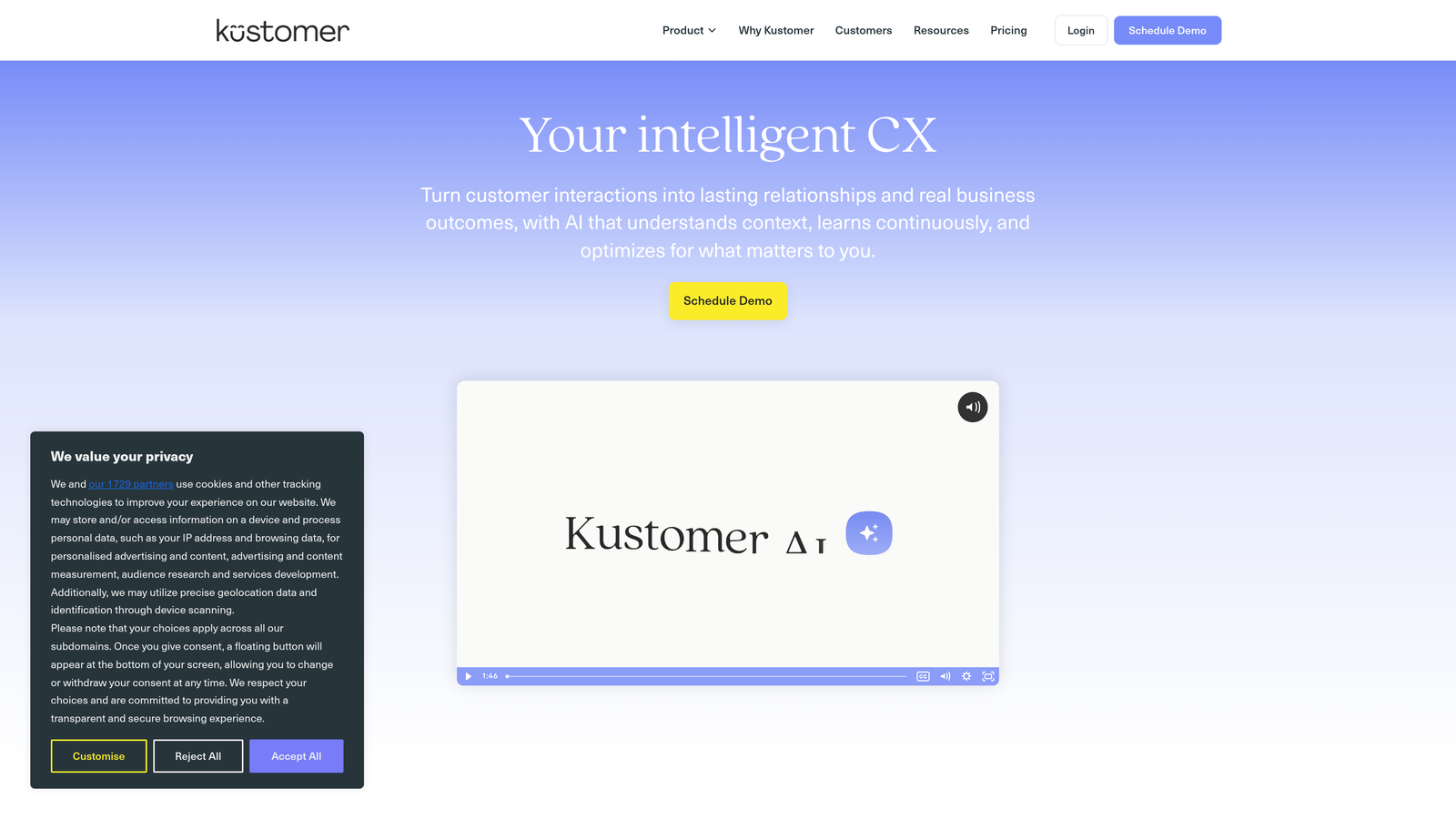
Kustomer is a CRM-first customer service platform with AI built on top of a unified customer timeline, giving agents and AI agents deep context on every customer they interact with.
Where This Tool Shines
Kustomer's core differentiator is the unified customer timeline: every purchase, interaction, support ticket, and behavioral signal consolidated in one view. When AI agents have access to that level of customer history, their responses can be far more contextually relevant than a system that only sees the current ticket.
This makes Kustomer particularly strong for DTC brands, subscription businesses, and retailers where customer history is complex and directly relevant to resolving support issues quickly.
Key Features
Unified Customer Timeline: Complete purchase history, interaction records, and support history consolidated in a single view for AI and human agents alike.
History-Based AI Routing: Routes tickets based on customer history and detected intent, not just ticket content alone.
Behavioral Trigger Workflows: Automated workflows that activate based on customer behavior signals, enabling proactive outreach.
Omnichannel Coverage: Handles email, chat, social, SMS, and voice from a unified platform.
KustomerIQ: AI-assisted response suggestions and deflection tools for agents handling high ticket volumes.
Best For
DTC brands, subscription companies, and retailers with complex customer histories where context is critical to support quality. Less optimized for pure B2B SaaS support where the customer timeline model is less central to resolution.
Pricing
Enterprise and Ultimate plans available; pricing on request from Kustomer.
8. Ada CX
Best for: Enterprises needing action-based AI that completes transactions, not just answers questions
Ada CX is a dedicated enterprise AI customer service platform focused on autonomous resolution and action-based AI that can complete real transactions on behalf of customers.
Where This Tool Shines
Most AI support tools answer questions. Ada goes further by taking actions. Processing a refund, updating account details, changing a subscription tier — Ada's AI agents can complete these transactions end-to-end without human involvement. For high-volume operations in fintech, telecom, and retail, that distinction translates directly into meaningful deflection of complex (not just informational) queries.
The no-code agent builder gives non-technical teams genuine control over how AI agents behave, which reduces dependency on engineering for iteration and optimization.
Key Features
Action-Based AI: Agents can process refunds, update accounts, and complete transactions — not just generate informational responses.
No-Code Agent Builder: Non-technical teams can configure, adjust, and deploy AI agent workflows without engineering support.
Multi-Channel Deployment: Web, mobile, SMS, and voice coverage from a single platform.
A/B Testing for AI Conversations: Built-in experimentation tools to optimize AI conversation flows and resolution rates.
Enterprise Security and Compliance: Strong security certifications and compliance controls for regulated industries.
Best For
Enterprises in fintech, telecom, and retail where AI needs to complete transactions, not just answer questions. Also strong for teams that need non-technical staff to manage AI configuration independently.
Pricing
Custom enterprise pricing. Contact Ada directly for a quote tailored to your volume and use case.
9. Forethought AI
Best for: Support ops leaders wanting AI gains on top of an existing helpdesk without platform migration
Forethought AI is an AI layer designed to sit on top of existing helpdesks like Zendesk and Salesforce, providing intelligent triage, routing, and agent assist without requiring teams to switch platforms.
Where This Tool Shines
Forethought's value proposition is additive rather than replacement. If your team has significant investment in Zendesk, Salesforce Service Cloud, or ServiceNow, Forethought enhances those platforms with AI triage and agent assist without forcing a migration. For enterprise support ops leaders who face organizational resistance to platform changes, this is a meaningful advantage.
The Discover analytics module is also genuinely useful for identifying where automation opportunities exist in your current ticket data, giving you a data-driven roadmap for AI deployment rather than guesswork.
Key Features
Triage AI: Automatically classifies, tags, and routes incoming tickets based on content and historical patterns.
Assist AI: Surfaces relevant knowledge articles and suggested responses to agents during live conversations.
Solve AI: Autonomous resolution for common, repetitive queries that don't require human judgment.
Discover Analytics: Identifies automation opportunities in your existing ticket data, helping prioritize where AI adds the most value.
Native Helpdesk Integrations: Pre-built integrations with Zendesk, Salesforce Service Cloud, and ServiceNow.
Best For
Support operations leaders at enterprises with existing helpdesk investments who want AI capabilities without a platform switch. Also useful for teams wanting data-driven insight into where automation will have the highest impact before committing to broader AI deployment.
Pricing
Custom pricing based on ticket volume and modules selected. Contact Forethought for an enterprise quote.
Which Tool Is Right for Your Enterprise?
The right platform depends heavily on where your enterprise sits today and where you're trying to go.
Deep in the Salesforce ecosystem? Agentforce is the natural path forward, especially if you want AI agents that draw on CRM data natively without external pipelines.
Already on Zendesk? Zendesk AI adds meaningful capability without a platform migration, though teams looking for more autonomous resolution may eventually outgrow its assist-first orientation.
IT-heavy enterprise in telecom, healthcare, or financial services? ServiceNow CSM is built for the operational complexity your environment requires.
High-volume consumer brand with complex customer histories? Kustomer and Ada CX are both strong fits, with Ada pulling ahead if transaction completion (not just information delivery) is a priority.
B2B SaaS team that wants AI-first support built for product context? Halo AI is purpose-built for exactly this. Page-aware context, continuous learning, autonomous resolution, and business intelligence signals from support data — all without the overhead of adapting a legacy helpdesk to AI-first workflows.
Your support team shouldn't scale linearly with your customer base. Let AI agents handle routine tickets, guide users through your product, and surface business intelligence while your team focuses on complex issues that need a human touch. See Halo in action and discover how continuous learning transforms every interaction into smarter, faster support.