9 Best Enterprise AI Support Software Platforms in 2026
This guide evaluates nine enterprise AI support software platforms for 2026, comparing them on automation depth, integration ecosystems, and business intelligence capabilities to help large support teams handle growing ticket volumes without expanding headcount. Whether you're augmenting an existing helpdesk or building an AI-first support operation, the breakdown covers pricing and features to match the right platform to your organization's scale and complexity.
 Grant CooperFounder13 min read
Enterprise support teams are under mounting pressure: ticket volumes grow, customer expectations rise, and headcount budgets stay flat. AI support software has moved from experimental to essential — but not all platforms are built for enterprise scale.
The difference between a chatbot bolted onto a helpdesk and a purpose-built AI support system shows up fast when you're handling thousands of tickets across multiple product lines, regions, and integrations. This list covers nine enterprise AI support platforms evaluated on depth of automation, integration ecosystem, business intelligence capabilities, and how well they handle the messy reality of complex support environments.
Whether you're replacing an aging helpdesk, augmenting your existing Zendesk or Intercom setup, or building an AI-first support operation from scratch, there's a fit here for your team. Pricing and features reflect information available as of mid-2026.
1. Halo AI
Best for: B2B SaaS teams building an AI-first support operation from the ground up.
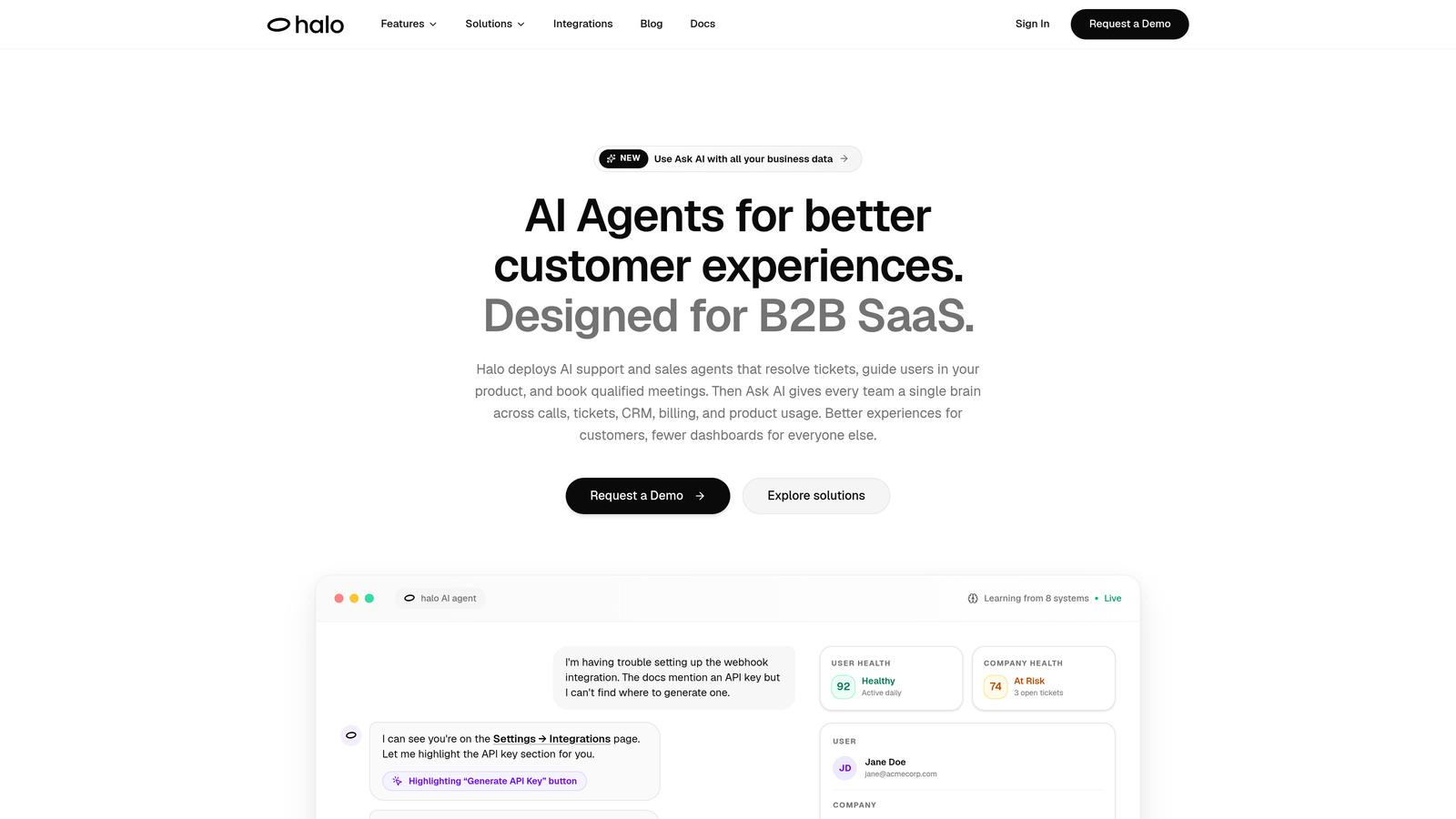
Halo AI is an AI-native customer support platform that deploys intelligent agents to resolve tickets, guide users through your product, and surface business intelligence — continuously improving with every interaction.
Where This Tool Shines
Most AI support tools are layers added on top of existing ticket workflows. Halo was built AI-first, which means the architecture is designed around autonomous resolution rather than assisted routing. The result is a system that handles complex, multi-step support scenarios without requiring a human to intervene at every stage.
What genuinely sets Halo apart is its page-aware context. The AI agent can see what page a user is on and what state the product is in, allowing it to provide specific visual UI guidance rather than generic help center links. For SaaS products with complex interfaces, this is a meaningful difference in resolution quality.
Key Features
Page-Aware AI Agents: The chat widget understands the user's current page and product state, enabling contextual guidance that goes beyond keyword-matched help articles.
Smart Inbox with Business Intelligence: Surfaces customer health signals, revenue intelligence, and anomaly detection — turning support data into operational insight across the business.
Automated Bug Ticket Creation: Converts support interactions into structured bug reports automatically, routing them directly to engineering tools like Linear without manual triage.
Live Agent Handoff with Context Preservation: When escalation is needed, agents receive the full conversation context, customer history, and relevant product signals — no re-explanation required.
Deep Integration Ecosystem: Connects natively with Linear, Slack, HubSpot, Intercom, Stripe, Zoom, PandaDoc, and Fathom, linking support operations to the entire business stack.
Continuous Learning Architecture: Every resolved interaction feeds back into the system, improving response quality and resolution rates over time without manual retraining.
Best For
B2B SaaS companies building support operations from scratch or replacing legacy helpdesks with an AI-first approach. Particularly strong for product teams that want support data to feed directly into engineering workflows and customer success operations.
Pricing
Enterprise pricing is available directly from the team. Visit haloagents.ai for current plans and to request a demo.
2. Zendesk AI
Best for: Enterprises already invested in Zendesk that want to add AI without migrating platforms.
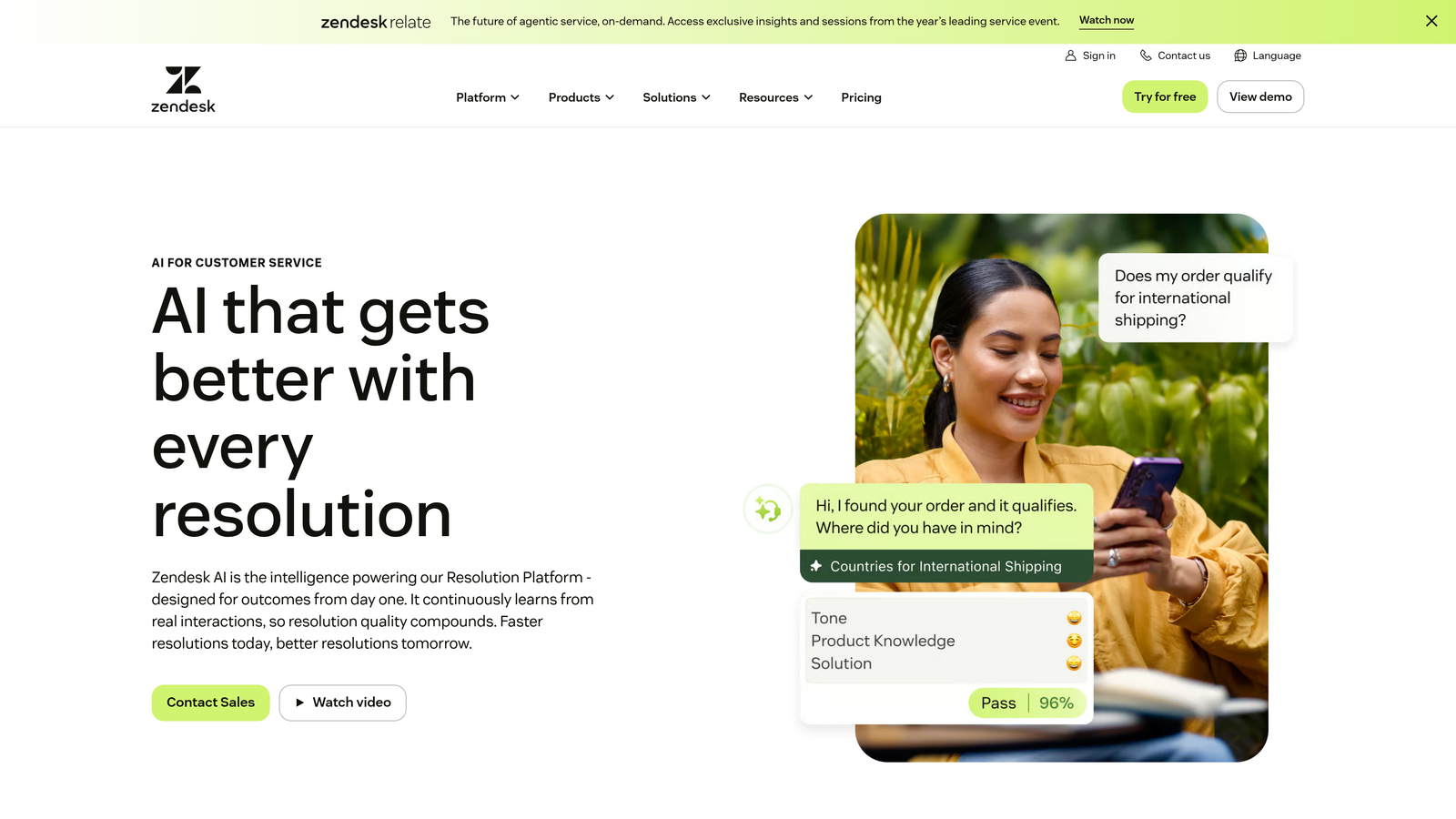
Zendesk AI is the AI layer built into the industry's most established enterprise helpdesk, covering autonomous agents, agent copilot, and intelligent triage across omnichannel support.
Where This Tool Shines
Zendesk's core strength is breadth. It supports email, chat, voice, social, and messaging in a single platform, and the AI features integrate directly into existing ticket workflows without requiring teams to change how they operate. For enterprises with years of historical ticket data already in Zendesk, the AI has a strong foundation to work from on day one.
The Copilot feature is particularly useful for agent productivity. It surfaces suggested responses, summarizes long threads, and provides real-time guidance during live conversations — reducing handle time without removing the human from the loop.
Key Features
AI Agents: Automated ticket resolution across email, chat, and voice channels, handling common queries before they reach a human agent.
Copilot for Agent Assist: Real-time response suggestions, conversation summaries, and next-step guidance for human agents during live interactions.
Intelligent Triage and Routing: Intent detection and sentiment analysis route tickets to the right team or agent automatically, reducing manual sorting overhead.
Omnichannel Coverage: Unified support across email, chat, voice, social, and messaging with consistent AI behavior across channels.
Enterprise Compliance and Security: Audit trails, role-based access controls, and security certifications suited to regulated industries.
Best For
Large enterprises with existing Zendesk deployments looking to extend automation without a platform migration. Also strong for omnichannel support operations that need consistent AI behavior across multiple contact channels.
Pricing
AI features are available on Suite Professional and Enterprise plans. Check zendesk.com for current pricing and tier details.
3. Intercom Fin
Best for: Product-led SaaS companies already using Intercom for customer messaging.
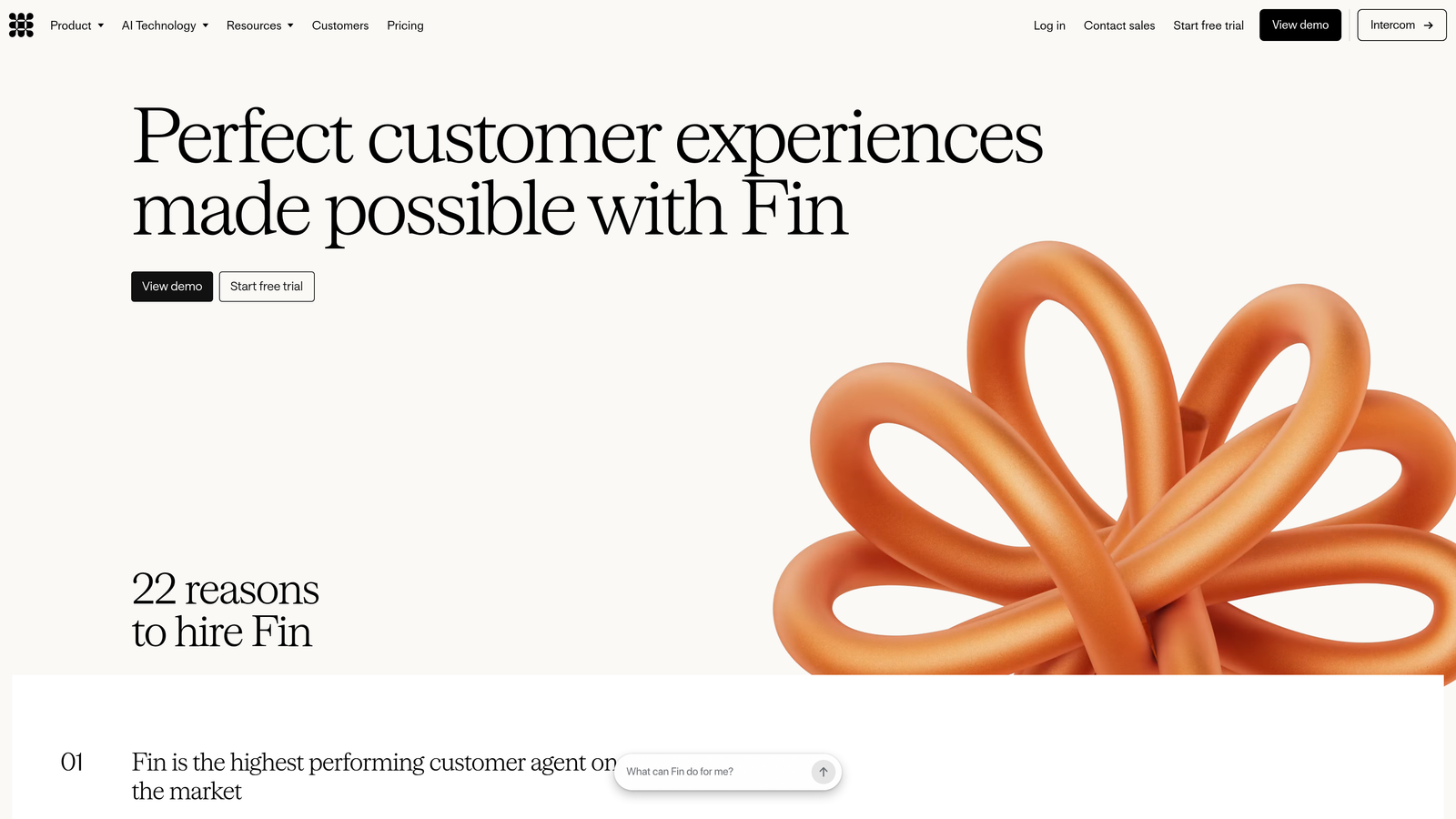
Intercom Fin is Intercom's native AI agent that resolves customer queries by reasoning over help center content, conversation history, and connected data sources — built directly into the Intercom messenger experience.
Where This Tool Shines
Fin's multi-step reasoning capability, introduced with Fin 2 in 2025, allows it to handle complex, multi-turn conversations rather than just matching questions to articles. It can look up order status, trigger workflows, and update records mid-conversation — making it genuinely useful for support scenarios that require action, not just information retrieval.
For teams already running Intercom as their primary customer messaging layer, Fin integrates without friction. The handoff between Fin and human agents happens within the same conversation thread, so customers never experience a jarring transition.
Key Features
Multi-Step Reasoning: Handles complex, multi-turn queries by reasoning over multiple data sources rather than pattern-matching to a single answer.
Native Messenger Integration: Operates directly within the Intercom messenger, inbox, and help center without additional configuration layers.
Actions Capability: Can look up order status, trigger automated workflows, and update records during a support conversation.
Seamless Human Handoff: Escalates to human agents within the same conversation thread, preserving full context and avoiding customer re-explanation.
Resolution Analytics: Tracks resolution rate, CSAT, and deflection by topic, giving teams clear visibility into AI performance.
Best For
SaaS companies already using Intercom as their messaging platform. The value is strongest for existing customers; teams not currently on Intercom should factor in migration costs when evaluating.
Pricing
Fin charges per resolution on some plans. Check intercom.com for current pricing structures and plan details.
4. Salesforce Agentforce
Best for: Enterprises running support and sales operations natively within Salesforce.
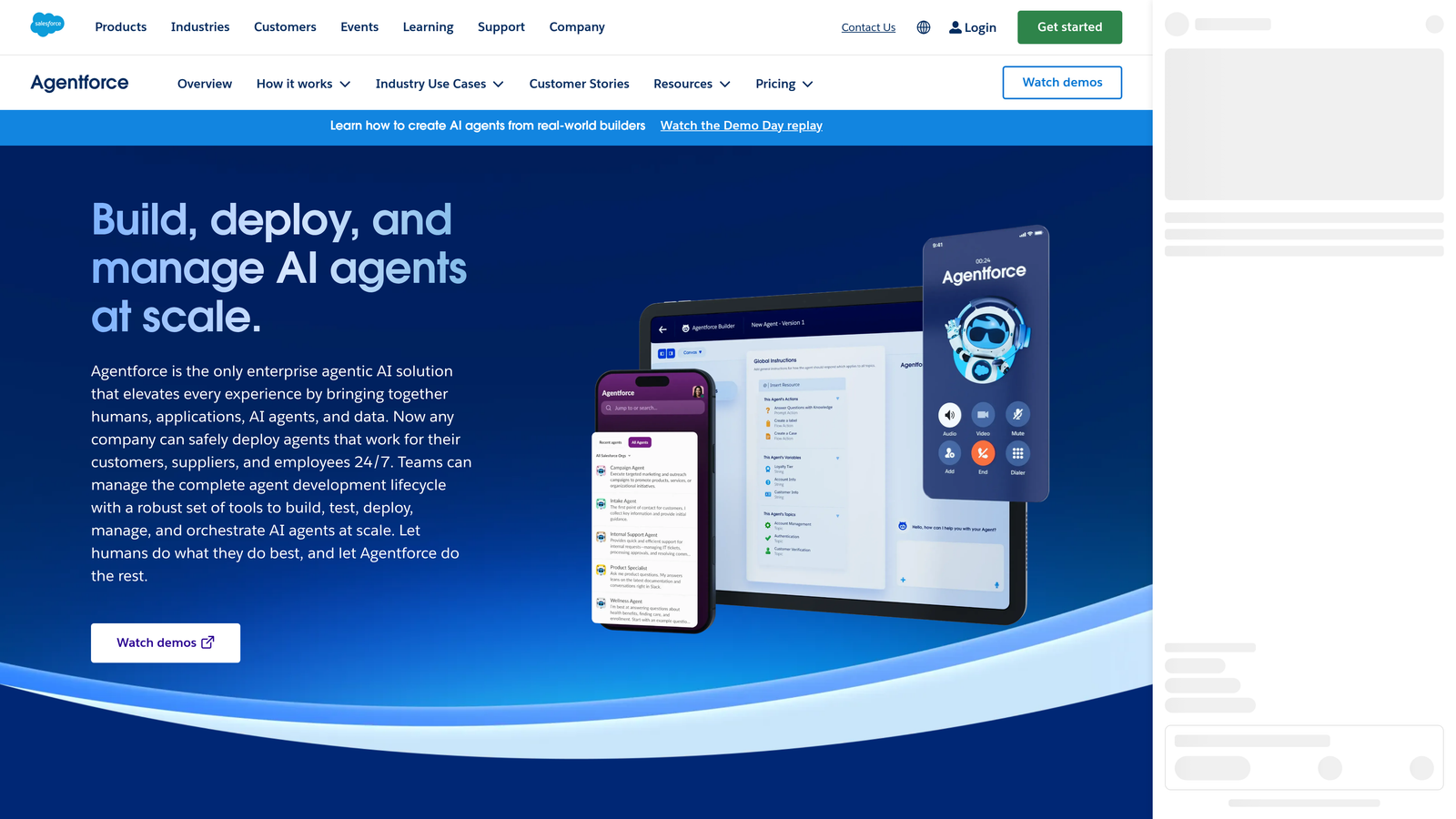
Salesforce Agentforce is an autonomous AI agent platform built natively into Service Cloud, with direct access to the full Salesforce data model for deeply contextual enterprise support automation.
Where This Tool Shines
Agentforce's core advantage is data access. Because it operates natively within Salesforce, AI agents can instantly reference cases, account history, contacts, orders, and any custom object in the data model — without API calls or data sync delays. For enterprises where support and sales live in the same Salesforce environment, this creates a level of contextual resolution that external AI tools struggle to match.
The governance layer is also notable for regulated industries. Built-in guardrails, audit logs, and human escalation controls give compliance teams the visibility they need without slowing down automation.
Key Features
Native CRM Data Access: Direct access to Salesforce cases, accounts, contacts, and orders enables highly contextual resolution without external data lookups.
Autonomous Agent Actions: Agents can take actions within Salesforce workflows, updating records and triggering processes without human involvement.
Einstein AI Integration: Predictive insights and recommendations from Einstein layer on top of autonomous agent capabilities.
Built-In Governance Controls: Guardrails, audit logs, and escalation controls designed for enterprise compliance requirements.
Cross-Cloud Connectivity: Works across Service Cloud, Sales Cloud, and Marketing Cloud for unified customer context across business functions.
Best For
Enterprises with existing Salesforce investments and dedicated admin resources. Implementation complexity is high; this platform rewards organizations with mature Salesforce operations already in place.
Pricing
Consumption-based pricing on top of Salesforce enterprise licensing. Contact Salesforce directly or visit salesforce.com/agentforce for current rates.
5. Freshdesk Freddy AI
Best for: Mid-market and growing enterprise teams that need robust AI features at more accessible price points.
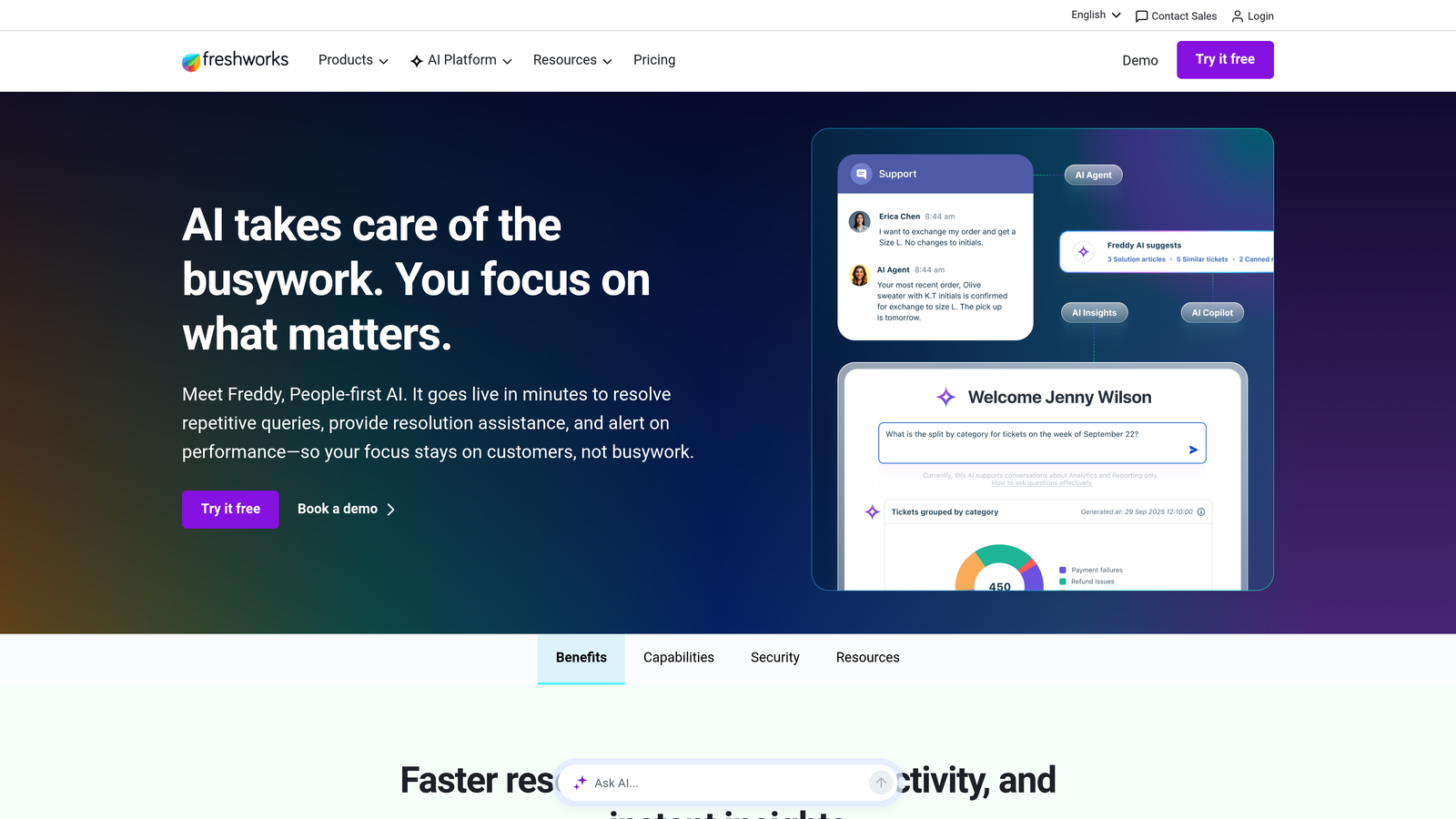
Freshdesk Freddy AI is Freshworks' AI layer embedded across its support suite, offering self-service automation, agent copilot, and analytics intelligence without the pricing complexity of larger enterprise competitors.
Where This Tool Shines
Freddy AI is structured across three distinct capabilities: self-service automation, agent assist, and analytics. This modular approach means teams can adopt the pieces most relevant to their current maturity without overhauling their entire support operation at once.
Freshworks also has a meaningful pricing advantage over Zendesk and Salesforce at the enterprise tier. For organizations that need enterprise-grade AI features but aren't operating at Fortune 500 scale, Freddy often delivers comparable functionality at a lower total cost.
Key Features
Freddy Self Service: AI chatbot for ticket deflection and self-service resolution, handling common queries before they enter the agent queue.
Freddy Copilot: Real-time agent assist with suggested replies, conversation summarization, and next-step recommendations during live support interactions.
Freddy Insights: AI-powered analytics that surface trends, anomalies, and performance patterns across the support operation.
Cross-Suite Integration: Works natively across Freshdesk (support), Freshsales (CRM), and Freshservice (ITSM) for unified data across business functions.
Accessible Enterprise Tier: AI features available on Growth plans and above, with less pricing complexity than comparable enterprise platforms.
Best For
Mid-market companies scaling toward enterprise support needs, and growing SaaS teams that want strong AI capabilities without committing to Salesforce or Zendesk enterprise licensing costs.
Pricing
Freddy AI features are available on Growth plans and above. Check freshworks.com for current plan details and feature availability by tier.
6. Kustomer
Best for: High-volume support teams that need deep customer relationship context across every channel.
Kustomer is a CRM-native customer service platform that organizes all support interactions around a unified customer timeline, with AI layered across routing, response suggestions, and workflow automation.
Where This Tool Shines
Kustomer's defining architectural choice is organizing support around the customer, not the ticket. Every interaction — email, chat, voice, SMS, social — appears in a single chronological timeline for each customer. This gives agents immediate context without digging through separate channel inboxes, and it gives AI routing logic a richer signal to work with.
For support teams handling complex, multi-touch customer relationships, this model reduces the "explain your issue again" friction that frustrates customers and wastes agent time. The AI features are most powerful when layered on top of this rich customer history.
Key Features
Unified Customer Timeline: All channels consolidated into a single chronological view per customer, giving agents and AI complete interaction history at a glance.
AI-Powered Intelligent Routing: Routes incoming conversations based on customer history, issue type, and agent skill — not just keyword matching.
Automated Workflow Triggers: Workflows fire automatically based on customer data signals and conversation content, reducing manual intervention in repetitive processes.
Suggested Replies and Summarization: AI surfaces relevant responses and condenses long conversation threads for agents handling high volumes.
Deep CRM Capabilities: Customer attributes, purchase history, and lifecycle stage are accessible within every support interaction without switching tools.
Best For
High-volume support operations in B2B and B2C environments where customer relationship history directly affects resolution quality. Strong fit for teams that have struggled with fragmented channel data across multiple tools.
Pricing
Enterprise-focused pricing. Contact the team directly at kustomer.com for current plan details.
7. Forethought
Best for: Enterprises that want AI capabilities on top of their existing helpdesk without a full platform migration.
Forethought is an AI platform designed to sit on top of existing enterprise helpdesks, adding intelligent resolution, triage, agent assist, and insights without requiring teams to change their underlying support infrastructure.
Where This Tool Shines
Forethought's positioning is deliberately additive. Rather than replacing Zendesk, Salesforce Service Cloud, or ServiceNow, it layers AI capabilities on top of them. For enterprises with complex helpdesk configurations they can't easily migrate, this approach delivers meaningful automation without the disruption of a full platform switch.
The modular product structure — Solve, Triage, Assist, and Discover — lets teams adopt capabilities incrementally. Organizations can start with triage and agent assist, then expand to autonomous resolution as confidence in the AI grows.
Key Features
Solve: AI agent that resolves tickets autonomously before they reach a human, handling common issues at scale.
Triage: Intelligent routing with intent detection and priority scoring to ensure tickets reach the right team quickly.
Assist: Real-time agent copilot that surfaces relevant knowledge and suggests responses during live support interactions.
Discover: Analytics layer that identifies knowledge gaps, resolution patterns, and opportunities to improve automation coverage.
Broad Helpdesk Compatibility: Works with Zendesk, Salesforce Service Cloud, ServiceNow, and other major enterprise helpdesk platforms.
Best For
Large enterprises with significant investment in existing helpdesk configurations who need AI capabilities without platform migration risk. Also strong for organizations wanting to test AI resolution before committing to a full architectural change.
Pricing
Enterprise pricing. Contact the team at forethought.ai for a quote tailored to your support volume and use case.
8. Ada
Best for: Global enterprises with multilingual requirements and strict brand or compliance controls.
Ada is an enterprise AI agent platform with a no-code builder, strong multilingual capabilities, and governance controls designed for global brands where compliance and brand consistency are non-negotiable.
Where This Tool Shines
Ada's governance layer is genuinely differentiated. Brand guardrails and conversation controls let teams define exactly how the AI represents the company — what it can say, what topics it avoids, and how it escalates. For industries with regulatory requirements or brands with strict tone-of-voice standards, this level of control matters.
The no-code builder also lowers the barrier for non-technical teams to build and iterate on AI agent flows. Support operations teams can design and update conversation logic without waiting on engineering resources.
Key Features
No-Code AI Agent Builder: Visual conversation design interface that lets non-technical teams build, test, and iterate on AI agent flows without engineering involvement.
Multilingual Support: Designed for global enterprise deployments with support across multiple languages and regional configurations.
Brand Guardrails and Compliance Controls: Conversation controls that enforce brand standards and compliance requirements across every AI interaction.
Broad Integration Compatibility: Connects with major helpdesks, CRMs, and e-commerce platforms to pull in relevant customer data during conversations.
Containment and Handoff Reporting: Detailed analytics on containment rates, CSAT, and agent handoff patterns for ongoing performance optimization.
Best For
Global enterprises operating across multiple languages and regions, particularly in regulated industries — financial services, healthcare, and insurance — where AI behavior must stay within defined guardrails.
Pricing
Enterprise pricing. Contact the team at ada.cx for current plan details.
9. Gladly
Best for: Premium brands where customer relationship quality is a core differentiator.
Gladly is a people-centric enterprise support platform that organizes all customer interactions around the person rather than the ticket, with AI features designed to enhance relationship quality alongside operational efficiency.
Where This Tool Shines
Gladly's fundamental model is different from most enterprise support platforms. Every customer has one continuous conversation thread across all channels — voice, email, chat, SMS, and social — rather than a series of disconnected tickets. Agents see the full relationship history in a single view, and AI features operate within that same context.
This approach resonates strongly with premium consumer brands and B2B companies where support quality is part of the product experience. The AI in Gladly is designed to assist agents in delivering high-quality interactions, not just to deflect volume at the lowest cost.
Key Features
Conversation-Based Model: One continuous thread per customer across all channels, replacing the fragmented ticket-per-issue model with a unified relationship view.
AI-Powered Task Automation: Automates routine tasks and surfaces suggested responses within the agent workflow, reducing handle time without sacrificing quality.
Self-Service AI: Customer-facing AI that connects to the same customer record as live agents, ensuring consistent context whether the customer self-serves or escalates.
Unified Omnichannel Interface: Voice, email, chat, SMS, and social in a single interface — agents never need to switch tools to handle different channels.
Relationship-Quality Focus: Reporting and analytics designed around customer satisfaction and relationship health, not just deflection rates and handle time.
Best For
Premium consumer brands and B2B companies where support quality directly affects retention and brand perception. Strong fit for teams that have found ticket-centric platforms create friction in high-touch customer relationships.
Which Platform Is Right for Your Team?
The right choice depends heavily on where you're starting from and what problem you're actually solving.
If your team is already running on Zendesk or Freshdesk, the lowest-friction path is activating the native AI features on your existing plan. Zendesk AI and Freddy AI both deliver meaningful automation without requiring a migration, and Forethought is worth evaluating if you want AI capabilities that work across your existing helpdesk without replacing it.
Salesforce-native organizations should give Agentforce serious consideration. The native data access advantage is real, and if your team already has Salesforce admin resources in place, the implementation complexity is manageable. The same logic applies to Intercom customers evaluating Fin.
For global enterprises with multilingual requirements and strict compliance needs, Ada's governance controls and no-code builder make it a natural fit. Kustomer and Gladly both stand out for teams where customer relationship depth matters as much as ticket deflection rates.
B2B SaaS teams building an AI-first support operation from scratch — or replacing a legacy helpdesk that was never designed for AI — should look closely at Halo AI. The page-aware context, continuous learning architecture, and business intelligence capabilities are built into the core product, not added on top. When support data needs to feed directly into engineering workflows, customer success operations, and revenue intelligence, an AI-native architecture makes a tangible difference.
Your support team shouldn't scale linearly with your customer base. Let AI agents handle routine tickets, guide users through your product, and surface business intelligence while your team focuses on complex issues that need a human touch. See Halo in action and discover how continuous learning transforms every interaction into smarter, faster support.