9 Best Enterprise AI Support Solutions in 2026
This guide evaluates the 9 best enterprise AI support solutions in 2026, helping organizations move beyond outdated chatbots to platforms offering autonomous ticket resolution, deep integrations, and continuous learning—covering the key criteria like security, analytics, and escalation workflows that matter most when selecting the right solution at scale.
 Matt PattoliFounder13 min read
Scaling enterprise customer support has never been more complex. As customer bases grow, the old answer of hiring more agents is no longer sustainable, and the early generation of rule-based chatbots rarely moved the needle on real resolution rates. The good news: AI support solutions have matured considerably. Today's leading platforms offer autonomous ticket resolution, contextual in-product guidance, continuous learning, and business intelligence that goes well beyond deflection counts.
Choosing the right solution for an enterprise context means looking beyond flashy demos. The criteria that matter are enterprise-grade security, integration depth with your existing stack, genuine AI sophistication (continuous learning and context awareness, not just keyword matching), analytics capabilities, and smooth human escalation workflows when complexity demands it.
Here are the top enterprise AI support solutions worth evaluating in 2026, covering AI-first platforms, ecosystem-native solutions, and platform-agnostic AI layers.
1. Halo AI
Best for: Enterprise teams wanting AI-first architecture with continuous learning and business intelligence beyond support metrics.
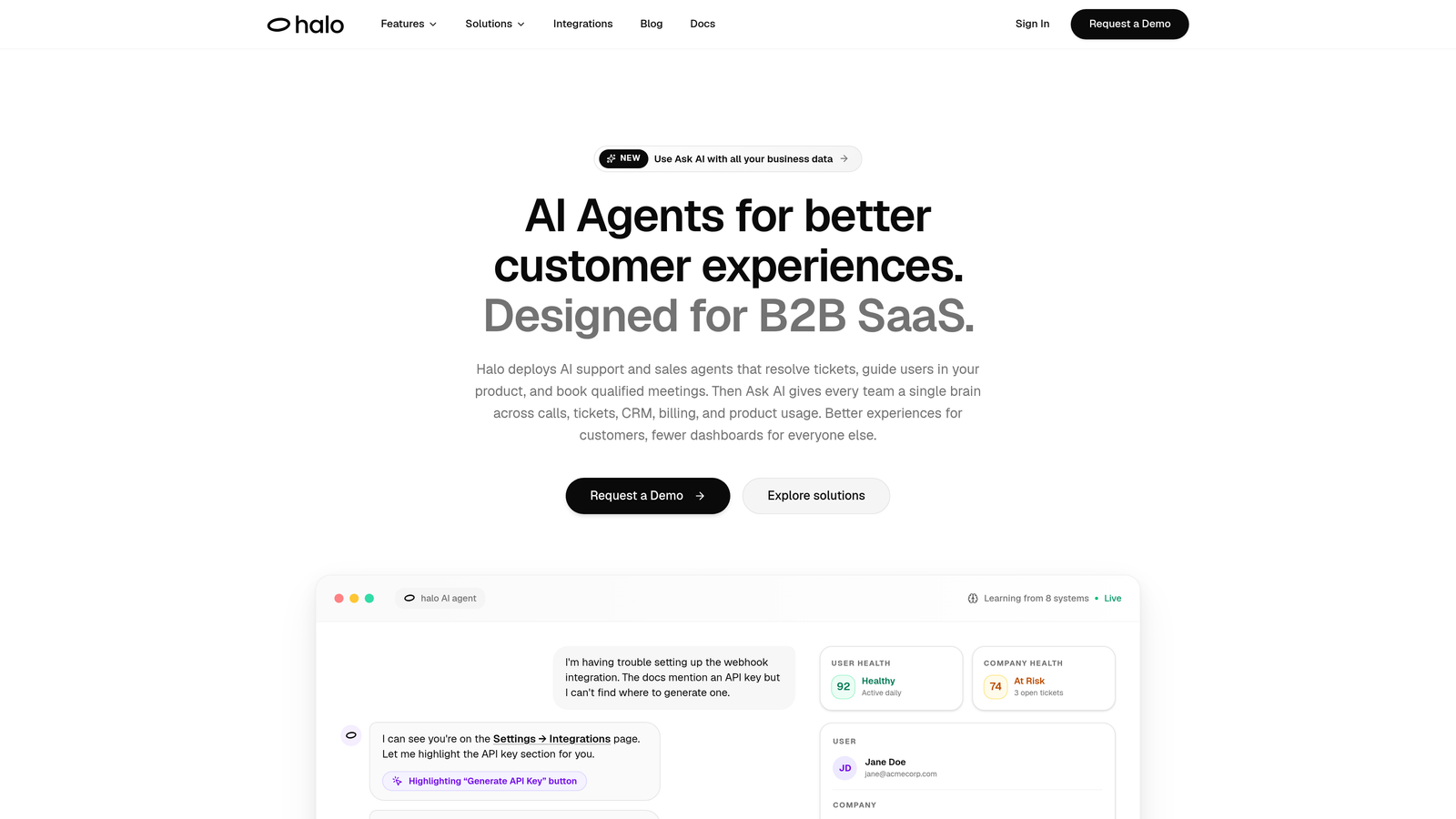
Halo AI is an AI-first customer support platform where intelligent agents resolve tickets, guide users visually through your product, auto-create bug reports, and surface business intelligence, all while learning from every interaction.
Where This Tool Shines
What separates Halo from solutions that bolt AI onto legacy ticket management is its architecture. The AI isn't a layer sitting on top of an existing helpdesk; it's the foundation. This matters because the system learns continuously from every resolved interaction, meaning resolution quality compounds over time rather than plateauing after initial training.
The page-aware chat widget is particularly distinctive. Rather than responding to text alone, Halo's AI understands what page a user is on and what they're looking at, enabling it to provide visual UI guidance that meets users exactly where they are in the product. For SaaS companies where user confusion is often contextual, this is a meaningful differentiator.
Key Features
Page-Aware Visual Guidance: The chat widget sees what users see and delivers contextual, visual UI guidance based on their current location in your product.
Autonomous Ticket Resolution with Continuous Learning: AI agents resolve support tickets independently and improve with every interaction, not just during initial setup.
Auto Bug Ticket Creation: Automatically identifies and creates bug tickets, integrating directly with tools like Linear so nothing slips through the cracks.
Smart Inbox with Business Intelligence: Goes beyond support metrics to surface customer health signals, revenue intelligence, and anomaly detection that inform decisions across the business.
Deep Stack Integrations: Connects across your entire business stack including Slack, HubSpot, Intercom, Stripe, Zoom, PandaDoc, and Fathom for genuinely unified operations.
Best For
B2B SaaS companies and product-led growth teams that want an AI-first platform rather than AI retrofitted onto a legacy system. Particularly well-suited for teams that want support intelligence to feed into broader business decisions, not just ticket counts.
Pricing
Contact Halo AI for enterprise pricing. Given the platform's depth and integration capabilities, pricing is tailored to team size and usage requirements.
2. Zendesk AI
Best for: Existing Zendesk customers looking to add AI capabilities without migrating to a new platform.
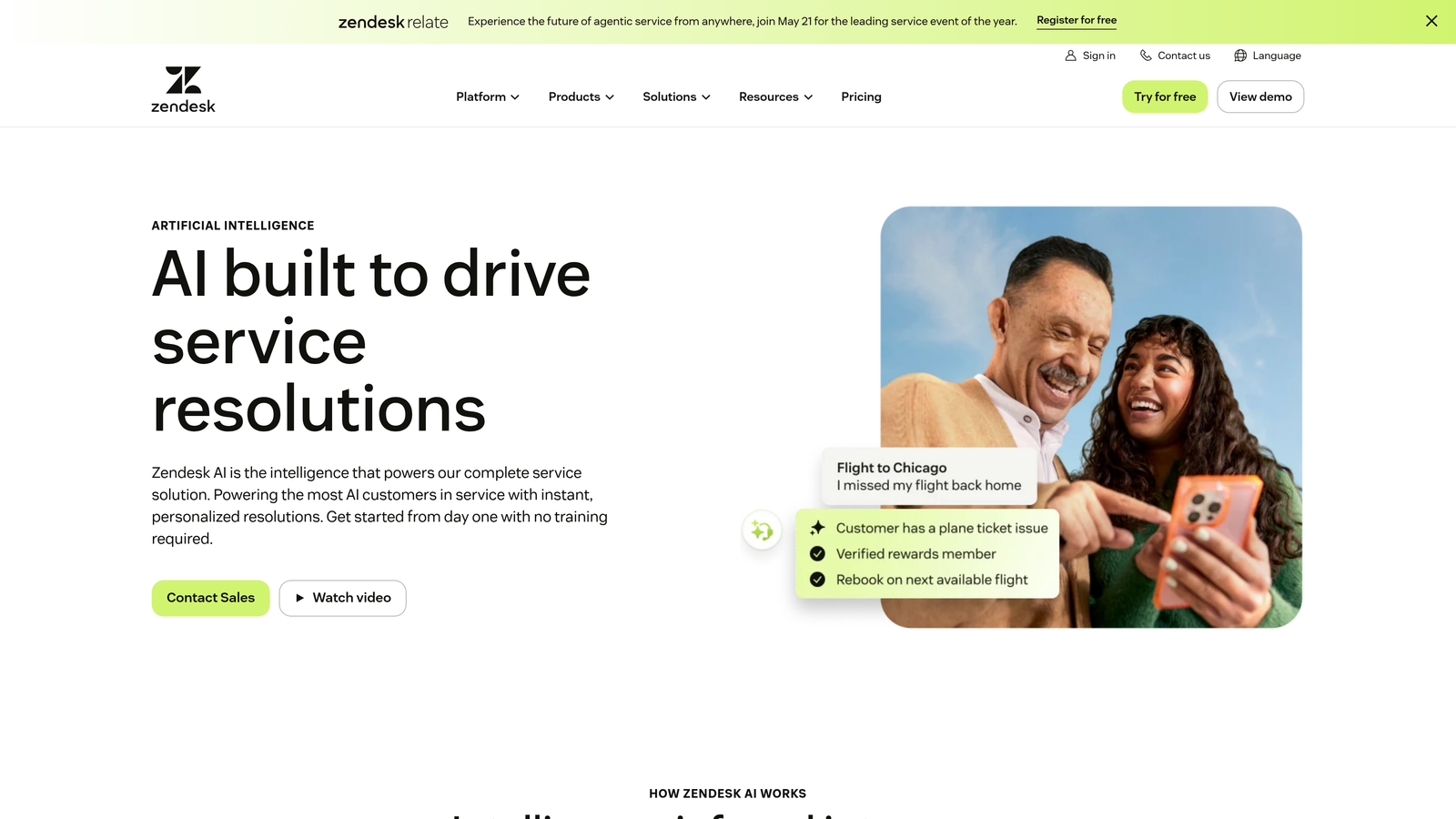
Zendesk AI is an AI layer built natively into the Zendesk Suite, offering intelligent triage, generative AI agent assistance, and automated resolution within the established Zendesk ecosystem.
Where This Tool Shines
For organizations already invested in Zendesk, the native AI integration removes the friction of connecting a third-party AI layer to your existing workflows. Triage, routing, and agent assistance all operate within the same interface your team already uses, which reduces adoption resistance significantly.
The macro suggestions and knowledge gap identification features are genuinely useful for teams looking to improve their self-service content over time, as the system surfaces where customers are asking questions that existing articles don't adequately answer.
Key Features
Intelligent Triage and Routing: AI-powered automatic ticket classification and routing to the right agent or queue based on content and context.
Generative AI Agent Assistance: Drafts responses and summarizes long ticket threads to reduce agent cognitive load and response time.
AI Bots for Customer-Facing Resolution: Automated self-service bots that resolve common inquiries before they reach a human agent.
Macro Suggestions and Knowledge Gap Identification: Recommends canned responses and identifies content gaps in the knowledge base based on real ticket patterns.
Full Suite Integration: Native connection to Zendesk's entire ecosystem including Guide, Talk, and Explore for unified reporting.
Best For
Mid-to-large enterprises already running Zendesk as their primary helpdesk. Teams that want AI enhancements without changing platforms or retraining staff on new systems.
Pricing
AI features are included in Suite plans starting around $55 per agent per month, with an Advanced AI add-on available for teams needing deeper capabilities.
3. Intercom Fin
Best for: Product-led growth companies on Intercom that want autonomous AI resolution using existing help center content.
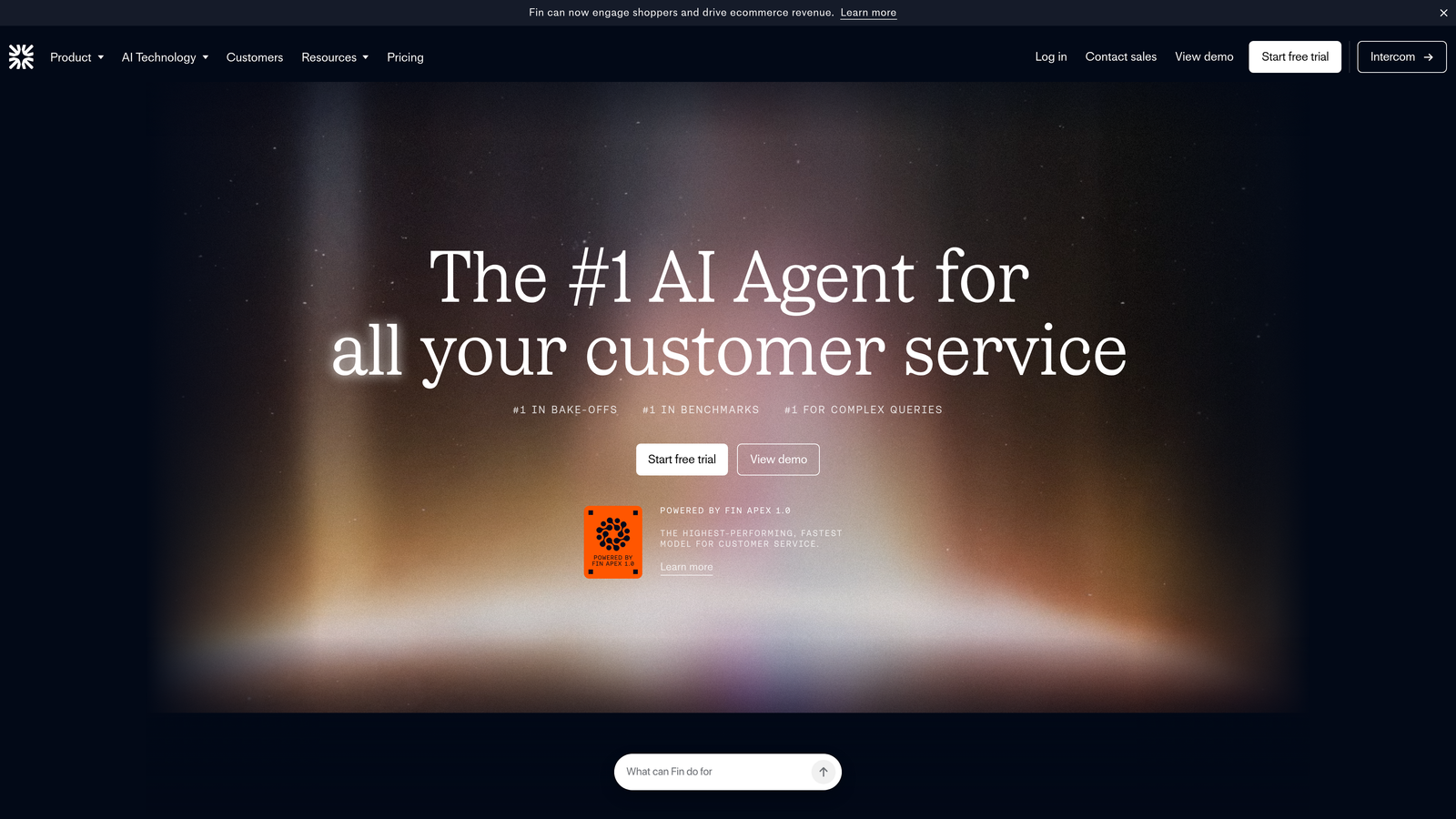
Intercom Fin is Intercom's AI agent designed to resolve customer conversations autonomously by drawing on your existing knowledge base, integrated natively with Intercom's messaging and in-app communication tools.
Where This Tool Shines
Fin's strength is how quickly it can be deployed for teams already on Intercom. Because it draws directly from your existing help center content, there's no separate training pipeline to build out. The AI reads and reasons over your articles and responds to customers in a conversational, contextually appropriate way.
The handoff experience to human agents is notably smooth. When Fin reaches the limits of what it can resolve, it transfers the full conversation context to a human agent so the customer doesn't have to repeat themselves, which is one of the most common frustrations with AI-to-human escalation.
Key Features
Knowledge Base-Powered Resolution: Resolves conversations autonomously using your existing help center articles without requiring separate AI training.
Native Intercom Integration: Works directly within Intercom's in-app messenger, product tours, and conversation workflows.
Customizable Tone and Behavior: Controls for adjusting how Fin communicates to match your brand voice and support style.
Contextual Human Handoff: Transfers full conversation context when escalating to human agents, eliminating customer repetition.
Multilingual Support: Handles conversations across many languages for global customer bases.
Best For
SaaS companies and PLG organizations already using Intercom for in-app messaging and customer communication who want AI resolution without changing platforms.
Pricing
Usage-based pricing per resolution. Intercom plans start at $39 per seat per month, with Fin pricing layered on top based on volume.
4. Salesforce Einstein Service Cloud
Best for: CRM-centric enterprises that want AI support capabilities tightly integrated with their Salesforce data and workflows.
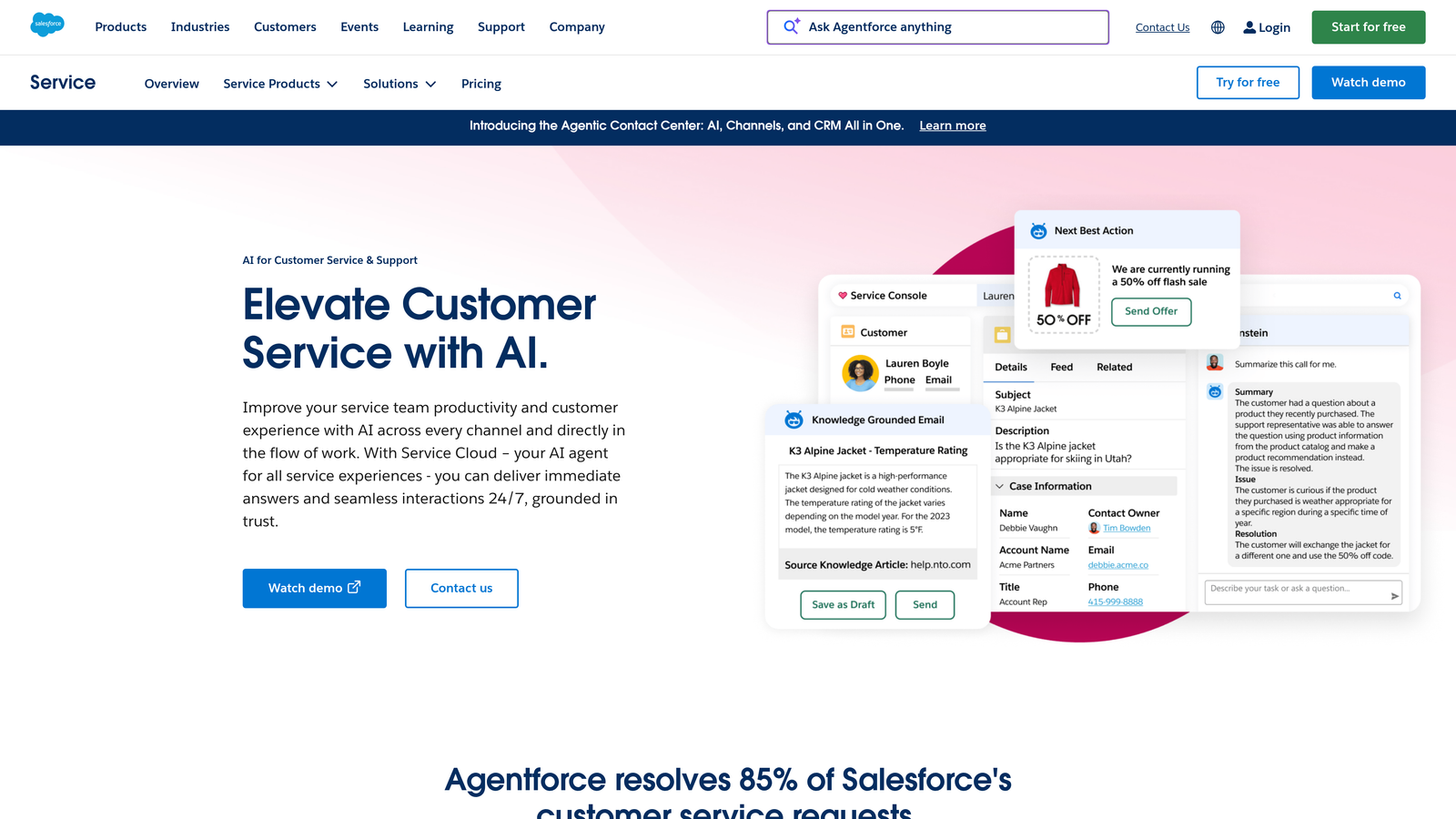
Salesforce Einstein Service Cloud is an AI layer embedded within Service Cloud that leverages unified CRM data to power intelligent case routing, agent recommendations, and AI-driven customer interactions.
Where This Tool Shines
The core advantage here is data depth. Because Einstein operates within the Salesforce ecosystem, it has access to the full customer record: sales history, open opportunities, past cases, and sentiment data across every touchpoint. This means AI recommendations and routing decisions are informed by context that a standalone support tool simply wouldn't have.
For enterprises where service, sales, and marketing operate within Salesforce, the unified view eliminates the data silos that often cause disconnected customer experiences.
Key Features
AI-Powered Case Classification and Routing: Uses CRM data to classify and route cases intelligently, not just by keyword but by customer context.
Einstein Copilot for Agents: Agent-facing AI assistant that surfaces relevant information and drafts responses within the Service Cloud interface.
Generative AI Replies Grounded in CRM Data: Response generation that draws on both your knowledge base and actual customer records for more personalized answers.
Predictive Analytics for Escalation and Sentiment: Flags cases likely to escalate or customers showing negative sentiment before issues compound.
Unified Cross-Cloud Customer View: Connects service data with sales and marketing data for a complete picture of every customer interaction.
Best For
Large enterprises already running Salesforce as their CRM and customer data platform. Organizations where sales and service teams need to work from a unified customer record.
Pricing
Service Cloud Enterprise starts at $165 per user per month. Einstein AI features may require additional licensing; contact Salesforce for a full quote.
5. Ada
Best for: Enterprise teams wanting no-code AI agent creation with strong multilingual capabilities at scale.
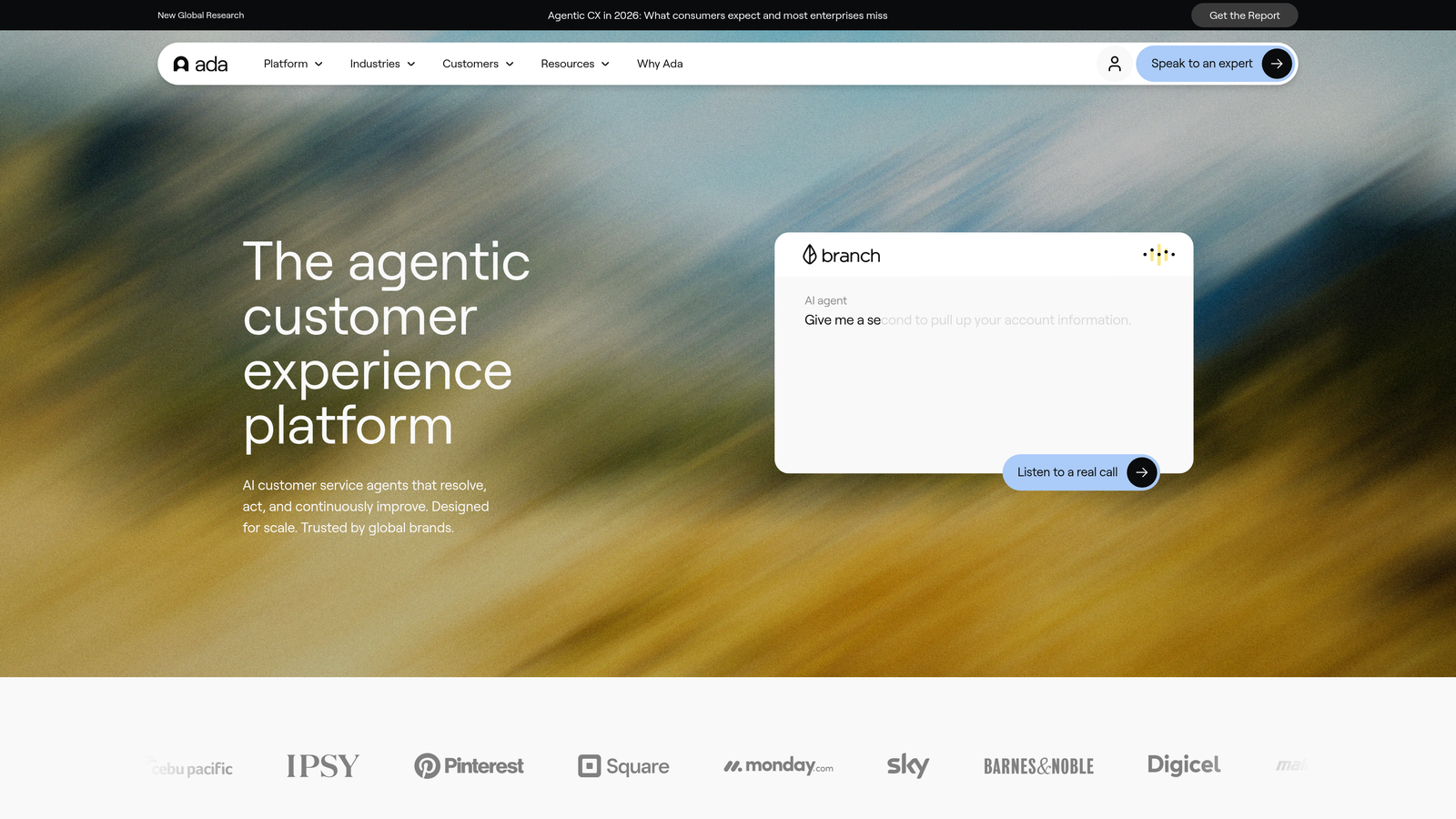
Ada is an AI-first customer service automation platform built for enterprise, enabling non-technical teams to build AI agents that resolve inquiries across channels without writing code.
Where This Tool Shines
Ada's no-code builder is genuinely accessible for operations and support leaders who don't want to depend on engineering resources every time they need to update agent behavior. This is particularly valuable in enterprise environments where change management is slow and technical backlogs are long.
The action-oriented capability is also worth noting. Ada's agents aren't limited to answering questions; they can execute tasks like processing a refund, updating account details, or triggering workflows in connected systems. This moves the platform from deflection tool to genuine resolution engine.
Key Features
No-Code AI Agent Builder: Non-technical teams can create, configure, and update AI agents without engineering support.
Action-Oriented AI Execution: Agents can perform tasks and trigger workflows in connected systems, not just answer questions.
Multilingual Support at Scale: Handles customer interactions across 50+ languages, making it well-suited for global enterprise operations.
Broad Integration Ecosystem: Connects with major CRMs, helpdesks, and business tools to pull and push data during interactions.
Resolution Analytics: Tracks automated resolution rates and performance metrics to identify optimization opportunities.
Best For
Global enterprises with multilingual support needs and operations or support teams that need to manage AI agents without heavy engineering involvement. Strong fit for high-volume, multi-channel environments.
Pricing
Custom enterprise pricing. Contact Ada directly for a quote tailored to your volume and channel requirements.
6. Freshdesk Freddy AI
Best for: Growing teams on Freshdesk that want AI-powered triage and agent assistance at a competitive price point.
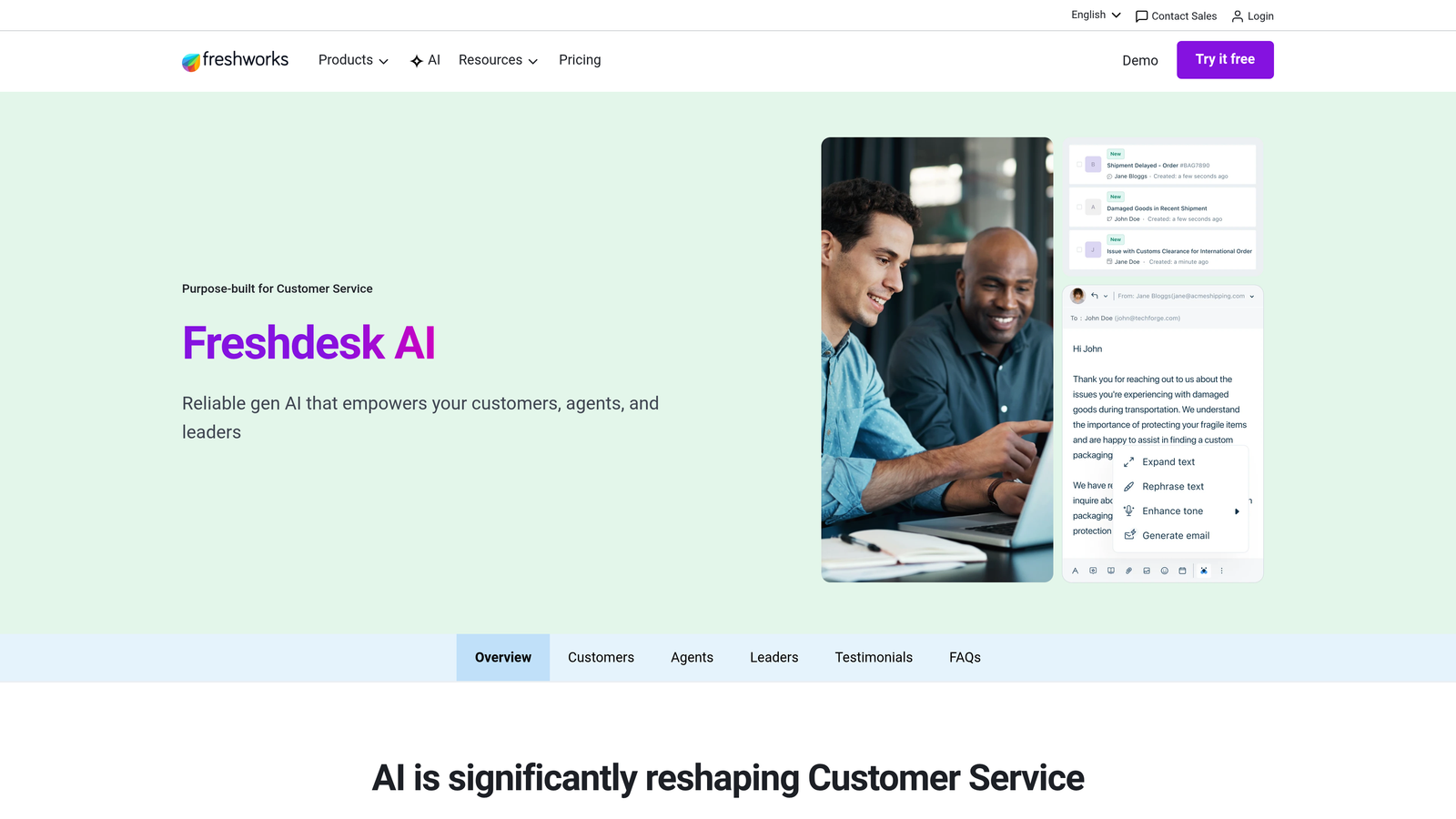
Freshdesk Freddy AI is Freshworks' AI engine embedded in Freshdesk, providing automated ticket routing, AI-generated response suggestions, and self-service bots within the Freshdesk ecosystem.
Where This Tool Shines
Freddy AI hits a practical sweet spot for teams that want meaningful AI capabilities without the pricing of enterprise-tier platforms like Salesforce or the complexity of building out a dedicated AI-first stack. For companies already on Freshdesk, the integration is seamless and the learning curve is minimal.
The canned response recommendations and article suggestions are particularly useful for agents handling high volumes, as they reduce the time spent searching for the right information during a live interaction.
Key Features
Auto-Triage and Ticket Categorization: Freddy AI classifies incoming tickets and routes them to the appropriate team or agent automatically.
AI-Generated Response Suggestions: Surfaces relevant response drafts for agents based on ticket content and historical data.
Self-Service AI Bots: Customer-facing bots that resolve common inquiries before they reach a human agent.
Canned Response and Article Recommendations: Recommends relevant pre-written responses and knowledge base articles to agents in real time.
Freshworks Ecosystem Integration: Works natively within the broader Freshworks suite including Freshsales and Freshservice.
Best For
Mid-market and growing enterprise teams already using Freshdesk that want to add AI capabilities without migrating platforms or significantly increasing their per-seat cost.
Pricing
Freshdesk Pro starts at $49 per agent per month. Freddy AI features are available in higher-tier plans; check Freshworks for current tier details.
7. Cognigy
Best for: Enterprises with heavy voice and omnichannel support needs requiring sophisticated conversation orchestration.
Cognigy is an enterprise-grade conversational AI platform specializing in AI agents across both voice and digital channels, with deep workflow orchestration for complex, high-volume support operations.
Where This Tool Shines
Most AI support tools are built primarily for chat and messaging. Cognigy is built for the full omnichannel reality, including phone. Its voice AI agents handle phone-based customer support with natural conversation flows, which is critical for industries like financial services, healthcare, and telecommunications where voice remains a dominant channel.
The platform's enterprise security and compliance certifications make it a credible option for regulated industries where data handling requirements are strict and non-negotiable.
Key Features
Voice AI Agents: Handles phone-based customer support with natural, conversational AI that goes beyond simple IVR menu navigation.
Omnichannel Deployment: Consistent AI agent behavior across chat, voice, messaging apps, and email from a single platform.
Low-Code Conversation Flow Builder: Advanced logic and branching capabilities without requiring deep engineering resources for every update.
Enterprise Security and Compliance: Certifications and controls designed for regulated industries with strict data requirements.
Contact Center Platform Integration: Connects with enterprise contact center platforms including Genesys and NICE for full operational integration.
Best For
Large enterprises in regulated industries or those with significant phone-based support volume. Organizations that need AI agents to operate consistently across voice and digital channels from a single orchestration layer.
Pricing
Custom enterprise pricing. Contact Cognigy directly for a quote based on your channel mix and volume requirements.
8. Forethought
Best for: Teams that want to add AI intelligence to their existing helpdesk without a full platform migration.
Forethought is a platform-agnostic AI layer that sits on top of existing helpdesks to automate ticket triage, resolution, and agent assistance without requiring organizations to rip and replace their current systems.
Where This Tool Shines
The platform-agnostic approach is Forethought's defining characteristic. For enterprises with significant investment in an existing helpdesk like Zendesk, Salesforce, or Freshdesk, switching platforms is a major undertaking. Forethought lets teams capture meaningful AI capabilities without that disruption, which dramatically lowers the barrier to getting started.
The modular product structure is also practical. Teams can adopt just the triage automation layer first, then layer in customer-facing resolution and agent assist over time as confidence builds.
Key Features
AI-Powered Triage (Triage Product): Intelligently classifies and routes incoming tickets based on content, intent, and historical patterns.
Customer-Facing AI Resolution (Solve Product): Automated AI agent that resolves customer inquiries before they reach the human queue.
Real-Time Agent Assist (Assist Product): Surfaces relevant information and suggested responses to agents as they work a ticket.
Helpdesk-Agnostic Integration: Works on top of Zendesk, Salesforce, Freshdesk, and other major helpdesks without requiring migration.
Workflow Discovery and Optimization Analytics: Identifies automation opportunities and tracks performance improvements over time.
Best For
Enterprises committed to their existing helpdesk that want to layer AI capabilities on top without a platform change. Also well-suited for teams that want to start with one AI use case and expand incrementally.
Pricing
Custom pricing based on ticket volume and product modules selected. Contact Forethought for a tailored quote.
9. Ultimate (Zendesk)
Best for: Global enterprises needing advanced AI bot customization and multilingual support within the Zendesk ecosystem.
Ultimate is an advanced AI automation platform, now part of Zendesk following its 2024 acquisition, offering sophisticated bot-building capabilities, deep customization, and strong multilingual support for global enterprise operations.
Where This Tool Shines
Ultimate's bot-building capabilities are more customizable than standard Zendesk AI features, making it a strong option for enterprises with complex conversation flows or highly specific automation requirements. The depth of customization available without requiring custom development work is a genuine strength for operations teams.
The multilingual capabilities are particularly mature. For enterprises supporting customers across many regions and languages, Ultimate has invested heavily in ensuring AI quality holds up across languages, not just in English with degraded performance elsewhere.
Key Features
Advanced AI Bot Builder: Deep customization options for conversation flows, logic, and behavior beyond what standard helpdesk AI features offer.
Multilingual AI Support: High-quality AI performance across multiple languages for global enterprise operations.
Backend System Integrations: Connects to backend systems so bots can take action, not just provide information.
Automation Performance Analytics: Dashboard tracking resolution rates, bot performance, and optimization opportunities over time.
Zendesk Platform Enhancement: Now benefits from Zendesk's broader platform data and capabilities following the acquisition.
Best For
Global enterprises already in the Zendesk ecosystem that need more sophisticated bot customization and stronger multilingual performance than standard Zendesk AI features provide.
Pricing
Available through Zendesk. Contact for enterprise pricing based on your configuration and scale requirements.
Which Enterprise AI Support Solution Is Right for You?
The right choice ultimately comes down to two fundamental questions: are you looking for an AI-first platform built for autonomous resolution, or do you need AI capabilities layered onto an existing system you're not ready to leave?
Here's a quick orientation based on your situation:
Halo AI: Best for B2B SaaS and product-led teams that want AI-first architecture with continuous learning, page-aware contextual guidance, and business intelligence that extends beyond support metrics into customer health and revenue signals.
Zendesk AI or Ultimate: Strong choices for existing Zendesk customers. Ultimate adds more sophisticated customization and multilingual depth for global operations.
Intercom Fin: The natural fit for PLG companies already on Intercom who want autonomous resolution without changing their communication platform.
Salesforce Einstein Service Cloud: The clear choice for CRM-centric enterprises where unified customer data across sales, service, and marketing is a priority.
Ada: Well-suited for global enterprises that need multilingual AI agents at scale and want operations teams to manage agent behavior without engineering dependencies.
Freshdesk Freddy AI: The practical option for budget-conscious growing teams on Freshdesk that want meaningful AI capabilities without a significant cost jump.
Cognigy: The specialist choice for enterprises with significant voice-based support volume or regulated industry compliance requirements across omnichannel operations.
Forethought: The right answer for teams that want AI intelligence layered on top of an existing helpdesk without committing to a platform migration.
One final consideration worth weighing: the difference between AI as a feature and AI as the foundation. Platforms built AI-first tend to improve faster and compound their intelligence over time, while AI bolted onto legacy systems often plateaus once initial configuration is complete. If long-term resolution quality and business intelligence matter to your team, that architectural distinction is worth taking seriously when you evaluate.
Your support team shouldn't scale linearly with your customer base. Let AI agents handle routine tickets, guide users through your product, and surface business intelligence while your team focuses on complex issues that need a human touch. See Halo in action and discover how continuous learning transforms every interaction into smarter, faster support.