9 Best Enterprise Customer Service Automation Tools in 2026
Enterprise customer service automation platforms have evolved far beyond basic chatbots, now offering AI agents capable of multi-step reasoning, cross-system integrations, and real actions like updating CRM records and routing complex issues. This guide reviews the nine strongest platforms available in 2026 for large support teams managing high ticket volumes across multiple time zones and compliance requirements.
 Grant CooperFounder14 min read
Enterprise support teams aren't dealing with the same problems as a five-person startup. They're managing thousands of tickets daily across multiple time zones, navigating compliance requirements, integrating with complex multi-system workflows, and serving customers who expect accurate answers immediately. Generic helpdesk tools simply weren't designed for this level of complexity.
Enterprise customer service automation platforms are. They combine AI agents capable of multi-step reasoning, deep integrations across business systems, and business intelligence that turns support data into strategic insight. The market has matured considerably in 2025 and 2026, moving well beyond simple FAQ bots into platforms that can take real actions: filing bug reports, updating CRM records, routing complex issues across departments, and learning from every interaction to get smarter over time.
Here are the strongest enterprise customer service automation platforms available today, evaluated on AI capability, integration depth, scalability, and the ability to handle genuine complexity rather than just deflecting simple questions.
1. Halo AI
Best for: B2B SaaS teams that need AI-first support connected to their entire business stack
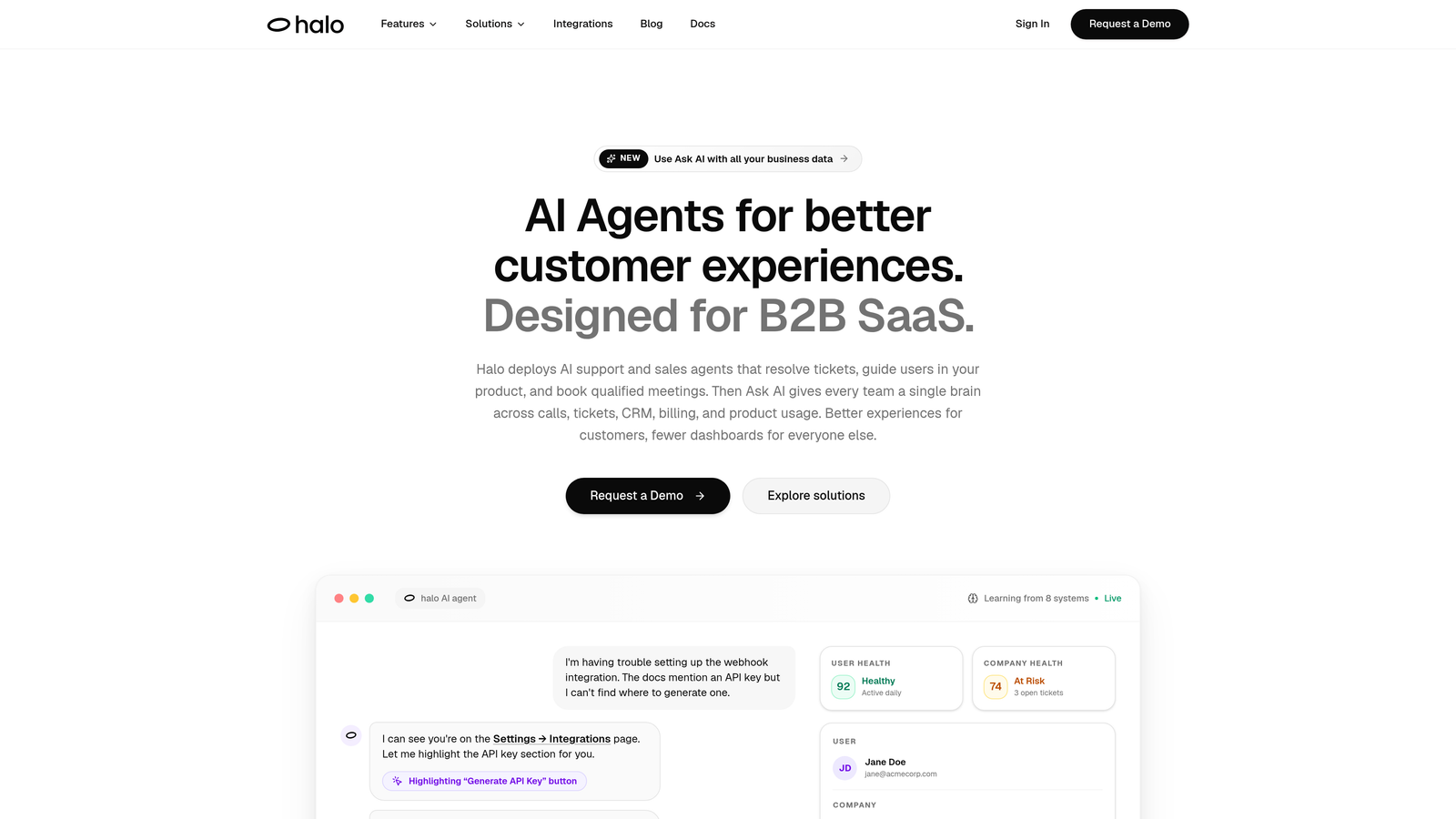
Halo AI is an AI-first customer support platform that deploys intelligent agents to resolve tickets, guide users through your product with page-aware context, and surface business intelligence from every support interaction.
Where This Tool Shines
Most enterprise support tools started as helpdesks and bolted AI on later. Halo was built AI-first, which means the intelligence layer isn't an add-on feature. It's the architecture. This distinction matters when you're dealing with complex, multi-step support scenarios that require context retention, autonomous action, and continuous improvement over time.
The page-aware chat widget is a genuine differentiator. Rather than responding to what a user types in isolation, Halo's AI sees what the user sees in the product: their current page, their context, their workflow state. That allows it to provide visual UI guidance that's actually relevant, not generic documentation links. Combined with continuous learning from every resolved ticket, the system gets measurably smarter as your support volume grows.
Key Features
Page-Aware Chat Widget: The AI sees the user's current product context and delivers visual UI guidance specific to where they are, not just what they asked.
Continuous Learning: AI agents automatically improve from every resolved ticket, so your support intelligence compounds over time without manual retraining.
Auto Bug Ticket Creation: When a user reports a product issue, Halo automatically creates and routes a bug ticket to engineering tools like Linear, closing the loop between support and development.
Smart Inbox with Business Intelligence: The inbox surfaces customer health signals, revenue anomalies, and churn indicators from support conversations, turning your support queue into a strategic data source.
Live Agent Handoff: Complex issues escalate to human agents with full conversation context preserved, so customers never have to repeat themselves.
Deep Integrations: Connects natively with Slack, HubSpot, Intercom, Stripe, Zoom, PandaDoc, Fathom, and Linear, linking support to your entire business stack.
Best For
B2B SaaS companies and product teams that want support automation to do more than deflect tickets. Halo is particularly well-suited for teams where support data should connect directly to product, engineering, and revenue workflows rather than sitting isolated in a helpdesk.
Pricing
Contact for enterprise pricing. A free trial is available to explore the platform before committing.
2. Salesforce Service Cloud
Best for: Enterprises already invested in the Salesforce ecosystem needing unified CRM and support
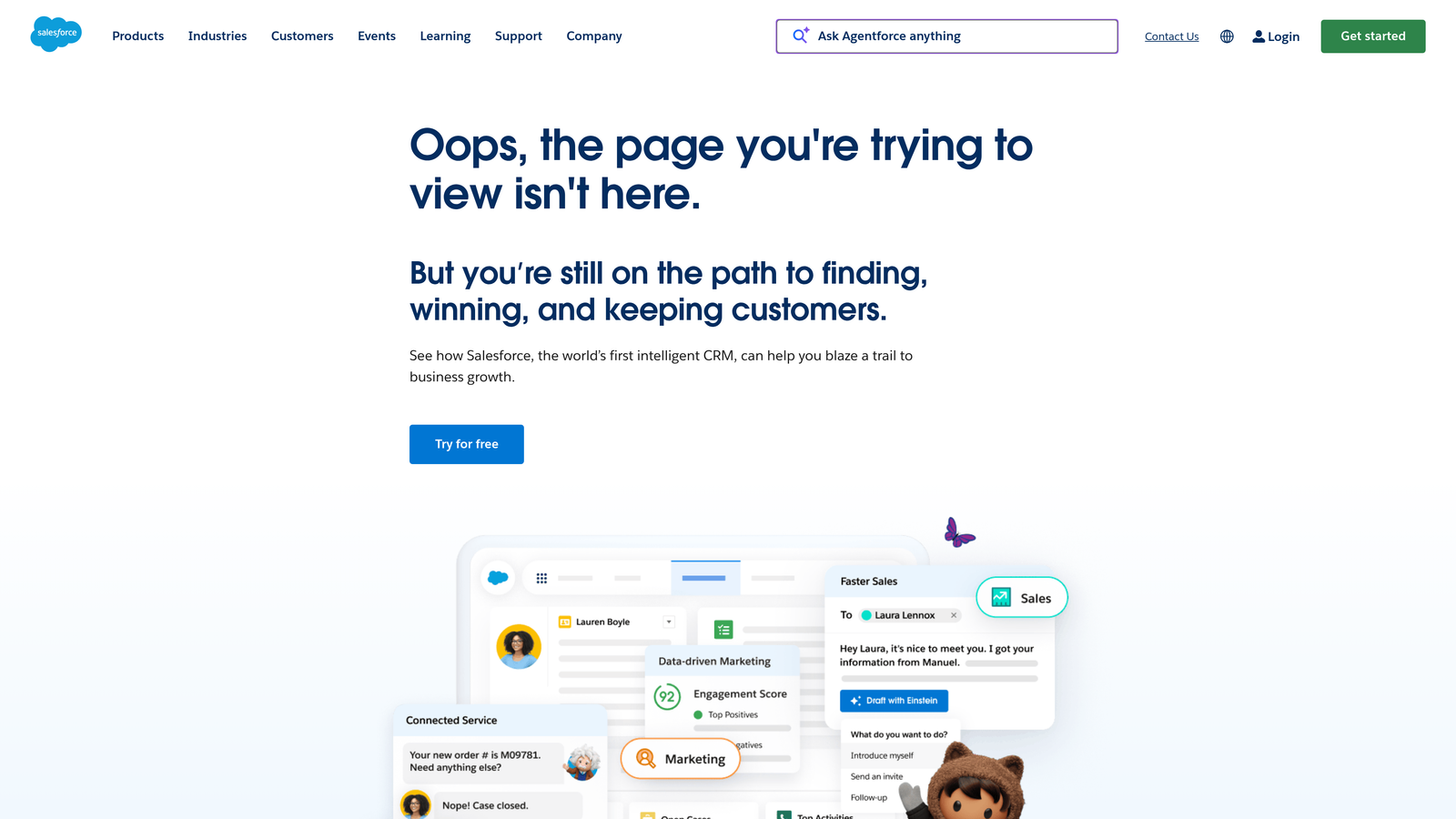
Salesforce Service Cloud is an enterprise support platform built within the Salesforce ecosystem, combining Einstein AI with deep CRM data access for end-to-end customer lifecycle management.
Where This Tool Shines
If your organization already runs on Salesforce, Service Cloud is a natural extension. The real advantage here isn't the helpdesk functionality in isolation; it's the native access to Sales Cloud data. Support agents and AI alike can see the full customer relationship: deal history, account health, open opportunities, and past interactions across sales and service touchpoints.
Einstein AI adds meaningful automation on top of that data layer, with case classification, recommended responses, and next-best-action suggestions that are informed by CRM context rather than just the current ticket. For regulated industries, the compliance and data governance controls are enterprise-grade and well-documented.
Key Features
Einstein AI: Handles case classification, recommended responses, and next-best-action suggestions using full CRM context.
Native Salesforce Integration: Deep connection to Sales Cloud, Marketing Cloud, and the broader Salesforce platform for unified customer data.
Omnichannel Routing: Routes cases across email, chat, phone, and messaging apps based on agent skills, availability, and case priority.
Flow Builder: Visual workflow automation tool for building complex support processes without requiring code.
Compliance Controls: Enterprise-grade data governance, audit trails, and compliance certifications for regulated industries.
Best For
Large enterprises where support and sales data need to be unified, particularly organizations already running Salesforce as their CRM. Implementation complexity is real; most deployments benefit from dedicated Salesforce admin resources or a partner.
Pricing
Starter plans begin at $25/user/month; Enterprise and Unlimited tiers are significantly higher. Custom pricing available for large deployments.
3. Zendesk
Best for: Enterprises that need a mature, proven helpdesk with broad integration coverage and strong compliance
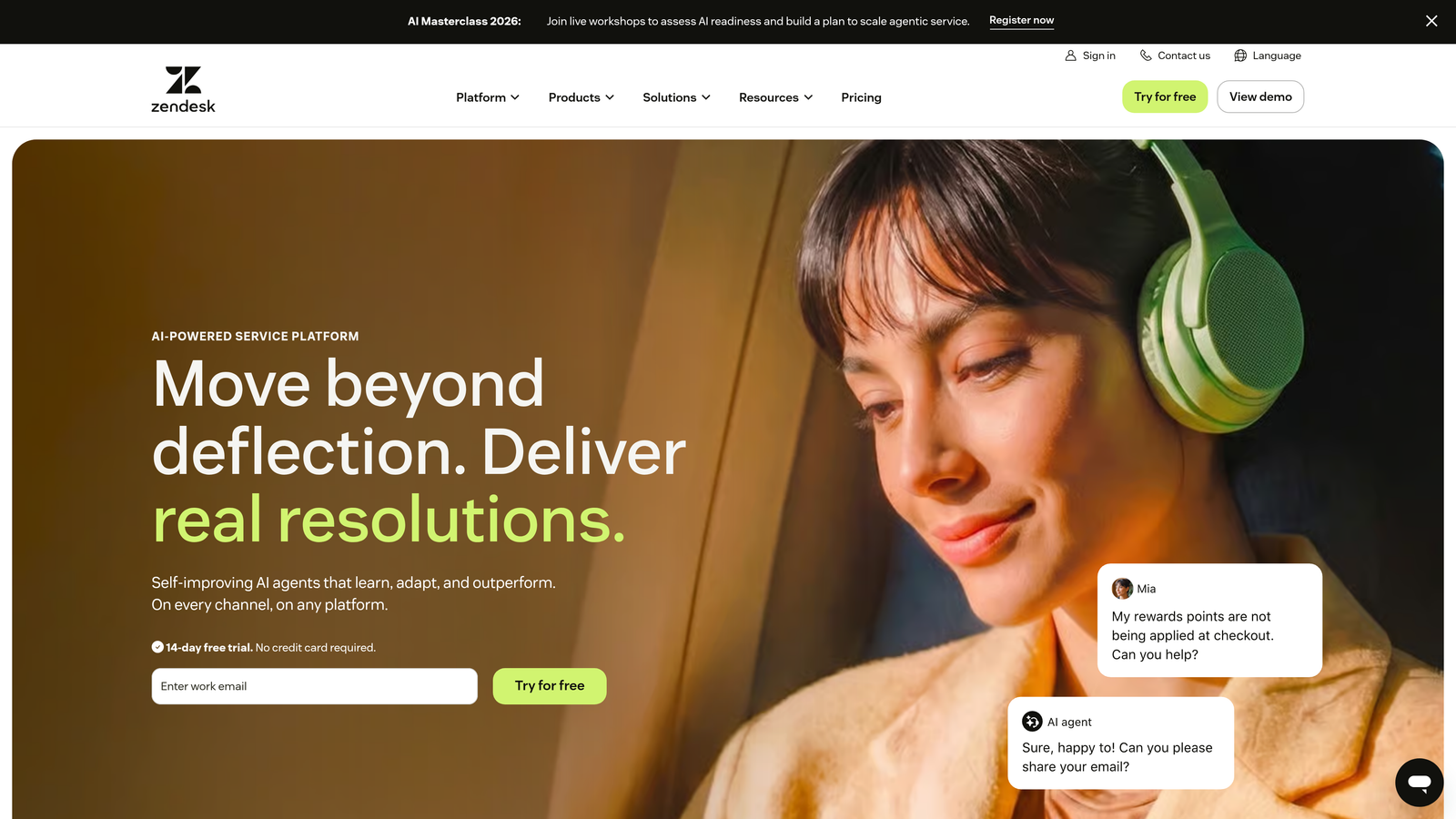
Zendesk is one of the most established enterprise helpdesk platforms, combining mature ticket management with AI-powered automation through Zendesk AI Copilot and intelligent triage.
Where This Tool Shines
Zendesk's primary strength is breadth. With over 1,500 marketplace integrations, it connects to virtually every enterprise tool your team might be running. The platform has been refined over many years of enterprise deployment, and that maturity shows in its workflow automation, SLA management, and reporting capabilities.
The AI layer has improved substantially in recent years. Zendesk AI Copilot assists agents with suggested replies and conversation summaries, while intelligent triage automatically classifies and routes incoming tickets. The compliance certifications, including SOC 2, ISO 27001, HIPAA, and GDPR coverage, make it a safe choice for regulated industries where vendor security posture is a purchasing criterion.
Key Features
Zendesk AI Copilot: Provides agent assistance with auto-triage, intent detection, and suggested responses to speed up ticket handling.
1,500+ Integrations: Marketplace coverage across virtually every enterprise category, from CRM to analytics to project management.
Advanced Workflow Automation: Triggers, macros, and SLA management for complex support process automation without custom development.
Compliance Certifications: SOC 2, ISO 27001, HIPAA, and GDPR certifications for regulated industry requirements.
Customizable Analytics: Robust reporting dashboards with the ability to build custom views for team performance and ticket trends.
Best For
Mid-to-large enterprises that want a proven, stable helpdesk with strong compliance credentials and broad integration coverage. Teams that need extensive customization through the marketplace without building from scratch.
Pricing
Suite Team starts at $55/agent/month. Enterprise plans are available at higher price points with additional AI and compliance features.
4. Intercom
Best for: SaaS companies that want to combine proactive in-app engagement with autonomous AI support
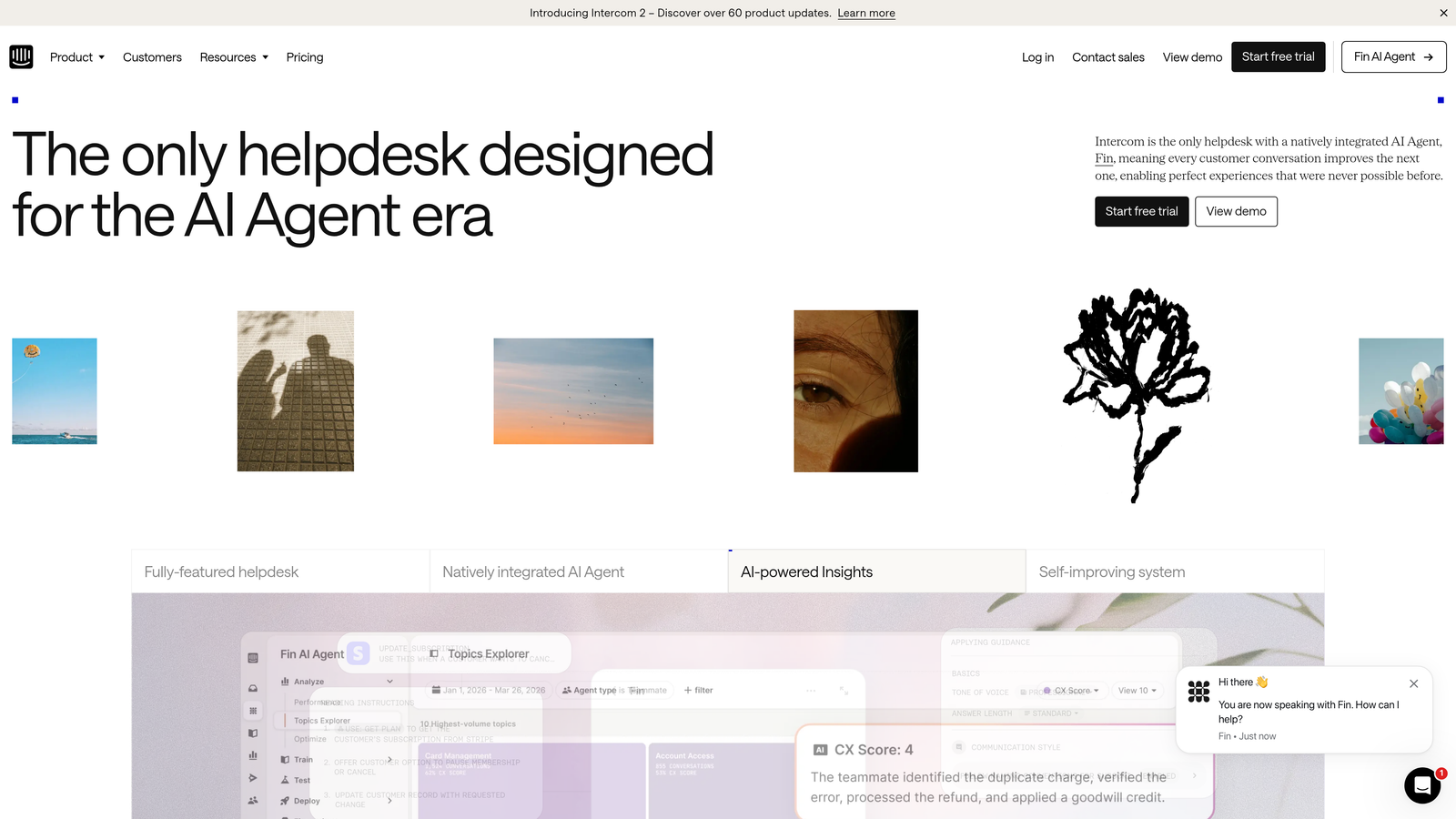
Intercom is a conversational support platform combining Fin AI Agent for autonomous resolution with proactive in-app messaging, product tours, and customer success tooling in a single platform.
Where This Tool Shines
Intercom's core differentiation is the combination of reactive support and proactive engagement in one platform. Most support tools wait for customers to reach out. Intercom lets you get ahead of issues with in-app messaging, product tours, and behavior-triggered campaigns that can reduce inbound volume before tickets are ever created.
Fin AI Agent handles a meaningful portion of conversations autonomously by drawing on your company's knowledge sources. For SaaS companies with extensive documentation, this can deflect a significant share of routine inquiries. The AI-powered inbox also assists human agents with conversation summaries and suggested replies when escalation is needed.
Key Features
Fin AI Agent: Handles conversations autonomously using company knowledge sources, help center content, and custom answers.
Proactive Messaging: In-app messages, product tours, and onboarding sequences triggered by user behavior and product events.
AI-Powered Inbox: Conversation summaries and suggested replies help agents handle escalations faster and more accurately.
Behavioral Triggers: Proactive support automation based on what users do in your product, not just what they ask.
CRM Integrations: Native connections to Salesforce, HubSpot, Stripe, and major SaaS tools for enriched customer context.
Best For
SaaS companies that want to unify proactive customer engagement and reactive support in one platform. Particularly effective for product-led growth businesses where in-app guidance and onboarding are as important as ticket resolution.
Pricing
Essential plans from $39/seat/month. Advanced and Expert tiers for enterprise-scale deployments. Pricing can scale with contact volume at higher usage levels.
5. Freshdesk
Best for: Enterprises that need strong omnichannel automation at a more accessible price point than tier-one competitors
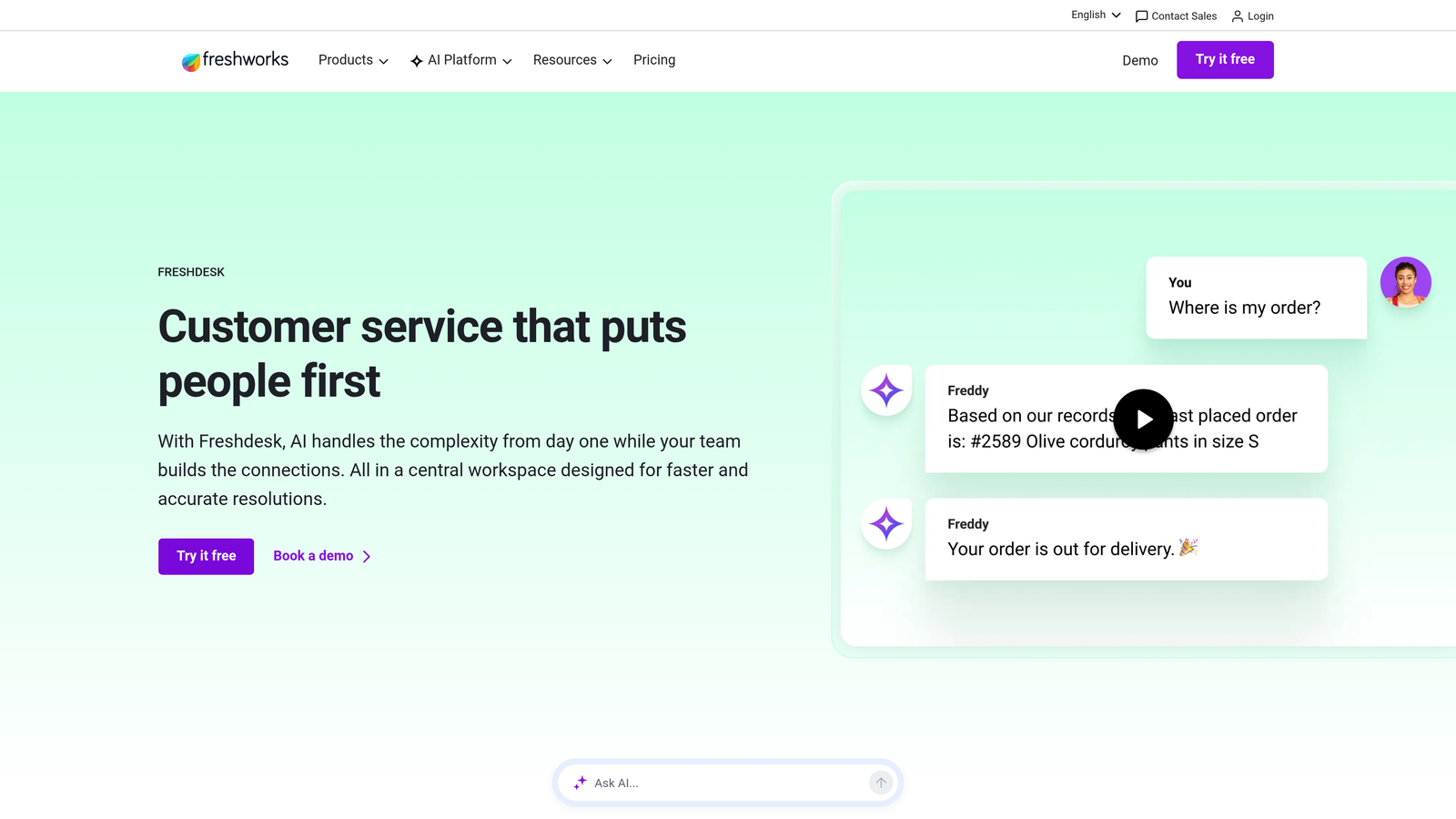
Freshdesk is an omnichannel enterprise helpdesk powered by Freddy AI, offering strong automation capabilities and a broad feature set at a price point generally more accessible than Zendesk or Salesforce.
Where This Tool Shines
Freshdesk's value proposition is competitive capability at a lower per-agent cost. Freddy AI handles auto-triage, suggested responses, and self-service deflection across a genuinely broad channel mix: email, chat, phone, social, and WhatsApp. For teams managing diverse customer communication channels, the omnichannel coverage is well-integrated rather than cobbled together.
For enterprises that also run internal IT support, Freshservice (Freshdesk's ITSM sibling product) allows unified management of both internal and external support operations on the same platform. This is a meaningful operational simplification for organizations that don't want to maintain separate systems for customer-facing and IT support.
Key Features
Freddy AI: Powers auto-triage, suggested responses, and self-service deflection across channels.
Omnichannel Support: Unified management of email, chat, phone, social media, and WhatsApp in one inbox.
Scenario Automations: Time-triggered and event-triggered workflows for complex support process automation.
Freshservice Integration: Native connection to Freshworks' ITSM product for unified internal and external support management.
Sandbox Environment: Test workflow and automation changes in a staging environment before deploying to production.
Best For
Mid-market to enterprise teams looking for strong omnichannel automation without the price premium of top-tier competitors. Also a strong fit for organizations that want to unify customer and IT support under a single vendor.
Pricing
Growth plans from $15/agent/month. Enterprise plans from $79/agent/month with advanced AI and automation features.
6. ServiceNow Customer Service Management
Best for: Large enterprises where customer issues require cross-departmental resolution across IT, finance, and operations
ServiceNow Customer Service Management is an enterprise-grade platform that unifies customer service with IT and operations workflows, enabling cross-departmental issue resolution for organizations where support complexity spans multiple internal teams.
Where This Tool Shines
ServiceNow solves a problem that most helpdesks don't even attempt: what happens when a customer issue requires coordination across finance, IT, operations, and support simultaneously? Most platforms treat this as an edge case. For large enterprises in telecommunications, financial services, or manufacturing, it's the norm.
The platform's strength is workflow orchestration across departments, not just ticket management within a support team. Now Intelligence adds AI-powered case routing and resolution recommendations, while proactive case management can identify issues before customers report them. The tradeoff is implementation complexity; ServiceNow CSM is a significant project, not a quick deployment.
Key Features
Unified Platform: Bridges ITSM, field service, and customer-facing support on a single workflow engine.
Now Intelligence: AI-powered case routing and resolution recommendations informed by historical data and current case context.
Proactive Case Management: Identifies potential issues before customers report them, enabling proactive outreach and resolution.
Multi-Department Workflow Automation: Orchestrates issue resolution across departments with automated handoffs and escalation paths.
Enterprise Compliance: Audit trails, role-based access controls, and compliance tooling for regulated enterprise environments.
Best For
Large enterprises with dedicated platform teams where customer issues regularly require cross-departmental coordination. Not appropriate for teams looking for a fast deployment or a lightweight solution.
Pricing
Custom enterprise pricing. Typically requires dedicated implementation resources and a scoping engagement before purchase.
7. Genesys Cloud CX
Best for: High-volume enterprise contact centers that need AI-powered routing, workforce management, and omnichannel orchestration
Genesys Cloud CX is a cloud contact center platform with AI-powered routing, workforce engagement management, and omnichannel orchestration built for high-volume enterprise contact centers.
Where This Tool Shines
Genesys is built for contact center scale. Where most helpdesks think in terms of tickets and agents, Genesys thinks in terms of interaction volume, workforce forecasting, and routing optimization across thousands of concurrent conversations. The AI-powered predictive routing matches customers to the best available agent or bot based on context, history, and agent skills rather than simple queue order.
Workforce engagement management is a genuine differentiator for large contact center operations. Forecasting, scheduling, quality assurance, and performance management are built into the platform rather than requiring separate WFM tools. For enterprises managing large agent teams across multiple shifts and channels, this integration reduces operational overhead significantly.
Key Features
Predictive AI Routing: Matches customers to the best available agent or bot using behavioral data, history, and real-time context.
Workforce Engagement Management: Integrated forecasting, scheduling, and QA tools for large contact center operations.
Native Omnichannel: Voice, chat, email, SMS, and social channel orchestration on a unified platform.
Genesys AI: Powers voicebots, chatbots, and automated outbound campaigns across all channels.
Real-Time Analytics: Cross-channel reporting on interaction volume, agent performance, and customer experience metrics.
Best For
High-volume enterprise contact centers where routing optimization, workforce management, and omnichannel orchestration are the primary operational challenges. Voice-first organizations expanding into digital channels will find the transition particularly well-supported.
Pricing
CX 1 starts at $75/user/month. Higher tiers add advanced AI capabilities and full workforce engagement management features.
8. Kustomer
Best for: High-volume B2C and subscription businesses that need full customer timeline context for every support interaction
Kustomer is a CRM-native customer service platform that builds a complete customer timeline, giving AI and agents full historical context for every interaction, and is particularly strong for high-volume B2C and subscription businesses.
Where This Tool Shines
Kustomer's core insight is that support quality depends on context. When an agent or AI can see a customer's complete history, including purchase history, past conversations, behavioral data, and subscription status, the resolution is faster and more accurate. The unified customer timeline is the platform's defining feature, and it's genuinely well-implemented.
AI automation handles repetitive inquiry types using that full context, which means automated responses can reference actual customer data rather than generic answers. For B2C businesses with high inquiry volume around orders, returns, and subscriptions, this context-aware automation can meaningfully reduce agent workload. Kustomer was acquired by Meta in 2022, and the roadmap reflects continued AI investment.
Key Features
Unified Customer Timeline: Aggregates purchase history, past conversations, and behavioral data into a single customer view for agents and AI.
Context-Aware AI Automation: Handles repetitive inquiries using full customer history rather than generic knowledge base responses.
Omnichannel Inbox: Consolidates email, chat, social, SMS, and voice into a unified agent workspace.
Workflow Automation: Customizable business rules and SLA tracking for complex support process management.
Ecommerce Integrations: Deep native connections to Shopify, Magento, and similar platforms for order and subscription data.
Best For
High-volume B2C businesses, subscription companies, and ecommerce operations where customer history is central to support quality. Less optimized for pure B2B SaaS environments where ecommerce integrations aren't relevant.
Pricing
Enterprise plans from $89/user/month. Ultimate tier available for advanced AI features and higher usage requirements.
9. Drift (Salesloft)
Best for: B2B enterprises where support, sales, and account engagement overlap in a single customer conversation
Drift is a conversational AI platform, now part of Salesloft, designed for B2B enterprises where support, sales, and account engagement overlap, combining AI chat with revenue intelligence.
Where This Tool Shines
Drift occupies a unique position in this list: it's not a pure support automation tool. It's a revenue-support hybrid. For B2B enterprises where the line between a support conversation and a sales conversation is genuinely blurry, that positioning is an advantage. Account-based engagement lets you identify known visitors and deliver personalized experiences based on their account status, deal stage, or customer tier.
Since the Salesloft merger, Drift's conversational AI connects more directly to revenue pipeline data. Support interactions can be linked to open opportunities, and conversation intelligence can surface insights relevant to account health. For enterprise teams where support and account management share responsibility for retention, this cross-functional visibility is meaningful.
Key Features
Conversational AI Bots: Handles both support inquiries and sales qualification in a unified chat experience.
Account-Based Engagement: Identifies known visitors and delivers personalized messaging based on account data and deal stage.
Meeting Scheduling Automation: Books meetings with sales reps directly from chat conversations without manual follow-up.
Conversation Intelligence: Connects support and chat interactions to pipeline data for cross-functional account visibility.
Revenue Platform Integration: Native connections to Salesforce, HubSpot, Marketo, and the full Salesloft revenue platform.
Best For
B2B enterprise teams where support, sales, and account management overlap significantly. Less appropriate as a standalone support automation tool for teams with clearly separated support and sales functions.
Pricing
Custom enterprise pricing. Contact Salesloft directly for current package details and volume-based pricing.
Choosing the Right Platform for Your Team
The right enterprise customer service automation platform depends less on feature lists and more on where your actual complexity lives. Here's how to think through the decision.
If your support data needs to connect directly to product, engineering, and revenue workflows, and you want AI that learns continuously from every interaction, Halo AI is built for exactly that. The page-aware context and business intelligence layer make it particularly strong for B2B SaaS teams where support is a strategic data source, not just a cost center.
If you're deeply embedded in the Salesforce ecosystem, Service Cloud is the logical choice. The CRM data integration is genuinely powerful for enterprises where support and sales share customer context. If you need a proven, broadly integrated helpdesk with strong compliance credentials, Zendesk remains a reliable choice with an improving AI layer.
For SaaS companies that want proactive engagement alongside reactive support, Intercom's combination of Fin AI and in-app messaging is hard to match. If budget is a constraint at enterprise scale, Freshdesk delivers competitive functionality at a lower per-agent cost. For large enterprises with cross-departmental support complexity, ServiceNow is the platform designed for that specific challenge.
High-volume contact centers should evaluate Genesys Cloud CX for its routing and workforce management capabilities. B2C and subscription businesses will find Kustomer's customer timeline approach particularly valuable. And for B2B teams where support and sales blur together, Drift's revenue-support hybrid positioning within Salesloft is worth exploring.
Your support team shouldn't scale linearly with your customer base. Let AI agents handle routine tickets, guide users through your product, and surface business intelligence while your team focuses on complex issues that need a human touch. See Halo in action and discover how continuous learning transforms every interaction into smarter, faster support.