9 Best Enterprise Customer Support AI Tools in 2026
Enterprise customer support AI has evolved far beyond simple ticket deflection, with the best 2026 platforms offering autonomous resolution, deep system integrations, and actionable business intelligence built for complex multi-product environments. This guide evaluates nine leading tools based on native AI capabilities, enterprise-grade scalability, and seamless human handoff to help support teams handle growing complexity without sacrificing quality.
 Grant CooperFounder12 min read
Enterprise support teams aren't just dealing with more tickets. They're dealing with more complexity: multi-product environments, global regions, integrations across a dozen systems, and leadership teams demanding visibility beyond basic ticket counts. The tools that worked for a 50-person startup often crack under that pressure.
AI has fundamentally changed what's possible here. The best enterprise customer support AI tools don't just deflect tickets. They resolve them, surface business intelligence, integrate with your existing stack, and hand off seamlessly to humans when it matters. The distinction between deflection and actual resolution is where enterprise buyers are increasingly drawing the line.
Here are the top enterprise customer support AI tools worth evaluating in 2026, ranging from AI-first platforms built for autonomous resolution to enterprise-grade add-ons for existing helpdesks. Selection criteria: native AI capabilities (not bolt-ons), enterprise integrations, scalability, and measurable impact on resolution quality.
1. Halo AI
Best for: B2B SaaS teams needing AI-first support with deep product context and business intelligence
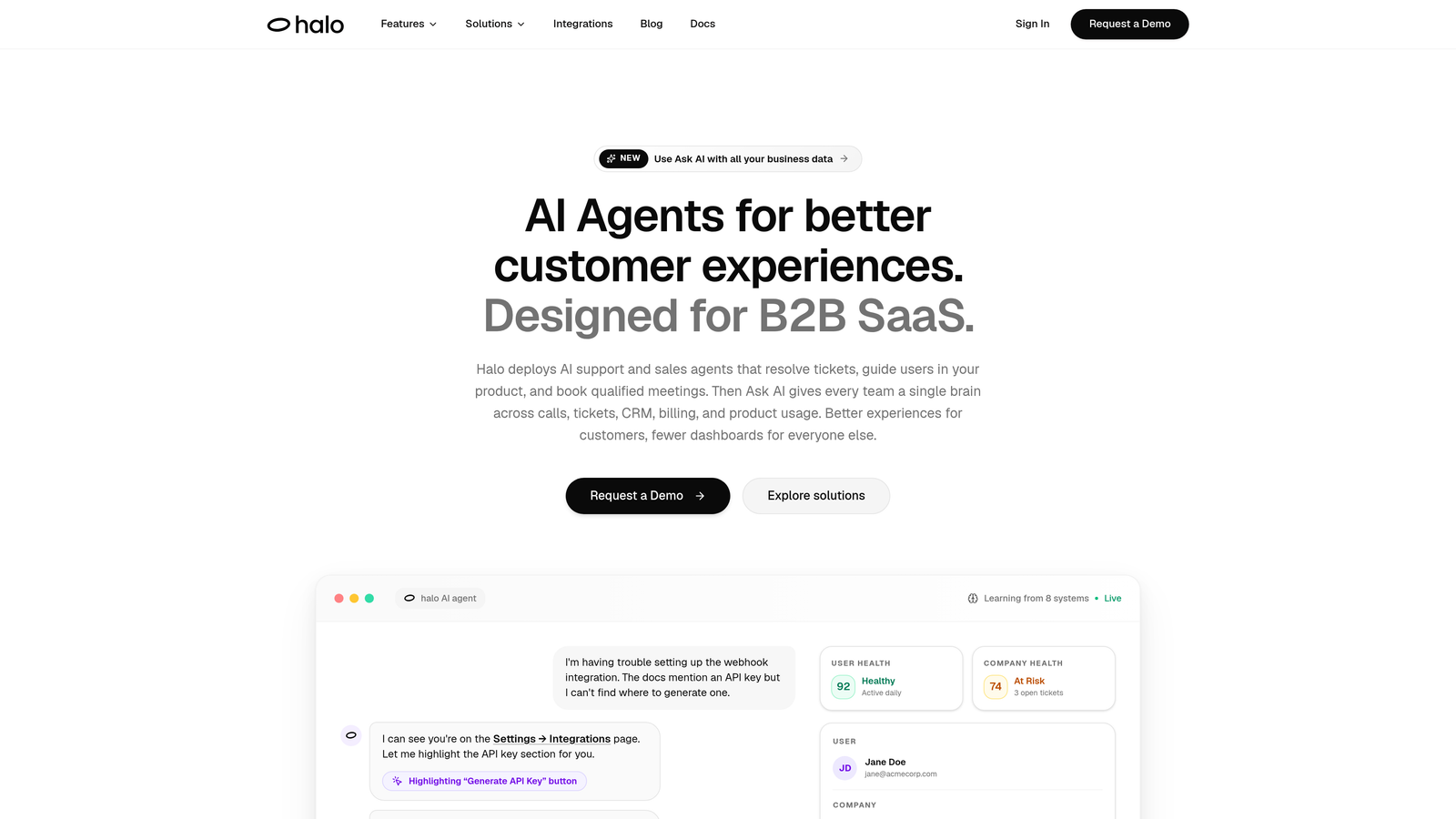
Halo AI is an AI-first customer support platform built specifically for B2B SaaS companies that need more than ticket deflection.
Where This Tool Shines
Most enterprise support tools treat AI as a layer on top of an existing helpdesk. Halo is built AI-first from the ground up, which means the architecture is designed around autonomous resolution rather than assisted response. The platform continuously learns from every interaction, so resolution quality improves over time rather than stagnating at initial deployment quality.
The standout differentiator is page-aware context. Halo's chat widget sees what the user sees in your product, enabling visual UI guidance rather than generic text responses. When a user is stuck on a specific screen, the AI knows exactly where they are and can guide them through it. That's a meaningful leap beyond keyword matching or knowledge base retrieval.
Key Features
Page-Aware Chat Widget: The AI understands which product page or feature a user is viewing, enabling contextual guidance and visual UI walkthroughs rather than generic answers.
Intelligent AI Agents: Autonomous ticket resolution with live agent handoff built in, so complex or sensitive issues escalate smoothly without frustrating the customer.
Smart Inbox with Business Intelligence: Surfaces customer health signals, revenue anomalies, and churn indicators from support interactions, turning your support queue into a source of business intelligence.
Auto Bug Ticket Creation: Automatically generates bug reports integrated with Linear, removing manual triage work from your engineering and support workflows.
Deep Integration Stack: Native connections to Slack, HubSpot, Intercom, Stripe, Zoom, PandaDoc, and Fathom, so the AI operates with full context from your entire business stack.
Best For
B2B SaaS companies and product-led growth teams that want AI-first support without migrating to a new helpdesk. Particularly valuable for teams where support context overlaps heavily with product usage data, and for leadership teams who want business intelligence as a byproduct of support operations.
Pricing
Enterprise pricing available on request. Contact the team directly at haloagents.ai for a custom quote based on your team size and resolution volume.
2. Salesforce Einstein for Service Cloud
Best for: Enterprises where Salesforce is already the system of record for customer data
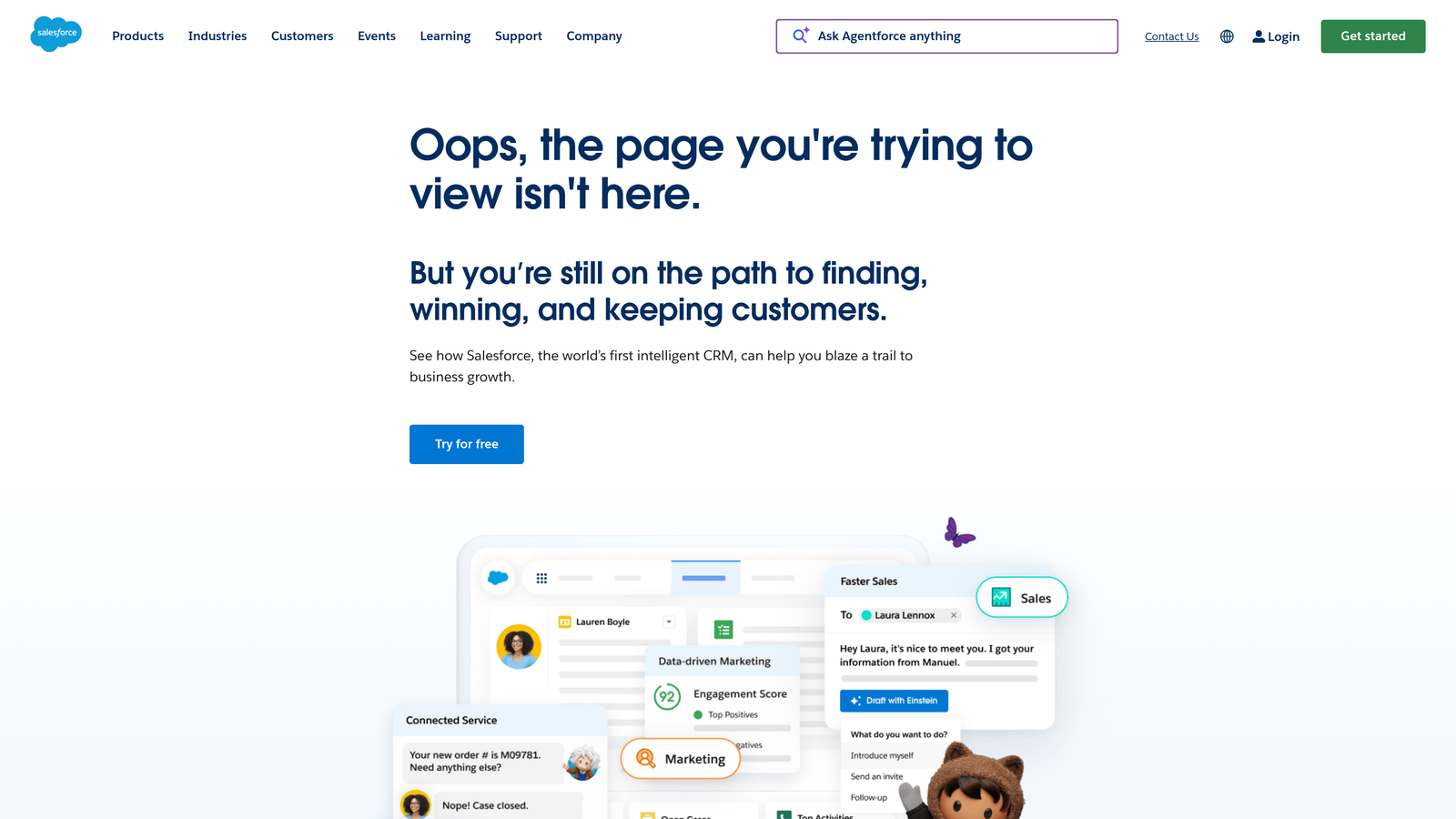
Salesforce Einstein for Service Cloud is generative AI embedded natively into Service Cloud, grounded in your full CRM context.
Where This Tool Shines
The core advantage here is data depth. Einstein doesn't just see the current ticket. It sees the customer's account history, opportunity pipeline, entitlements, and prior case history. For enterprise teams where support context is deeply intertwined with sales and account management, that CRM grounding makes AI responses significantly more relevant.
Einstein Copilot for Service gives agents real-time assistance: case summarization, next-best-action recommendations, and drafted responses. For teams already running Salesforce as their primary system, there's no integration overhead. The AI is already where your agents work.
Key Features
Einstein Copilot for Agents: Case summarization, next-best-action suggestions, and AI-drafted responses directly within the Service Cloud interface.
Knowledge Article Generation: Automatically generates knowledge articles from resolved cases, reducing the manual work of maintaining a support knowledge base.
CRM-Grounded AI: All AI responses are informed by full Salesforce CRM context, including account data, opportunity history, and customer entitlements.
Self-Service AI Agents: Customer-facing AI agents for autonomous resolution before a human agent is needed.
Best For
Large enterprises already standardized on Salesforce, where the value of CRM-grounded AI justifies staying within the ecosystem. Less compelling for teams not already invested in Salesforce infrastructure.
Pricing
Einstein AI features are add-ons to existing Service Cloud licenses. Enterprise contract pricing applies. Contact Salesforce for current rates.
3. Zendesk AI
Best for: Existing Zendesk customers looking to add AI capabilities without platform migration
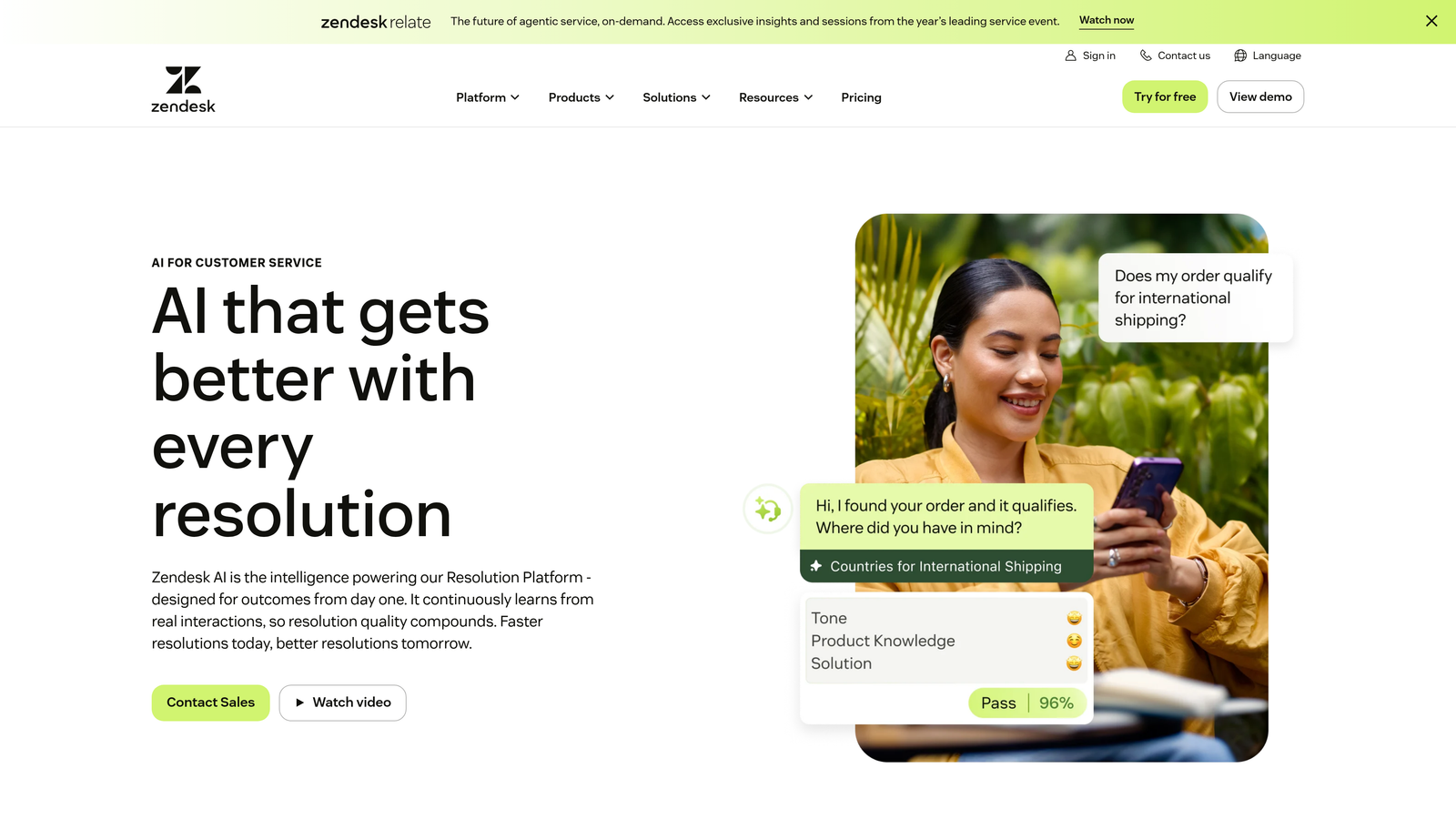
Zendesk AI is a suite of native AI capabilities built into Zendesk Suite, covering triage, agent assist, and autonomous self-service resolution.
Where This Tool Shines
The primary value proposition is zero migration. If your team is already in Zendesk, AI capabilities layer directly onto existing workflows. Agents don't need to change how they work. Triage automation, suggested responses, and ticket summaries appear within the interface they already use.
Zendesk AI agents handle self-service resolution for common queries, reducing ticket volume before it reaches your team. For enterprises with high inbound volume and established Zendesk workflows, this is a practical path to AI adoption with limited operational disruption.
Key Features
Intelligent Triage: Auto-tagging, routing, and priority scoring so tickets reach the right agent or queue without manual sorting.
AI Agent Assist: Suggested responses, ticket summaries, and macro recommendations surfaced in real time as agents work tickets.
Zendesk AI Agents: Customer-facing AI agents for self-service resolution, handling common queries autonomously before escalation.
No Migration Required: All AI capabilities operate within existing Zendesk Suite workflows and data structures.
Best For
Enterprises already running Zendesk Suite who want to add AI capabilities incrementally. Teams evaluating a full platform switch may find more value in AI-first alternatives.
Pricing
AI features are available as add-ons to Zendesk Suite plans. Pricing varies by tier. Check zendesk.com/ai for current plan details.
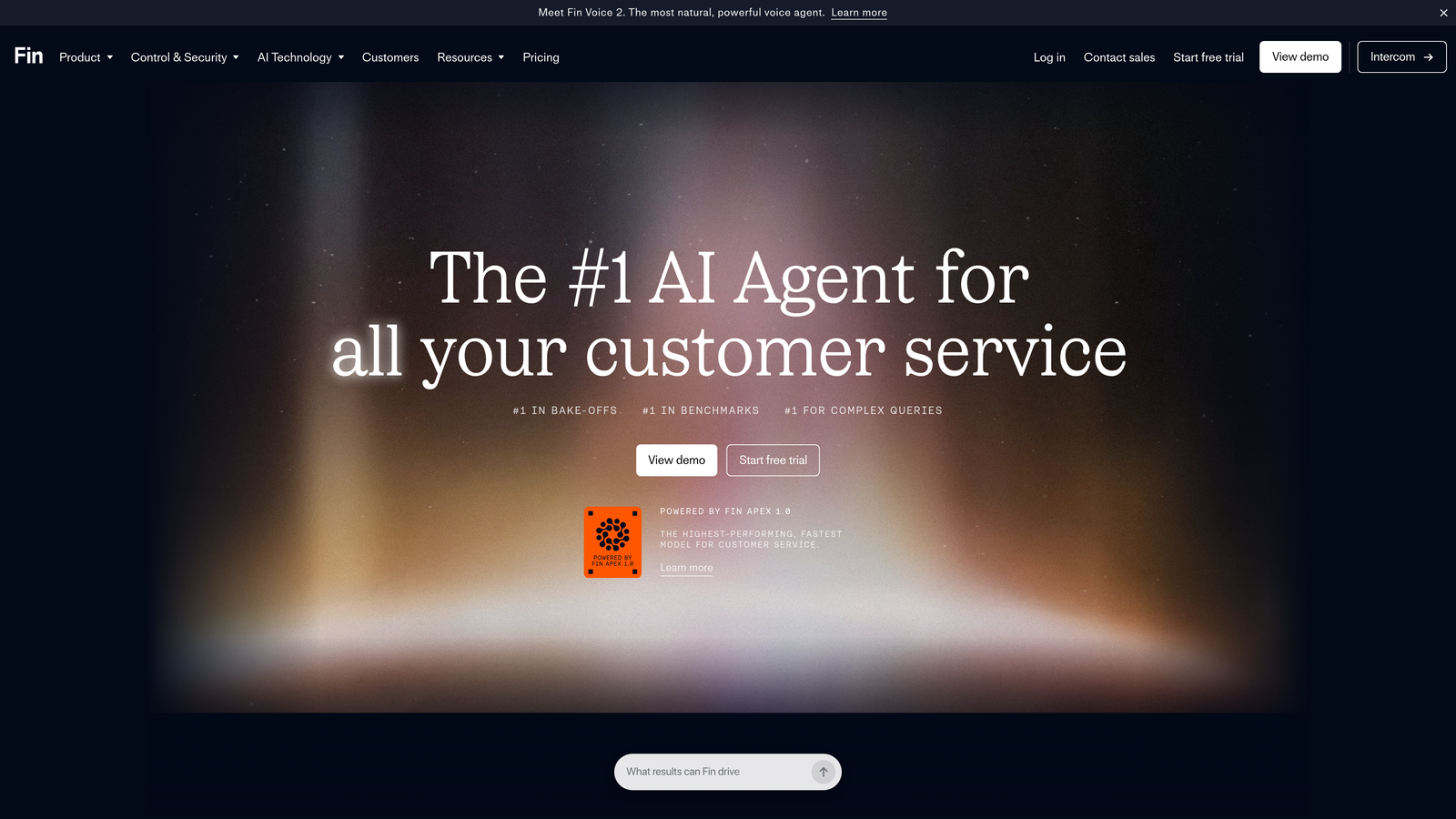
4. Intercom Fin AI
Best for: Teams that want transparent, citation-backed AI resolution with per-resolution pricing
Intercom Fin is Intercom's dedicated AI agent, designed to resolve customer queries autonomously using your knowledge base with source citations and smooth human handoff.
Where This Tool Shines
Fin's approach to transparency is worth noting. When it answers a query, it cites the knowledge base sources it drew from. For enterprise buyers concerned about AI hallucination or brand accuracy, that auditability matters. Agents and quality teams can see exactly why Fin gave the answer it did.
The confidence-based handoff model is also well-designed. When Fin isn't confident in its resolution, it escalates to a human agent rather than guessing. That behavior is more valuable than a high deflection rate built on low-quality resolutions.
Key Features
Cited Knowledge Base Responses: Every autonomous resolution includes source citations from your knowledge base, making AI answers auditable and trustworthy.
Multi-Source Knowledge Ingestion: Ingests content from help centers, PDFs, URLs, and custom content sources for broad coverage.
Confidence-Based Human Handoff: Escalates to live agents when confidence is low rather than delivering uncertain responses.
Per-Resolution Pricing: Priced per resolution rather than per seat, which aligns costs directly with value delivered.
Best For
Teams already using Intercom for customer messaging who want to add autonomous resolution. The per-resolution pricing model suits enterprises with variable or seasonal support volume.
Pricing
Priced per resolution. Contact Intercom for enterprise volume pricing and current rates at intercom.com/fin.
5. Freshdesk Freddy AI
Best for: Teams running the Freshworks suite who want AI across support, CRM, and ITSM
Freshdesk Freddy AI is Freshworks' AI layer spanning self-service bots, agent copilot, and analytics insights across the Freshworks ecosystem.

Where This Tool Shines
Freddy's strength is breadth within the Freshworks suite. If your team uses Freshdesk for support, Freshsales for CRM, and Freshservice for IT, Freddy provides a unified AI layer across all three. That cross-product context can meaningfully improve resolution quality for teams where customer data lives in multiple Freshworks products.
Freddy Insights adds an analytics dimension that many AI tools skip: AI-powered performance recommendations that help support managers understand not just what happened, but what to do about it.
Key Features
Freddy Self Service: Customer-facing AI bot for autonomous resolution before tickets reach your team.
Freddy Copilot: Agent assist with suggested responses, ticket summaries, and next-step recommendations.
Freddy Insights: AI-powered analytics that surface performance trends and actionable recommendations for support leaders.
Cross-Suite AI: Unified AI across Freshdesk, Freshsales, and Freshservice for teams standardized on the Freshworks ecosystem.
Best For
Enterprises already invested in the Freshworks suite, or teams evaluating Freshworks as a cost-competitive alternative to Salesforce or Zendesk with AI built in across products.
Pricing
Freddy AI features are available across Freshdesk Growth, Pro, and Enterprise plans. See freshworks.com for current pricing details.
6. ServiceNow Now Assist
Best for: Large enterprises managing both IT service management and customer-facing support at scale
ServiceNow Now Assist is generative AI embedded across the Now Platform, designed for enterprises where IT and customer support workflows overlap.
Where This Tool Shines
ServiceNow occupies a unique position in this list: it serves both internal IT helpdesk and external customer support use cases on the same platform. For enterprises where those workflows are tightly connected, that unified approach reduces context switching and data fragmentation. Now Assist brings generative AI to both sides of that equation.
The governance controls are particularly relevant for regulated industries. Healthcare, financial services, and government buyers often have compliance requirements that rule out more consumer-oriented AI tools. ServiceNow's enterprise governance framework addresses that directly.
Key Features
Case and Incident Summarization: AI-generated summaries across both ITSM and customer support workflows, reducing time spent reading ticket history.
AI-Generated Resolution Notes and Knowledge Articles: Automatically documents resolutions and generates knowledge content from closed cases.
Generative AI Virtual Agent: Customer-facing self-service agent with generative AI capabilities for complex query handling.
Enterprise Governance Controls: Compliance and data governance features designed for regulated industries with strict AI oversight requirements.
Best For
Large enterprises in regulated industries (healthcare, finance, government) that need both IT service management and customer support AI on a single governed platform.
Pricing
Enterprise licensing model. Contact ServiceNow directly for pricing based on platform usage and module selection.
7. Kustomer AI
Best for: High-volume B2C and e-commerce teams needing full customer timeline context in every interaction
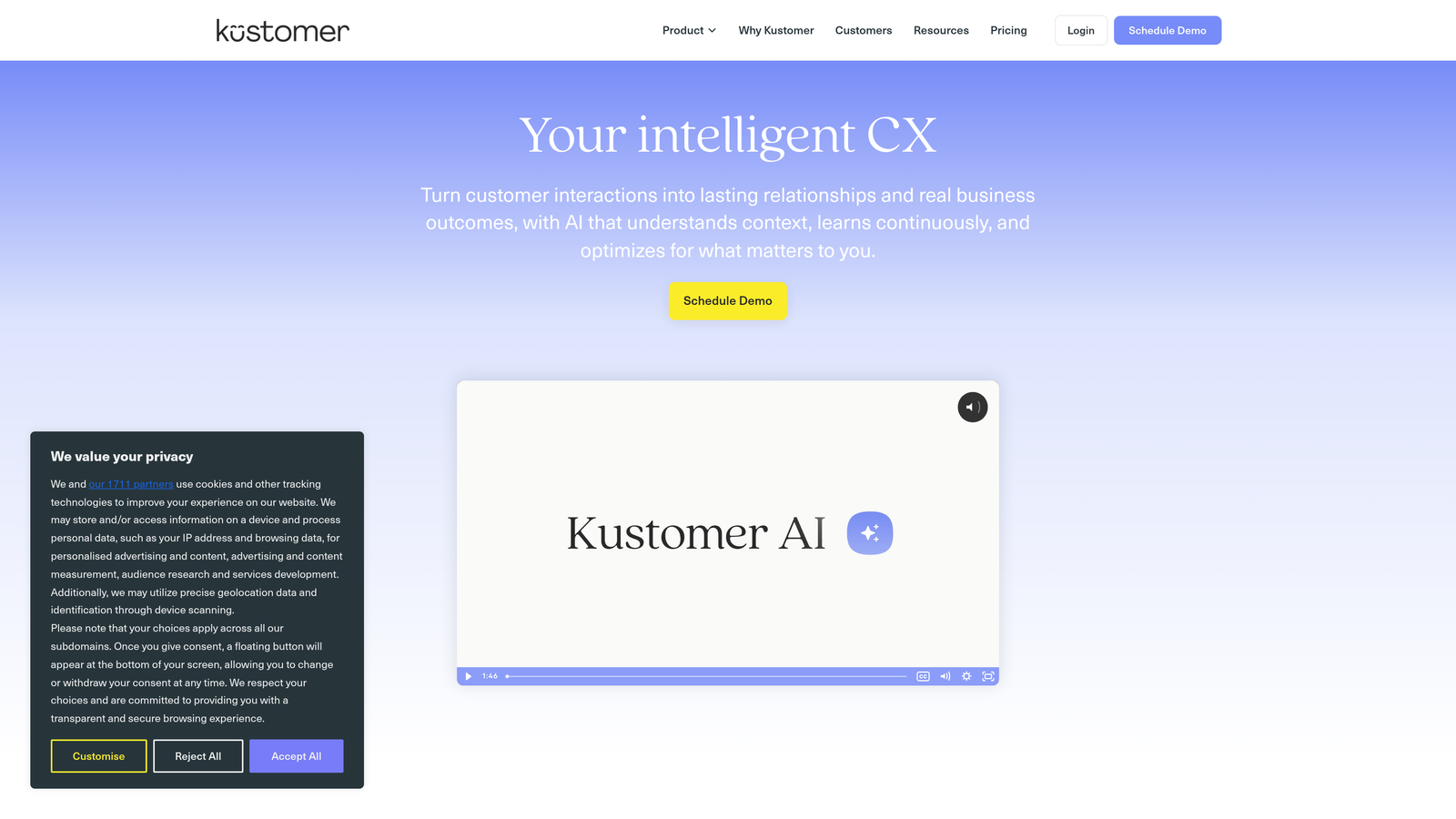
Kustomer is a CRM-based support platform where AI operates on a unified customer timeline, giving agents and AI systems full historical context rather than just the current ticket.
Where This Tool Shines
The unified customer timeline is Kustomer's core architectural advantage. When a customer contacts support, the AI doesn't just see the current message. It sees every prior order, interaction, complaint, and resolution across all channels. That context enables more relevant AI responses and reduces the frustrating experience of customers having to re-explain their history.
One consideration for enterprise buyers doing vendor risk assessment: Kustomer was acquired by Meta in 2022 and subsequently sold to private equity in 2023. Ownership changes are worth factoring into long-term vendor evaluation for large enterprise commitments.
Key Features
Unified Customer Timeline: All orders, interactions, and history consolidated in a single view that AI operates on, not just the current ticket.
Intent Detection and Sentiment Analysis: AI identifies customer intent and sentiment across channels to route and prioritize appropriately.
Automated Responses with Agent Assist: Automated handling for common queries, with AI-assisted responses for more complex issues.
Omnichannel Coverage: Consistent AI experience across email, chat, social, SMS, and voice channels.
Best For
High-volume B2C, DTC, and e-commerce operations where customer history across orders and interactions is critical to resolution quality.
Pricing
Enterprise pricing available. Contact Kustomer for current rates at kustomer.com.
8. Ada CX
Best for: Enterprises needing a dedicated AI agent layer with strict brand voice and compliance controls
Ada CX is a dedicated AI agent platform that integrates with your existing helpdesk rather than replacing it, with enterprise-grade controls for brand voice, compliance, and multilingual support.
Where This Tool Shines
Ada sits in an interesting position: it's not a helpdesk, and it's not trying to be. It's an AI agent layer that works alongside Zendesk, Salesforce, Freshdesk, Intercom, and others. For enterprises that have significant investment in an existing helpdesk but want a more capable AI layer on top, Ada avoids the migration question entirely.
The no-code agent builder with brand voice controls and topic restrictions is well-suited for enterprise teams with strict communication guidelines. Legal, compliance, and brand teams can define guardrails without requiring engineering involvement.
Key Features
No-Code AI Agent Builder: Configure AI behavior, brand voice, topic restrictions, and escalation rules without engineering resources.
Multilingual Support: Handles customer queries across many languages, relevant for enterprises with global customer bases.
Helpdesk Integrations: Native integrations with Zendesk, Salesforce, Freshdesk, Intercom, and others, so Ada adds to rather than replaces your existing stack.
Enterprise Compliance: SOC 2 Type II, GDPR compliance, and enterprise SSO for security-conscious buyers.
Best For
Global enterprises with strict brand, compliance, or multilingual requirements that want an AI agent layer without replacing their existing helpdesk infrastructure.
Pricing
Enterprise pricing available on request. Contact Ada for a quote at ada.cx.
9. Forethought AI
Best for: Teams focused on improving agent efficiency and resolution quality within existing helpdesk workflows
Forethought AI is an AI platform focused on intelligent triage, agent copilot, and automated resolution, designed to slot into existing helpdesk workflows rather than replace them.
Where This Tool Shines
Forethought takes a workflow-first approach to enterprise AI. Rather than positioning itself as a replacement for your helpdesk, it focuses on making the existing workflow faster and smarter. Triage gets more accurate. Agents get better suggested responses. High-volume predictable queries get automated. Each product addresses a specific efficiency gap without requiring a platform overhaul.
For teams with strong existing helpdesk investments and a mandate to improve handle time and CSAT without migrating platforms, Forethought's targeted approach is often easier to justify internally than a full platform switch.
Key Features
Triage: AI-powered ticket routing and prioritization that directs tickets to the right queue or agent based on content and intent analysis.
Assist: Agent copilot that surfaces suggested responses pulled directly from your knowledge base, reducing lookup time during live tickets.
Autoflow: Automated resolution for high-volume, predictable query types, handling common issues before they reach an agent.
Helpdesk Integrations: Works within Zendesk, Salesforce, Freshdesk, and Intercom without requiring workflow changes.
Best For
Enterprise support teams with established helpdesk workflows looking to improve handle time, routing accuracy, and agent efficiency without a full platform migration.
Pricing
Contact Forethought for enterprise pricing at forethought.ai.
Which Tool Is Right for Your Team
The right choice depends heavily on your current stack and what you actually need AI to do.
If you're already running Salesforce, Zendesk, or Freshworks, the native AI layers (Einstein, Zendesk AI, Freddy) offer the lowest friction path to adoption. You're adding capability to infrastructure you already own. The tradeoff is that you're working within the constraints of those platforms rather than getting AI-first architecture.
For enterprises evaluating standalone AI agent platforms, the field narrows around a few key questions. Do you need brand voice and compliance controls at the AI layer? Ada is built for that. Do you need per-resolution pricing that scales with value? Intercom Fin's model is worth a close look. Do you need AI that improves agent efficiency within existing workflows without any migration? Forethought is designed for exactly that.
For B2B SaaS teams specifically, Halo AI stands out for a reason that goes beyond ticket resolution. The combination of page-aware context, continuous learning, and business intelligence surfacing means your support operation becomes a source of product and revenue insight, not just a cost center. When your AI can flag churn risk from a support interaction and route that signal to your account management team, support stops being purely reactive.
Your support team shouldn't scale linearly with your customer base. Let AI agents handle routine tickets, guide users through your product, and surface business intelligence while your team focuses on complex issues that need a human touch. See Halo in action and discover how continuous learning transforms every interaction into smarter, faster support.