9 Best Enterprise Support Automation Platforms: Pricing Compared for 2026
Enterprise support automation pricing varies dramatically across platforms, with models ranging from per-agent seats to per-resolution fees and usage-based tiers. This comprehensive comparison examines nine leading enterprise support automation solutions for 2026, breaking down their actual costs, hidden fees, and helping you determine which pricing structure aligns with your organization's scale and support volume needs.
 Matt PattoliFounder12 min read
Enterprise support automation has become essential for scaling customer service without proportionally scaling headcount. But with pricing models ranging from per-agent seats to per-resolution fees to usage-based tiers, comparing costs across platforms feels like comparing apples to aircraft carriers.
This guide breaks down pricing for nine leading enterprise support automation solutions, examining what you actually pay for, hidden costs to watch for, and which pricing model fits different organizational needs. Whether you're evaluating your first automation platform or considering a switch, understanding the true cost of ownership will help you make a confident decision.
1. Halo AI
Best for: Companies wanting AI-first automation with transparent, outcome-based pricing that scales with success
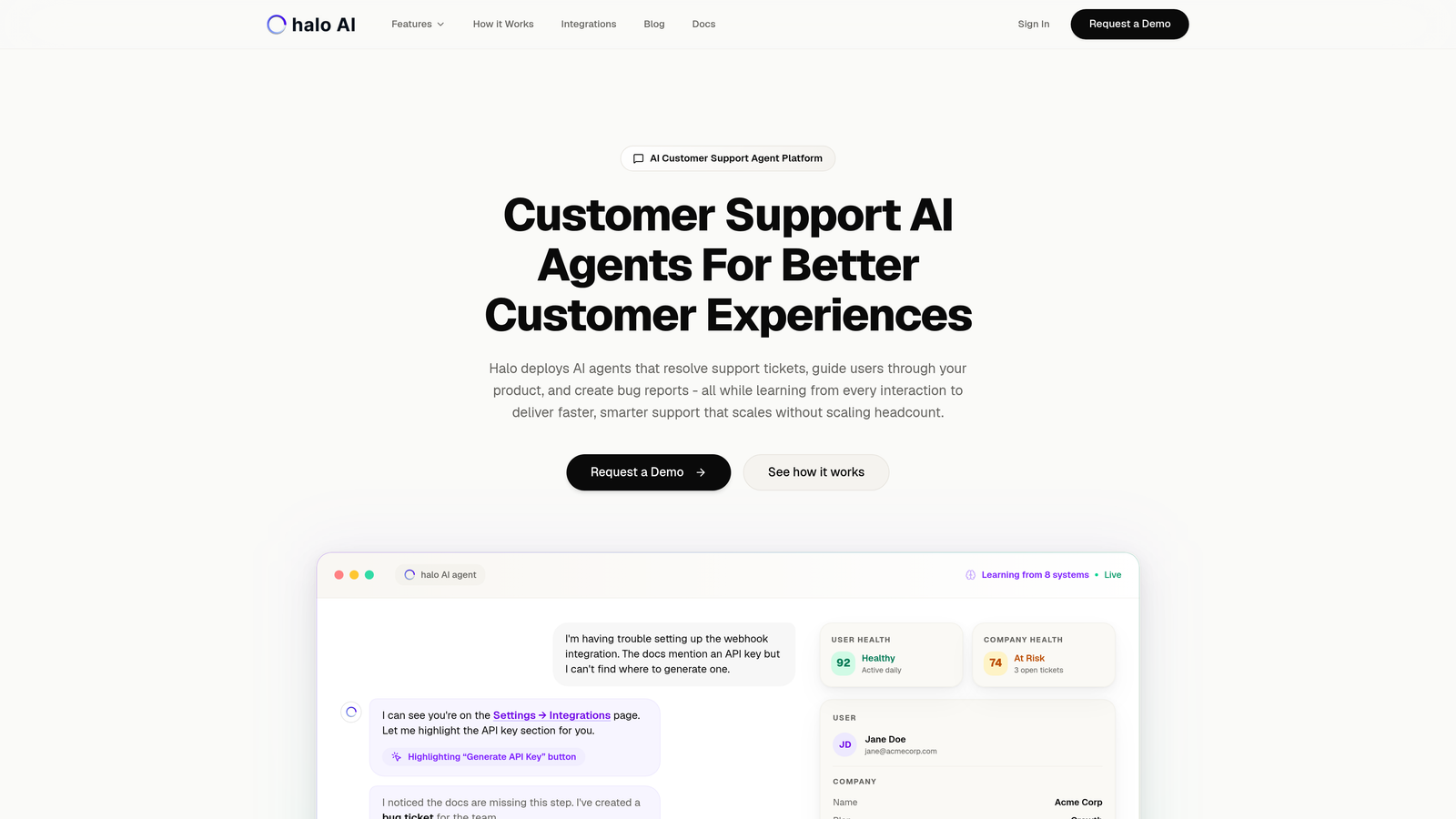
Halo AI is an AI-first customer support platform where intelligent agents autonomously resolve tickets while continuously learning from every interaction.
Where This Tool Shines
Halo's pricing model aligns with what you actually want: resolved tickets. Instead of paying per agent seat (which creates tension as you try to reduce headcount), you pay per resolution. This means your costs scale with customer volume, not team size.
The platform's page-aware capabilities set it apart—agents see what users see, providing contextual guidance through your product's UI. This visual understanding, combined with connections to your entire business stack (Linear, Slack, HubSpot, Intercom, Stripe), means AI agents resolve issues with full context rather than generic responses.
Key Features
Autonomous AI Agents: Handle ticket resolution independently, escalating only when human judgment is needed.
Page-Aware Chat Widget: Provides visual UI guidance based on exactly what users see on screen.
Smart Inbox with Business Intelligence: Surfaces customer health signals, revenue intelligence, and anomaly detection beyond basic support metrics.
Auto Bug Ticket Creation: Automatically generates detailed bug reports and routes them to engineering teams via Linear or similar tools.
Multi-System Integrations: Connects across your tech stack to pull context and take actions in Slack, HubSpot, Stripe, Zoom, PandaDoc, and more.
Best For
B2B SaaS companies and product teams who want automation that gets smarter over time, not just faster. Particularly valuable if you're using helpdesk systems like Zendesk, Freshdesk, or Intercom and want AI that learns from every interaction rather than relying solely on static knowledge bases.
Pricing
Per-resolution pricing model means you pay for outcomes, not seats. Enterprise quotes available through direct contact. Implementation typically includes integration setup and custom training on your product and processes.
2. Zendesk AI
Best for: Organizations already invested in Zendesk's ecosystem seeking to add AI capabilities
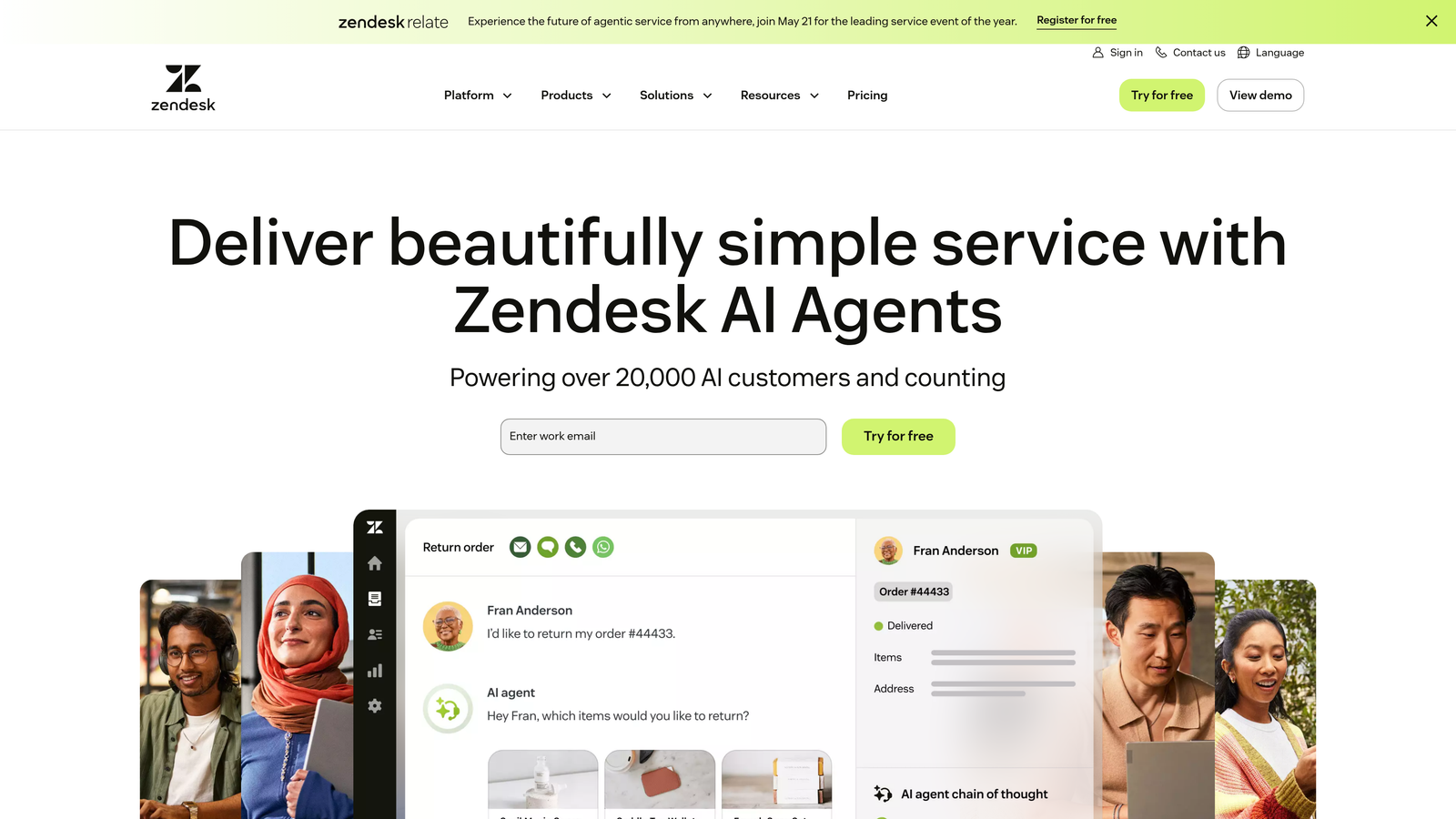
Zendesk AI is an AI-powered automation layer built on top of Zendesk's established helpdesk platform.
Where This Tool Shines
If you're already running Zendesk, adding AI capabilities means no platform migration. The integration is seamless since it's built into the same system your team already knows. Agent assist features suggest responses in real-time, helping human agents work faster even on tickets that aren't fully automated.
Zendesk's market position means robust third-party integrations and a mature feature set. For enterprises with complex workflows already built in Zendesk, adding AI is an incremental enhancement rather than a platform replacement.
Key Features
AI Agents for Automated Responses: Handle common inquiries without human intervention, trained on your knowledge base.
Intelligent Triage and Routing: Automatically categorize and route tickets to the right team or agent based on content analysis.
Agent Assist with Suggested Responses: Provides real-time recommendations to human agents, speeding up response times.
Knowledge Base Integration: Pulls answers directly from your documentation to ensure consistency.
Advanced Analytics and Reporting: Tracks AI performance, resolution rates, and identifies automation opportunities.
Best For
Companies with existing Zendesk deployments who want to enhance current operations rather than replace their platform. Works well for teams that value ecosystem stability and have already customized Zendesk workflows.
Pricing
Suite plans start at $55 per agent per month. Advanced AI capabilities require additional add-on licensing, with pricing varying based on features and volume. Total cost depends on both base platform and AI layer.
3. Intercom Fin
Best for: Product-led companies wanting conversational support with per-resolution AI pricing
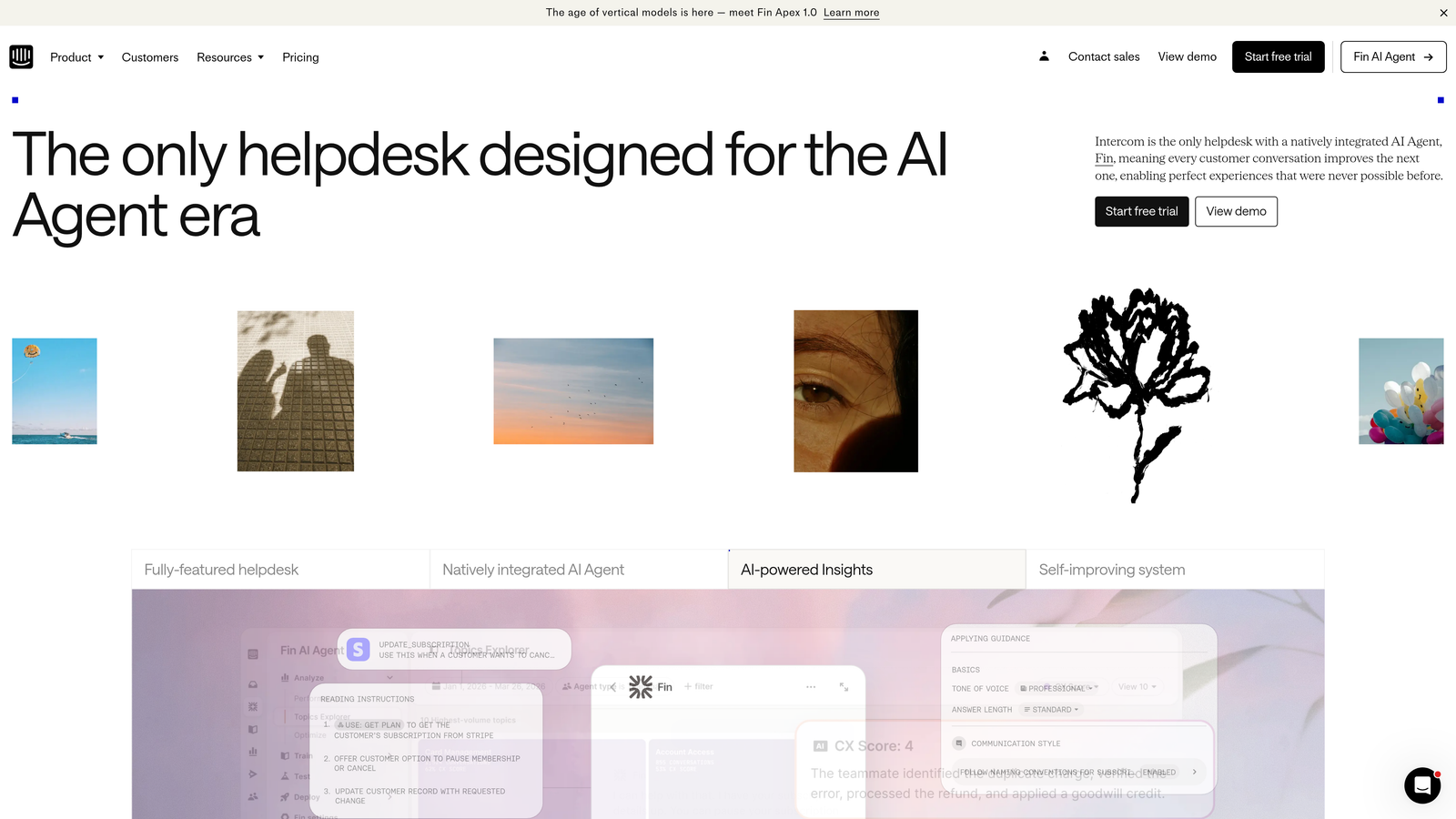
Intercom Fin is an AI chatbot built into Intercom's conversational support platform with per-resolution pricing.
Where This Tool Shines
Intercom pioneered the conversational approach to customer support, and Fin extends that philosophy with AI. The seamless handoff between bot and human feels natural because both operate within the same conversational interface users are already engaging with.
Product tours and onboarding integration mean support isn't isolated—it's part of the user journey. When customers ask questions, Fin can both answer and guide them through your product, blending support with education.
Key Features
AI-Powered Resolution with Knowledge Base Training: Learns from your documentation to answer questions accurately and conversationally.
Seamless Human Handoff: Transfers conversations to human agents with full context when AI reaches its limits.
Product Tours and Onboarding Integration: Combines support with guided product experiences to reduce future tickets.
Multi-Channel Support: Handles conversations across chat, email, and social media from a unified inbox.
Custom Answer Training: Allows you to refine AI responses based on your brand voice and specific use cases.
Best For
SaaS companies with product-led growth strategies where support and product experience overlap. Ideal if you're already using Intercom for customer communication and want to add intelligent automation.
Pricing
Base platform starts at $39 per seat per month. Fin AI charges per resolution on top of base platform costs, meaning you pay for the platform access plus successful automated resolutions.
4. Freshdesk Freddy AI
Best for: Mid-market companies wanting bundled AI features without complex add-on pricing
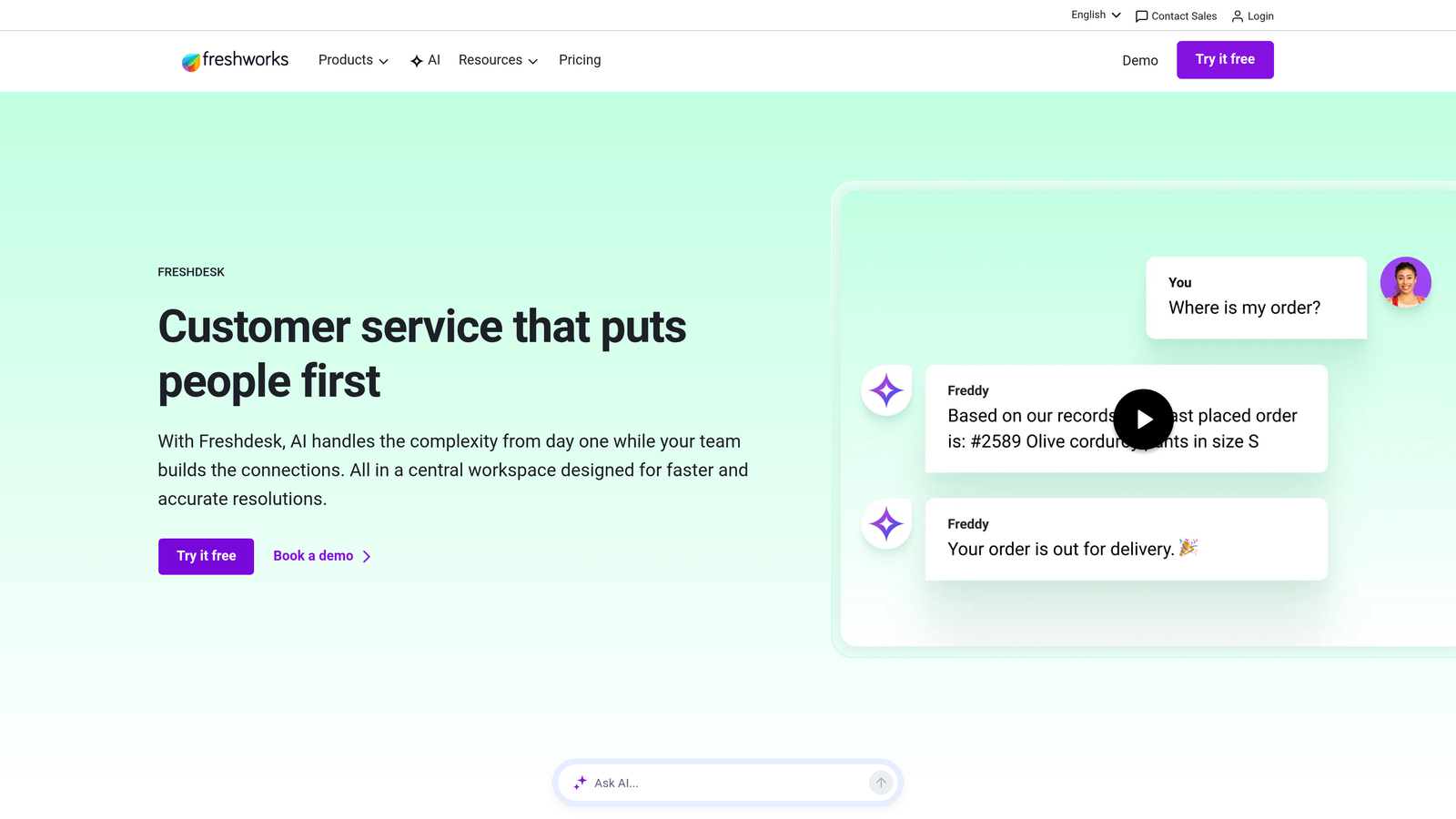
Freshdesk Freddy AI is AI capabilities integrated into Freshworks' helpdesk platform with bundled pricing.
Where This Tool Shines
Freshdesk's approach bundles AI features into their standard plans rather than charging separately for automation. This pricing simplicity appeals to companies that want predictable costs without calculating per-resolution fees or separate AI licensing.
Freddy AI handles practical automation like ticket field suggestions and sentiment analysis—features that speed up agent workflows even when full automation isn't possible. The omnichannel capabilities mean one platform handles email, chat, phone, and social media.
Key Features
Freddy AI Agent for Automated Responses: Resolves common tickets automatically using knowledge base content and historical patterns.
Ticket Field Suggestions and Categorization: Automatically fills ticket fields and categorizes issues to reduce manual data entry.
Canned Response Recommendations: Suggests pre-written responses to agents based on ticket content, speeding up handling time.
Sentiment Analysis: Identifies frustrated customers automatically so agents can prioritize emotional situations.
Omnichannel Support Capabilities: Manages conversations across all channels from a single interface.
Best For
Growing companies that want straightforward pricing without separating platform costs from AI costs. Works well for teams that need solid automation without enterprise-level complexity.
Pricing
Pro plan starts at $49 per agent per month and includes AI features. Enterprise plan at $79 per agent per month adds advanced automation and analytics. No separate AI licensing simplifies budgeting.
5. Salesforce Service Cloud Einstein
Best for: Enterprises deeply integrated with Salesforce CRM who need support automation connected to customer data
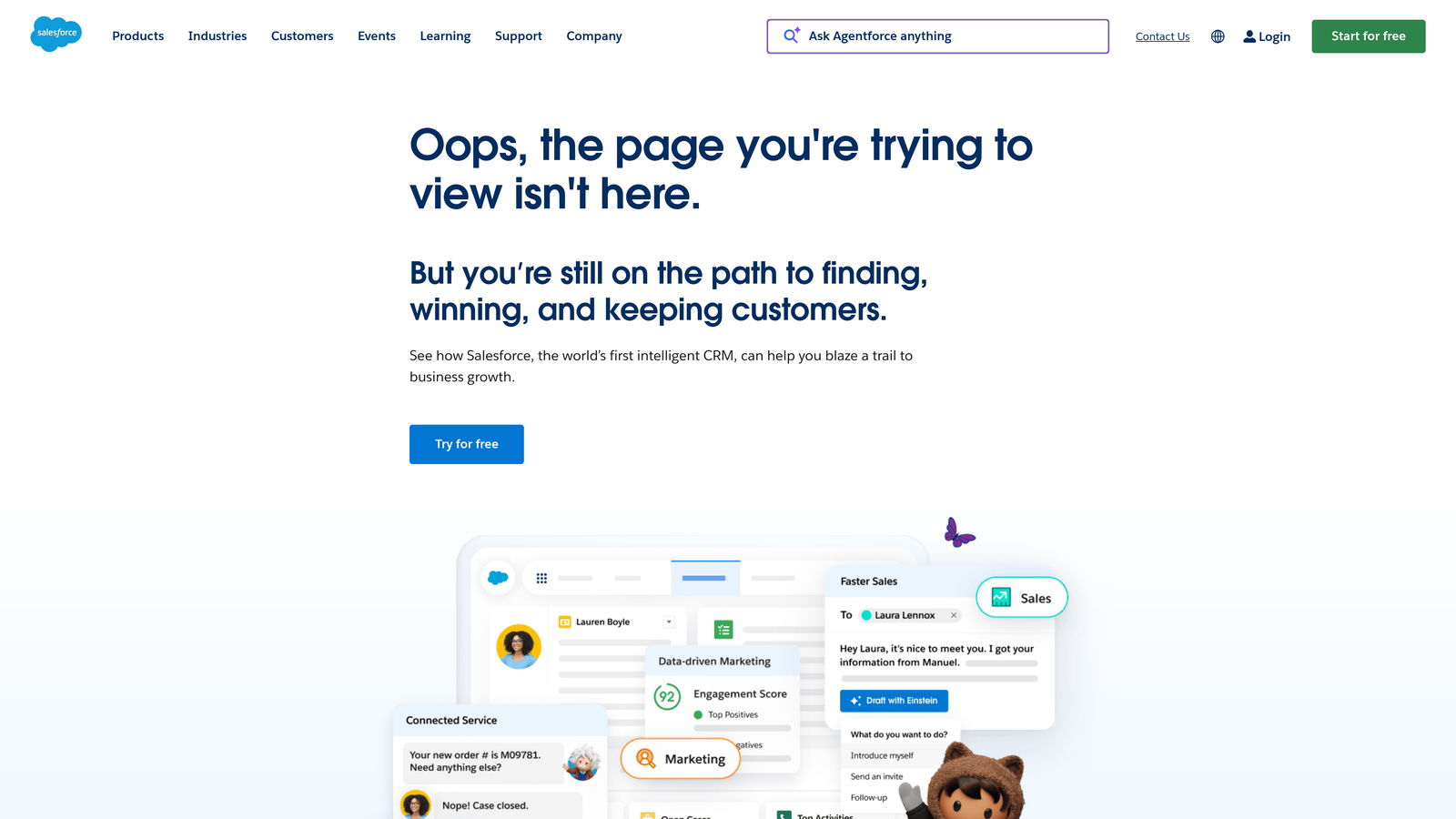
Salesforce Service Cloud Einstein is AI-powered service automation deeply integrated with Salesforce CRM ecosystem.
Where This Tool Shines
Einstein's power comes from its deep integration with Salesforce data. Support agents see complete customer history—sales interactions, account details, past purchases—in one view. This context enables more personalized automation and better routing decisions.
For companies already running Salesforce for sales and marketing, adding Service Cloud creates a unified customer view across all touchpoints. Next best action recommendations leverage AI to suggest not just responses but business actions based on comprehensive customer data.
Key Features
Einstein Bots for Automated Service: Handle routine inquiries with AI that understands customer context from CRM data.
Case Classification and Routing: Automatically categorize and route cases based on content, priority, and customer data.
Next Best Action Recommendations: Suggests actions to agents based on customer history and business rules, not just ticket content.
Deep CRM Data Integration: Pulls customer information, purchase history, and account details directly into support conversations.
Omni-Channel Routing: Distributes work across channels and teams based on skills, availability, and priority.
Best For
Large enterprises with existing Salesforce investments who want support automation that leverages their CRM data. Particularly valuable when support decisions should consider customer lifetime value, account status, or sales relationships.
Pricing
Service Cloud starts at $25 per user per month for basic features. Einstein AI capabilities require additional licensing, with costs varying based on specific features and usage. Total investment includes platform, AI add-ons, and typically significant implementation services.
6. Ada
Best for: Global enterprises needing multilingual automation with extensive customization capabilities
Ada is an enterprise-grade AI automation platform with strong multilingual and customization capabilities.
Where This Tool Shines
Ada's 50+ language support makes it the go-to choice for companies operating globally. The platform doesn't just translate—it understands context and nuance across languages, maintaining conversation quality regardless of the customer's language.
The no-code bot builder empowers business users to create and modify automation without engineering resources. This accessibility means support teams can iterate quickly on conversation flows based on what they're seeing in real customer interactions.
Key Features
No-Code Bot Builder: Enables support teams to design and modify conversation flows without technical expertise.
50+ Language Support: Provides native-quality automation across dozens of languages with contextual understanding.
Proactive Messaging Campaigns: Reaches out to customers proactively based on behavior, preventing issues before they become tickets.
Deep Integrations with Major Platforms: Connects with CRM, helpdesk, and business systems to access customer data and take actions.
Enterprise Security and Compliance: Meets enterprise requirements for data handling, privacy, and regulatory compliance.
Best For
Multinational companies serving customers across languages and regions. Ideal for enterprises with complex compliance requirements and the need for extensive customization without heavy technical resources.
Pricing
Custom enterprise pricing based on conversation volume and features selected. Costs scale with usage but provide predictability through volume-based tiers. Implementation and customization services typically included in enterprise agreements.
7. Kustomer
Best for: Companies wanting CRM-powered support with flexible conversation-based pricing
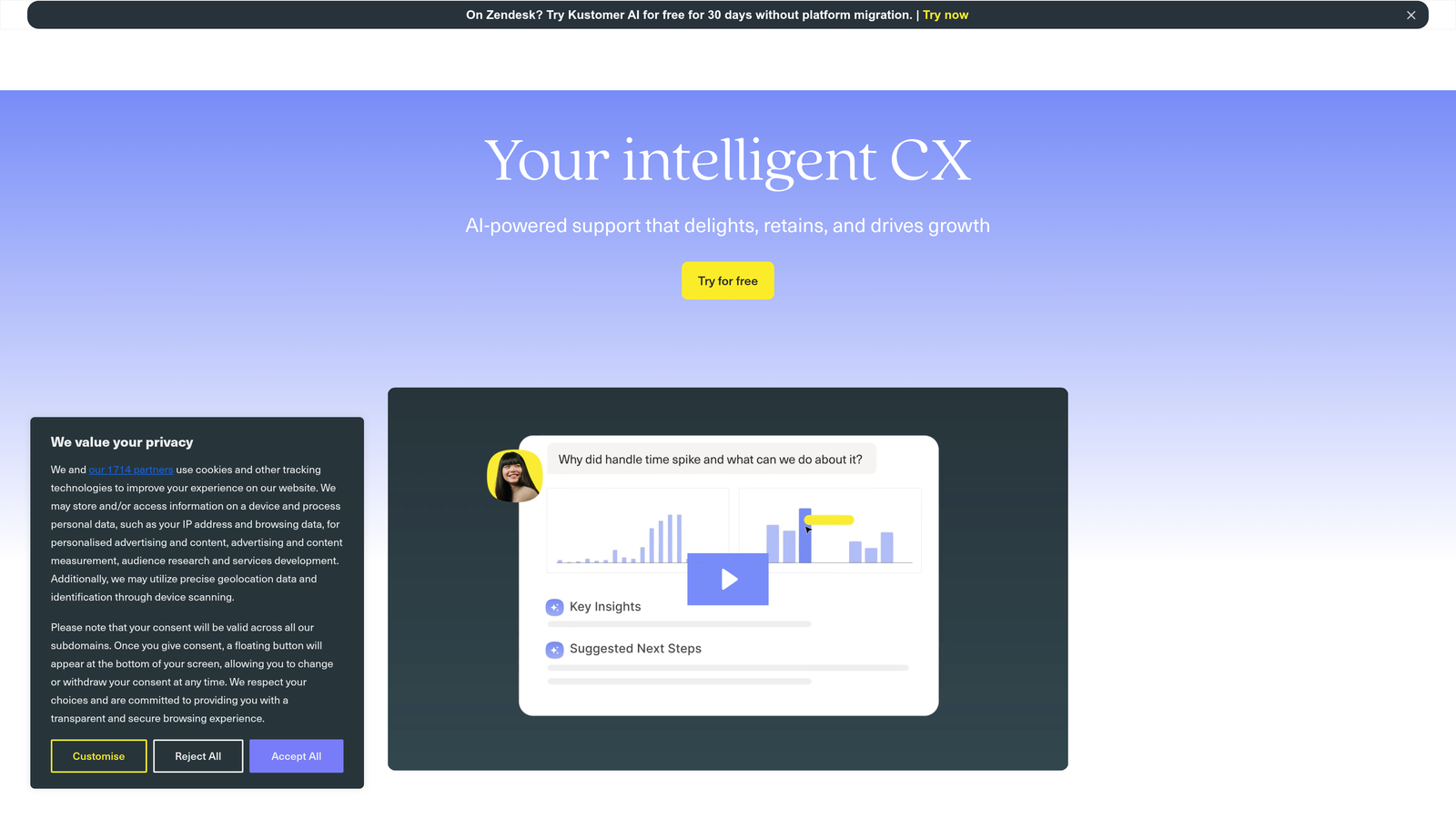
Kustomer is a CRM-powered customer service platform with conversation-based pricing model.
Where This Tool Shines
Kustomer's unified customer timeline view changes how agents work. Instead of seeing tickets as isolated incidents, agents see the complete customer journey—every interaction, purchase, and conversation in chronological order. This context enables faster, more informed responses.
The conversation-based pricing option (as opposed to strictly per-seat) can provide cost advantages for teams with high agent counts but manageable conversation volumes. You're paying for customer interactions rather than internal headcount.
Key Features
Unified Customer Timeline View: Displays complete customer history in chronological order across all channels and touchpoints.
AI-Powered Chatbots and Routing: Automates responses and intelligently routes conversations based on content and customer data.
Omnichannel Conversation Management: Handles email, chat, phone, SMS, and social media from a single interface.
Business Process Automation: Creates workflows that trigger actions across systems based on customer interactions.
Real-Time Customer Insights: Surfaces relevant customer data and insights during conversations to inform agent responses.
Best For
Companies that view support as part of the customer relationship rather than isolated ticket resolution. Works well for businesses with complex customer journeys where context across touchpoints matters.
Pricing
Enterprise plan starts at $89 per user per month. Conversation-based pricing options available for teams where this model provides better economics. Pricing structure allows flexibility based on your team size versus interaction volume.
8. Gorgias
Best for: E-commerce businesses with high ticket volumes needing deep Shopify integration
Gorgias is an e-commerce focused helpdesk with ticket-volume pricing and deep Shopify integration.
Where This Tool Shines
Gorgias is built specifically for e-commerce, and it shows. The Shopify integration pulls order data, inventory status, and customer purchase history directly into support conversations. Agents can modify orders, process refunds, and update shipping without leaving the helpdesk.
Revenue tracking connects support activities to business outcomes. You can see which support interactions lead to additional purchases, measure the revenue impact of different response times, and justify support investments with hard numbers.
Key Features
Shopify, BigCommerce, Magento Integrations: Deep native integrations with major e-commerce platforms for order management within support tickets.
Automated Order Management Responses: Handles common order inquiries (shipping status, returns, refunds) automatically using order data.
Revenue Tracking and Reporting: Connects support conversations to sales, showing which interactions drive additional revenue.
Macro and Rule-Based Automation: Creates automated responses and workflows based on ticket content, customer data, and order status.
Social Media Support Integration: Manages Instagram, Facebook, and other social commerce conversations alongside traditional channels.
Best For
E-commerce companies, particularly those on Shopify, with high support volumes driven by order inquiries. Ideal when support needs to handle transactions and order modifications, not just provide information.
Pricing
Plans start at $10 per month for 50 tickets, scaling with ticket volume rather than agent count. This model works well for e-commerce where ticket volume fluctuates seasonally but agent headcount stays relatively stable.
9. Forethought
Best for: Teams wanting AI that enhances agent productivity alongside automation
Forethought is an AI platform focused on intelligent triage, routing, and agent productivity enhancement.
Where This Tool Shines
Forethought's modular approach lets you start with one capability and expand. Begin with Triage to improve routing accuracy, add Solve for automation, then layer in Assist to boost agent productivity. This incremental adoption reduces change management challenges compared to all-at-once platform replacements.
The Discover module identifies automation opportunities by analyzing ticket patterns. Rather than guessing which tickets to automate, you get data-driven recommendations based on volume, repetition, and resolution patterns in your actual support queue.
Key Features
Solve for Automated Ticket Resolution: Handles routine tickets automatically using AI trained on your knowledge base and historical resolutions.
Triage for Intelligent Routing: Analyzes ticket content to route to the right team or agent, reducing misdirected tickets.
Assist for Agent Productivity: Provides real-time suggestions and relevant information to agents as they work tickets.
Discover for Insights and Optimization: Analyzes support data to identify automation opportunities and workflow improvements.
Integrations with Major Helpdesks: Works alongside Zendesk, Salesforce Service Cloud, Freshdesk, and other platforms without requiring migration.
Best For
Companies that want to enhance their existing helpdesk with AI rather than replace it entirely. Works well for teams that value agent productivity improvements as much as full automation.
Pricing
Custom pricing based on ticket volume and which modules you deploy. The modular structure means you pay only for capabilities you're using, with the option to expand as you see results.
Making the Right Choice
The right enterprise support automation platform depends on your pricing priorities and existing infrastructure. If you want outcome-based pricing that scales with success rather than headcount, Halo AI's per-resolution model aligns costs with value. Companies already invested in Zendesk will find adding Zendesk AI the path of least resistance, while Salesforce users benefit from Einstein's deep CRM integration.
For product-led companies where support blends with user education, Intercom Fin's conversational approach fits naturally. E-commerce businesses with high ticket volumes often find Gorgias's ticket-based pricing more economical than per-seat models, especially during seasonal fluctuations.
Consider total cost of ownership beyond the sticker price. Implementation services, training requirements, and integration costs vary significantly. Platforms with per-resolution pricing reward automation effectiveness, while per-seat models may create misaligned incentives as you try to reduce agent headcount. Usage-based pricing provides flexibility but requires careful volume forecasting.
Your support team shouldn't scale linearly with your customer base. Let AI agents handle routine tickets, guide users through your product, and surface business intelligence while your team focuses on complex issues that need a human touch. See Halo in action and discover how continuous learning transforms every interaction into smarter, faster support.