9 Best Enterprise Support Automation Software Platforms in 2026
Enterprise support automation software has evolved far beyond basic chatbots, with today's leading platforms capable of autonomously resolving tickets, intelligently routing complex issues, and integrating across entire business stacks. This guide evaluates the nine best enterprise support automation platforms in 2026 based on AI capability, integration depth, scalability, and analytics sophistication to help B2B SaaS and product-led organizations find the right solution for their growing support needs.
 Grant CooperFounder14 min read
Enterprise support teams face a familiar tension: ticket volumes grow faster than headcount budgets, yet customers expect faster, more personalized responses than ever. Support automation has matured well beyond basic chatbots. Today's platforms can resolve tickets autonomously, detect customer health signals, route complex issues intelligently, and integrate across an entire business stack.
This guide covers the best enterprise support automation platforms available in 2026, evaluated on AI capability, integration depth, scalability, analytics sophistication, and suitability for B2B SaaS and product-led organizations. Whether you're replacing a legacy helpdesk, layering AI onto an existing Zendesk or Intercom setup, or building a support function from scratch, this list will help you find the right fit.
For broader context on what modern automation can deliver, see our breakdown of customer support automation benefits and AI helpdesk software.
1. Halo AI
Best for: AI-first B2B SaaS teams that want autonomous resolution, product-aware context, and business intelligence beyond support metrics.
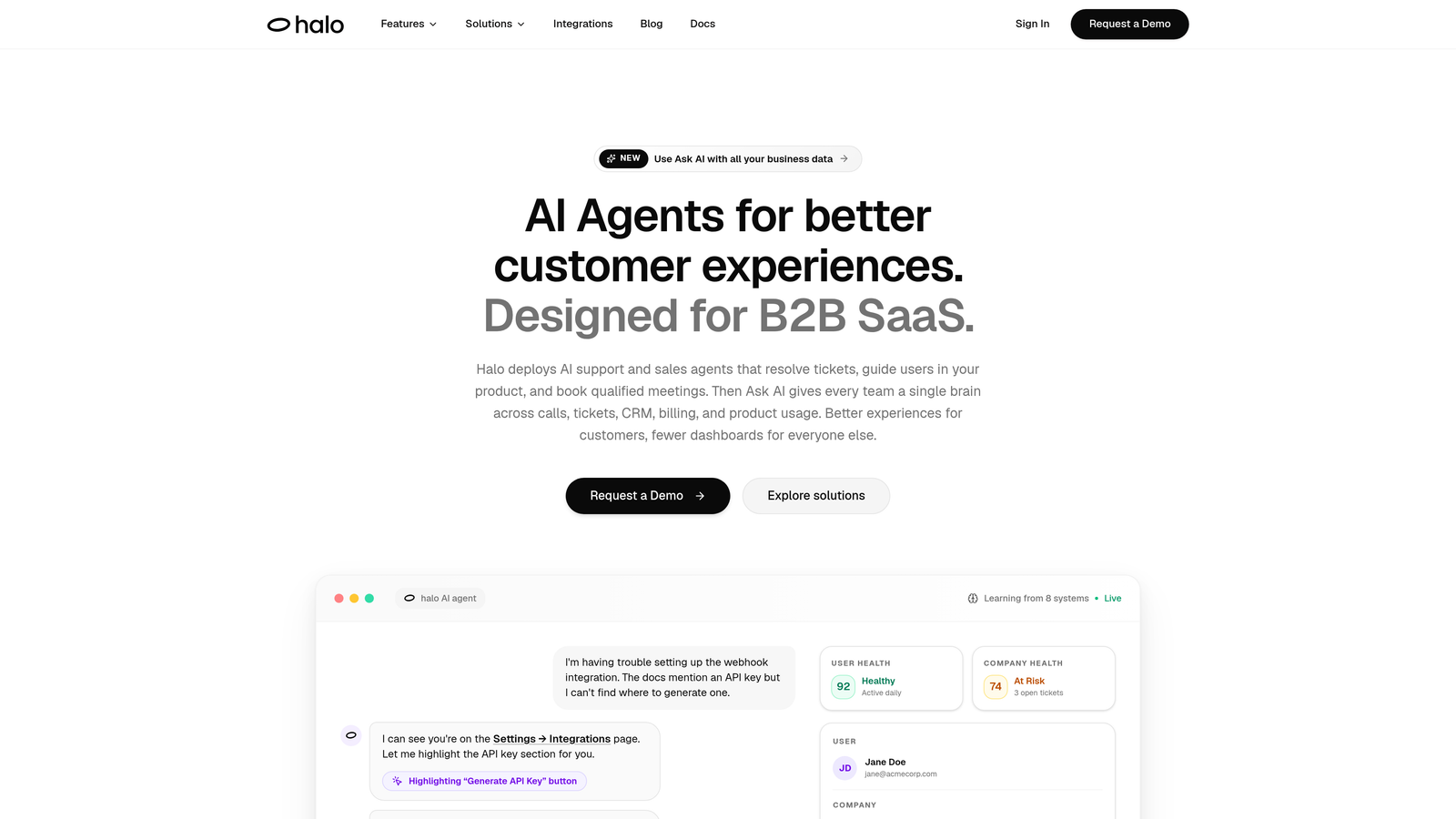
Halo AI is an AI-native enterprise support platform built from the ground up for autonomous ticket resolution, in-product user guidance, and continuous learning from every interaction.
Where This Tool Shines
What sets Halo apart from AI layers bolted onto legacy helpdesks is its architecture. The platform was designed AI-first, meaning automation isn't an add-on feature — it's the core operating model. Intelligent agents resolve tickets end-to-end, learn from each resolved interaction, and improve over time without manual retraining.
The page-aware context engine is a genuine differentiator for product-led SaaS companies. Halo's chat widget understands where a user is inside your product, sees what they see, and delivers visual, in-context guidance rather than generic help article links. Combine that with a smart inbox that surfaces customer health signals and revenue anomalies, and Halo functions less like a support tool and more like an intelligence layer across your entire customer relationship.
Key Features
Page-Aware Chat Widget: The AI sees what the user sees in your product, delivering contextually relevant visual guidance rather than static responses.
Autonomous AI Agents: Intelligent agents resolve tickets without human intervention and learn continuously from every closed interaction.
Smart Inbox with Business Intelligence: Surfaces customer health signals, revenue anomalies, and trend detection — going well beyond standard support analytics.
Auto Bug Ticket Creation: Automatically routes bug reports directly to engineering via Linear integration, removing manual triage from the support-to-dev handoff.
Live Agent Handoff: Escalates complex issues to human agents with full conversation context preserved, so customers never have to repeat themselves.
Deep Multi-System Integrations: Connects to Linear, Slack, HubSpot, Intercom, Stripe, Zoom, PandaDoc, and Fathom — linking support data to your entire business stack.
Best For
Product-led SaaS companies and B2B teams that want AI to do more than deflect tickets. Halo is particularly strong for organizations that need support automation to feed business intelligence back into product, revenue, and engineering workflows — not just reduce queue volume.
Pricing
Enterprise pricing available on request. Contact the team directly at haloagents.ai for a tailored quote based on your team size and use case.
2. Zendesk AI
Best for: Enterprises already running Zendesk that want to add AI automation incrementally without migrating platforms.
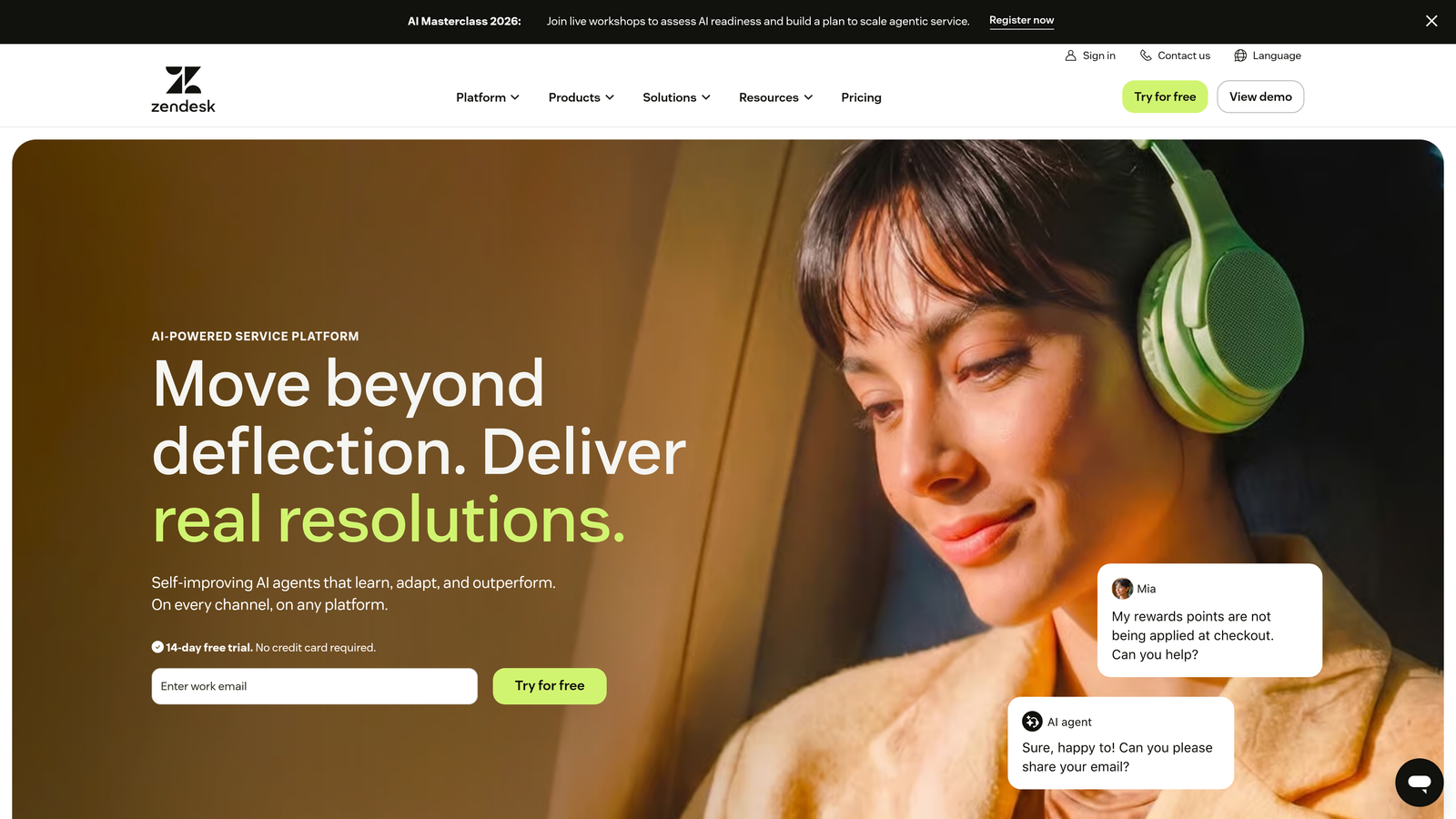
Zendesk AI is the intelligent automation suite layered onto one of the most widely deployed enterprise helpdesks in the market, adding triage, intent detection, AI agents, and agent assist to an already mature platform.
Where This Tool Shines
Zendesk's core strength has always been its ecosystem maturity. With over 1,000 marketplace integrations and years of enterprise deployment experience, it's a known quantity for large support organizations. The AI suite adds meaningful automation on top of that foundation: intelligent triage detects intent and sentiment before tickets reach agents, AI agents handle front-line self-service, and Agent Copilot surfaces suggested responses and next-best-action guidance during live interactions.
The trade-off is that Zendesk AI is fundamentally an enhancement to an existing system rather than a ground-up rethink of how support should work. Teams that are deeply invested in the Zendesk ecosystem will find the AI additions valuable. Teams evaluating from scratch may want to consider whether they're buying a platform or a patchwork.
Key Features
AI-Powered Triage: Intent and sentiment detection that classifies and prioritizes tickets before they reach the queue.
Zendesk AI Agents: Front-line self-service resolution for common support queries without agent involvement.
Intelligent Routing and Priority Scoring: Routes tickets to the right team or agent based on predicted complexity and urgency.
Agent Copilot: Surfaces suggested responses, macros, and next-best-action recommendations during live agent interactions.
1,000+ Marketplace Integrations: Connects to virtually every tool in a modern enterprise stack.
Best For
Organizations already operating on Zendesk who want to add AI capabilities without a platform migration. Also strong for large support teams where incremental automation layered onto existing workflows is preferable to wholesale change.
Pricing
Suite plans start at approximately $55 per agent per month. AI add-ons are priced separately, and costs can become complex at enterprise scale — factor in the full stack when budgeting.
3. Intercom Fin
Best for: SaaS teams that want a conversational AI agent handling front-line support with per-resolution pricing tied directly to value delivered.
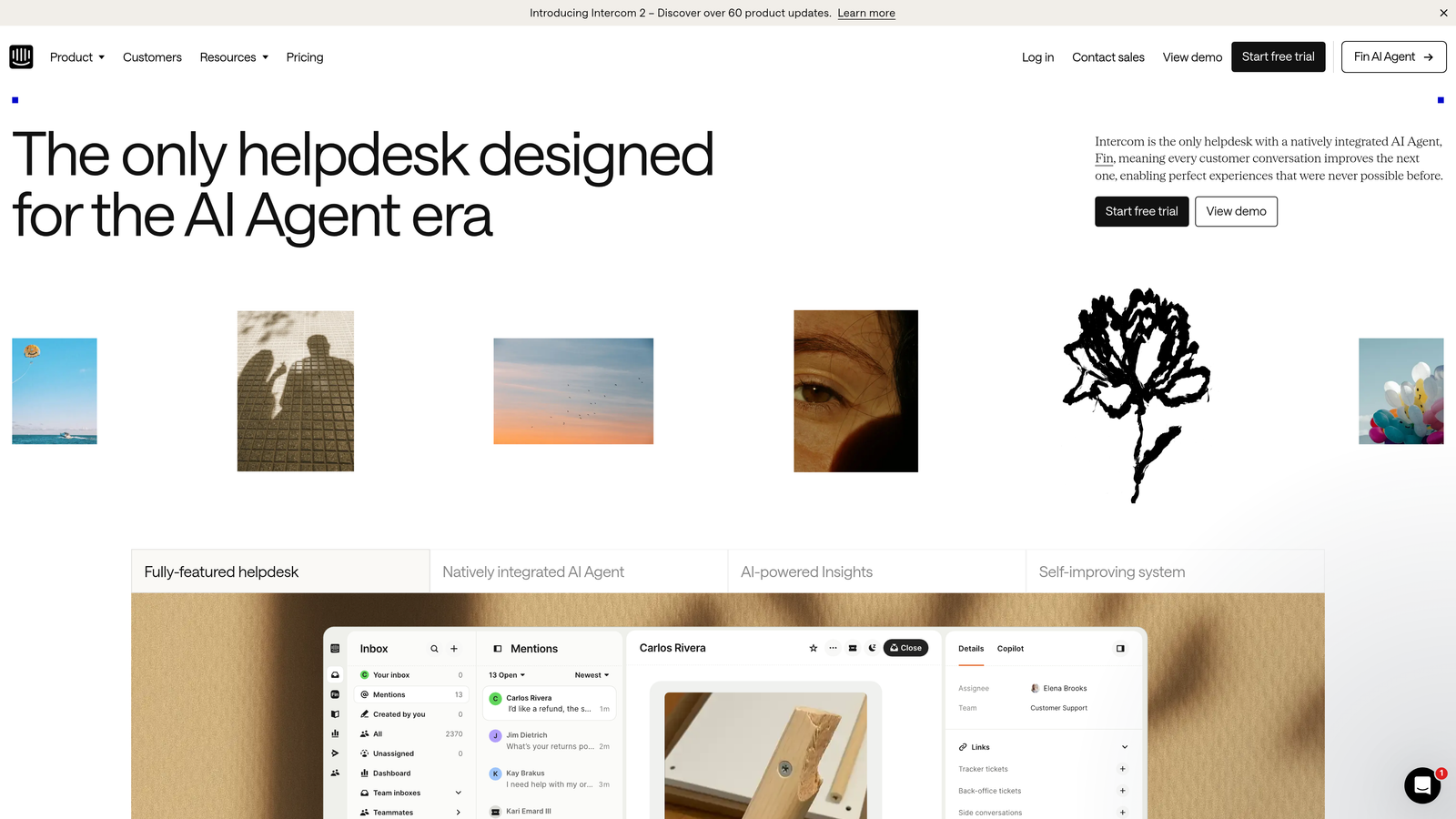
Intercom Fin is Intercom's LLM-powered AI agent designed to resolve support conversations autonomously across chat, email, and phone — with a pricing model that charges per successful resolution rather than per seat.
Where This Tool Shines
Fin's resolution quality on common SaaS support queries is a frequently cited strength. The agent ingests knowledge from multiple sources — help center articles, custom URLs, and manually defined answers — and applies large language model reasoning to handle nuanced conversational queries rather than just pattern-matching keywords.
The per-resolution pricing model is worth understanding carefully. It aligns Intercom's incentives with yours: you pay when Fin actually resolves something, not just when it responds. That said, at high volumes, per-resolution costs can become unpredictable compared to flat seat-based pricing. Teams with highly variable ticket volumes should model both scenarios before committing.
Key Features
LLM-Powered Conversational Resolution: Handles nuanced support conversations using large language model reasoning rather than rule-based flows.
Multi-Source Knowledge Ingestion: Learns from help center content, custom URLs, and manually defined answers for broad coverage.
Custom Instructions and Tone Controls: Lets teams configure Fin's persona and communication style to match brand guidelines.
Omnichannel Coverage: Operates across chat, email, and phone from a unified interface.
Smooth Human Handoff: Escalates to live agents with full conversation context when resolution requires a human touch.
Best For
SaaS companies already using Intercom's messenger and looking to automate front-line support without a separate platform. Also suitable for teams that prefer outcome-based pricing over per-seat models.
Pricing
Fin is priced per resolution. Intercom base plans start at approximately $39 per seat per month, with Fin costs added on top based on resolution volume.
4. Freshdesk Freddy AI
Best for: Mid-market teams that want a single-vendor solution for helpdesk and AI automation at competitive pricing.
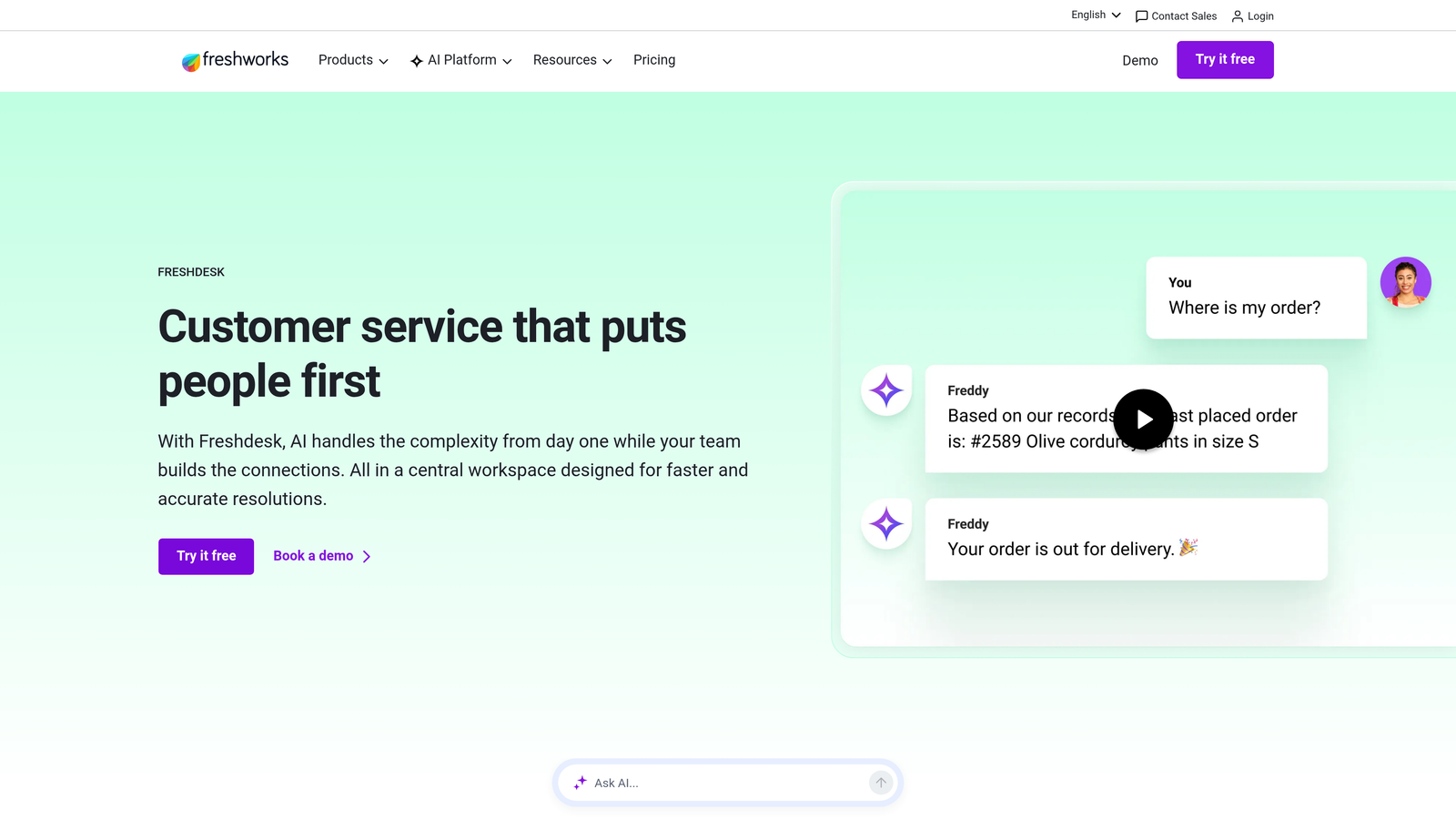
Freshdesk Freddy AI is Freshworks' embedded AI layer spanning its entire support suite, covering self-service bots, agent assist, ticket triage, and analytics within one unified platform.
Where This Tool Shines
Freddy AI's biggest advantage is its native integration across the Freshworks ecosystem. If your team uses Freshdesk for ticketing, Freshchat for messaging, and Freshservice for IT support, Freddy operates consistently across all three without custom integration work. That unified context is genuinely valuable for teams that don't want to stitch together multiple vendor relationships.
The coverage across the full support lifecycle is solid: Freddy Self Service handles front-line deflection, Freddy Copilot assists agents during live interactions with suggestions and summarization, and Freddy Insights delivers AI-generated analytics on support performance. It's a comprehensive package, particularly at the price point.
Key Features
Freddy Self Service Bot: Automated front-line resolution for common queries before tickets reach the human queue.
Freddy Copilot: Agent-assist suggestions, response drafting, and conversation summarization during live interactions.
Freddy Insights: AI-generated analytics surfacing trends, bottlenecks, and performance signals from support data.
Unified Freshworks Coverage: Operates consistently across Freshdesk, Freshchat, and Freshservice without separate configuration.
Omnichannel Support: Covers email, chat, phone, and social channels from a single platform.
Best For
Teams already in the Freshworks ecosystem, or mid-market organizations evaluating a single vendor for helpdesk plus AI without heavy integration overhead. Less suited to enterprises with complex custom workflows or deep Salesforce/Zendesk dependencies.
Pricing
Freddy AI is available as an add-on starting at approximately $29 per agent per month, on top of the base Freshdesk plan. Competitive at the mid-market tier.
5. Salesforce Service Cloud Einstein
Best for: Enterprises where support, sales, and billing teams share a Salesforce environment and need AI with full CRM context.
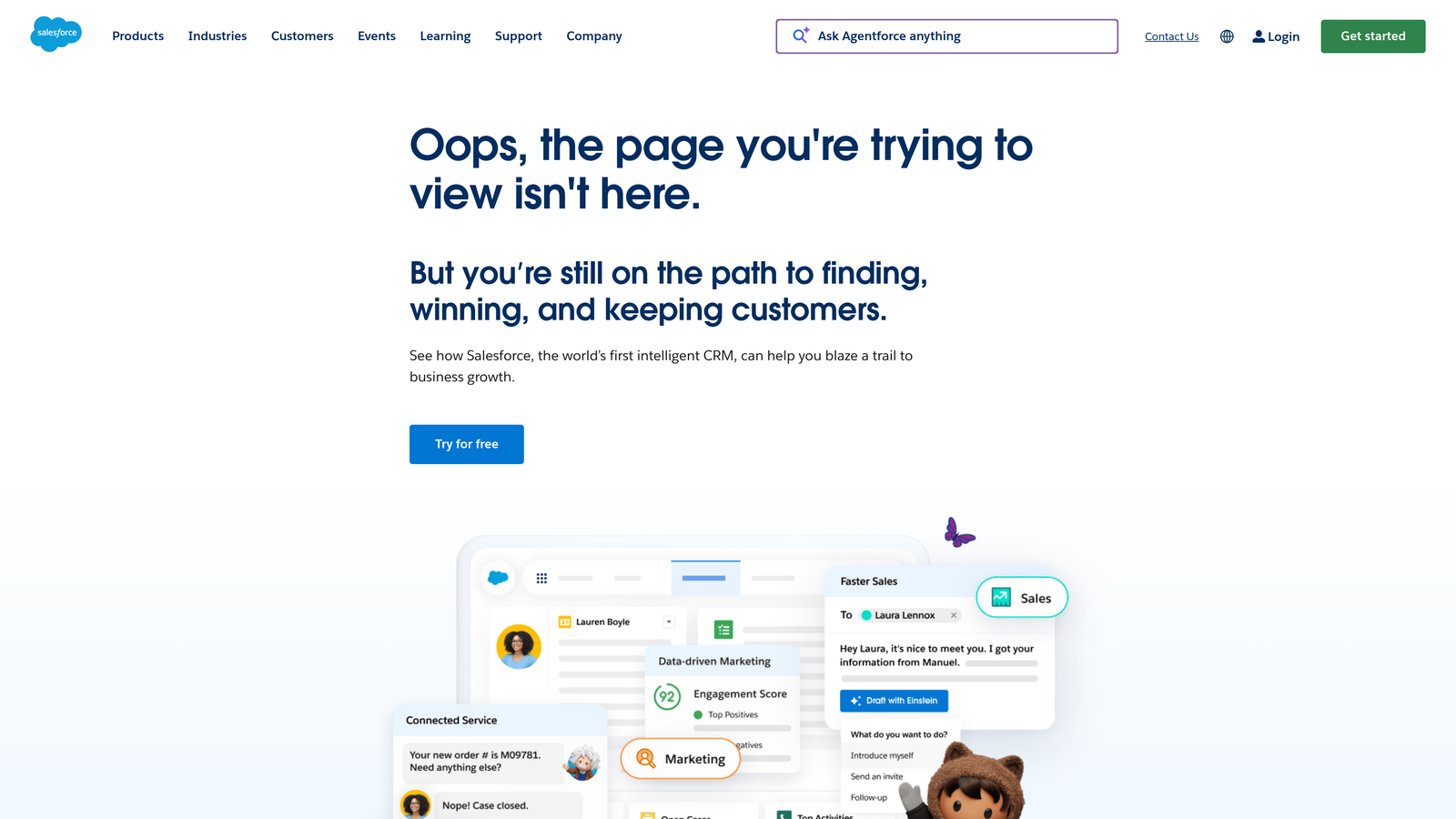
Salesforce Service Cloud Einstein is the AI-powered support platform within the Salesforce ecosystem, giving agents and bots access to contracts, purchase history, and open opportunities when resolving customer cases.
Where This Tool Shines
The core differentiator here is CRM depth. When an Einstein Bot handles a support case, it has access to the full Salesforce customer record: purchase history, active contracts, open sales opportunities, billing status. That context enables a quality of resolution that standalone support tools simply can't match for enterprise accounts with complex commercial relationships.
Einstein GPT extends that advantage to agent productivity, generating suggested replies and case summaries grounded in actual customer data rather than generic knowledge base content. For enterprises where support quality directly influences renewal and expansion, that CRM-aware context is significant.
Key Features
Einstein Bots: Self-service case resolution with native access to Salesforce CRM data for context-aware responses.
Einstein GPT for Agents: Generative AI reply suggestions and case summarization grounded in live CRM context.
Unified Customer View: Single record spanning sales, service, billing, and marketing interactions.
AI-Powered Case Routing: Intelligent routing and priority scoring based on case data and customer attributes.
Deep Salesforce Ecosystem Integration: Native connectivity to Sales Cloud, Marketing Cloud, and the broader Salesforce platform.
Best For
Large enterprises where support and revenue teams operate within a shared Salesforce environment. Implementation complexity and licensing costs are meaningful considerations — this is a platform investment, not a plug-and-play tool.
Pricing
Enterprise plans start at approximately $165 per user per month. Einstein AI add-ons are priced additionally. Total cost of ownership at scale is significant; factor in implementation and administration resources.
6. ServiceNow Customer Service Management
Best for: Enterprises where resolving a customer support case requires triggering internal IT, fulfillment, or back-office workflows.
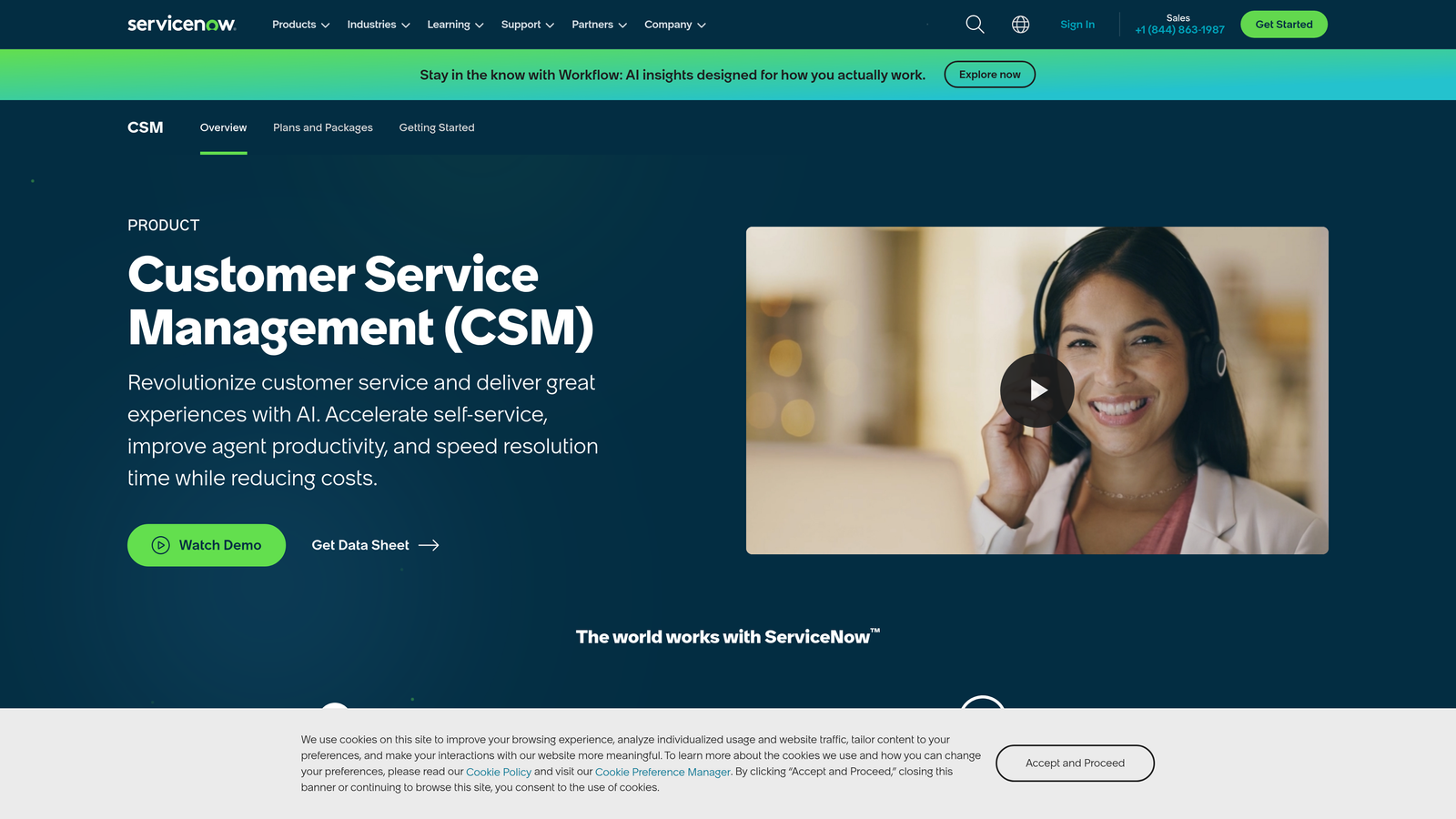
ServiceNow Customer Service Management connects customer-facing support to IT service management and back-office workflows, making it the natural fit for organizations where support resolution depends on internal action.
Where This Tool Shines
ServiceNow's differentiation isn't just in the support interface — it's in what happens behind it. When a customer reports a provisioning issue, a billing discrepancy, or a service outage, resolution often requires an internal workflow: an IT ticket, a billing adjustment, a fulfillment action. ServiceNow connects those dots natively in a way that pure support platforms don't.
Now Assist, ServiceNow's generative AI layer, adds productivity tools for agents: case summarization, suggested responses, and knowledge article generation. Combined with the platform's enterprise-grade compliance and audit capabilities, it's a strong choice for regulated industries or organizations with complex internal governance requirements.
Key Features
Virtual Agent: AI-powered self-service for case resolution, with access to back-office workflow triggers when needed.
AI-Driven Case Routing and Prioritization: Intelligent routing based on case type, urgency, and required fulfillment actions.
Back-Office Workflow Automation: Support cases can trigger internal IT, billing, or fulfillment workflows without manual handoff.
Now Assist Generative AI: Agent productivity tools including summarization, suggested responses, and knowledge generation.
Enterprise Compliance and Security: Audit trails, role-based access, and compliance controls suited to regulated industries.
Best For
Large enterprises — particularly in financial services, healthcare, and technology infrastructure — where customer support resolution is tightly coupled with internal IT and operational workflows.
Pricing
Enterprise licensing model; pricing is customized based on deployment scope. Contact ServiceNow directly for a quote.
7. Kustomer
Best for: High-volume omnichannel support operations that need a unified customer timeline with AI-powered routing and sentiment analysis.
Kustomer is a CRM-first enterprise support platform that consolidates every customer interaction into a single chronological timeline, with AI features layered across routing, sentiment analysis, and agent productivity.
Where This Tool Shines
Kustomer's timeline model is its most distinctive feature. Rather than organizing support around individual tickets, it organizes around the customer — showing agents the complete history of every interaction across email, chat, phone, and social in one view. For support teams handling complex, multi-touch customer relationships, that context significantly improves the quality and speed of resolution.
The AI capabilities are well-integrated into that model: intelligent routing directs conversations based on customer attributes and predicted complexity, sentiment analysis flags at-risk interactions before they escalate, and AI-suggested responses help agents respond faster without sacrificing quality. It's a coherent package for teams where relationship context matters as much as resolution speed.
Key Features
Unified Customer Timeline: Complete interaction history across email, chat, phone, and social in a single chronological view per customer.
AI-Powered Intelligent Routing: Routes conversations based on customer attributes, channel, and predicted complexity.
Sentiment Analysis and CSAT Prediction: Flags at-risk conversations and predicts satisfaction outcomes in real time.
AI-Suggested Responses and Summaries: Helps agents respond faster with contextually relevant reply suggestions.
Workflow Automation: Automates repetitive support processes like tagging, assignment, and follow-up scheduling.
Best For
Enterprises running high-volume omnichannel support where customer relationship context is central to resolution quality. Strong fit for B2C and hybrid B2B/B2C organizations with complex multi-channel customer journeys.
Pricing
Enterprise plans start at approximately $89 per user per month, positioning Kustomer in the mid-to-upper enterprise tier.
8. Tidio Lyro AI
Best for: Mid-market SaaS and e-commerce teams that want fast deployment and accessible pricing without sacrificing conversational AI quality.
Tidio Lyro AI is Tidio's conversational AI agent for front-line support automation, offering faster time-to-value and more approachable pricing than pure enterprise-tier platforms.
Where This Tool Shines
Lyro's primary advantage is deployment speed. Where enterprise platforms often require weeks of configuration, integration work, and training data preparation, Lyro can be operational quickly with relatively minimal setup. For growing teams that need automation now rather than after a lengthy implementation project, that speed-to-value matters.
The per-conversation pricing model also suits teams with variable support volumes — you're not paying for seat capacity you don't use during slow periods. The trade-off is integration depth: Lyro connects well to e-commerce platforms like Shopify and common SaaS tools, but it doesn't offer the deep multi-system integration breadth of enterprise-tier competitors like Halo AI or ServiceNow.
Key Features
Lyro AI Agent: Conversational AI that handles front-line support queries autonomously with natural language understanding.
Fast Deployment: Minimal setup complexity compared to enterprise-tier alternatives, with quicker time to live operation.
Unified Live Chat and AI Interface: Seamless escalation from AI to human agent within a single conversation interface.
Conversation Analytics: Resolution tracking and conversation-level performance insights.
E-Commerce and SaaS Integrations: Native connections to Shopify, WordPress, Wix, and common SaaS platforms.
Best For
Mid-market teams in e-commerce or SaaS that need conversational AI without enterprise-level implementation overhead. Less suited to large organizations with complex internal workflow requirements or deep CRM integration needs.
Pricing
Lyro AI starts at approximately $39 per month, scaling by conversation volume. Strong value relative to enterprise-tier alternatives at comparable resolution capability.
9. Forethought AI
Best for: Large support teams where smarter triage, intent detection, and agent efficiency are the primary automation goals.
Forethought AI is a specialized enterprise AI platform focused on triage, intent classification, and agent augmentation — designed for organizations where routing accuracy and agent productivity are the highest-leverage automation opportunities.
Where This Tool Shines
Forethought takes a modular approach to support automation, with distinct AI products for each stage of the support workflow: triage before routing, resolution for straightforward tickets, knowledge surfacing during agent interactions, and analytics for ongoing process improvement. That specialization means each capability is purpose-built rather than generalized, which often translates to higher accuracy in the specific tasks it handles.
The platform's integrations with Zendesk, Salesforce, ServiceNow, and Freshdesk make it a natural augmentation layer for enterprises already invested in those platforms. Rather than replacing your existing helpdesk, Forethought adds an intelligent automation layer on top of it — which is a compelling proposition for organizations that want better AI without a platform migration.
Key Features
Triage AI: Detects intent, sentiment, and urgency before tickets are routed, improving queue quality and prioritization accuracy.
Solve AI: Autonomous resolution for straightforward, high-confidence tickets without agent involvement.
Assist AI: Surfaces relevant knowledge articles and suggested responses to agents in context during live interactions.
Discover AI: Analytics and process improvement insights derived from support interaction patterns.
Helpdesk Integrations: Native integrations with Zendesk, Salesforce, ServiceNow, and Freshdesk for layered deployment.
Best For
Large enterprise support teams with established helpdesk infrastructure who want to add sophisticated AI triage and agent augmentation without replacing their existing platform. Particularly strong where routing accuracy and agent efficiency are the primary performance levers.
Pricing
Enterprise pricing available on request. Contact Forethought directly for a quote tailored to your team size and integration requirements.
Which Platform Is Right for Your Team?
The right enterprise support automation platform depends less on feature checklists and more on where your team's highest-leverage opportunity actually sits. Here's a quick way to think through the decision.
AI-first SaaS teams building for scale: Halo AI is the strongest fit. Its page-aware context engine, continuous learning architecture, and business intelligence output go well beyond ticket deflection — making it the right choice for product-led organizations that want support automation to feed insights back into product, revenue, and engineering workflows.
Enterprises deeply embedded in Salesforce: Service Cloud Einstein is the natural choice. The CRM-aware AI context it provides is difficult to replicate with a standalone tool, and the unified customer view across sales and support is genuinely valuable for complex commercial relationships.
Teams already on Zendesk or Freshdesk: Zendesk AI and Freshdesk Freddy AI offer the lowest-friction path to adding automation without migrating platforms. Forethought AI is also worth evaluating as an augmentation layer on top of either.
ITSM-heavy organizations: ServiceNow CSM is purpose-built for environments where customer support resolution depends on triggering internal operational workflows — a use case most pure support platforms don't handle well.
Mid-market teams prioritizing speed and simplicity: Tidio Lyro AI and Freshdesk Freddy AI both offer fast deployment and accessible pricing without the implementation overhead of enterprise-tier platforms.
Your support team shouldn't scale linearly with your customer base. Let AI agents handle routine tickets, guide users through your product, and surface business intelligence while your team focuses on complex issues that need a human touch. See Halo in action and discover how continuous learning transforms every interaction into smarter, faster support.