Freshdesk vs AI Support Platforms: 8 Solutions Compared for 2026
Choosing between Freshdesk vs AI support platforms requires understanding a fundamental shift: traditional helpdesks with AI add-ons versus AI-native solutions built for autonomous resolution. This comparison examines eight leading options, from legacy platforms to purpose-built AI support tools, helping B2B companies select the right solution based on their ticket volume, automation goals, and whether they need continuous learning AI that integrates across their entire business stack or basic helpdesk functionality with AI features.
 Matt PattoliFounder12 min read
Traditional helpdesk software served support teams well for years, but the landscape has shifted dramatically. Today's B2B companies face a choice: stick with established platforms like Freshdesk or embrace AI-native support solutions built from the ground up for autonomous resolution.
The difference isn't just about adding AI features to existing helpdesks. It's about fundamental architecture—whether AI learns continuously from every interaction or operates as a static add-on, whether it sees what your users see in your product or just reads text tickets, and whether it connects intelligence across your entire business stack or lives in isolation.
This comparison breaks down leading options—from legacy helpdesks with AI capabilities to purpose-built AI support platforms—so you can match the right tool to your team's actual needs, ticket volume, and automation goals.
1. Halo AI
Best for: B2B companies seeking autonomous ticket resolution with continuous learning and deep product integration
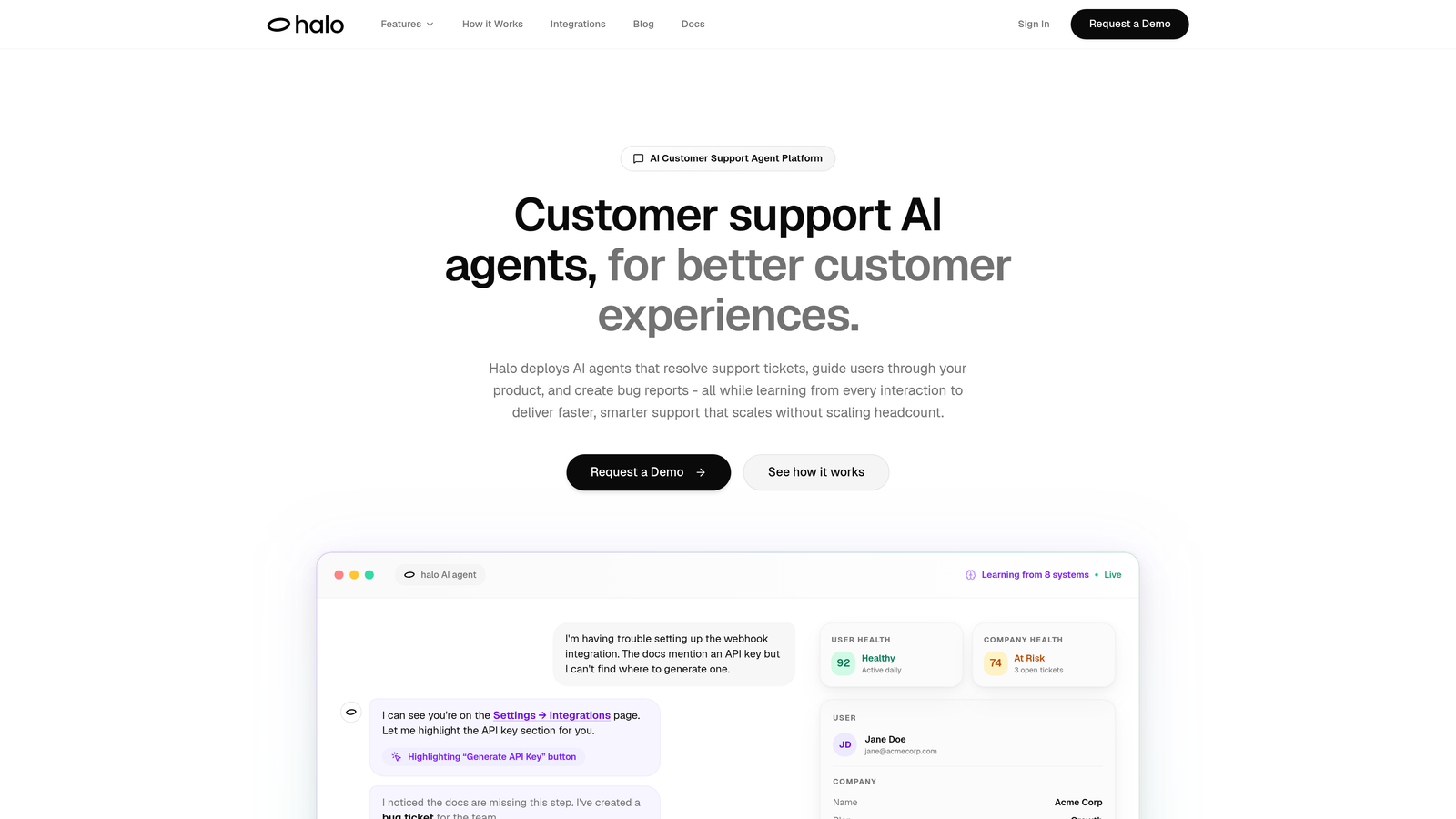
Halo AI is an AI-native customer support platform built specifically for autonomous resolution rather than agent assistance.
Where This Tool Shines
Unlike traditional helpdesks that added AI features later, Halo was designed from the ground up around autonomous agents that resolve tickets without human intervention. The platform's page-aware context means AI agents can see exactly what users see in your product interface, enabling them to provide visual guidance and contextual help that text-based systems simply can't match.
The continuous learning architecture sets Halo apart from static AI implementations. Every interaction—whether resolved autonomously or escalated to humans—trains the system to handle similar issues better next time. This creates a compounding improvement effect that traditional helpdesks with bolt-on AI can't replicate.
Key Features
Autonomous AI Agents: Resolve tickets end-to-end without human intervention, handling routine issues while learning from every interaction.
Page-Aware Context: See what users see in real-time, enabling visual UI guidance and context-specific help beyond text-based responses.
Auto Bug Ticket Creation: Automatically detect and create Linear tickets when support issues reveal product bugs or feature gaps.
Smart Inbox with Business Intelligence: Surface customer health signals, revenue intelligence, and anomaly detection beyond basic support metrics.
Live Agent Handoff: Seamlessly escalate complex issues to human agents with full conversation context and visual history.
Best For
B2B product teams and SaaS companies using helpdesk systems like Zendesk, Freshdesk, or Intercom who need true autonomous resolution rather than just agent assistance. Particularly valuable for teams where product context matters—where showing users what to click is more effective than describing it.
Pricing
Contact for custom pricing based on resolution volume. The model shifts from per-agent costs to per-resolution, aligning pricing with actual value delivered rather than team headcount.
2. Freshdesk
Best for: Teams wanting established helpdesk infrastructure with AI capabilities added through Freddy AI
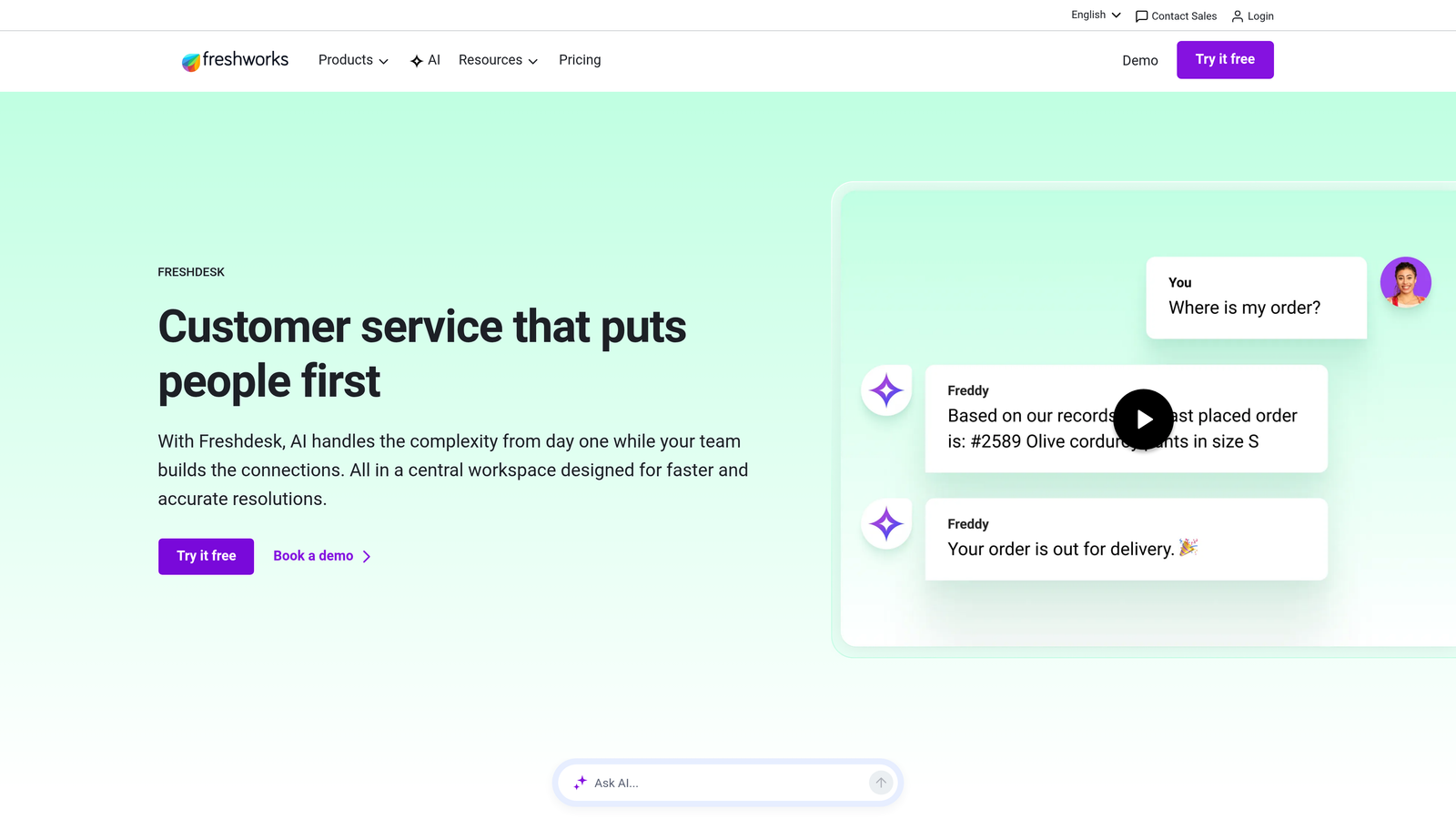
Freshdesk is a cloud-based helpdesk platform that has added AI automation through its Freddy AI assistant.
Where This Tool Shines
Freshdesk built its reputation on being an accessible, user-friendly alternative to enterprise helpdesks. The platform handles multi-channel ticketing well, bringing email, chat, phone, and social messages into a unified inbox. For teams already comfortable with traditional helpdesk workflows, Freshdesk offers a gentle introduction to AI through Freddy without forcing a complete operational overhaul.
The marketplace ecosystem is genuinely extensive, with over 1,000 integrations covering everything from CRMs to project management tools. This breadth matters for teams with established tech stacks who need their helpdesk to play nicely with existing systems.
Key Features
Multi-Channel Ticketing: Consolidate support requests from email, chat, phone, and social media into a single agent workspace.
Freddy AI: Chatbot for initial triage, auto-categorization of tickets, and suggested responses for agents based on past resolutions.
Marketplace Integrations: Connect with 1,000+ third-party tools through pre-built integrations and API access.
Team Collaboration: Shared ownership, internal notes, and SLA management for coordinating across support teams.
Knowledge Base: Self-service portal with AI-suggested articles based on ticket content and customer search behavior.
Best For
Support teams transitioning from email-based support to a proper helpdesk system, or companies wanting traditional ticketing infrastructure with optional AI features rather than AI-first automation.
Pricing
Free tier available for up to 10 agents with basic features. Paid plans start at $15 per agent per month, scaling to enterprise pricing with advanced AI and customization.
3. Intercom Fin
Best for: Companies already using Intercom who want AI resolution integrated with their existing conversational platform
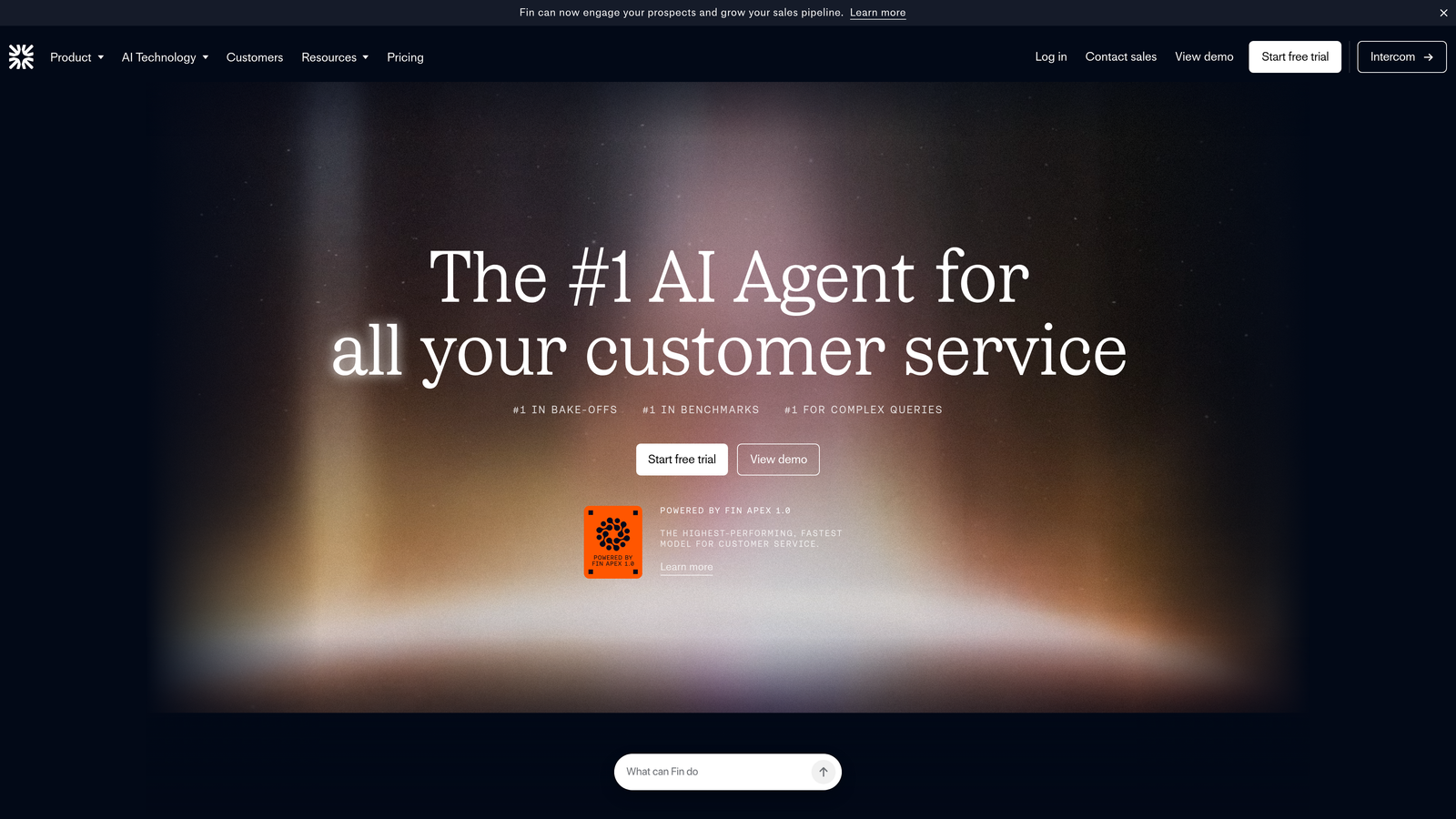
Intercom Fin is an AI chatbot built directly into Intercom's messaging platform for automated customer support.
Where This Tool Shines
Fin leverages the conversational foundation that Intercom spent years building. If you're already using Intercom for customer messaging, product tours, or onboarding, Fin slots in naturally without requiring a separate system or workflow. The AI trains on your help center content and past conversations, creating responses that feel consistent with your existing support voice.
The handoff mechanism between AI and human agents is notably smooth. When Fin escalates an issue, human agents receive full conversation context and can see exactly what the AI already tried, eliminating the frustrating "let me start over" experience customers hate.
Key Features
AI Resolution: Automatically resolve customer questions by pulling from help center articles and learning from past conversation patterns.
Contextual Handoff: Transfer conversations to human agents with complete history, attempted solutions, and customer sentiment signals.
Product Tour Integration: Combine automated support with in-app messaging and onboarding flows in a unified platform.
Intent-Based Routing: Direct conversations to the right team based on detected customer intent and account attributes.
Resolution Analytics: Track which issues AI handles autonomously versus those requiring human intervention, with conversation outcome data.
Best For
Existing Intercom customers who want to add AI resolution capabilities, or companies prioritizing conversational support over traditional ticketing workflows.
Pricing
Fin AI charges per resolution on top of base Intercom plans, which start at $39 per seat per month. Resolution pricing varies based on volume commitments.
4. Zendesk AI
Best for: Enterprise organizations needing advanced AI automation layered on proven helpdesk infrastructure with compliance certifications
Zendesk AI adds intelligent automation to Zendesk's enterprise support platform through bots, triage, and agent assistance.
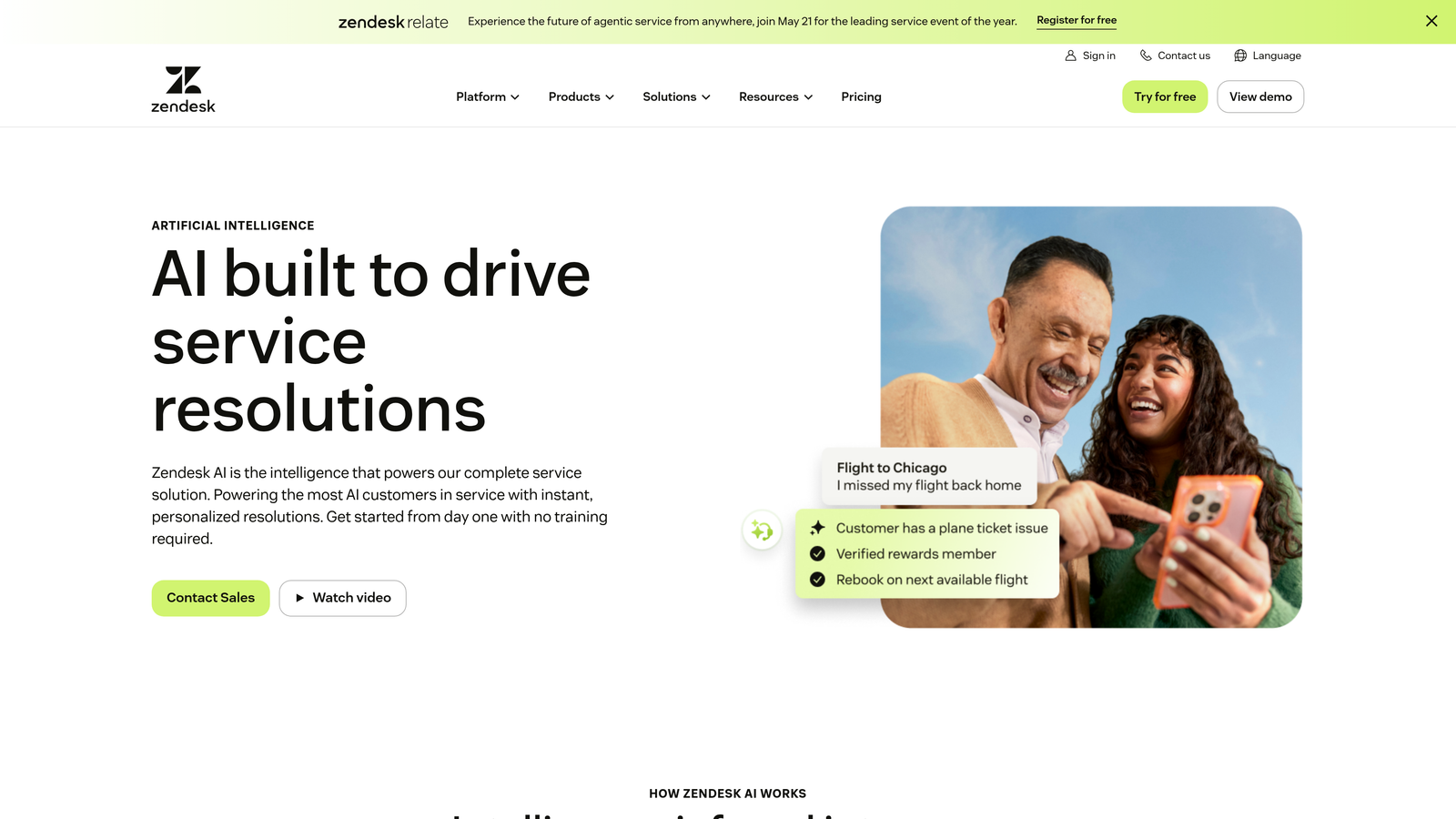
Where This Tool Shines
Zendesk built its AI capabilities with enterprise requirements in mind—security certifications, compliance frameworks, and the kind of granular controls large organizations demand. The pre-trained intent models organized by industry mean you're not starting from scratch when building automated workflows, which matters when you need AI running quickly across multiple product lines or business units.
The advanced analytics and custom reporting capabilities go deeper than most helpdesks. For teams that need to prove ROI to executives or track complex SLA requirements across different customer segments, Zendesk provides the reporting infrastructure to support those conversations.
Key Features
Industry-Trained Bots: Pre-built AI models with common intents for specific industries, reducing setup time for automation.
Intelligent Triage: Automatically categorize, prioritize, and route tickets based on content analysis and historical patterns.
Agent Workspace AI: Suggest responses, surface relevant knowledge articles, and predict customer sentiment in real-time during conversations.
Advanced Analytics: Custom dashboards, attribution modeling, and cross-channel reporting for enterprise-level insights.
Enterprise Security: SOC 2, HIPAA, GDPR compliance with granular permission controls and audit trails.
Best For
Large enterprises with complex support operations, strict compliance requirements, or existing Zendesk implementations looking to add AI capabilities without platform migration.
Pricing
Suite plans start at $55 per agent per month. Advanced AI features require additional add-on pricing, with enterprise contracts typically negotiated based on agent count and feature requirements.
5. Ada
Best for: High-volume support operations prioritizing self-service resolution across multiple languages and channels
Ada is an AI-first customer service automation platform focused on deflecting tickets through conversational self-service.
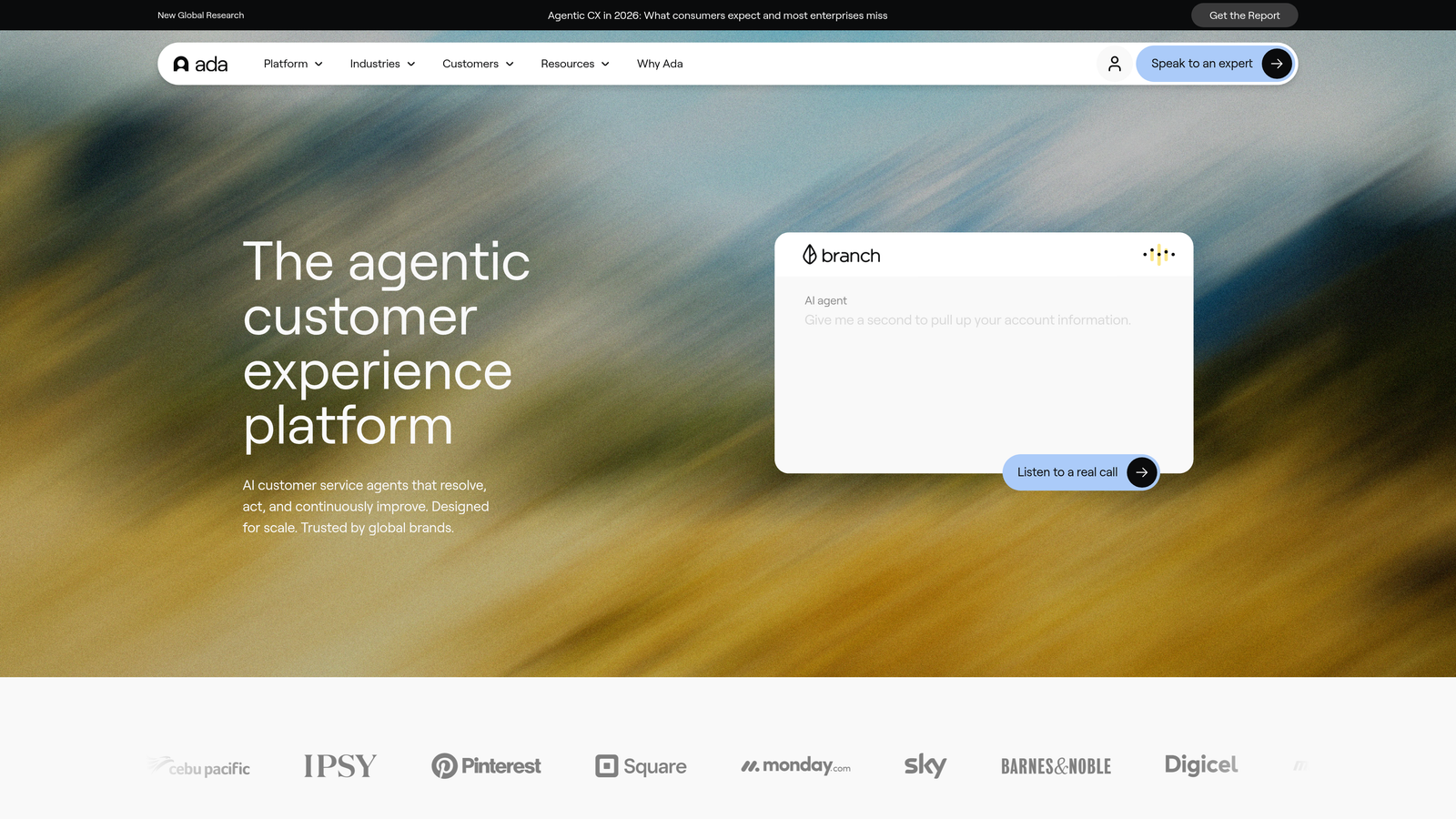
Where This Tool Shines
Ada's no-code conversation builder makes it accessible for non-technical teams to create sophisticated AI agents. You're not writing code or training models—you're building conversation flows visually, which means marketing or support ops can iterate on automation without engineering dependencies.
The multi-language support is genuinely comprehensive, covering 50+ languages with the same conversation logic. For companies operating globally or serving diverse customer bases, this eliminates the need to maintain separate automation for different regions.
Key Features
No-Code Builder: Visual conversation designer for creating custom AI agents without programming or machine learning expertise.
Multi-Language Support: Deploy the same conversation logic across 50+ languages with automatic translation and localization.
Proactive Messaging: Trigger automated conversations based on user behavior, page visits, or specific actions in your product.
CRM and Helpdesk Integration: Connect with Salesforce, Zendesk, Freshdesk, and other platforms to access customer data during conversations.
Containment Analytics: Track self-service resolution rates, conversation abandonment, and escalation patterns to optimize automation.
Best For
Support teams handling high ticket volumes with many repetitive questions, or companies serving international markets needing consistent automation across languages.
Pricing
Custom pricing based on conversation volume and feature requirements. Ada typically works with mid-market to enterprise companies with significant support scale.
6. Forethought
Best for: Teams wanting AI intelligence without migrating away from existing helpdesk platforms like Zendesk or Salesforce
Forethought layers AI capabilities on top of existing helpdesks for automated resolution, intelligent routing, and agent assistance.
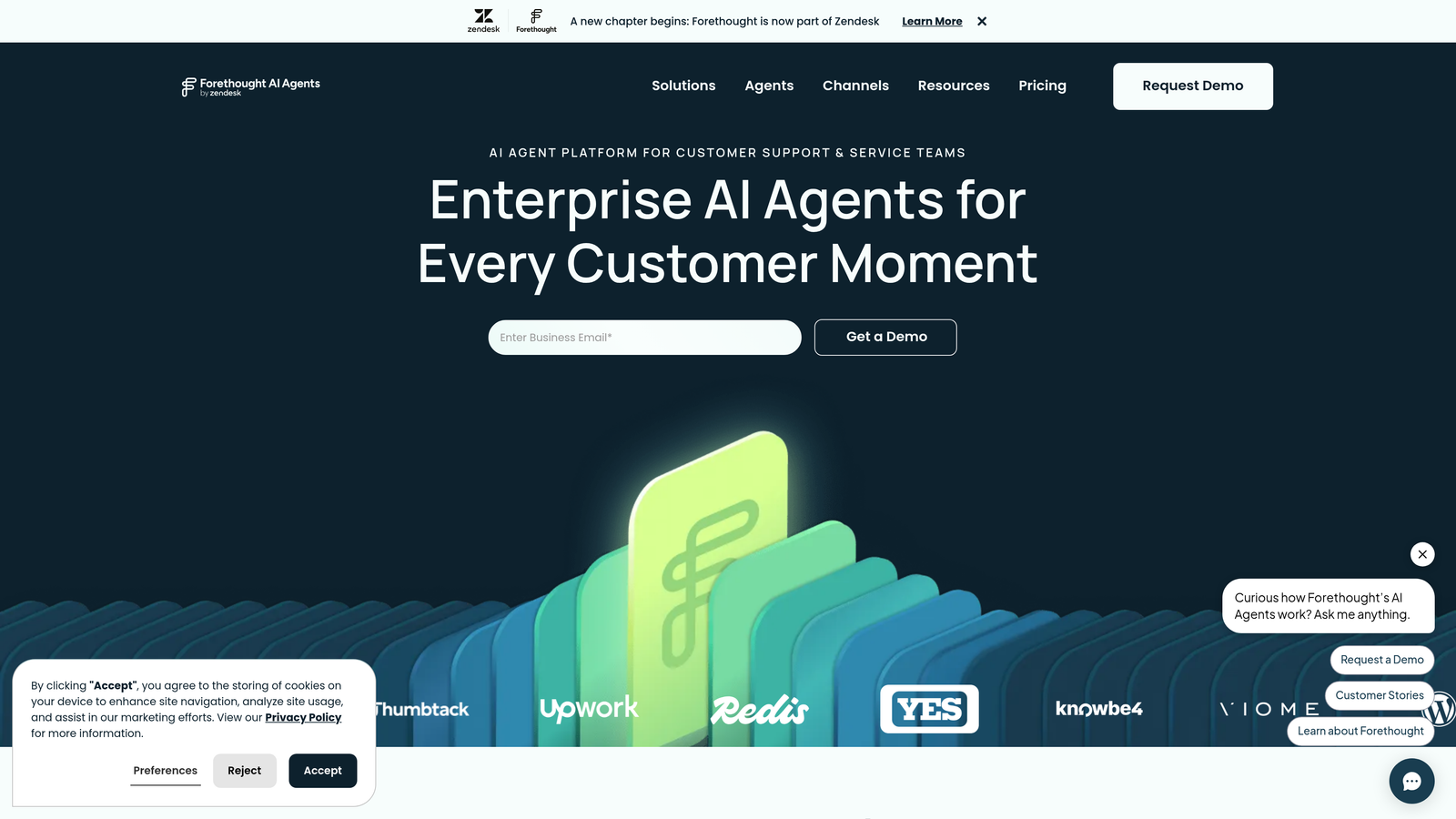
Where This Tool Shines
Forethought's architecture specifically addresses the "we can't rip out our current helpdesk" problem. Instead of forcing platform migration, it integrates with Zendesk, Salesforce Service Cloud, Freshdesk, and others to add intelligence without disrupting established workflows. This matters enormously for enterprises with years of ticket history, custom workflows, and integrations they can't easily recreate.
The modular approach—Solve for automation, Triage for routing, Assist for agent suggestions—means you can adopt AI capabilities incrementally rather than all at once. Start with intelligent triage, prove value, then expand to automated resolution when stakeholders are comfortable.
Key Features
Solve: Automated ticket resolution that works within your existing helpdesk, handling common issues without agent involvement.
Triage: Intelligent ticket classification, priority assignment, and routing based on content analysis and historical patterns.
Assist: Real-time response suggestions and knowledge article recommendations for agents during active conversations.
Platform Compatibility: Works with Zendesk, Salesforce Service Cloud, Freshdesk, and other major helpdesks without migration.
Workflow Automation: Build custom automation rules and escalation paths that integrate with existing ticketing processes.
Best For
Enterprises with significant investment in current helpdesk platforms who want AI capabilities without platform migration risk or disruption.
Pricing
Custom pricing based on ticket volume and which modules (Solve, Triage, Assist) you deploy. Typically structured as annual contracts with enterprise support.
7. Tidio
Best for: Small businesses and e-commerce stores needing affordable live chat with basic AI chatbot capabilities
Tidio combines live chat and AI chatbot features designed specifically for small business budgets and e-commerce support.
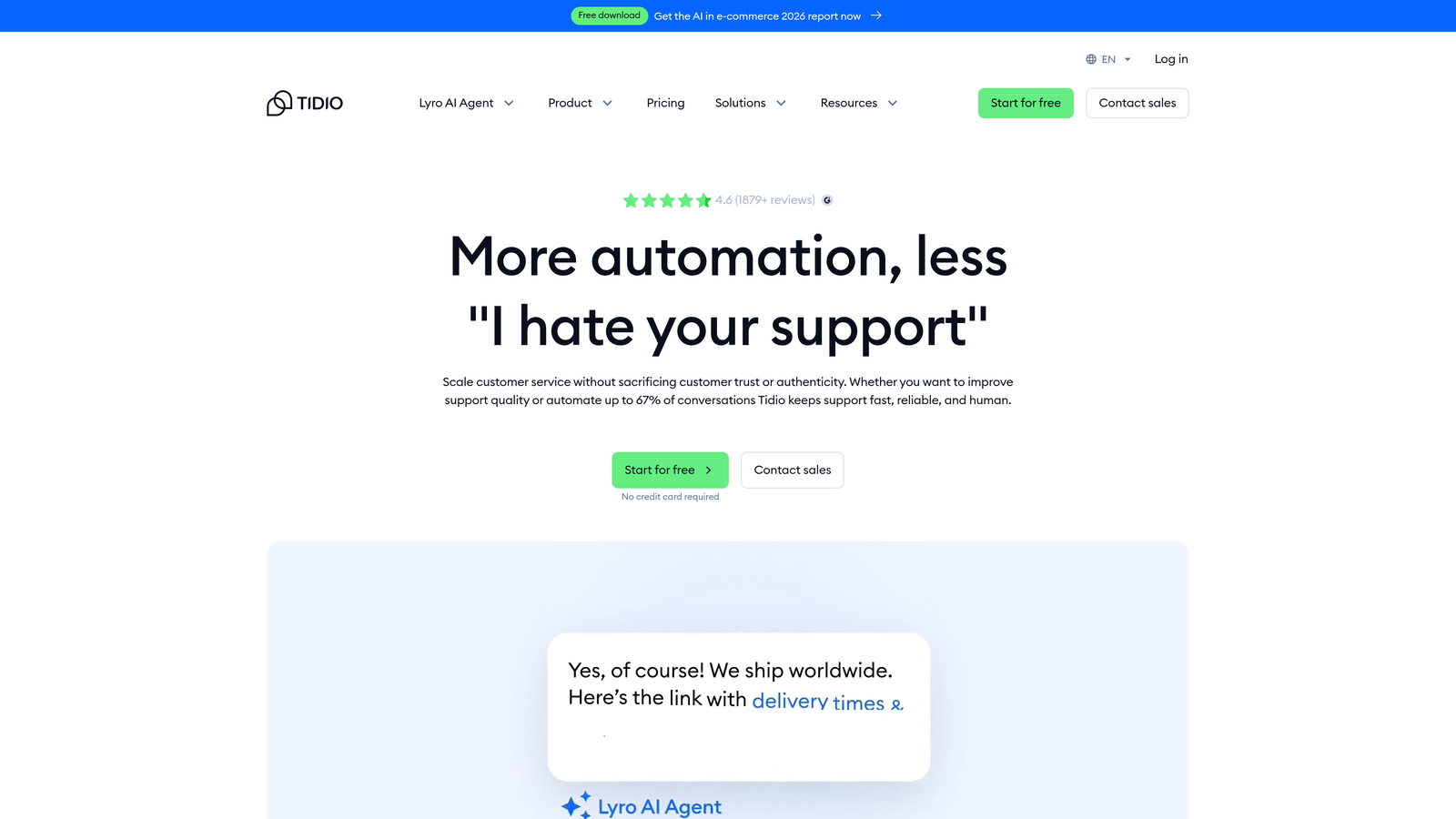
Where This Tool Shines
Tidio makes AI accessible at price points that small businesses can actually afford. While enterprise platforms charge thousands monthly, Tidio offers meaningful automation starting at $39 per month. The Lyro AI chatbot handles common questions conversationally, and the visual builder includes templates for e-commerce scenarios like order tracking and return policies.
The e-commerce integrations are particularly well-executed. Shopify, WooCommerce, and WordPress connections let the chatbot access order information, shipping status, and product details directly—functionality that typically requires custom development on other platforms.
Key Features
Lyro AI Chatbot: Conversational AI that handles common questions and captures leads when human agents are offline.
Visual Chatbot Builder: Drag-and-drop conversation designer with pre-built templates for common e-commerce scenarios.
Live Chat: Real-time messaging with visitor tracking, typing insights, and conversation history across sessions.
E-Commerce Integrations: Native connections to Shopify, WooCommerce, WordPress, and major e-commerce platforms for order access.
Mobile Apps: iOS and Android apps for responding to customers on the go without desktop access.
Best For
Small e-commerce businesses, solopreneurs, and teams under 10 people who need live chat and basic AI without enterprise complexity or pricing.
Pricing
Free tier available with basic live chat. Lyro AI chatbot plans start at $39 per month, with higher tiers adding more conversations and advanced features.
8. Help Scout
Best for: Teams prioritizing human-centric support with AI features that assist agents rather than replace them
Help Scout is a help desk platform designed around human support teams, with AI features focused on drafting and summarization.
Where This Tool Shines
Help Scout's philosophy centers on making human agents more effective rather than automating them away. The AI Drafts feature suggests complete responses based on past conversations, but keeps humans in the loop to review and personalize before sending. This approach resonates with teams who believe customer relationships matter more than pure efficiency metrics.
The shared inbox design with collision detection prevents multiple agents from accidentally responding to the same customer—a surprisingly common problem in high-volume environments that Help Scout solves elegantly. The interface feels more like email than a ticketing system, which reduces training time for new team members.
Key Features
Shared Inbox: Email-like interface with collision detection to prevent duplicate responses and coordinate team coverage.
AI Drafts: Suggest complete response drafts based on past conversations and knowledge base content for agent review.
AI Summarize: Condense long conversation threads into brief summaries so agents can quickly understand context.
Docs Knowledge Base: Self-service help center with AI-powered search that surfaces relevant articles based on customer questions.
Beacon Widget: Embedded help widget for your website that combines knowledge base search, contact forms, and live messaging.
Best For
Support teams who view customer service as a relationship-building function rather than a cost center, or companies wanting AI assistance without full automation.
Pricing
Plans start at $20 per user per month with core features. AI capabilities included in higher tiers, with custom enterprise pricing for advanced needs.
Matching Your Support Strategy to the Right Platform
The choice between Freshdesk and AI support platforms isn't really about features lists. It's about fundamental strategy: do you want to make human agents more efficient, or do you want autonomous systems that resolve issues without human involvement?
Traditional helpdesks like Freshdesk, Zendesk, and Help Scout excel when you're building support operations around human teams. They provide the infrastructure—ticketing, routing, collaboration tools—that agents need to work effectively. The AI features assist and augment, but humans remain central to the operation. This approach makes sense when your support interactions are relationship-driven, when issues require nuanced judgment, or when you're simply not ready to trust autonomous systems with customer conversations.
AI-native platforms like Halo AI, Ada, and Forethought flip the model. They're built for autonomous resolution first, with human escalation as the backup rather than the primary mechanism. This architecture matters when you're handling high volumes of routine questions, when product context and visual guidance improve resolution, or when you need support to scale without proportionally scaling headcount.
The middle ground—platforms like Intercom Fin or Tidio—blend conversational interfaces with AI capabilities, working well for teams who want some automation without completely reimagining their support model.
Consider your ticket composition honestly. If 60% of your tickets are truly routine—password resets, order status, basic how-to questions—autonomous AI can handle those today, freeing your team for the complex 40% that needs human expertise. But if your support interactions are predominantly consultative, nuanced, or relationship-focused, agent-assist AI might deliver better outcomes than full automation.
Architecture matters more than you might expect. Page-aware systems that see what users see in your product can provide visual guidance that text-based systems simply can't match. Continuous learning platforms improve with every interaction, while static AI implementations require manual retraining. Integration depth determines whether your support system surfaces business intelligence or just manages tickets in isolation.
Your support team shouldn't scale linearly with your customer base. Let AI agents handle routine tickets, guide users through your product, and surface business intelligence while your team focuses on complex issues that need a human touch. See Halo in action and discover how continuous learning transforms every interaction into smarter, faster support.