9 Best AI Support Platforms vs Gorgias: Which One Is Right for Your Team in 2026
This in-depth comparison of Gorgias vs AI support platforms evaluates nine alternatives across AI capability, integrations, and scalability to help e-commerce brands and SaaS teams determine whether Gorgias still meets their needs or if an AI-native solution offers greater intelligence, automation, and long-term value.
 Matt PattoliFounder13 min read
Gorgias built its reputation as the go-to helpdesk for e-commerce brands. Deep Shopify integration, solid ticketing, a loyal user base — it earned its place. But as AI-native support platforms have matured, the question isn't just "should we use Gorgias?" anymore. It's "are we leaving intelligence on the table?"
This comparison breaks down Gorgias alongside eight AI-first alternatives, covering platforms built for B2B SaaS teams, e-commerce operations, and product-led growth companies alike. Whether you're frustrated by Gorgias's pricing model, need deeper AI autonomy, or want support tooling that feeds business intelligence back to your team, there's likely a better fit out there.
We evaluated each platform on AI capability depth, integration breadth, scalability, and how well it handles the full support lifecycle — from first contact to resolution and learning. Here's what we found.
1. Halo AI
Best for: B2B SaaS teams wanting autonomous AI support with built-in business intelligence
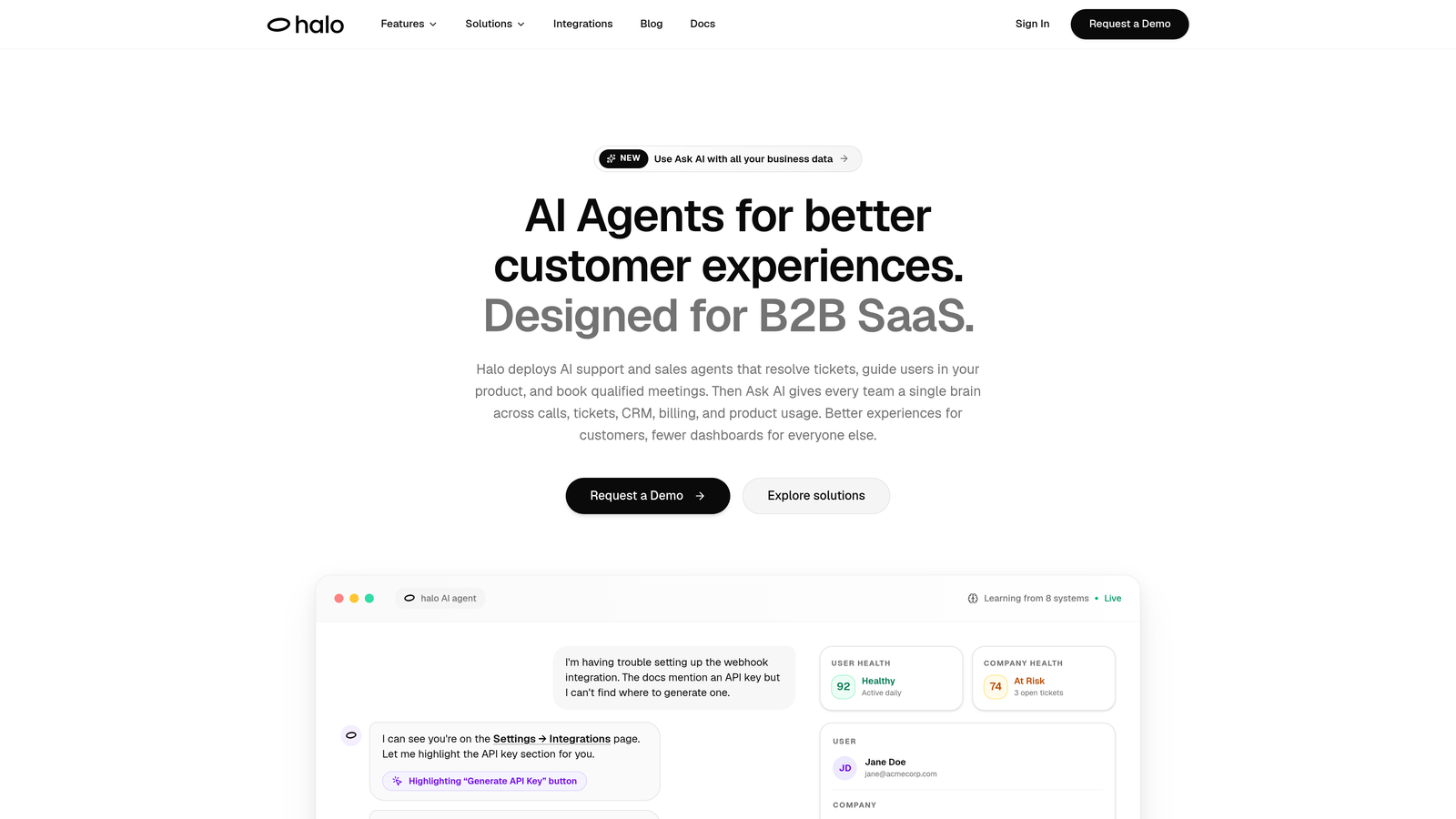
Halo AI is an AI-native customer support platform that deploys intelligent agents to autonomously resolve tickets, guide users through your product, and surface business intelligence signals — all while learning from every interaction.
Where This Tool Shines
Halo AI isn't AI bolted onto a legacy helpdesk. It's built AI-first, meaning the AI agent is the primary resolver and human agents handle escalations — not the other way around. The standout capability is page-aware context: Halo's chat widget actually sees what the user sees inside your product, allowing it to give precise, contextual guidance rather than generic answers.
Beyond support, Halo's smart inbox surfaces business intelligence signals that most helpdesks simply ignore: churn risk indicators, revenue anomalies, and customer health data extracted from support interactions. For B2B SaaS product teams, this turns the support queue into a strategic data source.
Key Features
Page-Aware AI Chat Widget: The AI sees the user's current product context, enabling precise in-product guidance rather than generic troubleshooting.
Autonomous Ticket Resolution: AI agents resolve tickets end-to-end with continuous learning loops that improve accuracy over time.
Auto Bug Ticket Creation: Automatically creates bug tickets in Linear, Jira, and similar tools when issues are detected — no manual triage required.
Smart Inbox with Business Intelligence: Surfaces churn signals, revenue anomalies, and customer health indicators directly from support conversations.
Deep Integration Stack: Connects with Slack, HubSpot, Stripe, Zoom, PandaDoc, Fathom, and Intercom, making it part of your entire business workflow rather than a siloed support tool.
Live Agent Handoff: Complex escalations route seamlessly to human agents with full conversation context preserved.
Best For
B2B SaaS companies and product teams that want AI to operate autonomously rather than assist agents. Particularly strong for teams where support data should inform product decisions, customer success, and revenue operations — not just close tickets.
Pricing
Contact for pricing. Visit haloagents.ai for details and to book a demo.
2. Gorgias
Best for: E-commerce brands running on Shopify, WooCommerce, or Magento
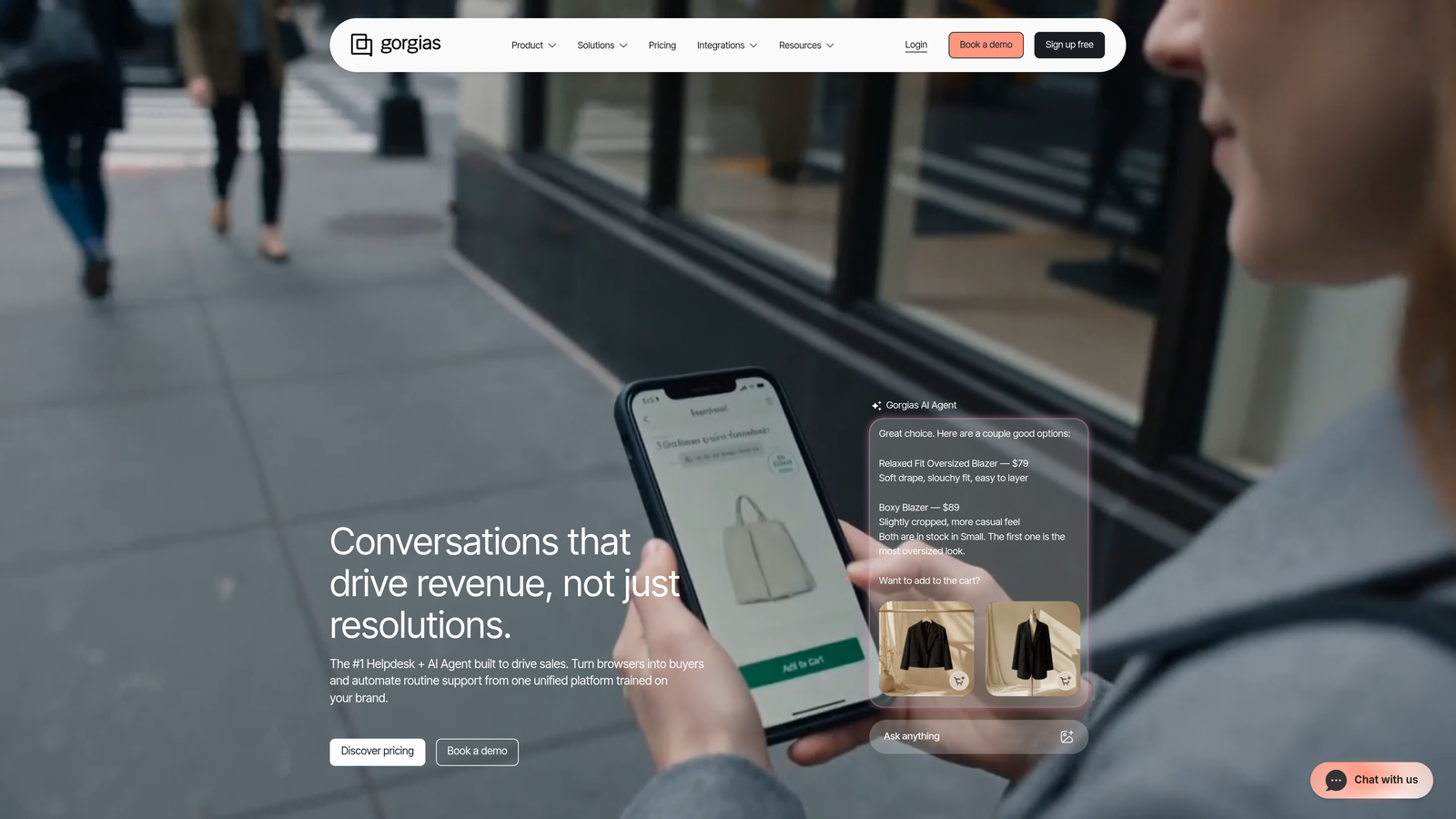
Gorgias is an e-commerce helpdesk platform with deep native integrations into Shopify, WooCommerce, and Magento, centralizing support across email, chat, social, and SMS.
Where This Tool Shines
Gorgias's core strength is how deeply it pulls e-commerce data into every ticket. Agents can see order history, tracking information, and customer lifetime value without switching tabs. For teams managing high volumes of order-related queries, this context dramatically speeds up resolution.
Its Automate feature handles rule-based and AI-powered ticket deflection for common order questions. The revenue statistics per ticket and per agent also give e-commerce managers a clearer picture of support's commercial impact — a metric most helpdesks don't surface.
Key Features
Native E-Commerce Data Integration: Pulls Shopify, WooCommerce, and Magento order data directly into the ticket view for immediate agent context.
Automate Feature: Combines rule-based and AI-powered ticket deflection for common order management queries.
Revenue Statistics: Tracks revenue generated per ticket and per agent, connecting support activity to commercial outcomes.
Macro Templates: Pre-built response templates for order management scenarios speed up agent workflows significantly.
Omnichannel Inbox: Consolidates email, live chat, social DMs, and SMS into a single queue.
Best For
E-commerce brands with high order-related ticket volumes, particularly those deeply invested in the Shopify ecosystem. Less suited to B2B SaaS environments where support complexity goes beyond transactional queries.
Pricing
Starts at $10/month on the Starter plan. Pricing scales by ticket volume, which can increase significantly as support operations grow. Verify current pricing at gorgias.com.
3. Intercom
Best for: SaaS companies managing both customer support and in-product engagement
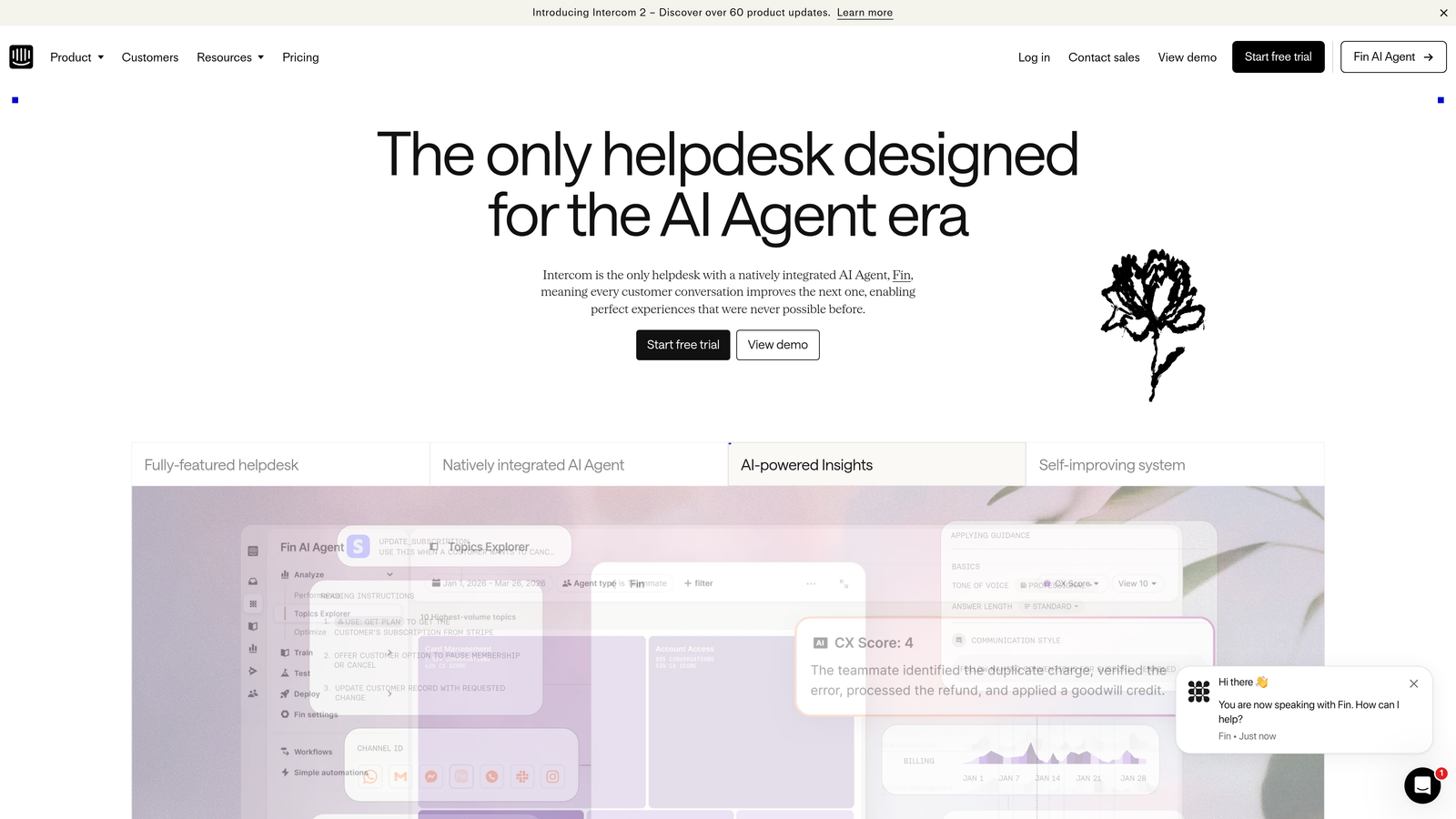
Intercom is a customer communications platform combining the Fin AI agent for autonomous resolution, in-product messaging, and a shared inbox with AI-assisted drafting.
Where This Tool Shines
Intercom's Fin AI agent has strong conversational resolution capabilities and handles a meaningful share of inbound queries without human intervention. The platform's real advantage is the combination of support and in-product engagement in one tool: product tours, targeted messages, and proactive outreach sit alongside the support inbox.
For SaaS companies where onboarding, activation, and support overlap heavily, this unified approach reduces tool sprawl. The shared inbox also includes AI-assisted drafts and conversation summaries that help agents work faster on escalated conversations.
Key Features
Fin AI Agent: Conversational AI that autonomously resolves customer questions using your help content and product data.
In-App Messenger and Product Tours: Combines support with proactive in-product guidance and user onboarding flows.
AI-Assisted Shared Inbox: Includes AI-generated draft replies and conversation summaries for agent efficiency.
Workflow Automation Builder: Visual builder for routing, tagging, and escalation logic without code.
Customer Data Platform: Segmentation and user data management built into the platform for targeted messaging.
Best For
SaaS teams that want support and customer engagement in a single platform. Pricing has historically been a pain point at scale, so teams with very high resolution volumes should model costs carefully before committing.
Pricing
Essential plan starts around $39/seat/month; Fin AI usage is priced per resolution. Verify current pricing at intercom.com.
4. Zendesk
Best for: Enterprise support operations requiring compliance, deep customization, and mature AI tooling
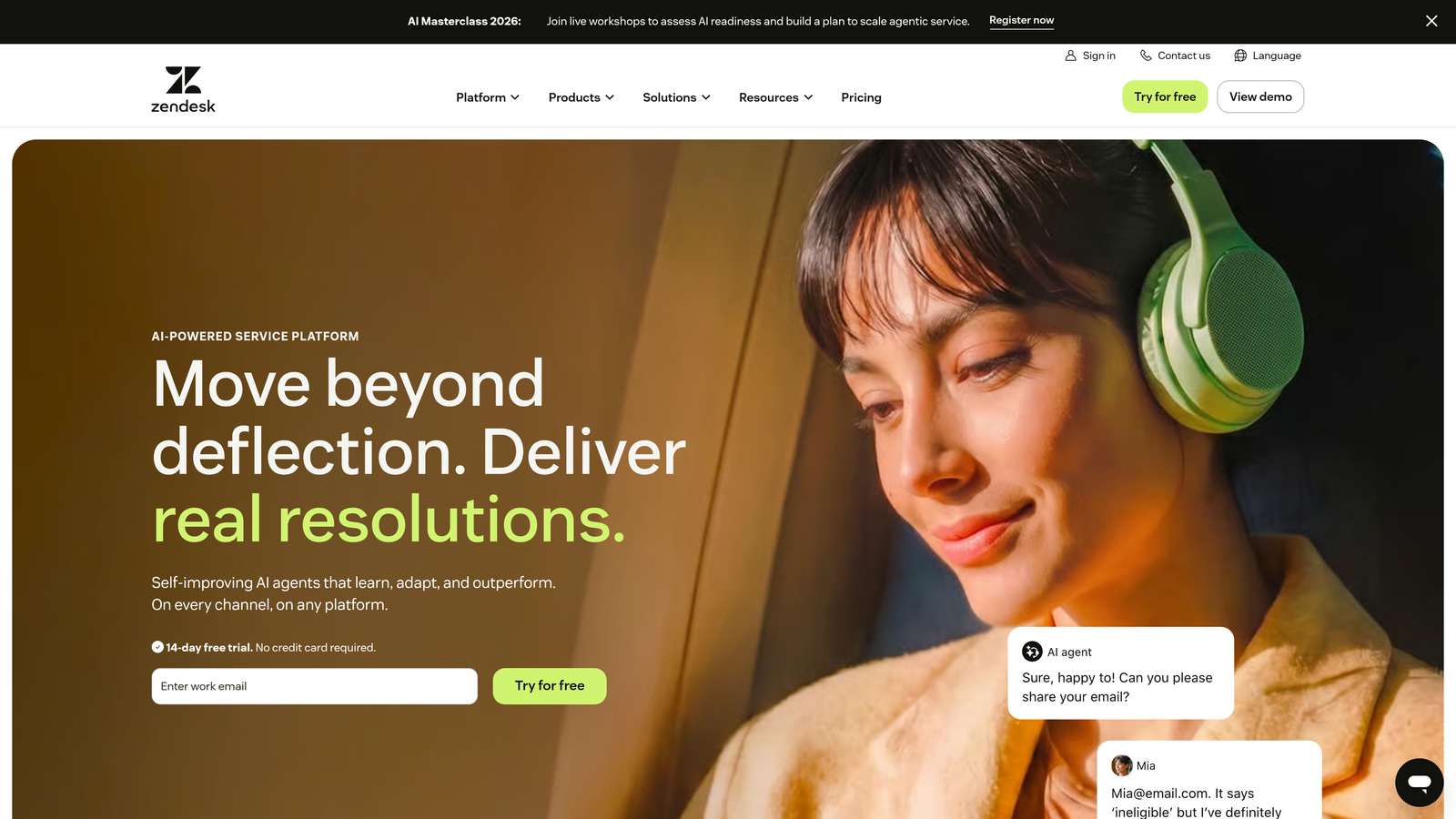
Zendesk is an enterprise-grade customer service suite with a mature AI Copilot, intelligent triage, and workflow customization capabilities that remain unmatched at scale.
Where This Tool Shines
Zendesk is the established standard for large support operations, and for good reason. Its AI Copilot assists agents with suggested actions and next-best-response recommendations, while intelligent triage and intent detection route tickets before agents even touch them. The depth of SLA management, reporting, and audit tooling makes it the default choice for enterprises with compliance requirements.
The app marketplace with over 1,000 integrations means Zendesk can connect to virtually any existing stack. The tradeoff is complexity: configuration requires real investment, and the pricing reflects the enterprise positioning.
Key Features
AI Copilot: Provides agents with suggested responses, next-best actions, and context summaries during live conversations.
Intelligent Triage and Intent Detection: Automatically categorizes, prioritizes, and routes incoming tickets based on content and intent.
Advanced SLA Management and Reporting: Granular SLA policies, custom reporting, and performance dashboards for large teams.
Extensive App Marketplace: Over 1,000 integrations covering CRM, billing, engineering, and productivity tools.
Enterprise Security and Compliance: Audit logs, data residency options, and compliance certifications for regulated industries.
Best For
Large enterprises and support organizations with complex workflows, compliance requirements, and the internal resources to configure and maintain the platform. Can be over-engineered for smaller teams.
Pricing
Suite Team starts around $55/agent/month; enterprise plans are significantly higher. Verify current pricing at zendesk.com.
5. Freshdesk
Best for: SMBs moving from manual support to AI-assisted automation on a controlled budget
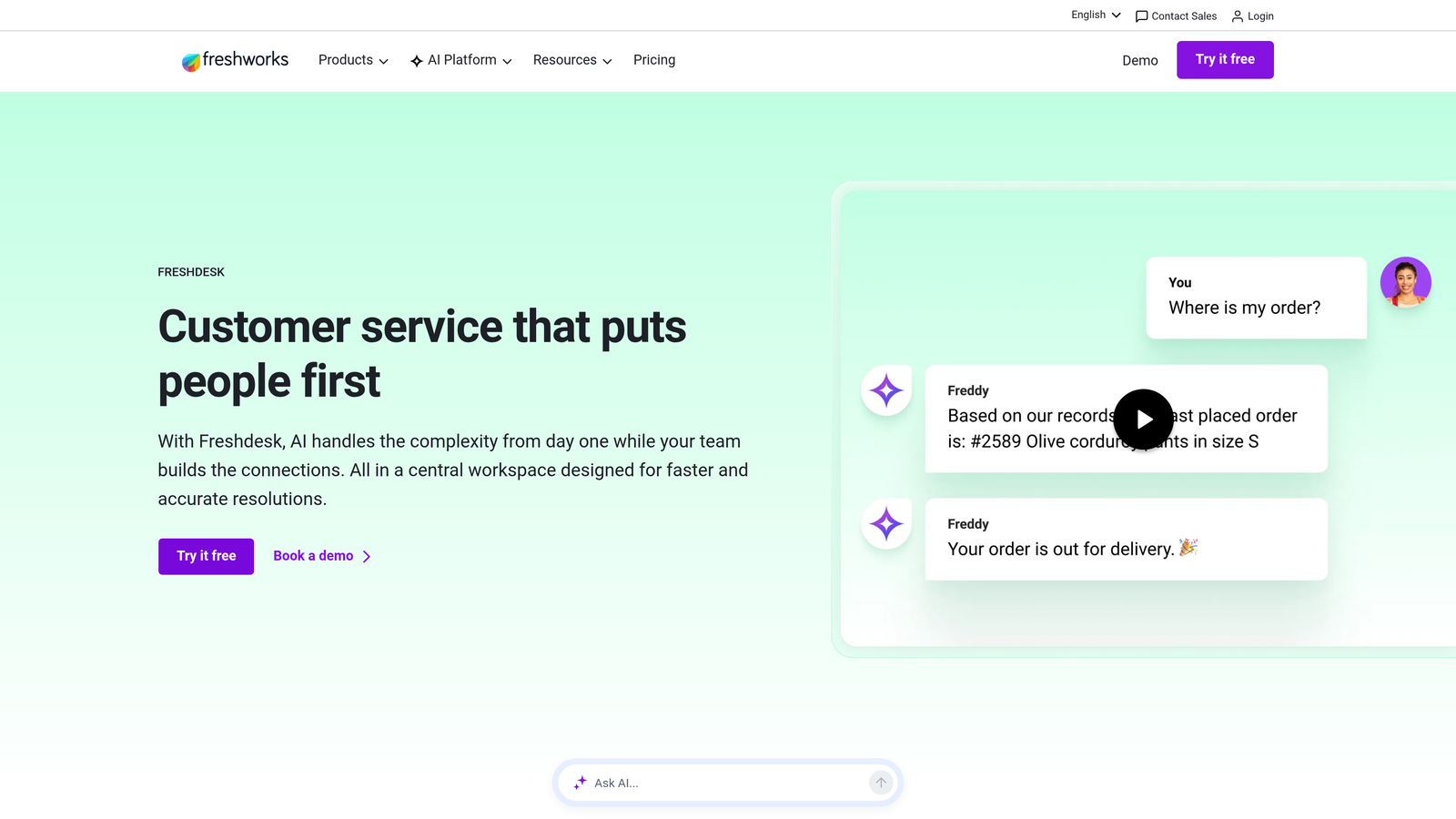
Freshdesk is an omnichannel helpdesk with the Freddy AI assistant, offering a broad feature set at a more accessible price point than most enterprise alternatives.
Where This Tool Shines
Freshdesk's value proposition is breadth at a reasonable cost. Freddy AI operates in two modes: Freddy Copilot assists agents with drafts, summaries, and suggested responses, while Freddy Self Service handles autonomous customer-facing resolution. Teams can start with the free tier and scale into automation as their needs grow.
The omnichannel coverage — email, chat, phone, and social — combined with canned responses and automation rules gives SMBs a solid operational foundation. It won't match Zendesk's depth or Halo AI's intelligence layer, but for teams prioritizing cost efficiency over cutting-edge AI capability, it delivers strong fundamentals.
Key Features
Freddy AI Copilot: Assists agents with AI-generated drafts, conversation summaries, and suggested responses.
Freddy Self Service: Customer-facing AI that handles autonomous resolution for common queries.
Omnichannel Coverage: Unified inbox across email, chat, phone, and social channels.
Automation Rules and SLA Policies: Rule-based automation for routing, escalation, and response time management.
Free Tier Available: A functional free plan makes it accessible for small teams testing the waters with helpdesk software.
Best For
Small to mid-sized businesses that need solid omnichannel support with AI assistance at a manageable cost. Teams that have outgrown email-based support but aren't ready for enterprise pricing.
Pricing
Free plan available; Growth plan starts around $15/agent/month. Verify current pricing at freshdesk.com.
6. Tidio
Best for: Small e-commerce businesses and service providers wanting quick AI chatbot setup
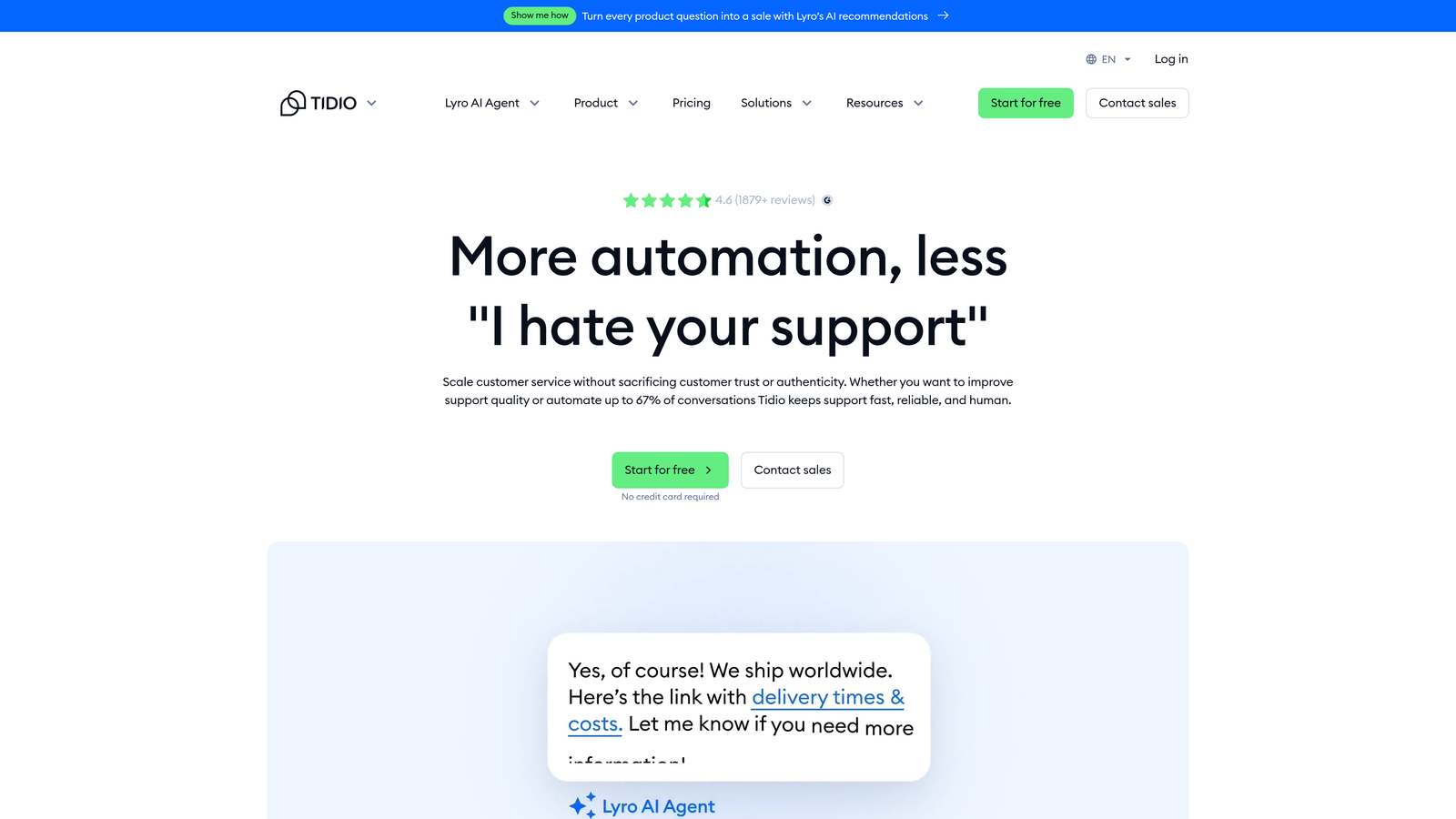
Tidio is a live chat and AI chatbot platform built for ease of setup, with the Lyro AI chatbot handling common customer questions automatically.
Where This Tool Shines
Tidio's biggest advantage is speed to value. Most teams can have Lyro AI handling common questions within hours of setup — no complex configuration or IT involvement required. The visitor tracking feature lets agents see who's on the site in real time, enabling proactive outreach before customers even submit a question.
For small e-commerce businesses on Shopify, WooCommerce, or Wix, the native integrations mean Tidio fits naturally into an existing stack. It's not designed for complex B2B SaaS environments or high-volume enterprise operations, but for its target use case, it delivers a clean, low-friction experience.
Key Features
Lyro AI Chatbot: Conversational AI that automatically handles common customer questions using your support content.
Live Chat with Visitor Tracking: Real-time view of active visitors with proactive chat initiation capabilities.
Pre-Built Automation Flows: Tidio Flows provide drag-and-drop automation for common support and lead capture scenarios.
E-Commerce Integrations: Native connections to Shopify, WooCommerce, and Wix for order context in conversations.
Mobile App: Manage conversations and respond to customers from any device.
Best For
Small e-commerce stores and service businesses that want an easy-to-deploy AI chatbot without a lengthy setup process. Not the right fit for teams needing deep workflow customization or B2B SaaS support complexity.
Pricing
Free plan available; Lyro AI starts around $29/month. Verify current pricing at tidio.com.
7. Help Scout
Best for: Teams prioritizing agent empowerment and relationship quality over full AI autonomy
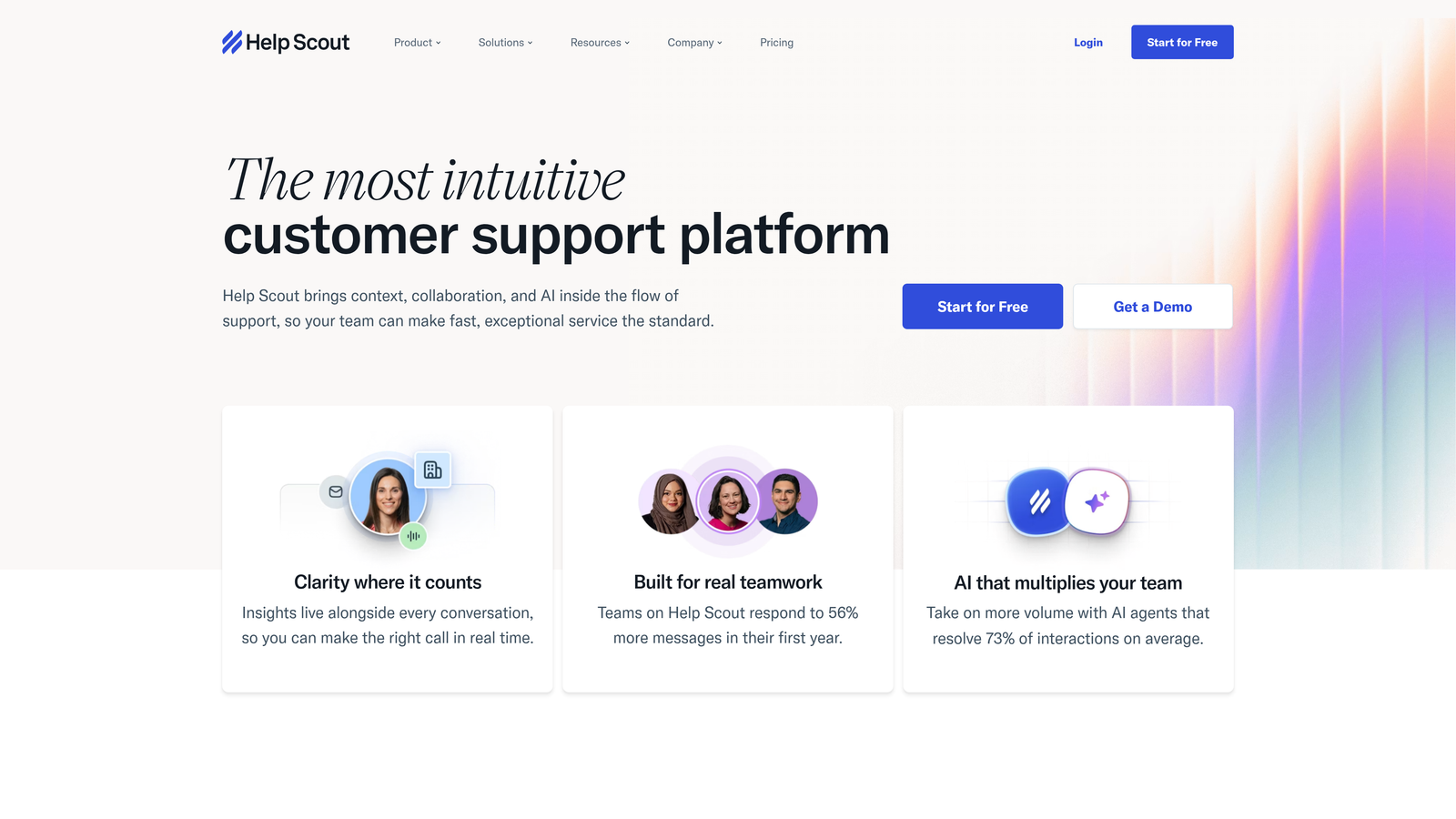
Help Scout is a human-centered helpdesk with AI assist features designed to make agents faster and more effective — not to replace them.
Where This Tool Shines
Help Scout occupies a deliberate position in the market: AI as an agent accelerator, not an agent replacement. Its AI Drafts, AI Summarize, and AI Assist features reduce the cognitive load on support agents without removing the human relationship from the interaction. For teams in industries where empathy and trust matter, this philosophy resonates.
The shared inbox with collision detection prevents two agents from responding to the same customer simultaneously, a small but meaningful quality-of-life feature. The Beacon widget also enables in-app help and proactive chat without the complexity of a full customer messaging platform.
Key Features
AI Drafts, Summarize, and Assist: AI tools that help agents write faster, understand conversation history quickly, and improve response quality.
Shared Inbox with Collision Detection: Prevents duplicate responses and keeps team workflows clean and coordinated.
Docs Knowledge Base Builder: Create and maintain a self-service help center directly within the platform.
Beacon Widget: In-app help widget that surfaces relevant Docs articles and enables proactive chat.
CSAT Ratings: Built-in customer satisfaction tracking to monitor support quality over time.
Best For
Teams where the human element of support is a competitive differentiator. Particularly strong for professional services, healthcare-adjacent businesses, and any team where customers expect a personal, high-quality interaction rather than automated resolution.
Pricing
Standard plan starts around $22/user/month. Verify current pricing at helpscout.com.
8. Kustomer
Best for: High-volume omnichannel CX teams in retail, logistics, and fintech needing a unified customer view
Kustomer is a CRM-native omnichannel support platform built around a unified customer timeline, with AI-powered routing and automation for complex, high-volume operations.
Where This Tool Shines
Kustomer's defining feature is the unified customer timeline: every interaction across every channel — email, chat, voice, social, SMS — displayed in a single chronological view with full CRM context. For teams handling customers across multiple touchpoints over time, this eliminates the fragmented experience that plagues traditional helpdesks.
The AI-powered conversation routing and suggested responses help agents move faster through high volumes, while the workflow automation handles business process logic that goes beyond simple rule-based routing. It's a more sophisticated operational platform than most helpdesks, built for teams where support complexity is genuinely high.
Key Features
Unified Customer Timeline: All interactions across every channel consolidated into a single chronological customer view with full CRM context.
AI-Powered Routing and Suggested Responses: Intelligent conversation assignment and AI-generated response suggestions for agent efficiency.
Omnichannel Coverage: Email, chat, voice, social, and SMS managed from a single interface.
Workflow Automation with Business Logic: Advanced automation that handles complex process rules beyond basic ticket routing.
Deep CRM Integration: Customer data from CRM systems surfaces directly in the support view for full relationship context.
Best For
High-volume CX operations in retail, logistics, or fintech where agents need complete customer context across multiple channels and touchpoints. Enterprise-focused and priced accordingly.
Pricing
Enterprise-focused pricing model. Contact Kustomer directly for current rates at kustomer.com.
9. Drift (Salesloft)
Best for: B2B revenue teams where support and sales conversations overlap
Drift, now part of Salesloft, is a conversational AI platform bridging sales and support conversations with AI-powered chatbots and account-based targeting for B2B revenue teams.
Where This Tool Shines
Drift occupies a unique position: it's less a pure support tool and more a revenue conversation platform where support happens to live. The AI-powered chatbots handle qualification, meeting booking, and common support queries in a single flow, making it particularly useful for B2B companies where prospects and customers often land on the same pages.
The integration with Salesloft's revenue workflow means support conversations can feed directly into sales pipeline activity. Real-time notifications alert both sales and support teams when high-value accounts are active, enabling coordinated outreach that a traditional helpdesk simply can't provide.
Key Features
AI-Powered Chatbots: Handle qualification, support queries, and meeting booking in a single conversational flow.
Conversational Landing Pages and Meeting Booking: Turn web pages into interactive conversations with direct calendar booking capabilities.
Salesloft Revenue Workflow Integration: Connects support conversations directly into sales pipeline and revenue activity tracking.
Real-Time Notifications: Alerts sales and support teams when target accounts are active on the site.
Account-Based Targeting: Personalizes conversations based on company and account data for a tailored visitor experience.
Best For
B2B companies where the line between support and sales is intentionally blurred. Strong fit for revenue teams using Salesloft who want support conversations to feed pipeline intelligence. Less suited to teams looking for a dedicated, standalone support platform.
Pricing
Premium and Enterprise tiers available. Contact Drift or Salesloft directly for current pricing at drift.com.
Which Platform Is Right for Your Team?
The most important question before choosing isn't "which tool has the best features?" It's "do we need AI-assist or AI-autonomous?" These are fundamentally different operating models.
AI-assist platforms (Help Scout, Freshdesk, Zendesk's Copilot) keep human agents at the center and use AI to make them faster. AI-autonomous platforms (Halo AI, Intercom's Fin, Tidio's Lyro) let AI resolve independently and escalate only what requires human judgment. Getting this distinction right will narrow your shortlist significantly.
Here's a quick-reference guide based on your primary context:
Shopify-heavy e-commerce: Gorgias remains the strongest choice for order-centric support with native e-commerce data integration.
B2B SaaS teams wanting autonomous AI with business intelligence: Halo AI is purpose-built for this use case, with page-aware context, continuous learning, and smart inbox signals that go beyond ticket resolution.
Enterprise compliance and workflow depth: Zendesk's maturity, marketplace depth, and compliance tooling make it the default for large, regulated support operations.
Budget-conscious SMBs: Freshdesk's combination of omnichannel coverage, Freddy AI, and accessible pricing delivers strong fundamentals without enterprise costs.
SaaS companies blending engagement and support: Intercom's unified approach to in-product messaging and AI-powered support makes it a natural fit where onboarding and support overlap.
Your support team shouldn't scale linearly with your customer base. Let AI agents handle routine tickets, guide users through your product, and surface business intelligence while your team focuses on complex issues that need a human touch. See Halo in action and discover how continuous learning transforms every interaction into smarter, faster support.