Gorgias vs AI Support Tools: 8 Best Options for B2B Teams in 2026
This guide compares Gorgias vs AI support tools across eight platforms purpose-built for B2B SaaS teams, helping technical support leaders identify which solutions go beyond basic FAQ deflection to handle complex product workflows, multi-system integrations, and bug escalation — areas where Gorgias's e-commerce-focused design falls short.
 Matt PattoliFounder11 min read
Gorgias built its reputation as the go-to helpdesk for e-commerce brands — tight Shopify integration, order-aware automation, and revenue attribution baked into every ticket. For DTC brands managing refunds and tracking queries, it's genuinely excellent. But B2B SaaS teams operate in a different world: complex product workflows, multi-system integrations, bug escalation paths, and support that needs to double as product intelligence.
If you've evaluated Gorgias and found it either too e-commerce-focused or lacking the AI depth your team needs, the landscape has expanded considerably. This guide compares Gorgias against purpose-built AI support platforms, with honest assessments of where each one shines and which use cases each tool actually serves well.
Tools were selected based on AI maturity, integration depth, scalability for B2B teams, and the ability to handle real product complexity — not just FAQ deflection.
1. Halo AI
Best for: B2B SaaS teams that need autonomous ticket resolution with deep product context.
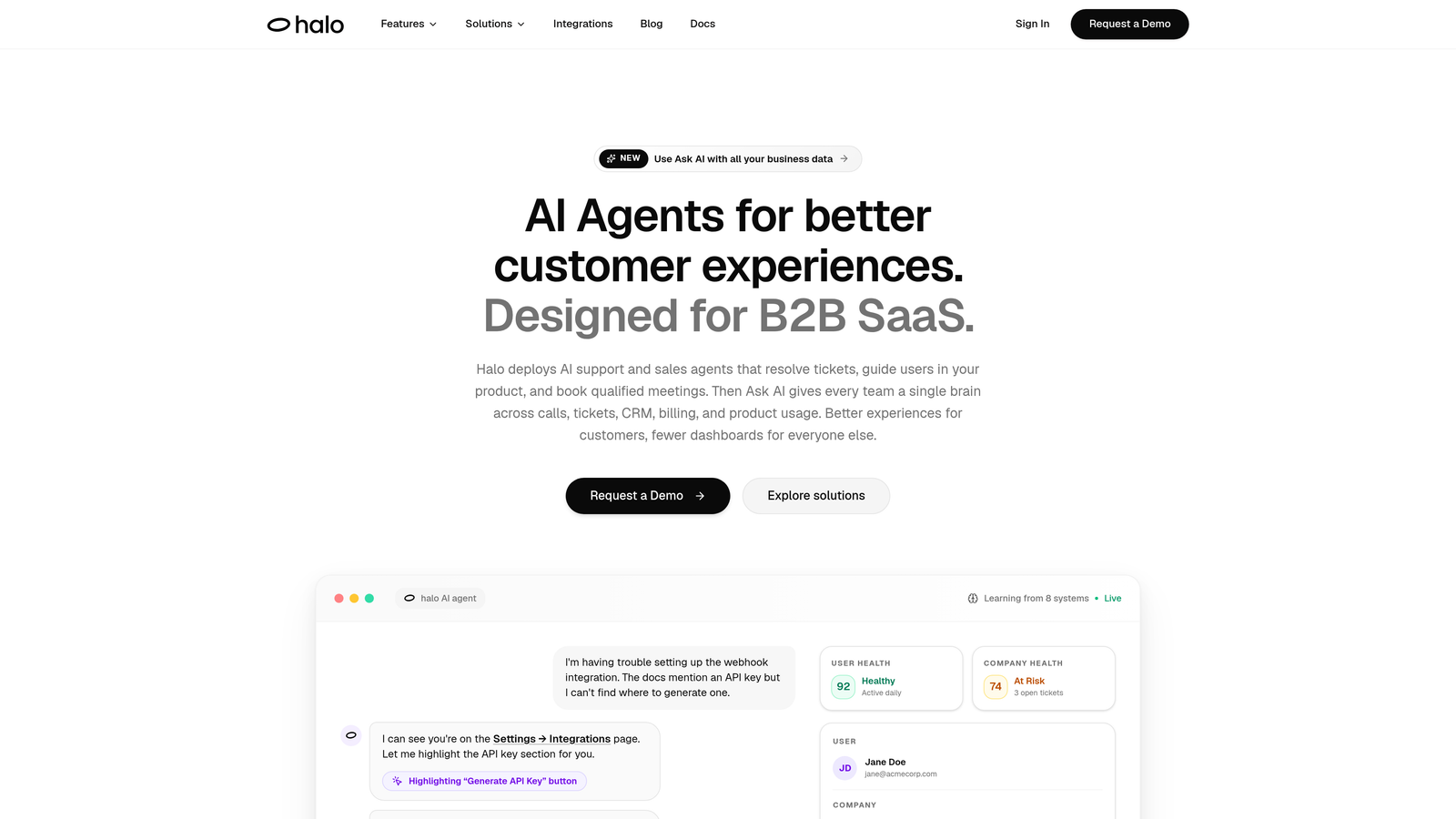
Halo AI is an AI-first customer support platform built specifically for B2B SaaS teams, where the AI agent is the core architecture — not a feature bolted onto a legacy helpdesk.
Where This Tool Shines
The standout capability is page-aware context: Halo's AI agent sees exactly what the user sees on screen, allowing it to provide precise UI guidance and contextual help rather than generic knowledge base responses. This is a meaningful leap beyond traditional chatbots that respond based on keywords alone.
Beyond resolution, Halo's smart inbox surfaces business intelligence signals that most support tools ignore entirely: customer health indicators, revenue anomalies, and churn signals extracted from support interactions. Your support queue becomes a source of product and revenue intelligence, not just a ticket pile.
Key Features
Page-Aware AI Agents: The AI sees what the user sees in real time, delivering contextual UI guidance that's specific to where they are in your product.
Continuous Learning: Every resolved ticket trains the system, so resolution quality improves with every interaction rather than staying static.
Auto Bug Ticket Creation: Automatically identifies and routes bug reports to Linear, removing a manual step that typically falls through the cracks during busy periods.
Smart Inbox with Business Intelligence: Surfaces customer health signals, revenue anomalies, and churn indicators directly from support data.
Multi-System Integrations: Connects natively with Slack, HubSpot, Intercom, Stripe, Zoom, PandaDoc, and Fathom — covering the full B2B SaaS stack.
Live Agent Handoff: Complex issues escalate seamlessly to human agents with full context preserved, so customers never have to repeat themselves.
Best For
B2B SaaS product teams that want autonomous AI resolution rather than AI-assisted agents. Particularly strong for teams where support complexity goes beyond FAQs — think multi-step product workflows, bug escalation, and integrations across a modern SaaS stack.
Pricing
Contact for pricing. Halo is built for B2B SaaS teams, so pricing is structured around team needs rather than ticket volume or per-seat costs.
2. Gorgias
Best for: E-commerce brands running on Shopify, WooCommerce, or BigCommerce.
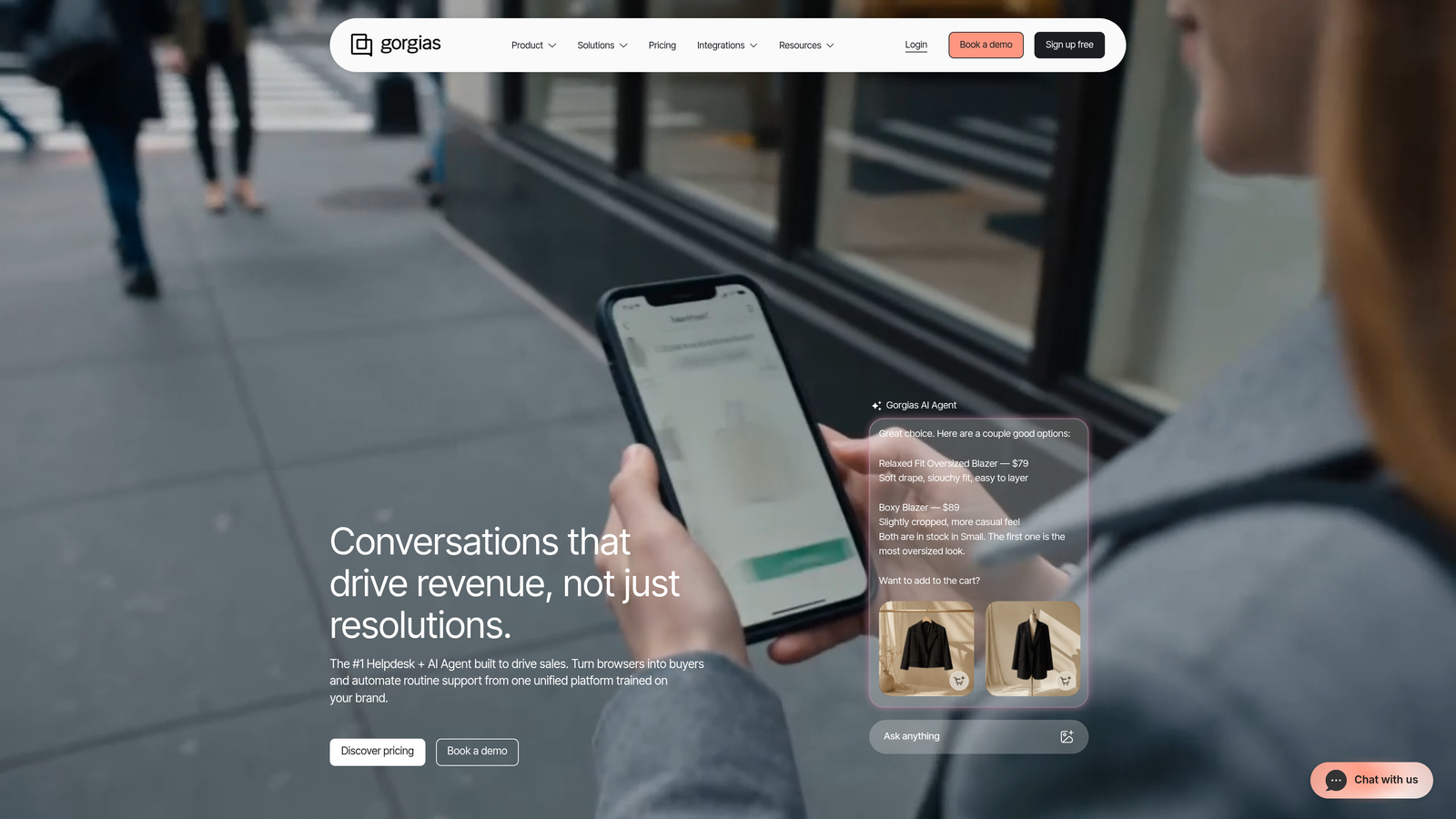
Gorgias is a helpdesk platform purpose-built for e-commerce, with native integrations that pull order data directly into every support ticket.
Where This Tool Shines
Gorgias earns its reputation in e-commerce by making order context effortless. Agents see order status, shipping details, and purchase history without switching tabs, and automation rules can trigger actions like refunds or cancellations directly from a ticket. For DTC brands handling high volumes of "where's my order" queries, this is genuinely powerful.
The revenue statistics feature is a differentiator worth noting: Gorgias attributes revenue impact to support conversations, giving e-commerce teams data to justify support investment. This framing simply doesn't translate to B2B SaaS, where the value of support is measured differently.
Key Features
Native E-Commerce Data: Shopify, WooCommerce, and BigCommerce order data surfaces automatically in every ticket.
Order-Linked Automation: Rules trigger actions based on order status, refund eligibility, and cancellation requests without manual agent intervention.
Revenue Statistics: Tracks revenue influenced by support conversations, a unique metric for e-commerce teams.
AI Agent: Handles common e-commerce queries like order status, returns, and shipping updates autonomously.
Multichannel Support: Covers email, live chat, social media, and SMS from a unified inbox.
Best For
E-commerce and DTC brands with high volumes of order-related support queries. Not designed for B2B SaaS teams needing complex product workflows, bug escalation, or cross-stack integrations beyond commerce platforms.
Pricing
Starts at $10/month for the Starter plan (50 tickets). Pricing scales by ticket volume, which can become unpredictable for teams with fluctuating support demand.
3. Intercom
Best for: SaaS teams already invested in the Intercom ecosystem seeking a capable AI agent layer.
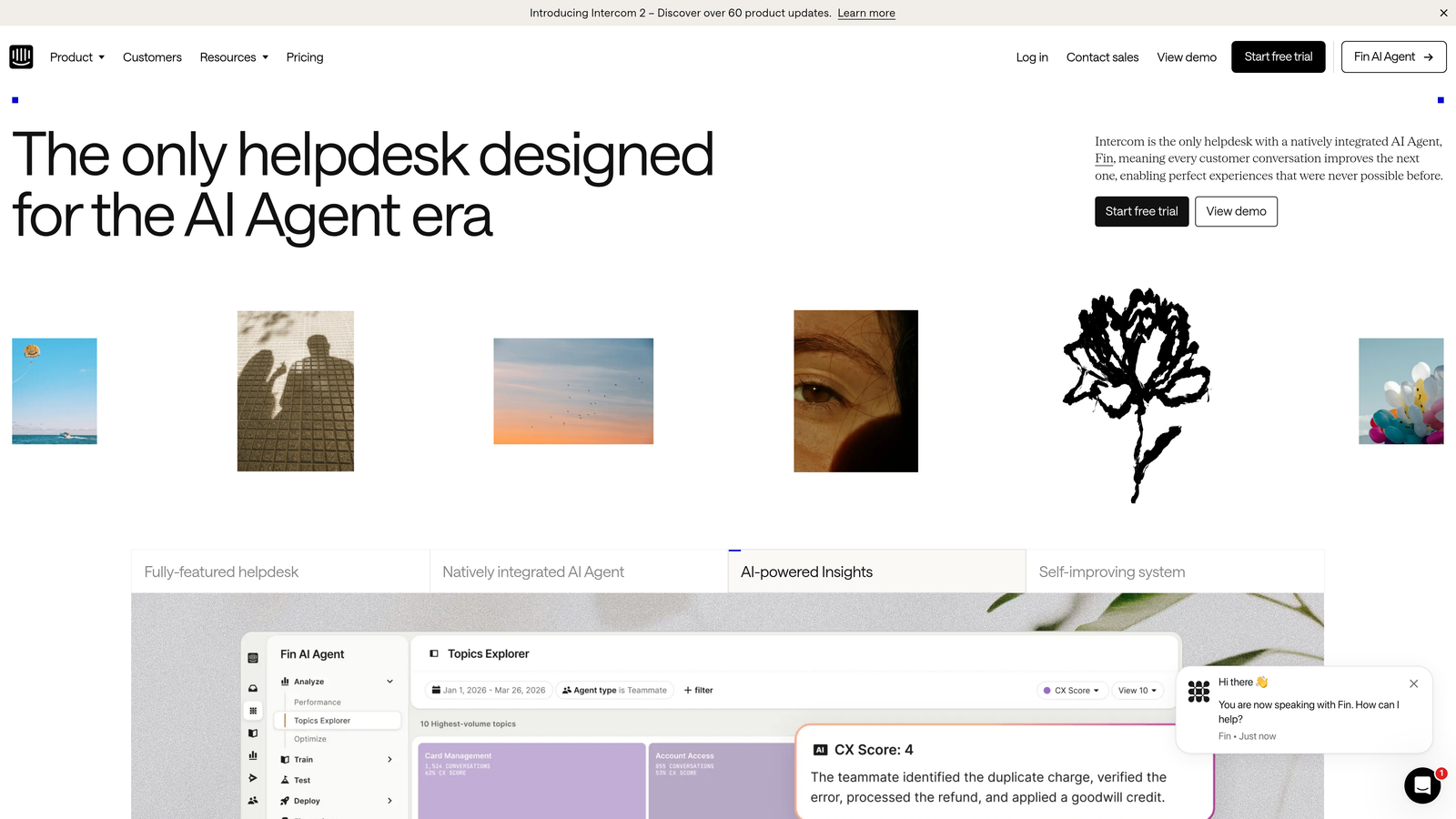
Intercom is a conversational support platform with Fin, its AI agent built on GPT-4, layered on top of a mature messenger, shared inbox, and in-app messaging suite.
Where This Tool Shines
Fin is one of the more capable AI agents in this category for teams with well-structured help center content. It can resolve a meaningful portion of common queries without human involvement, and the transition from AI to live agent is smooth within the Intercom messenger experience.
The in-app product tours and onboarding flows are a genuine differentiator for product-led SaaS companies. If your support and product adoption strategies are closely linked, Intercom gives you tools to address both from a single platform.
Key Features
Fin AI Agent: Resolves queries autonomously using help center content, with GPT-4 powering natural language understanding.
Unified Inbox: Combines live chat, email, and in-app messaging in a single workspace for agents.
Product Tours: In-app onboarding flows that reduce support volume by guiding users proactively.
AI Copilot: Suggests replies and next-best-actions to human agents during live conversations.
Conversation Analytics: Detailed reporting on resolution rates, response times, and conversation outcomes.
Best For
Product-led SaaS teams that want AI-assisted resolution alongside in-app onboarding capabilities. Teams not already in the Intercom ecosystem should factor in the platform switching costs and Fin's per-resolution pricing model.
Pricing
Starts at $29/seat/month (Essential plan). Fin AI usage is billed separately per resolution, which means costs can scale quickly as AI handles more volume.
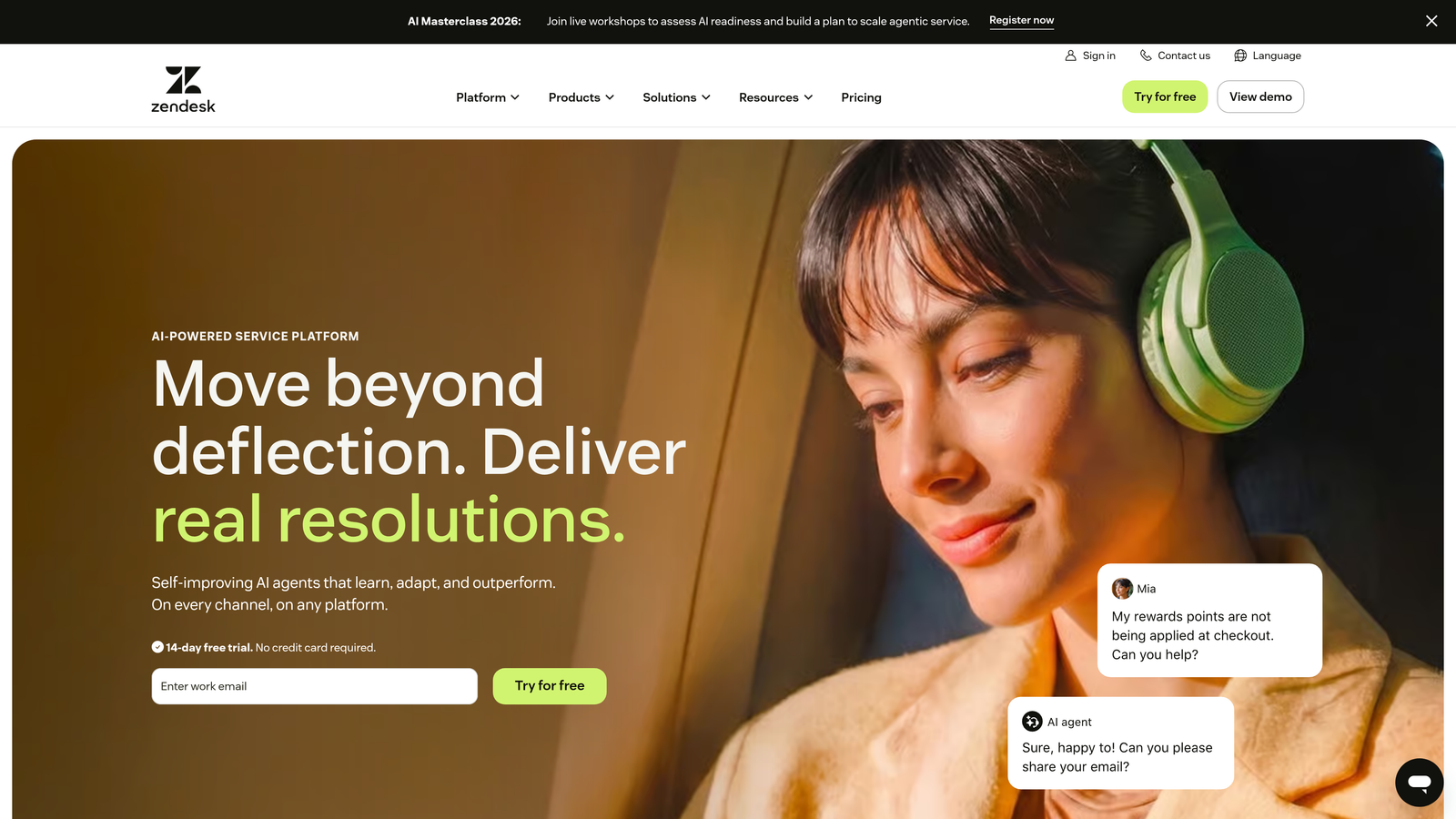
4. Zendesk AI
Best for: Enterprise organizations with complex SLA requirements and large agent teams.
Zendesk is the industry-standard enterprise helpdesk, now augmented with AI triage, intelligent routing, and an AI agent layer for automated resolution.
Where This Tool Shines
Zendesk's infrastructure is unmatched for enterprise-scale operations: SLA management, escalation workflows, workforce management, and a 1,000+ app marketplace give large teams the configurability they need. If your organization has complex compliance requirements or multi-tier support structures, Zendesk can accommodate them.
The AI additions — intent detection, sentiment analysis, and Agent Copilot — work well as augmentation tools for human agents. However, the AI feels more like an efficiency layer on top of existing workflows than a genuinely autonomous resolver, which matters if you're evaluating for AI-first capabilities.
Key Features
AI Triage: Automatically detects intent, analyzes sentiment, and routes tickets to the right team or queue.
Agent Copilot: Provides real-time reply suggestions and next-best-action recommendations to human agents.
SLA Management: Robust escalation workflows and SLA tracking built for enterprise compliance requirements.
App Marketplace: Over 1,000 integrations covering virtually every business tool category.
Workforce Management: Advanced reporting and scheduling tools for managing large support teams.
Best For
Large enterprise organizations with established support operations, complex SLA requirements, and the implementation budget to configure Zendesk properly. Smaller teams often find the overhead disproportionate to their needs.
Pricing
Starts at $19/agent/month (Suite Team). AI features are available on higher tiers, so the effective cost for AI-augmented support is meaningfully higher.
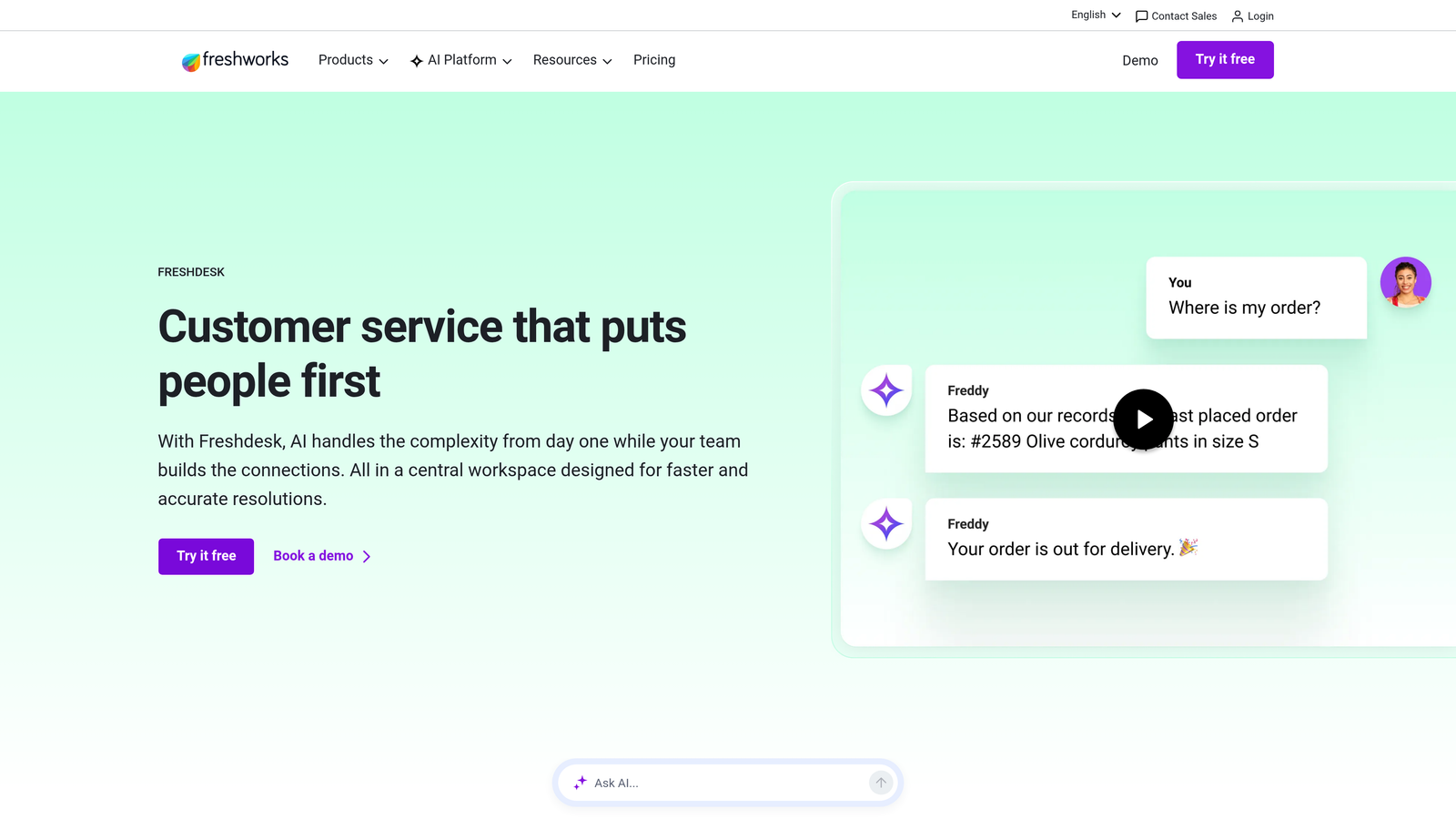
5. Freshdesk
Best for: SMBs and mid-market teams transitioning from manual support to AI-assisted workflows.
Freshdesk is a cloud-based helpdesk from Freshworks with Freddy AI providing auto-resolution suggestions, agent assist, and omnichannel support across a broad range of channels.
Where This Tool Shines
Freshdesk's strength is accessibility: the free plan makes it practical for small teams to get started, and the pricing structure scales reasonably as teams grow. Freddy AI covers the core AI assist use cases well — suggested replies, ticket categorization, and auto-resolution recommendations — without requiring significant configuration investment.
The omnichannel breadth is notable: email, chat, phone, social, and WhatsApp all feed into a single inbox. For teams managing customer queries across many channels, this consolidation reduces agent context-switching.
Key Features
Freddy AI: Provides ticket auto-resolution suggestions and an agent copilot for reply recommendations.
Omnichannel Inbox: Consolidates email, chat, phone, social media, and WhatsApp into a single workspace.
Collision Detection: Prevents multiple agents from working the same ticket simultaneously.
AI Reply Suggestions: Freddy surfaces relevant canned responses and generates reply drafts based on ticket context.
Free Plan: A functional free tier makes Freshdesk accessible for teams with limited budgets.
Best For
SMBs and mid-market teams looking for an affordable entry point into AI-assisted support. Teams that need autonomous AI resolution rather than AI augmentation will find Freddy's capabilities more limited than AI-native platforms.
Pricing
Free plan available for small teams. Paid plans start at $15/agent/month (Growth). AI features scale with higher tiers.
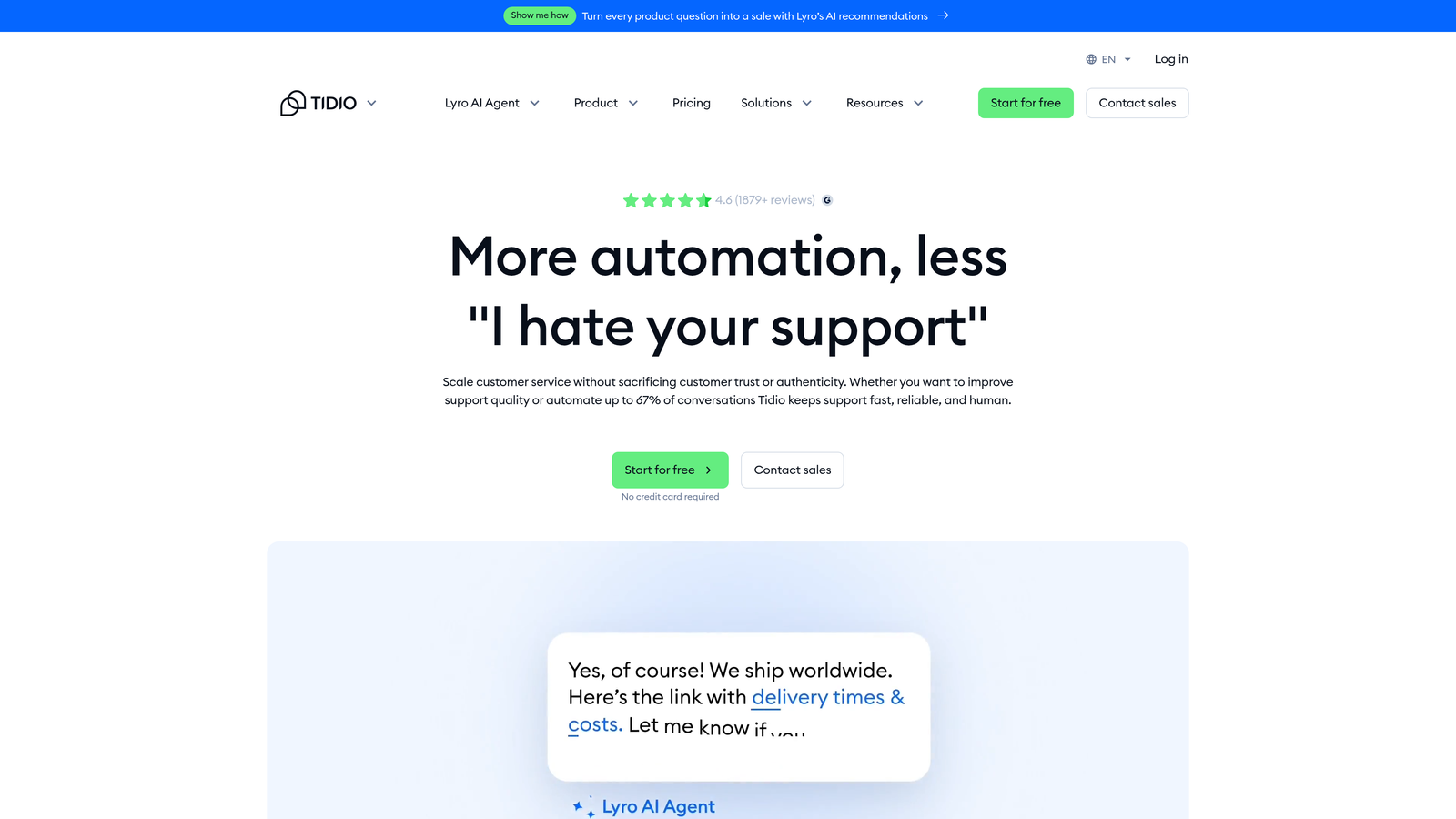
6. Tidio
Best for: Small businesses and early-stage SaaS teams that need fast deployment with minimal setup.
Tidio is a live chat and AI chatbot platform with Lyro, its AI-native bot that resolves common queries from knowledge base content with no coding required.
Where This Tool Shines
Tidio's primary advantage is speed to value. Lyro can be live and resolving queries within minutes of setup, which makes it genuinely useful for teams that need immediate coverage without a lengthy implementation project. The visual drag-and-drop flow builder lets non-technical team members customize bot behavior without developer involvement.
For small e-commerce stores or early-stage SaaS products with straightforward support needs, Lyro handles the FAQ layer effectively. The platform isn't designed for complex multi-step workflows or deep B2B integrations, but for its target use case, it delivers quickly.
Key Features
Lyro AI Chatbot: Autonomous query resolution from knowledge base content, with natural language understanding for common questions.
Visual Flow Builder: Drag-and-drop bot conversation designer requiring no coding knowledge.
Agent Takeover: Live agents can step into AI conversations seamlessly when escalation is needed.
E-Commerce Integrations: Native connections to Shopify, WooCommerce, and PrestaShop.
Quick Deployment: Live in minutes with minimal configuration — practical for resource-constrained teams.
Best For
Small businesses, e-commerce stores, and early-stage SaaS teams that prioritize fast deployment over deep customization. Not suited for B2B teams needing complex workflow automation or enterprise-grade integrations.
Pricing
Free plan available. Lyro AI starts at $29/month. Paid plans from $29/month, making it one of the more accessible options in this category.
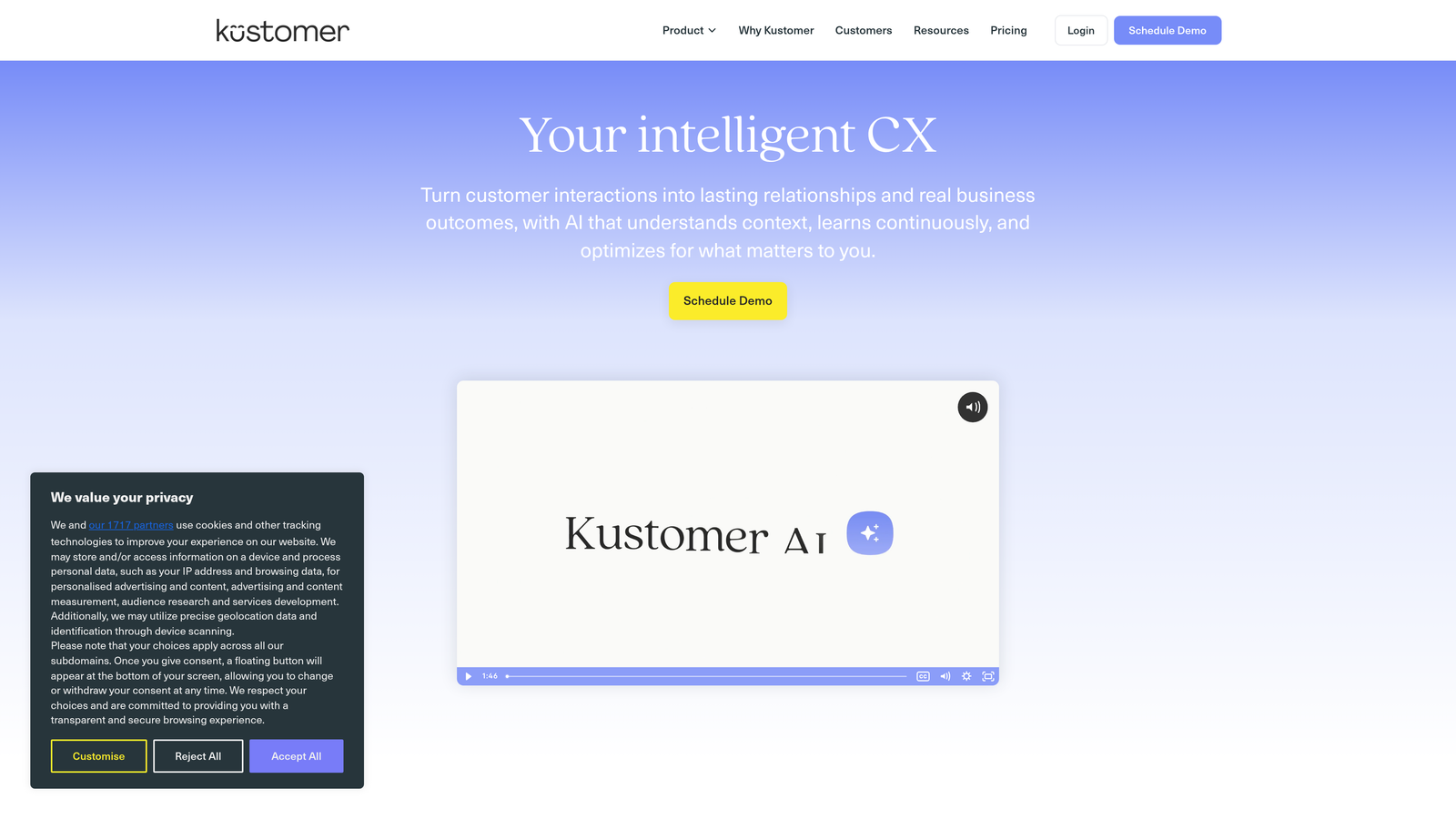
7. Kustomer
Best for: Teams where deep customer history and CRM context are central to every support interaction.
Kustomer is a CRM-powered support platform that unifies every customer interaction, order, and touchpoint in a single timeline view, with AI-powered intent detection and conversation-based pricing.
Where This Tool Shines
Kustomer's unified timeline is its defining feature. Rather than isolated tickets, agents see a complete customer history — every conversation, order, and touchpoint in chronological context. For support teams where resolution quality depends heavily on understanding what the customer has experienced before, this context dramatically changes the quality of responses.
The conversation-based pricing model (rather than per-ticket or per-agent) can work favorably for high-volume teams. Proactive messaging capabilities also allow teams to reach out to customers before they file tickets, a meaningful capability for reducing inbound volume.
Key Features
Unified Customer Timeline: Full history of support interactions, orders, and CRM data in a single chronological view.
AI Intent Detection: Automatically identifies query intent and routes conversations to the appropriate team or workflow.
Conversation-Based Pricing: Costs based on conversation volume rather than agent seats, which can reduce costs for teams with high agent-to-conversation ratios.
Proactive Messaging: Outbound support capabilities to reach customers before issues escalate.
Workflow Automation: Multi-step branching logic for complex routing and resolution workflows.
Best For
Teams where customer lifetime context significantly affects resolution quality — particularly those with long customer relationships, complex purchase histories, or high-value accounts. Enterprise pricing makes it less accessible for smaller teams.
Pricing
Starts at $89/agent/month (Enterprise). Conversation-based pricing is available and may be more cost-effective for high-volume teams.
8. Help Scout
Best for: Teams that want to preserve a human, relationship-driven support experience with AI writing assistance.
Help Scout is a shared inbox and knowledge base platform with AI Drafts and AI Summarize features designed to reduce writing effort without replacing the human in the conversation.
Where This Tool Shines
Help Scout's philosophy is deliberately different from AI-autonomous platforms: it keeps humans central while using AI to reduce the tedious parts of support work. AI Drafts generates reply suggestions from conversation context, and AI Summarize lets agents catch up on long threads instantly. The result is a faster human, not a replaced one.
The Docs knowledge base is cleanly integrated and well-designed, and Beacon (the chat widget) supports proactive messaging. For teams where relationship quality is a competitive differentiator — professional services, high-touch SaaS, agencies — Help Scout's approach makes sense.
Key Features
AI Drafts: Generates suggested replies based on conversation context, reducing time-to-response for human agents.
AI Summarize: Condenses long conversation threads into quick summaries so agents can catch up without reading every message.
Beacon: Chat widget with proactive messaging capabilities and smooth handoff from self-service to live chat.
Docs: Integrated knowledge base with search, included on all plans.
Shared Inbox UX: Clean workspace with collision detection and private notes for internal team communication.
Best For
Small to mid-size teams that prioritize relationship-driven support and want AI as a writing assistant rather than an autonomous resolver. Not the right fit for teams evaluating AI for ticket deflection at scale.
Pricing
Starts at $22/user/month (Standard). Docs and Beacon are included on all plans, making the base plan reasonably complete without add-ons.
Choosing the Right Tool for Your Team
The right choice here depends almost entirely on what kind of support operation you're running — and what you need AI to actually do.
If you're an e-commerce brand on Shopify: Gorgias is purpose-built for you. The order-aware automation, revenue attribution, and native commerce integrations are genuinely hard to replicate elsewhere.
If you're a B2B SaaS team that needs autonomous AI resolution: Halo AI is the strongest option in this list. The page-aware context, continuous learning, auto bug ticket creation to Linear, and business intelligence signals from support data address problems that traditional helpdesks — even AI-augmented ones — don't solve. It's built for product complexity, not just FAQ deflection.
If you're already deep in the Intercom ecosystem: Fin is a capable AI agent and the switching costs of leaving Intercom's messenger and in-app tooling are real. Stay and invest in your help center content to maximize Fin's resolution rate.
If you're enterprise with complex SLAs: Zendesk's infrastructure is proven at scale. Factor in the implementation investment and the reality that its AI is augmentation-focused rather than autonomous.
If you're budget-constrained or early-stage: Freshdesk's free plan or Tidio's affordable entry point let you get started without significant commitment.
Your support team shouldn't scale linearly with your customer base. Let AI agents handle routine tickets, guide users through your product, and surface business intelligence while your team focuses on complex issues that need a human touch. See Halo in action and discover how continuous learning transforms every interaction into smarter, faster support.