9 Best GPT-Based Support Platforms for Smarter Customer Service in 2026
This guide evaluates the 9 strongest GPT-based support platforms available in 2026, comparing them across resolution accuracy, integration depth, and deployment ease to help B2B teams move beyond rigid chatbots toward AI that genuinely understands context and resolves tickets autonomously—whether you're replacing a legacy helpdesk or enhancing an existing support workflow.
 Grant CooperFounder12 min read
GPT-based support platforms have fundamentally changed how B2B teams handle customer inquiries. Instead of rigid decision trees and keyword-matching bots, these platforms use large language models to understand context, generate natural responses, and resolve tickets with minimal human intervention.
But the market has matured quickly, and not every platform leveraging GPT delivers the same value. Some excel at autonomous ticket resolution, others at live agent augmentation, and others at deep integrations with your existing tech stack. We evaluated these platforms based on resolution accuracy, integration depth, learning capabilities, ease of deployment, and pricing transparency.
Whether you're replacing a legacy helpdesk or adding AI to an existing support workflow, here are the strongest GPT-based support platforms available in 2026.
1. Halo AI
Best for: B2B SaaS teams wanting an AI-first platform that learns, resolves, and surfaces business intelligence
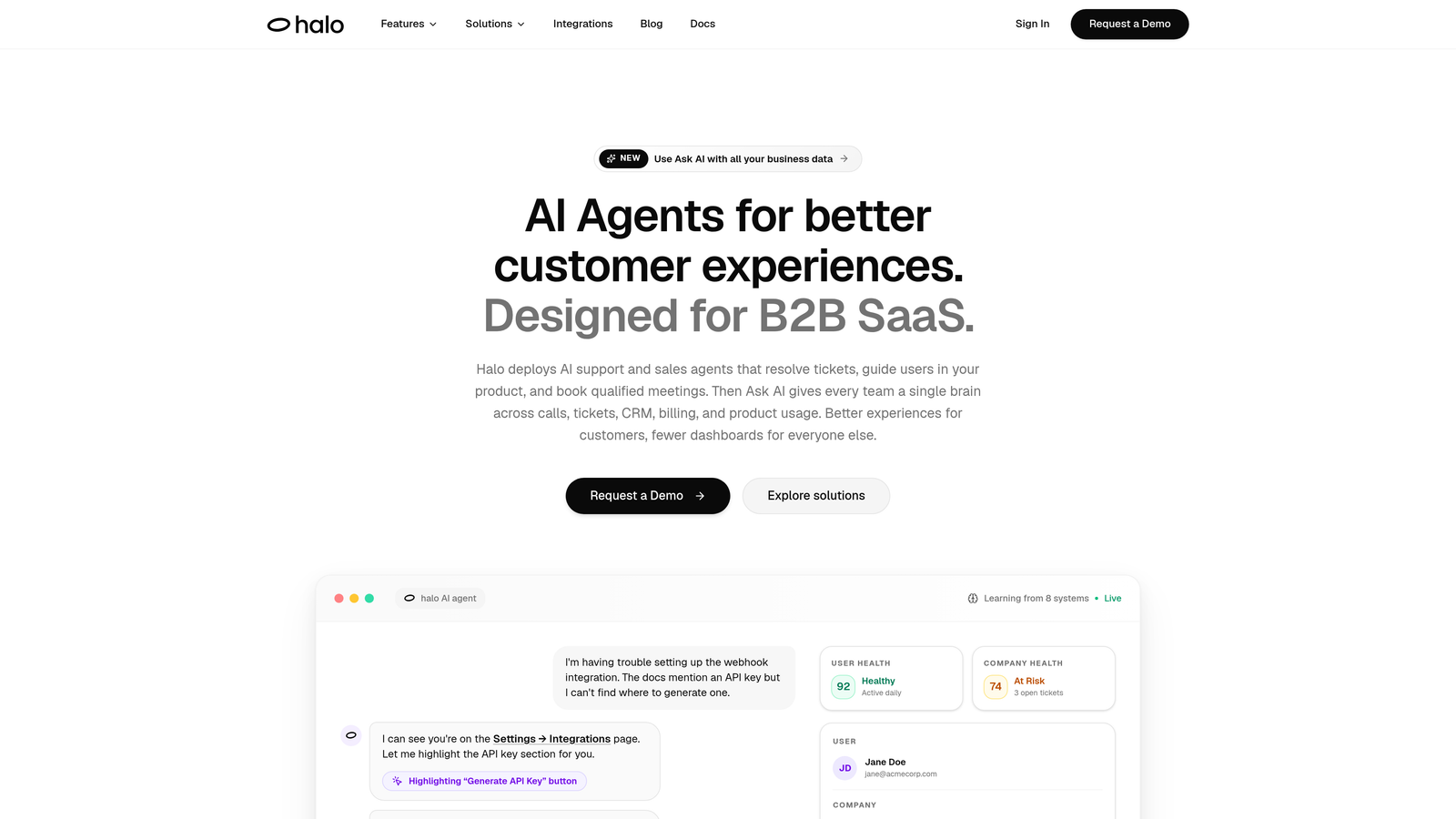
Halo AI is an AI-first customer support platform that deploys autonomous agents to resolve tickets, guide users with page-aware context, and surface business intelligence from every support interaction.
Where This Tool Shines
What separates Halo from most GPT-based platforms is its architecture. It wasn't built as a chatbot layer on top of an existing helpdesk. It was designed from the ground up around large language models, which means the AI isn't an afterthought — it's the core engine.
The page-aware chat widget is a standout capability. Rather than responding to text alone, Halo's agent sees what the user sees on screen, enabling visual UI guidance that's genuinely contextual. Combined with continuous learning from every interaction, the system gets measurably smarter over time rather than staying static.
Key Features
Page-Aware Chat Widget: The AI agent understands the user's current page context, enabling step-by-step visual guidance rather than generic responses.
Continuous Learning: Every resolved and escalated ticket feeds back into the model, improving resolution accuracy without manual retraining.
Smart Inbox with Business Intelligence: Goes beyond support metrics to surface customer health signals, revenue intelligence, and anomaly detection from ticket data.
Auto Bug Ticket Creation: Automatically generates detailed bug reports in Linear with full conversation context, reducing the gap between support and engineering.
Deep Integration Stack: Connects natively with Slack, HubSpot, Intercom, Stripe, Zoom, PandaDoc, and Fathom — covering the full B2B SaaS toolchain.
Best For
Halo is purpose-built for B2B SaaS companies that want autonomous support without stitching together multiple tools. It's particularly strong for product-led growth teams where support data should be feeding product decisions, not disappearing into a ticket queue.
Pricing
Contact for pricing. Halo is designed for B2B SaaS teams scaling support operations, so pricing is tailored to team size and conversation volume.
2. Intercom Fin
Best for: Teams already on Intercom who want native GPT-powered resolution without switching platforms
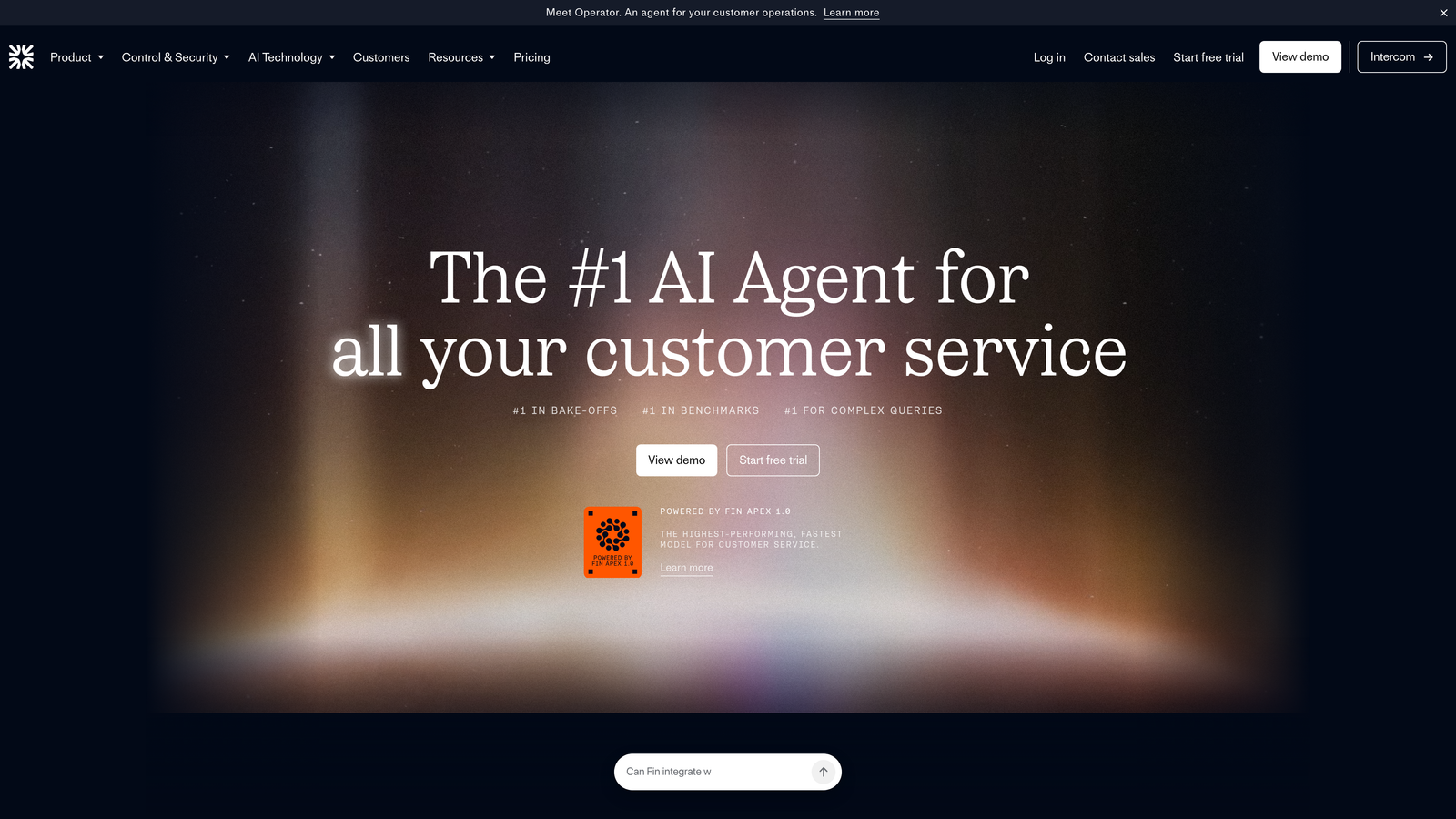
Intercom Fin is Intercom's native GPT-powered AI agent, resolving customer questions using your help center, conversation history, and custom data sources within the Intercom messenger experience.
Where This Tool Shines
Fin's biggest advantage is how deeply it's embedded in the Intercom ecosystem. If your team already lives in Intercom, the setup is remarkably straightforward. Fin trains on your existing help center content and past conversations automatically, meaning there's no separate knowledge base to maintain.
The handoff experience is also polished. When Fin can't resolve a query, the transition to a human agent inside the Intercom inbox is seamless, preserving full conversation context so agents don't start from scratch.
Key Features
Auto-Training on Existing Content: Fin ingests your Intercom help center and conversation history without manual configuration.
Native Inbox Handoff: Smooth escalation to human agents within the same Intercom interface, with full context preserved.
Tone and Persona Customization: Adjust Fin's communication style to match your brand voice.
Multilingual Support: Handles customer conversations across 40+ languages out of the box.
Usage-Based Pricing: Pay per resolution rather than per seat, which can be cost-effective for lower-volume teams.
Best For
Existing Intercom customers who want to add AI resolution without migrating to a new platform. Less compelling for teams not already in the Intercom ecosystem, given the subscription dependency.
Pricing
Starts at $0.99 per resolution. Requires an active Intercom subscription, so total cost depends on your existing plan tier.
3. Zendesk AI Agents
Best for: Enterprise teams needing omnichannel GPT-powered support within a proven, compliance-ready platform
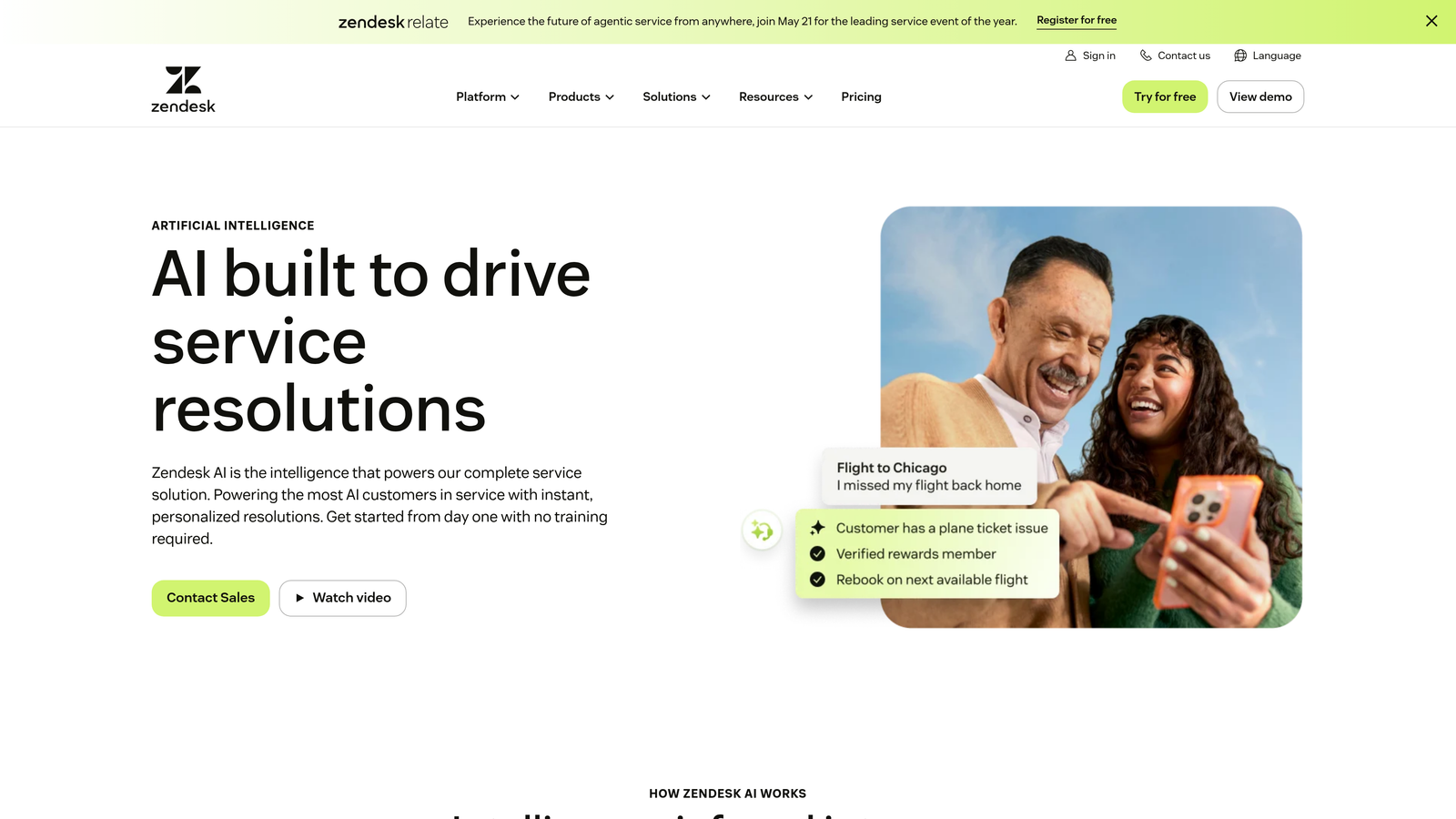
Zendesk AI Agents are enterprise-grade GPT-powered agents built into the Zendesk ecosystem, handling ticket resolution, triage, and agent assistance across email, chat, social, and voice channels.
Where This Tool Shines
Zendesk's AI benefits from training on an enormous dataset of customer service interactions, which gives it strong out-of-the-box accuracy for common support scenarios. For enterprise teams, this means less time tuning and faster time to value.
The omnichannel coverage is genuinely broad. Unlike platforms that bolt AI onto chat only, Zendesk AI Agents operate across email, social, voice, and messaging — a real advantage for teams managing support across multiple touchpoints.
Key Features
Pre-Trained on Service Data: Arrives with strong baseline accuracy from training on billions of customer service interactions.
Omnichannel Coverage: Unified AI resolution across email, chat, social, and voice channels.
Intelligent Triage: Automatically classifies and routes tickets by intent, sentiment, and language.
Agent Assist: Surfaces suggested replies and relevant knowledge articles for human agents in real time.
Enterprise Compliance: SOC 2, GDPR, and HIPAA-ready certifications for regulated industries.
Best For
Large enterprise support teams with complex compliance requirements and high ticket volumes across multiple channels. Smaller teams may find the platform's complexity and cost hard to justify.
Pricing
AI agents are included in Zendesk Suite plans. Advanced AI features are available as a paid add-on. Suite plans start around $55 per agent per month.
4. Ada
Best for: Enterprise teams wanting no-code AI agent deployment across chat, email, voice, and social
Ada is an enterprise AI agent platform that automates customer support across multiple channels using GPT-powered natural language understanding combined with a no-code workflow builder.
Where This Tool Shines
Ada's no-code builder is genuinely accessible. Support and operations teams can build, test, and deploy AI workflows without engineering involvement, which dramatically shortens the path from decision to live agent. This is a meaningful differentiator for enterprise teams where developer resources are constrained.
Ada also handles multilingual support at scale. With coverage across 50+ languages and strong CRM integrations, it's well-suited for global support operations that need consistency across markets.
Key Features
No-Code Agent Builder: Drag-and-drop workflow creation that non-technical teams can manage independently.
Multichannel Automation: Unified AI support across chat, email, SMS, and voice from a single platform.
50+ Language Support: Broad multilingual coverage for global customer bases.
CRM Integrations: Native connections to Salesforce, Zendesk, and major CRM platforms.
Analytics Dashboard: Detailed reporting on resolution rates, containment, and deflection metrics.
Best For
Enterprise support teams that need multichannel AI deployment without heavy developer involvement. Ada's pricing and complexity make it less suitable for small or mid-market teams.
Pricing
Custom enterprise pricing. Contact Ada directly for a quote based on conversation volume and channel requirements.
5. Freshdesk Freddy AI
Best for: Teams in the Freshworks ecosystem wanting AI-powered resolution and agent assist without switching platforms
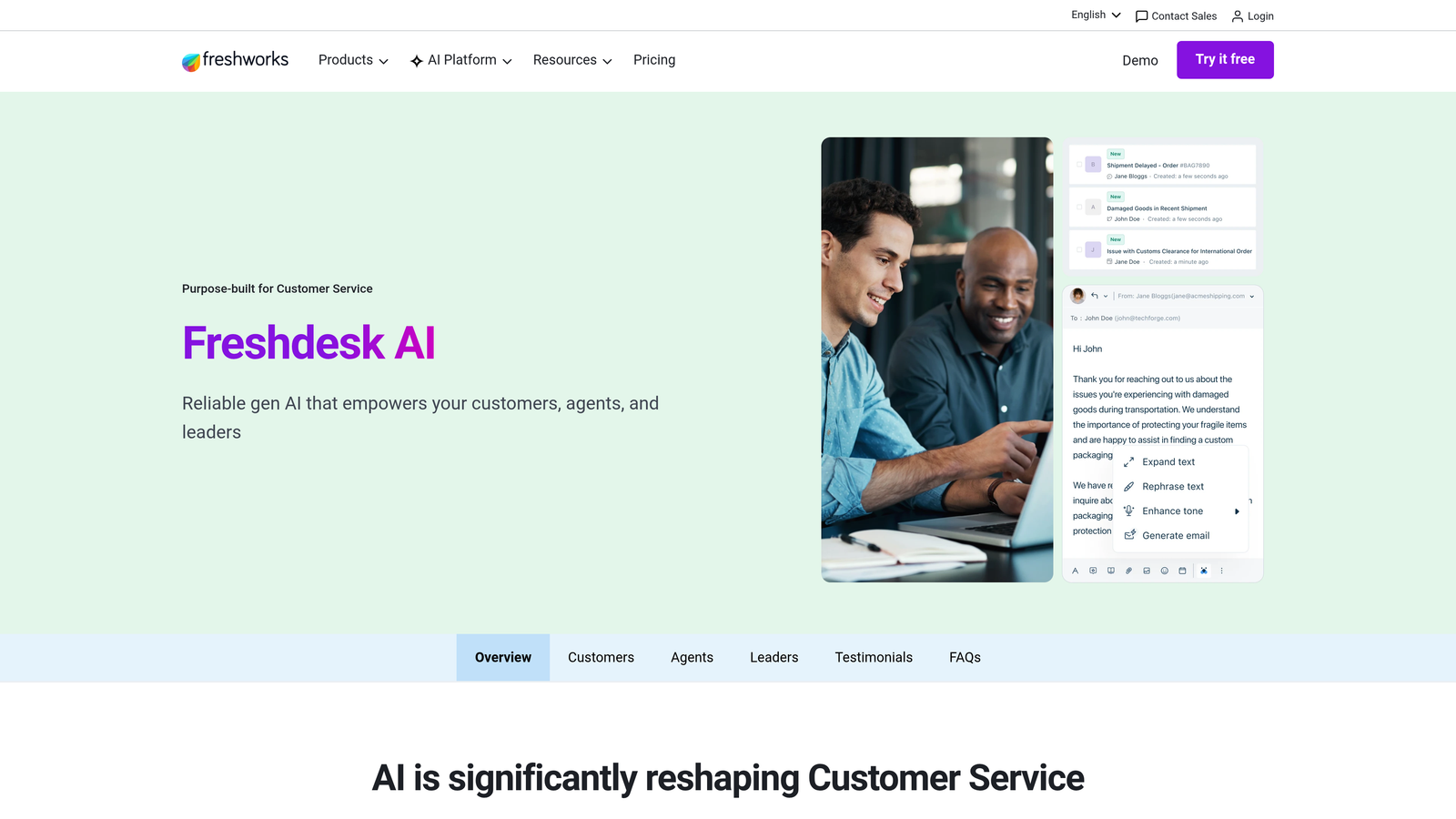
Freshdesk Freddy AI is Freshworks' GPT-powered AI layer for Freshdesk, providing automated ticket resolution, agent assist, and intelligent routing within the broader Freshworks product suite.
Where This Tool Shines
Freddy AI's strength is its deep integration across the Freshworks stack. If your team already uses Freshdesk alongside Freshworks CRM or ITSM tools, Freddy provides AI-powered support without adding another vendor to your tech stack. The unified data model means the AI has richer context about customers than a standalone tool would.
Compared to Zendesk and Intercom, Freshdesk also offers more competitive pricing, making it an attractive option for mid-market teams that want enterprise-grade AI features without enterprise-grade pricing.
Key Features
Auto-Resolve: Handles common tickets using your knowledge base and historical interaction data without agent involvement.
Agent Assist: Provides real-time suggested responses and ticket summarization to speed up human agent workflows.
Freshworks Ecosystem Integration: Tight connection with Freshworks CRM, ITSM, and marketing tools for unified customer context.
Sentiment Analysis: Detects customer sentiment to prioritize and route tickets appropriately.
Canned Response Suggestions: AI-generated response recommendations based on ticket content and resolution history.
Best For
Mid-market teams already using Freshdesk or other Freshworks products who want to add AI capabilities without a platform migration. Strong value for teams comparing costs with Zendesk AI.
Pricing
Freddy AI is included in Pro and Enterprise Freshdesk plans, starting around $49 per agent per month. Pricing varies by feature tier.
6. Tidio AI (Lyro)
Best for: Small businesses and e-commerce teams wanting fast, lightweight GPT-powered chat with minimal setup
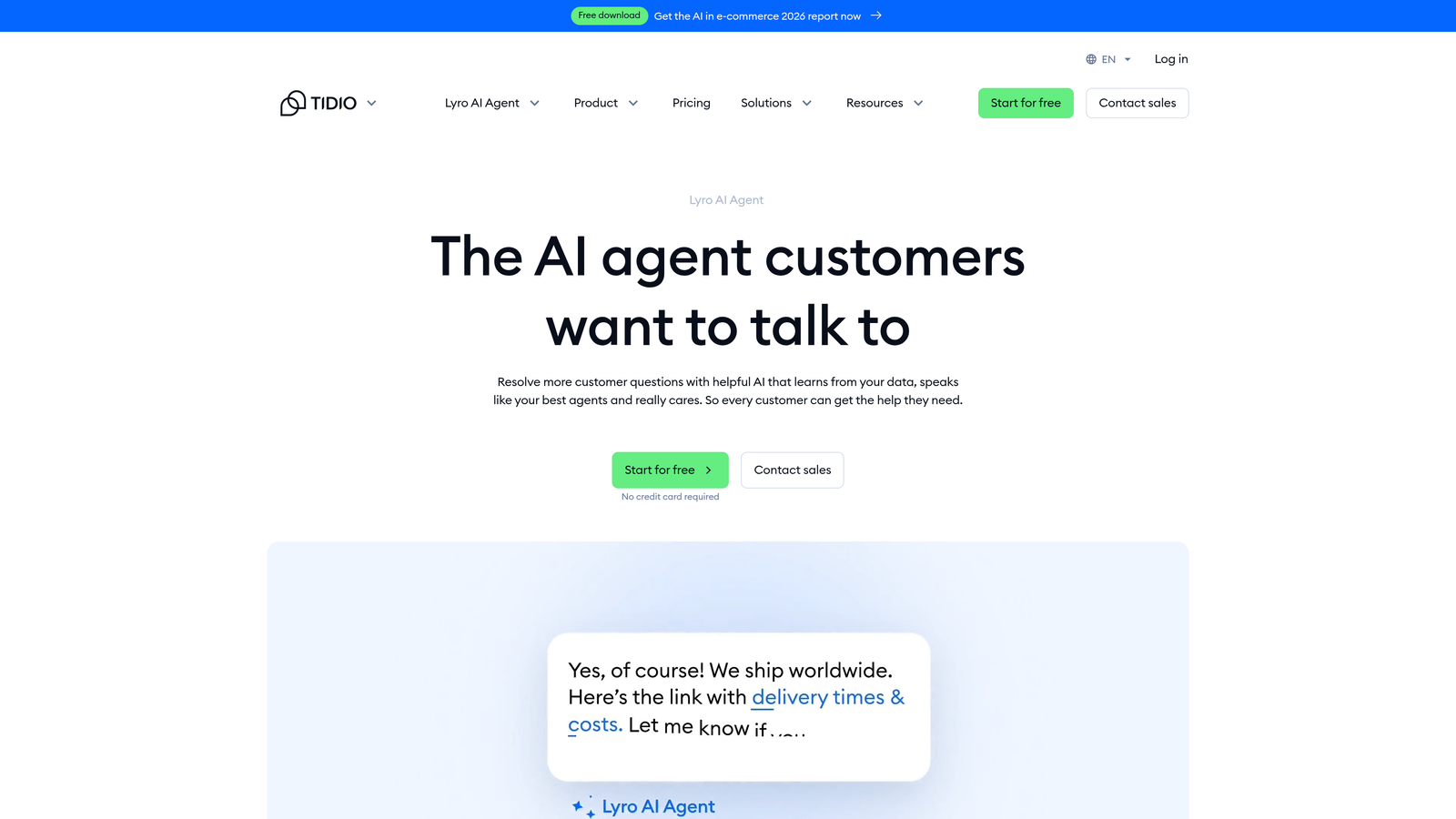
Tidio Lyro is a lightweight GPT-powered chatbot designed for small businesses and e-commerce, trained on your FAQ and help content with minimal configuration required.
Where This Tool Shines
Lyro's standout quality is its speed to deployment. Most teams can have it live within minutes by simply pointing it at existing FAQ pages or help documentation. For small businesses without dedicated technical resources, this frictionless setup is a genuine advantage.
The free tier also makes Lyro accessible for teams testing AI support for the first time. It's a low-risk entry point that doesn't require a major budget commitment before seeing results.
Key Features
Rapid Deployment: Ingests FAQ pages and help docs automatically, enabling same-day setup without developer involvement.
Multi-Turn Conversations: Handles back-and-forth customer interactions naturally rather than single-question responses.
E-Commerce Integrations: Native connections to Shopify, WordPress, and Wix for online retail teams.
Live Chat Handoff: Escalates to human agents when the AI reaches its resolution limits.
Free Tier Available: Includes 50 Lyro conversations per month at no cost for teams evaluating the platform.
Best For
Small businesses, e-commerce stores, and early-stage startups that need basic AI chat support without complex setup or enterprise-level costs. Not designed for high-volume B2B support operations.
Pricing
Free tier includes 50 Lyro conversations per month. Paid plans start at $29 per month and scale based on conversation volume.
7. Forethought Aisha
Best for: Enterprise teams wanting both autonomous ticket resolution and AI-powered agent assist in one platform
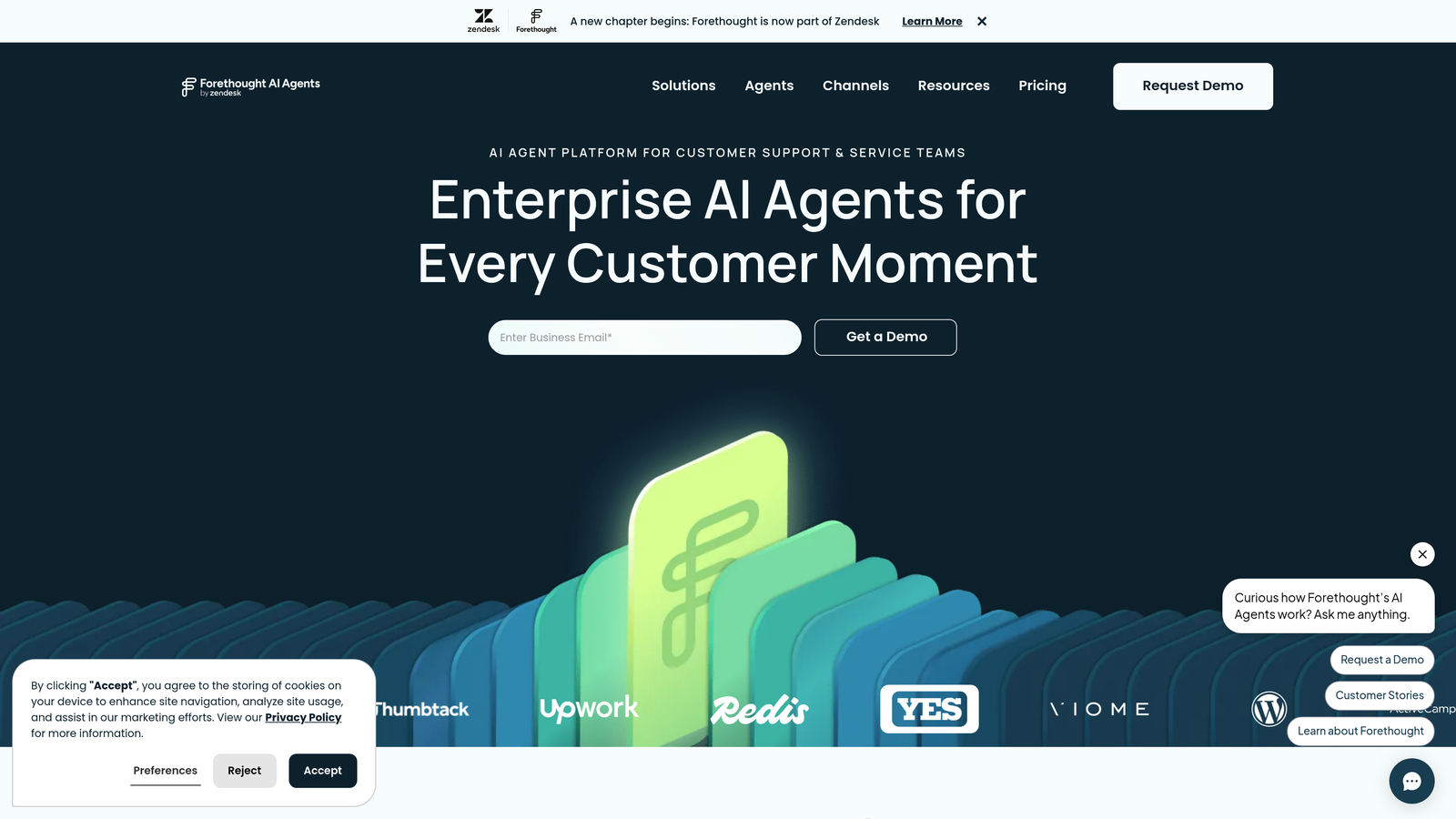
Forethought Aisha is an enterprise AI platform combining autonomous ticket resolution with real-time agent assist, using GPT to triage, resolve, and augment human support workflows simultaneously.
Where This Tool Shines
Forethought takes a dual approach that many platforms skip. Its Solve product handles autonomous resolution for routine tickets, while its Assist product surfaces real-time knowledge and suggestions for human agents handling complex cases. This means the platform adds value whether the AI resolves the ticket or a human does.
The triage intelligence is also a standout. Forethought classifies incoming tickets by intent and urgency before routing, which reduces misrouted tickets and helps teams prioritize effectively without manual triage.
Key Features
Solve (Autonomous Resolution): Handles common tickets end-to-end without human involvement using GPT-powered responses.
Assist (Agent Augmentation): Surfaces relevant knowledge articles and suggested responses to human agents in real time.
Intelligent Triage: Classifies and routes tickets by intent and urgency automatically before they reach the queue.
Enterprise Integrations: Connects with Zendesk, Salesforce, and ServiceNow for large-scale deployments.
Deflection Analytics: Tracks resolution rates, deflection metrics, and agent time savings to quantify ROI.
Best For
Enterprise support operations that need both autonomous resolution and agent augmentation in a single platform. Strong fit for teams using Zendesk, Salesforce, or ServiceNow as their primary helpdesk.
Pricing
Custom enterprise pricing. Contact Forethought directly for a quote based on ticket volume and product configuration.
8. Kastro
Best for: SaaS companies wanting a lightweight, documentation-trained GPT chatbot with fast deployment
Kastro is a lightweight, GPT-native chatbot built specifically for SaaS companies, trained directly on your documentation and knowledge base for accurate, context-aware support automation.
Where This Tool Shines
Kastro is deliberately focused. It's not trying to be an enterprise platform with dozens of features — it's a clean, SaaS-specific chatbot that gets trained on your docs and goes live fast. For product teams that want AI support without the overhead of a complex platform, this focus is refreshing.
The unanswered question tracking is a particularly useful feature for SaaS teams. It surfaces the questions your AI couldn't answer, which doubles as a signal for documentation gaps and product confusion — useful intelligence beyond pure support metrics.
Key Features
Documentation-Based Training: Trains directly on your help center, docs, and knowledge base without manual Q&A configuration.
SaaS-Focused Design: Built for software product support rather than general e-commerce or retail use cases.
Customizable Chat Widget: Adjustable appearance to match your product's branding and design system.
Unanswered Question Tracking: Logs questions the AI couldn't resolve, surfacing documentation gaps and common user confusion.
Fast Setup: Typically live within a day of connecting your documentation sources.
Best For
Early to mid-stage SaaS companies that want accurate, documentation-grounded AI support without the complexity or cost of enterprise platforms. A strong option for product-led teams with well-maintained documentation.
Pricing
Starts at $35 per month. Pricing scales based on conversation volume, making it accessible for growing SaaS teams.
9. ChatBot (by LiveChat)
Best for: Teams using LiveChat who want GPT-powered first-touch automation with visual bot building
ChatBot by LiveChat is a visual chatbot builder with GPT capabilities, designed to work alongside LiveChat for teams wanting AI-powered first-touch automation with straightforward human handoff.
Where This Tool Shines
ChatBot's visual builder makes it accessible to teams without technical backgrounds. The drag-and-drop interface lets support managers design conversation flows, test scenarios, and deploy changes without writing a line of code. Pre-built templates for common support scenarios further reduce the time from setup to live deployment.
The LiveChat integration is the platform's natural home. For teams already using LiveChat as their human support tool, ChatBot provides a clean AI-first layer that handles initial contact and escalates gracefully when a human is needed.
Key Features
Visual Bot Builder: Drag-and-drop conversation flow design with GPT-powered response generation.
LiveChat Handoff: Seamless escalation to human agents within the LiveChat platform, preserving full conversation context.
Pre-Built Templates: Ready-made conversation flows for common support, lead generation, and FAQ scenarios.
Multi-Platform Integrations: Connects with Shopify, WordPress, Facebook Messenger, and Slack.
Content-Based Training: Trains from website URLs and help center content for faster knowledge ingestion.
Best For
Small to mid-sized teams already using LiveChat who want to add AI automation without switching platforms. Also works well for teams that prefer visual bot-building over configuration-heavy setups.
Pricing
Starts at $52 per month. A 14-day free trial is available for teams evaluating the platform before committing.
Which Platform Is Right for Your Team?
The right GPT-based support platform depends less on which one has the longest feature list and more on where your team is starting from and where you need to go.
If you're a B2B SaaS company that wants an AI-first platform built to learn and improve over time, Halo AI is the strongest choice. Its page-aware context, continuous learning architecture, and business intelligence layer make it genuinely differentiated from platforms that simply added GPT to an existing helpdesk product.
For teams already embedded in a major helpdesk ecosystem, the calculus shifts. Intercom Fin and Freshdesk Freddy AI are the cleanest paths to AI resolution without a platform migration. Zendesk AI Agents make sense for enterprise teams with complex compliance requirements and high omnichannel volume.
Enterprise teams that need both autonomous resolution and agent augmentation in one platform should look closely at Forethought Aisha, while Ada is the strongest no-code option for global teams managing multilingual support at scale.
On the lighter end, Kastro is purpose-built for SaaS teams with solid documentation who want fast, accurate AI without enterprise overhead. Tidio Lyro is the go-to for small businesses and e-commerce teams getting started with AI chat. And ChatBot by LiveChat is the natural fit for teams already using LiveChat who want visual bot building with clean human handoff.
Your support team shouldn't scale linearly with your customer base. Let AI agents handle routine tickets, guide users through your product, and surface business intelligence while your team focuses on complex issues that need a human touch. See Halo in action and discover how continuous learning transforms every interaction into smarter, faster support.