9 Best Help Desk AI Automation Tools in 2026
Support teams struggling with ticket overload need help desk AI automation tools that go beyond basic chatbots to autonomously resolve issues, intelligently route complex cases, and improve through machine learning. This comprehensive guide examines nine leading platforms for 2026, evaluating their real-world performance in handling support workflows, system integration capabilities, and ability to boost efficiency while maintaining high-quality customer experiences.
 Matt PattoliFounder11 min read
Support teams are drowning in repetitive tickets while customers expect instant, accurate responses around the clock. AI automation tools have evolved beyond simple chatbots into intelligent systems that can resolve tickets autonomously, route complex issues to the right agents, and learn from every interaction.
This guide covers the leading help desk AI automation tools available today, evaluated on their ability to handle real support workflows, integrate with existing systems, and deliver measurable efficiency gains without sacrificing customer experience quality.
1. Halo AI
Best for: B2B SaaS companies needing autonomous ticket resolution with continuous learning capabilities
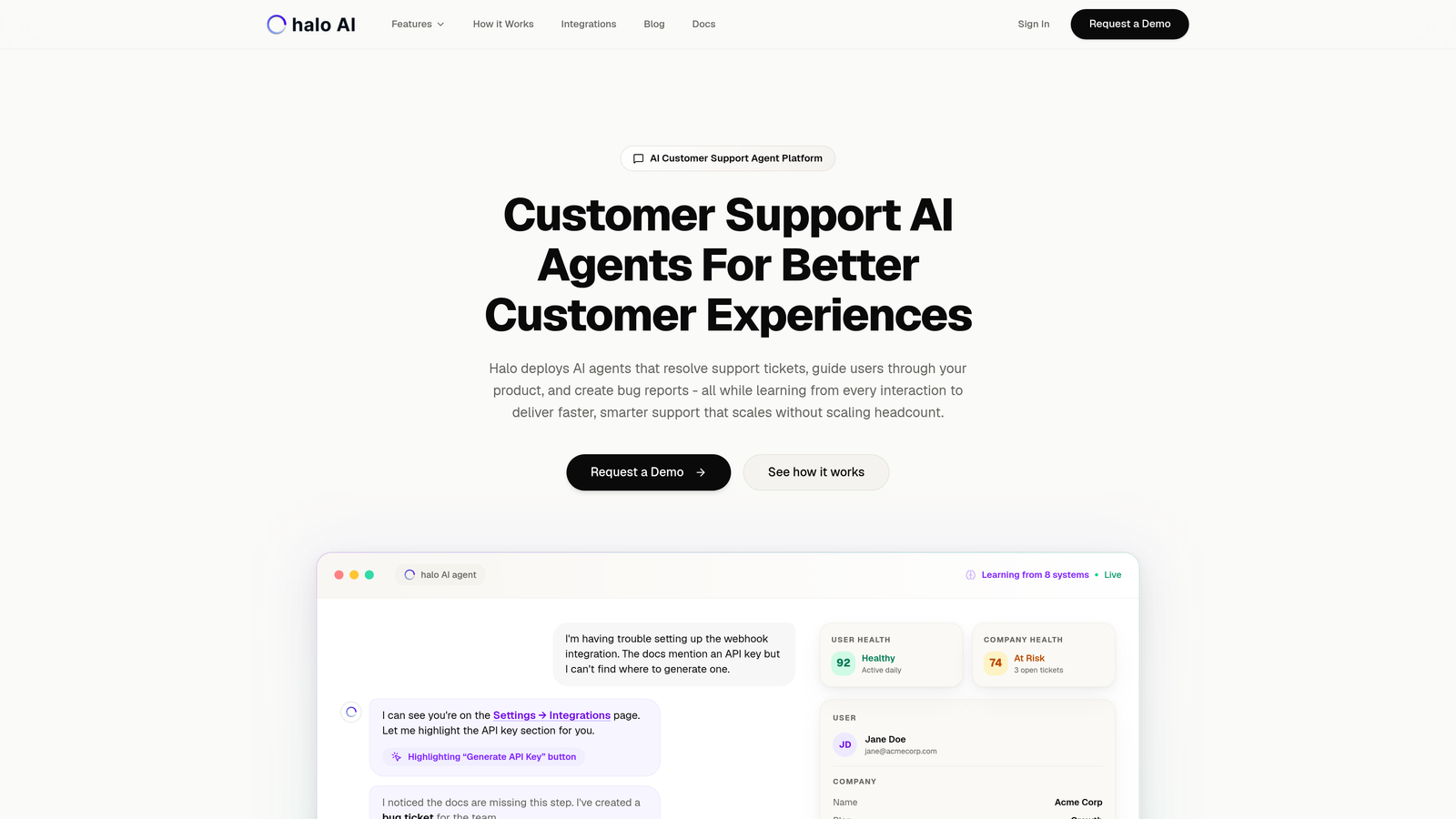
Halo AI is an AI-first customer support platform that deploys intelligent agents to resolve tickets, guide users through products, and create bug reports autonomously.
Where This Tool Shines
Unlike traditional helpdesk tools with AI bolted on, Halo is built from the ground up around autonomous AI agents. These agents don't just suggest responses—they actually resolve tickets without human intervention, learning from every interaction to get smarter over time.
The page-aware context feature is particularly powerful for product support. The system sees exactly what users see in your product interface, enabling it to provide visual guidance and contextual help that goes far beyond generic chatbot responses.
Key Features
Autonomous AI Agents: Resolve tickets end-to-end without requiring human review for routine issues.
Page-Aware Context: Sees your product UI in real-time to provide visual guidance and contextual support.
Auto Bug Ticket Creation: Automatically creates engineering tickets in Linear when issues require product fixes.
Smart Inbox with Business Intelligence: Surfaces customer health signals, revenue insights, and anomaly detection beyond basic support metrics.
Seamless Live Agent Handoff: Escalates complex issues to human agents with full context and conversation history.
Best For
Product teams and B2B companies that want AI to handle the entire support workflow, not just deflect tickets. Particularly valuable if you use Linear for engineering, Slack for team communication, and need deep integration with your business stack including HubSpot, Stripe, and other revenue tools.
Pricing
Contact for custom pricing based on ticket volume and integration requirements.
2. Zendesk AI
Best for: Existing Zendesk customers wanting native AI capabilities without switching platforms
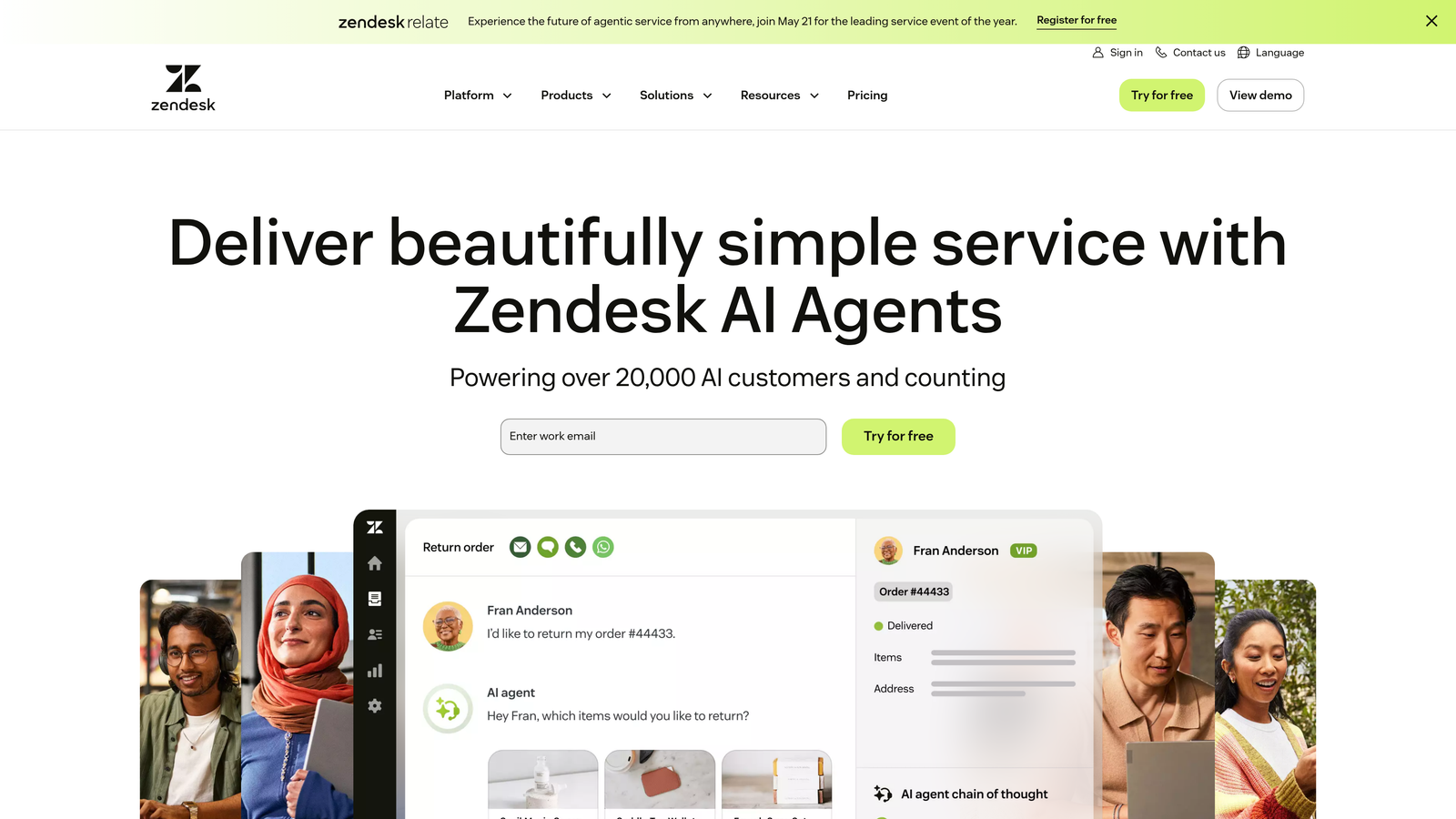
Zendesk AI is the native AI layer built into the Zendesk platform, offering automated ticket handling, agent assistance, and intelligent routing.
Where This Tool Shines
If you're already invested in the Zendesk ecosystem, their AI capabilities integrate seamlessly without requiring additional platforms or complex setup. The AI has been trained on Zendesk's massive dataset of support interactions, giving it strong out-of-the-box performance for common support scenarios.
The intelligent triage and routing features excel at handling high ticket volumes, automatically categorizing and assigning tickets based on content analysis and historical patterns. This reduces manual sorting work significantly for large support teams.
Key Features
AI-Powered Bots: Trained on extensive support data to handle common questions across industries.
Intelligent Triage and Routing: Automatically categorizes and assigns tickets to the right teams based on content analysis.
Agent Assist: Suggests relevant responses and knowledge base articles while agents work on tickets.
Sentiment Analysis: Detects customer emotion and predicts CSAT scores to prioritize urgent issues.
Deep Suite Integration: Works natively across all Zendesk products without third-party connectors.
Best For
Companies already using Zendesk Suite who want to add AI capabilities without migrating to a new platform. Works well for teams with established workflows who need incremental automation improvements rather than a complete overhaul.
Pricing
Included in Suite plans starting at $55 per agent per month. Advanced AI features available as add-on for enterprise customers.
3. Intercom Fin
Best for: Companies with comprehensive help centers looking for conversational AI that leverages existing content
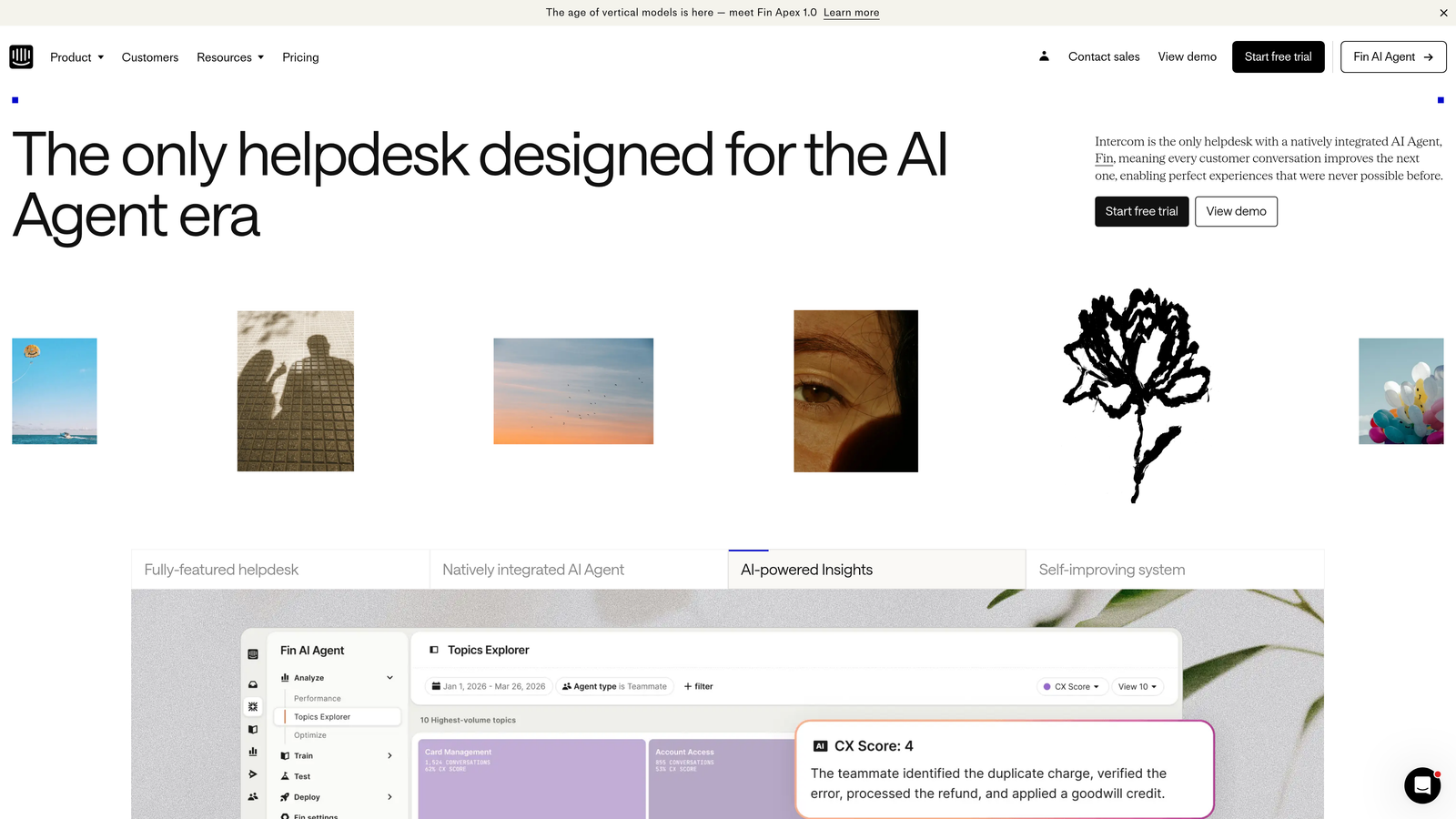
Intercom Fin is a conversational AI agent that resolves support questions using your existing help content with natural language understanding.
Where This Tool Shines
Fin excels at turning your knowledge base into an active support agent. Instead of just linking to articles, it actually reads your documentation and formulates natural, conversational answers that feel human. The quality of responses is notably high when you have well-maintained help content.
The per-resolution pricing model is unique in this space. You only pay when Fin successfully resolves a conversation, which aligns costs directly with value delivered. This makes it easier to justify the investment and measure ROI clearly.
Key Features
Knowledge Base Integration: Automatically learns from your help center and documentation to answer questions accurately.
Natural Conversational Tone: Responds in a human-like way rather than robotic template answers.
Seamless Human Handoff: Transfers complex issues to live agents with full conversation context preserved.
Omnichannel Support: Works across chat, email, and social media channels from a single platform.
Resolution Analytics: Tracks which questions Fin handles successfully and where it needs help.
Best For
Teams that have invested in building comprehensive help content and want to maximize its value through AI-powered conversations. Particularly effective for companies with straightforward product questions that existing documentation can answer.
Pricing
$0.99 per resolution. Also included in some Intercom subscription plans depending on tier.
4. Freshdesk Freddy AI
Best for: Growing businesses wanting affordable AI automation within the Freshworks ecosystem
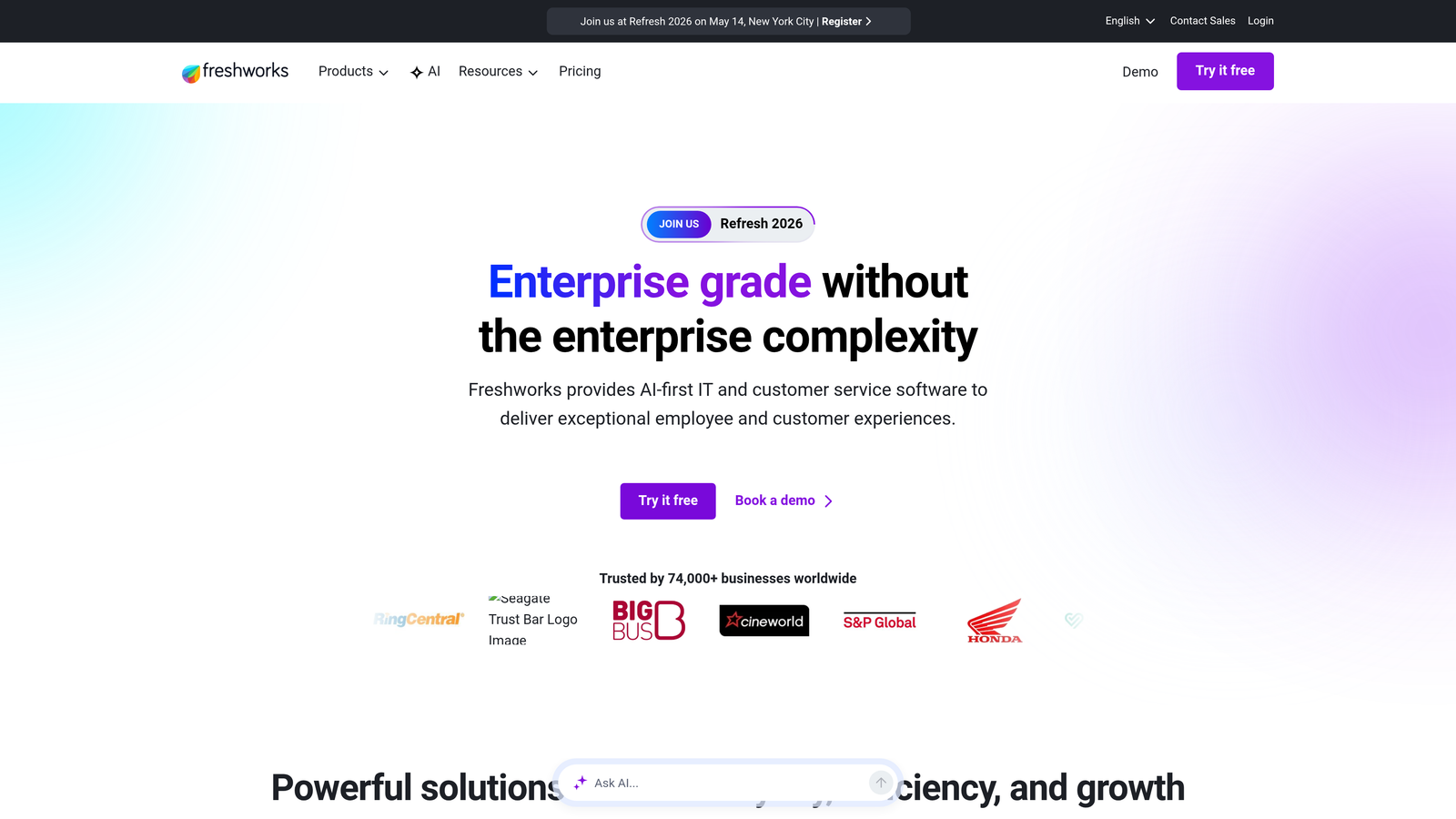
Freshdesk Freddy AI is an AI assistant within the Freshworks ecosystem offering ticket automation, predictive support, and agent productivity tools.
Where This Tool Shines
Freddy AI delivers solid automation capabilities at a more accessible price point than enterprise solutions. The auto-triage feature handles the tedious work of categorizing tickets and filling in custom fields, which saves agents significant time on every ticket they touch.
The sentiment analysis works well for identifying frustrated customers who need immediate attention. This helps teams prioritize based on customer emotion rather than just ticket age, preventing small issues from escalating into churn risks.
Key Features
Auto-Triage: Automatically categorizes tickets and suggests field values to reduce manual data entry.
Canned Response Recommendations: Suggests relevant pre-written responses based on ticket content.
Sentiment Analysis: Identifies customer emotion to help prioritize tickets that need urgent handling.
Omnichannel Bot Deployment: Deploy AI bots across email, chat, phone, and social channels.
Predictive Analytics Dashboard: Forecasts ticket volumes and identifies trending issues before they spike.
Best For
Mid-sized companies that want professional AI capabilities without enterprise pricing. Works especially well if you're already using other Freshworks products like Freshsales or Freshservice and want unified automation across your tech stack.
Pricing
Included in Pro plan at $49 per agent per month. Enterprise plan with advanced AI features at $79 per agent per month.
5. Ada
Best for: Enterprise companies handling high-volume support across multiple languages
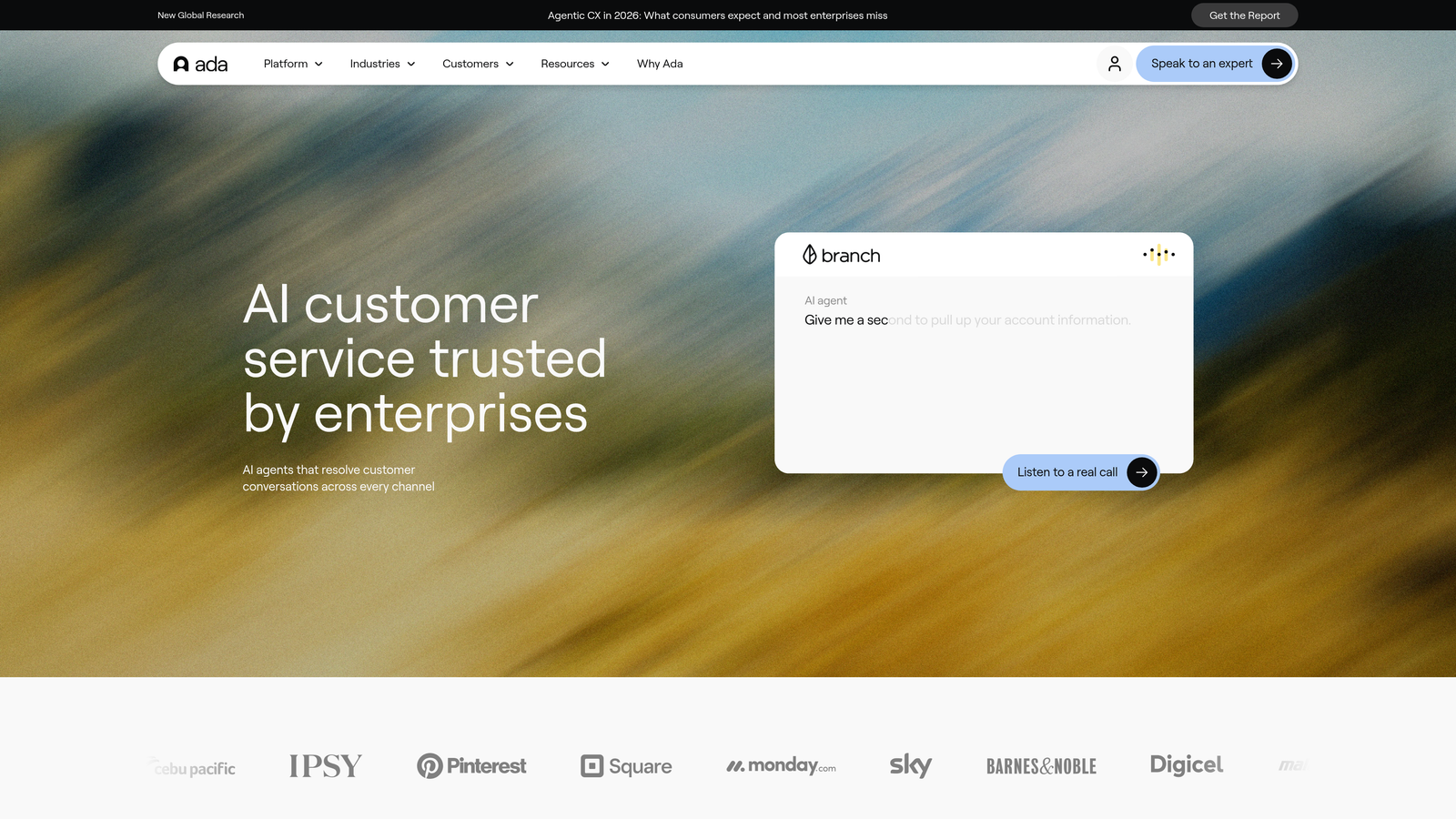
Ada is an enterprise-grade AI automation platform built for high-volume customer support with no-code bot building capabilities.
Where This Tool Shines
Ada's no-code builder empowers support teams to create and modify automation flows without engineering resources. This means you can iterate quickly on bot responses and workflows as your product and customer needs evolve, without waiting on developer availability.
The multi-language support is genuinely impressive, covering over 50 languages with quality translations. For global companies, this eliminates the need to build separate automation for each market or rely on generic machine translation that often misses nuance.
Key Features
No-Code Automation Builder: Support teams can create complex automation flows without technical skills.
Multi-Language Support: Handles conversations in 50+ languages with natural translation quality.
Major Platform Integrations: Connects with Zendesk, Salesforce, Shopify, and other enterprise systems.
Proactive Messaging: Reach out to customers based on behavior triggers or lifecycle events.
Conversation Analytics: Detailed insights into automation performance and customer satisfaction metrics.
Best For
Large enterprises with global customer bases and high ticket volumes. Particularly valuable for companies that need support in multiple languages and want their support teams to control automation without constant IT involvement.
Pricing
Custom enterprise pricing based on conversation volume and feature requirements.
6. Forethought
Best for: Enterprise support teams needing intelligent routing and real-time agent assistance
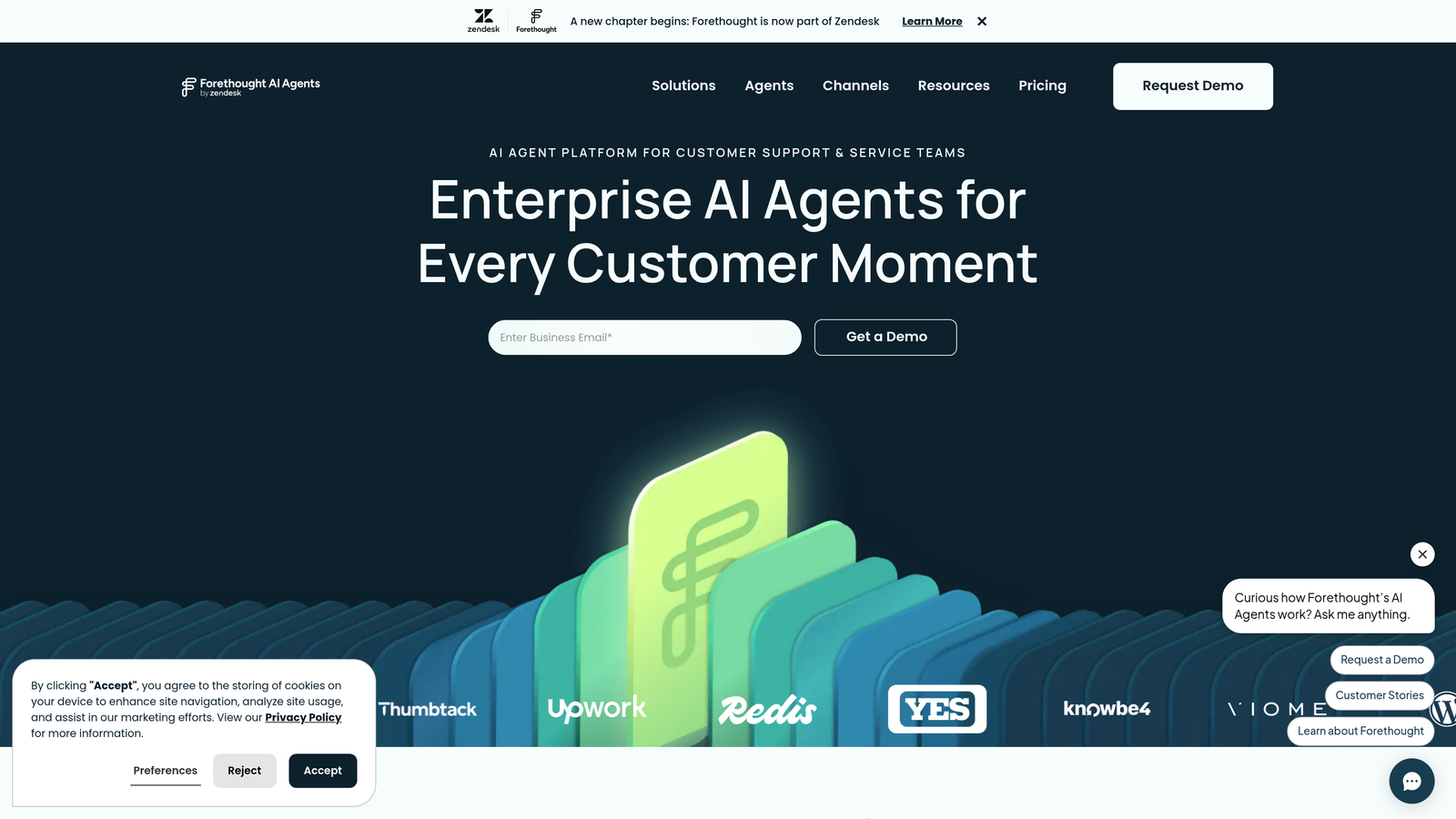
Forethought is an AI platform focused on intelligent ticket triage, routing, and agent assistance for enterprise support operations.
Where This Tool Shines
Forethought takes a modular approach with separate products for different automation needs. Solve handles autonomous resolution, Triage manages routing, Assist helps agents in real-time, and Discover surfaces insights from support data. This lets you implement AI gradually rather than all at once.
The intent detection and routing capabilities are particularly sophisticated. The system doesn't just look at keywords—it understands the actual customer intent and routes accordingly, which dramatically reduces tickets bouncing between teams.
Key Features
Solve: Autonomous ticket resolution for common issues without human intervention.
Triage: Intent detection and smart routing to the right team or agent based on expertise.
Assist: Real-time suggestions for agents including relevant articles and response templates.
Discover: Analytics and insights extracted from support conversation data.
Enterprise Integrations: Works with Zendesk, Salesforce Service Cloud, and ServiceNow.
Best For
Large support organizations with complex routing needs and multiple specialized teams. Best suited for companies with high ticket volumes where even small efficiency gains translate to significant cost savings.
Pricing
Custom pricing based on ticket volume and which modules you implement.
7. Tidio
Best for: Small businesses and e-commerce stores wanting affordable AI chat automation
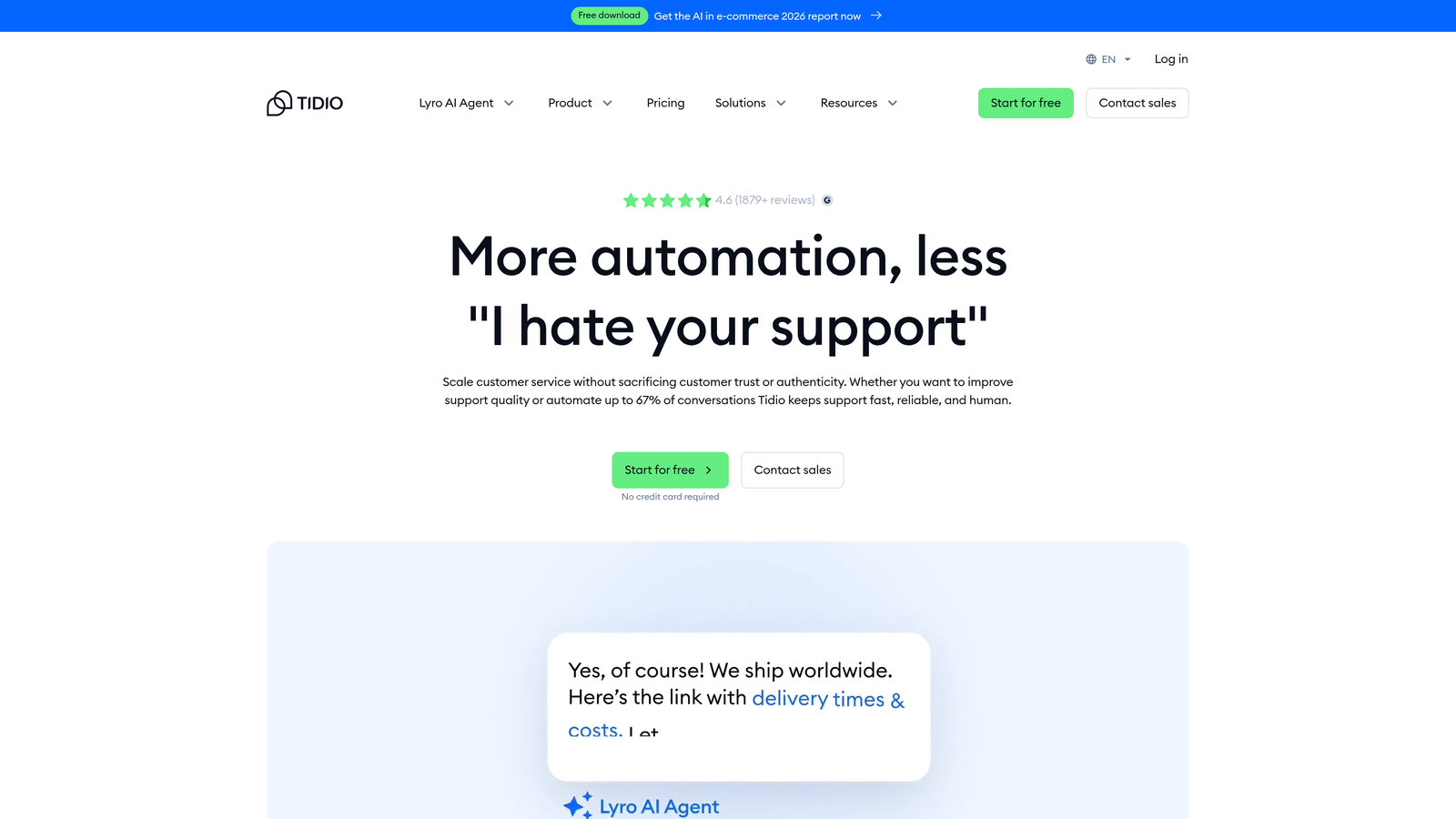
Tidio is an affordable live chat and chatbot platform combining AI automation with human support for small businesses.
Where This Tool Shines
Tidio makes AI automation accessible to small businesses with limited budgets. The Lyro AI chatbot handles common questions effectively, while the visual builder lets non-technical users create custom flows for specific scenarios like order tracking or product recommendations.
The e-commerce integrations with Shopify and WooCommerce are particularly well-executed. The bot can access order data, shipping status, and product information to resolve common e-commerce questions without human intervention.
Key Features
Lyro AI Chatbot: Automated responses to common questions trained on your website content.
Visual Chatbot Builder: Drag-and-drop interface for creating custom conversation flows.
Live Chat with Visitor Tracking: See what pages visitors browse to provide contextual support.
E-Commerce Integrations: Native connections to Shopify, WooCommerce, and other platforms.
Multi-Channel Support: Handle conversations from email, Messenger, and Instagram in one inbox.
Best For
Small businesses and online stores that need basic AI automation without enterprise complexity or pricing. Works well for teams of 1-10 people who want to offer 24/7 support without hiring night shift agents.
Pricing
Free tier available with basic features. Lyro AI chatbot starts at $39 per month.
8. Kustomer IQ
Best for: Companies wanting unified CRM and support with proactive automation capabilities
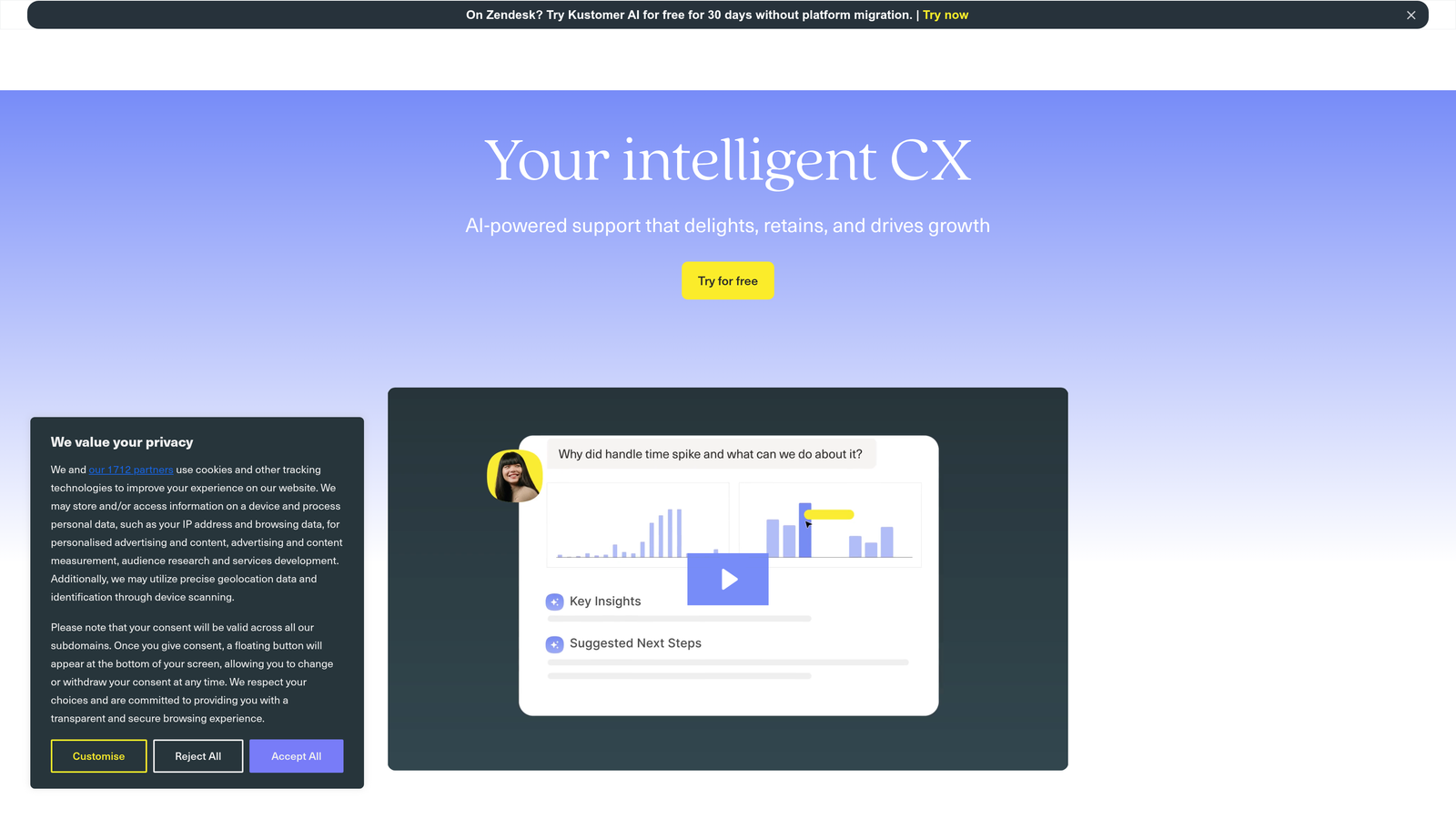
Kustomer IQ is an AI-powered CRM platform that unifies customer data with intelligent automation and proactive support.
Where This Tool Shines
Kustomer approaches support differently by building a unified customer timeline that shows every interaction across all channels. This gives AI agents complete context about customer history, purchases, and previous issues when suggesting responses or taking action.
The proactive outreach capabilities stand out. Rather than just reacting to incoming tickets, Kustomer can identify customers who might need help based on behavior patterns and reach out before they submit a ticket. This shifts support from reactive to preventive.
Key Features
Unified Customer Timeline: Complete view of customer interactions across all channels and touchpoints.
AI-Powered Classification: Automatically categorizes and routes conversations based on content and customer data.
Proactive Outreach: Identifies customers who need help based on behavior and triggers automated assistance.
Sentiment Detection: Monitors conversation tone and escalates frustrated customers automatically.
Native CRM: Full customer relationship management built into the support platform.
Best For
Companies that want to unify customer data and support in a single platform rather than connecting separate CRM and helpdesk tools. Particularly valuable for subscription businesses that benefit from proactive customer success outreach.
Pricing
Enterprise plan at $89 per user per month. Ultimate plan with advanced features at $139 per user per month.
9. Help Scout AI
Best for: Teams prioritizing personal, human-first support with AI assistance rather than replacement
Help Scout AI offers AI features designed for teams that want to maintain a personal touch while improving efficiency through smart drafting and summarization.
Where This Tool Shines
Help Scout takes a different philosophy than most AI tools. Instead of trying to replace human agents, it focuses on making them more efficient. The AI Drafts feature generates response suggestions that agents can edit and personalize, maintaining the human touch while reducing writing time.
The AI Summarize feature is particularly useful for long, complex conversations. It condenses multi-message threads into key points, helping agents quickly understand context without reading through entire conversation histories.
Key Features
AI Drafts: Generates response suggestions based on conversation context that agents can edit before sending.
AI Summarize: Condenses long conversations into key points for quick context understanding.
AI Assist: Improves tone and clarity of agent-written responses before they send.
Collaborative Shared Inbox: Team-based email management with assignment and collision detection.
Knowledge Base with Beacon: Self-service help center with embedded widget for contextual article suggestions.
Best For
Small to medium teams that believe in maintaining personal customer relationships but want AI to handle the tedious parts of writing responses. Works well for companies where brand voice and personalization are critical to customer experience.
Pricing
Plus plan at $40 per user per month includes all AI features.
Making the Right Choice
The help desk AI automation market has matured significantly. These tools now offer genuine autonomous resolution rather than just deflecting tickets to help centers. The right choice depends on your specific workflow, ticket complexity, and existing tech stack.
For B2B SaaS teams that need deep product integration and continuous learning, Halo AI delivers autonomous resolution with page-aware context that traditional helpdesk AI can't match. The ability to automatically create engineering tickets and surface business intelligence makes it particularly valuable for product-led companies.
If you're already invested in a major helpdesk platform, the native AI options make sense. Zendesk AI and Freshdesk Freddy offer solid automation without platform migration, while Intercom Fin excels if you have comprehensive help content to leverage.
For enterprise operations with complex routing needs, Forethought and Kustomer IQ provide sophisticated triage and proactive capabilities. Ada stands out for global companies needing multi-language support at scale.
Small businesses and e-commerce stores will find Tidio offers the best value, while teams prioritizing human touch over full automation should consider Help Scout AI's assistance-focused approach.
When evaluating these tools, focus on three key factors. First, assess your ticket complexity distribution—simple FAQ-style questions versus nuanced product issues requiring deep context. Second, examine integration requirements with your existing tools like Linear, Slack, or revenue systems. Third, consider whether you want AI to suggest responses or actually resolve tickets autonomously.
The pricing models vary significantly. Per-resolution pricing like Intercom Fin aligns costs with value but can become expensive at high volumes. Seat-based pricing works better for predictable costs but doesn't scale down during slow periods. Enterprise custom pricing typically offers the best rates for high-volume operations.
Your support team shouldn't scale linearly with your customer base. Let AI agents handle routine tickets, guide users through your product, and surface business intelligence while your team focuses on complex issues that need a human touch. See Halo in action and discover how continuous learning transforms every interaction into smarter, faster support.