9 Best Help Desk Replacement Solutions in 2026
As support volumes grow and customer expectations rise, legacy ticketing systems are creating more bottlenecks than they solve — making help desk replacement solutions a strategic priority for B2B teams in 2026. This guide evaluates nine AI-native platforms, including Halo AI and others, based on automation depth, integration flexibility, and ability to resolve tickets autonomously rather than simply routing them to human agents.
 Matt PattoliFounder13 min read
Traditional help desks were built for a different era — one where every ticket needed a human to read, triage, and respond. But as support volumes grow and customer expectations rise, many B2B teams are discovering that legacy systems create as many bottlenecks as they solve. The result: bloated queues, burned-out agents, and customers waiting too long for answers they could have gotten instantly.
Help desk replacement solutions, particularly AI-native platforms, are changing that equation. Instead of routing tickets to agents, they resolve them autonomously, escalate intelligently, and surface business insights along the way. This list covers nine of the best options available in 2026, evaluated on automation depth, integration flexibility, ease of deployment, and overall value.
1. Halo AI
Best for: AI-first SaaS teams replacing their helpdesk entirely with autonomous resolution
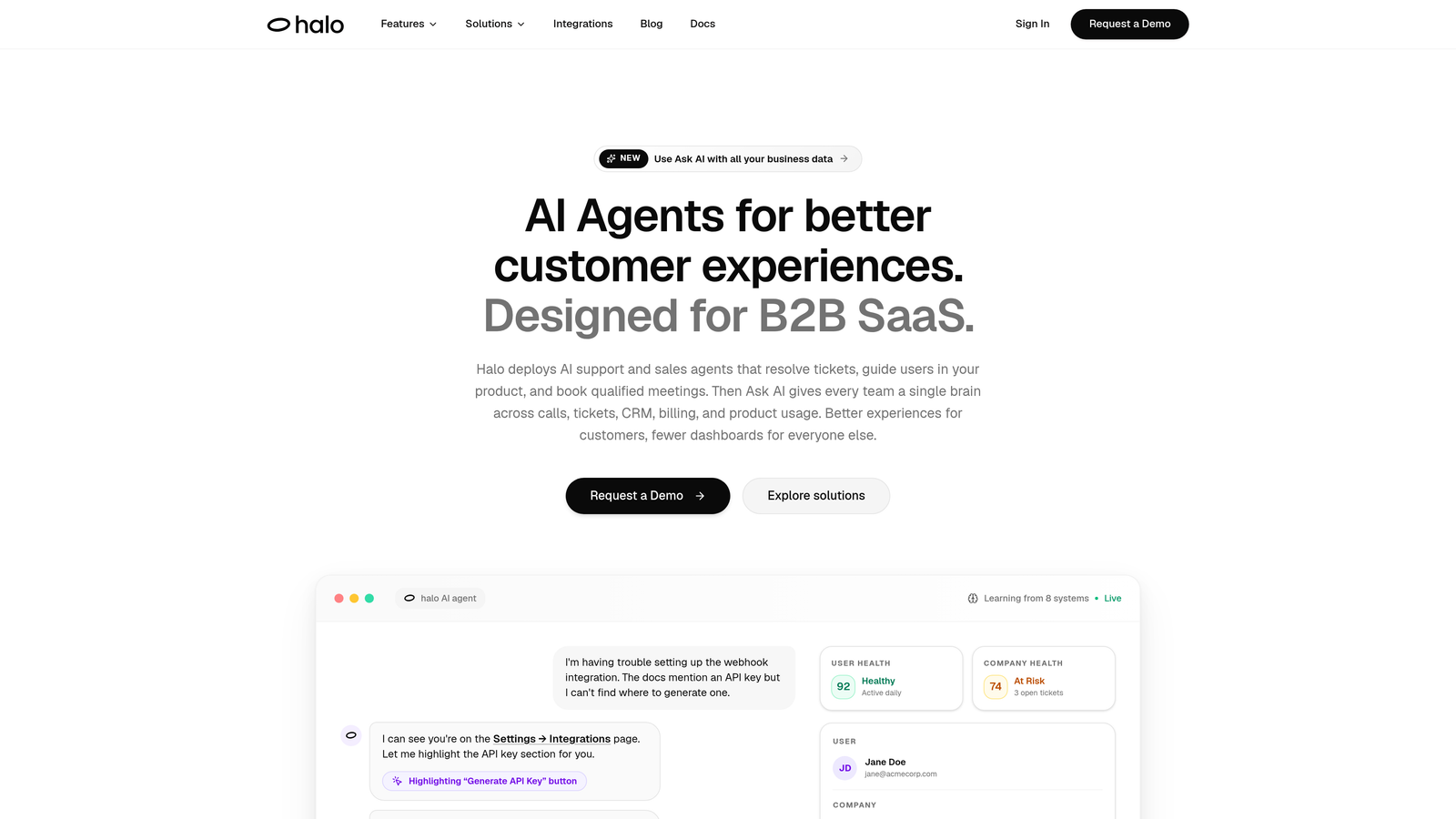
Halo AI is an AI-native customer support platform that resolves tickets autonomously, guides users through products with a page-aware chat widget, and surfaces business intelligence from every support interaction.
Where This Tool Shines
Most AI support tools are bolted onto existing helpdesk infrastructure. Halo AI is built differently: the AI is the architecture, not an add-on. That means every interaction feeds a continuous learning loop that improves resolution quality over time without manual retraining.
What sets Halo apart from other tools on this list is its page-aware context engine. The chat widget sees what the user sees, so it can provide step-by-step guidance that's specific to exactly where someone is in your product. Pair that with a smart inbox that surfaces customer health signals, revenue anomalies, and churn indicators, and you have a support layer that does more than close tickets.
Key Features
Intelligent AI Agents: Resolve tickets end-to-end rather than just suggesting responses, handling full conversations autonomously.
Page-Aware Chat Widget: Sees what the user sees in real time, enabling contextual, step-by-step guidance without the user having to describe their screen.
Smart Inbox with Business Intelligence: Surfaces customer health signals, revenue anomalies, and churn indicators from support data, turning your inbox into a strategic layer.
Auto Bug Ticket Creation: Automatically generates and routes bug reports to engineering tools like Linear when support conversations reveal product issues.
Live Agent Handoff: Escalates complex issues to human agents with full conversation context preserved, so agents never start from scratch.
Deep Integrations: Connects with Slack, HubSpot, Intercom, Stripe, Zoom, PandaDoc, and Fathom, fitting into the broader B2B SaaS stack.
Best For
Lean SaaS and product-led teams that want to scale support without scaling headcount. Particularly well-suited for organizations frustrated by the black-box nature of traditional helpdesks and looking for a platform that delivers business intelligence alongside ticket resolution.
Pricing
Visit haloagents.ai for current pricing plans. Halo is designed to replace your existing helpdesk, so the total cost comparison should factor in what you're currently spending on legacy tools and agent overhead.
2. Intercom
Best for: Growth-stage SaaS teams with existing Intercom investment looking to add AI resolution
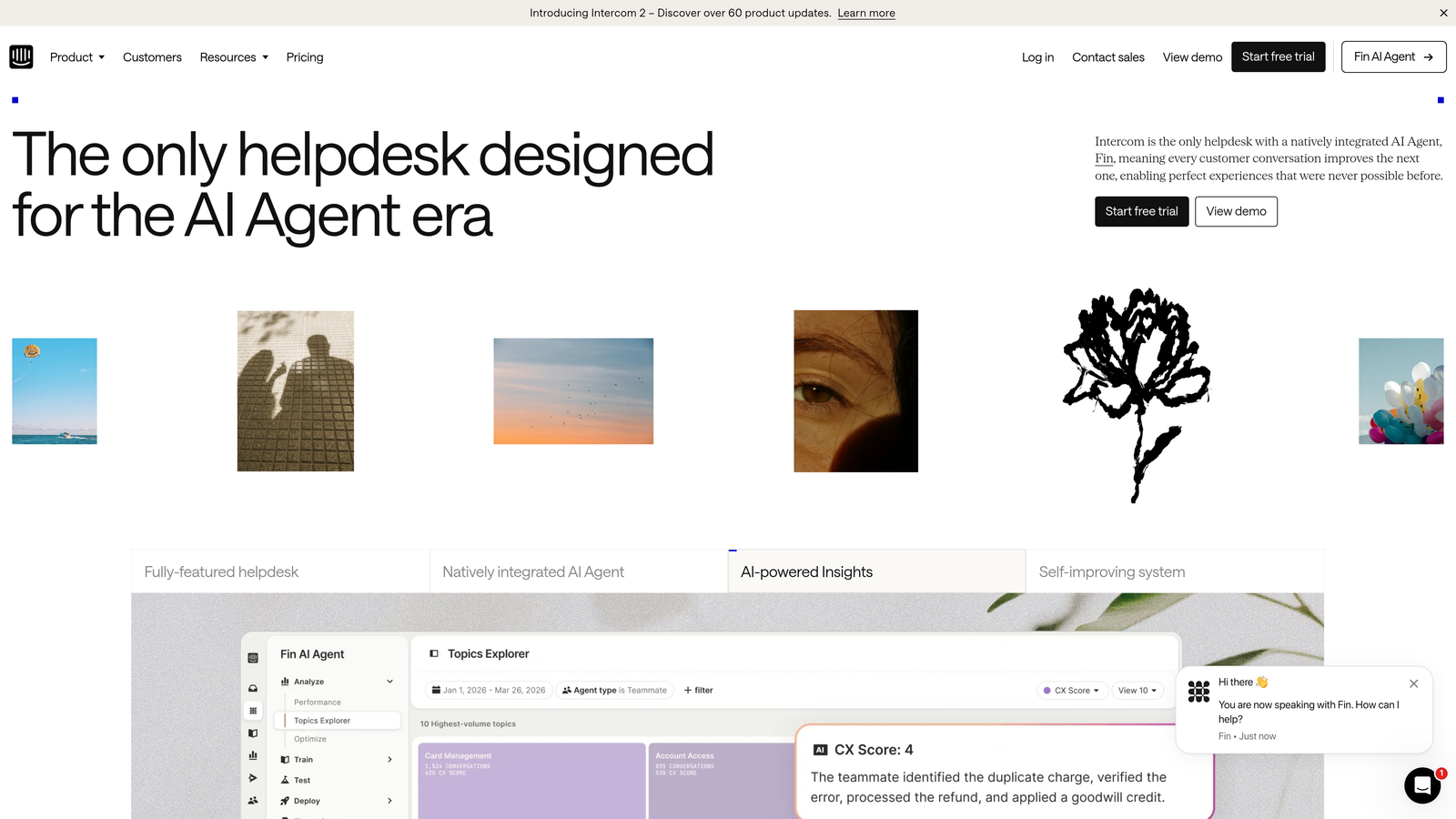
Intercom is a mature conversational support platform featuring Fin AI, an AI agent designed to handle common queries before routing conversations to human agents.
Where This Tool Shines
Intercom has spent years building one of the most polished in-product messaging experiences available. Fin AI layers autonomous resolution on top of that foundation, handling repetitive queries while the rest of the platform manages onboarding flows, proactive messaging, and agent workflows.
For teams already embedded in the Intercom ecosystem, upgrading to Fin AI is a natural evolution rather than a platform migration. The breadth of the integration marketplace and the depth of conversation analytics also make it a strong choice for teams that want visibility into support trends over time.
Key Features
Fin AI Agent: Handles common support queries autonomously before escalating to human agents, drawing from your knowledge base and conversation history.
In-Product Messaging: Supports onboarding flows, proactive outreach, and contextual help within your product interface.
Omnichannel Inbox: Unifies chat, email, and social conversations in a single agent workspace.
Integration Marketplace: Extensive ecosystem of third-party integrations across CRM, analytics, and product tools.
Conversation Analytics: Detailed reporting on resolution rates, response times, and customer satisfaction trends.
Best For
Growth-stage SaaS companies that are already using Intercom for in-product messaging and want to extend it with AI-driven resolution without switching platforms entirely.
Pricing
Starts at approximately $39/month; pricing scales with usage and seat count, and can grow significantly at higher volumes. Verify current pricing at intercom.com.
3. Freshdesk
Best for: Mid-market teams wanting multichannel support with incremental AI automation
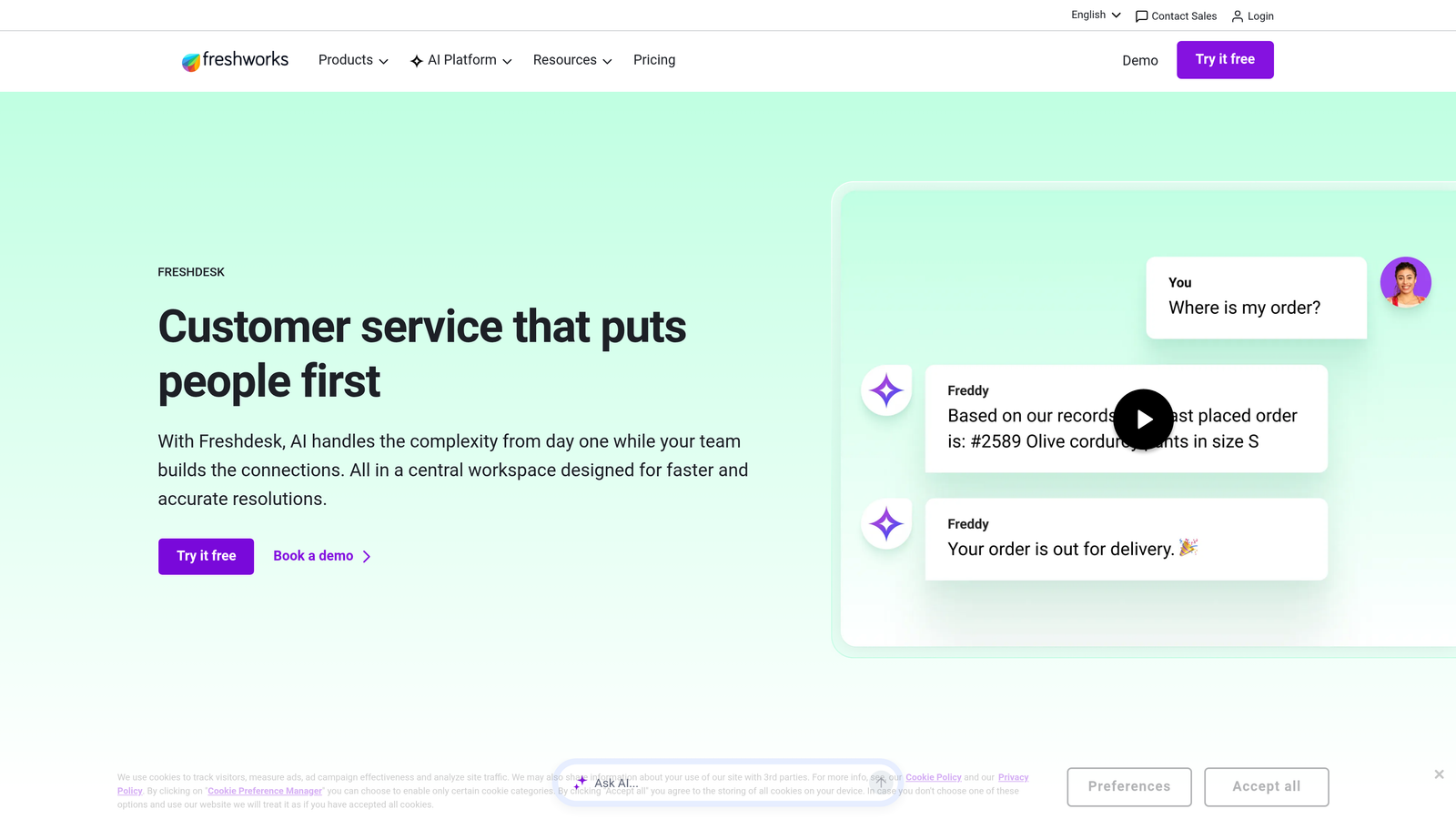
Freshdesk is a well-established multichannel helpdesk with Freddy AI layered in for automation, ticket suggestions, and conversation summarization.
Where This Tool Shines
Freshdesk is one of the most accessible enterprise-grade helpdesks on the market, with a free tier that gives smaller teams a low-risk entry point. Freddy AI adds meaningful automation to an already solid ticketing foundation, handling triage, suggesting responses, and summarizing long threads so agents can respond faster.
For teams not ready to abandon the traditional ticketing model entirely, Freshdesk offers a comfortable middle ground: familiar workflows with AI enhancements that reduce agent workload without requiring a complete operational rethink.
Key Features
Freddy AI: Handles ticket triage, auto-suggestions, and summarization to reduce manual effort for support agents.
Multichannel Support: Covers email, chat, phone, and social channels from a single unified workspace.
Collision Detection: Prevents multiple agents from working on the same ticket simultaneously, reducing duplicated effort.
Customizable Workflows: Automation rules and workflow builders for routing, escalation, and SLA management.
Tiered AI Access: Freddy AI features are more robust on higher-tier plans, so automation depth scales with your subscription level.
Best For
Mid-market teams that need solid multichannel coverage and want to introduce AI incrementally without overhauling their support operations. Also a good fit for teams migrating from spreadsheet-based support who need structure before automation.
Pricing
Free plan available for small teams; paid plans start from approximately $15/agent/month. AI features are unlocked at higher tiers. Verify at freshdesk.com.
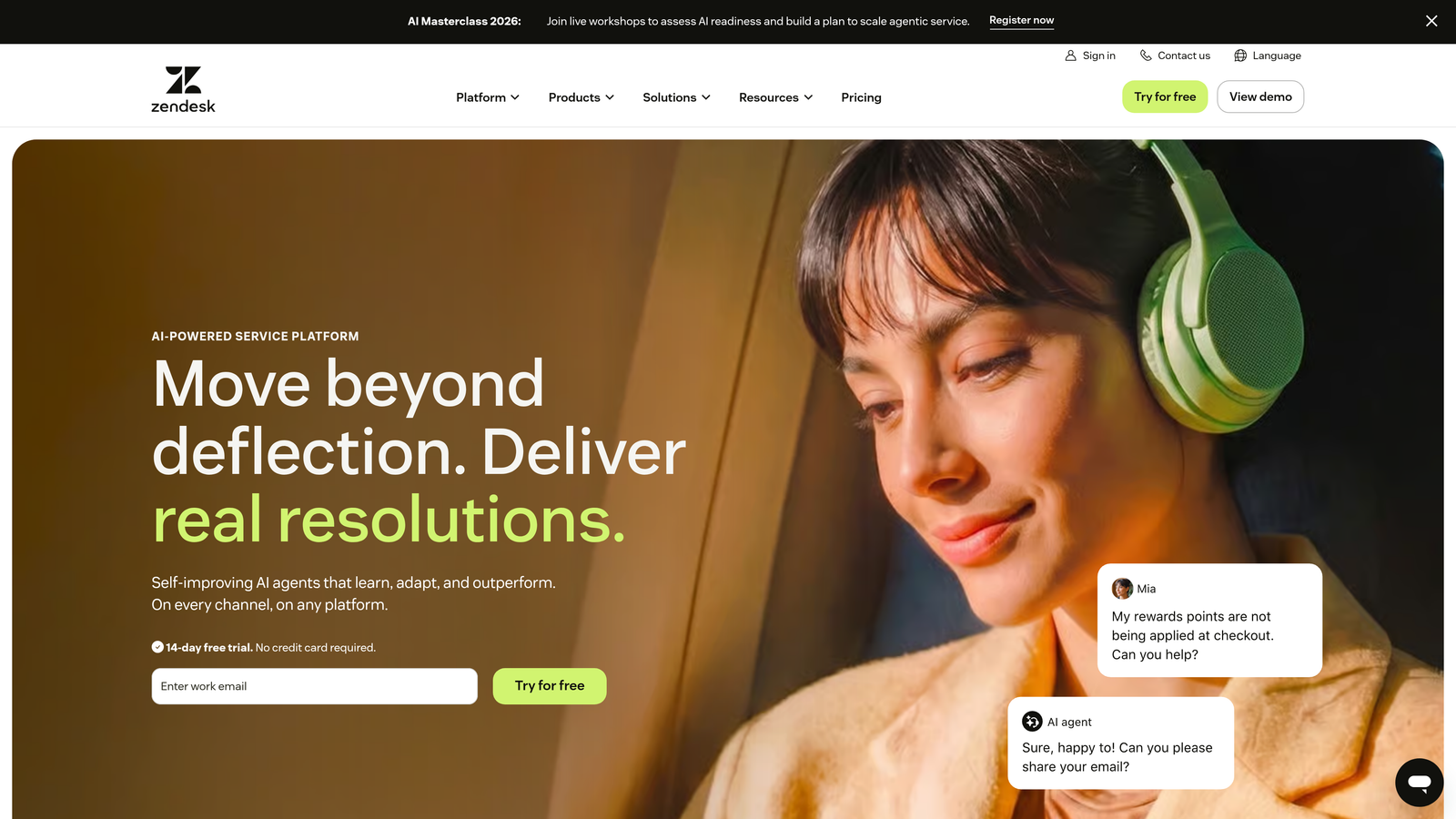
4. Zendesk
Best for: Large enterprises with complex SLA requirements and dedicated support operations teams
Zendesk is the enterprise-grade helpdesk standard, with AI triage and automation features added to its deep customization and routing capabilities.
Where This Tool Shines
When your support operation has hundreds of agents, intricate SLA structures, and compliance requirements, Zendesk's depth of configuration becomes genuinely valuable. Few platforms match its routing flexibility, and the app marketplace means you can integrate almost anything into your support workflows.
That said, Zendesk's AI capabilities are layered onto a system originally designed for human-first workflows. Teams looking for autonomous AI resolution rather than AI-assisted agent work may find the overhead of maintaining Zendesk's configuration doesn't justify the return at scale.
Key Features
Zendesk AI: Provides intelligent triage, intent detection, and automated routing to reduce manual ticket categorization.
Customizable Routing and SLA Management: Highly configurable ticket routing rules and SLA policies for complex enterprise requirements.
Extensive App Marketplace: Hundreds of integrations spanning CRM, analytics, billing, and productivity tools.
Omnichannel Coverage: Supports email, chat, voice, and social from a unified agent workspace.
Advanced Reporting: Detailed analytics dashboards for tracking support performance, agent productivity, and customer satisfaction.
Best For
Large enterprises with dedicated support operations teams, complex routing requirements, and the internal resources to configure and maintain a sophisticated helpdesk environment.
Pricing
Plans from approximately $55/agent/month; enterprise pricing is available for larger deployments. Total cost of ownership can be significant at scale. Verify at zendesk.com.
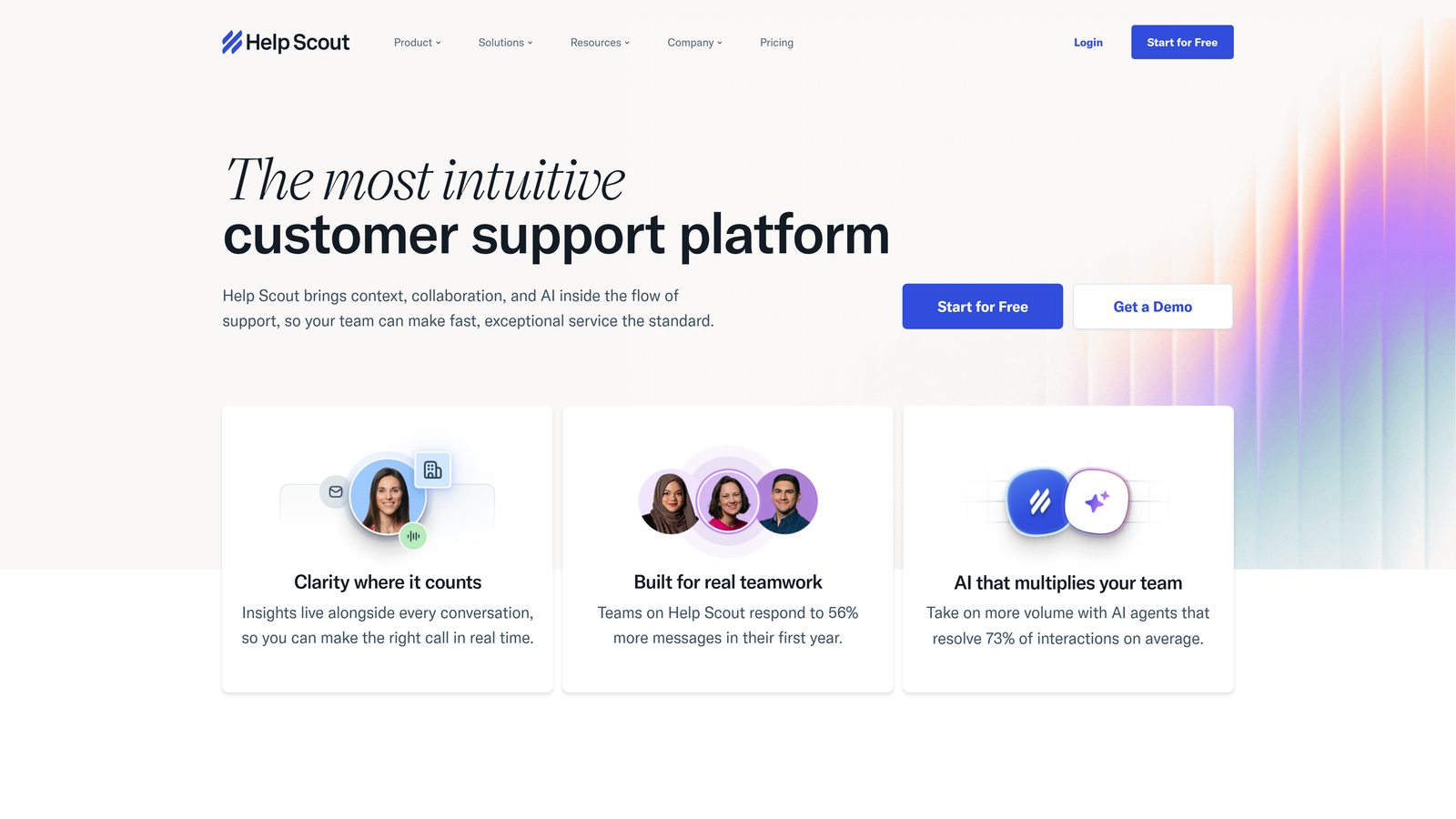
5. Help Scout
Best for: Smaller teams prioritizing simplicity and a clean agent experience over deep automation
Help Scout is a clean, shared-inbox support tool designed for simplicity, with AI drafting and summarization features to help agents respond faster.
Where This Tool Shines
Help Scout deliberately avoids the complexity that makes tools like Zendesk powerful but overwhelming. The result is a support experience that agents actually enjoy using, with a clean inbox, collision detection, and internal notes that make collaboration feel natural rather than procedural.
The AI features here are agent-focused rather than customer-facing: Summarize condenses long threads, Drafts suggests reply content, and Assist helps with writing quality. It's not trying to replace agents; it's trying to make them faster. For teams where the human touch is a core part of the support brand, that's a meaningful distinction.
Key Features
Shared Inbox: Clean, collaborative inbox with collision detection and internal notes for agent coordination.
AI Summarize and AI Drafts: Reduces time spent reading long threads and composing replies, keeping agents focused on resolution.
Beacon Widget: In-product help widget that surfaces knowledge base articles before customers submit a ticket.
Docs Knowledge Base: Built-in knowledge base included on all plans, with no additional cost for self-service content.
Transparent Pricing: Simple per-user pricing with no hidden tiers or feature gates on core functionality.
Best For
Smaller B2B and SaaS teams that want a clean, reliable inbox experience without the configuration overhead of enterprise helpdesks. Ideal when the support team is small and the priority is quality over automation volume.
Pricing
From approximately $20/user/month. Pricing is transparent and straightforward. Verify at helpscout.com.
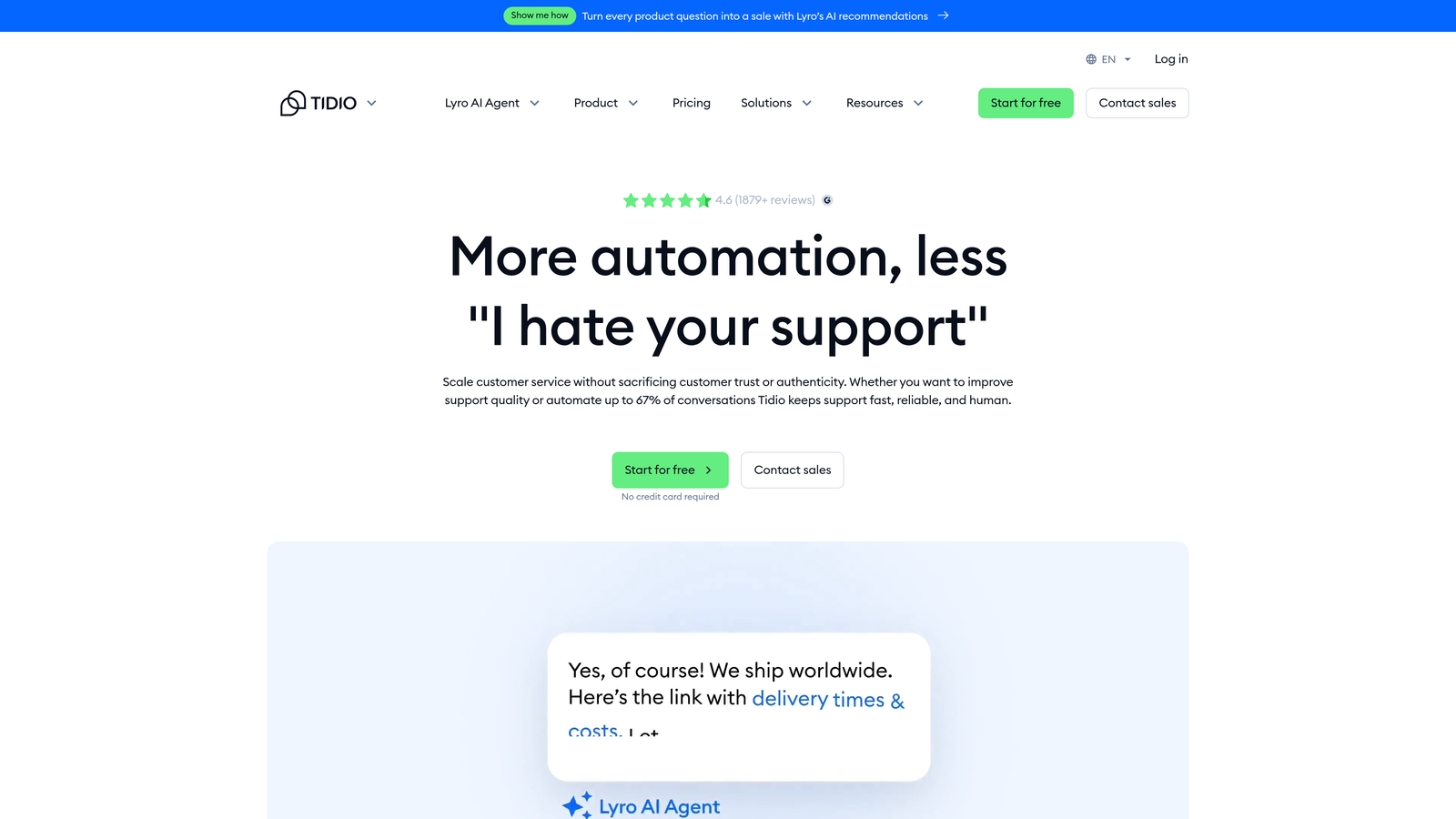
6. Tidio
Best for: SMBs and e-commerce brands wanting accessible AI chat with a low barrier to entry
Tidio is a live chat and AI chatbot platform featuring Lyro AI for autonomous conversation handling, with strong traction among small businesses and e-commerce brands.
Where This Tool Shines
Tidio's biggest advantage is accessibility. The free tier makes it genuinely usable for small teams testing AI-assisted support for the first time, and the Lyro AI chatbot handles common questions autonomously without requiring significant configuration investment.
The platform integrates tightly with Shopify, WordPress, and Wix, making it a natural fit for direct-to-consumer brands that need fast, conversational support on their storefront. The live chat to agent handoff is smooth, and visitor tracking adds a proactive dimension to the support experience.
Key Features
Lyro AI Chatbot: Handles common customer questions autonomously up to a conversation limit that varies by plan.
Live Chat with Agent Takeover: Seamless transition from AI to human agent when conversations require a personal touch.
E-Commerce Integrations: Native connections to Shopify, WordPress, and Wix for storefront-based support.
Visitor Tracking: Real-time tracking of site visitors with triggered messaging capabilities for proactive engagement.
Free Tier: A usable free plan that lets small teams get started without upfront commitment.
Best For
SMBs and e-commerce brands that need accessible AI chat support on their website or storefront. Less suited for complex B2B SaaS workflows or teams requiring deep integration with product and engineering tooling.
Pricing
Free plan available; Lyro AI plans from approximately $29/month. Pricing scales with conversation volume. Verify at tidio.com.
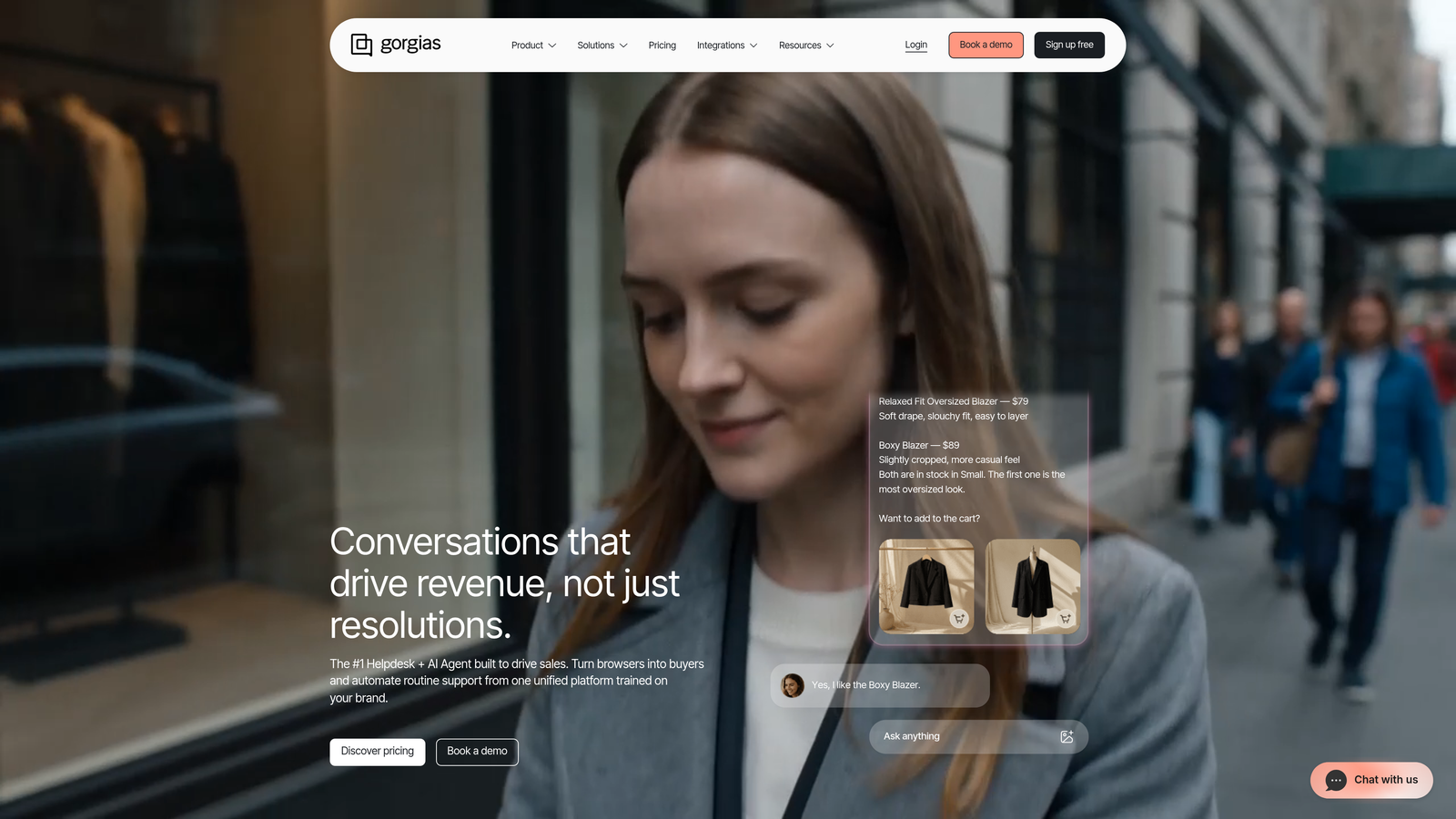
7. Gorgias
Best for: E-commerce brands on Shopify, WooCommerce, or Magento needing order-aware support automation
Gorgias is a support platform purpose-built for e-commerce brands, with deep Shopify integration and revenue-aware automation at its core.
Where This Tool Shines
Gorgias does one thing exceptionally well: it pulls order data directly into support tickets. When a customer asks about a delayed shipment or wants to initiate a return, the agent or automation already has the order details in view. That context eliminates back-and-forth and dramatically speeds up resolution for the queries that dominate e-commerce support queues.
The ticket-volume-based pricing model is also worth noting. For high-volume e-commerce operations, paying per ticket rather than per seat can be more cost-effective than traditional per-agent pricing, especially during seasonal peaks when conversation volume spikes but team size stays constant.
Key Features
Deep E-Commerce Integrations: Native connections to Shopify, WooCommerce, and Magento with order data surfaced directly in the support view.
AI Auto-Responses: Automated replies for common order-related queries like shipping status, returns, and cancellations.
Macros and Automation Rules: Pre-built response templates and workflow automation for repetitive support patterns.
Volume-Based Pricing: Costs scale with ticket volume rather than agent headcount, which can benefit high-volume operations.
Intent Detection: AI-powered categorization of incoming tickets by intent to route and prioritize efficiently.
Best For
E-commerce brands, particularly those on Shopify, that deal with high volumes of order-related support queries. Not designed for B2B SaaS support workflows or teams needing deep product integration beyond commerce platforms.
Pricing
From approximately $10/month for 50 tickets; pricing scales by volume. Verify current tiers at gorgias.com.
8. Front
Best for: Account-based teams where support, customer success, and sales share the same conversations
Front is a collaborative inbox that blends email, support channels, and CRM context, built for teams where the line between support and relationship management is intentionally blurred.
Where This Tool Shines
Front's core insight is that not all support is transactional. For account-based B2B teams, a support conversation is also a relationship touchpoint, a renewal signal, or a sales opportunity. Front brings CRM-like customer context into every conversation, so whoever picks up a thread has the full picture of who they're talking to.
The AI features, including drafting, summarization, and reply suggestions, are solid without being the main event. The real value is in the collaboration layer: internal comments, shared inboxes across email and social, and routing rules that keep the right conversations in front of the right people.
Key Features
Shared Inbox Across Channels: Unified inbox covering email, SMS, chat, and social for cross-channel visibility.
CRM-Like Customer Context: Customer history, account details, and interaction context available within every conversation.
AI Drafting and Reply Suggestions: Accelerates agent responses with AI-generated draft content and suggested replies.
Internal Comments: Team collaboration tools within conversations for coordinating on complex or sensitive accounts.
Workflow Automation: Routing rules and automation to direct conversations to the right team or individual.
Best For
B2B teams where customer success, support, and sales share ownership of customer relationships. Less suited for high-volume transactional support environments where automation depth matters more than relationship context.
Pricing
From approximately $19/person/month. Verify current pricing at front.com.
9. Kustomer
Best for: Mid-market to enterprise teams running high-volume omnichannel support operations
Kustomer is a CRM-first support platform with a unified customer timeline and AI automation, designed for organizations managing complex, high-volume support across multiple channels.
Where This Tool Shines
Kustomer's defining feature is its unified customer timeline: every interaction across every channel, from email to SMS to social to voice, consolidated into a single chronological view. For support teams handling customers with long, complex histories, that context is invaluable. Agents don't need to piece together what happened from fragmented systems.
The AI automation layer handles routing, tagging, and response suggestions at scale, which is where Kustomer earns its place in high-volume operations. The reporting also goes deeper than most, surfacing customer lifetime value alongside support history so teams can prioritize accordingly.
Key Features
Unified Customer Timeline: All interactions across channels consolidated into a single view, giving agents complete context without switching tools.
AI-Powered Routing and Tagging: Automated ticket categorization and routing based on intent, sentiment, and customer attributes.
Omnichannel Coverage: Supports email, chat, voice, social, and SMS from a single platform.
Customizable Workflows: Business rules and workflow automation for complex routing and escalation requirements.
Revenue-Aware Reporting: Analytics that connect support history with customer lifetime value for prioritization and strategic insight.
Best For
Mid-market to enterprise organizations running high-volume, omnichannel support operations where customer history depth and workflow customization are critical. The pricing reflects the enterprise positioning, so smaller teams should evaluate ROI carefully.
Pricing
From approximately $89/user/month; enterprise plans available. Verify current pricing at kustomer.com.
Which Tool Is Right for Your Team
The right help desk replacement depends less on feature checklists and more on where your support operation is headed. Here's a quick breakdown by use case.
If you're an AI-first SaaS team that wants autonomous resolution, business intelligence, and a platform built from the ground up without legacy ticketing baggage, Halo AI is the strongest choice. Its page-aware context, continuous learning, and smart inbox set it apart from tools that simply add AI on top of existing workflows.
For large enterprises with complex SLA structures and dedicated support ops teams, Zendesk remains the benchmark. Its depth of configuration is unmatched, even if it requires significant investment to maintain. Kustomer is worth evaluating alongside it for teams where customer lifetime value and omnichannel history depth are priorities.
E-commerce brands, particularly those on Shopify, should look closely at Gorgias. The order-aware automation and volume-based pricing model are purpose-built for that environment in a way that general-purpose helpdesks simply aren't.
Smaller teams that want a clean, reliable inbox without configuration overhead will find Help Scout the most approachable option. And for growth-stage SaaS teams already embedded in the Intercom ecosystem, Fin AI is the natural next step before considering a full platform switch.
Your support team shouldn't scale linearly with your customer base. AI agents can handle routine tickets, guide users through your product, and surface business intelligence while your team focuses on complex issues that genuinely need a human touch. See Halo in action and discover how continuous learning transforms every interaction into smarter, faster support.