9 Best Helpdesk AI Tools for Smarter Support in 2026
This helpdesk AI tools comparison guide evaluates nine leading platforms for 2026, helping support teams choose between AI-native solutions and AI-enhanced traditional tools like Zendesk and Freshdesk. The guide covers autonomous resolution capabilities, integration depth, pricing, and team fit to help B2B organizations find the right balance of AI automation for their specific needs.
 Grant CooperFounder12 min read
The helpdesk market has changed dramatically. What used to mean a ticketing system with a knowledge base now means choosing between AI agents that autonomously resolve issues, intelligent triage that routes tickets before a human even sees them, and platforms that learn from every interaction to get smarter over time.
The challenge isn't finding AI-powered helpdesk tools. It's figuring out which one actually fits your team. Are you looking to add AI on top of your existing Zendesk or Freshdesk setup? Or are you ready to switch to an AI-native platform built around autonomous resolution from the ground up? The answer depends on your team size, tech stack, and how much you want your AI to do on its own.
To build this list, we evaluated tools based on AI resolution capabilities, integration depth, learning and improvement mechanisms, pricing transparency, and fit for B2B teams. The result covers both AI helpdesk software built natively around AI and traditional helpdesks that have layered AI features onto existing infrastructure. Here are the top tools worth evaluating in 2026.
1. Halo AI
Best for: B2B SaaS teams wanting an AI-native platform with deep business stack integrations
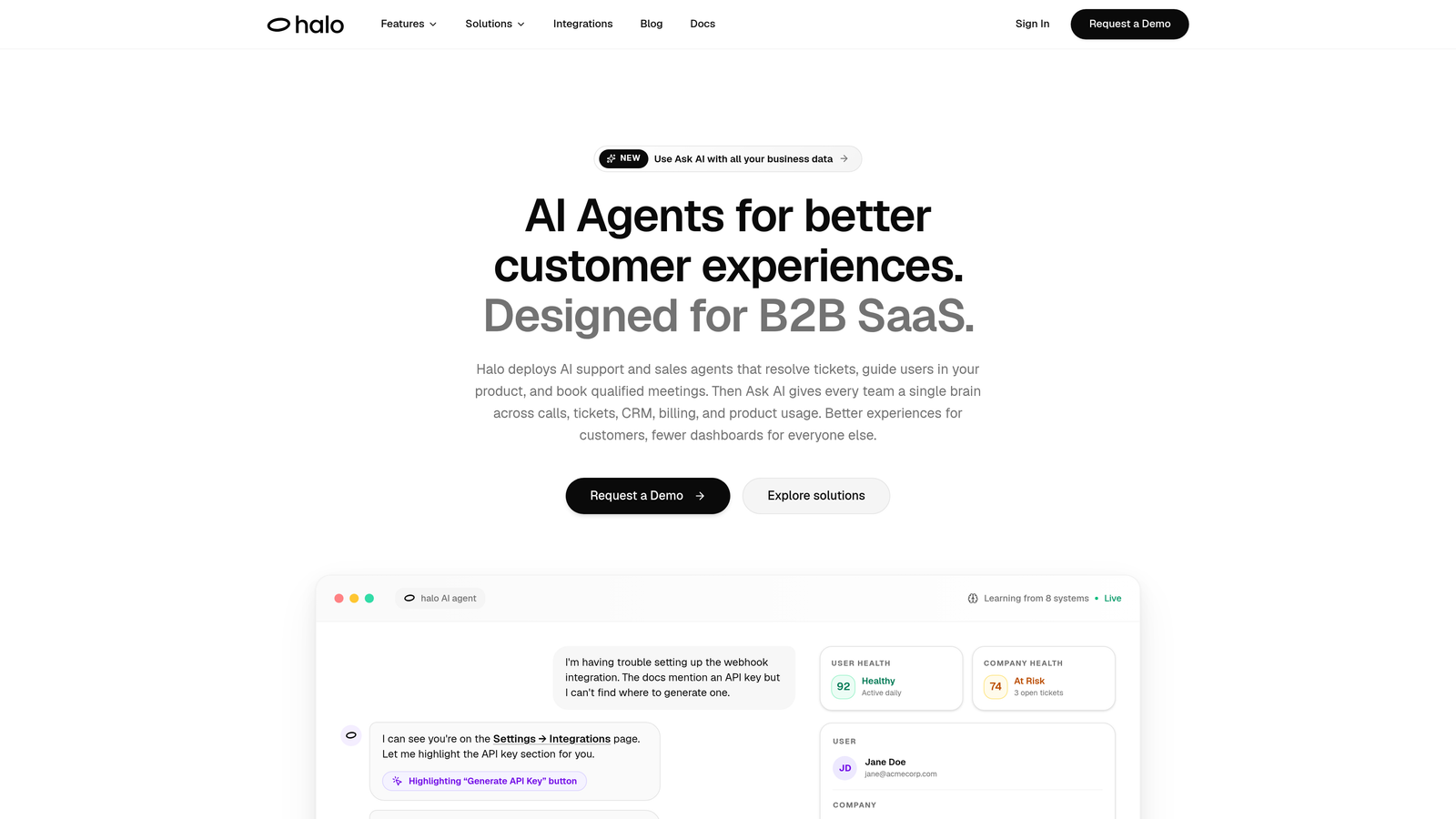
Halo AI is an AI-native customer support platform built around autonomous ticket resolution, contextual guidance, and business intelligence.
Where This Tool Shines
Halo AI was designed from the ground up as an AI-first platform, not a bolt-on to an existing ticketing system. That architectural difference matters: the AI isn't a layer sitting on top of a legacy helpdesk, it's the core engine powering every interaction. This means the system can take real actions, not just suggest responses.
What sets Halo apart from most tools on this list is the combination of page-aware context and business intelligence. The AI can see what a user is looking at in your product, guide them visually through the interface, and simultaneously surface signals like customer health scores and revenue anomalies to your team. It's support that feeds back into your broader business operations.
Key Features
Page-Aware Chat Widget: The AI sees what users see in your product, enabling precise visual UI guidance rather than generic help center responses.
Autonomous Ticket Resolution: AI agents handle tickets end-to-end with intelligent handoff to live agents when complexity requires a human touch.
Auto Bug Ticket Creation: Automatically creates and routes bug reports to Linear and connected engineering tools, closing the loop between support and product teams.
Smart Inbox with Business Intelligence: Goes beyond support metrics to surface customer health signals, revenue intelligence, and anomaly detection directly in the inbox.
Deep Integrations: Connects to Slack, HubSpot, Intercom, Stripe, Zoom, PandaDoc, Fathom, and more, making it a hub across your full business stack rather than an isolated support tool.
Best For
B2B SaaS companies and product teams that want AI to do more than deflect tickets. Particularly well-suited for teams whose support, product, and engineering functions need to stay tightly connected, and for companies where customer interactions contain valuable business signals worth capturing.
Pricing
Contact Halo AI for pricing. Designed specifically for B2B SaaS teams; pricing is tailored to team size and integration requirements.
2. Zendesk AI
Best for: Existing Zendesk customers wanting AI capabilities without switching platforms
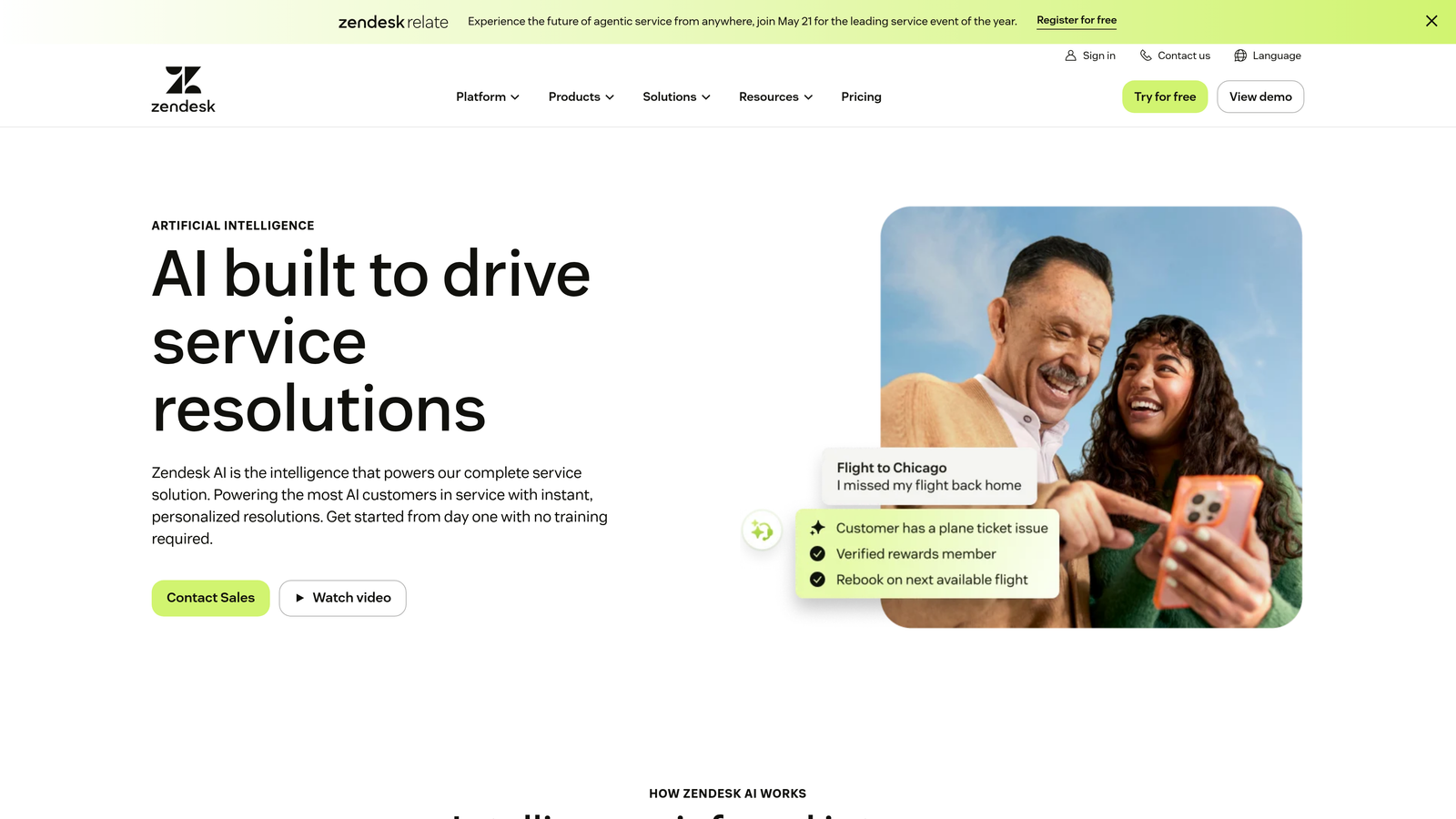
Zendesk AI is a suite of AI capabilities layered into the Zendesk platform, covering automated self-service, agent assist, and intelligent ticket triage.
Where This Tool Shines
If your team is already running on Zendesk, the AI add-ons integrate cleanly into your existing workflows without a platform migration. The intelligent triage capabilities are particularly strong, using intent, language, and sentiment detection to route and prioritize tickets before agents engage.
The agent assist tools are genuinely useful for teams handling high ticket volumes. AI-suggested replies and knowledge surfacing reduce the time agents spend searching for answers, which adds up quickly across a busy support queue.
Key Features
AI Agents for Self-Service: Automated resolution for common customer queries without agent involvement.
Intelligent Triage: Detects intent, language, and sentiment to route and prioritize tickets automatically.
Agent Assist: Surfaces relevant knowledge base articles and suggests replies in real time as agents work tickets.
Full Suite Integration: AI features work across the entire Zendesk ecosystem, including Talk, Chat, and Guide.
Best For
Mid-to-large support teams already invested in the Zendesk ecosystem who want to layer in AI without rebuilding their support infrastructure. Less ideal for teams looking to move away from Zendesk or wanting AI that connects deeply to non-Zendesk business tools.
Pricing
Suite plans start around $55/agent/month; the Advanced AI add-on carries additional cost. Pricing is approximate and subject to change; check Zendesk's pricing page for current details.
3. Intercom Fin
Best for: Teams already using Intercom who want a conversational AI agent for self-service resolution
Intercom Fin is Intercom's AI agent, trained on your help center content to resolve customer questions through a conversational messaging interface.
Where This Tool Shines
Fin's strength is its conversational quality. Rather than presenting users with a list of help articles, it engages in a back-and-forth dialogue to understand the issue and provide a direct answer. For products with well-maintained help centers, the resolution experience feels natural rather than robotic.
The handoff experience is also well-executed. When Fin can't resolve an issue, it passes the conversation to a human agent with full context intact, so customers don't have to repeat themselves. That continuity matters more than it might seem in high-volume support environments.
Key Features
Help Center-Trained AI Agent: Fin learns from your existing help center content to provide accurate, autonomous resolutions.
Conversational Messaging UI: In-app messaging integration creates a natural dialogue experience rather than a form-based support flow.
Tone and Behavior Controls: Customize how Fin communicates to match your brand voice.
Contextual Human Handoff: Passes full conversation context to live agents when escalation is needed.
Best For
Teams already using Intercom as their primary customer messaging platform. Also a strong fit for product-led growth companies where in-app support quality directly affects activation and retention.
Pricing
Fin charges approximately $0.99 per resolution; Intercom base plans start around $39/seat/month. Pricing is approximate and subject to change.
4. Freshdesk Freddy AI
Best for: Growing teams wanting AI features within an accessible, budget-friendly helpdesk
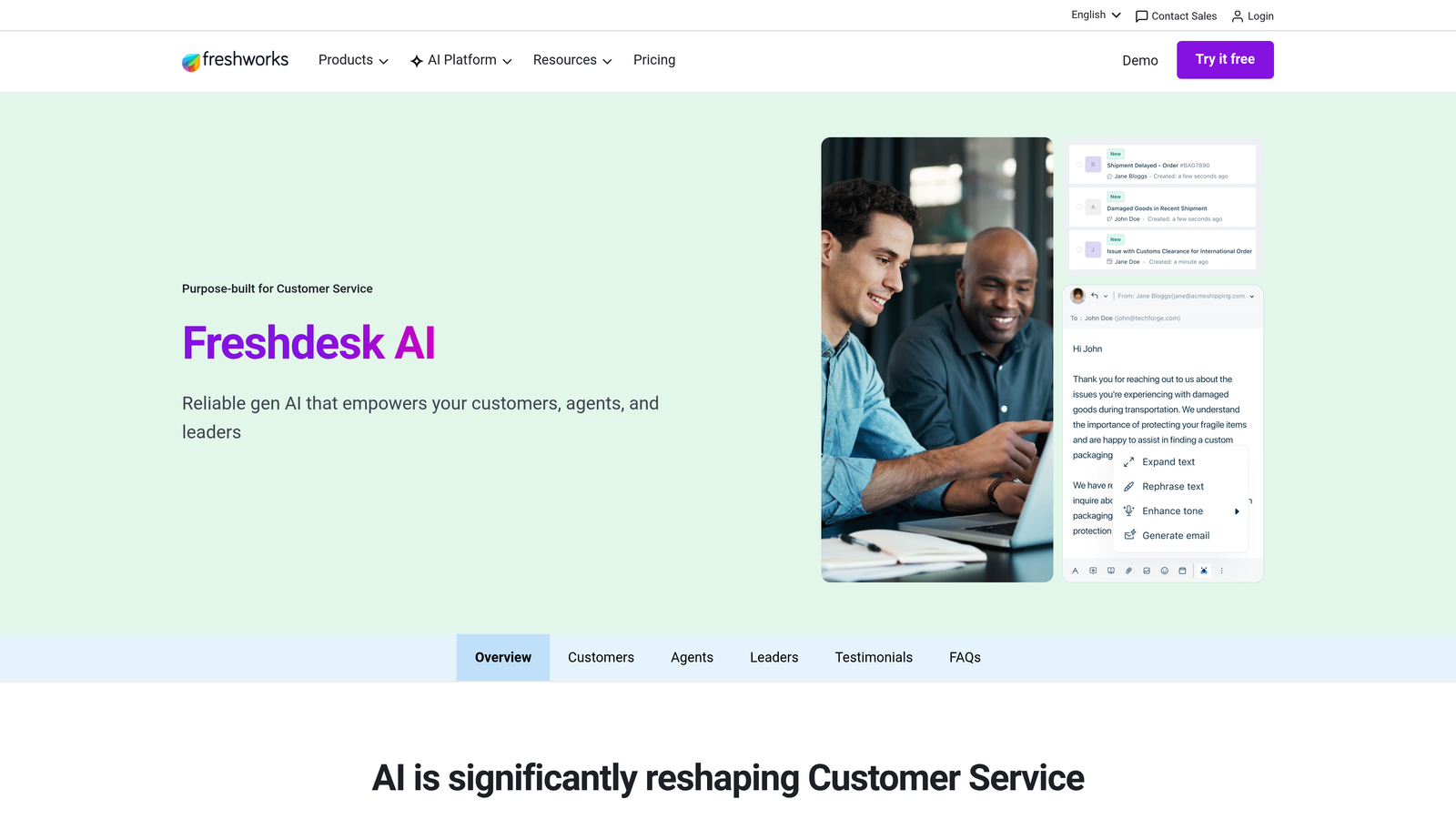
Freshdesk Freddy AI is Freshworks' AI layer across the Freshdesk platform, covering self-service automation, agent assistance, and AI-powered analytics.
Where This Tool Shines
Freddy AI covers the full support workflow: customer-facing self-service through Freddy Self Service, agent-side assistance through Freddy Copilot, and analytics that surface trends and sentiment across your ticket volume. For teams on a tighter budget, it delivers a solid breadth of AI functionality without the enterprise price tag.
Being embedded in the broader Freshworks ecosystem is a meaningful advantage for teams also using Freshsales or Freshservice. The data flows more naturally when your CRM, ITSM, and support tools share a common platform.
Key Features
Freddy Self Service: Automated customer-facing resolution for common queries without agent involvement.
Freddy Copilot: Agent assist with AI-suggested responses and next-step recommendations.
Ticket Summarization and Sentiment Analysis: Quickly surfaces ticket context and customer tone for faster agent response.
Freshworks Ecosystem Integration: Works across Freshdesk, Freshsales, and Freshservice for teams using multiple Freshworks products.
Best For
Small to mid-sized teams looking for an affordable entry point into AI-powered support, especially those already using or considering other Freshworks products.
Pricing
Free tier available; Pro plans from approximately $49/agent/month with AI features included. Pricing is approximate and subject to change.
5. Ada
Best for: Enterprise teams needing a platform-agnostic AI agent that works across multiple channels and helpdesks
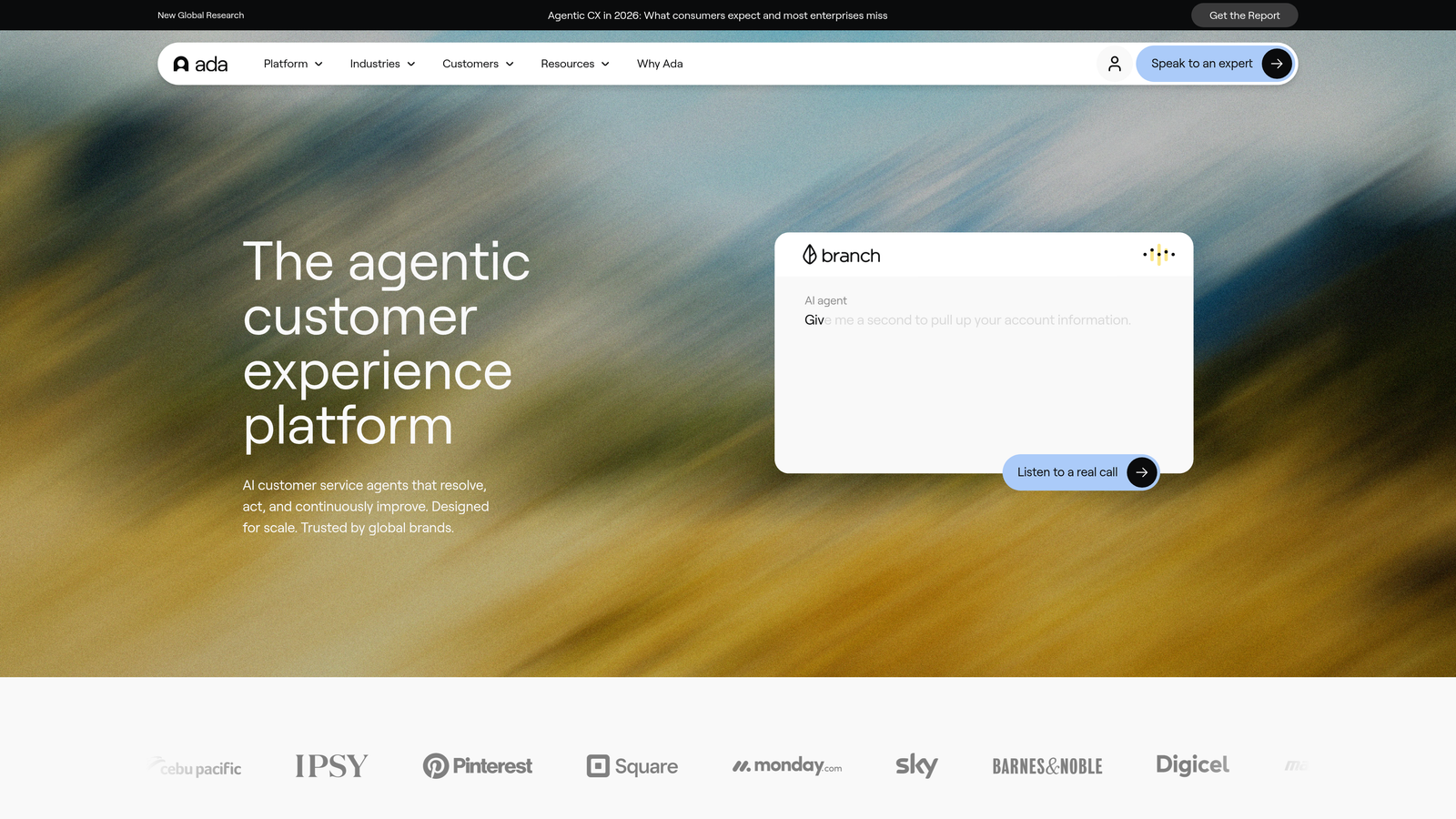
Ada is a standalone AI agent platform built for enterprise-scale automated support, with multilingual capabilities and a no-code automation builder.
Where This Tool Shines
Ada's biggest differentiator is its platform-agnostic design. Rather than being tied to a single helpdesk, Ada sits on top of your existing infrastructure and connects to Zendesk, Salesforce, and other systems. For enterprises managing complex, multi-system environments, this flexibility is valuable.
The no-code automation builder allows support and operations teams to build sophisticated resolution workflows without engineering involvement. Combined with multilingual support across 50+ languages, Ada is well-suited for global enterprise operations where consistency across regions matters.
Key Features
Platform-Agnostic Architecture: Integrates with Zendesk, Salesforce, and other major helpdesks without requiring a platform switch.
No-Code Automation Builder: Build complex, multi-step resolution workflows without writing code.
Multilingual Support: Handles customer interactions in 50+ languages for global teams.
AI Reasoning Engine: Manages multi-step issue resolution that goes beyond simple FAQ deflection.
Best For
Enterprise support teams operating across multiple regions and helpdesk systems who need a consistent AI layer without committing to a single platform vendor.
Pricing
Custom enterprise pricing; contact Ada directly for quotes. Not designed for small teams or startup budgets.
6. Tidio
Best for: Small teams and e-commerce businesses needing affordable AI chat with quick setup
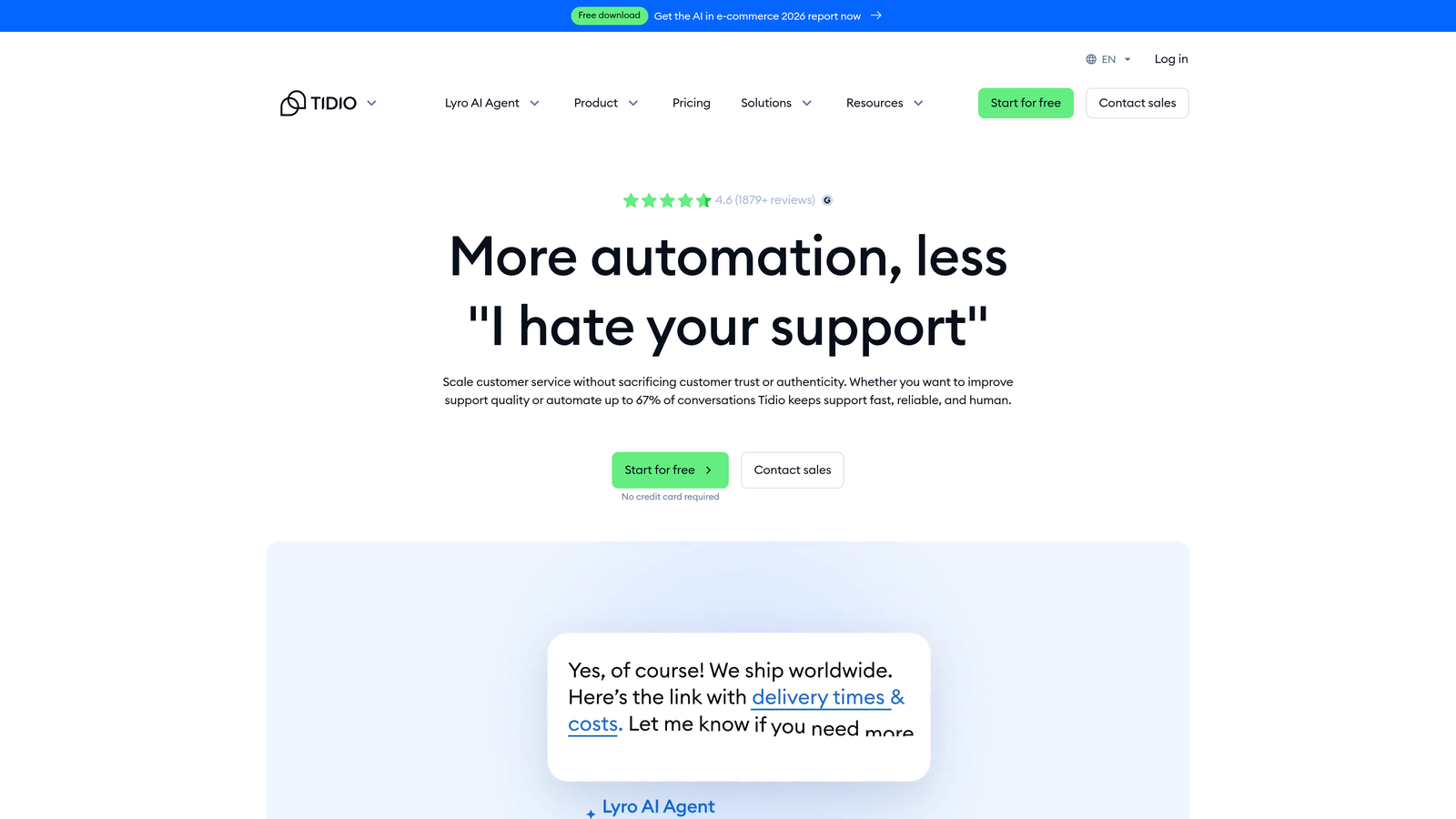
Tidio is an accessible AI chatbot and live chat platform featuring Lyro AI, designed for smaller teams that need to get up and running quickly without heavy configuration.
Where This Tool Shines
Tidio lowers the barrier to entry for AI-assisted support significantly. The setup process is straightforward, the interface is clean, and Lyro AI handles common FAQ-style queries without requiring a complex knowledge base architecture. For small teams without dedicated support operations, that simplicity is genuinely valuable.
The e-commerce integrations with Shopify and WooCommerce make Tidio a natural fit for online retailers. While it's less suited to complex B2B support environments, it handles the high-frequency, lower-complexity queries that dominate e-commerce support queues effectively.
Key Features
Lyro AI Chatbot: Automated resolution for FAQ and common support queries without manual flow-building.
Visual Chatbot Builder: No-code interface for creating custom conversation flows.
AI-Assisted Live Chat: Suggests replies to human agents during live conversations.
E-Commerce Integrations: Native connections to Shopify and WooCommerce for order and product context.
Best For
Small businesses, e-commerce teams, and early-stage startups that need affordable AI chat functionality without the complexity or cost of enterprise platforms.
Pricing
Free plan available; paid plans from approximately $29/month. Lyro AI conversations are priced separately. Pricing is approximate and subject to change.
7. Forethought
Best for: Teams wanting generative AI responses and intelligent triage layered on top of an existing helpdesk
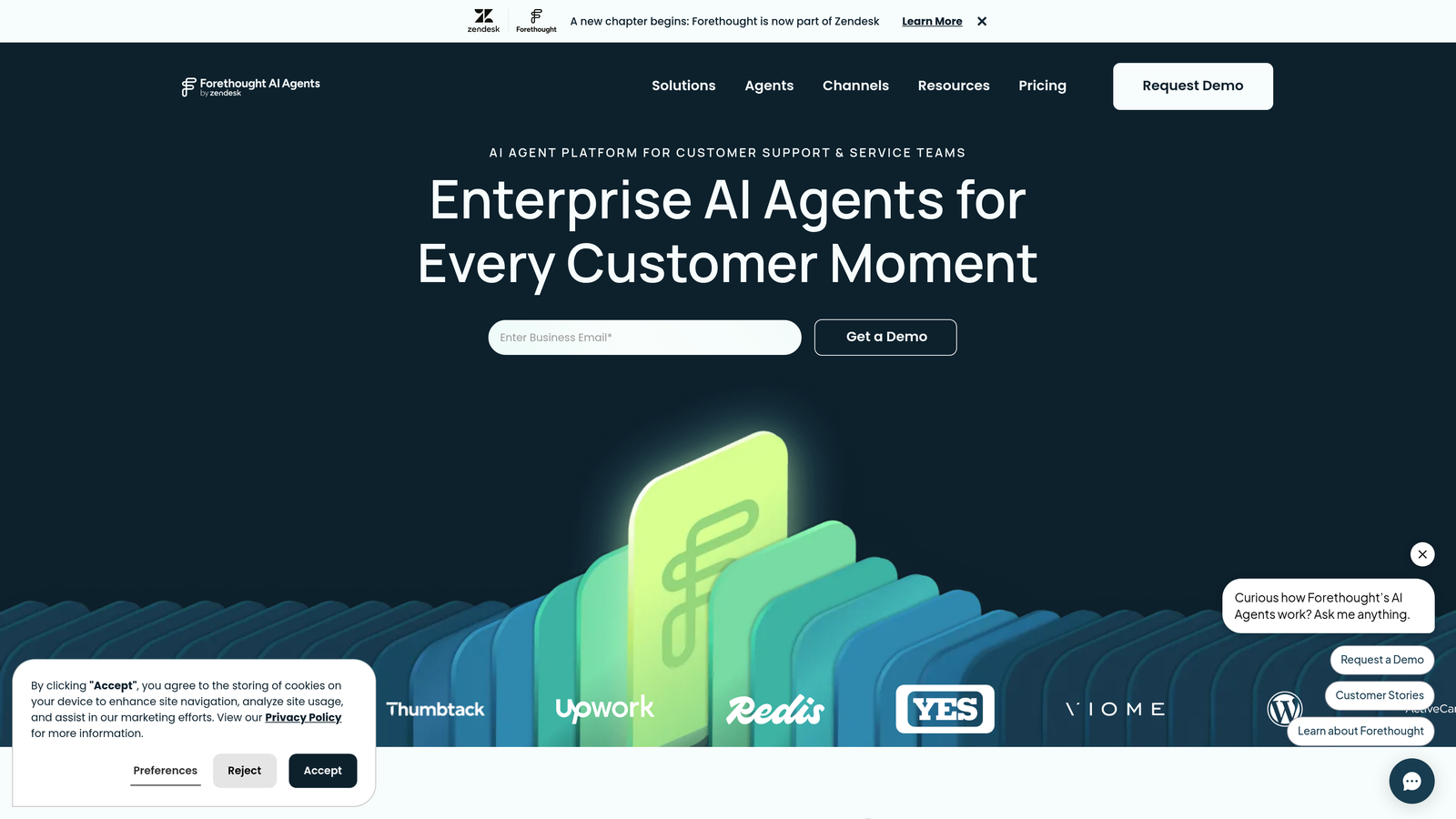
Forethought is an AI platform focused on intelligent ticket triage, routing, and generative AI responses that sits on top of existing helpdesk infrastructure.
Where This Tool Shines
Forethought's SupportGPT capability generates contextually relevant responses to customer queries rather than just surfacing existing articles. For teams with a solid knowledge base but struggling with response quality and consistency, this generative layer can meaningfully improve the customer experience without requiring a platform change.
The triage and routing intelligence is another genuine strength. Forethought classifies incoming tickets, assigns priority, and routes them to the right team or queue before an agent touches them, which reduces handling time and improves first-response accuracy.
Key Features
SupportGPT: Generative AI that creates direct, contextual responses to customer queries.
AI Ticket Classification and Routing: Automatically categorizes and routes incoming tickets based on intent and content.
Multi-Helpdesk Integration: Works with Zendesk, Salesforce, ServiceNow, and other major platforms.
Agent Assist: Surfaces relevant knowledge and suggests actions during live ticket handling.
Best For
Mid-to-large support teams on Zendesk, Salesforce, or ServiceNow who want to add generative AI and intelligent triage without migrating their helpdesk.
Pricing
Custom pricing based on ticket volume; contact Forethought directly for a quote.
8. Help Scout
Best for: Lean support teams wanting a clean, simple helpdesk with practical AI assist features
Help Scout is a straightforward shared inbox helpdesk with AI drafting, summarization, and editing tools designed for small and mid-sized support teams.
Where This Tool Shines
Help Scout doesn't try to be an autonomous AI agent platform. Instead, it focuses on making human agents faster and more effective with well-integrated AI assist tools. AI Drafts generate reply suggestions based on your knowledge base, AI Summarize condenses long ticket threads into quick context, and AI Assist helps agents adjust tone or translate within the editor.
The interface is genuinely simple, which matters more than it sounds. Teams that have struggled with the complexity of Zendesk or Freshdesk often find Help Scout's learning curve significantly shorter, and the AI features feel like natural extensions of the workflow rather than add-ons bolted onto a complicated system.
Key Features
AI Drafts: Generates reply suggestions using your knowledge base content to speed up agent response time.
AI Summarize: Condenses long ticket threads into a quick context summary for faster agent onboarding on complex tickets.
AI Assist: In-editor tools for tone adjustment, clarity improvements, and translation.
Shared Inbox UI: Clean, minimal interface designed for teams that want simplicity over feature density.
Best For
Small to mid-sized support teams that prioritize simplicity and agent experience over autonomous AI resolution. A strong fit for teams moving away from email-based support for the first time.
Pricing
Plans start around $22/user/month; AI features included on Standard plan and above. Pricing is approximate and subject to change.
9. Kustomer
Best for: Teams that need a CRM-centric helpdesk with full customer history across omnichannel interactions
Kustomer is a CRM-first helpdesk platform with AI-powered intent detection and omnichannel support built around a unified customer timeline view.
Where This Tool Shines
Kustomer's defining feature is its unified customer timeline. Every interaction across email, chat, social, SMS, and voice appears in a single view alongside CRM data. When an agent opens a ticket, they see the customer's full history, not just the current thread. That context changes the quality of support conversations significantly.
The AI capabilities layer on top of this rich data foundation, using intent detection to suggest responses and route interactions appropriately. For support teams where customer relationships and history are central to every interaction, Kustomer's architecture is a better fit than a pure ticketing system.
Key Features
Unified Customer Timeline: Full interaction history across all channels in a single view, embedded with CRM data.
AI Intent Detection: Identifies customer intent and suggests appropriate responses in real time.
Omnichannel Support: Handles email, chat, social media, SMS, and voice from a single platform.
CRM-First Architecture: Customer data is a first-class citizen in every support interaction, not an afterthought.
Best For
Mid-to-enterprise teams where customer relationship context is critical to support quality, particularly in industries with long customer lifecycles and high-value accounts.
Pricing
Enterprise plans from approximately $89/user/month; contact Kustomer for custom pricing. Pricing is approximate and subject to change.
Which Tool Is Right for Your Team?
The right helpdesk AI tool depends on where you're starting from and where you want to end up. Here's how to think through the decision.
If you're an AI-native B2B SaaS team: Halo AI is built for exactly this context. The combination of page-aware context, autonomous resolution, auto bug ticket creation, and business intelligence signals makes it the strongest fit for product and support teams that want AI to do more than answer questions. It connects to your entire business stack rather than operating as an isolated support layer.
If you're already on Zendesk or Freshdesk: Adding AI features through Zendesk AI or Freddy AI is the path of least resistance. You keep your existing workflows and gain meaningful AI capabilities without a migration. Forethought is also worth evaluating if you want generative AI responses and smarter triage on top of your current setup.
If you're using Intercom for customer messaging: Fin is the natural extension. Its conversational quality and clean handoff experience are well-suited to product-led growth teams where in-app support directly affects activation.
If you need enterprise-scale AI across multiple systems: Ada's platform-agnostic approach handles complexity that single-vendor solutions struggle with, particularly for global teams operating across multiple regions and helpdesks.
If you're a small team or e-commerce business: Tidio or Help Scout offer accessible entry points without the cost or complexity of enterprise platforms. Help Scout is particularly strong for teams that value simplicity and a clean agent experience.
If customer relationship context drives your support quality: Kustomer's CRM-first architecture and unified timeline view are worth the higher price point for teams where history and context matter in every interaction.
Your support team shouldn't scale linearly with your customer base. AI agents can handle routine tickets, guide users through your product, and surface business intelligence while your team focuses on complex issues that need a human touch. See Halo in action and discover how continuous learning transforms every interaction into smarter, faster support. You can also explore our chatbot software comparison and automated customer support guides for deeper dives into specific categories.