9 Best Helpdesk Automation Tools Compared for 2026
This helpdesk automation tools comparison evaluates nine leading platforms for 2026, examining automation depth, AI quality, and integration capabilities to help support teams move beyond manual ticket handling. Whether you're upgrading a legacy system or building an AI-first stack, this guide identifies the best fit for different team sizes, industries, and use cases—from high-volume e-commerce to complex B2B SaaS environments.
 Grant CooperFounder13 min read
If your support team is still manually triaging every ticket, chasing down bug reports, and copy-pasting the same answers dozens of times a day, you're leaving serious efficiency on the table. Helpdesk automation has matured well beyond simple canned responses. Today's tools can resolve tickets end-to-end, surface business intelligence, and hand off to human agents only when it genuinely matters.
The landscape is crowded, and the differences between platforms are significant. Some bolt AI onto legacy ticketing systems. Others are built AI-first from the ground up. Some are best for high-volume e-commerce support; others shine in complex B2B SaaS environments.
This comparison covers some of the strongest helpdesk automation tools available in 2026, evaluated on automation depth, integration breadth, AI quality, and fit for different team sizes and use cases. Whether you're replacing a legacy helpdesk or layering automation onto an existing stack, this guide will help you find the right fit.
1. Halo AI
Best for: B2B SaaS teams that want autonomous, AI-first ticket resolution with business intelligence baked in.
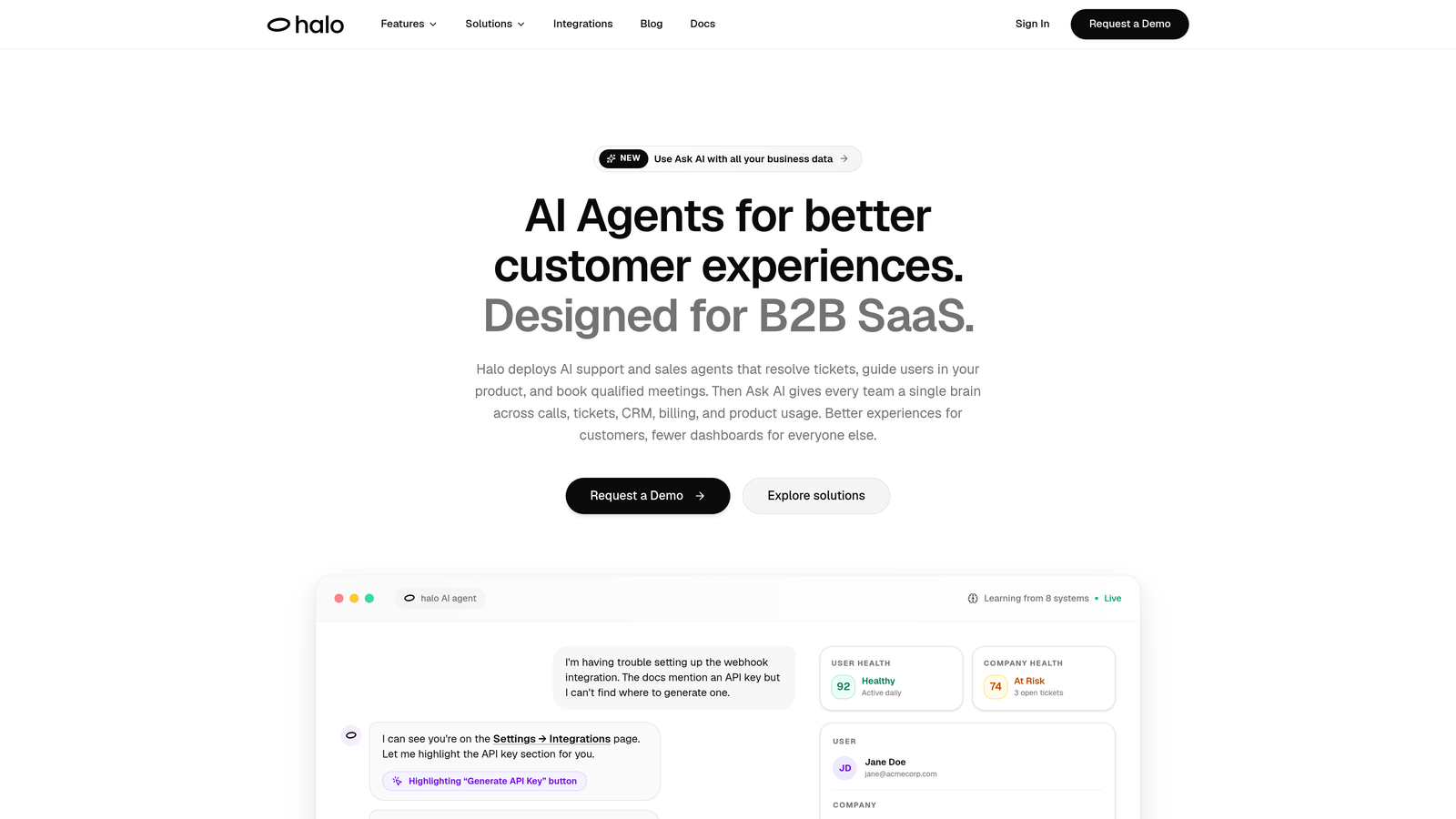
Halo AI is an AI-native customer support platform that deploys autonomous agents to resolve tickets, guide users, and surface actionable business insights.
Where This Tool Shines
Halo AI is built from the ground up as an AI-first platform, not a layer of automation bolted onto a traditional ticketing system. That architectural difference matters: the AI agents don't just suggest responses, they resolve tickets end-to-end, learning from every interaction to get progressively smarter over time.
The standout capability is page-aware context. The AI sees exactly what the user sees on screen, which means guidance is specific to the user's current state rather than generic documentation links. For SaaS products with complex interfaces, that level of contextual precision is genuinely difficult to replicate elsewhere.
Key Features
Autonomous AI Agents: Resolve support tickets end-to-end without requiring agent involvement for routine queries.
Page-Aware Chat Widget: The AI understands the user's current page and product state, delivering contextually accurate guidance rather than generic answers.
Auto Bug Ticket Creation: Automatically generates bug reports and routes them to Linear and other dev tools, eliminating manual handoffs between support and engineering.
Smart Inbox with Business Intelligence: Surfaces customer health signals, revenue anomalies, and trend detection beyond standard ticket volume metrics.
Live Agent Handoff: Escalates to human agents with full conversation context preserved, so customers never have to repeat themselves.
Broad Integration Stack: Connects with Slack, HubSpot, Intercom, Stripe, Zoom, PandaDoc, and Fathom for a unified support and business operations view.
Best For
B2B SaaS companies and product teams that want genuine ticket resolution automation rather than agent-assist features. Particularly strong for teams that need the support layer to connect with engineering workflows, CRM data, and billing systems in a single coherent system.
Pricing
Verify current pricing directly at haloagents.ai, as plans are updated regularly.
2. Zendesk
Best for: Enterprise teams needing proven, omnichannel support infrastructure with deep customization.
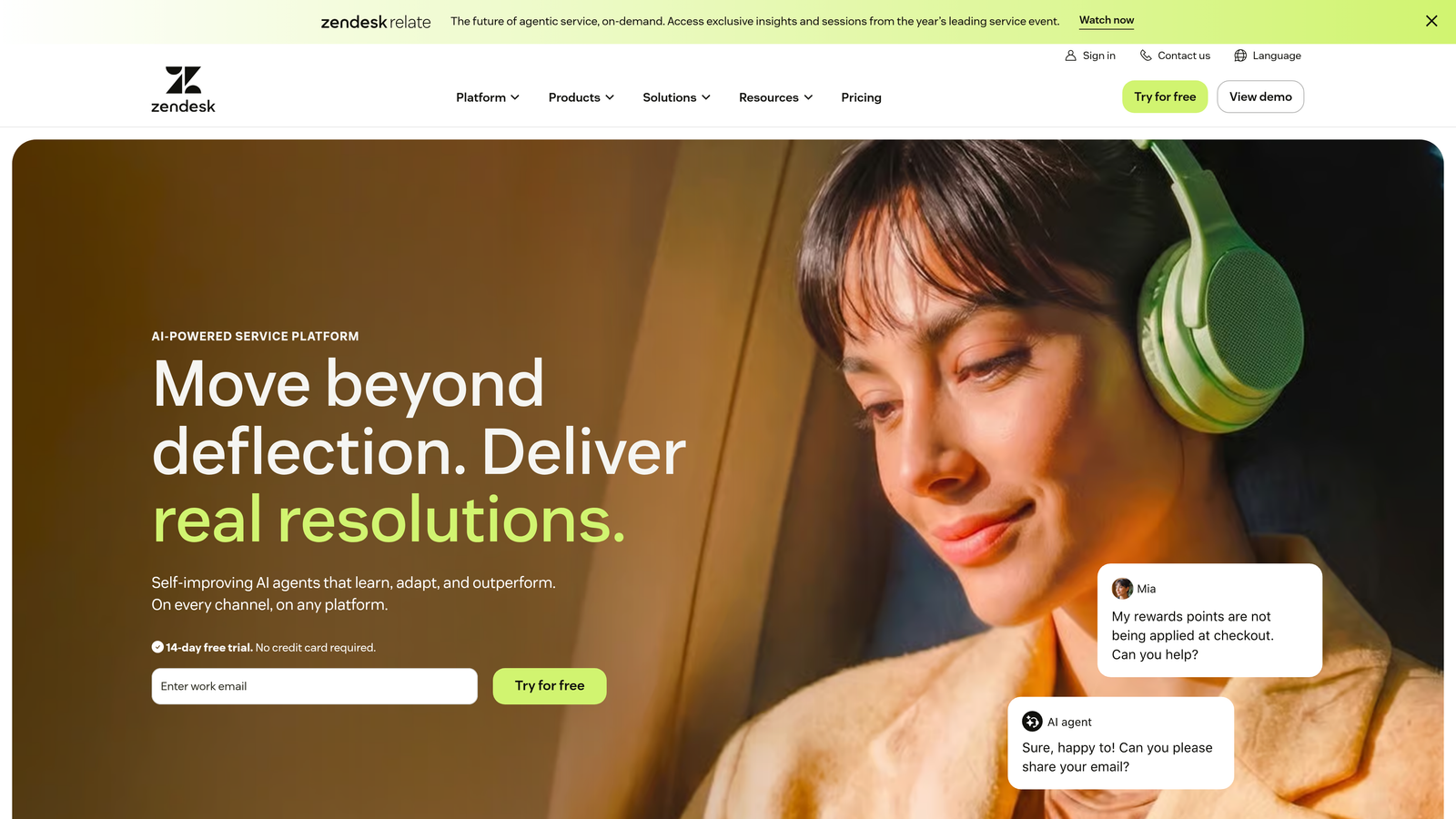
Zendesk is one of the most established helpdesk platforms, offering enterprise-grade ticket management, AI-powered triage, and a vast integration marketplace.
Where This Tool Shines
Zendesk's strength is breadth and reliability. It handles omnichannel support across email, chat, voice, and social from a single platform, and its workflow automation engine is mature enough to handle complex conditional logic that many teams need at scale.
The app marketplace is one of the largest in the category, with over a thousand integrations available. For enterprise teams with established tech stacks, that breadth is a genuine advantage. The tradeoff is configuration complexity: getting Zendesk to do exactly what you want often requires significant setup time or a dedicated admin.
Key Features
Zendesk AI: Handles intelligent triage and automated ticket routing based on intent and sentiment detection.
Omnichannel Inbox: Unified support across email, chat, voice, and social media channels.
Advanced Workflow Automation: Conditional logic for routing, escalation, and SLA management across complex support operations.
App Marketplace: 1,000+ integrations covering CRM, billing, analytics, and communication tools.
Reporting and Analytics: Robust dashboards for ticket volume, agent performance, and customer satisfaction trends.
Best For
Mid-market to enterprise teams with high ticket volumes and complex routing requirements. Teams that need proven reliability, extensive integration options, and don't mind investing time in configuration and ongoing administration.
Pricing
Tiered plans based on features and seat count. Verify current pricing at zendesk.com.
3. Freshdesk
Best for: Growing teams that want AI-assisted support with accessible pricing and an approachable interface.
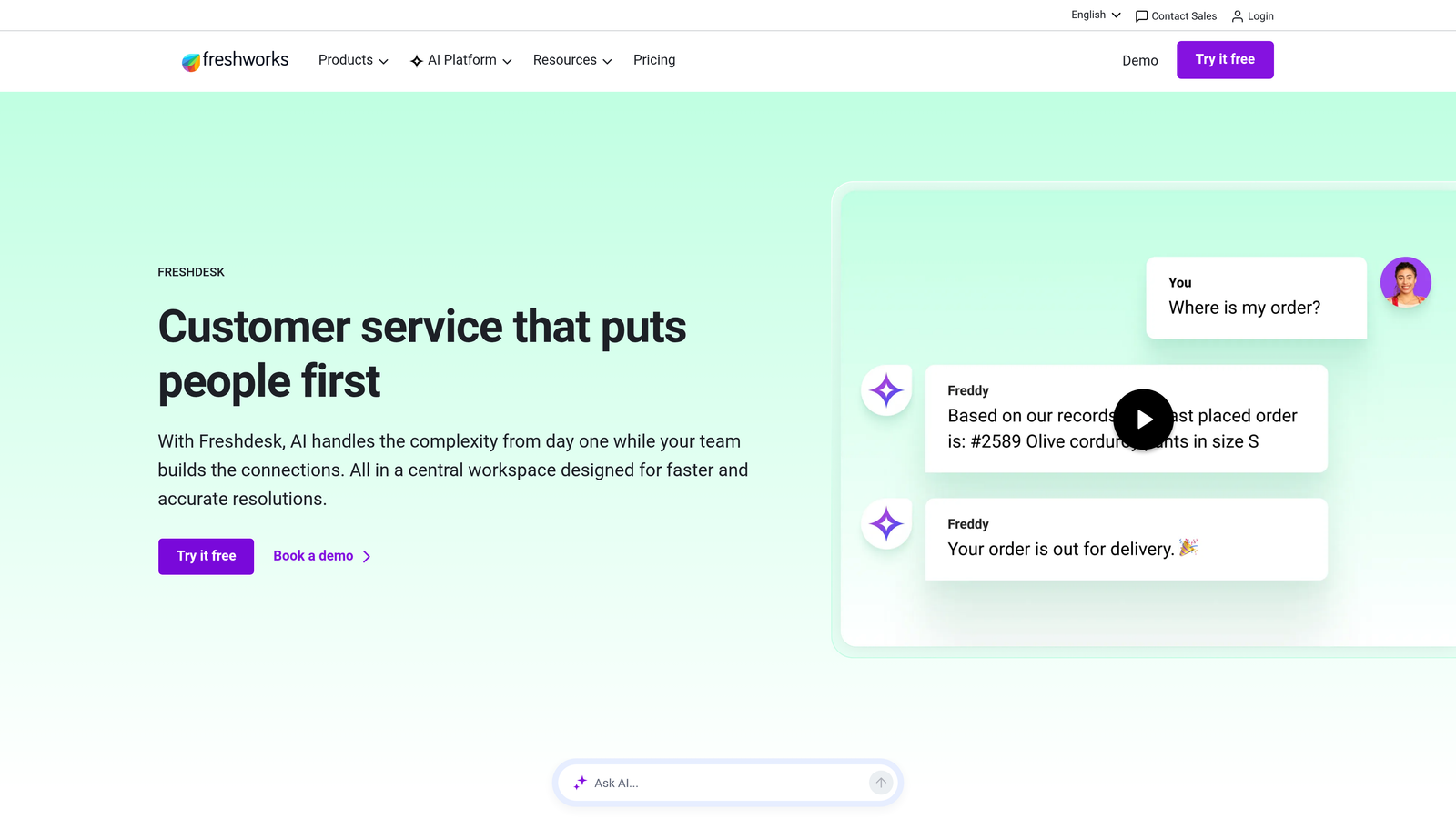
Freshdesk is Freshworks' helpdesk platform featuring Freddy AI for automated triage, suggested responses, and self-service bots.
Where This Tool Shines
Freshdesk occupies a comfortable middle ground: more capable than basic shared inbox tools, more accessible than Zendesk in terms of both pricing and UI complexity. Freddy AI handles the most common automation needs, including auto-triage, suggested replies, and a self-service bot that can deflect routine queries before they reach an agent.
The free tier is a genuine differentiator for small teams. And for companies already using Freshworks products like Freshsales or Freshservice, the native integrations across the suite create meaningful efficiency without extra configuration work.
Key Features
Freddy AI: Handles auto-triage, suggested replies, and a self-service bot for common query deflection.
Shared Inbox with Collision Detection: Prevents two agents from working the same ticket simultaneously.
SLA Management: Automation rules for ticket routing and escalation based on response time targets.
Free Tier: Functional free plan for small teams getting started with helpdesk automation.
Freshworks Ecosystem: Native integration with Freshsales CRM and Freshservice ITSM for teams using the broader suite.
Best For
Small to mid-sized teams that want a capable AI-assisted helpdesk without the complexity or cost of enterprise platforms. Particularly well-suited for companies already invested in the Freshworks ecosystem.
Pricing
Free tier available for basic use; paid plans add AI features and advanced automation. Verify current plans at freshdesk.com.
4. Intercom
Best for: SaaS companies that want proactive in-app engagement alongside reactive AI-powered support.
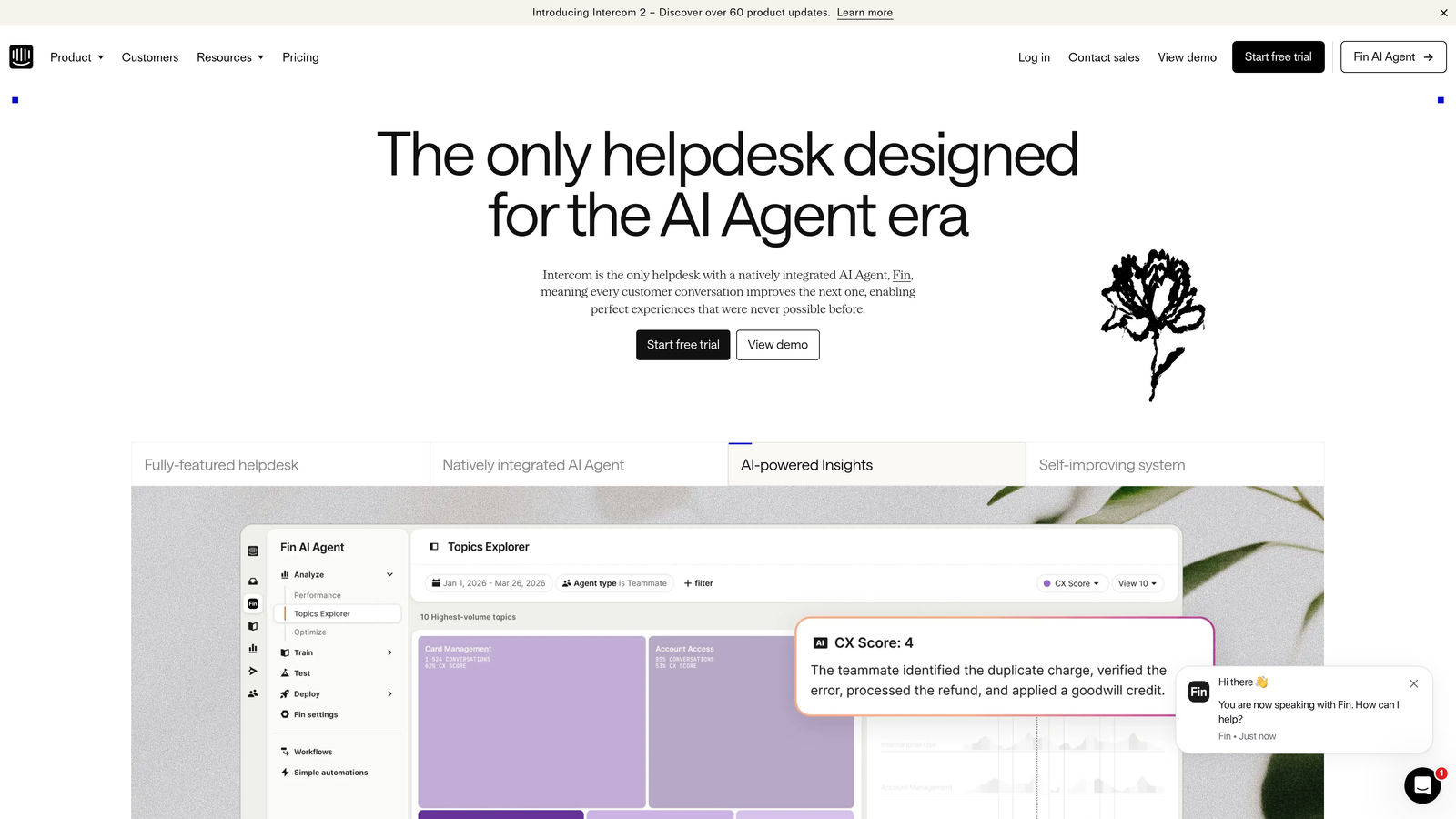
Intercom is a customer messaging platform with Fin, an AI agent capable of handling inbound conversations autonomously using large language models.
Where This Tool Shines
Intercom's Fin AI agent is one of the more capable autonomous conversation handlers in the category, built on large language models and designed to resolve a meaningful share of inbound queries without human involvement. What sets Intercom apart from pure-play helpdesks is the proactive engagement layer: product tours, in-app messages, and onboarding flows that address issues before they become support tickets.
That combination of proactive and reactive support in a single platform is particularly valuable for SaaS products with complex onboarding or frequent feature releases. The tradeoff is that pricing can scale quickly with usage, so teams with high conversation volumes should model costs carefully.
Key Features
Fin AI Agent: Handles autonomous conversation resolution using large language models trained on your knowledge base.
Proactive Messaging: In-app messages, product tours, and onboarding flows for customer engagement before issues arise.
AI-Assisted Reply Drafting: Suggests responses for agents handling escalated conversations.
Product Tours and Onboarding: Guided walkthroughs built directly into the platform without third-party tools.
CRM and Billing Integrations: Connects with Salesforce, HubSpot, Stripe, and other key business systems.
Best For
SaaS companies that want proactive customer engagement and reactive AI support in one platform. Teams that prioritize in-app messaging and onboarding flows alongside ticket resolution.
Pricing
Usage-based and seat-based pricing tiers. Verify current plans at intercom.com.
5. Help Scout
Best for: Teams that want a clean, human-feeling support experience with AI features that assist rather than replace agents.
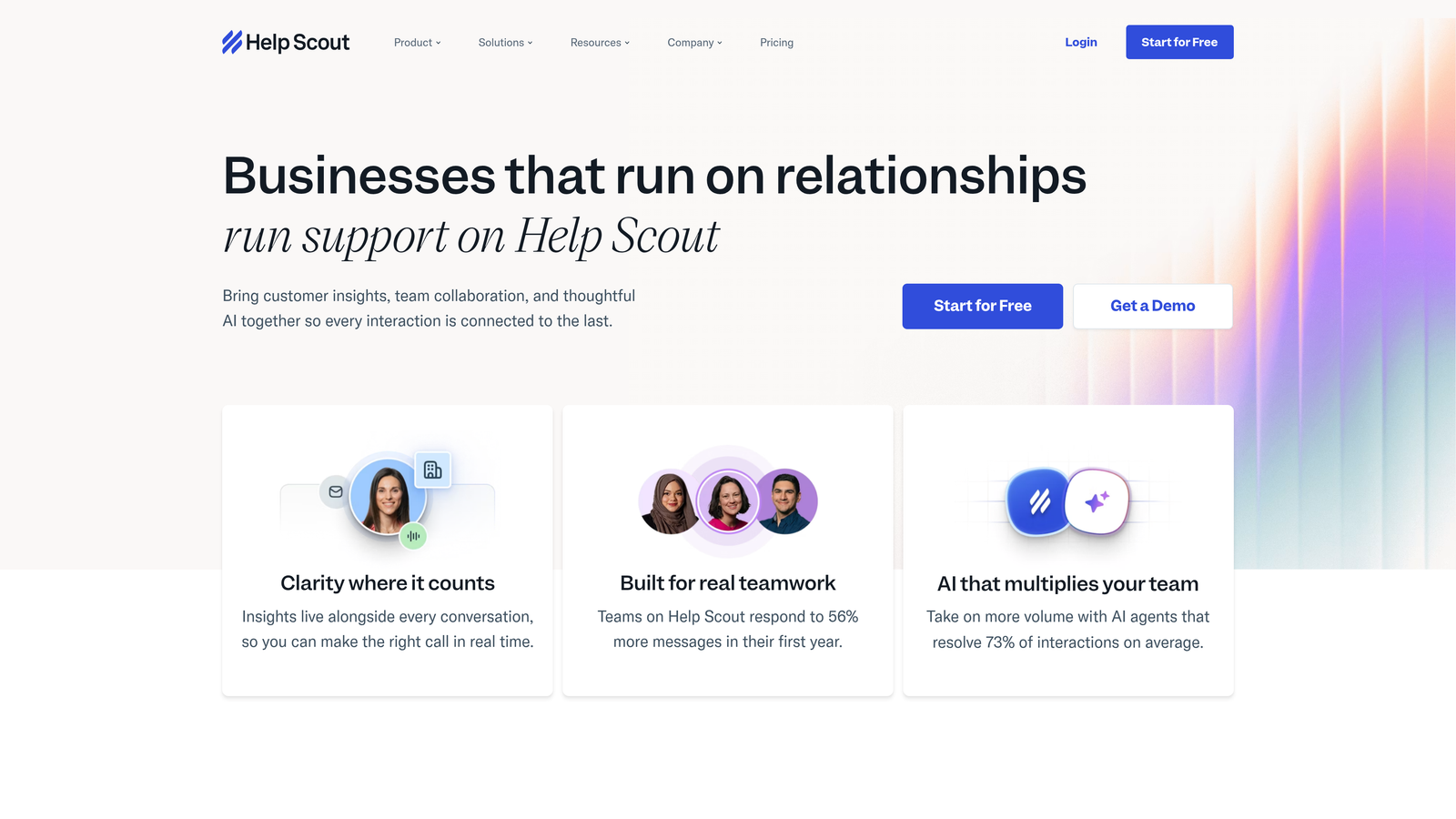
Help Scout is a human-first support platform that has layered AI features onto a clean shared inbox experience designed to feel personal rather than automated.
Where This Tool Shines
Help Scout's philosophy is deliberate: keep the support experience feeling human, even as AI handles more of the workload behind the scenes. The customer-facing experience notably omits ticket numbers, creating an email-like interaction that feels less transactional than traditional helpdesks. For brands where tone and relationship quality matter, that distinction resonates.
The AI features, including AI Drafts, AI Summarize, and AI Answers, are genuinely useful without being the primary selling point. This is a platform for teams that want to augment their agents rather than replace them, and where over-automation would feel off-brand.
Key Features
AI Drafts: Suggests full reply drafts for agents based on conversation context and knowledge base content.
AI Summarize: Condenses long conversation threads into quick summaries for agents picking up mid-conversation.
AI Answers: Self-service knowledge base deflection that answers customer questions before they reach an agent.
Ticket-Free Customer Experience: Customers interact via email-style conversations without visible ticket numbers or case IDs.
Beacon Chat Widget: In-app help content and chat that surfaces relevant knowledge base articles proactively.
Best For
Small to mid-sized teams that prioritize relationship quality and brand voice in customer interactions. Companies where the human touch is a competitive differentiator and full automation would feel inappropriate.
Pricing
Per-seat pricing with plans varying by feature set. Verify current plans at helpscout.com.
6. Zoho Desk
Best for: Companies already in the Zoho ecosystem that want AI-assisted support tightly integrated with Zoho CRM.
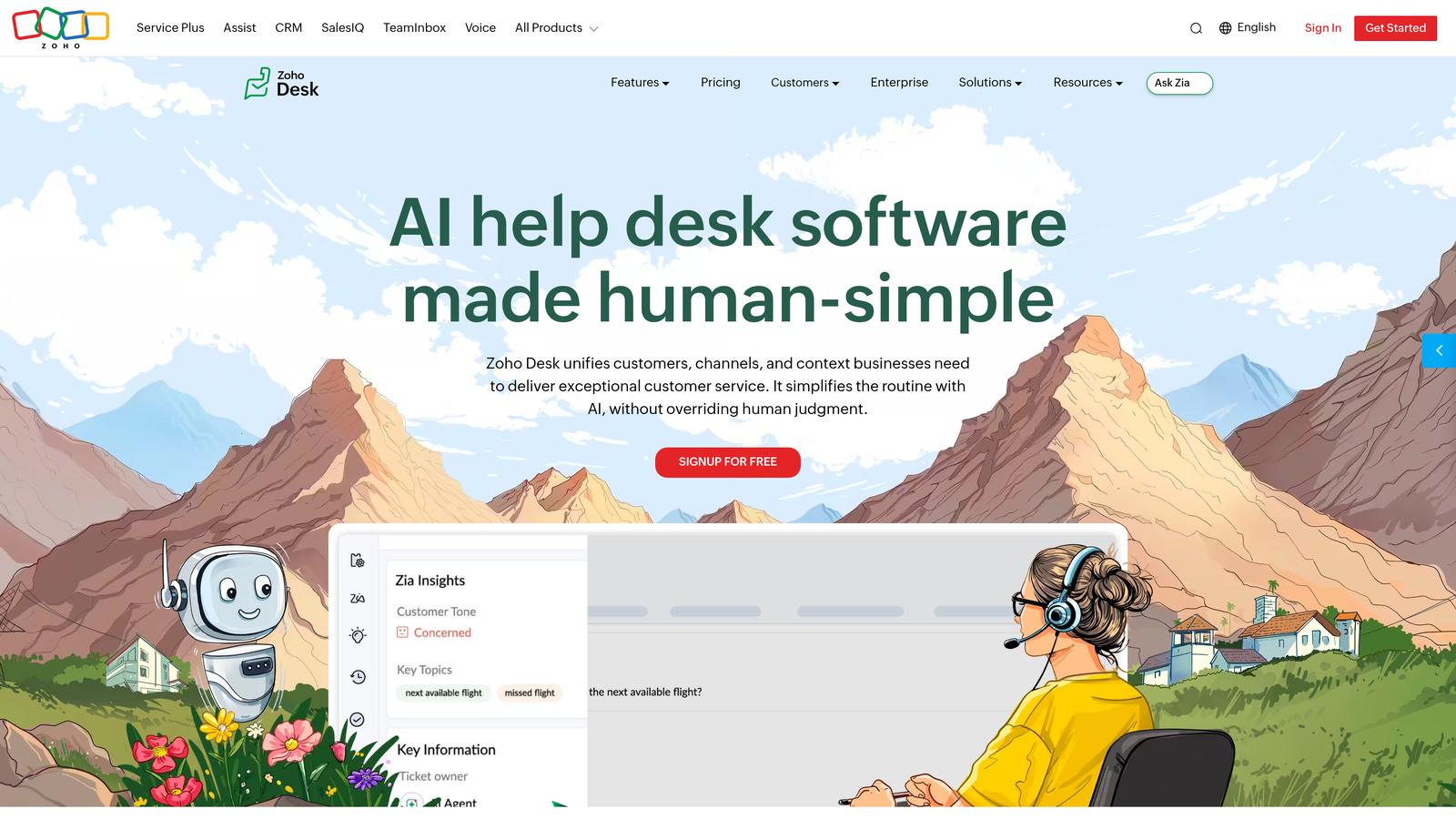
Zoho Desk is Zoho's helpdesk platform with Zia AI assistant, offering sentiment analysis, anomaly detection, and deep integration with the broader Zoho product suite.
Where This Tool Shines
Zoho Desk's strongest argument is ecosystem integration. If your team is already using Zoho CRM, you get a level of native data connectivity that would require custom work on most other platforms. Zia, Zoho's AI assistant, brings some genuinely useful capabilities including sentiment analysis that flags at-risk conversations and anomaly detection that surfaces unusual spikes in ticket trends before they become crises.
The Blueprint workflow automation is worth highlighting for teams with multi-step support processes: it enforces process compliance in a way that freeform automation rules often can't. For teams outside the Zoho ecosystem, though, the platform can feel complex to navigate without that native data foundation.
Key Features
Zia AI: Provides sentiment analysis, auto-tagging, and anomaly detection across ticket trends.
Zoho CRM Integration: Native connection to Zoho CRM for full customer context without switching tools.
Blueprint Workflow Automation: Enforces multi-step process flows with conditional logic and compliance checkpoints.
Multi-Department Support: Handles support operations across multiple brands or business units from a single instance.
Radar Mobile App: Provides managers with oversight and performance metrics on mobile devices.
Best For
Companies already using Zoho CRM or other Zoho products who want cohesive data across sales and support. Mid-sized teams with structured support processes that benefit from Blueprint's workflow enforcement.
Pricing
Tiered plans with a free tier for small teams. Verify current pricing at zoho.com/desk.
7. Tidio
Best for: E-commerce businesses that want a fast-to-deploy AI chatbot with live chat fallback and no-code setup.
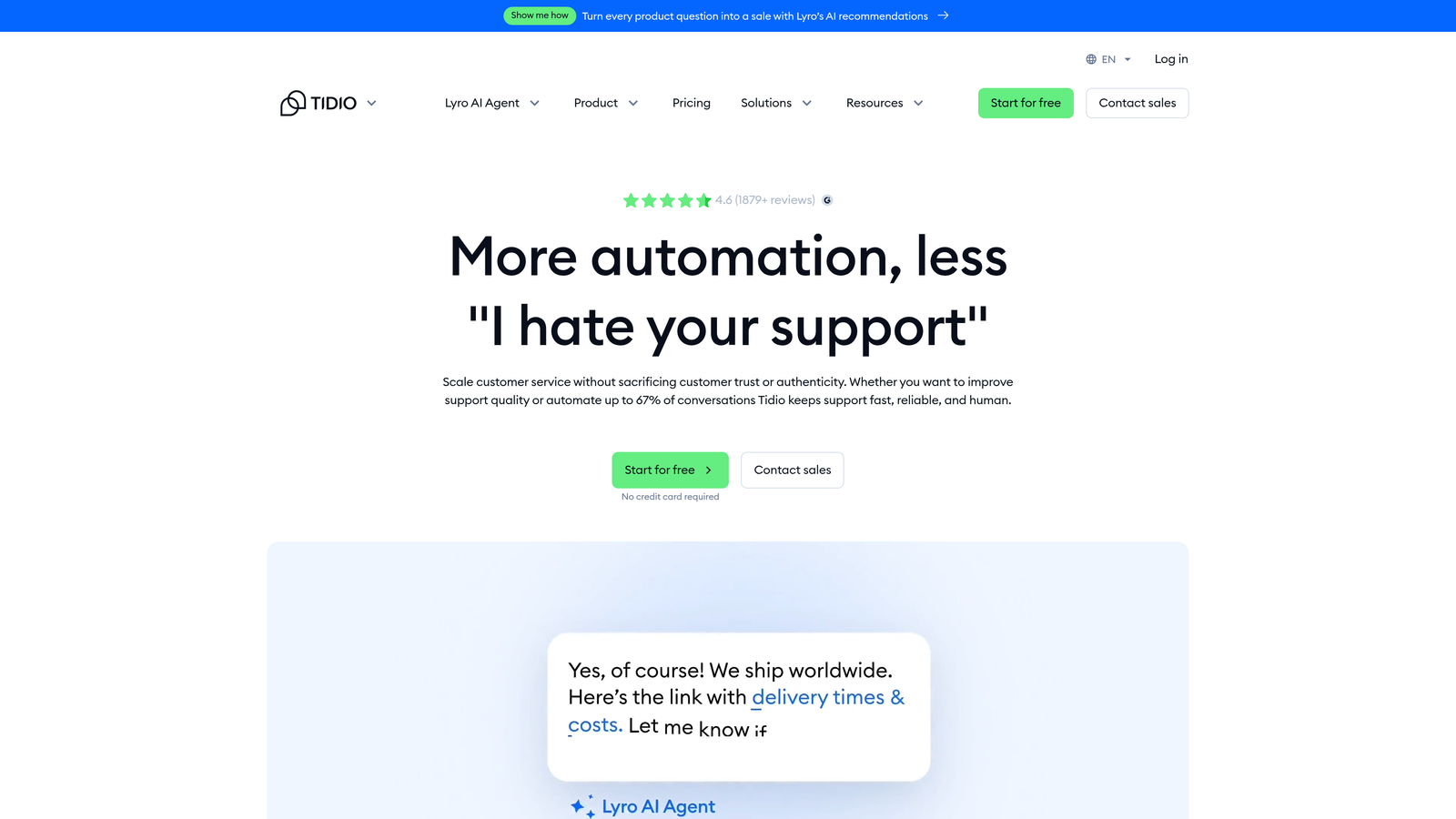
Tidio is a live chat and AI chatbot platform with Lyro, an AI agent optimized for e-commerce support flows and easy no-code deployment.
Where This Tool Shines
Tidio's primary appeal is speed to value. The no-code chatbot builder and visual flow editor mean a small team can have an AI-assisted chat experience running within hours rather than weeks. Lyro, Tidio's AI agent, handles common e-commerce queries autonomously and hands off to a live agent when the conversation requires human judgment.
The platform integrates cleanly with Shopify, WooCommerce, and other e-commerce platforms, making it a natural fit for online retailers. For B2B SaaS teams or companies with complex support workflows, though, Tidio's depth starts to feel limited compared to more enterprise-oriented alternatives.
Key Features
Lyro AI Chatbot: Handles autonomous conversation resolution for common e-commerce queries.
No-Code Flow Builder: Visual chatbot builder that requires no technical knowledge to configure and deploy.
Live Chat with Agent Takeover: Seamless handoff from AI conversations to human agents when needed.
E-Commerce Integrations: Native connections with Shopify, WooCommerce, and other retail platforms.
Proactive Chat Triggers: Visitor tracking that initiates conversations based on user behavior on the site.
Best For
E-commerce businesses and small online retailers that need a fast, affordable AI chat solution without complex configuration. Teams that prioritize ease of setup over deep customization or enterprise-grade workflow automation.
Pricing
Free plan available; paid plans unlock Lyro AI and advanced features. Verify current plans at tidio.com.
8. Gorgias
Best for: E-commerce brands on Shopify or BigCommerce that need deep order management capabilities inside their helpdesk.
Gorgias is a helpdesk built specifically for e-commerce brands, with deep Shopify integration, order management capabilities, and automation tuned for high-volume retail support.
Where This Tool Shines
Gorgias solves a specific problem extremely well: e-commerce support teams spend a disproportionate amount of time on order-related queries, and most helpdesks require agents to switch between tabs to look up order data and process actions. Gorgias eliminates that friction by pulling order information directly into the support view and enabling agents to issue refunds, cancel orders, and update subscriptions without leaving the helpdesk.
The revenue statistics feature is a smart addition, linking support interactions to sales outcomes so teams can quantify the business impact of their support operations. For SaaS or B2B environments, Gorgias is not the right fit, but for high-volume e-commerce teams, it's purpose-built in ways that general helpdesks simply aren't.
Key Features
Deep E-Commerce Integrations: Native connections with Shopify, BigCommerce, and Magento for order data in the support view.
Order Actions from Helpdesk: Process refunds, cancellations, and subscription updates without switching tools.
Revenue Statistics: Links support interactions to sales outcomes to measure support's business impact.
AI Automation: Handles repetitive e-commerce queries like shipping status and return policy questions autonomously.
Omnichannel Inbox: Unified view across email, chat, social media, and SMS.
Best For
E-commerce brands running on Shopify, BigCommerce, or Magento with high volumes of order-related support queries. Retail teams that need to act on order data directly from the helpdesk rather than switching between systems.
Pricing
Ticket-based pricing model. Verify current plans at gorgias.com.
9. Kustomer
Best for: Consumer brands and high-growth DTC companies that need a unified customer timeline across all touchpoints.
Kustomer is a CRM-native helpdesk that provides a unified customer timeline combining purchase history, behavioral data, and support history, with AI automation layered on top for high-context ticket resolution.
Where This Tool Shines
Kustomer's defining feature is the customer timeline: a single view that combines every touchpoint a customer has had with your brand, from purchase history to previous support conversations to behavioral signals. That context richness means agents and AI alike are working with significantly more information than a standard helpdesk provides, which translates to more relevant responses and better routing decisions.
The CRM-native approach eliminates the constant tab-switching that plagues support teams using a separate CRM and helpdesk. For consumer brands managing large customer bases with complex histories, that unified view is a meaningful operational advantage.
Key Features
Unified Customer Timeline: Combines purchase history, behavioral data, and support history in a single customer view.
AI-Powered Routing: Routes tickets based on customer context, intent, and conversation history rather than just keywords.
Workflow Automation: Branching logic for complex, multi-step support processes.
Native CRM Data: Eliminates the need to switch between a separate CRM and helpdesk during support interactions.
Omnichannel Support: Handles email, chat, voice, and social from a unified inbox with full customer context.
Best For
Consumer brands, DTC companies, and high-growth businesses managing large customer bases where context-rich support is a differentiator. Teams that have struggled with the disconnect between CRM data and helpdesk operations.
Pricing
Per-user pricing model. Verify current plans at kustomer.com.
Which Tool Is Right for Your Team?
The right helpdesk automation tool depends less on which platform has the longest feature list and more on which generation of automation your team actually needs, and which use case it was built for.
Here's a quick-reference breakdown by use case:
For B2B SaaS teams that want autonomous AI agents: Halo AI is the strongest fit. Its AI-first architecture, page-aware context, continuous learning, and business intelligence layer are purpose-built for SaaS support environments where ticket resolution depth and product context matter more than raw volume handling.
For enterprise teams with complex routing needs: Zendesk remains the most proven option at scale, with the integration breadth and workflow flexibility to handle sophisticated support operations across large teams.
For e-commerce brands on Shopify: Gorgias is the clear category leader, with order management capabilities that general helpdesks can't match. Tidio is a strong alternative for smaller retailers that prioritize ease of setup.
For teams that want proactive engagement alongside support: Intercom's combination of Fin AI and in-app messaging makes it a compelling choice for SaaS companies that want to address issues before they become tickets.
For teams where human tone matters most: Help Scout's deliberate approach to keeping support feeling personal, with AI in a supporting role, is exactly right for brands where over-automation would feel off-brand.
For companies already in the Zoho ecosystem: Zoho Desk's native CRM integration and Zia's anomaly detection make it the obvious choice without requiring additional integration work.
The broader shift worth noting: the category is moving from AI-assisted support toward genuinely autonomous resolution. Platforms built on that architecture from the start, rather than retrofitting AI onto legacy ticketing systems, are better positioned to deliver on that promise today rather than in a future roadmap.
Your support team shouldn't scale linearly with your customer base. Let AI agents handle routine tickets, guide users through your product, and surface business intelligence while your team focuses on complex issues that need a human touch. See Halo in action and discover how continuous learning transforms every interaction into smarter, faster support.