9 Best High Support Ticket Volume Solutions in 2026
Managing high support ticket volume becomes critical when your queue grows faster than your team can handle, directly impacting customer satisfaction and revenue. This comprehensive guide explores nine specialized high support ticket volume solutions for 2026, including AI-powered automation platforms and intelligent routing systems that help teams manage surging demand without proportionally increasing headcount, while maintaining quality service at scale.
 Grant CooperFounder11 min read
When your support queue grows faster than your team can handle, every unanswered ticket represents a frustrated customer and potential churn. High ticket volume isn't just an operational headache—it's a direct threat to customer satisfaction and revenue.
The good news? Modern solutions can help you manage surging demand without proportionally scaling headcount. This guide covers nine tools designed specifically to tackle high-volume support environments, from AI-powered automation platforms to intelligent routing systems.
Whether you're drowning in repetitive queries or struggling to maintain quality at scale, you'll find solutions that match your tech stack and budget.
1. Halo AI
Best for: Teams wanting autonomous AI resolution that learns from every interaction
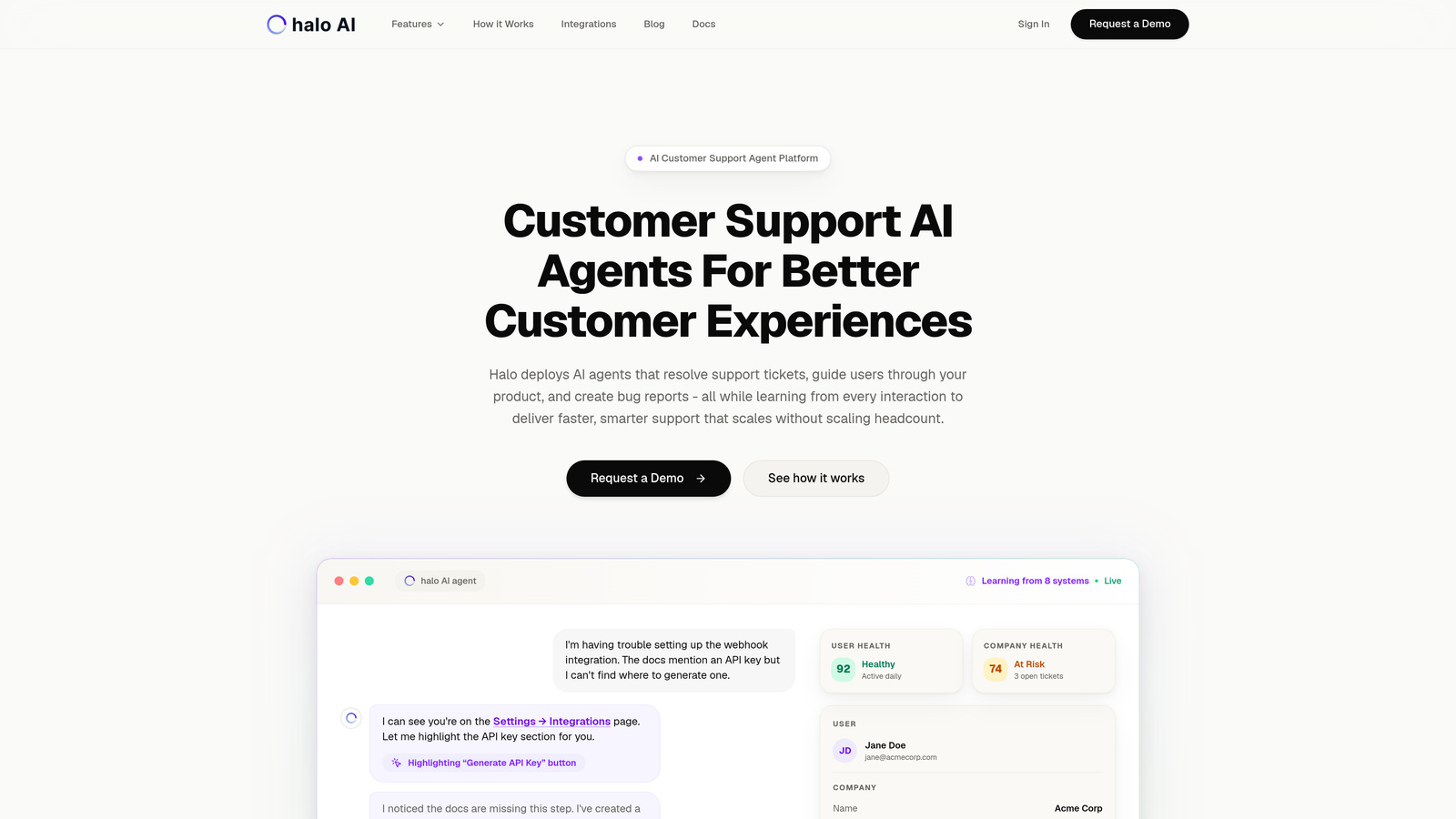
Halo AI is an AI-first customer support platform that autonomously resolves tickets while continuously learning from every interaction.
Where This Tool Shines
Unlike traditional helpdesks that bolt AI onto existing systems, Halo is built from the ground up for autonomous operation. The platform doesn't just deflect tickets—it actually resolves them by understanding context, accessing your knowledge base, and taking action.
What sets Halo apart is its page-aware chat widget that sees exactly what users see on your product. This means the AI can provide visual guidance through your interface, not just generic instructions. Every resolved ticket makes the system smarter for the next interaction.
Key Features
Autonomous AI Agents: Resolve tickets without human intervention by understanding context and taking appropriate action across your systems.
Page-Aware Context: The chat widget sees your product interface in real-time, enabling visual guidance that shows users exactly where to click.
Continuous Learning: Every interaction trains the AI to handle similar issues better, creating a compounding improvement effect over time.
Auto Bug Ticket Creation: Automatically creates detailed bug reports in Linear when issues are detected, with full context and reproduction steps.
Business Intelligence Integration: Connects with your entire stack including Slack, HubSpot, Intercom, Stripe, Zoom, and PandaDoc to surface customer health signals.
Best For
B2B SaaS companies experiencing rapid growth who need to scale support without proportionally scaling headcount. Particularly effective for product teams that want AI to handle routine queries while surfacing business intelligence about customer health and product issues.
Pricing
Contact for pricing. The platform is designed for teams serious about AI-first support automation.
2. Zendesk Suite
Best for: Enterprise teams managing complex omnichannel support at massive scale
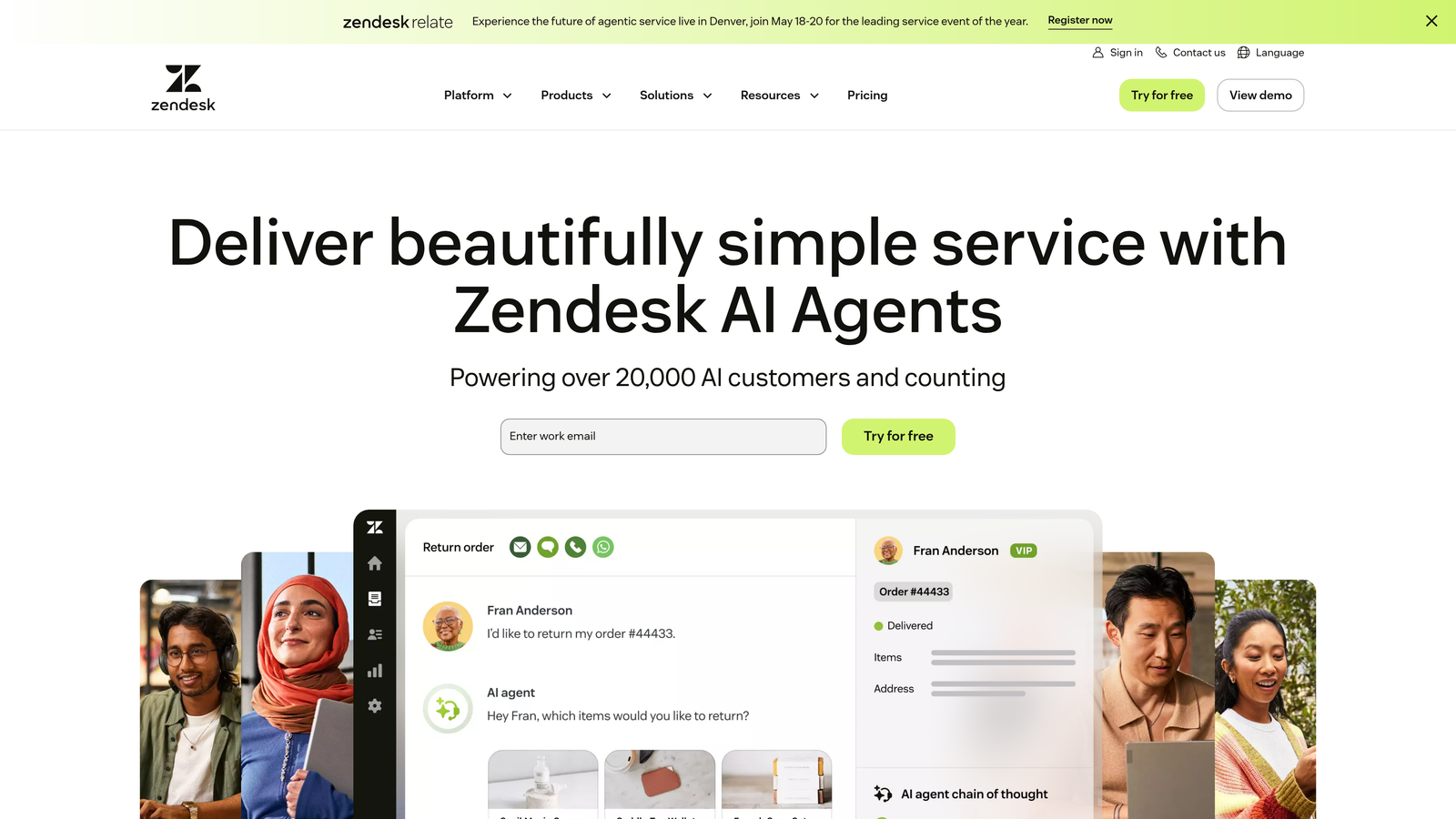
Zendesk Suite is an enterprise-grade platform combining ticketing, live chat, phone support, and self-service into one unified system.
Where This Tool Shines
Zendesk handles the kind of volume that would break smaller platforms. We're talking thousands of tickets per day across email, chat, phone, social media, and messaging apps—all flowing into one system.
The platform's strength lies in its maturity and breadth. After years in the market, Zendesk has built sophisticated routing logic, comprehensive reporting, and an ecosystem of over 1,000 integrations. When you need enterprise-grade reliability and every feature imaginable, Zendesk delivers.
Key Features
Omnichannel Ticketing: Unified queue for email, chat, phone, social media, and messaging apps with full conversation history.
Answer Bot Automation: AI-powered bot suggests help articles and can resolve simple queries without agent involvement.
Skills-Based Routing: Automatically assigns tickets to agents based on language, expertise, and current workload to optimize response times.
Advanced Analytics: Custom dashboards, SLA tracking, and performance metrics to identify bottlenecks and optimize team efficiency.
Marketplace Ecosystem: Over 1,000 pre-built integrations covering CRM, e-commerce, project management, and business intelligence tools.
Best For
Large enterprises with complex support operations spanning multiple channels and regions. Best suited for teams that need advanced customization, robust reporting, and enterprise-grade security and compliance features.
Pricing
Starts at $55/agent/month for Suite Team. Enterprise plans with advanced features require custom pricing.
3. Intercom
Best for: Product-led companies wanting proactive support combined with AI automation
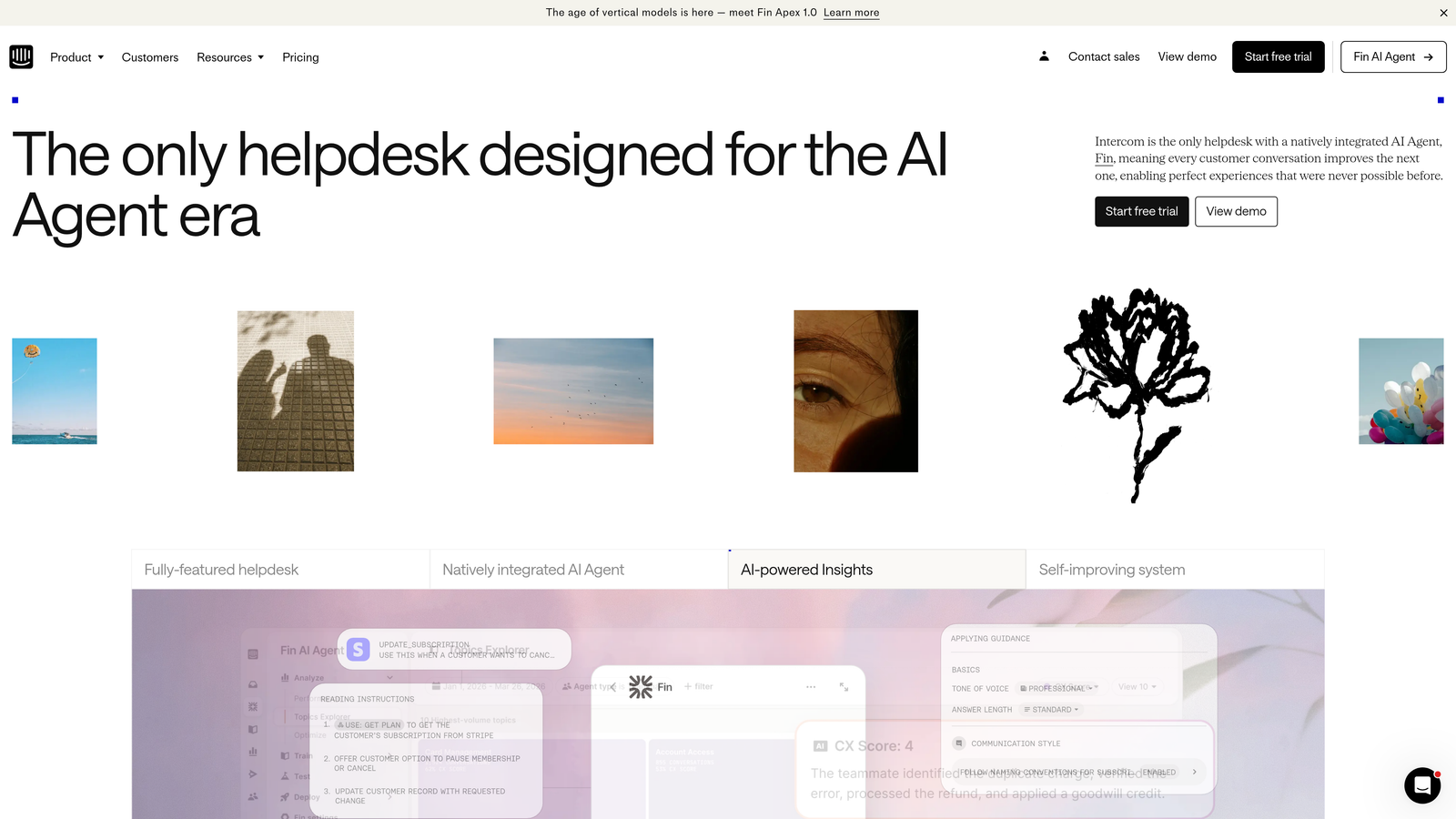
Intercom is a conversational support platform that blends AI chatbots with targeted messaging and product tours.
Where This Tool Shines
Intercom excels at preventing tickets before they happen. The platform's proactive messaging lets you reach users at critical moments—like when they're stuck on a feature or about to churn.
Their Fin AI agent can resolve common queries automatically, while the unified inbox keeps all conversations in one place. The real power comes from combining reactive support with proactive outreach, turning your support tool into a customer success platform.
Key Features
Fin AI Agent: Automatically resolves customer questions by searching your help content and providing accurate answers with source citations.
Unified Inbox: All customer conversations across chat, email, and social in one interface with full context and history.
Proactive Messaging: Trigger targeted messages based on user behavior, product usage, or custom events to prevent issues.
Product Tours: Build interactive onboarding flows and feature announcements directly in your product to reduce support load.
Custom Bot Builder: Create automated workflows for common scenarios like booking demos, collecting feedback, or routing complex queries.
Best For
SaaS companies that view support as part of the customer success journey. Ideal for teams that want to combine reactive support with proactive engagement and in-app guidance.
Pricing
Starts at $39/seat/month for Essential plan. Fin AI is available as an add-on with usage-based pricing.
4. Freshdesk
Best for: Growing teams needing powerful automation without enterprise pricing
Freshdesk is a cost-effective helpdesk platform that brings AI-powered automation to teams on a budget.
Where This Tool Shines
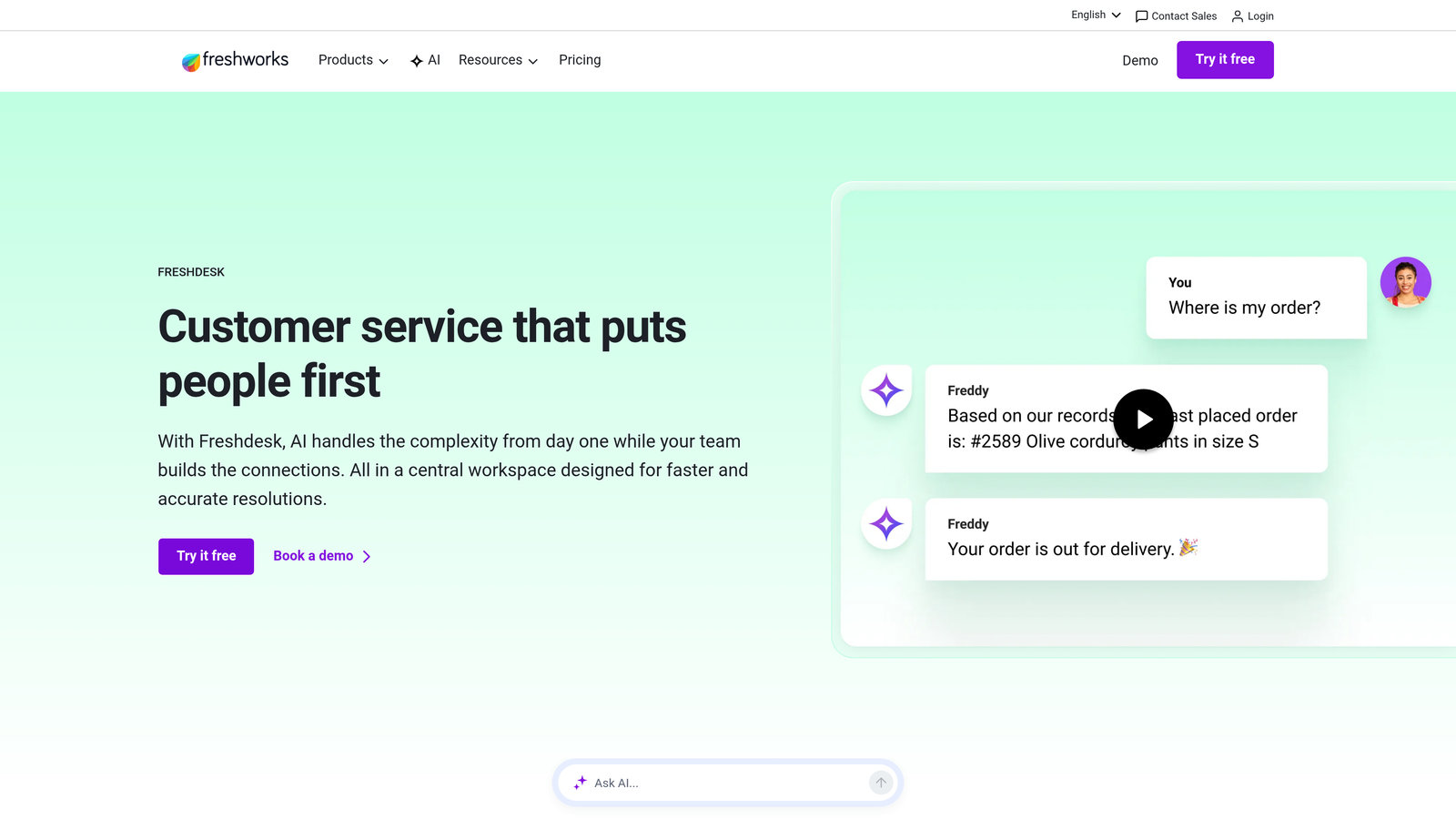
Freshdesk delivers enterprise features at startup prices. Their Freddy AI can classify incoming tickets, suggest responses to agents, and even detect sentiment to prioritize urgent issues.
The platform's scenario automations let you build complex workflows without coding—automatically routing tickets, sending follow-ups, and escalating based on SLA violations. For teams outgrowing basic helpdesks but not ready for Zendesk's price tag, Freshdesk hits the sweet spot.
Key Features
Freddy AI: Automatically categorizes tickets, suggests relevant articles to customers, and provides agents with recommended responses.
Scenario Automations: Build complex workflows with conditional logic to handle routing, escalations, and follow-ups automatically.
Collision Detection: Prevents multiple agents from working on the same ticket simultaneously, eliminating duplicate effort.
Self-Service Portal: Branded knowledge base with community forums where customers can find answers before creating tickets.
Free Tier: Actually useful free plan for up to 10 agents, making it accessible for small teams testing helpdesk software.
Best For
Small to mid-sized companies experiencing growth who need automation and AI features without paying enterprise prices. Particularly good for teams transitioning from email-based support to a proper ticketing system.
Pricing
Free tier available for up to 10 agents. Paid plans start at $15/agent/month with more advanced features at higher tiers.
5. Help Scout
Best for: Teams prioritizing personal customer relationships while scaling support operations
Help Scout is a human-centric helpdesk designed to maintain personal connections even as ticket volume grows.
Where This Tool Shines
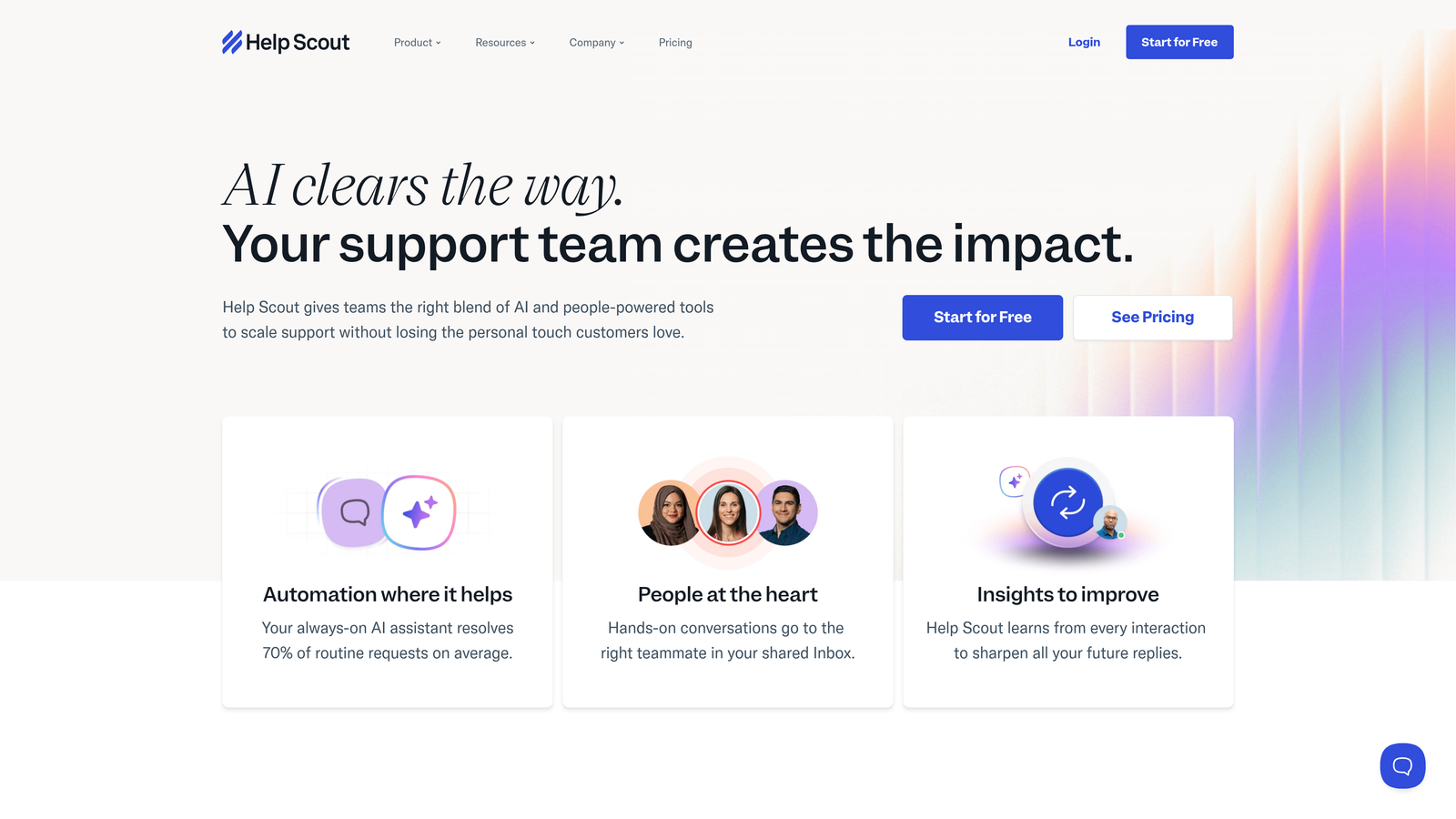
Help Scout feels more like email than traditional helpdesk software, which helps teams maintain a personal touch. The interface is clean and focused, without overwhelming agents with unnecessary features.
The platform's Beacon widget embeds help content and chat directly in your product, letting customers find answers without leaving their workflow. When they do need to contact support, the conversation feels personal—not like ticket number 47,392.
Key Features
Shared Inbox: Team email management with collision detection, assignment rules, and conversation threading that feels natural.
Saved Replies: Template library with variables and shortcuts for common responses, dramatically reducing response time without sounding robotic.
Beacon Widget: Embedded help center and chat that provides contextual articles based on the page users are viewing.
Customer Profiles: Automatic profiles showing conversation history, custom properties, and activity timeline for personalized support.
Docs Knowledge Base: Self-service documentation with AI-powered article suggestions and search to deflect common queries.
Best For
Companies that view customer support as a relationship-building function, not just a cost center. Ideal for B2B SaaS and service businesses where personal connections drive retention.
Pricing
Starts at $20/user/month for Standard plan. No free tier, but 15-day trial available.
6. Gorgias
Best for: E-commerce brands managing high-volume customer inquiries tied to orders
Gorgias is a helpdesk built specifically for online retailers, with deep integrations into e-commerce platforms.
Where This Tool Shines
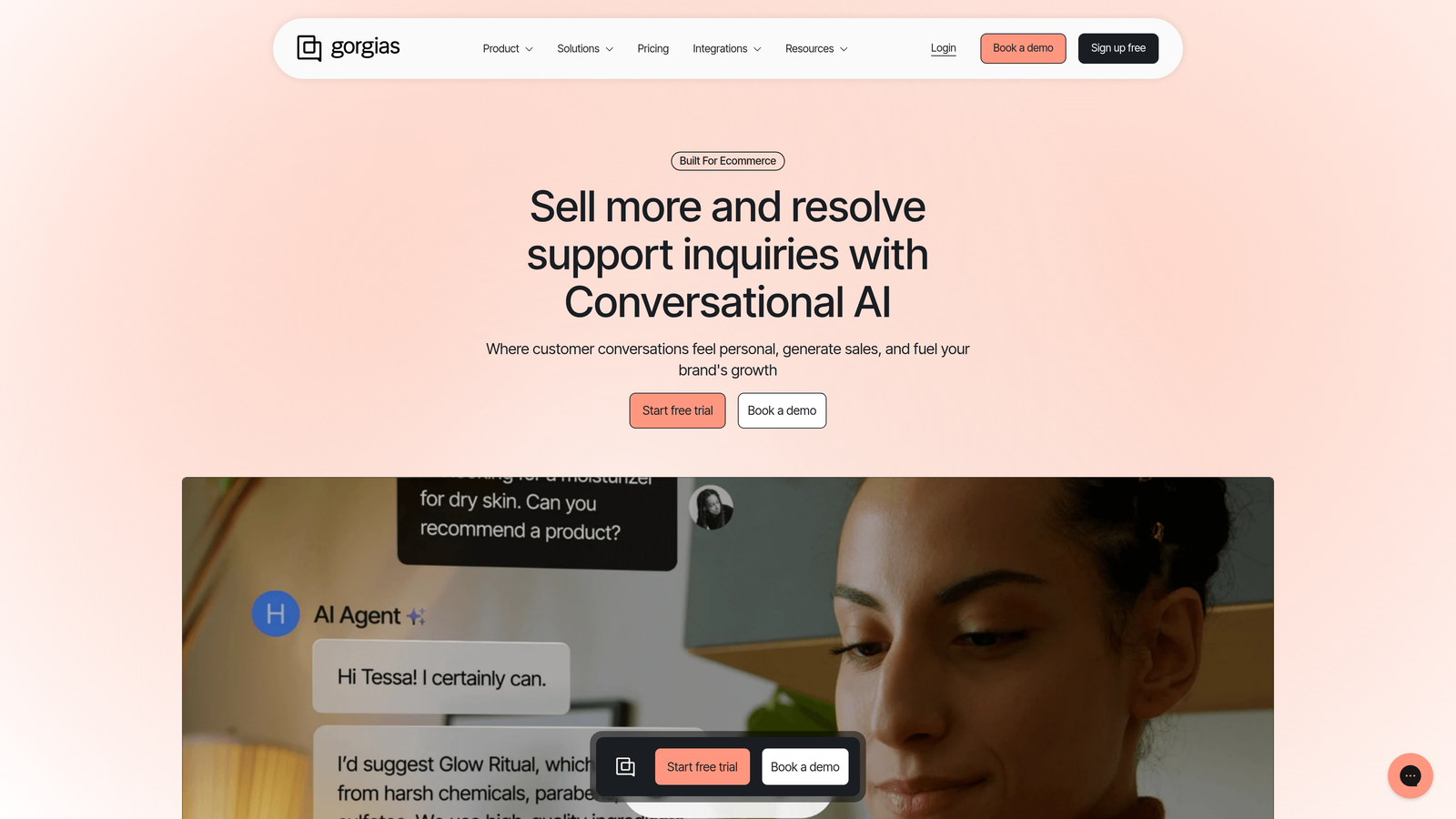
Gorgias understands that e-commerce support is different. Most tickets relate to order status, shipping delays, returns, or product questions—all of which require access to order data.
The platform pulls order information directly into tickets, letting agents cancel orders, issue refunds, or update shipping addresses without switching systems. Macros can include dynamic order variables, so "Your order #12345 shipped yesterday" happens with one click. For online retailers, this context makes all the difference.
Key Features
Native E-commerce Integrations: Deep connections with Shopify, BigCommerce, and Magento that pull order data directly into support tickets.
Order Management Actions: Cancel orders, issue refunds, edit shipping addresses, and manage subscriptions without leaving the helpdesk.
Revenue Statistics: Track which support interactions lead to sales and measure the revenue impact of your support team.
Dynamic Macros: Templates that automatically populate customer names, order numbers, tracking links, and product details.
Social Commerce Support: Manage Instagram and Facebook comments and messages where many product questions happen.
Best For
Direct-to-consumer e-commerce brands and online retailers experiencing high volumes of order-related inquiries. Especially valuable during peak seasons like Black Friday or product launches.
Pricing
Starts at $10/month for 50 tickets. Pricing scales based on ticket volume, making it accessible for small stores while supporting enterprise retailers.
7. Kustomer
Best for: Support teams needing complete customer context across all interactions and systems
Kustomer is a CRM-powered support platform that presents every customer interaction in a unified timeline view.
Where This Tool Shines
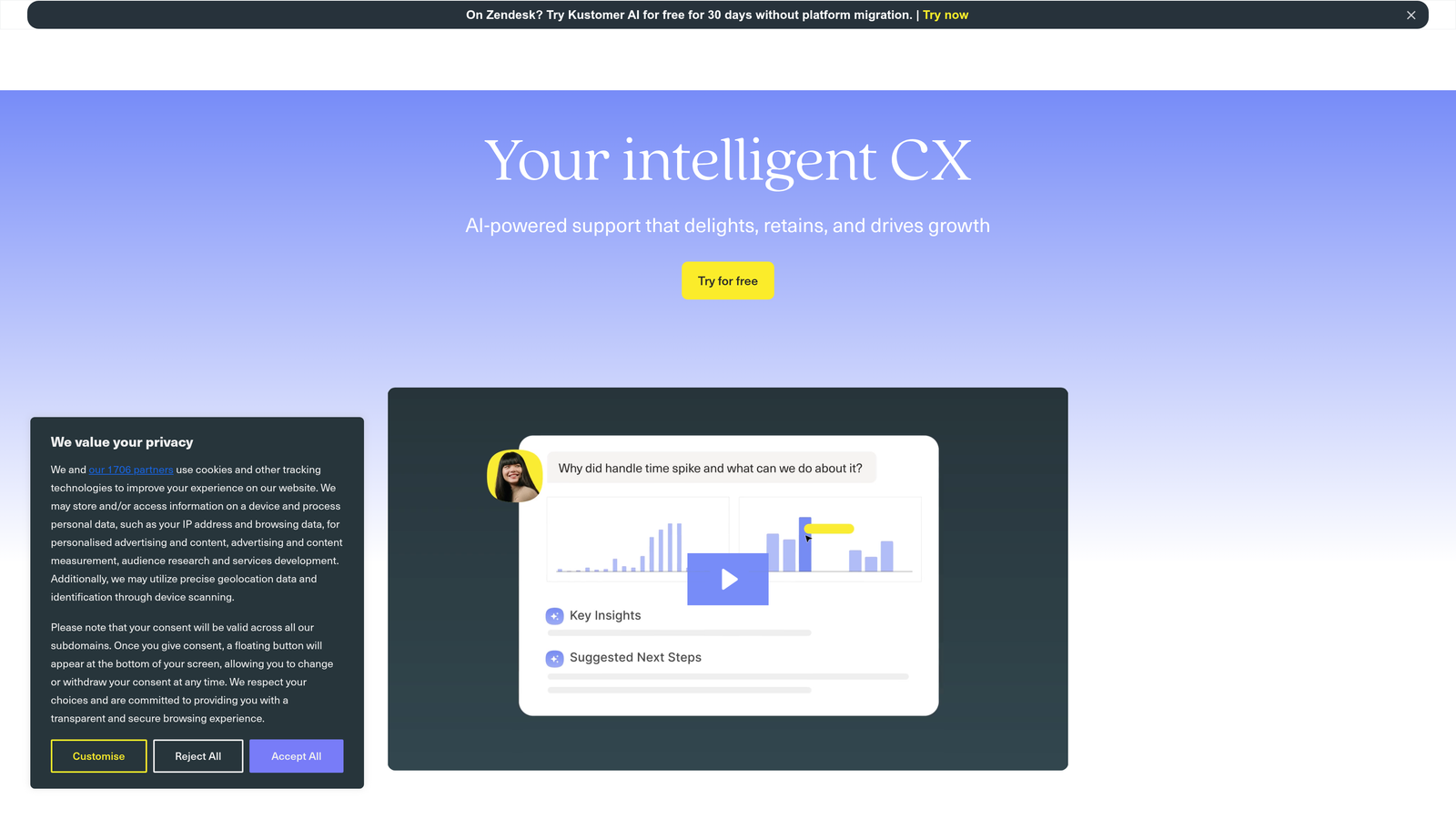
Kustomer flips the traditional ticketing model. Instead of organizing around tickets, it organizes around customers. Every interaction—past tickets, purchases, chat conversations, social media mentions—appears in one chronological timeline.
This customer-centric approach means agents see the full context immediately. No more asking "Have you contacted us about this before?" or switching between systems to understand the customer's history. The platform also uses AI to classify tickets and route them intelligently based on content and customer data.
Key Features
Customer Timeline View: Single chronological view showing all interactions, purchases, and activities across every channel and touchpoint.
AI Classification: Automatically categorizes and tags incoming conversations based on content, sentiment, and customer attributes.
Business Process Automation: Build workflows that trigger actions across systems based on customer behavior or support interactions.
Sentiment Analysis: Detects customer emotion in messages to prioritize frustrated customers and flag potential churn risks.
Omnichannel Context: Preserves conversation context when customers switch from email to chat to phone within the same issue.
Best For
Mid-market to enterprise companies with complex customer journeys spanning multiple touchpoints. Best for teams that need to understand the full customer relationship, not just the current ticket.
Pricing
Starts at $89/user/month for Enterprise plan. No lower-tier options—Kustomer targets mid-market and enterprise customers.
8. Dixa
Best for: Contact centers managing real-time queue prioritization across voice and digital channels
Dixa is a conversational customer service platform with intelligent queue management for high-volume environments.
Where This Tool Shines
Dixa excels at real-time queue optimization. The platform continuously analyzes incoming volume, agent availability, and customer priority to route conversations intelligently.
The unified agent workspace handles phone, email, chat, and messaging in one interface, so agents don't need to switch tools. Live dashboards give managers visibility into queue health, letting them shift resources before backlogs develop. For teams handling hundreds of daily conversations, this real-time orchestration prevents bottlenecks.
Key Features
Real-Time Queue Prioritization: Continuously adjusts routing based on wait times, agent skills, and customer priority to optimize response times.
Unified Agent Workspace: Single interface for voice calls, email, live chat, and messaging without switching between systems.
Intelligent Routing: Matches customers with the best available agent based on skills, language, previous interactions, and current workload.
Quality Assurance Tools: Built-in conversation review, scoring, and coaching features to maintain service quality at scale.
Live Queue Dashboards: Real-time visibility into queue depth, wait times, and agent status for proactive management.
Best For
Contact centers and support teams handling high volumes of real-time conversations across multiple channels. Particularly effective for teams that need to balance phone support with digital channels.
Pricing
Starts at $39/agent/month for Essential plan. Higher tiers include advanced routing and analytics features.
9. Front
Best for: Teams managing high-volume email support with heavy internal collaboration needs
Front is a collaborative inbox platform that transforms team email into a shared support system.
Where This Tool Shines
Front bridges the gap between email and helpdesk software. It looks and feels like email, which means zero learning curve, but adds the collaboration and automation features teams need for high volume.
The platform shines for teams that rely heavily on email but need better coordination. Internal comments let agents discuss complex issues without cluttering the customer thread. Assignment rules distribute load automatically, and SLA tracking ensures nothing falls through the cracks. It's email, but actually manageable at scale.
Key Features
Shared Team Inbox: Manage individual and team email addresses in one interface with full visibility into who's handling what.
Assignment Rules: Automatically distribute incoming emails based on round-robin, keywords, sender, or custom logic to balance workload.
Internal Comments: Discuss customer issues privately using @mentions and threaded conversations without forwarding emails.
SLA Tracking: Set response time targets and get alerts when messages are approaching or past their deadline.
CRM Integration: Connect with Salesforce, HubSpot, and other CRMs to see customer context without leaving your inbox.
Best For
Teams primarily using email for customer support who need better collaboration and workload distribution. Particularly good for sales teams, account management, and customer success teams handling high email volumes.
Pricing
Starts at $19/seat/month for Starter plan. Growth and Scale plans add automation and advanced features.
Making the Right Choice
The best solution depends on your specific volume challenges and existing infrastructure. If you're looking for autonomous AI that actually resolves tickets rather than just deflecting them, Halo AI's continuous learning approach transforms how support scales. For enterprise teams managing complex omnichannel operations, Zendesk provides the breadth and maturity to handle massive scale.
E-commerce brands will find Gorgias's deep platform integrations invaluable for order-related inquiries, while teams prioritizing personal relationships should explore Help Scout's human-centric approach. The key is matching the tool's strengths to your specific pain points.
Consider your primary challenge. Is it repetitive queries that AI could handle? Look at autonomous solutions like Halo AI or Intercom's Fin. Struggling with queue management during spikes? Dixa's real-time prioritization or Zendesk's advanced routing might be the answer. Need better context about customers? Kustomer's timeline view provides that holistic perspective.
Think about integration requirements too. If your team lives in Slack and uses Linear for bug tracking, you'll want a platform that connects naturally with your existing workflow. If you're running Shopify, Gorgias's native integration eliminates the friction of switching between systems.
Your support team shouldn't scale linearly with your customer base. Let AI agents handle routine tickets, guide users through your product, and surface business intelligence while your team focuses on complex issues that need a human touch. See Halo in action and discover how continuous learning transforms every interaction into smarter, faster support.