9 Best Tools for Inconsistent Support Quality in 2026
Discover the 9 best inconsistent support quality solutions for B2B SaaS teams in 2026, covering AI-native platforms, QA tools, and standardization systems that eliminate variability caused by agent mood, shift changes, and knowledge gaps. Whether you're managing a lean team or scaling operations, these purpose-built tools ensure every customer receives the same high-quality, reliable support experience.
 Matt PattoliFounder14 min read
Inconsistent support quality is one of the most damaging problems a SaaS company can face. One customer gets a detailed, empathetic resolution in under five minutes. The next waits two days for a vague reply that doesn't solve anything. The difference rarely comes down to effort — it comes down to systems.
Without the right infrastructure, support quality fluctuates with agent mood, shift changes, ticket volume, and institutional knowledge gaps. The good news: there are purpose-built tools that eliminate this variability by standardizing how tickets are handled, how agents respond, and how quality is measured.
This list covers the top solutions for B2B teams dealing with inconsistent support quality — from AI-native platforms that resolve tickets autonomously to QA tools that score every conversation. Whether you're running a lean support team or scaling a multi-tier operation, these tools give you the consistency your customers expect.
1. Halo AI
Best for: Teams that want to eliminate tier-1 variability at the source with autonomous AI resolution
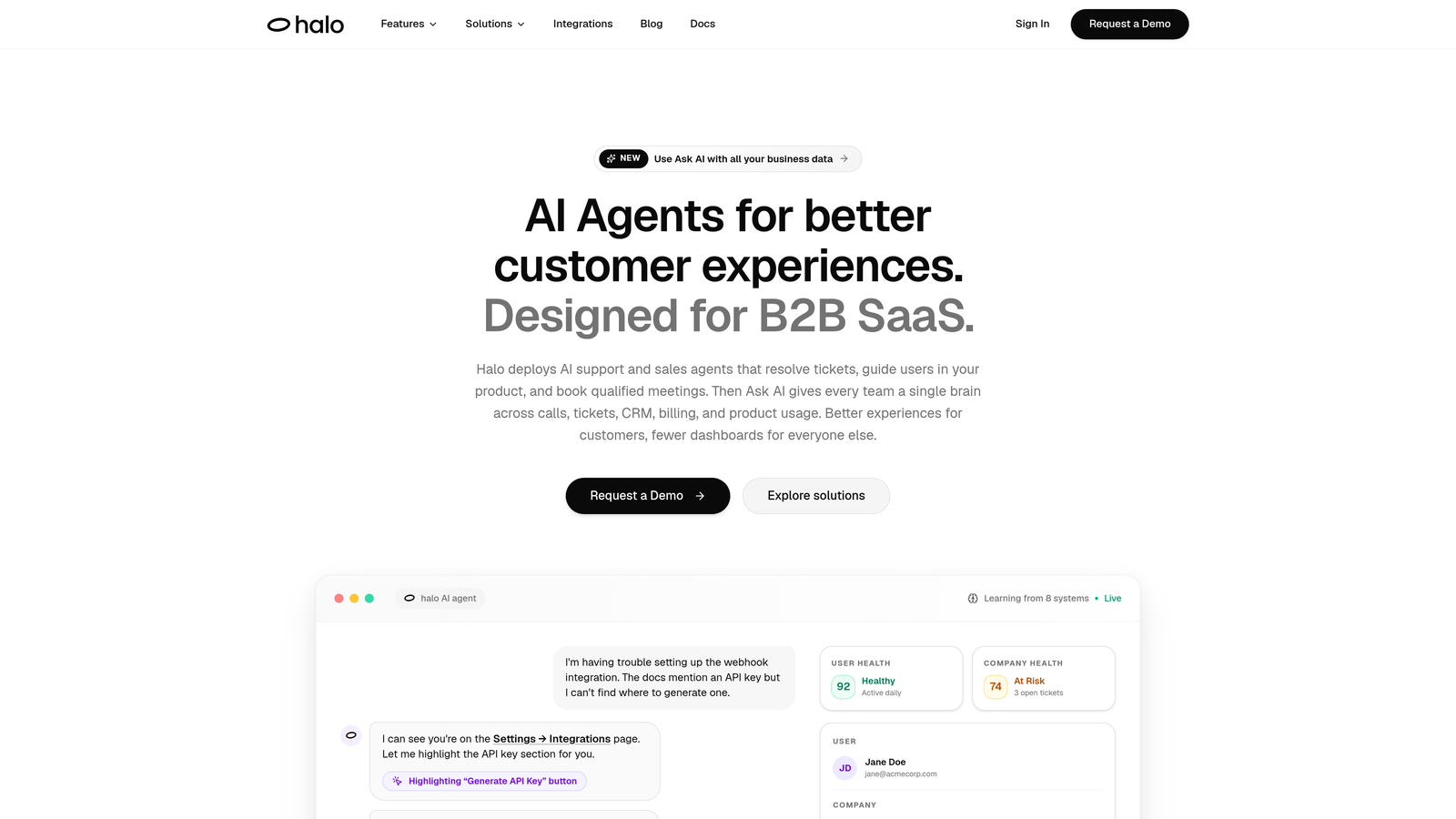
Halo AI is an AI-native customer support platform that deploys intelligent agents to resolve tickets, guide users through your product, and create bug reports — all while learning from every interaction.
Where This Tool Shines
The core problem with inconsistent support quality is human variability. Agents interpret tickets differently, apply different tones, and bring different levels of product knowledge to each conversation. Halo AI addresses this at the root: AI agents apply the same resolution logic every time, don't have bad days, and don't lose institutional knowledge when someone leaves the team.
What separates Halo from bolt-on AI features is its architecture. The platform is AI-first by design, not an afterthought layered onto a legacy helpdesk. Its page-aware chat widget sees what users see — their current screen, their context, their moment of confusion — and delivers visual guidance that's precisely relevant. Every interaction feeds back into the system, so the AI gets smarter over time rather than staying static.
Key Features
Autonomous AI Agents: Resolve tier-1 tickets with consistent logic every time, removing human variability from routine interactions entirely.
Page-Aware Chat Widget: Detects the user's current page and delivers contextual visual guidance, so responses are always relevant to where the user actually is.
Smart Inbox with Business Intelligence: Surfaces customer health signals, anomaly detection, and revenue intelligence — turning support data into strategic insight.
Auto Bug Ticket Creation: Automatically routes bug reports to Linear or your issue tracker, closing the loop between support and engineering without manual handoffs.
Live Agent Handoff: Escalates complex issues to human agents with full context preserved, so nothing gets lost in the transition.
Deep Integrations: Connects with Slack, HubSpot, Intercom, Stripe, Zoom, PandaDoc, and Fathom to pull context from your entire business stack.
Best For
Product-led SaaS companies and B2B teams that want to resolve the majority of tier-1 tickets autonomously, without growing headcount. Particularly well-suited for teams already using Intercom, HubSpot, or Linear who want AI that connects to their existing stack rather than replacing it.
Pricing
Contact for pricing. See haloagents.ai for details.
2. Zendesk QA
Best for: Support teams that need systematic quality measurement across every conversation, not just random samples
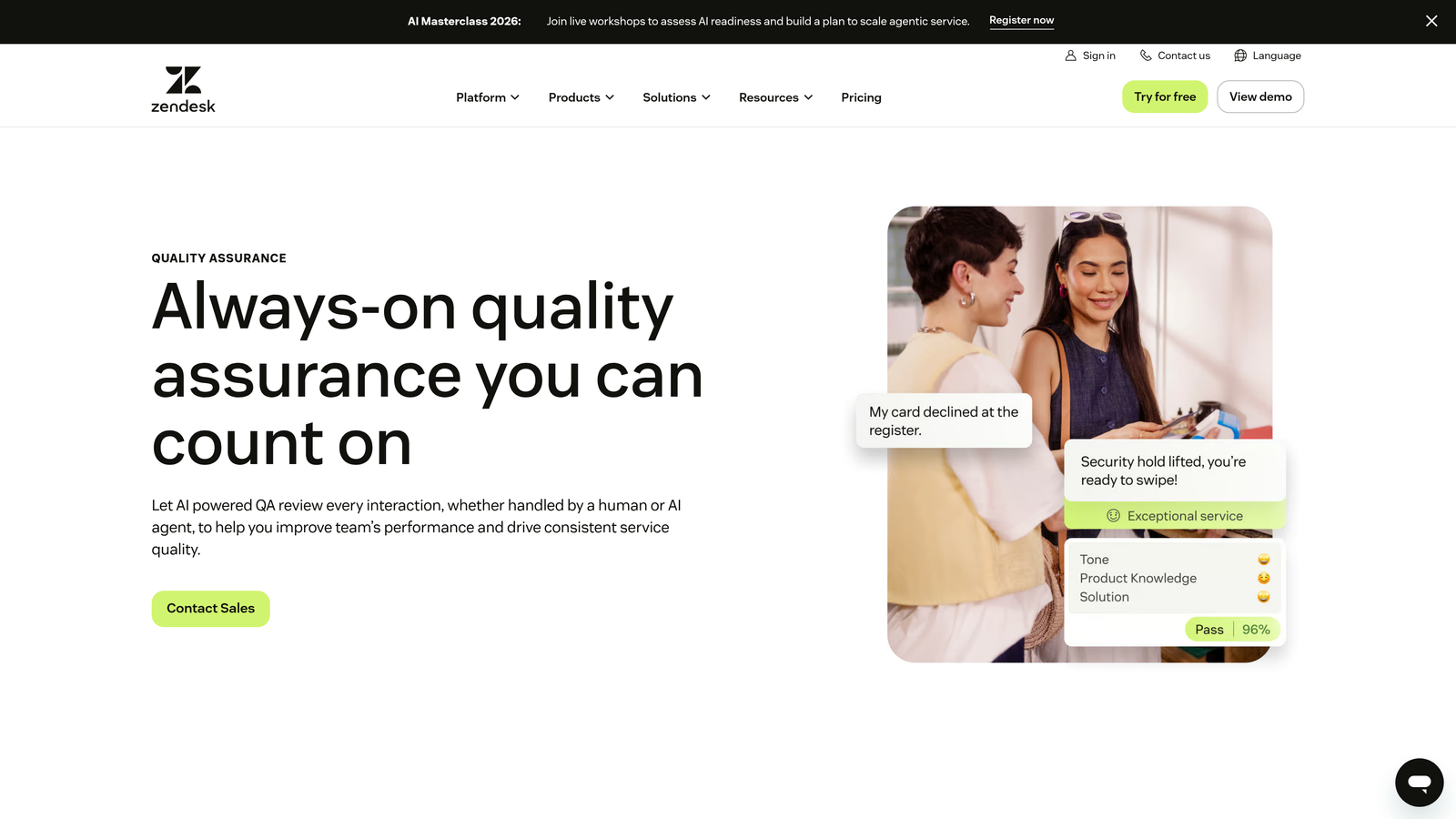
Zendesk QA is an AI-powered quality assurance platform (formerly Klaus) that automatically scores 100% of support conversations and surfaces coaching opportunities at scale.
Where This Tool Shines
Most QA programs review a small sample of tickets — which means quality problems can persist for weeks before anyone notices. Zendesk QA changes that by scoring every conversation automatically, giving managers a complete picture rather than a statistical estimate. This is especially valuable when inconsistency is hiding in the long tail of interactions that never get manually reviewed.
The calibration workflows are particularly useful for teams where multiple reviewers grade conversations differently. If your QA reviewers don't agree on what "good" looks like, your scores are measuring reviewer opinion rather than actual quality. Zendesk QA's calibration sessions bring reviewers into alignment, so the standard is consistent before you even start coaching agents.
Key Features
Automated AI Scoring: Scores every conversation automatically, eliminating the sampling bias that lets quality issues go undetected.
Customizable Scorecards: Build quality criteria specific to your team's standards rather than using generic templates.
Calibration Workflows: Align reviewers on consistent grading so quality scores reflect real performance, not reviewer variance.
Coaching Workflows: Connect flagged conversations directly to structured coaching sessions, closing the loop between QA and development.
Root Cause Analysis: Identify systemic quality issues rather than treating each underperforming conversation as an isolated incident.
Best For
Support teams already using Zendesk Suite, or any team that needs a dedicated QA layer to detect and correct inconsistency systematically. Strong fit for managers who want data to back coaching conversations.
Pricing
Included in Zendesk Suite plans; standalone pricing available. See zendesk.com for current details.
3. Intercom
Best for: Teams that want to reduce variability across both automated and human-handled conversations in a single platform
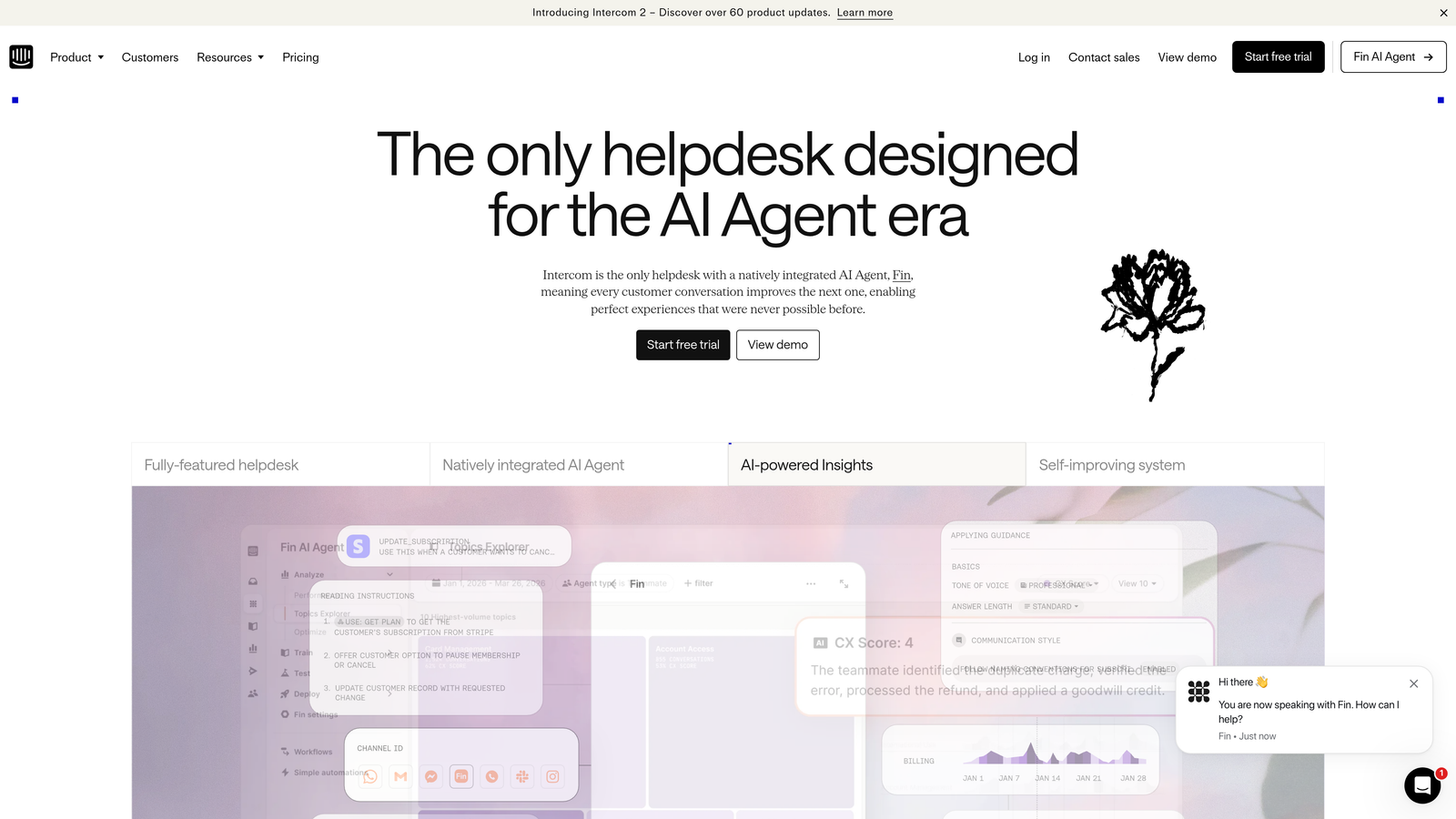
Intercom is a customer communications platform with Fin AI agent for autonomous tier-1 resolution and Copilot for real-time agent assistance.
Where This Tool Shines
Intercom addresses inconsistency at two layers simultaneously. Fin AI handles common questions autonomously, applying the same response logic every time without agent discretion. For conversations that do reach human agents, Copilot suggests replies in real time — nudging agents toward consistent, accurate answers rather than leaving them to improvise.
The unified inbox is genuinely useful for teams managing multiple channels. When chat, email, and in-app messages all flow into one place with the same workflow, you eliminate the channel-specific inconsistencies that often go unnoticed until a customer complains.
Key Features
Fin AI Agent: Handles common questions autonomously with consistent, accurate responses that don't vary by agent or shift.
Copilot: Suggests replies to live agents in real time, reducing response variability without removing human judgment from complex issues.
Unified Inbox: Consolidates chat, email, and in-app messages into a single workflow, eliminating channel-specific handling gaps.
Macros and Saved Replies: Standardize human agent responses for common scenarios, reducing the chance of off-brand or inaccurate replies.
Reporting Dashboards: Track CSAT and response quality trends over time to identify where inconsistency is emerging.
Best For
SaaS companies that want a full-featured communications platform with AI baked in, particularly those already using Intercom for customer messaging who want to add autonomous resolution without switching platforms.
Pricing
Starts at $29/seat/month (Essential plan); Fin AI usage billed per resolution. See intercom.com for current pricing.
4. Freshdesk
Best for: Teams that need structured automation and SLA enforcement to reduce agent discretion on routine tickets
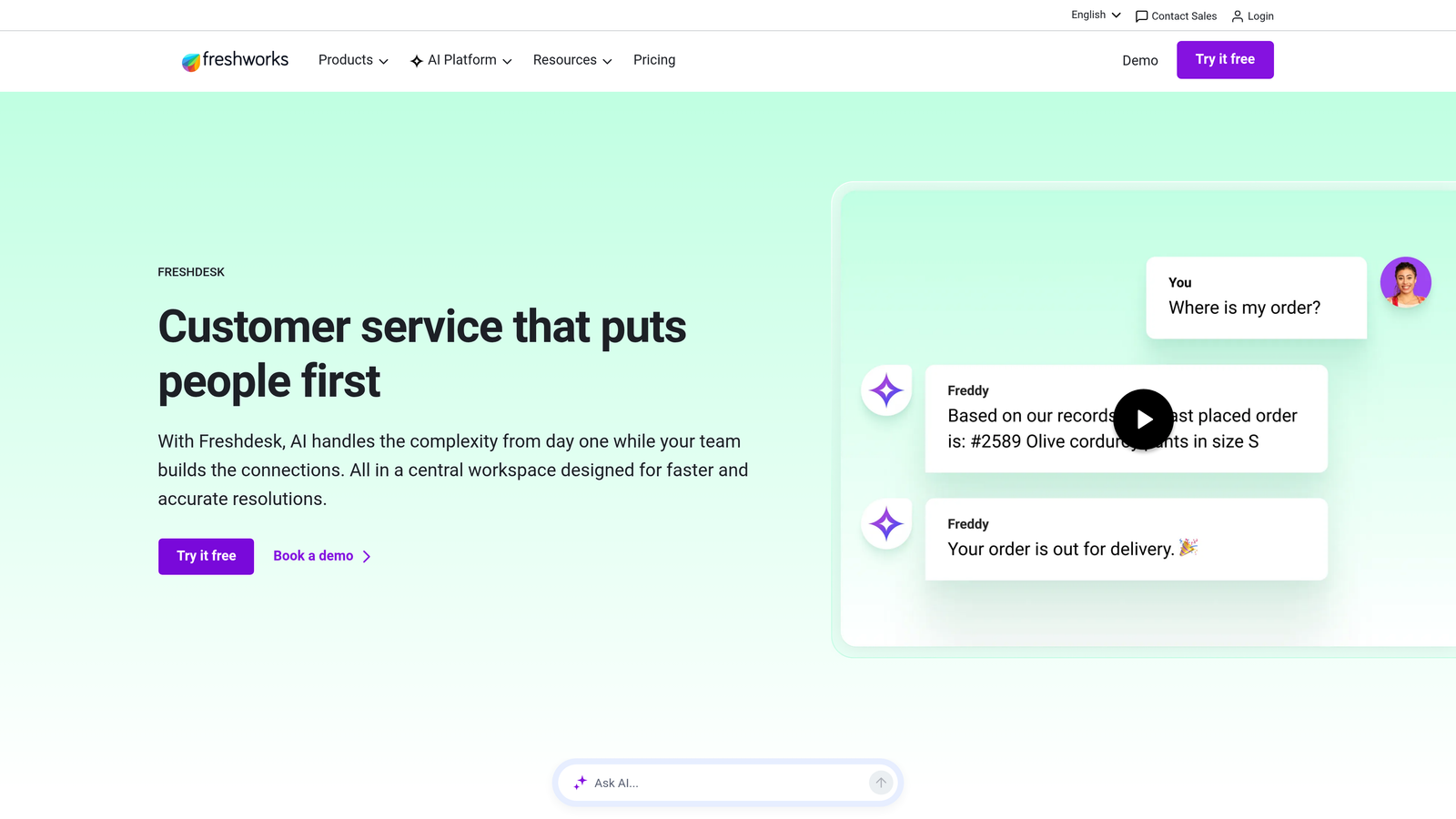
Freshdesk is a cloud-based helpdesk platform with automation rules, SLA enforcement, and canned responses that standardize how tickets are handled across the team.
Where This Tool Shines
A lot of support inconsistency comes from agents making micro-decisions that should be systematized: which queue a ticket goes to, how long it can sit before escalation, what the standard answer is for a common question. Freshdesk's automation layer takes those decisions out of individual hands and encodes them into rules that apply consistently, regardless of who's on shift.
The canned responses library is straightforward but underrated. When agents write from scratch every time, tone and accuracy vary. When they pull from a curated library, the baseline quality is much more predictable — and managers can update responses in one place rather than retraining individuals.
Key Features
Automation Rules: Route, tag, and assign tickets based on defined criteria, removing inconsistent manual triage from the equation.
SLA Policies: Enforce response and resolution time standards across the team, with escalation triggers for tickets that fall behind.
Canned Responses Library: Standardize answers to common questions so agents pull from approved content rather than improvising.
Freddy AI: Suggests responses and summarizes tickets to help agents respond faster and more accurately.
Collision Detection: Prevents two agents from working the same ticket simultaneously, eliminating duplicate or conflicting responses.
Best For
Growing support teams that need a reliable helpdesk foundation with strong automation, particularly those moving off shared inboxes or spreadsheet-based tracking for the first time.
Pricing
Free plan available; paid plans start at $15/agent/month. See freshworks.com for current tier details.
5. Guru
Best for: Teams where inconsistency stems from agents giving different answers because they're working from different information
Guru is a knowledge management platform that delivers verified, role-specific knowledge cards to support agents in context — directly in their browser, Slack, or helpdesk.

Where This Tool Shines
Knowledge gaps are one of the most common drivers of inconsistent support quality, and they're often invisible until a customer gets a wrong answer. Guru addresses this by creating a single verified source of truth and surfacing it at the exact moment an agent needs it — without requiring them to switch tabs, open a wiki, or ask a colleague.
The verification system is what makes Guru different from a standard wiki. Knowledge cards have expiry dates and assigned owners. When information goes stale, it gets flagged for review rather than silently misleading agents for months. For teams with rapidly changing products, this is the difference between a knowledge base that helps and one that creates new problems.
Key Features
Verified Knowledge Cards: Each card has an expiry date and owner, preventing outdated information from circulating across the team.
Browser Extension: Surfaces relevant answers in-context without requiring agents to leave their current workflow or switch applications.
Slack and Helpdesk Integrations: Delivers knowledge at the moment of need, directly inside the tools agents are already using.
AI-Powered Search: Finds relevant answers across the entire knowledge base even when agents don't know exactly what to search for.
Analytics: Identifies knowledge gaps based on search patterns, so you know what to document before agents start improvising answers.
Best For
Support teams with complex or frequently changing products where knowledge gaps are the primary driver of inconsistent answers. Also useful for onboarding new agents quickly to a consistent baseline.
Pricing
Starts at $10/user/month (All-in-One plan). See getguru.com for current pricing.
6. Gorgias
Best for: High-volume support teams that need a macro-driven, automation-first approach to standardizing responses
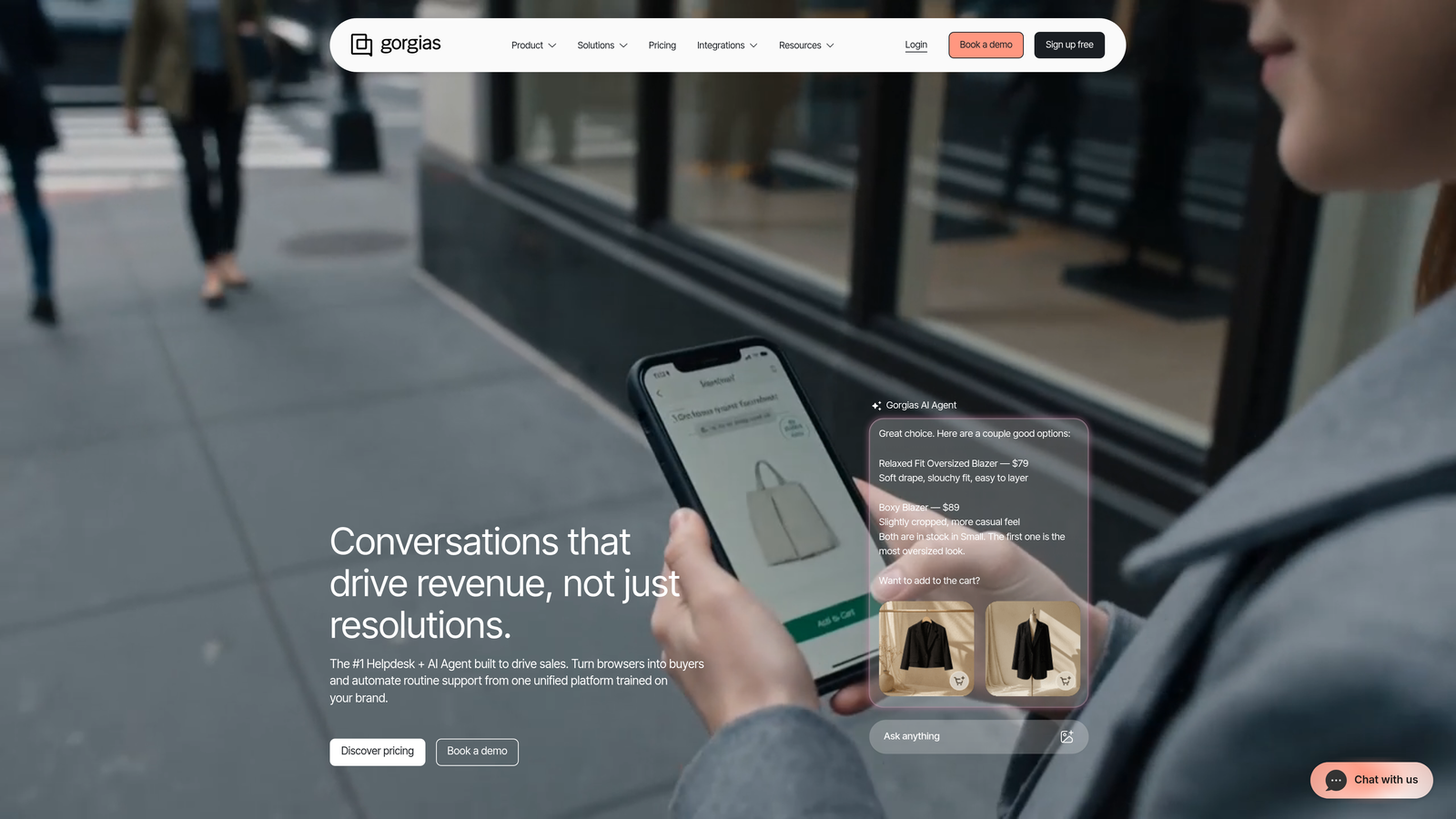
Gorgias is a helpdesk platform with a macro library, automation rules, and deep platform integrations that reduce agent-to-agent variability at scale.
Where This Tool Shines
Gorgias is built for teams handling large volumes of repeatable ticket patterns — the kind of environment where inconsistency compounds quickly if agents are left to respond from scratch. The macro library is the centerpiece: templated responses that agents can trigger with a single action, ensuring the answer is accurate and on-brand every time regardless of who's handling the queue.
The automation rules go further, handling truly routine tickets without agent involvement at all. When a ticket can be resolved by a rule rather than a person, you've eliminated human variability entirely for that ticket type. Combined with auto-tagging and classification, Gorgias creates a structured routing layer that makes sure tickets reach the right agent even when they do need a human touch.
Key Features
Macro Library: Templated, consistent responses to common ticket types that agents can apply instantly, reducing improvisation.
Automation Rules: Handle routine tickets without agent involvement, eliminating variability on fully predictable interactions.
Auto-Tagging and Classification: Ensures consistent routing so tickets reach appropriately skilled agents rather than whoever happens to be available.
Revenue Statistics: Ties support interactions to revenue data, giving managers context beyond ticket volume when evaluating quality.
Platform Integrations: Connects with ecommerce and SaaS platforms to pull order and account context into ticket views, enabling more accurate responses.
Best For
High-volume support teams with predictable, repeatable ticket patterns. Originally built for ecommerce but increasingly used by B2B SaaS teams with similar volume characteristics.
Pricing
Starts at $10/month (Starter, 50 tickets). See gorgias.com for full tier details.
7. MaestroQA
Best for: Support leaders who need a dedicated QA platform with structured coaching and calibration workflows
MaestroQA is a standalone quality assurance platform offering rubric-based conversation scoring, structured coaching workflows, and calibration sessions to align the entire team on quality standards.
Where This Tool Shines
MaestroQA is purpose-built for one thing: making quality assurance systematic and actionable. Where other platforms add QA as a feature, MaestroQA treats it as the core product. The rubric builder lets you define exactly what quality means for your team — not a generic checklist, but criteria that reflect your specific product, tone, and customer expectations.
The calibration sessions deserve particular attention. Inconsistency in QA scoring is its own form of quality problem: if two reviewers grade the same conversation differently, your coaching is based on noise rather than signal. MaestroQA's calibration workflows bring reviewers into alignment before scores are used for development decisions, making the entire QA program more trustworthy.
Key Features
Customizable Rubric Builder: Define quality criteria specific to your team's standards, product, and customer expectations.
Calibration Sessions: Align reviewers on consistent grading to eliminate scoring inconsistency at the reviewer level.
Coaching Workflows: Connect QA findings directly to agent development sessions, turning scores into actionable improvement.
Trend Reporting: Track quality improvement over time to understand whether coaching is working and where gaps persist.
Helpdesk Integrations: Connects with Zendesk, Salesforce, Intercom, and other major platforms to pull conversation data directly.
Best For
Support teams with dedicated QA programs or managers who want to build one. Particularly valuable for organizations where coaching is a core part of agent development and quality needs to be measured consistently over time.
Pricing
Contact MaestroQA for pricing. See maestroqa.com for details.
8. Assembled
Best for: Teams where quality drops are driven by staffing gaps, skill mismatches, or scheduling inefficiencies
Assembled is a workforce management platform that ensures the right agents handle the right tickets at the right time — addressing the operational root cause of many quality inconsistencies.
Where This Tool Shines
Support quality doesn't just suffer because of bad processes — it suffers because the wrong person is handling a ticket they're not equipped for, or because a queue is overwhelmed and agents are rushing. Assembled addresses this at the scheduling and staffing layer, which is often overlooked when teams focus exclusively on QA and tooling.
The demand forecasting capability is particularly useful for teams with variable ticket volume. When you can predict when volume will spike, you can staff for it in advance rather than scrambling reactively. Real-time adherence monitoring adds another layer: if coverage gaps emerge mid-shift, managers can catch them before they translate into degraded response times and frustrated customers.
Key Features
Demand Forecasting: Predicts ticket volume so you can staff appropriately in advance rather than reacting to volume spikes after quality has already dropped.
Scheduling Tools: Match agent skill sets to ticket types so complex issues reach agents who are equipped to handle them consistently.
Real-Time Adherence Monitoring: Catch coverage gaps as they emerge, before they affect response times or resolution quality.
Omnichannel Support: Manage scheduling across multiple queues and channels from a single platform.
Integrations: Connects with Zendesk, Salesforce, Intercom, and Slack to pull data from the tools your team already uses.
Best For
Mid-to-large support teams where staffing and scheduling decisions have a measurable impact on quality, particularly those managing multiple channels or skill-based routing requirements.
Pricing
Contact Assembled for pricing. See assembled.com for details.
9. Notion / Confluence
Best for: Teams that need a centralized internal knowledge base as the foundation for consistent answers
Notion and Confluence are collaborative documentation platforms that serve as internal knowledge bases — giving support teams a shared, searchable source of truth.
Where This Tool Shines
Before you can standardize support quality, you need to standardize the knowledge that drives it. Notion and Confluence provide the foundational layer: a single place where runbooks, escalation guides, product documentation, and response frameworks live. When every agent works from the same source, the variance in answers shrinks significantly.
Both platforms support collaborative editing, which matters for keeping documentation current as your product evolves. The key discipline is maintaining the knowledge base actively — stale documentation creates its own inconsistency. For teams that need more active in-workflow delivery, pairing one of these with a tool like Guru can bridge the gap between documentation and real-time access.
Key Features
Centralized Documentation: A single accessible location for all support knowledge, eliminating the scattered wikis and Slack threads that create inconsistency.
Version History: Track and revert knowledge changes so you always know what information agents were working from at any given time.
Search Functionality: Surface relevant answers quickly without requiring agents to know exactly where documentation lives.
Collaborative Editing: Multiple contributors can keep knowledge current without creating conflicting versions.
Templates: Structured formats for runbooks, escalation guides, and response frameworks ensure documentation is consistent in structure, not just content.
Best For
Teams building their knowledge infrastructure from scratch, or those consolidating scattered documentation into a single source of truth. Best as a foundation layer, potentially combined with a delivery tool for in-workflow access.
Pricing
Notion: Free plan available; paid plans from $10/user/month. Confluence: Free up to 10 users; paid plans from $5.16/user/month.
Which Tool Solves Your Specific Problem
Inconsistent support quality rarely has a single cause, which is why no single tool solves it for every team. The right starting point depends on where your inconsistency is actually coming from.
If the root cause is human variability on tier-1 tickets: Start with Halo AI or Intercom Fin. Autonomous AI resolution removes the human element from routine interactions entirely, applying the same logic every time without mood, fatigue, or knowledge gaps affecting the outcome.
If the root cause is knowledge gaps: Guru or a well-maintained Notion/Confluence knowledge base addresses this directly. Agents can't give consistent answers if they're working from different information — or no information at all.
If the root cause is undetected quality issues: Zendesk QA or MaestroQA surfaces what's going wrong before customers churn over it. Scoring 100% of conversations and building structured coaching loops turns reactive quality management into a proactive system.
If the root cause is workflow and process gaps: Freshdesk or Gorgias brings structure to ticket handling through automation rules, SLA enforcement, and standardized response libraries — reducing agent discretion on decisions that should be systematized.
If the root cause is staffing and scheduling: Assembled addresses the operational layer that other tools don't touch, ensuring the right agents are handling the right tickets at the right volume.
For most B2B SaaS teams, the highest-leverage move is eliminating variability at the source. Your support team shouldn't scale linearly with your customer base. Let AI agents handle routine tickets, guide users through your product, and surface business intelligence while your team focuses on complex issues that need a human touch. See Halo in action and discover how continuous learning transforms every interaction into smarter, faster support.