9 Best Integrated Customer Support Platforms in 2026
Fragmented support tools slow resolution times and frustrate both agents and customers, making an integrated customer support platform essential for modern teams. This guide evaluates the 9 best platforms in 2026—comparing ticketing, live chat, AI automation, and analytics capabilities—to help B2B SaaS teams find the right solution whether they're replacing legacy helpdesks or building a support stack from scratch.
 Matt PattoliFounder13 min read
If your support team is juggling disconnected tools, you already know the cost: slower resolution times, frustrated agents, and customers who feel like they're starting from scratch every time they reach out. A ticketing system here, a chat widget there, a separate analytics dashboard somewhere else—it adds up to a fragmented experience that hurts everyone.
An integrated customer support platform brings ticketing, live chat, AI automation, and business intelligence into a single connected system. But not all platforms are built the same. Some are legacy helpdesks with AI bolted on. Others are AI-first systems designed to resolve tickets autonomously from day one.
This guide covers the best integrated customer support platforms available in 2026, evaluated for depth of integration, AI capabilities, scalability, and fit for B2B SaaS teams. Whether you're replacing Zendesk, scaling beyond Intercom, or building your support stack from scratch, you'll find a clear recommendation here.
1. Halo AI
Best for: B2B SaaS teams that need AI-first support with deep cross-stack integrations
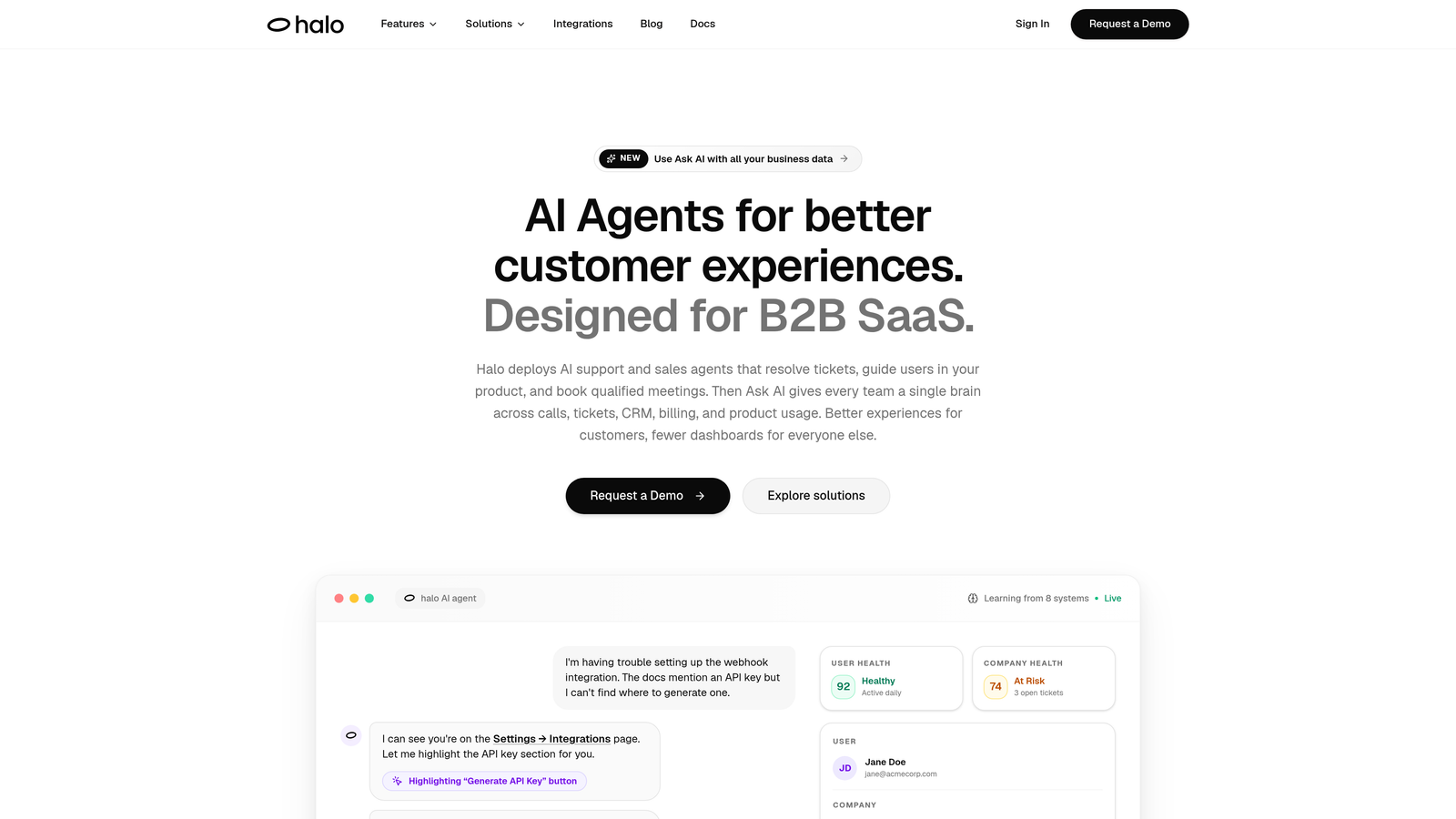
Halo AI is an AI-native customer support platform that deploys intelligent agents to resolve tickets, guide users through your product, and create bug reports—while learning from every interaction.
Where This Tool Shines
Unlike platforms that have layered AI onto existing helpdesk infrastructure, Halo AI was built AI-first. That distinction matters in practice: the AI isn't a suggestion engine sitting alongside your agents—it's the primary resolution layer, with human handoff available for complex issues.
What sets Halo apart is the combination of page-aware context and business intelligence. The chat widget knows where a user is in your product, sees what they see, and provides guidance specific to that moment. Simultaneously, the smart inbox surfaces signals that go far beyond support metrics: customer health trends, revenue anomalies, and product insights that your team can actually act on.
Key Features
Page-Aware AI Agents: The widget understands which part of your product a user is viewing and delivers contextual UI guidance accordingly, reducing back-and-forth clarification.
Smart Inbox with Business Intelligence: Surfaces customer health signals, revenue intelligence, and anomaly detection alongside incoming tickets—turning your support queue into a source of strategic insight.
Auto Bug Ticket Creation: Automatically identifies and routes product issues directly to Linear or your existing engineering workflow, closing the loop between support and development.
Live Agent Handoff: When escalation is needed, full conversation context is preserved so human agents never start from scratch.
Cross-Stack Integrations: Connects natively with Linear, Slack, HubSpot, Intercom, Stripe, Zoom, PandaDoc, and Fathom—covering the full B2B SaaS tool stack.
Continuous Learning: Every resolved interaction improves the AI's future responses, so the system gets smarter the longer you use it.
Best For
B2B SaaS companies that want to scale support without scaling headcount. Particularly well-suited for product-led growth teams where support, onboarding, and engineering workflows need to stay tightly connected. If your team is currently stitching together multiple tools, Halo's integration depth makes it a natural consolidation point.
Pricing
Contact for pricing. Halo AI works with growth and enterprise teams—visit haloagents.ai to request details.
2. Zendesk
Best for: Enterprise teams needing deep workflow customization and a broad integration marketplace
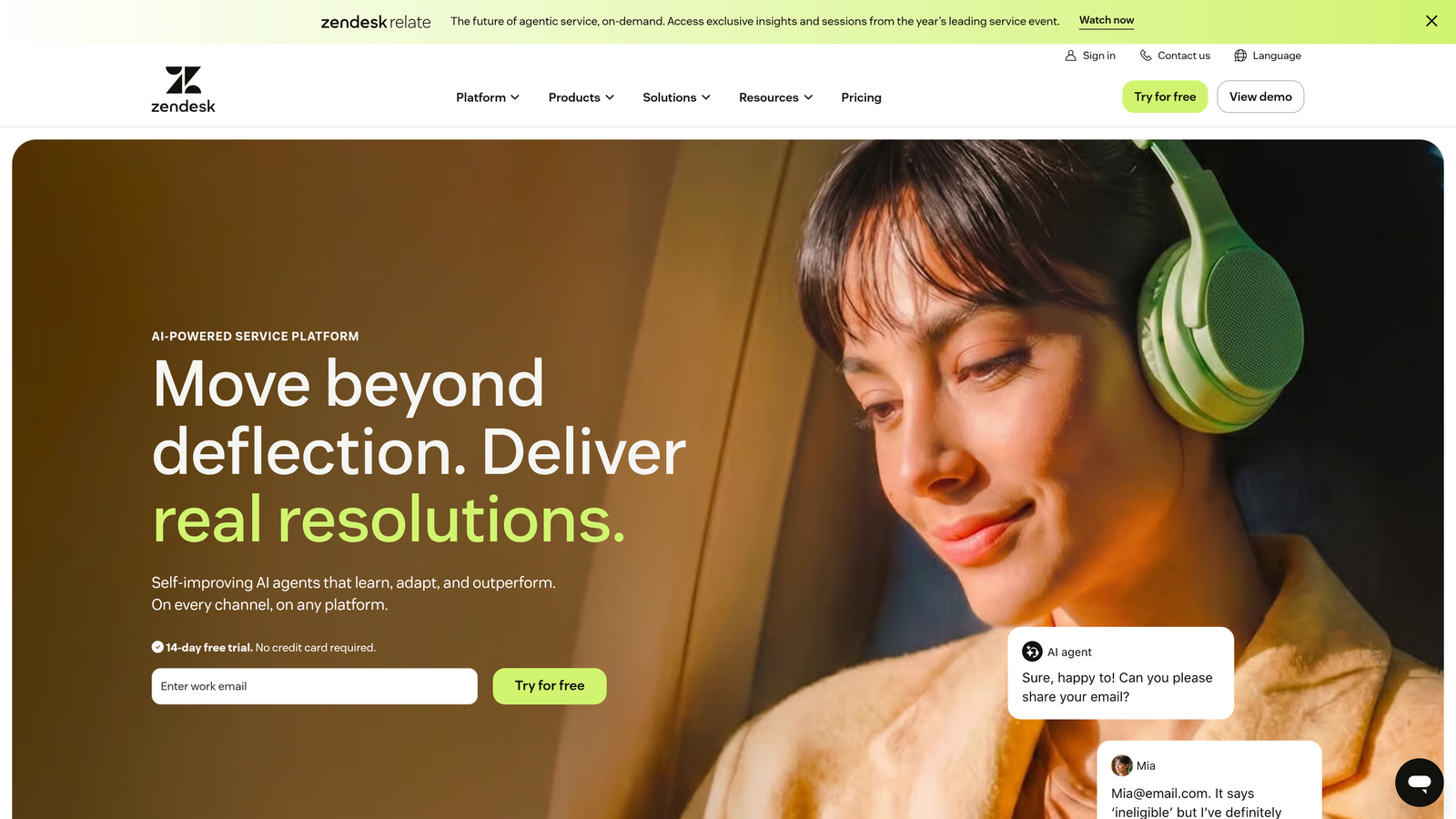
Zendesk is one of the most established customer support platforms, offering a comprehensive suite of ticketing, live chat, help center, and AI-powered automation tools.
Where This Tool Shines
Zendesk's biggest strength is its maturity. The platform has one of the largest integration marketplaces in the industry, with over a thousand connectors available. Its workflow automation and routing rules are highly configurable, making it a solid choice for large teams with complex support operations.
Zendesk AI has improved significantly, offering automated responses and agent-assist suggestions. That said, the AI capabilities feel like enhancements to an existing system rather than a ground-up redesign—which can matter if autonomous resolution is a primary goal.
Key Features
Advanced Ticket Routing: Sophisticated workflow automation with conditional logic for routing tickets based on content, priority, and team availability.
Zendesk AI: Automated responses, agent suggestions, and intelligent triage built into the ticketing workflow.
Omnichannel Support: Handles email, chat, voice, and social channels from a single interface.
Integration Marketplace: Access to a broad library of pre-built connectors covering CRM, billing, analytics, and more.
Robust Reporting: Customizable dashboards and analytics for tracking team performance and resolution metrics.
Best For
Enterprise organizations with established support operations that need deep customization and a wide integration ecosystem. Teams with dedicated Zendesk admins will get the most out of the platform's configurability. Smaller teams may find the complexity and cost harder to justify.
Pricing
Suite plans start at approximately $55/agent/month. Verify current pricing at zendesk.com, as tiers and add-ons change regularly.
3. Intercom
Best for: SaaS companies that want conversational support, product tours, and onboarding in one system
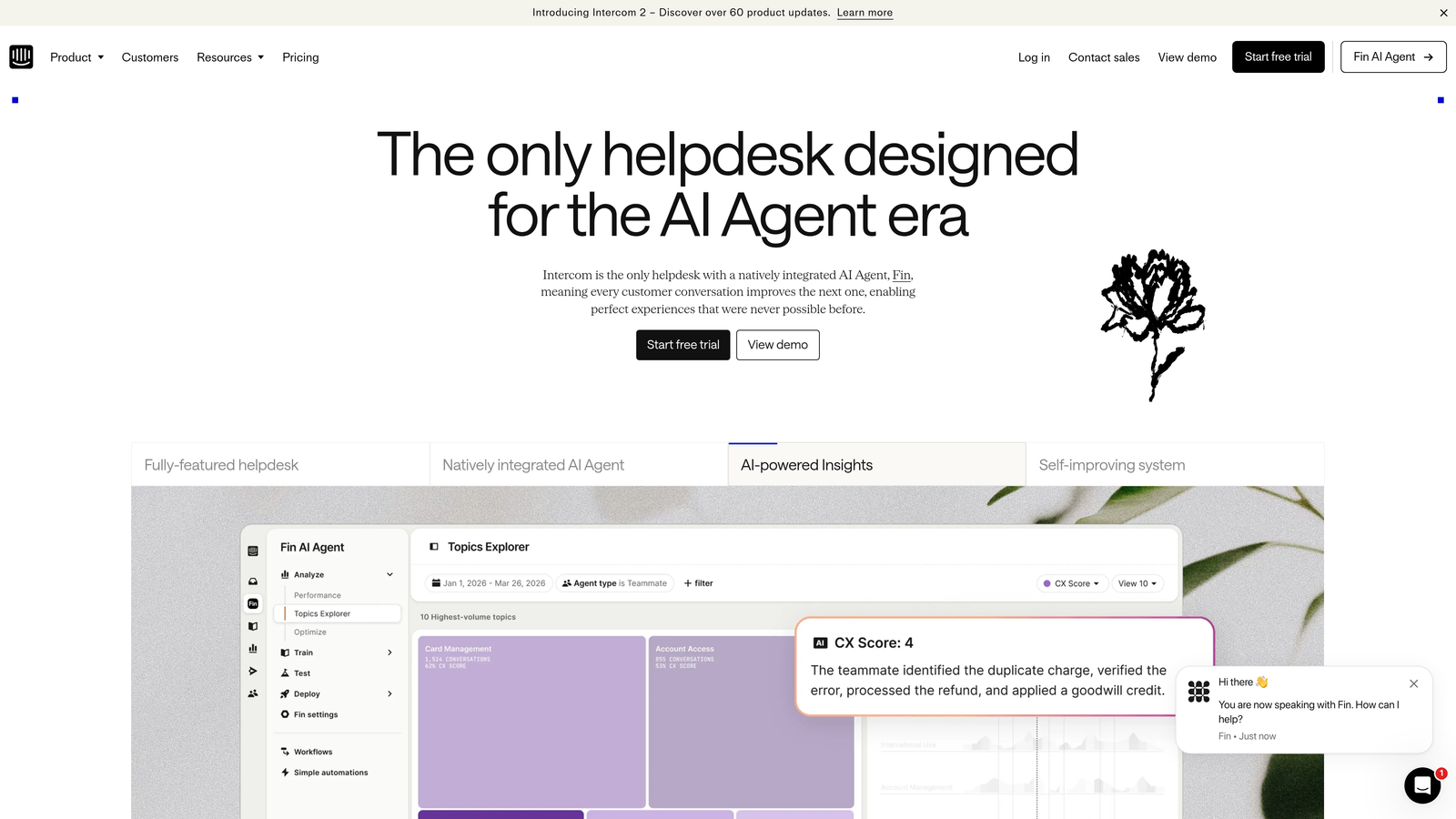
Intercom is a conversational support platform combining an AI agent (Fin), in-app messaging, and proactive customer engagement tools in a single product.
Where This Tool Shines
Intercom's strength lies in blending support with customer engagement. Beyond handling tickets, the platform lets you build product tours, send targeted in-app messages, and guide users through onboarding flows—all from the same system. For SaaS teams where support and activation are closely linked, that breadth is genuinely useful.
Fin, Intercom's AI agent, is well-regarded for autonomous resolution and has improved considerably. The tradeoff is that pricing can escalate quickly once you factor in AI resolution volume and seat counts, so it's worth modeling total cost carefully before committing.
Key Features
Fin AI Agent: Handles autonomous ticket resolution using your help content, with escalation to human agents when needed.
In-App Messaging and Tours: Proactive onboarding flows and contextual messages triggered by user behavior.
Shared Inbox: Conversation routing and assignment for human agents with full context available.
Help Center: Self-service knowledge base integrated with the Fin AI agent for deflection.
Behavioral Segmentation: Customer data platform that lets you target messages based on product usage and lifecycle stage.
Best For
SaaS companies where support and onboarding overlap significantly. If you want one tool to handle new user activation, proactive engagement, and reactive support, Intercom covers a lot of ground. Less ideal for teams that primarily need deep backend integrations or engineering-workflow connectivity.
Pricing
Starts at approximately $39/seat/month; AI resolution add-on pricing varies by volume. Verify current pricing at intercom.com.
4. Freshdesk
Best for: Mid-market teams looking for omnichannel support at a competitive price point
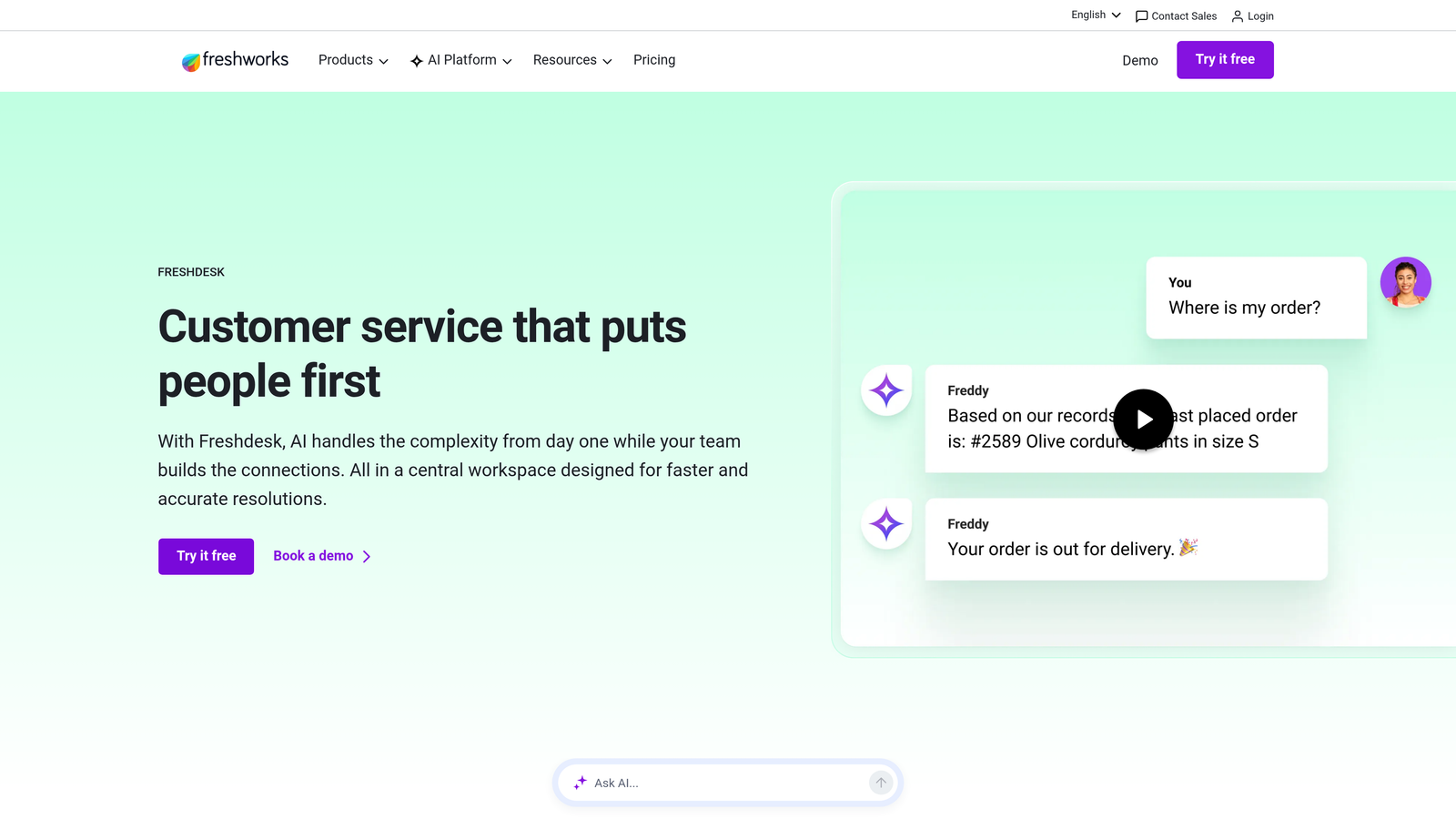
Freshdesk is an omnichannel helpdesk from Freshworks with Freddy AI built across ticketing, chat, and self-service—offering strong value for growing support teams.
Where This Tool Shines
Freshdesk's pricing model makes it accessible to teams that need solid omnichannel coverage without enterprise-level spend. The free tier allows small teams to get started, and paid plans scale gradually as your team grows.
Freddy AI handles ticket summarization, suggested responses, and self-service deflection. It's a capable feature layer rather than an autonomous resolution engine, but for teams with moderate AI requirements it covers the essentials well. The Freshworks ecosystem also means you can connect Freshdesk to Freshsales (CRM) and Freshservice (ITSM) if you're standardizing on that stack.
Key Features
Freddy AI: Covers ticket summarization, suggested responses, and self-service automation across channels.
Omnichannel Coverage: Email, chat, phone, social media, and WhatsApp managed from a single inbox.
Collision Detection: Prevents two agents from working the same ticket simultaneously—a small but practical feature for busy teams.
Freshworks Ecosystem: Native integration with Freshsales CRM, Freshservice ITSM, and other Freshworks products.
Free Tier: Available for small teams with basic ticketing needs, making it easy to evaluate before committing.
Best For
Growing mid-market teams that need reliable omnichannel support without high per-seat costs. Also a natural fit for organizations already using other Freshworks products who want to stay within a single vendor ecosystem.
Pricing
Free tier available; paid plans start at approximately $15/agent/month. Verify current pricing at freshdesk.com.
5. HubSpot Service Hub
Best for: Teams already using HubSpot for sales and marketing who want native CRM-connected support
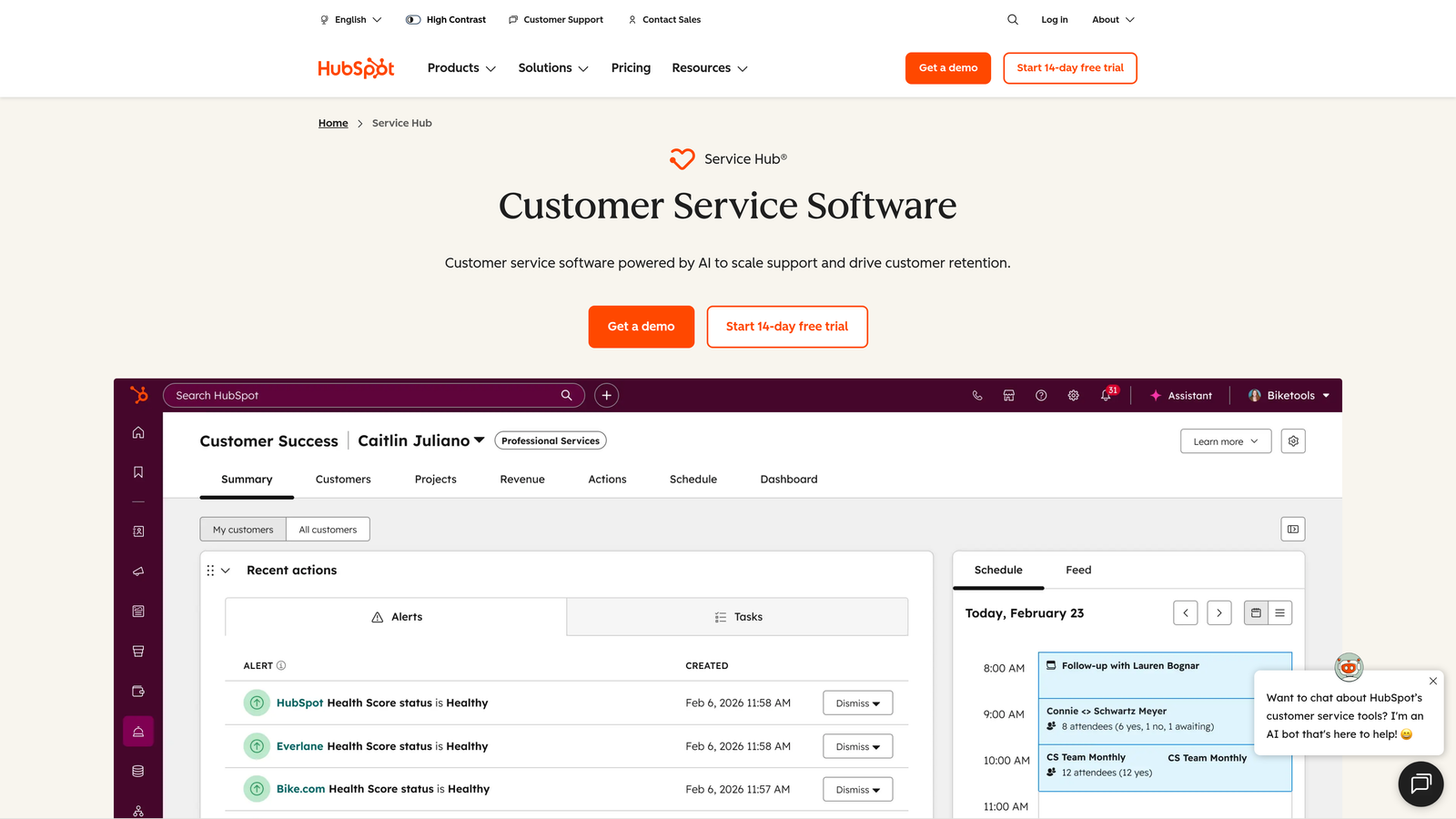
HubSpot Service Hub is a customer service platform built natively inside the HubSpot CRM, giving support agents full visibility into customer history, deal data, and marketing interactions alongside every ticket.
Where This Tool Shines
The core advantage here is zero data friction. Because Service Hub lives inside HubSpot, agents don't need to toggle between systems or wait for CRM syncs—contact records, deal stages, and marketing engagement are all visible in the same interface as the support ticket. For teams where sales, marketing, and support share a customer base, that context is genuinely valuable.
AI features include conversation intelligence and ticket summarization. These are useful productivity tools, though Service Hub's AI is more focused on agent assist than autonomous resolution.
Key Features
Native HubSpot CRM Integration: Full customer history, deal data, and contact records available in every support interaction without syncing.
AI Ticket Summarization: Automatically summarizes long conversations so agents can get up to speed quickly.
Customer Portal: Self-service portal where customers can track their own tickets and access knowledge base articles.
SLA Management: Escalation rules and SLA tracking to keep response time commitments on track.
Shared Inbox and Live Chat: Centralized inbox with live chat and knowledge base included across plans.
Best For
Companies that have already standardized on HubSpot for their go-to-market stack. If your sales and marketing teams live in HubSpot, adding Service Hub is a low-friction way to bring support into the same ecosystem. Teams not using HubSpot elsewhere will find less compelling reasons to start here.
Pricing
Starter plans from approximately $15/seat/month. Verify current pricing at hubspot.com/products/service.
6. Salesforce Service Cloud
Best for: Large enterprises with existing Salesforce infrastructure and complex support operations
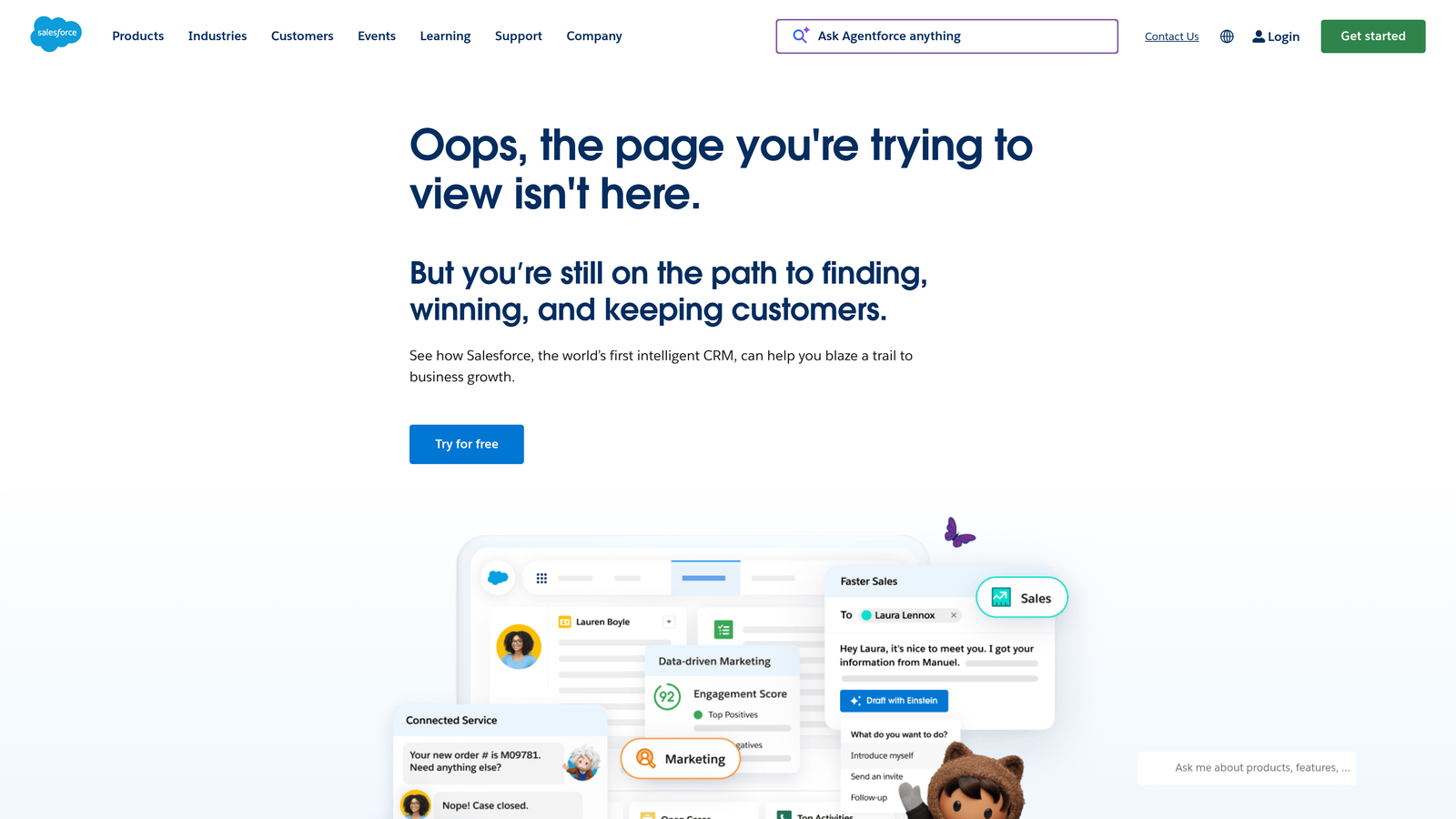
Salesforce Service Cloud is an enterprise-grade support platform deeply integrated with Salesforce CRM, with Einstein AI embedded across case management and digital engagement channels.
Where This Tool Shines
For organizations that have already built their operations around Salesforce, Service Cloud is the natural support layer. Every support interaction sits directly alongside the full Salesforce customer record—opportunity history, account data, entitlements—giving agents a level of context that's hard to replicate with external integrations.
Einstein AI handles case classification, routing, and next-best-action recommendations. The platform is highly configurable through Salesforce Flow, though that configurability comes with complexity. Teams without dedicated Salesforce admins often find the setup and ongoing maintenance demanding.
Key Features
Einstein AI: Case classification, intelligent routing, and next-best-action recommendations embedded across the platform.
Full Salesforce CRM Access: Complete account and opportunity data visible in every support case without leaving the interface.
Omni-Channel Routing: Intelligent workload distribution across channels based on agent availability and skill.
Flow Automation Builder: Highly configurable automation for complex support workflows and escalation paths.
Field Service Management: Built-in capabilities for teams that need to coordinate on-site service alongside digital support.
Best For
Large enterprises with existing Salesforce investments and the admin resources to configure and maintain the platform. Organizations not already in the Salesforce ecosystem will typically find the cost and complexity hard to justify compared to alternatives.
Pricing
Starts at approximately $25/user/month; enterprise tiers are significantly higher. Verify current pricing at salesforce.com/products/service-cloud.
7. Gorgias
Best for: E-commerce brands running on Shopify, WooCommerce, or Magento
Gorgias is a support platform purpose-built for e-commerce, with deep integrations that surface order data and purchase history directly inside every ticket.
Where This Tool Shines
Gorgias solves a specific, common e-commerce problem: agents spending time switching between their support tool and their order management system to answer basic questions. By pulling Shopify order data, return status, and purchase history directly into the ticket view, Gorgias eliminates that context-switching and speeds up resolution for the queries that make up the bulk of e-commerce support volume.
Automation rules handle high-frequency queries like order status and return requests without agent involvement. For e-commerce teams managing large ticket volumes with lean support staff, that automation ROI is tangible.
Key Features
Native Shopify Integration: Order data, refund actions, and purchase history available inside the ticket—no tab-switching required.
E-Commerce Automation: Pre-built rules for common queries like order status, shipping updates, and return requests.
Omnichannel Coverage: Email, live chat, social media, and SMS managed from one inbox.
Revenue Attribution: Links support interactions to revenue outcomes, showing which conversations convert or retain customers.
Macros and Rules: High-volume automation templates that teams can customize for their specific workflows.
Best For
E-commerce brands on Shopify or other major platforms where order-related queries dominate the support queue. Less relevant for B2B SaaS teams, but included here because many product companies also run direct-to-consumer channels that benefit from Gorgias's specialized focus.
Pricing
Starts at approximately $10/month for small ticket volumes. Pricing scales with ticket count rather than seat count. Verify current pricing at gorgias.com.
8. Help Scout
Best for: Teams that prioritize a clean, human-first agent experience with minimal configuration overhead
Help Scout is a shared inbox-based support platform that deliberately avoids ticket-number UX in favor of a conversational, email-like experience for both agents and customers.
Where This Tool Shines
Help Scout's philosophy is that support should feel personal, not transactional. Customers receive responses that look like emails, not automated ticket notifications. Agents work in a clean shared inbox without the visual noise of enterprise helpdesks. That simplicity translates to faster onboarding and a lower cognitive load for support teams.
AI Assist handles response drafting and conversation summarization, and the Beacon widget provides in-app chat with integrated knowledge base search. The platform won't win on raw feature count compared to Zendesk or Service Cloud, but for teams where agent experience and ease of setup are the priority, it's a strong contender.
Key Features
Shared Inbox Without Ticket Numbers: Conversations feel like email threads, creating a more personal experience for customers and a cleaner interface for agents.
AI Assist: Drafts responses and summarizes long conversations to reduce agent effort on repetitive tasks.
Beacon Widget: In-app chat with embedded knowledge base search, deployable with minimal setup.
Docs Knowledge Base: Built-in knowledge base with search analytics to identify content gaps.
Simple Setup: Significantly less configuration overhead than enterprise alternatives—teams can be operational quickly.
Best For
Small to mid-sized teams that value a clean, approachable agent experience over extensive customization. Particularly well-suited for companies where support is handled by generalists rather than dedicated support specialists, and where keeping the human feel of customer communication matters.
Pricing
Starts at approximately $20/user/month. Verify current pricing at helpscout.com.
9. Kustomer
Best for: High-volume, multi-channel teams that need a complete customer timeline view across every interaction
Kustomer is a CRM-native support platform that presents the entire customer journey—purchases, past conversations, events—as a unified timeline, giving agents complete context for every interaction.
Where This Tool Shines
Kustomer's defining feature is the customer timeline: a chronological view of every touchpoint a customer has had with your business, across every channel, in a single screen. For teams handling complex, multi-touch support interactions where history matters, that context dramatically reduces the time agents spend piecing together what happened before.
The platform also supports custom objects, which means you can store and surface business-specific data—subscription status, product usage, custom attributes—directly in the agent view. Combined with AI-powered routing and deflection, Kustomer is built for teams managing high interaction volumes with meaningful complexity per ticket.
Key Features
Unified Customer Timeline: Every interaction, purchase, and event displayed chronologically across all channels in a single view.
AI Routing and Deflection: Intelligent routing based on customer data, with suggested responses and self-service deflection built in.
Omnichannel Coverage: Email, chat, voice, social media, and SMS handled from one platform.
Custom Objects: Store and display unique business data—subscriptions, product events, custom fields—within the agent interface.
Business Rules Engine: Workflow automation that triggers actions based on customer attributes, conversation content, and SLA thresholds.
Best For
Companies with high support volume across multiple channels where customer history and context are critical to resolution quality. The higher per-seat cost reflects the platform's depth—teams that need that depth will find it justified; simpler use cases may not.
Pricing
Starts at approximately $89/user/month. Verify current pricing at kustomer.com.
Which Platform Is Right for Your Team?
The right integrated customer support platform depends heavily on where you are, what you're already using, and what you're trying to achieve. Here's a quick map to help you orient:
AI-first B2B SaaS: Halo AI is built for this exact use case—autonomous resolution, deep integrations across your business stack, and business intelligence that goes beyond support metrics.
Enterprise with existing Salesforce: Salesforce Service Cloud is the logical choice. The integration depth with your CRM is unmatched, provided you have the admin resources to configure it.
Conversational support and onboarding: Intercom covers both well. If activation and support are intertwined in your product experience, the breadth of Intercom's platform justifies the cost.
Budget-conscious mid-market: Freshdesk offers solid omnichannel coverage and AI features at a price point that scales gradually with your team.
Already using HubSpot: Service Hub is the natural next step. The zero-friction CRM integration is the differentiator for teams already in the HubSpot ecosystem.
E-commerce brands: Gorgias is purpose-built for this. The Shopify integration alone saves significant agent time on order-related queries.
Human-first simplicity: Help Scout wins on agent experience and ease of setup. If your team values clean UX over extensive configurability, it's hard to beat.
Complex customer timelines: Kustomer's unified timeline view is genuinely differentiated for high-volume teams where history and context drive resolution quality.
Enterprise customization at scale: Zendesk's integration marketplace and workflow depth make it the default choice for large teams with complex routing requirements.
Before you decide, it's worth asking a few questions: Does the platform integrate with the tools your team already uses daily? Is the AI a core capability or a feature layer added to a legacy system? Will the platform surface insights beyond ticket volume—customer health, revenue signals, product feedback? And critically: can it scale without requiring proportional headcount growth?
Your support team shouldn't scale linearly with your customer base. Let AI agents handle routine tickets, guide users through your product, and surface business intelligence while your team focuses on complex issues that need a human touch. See Halo in action and discover how continuous learning transforms every interaction into smarter, faster support.