9 Best Intelligent Customer Service Platforms for Scaling Support in 2026
Modern support teams struggle with rising ticket volumes and limited budgets. An intelligent customer service platform combines AI automation with human expertise to resolve routine inquiries instantly while routing complex cases to skilled agents. We evaluated the top nine platforms based on AI resolution accuracy, integration capabilities, learning systems, and proven scalability to help B2B companies transform their support operations in 2026.
 Matt PattoliFounder11 min read
Modern support teams face an impossible equation: ticket volumes grow while headcount budgets shrink. Intelligent customer service platforms solve this by combining AI automation with human expertise—resolving routine inquiries instantly while routing complex issues to the right agents.
But with dozens of platforms claiming AI capabilities, finding one that actually delivers requires cutting through marketing noise. We evaluated platforms based on AI resolution accuracy, integration depth, learning capabilities, and real-world scalability.
Whether you need autonomous ticket handling, smart routing, or predictive analytics, here are the top intelligent customer service platforms actually transforming how B2B companies deliver support.
1. Halo AI
Best for: B2B companies wanting AI that learns continuously and connects across their entire business stack
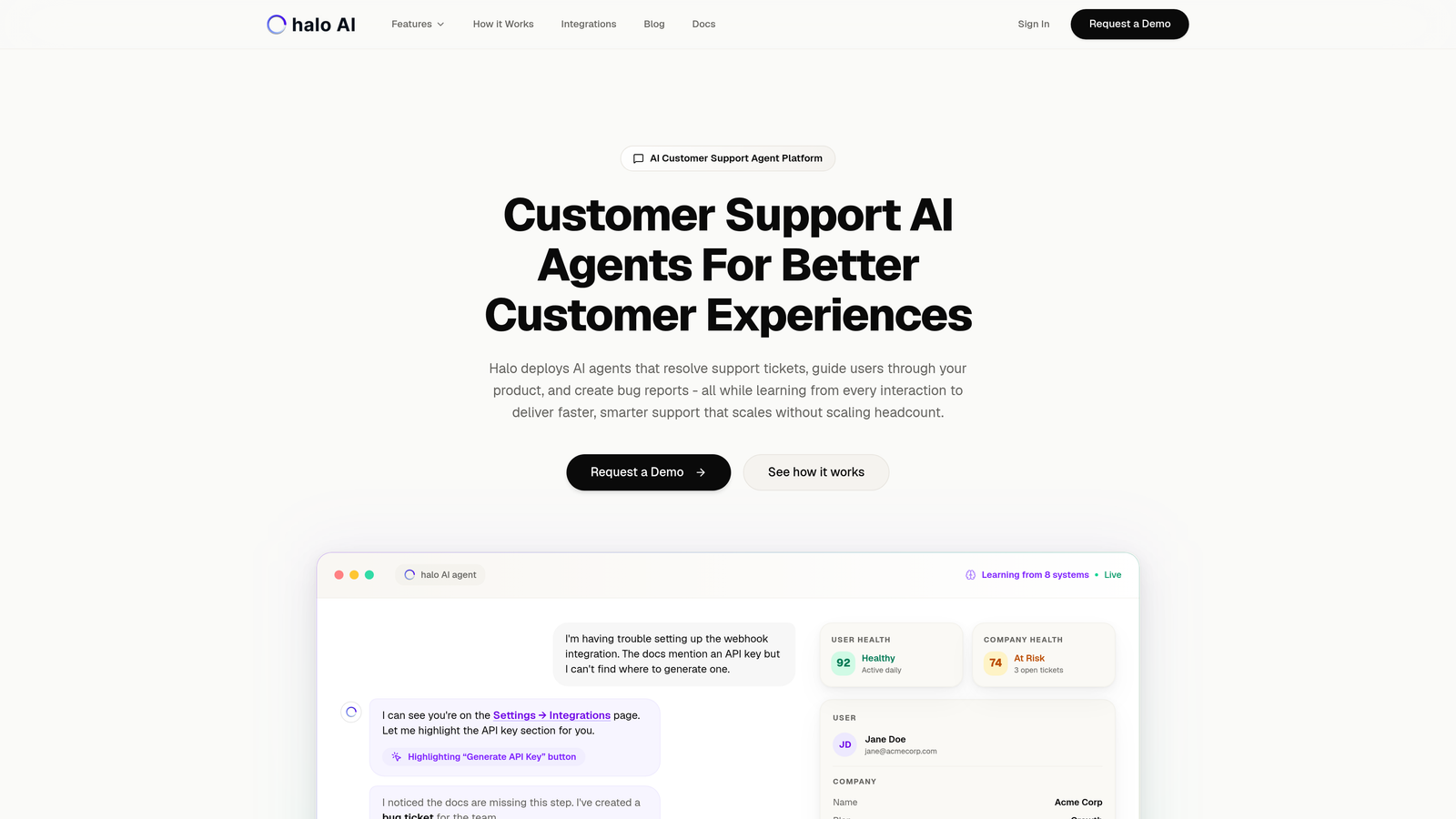
Halo AI is an AI-first customer support platform built from the ground up for autonomous ticket resolution, not retrofitted onto legacy helpdesk infrastructure.
Where This Tool Shines
Unlike platforms that bolt AI features onto existing ticketing systems, Halo's architecture treats AI agents as the primary support layer. The platform learns from every interaction, continuously improving resolution accuracy without manual retraining.
The page-aware chat widget sees what users see, providing visual UI guidance that goes beyond text-based answers. When a customer asks "How do I export my data?" the AI can literally walk them through the interface with contextual screenshots and step-by-step instructions.
Key Features
Autonomous AI Agents: Resolve tickets without human intervention while learning from every conversation to improve future responses.
Page-Aware Context: Chat widget understands which page users are viewing, delivering visual guidance and interface-specific help.
Business Intelligence Integration: Connects to Linear, Slack, HubSpot, Intercom, Stripe, Zoom, and PandaDoc for complete customer context.
Smart Inbox Analytics: Surfaces customer health signals, revenue intelligence, and anomaly detection beyond basic support metrics.
Auto Bug Ticket Creation: Automatically generates engineering tickets from support conversations, streamlining product feedback loops.
Best For
B2B SaaS companies and product teams that need support to scale without proportional headcount growth. Particularly valuable for teams already using modern tools like Linear, Slack, and HubSpot who want AI that integrates across their entire stack rather than operating in isolation.
Pricing
Contact for pricing. Custom implementation based on ticket volume and integration requirements.
2. Zendesk AI
Best for: Enterprise teams needing mature AI capabilities built on extensive ticketing infrastructure
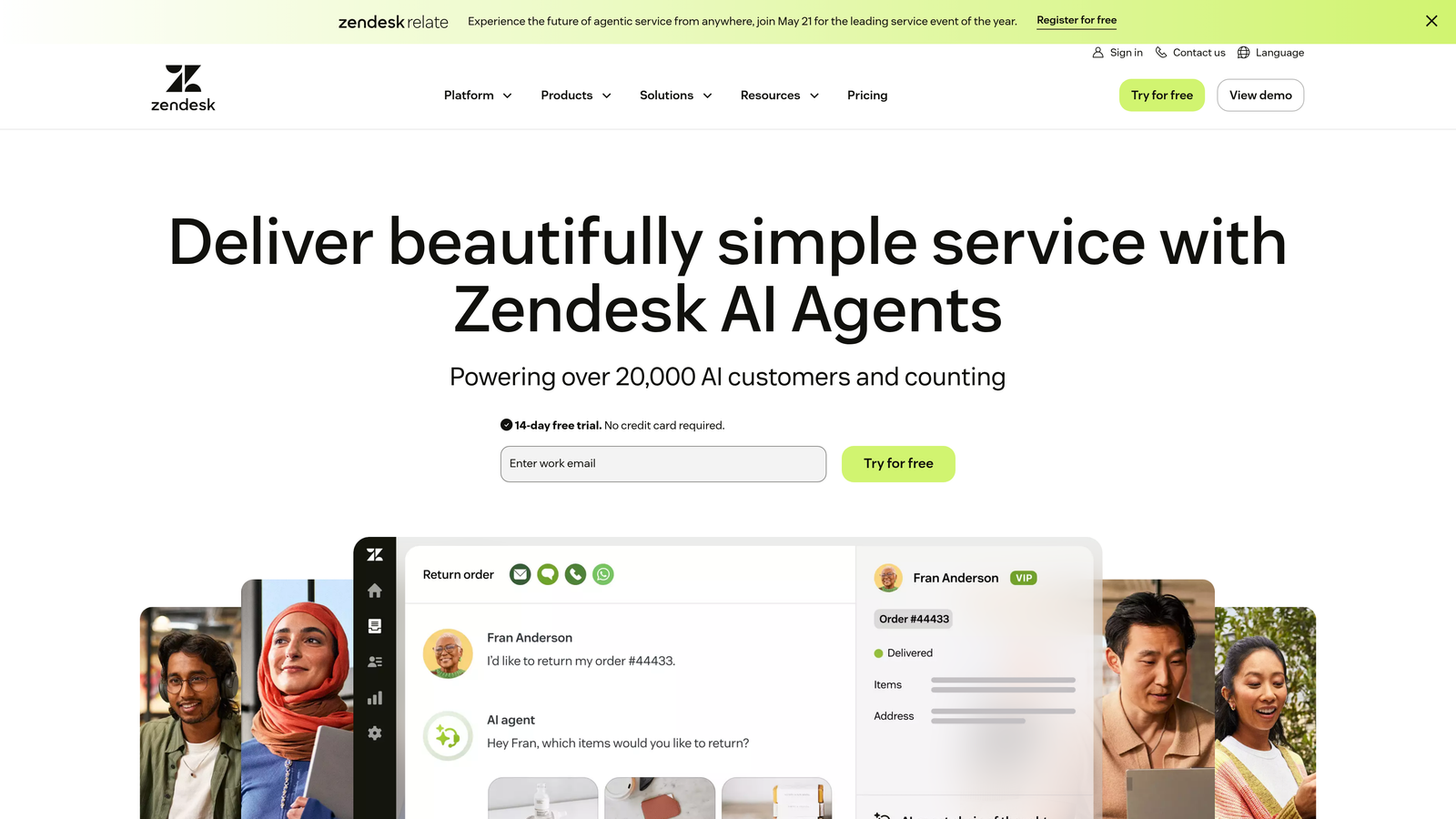
Zendesk AI is an enterprise-grade support platform that combines decades of ticketing expertise with modern AI automation.
Where This Tool Shines
Zendesk's strength lies in its mature ecosystem. With over a decade of enterprise deployments, the platform handles complex workflows, compliance requirements, and multi-team coordination that newer platforms struggle with.
The marketplace offers 1,500+ integrations, meaning you can connect virtually any tool your organization uses. For companies with established Zendesk deployments, the AI layer adds intelligence without requiring platform migration.
Key Features
AI-Powered Routing: Automatically classifies tickets and routes them to the most qualified agent based on content, priority, and team capacity.
Generative AI Assistance: Suggests responses to agents, summarizes long ticket threads, and drafts replies based on knowledge base content.
Advanced Analytics: Custom reporting dashboards track resolution times, CSAT scores, agent performance, and operational metrics.
Omnichannel Support: Unified inbox manages conversations across email, chat, phone, social media, and messaging apps.
Extensive Marketplace: Pre-built integrations with CRMs, project management tools, communication platforms, and business applications.
Best For
Large enterprises with complex support operations, multiple product lines, or strict compliance requirements. Teams already invested in the Zendesk ecosystem who want to add AI capabilities without changing platforms.
Pricing
Starts at $55/agent/month for Suite Team. Enterprise plans with advanced AI features require custom pricing.
3. Intercom Fin
Best for: Product-led companies prioritizing in-app messaging and conversational engagement
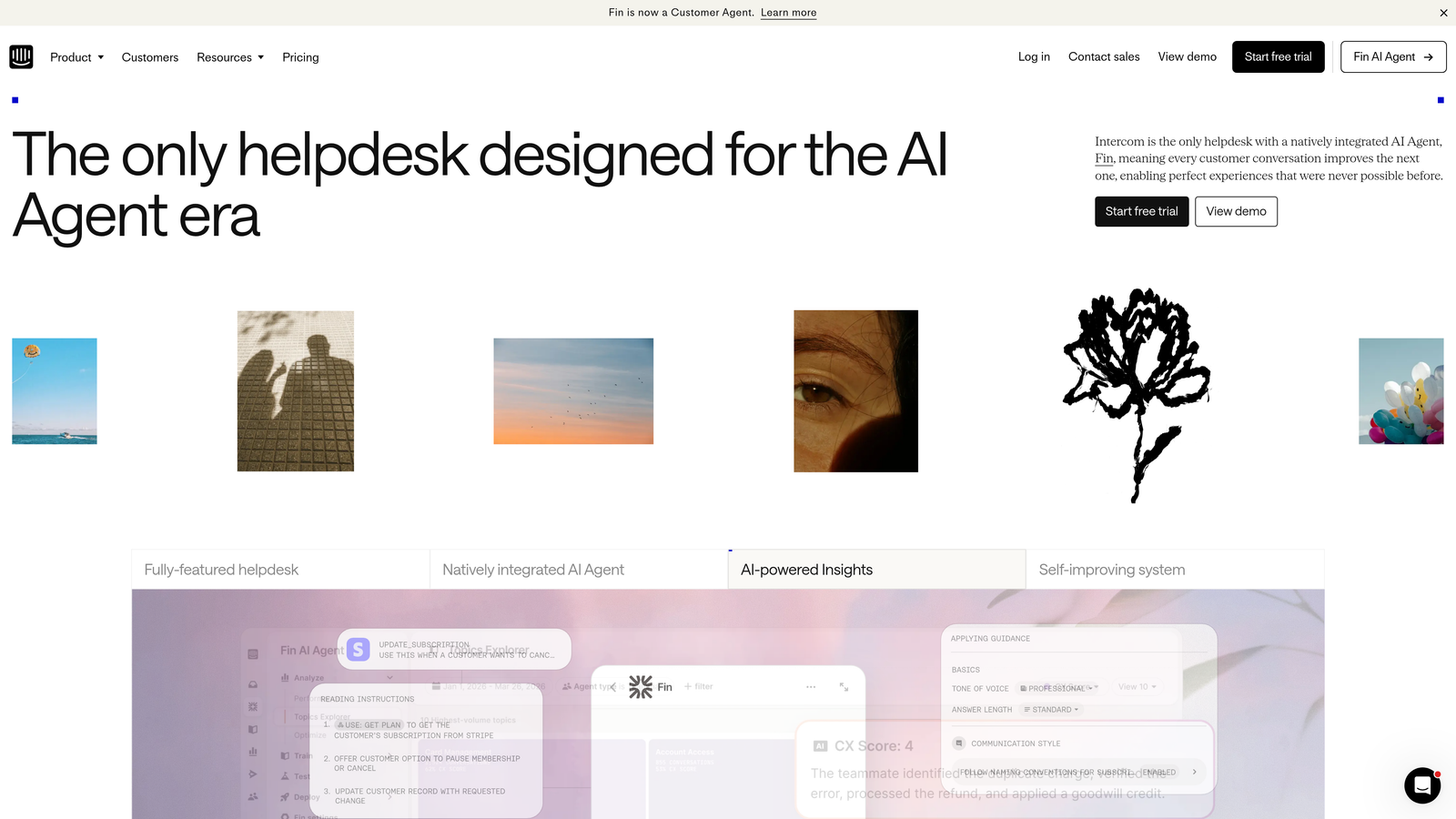
Intercom Fin is a conversational AI assistant designed for companies that view support as part of the product experience, not a separate function.
Where This Tool Shines
Intercom excels at proactive, contextual messaging. The platform doesn't just wait for users to ask questions—it anticipates needs based on behavior, triggering helpful messages at critical moments in the user journey.
Product tours and onboarding flows feel native to your application rather than bolted-on widgets. For product-led growth companies, this seamless integration between support and product experience drives both satisfaction and activation.
Key Features
Fin AI Chatbot: Trained on your help center, documentation, and past conversations to provide accurate automated responses.
Behavioral Messaging: Triggers messages based on user actions, page visits, feature usage, or inactivity patterns.
Product Tours: Visual walkthroughs guide users through features without leaving your application.
Custom Bot Workflows: Build conversation flows without coding using visual builder and conditional logic.
Visitor Intelligence: Real-time tracking shows what users are doing, which pages they visit, and their company information.
Best For
SaaS companies with product-led growth strategies where in-app messaging drives user activation and retention. Teams that view support as a product experience rather than a cost center.
Pricing
Starts at $39/seat/month for the platform. Fin AI is charged per resolution, typically adding $0.99 per AI-resolved conversation.
4. Freshdesk Freddy AI
Best for: Mid-market teams balancing comprehensive features with budget constraints
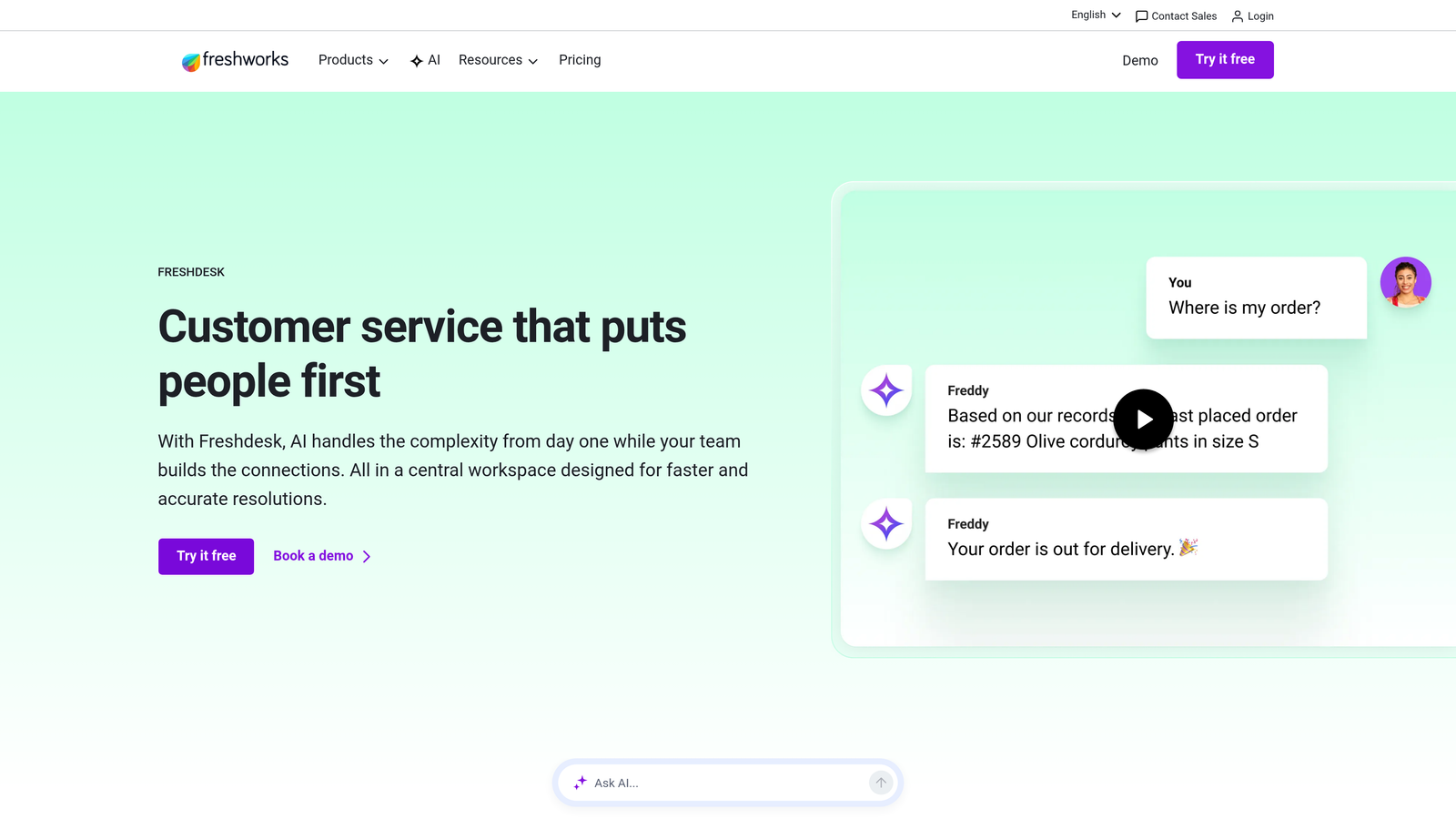
Freshdesk Freddy AI is a mid-market friendly platform that layers AI automation onto solid ticketing fundamentals without enterprise pricing.
Where This Tool Shines
Freshdesk delivers enterprise-level features at mid-market prices. The platform doesn't force you to choose between AI capabilities and budget—you get both.
The free tier is genuinely usable, not just a trial disguised as free software. Growing teams can start without investment, then scale pricing as they add agents and advanced features.
Key Features
Freddy AI Auto-Triage: Automatically categorizes tickets, assigns priority levels, and suggests relevant knowledge base articles to agents.
Unified Inbox: Manages conversations from email, chat, phone, social media, and messaging apps in a single interface.
SLA Management: Tracks response and resolution time commitments with automated escalation when deadlines approach.
Knowledge Base: Self-service portal where Freddy AI suggests relevant articles based on ticket content and user questions.
Field Service Management: Dispatch and tracking capabilities for companies providing on-site support or services.
Best For
Growing companies that need professional support capabilities without enterprise budgets. Teams supporting both digital products and field services from a unified platform.
Pricing
Free tier available for up to 10 agents. Growth plan starts at $15/agent/month with AI features included.
5. Ada
Best for: High-volume operations focused on maximizing automated resolution rates
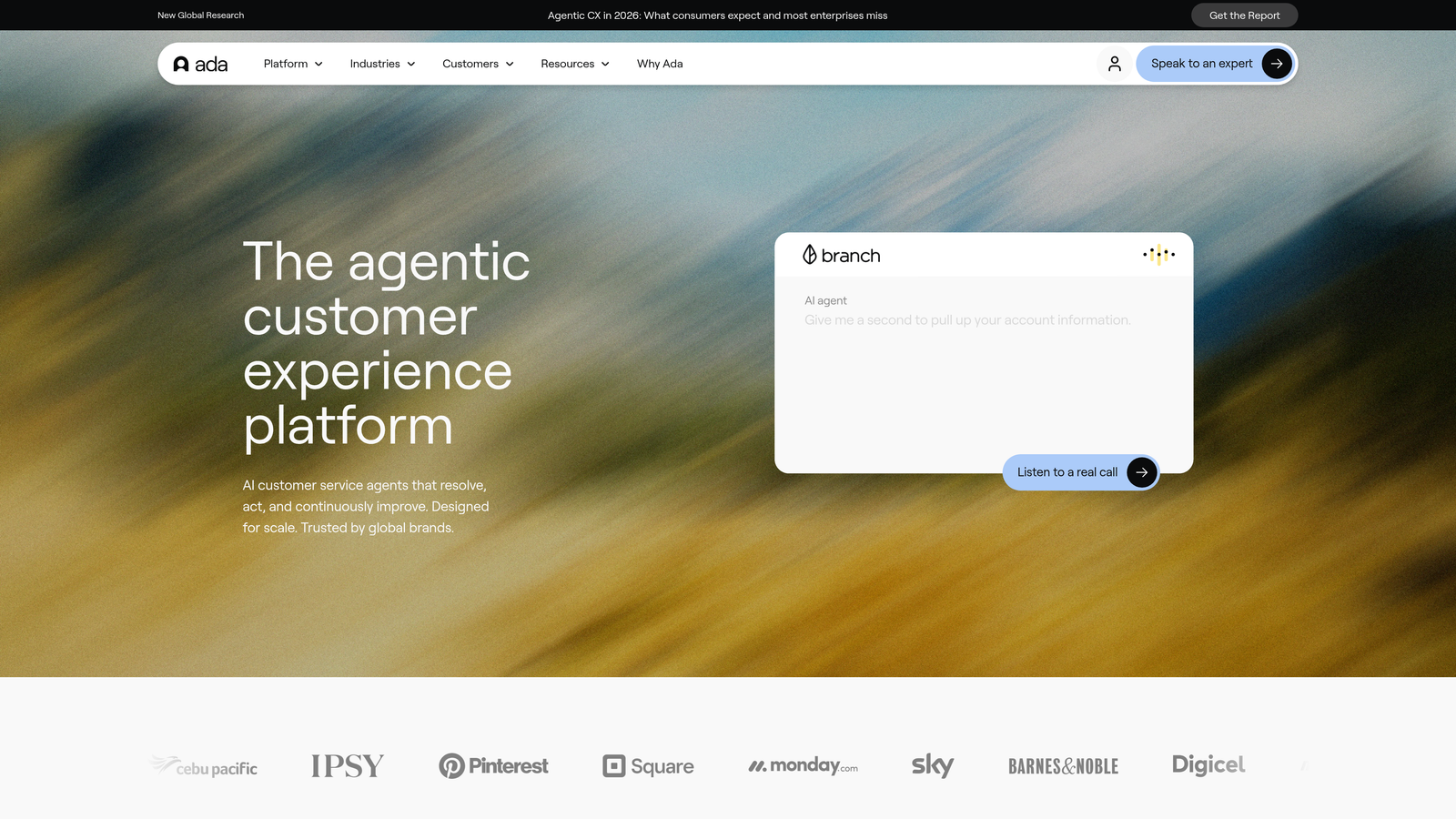
Ada is an automation-first platform built specifically for resolving the maximum percentage of inquiries without human intervention.
Where This Tool Shines
Ada measures success by automation rate, not ticket deflection. The platform aims to fully resolve inquiries, not just redirect users to help articles.
Multilingual support across 50+ languages happens natively, without requiring separate bot training for each language. A single conversation flow works globally, removing a major barrier for international companies.
Key Features
No-Code Builder: Create complex conversation flows using visual interface without developer resources.
Multilingual AI: Automatically handles conversations in 50+ languages from a single bot configuration.
Generative Responses: Pulls information from knowledge sources to generate contextual answers rather than scripted replies.
Contextual Handoff: Transfers conversations to human agents with complete conversation history and customer data.
Automation Analytics: Detailed reporting on resolution rates, conversation paths, and opportunities to improve automation.
Best For
Companies with high inquiry volumes where most questions follow predictable patterns. International businesses needing multilingual support without proportional staffing increases.
Pricing
Custom pricing based on monthly resolution volume and required features. Contact sales for quote.
6. Kustomer
Best for: Teams needing complete customer timeline visibility across all touchpoints
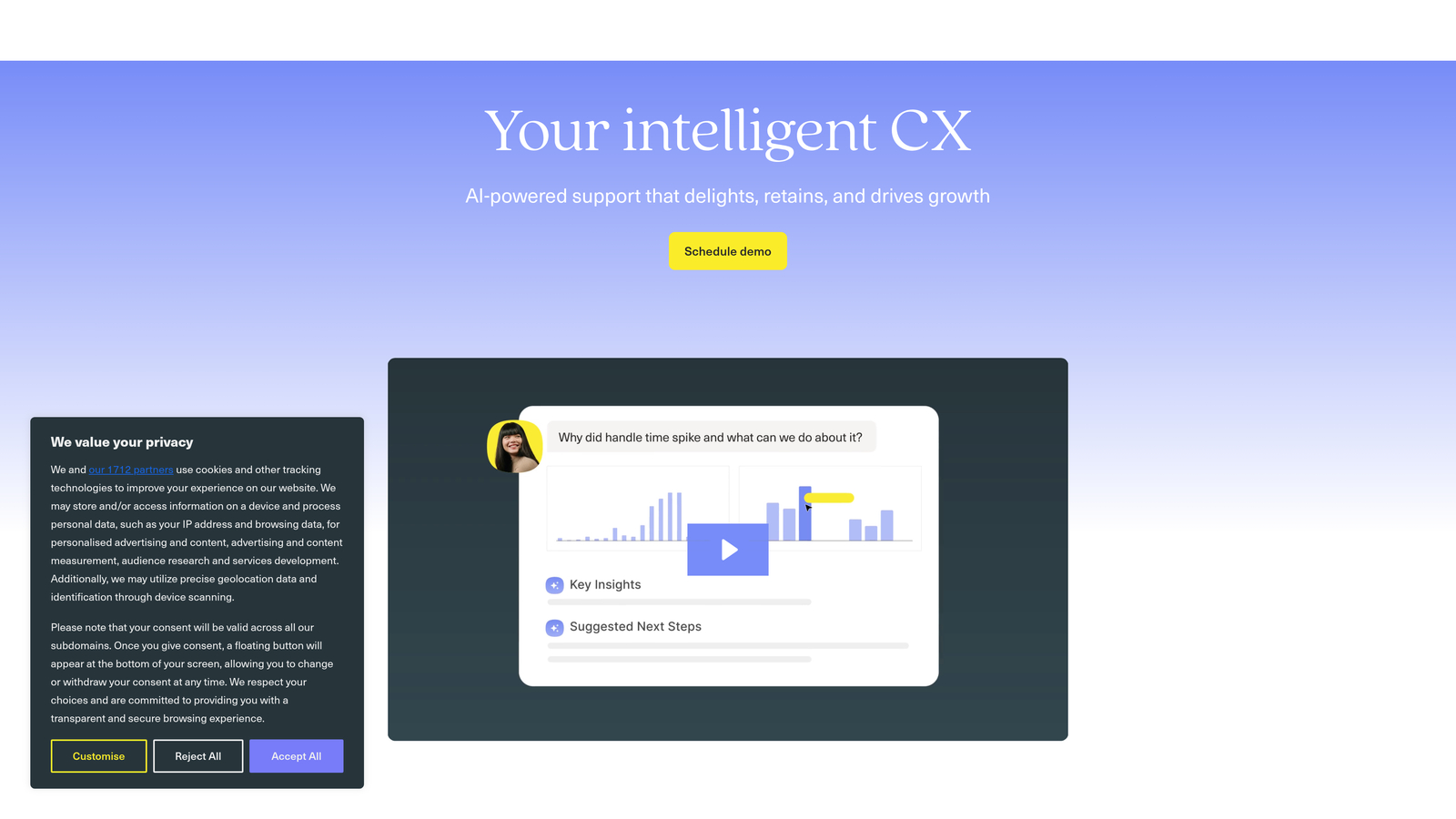
Kustomer is a CRM-powered support platform that organizes information around customer timelines rather than individual tickets.
Where This Tool Shines
Kustomer's timeline view shows every customer interaction—purchases, support conversations, product usage, billing changes—in chronological order. Agents see the complete customer story, not just the current issue.
This approach particularly benefits subscription businesses where understanding customer lifecycle stage, usage patterns, and past interactions directly impacts how you handle support requests.
Key Features
Unified Customer Timeline: Chronological view of all interactions, purchases, and activities across every channel and touchpoint.
AI Conversation Classification: Automatically categorizes conversations by topic, sentiment, and urgency without manual tagging.
Sentiment Analysis: Detects customer emotion in messages and routes frustrated or angry customers to senior agents.
Business Process Automation: Workflow builder automates repetitive tasks like refunds, subscription changes, or account updates.
Native Voice and SMS: Built-in phone and text messaging capabilities without third-party integrations.
Best For
Subscription businesses and e-commerce companies where customer lifetime value and relationship history inform support decisions. Teams that need CRM-level customer intelligence in their support platform.
Pricing
Starts at $89/user/month for Enterprise plan. Professional services and implementation typically required for setup.
7. Salesforce Service Cloud Einstein
Best for: Organizations deeply integrated with Salesforce ecosystem wanting unified service layer
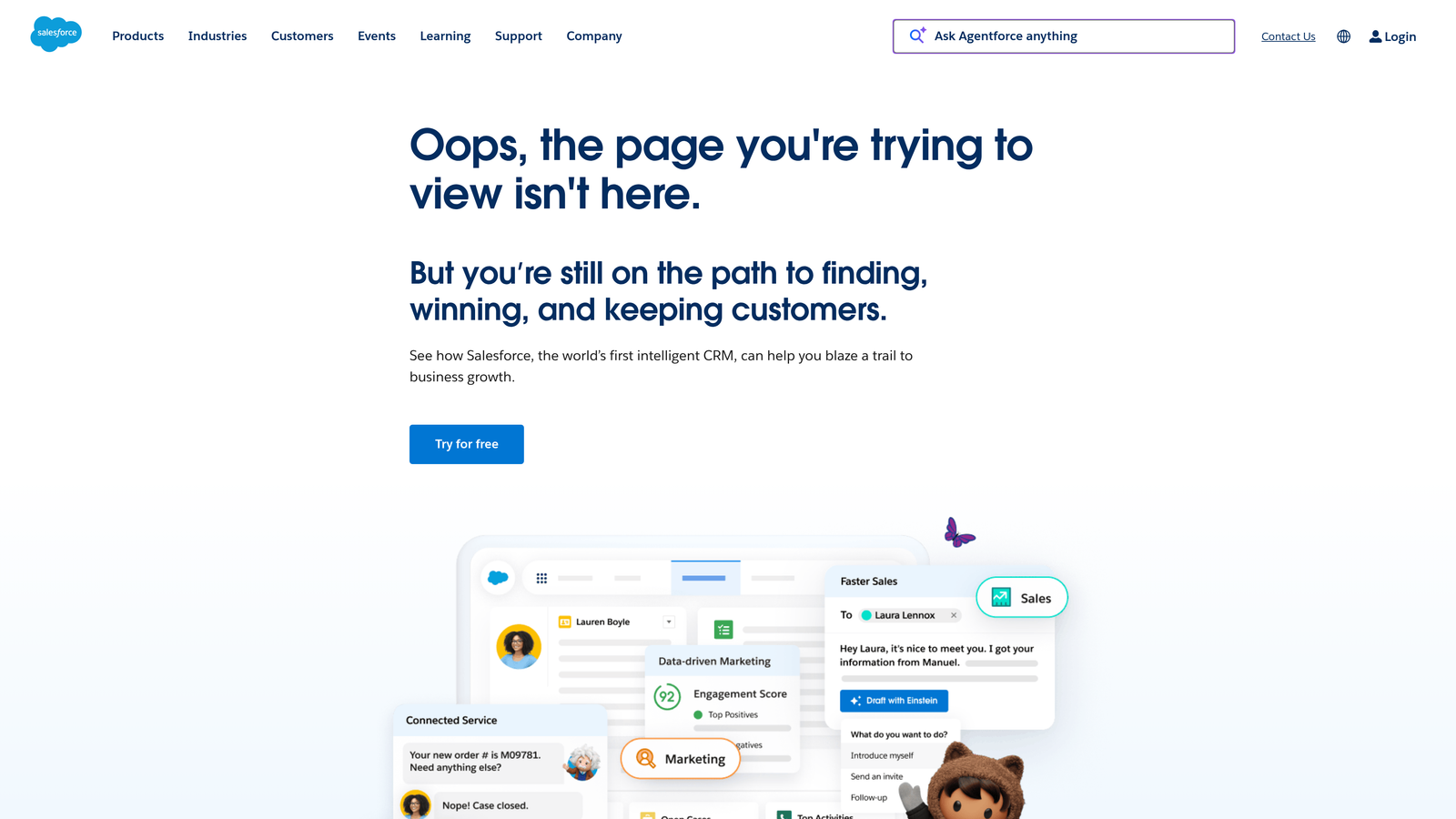
Salesforce Service Cloud Einstein is an AI-enhanced service platform that leverages the full power of Salesforce CRM data and customization capabilities.
Where This Tool Shines
For companies already running on Salesforce, Service Cloud Einstein provides native access to every piece of customer data—sales history, marketing interactions, opportunity stages, account details—without integration complexity.
The platform's customization capabilities through the Salesforce ecosystem are unmatched. You can build virtually any workflow, create custom objects, and integrate proprietary business logic directly into support processes.
Key Features
Einstein Case Classification: AI automatically categorizes cases and routes them to appropriate queues based on content and customer data.
Predictive Analytics: Forecasts customer satisfaction scores, identifies cases likely to escalate, and predicts resolution times.
Native CRM Integration: Direct access to all Salesforce customer data, sales opportunities, and marketing campaigns for personalized support.
Agentforce: Autonomous AI agents that handle routine inquiries and execute multi-step processes independently.
Platform Customization: Extensive configuration options using Salesforce's development tools, custom objects, and workflow automation.
Best For
Enterprises with significant Salesforce investments wanting unified customer data across sales, marketing, and service. Companies with complex customization requirements and development resources to leverage the platform.
Pricing
Starts at $25/user/month for Essentials. AI features require Professional tier or higher. Enterprise implementations typically cost significantly more.
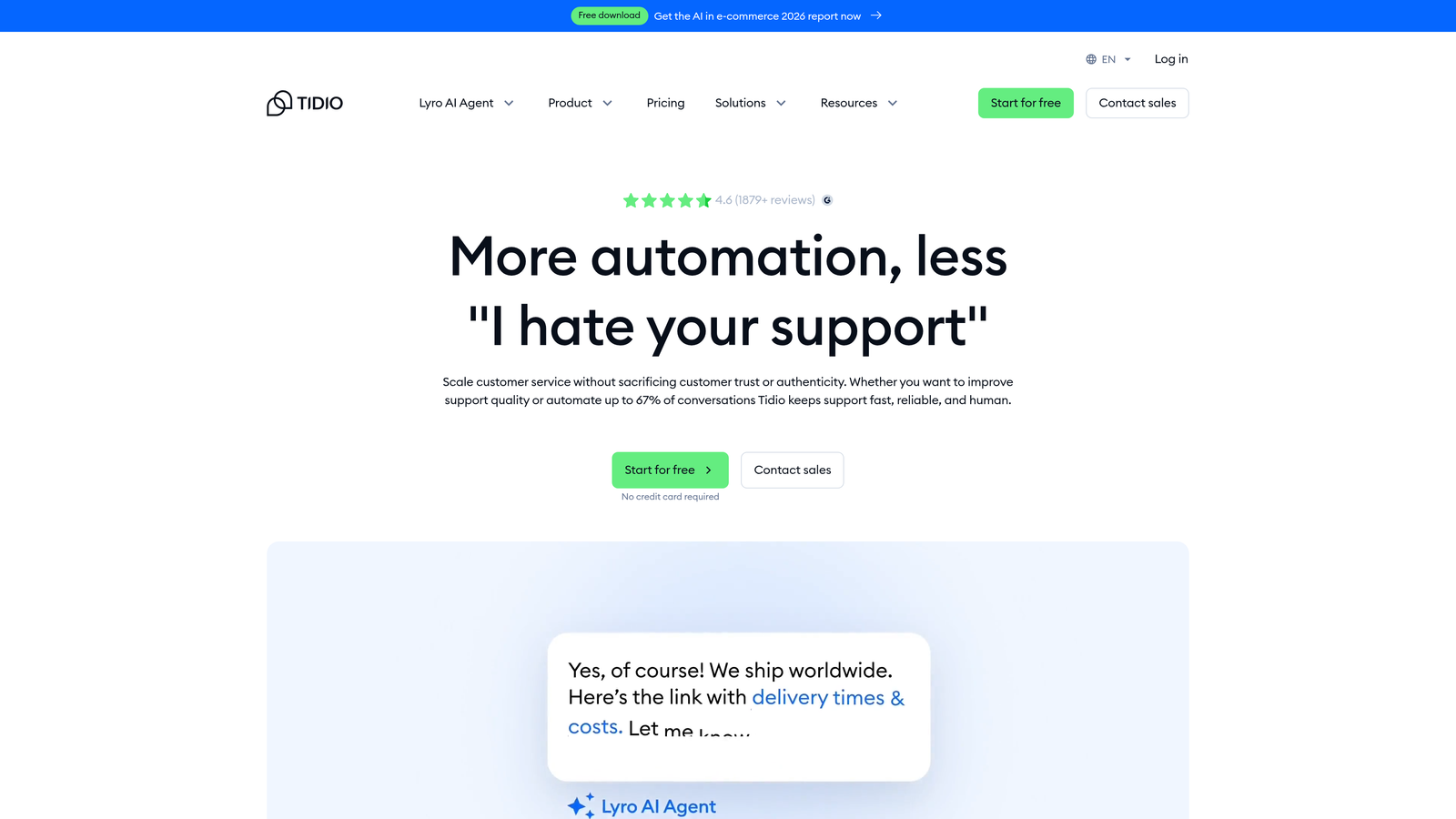
8. Tidio
Best for: Small businesses and e-commerce sites needing accessible AI chatbot capabilities
Tidio is an accessible AI chatbot platform designed for small businesses that need automation without complexity or enterprise budgets.
Where This Tool Shines
Tidio removes barriers to AI adoption. The visual chatbot builder requires no technical knowledge, and the free tier provides genuine value rather than just a limited trial.
E-commerce integrations with Shopify, WooCommerce, and other platforms connect directly to product catalogs, inventory, and order data. The chatbot can answer product questions, check order status, and recommend items based on browsing behavior.
Key Features
Lyro AI Chatbot: Conversational AI that handles common questions automatically using natural language understanding.
Visual Bot Builder: Drag-and-drop interface creates custom chatbot flows without coding or technical setup.
Live Chat: Real-time messaging with visitor tracking shows what pages customers browse and their navigation patterns.
E-commerce Integrations: Native connections to Shopify, WooCommerce, BigCommerce for product and order information.
Email Marketing: Basic email automation capabilities for follow-up campaigns and customer engagement.
Best For
Small e-commerce businesses and local service providers wanting chat and basic AI automation. Teams with limited technical resources who need setup measured in hours, not weeks.
Pricing
Free tier available with basic features. Starter plan at $29/month adds Lyro AI and removes branding.
9. HubSpot Service Hub
Best for: Companies wanting service unified with marketing and sales for complete lifecycle visibility
HubSpot Service Hub is a service platform that shares a unified CRM with HubSpot's marketing and sales tools, providing complete customer lifecycle context.
Where This Tool Shines
HubSpot's power comes from unification. Support agents see which marketing campaigns brought customers in, what sales promised during demos, and how customers engage with content—all in the same interface.
The free CRM tier is genuinely useful, not artificially limited. Small teams can start with free tools, then add paid features as they grow without migrating platforms or losing data.
Key Features
Shared Inbox: Team email management with conversation routing, assignment rules, and collaboration features.
Knowledge Base: Self-service help center with AI-powered search that surfaces relevant articles based on user queries.
Customer Feedback: Survey tools for CSAT, NPS, and custom feedback collection integrated with customer records.
Unified CRM: Single customer database shared across marketing, sales, and service teams with complete interaction history.
Automation Workflows: Playbooks guide agents through processes, while automation handles repetitive tasks and follow-ups.
Best For
Companies using HubSpot for marketing or sales who want service data in the same ecosystem. Teams that value lifecycle visibility over specialized support features.
Pricing
Free tools available with basic features. Starter plan at $20/month/seat adds automation and reporting capabilities.
Making the Right Choice
Choosing the right intelligent customer service platform depends on your team's specific context and what you're optimizing for.
For B2B companies wanting AI that learns continuously and integrates across their entire business stack, Halo AI offers purpose-built architecture that treats AI agents as the primary support layer rather than a feature addition. The platform's page-aware context and deep integrations with tools like Linear, Slack, and HubSpot make it particularly valuable for product teams.
Enterprises deep in existing ecosystems should consider Zendesk AI for mature infrastructure or Salesforce Service Cloud Einstein for native CRM integration. Product-led teams often thrive with Intercom Fin's conversational approach that blends support with product experience. Mid-market teams balancing features with budget find Freshdesk compelling, while high-volume operations focused purely on automation rates should evaluate Ada.
The key differentiator isn't feature lists—it's whether the AI actually resolves issues autonomously or just routes them slightly faster. Many platforms claim AI capabilities but deliver glorified chatbots that deflect to help articles rather than solving problems.
Start with a focused pilot. Pick your highest-volume ticket category, measure current resolution time and satisfaction scores, then compare after implementation. The platforms that deliver real intelligence will show measurable improvement within weeks, not months.
Look for these signals during evaluation: Does the AI improve over time without manual retraining? Can it access the data needed to actually resolve issues, not just answer questions? Does it escalate intelligently when it encounters complexity beyond its capabilities? Does it surface insights about product issues, customer health, and business opportunities beyond basic support metrics?
Your support team shouldn't scale linearly with your customer base. Let AI agents handle routine tickets, guide users through your product, and surface business intelligence while your team focuses on complex issues that need a human touch. See Halo in action and discover how continuous learning transforms every interaction into smarter, faster support.