9 Best Intelligent Customer Service Platforms in 2026
This guide evaluates the 9 best intelligent customer service platforms in 2026, comparing top tools on autonomous resolution capability, integration depth, analytics quality, and pricing to help B2B support teams handle more tickets faster without increasing headcount. Whether you're replacing a legacy helpdesk or building a support operation from scratch, you'll find clear, actionable recommendations for every use case.
 Grant CooperFounder13 min read
B2B support teams are under more pressure than ever: resolve more tickets, respond faster, and do it without adding headcount. Intelligent customer service platforms have moved well beyond simple chatbots. Today's strongest tools combine autonomous AI agents, deep integrations, and business intelligence to handle complex queries without human intervention, while surfacing insights that improve the entire support operation.
This guide covers the top intelligent customer service platforms available in 2026, evaluated on autonomous resolution capability, integration depth, analytics quality, ease of deployment, and pricing transparency. Whether you're replacing a legacy helpdesk, layering AI onto an existing stack, or building a support operation from scratch, you'll find a clear recommendation here.
One important distinction worth making upfront: there's a meaningful difference between platforms that bolt AI onto existing ticket-based infrastructure and those built AI-first from the ground up. Both have their place, but they perform differently at scale. Keep that in mind as you work through this list.
1. Halo AI
Best for: B2B SaaS teams that want AI-first support with built-in business intelligence.
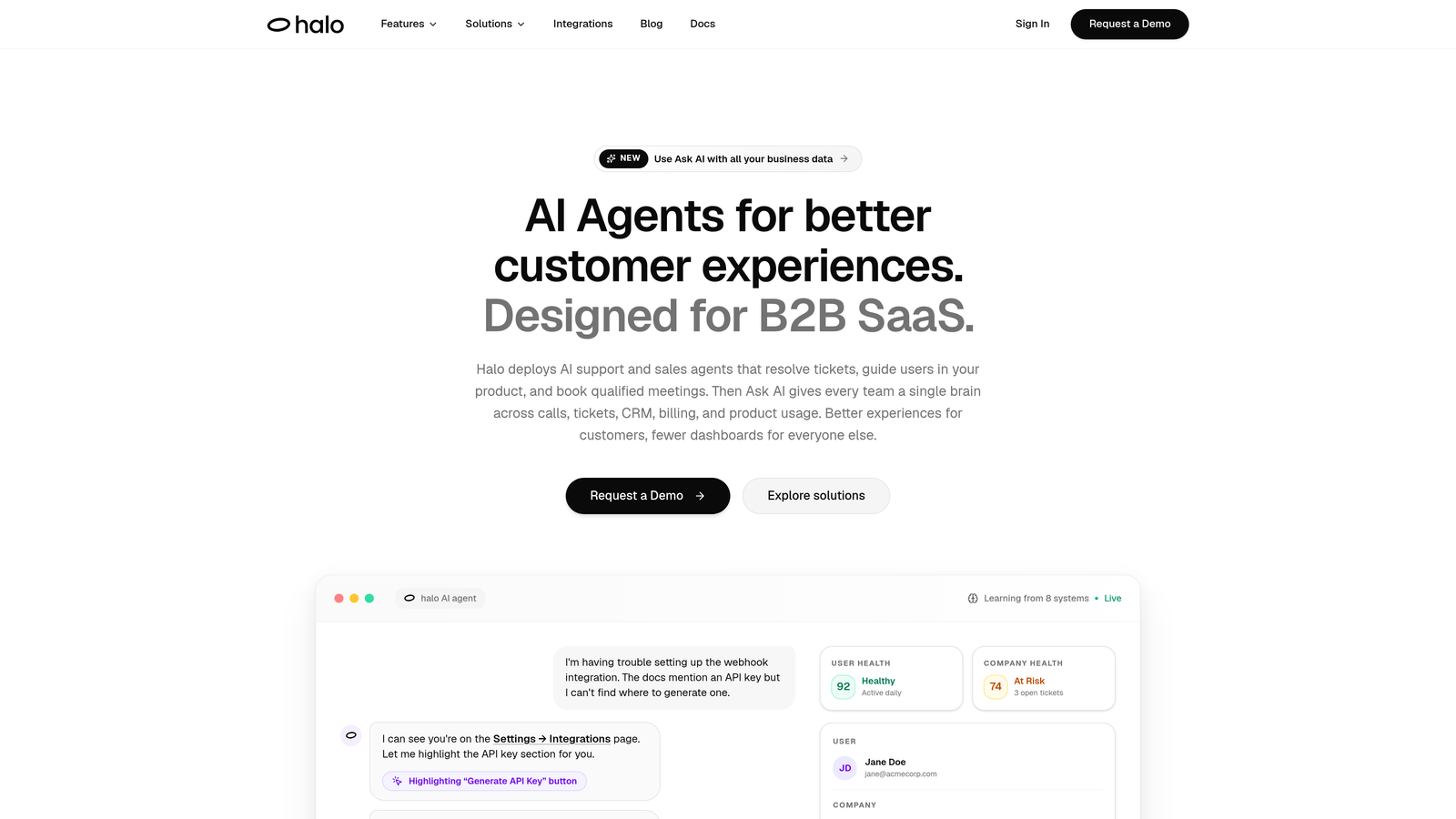
Halo AI is an AI-first customer support platform built specifically for B2B SaaS teams, deploying intelligent agents that resolve tickets, guide users through your product, and surface business intelligence, all while continuously learning from every interaction.
Where This Tool Shines
Most support platforms treat AI as a feature. Halo treats it as the foundation. The platform's page-aware architecture is a genuine differentiator: the AI agent sees exactly what a user sees on screen, providing contextual UI guidance rather than generic answers. This matters enormously for SaaS products where "how do I do X?" questions depend entirely on where in the product a user currently is.
Beyond resolution, Halo's smart inbox goes further than standard support analytics. It surfaces customer health signals, revenue anomalies, and usage patterns from support interactions, turning your support queue into a source of business intelligence rather than just a cost center to manage.
Key Features
Page-Aware Chat Widget: The AI agent sees what users see on screen, delivering context-specific visual UI guidance instead of generic help articles.
Smart Inbox with Business Intelligence: Surfaces customer health signals, revenue anomalies, and pattern detection directly from support interactions, giving leadership visibility beyond ticket volume.
Auto Bug Ticket Creation: Automatically generates bug reports from support conversations and routes them directly to engineering tools like Linear, closing the loop between support and product teams without manual handoff.
Live Agent Handoff with Context Preservation: When escalation is needed, the full conversation context transfers to a human agent instantly, so customers never have to repeat themselves.
Deep Integrations: Connects bidirectionally with Slack, HubSpot, Intercom, Stripe, Zoom, PandaDoc, and Fathom, enabling support data to flow across the entire business stack.
Continuous Learning Model: Every resolved interaction improves resolution accuracy over time, so the system gets smarter with your specific product and customer base rather than staying static.
Best For
Product-led and sales-led B2B SaaS companies that want support to do more than close tickets. Particularly strong for teams where support conversations overlap with product feedback, customer health monitoring, and revenue signals. Less suited to simple e-commerce or transactional support use cases.
Pricing
Contact for pricing. Visit haloagents.ai for current plans and to request a demo.
2. Intercom
Best for: Teams wanting a mature all-in-one messenger with strong AI resolution out of the box.
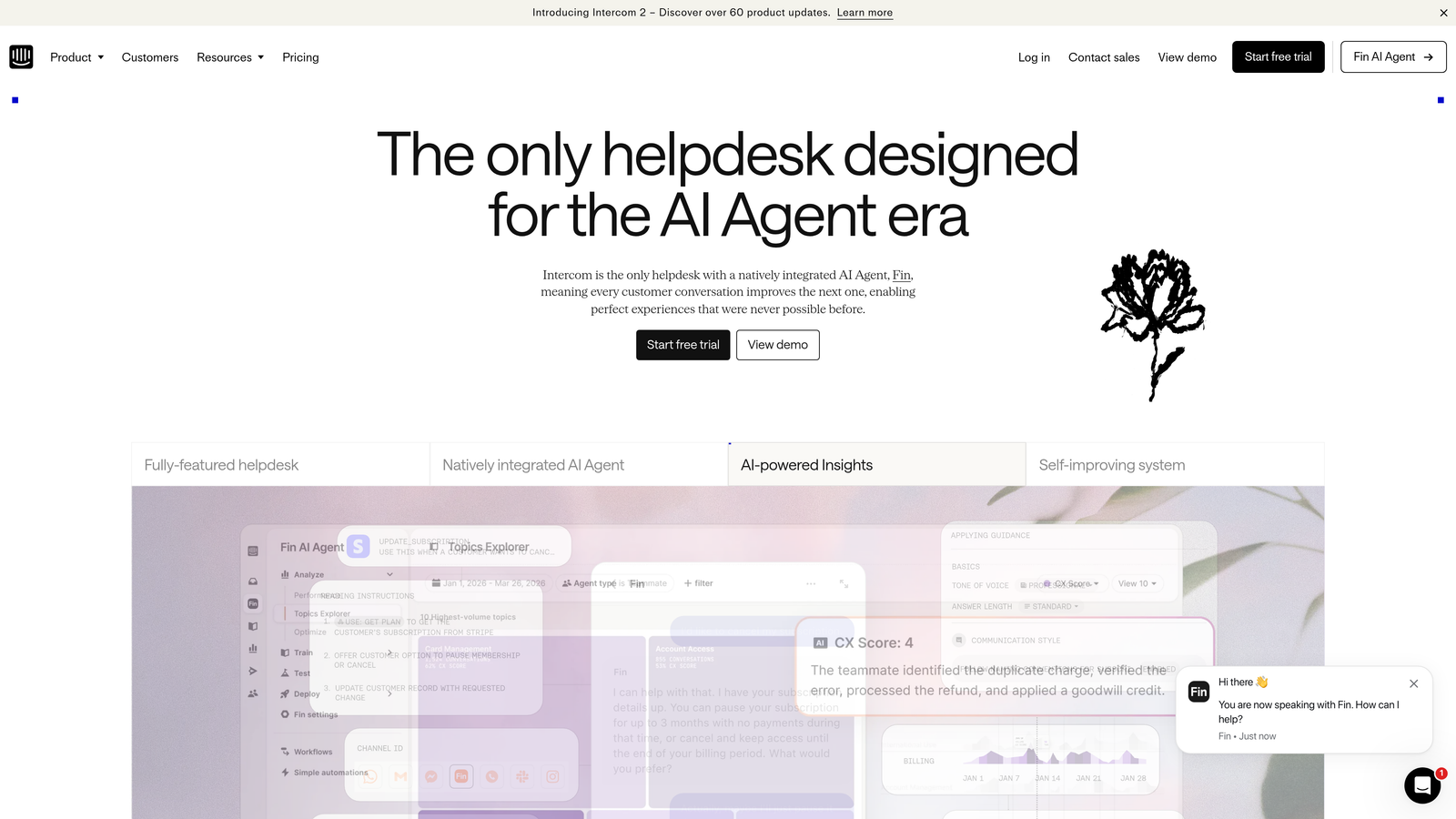
Intercom is a well-established customer communications platform featuring Fin, its GPT-4-powered AI agent, handling front-line resolution across chat, email, and in-app messaging.
Where This Tool Shines
Intercom's strength is its messenger experience. Few platforms match the polish of its in-app chat widget, and Fin has matured considerably since its initial launch. For teams with a solid knowledge base already in place, Fin can achieve meaningful autonomous resolution rates on common queries without much configuration.
The unified inbox, combining chat, email, and in-app messages in one workspace, is genuinely useful for support teams managing multiple channels. The agent workspace also includes AI-suggested replies and conversation summaries that reduce handle time for agents dealing with complex tickets.
Key Features
Fin AI Agent: GPT-4-powered front-line agent that resolves common queries autonomously across chat, email, and in-app channels.
Unified Inbox: Consolidates all customer conversations from multiple channels into a single agent workspace.
Help Center Builder: Robust self-service portal and knowledge base tools that feed directly into Fin's resolution capability.
API and Integration Marketplace: Strong developer ecosystem with broad third-party connectivity.
Agent Assist Features: AI-suggested replies, conversation summaries, and next-step recommendations for human agents handling escalations.
Best For
Growth-stage and enterprise SaaS companies already invested in the Intercom ecosystem, or teams that prioritize messenger UX and want a proven AI agent without building custom workflows. Note that Fin's per-resolution pricing model can become expensive at high ticket volumes.
Pricing
Starts at $39/seat/month; Fin AI Agent is priced per resolution. Verify current pricing at intercom.com as costs can scale significantly at volume.
3. Zendesk
Best for: Enterprise teams needing a battle-tested helpdesk with AI layered onto mature ticketing infrastructure.
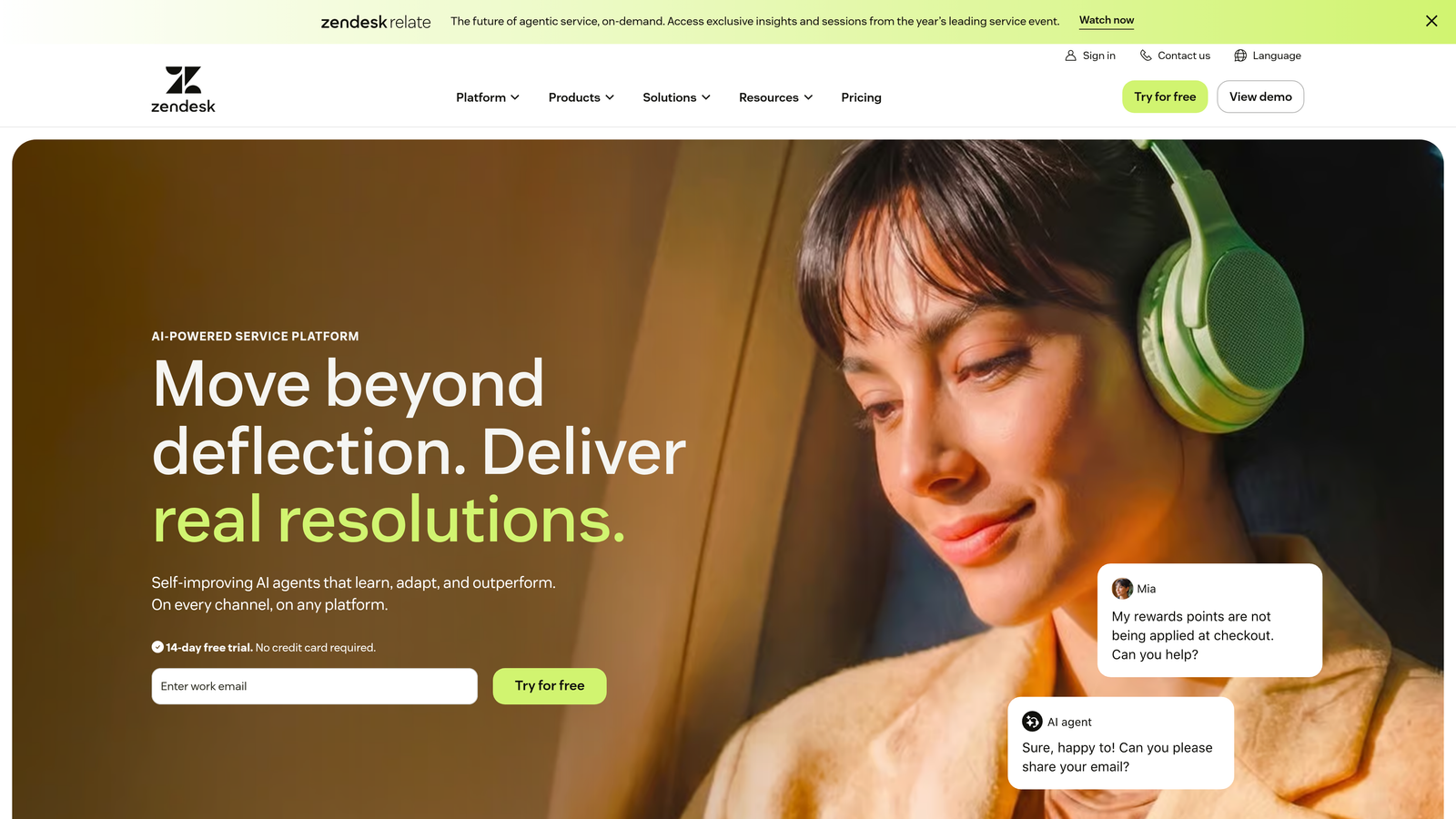
Zendesk is the most widely deployed enterprise helpdesk platform, with AI capabilities including intelligent triage, an agent copilot, and automated workflows built into its core ticketing architecture.
Where This Tool Shines
Zendesk's install base is enormous, and for good reason. Its ticketing infrastructure is reliable, its SLA management is sophisticated, and its reporting gives enterprise support leaders the operational visibility they need. The AI features, including intelligent triage and agent copilot with suggested responses, are competent additions that meaningfully reduce manual work for large teams.
The integration marketplace with over 1,000 apps is a real advantage for enterprise buyers with complex existing stacks. If your organization has already standardized on Zendesk, the AI upgrades are a natural evolution rather than a platform switch.
Key Features
AI-Powered Triage and Routing: Automatically categorizes, tags, and routes incoming tickets based on content and intent.
Agent Copilot: Surfaces suggested responses and relevant knowledge base articles to agents while they're working a ticket.
Advanced Reporting and SLA Management: Comprehensive operational analytics with customizable dashboards and SLA tracking.
App Marketplace: Over 1,000 integrations covering CRM, billing, project management, and communication tools.
Enterprise Security and Compliance: SOC 2, GDPR, HIPAA, and other certifications that enterprise procurement teams require.
Best For
Mid-market and enterprise companies with established support operations who want to add AI capabilities without migrating away from a proven ticketing system. Can feel heavyweight and expensive for smaller teams or early-stage startups.
Pricing
Suite plans start at approximately $55/agent/month. Verify current pricing at zendesk.com, as enterprise tiers vary significantly.
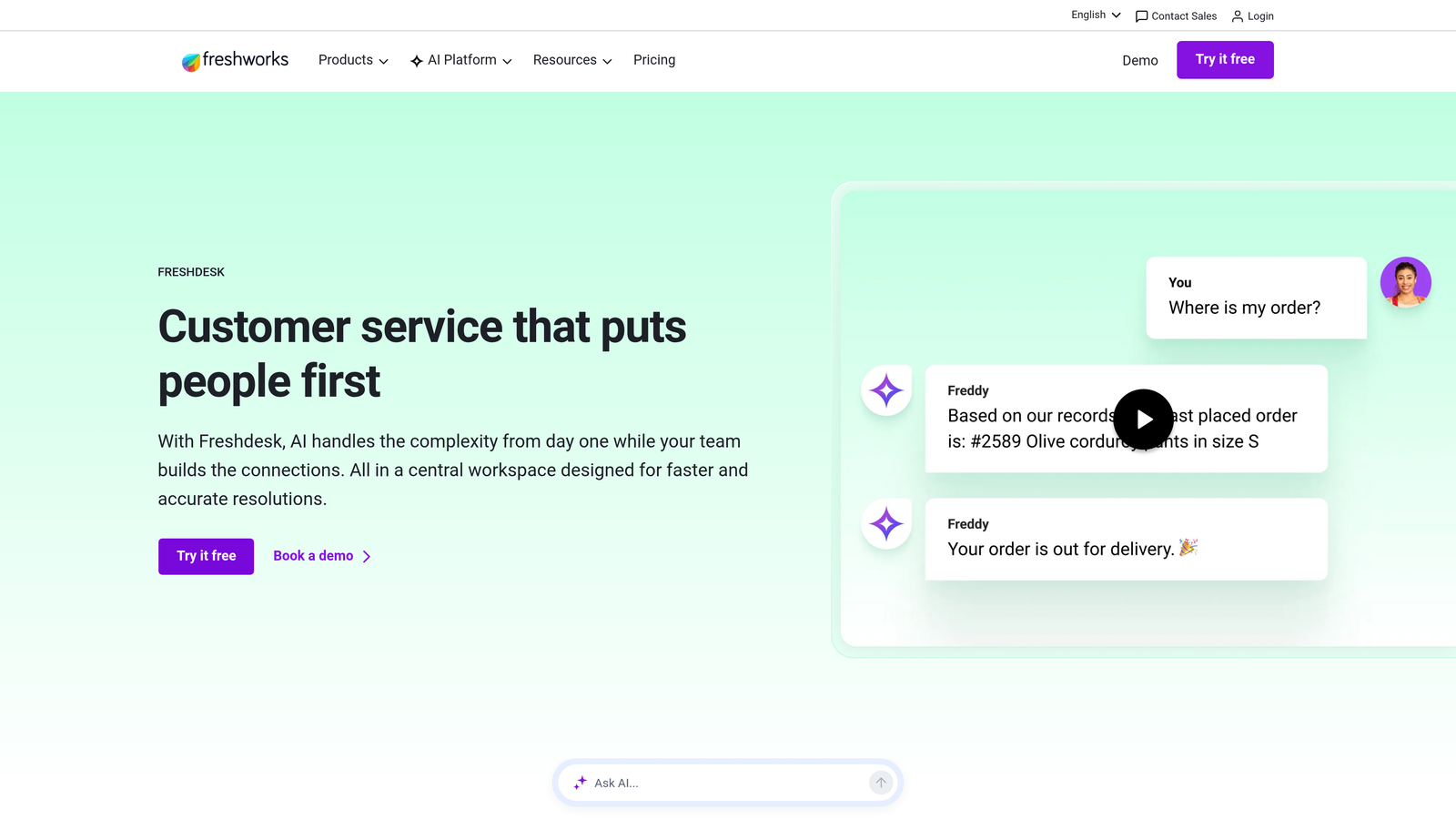
4. Freshdesk with Freddy AI
Best for: Growing teams moving from manual ticketing to AI-assisted workflows on a budget-conscious plan.
Freshdesk is Freshworks' helpdesk platform, with Freddy AI providing auto-triage, sentiment analysis, suggested responses, and self-service automation at a price point accessible to growing teams.
Where This Tool Shines
Freshdesk occupies a useful middle ground between lightweight tools and enterprise-grade complexity. Freddy AI handles the core AI tasks well: automatic ticket categorization, sentiment detection, and response suggestions reduce manual work without requiring significant configuration. For teams that are just beginning to introduce AI into their support workflows, the learning curve is manageable.
The omnichannel support across email, chat, phone, and social, combined with the competitive pricing and a free tier, makes Freshdesk a practical starting point for teams that haven't yet committed to a more specialized platform.
Key Features
Freddy AI Auto-Triage: Automatically categorizes and prioritizes incoming tickets, reducing manual sorting for agents.
Sentiment Analysis: Detects customer frustration signals and flags high-priority conversations for faster response.
Freddy Self Service: Deflects common queries through an AI-powered self-service portal before they reach the queue.
Omnichannel Support: Unified inbox covering email, chat, phone, and social media channels.
Accessible Pricing: Free tier available for small teams, with paid plans scaling affordably as the team grows.
Best For
SMBs and growing teams that need a capable helpdesk with solid AI assist features at a price point that doesn't require executive sign-off. Teams that need enterprise-grade customization or deep BI analytics will likely outgrow it.
Pricing
Free tier available; paid plans start at approximately $15/agent/month. Verify current pricing at freshworks.com.
5. Salesforce Service Cloud
Best for: Enterprise organizations already running on Salesforce that need unified CRM and support data.
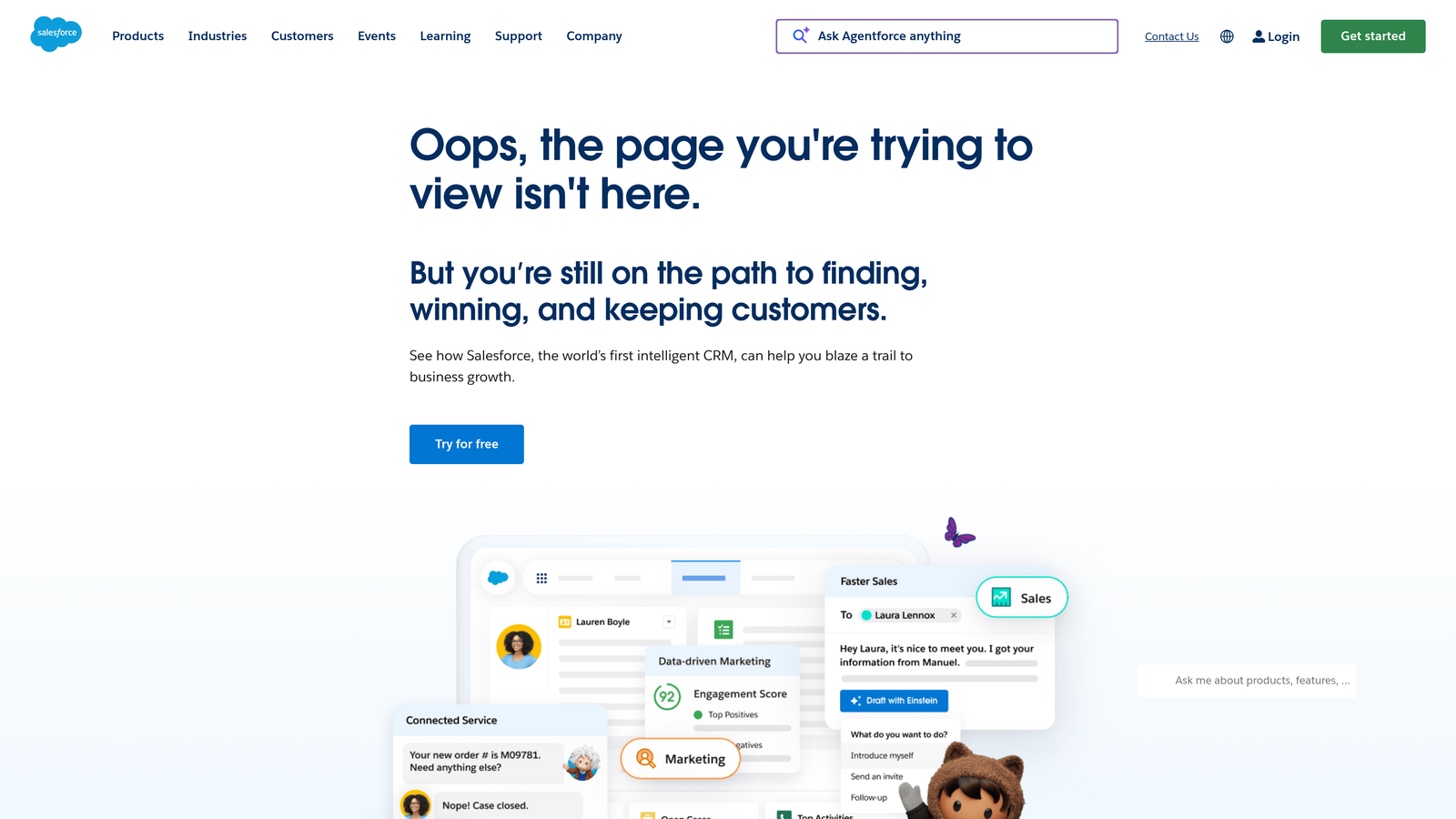
Salesforce Service Cloud is an enterprise support platform fully integrated with Salesforce CRM, using Einstein AI to unify customer data across sales, service, and marketing for context-rich support experiences.
Where This Tool Shines
If your organization is already on Salesforce, Service Cloud is the most natural way to give your support team full visibility into the customer relationship. Einstein AI can surface deal history, account health, and previous case data while an agent is handling a ticket, which changes the quality of the support conversation entirely for high-value accounts.
The data unification is genuinely powerful for enterprise sales-led organizations. Support agents know whether a customer is mid-renewal, whether there's an open opportunity, and what the account's historical value is, all without switching tools.
Key Features
Einstein AI with CRM Context: Surfaces deal history, account data, and prior cases alongside support tickets for fully informed agent interactions.
Omni-Channel Routing: AI-driven case assignment that routes based on agent skill, availability, and case complexity.
AI-Powered Knowledge Recommendations: Einstein surfaces relevant knowledge base articles to agents and customers automatically.
Sales and Marketing Cloud Integration: Native connectivity across the entire Salesforce ecosystem without custom API work.
Enterprise Compliance Framework: Robust security, audit trails, and compliance certifications for regulated industries.
Best For
Large, sales-led enterprises where support and revenue teams need to share customer context. Implementation is complex and the pricing reflects that. Organizations not already on Salesforce should evaluate carefully whether the CRM lock-in is worth the investment.
Pricing
Starts at approximately $25/user/month for the Starter tier; enterprise tiers are significantly higher. Verify at salesforce.com.
6. Kustomer
Best for: High-volume support teams that need a CRM-native view of every customer interaction across channels.
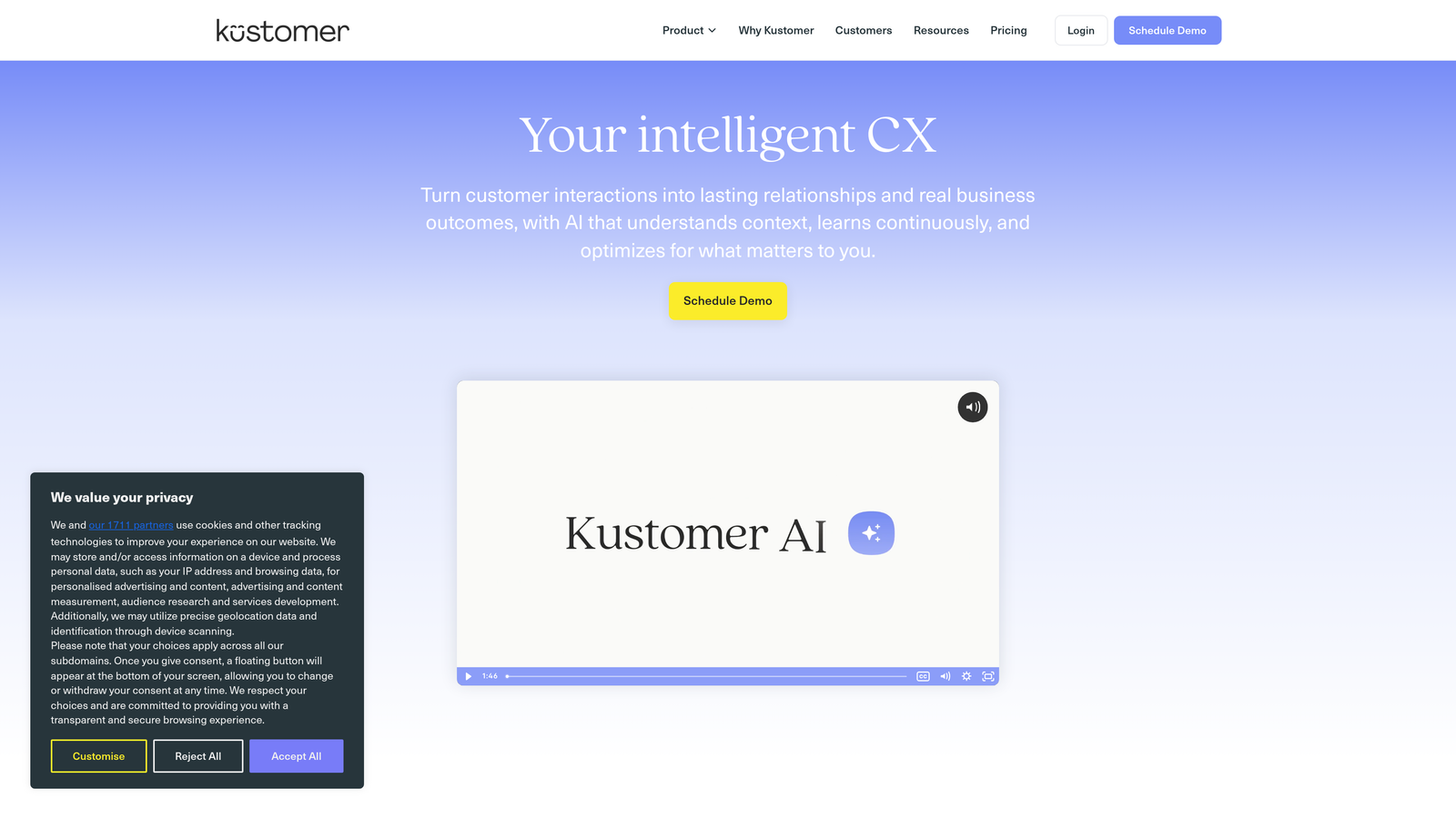
Kustomer is a CRM-native customer service platform (owned by Meta) that gives agents a full customer timeline view, with AI automation handling repetitive resolution flows across high-volume queues.
Where This Tool Shines
Kustomer's CRM-first architecture means every agent interaction starts with context. Rather than viewing isolated tickets, agents see a full chronological customer timeline: every conversation, purchase, complaint, and resolution across every channel. For companies with rich customer history, this changes how agents approach complex cases.
The AI automation layer handles repetitive workflows effectively, and the omnichannel support with unified timelines reduces the fragmentation that plagues teams managing multiple channels separately. One consideration worth noting: Kustomer is owned by Meta, and buyers should monitor how that ownership influences the platform's roadmap over time.
Key Features
CRM-First Architecture: Full customer conversation and transaction history in a single timeline view for every agent interaction.
AI Automation Workflows: Automated resolution flows for common, repetitive support scenarios that reduce manual handling.
Unified Omnichannel Timeline: All channels, email, chat, social, and phone, consolidated into one customer view.
Proactive Outreach Tools: Customer journey tracking and proactive engagement capabilities for high-value accounts.
Flexible Routing and SLA Management: Customizable routing rules and SLA tracking for teams with complex queue structures.
Best For
Mid-market to enterprise teams, particularly in e-commerce and consumer SaaS, where customer history depth matters for support quality. B2B SaaS teams with complex technical support needs may find the platform's strengths less relevant to their workflows.
Pricing
Starts at approximately $89/user/month. Verify current pricing at kustomer.com.
7. Tidio
Best for: Small businesses and e-commerce teams needing fast, low-friction AI chat deployment.
Tidio is a lightweight AI customer service tool built for small businesses and e-commerce, featuring the Lyro AI chatbot for automated query resolution with easy live chat fallback.
Where This Tool Shines
Tidio's biggest advantage is speed of deployment. You can have Lyro AI answering customer questions in a matter of hours, without engineering resources or complex configuration. For small businesses where the support team might be one or two people, that matters enormously.
The bot-to-human handoff is smooth, and the e-commerce integrations with Shopify and WooCommerce make it a natural fit for online stores handling order status, return, and product queries. It's not built for complex B2B workflows, and it doesn't try to be.
Key Features
Lyro AI Chatbot: Fast, no-code AI deployment that handles common queries autonomously without technical setup.
Seamless Bot-to-Human Handoff: Clean escalation to live agents when queries exceed the bot's capability.
E-Commerce Integrations: Native connections with Shopify and WooCommerce for order and product query handling.
Multi-Channel Support: Email and Facebook Messenger channel support alongside live chat.
Simple Analytics Dashboard: Straightforward reporting on conversation volume, resolution rates, and agent performance.
Best For
Small businesses, e-commerce stores, and early-stage teams that need an affordable, easy-to-deploy AI chat solution. Not the right fit for B2B SaaS teams with complex technical support requirements or enterprise compliance needs.
Pricing
Free plan available; paid plans start at approximately $29/month. Verify current pricing at tidio.com.
8. Ada
Best for: Global enterprise brands needing scalable no-code AI agent deployment with multilingual support.
Ada is an enterprise-grade no-code AI agent platform with strong multilingual capabilities, built for large brands that need scalable automation without requiring deep engineering resources.
Where This Tool Shines
Ada's visual flow builder lets non-technical teams build sophisticated AI agent experiences without writing code. For large organizations where the support operations team owns the tooling rather than engineering, this is a meaningful advantage. The platform handles complexity through configuration rather than customization.
The multilingual support across 50+ languages is genuinely strong, making Ada a practical choice for global consumer brands running support across multiple regions and languages simultaneously. The enterprise security posture, including SOC 2 and GDPR compliance, clears procurement hurdles at large organizations efficiently.
Key Features
No-Code AI Agent Builder: Visual flow editor that allows non-technical teams to build and iterate on AI agent experiences independently.
Multilingual Support: Handles conversations in 50+ languages, making it viable for global support operations.
Enterprise Security and Compliance: SOC 2 Type II, GDPR, and related certifications that enterprise procurement requires.
CRM and Helpdesk Integrations: Connects with major platforms including Salesforce, Zendesk, and Freshdesk.
Resolution and Containment Analytics: Detailed reporting on how effectively the AI agent is resolving and containing queries without escalation.
Best For
Large consumer brands and global enterprises with multilingual support needs and operations teams that want to manage AI agents without engineering dependency. Technical SaaS teams that want deep customization may find the no-code approach limiting.
Pricing
Custom pricing, contact Ada directly. Enterprise-focused with quotes tailored to volume and use case. See ada.cx for details.
9. Drift (Salesloft)
Best for: B2B revenue teams where sales qualification and customer support conversations overlap significantly.
Drift is a conversational platform combining sales qualification and customer support in a single AI-driven interface, now part of Salesloft, suited to B2B teams where revenue and support conversations intersect.
Where This Tool Shines
Drift's heritage is conversational marketing, and that DNA is still visible in how the platform handles conversations. The AI routing logic understands whether an incoming conversation is a support query or a sales opportunity, and routes accordingly. For B2B teams where a "how do I use this feature?" question might come from a prospect during a trial, that distinction matters.
The integration with Salesloft's broader revenue platform means that support conversations can feed directly into sales workflows, which is a genuinely useful capability for product-led growth companies. Buyers should verify how the Salesloft acquisition has shaped the product roadmap, as the platform's direction has shifted more toward revenue teams.
Key Features
AI Conversation Routing: Intelligently routes incoming conversations to sales or support based on intent and account context.
Lead Qualification Bots: CRM-integrated qualification flows that identify and prioritize high-value prospects within support conversations.
In-Chat Meeting Scheduling: Allows prospects and customers to book meetings directly within the chat interface.
Account-Based Targeting: Personalizes conversations based on account data, firmographics, and CRM context.
Salesloft Revenue Platform Integration: Native connectivity with Salesloft's cadence, analytics, and pipeline tools for revenue-aligned teams.
Best For
B2B companies running product-led or sales-led growth models where the line between support and sales is intentionally blurred. Less suited to teams that need a dedicated support-first platform with deep ticketing infrastructure and SLA management.
Pricing
Contact for pricing. Verify current plans at drift.com following the Salesloft acquisition, as pricing structure may have changed.
Which Platform Is Right for Your Team?
The right intelligent customer service platform depends less on feature checklists and more on where your team is today and where you need to be in 12 months. Here's a quick way to think through the decision.
If you're a B2B SaaS team that wants AI-first support with business intelligence: Halo AI is the clearest fit. The page-aware context, continuous learning model, and smart inbox BI capabilities are purpose-built for product-led and sales-led SaaS companies that want support to generate insight, not just close tickets.
If you want a mature all-in-one messenger with strong out-of-the-box AI: Intercom with Fin is a proven choice, particularly if you're already in the Intercom ecosystem. Watch the per-resolution pricing at scale.
If you're an enterprise team on an existing Zendesk deployment: Adding Zendesk AI capabilities is the path of least resistance. The platform is reliable and the AI features are solid, even if they're not AI-first by design.
If budget is the primary constraint: Freshdesk's free tier and low starting price make it the most accessible entry point for teams transitioning from fully manual ticketing. Tidio serves the same role for e-commerce and small businesses.
If your organization runs on Salesforce: Service Cloud is the natural choice. The CRM unification is unmatched within the Salesforce ecosystem.
If revenue and support conversations overlap in your GTM motion: Drift's positioning within Salesloft makes it worth evaluating for B2B teams running product-led growth.
Your support team shouldn't have to scale linearly with your customer base. See Halo in action and discover how continuous learning transforms every interaction into smarter, faster support, while giving your team the business intelligence to get ahead of customer issues before they escalate.