9 Best Intelligent Customer Service Tools in 2026
This guide evaluates the 9 most capable intelligent customer service tools available in 2026, comparing AI-first platforms on autonomous resolution quality, context awareness, and integration depth. Ideal for B2B and SaaS teams looking to move beyond traditional helpdesks toward solutions that learn from every interaction and surface actionable business intelligence.
 Grant CooperFounder13 min read
The gap between good and great customer support often comes down to intelligence, not headcount. Today's leading support teams aren't just answering tickets faster; they're using tools that understand context, learn from every interaction, and surface insights that prevent problems before they escalate.
The market has shifted decisively. The old model of "helpdesk plus chatbot bolt-on" is giving way to AI-first platforms where intelligence is foundational, not layered on top. B2B and SaaS buyers are now evaluating tools on autonomous resolution quality, context awareness, integration depth, and whether the platform surfaces real business intelligence or just support metrics.
This list covers the most capable intelligent customer service tools available in 2026, evaluated on AI depth, integration flexibility, automation quality, and real-world usability for B2B and product teams. Whether you're replacing a legacy helpdesk, adding AI to your existing stack, or going fully autonomous, there's a clear option here for your situation.
1. Halo AI
Best for: B2B SaaS teams that want AI-first support with page-aware context and business intelligence
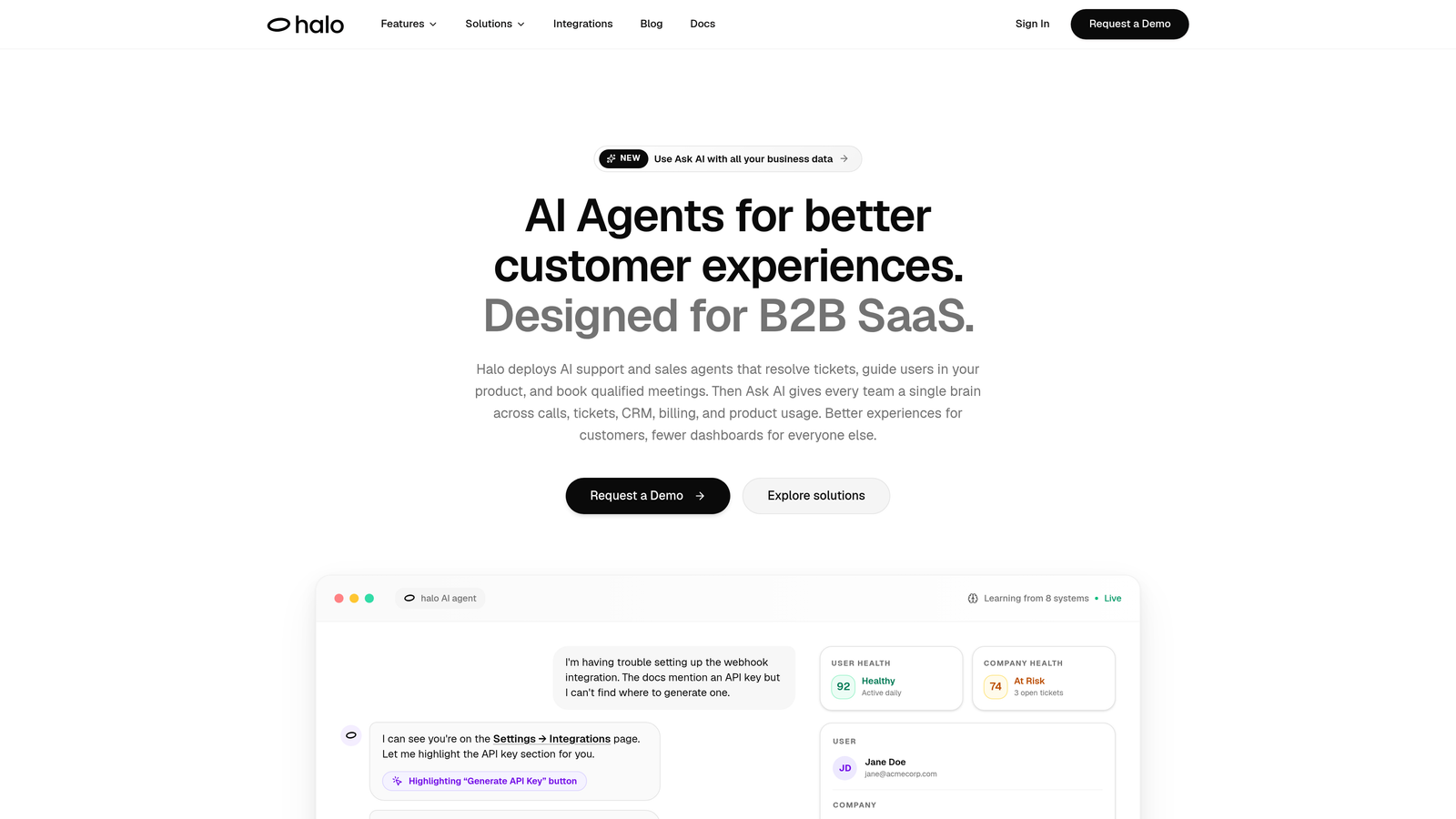
Halo AI is an AI-first customer support platform that deploys intelligent agents to resolve tickets, guide users through your product with visual context, and surface business intelligence across your entire customer base.
Where This Tool Shines
Halo's most distinctive capability is page-aware context: the AI agent actually sees what the user sees, allowing it to provide visual, in-product guidance rather than generic text instructions. This closes a gap that most support tools leave wide open, where agents respond without knowing which screen, state, or workflow the customer is actually looking at.
Beyond resolution, Halo functions as a connective layer across your business stack. It doesn't just close tickets; it creates bug reports in Linear, updates records in HubSpot, triggers alerts in Slack, and surfaces customer health signals and revenue intelligence through a smart inbox. For B2B teams where support data intersects with retention and revenue, that's a meaningful distinction.
Key Features
Page-Aware AI Agents: The AI sees the user's current screen and provides contextual, visual guidance specific to where they are in your product.
Continuous Learning: Every resolved ticket feeds back into the system, making the AI progressively smarter over time without manual retraining.
Auto Bug Ticket Creation: Automatically logs bug reports into Linear when the AI detects a product issue, closing the loop between support and engineering.
Smart Inbox with Business Intelligence: Goes beyond support KPIs to surface customer health signals, anomaly detection, and revenue intelligence for support leaders.
Live Agent Handoff: Escalates complex issues to human agents with full conversation context preserved, so nothing gets repeated.
Cross-Stack Integrations: Connects natively with Slack, HubSpot, Intercom, Stripe, Zoom, PandaDoc, and Fathom.
Best For
B2B SaaS companies and product teams that want AI to operate autonomously across the full support workflow, not just assist human agents. Particularly strong for teams where support intelligence needs to flow into product, sales, and customer success functions.
Pricing
Contact for pricing, tailored to team size and usage. Visit haloagents.ai to request details.
2. Intercom (Fin AI Agent)
Best for: Teams already invested in the Intercom ecosystem wanting native AI resolution
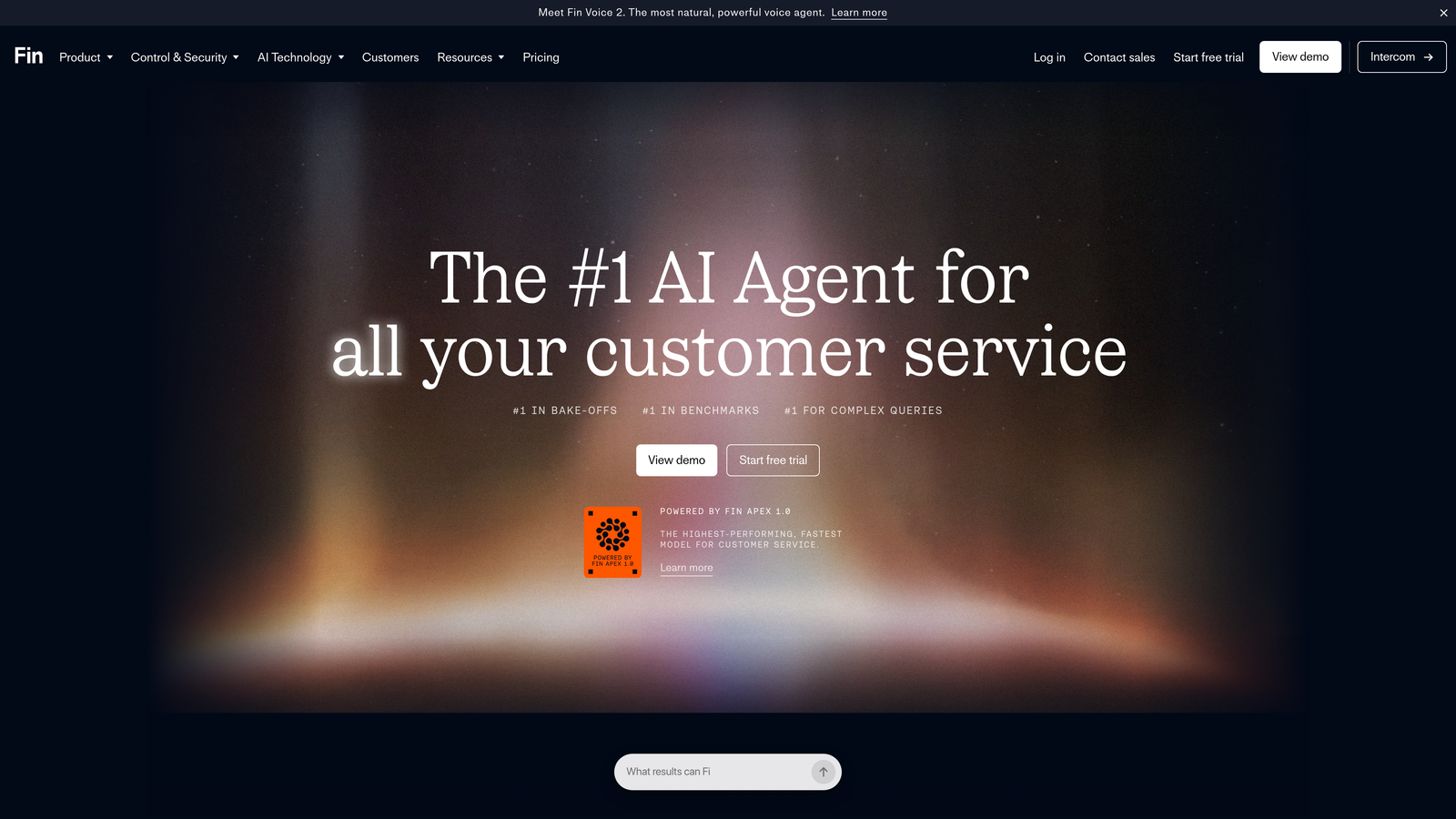
Intercom Fin is Intercom's purpose-built AI agent that handles multi-step customer resolutions natively within the Intercom platform, combining conversation intelligence with existing automation workflows.
Where This Tool Shines
Fin's biggest advantage is how deeply it integrates with Intercom's existing infrastructure. If your team already runs on Intercom for inbox management, help center, and customer messaging, Fin slots in without disruption. It can handle multi-step resolutions, not just single-turn FAQ responses, which puts it ahead of simpler chatbot solutions.
The usage-based pricing model is worth noting: you pay per resolved conversation rather than per seat, which aligns cost directly with value delivered. For high-volume support teams, this can make budget forecasting more predictable.
Key Features
Multi-Step Autonomous Resolution: Handles complex, multi-turn support queries without requiring human intervention at each step.
Native Intercom Integration: Works directly within the Intercom inbox, workflows, and help center without additional configuration.
Full Context Handoff: Passes complete conversation history to human agents when escalation is needed.
Multilingual Support: Handles customer queries across multiple languages out of the box.
Usage-Based Pricing: Charges per resolved conversation, tying cost directly to AI performance.
Best For
Support teams already running Intercom as their primary platform who want to add autonomous AI resolution without switching tools or managing a separate system.
Pricing
Usage-based, charged per resolved conversation. Check Intercom's site for current rates as pricing updates regularly.
3. Zendesk AI
Best for: Large enterprises with established Zendesk deployments seeking embedded AI across the helpdesk
Zendesk AI is Zendesk's AI layer embedded across its enterprise helpdesk platform, offering intelligent triage, agent copilot features, and generative AI for ticket handling at scale.
Where This Tool Shines
Zendesk AI is most valuable for organizations that have already built their support operations on Zendesk and want to deepen AI capability without migrating platforms. The intelligent triage and routing features are particularly strong, using intent and sentiment analysis to get tickets to the right agent or resolution path faster.
The agent copilot functionality gives human agents real-time suggested replies and next-best-action recommendations, which can meaningfully reduce handle time on complex tickets without removing humans from the loop entirely.
Key Features
Intelligent Triage and Routing: Automatically classifies and routes tickets based on detected intent and customer sentiment.
Agent Copilot: Provides human agents with suggested replies and next-best-action recommendations in real time.
Generative AI for Responses: Drafts customer-facing replies using generative AI, reducing manual writing time for agents.
Advanced Analytics: Tracks AI performance alongside traditional support metrics with detailed reporting dashboards.
Enterprise Security and Compliance: Meets enterprise-grade data governance requirements with robust compliance controls.
Best For
Enterprise support organizations with large Zendesk deployments looking to augment existing workflows with AI rather than replace their platform infrastructure.
Pricing
AI features are available as add-ons to Zendesk Suite plans. Pricing varies by tier; see Zendesk's pricing page for current details.
4. Freshdesk Freddy AI
Best for: Growing teams wanting accessible AI across self-service, agent assist, and analytics
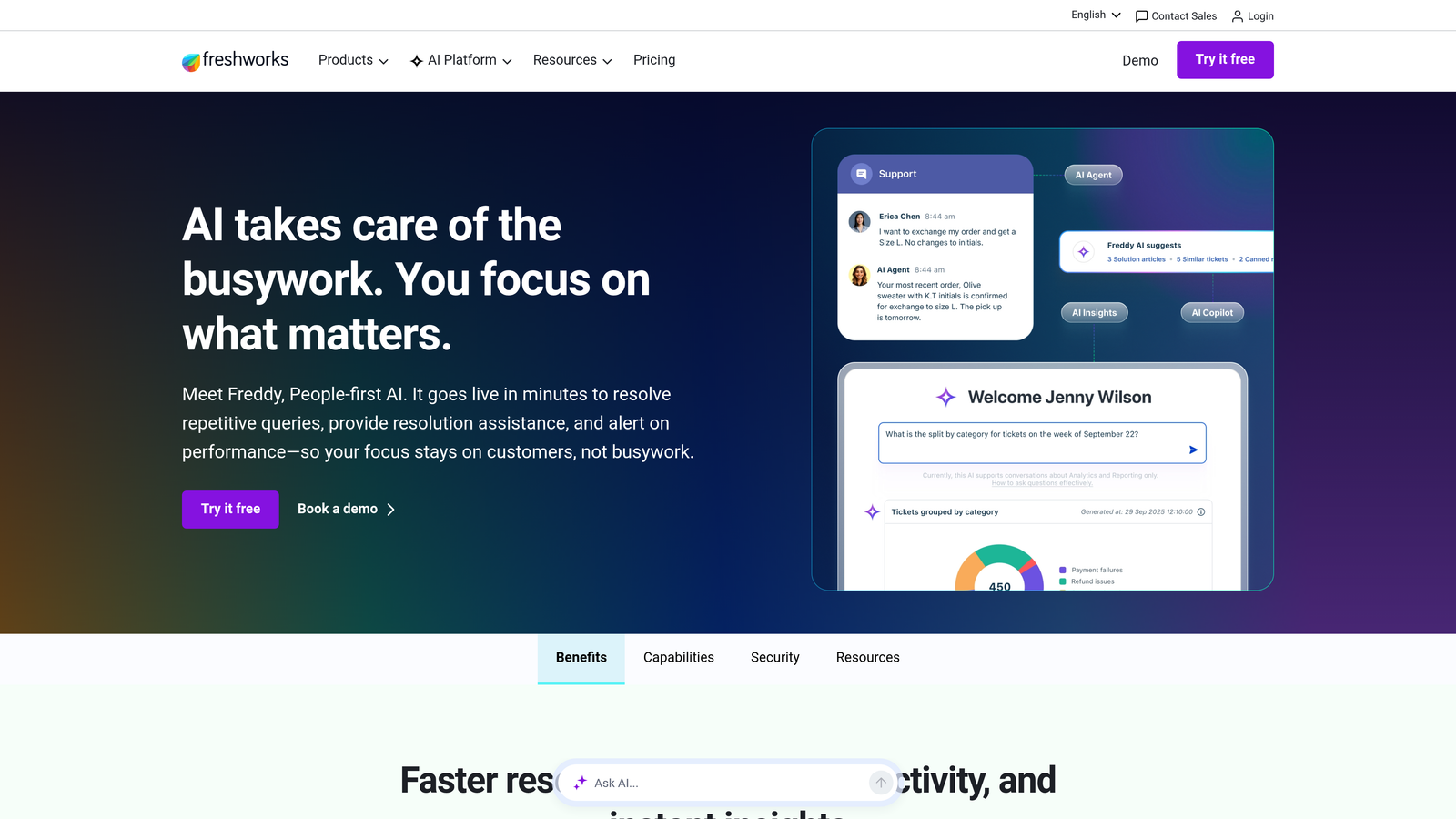
Freshdesk Freddy AI is Freshworks' AI suite spanning self-service chatbots, agent assistance, and analytics, embedded within Freshdesk's full-featured helpdesk at a more accessible price point than many enterprise alternatives.
Where This Tool Shines
Freddy AI is structured as three distinct layers, which makes it practical to adopt incrementally. Teams can start with Freddy Self Service for customer-facing automation, add Freddy Copilot for agent assistance, and layer in Freddy Insights for leadership-level analytics as their needs grow. This modular approach lowers the barrier to getting started.
For teams that find Zendesk's pricing challenging or its complexity excessive for their scale, Freshdesk with Freddy AI offers a credible alternative that covers most of the same functional ground at a more SMB-friendly price.
Key Features
Freddy Self Service: Customer-facing AI chatbot that resolves common queries without agent involvement.
Freddy Copilot: Real-time agent assistance with suggested responses, summarization, and contextual recommendations.
Freddy Insights: AI-powered analytics for support leaders, including anomaly detection and performance trends.
No-Code Bot Builder: Allows teams to design custom conversation flows without engineering resources.
Multilingual Support: Handles customer interactions across major global languages.
Best For
Mid-market and growing SMB teams that want comprehensive AI coverage across self-service, agent assist, and analytics without enterprise-level pricing or implementation complexity.
Pricing
Freddy AI features are included in select Freshdesk plans; Copilot is available as an add-on. See Freshworks' pricing page for current tier details.
5. Salesforce Agentforce
Best for: Enterprises where customer service intersects heavily with sales, account management, and CRM data
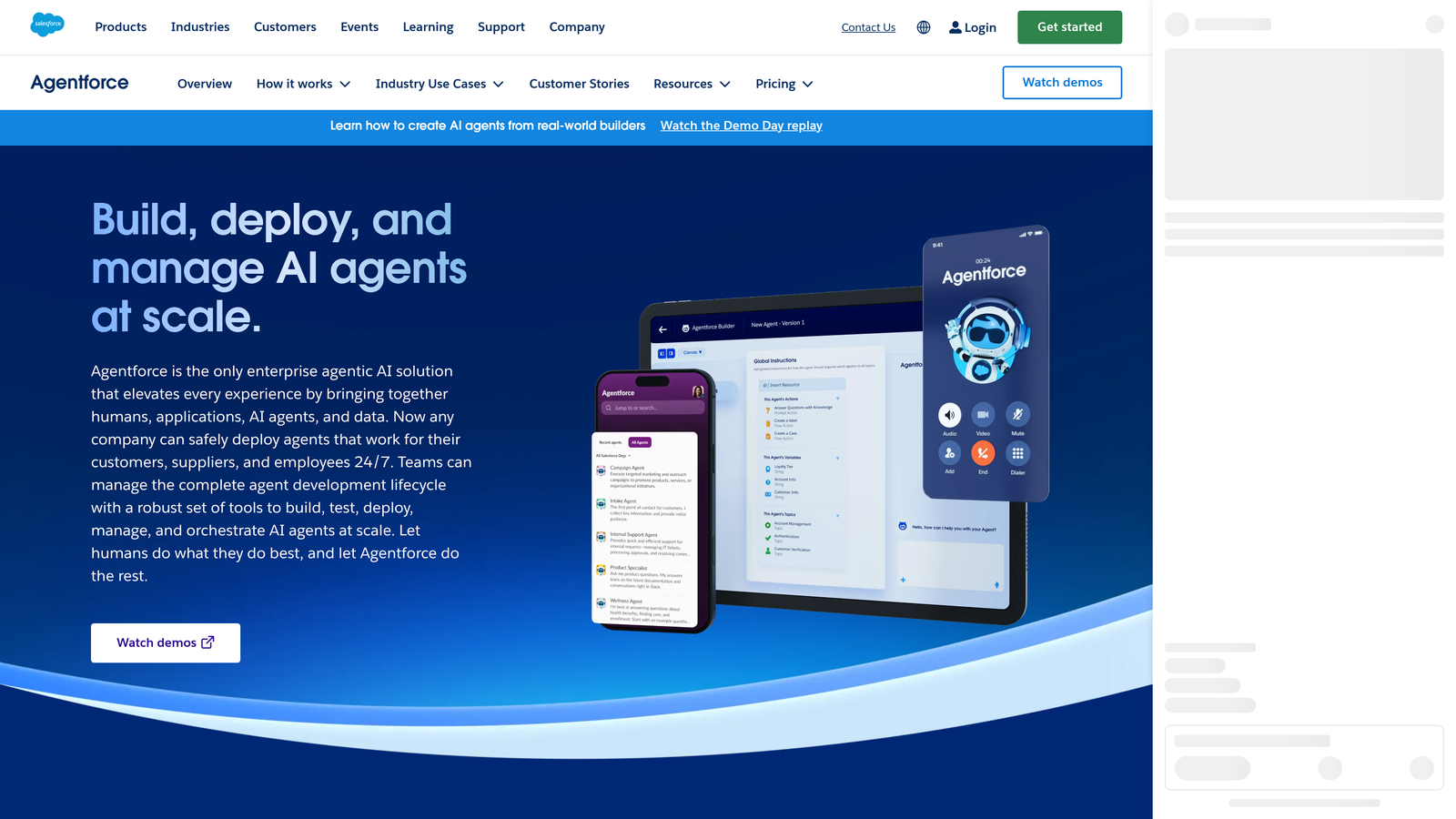
Salesforce Agentforce is Salesforce's autonomous AI agent platform built natively into the Salesforce ecosystem, giving support agents full access to CRM data, case history, and account context in every interaction.
Where This Tool Shines
Agentforce's core strength is data access. Because it lives natively inside Salesforce, AI agents can draw on the full CRM record: account history, open opportunities, previous cases, contract details, and more. For enterprise support teams where context from sales and account management is essential to resolving issues correctly, this depth of data access is hard to match.
The pre-built agent templates for common service scenarios accelerate deployment, and the enterprise governance features (audit trails, compliance controls) make it viable for regulated industries where AI oversight is non-negotiable.
Key Features
Native CRM Data Access: AI agents draw on the full Salesforce data model including account history, cases, and opportunities.
Deep Ecosystem Integration: Connects natively with Service Cloud, Sales Cloud, and Data Cloud without custom development.
Pre-Built Agent Templates: Ready-to-deploy templates for common service scenarios reduce time to value.
Human Escalation with CRM Context: Passes full account and conversation context to live agents during handoff.
Enterprise Governance: Audit trails, compliance controls, and oversight features designed for regulated enterprise environments.
Best For
Enterprise organizations already running Salesforce as their CRM and Service Cloud as their support platform, where service and sales data need to be deeply connected.
Pricing
Pricing is based on Salesforce licensing and Agentforce usage. Contact Salesforce directly for enterprise quotes.
6. Ada
Best for: Global enterprises needing reasoning-based AI with strong multilingual and brand compliance capabilities
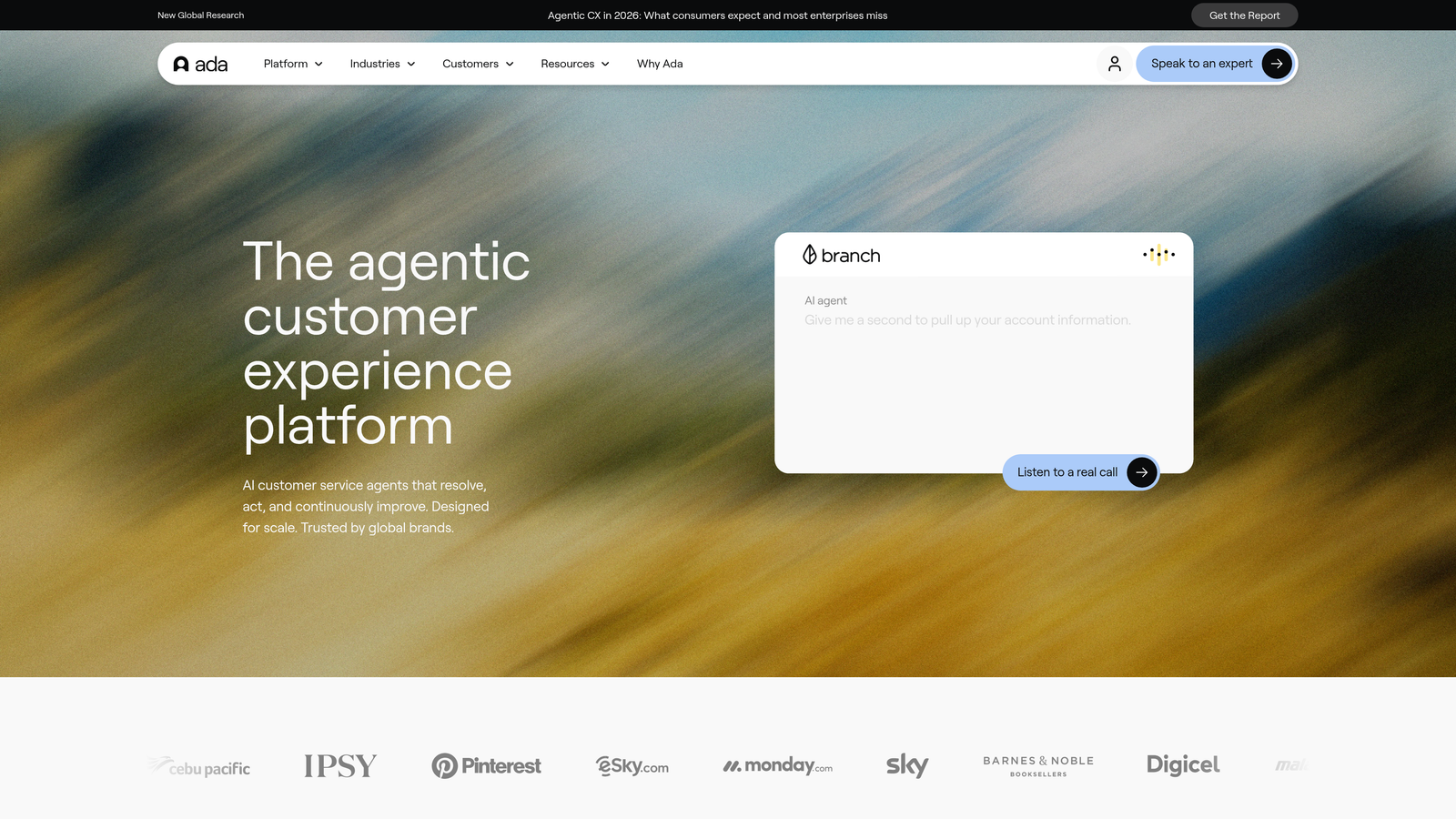
Ada is an enterprise AI agent platform built for global brands, offering reasoning-based conversation handling, multilingual support, and no-code agent design without rigid scripting requirements.
Where This Tool Shines
Ada distinguishes itself through reasoning-based AI that handles complex, multi-turn conversations without relying on decision trees or rigid scripts. This matters significantly for enterprises with diverse, unpredictable customer queries where scripted bots frequently fall short and frustrate customers.
The brand compliance controls are a practical differentiator for large organizations. Marketing and legal teams can set guardrails on tone, terminology, and content, ensuring AI-generated responses stay on-brand and within policy even as the AI operates autonomously at scale.
Key Features
Reasoning-Based Conversation Handling: Manages complex, multi-turn conversations without pre-scripted decision trees.
Multilingual Support: Strong coverage across global languages, making it viable for international enterprise deployments.
No-Code Agent Builder: Non-technical teams can design and modify AI agents with brand compliance controls built in.
Broad Integration Support: Connects with major CRMs, helpdesks, and data sources across the enterprise stack.
Enterprise Analytics: Detailed performance reporting and conversation intelligence for support leadership.
Best For
Large global enterprises in sectors like telecom, fintech, and retail where multilingual coverage, brand compliance, and reasoning-capable AI are non-negotiable requirements.
Pricing
Enterprise pricing model. Contact Ada directly for a custom quote based on volume and requirements.
7. Tidio Lyro AI
Best for: Small businesses and e-commerce teams wanting fast autonomous resolution with minimal setup
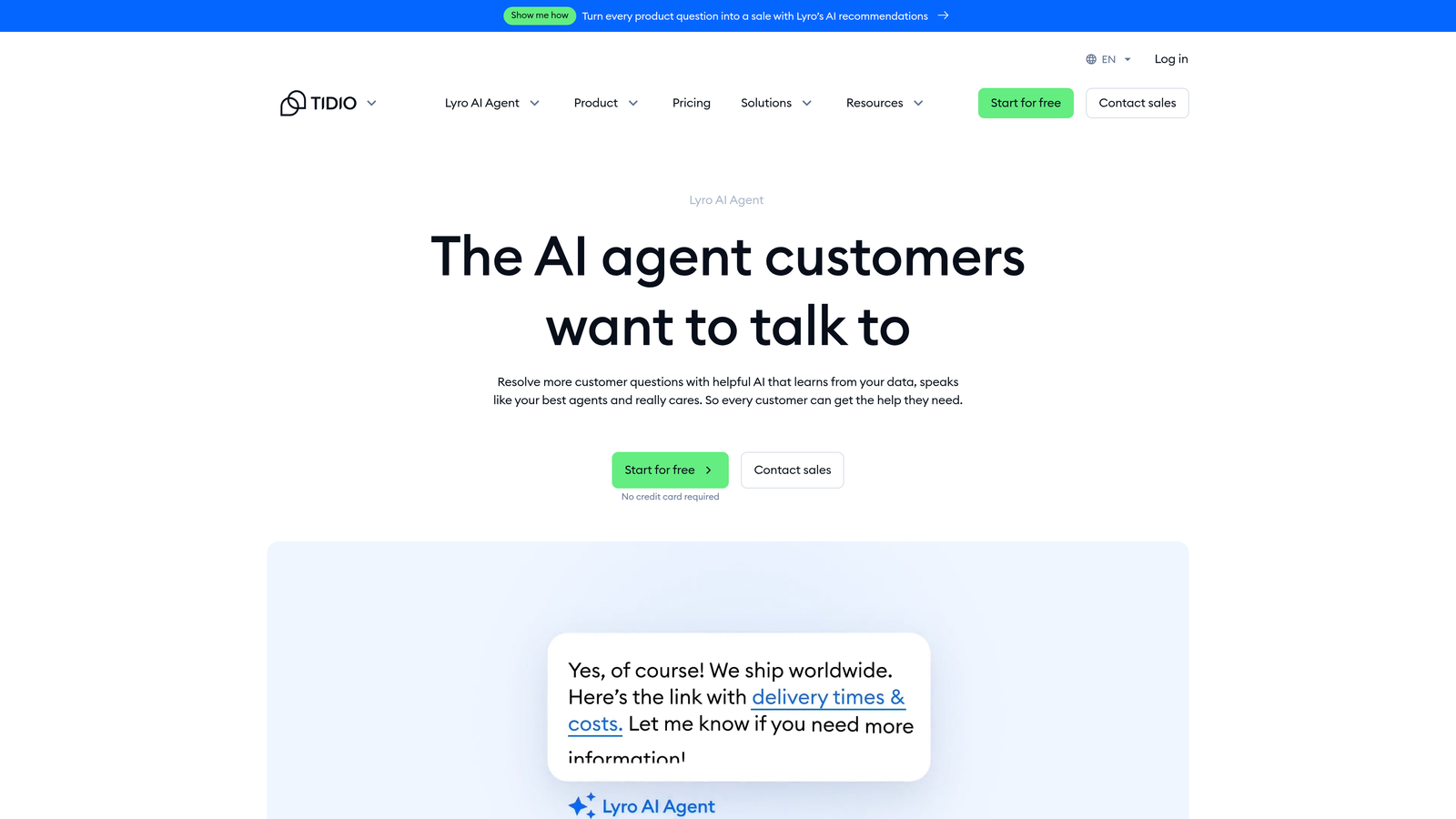
Tidio Lyro AI is Tidio's conversational AI product designed for small businesses and e-commerce teams, offering fast autonomous query resolution with minimal configuration required to get started.
Where This Tool Shines
Lyro's setup speed is genuinely fast compared to enterprise alternatives. It ingests content from your existing knowledge base and starts handling repetitive queries almost immediately, without requiring weeks of training or custom development. For small teams without dedicated AI implementation resources, that speed to value is meaningful.
The e-commerce integrations with Shopify and WooCommerce make Lyro particularly practical for online retailers handling high volumes of order status, return, and product queries. It's not built for complex B2B workflows, but within its target use case, it performs well.
Key Features
Autonomous Query Handling: Resolves repetitive customer questions without human agent involvement.
Fast Knowledge Base Ingestion: Learns from existing content quickly, reducing time-to-deployment significantly.
Live Chat Fallback: Seamlessly transfers conversations to human agents when the AI reaches its limits.
E-Commerce Integrations: Native connections with Shopify and WooCommerce for order and product query handling.
SMB-Friendly Pricing: Entry-level pricing accessible to small teams without enterprise budgets.
Best For
Small businesses and e-commerce teams that need autonomous AI for high-volume, repetitive queries and want to get started quickly without significant configuration or investment.
Pricing
Lyro AI is available on Tidio's paid plans at SMB-friendly rates. See Tidio's pricing page for current tiers.
8. Kustomer
Best for: High-volume consumer brands needing a unified customer timeline across channels with AI-powered automation
Kustomer is a CRM-native customer service platform that unifies the full customer timeline across channels, with AI-powered workflow automation and conversation intelligence built directly into the platform.
Where This Tool Shines
Kustomer's unified timeline is its defining feature. Rather than showing agents a queue of disconnected tickets, Kustomer presents the complete picture: every conversation, order, interaction, and data point for a given customer in a single view. This context dramatically reduces the time agents spend hunting for background information before they can actually help.
The AI layer adds intent detection and conversation summarization on top of this data-rich foundation, making automated routing and escalation decisions more accurate than they would be with conversation data alone.
Key Features
Unified Customer Timeline: Combines conversation history, order data, and cross-channel interactions into a single agent view.
AI Intent Detection: Automatically identifies customer intent to improve routing accuracy and automation decisions.
Conversation Summarization: AI-generated summaries give agents instant context on long or complex conversations.
Omnichannel Coverage: Handles email, chat, social, SMS, and voice from a unified platform.
Intelligent Workflow Automation: Automates routing, tagging, and escalation based on conversation data and customer attributes.
Best For
D2C brands and high-volume consumer businesses where omnichannel coverage and a complete customer data picture are more critical than deep B2B workflow integrations.
Pricing
Enterprise pricing model. Contact Kustomer directly for current plan details and volume-based quotes.
9. Help Scout
Best for: Lean teams wanting practical AI augmentation without platform complexity or steep learning curves
Help Scout is a human-first support platform that has added practical AI features, including summarization, drafting assistance, and smart suggestions, without sacrificing the simplicity that has defined its reputation.
Where This Tool Shines
Help Scout's AI additions are deliberately practical rather than transformational. AI Summarize, AI Assist, and AI Drafts are all designed to reduce the friction of individual tasks: reading long threads, adjusting tone, writing first-draft replies. For lean teams where agents handle a manageable volume of varied queries, these features genuinely speed up daily work without requiring a platform overhaul.
The platform's clean shared inbox and Docs knowledge base remain its foundation, and the AI features sit on top without complicating the experience. If your team values simplicity and your support volume doesn't demand autonomous AI resolution, Help Scout offers a sensible middle ground.
Key Features
AI Summarize: Generates instant conversation summaries so agents can get up to speed on long threads without reading every message.
AI Assist: Adjusts tone, expands content, and translates replies to help agents communicate more effectively.
AI Drafts: Suggests complete reply drafts based on conversation context, reducing blank-page friction for agents.
Shared Inbox: Clean, collaborative inbox designed for lean team workflows without unnecessary complexity.
Docs with AI Search: Knowledge base with AI-powered search to help customers and agents find answers faster.
Best For
Small to mid-size teams that want AI to assist human agents rather than replace them, and that prioritize a clean, simple tool over a feature-heavy platform.
Pricing
Plans start at approximately $50/month for small teams. See Help Scout's pricing page for current tier details.
Which Tool Is Right for Your Team?
The most important distinction in this list isn't between individual tools; it's between AI-first platforms and AI-added features. Tools like Halo AI are built from the ground up with intelligence as the core architecture. Tools like Zendesk AI, Freshdesk Freddy, and Help Scout layer AI onto established helpdesk foundations. Both approaches have merit, but they serve different needs.
Here's a quick way to think through the decision:
If you're a B2B SaaS team wanting autonomous AI with business intelligence: Halo AI is the clearest fit. The page-aware context, continuous learning, and cross-stack integrations (Linear, HubSpot, Stripe, Slack) make it purpose-built for product-led companies where support data connects to retention and revenue.
If you're deeply invested in the Intercom ecosystem: Fin AI Agent is the natural next step before considering a platform switch. It extends what you already have without migration risk.
If your organization runs on Salesforce: Agentforce gives you AI with native CRM data access that no external tool can replicate without significant integration work.
If you're an SMB or e-commerce team on a tighter budget: Tidio Lyro AI or Freshdesk Freddy offer accessible entry points with genuine autonomous capability for high-volume, repetitive queries.
If your team values simplicity over automation depth: Help Scout's AI additions provide meaningful productivity gains without the learning curve of a more complex platform.
The broader question for many teams is whether to augment their current platform or make a foundational switch. If your existing helpdesk is creating more friction than it's solving, and you're adding AI features as band-aids, that's often a sign the architecture itself needs to change.
Your support team shouldn't scale linearly with your customer base. Let AI agents handle routine tickets, guide users through your product, and surface business intelligence while your team focuses on complex issues that need a human touch. See Halo in action and discover how continuous learning transforms every interaction into smarter, faster support.