9 Best Intelligent Customer Support Platforms in 2026
Modern support teams need more than basic ticketing systems—they need an intelligent customer support platform that combines AI automation with human oversight. This comprehensive guide examines nine leading platforms for 2026, comparing their AI capabilities, integration options, and suitability for B2B teams at different scales, helping you select a solution that reduces agent workload while improving resolution times and customer satisfaction.
 Matt PattoliFounder12 min read
Customer expectations have evolved beyond simple ticket resolution. Today's support teams need platforms that understand context, learn from interactions, and resolve issues autonomously—while knowing exactly when to involve a human. An intelligent customer support platform combines AI capabilities with workflow automation to deliver faster resolutions, reduce agent workload, and surface insights that improve your entire product experience.
This guide evaluates nine platforms that go beyond basic helpdesk functionality, examining their AI capabilities, integration ecosystems, and practical applications for B2B teams. Whether you're scaling a growing SaaS company or optimizing an established support operation, you'll find options that match your technical requirements and budget.
1. Halo AI
Best for: B2B teams wanting autonomous AI agents with continuous learning and page-aware context
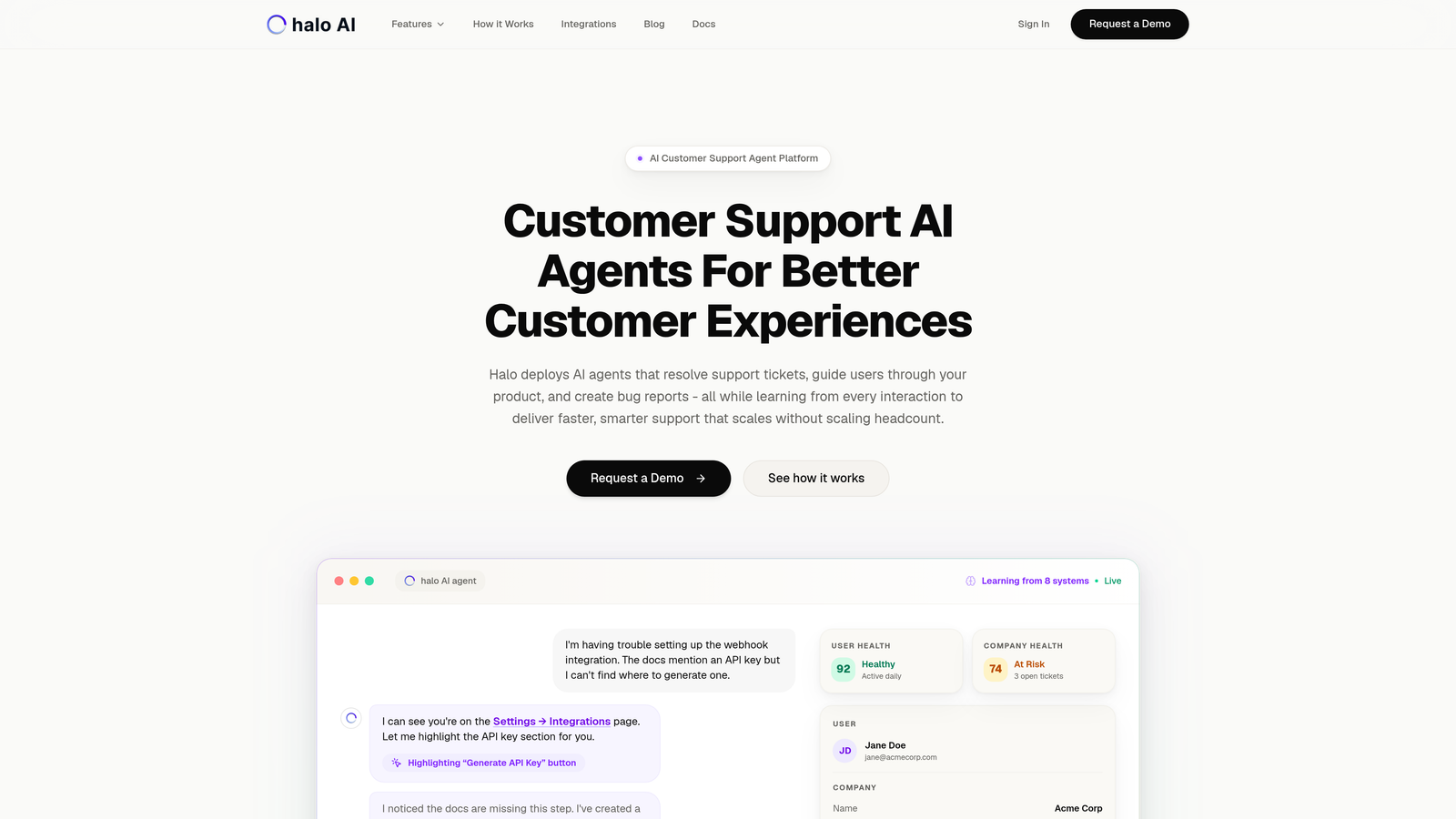
Halo AI is an AI-first customer support platform built around autonomous agents that resolve tickets, guide users through products, and learn from every interaction.
Where This Tool Shines
Halo's page-aware architecture sees what users see in your product, enabling contextual guidance that traditional helpdesks can't match. When a customer struggles with a specific feature, the AI understands their exact screen state and provides visual guidance tailored to that moment.
The platform's continuous learning mechanism improves resolution quality over time. Every interaction—whether resolved autonomously or escalated to a human—feeds back into the system's knowledge base. This means your support gets smarter with scale rather than just larger.
Key Features
Page-Aware Chat Widget: Sees user context and provides visual UI guidance based on actual screen state.
Autonomous Ticket Resolution: Handles routine issues end-to-end with intelligent escalation for complex scenarios.
Auto Bug Ticket Creation: Automatically generates tickets in Linear when issues require engineering attention.
Business Intelligence Analytics: Surfaces customer health signals, revenue intelligence, and anomaly detection beyond basic support metrics.
Multi-System Integrations: Connects to Slack, HubSpot, Stripe, Intercom, Zoom, PandaDoc, and Fathom for comprehensive workflow automation.
Best For
Product teams at B2B SaaS companies who need support that scales without scaling headcount. Particularly valuable if you're currently using Zendesk, Freshdesk, or Intercom and want AI as the foundation rather than an add-on.
Pricing
Contact for pricing based on your ticket volume and integration requirements.
2. Intercom
Best for: Product-led growth companies focused on in-app engagement and conversational support
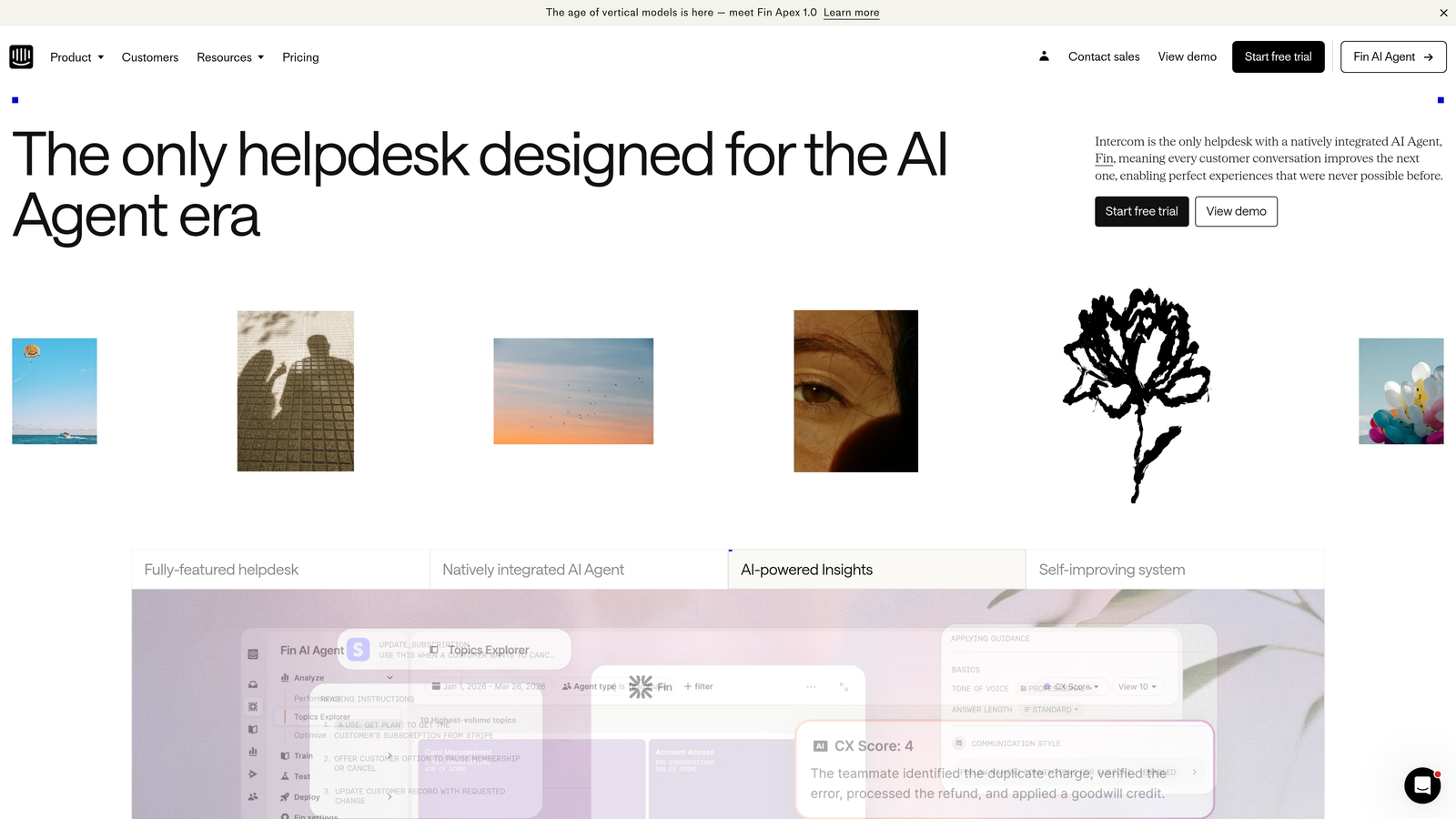
Intercom is a customer messaging platform with Fin AI agent capabilities and strong tools for proactive in-app communication.
Where This Tool Shines
Intercom excels at blending support with product engagement. Product tours, targeted messages, and automated customer journeys live alongside your support inbox, creating a unified experience. This makes it particularly powerful for PLG companies where onboarding and support blur together.
Fin AI agent can answer questions using your help docs and custom content, though it operates more as an assistant layer over traditional messaging rather than autonomous resolution. The strength lies in how seamlessly it integrates with Intercom's broader engagement tools.
Key Features
Fin AI Agent: Answers customer questions using your content library with confidence scoring.
Product Tours: Create guided in-app experiences that reduce support volume through proactive education.
Unified Inbox: Handles conversations across chat, email, and social in one workspace.
Custom Bots: Build conversation flows for qualification, routing, and common scenarios.
Series Automation: Send targeted messages based on user behavior and lifecycle stage.
Best For
SaaS companies with freemium or trial models who need to blend support, onboarding, and customer engagement in one platform. Works best when you value proactive communication as much as reactive support.
Pricing
Starts at $39 per seat per month. Fin AI charged separately based on resolution volume, which can add significant cost at scale.
3. Zendesk
Best for: Enterprise teams needing extensive customization, integrations, and omnichannel support at scale
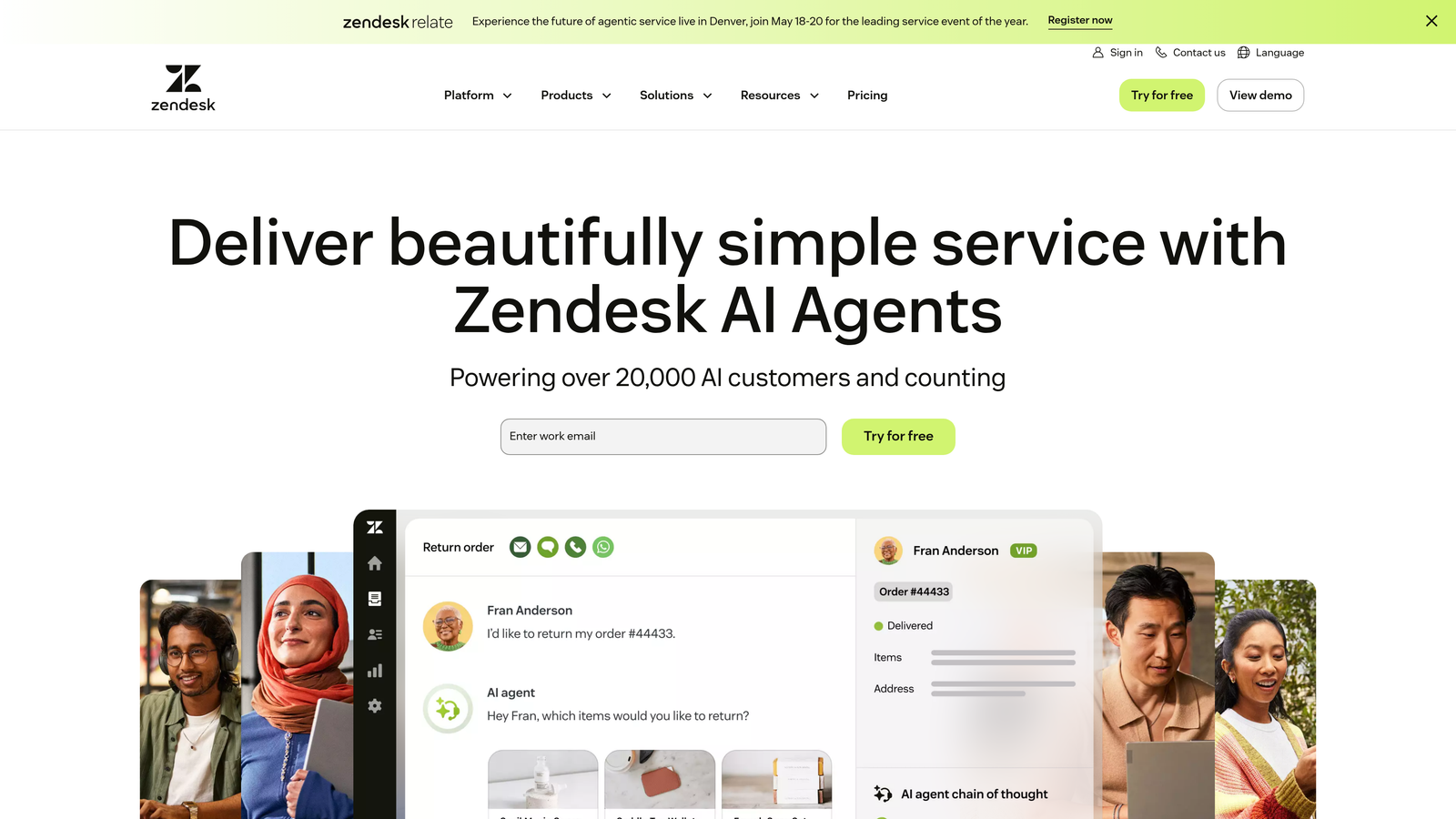
Zendesk is an enterprise-grade support platform with comprehensive ticketing, a massive app marketplace, and advanced AI capabilities available as add-ons.
Where This Tool Shines
Zendesk's true strength is its ecosystem. With over 1,500 integrations in their marketplace, you can connect virtually any business system to your support workflow. This makes it the go-to choice for complex organizations with diverse tech stacks.
The platform handles omnichannel support across email, chat, phone, social media, and messaging apps with sophisticated routing and workflow automation. Their advanced AI features—available as paid add-ons—include intelligent triage, intent detection, and suggested responses, though these come at premium pricing.
Key Features
Advanced AI Add-On: Intelligent ticket routing, intent classification, and agent suggestions powered by machine learning.
Extensive App Marketplace: Over 1,500 pre-built integrations plus custom app development capabilities.
Omnichannel Support: Unified agent workspace across all customer touchpoints with consistent experience.
Custom Reporting: Advanced analytics with custom dashboards and data export capabilities.
Workflow Automation: Sophisticated rules engine for routing, escalation, and business process automation.
Best For
Large enterprises with complex support operations, multiple brands, or specific compliance requirements. Best suited for teams with dedicated Zendesk administrators who can leverage its extensive customization options.
Pricing
Suite Team starts at $55 per agent per month. Advanced AI capabilities require separate add-on purchases, which can significantly increase total cost.
4. Freshdesk
Best for: Mid-market teams wanting solid helpdesk functionality with AI capabilities at competitive pricing
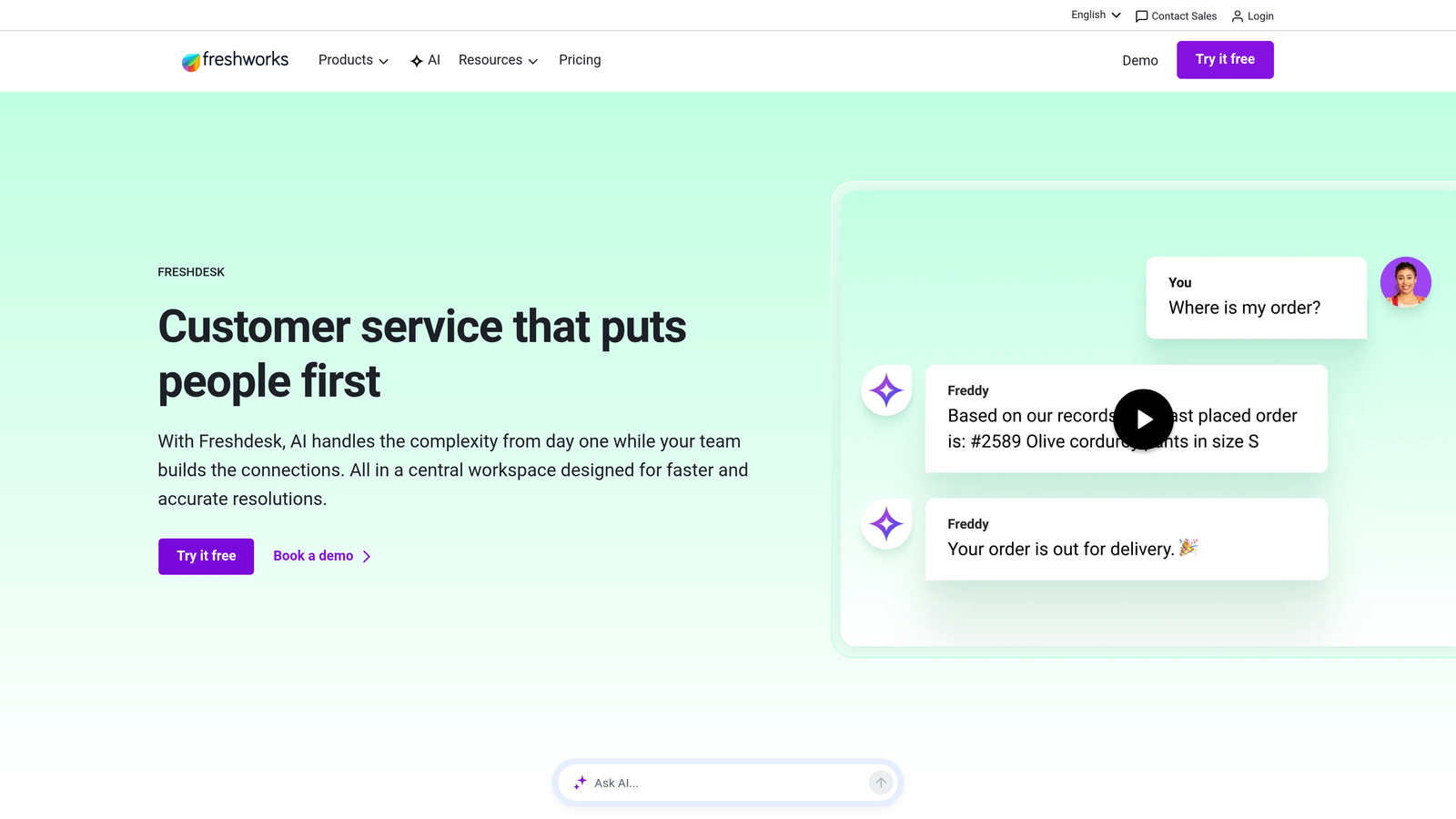
Freshdesk is a helpdesk platform with Freddy AI capabilities, unified agent workspace, and strong value for growing support teams.
Where This Tool Shines
Freshdesk hits a sweet spot between functionality and affordability. Freddy AI handles ticket routing, suggests responses, and identifies sentiment without requiring expensive add-ons. The unified workspace brings email, chat, and phone into one interface that feels modern without overwhelming complexity.
Collaboration features stand out—agents can create child tickets, loop in specialists, and work together on complex issues without losing context. The self-service portal and knowledge base come included, reducing the need for separate documentation tools.
Key Features
Freddy AI: Intelligent routing, suggested responses, and sentiment analysis included in core plans.
Unified Workspace: Handle email, chat, phone, and social media conversations in one agent interface.
Team Collaboration: Create child tickets, share ownership, and collaborate on complex resolutions.
SLA Management: Set and track service level agreements with automated escalation.
Self-Service Portal: Customer portal with knowledge base and community forums included.
Best For
Growing B2B companies that need professional helpdesk capabilities without enterprise pricing. Works well for teams transitioning from basic tools like email or spreadsheets to a proper support platform.
Pricing
Free tier available for small teams. Growth plan at $15 per agent per month includes most core features including Freddy AI basics.
5. Kustomer
Best for: High-volume operations needing complete customer context and CRM-powered support workflows
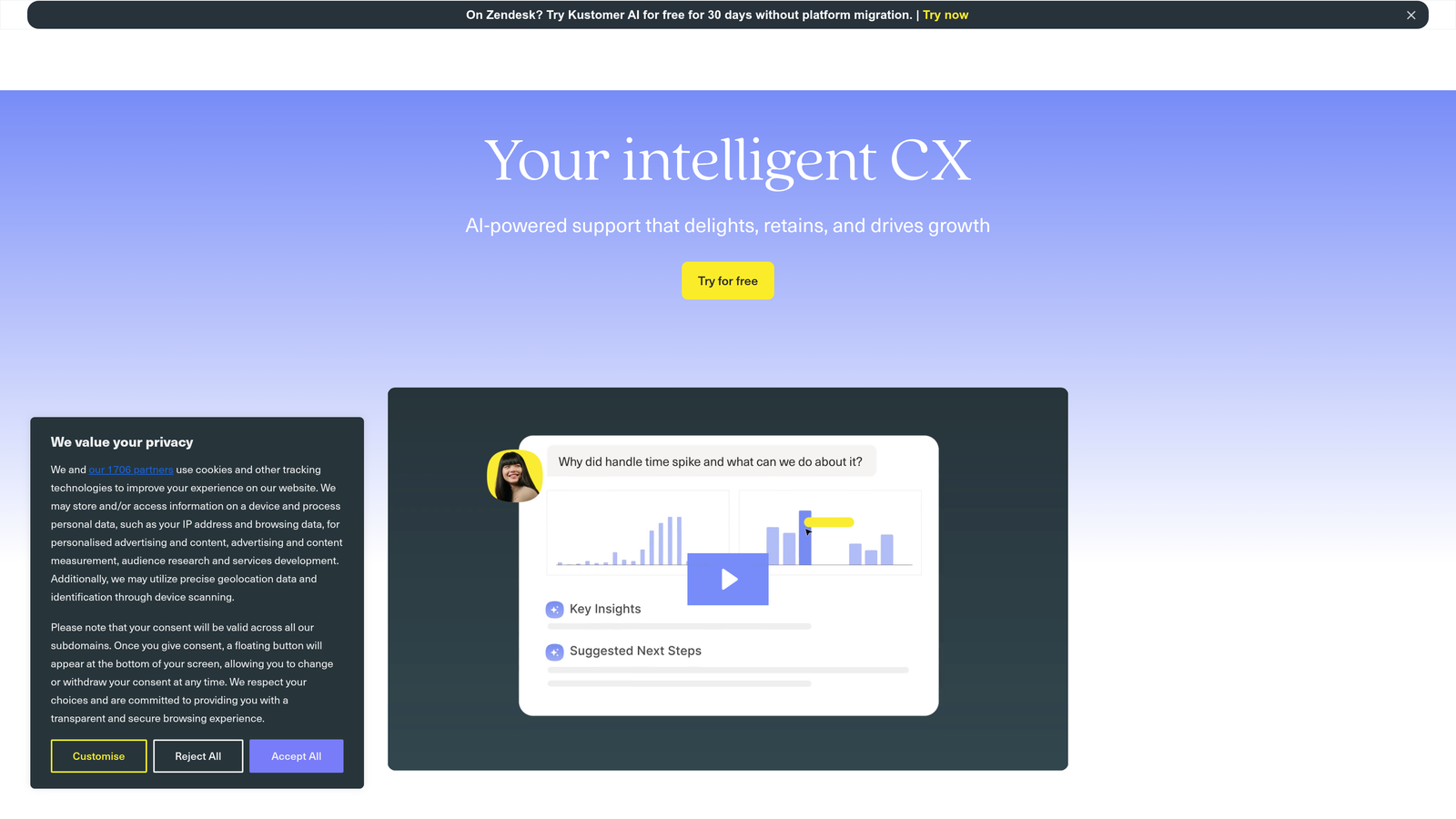
Kustomer is a CRM-powered support platform with customer timeline views and AI capabilities designed for businesses handling thousands of daily conversations.
Where This Tool Shines
Kustomer's customer timeline view shows every interaction, purchase, and data point in chronological order. Agents see complete context without switching between systems—orders, subscriptions, past tickets, and custom business data all live in one interface.
The platform's custom objects let you model your specific business data directly in the support system. If you sell subscriptions, you can create subscription objects with renewal dates, plan details, and usage metrics that agents access during conversations. This CRM-like flexibility makes it powerful for businesses with complex customer relationships.
Key Features
Customer Timeline View: Complete chronological history of every customer interaction and data point in one screen.
AI-Powered Routing: Intelligent assignment based on agent skills, workload, and conversation context.
Omnichannel Conversations: Unified threads across email, chat, SMS, social media, and voice.
Custom Objects: Model your specific business data and relationships within the support platform.
Proactive Service: Trigger outbound conversations based on customer events or data changes.
Best For
Subscription businesses, marketplaces, or any company where support agents need deep customer context to resolve issues effectively. Best suited for operations handling 10,000+ monthly conversations.
Pricing
Enterprise at $89 per user per month, Ultimate at $139 per user per month. Higher entry point reflects the platform's enterprise focus.
6. Ada
Best for: Companies prioritizing automated resolution with no-code tools for building AI conversations
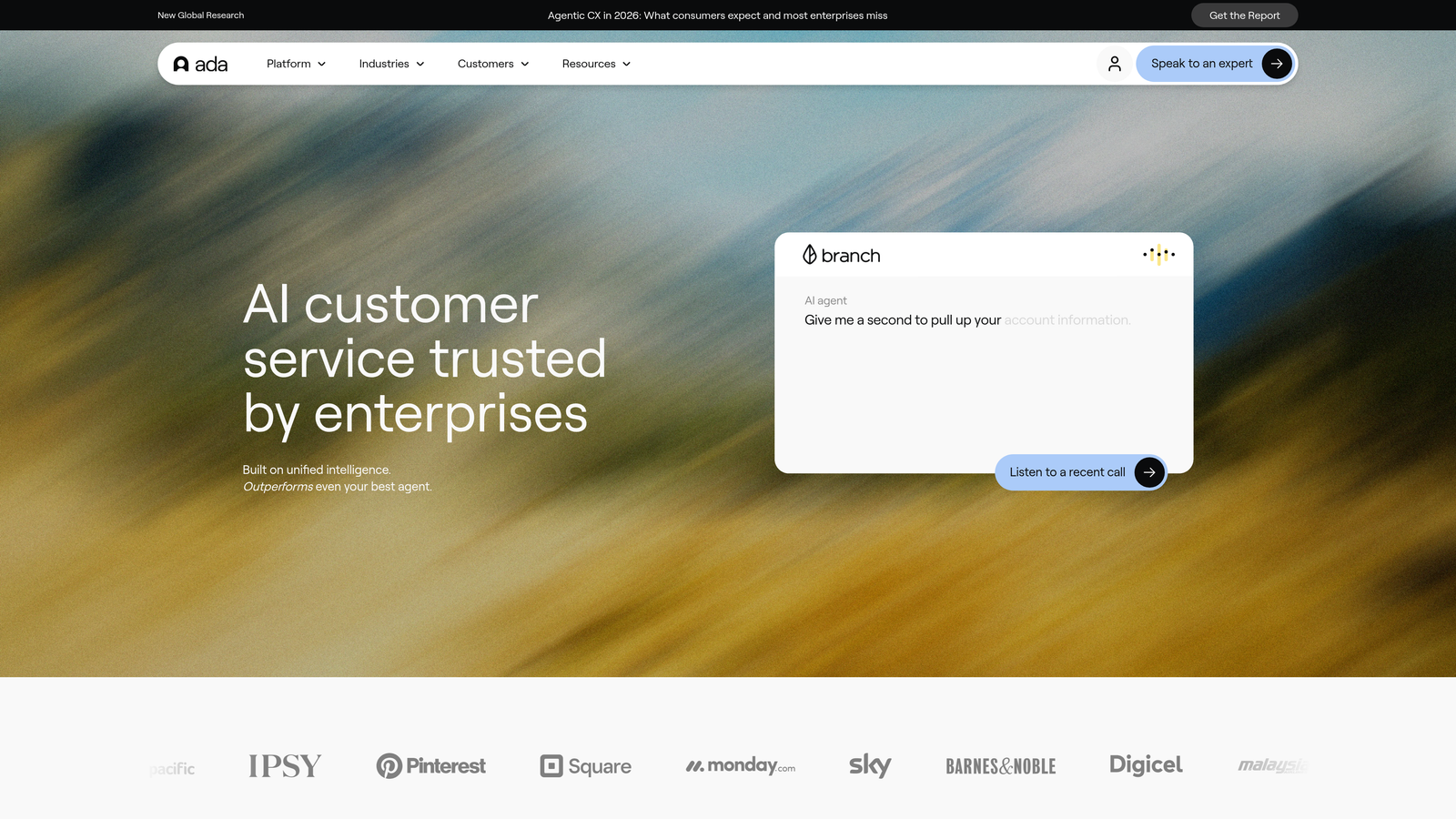
Ada is a purpose-built AI agent platform focused on maximizing automated resolution through conversational AI trained on your content.
Where This Tool Shines
Ada takes a resolution-first approach. The platform measures success by containment rate—how many conversations the AI resolves without human involvement. Their no-code conversation builder lets non-technical teams design complex flows that handle multi-step scenarios.
Multi-language support across 50+ languages makes Ada particularly valuable for global operations. The AI maintains consistent quality across languages, and you manage content in one place rather than maintaining separate knowledge bases per region.
Key Features
AI Agent Training: Learns from your knowledge base, FAQs, and past conversations to handle inquiries autonomously.
No-Code Builder: Visual conversation designer for creating flows without developer involvement.
Multi-Language Support: Handles conversations in 50+ languages with consistent quality.
Action-Taking Integrations: Connects to backend systems to perform tasks like cancellations, refunds, or data updates.
Resolution Analytics: Detailed metrics on containment rate, resolution time, and conversation quality.
Best For
Companies with high volumes of repetitive inquiries who want to maximize automation. Works well for businesses where most support questions have clear answers rather than requiring nuanced judgment.
Pricing
Custom pricing based on conversation volume and resolution targets. Typically structured around cost per resolution rather than per-seat.
7. Gorgias
Best for: E-commerce brands on Shopify needing order management and support in one platform
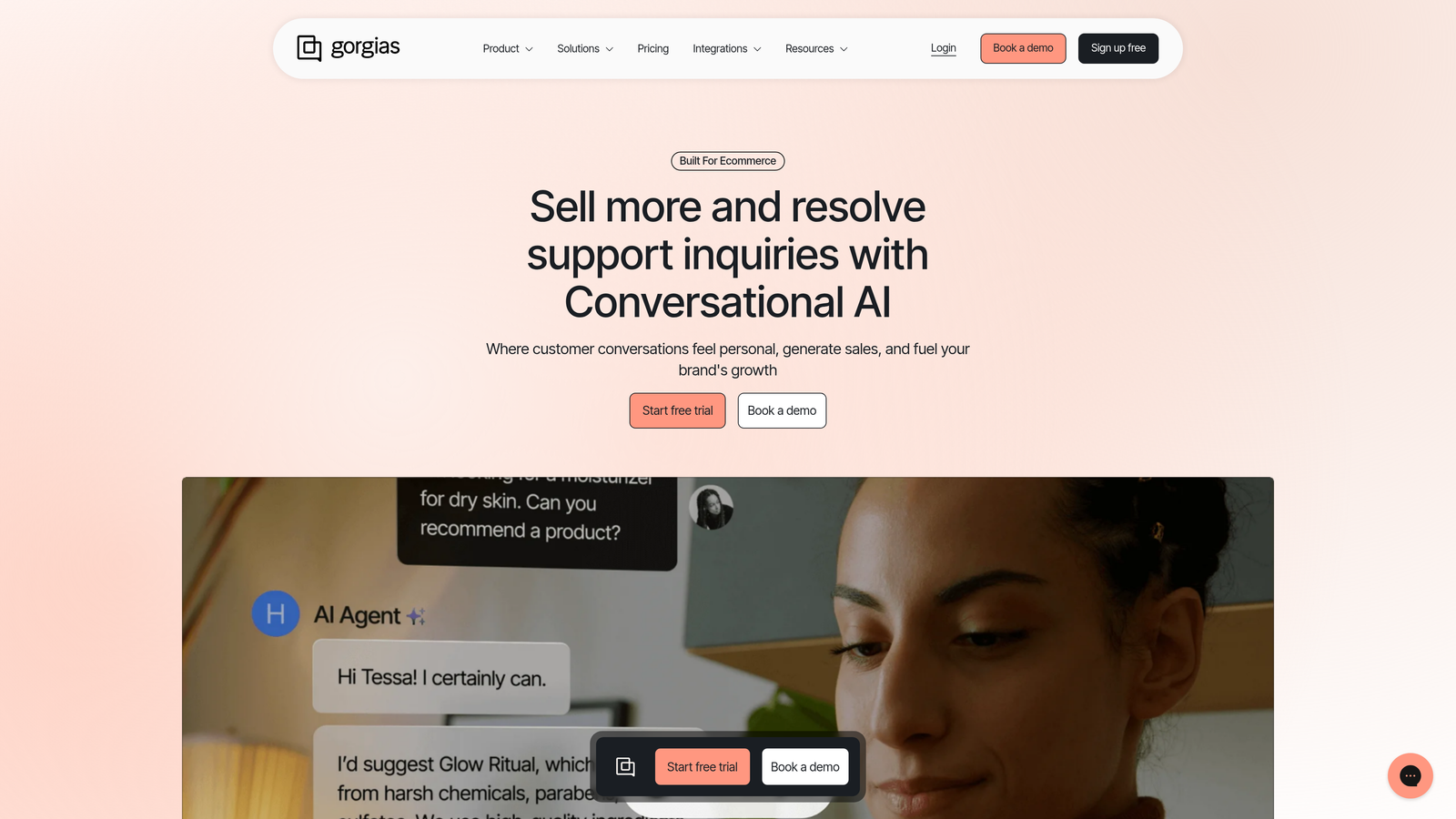
Gorgias is an e-commerce focused helpdesk with deep Shopify integration and automation rules designed for online retail support scenarios.
Where This Tool Shines
Gorgias puts order data front and center. Agents see customer orders, tracking information, and purchase history directly in the support interface. They can process refunds, modify orders, and update shipping addresses without leaving the conversation—eliminating the context switching that slows down e-commerce support.
Automation rules handle the repetitive questions that dominate e-commerce support. "Where is my order?" inquiries get automatic responses with tracking links. Return requests trigger pre-built workflows. This automation is built specifically for retail scenarios rather than generic ticket routing.
Key Features
Native E-commerce Integrations: Deep connections to Shopify, BigCommerce, and Magento with order data in every conversation.
Order Management: Process refunds, cancellations, and modifications directly from the helpdesk.
Automation Rules: Pre-built templates for WISMO, returns, exchanges, and common retail scenarios.
Revenue Tracking: Measure how support interactions impact sales and customer lifetime value.
Social Media Unified: Handle Instagram, Facebook, and SMS alongside email and chat.
Best For
Direct-to-consumer brands on Shopify, BigCommerce, or Magento. Most valuable for businesses handling 500+ monthly support tickets where order-related questions dominate.
Pricing
Starter at $10 per month for 50 tickets, Pro at $300 per month for 2,000 tickets. Pricing scales with ticket volume rather than agent count.
8. Help Scout
Best for: Teams prioritizing personal, human-focused support with AI as an enhancement rather than replacement
Help Scout is a support platform emphasizing simplicity and personal service, with AI drafts and summaries that assist rather than automate.
Where This Tool Shines
Help Scout's philosophy centers on making support feel personal at scale. The interface resembles email more than a traditional ticketing system, encouraging conversational responses rather than template-based replies. AI features like draft suggestions and conversation summaries help agents work faster while maintaining their voice.
Collision detection prevents multiple agents from responding to the same conversation—a simple feature that eliminates embarrassing duplicate responses. Customer profiles show conversation history and custom fields without overwhelming complexity, giving agents context without cognitive overload.
Key Features
AI Drafts: Suggests response drafts that agents can edit and personalize rather than send verbatim.
Conversation Summaries: AI-generated summaries of long threads help agents catch up quickly.
Beacon Widget: Embedded help widget that searches docs before creating conversations.
Collision Detection: Prevents multiple agents from responding to the same conversation simultaneously.
Docs Integration: Knowledge base included with search analytics and article suggestions.
Best For
Small to mid-sized teams who believe support should feel personal and conversational. Works well for B2B companies where relationships matter more than resolution speed metrics.
Pricing
Standard at $20 per user per month, Plus at $40 per user per month with advanced features and AI capabilities.
9. Tidio
Best for: Small businesses entering intelligent support with affordable live chat and AI chatbot capabilities
Tidio is a live chat and chatbot platform with Lyro AI designed for small businesses taking their first steps into automated support.
Where This Tool Shines
Tidio removes the complexity barrier to AI-powered support. Lyro AI chatbot learns from your website content and past conversations without requiring technical setup or extensive training. The visual chatbot builder lets you create custom flows for lead qualification or common questions using drag-and-drop logic.
Live chat with visitor tracking shows you who's browsing your site and what pages they're viewing. This context helps agents provide proactive assistance—reaching out to visitors stuck on pricing pages or spending time in documentation. For small e-commerce sites, the Shopify and WooCommerce integrations provide basic order lookup capabilities.
Key Features
Lyro AI Chatbot: Conversational AI that learns from your content and improves through interactions.
Visual Chatbot Builder: Drag-and-drop interface for creating custom conversation flows.
Live Chat with Tracking: See visitor behavior and browsing history during conversations.
E-commerce Integrations: Basic connections to Shopify and WooCommerce for order information.
Multi-Channel Inbox: Manage chat, email, and messenger conversations in one place.
Best For
Small businesses, solo founders, or early-stage startups who need live chat and basic AI capabilities without enterprise pricing. Works well as a first support tool before graduating to more sophisticated platforms.
Pricing
Free tier available with basic live chat. Lyro AI chatbot starts at $39 per month with limited conversations, scaling based on volume.
Making the Right Choice
The right intelligent customer support platform depends on your specific context and priorities. Halo AI stands out for B2B teams wanting autonomous agents that learn continuously and understand product context—particularly valuable if you're tired of AI that feels bolted on rather than foundational. Intercom works best for product-led growth companies where support blends with onboarding and engagement. Zendesk remains the enterprise choice when you need extensive customization and integrations across complex organizations.
For e-commerce operations, Gorgias delivers purpose-built features that generic helpdesks can't match. Freshdesk offers the best value for mid-market teams wanting solid functionality without enterprise pricing. Help Scout appeals to teams who prioritize personal service over automation metrics.
Consider your integration requirements carefully. If your support team needs to create bug tickets in Linear, update customer records in HubSpot, or trigger workflows in Slack, evaluate how deeply each platform connects to your existing stack. Surface-level integrations that just sync data differ significantly from action-taking integrations that complete tasks autonomously.
Pricing models vary dramatically across these platforms. Per-seat pricing works well for small teams but becomes expensive at scale. Per-resolution pricing aligns cost with value but can be unpredictable. Hybrid models offer flexibility but require careful forecasting. Calculate total cost based on your actual ticket volume and resolution patterns rather than comparing headline prices alone.
Your support team shouldn't scale linearly with your customer base. Let AI agents handle routine tickets, guide users through your product, and surface business intelligence while your team focuses on complex issues that need a human touch. See Halo in action and discover how continuous learning transforms every interaction into smarter, faster support.
Most platforms offer free trials or demos. Test with your actual support scenarios—real tickets, real customer questions, real integration requirements. The platform that looks best on a feature comparison chart might not fit your team's workflow or technical environment. Involve your support agents in the evaluation process. They'll use the platform daily and can identify friction points that executives might miss.