9 Best Intelligent Customer Support Software Platforms in 2026
The best intelligent customer support software platforms in 2026 combine advanced AI that learns from interactions with deep integrations across your business tech stack, transforming support from reactive ticket-solving into proactive, context-aware assistance. This guide evaluates nine leading platforms based on their AI capabilities, scalability, integration depth, and implementation speed to help you choose software that turns customer support into a strategic intelligence source rather than just a cost center.
 Grant CooperFounder12 min read
Customer support has evolved from reactive ticket-solving to intelligent, proactive assistance that anticipates needs before customers even ask. What makes software "intelligent" in 2026 isn't just automation—it's AI that understands context, learns from every interaction, and connects support data to your broader business operations. The best platforms combine sophisticated natural language processing with deep integrations, turning support from a cost center into a strategic intelligence source.
When evaluating intelligent customer support software, prioritize AI capabilities that genuinely improve over time, integration depth that connects support to your entire tech stack, scalability that grows with your team, and implementation speed that delivers value quickly rather than requiring months of configuration. Here are the top intelligent customer support platforms transforming how businesses serve their customers.
1. Halo AI
Best for: Teams wanting AI-first support that continuously learns and provides business intelligence beyond ticket resolution.
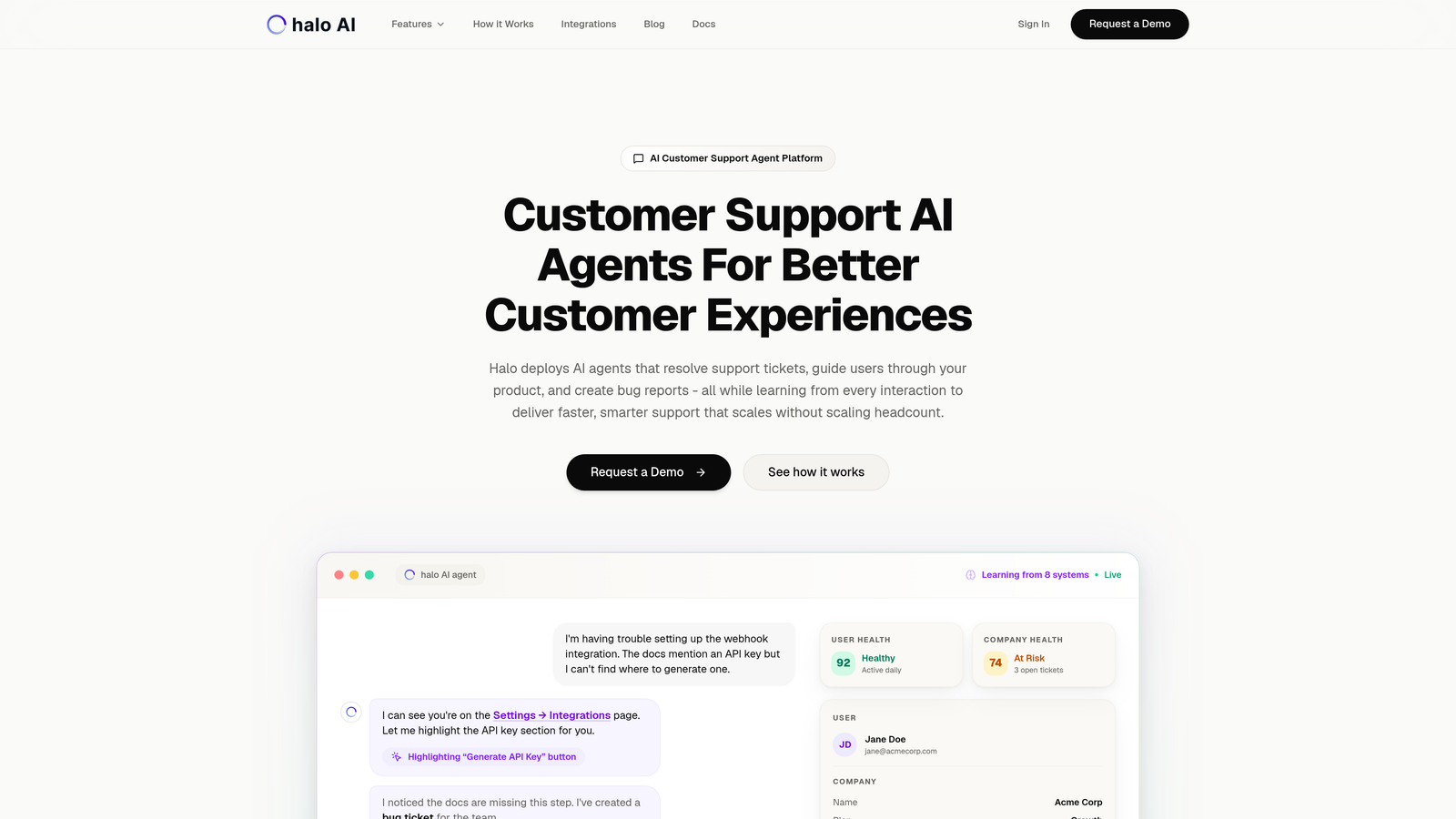
Halo AI is an AI-powered customer support platform built from the ground up for intelligent, autonomous operation rather than bolted onto traditional helpdesk architecture.
Where This Tool Shines
Halo's page-aware context sets it apart—the AI sees exactly what your users see in your product, enabling visual guidance that traditional chatbots can't provide. This contextual awareness means users get help specific to their current screen, not generic troubleshooting steps.
The platform's continuous learning architecture improves with every interaction, creating a support system that gets smarter as your product evolves. Unlike static knowledge bases, Halo's AI agents adapt to new patterns, edge cases, and product updates automatically.
Key Features
Page-Aware Chat Widget: Visual UI guidance that understands user context and provides help based on what's actually displayed on screen.
Continuous Learning System: AI that improves from every interaction, identifying patterns and refining responses without manual retraining.
Auto Bug Ticket Creation: Automatically generates detailed bug reports in Linear when issues are detected, complete with reproduction steps and user context.
Business Intelligence Analytics: Surfaces customer health signals, revenue intelligence, and anomaly detection beyond standard support metrics.
Smart Escalation: Live agent handoff with full conversation context when human expertise is needed for complex issues.
Best For
B2B SaaS companies and product teams seeking AI-first support that scales without scaling headcount. Particularly valuable for teams using helpdesk systems like Zendesk, Freshdesk, or Intercom who want intelligence that connects to their broader business stack including Linear, Slack, HubSpot, Stripe, and Zoom.
Pricing
Contact for custom pricing based on team size and integration requirements.
2. Intercom Fin
Best for: Teams already using Intercom who want GPT-powered AI with seamless human handoff capabilities.
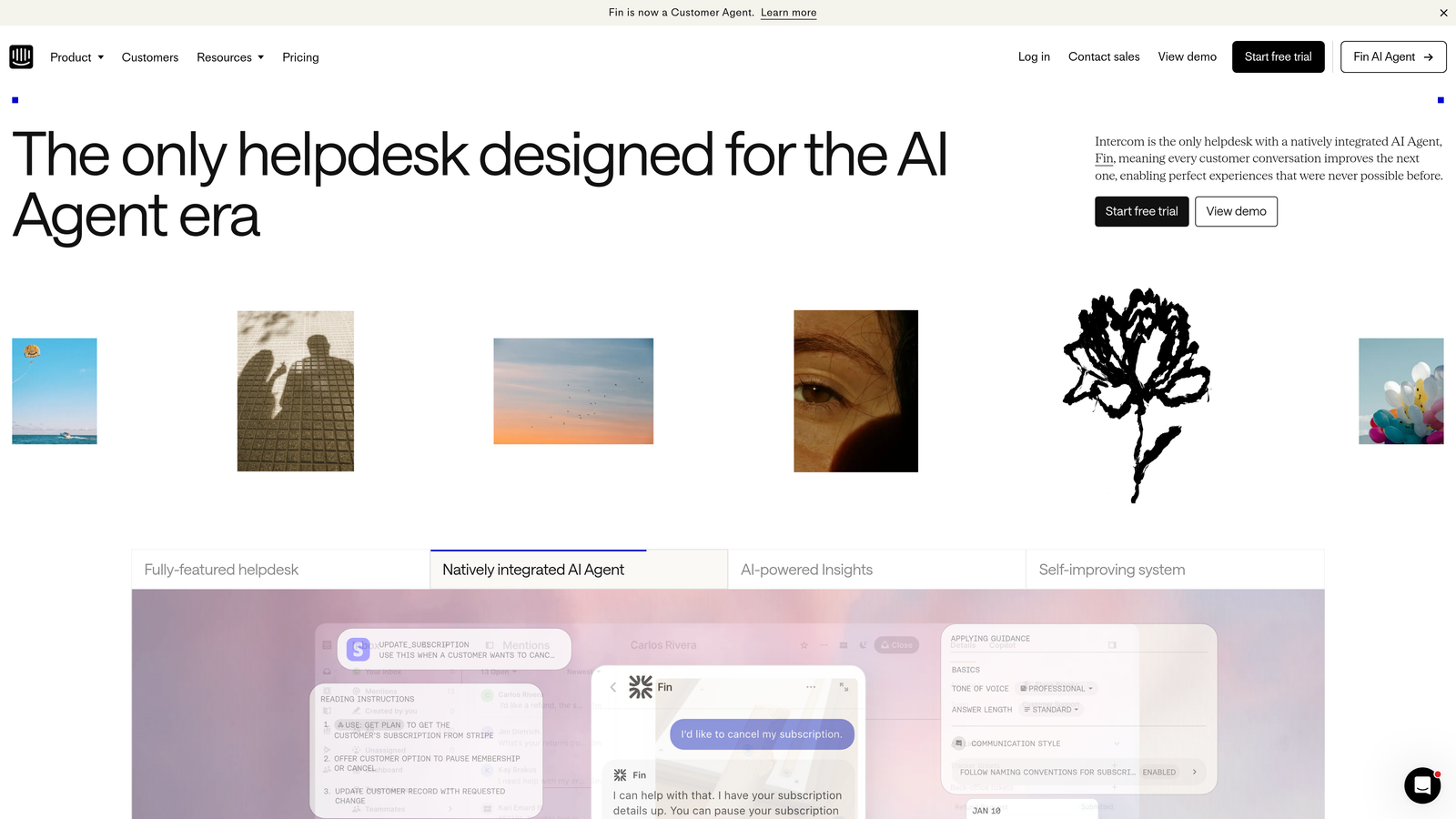
Intercom Fin is a GPT-4 powered AI agent built natively into the Intercom platform, offering intelligent resolution with pay-per-resolution pricing.
Where This Tool Shines
Fin's native integration with Intercom's existing messenger and help center creates a unified experience where AI and human agents work from the same interface. The transition from bot to human feels natural because both operate within the same conversation thread with full context.
The GPT-4 foundation enables sophisticated natural language understanding that handles complex queries beyond simple keyword matching. Fin learns from your help center content and past conversations to provide answers that sound genuinely helpful rather than robotic.
Key Features
GPT-4 Conversational AI: Advanced language model that understands nuance and context in customer questions.
Knowledge Base Learning: Automatically trains on your help center articles and past support conversations to improve accuracy.
Seamless Escalation: Hands off to human agents with full conversation history when resolution requires personal touch.
Multi-Language Support: Handles customer conversations in over 40 languages without separate configuration.
Resolution Analytics: Detailed reporting on what Fin resolves autonomously versus what requires human intervention.
Best For
Companies already invested in the Intercom ecosystem who want to add AI capabilities without switching platforms. Works particularly well for SaaS companies with comprehensive help documentation that Fin can learn from.
Pricing
Starts at $0.99 per resolution, making costs directly tied to value delivered. No resolution means no charge for that interaction.
3. Zendesk AI
Best for: Enterprise teams needing AI built on extensive support data with deep marketplace integrations.
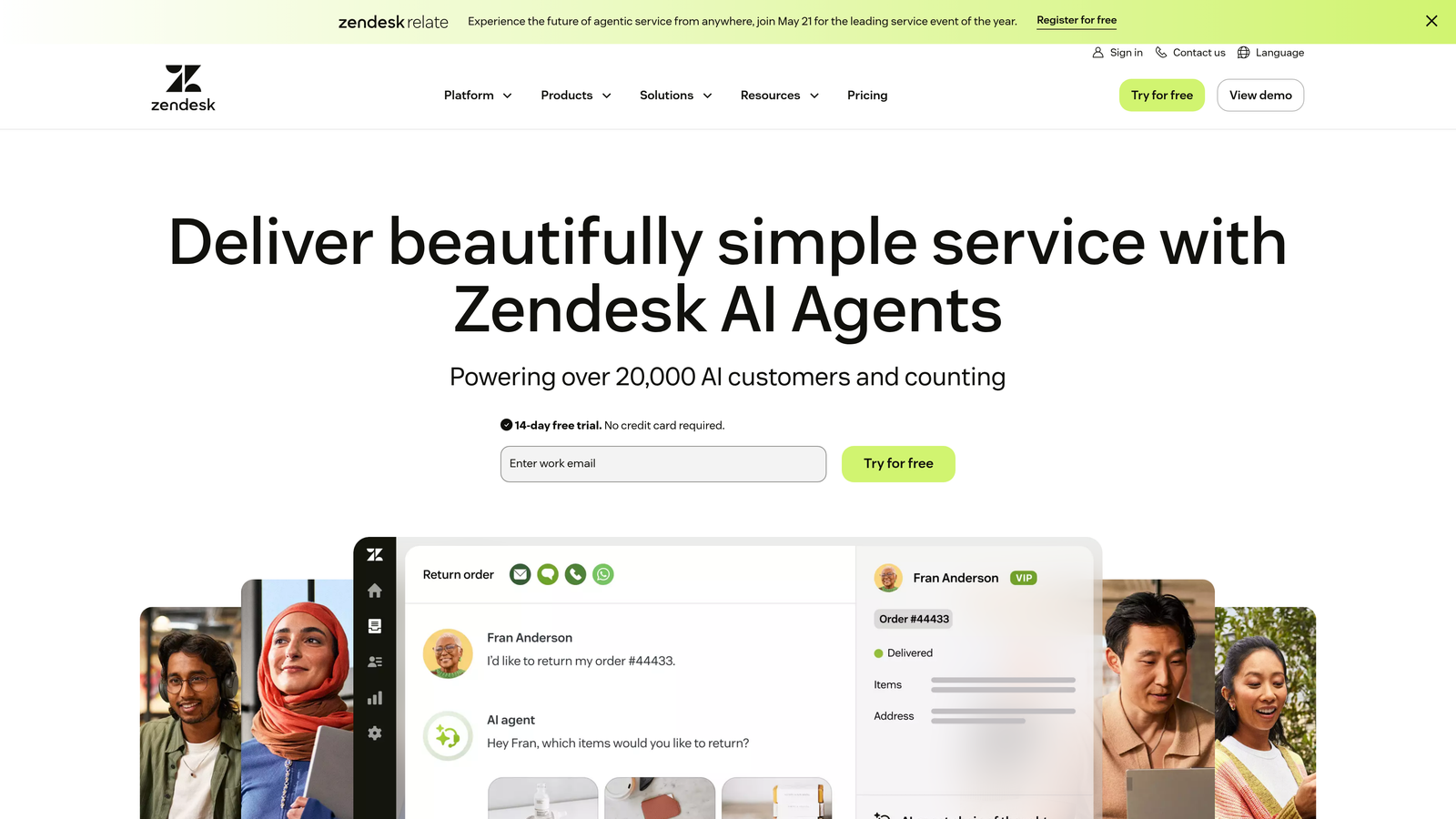
Zendesk AI is an enterprise-grade intelligence layer leveraging decades of support interaction data to power intent detection, routing, and agent assistance.
Where This Tool Shines
Zendesk's AI benefits from training on billions of support interactions across thousands of companies, giving it sophisticated understanding of customer intent and sentiment from day one. This pre-trained intelligence means faster time-to-value compared to platforms that start from scratch.
The extensive marketplace ecosystem allows Zendesk AI to connect with hundreds of business tools, creating an intelligent hub that routes information across your entire support operation. Agent assist features provide real-time suggestions that help human agents resolve issues faster.
Key Features
Intent and Sentiment Detection: Automatically identifies what customers need and how they feel about their experience.
Intelligent Ticket Routing: Directs inquiries to the right team or agent based on content, priority, and historical resolution patterns.
Agent Assist Suggestions: Provides real-time response recommendations and relevant knowledge base articles while agents work.
Advanced Analytics: Comprehensive reporting on resolution rates, customer satisfaction, and agent performance metrics.
Marketplace Integrations: Over 1,200 pre-built integrations connecting support data to CRM, project management, and business intelligence tools.
Best For
Large enterprises with complex support operations requiring sophisticated routing, extensive customization options, and integration with legacy business systems. Best suited for teams with dedicated Zendesk administrators who can configure advanced workflows.
Pricing
AI capabilities available as add-on from $50 per agent per month on top of base Zendesk subscription plans.
4. Freshdesk Freddy AI
Best for: Mid-market companies seeking omnichannel AI support at accessible pricing without enterprise complexity.
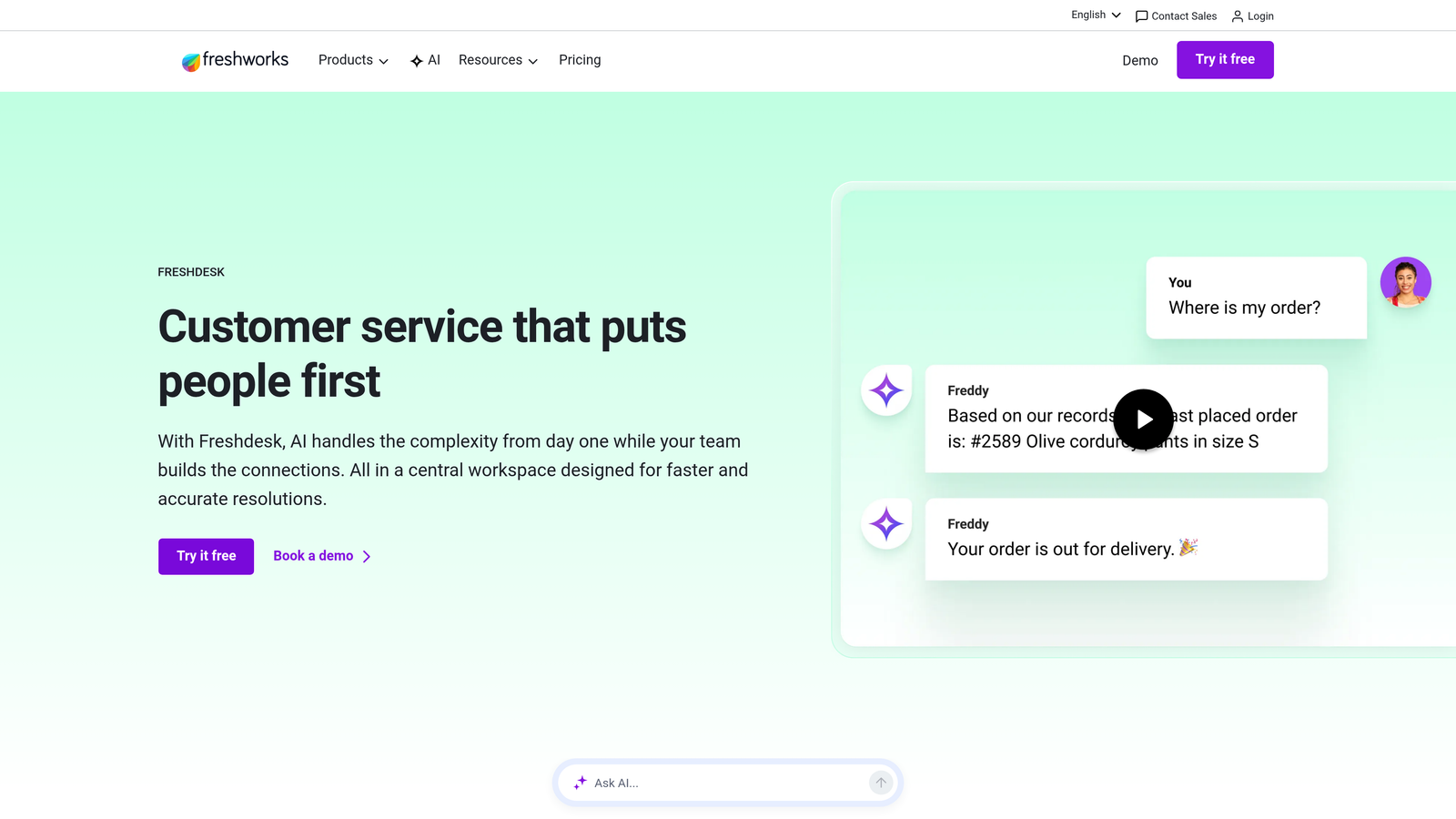
Freshdesk Freddy AI is an AI-powered support suite offering automated ticket handling and smart suggestions across email, chat, social media, and phone channels.
Where This Tool Shines
Freddy AI strikes a balance between sophistication and simplicity, providing intelligent automation without requiring extensive configuration or technical expertise. The omnichannel approach means customers get consistent AI assistance whether they reach out via email, Twitter, or live chat.
The platform's self-service portal builder empowers customers to find answers independently while Freddy learns which articles actually solve problems. This creates a virtuous cycle where the AI gets better at directing customers to helpful content over time.
Key Features
Freddy AI Categorization: Automatically tags and categorizes incoming tickets by topic, priority, and required expertise.
Automated Response Suggestions: Recommends replies based on ticket content and historical resolution patterns.
Omnichannel Support: Unified inbox managing email, chat, social media, and phone conversations in one interface.
Self-Service Portal: Customizable knowledge base with AI-powered article recommendations based on search behavior.
SLA Management: Automated escalation and routing based on service level agreements and business rules.
Best For
Growing companies handling support across multiple channels who need intelligent automation without enterprise-level complexity or pricing. Particularly effective for teams transitioning from basic email support to structured helpdesk operations.
Pricing
Pro plan starts at $49 per agent per month, including Freddy AI capabilities and omnichannel support features.
5. Ada
Best for: Enterprise consumer brands handling high-volume multilingual support with no-code bot customization needs.
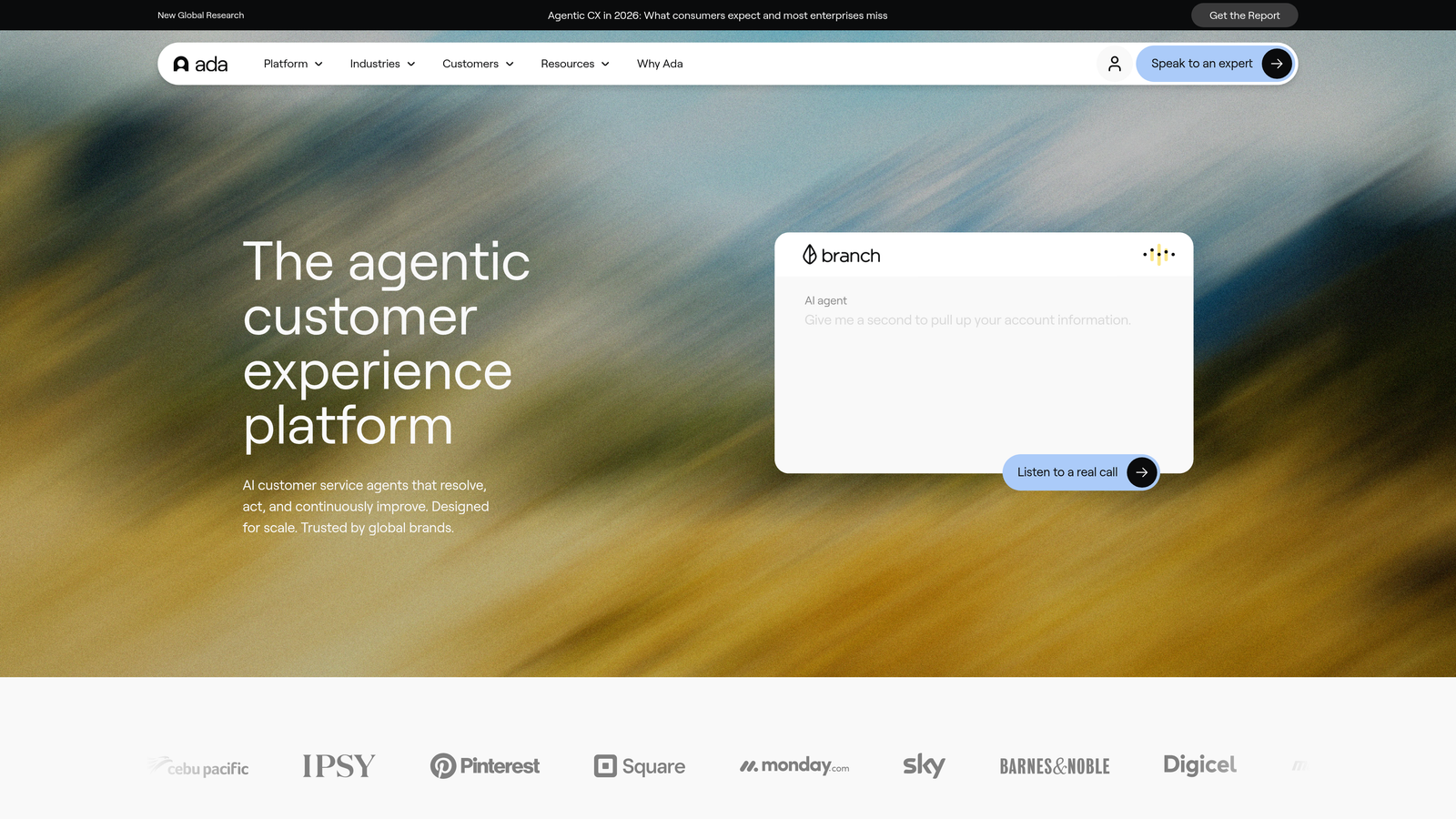
Ada is an enterprise conversational AI platform designed for consumer-facing brands requiring sophisticated natural language understanding across 50+ languages.
Where This Tool Shines
Ada's no-code bot builder enables non-technical teams to create sophisticated conversation flows without developer involvement. This democratization of AI customization means marketing and support teams can iterate on bot experiences based on customer feedback without waiting for engineering resources.
The platform's multilingual capabilities go beyond simple translation, understanding cultural context and regional variations in how customers phrase questions. This makes Ada particularly valuable for global brands serving diverse customer bases across multiple markets.
Key Features
No-Code Bot Builder: Visual interface for creating conversation flows, decision trees, and personalized experiences without coding.
50+ Language Support: Native understanding and response generation across languages with cultural context awareness.
Natural Language Understanding: Sophisticated intent recognition that handles variations in how customers phrase the same question.
CRM Personalization: Pulls customer data to personalize responses based on purchase history, loyalty status, and past interactions.
Enterprise Security: SOC 2 Type II compliance, GDPR readiness, and advanced data protection for regulated industries.
Best For
Large consumer brands in retail, finance, and telecommunications handling millions of support interactions across global markets. Best suited for enterprises with dedicated customer experience teams focused on conversation design and optimization.
Pricing
Custom enterprise pricing based on conversation volume, language requirements, and integration complexity. Contact for quote.
6. Kustomer
Best for: E-commerce and DTC brands needing unified customer timelines with intelligent order management capabilities.
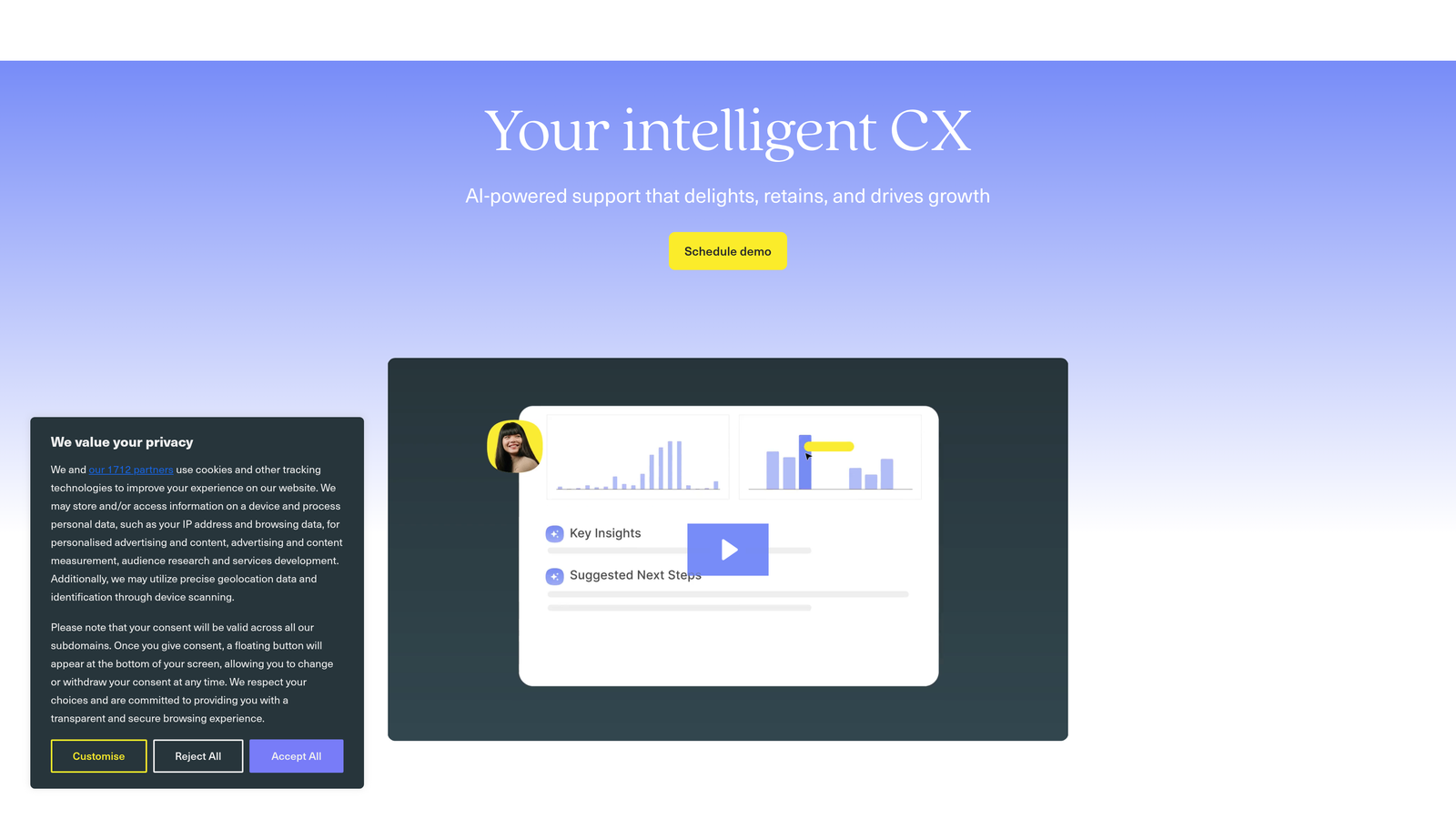
Kustomer is an AI-powered CRM platform for customer service that unifies support interactions with order history, returns, and customer journey data.
Where This Tool Shines
Kustomer's timeline view presents every customer interaction, purchase, and service request in chronological context, enabling agents to understand the full relationship rather than treating each ticket in isolation. This holistic approach reduces repetitive questions and speeds resolution.
The platform's native order and returns management eliminates the need to switch between support and e-commerce systems. Agents can process refunds, track shipments, and modify orders directly within the conversation interface, creating seamless customer experiences.
Key Features
Unified Customer Timeline: Chronological view of all interactions, purchases, and service history in a single interface.
AI Sentiment Analysis: Automatically detects customer frustration or satisfaction to prioritize urgent issues and identify at-risk accounts.
Order Management: Native capabilities for processing returns, refunds, and order modifications without leaving the support platform.
Intelligent Routing: Directs conversations to specialized agents based on order value, customer lifetime value, and issue complexity.
Proactive Outreach: Automated messaging triggered by order events, delivery delays, or customer behavior patterns.
Best For
E-commerce brands and direct-to-consumer companies where support and commerce are deeply intertwined. Particularly valuable for businesses with complex product catalogs, subscription models, or high-touch customer relationships.
Pricing
Enterprise plan starts at $89 per user per month with volume discounts for larger teams.
7. Tidio
Best for: Small businesses and startups needing affordable AI chat that deploys in minutes without technical expertise.
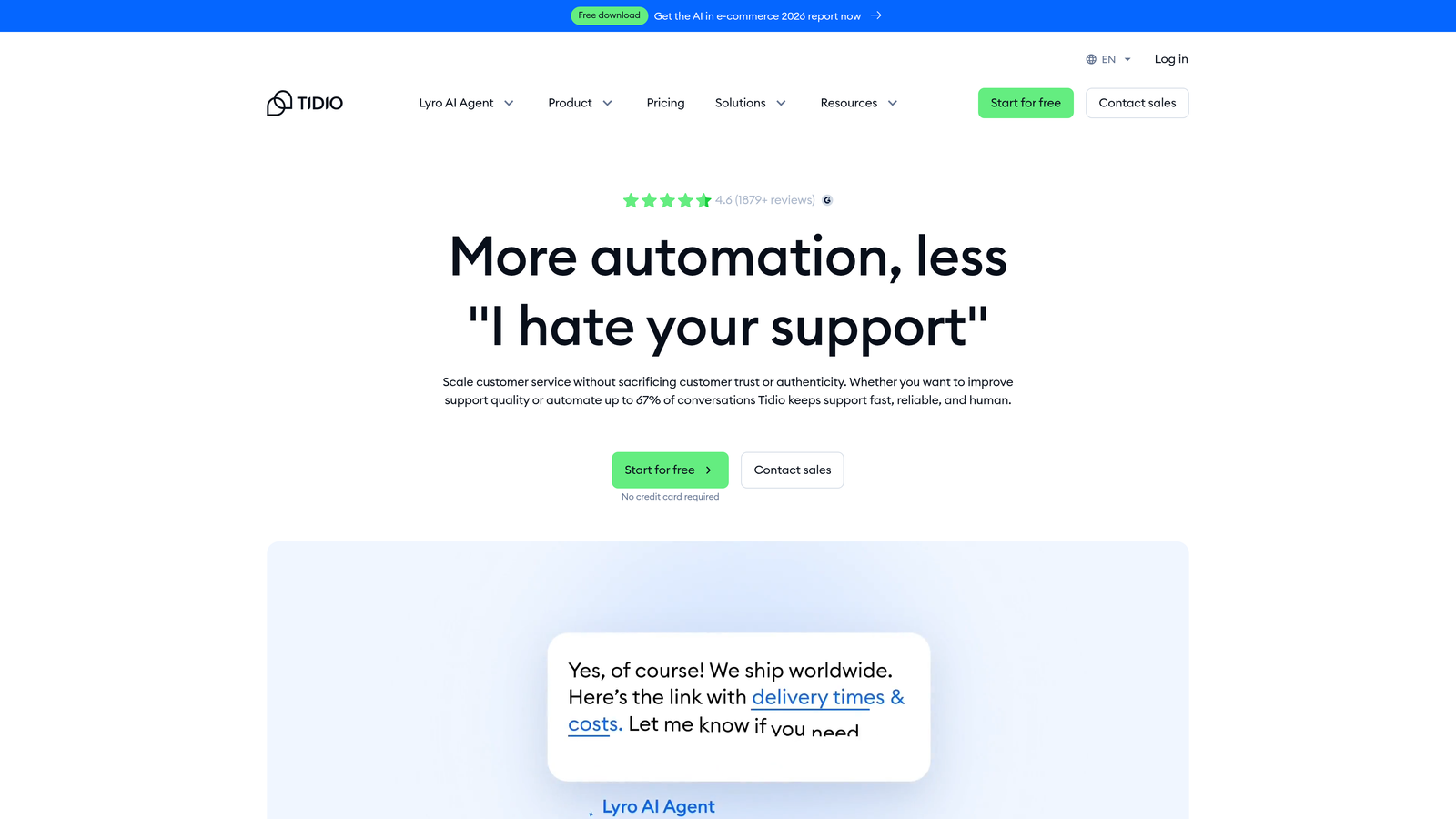
Tidio is an SMB-friendly AI chatbot platform featuring Lyro AI that learns from knowledge bases to handle customer conversations autonomously.
Where This Tool Shines
Tidio's visual chatbot builder makes sophisticated conversation flows accessible to non-technical users through drag-and-drop simplicity. You can create a functional support bot in under an hour rather than weeks of development and training.
The platform's e-commerce integrations with Shopify and WooCommerce enable quick deployment for online stores, with pre-built templates for common scenarios like order tracking, product recommendations, and abandoned cart recovery. This out-of-the-box functionality delivers immediate value.
Key Features
Lyro AI Conversational Agent: AI that learns from your knowledge base to answer customer questions in natural language.
Visual Chatbot Builder: Drag-and-drop interface for creating conversation flows without coding or technical skills.
Live Chat with Visitor Tracking: See what pages visitors are browsing to provide proactive assistance based on behavior.
E-commerce Integrations: Native connections to Shopify, WooCommerce, and major e-commerce platforms for order data access.
Quick Deployment: Get chatbots live on your website in minutes with simple embed code installation.
Best For
Small e-commerce businesses, startups, and solopreneurs who need intelligent chat support without enterprise budgets or technical resources. Ideal for teams experimenting with AI support for the first time.
Pricing
Free tier available for basic live chat. Lyro AI capabilities start at $29 per month with conversation volume limits.
8. HubSpot Service Hub
Best for: Companies using HubSpot CRM who want unified customer data across marketing, sales, and support operations.
HubSpot Service Hub is an AI-enhanced service platform that unifies support with HubSpot's CRM, offering intelligent routing and automated customer feedback collection.
Where This Tool Shines
Service Hub's native CRM integration means support teams see the complete customer context—marketing emails received, sales conversations, deal history, and past support tickets—all in one unified record. This eliminates the frustration of customers repeating information across departments.
The conversation intelligence features analyze support interactions to identify trends, common pain points, and opportunities for product improvement. This transforms support from a reactive function into a strategic feedback loop that informs product development and marketing.
Key Features
AI Ticket Routing: Automatically assigns tickets based on agent expertise, workload, and customer priority level.
Knowledge Base with AI: Self-service portal where AI suggests relevant articles based on search patterns and ticket content.
Customer Feedback Automation: Automated surveys triggered by ticket resolution to measure satisfaction and gather improvement insights.
Unified CRM View: Complete customer timeline spanning marketing, sales, and support interactions in a single interface.
Conversation Intelligence: Analyzes support interactions to surface trends, sentiment patterns, and recurring issues.
Best For
B2B companies already using HubSpot for marketing and sales who want to extend that ecosystem to customer support. Particularly valuable for organizations prioritizing alignment between revenue teams and customer success.
Pricing
Professional tier starts at $90 per month for two users, with additional seats priced separately. AI features included in Professional and Enterprise tiers.
9. Salesforce Service Cloud Einstein
Best for: Large enterprises with existing Salesforce investments needing predictive AI and deep ecosystem integration.
Salesforce Service Cloud Einstein is an AI-powered service platform with predictive capabilities built for enterprises operating within the Salesforce ecosystem.
Where This Tool Shines
Einstein's predictive capabilities go beyond reactive support, forecasting case volumes, identifying customers at risk of churn, and recommending next-best actions before issues escalate. This proactive intelligence helps enterprises manage support operations strategically rather than just responding to incoming tickets.
The deep integration with Salesforce's broader ecosystem—Sales Cloud, Marketing Cloud, Commerce Cloud—creates a unified view of customer relationships that spans the entire lifecycle. Support becomes part of a comprehensive customer intelligence system rather than an isolated function.
Key Features
Einstein Case Classification: Automatically categorizes and prioritizes cases based on content, customer value, and historical patterns.
Predictive Case Routing: Routes cases to agents most likely to resolve them quickly based on skills, past performance, and current workload.
Next-Best-Action Recommendations: Suggests proactive steps agents should take based on customer history and predictive models.
Omni-Channel Routing: Unified queue management across email, chat, phone, social media, and messaging apps.
Salesforce Ecosystem Integration: Native connections to Sales Cloud, Marketing Cloud, and thousands of AppExchange applications.
Best For
Large enterprises with complex support operations already invested in Salesforce infrastructure. Best suited for organizations with dedicated Salesforce administrators and developers who can leverage the platform's extensive customization capabilities.
Pricing
Enterprise edition starts at $165 per user per month, with Einstein AI features available as add-ons or included in higher-tier plans.
Making the Right Choice
The right intelligent customer support platform depends on your team size, existing tech stack, and strategic priorities. For AI-first startups and product teams wanting support that genuinely learns and improves, Halo AI delivers continuous intelligence with page-aware context that traditional helpdesks can't match. Its business intelligence capabilities transform support from a cost center into a strategic data source.
Mid-market teams already using platforms like Intercom or Zendesk should consider their native AI offerings—Intercom Fin and Zendesk AI integrate seamlessly with existing workflows. Freshdesk Freddy AI offers similar capabilities at more accessible pricing for growing companies handling omnichannel support.
For enterprises with established ecosystems, alignment matters more than standalone features. HubSpot Service Hub makes sense if you're already using HubSpot CRM, while Salesforce Service Cloud Einstein is the logical choice for Salesforce-invested organizations. E-commerce brands benefit from Kustomer's unified timeline and native order management, while global consumer brands handling multilingual support at scale should evaluate Ada's sophisticated language capabilities.
Small businesses and startups experimenting with AI support for the first time will find Tidio's visual builder and affordable pricing the fastest path to value. The platform's e-commerce integrations and quick deployment mean you can start automating support within hours rather than months.
Your support team shouldn't scale linearly with your customer base. Let AI agents handle routine tickets, guide users through your product, and surface business intelligence while your team focuses on complex issues that need a human touch. See Halo in action and discover how continuous learning transforms every interaction into smarter, faster support.