9 Best Intelligent Customer Support Systems for Scaling Teams in 2026
When support tickets overwhelm your team, an intelligent customer support system can automatically resolve routine inquiries, route complex issues to specialized agents, and improve through machine learning. This guide evaluates the top 9 platforms for 2026 based on AI capabilities, integration options, and real-world performance—helping growing startups and enterprises find solutions that match their specific workflow needs and scale requirements.
 Grant CooperFounder14 min read
When support tickets pile up faster than your team can respond, customers don't wait—they leave. Intelligent customer support systems use AI to resolve routine inquiries automatically, route complex issues to the right agents, and learn from every interaction to get smarter over time. But not all platforms deliver equal results.
Some excel at automation, others at analytics, and a few try to do everything. We evaluated dozens of solutions based on AI capabilities, integration depth, ease of implementation, and real-world performance to bring you the top platforms worth your attention this year. Whether you're a growing startup drowning in tickets or an enterprise seeking to optimize existing workflows, this guide will help you find the right fit.
1. Halo AI
Best for: Teams wanting autonomous AI agents that continuously learn from every customer interaction
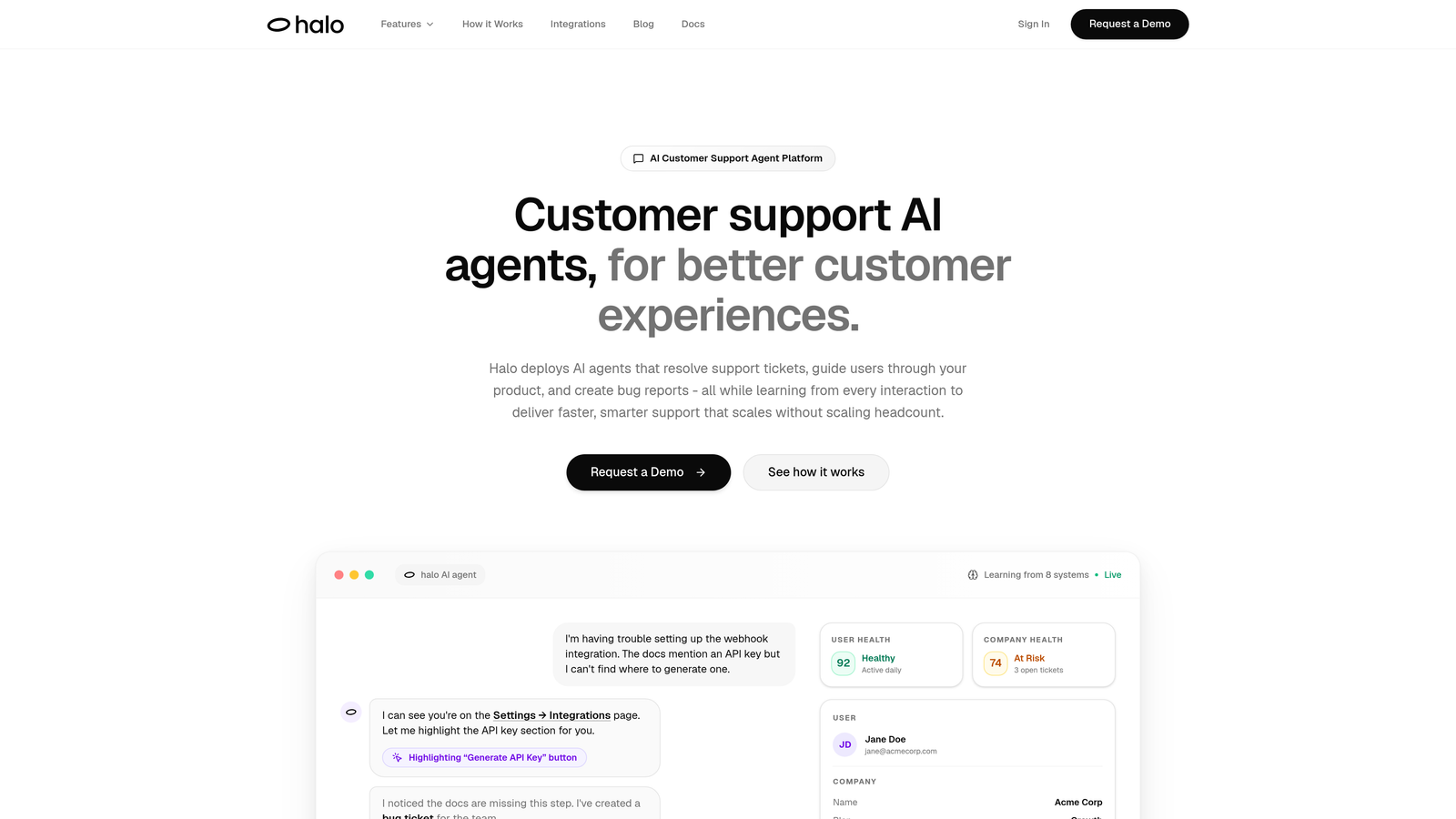
Halo AI is an AI-native customer support platform built from the ground up for autonomous operation rather than bolted onto existing helpdesk architecture.
Where This Tool Shines
Unlike traditional helpdesks with AI features added later, Halo's entire architecture centers on intelligent agents that resolve tickets independently. The platform's page-aware capabilities mean it actually sees what your users see, providing contextual guidance that references specific UI elements rather than generic instructions.
The continuous learning approach sets it apart. Every resolved ticket, every customer interaction, and every product change feeds back into the system's knowledge base automatically. This means your support quality improves over time without manual knowledge base updates or constant bot retraining.
Key Features
Autonomous AI Agents: Resolve support tickets end-to-end without human intervention for routine inquiries, with intelligent escalation when complexity requires human expertise.
Page-Aware Chat Widget: Provides visual UI guidance that references exactly what users see on their screen, eliminating the "where do I click" confusion that plagues generic chatbots.
Smart Inbox with Business Intelligence: Goes beyond support metrics to surface customer health signals, revenue intelligence, and anomaly detection across your entire business stack.
Auto Bug Ticket Creation: Automatically creates detailed bug reports in Linear when support conversations reveal product issues, complete with reproduction steps and context.
Seamless Live Agent Handoff: Transfers complex issues to human agents with full conversation context, ensuring customers never repeat themselves during escalation.
Best For
B2B companies and product teams who want support that scales without scaling headcount. Particularly valuable for SaaS businesses using modern stacks (Linear, Slack, HubSpot, Intercom, Stripe) who need deep integrations across their entire business ecosystem.
Pricing
Contact for custom pricing based on your support volume and integration needs. Demo available to see the platform in action with your specific use cases.
2. Intercom
Best for: Product-led companies prioritizing conversational experiences across multiple customer touchpoints
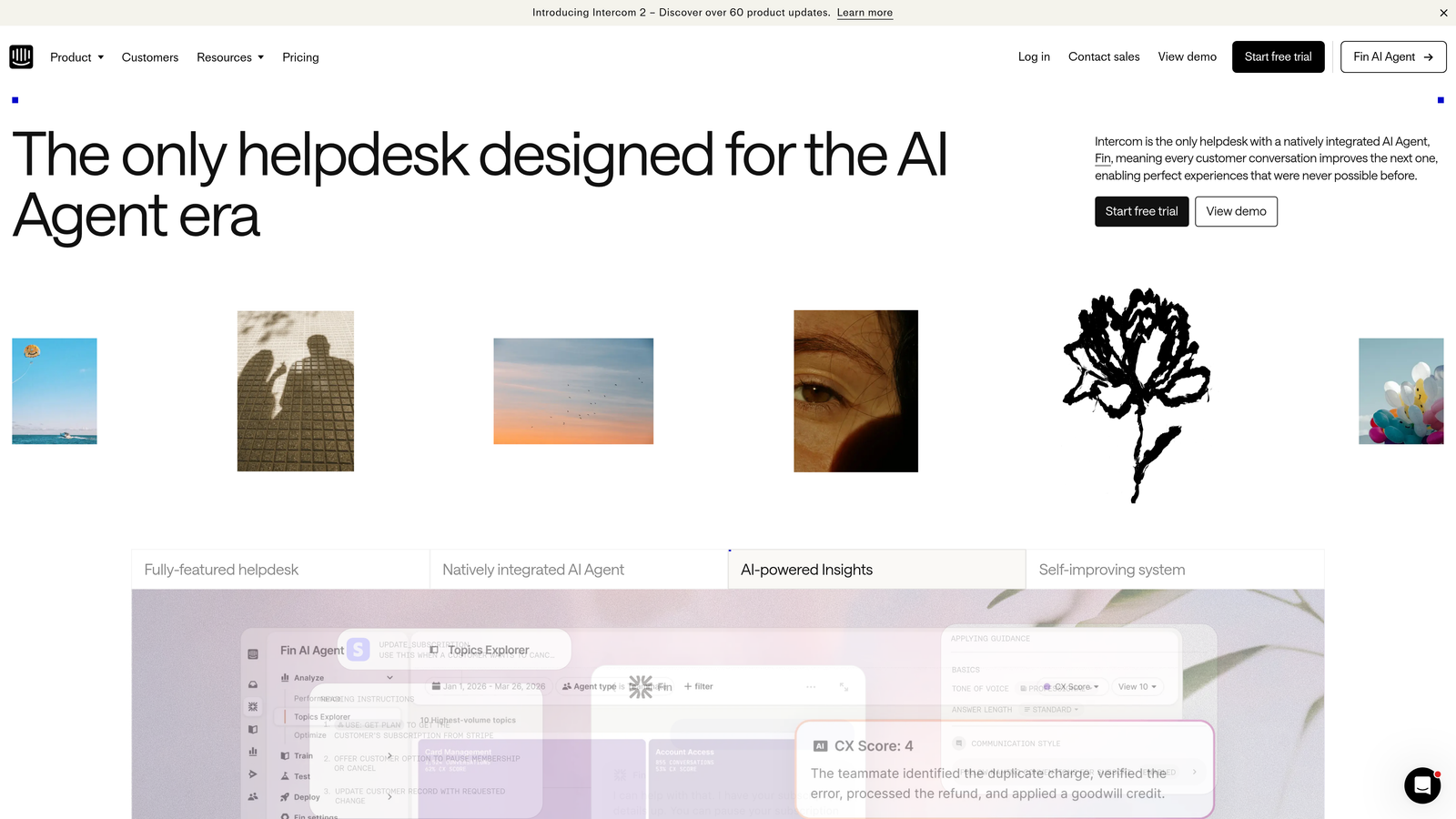
Intercom combines messaging, automation, and its Fin AI agent into a unified conversational platform that works across chat, email, and social channels.
Where This Tool Shines
Intercom excels at creating cohesive customer journeys that blend support, marketing, and product experiences. The platform feels less like a traditional helpdesk and more like a complete customer communication system. Product tours and in-app messaging sit alongside support conversations, making it natural to guide users proactively rather than waiting for them to get stuck.
Fin AI, their answer to autonomous support, trains on your knowledge base and can resolve straightforward questions without agent involvement. The visual bot builder makes it accessible to non-technical teams who want to customize conversation flows without writing code.
Key Features
Fin AI Agent: Trains on your knowledge base to answer customer questions autonomously, with transparent sourcing that shows which articles informed each response.
Unified Inbox: Consolidates conversations from chat, email, and social media into a single workspace where agents see complete customer context.
Product Tours: Create guided walkthroughs and in-app messaging to reduce support volume by helping users discover features proactively.
Custom Bots: Build conversation flows with a visual drag-and-drop interface that requires no coding experience.
Resolution Reports: Track which conversations AI handled completely versus those requiring human intervention, with insights into knowledge gaps.
Best For
SaaS companies with 50-500 employees who want to blend support with proactive customer engagement. Works especially well for product-led growth strategies where in-app messaging and contextual help drive adoption.
Pricing
Starts at $39 per seat monthly for core platform features. Fin AI priced separately based on resolution volume, which can add significant cost at scale.
3. Zendesk
Best for: Enterprise organizations with complex workflows needing extensive customization and integration options
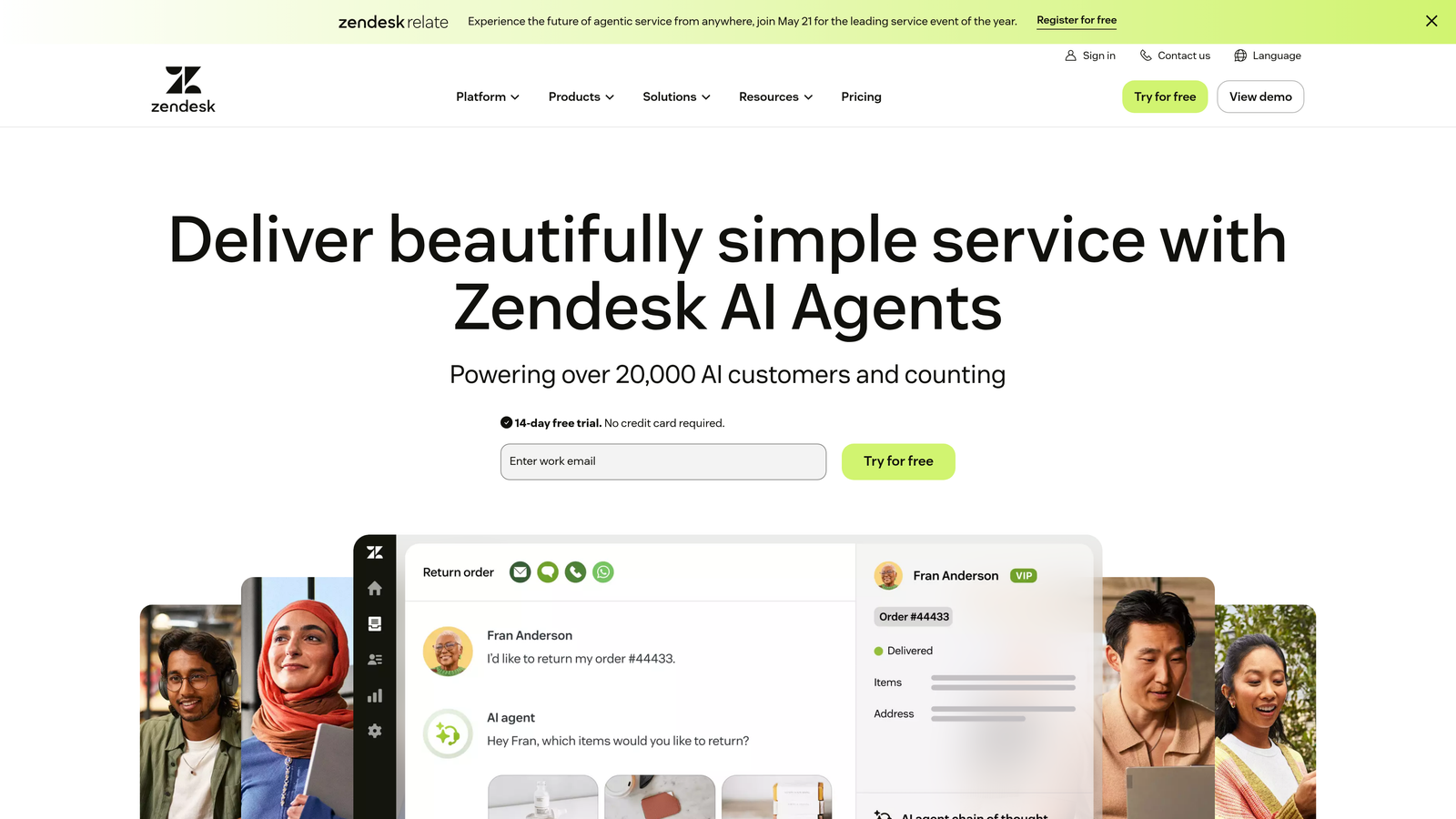
Zendesk is the enterprise-grade platform with advanced AI add-ons, offering deep customization capabilities and a massive app marketplace for complex support operations.
Where This Tool Shines
Zendesk's real strength lies in its extensibility. With over 1,500 marketplace integrations and robust API access, you can connect virtually any business system to your support workflows. Large organizations with specialized needs appreciate the ability to customize everything from ticket fields to routing logic to reporting dashboards.
The advanced AI capabilities include intent detection that routes tickets based on underlying customer needs rather than just keywords, and predictive analytics that forecast support volume trends. For enterprises managing multiple brands or complex product lines, Zendesk's multi-brand support and sophisticated permissions keep everything organized.
Key Features
Advanced AI with Intent Detection: Analyzes ticket content to understand true customer intent and route to specialized teams automatically.
Omnichannel Ticketing: Manages conversations across email, chat, phone, social media, and messaging apps with unified workflows and reporting.
Extensive App Marketplace: Access 1,500+ pre-built integrations covering CRMs, e-commerce platforms, analytics tools, and business applications.
Customizable Analytics: Build custom reports and dashboards that track exactly the metrics your business cares about, with data export for deeper analysis.
Agent Workspace: Provides AI-powered suggestions for responses, relevant knowledge base articles, and similar past tickets to speed resolution.
Best For
Enterprises with 100+ support agents managing complex, multi-brand operations. Companies with existing technology stacks requiring deep integrations and custom workflows will find Zendesk's flexibility valuable despite the complexity.
Pricing
Starts at $55 per agent monthly for core platform. Advanced AI capabilities require additional add-on fees that can significantly increase total cost for larger teams.
4. Freshdesk
Best for: Budget-conscious SMBs wanting solid automation without enterprise complexity or cost
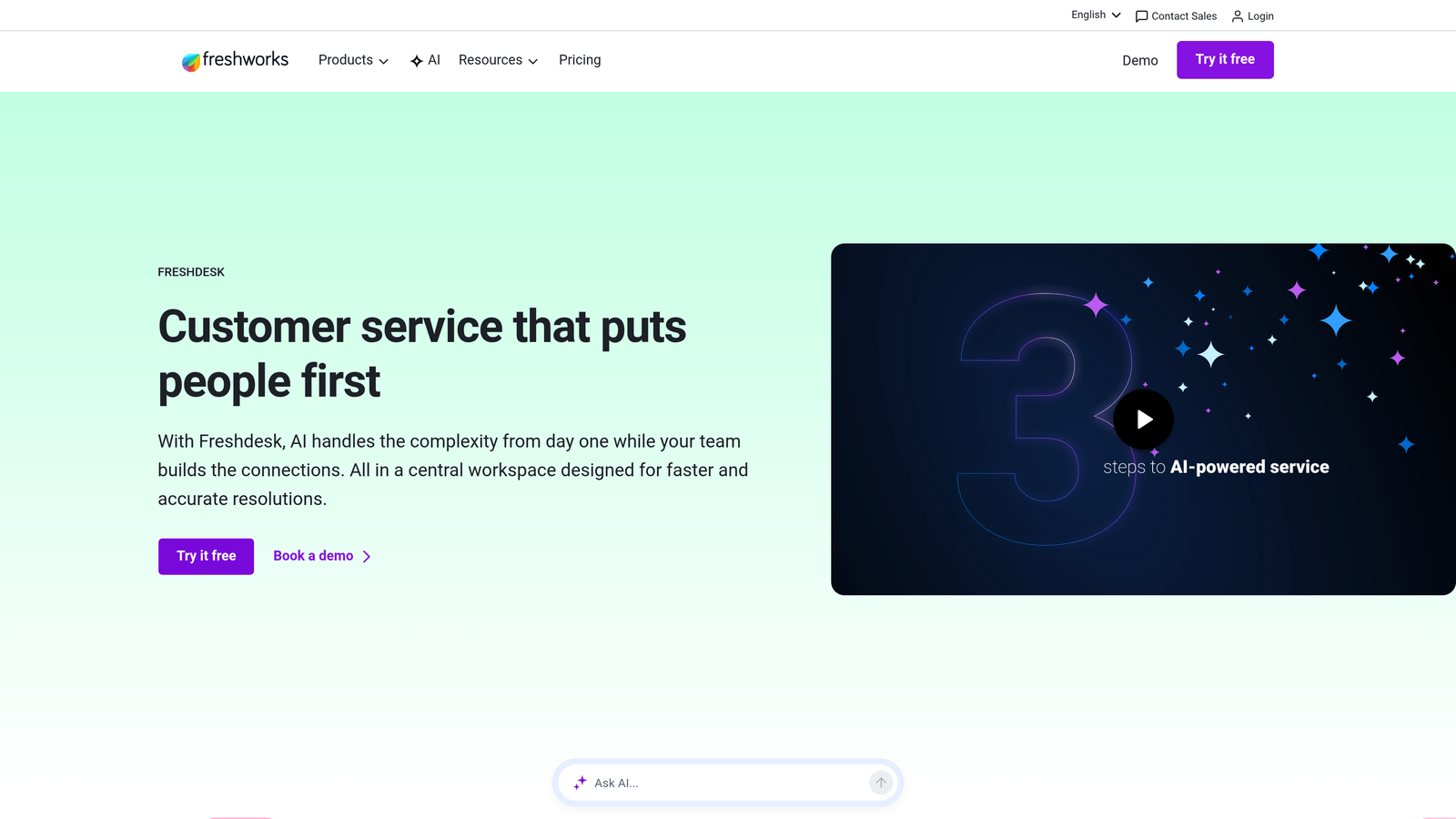
Freshdesk offers Freddy AI capabilities and workflow automation at price points accessible to growing businesses without sacrificing essential features.
Where This Tool Shines
Freshdesk hits the sweet spot between capability and affordability. Freddy AI handles ticket classification, suggests responses, and identifies sentiment without requiring expensive add-ons. The scenario-based automation builder lets you create sophisticated workflows without technical expertise—if a ticket contains certain keywords and comes from a priority customer, automatically escalate and notify the team lead.
The free tier actually provides genuine value rather than just being a trial in disguise. Small teams can run their entire support operation on the free plan, then scale up as they grow without switching platforms or migrating data.
Key Features
Freddy AI: Automatically classifies tickets by category and urgency, suggests responses based on past resolutions, and detects customer sentiment to flag frustrated users.
Scenario-Based Automations: Create if-this-then-that workflows that handle routing, prioritization, and notifications based on ticket properties and customer data.
Team Collaboration: Assign shared ownership for complex tickets, add internal notes, and loop in specialists without cluttering customer-facing conversations.
SLA Management: Set response and resolution targets by ticket priority, with automatic escalation when deadlines approach.
Self-Service Portal: Build a branded knowledge base and community forum where customers find answers before contacting support.
Best For
Small to mid-sized businesses with 5-50 support team members who need professional helpdesk capabilities without enterprise budgets. Particularly suited to companies outgrowing email-based support but not ready for complex platforms.
Pricing
Free tier available for up to 10 agents with basic features. Paid plans start at $15 per agent monthly, with Freddy AI included at all paid tiers.
5. Ada
Best for: Enterprise teams handling high-volume, multilingual support requiring sophisticated AI without coding
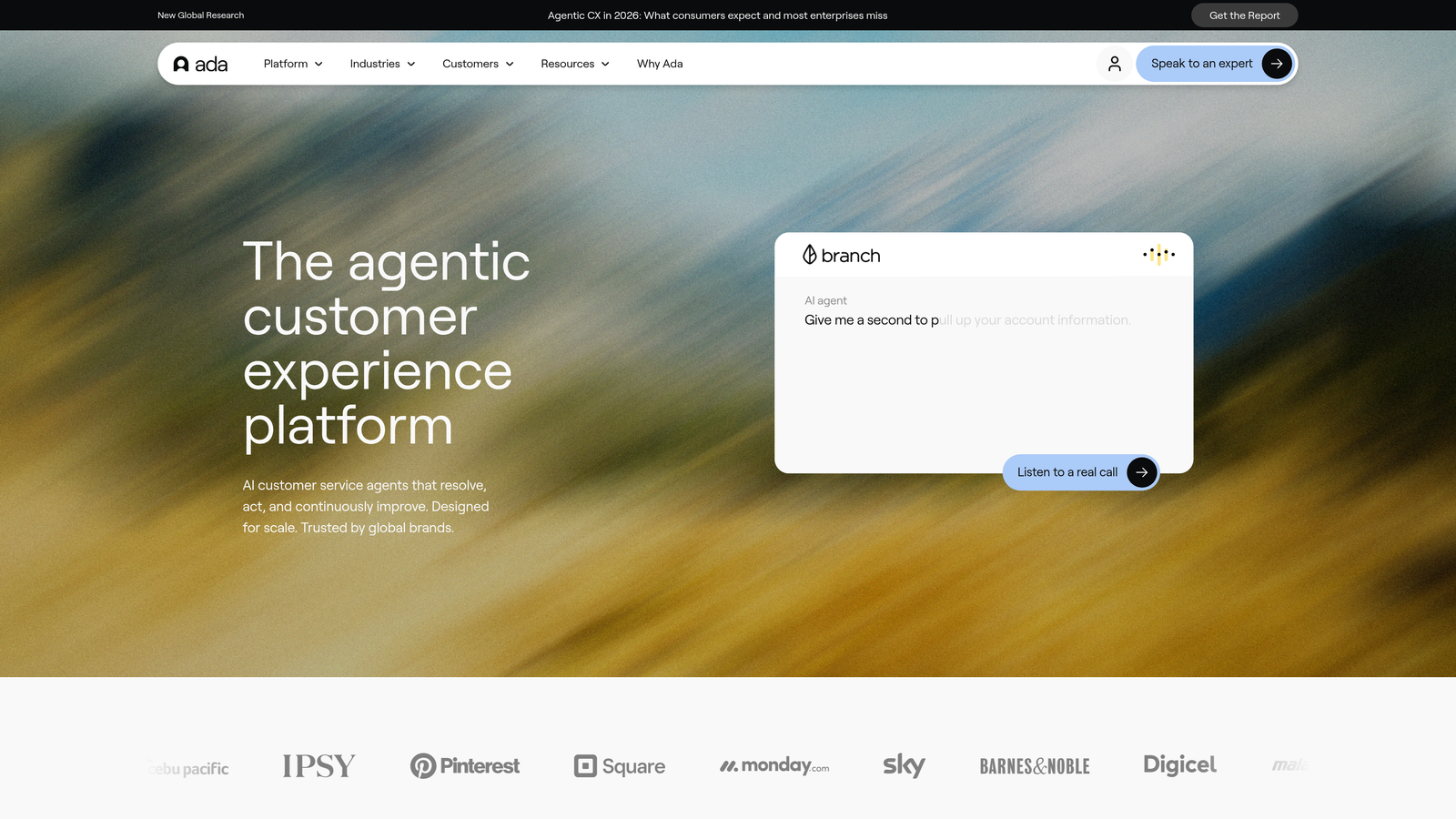
Ada provides an AI reasoning engine designed for complex customer interactions across 50+ languages, built specifically for large-scale operations.
Where This Tool Shines
Ada's reasoning engine goes beyond simple decision trees to handle multi-step queries that require understanding context, making logical inferences, and adapting responses based on customer history. A customer asking about returning a product might need different guidance depending on whether they're within the return window, their purchase history, and their account status—Ada handles these nuances automatically.
The no-code conversation builder means business teams control the experience without depending on engineering resources. Marketing, support, and operations can collaborate on conversation flows, test changes, and deploy updates without technical bottlenecks.
Key Features
AI Reasoning Engine: Handles complex, multi-turn conversations that require understanding context and making logical decisions based on customer data.
No-Code Builder: Design sophisticated conversation flows through a visual interface that business teams can manage independently.
Multilingual Support: Provides automated support in 50+ languages with native understanding rather than basic translation.
Proactive Messaging: Triggers contextual messages based on customer behavior, account status, or external events to resolve issues before they escalate.
Enterprise Security: Meets compliance requirements for regulated industries with SOC 2, GDPR, and HIPAA certifications.
Best For
Global enterprises with high support volumes across multiple languages and regions. Companies in regulated industries needing robust security and compliance alongside AI automation capabilities.
Pricing
Custom enterprise pricing based on conversation volume, languages supported, and integration requirements. Contact Ada directly for quotes tailored to your specific needs.
6. Kustomer
Best for: Companies wanting CRM-powered support with complete customer timeline visibility
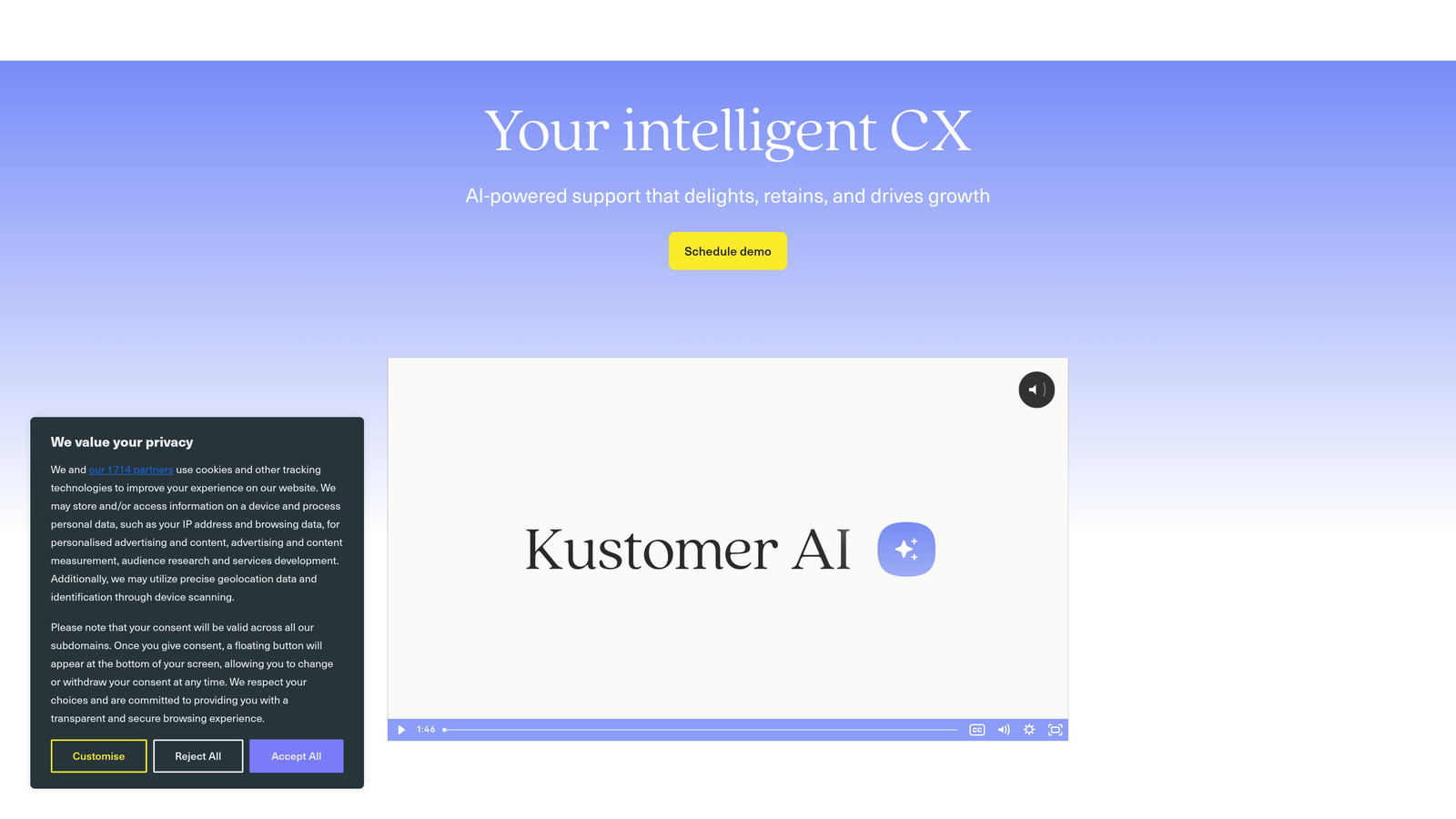
Kustomer combines helpdesk functionality with CRM capabilities, providing agents with a unified view of every customer interaction across all touchpoints.
Where This Tool Shines
Kustomer's timeline view transforms how agents understand customers. Instead of seeing isolated tickets, agents see purchases, subscription changes, previous conversations, product usage, and support history in one chronological stream. When a customer reaches out, agents immediately understand their journey and can provide personalized responses rather than generic troubleshooting.
The KIQ AI assistant works within this context, suggesting responses that account for customer value, history, and current situation. Sentiment analysis flags when customers are frustrated, allowing proactive escalation before situations deteriorate.
Key Features
Unified Customer Timeline: Displays every interaction, transaction, and event in chronological order so agents see complete context instantly.
KIQ AI: Automates responses and routing decisions while considering customer history, sentiment, and account value.
Business Process Automation: Create workflows that trigger actions across systems based on support interactions, like updating CRM records or adjusting subscription status.
Sentiment Analysis: Detects customer frustration or satisfaction in real-time, enabling proactive intervention for at-risk accounts.
E-commerce Integrations: Connects deeply with Shopify, Magento, and subscription platforms to surface order and billing data alongside conversations.
Best For
Mid-market to enterprise companies where customer lifetime value makes personalized support worthwhile. Subscription businesses and e-commerce brands benefit most from the deep integration of transaction data with support conversations.
Pricing
Starts at $89 per user monthly, positioning it as a premium solution focused on companies where improved customer experience directly impacts revenue.
7. Tidio
Best for: Small teams wanting accessible AI automation without technical complexity
Tidio combines live chat with Lyro AI chatbot capabilities, designed specifically for small businesses and solopreneurs who need intelligent automation without overhead.
Where This Tool Shines
Tidio removes barriers to entry for AI-powered support. The Lyro AI chatbot trains on your FAQ content and website information without requiring technical setup or ongoing maintenance. Small teams can deploy intelligent automation in hours rather than weeks, handling common questions while human agents focus on sales conversations and complex issues.
The visual bot builder makes customization approachable. If you want the bot to collect email addresses before offering help, or route certain questions to specific team members, you can build those flows by dragging and dropping elements rather than writing code or learning complex rule systems.
Key Features
Lyro AI Chatbot: Trains automatically on your FAQ content and website to answer common questions without manual conversation flow building.
Visual Bot Builder: Create custom conversation flows through drag-and-drop interface for scenarios requiring specific routing or data collection.
Live Chat with Visitor Tracking: See which pages visitors are viewing in real-time, enabling contextual conversations based on their current interests.
Platform Integrations: Connects seamlessly with Shopify, WordPress, Wix, and major CMS platforms through simple plugin installation.
Mobile App: Manage conversations from iOS or Android devices, ensuring you never miss customer inquiries even when away from desk.
Best For
Small businesses, online stores, and solopreneurs with limited technical resources who need professional chat and AI capabilities. Particularly suited to Shopify stores and WordPress sites seeking to add intelligent support quickly.
Pricing
Free tier available with basic chat and limited AI responses. Paid plans start at $29 monthly for increased AI capacity and advanced features, with no per-agent fees for small teams.
8. Help Scout
Best for: Teams prioritizing human connection over heavy automation
Help Scout provides AI assistance that enhances human agents rather than replacing them, focusing on simplicity and personal customer relationships.
Where This Tool Shines
Help Scout's philosophy centers on using AI to make human agents more effective rather than automating them away. The AI drafts feature suggests response starting points based on past conversations, but expects agents to personalize and refine before sending. This approach maintains the human touch that builds customer loyalty while reducing the time agents spend crafting responses from scratch.
The interface feels more like email than a traditional helpdesk, which many teams find less overwhelming than feature-heavy alternatives. Collision detection prevents multiple agents from simultaneously responding to the same customer, and the Docs knowledge base integrates seamlessly to surface relevant articles during conversations.
Key Features
AI Drafts: Suggests response starting points based on similar past conversations, which agents can personalize before sending to maintain authentic communication.
Shared Inbox: Manages customer emails in a collaborative workspace with collision detection to prevent duplicate responses.
Docs Knowledge Base: Builds searchable help documentation with AI-powered search that understands intent beyond exact keyword matches.
Beacon Widget: Embeds contextual help directly in your product, showing relevant articles based on which page users are viewing.
Customer Satisfaction Surveys: Automatically requests feedback after conversations close, tracking team performance and identifying improvement areas.
Best For
Small to mid-sized companies with 5-50 support team members who view customer relationships as competitive advantage. Teams that prefer augmenting human agents over heavy automation will appreciate the balanced approach.
Pricing
Starts at $20 per user monthly with all core features included. Straightforward pricing without hidden fees or expensive AI add-ons makes budgeting predictable as teams grow.
9. Gorgias
Best for: E-commerce brands needing deep platform integrations for order-related support
Gorgias specializes in e-commerce support with native Shopify, BigCommerce, and Magento integrations that enable one-click order actions directly from the helpdesk.
Where This Tool Shines
Gorgias transforms e-commerce support from a cost center into a revenue opportunity. Agents see complete order history, subscription status, and purchase behavior without switching tabs or asking customers for order numbers. The ability to modify orders, issue refunds, and update subscriptions directly from the support interface dramatically reduces resolution time for common e-commerce inquiries.
Revenue tracking connects support conversations to sales outcomes, showing which interactions led to additional purchases and calculating the ROI of your support team. Macros with dynamic order variables mean agents can personalize responses at scale, automatically inserting tracking numbers, delivery dates, and product details without manual copying.
Key Features
AI Automation for Orders: Handles common order inquiries like "where is my package" automatically by checking shipping status and responding with tracking updates.
One-Click Order Actions: Enables agents to process refunds, cancel orders, modify subscriptions, and update shipping addresses directly from the helpdesk interface.
Revenue Statistics: Tracks support interactions that lead to sales, calculating the actual revenue impact of your support team beyond cost metrics.
Social and Marketplace Integration: Manages support across Instagram, Facebook, Amazon, and other sales channels in a unified inbox.
Dynamic Macros: Create response templates that automatically insert customer-specific order details, tracking numbers, and product information.
Best For
E-commerce brands with significant order-related support volume, particularly those on Shopify, BigCommerce, or Magento. Subscription businesses benefit especially from the deep integration with recurring billing platforms.
Pricing
Starts at $10 monthly for 50 tickets, then scales based on monthly ticket volume rather than agent count. This usage-based model works well for seasonal businesses with fluctuating support needs.
Making the Right Choice
Selecting the right intelligent customer support system depends on your specific context. For AI-first teams wanting autonomous resolution with continuous learning, Halo AI delivers the most sophisticated approach with page-aware guidance and business intelligence that extends beyond traditional support metrics. Enterprise organizations with complex existing workflows often find Zendesk's extensibility valuable, while Intercom suits product-led companies prioritizing conversational experiences that blend support with proactive engagement.
Budget-conscious SMBs should explore Freshdesk, which provides genuine AI capabilities without enterprise pricing or complexity. E-commerce brands will appreciate Gorgias's deep platform integrations that turn order inquiries into one-click resolutions. Companies prioritizing human connection over heavy automation will find Help Scout's balanced approach refreshing, while global enterprises handling multilingual support at scale should evaluate Ada's reasoning engine.
The best choice isn't necessarily the most feature-rich—it's the one that matches your team's workflow, technical capacity, and growth trajectory. Consider how each platform handles the specific support scenarios your team faces daily. Does your team spend hours explaining UI elements? Page-aware guidance becomes critical. Do order inquiries dominate your queue? E-commerce integrations matter most. Are you drowning in tickets that require the same basic troubleshooting? Autonomous AI agents deliver immediate value.
Most platforms offer free trials, so test your top two or three picks with real support scenarios before committing. Pay attention to how quickly you can get the system running, how naturally it fits your existing workflows, and whether your team actually uses the AI features or works around them. The platform that looks impressive in demos might feel clunky in daily use, while a simpler solution could transform your team's efficiency immediately.
Your support team shouldn't scale linearly with your customer base. Let AI agents handle routine tickets, guide users through your product, and surface business intelligence while your team focuses on complex issues that need a human touch. See Halo in action and discover how continuous learning transforms every interaction into smarter, faster support.