9 Best Intelligent Customer Support Tools in 2026
This guide reviews the 9 best intelligent customer support tools available in 2026, evaluated on AI capability depth, integration ecosystem, and real-world B2B SaaS utility. Whether you're replacing a legacy helpdesk or layering AI onto an existing stack, it covers the platforms best equipped to reduce ticket volume, resolve issues autonomously, and surface actionable insights without adding headcount.
 Grant CooperFounder13 min read
Customer support teams are under more pressure than ever. Ticket volumes keep climbing, customer expectations keep rising, and headcount budgets stay flat. Intelligent customer support tools have moved well beyond basic chatbots: today's platforms can resolve tickets autonomously, guide users through complex workflows, detect product bugs, and surface revenue signals without a human in the loop.
This list covers nine of the best intelligent customer support tools available in 2026, evaluated on AI capability depth, integration ecosystem, ease of deployment, and real-world utility for B2B SaaS teams. Whether you're replacing a legacy helpdesk, layering AI on top of an existing stack, or building a support function from scratch, there's a fit here for you.
Selection criteria: autonomous resolution capability, learning and improvement mechanisms, integration breadth, scalability for B2B use cases, and value beyond pure ticket deflection.
1. Halo AI
Best for: B2B SaaS teams that want an AI-first support platform with deep product context
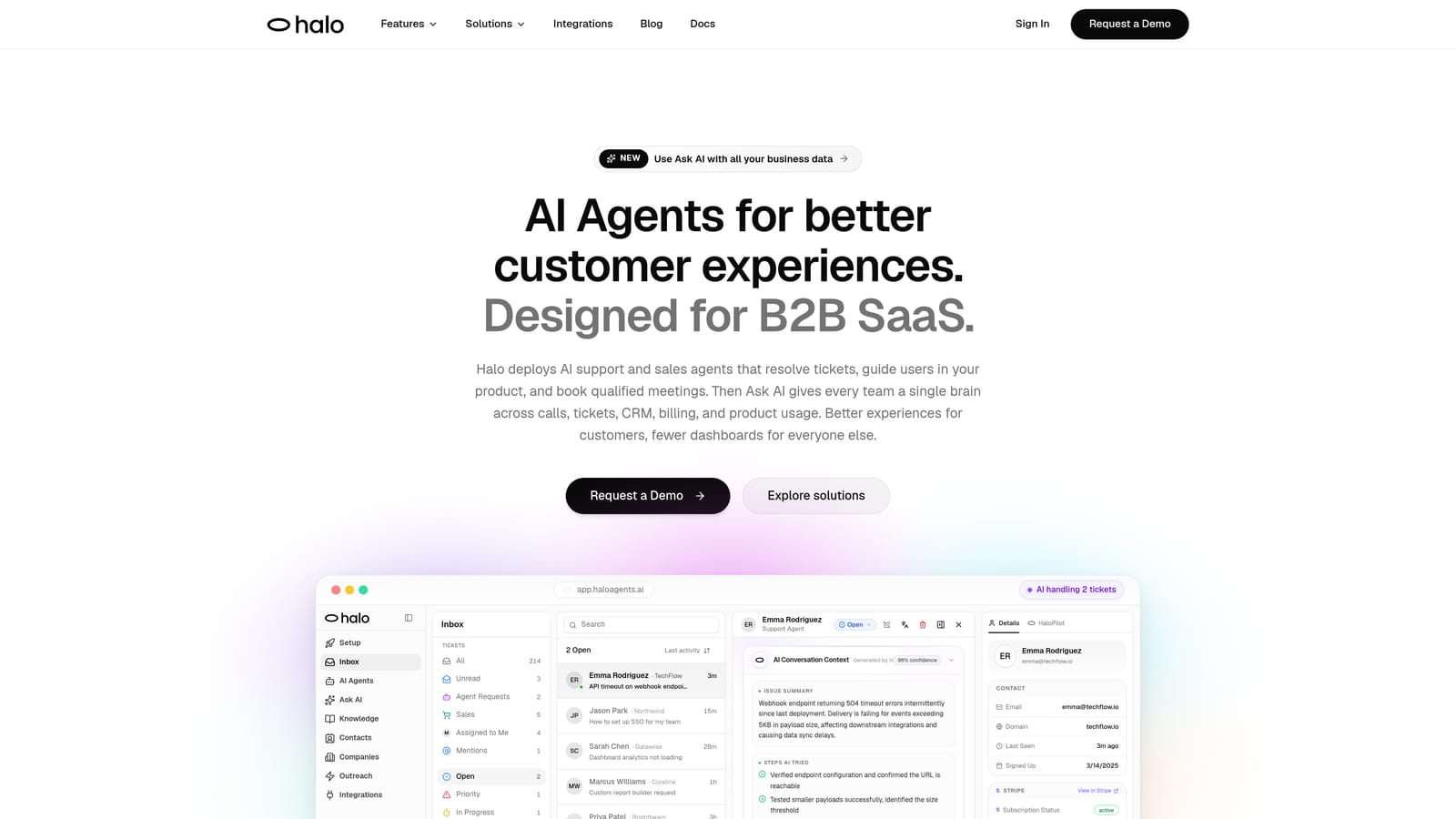
Halo AI is an AI-first customer support platform built specifically for B2B SaaS teams, deploying intelligent agents that resolve tickets, guide users through your product, and surface business intelligence continuously.
Where This Tool Shines
Most helpdesks bolt AI onto an existing ticket-based architecture. Halo is built the other way around: AI is the foundation, not the feature. Its page-aware chat widget actually sees what the user sees in your product, giving agents the context to provide visual UI guidance rather than generic instructions.
What sets Halo apart from pure deflection tools is the business intelligence layer. The smart inbox surfaces customer health signals, anomaly detection, and revenue intelligence from support conversations, turning every ticket into a data point your whole team can act on. It also auto-creates bug tickets routed directly to Linear, so product issues get captured without anyone manually copying details between tools.
Key Features
Page-Aware Chat Widget: Understands exactly where a user is in your product and provides contextual, visual UI guidance rather than generic answers.
Autonomous AI Agents: Resolve support tickets end-to-end, learning from every interaction to improve over time without manual retraining.
Auto Bug Ticket Creation: Detects product issues and automatically routes bug reports to Linear, keeping engineering informed without manual handoffs.
Smart Inbox with Business Intelligence: Surfaces customer health signals, anomaly detection, and revenue intelligence directly from support conversations.
Live Agent Handoff: Escalates complex issues to human agents with full conversation context preserved, so customers never have to repeat themselves.
Integration Ecosystem: Connects with Linear, Slack, HubSpot, Intercom, Stripe, Zoom, PandaDoc, and Fathom out of the box.
Best For
B2B SaaS companies that want AI to do more than deflect tickets. Halo is particularly strong for product-led growth teams where support context and product usage data need to live in the same system, and for teams that want support to generate business intelligence rather than just close tickets.
Pricing
Contact for pricing. You can request a demo at haloagents.ai to get a tailored walkthrough based on your team's needs.
2. Intercom
Best for: Teams wanting a mature all-in-one messaging platform with AI resolution built in
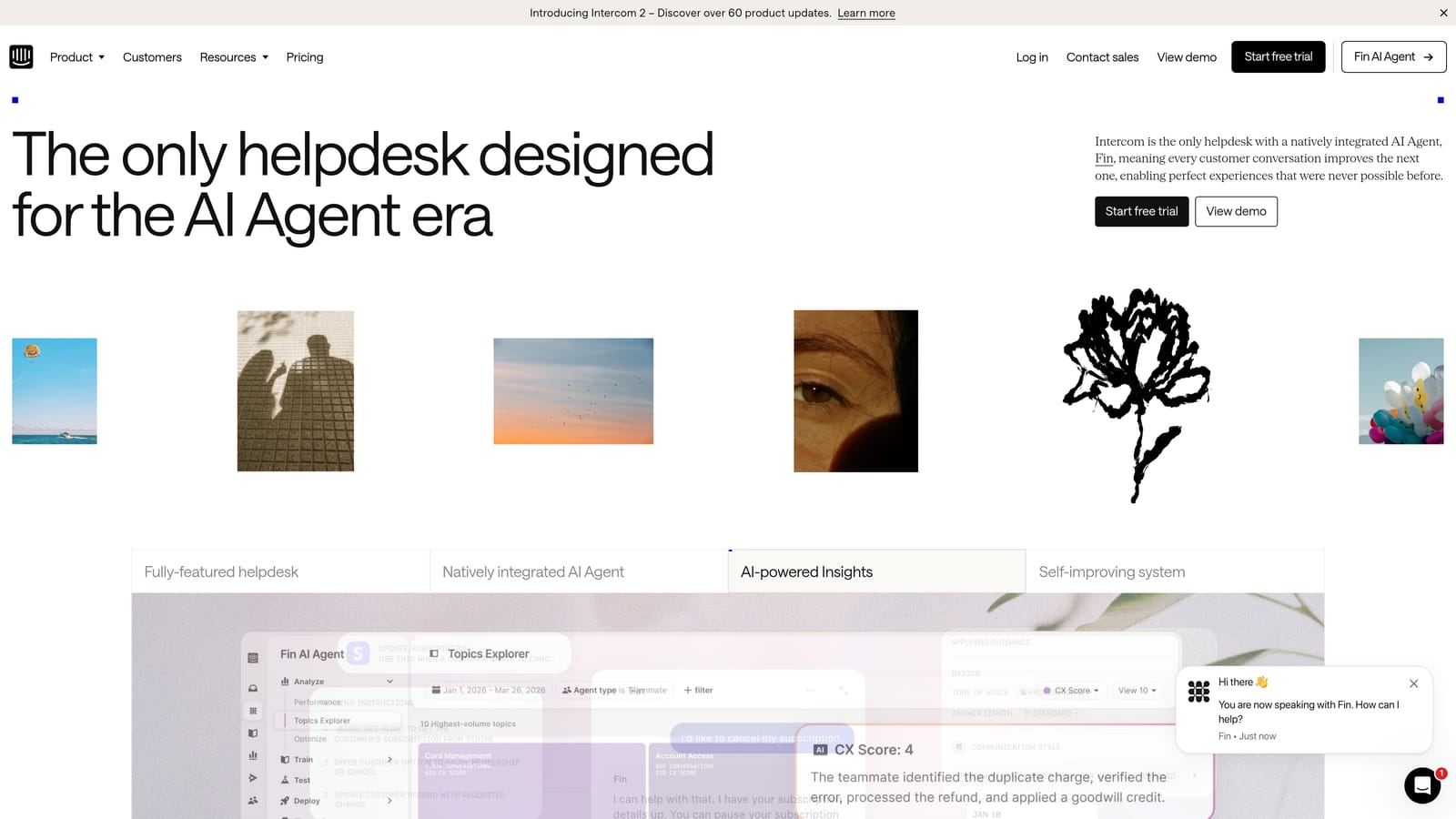
Intercom is one of the most established customer messaging platforms, combining live chat, inbox, and help center with Fin, an AI agent built on large language models.
Where This Tool Shines
Intercom's strength is breadth. It handles the full customer messaging lifecycle: proactive outreach, onboarding tours, live chat, and AI-powered resolution in one platform. Fin draws from your knowledge base to resolve common queries without human involvement, and the handoff to live agents is smooth when escalation is needed.
The integration marketplace is extensive, and Intercom's reporting gives teams solid visibility into conversation patterns and resolution rates. It's a proven choice for teams that want a single platform rather than assembling a stack.
Key Features
Fin AI Agent: Resolves common customer queries autonomously using your existing knowledge base content.
Unified Inbox: Combines live chat, email, and help center management in a single agent workspace.
Proactive Messaging and Product Tours: Enables outbound engagement and in-app onboarding flows alongside reactive support.
Broad Integration Marketplace: Connects with hundreds of tools across CRM, billing, analytics, and engineering.
Conversation Analytics: Tracks resolution rates, CSAT, and conversation volume trends with built-in reporting.
Best For
Growth-stage SaaS companies that want live chat, AI resolution, and proactive messaging under one roof. Less suited to teams with highly complex technical support workflows or those needing deep product-context awareness.
Pricing
Starts at approximately $39 per seat per month, with Fin AI usage-based pricing layered on top. Verify current pricing at intercom.com/pricing.
3. Zendesk
Best for: Large enterprise support organizations needing proven scale and extensive customization
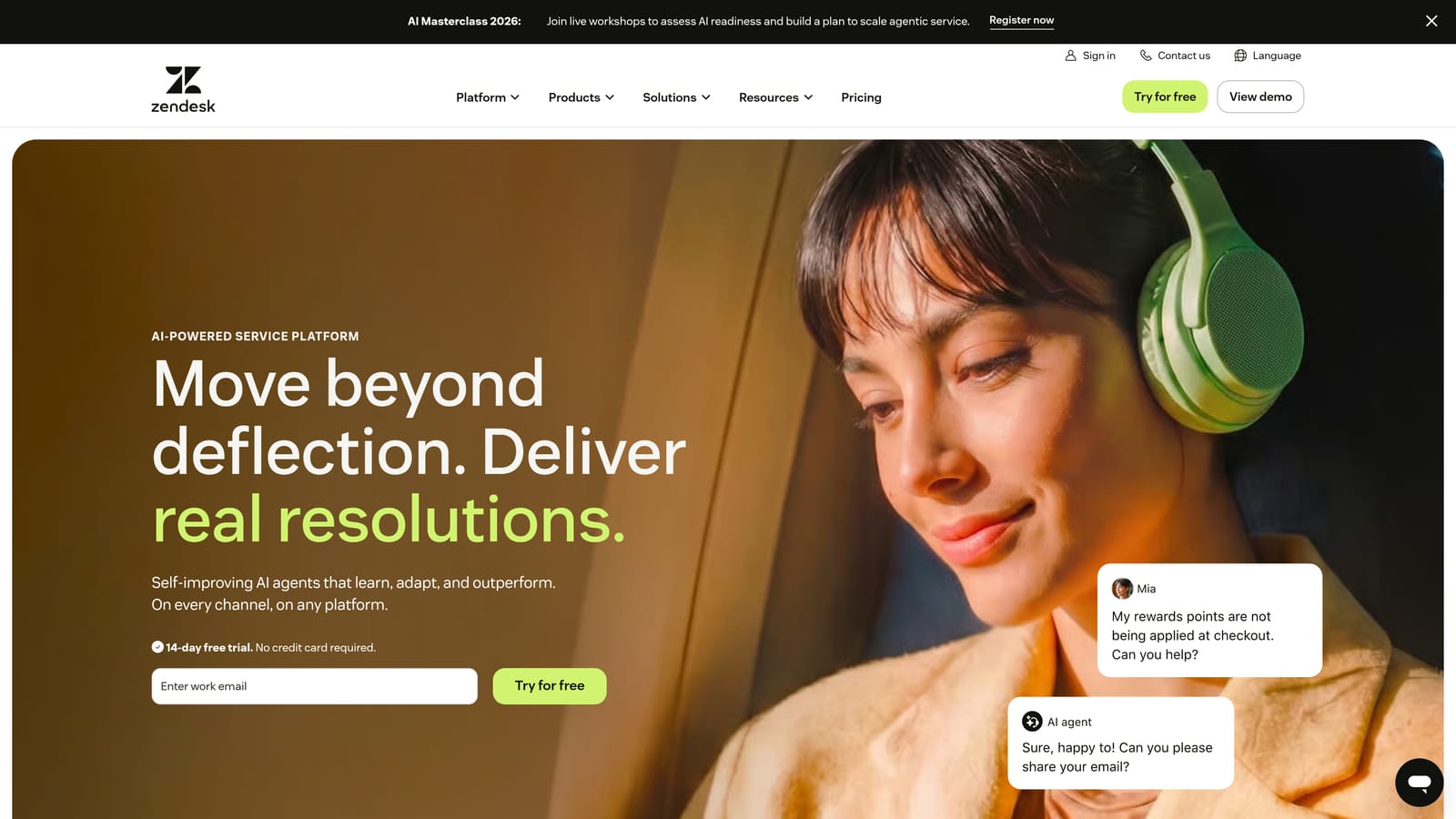
Zendesk is the market-leading enterprise helpdesk, with AI-powered triage, intelligent routing, and a vast app marketplace built up over more than a decade of development.
Where This Tool Shines
Zendesk's biggest advantage is maturity. The platform handles massive ticket volumes reliably, with SLA management, omnichannel routing, and enterprise-grade security that large organizations require. Its app marketplace offers more than a thousand integrations, meaning it fits into almost any existing enterprise stack.
The AI features, including suggested replies and intelligent triage, have improved meaningfully in recent years. For large teams with established workflows, Zendesk's agent assist capabilities can meaningfully reduce handle times without requiring a platform migration.
Key Features
AI-Powered Triage and Routing: Automatically categorizes, prioritizes, and routes incoming tickets based on content and intent.
Agent Assist: Surfaces suggested replies and relevant knowledge base articles in real time as agents handle tickets.
1,000+ App Marketplace: Extensive integrations covering virtually every tool in a modern enterprise stack.
Advanced Reporting and SLA Management: Robust analytics with custom dashboards and SLA tracking for compliance-sensitive environments.
Omnichannel Support: Handles email, chat, voice, and social channels in a unified agent workspace.
Best For
Enterprise support organizations with high ticket volumes, complex routing requirements, and existing Zendesk investments. Smaller teams often find it heavyweight relative to their needs, and AI capabilities are more augmentation than autonomous resolution.
Pricing
Suite plans start at approximately $55 per agent per month. Verify current pricing at zendesk.com/pricing.
4. Freshdesk
Best for: SMBs and growing teams wanting a capable helpdesk at a competitive price point
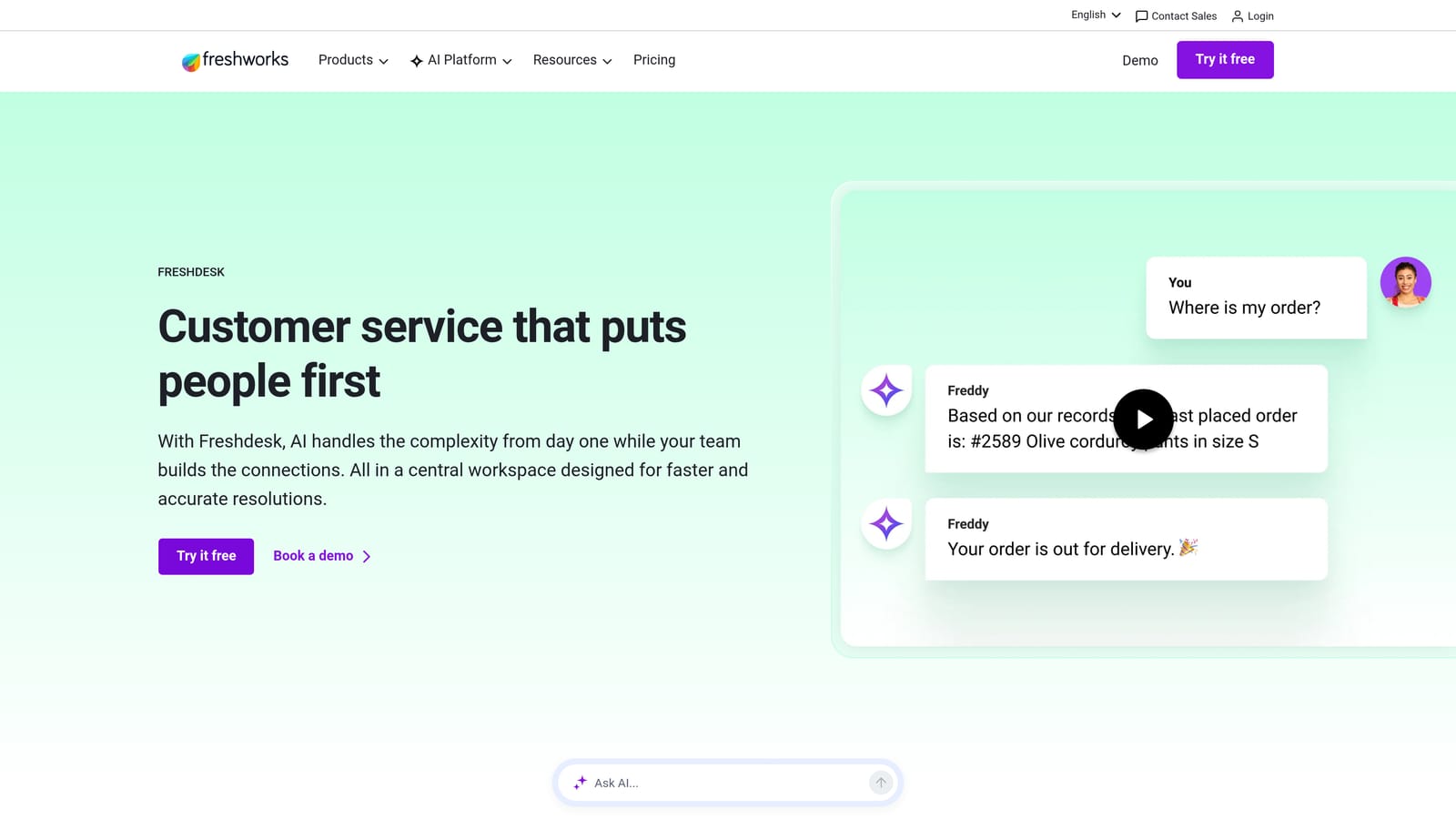
Freshdesk is Freshworks' helpdesk platform, with Freddy AI providing auto-triage, article suggestions, and agent assist features that punch above their price tier.
Where This Tool Shines
Freshdesk hits a strong value-to-capability ratio for teams that need solid helpdesk fundamentals with AI assistance baked in. Freddy AI handles ticket categorization, suggests relevant knowledge base articles to agents, and can deflect simple queries before they reach the queue. The platform covers email, chat, phone, and social in one place.
The free tier makes it genuinely accessible for early-stage teams, and the paid plans scale reasonably as volumes grow. Collision detection and team inbox features help distributed support teams stay coordinated without stepping on each other.
Key Features
Freddy AI: Handles ticket triage, auto-categorization, and suggests responses and knowledge base articles to agents.
Omnichannel Support: Manages email, chat, phone, and social media conversations from a unified inbox.
Collision Detection: Alerts agents when multiple team members are viewing or responding to the same ticket.
Automation and Workflow Builder: Configures routing rules, escalations, and repetitive task automation without coding.
Free Tier: Available for small teams, with paid plans that scale as volume and feature needs grow.
Best For
SMBs and early-stage SaaS teams that need a well-rounded helpdesk with AI assist at an accessible price. Freddy AI's depth is more limited compared to purpose-built AI agents, so teams with complex autonomous resolution needs may outgrow it.
Pricing
Free plan available. Paid plans start at approximately $15 per agent per month. Verify current pricing at freshdesk.com/pricing.
5. Tidio
Best for: E-commerce and small SaaS teams needing fast AI chatbot deployment with minimal setup
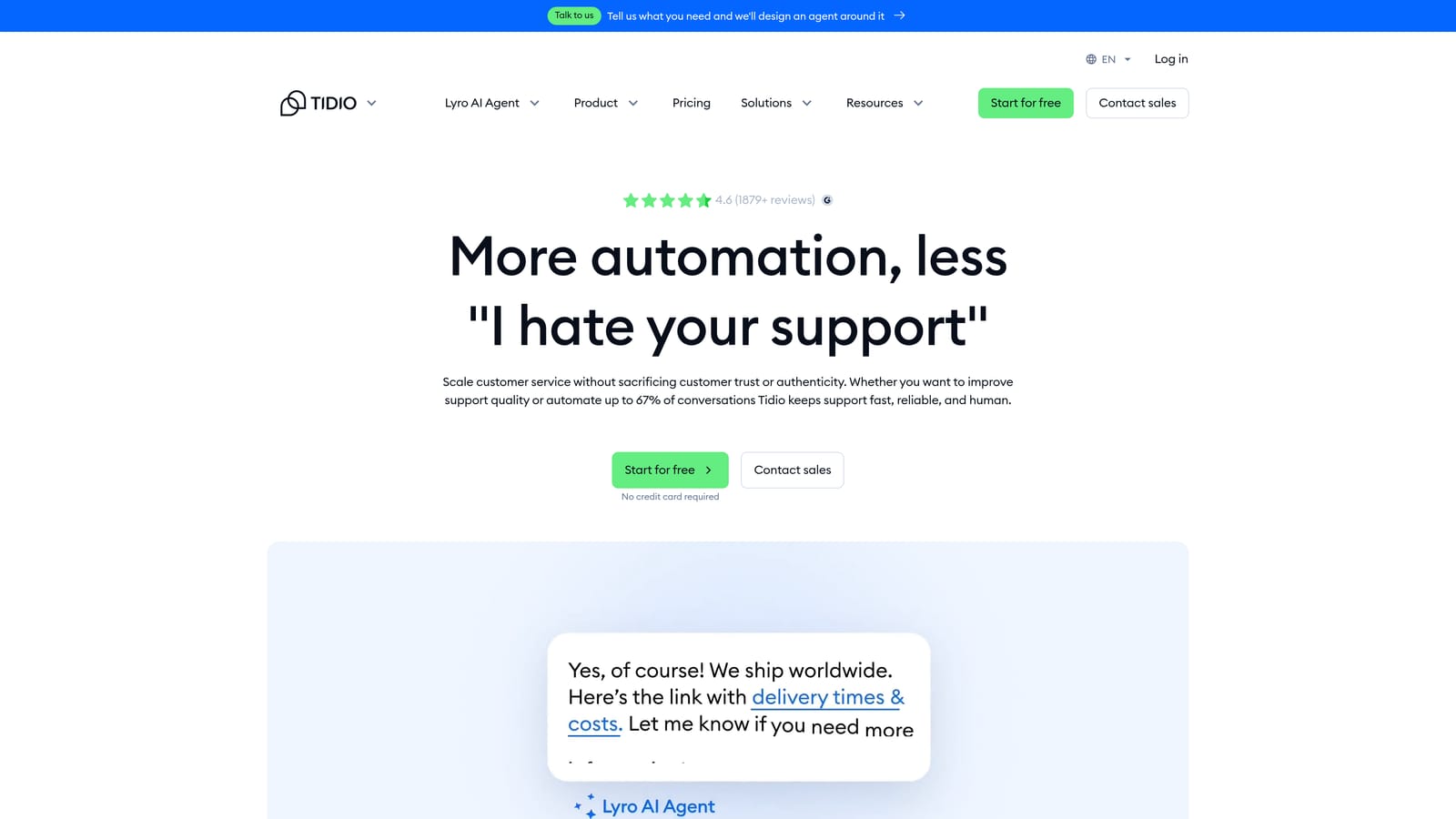
Tidio is a live chat and AI chatbot platform featuring Lyro, an AI agent trained on your support content, designed for rapid deployment without technical overhead.
Where This Tool Shines
Tidio's main appeal is speed to value. Lyro can be trained on existing support content and deployed quickly, making it an accessible entry point for teams that want AI-powered deflection without a lengthy implementation. The visual chatbot flow builder lets non-technical users design conversation paths without writing code.
The platform integrates naturally with Shopify and WooCommerce, which is why it's particularly popular with e-commerce brands. For straightforward query types and smaller support volumes, Tidio delivers solid automation at a price point that doesn't require budget approval from a CFO.
Key Features
Lyro AI Chatbot: Trained on your support content to resolve common queries automatically before they reach a human agent.
Live Chat with Agent Fallback: Seamlessly escalates from bot to human agent when queries exceed Lyro's capabilities.
Visual Flow Builder: Lets teams design chatbot conversation paths without writing code.
E-Commerce Integrations: Native connections to Shopify and WooCommerce for order tracking and product-related queries.
Affordable Entry Pricing: Free tier available with paid plans that are accessible for small teams.
Best For
E-commerce brands and small SaaS teams with relatively straightforward support queries. Less suited to complex B2B support workflows that require deep product context, multi-step issue resolution, or enterprise-grade routing logic.
Pricing
Free plan available. Lyro AI starts at approximately $29 per month. Verify current pricing at tidio.com/pricing.
6. Forethought
Best for: Teams that want AI augmentation layered over an existing helpdesk without replacing it
Forethought is an AI augmentation layer that works alongside existing helpdesks rather than replacing them, covering deflection, intelligent triage, and agent assist.
Where This Tool Shines
Forethought's positioning is deliberate: it's for teams that have a helpdesk they're not ready to replace but want meaningfully smarter AI on top. Solve handles self-service deflection, Triage routes tickets intelligently based on intent and priority, and Assist surfaces relevant knowledge and suggested responses in real time as agents work.
The generative AI is trained on historical ticket data, which means it gets more accurate over time as it learns from your specific support patterns. Worth noting: Forethought was acquired by Moveworks in 2024, so buyers evaluating long-term roadmap should factor that context into their assessment.
Key Features
Solve: AI-powered deflection and self-service resolution that handles common queries before they enter the queue.
Triage: Intelligent ticket routing and prioritization based on content, intent, and urgency signals.
Assist: Real-time agent suggestions and knowledge retrieval surfaced during active conversations.
Historical Training: Generative AI trained on your existing ticket data for accuracy tuned to your specific support patterns.
Helpdesk Integrations: Works alongside Zendesk, Salesforce Service Cloud, and other major platforms.
Best For
Support teams with an established helpdesk investment who want AI augmentation without a full platform migration. Teams evaluating Forethought should review the Moveworks acquisition for roadmap clarity before committing.
Pricing
Contact for pricing. Verify details at forethought.ai.
7. Kustomer
Best for: High-volume consumer-facing operations needing a unified CRM and support platform
Kustomer is a CRM-native support platform with a unified customer timeline, AI-powered workflow automation, and strong omnichannel capabilities across every major communication channel.
Where This Tool Shines
Kustomer's differentiation is the unified customer timeline. Every interaction, order, conversation, and data point from across your systems is surfaced in a single view when an agent is handling a conversation. This makes it particularly powerful for high-volume operations where agents need full customer context instantly, not scattered across five different tabs.
The AI-powered workflow automation handles repetitive routing and tagging tasks, and the customizable business rules engine gives operations teams fine-grained control over how conversations are handled. Kustomer has had an eventful ownership history (acquired by Meta, then returned to independent operation), but the platform itself remains robust.
Key Features
Unified Customer Timeline: Consolidates all interactions, orders, and data points into a single chronological view for agents.
AI-Powered Workflow Automation: Automates routing, tagging, and repetitive task management across high ticket volumes.
Omnichannel Coverage: Handles email, chat, SMS, social media, and voice from one agent workspace.
Deep CRM Data Integration: Surfaces customer purchase history, lifetime value, and behavioral data during support interactions.
Customizable Business Rules Engine: Lets operations teams define precise logic for how conversations are categorized and routed.
Best For
High-volume D2C and B2C operations where agent context and CRM data are critical to support quality. Less commonly deployed in pure B2B SaaS environments where the CRM-native model may be more than needed.
Pricing
Starts at approximately $89 per agent per month. Verify current pricing at kustomer.com/pricing.
8. Gladly
Best for: High-touch consumer brands that prioritize relationship-driven support over ticket metrics
Gladly is a people-centric support platform built on a conversation model rather than a ticket model, with an AI Sidekick that assists agents in real time.
Where This Tool Shines
Gladly's core philosophy is that customers are people, not ticket numbers. The platform maintains a single, lifelong conversation thread per customer across every channel, so agents always have the full relationship context without digging through disconnected ticket histories. This model resonates strongly with brands where relationship quality is a competitive differentiator.
The AI Sidekick is positioned as an agent enhancer rather than an agent replacement, surfacing relevant information and guidance during conversations. Gladly's self-service AI handles common queries, while complex or sensitive situations stay with human agents who have full context.
Key Features
Conversation-Centric Model: Replaces ticket numbers with a lifelong customer conversation thread that persists across all channels.
AI Sidekick: Provides real-time guidance and information retrieval to human agents during active conversations.
Unified Customer Profile: Aggregates all channel interactions into a single customer view accessible to every agent.
Self-Service AI: Handles routine queries through automated flows while routing complex issues to human agents.
Relationship-Driven Design: Purpose-built for brands where customer loyalty and high-touch service are strategic priorities.
Best For
Retailers, consumer brands, and high-touch service businesses where relationship quality matters as much as resolution speed. Less common in technical B2B SaaS environments where ticket-based workflows and developer integrations are standard requirements.
Pricing
Contact for pricing. Verify details at gladly.com.
9. Helpshift
Best for: Gaming and mobile app companies needing native in-app support with bot-first architecture
Helpshift is a mobile-first intelligent support platform with an in-app SDK and bot-first architecture, purpose-built for gaming and mobile application companies.
Where This Tool Shines
Helpshift solves a problem most support platforms ignore: delivering a native support experience inside a mobile app without forcing users to leave the application. The in-app SDK embeds support directly into the app experience, and the bot-first architecture means AI handles the majority of queries before any human involvement is needed.
For gaming companies in particular, where support volumes can spike dramatically with new releases and where users expect instant, in-context help, Helpshift's architecture is genuinely well-suited. The analytics are also tuned for mobile engagement metrics rather than generic helpdesk KPIs.
Key Features
In-App SDK: Embeds support natively inside mobile applications, keeping users in-product throughout the support experience.
Bot-First Architecture: Prioritizes AI-powered resolution before routing to human agents, optimized for high-volume mobile query patterns.
Smart FAQ and AI-Driven Search: Surfaces relevant help content intelligently based on user query and in-app context.
Agent Desktop: Provides support agents with full conversation context and user data during escalated interactions.
Mobile-Tuned Analytics: Tracks engagement metrics and resolution rates calibrated for mobile app support benchmarks.
Best For
Gaming studios, mobile app companies, and any organization where the primary support surface is a native mobile application. Not a natural fit for web-based B2B SaaS teams, where browser-based support experiences and deep integration with developer tooling are more relevant.
Pricing
Contact for pricing. Verify details at helpshift.com.
Which Tool Is Right for Your Team?
Nine tools, nine different philosophies. The right choice depends less on feature lists and more on where your team is today and where you need to be in twelve months.
For B2B SaaS teams that want AI to do more than deflect tickets, Halo AI is the strongest fit. Page-aware context, continuous learning, business intelligence from support conversations, and automatic bug routing to Linear make it genuinely different from platforms that bolt AI onto a traditional helpdesk. If your support function needs to scale without scaling headcount, that architecture matters.
For large enterprise organizations with established Zendesk investments and complex routing requirements, Zendesk remains the proven choice. For SMBs watching budget closely, Freshdesk delivers solid AI assist at a price point that makes sense. For gaming and mobile app companies, Helpshift is purpose-built in a way no general-purpose platform can match.
Teams that can't migrate their helpdesk but want smarter AI on top should look at Forethought. High-touch consumer brands prioritizing relationship quality over ticket metrics will find Gladly's conversation model compelling. And for e-commerce teams that need fast deployment with minimal setup, Tidio gets you live quickly.
Your support team shouldn't scale linearly with your customer base. Let AI agents handle routine tickets, guide users through your product, and surface business intelligence while your team focuses on complex issues that need a human touch. See Halo in action and discover how continuous learning transforms every interaction into smarter, faster support.